

Advancing Drug–Drug Interaction Prediction with Biomimetic Improvements: Leveraging the Latest Artificial Intelligence Techniques to Guide Researchers in the Field

 , ,
, ,  , and
, and 
Abstract
1. Introduction
1.1. Objectives
- Compare AI/ML approaches to DDI prediction over the family of methods: traditional ML and ensembles; DL (DNNs, CNNs, LSTMs, autoencoders); transformer-based methods; graph-based/GNNs; KG embeddings; hybrid/multimodal fusion; PU learning; fuzzy/rule-based systems; and PBPK models.
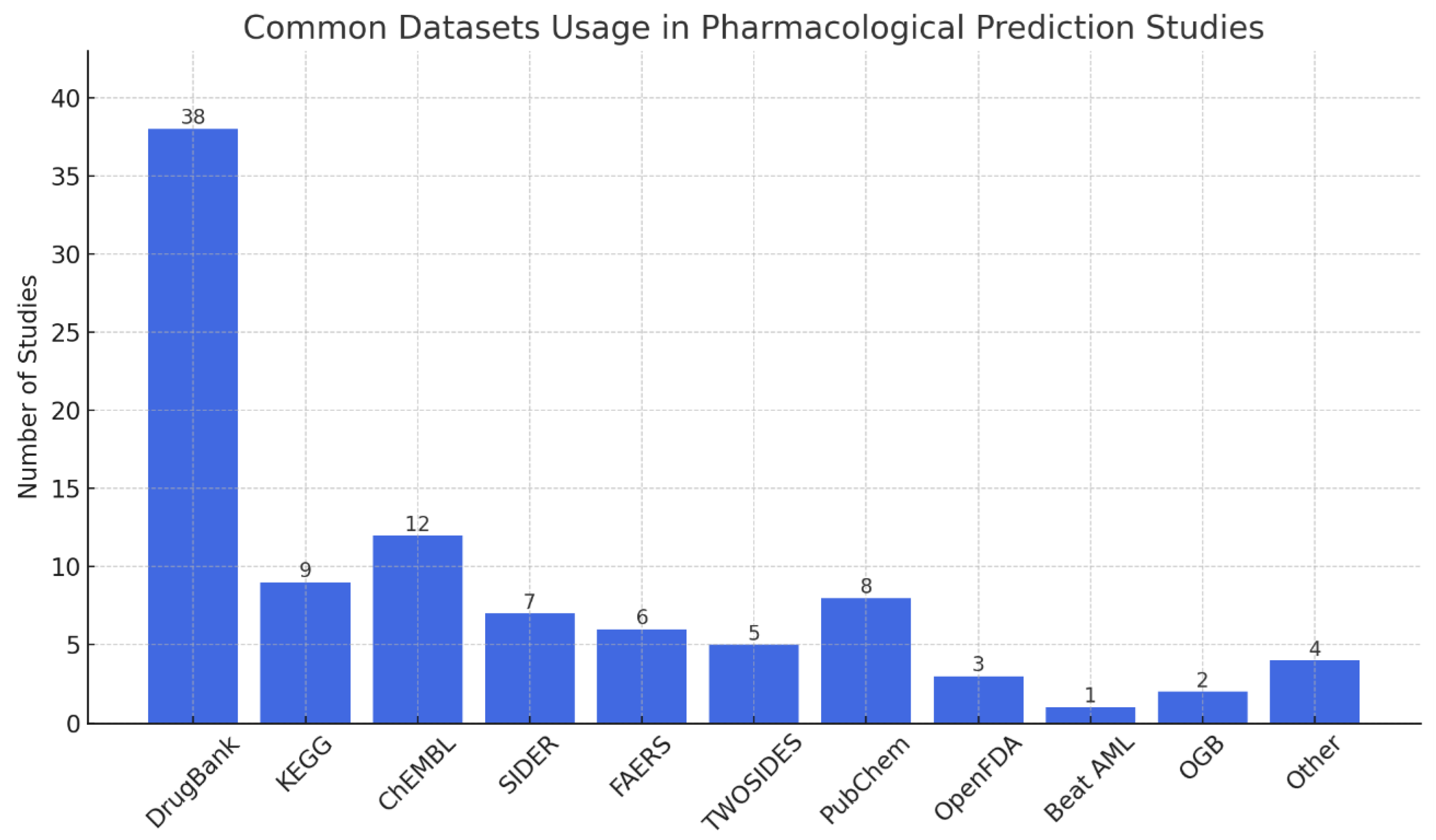
- Compare precision/recall/specificity (and optional PPV and LR+) across the datasets actually used in the nine included studies: DrugBank, ChEMBL, KEGG, FAERS, SIDER, TWOSIDES, Drug interactions and side effects (nSIDES), and FDA drug labels.
- Outline missed methodological opportunities and translational limitations (data standardization, class imbalance and leakage, interpretability/XAI, compute/scalability, incomplete external validation) and provide future research directions.
1.2. Contributions
- A full taxonomy of AI methods for pDDI (early ML/ensembles, new DL/transformers, GNN/KG, hybrid/multimodal, PU-learning, fuzzy/rule-based, PBPK) that are enhanced with biomimetic strategies and correlated with typical inputs, advantages, and disadvantages.
- Inclusion of transparently selected and excluded representative studies (2019–2025) guided by key PRISMA screening concepts to provide reproducible cross-method comparisons.
- Mapping to harmonized datasets and a preprocessing pipeline—including entity normalization, scaling, imputation, cross-resource integration, and pharmacovigilance signal filtering, with practice pointers.
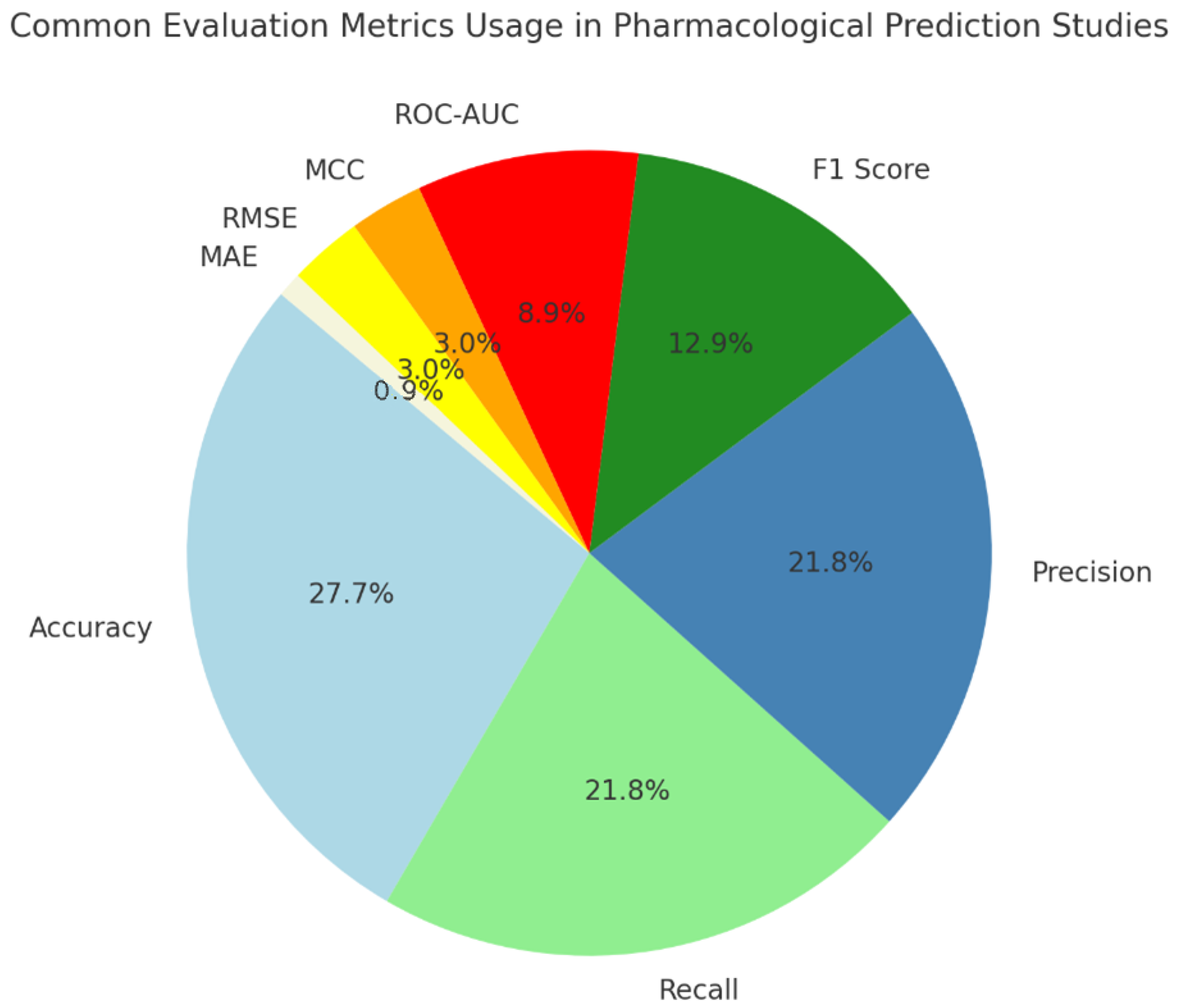
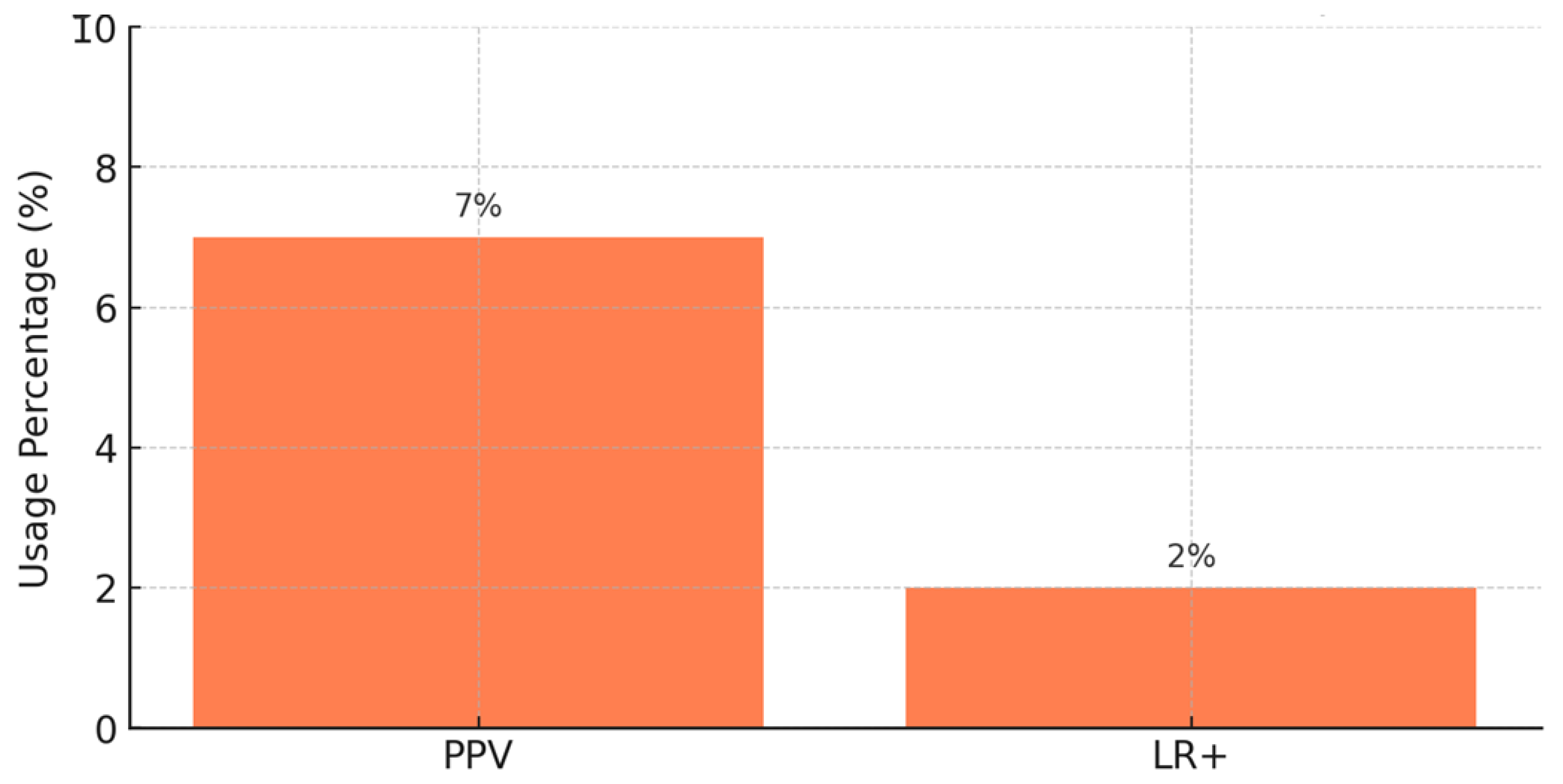
- Uniformity of performance synthesis across large databases with common ML metrics, highlighting the limited—but important—use of PPV and LR+.
- Structured gaps analysis and research agenda (data quality/standardization; multi-omics and text combined analysis; XAI interpretability; scalable evaluation and leakage control).
- A strengths-and-limitations matrix by method family to inform model selection within the constraints of the real world (data modality/size, interpretability requirements, computational resources, intended clinical use).
1.3. Research Questions
- RQ1 (Methods landscape): What are the most commonly used algorithm families in DDI prediction, including traditional ML, DL (DNN/CNN/LSTM/auto-encoder), transformers, graph models (GCN/GAT), KG embeddings, hybrid/multimodal, ensembles, PU-learning, fuzzy/rule-based, and PBPK, their theoretical foundations, and the data they require?
- RQ2 (Performance and robustness): How do accuracy, precision, recall, F1, Receiver Operating Characteristics Curve–Area Under the Curve (ROC-AUC), Matthews Correlation Coefficient (MCC), and, where possible, PPV and LR+ change with the dataset (DrugBank, ChEMBL, KEGG, FAERS, SIDER, TWOSIDES, nSIDES, FDA labels) and with validation design (k-fold CV, temporal/stratified splits, external validation)?
- RQ3 (Evaluation practice): What are the most common and the most suitable protocols (split strategies, imbalance handling, including PU-learning, leakage prevention, calibration) to achieve reproducible and clinically meaningful assessment?
- RQ4 (Hybridization and interpretability): How do hybrid/multimodal models and KG-enhanced deep models compare to single-modality baseline models in accuracy and interpretability?
- RQ5 (Translational readiness): What are current computational/methodological limitations (compute, data curation/standardization, explainability, external validity) that impede clinical translation, and in which directions (e.g., PBPK-aligned XAI, standardized datasets/benchmarks) is the field tradition most promising?
1.4. Rationale for Restructuring Research Questions
- Distinct identification of the problem statement, three objectives, and this study’s contributions are justified and conform to J Pharmacokinet Pharmacodyn’s guidelines for manuscripts [18] to enable the reader to understand the rationale for this study quickly.
- Elimination of redundancy in RQs (i.e., original RQ4 and RQ5 merged to RQ4) is relevant to the current and future Wiley Briefings in Bioinformatics reviews that contribute to model interpretability and knowledge integration [39].
- Implications: By formulating RQ5 around the issue of translational barriers, this review discusses a significant issue mentioned in ScienceDirect’s Drug Discovery Today [40] that links computational studies and clinical application.
2. Materials and Methods
2.1. Coverage
2.1.1. Inclusion Criteria
- Type and degree of study: Proprietary research that proposes or tests a computational/AI model to predict or rank DDI or pairwise ADR risk (i.e., binary DDI presence, interaction type/mechanism, or severity/clinical impact at the drug-pair level).
- Information that presents or exploits DDI evidence: The study either
- -
- (a) applies known DDI/ADR data sources (e.g., DrugBank, TWOSIDES, SIDER, FAERS, ChEMBL, KEGG, FDA labels, Electronic Health Record (EHR)/claims)
- -
- or (b) offers a novel DDI dataset/resource based on curated evidence or pharmacovigilance/clinical evidence, which can be used to develop training/evaluation data.
- Ground truth definition: Ground truth can be labeled information, reported exchanges, or empirical measures of pair-wise alerts; these must be written precisely.
- Results (what the outcome needs to be): The quantitative predictive performance on held-out/bit or cross-validation data is reported using at least one common measure (e.g., ROC-AUC, precision–recall–AUC (PR-AUC), F1, accuracy, precision, recall, MCC) on the pairwise task.
- -
- In multi-class tasks (e.g., interaction type or severity levels), per-class and/or macro/microscores are required.
- -
- For regression outputs (e.g., risk scores), we report /MAE/RMSE or concordance.
- -
- Valuable metrics are often recorded clinically aligned with the metrics (e.g., PPV, LR+, calibration).
- Evaluation design: Details a validation approach (e.g., k-fold CV, stratified/temporal splits, or external test set) that adequately evaluates generalization and avoids label leakage.
- Population and setting. Small-molecule/biologic (human drug products). Only those studies that did not evaluate possible human drugs were excluded. Hence, only those studies were eliminated that involved assessing either non-human or non-therapeutic substances except when the results were subsequently applied to approved human drugs.
- Time window/language. The paper was published between the coverage window (Jan 2019–Nov 2025), in English, and is available in full text.
2.1.2. Exclusion Criteria
- Studies that are not directly related to pDDIs. These studies do not focus on pDDI and offer no additional methodological or conceptual insights.
- Research that lacks empirical data or detailed methodological descriptions.
2.2. Critical Analysis
2.3. Identified Gaps in pDDI Research Studies
3. Analysis of the Research Methodologies Approached
3.1. Transparency
- i.
- Interpretability/XAI (model transparency): Model transparency refers to how much can be predicted and how that can be traced back to inputs or learned correlations (e.g., attention maps, saliency/attribution, graph-attention weights) [24,28,30]; it copes with the notorious transparency in pDDI deep and graph models and is indispensable for clinical trust [24,70,71].
- ii.
- Data and process transparency: This dimension describes what information is used and in what forms (source identification, normalization, feature construction, scaling/imputation, KG building, signal filtering) [65,67,69]. Our common sources in the reviewed studies are DrugBank, ChEMBL, KEGG, FAERS, SIDER, TWOSIDES, nSIDES, and FDA labels [5,13,60,63,66]. Transparent reporting of these provides the ability to replicate labels/features and equitable comparisons between studies [42].
- iii.
- Experimental openness (reproducibility): To ensure independent reproducibility of results, authors should report validation design (k-fold/stratified/temporal splits, external tests) and leakage control [25,36,66,72]. Standard ML metrics such as ROC-AUC, PR-AUC, F1, and MCC should be reported; if clinical metrics are provided, PPV, LR+ should also be provided, with calibration and uncertainty [9,36,48,49].
- iv.
- Transparency of clinical mechanisms: They must relate predictions to biologically or pharmacokinetically plausible mechanisms, such as through PBPK simulation/validation, which explains the changes in exposure [53,59]. Alternatively or in addition, drug–target–pathway chains that warrant pairwise risk can be revealed by knowledge-graph reasoning [26,28,30,34,35]. These mechanisms help adjust model outputs to inform safety and therapy optimization decision-making [48,50].
3.2. Suitability of Methods
- A.
- A classical feature-based ML (LR, SVM, RF, gradient boosting.)LR, SVM, RF, and gradient boosting trees can comfortably handle tabular inputs, such as molecular fingerprints including Extended-Connectivity Fingerprint, diameter 4 (ECFP4), and Molecular ACcess System keys (MACCS); physicochemical descriptors (e.g., logP, molecular weight); bioactivity summaries; and label-derived indicators [12,16,17]. These models exhibit rapid training, easy calibration, and powerful baselines on small/medium datasets, but significant feature engineering is needed when higher-order nonlinearity is essential [8,12]. On small curated datasets, they tend to converge more quickly and calibrate better than deep nets, and deep nets take over as the feature dimensionality and volume of data increase [8,12]. Biomimetic-inspired optimization (e.g., genetic algorithms, swarm-based feature selection) is used to enhance hyperparameter tuning and feature selection efficiency [20,31,81].
- B.
- LSTM on temporal sequences of ADEs.A DDI classification network is based on an LSTM that accepts sparse and noisy ADE time-series as input, which are first compressed using an autoencoder [23]. This autoencoder-to-LSTM pipeline is suitable where temporal variations of exposure or concentration level bear a predictive value and the inputs are missing [23]. Compared to non-temporal, pure static baselines trained on snapshot features, the pipeline outperforms macro-F1. Temporal sequence modeling reflects how biological systems integrate signals over time [23].
- C.
- Deep stacked models (in ensembles, weighted voting).Outputs of DNN (structure features), CNN (substructure/sequence), and RNN/LSTM (temporal/sequence) models are combined through the meta-learner (stacking) or by weighted voting to capture jointly latent sources of errors [21]. Ensembles work well even with heterogeneous feature spaces and noisy labels, though at the expense of additional computational resources [21]. They perform significantly better than any single constituent deep model on average in AUC/F1 and minimize false positives, showing better generalization. A diversity-driven ensemble selection can mimic cooperative behavior in natural systems [21].
- D.
- GNNs and KG techniques.Drug structure: (i) Molecular graphs (atoms as nodes, bonds as typed edges) and (ii) DDI/biomedical KGs in which drugs, targets, pathways, and ADEs are related to each other using multi-relation edges. Topological signal represents relational information that a graph model uses, such as multi-hop paths, edge types, motifs/context, and neighbor-importance weights learned with attention [28,30]. Biomimetic inspiration, like immune-system mechanisms, can guide multi-hop message passing in adaptive network behavior [82]. GNs/GATs process molecular or DDI KGs at native resolution, with attention weights focusing on informative neighbors and relations [22,33]. The learned features are concatenated with KG embeddings (e.g., translational/rotational families) and passed into an MLP prediction/GNN to combine the relational semantic information with node/molecule features [26,29,30]. Graph models are favored when relationships themselves are predictive and when putative explanatory pathways are wanted [28,30]. The GAT tends to perform better at DDI relative to the vanilla GCN because it emphasizes informative neighbors and types of edges, and KG-integrated DL has lower false-positive rates relative to graph models that overlook the meanings of relationships [22,28,30,33].
- E.
- Transformer-based encoder (DDI-Transform; RTs; Pretrained Tokenizer and BiLSTM Model for pDDI (PTB-DDI)).Transformer encoders based on NLP that encode Simplified Molecular Input Line Entry Systems (SMILEs) or molecular substructures and relation sequences to predict DDIs [41]. Compared to typical sequence models, DDI-Transform has a superior predictive performance on DDI event prediction [38]. Relational/knowledge-aware transformers, e.g., encoding the edge types and KG signals, outperform the non-relational baselines [29,39]. Adaptive context weighting are biomimetic strategies that could enhance relational reasoning [81]. The TB-DDI model uses a pretrained tokenizer followed by a BiLSTM that serves as a computationally economical sequence baseline, since full transformers are computationally expensive [43].
- F.
- TL and PU learning.We evaluate K-dimensional representations in the context of TL, which pretrains on a large source dataset and fine-tunes on a small target dataset, which improves performance under label scarcity compared to training from scratch [70]. PU learning makes explicit use of unlabeled pairs to help combat the sentence-favored negatives, and it generalizes better at a large scale than negative sampling naively [72].
- G.
- Mechanistic PBPK.PBPK attains a mechanistic basis to explain and predict DDIs at the enzyme/transporter level and exposure changes. It simulates physiological ADME processes with AI predictions to provide mechanistic interpretability [48,50]. PBPK introduces clinical-mechanism transparency that can be applied in the explanation of the high-risk pairs or confirmation of AI predictions within contexts of dose and labeling [7,53,59,79]. PBPK is complementary to ML/DL screening as it has a physiological basis, and ML/DL has scalable discovery [48,49,50].
- H.
- Multimodal Integration of graphs, text, and molecular data.The King–Young-based multimodal DDI prediction framework’s representative pipelines jointly encode label/literature text (NLP/transformers), molecular graphs/ fingerprints, and KG relations; embeddings are concatenated or cross-attended and scored with an MLP/GNN [34,35,36]. The multimodal combination performs better than the single-modality baselines that were trained using a single modality (text or structure) and, unlike these baselines, also increases interpretability [34,35,36].
3.3. Reproducibility
- A.
- Basic reporting criteria pDDI.
- B.
- Recommended checks.
- Noise/PU sensitivity: Exploit label noise and PU settings to represent negative or uncertainty in negatives [72].
3.4. Datasets and Preprocessing
Link to DDI Modeling
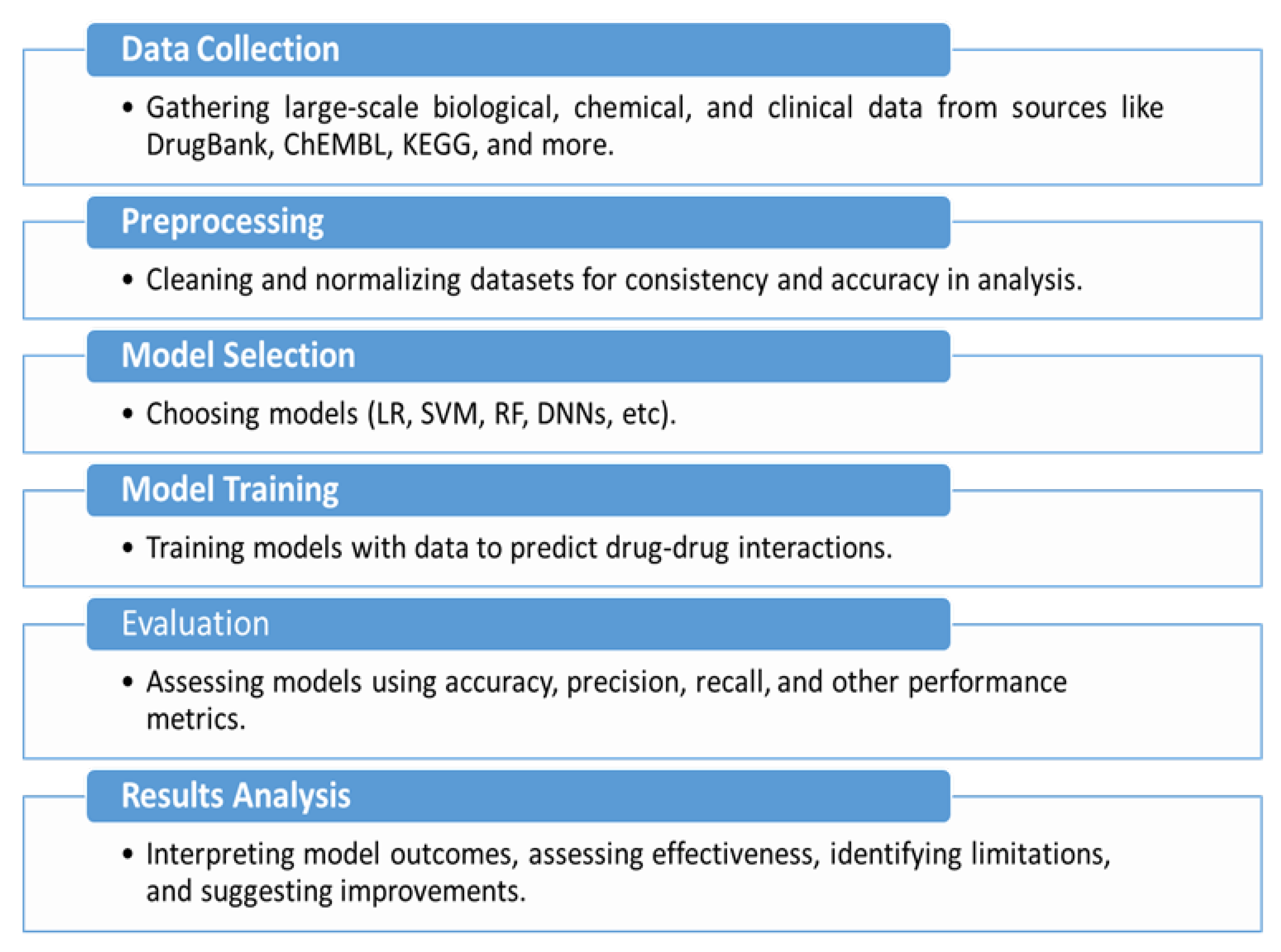
- Predicting the mechanism of action can be performed with the information available in ChEMBL and KEGG at pathway and target levels.
- By using FAERS and TWOSIDES, accurate validation and successful detection of any noise are possible for adverse DDI cases.
- DrugBank enables modelers to integrate chemicals, pharmacokinetics, and interaction data into neural networks by using multiple data types.
3.5. Preprocessing Steps
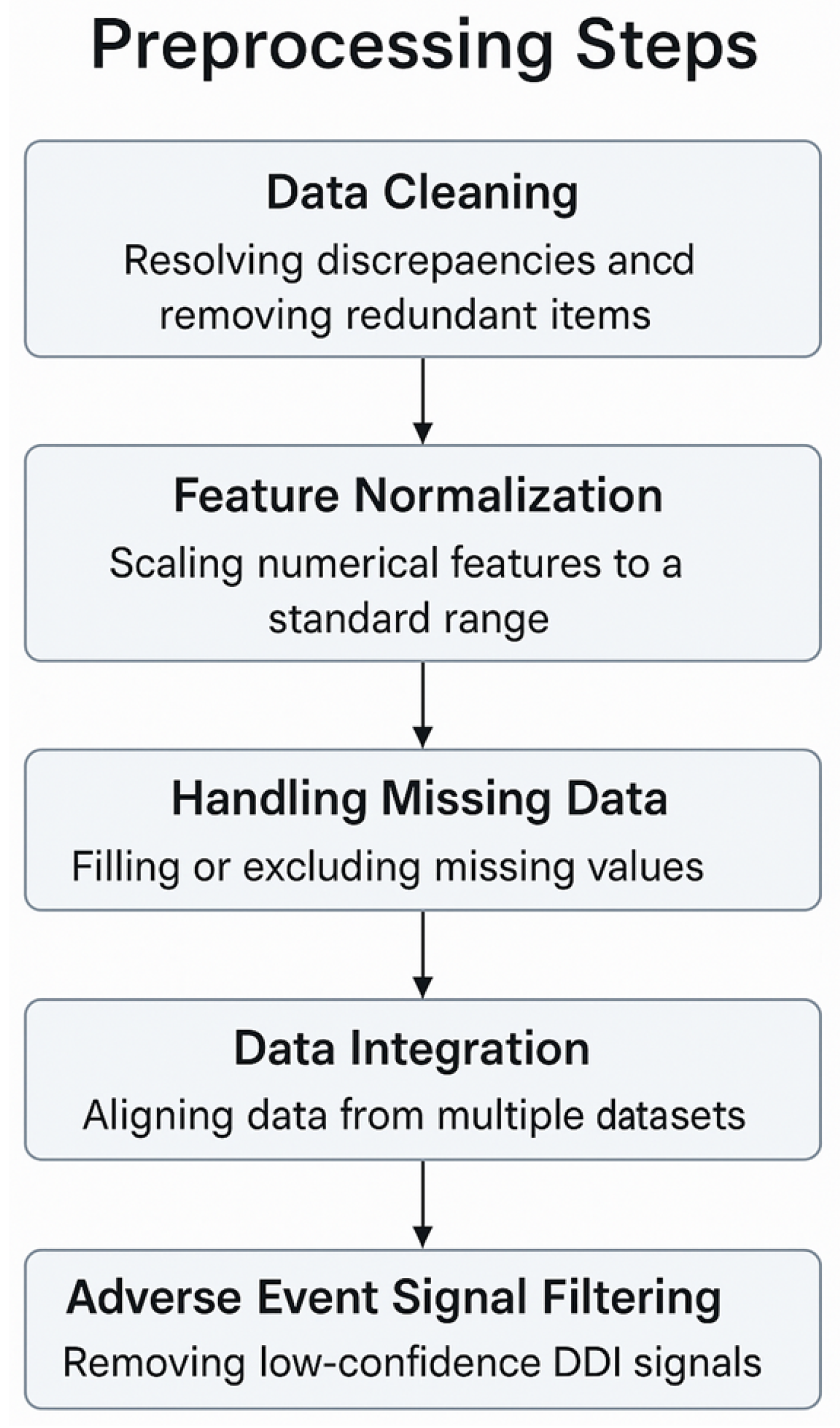
- Data cleaning (entity normalization).
- Frequently, drug names use different spellings, by brands, come in different salt forms, or are listed as synonyms in medical databases (like ‘acetaminophen’ and ‘paracetamol’ or ‘ibuprofen sodium’ and ‘ibuprofen’). Such entities have to be linked to the same standard, for example, Internal Nonproprietary Names (INN) or DrugBank IDs, by using controlled vocabularies.
- Medical Dictionary for Regulatory Activities (MedDRA) coding hierarchies were used to resolve when side effect terms differed (like using ‘nausea’ instead of ‘feeling sick’).
- Feature normalization and scaling.
- Researchers reduced the redundancy and improved learning in high-dimensional chemical data (such as RDKit fingerprints) using Principal Component Analysis (PCA) or t-distributed Stochastic Neighbor Embedding (t-SNE) methods [41].
- Missing values (imputation strategies).
- For missing bioactivity data in ChEMBL or incomplete pharmacokinetic profiles in DrugBank, mean or k-nearest-neighbor (KNN) imputation methods were used depending on the data sparsity.
- Data integration.
- Information gathered from DrugBank and KEGG needed to be aligned with drugs by using identifiers common to both datasets. To relate drugs to targets, pathways, and outcomes, authors made use of tools such as International Chemical Identifier (InChI) keys, SMILES strings, or Universal Protein Resource (UniProt) IDs [62,69].
- Adverse event signal filtering.
4. Results and Discussion
4.1. Overview of Models Applied for pDDI and Related Biomimetic Considerations
4.2. A Brief Overview of Approached Data, Models, and Applications
4.2.1. Data Sources
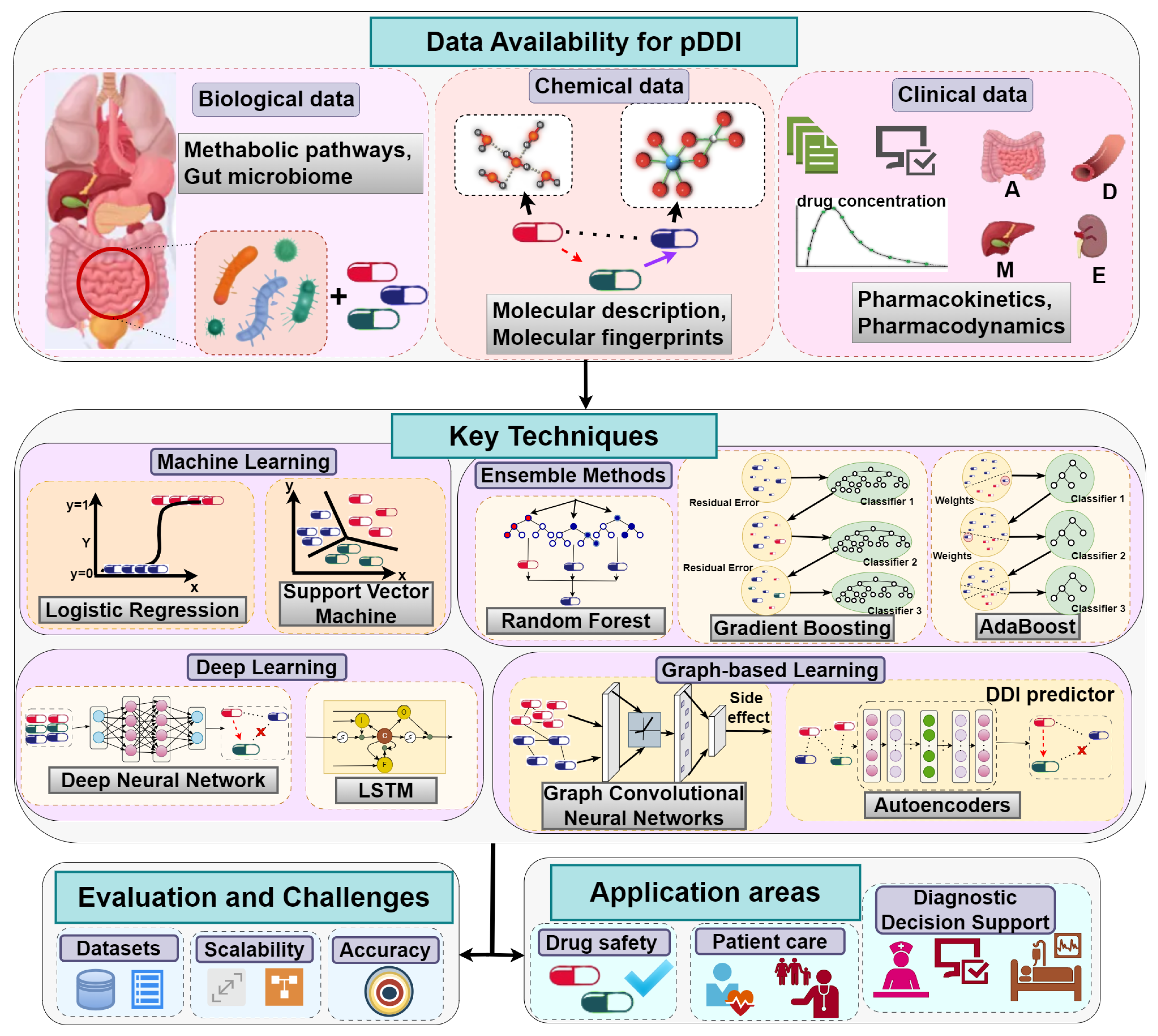
- Biological data: Specifically, biological data refers to metabolisms, relations between gut microbiota and other microbiota, and protein–protein relations.
- Chemical data: These may include molecular descriptors such as SMILES, molecular fingerprints such as ECFP, and structural properties.
- Pharmacokinetic data: This refers to absorptive ability, metabolism, drug concentration, and pharmacodynamic data—FAERS and TWOSIDES data.
4.2.2. Modeling Methods
- i.
- Traditional ML-based models are LR, SVM, and RF. The methods’ interpretability and improved efficiency have a significant impact on small-scale databases.
- ii.
- DL architectures leverage complex patterns in large-scale data:
- DNNs: Incorporate nonlinearity in high-dimensional dataset.
- LSTM networks: Work on sequences in any dimension (for example, concentration of drugs over time).
- Autoencoder: Data compression which keeps the highlights of the dataset, i.e., compact representation.
- iii.
- Graph-based techniques are able to exploit the inherent structure of other networks of drug interactions.
- GCNs and GATs: Able to encode the relationships between the drugs, targets, and diseases.
- Knowledge Graphs: Represent a position of semantic relations (e.g., DrugBank and KEGG).
- iv.
- Ensemble methods combine two or more models (SVM + RF + DNNs) to improve performance and reliability. Some are gradient boosting, and the last two are stacked classifiers.
4.2.3. Applications and Challenges
- i.
- Main applications:
- Drug safety: Early detection of adverse interactions.
- Patient care: Exploring ways to make the appropriate treatment regimens more suitable to the patient.
- Diagnostic decision support: Integration with clinical workflows (e.g., EHR systems).
- ii.
- Main challenges:
- Data quality: Heterogeneity and incompleteness of datasets.
- Scalability: Usage of graph-based and DL models to solve complex problems increases the computational load.
- Interpretability: Balancing accuracy with clinical explainability.
4.2.4. Selection and Evidence Limitations
4.3. Clinical Translation and Deployment: Dataset Limitations and Model Challenges
5. Conclusions
Author Contributions
Funding
Institutional Review Board Statement
Informed Consent Statement
Data Availability Statement
Acknowledgments
Conflicts of Interest
Abbreviations
| ADE | Adverse Drug Events |
| ADME | Absorption, Distribution, Metabolism, and Excretion |
| ADRs | Adverse Drug Reactions |
| AI | Artificial Intelligence |
| ChEMBL | Chemical Database of Bioactive Molecules |
| DAS-DDI | Dual-View Framework with Drug Association and Drug Structure for pDDI |
| DTs | Decision Trees |
| DL | Deep Learning |
| DNN | Deep Neural Network |
| DDIs | Drug–Drug Interactions |
| DSIL-DDI | Domain-Invariant Substructure Interaction Learning for pDDI |
| EHR | Electronic Health Record |
| EM | Ensemble Methods |
| FAERS | FDA Adverse Event Reporting System |
| FDA | Food and Drug Administration |
| GADNN | Graph Attention-based Deep Neural Network |
| GATs | Graph Attention Networks |
| GBTs | Gradient Boosted Trees |
| GCNs | Graph Convolutional Networks |
| GNNs | Graph Neural Networks |
| HTCL-DDI | Hierarchical Triple-View Contrastive Learning Framework for pDDI |
| KEGG | Kyoto Encyclopedia of Genes and Genomes |
| KNN | K-Nearest Neighbors |
| LR | Logistic Regression |
| LR+ | Positive Likelihood Ratio |
| LSTM | Long Short Term Memory |
| MCC | Matthews Correlation Coefficient |
| ML | Machine Learning |
| NLP | Natural Language Processing |
| nSIDES | Drug Side Effects and Interactions |
| PBPK | Physiologically Based Pharmacokinetic |
| pDDI | Prediction of Drug–Drug Interaction |
| PEB-DDI | A Task-Specific Dual-View Substructural Learning Framework for pDDI |
| PPV | Positive Predictive Value |
| PR-AUC | Precision–Recall–AUC |
| PTB-DDI | Pretrained Tokenizer and BiLSTM Model for pDDI |
| PU | Positive Unlabeled |
| RF | Random Forest |
| ROC-AUC | Receiver Operating Characteristics Curve–Area Under the Curve |
| RNNs | Recurrent Neural Networks |
| RTs | Relational Transformers |
| RQs | Research Questions |
| SIDER | Side Effect Resource |
| SMILES | Simplified Molecular Input Line Entry System |
| SSF-DDI | Drug Sequence and Substructure Features for pDDI |
| SubGE-DDI | Subgraph Enhance Model for pDDI |
| SVMs | Support Vector Machines |
| TL | Transfer Learning |
| TWOSIDES | Towards Understanding Side Effects of Drugs for Healthcare Data Analytics |
| XAI | Explainable AI |
References
- Zanger, U.M.; Schwab, M. Cytochrome P450 enzymes in drug metabolism: Regulation of gene expression, enzyme activities, and impact of genetic variation. Pharmacol. Ther. 2013, 138, 103–141. [Google Scholar] [CrossRef] [Scilit] [PubMed]
- Masnoon, N.; Shakib, S.; Kalisch-Ellett, L.; Caughey, G.E. What is polypharmacy? A systematic review of definitions. BMC Geriatr. 2017, 17, 230. [Google Scholar] [CrossRef] [Scilit] [PubMed]
- Kontsioti, E.; Maskell, S.; Anderson, I.; Pirmohamed, M. Identifying Drug–Drug Interactions in Spontaneous Reports Utilizing Signal Detection and Biological Plausibility Aspects. Clin. Pharmacol. Ther. 2024, 116, 165–176. [Google Scholar] [CrossRef] [Scilit] [PubMed]
- Martinez, C.J.; Torrie, J.H.; Allen, O.N. Correlation analysis of criteria of symbiotic nitrogen fixation by soybeans (Glycine max Merr.). Zentralbl. Bakteriol. Parasitenkd. Infektionskr. Hyg. 1970, 124, 212–216. [Google Scholar] [CrossRef] [Scilit]
- OpenFDA. Available online: https://open.fda.gov/data/faers/ (accessed on 25 November 2025).
- Andersson, P.; Brisander, M.; Liljebris, C.; Jesson, G.; Lennernäs, H. Severe Impact of Omeprazole Timing on pH-Sensitive Dasatinib Absorption: Unveiling Substantial Drug–Drug Interaction. J. Clin. Pharmacol. 2025, 65, 588–597. [Google Scholar] [CrossRef] [Scilit]
- Zitnik, M.; Agrawal, M.; Leskovec, J. Modeling polypharmacy side effects with graph convolutional networks. Bioinformatics 2018, 34, i457–i466. [Google Scholar] [CrossRef] [Scilit]
- Han, K.; Li, Y.; Zhang, L.; Wang, J.; Chen, X.; Liu, Q.; Zhao, Y. A Review of Approaches for Predicting Drug–Drug Interactions Based on Machine Learning. Front. Pharmacol. 2022, 12, 814858. [Google Scholar] [CrossRef] [Scilit]
- Feng, Y.H.; Zhang, S.W.; Shi, J.Y. DPDDI: A deep predictor for drug-drug interactions. BMC Bioinform. 2020, 21, 419. [Google Scholar] [CrossRef] [Scilit]
- Luo, H.; Zhang, Y.; Wang, Y.; Li, X.; Chen, J.; Sun, Q.; Zhao, R.; Wu, L.; Tang, H. Drug-drug interactions prediction based on deep learning and knowledge graph: A review. iScience 2024, 27, 109148. [Google Scholar] [CrossRef] [Scilit]
- Chen, T.; Guestrin, C. XGBoost: A scalable tree boosting system. In Proceedings of the ACM SIGKDD International Conference on Knowledge Discovery and Data Mining, San Francisco, CA, USA, 13–17 August 2016; ACM: New York, NY, USA, 2016; pp. 785–794. [Google Scholar] [CrossRef] [Scilit]
- Chugh, H.; Singh, S. Machine learning applications in rational drug discovery. In Drug Design Using Machine Learning; Wiley: Hoboken, NJ, USA, 2022; pp. 97–116. [Google Scholar] [CrossRef] [Scilit]
- Jang, H.Y.; Song, J.; Kim, J.H.; Lee, H.; Kim, I.-W.; Moon, B.; Oh, J.M. Machine learning-based quantitative prediction of drug exposure in drug-drug interactions using drug label information. npj Digit. Med. 2022, 5, 1–12. [Google Scholar] [CrossRef] [Scilit]
- Cucos, A.M.; Iantovics, L.B. Machine Learning-based Adverse Drug Reaction Prediction: Model Comparisons, Feature Optimization and Generative AI Challenges. Procedia Comput. Sci. 2025, 270, 1139–1148. [Google Scholar] [CrossRef] [Scilit]
- Gheorghita, F.-I.; Bocanet, V.-I.; Iantovics, L.B. Machine Learning-based Drug-Drug Interaction Prediction: A Critical Review of Models, Limitations, and Data Challenges. Front. Pharmacol. 2025, 16, 1632775. [Google Scholar] [CrossRef] [Scilit] [PubMed]
- Dietterich, T.G. Ensemble Methods in Machine Learning. In First International Workshop on Multiple Classifier Systems; Springer: Berlin/Heidelberg, Germany, 2000; pp. 1–15. Available online: http://www.cs.orst.edu/1255tgd (accessed on 25 November 2025).
- Rohani, N.; Eslahchi, C. Drug-Drug Interaction Predicting by Neural Network Using Integrated Similarity. Sci. Rep. 2019, 9, 13645. [Google Scholar] [CrossRef] [Scilit]
- Zhou, J.-B.; Tang, D.; He, L.; Lin, S.; Lei, J.H.; Sun, H.; Xu, X.; Deng, C.-X. Machine learning model for anti-cancer drug combinations: Analysis, prediction, and validation. Pharmacol. Res. 2023, 194, 106830. [Google Scholar] [CrossRef] [Scilit] [PubMed]
- Park, M.; Kim, D.; Kim, I.; Im, S.H.; Kim, S. Drug approval prediction based on the discrepancy in gene perturbation effects between cells and humans. eBioMedicine 2023, 94, 104705. [Google Scholar] [CrossRef] [Scilit] [PubMed]
- Wang, Y.; Hua, C.; Khan, A.H. Advances in zeroing neural networks: Bio-inspired structures, performance enhancements, and applications. Biomimetics 2025, 10, 279. [Google Scholar] [CrossRef] [Scilit]
- Vo, T.H.; Nguyen, N.T.K.; Le, N.Q.K. Improved prediction of drug-drug interactions using ensemble deep neural networks. Med. Drug Discov. 2023, 17, 100149. [Google Scholar] [CrossRef] [Scilit]
- Zhang, R.; Wang, X.; Wang, P.; Meng, Z.; Cui, W.; Zhou, Y. HTCL-DDI: A hierarchical triple-view contrastive learning framework for drug–drug interaction prediction. Brief. Bioinform. 2023, 24, bbad324. [Google Scholar] [CrossRef] [Scilit]
- Alrowais, F.; Alotaibi, S.S.; Hilal, A.M.; Marzouk, R.; Mohsen, H.; Osman, A.E.; Alneil, A.A.; Eldesouki, M.I. Clinical Decision Support Systems to Predict Drug–Drug Interaction Using Multilabel Long Short-Term Memory with an Autoencoder. Int. J. Environ. Res. Public Health 2023, 20, 2696. [Google Scholar] [CrossRef] [Scilit]
- Nyamabo, A.K.; Yu, H.; Liu, Z.; Shi, J.Y. Drug-drug interaction prediction with learnable size-Adaptive molecular substructures. Brief. Bioinform. 2022, 23, bbab441. [Google Scholar] [CrossRef] [Scilit]
- Li, X.; Xiong, Z.; Zhang, W.; Liu, S. Deep learning for drug-drug interaction prediction: A comprehensive review. Quant. Biol. 2024, 12, 30–52. [Google Scholar] [CrossRef] [Scilit]
- Li, N.; Yang, Z.; Wang, J.; Lin, H. Drug–target interaction prediction using knowledge graph embedding. iScience 2024, 27, 109393. [Google Scholar] [CrossRef] [Scilit] [PubMed]
- Singh, B.; Murugaiah, M. Bio-inspired Computing and Associated Algorithms. In High Performance Computing in Biomimetics; Ahmad, K.A., Hamid, N.A.W.A., Jawaid, M., Khan, T., Singh, B., Eds.; Series in BioEngineering; Springer: Singapore, 2024. [Google Scholar] [CrossRef] [Scilit]
- Nejati, M.; Lakizadeh, A. GADNN: A graph attention-based method for drug-drug association prediction considering the contribution rate of different types of drug-related features. Informatics Med. Unlocked 2024, 44, 101429. [Google Scholar] [CrossRef] [Scilit]
- Bai, H.; Lu, S.; Zhang, T.; Cui, H.; Nakaguchi, T.; Xuan, P. Graph reasoning method enhanced by relational transformers and knowledge distillation for drug-related side effect prediction. iScience 2024, 27, 109571. [Google Scholar] [CrossRef] [Scilit] [PubMed]
- Zhong, Y.; Chen, X.; Zhao, Y.; Chen, J.; Gao, J.; Weng, Z. DDI-GCN: Drug-drug interaction prediction via explainable graph convolutional networks. Artif. Intell. Med. 2023, 144, 102640. [Google Scholar] [CrossRef] [Scilit]
- Na, H.; Kim, E. Trends in national R&D projects on biomimetics in South Korea. Biomimetics 2025, 10, 275. [Google Scholar] [CrossRef] [Scilit]
- Tanvir, F.; Saifuddin, K.M.; Islam, M.I.K.; Akbas, E. DDI Prediction with Heterogeneous Information Network - Meta-Path Based Approach. IEEE/ACM Trans. Comput. Biol. Bioinforma. 2024, 21, 1168–1179. [Google Scholar] [CrossRef] [Scilit]
- Chen, X.; Liu, X.; Wu, J. GCN-BMP: Investigating graph representation learning for DDI prediction task. Methods 2020, 179, 47–54. [Google Scholar] [CrossRef] [Scilit]
- Shi, Y.; He, M.; Chen, J.; Han, F.; Cai, Y. SubGE-DDI: A new prediction model for drug-drug interaction established through biomedical texts and drug-pairs knowledge subgraph enhancement. PLoS Comput. Biol. 2024, 20, e1011989. [Google Scholar] [CrossRef] [Scilit]
- Tang, Z.; Chen, G.; Yang, H.; Zhong, W.; Chen, C.Y.C. DSIL-DDI: A Domain-Invariant Substructure Interaction Learning for Generalizable Drug-Drug Interaction Prediction. IEEE Trans. Neural Netw. Learn. Syst. 2024, 35, 10552–10560. [Google Scholar] [CrossRef] [Scilit]
- Yuan, Y.; Yue, J.; Zhang, R.; Su, W. PHGL-DDI: A pre-training based hierarchical graph learning framework for drug-drug interaction prediction. Expert Syst. Appl. 2025, 270, 126408. [Google Scholar] [CrossRef] [Scilit]
- Saifuddin, K.M.; Bumgardner, B.; Tanvir, F.; Akbas, E. HyGNN: Drug-Drug Interaction Prediction via Hypergraph Neural Network. In Proceedings of the 2023 IEEE 39th International Conference on Data Engineering (ICDE), Anaheim, CA, USA, 3–7 April 2023; IEEE: Piscataway, NJ, USA, 2023; pp. 1503–1516. [Google Scholar] [CrossRef] [Scilit]
- Su, J.; Qian, Y. DDI-Transform: A neural network for predicting drug-drug interaction events. Quant. Biol. 2024, 12, 155–163. [Google Scholar] [CrossRef] [Scilit]
- Mohiuddin, K.; Alam, M.A.; Alam, M.M.; Welke, P.; Martin, M.; Lehmann, J.; Vahdati, S. Retention Is All You Need. In Proceedings of the 32nd ACM International Conference on Information and Knowledge Management, Birmingham, UK, 21–25 October 2023; pp. 4752–4758. [Google Scholar] [CrossRef] [Scilit]
- Shang, J.; Tang, X.; Sun, Y. PhaTYP: Predicting the lifestyle for bacteriophages using BERT. Brief. Bioinform. 2023, 24, bbac487. [Google Scholar] [CrossRef] [Scilit] [PubMed]
- Luong, K.; Singh, A. Application of Transformers in Cheminformatics. J. Chem. Inf. Model. 2024, 64, 4392–4409. [Google Scholar] [CrossRef] [Scilit] [PubMed]
- Michels, J.; Bandarupalli, R.; Ahangar Akbari, A.; Le, T.; Xiao, H.; Li, J.; Hom, E.F.Y. Natural Language Processing Methods for the Study of ProteinLigand Interactions. J. Chem. Inf. Model. 2025, 65, 2191–2213. [Google Scholar] [CrossRef] [Scilit] [PubMed]
- Qiu, J.; Yan, X.; Tian, Y.; Li, Q.; Liu, X.; Yang, Y.; Tong, H.H.Y.; Liu, H. PTB-DDI: An Accurate and Simple Framework for Drug–Drug Interaction Prediction Based on Pre-Trained Tokenizer and BiLSTM Model. Int. J. Mol. Sci. 2024, 25, 11385. [Google Scholar] [CrossRef] [Scilit]
- Cheng, J.; Zhang, Y.; Zhang, H.; Lu, M. Fuzzy-DDI: A robust fuzzy logic query model for complex drug–drug interaction prediction. Artif. Intell. Med. 2025, 164, 103125. [Google Scholar] [CrossRef] [Scilit]
- Masumshah, R.; Eslahchi, C. PSO-FeatureFusion: A general framework for fusing heterogeneous features via particle swarm optimization. Bioinform. Adv. 2025, 5, vbaf263. [Google Scholar] [CrossRef] [Scilit]
- Masumshah, R.; Eslahchi, C. DPSP: A multimodal deep learning framework for polypharmacy side effects prediction. Bioinform. Adv. 2023, 3, vbad110. [Google Scholar] [CrossRef] [Scilit]
- Tanvir, F.; Islam, M.I.K.; Akbas, E. Predicting drug–drug interactions using meta-path based similarities. In Proceedings of the 2021 IEEE Conference on Computational Intelligence in Bioinformatics and Computational Biology (CIBCB), Melbourne, Australia, 13–15 October 2021; IEEE: Piscataway, NJ, USA, 2021; pp. 1–8. [Google Scholar] [CrossRef] [Scilit]
- Perrier, J.; Gualano, V.; Helmer, E.; Namour, F.; Lukacova, V.; Taneja, A. Drug–drug interaction prediction of ziritaxestat using a physiologically based enzyme and transporter pharmacokinetic network interaction model. Clin. Transl. Sci. 2023, 16, 2222–2235. [Google Scholar] [CrossRef] [Scilit]
- Loer, H.L.H.; Kovar, C.; Rüdesheim, S.; Marok, F.Z.; Fuhr, L.M.; Selzer, D.; Schwab, M.; Lehr, T. Physiologically based pharmacokinetic modeling of imatinib and N-desmethyl imatinib for drug–drug interaction predictions. CPT Pharmacomet. Syst. Pharmacol. 2024, 13, 926–940. [Google Scholar] [CrossRef] [Scilit] [PubMed]
- Amiel, M.; Ke, A.; Gelone, S.P.; Jones, H.M.; Wicha, W. Physiologically-based pharmacokinetic modeling of the drug–drug interaction between ivacaftor and lefamulin in cystic fibrosis patients. CPT Pharmacomet. Syst. Pharmacol. 2024, 13, 589–598. [Google Scholar] [CrossRef] [Scilit] [PubMed]
- Zheng, X.; Chen, H.; Lin, D.; Hu, G.; Zhou, H. Inhibition Mechanism of Ketamine-Apatinib by CYP2C9 and 3A4: A Prediction of Possible Drug-Drug Interaction. Biopharm. Drug Dispos. 2025, 46. [Google Scholar] [CrossRef] [Scilit] [PubMed]
- Saqr, A.; Al-Kofahi, M.; Mohamed, M.; Dorr, C.; Remmel, R.P.; Onyeaghala, G.; Oetting, W.S.; Guan, W.; Mannon, R.B.; Matas, A.J.; et al. Steroid–tacrolimus drug–drug interaction and the effect of CYP3A genotypes. Br. J. Clin. Pharmacol. 2024, 2837–2848. [Google Scholar] [CrossRef] [Scilit]
- Patel, N.K.; Chen, K.; Chen, S.; Liu, K. Physiologically-based pharmacokinetic model of sparsentan to evaluate drug–drug interaction potential. CPT Pharmacomet. Syst. Pharmacol. 2024, 13, 317–329. [Google Scholar] [CrossRef] [Scilit]
- Tan, S.P.F.; Wu, H.; Rostami-Hodjegan, A.; Scotcher, D.; Galetin, A. Evaluation of Adefovir PBPK Model to Assess Biomarker-Informed OAT1 Drug–Drug Interaction and Effect of Chronic Kidney Disease. CPT Pharmacomet. Syst. Pharmacol. 2025, 14, 964–974. [Google Scholar] [CrossRef] [Scilit]
- Purohit, V.S.; Huh, Y.; Dowty, M.E.; Plotka, A.; Lejeune, A.; Kalluru, H.; Hee, B. Drug–drug interaction profile of ritlecitinib as perpetrator and victim through cytochrome P450. Br. J. Clin. Pharmacol. 2025, 91, 2316–2326. [Google Scholar] [CrossRef] [Scilit]
- Liu, H.; Yu, Y.; Qin, Y.; Han, B. PBPK modelling for the evaluation of drug–drug interaction between meropenem and valproic acid. Br. J. Clin. Pharmacol. 2024, 91, 1198–1207. [Google Scholar] [CrossRef] [Scilit]
- Chen, G.; Sun, K.; Michon, I.; Barter, Z.; Neuhoff, S.; Ghosh, L.; Ilic, K.; Song, I.H. Physiologically Based Pharmacokinetic Modeling for Maribavir to Inform Dosing in Drug-Drug Interaction Scenarios with CYP3A4 Inducers and Inhibitors. J. Clin. Pharmacol. 2024, 64, 590–600. [Google Scholar] [CrossRef] [Scilit]
- Dallmann, A.; van den Anker, J.; Ahmadzia, H.K.; Rakhmanina, N. Mechanistic Modeling of the Drug-Drug Interaction Between Efavirenz and Dolutegravir: Is This Interaction Clinically Relevant When Switching From Efavirenz to Dolutegravir During Pregnancy? J. Clin. Pharmacol. 2023, 63, S81–S95. [Google Scholar] [CrossRef] [Scilit]
- Li, L.; Zhang, Y.-Y.; Sharma, J.; Cartot-Cotton, S.; Crawford, N.; Macha, S.; Li, Y.; Sahi, J. Drug–drug interaction study with itraconazole supplemented with physiologically based pharmacokinetic modelling to characterize the effect of CYP3A inhibitors on venglustat pharmacokinetics. Br. J. Clin. Pharmacol. 2025, 91, 2304–2315. [Google Scholar] [CrossRef] [Scilit] [PubMed]
- DrugBank Online|Database for Drug and Drug Target Info. Available online: https://go.drugbank.com/ (accessed on 25 November 2025).
- ChEMBL. Available online: https://www.ebi.ac.uk/chembl/ (accessed on 25 November 2025).
- KEGG: Kyoto Encyclopedia of Genes and Genomes. Available online: https://www.genome.jp/kegg/ (accessed on 25 November 2025).
- Krix, S.; DeLong, L.N.; Madan, S.; Domingo-Fernández, D.; Ahmad, A.; Gul, S.; Zaliani, A.; Fröhlich, H. MultiGML: Multimodal graph machine learning for prediction of adverse drug events. Heliyon 2023, 9, e19441. [Google Scholar] [CrossRef] [Scilit] [PubMed]
- SIDER Side Effect Resource. Available online: http://sideeffects.embl.de/ (accessed on 25 November 2025).
- Pino, J.C.; Posso, C.; Joshi, S.K.; Nestor, M.D.; Moon, J.; Hansen, J.R.; Hutchinson-Bunch, C.; Gritsenko, M.A.; Weitz, K.K.; Watanabe-Smith, K.; et al. Mapping the proteogenomic landscape enables prediction of drug response in acute myeloid leukemia. Cell Rep. Med. 2024, 5, 101359. [Google Scholar] [CrossRef] [Scilit] [PubMed]
- nSIDES. Databases for Drug Side Effects and Drug Interactions from the Tatonetti Lab. Available online: https://nsides.io/ (accessed on 25 November 2025).
- Lu, X.; Xie, L.; Xu, L.; Mao, R.; Xu, X.; Chang, S. Multimodal fused deep learning for drug property prediction: Integrating chemical language and molecular graph. Comput. Struct. Biotechnol. J. 2024, 23, 1666–1679. [Google Scholar] [CrossRef] [Scilit]
- Abbasi, F.; Rousu, J. New methods for drug synergy prediction: A mini-review. Curr. Opin. Struct. Biol. 2024, 86, 102827. [Google Scholar] [CrossRef] [Scilit]
- Mathur, A.; Ghosh, R.; Nunes-alves, A. Recent Progress in Modeling and Simulation of Biomolecular Crowding and Condensation Inside Cells. J. Chem. Inf. Model. 2024, 64, 9063–9081. [Google Scholar] [CrossRef] [Scilit]
- Suhartono, D.; Majiid, M.R.N.; Handoyo, A.T.; Wicaksono, P.; Lucky, H. Towards a more general drug target interaction prediction model using transfer learning. Procedia Comput. Sci. 2022, 216, 370–376. [Google Scholar] [CrossRef] [Scilit]
- Kim, E.; Nam, H. DeSIDE-DDI: Interpretable prediction of drug-drug interactions using drug-induced gene expressions. J. Cheminform. 2022, 14, 9. [Google Scholar] [CrossRef] [Scilit]
- Zheng, Y.; Peng, H.; Zhang, X.; Zhao, Z.; Gao, X.; Li, J. DDI-PULearn: A positive-unlabeled learning method for large-scale prediction of drug-drug interactions. BMC Bioinform. 2019, 20, 661. [Google Scholar] [CrossRef] [Scilit]
- Alakhdar, A.; Poczos, B.; Washburn, N. Diffusion Models in De Novo Drug Design. J. Chem. Inf. Model. 2024, 64, 7238–7256. [Google Scholar] [CrossRef] [Scilit]
- Shen, X.; Li, Z.; Liu, Y.; Song, B.; Zeng, X. PEB-DDI: A Task-Specific Dual-View Substructural Learning Framework for Drug-Drug Interaction Prediction. IEEE J. Biomed. Health Inform. 2024, 28, 569–579. [Google Scholar] [CrossRef] [Scilit] [PubMed]
- Niu, D.; Zhang, L.; Zhang, B.; Zhang, Q.; Li, Z. DAS-DDI: A dual-view framework with drug association and drug structure for drug–drug interaction prediction. J. Biomed. Inform. 2024, 156, 104672. [Google Scholar] [CrossRef] [Scilit] [PubMed]
- Gao, P.; Gao, F.; Ni, J.; Wang, Y.; Wang, F.; Zhang, Q. Medical knowledge graph question answering for drug-drug interaction prediction based on multi-hop machine reading comprehension. CAAI Trans. Intell. Technol. 2024, 9, 1217–1228. [Google Scholar] [CrossRef] [Scilit]
- de Vries, M.; Bonsmann, S.; Pausch, J.; Sumner, M.; Birkmann, A.; Zimmermann, H.; Kropeit, D. Evaluation of the clinical drug–drug interaction potential of Pritelivir on transporters and CYP450 enzymes using a cocktail approach. Clin. Pharmacol. Drug Dev. 2024, 13, 321–333. [Google Scholar] [CrossRef] [Scilit] [PubMed]
- Zhu, J.; Che, C.; Jiang, H.; Xu, J.; Yin, J.; Zhong, Z. SSF-DDI: A deep learning method utilizing drug sequence and substructure features for drug–drug interaction prediction. BMC Bioinform. 2024, 25, 39. [Google Scholar] [CrossRef] [Scilit]
- Hanley, M.J.; Rowland Yeo, K.; Tugnait, M.; Iwasaki, S.; Narasimhan, N.; Zhang, P.; Venkatakrishnan, K.; Gupta, N. Evaluation of the drug–drug interaction potential of Brigatinib using a physiologically based pharmacokinetic modeling approach. CPT Pharmacomet. Syst. Pharmacol. 2024, 13, 624–637. [Google Scholar] [CrossRef] [Scilit]
- Page, M.J.; McKenzie, J.E.; Bossuyt, P.M.; Boutron, I.; Hoffmann, T.C.; Mulrow, C.D.; Shamseer, L.; Tetzlaff, J.M.; Akl, E.A.; Brennan, S.E.; et al. The PRISMA 2020 Statement: An updated guideline for reporting systematic reviews. BMJ 2021, 372, n71. [Google Scholar] [CrossRef] [Scilit]
- Prabhakar, S.K.; Won, D.-O. A methodical framework utilizing transforms and biomimetic intelligence-based optimization with machine learning for speech emotion recognition. Biomimetics 2024, 9, 513. [Google Scholar] [CrossRef] [Scilit]
- Alabdulatif, A.; Thilakarathne, N.N. Bio-inspired Internet of Things: Current status, benefits, challenges, and future directions. Biomimetics 2023, 8, 373. [Google Scholar] [CrossRef] [Scilit]



| Study | Data | Method | Results/Aim |
|---|---|---|---|
| Comparative ML vs. DL [11] | Curated DDI pairs; bioactivity and chemical-structure features (DrugBank, ChEMBL) | LR; SVM; RF; fully connected DNN | DNNs learn nonlinear patterns and excel over ML in high-dimensional feature sets; ML is less expensive to train and suitable for low-data or low-time baselines. |
| Resilience to Noise [12,17] | DDI datasets perturbed with missing values and label noise; features include drug similarity, substructures, and side effects | Autoencoder-assisted DNN combined with feed-forward NN | Autoencoders regularize inputs and allow learning to stabilize in moderate noise; models perform well but require extra memory and time. |
| Label vs. Substructure [13,16] | FDA drug labels (PK sections, warnings, Adverse Drug Events (ADEs)); molecular fingerprints/graphs (DrugBank/ChEMBL) | Pipeline 1: label-feature extraction → NN; Pipeline 2: graph/fingerprint vectors → NN | A combination of label-derived features and chemistry-derived features outperforms separately; label features require NLP preprocessing; fingerprints are computationally expensive. |
| Multi-Label LSTM + ADE [18] | Time-series ADE data (e.g., concentration/exposure changes over time) | Autoencoder for dimensionality reduction, then LSTM for multi-label classification | Captures temporal patterns; enhances macro-F1 vs. static models; key temporal features preserved after ADE compression. |
| Ensemble Deep Models [19] | Defined DDI attributes; sequences describing how interactions unfold | Ensemble combining DNN (structure), CNN (substructure), and recurrent neural network (RNN)/LSTM (sequence) | Ensemble is more accurate with lower false positives than any individual model; shows superior generalization and calibration. |
| KG-Integrated DL [21] | Drug–protein–disease KG (DrugBank, KEGG) | KG embeddings combined with a DL predictor | Reduces false positives and generalizes better through relational pathways; performance improves with rich KG coverage. |
| Graph-Attention Networks [22] | DDI KG with multi-typed edges | GAT with edge-type awareness | Surpasses vanilla GCN baselines on DDI tasks; attention highlights clinically plausible interaction paths. |
| Transfer Learning [23] | Large source DDI corpora + small target dataset (scarce labels) | Pretrain on the source combined with fine-tuning on the target | Stable (AUC/F1) convergence; minimal labeled data suffices to adapt pretrained models. |
| Dataset | Type | Content | Use in DDI Modeling | Preprocessing Steps |
|---|---|---|---|---|
| DrugBank [60] | Pharmacological | 14,000+ medicines; information on how they work, how they are handled in the body, their targets in protein molecules, and potential interactions | Improvements to add drug descriptions and model the ways they act | Removing duplicates, modifying molecular weight values, processing structures, and discarding incomplete profiles |
| ChEMBL [61] | Bioactivity | About 2 million compounds have been tested for bioactivity, recorded for over 15 million targets | Activity prediction and modeling interactions according to set targets | Standardizing units for biological effects, handling assay differences, removing unclear data |
| KEGG [62] | Pathway/Genomics | Genomic and metabolic maps for 5000 species | Studying how factors influence learning at the pathway or route level | Assigning drugs to affected pathways and adjusting graphs for modeling |
| FAERS [5] | ADEs | Over 10 million spontaneous reports of ADEs after marketing drugs | Comparing predictions with real-world observations | Removing duplicate entries, aligning ADEs to common definitions, linking drugs to known interactions |
| TWOSIDES [63] | DDI-Specific ADEs | 1300 drugs, 1800+ side effects | Running DDI models using labeled adverse outcomes | Verifying each DDI pair and deleting unclear/incomplete entries |
| SIDER [64] | Side Effect | 1400+ drugs with 5000+ side effects | Linking drug properties to possible negative effects during DDIs | Normalizing drug–effect mapping and matching with drug structure databases |
| Dataset | Key References | Model Types/Methods | Datasets Used | Reported Performance | Robustness and Key Notes | Scalability & Application |
|---|---|---|---|---|---|---|
| Traditional ML | [6,7,12,16,17,29] | RF, SVM, DTs, LR, CatBoost, XGBoost | DrugBank, ChEMBL, KEGG, TWOSIDES, DrugComb, PubChem, FAERS, OGE | Accuracy: 85–90%, ROC-AUC: 0.85–0.90 | Good baseline; struggle with nonlinear interactions; depend on feature engineering | Efficient for medium-sized datasets; easier interpretation; used in early pipelines |
| Ensemble Methods | [5,7,19,29,39,41] | XGBoost, CatBoost, RF, Gradient Boosted Trees | DrugCombDB, SYN-ERGXDB, Beat AML, Open Graph Benchmark, DrugBank | ROC-AUC: 0.88–0.92 | Robust to noise; handle heterogeneous data; combine multiple weak learners | Scalable to large structured datasets; popular for tabular bio-data |
| Deep Learning | [12,13,17,18,19,43,53,54] | DNNs, CNNs, LSTMs, Transformers, Autoencoders, BiLSTM | DrugBank, ChEMBL, PubChem, SIDER, TWOSIDES, Biomedical Literature | Accuracy/ ROC-AUC: 87–92% | Capture complex interactions; need large training data; less interpretable | High scalability; computationally intensive, but flexible across data modalities |
| Graph-Based Models | [4,22,26,39,48,49,50,51,65,68] | GADNN, GAT, KG Embedding, GCN | DrugBank, PubChem, KEGG, SIDER, TWOSIDES, Open Graph Benchmark | ROC-AUC: 0.90–0.92 | Model relationships and molecular graphs naturally; often provide interpretability | Scalable with graph optimization; best for relational and network data |
| Transformer Models | [24,43,48,52,53] | Transformers, DDI-Transform, RTs, PTB-DDI | DrugBank, SIDER, TWOSIDES, Biomedical Texts | ROC-AUC: 0.91–0.93 | State of the art for sequence and graph data; capture contextual info well | Scalable with pretraining; highly flexible; suited for multimodal data |
| Hybrid and Multimodal | [26,28,30,48,49,64] | Combining Graph, Text Mining, Biomedical KG, Multimodal Fusion | DrugBank, Biomedical Text, PubChem, SIDER, FAERS | ROC-AUC: 0.90–0.92 | Robust fusion of data types improves prediction and explainability | Scalable with multi-source integration; complex pipelines but powerful |
| Pharmaco-kinetic and PBPK Models | [55,56,58,59,60,61,62,73,77] | PBPK Models, Enzyme and Transporter Networks | Clinical trial datasets, DrugBank, FDA reports | Predict PK parameters; used for interaction mechanism evaluation | Highly interpretable, but limited to specific drugs and requires detailed parameters | Used for simulation and clinical decision support; less scalable for broad DDI |
| Fuzzy Logic and Rule-Based | [54,79] | Fuzzy Logic Models, Signal Detection Algorithms | DrugBank, Spontaneous Reporting Databases | Accuracy: 87–89% | Handle uncertain and complex interactions; explainable but less flexible | Scalable for rule-based knowledge systems; often combined with ML/DL methods |
| Data and Resources | [34,35,36,38,40,42,79] | Large Databases and Resources | DrugBank, ChEMBL, KEGG, FAERS, SIDER, nSIDES | N/A | Crucial for training, validation, and real-world deployment | Large-scale data supports advanced models; ongoing updates improve robustness |
| Approach | Data Used | Methods Used | Performance (Accuracy/ROC-AUC) | Strengths | Limitations |
|---|---|---|---|---|---|
| Traditional ML | DrugBank, ChEMBL, KEGG, TWOSIDES, SIDER, FAERS | RF, SVM, DT, XGBoost | Accuracy: 85–90%, ROC-AUC: ∼0.85–0.90 | - Easy to implement and interpret - Good baseline performance - Efficient for tabular data | - Limited in capturing complex nonlinear relationships - Heavily dependent on feature engineering |
| EM | DrugComb, Beat AML, DrugBank, Open Graph Benchmark | XGBoost, CatBoost, Gradient Boosting Trees | ROC-AUC: 0.88–0.92 | - Robust to noise and overfitting - High predictive accuracy - Handles heterogeneous data | - Interpretability can be reduced - Less effective on graph or sequence data |
| DNNs | DrugBank, ChEMBL, SIDER, PubChem, TWOSIDES | CNN, LSTM, Transformer, Autoencoder, BiLSTM | Accuracy/ROC-AUC: 87–92% | - Captures complex drug interactions - Learns features automatically - Flexible architectures | - Requires large datasets - Computationally expensive - Often less interpretable |
| GNNs | DrugBank, KEGG, PubChem, SIDER, TWOSIDES | GCN, GAT, KG Embedding | ROC-AUC: 0.90–0.92 | - Models drug interactions as graphs naturally - High interpretability - Handles multimodal data | - Scalability can be challenging - Requires well-curated graph data |
| Transformer Models | DrugBank, Biomedical Texts, SIDER, TWOSIDES | DDI-Transformer, RTs | ROC-AUC: 0.91–0.93 | - Excels in sequence and context modeling - State-of-the-art accuracy - Good TL | - High computational cost - Complex training and tuning |
| Hybrid and Multimodal Models | DrugBank, the Biomedical Literature, PubChem, FAERS | Fusion of Graph, Text Mining, and DL | ROC-AUC: 0.90–0.92 | - Integrates diverse data sources - More robust and generalizable - Improves interpretability | - Complex architectures - Data integration challenges - Requires large, diverse datasets |
| PBPK Models | Clinical Trial Data, FDA reports, DrugBank | Mechanistic PK Modeling, Enzyme/Transporter Networks | Performance: mechanistic evaluation, simulation accuracy | - Provides clinical interpretability - Predicts drug metabolism and DDI mechanisms - Valuable for regulatory decisions | - Requires detailed drug parameters - Limited scalability - Not suited for large-scale screening |
| Fuzzy Logic and Rule-Based Models | DrugBank, Spontaneous Reporting Databases | Fuzzy Logic, Rule-Based Systems, Signal Detection | Accuracy: ∼87–89% | - Handles uncertainty and incomplete data well - High explainability - Useful in clinical settings | - Less flexible - Rule creation labor-intensive - May miss unknown interaction patterns |
Disclaimer/Publisher’s Note: The statements, opinions and data contained in all publications are solely those of the individual author(s) and contributor(s) and not of MDPI and/or the editor(s). MDPI and/or the editor(s) disclaim responsibility for any injury to people or property resulting from any ideas, methods, instructions or products referred to in the content. |
© 2026 by the authors. Licensee MDPI, Basel, Switzerland. This article is an open access article distributed under the terms and conditions of the Creative Commons Attribution (CC BY) license.
Share and Cite
Marqas, R.B.; Simó, Z.; Mousa, A.; Özyurt, F.; Iantovics, L.B. Advancing Drug–Drug Interaction Prediction with Biomimetic Improvements: Leveraging the Latest Artificial Intelligence Techniques to Guide Researchers in the Field. Biomimetics 2026, 11, 39. https://doi.org/10.3390/biomimetics11010039
Marqas RB, Simó Z, Mousa A, Özyurt F, Iantovics LB. Advancing Drug–Drug Interaction Prediction with Biomimetic Improvements: Leveraging the Latest Artificial Intelligence Techniques to Guide Researchers in the Field. Biomimetics. 2026; 11(1):39. https://doi.org/10.3390/biomimetics11010039
Chicago/Turabian StyleMarqas, Ridwan Boya, Zsuzsa Simó, Abdulazeez Mousa, Fatih Özyurt, and Laszlo Barna Iantovics. 2026. "Advancing Drug–Drug Interaction Prediction with Biomimetic Improvements: Leveraging the Latest Artificial Intelligence Techniques to Guide Researchers in the Field" Biomimetics 11, no. 1: 39. https://doi.org/10.3390/biomimetics11010039
APA StyleMarqas, R. B., Simó, Z., Mousa, A., Özyurt, F., & Iantovics, L. B. (2026). Advancing Drug–Drug Interaction Prediction with Biomimetic Improvements: Leveraging the Latest Artificial Intelligence Techniques to Guide Researchers in the Field. Biomimetics, 11(1), 39. https://doi.org/10.3390/biomimetics11010039