
Integrating Sustainability into Biologically Inspired Design: A Systematic Evaluation Model



Abstract
1. Introduction
2. Related Works
2.1. BIPD Evaluation Indicators
2.2. Analytic Hierarchy Process
- (1)
- Define the problem and collect criteria: The first step is to analyze the problem and identify its relevant indicators.
- (2)
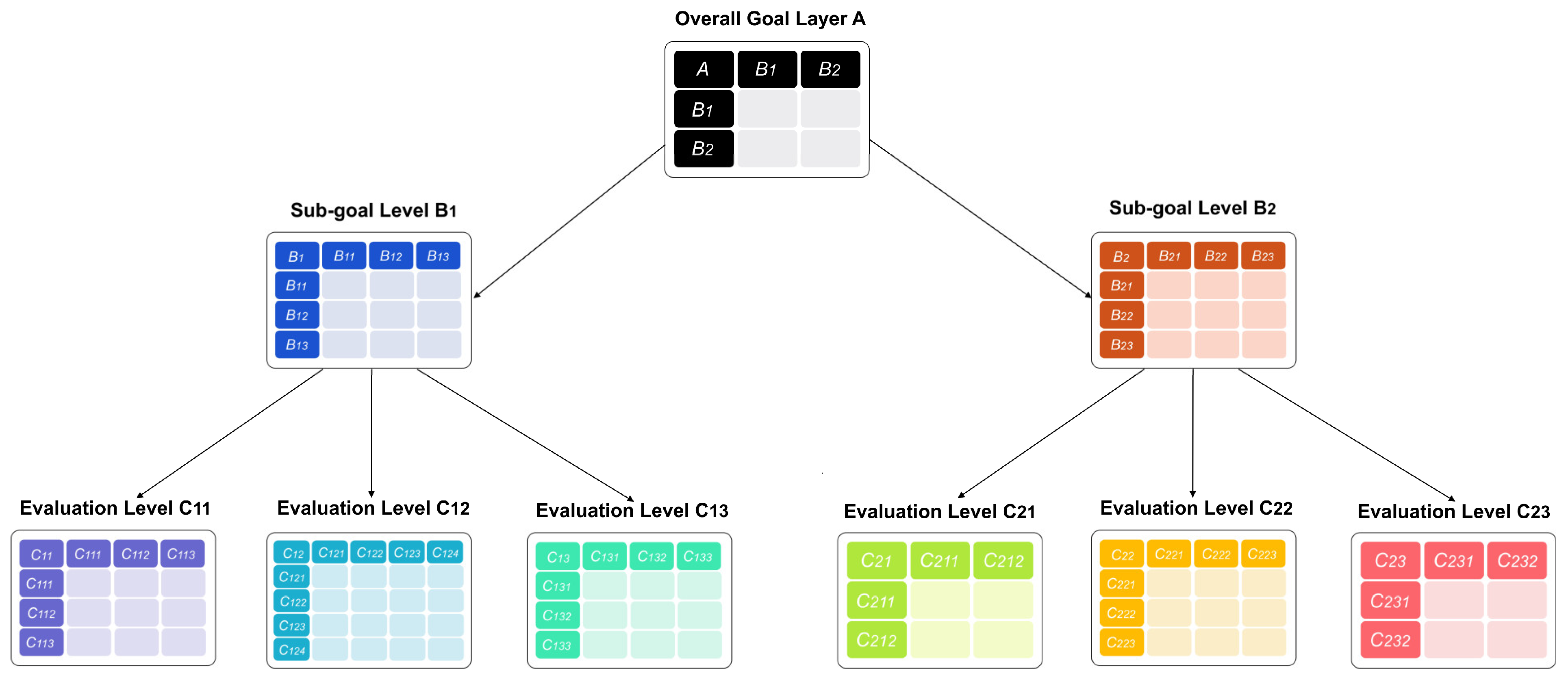
- Create a hierarchy: The second step is to analyze the relationships between indicators in the system and establish a hierarchical structure model for the system. This hierarchy consisted of different levels such as the overall goal level, sub-goal level, criteria level, and evaluation level.
- (3)
- Importance pairwise comparison: For all indicators of the same level belonging to a certain criterion at the upper level, comparison matrices are constructed to compare the importance of every two indicators.
- (4)
- Calculate the weights of each level: This step is to acquire the weights of each level. The judgment matrices obtained from step (3) can be used to calculate the relative weights of every indicator in each level.
- (5)
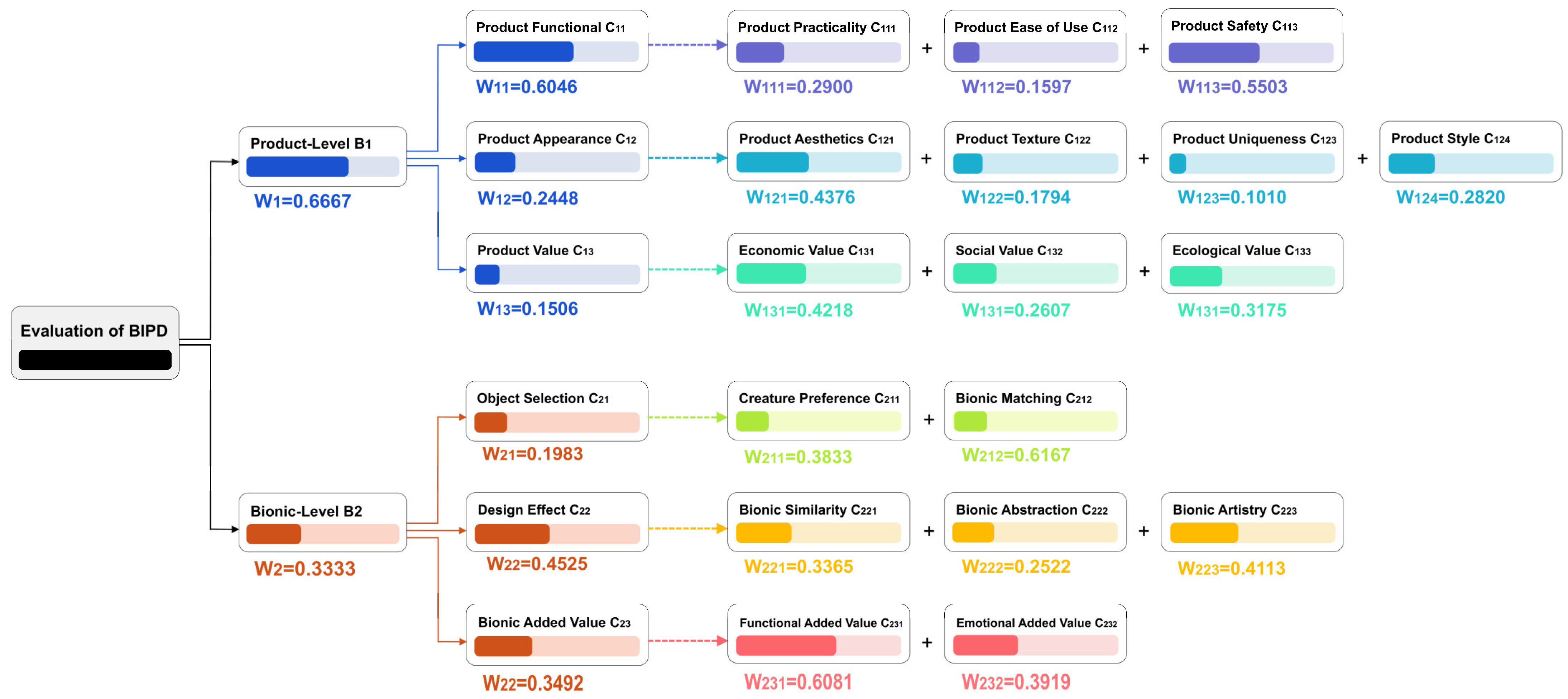
- Calculate the overall weights of leaf indicators: After the relative weights of every indicator in each level have been calculated (step (4)), the final relative weights of all leaf indicators are calculated by multiplying the weights of the abovementioned several levels.
3. Methodology
3.1. BIPD Evaluation Indicators Establishment
3.1.1. Experimental Design
- (1)
- Subjects: In order to establish a comprehensive product bionics evaluation model oriented toward real design, production, and sales, different stakeholders should be involved in the experiment. A total of 16 subjects were invited to participate in the experiment. Among them, there were four senior product designers (two males and two females) with more than five years of product design experience, two sustainable design experts, one design company decision-maker who is a high-level executive and has dealt with product design decision-making for a long time and understands market trends, three BIPD researchers who have engaged in product bionic design research and education for a long time, and six ordinary users (four males and four females, aged 25–30 years) who are young white-collar workers with certain purchasing potential. Informed consent was obtained from all subjects involved in the study. This experiment has been ethically reviewed by the School of Art and Archaeology of Hangzhou City University.
- (2)
- Stimulus: It can be difficult for subjects to clearly identify the evaluation indicators without some concrete examples, so design scenarios and bionic products were prepared for all subjects.
- Scenario 1: Design a bionic electric car suitable for children aged 3 to 6 years old;
- Scenario 2: Design a bionic sweeping robot for young urban white-collar workers
3.1.2. Experimental Procedure
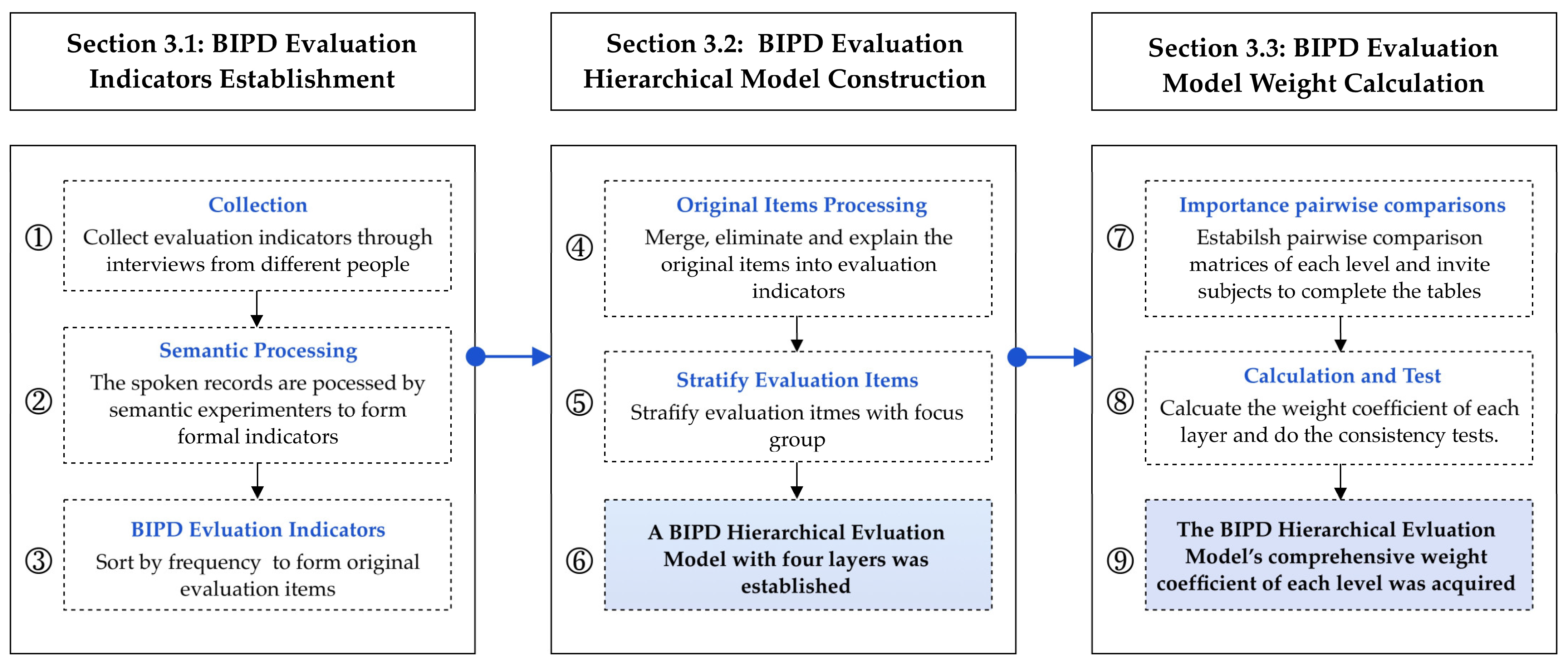
3.1.3. Experimental Results and Analysis
- The subjects’ original corpus was translated and the spoken expressions were summarized in neutral language to define clear evaluation criteria. For instance, the statement ‘I don’t like spider chairs because I hate insects’, was translated into the evaluation index ‘whether the bionic creature meets the user’s preferences’;
- Evaluation indexes with the same semantic meaning were merged into one evaluation item. For example, ‘whether the product is unique’ and ‘is the product different’ are all evaluations of product personality. A total of 25 original evaluation items were identified after merging related items;
- The frequency of subjects that identified each evaluation item was determined. A given item was recorded only once for a given subject, even if it was mentioned several times during the interview (Table 2).
3.2. BIPD Evaluation Model Construction
3.2.1. Experimental Design and Procedure
- Eliminate some evaluation items that cannot be directly judged from product images. Items such as ‘product quality’, ‘durability’, and ‘production feasibility’, which cannot be directly judged, were eliminated.
- Use precise and concise language to comprehensively describe the content of the evaluation items in general terms. For example, the two merged items in (1) can be rephrased to be described as ‘bionic compatibility’, which means that the product and the creature are matched in terms of shape, function, environment, etc.
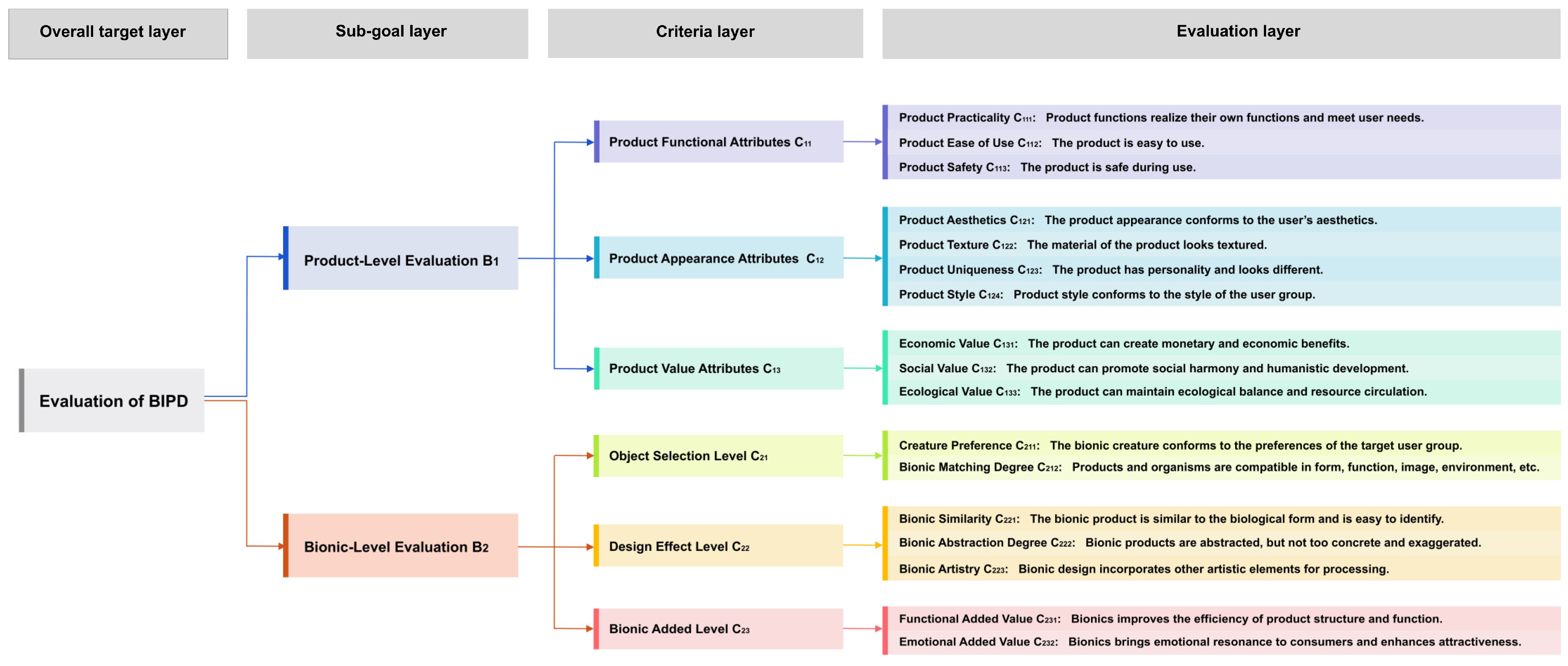
- Stratify the evaluation items, grouping those expressing the same level into one category. Finally, the BIPD evaluation indicators were divided into four layers: the overall goal layer, the sub-goal layer, the criterion layer, and the evaluation layer. Thus, a BIPD evaluation model was established.
3.2.2. Experimental Results
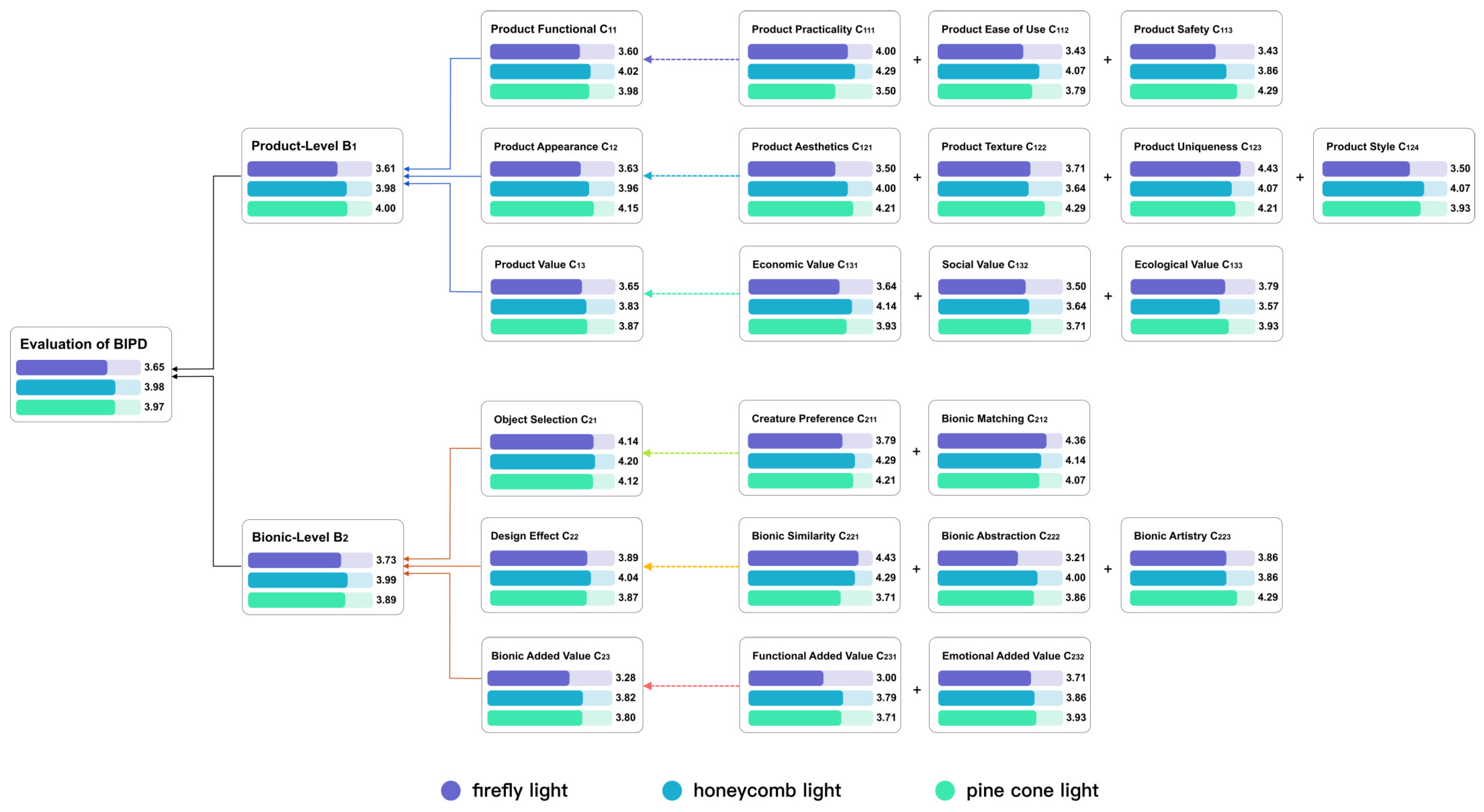
- Overall target layer : evaluation of BIPD;
- Sub-goal layer : The overall goal layer is divided into sub-goal product-level evaluation and bionic-level evaluation , each containing three evaluation criteria. mainly focuses on the general evaluation indicators of the product itself, while focuses on the requirements and concerns of bionic design;
- Criteria layer : Each sub-goal contains three criteria layers, which are the evaluation criteria under the goal. Product-level evaluation includes the functional attributes of the product , appearance attributes of the product , and value attributes of the product . The bionic evaluation level includes the object selection level (organism and product selection), the bionic design effect level , and the BIPD added value .
- Evaluation layer D: It is the evaluation index finally established by experts through discussion. The 17 indicators in the evaluation layer belong to different evaluation criteria, and they are explained in Figure 2.
3.3. BIPD Evaluation Model Weight Calculation
3.3.1. Experimental Design and Procedure
3.3.2. Weight Calculation Method
- (1)
- Calculate the principal eigenvalue and its corresponding eigenvector
- (2)
- Normalize the eigenvector
- (3)
- Perform a single-level consistency test
- (4)
- Perform an overall consistency test
3.3.3. Experimental Results and Analysis
4. Model Validation
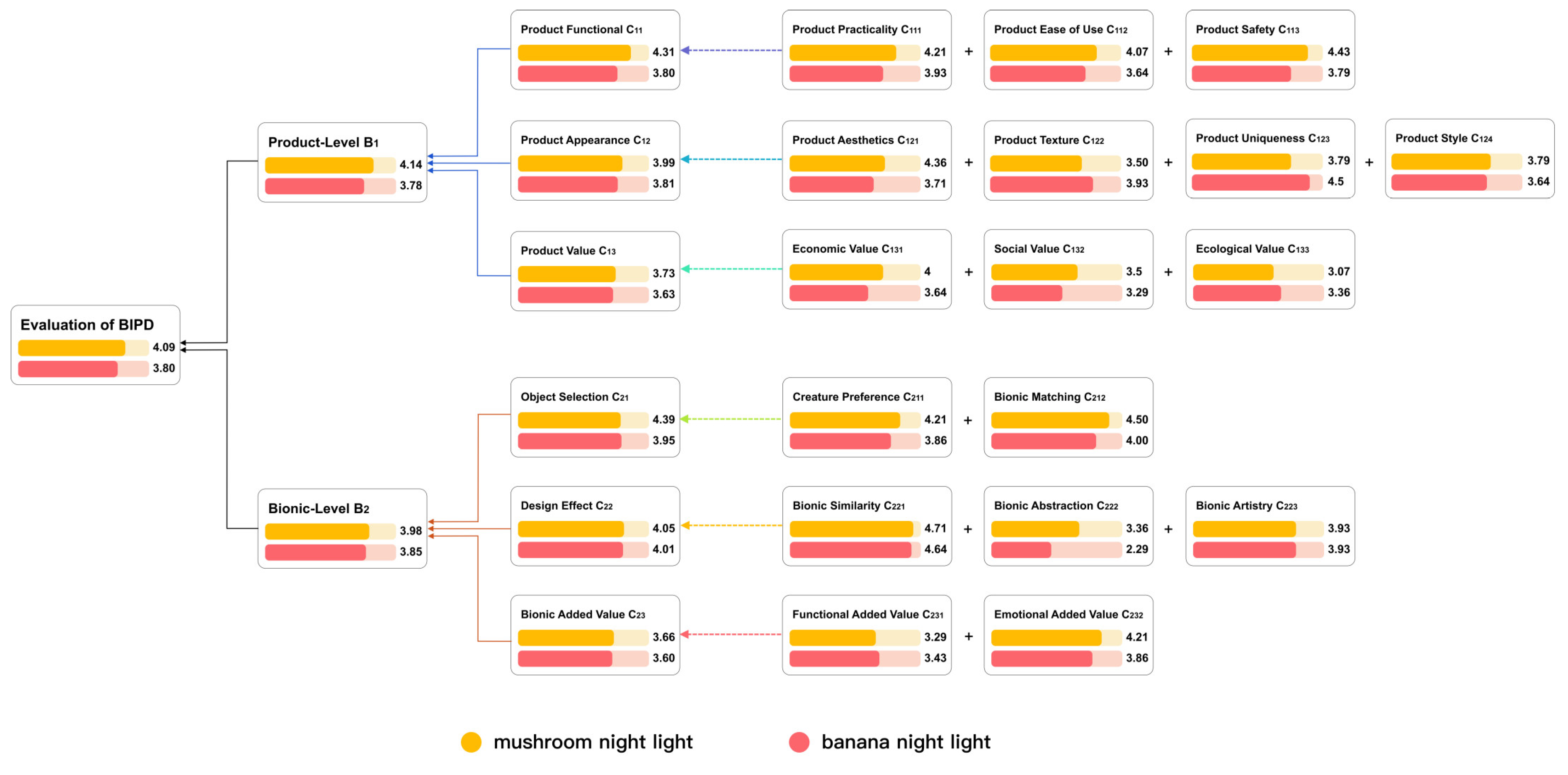
4.1. Night Light Evaluation
- (a)
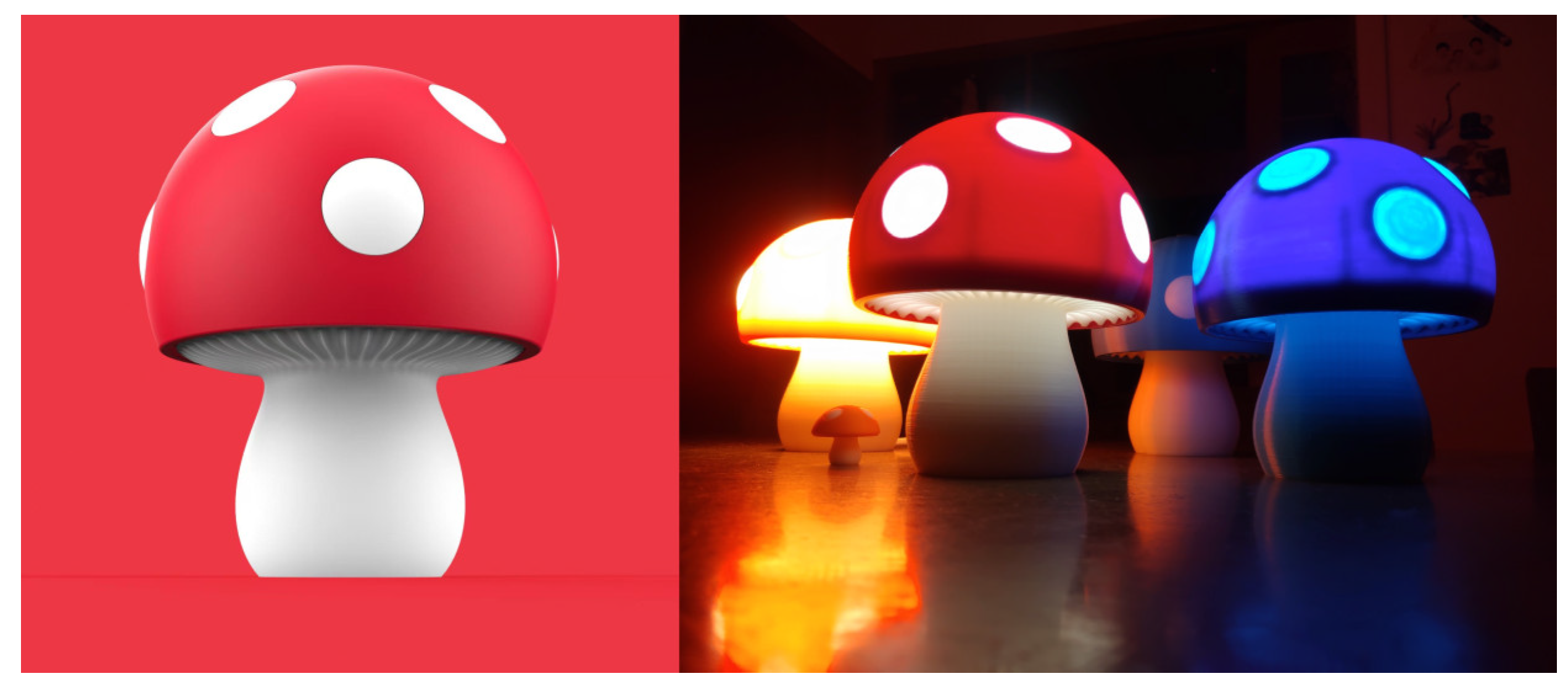
- Mushroom night light: Inspired by mushrooms, the main body of this night light imitates the shape of a mushroom. The top umbrella-like cap is red, decorated with white dots, and the white part at the bottom resembles the stalk of a mushroom. The built-in light can present various colors such as warm yellow and blue.
- (b)
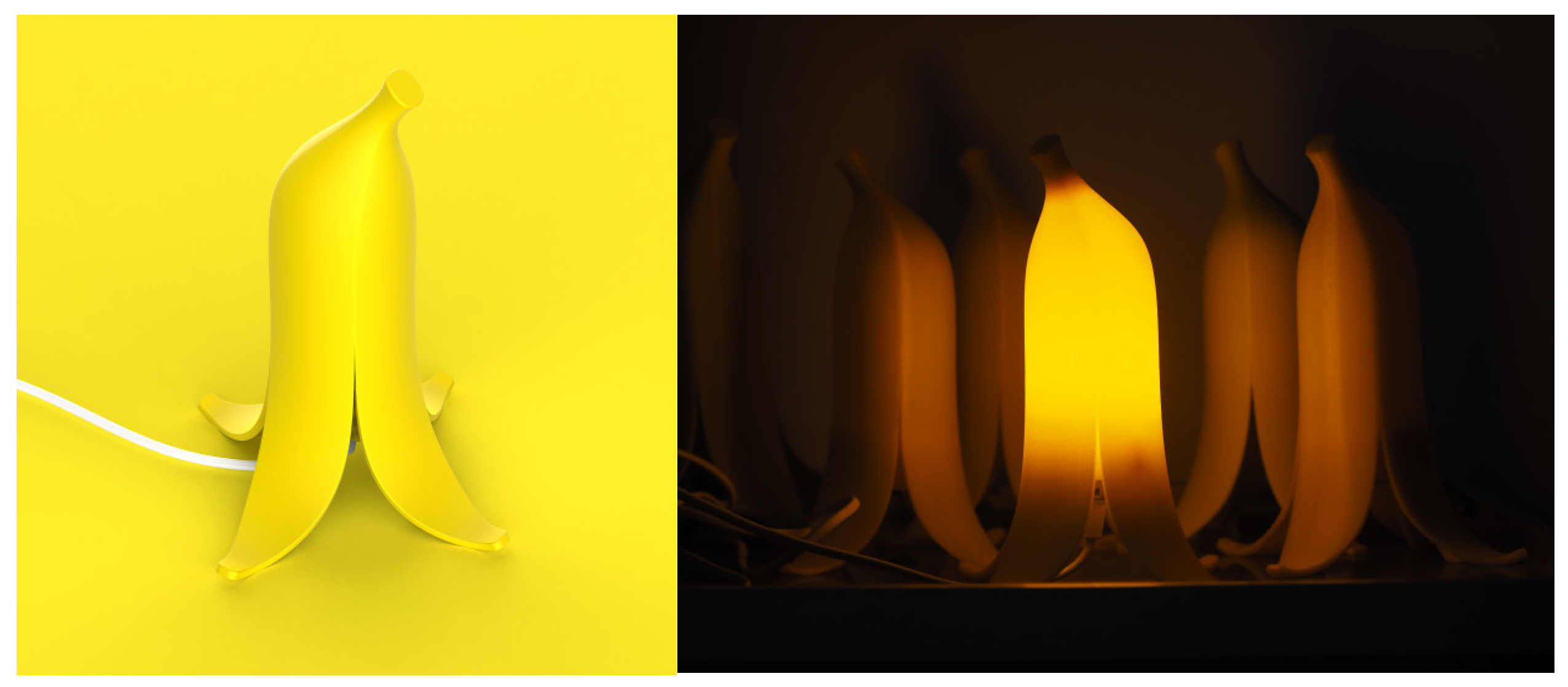
- Banana night light: Designed with inspiration from bananas, the overall shape of this lamp imitates a peeled banana, with the main body being yellow. When lit, the light shines out from the inside. The structure that mimics the peeled part of the banana can support the lamp body, enabling it to stand stably.
4.2. Camping Lights Evaluation
- (a)
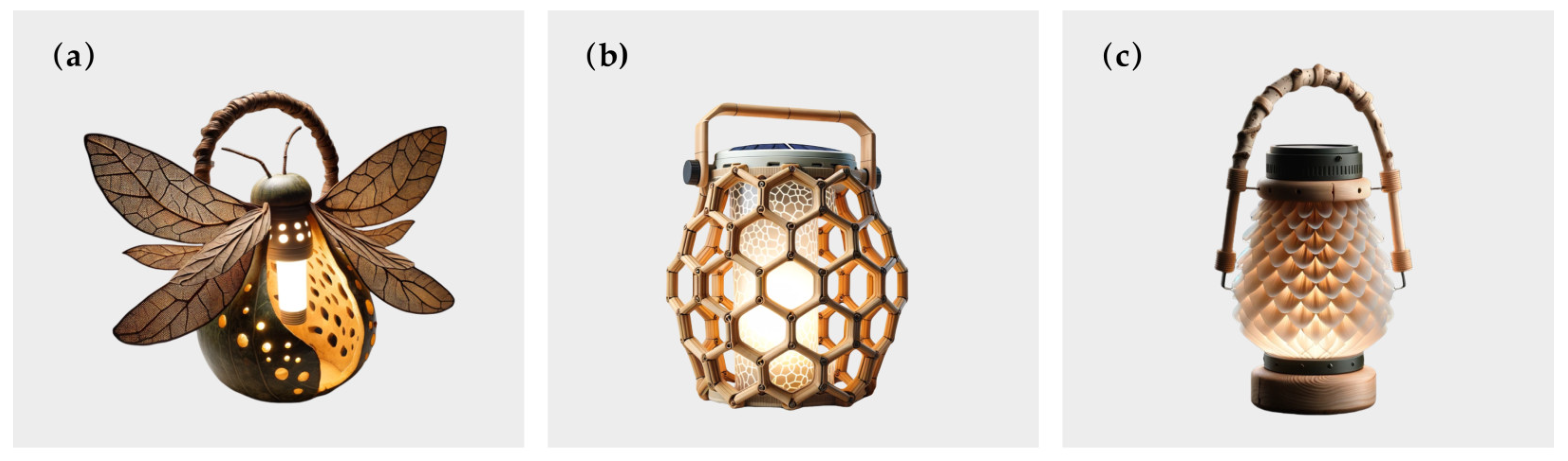
- Firefly light: Inspired by fireflies, the main body mimics the abdomen of a firefly, crafted from natural gourds with a hollowed-out and perforated design. The semi-transparent wings feature vein-like structures. The natural–material handle at the top facilitates carrying and hanging, and the base ensures stability. The internal LED emulates the bioluminescence of fireflies.
- (b)
- Honeycomb light: Deriving inspiration from honeycombs, the hexagonal frame replicates the honeycomb structure. It is made of lightweight and sustainable bamboo. The semi-transparent panels diffuse light. The solar panel on the top powers the internal LED, ensuring energy-efficiency and sustainability. The sturdy handle and flat base guarantee stability.
- (c)
- Honeycomb light: Inspired by pine cones, the main body resembles a pine cone, with semi-transparent scales softening the light. The handle, resembling a tree branch, offers a natural and comfortable grip. The support structure and base are made of wood, ensuring stability. There is an operating mechanism above the base, and the internal LED provides illumination
5. Discussion and Conclusions
Author Contributions
Funding
Institutional Review Board Statement
Data Availability Statement
Conflicts of Interest
Appendix A

| Expert 1 | ||
| Expert 2 | ||
| Expert 3 | ||
| Expert 4 | ||
| Expert 5 | ||
| Expert 6 | ||
Appendix B
| Expert Number | |||||
|---|---|---|---|---|---|
| 1 | 0.5000 | 0.5000 | 2 | 0.0000 | 0.0000 |
| 2 | 0.7500 | 0.2500 | 2 | 0.0000 | 0.0000 |
| 3 | 0.8333 | 0.1667 | 2 | 0.0000 | 0.0000 |
| 4 | 0.7500 | 0.2500 | 2 | 0.0000 | 0.0000 |
| 5 | 0.5000 | 0.5000 | 2 | 0.0000 | 0.0000 |
| 6 | 0.6667 | 0.3333 | 2 | 0.0000 | 0.0000 |
| Expert Number | ||||||
|---|---|---|---|---|---|---|
| 1 | 0.6716 | 0.2654 | 0.0629 | 3.0291 | 0.0145 | 0.0279 |
| 2 | 0.6000 | 0.2000 | 0.2000 | 3.0000 | 0.0000 | 0.0000 |
| 3 | 0.7928 | 0.1312 | 0.0760 | 3.0217 | 0.0209 | 0.0209 |
| 4 | 0.5816 | 0.3090 | 0.1095 | 3.0037 | 0.0018 | 0.0036 |
| 5 | 0.3333 | 0.3333 | 0.3333 | 3.0000 | 0.0000 | 0.0000 |
| 6 | 0.6483 | 0.2297 | 0.1220 | 3.0037 | 0.0018 | 0.0036 |
| Expert Number | ||||||
|---|---|---|---|---|---|---|
| 1 | 0.3332 | 0.5917 | 0.0751 | 3.0142 | 0.0071 | 0.0136 |
| 2 | 0.0879 | 0.2426 | 0.6694 | 3.0070 | 0.0035 | 0.0068 |
| 3 | 0.4737 | 0.4737 | 0.0526 | 3.0000 | 0.0000 | 0.0000 |
| 4 | 0.0810 | 0.1884 | 0.7306 | 3.0649 | 0.0324 | 0.0624 |
| 5 | 0.1095 | 0.5816 | 0.3090 | 3.0037 | 0.0018 | 0.0036 |
| 6 | 0.1047 | 0.6370 | 0.2583 | 3.0385 | 0.0193 | 0.0370 |
| Expert Number | ||||||
|---|---|---|---|---|---|---|
| 1 | 0.4934 | 0.1958 | 0.3108 | 3.0536 | 0.0268 | 0.0516 |
| 2 | 0.3879 | 0.0975 | 0.5146 | 3.0803 | 0.0401 | 0.0772 |
| 3 | 0.0909 | 0.0909 | 0.8182 | 3.0000 | 0.0000 | 0.0000 |
| 4 | 0.1095 | 0.3090 | 0.5816 | 3.0037 | 0.0018 | 0.0036 |
| 5 | 0.4286 | 0.1429 | 0.4286 | 3.0000 | 0.0000 | 0.0000 |
| 6 | 0.2297 | 0.1220 | 0.6483 | 3.0037 | 0.0018 | 0.0036 |
| Expert Number | |||||||
|---|---|---|---|---|---|---|---|
| 1 | 0.5956 | 0.2246 | 0.0645 | 0.1153 | 4.1267 | 0.0422 | 0.0475 |
| 2 | 0.3847 | 0.1098 | 0.1933 | 0.3121 | 4.1752 | 0.0584 | 0.0656 |
| 3 | 0.6471 | 0.1908 | 0.0590 | 0.1032 | 4.2281 | 0.0760 | 0.0854 |
| 4 | 0.1165 | 0.2458 | 0.0535 | 0.5841 | 4.0850 | 0.0283 | 0.0318 |
| 5 | 0.3679 | 0.0956 | 0.1686 | 0.3679 | 4.1545 | 0.0515 | 0.0579 |
| 6 | 0.5140 | 0.2095 | 0.0670 | 0.2095 | 4.0973 | 0.0324 | 0.0364 |
| Expert Number | ||||||
|---|---|---|---|---|---|---|
| 1 | 0.6738 | 0.2255 | 0.1007 | 3.0858 | 0.0429 | 0.0825 |
| 2 | 0.3333 | 0.3333 | 0.3333 | 3.0000 | 0.0000 | 0.0000 |
| 3 | 0.6491 | 0.2790 | 0.0719 | 3.0649 | 0.0324 | 0.0624 |
| 4 | 0.1220 | 0.2297 | 0.6483 | 3.0037 | 0.0018 | 0.0036 |
| 5 | 0.4434 | 0.3874 | 0.1692 | 3.0183 | 0.0091 | 0.0176 |
| 6 | 0.3090 | 0.1095 | 0.5816 | 3.0037 | 0.0018 | 0.0036 |
| Expert Number | |||||
|---|---|---|---|---|---|
| 1 | 0.2000 | 0.8000 | 2 | 0.0000 | 0.0000 |
| 2 | 0.2500 | 0.7500 | 2 | 0.0000 | 0.0000 |
| 3 | 0.1000 | 0.9000 | 2 | 0.0000 | 0.0000 |
| 4 | 0.2500 | 0.7500 | 2 | 0.0000 | 0.0000 |
| 5 | 0.8333 | 0.1667 | 2 | 0.0000 | 0.0000 |
| 6 | 0.6667 | 0.3333 | 2 | 0.0000 | 0.0000 |
| Expert Number | ||||||
|---|---|---|---|---|---|---|
| 1 | 0.6337 | 0.1744 | 0.1919 | 3.0092 | 0.0046 | 0.0088 |
| 2 | 0.6000 | 0.2000 | 0.2000 | 3.0000 | 0.0000 | 0.0000 |
| 3 | 0.4286 | 0.4286 | 0.1429 | 3.0000 | 0.0000 | 0.0000 |
| 4 | 0.1047 | 0.2583 | 0.6370 | 3.0385 | 0.0193 | 0.0370 |
| 5 | 0.1095 | 0.3090 | 0.5816 | 3.0037 | 0.0018 | 0.0036 |
| 6 | 0.1429 | 0.1429 | 0.7143 | 3.0000 | 0.0000 | 0.0000 |
| Expert Number | |||||
|---|---|---|---|---|---|
| 1 | 0.6667 | 0.3333 | 2 | 0.0000 | 0.0000 |
| 2 | 0.8571 | 0.1429 | 2 | 0.0000 | 0.0000 |
| 3 | 0.8750 | 0.1250 | 2 | 0.0000 | 0.0000 |
| 4 | 0.1667 | 0.8333 | 2 | 0.0000 | 0.0000 |
| 5 | 0.2500 | 0.7500 | 2 | 0.0000 | 0.0000 |
| 6 | 0.8333 | 0.1667 | 2 | 0.0000 | 0.0000 |
Appendix C
| Number | Evaluation Item | Weight (%) |
|---|---|---|
| Product Safety: The product is safe during use. | 22.18 | |
| Product Practicality: Product functions realize their own functions and meet user needs. | 11.69 | |
| Product Aesthetics: The product appearance conforms to the user’s aesthetics. | 7.14 | |
| Functional Added Value: Bionics improve the efficiency of product structure and function. | 7.08 | |
| Product Ease of Use: The product is easy to use. | 6.44 | |
| Bionic Artistry: Bionic design incorporates other artistic elements for processing. | 6.20 | |
| Bionic similarity: The bionic product is similar to the biological form and is easy to identify. | 5.08 | |
| Product Style: The product style conforms to the style of the user group. | 4.60 | |
| Emotional added value C: Bionics bring emotional resonance to consumers and enhances attractiveness. | 4.56 | |
| Economic Value: The product can create monetary and economic benefits. | 4.24 | |
| Bionic Matching: Products and organisms are compatible in form, function, image, environment, etc. | 4.08 | |
| Bionic Abstraction Degree: Bionic products are abstracted but not too concrete and exaggerated. | 3.80 | |
| Ecological Value: The product can maintain ecological balance and resource circulation. | 3.19 | |
| Product Texture: The material of the product looks textured. | 2.93 | |
| Social Value: The product can promote social harmony and humanistic development. | 2.62 | |
| Creature Preference: The bionic creature conforms to the preferences of the target user group. | 2.53 | |
| Product Uniqueness: The product has personality and looks different. | 1.64 |
Appendix D
| Number | Evaluation Item | Score | ||||
|---|---|---|---|---|---|---|
| Product Practicality: Product functions realize their own functions and meet user needs. | 1 | 2 | 3 | 4 | 5 | |
| Product Ease of Use: The product is easy to use. | 1 | 2 | 3 | 4 | 5 | |
| Product Safety: The product is safe during use. | 1 | 2 | 3 | 4 | 5 | |
| Product Aesthetics: The product appearance conforms to the user’s aesthetics. | 1 | 2 | 3 | 4 | 5 | |
| Product Texture: The material of the product looks textured. | 1 | 2 | 3 | 4 | 5 | |
| Product Uniqueness: The product has personality and looks different. | 1 | 2 | 3 | 4 | 5 | |
| Product Style: The product style conforms to the style of the user group. | 1 | 2 | 3 | 4 | 5 | |
| Economic Value: The product can create monetary and economic benefits. | 1 | 2 | 3 | 4 | 5 | |
| Social Value: The product can promote social harmony and humanistic development. | 1 | 2 | 3 | 4 | 5 | |
| Ecological Value: The product can maintain ecological balance and resource circulation. | 1 | 2 | 3 | 4 | 5 | |
| Creature Preference: The bionic creature conforms to the preferences of the target user group. | 1 | 2 | 3 | 4 | 5 | |
| Biomimetic Bionic Matching: Products and organisms are compatible in form, function, image, environment, etc. | 1 | 2 | 3 | 4 | 5 | |
| Bionic similarity: The bionic product is similar to the biological form and is easy to identify. | 1 | 2 | 3 | 4 | 5 | |
| Bionic Abstraction Degree: Bionic products are abstracted, but not too concrete and exaggerated. | 1 | 2 | 3 | 4 | 5 | |
| Bionic Artistry: Bionic design incorporates other artistic elements for processing. | 1 | 2 | 3 | 4 | 5 | |
| Functional Added Value: Bionics improve the efficiency of the product structure and function. | 1 | 2 | 3 | 4 | 5 | |
| Emotional added value C: Bionics bring emotional resonance to consumers and enhance attractiveness. | 1 | 2 | 3 | 4 | 5 | |
References
- Hargroves, K.; Smith, M.H. Innovation inspired by nature Biomimicry. Ecos 2006, 129, 27–30. [Google Scholar]
- Shu, L.; Ueda, K.; Chiu, I.; Cheong, H. Biologically inspired design. CIRP Ann. 2011, 60, 673–693. [Google Scholar] [CrossRef] [Scilit]
- Hou, R.; Wang, X.; Wei, Q.; Feng, P.; Mou, X.; Zhu, Y.; Shen, Z. Biological properties of a bionic scaffold for esophageal tissue engineering research. Colloids Surf. B Biointerfaces 2019, 179, 208–217. [Google Scholar] [CrossRef] [Scilit] [PubMed]
- Zhang, R.; Sun, X.; Han, D.; Zhang, H.; Ma, J.; Wen, L.; Zou, M. A bionic mechanical foot with adaptive variable postures travelling on sand. J. Terramechanics 2023, 107, 61–74. [Google Scholar] [CrossRef] [Scilit]
- Yuan, Y.; Yu, X.; Yang, X.; Xiao, Y.; Xiang, B.; Wang, Y. Bionic building energy efficiency and bionic green architecture: A review. Renew. Sustain. Energy Rev. 2017, 74, 771–787. [Google Scholar] [CrossRef] [Scilit]
- Jiang, N.; Wang, H.; Liu, H.; Hu, X.; Li, W. Application of bionic design in product form design. In Proceedings of the 2010 IEEE 11th International Conference on Computer-Aided Industrial Design & Conceptual Design, Yiwu, China, 17–19 November 2010; Volume 1, pp. 431–434. [Google Scholar]
- Ren, K.; Yu, J. Research status of bionic amphibious robots: A review. Ocean Eng. 2021, 227, 108862. [Google Scholar] [CrossRef] [Scilit]
- Shi, S.; Ming, Y.; Wu, H.; Zhi, C.; Yang, L.; Meng, S.; Hu, J. A bionic skin for health management: Excellent breathability, in situ sensing, and big data analysis. Adv. Mater. 2024, 36, 2306435. [Google Scholar] [CrossRef] [Scilit]
- Ilieva, L.; Ursano, I.; Traista, L.; Hoffmann, B.; Dahy, H. Biomimicry as a sustainable design methodology—Introducing the ‘Biomimicry for Sustainability’framework. Biomimetics 2022, 7, 37. [Google Scholar] [CrossRef] [Scilit]
- Othmani, N.I.; Mohamed, S.A.; Abdul Hamid, N.H.; Ramlee, N.; Yeo, L.B.; Mohd Yunos, M.Y. Reviewing biomimicry design case studies as a solution to sustainable design. Environ. Sci. Pollut. Res. 2022, 29, 69327–69340. [Google Scholar] [CrossRef] [Scilit]
- Jiang, M.; Deng, W.; Lin, H. Sustainability through Biomimicry: A Comprehensive Review of Bionic Design Applications. Biomimetics 2024, 9, 507. [Google Scholar] [CrossRef] [Scilit]
- Bian, Z.; Luo, S.; Zheng, F.; Wang, L.; Shan, P. Semantic reasoning of product biologically inspired design based on BERT. Appl. Sci. 2021, 11, 12082. [Google Scholar] [CrossRef] [Scilit]
- Liu, A.; Teo, I.; Chen, D.; Lu, S.; Wuest, T.; Zhang, Z.; Tao, F. Biologically inspired design of context-aware smart products. Engineering 2019, 5, 637–645. [Google Scholar] [CrossRef] [Scilit]
- Dobers, P.; Strannegård, L. Design, lifestyles and sustainability. Aesthetic consumption in a world of abundance. Bus. Strategy Environ. 2005, 14, 324–336. [Google Scholar] [CrossRef] [Scilit]
- Papanek, V.; Lazarus, E.L. Design for the Real World: Human Ecology and Social Change, 2nd ed.; Academy Chicago Publishers: Glencoe, IL, USA, 2005. [Google Scholar]
- Baldassarre, B.; Keskin, D.; Diehl, J.C.; Bocken, N.; Calabretta, G. Implementing sustainable design theory in business practice: A call to action. J. Clean. Prod. 2020, 273, 123113. [Google Scholar] [CrossRef] [Scilit]
- Sonego, M.; Echeveste, M.E.S.; Debarba, H.G. The role of modularity in sustainable design: A systematic review. J. Clean. Prod. 2018, 176, 196–209. [Google Scholar] [CrossRef] [Scilit]
- Ceschin, F.; Gaziulusoy, I. Evolution of design for sustainability: From product design to design for system innovations and transitions. Des. Stud. 2016, 47, 118–163. [Google Scholar] [CrossRef] [Scilit]
- Pope, J.; Annandale, D.; Morrison-Saunders, A. Conceptualising sustainability assessment. Environ. Impact Assess. Rev. 2004, 24, 595–616. [Google Scholar] [CrossRef] [Scilit]
- Ness, B.; Urbel-Piirsalu, E.; Anderberg, S.; Olsson, L. Categorising tools for sustainability assessment. Ecol. Econ. 2007, 60, 498–508. [Google Scholar] [CrossRef] [Scilit]
- Chen, D.; Schudeleit, T.; Posselt, G.; Thiede, S. A state-of-the-art review and evaluation of tools for factory sustainability assessment. Procedia Cirp 2013, 9, 85–90. [Google Scholar] [CrossRef] [Scilit]
- Singh, R.K.; Murty, H.R.; Gupta, S.K.; Dikshit, A.K. An overview of sustainability assessment methodologies. Ecol. Indic. 2012, 15, 281–299. [Google Scholar] [CrossRef] [Scilit]
- Yonat, N.; Shohet, I.M. Digital Design Quality Management: The Theory of Faults. Buildings 2024, 14, 2921. [Google Scholar] [CrossRef] [Scilit]
- Alışık, E. “All Compressed and Rendered with a Pathetic Delicacy That Astounds the Eye”: Midjourney Renders Ambergris as Constantinople. CyberOrient 2022, 16, 76–88. [Google Scholar] [CrossRef] [Scilit]
- Ramesh, A.; Dhariwal, P.; Nichol, A.; Chu, C.; Chen, M. Hierarchical text-conditional image generation with clip latents. arXiv 2022, arXiv:2204.06125. [Google Scholar]
- Rombach, R.; Blattmann, A.; Lorenz, D.; Esser, P.; Ommer, B. High-resolution image synthesis with latent diffusion models. In Proceedings of the IEEE/CVF Conference on Computer Vision and Pattern Recognition, New Orleans, LA, USA, 18–24 June 2022; pp. 10674–10685. [Google Scholar]
- Hauschild, M.Z. Better–but is it good enough? On the need to consider both eco-efficiency and eco-effectiveness to gauge industrial sustainability. Procedia CIRP 2015, 29, 1–7. [Google Scholar] [CrossRef] [Scilit]
- Lin, H.; Deng, X.; Yu, J.; Jiang, X.; Zhang, D. A Study of Sustainable Product Design Evaluation Based on the Analytic Hierarchy Process and Deep Residual Networks. Sustainability 2023, 15, 14538. [Google Scholar] [CrossRef] [Scilit]
- Petersen, M.; Brockhaus, S. Dancing in the dark: Challenges for product developers to improve and communicate product sustainability. J. Clean. Prod. 2017, 161, 345–354. [Google Scholar] [CrossRef] [Scilit]
- Zafarmand, S.J.; Sugiyama, K.; Watanabe, M. Aesthetic and sustainability: The aesthetic attributes promoting product sustainability. J. Sustain. Prod. Des. 2003, 3, 173–186. [Google Scholar] [CrossRef] [Scilit]
- Harper, K.; Simonsen, R.R. Aesthetic Sustainability: Product Design and Sustainable Usage; Routledge: London, UK, 2017. [Google Scholar]
- Formentini, G.; Boix Rodríguez, N.; Favi, C. Design for manufacturing and assembly methods in the product development process of mechanical products: A systematic literature review. Int. J. Adv. Manuf. Technol. 2022, 120, 4307–4334. [Google Scholar] [CrossRef] [Scilit]
- Moeeni, H.; Javadi, M.; Raissi, S. Design for manufacturing (DFM): A sustainable approach to drive the design process from suitability to low cost. Int. J. Interact. Des. Manuf. 2022, 16, 1079–1088. [Google Scholar] [CrossRef] [Scilit]
- Walker, S. Sustainable by Design: Explorations in Theory and Practice; Routledge: London, UK, 2012. [Google Scholar]
- Chirazi, J.; Wanieck, K.; Fayemi, P.-E.; Zollfrank, C.; Jacobs, S. What do we learn from good practices of biologically inspired design in innovation? Appl. Sci. 2019, 9, 650. [Google Scholar] [CrossRef] [Scilit]
- Luo, S.; Bian, Z.; Hu, Y. How can biological shapes inspire design activity in closed domains? Int. J. Technol. Des. Educ. 2020, 32, 479–505. [Google Scholar] [CrossRef] [Scilit]
- Wilson, J.O.; Rosen, D.; Nelson, B.A.; Yen, J. The effects of biological examples in idea generation. Des. Stud. 2010, 31, 169–186. [Google Scholar] [CrossRef] [Scilit]
- Vandevenne, D.; Pieters, T.; Duflou, J.R. Enhancing novelty with knowledge-based support for Biologically-Inspired Design. Des. Stud. 2016, 46, 152–173. [Google Scholar] [CrossRef] [Scilit]
- Goldschmidt, G.; Smolkov, M. Variances in the impact of visual stimuli on design problem solving performance. Des. Stud. 2006, 27, 549–569. [Google Scholar] [CrossRef] [Scilit]
- Laing, S.; Masoodian, M. A study of the influence of visual imagery on graphic design ideation. Des. Stud. 2016, 45, 187–209. [Google Scholar] [CrossRef] [Scilit]
- Cheng, P.; Mugge, R.; Schoormans, J.P. A new strategy to reduce design fixation: Presenting partial photographs to designers. Des. Stud. 2014, 35, 374–391. [Google Scholar] [CrossRef] [Scilit]
- Shah, J.J.; Smith, S.M.; Vargas-Hernandez, N. Metrics for measuring ideation effectiveness. Des. Stud. 2003, 24, 111–134. [Google Scholar] [CrossRef] [Scilit]
- Nelson, B.A.; Wilson, J.O.; Rosen, D.; Yen, J. Refined metrics for measuring ideation effectiveness. Des. Stud. 2009, 30, 737–743. [Google Scholar] [CrossRef] [Scilit]
- Luo, S.; Zhang, Y.; Zhang, J.; Xu, J. A user biology preference prediction model based on the perceptual evaluations of designers for biologically inspired design. Symmetry 2020, 12, 1860. [Google Scholar] [CrossRef] [Scilit]
- Li, X.; Hou, X.; Yang, M.; Zhang, L.; Guo, H.; Wang, L.; Li, X. A method of constructing an inspiration library driven by user-perceived preference evaluation data for biologically inspired design. Adv. Eng. Inform. 2022, 52, 101617. [Google Scholar] [CrossRef] [Scilit]
- Zhu, G.N.; Ma, J.; Hu, J. Evaluating biological inspiration for biologically inspired design: An integrated DEMATEL-MAIRCA based on fuzzy rough numbers. Int. J. Intell. Syst. 2021, 36, 6032–6065. [Google Scholar] [CrossRef] [Scilit]
- Aguilar-Planet, T.; Peralta, E. Innovation Inspired by Nature: Applications of Biomimicry in Engineering Design. Biomimetics 2024, 9, 523. [Google Scholar] [CrossRef] [Scilit]
- Saaty, T. The Analytic Hierarchy Process; McGrawHill: New York, NY, USA, 1980. [Google Scholar]
- Nukman, Y.; Ariff, H.; Salit, M. Use of analytical hierarchy process (AHP) for selecting the best design concept. J. Teknol. 2009, 49, 1–18. [Google Scholar]
- Hambali, A.; Sapuan, S.; Ismail, N.; Nukman, Y. Application of analytical hierarchy process (AHP) and sensitivity analysis for selecting the best design concepts during conceptual design stage. Multidiscip. Model. Mater. Struct. 2009, 5, 289–294. [Google Scholar] [CrossRef] [Scilit]
- Cambron, K.E.; Evans, G.W. Layout design using the analytic hierarchy process. Comput. Ind. Eng. 1991, 20, 211–229. [Google Scholar] [CrossRef] [Scilit]
- Zhang, J.; Liu, X.; Feng, Z.; Feng, X. Research on the Influencing Factors of Art Intervention in the Environmental Graphics of Rural Cultural Tourism Space. Land 2024, 13, 1680. [Google Scholar] [CrossRef] [Scilit]
- Pan, S.; Anwar, R.B.; Awang, N.N.B.; He, Y. Constructing a Sustainable Evaluation Framework for AIGC Technology in Yixing Zisha Pottery: Balancing Heritage Preservation and Innovation. Sustainability 2025, 17, 910. [Google Scholar] [CrossRef] [Scilit]
- Saaty, T.L. Decision-making with the AHP: Why is the principal eigenvector necessary. Eur. J. Oper. Res. 2003, 145, 85–91. [Google Scholar] [CrossRef] [Scilit]
- Saaty, T.L. Theory and Applications of the Analytic Network Process: Decision Making with Benefits, Opportunities, Costs, and Risks; RWS Publications: Pittsburgh, PA, USA, 2005. [Google Scholar]
- Saaty, R.W. The analytic hierarchy process—What it is and how it is used. Math. Model. 1987, 9, 161–176. [Google Scholar] [CrossRef] [Scilit]

| Relevant Studies | Research Contents | Indicator Sources | Construction Methods | Indicators |
|---|---|---|---|---|
| Luo et al. [36] | Explore the inspiration of biological shapes on BID | Design experts | Discussion | Number of solutions, number of bionic elements, novelty, detail, abstraction |
| Wilson. et al. [37] | Explore the effects of biological examples in idea generation | Researchers | Previous literature | Novelty, variety |
| Vandevenne et al. [38] | Improve Ask Nature (a knowledge- based BID tool) to increase the innovation of BID | Researchers | Previous literature | Quantity, variety, novelty, quality |
| Luo et al. [44] | Predict users’ preferences for creatures through designers’ perceptual evaluation of creatures | Designers and ordinary users | Kansei engineering | It is mainly a perceptual evaluation of the organism and has nothing to do with the product. |
| Li, X. et al. [45] | Construct an inspiration library driven by user-perceived preference evaluation data for BID | BID designers and ordinary users | Kansei engineering | There is no specific mention in the article, mainly sentimental image vocabulary about organisms and products |
| Zhu et al. [46] | Evaluating biological inspiration for BID | Expert interview and literature analysis | A fuzzy rough number extended multi-criteria group decision-making (MCGDM) | Functional compatibility, constraint compatibility, attribute compatibility, behavioral compatibility, structural compatibility, novelty, manufacturing cost, power consumption, reliability |
| Aguilar-Planet et al. [47] | Multicriteria analysis of biomimetic methodologies. | Researchers | Not mentioned | Mainly an evaluation of bionic strategy tools, including the implementation time, gap between theory and practice, and so on. |
| Ours | Establish a scientific and sustainable BIPD evaluation system for industry | Product designers, sustainable experts, design company decision-makers, BID researchers, and ordinary users | Analytical hierarchy process (AHP) | Four-layer evaluation model with a total of 17 evaluation indicators; each indicator has a different weight. |
| Evaluation Items | Mentioned Frequency | |
|---|---|---|
| Product practicality: whether the product functions meet the needs | 14 | |
| Product aesthetics: whether the product meets aesthetic preferences | 12 | |
| Product usability: is the product easy to operate and easy to use? | 11 | |
| Biomimetic appropriateness: is it appropriate for biological elements to be used in this type of product? | 11 | |
| Bionic similarity: whether the bionic product is similar to the biological form | 11 | |
| Added value of bionics: in addition to form, whether product efficiency is improved through bionics | 8 | |
| Product uniqueness: the product has personality and is unique | 6 | |
| Product safety: the product is safe during use | 5 | |
| Biological preference: the bionic creature conforms to the user’s preferences | 5 | |
| Bionic appeal: do bionics bring emotional resonance to consumers? | 5 | |
| Does the product style match the style of the user group? | 4 | |
| Product added value: whether the product has other value besides its function | 4 | |
| Bionic abstraction: whether bionic products are restrained and not too concrete and avant-garde | 4 | |
| Product availability: is the product usable enough to complete its function? | 3 | |
| Whether the bionic design has been artistically processed by adding other elements and textures | 3 | |
| Bionic consistency: Are the feelings conveyed by the organism and the product consistent? | 3 | |
| Emotional identification with the product | 2 | |
| Realization of product economic value. | 2 | |
| The feasibility of production, whether the structural materials are reasonable, and whether they can be produced | 2 | |
| Product materials are sustainable and environmentally friendly. | 2 | |
| Whether the bionic product is relevant and compatible with the environment in which it is used | 2 | |
| Does the product have market value and is it suitable for mass production? | 1 | |
| Product quality, durability | 1 | |
| Product innovation | 1 | |
| Products have social value | 1 |
| Scale Meaning | |
|---|---|
| 1 | Indicates that is as important as . |
| 3 | Indicates that is more important than . |
| 5 | Indicates that is much more important than . |
| 7 | Indicates that is strongly more important than . |
| 9 | Indicates that is absolutely more important than . |
| 2, 4, 6, 8 | Indicates that when comparing and , take the middle value of the above scale. |
| reciprocal | If represent the relative importance of compared to , then = 1/. |
| 1 | 2 | 3 | 4 | 5 | 6 | 7 | 8 | 9 | 10 | |
|---|---|---|---|---|---|---|---|---|---|---|
| 0 | 0 | 0.52 | 0.89 | 1.11 | 1.25 | 1.35 | 1.40 | 1.45 | 1.49 |
Disclaimer/Publisher’s Note: The statements, opinions and data contained in all publications are solely those of the individual author(s) and contributor(s) and not of MDPI and/or the editor(s). MDPI and/or the editor(s) disclaim responsibility for any injury to people or property resulting from any ideas, methods, instructions or products referred to in the content. |
© 2025 by the authors. Licensee MDPI, Basel, Switzerland. This article is an open access article distributed under the terms and conditions of the Creative Commons Attribution (CC BY) license (https://creativecommons.org/licenses/by/4.0/).
Share and Cite
Bian, Z.; Zhang, Y.; Lin, H.; Zhu, Y.; Zhang, J. Integrating Sustainability into Biologically Inspired Design: A Systematic Evaluation Model. Biomimetics 2025, 10, 111. https://doi.org/10.3390/biomimetics10020111
Bian Z, Zhang Y, Lin H, Zhu Y, Zhang J. Integrating Sustainability into Biologically Inspired Design: A Systematic Evaluation Model. Biomimetics. 2025; 10(2):111. https://doi.org/10.3390/biomimetics10020111
Chicago/Turabian StyleBian, Ze, Yufei Zhang, Huan Lin, Yuan Zhu, and Jie Zhang. 2025. "Integrating Sustainability into Biologically Inspired Design: A Systematic Evaluation Model" Biomimetics 10, no. 2: 111. https://doi.org/10.3390/biomimetics10020111
APA StyleBian, Z., Zhang, Y., Lin, H., Zhu, Y., & Zhang, J. (2025). Integrating Sustainability into Biologically Inspired Design: A Systematic Evaluation Model. Biomimetics, 10(2), 111. https://doi.org/10.3390/biomimetics10020111