1. Introduction
The human bone is a highly dynamic tissue, which undergoes continuous structural changes: so-called remodeling. Remodeling entails continuous interplay between all the bone cells, in diverse differentiation stages, such as resident mesenchymal stem cells (MSCs)-derived osteoprogenitors, osteoblasts, osteoclasts, osteocytes, monocyte/macrophage cells and T cells [
1]. An imbalance among bone cell populations is representative of both aging and pathology. Indeed, aging is defined by several biological hallmarks, including resident stem cells depletion, tissue inflammation, ECM alterations, cell senescence and metabolic dysfunction [
2], while osteoporosis, a disease whose incidence increases in older people, is characterized by low bone mass and architectural deterioration, leading to enhanced bone fragility and increased fracture risk.
The operational definition of osteoporosis is based on bone mineral density (BMD) measurement [
3], reflecting the porosity of the bone structure. For instance, in cortical bones, porosity is around 4% in young healthy adults and increases up to around 12% in people aged 60 [
4], whereas it can get to ca. 50% in people older than 60 [
5]. Nevertheless, osteoporotic fractures mostly occur in predominantly trabecular bones (i.e., proximal femurs, spine and distal radii), where fractures exert a critically important role in load transmission and energy absorption [
6,
7]. All the research conducted in the osteoporosis field over the last decades strongly shows a correlation between BMD and the strength of the trabecular bone, as reflected by the elastic modulus calculated from micro computed tomography (µCT) images [
8].
Bone fragility associated with osteoporosis represents a socioeconomic burden on societies worldwide, as it is the root cause of most bone fractures. As an example, in France, Germany, Italy, Spain, Sweden and the United Kingdom, 2.68 million bone fractures are registered yearly. Such a figure is expected to increase 23% by 2030 (
https://www.iofbonehealth.org/, accessed on 11 November 2025). Only in these countries, in 2017, fracture-related costs summed up to €37.5 billion.
These numbers suggest that novel and effective therapeutic approaches should be developed to break up the cost spiral and improve patients’ quality of life. Currently, animal models are used to study bone biology and mechanobiology or to test drugs for bone diseases. Their use, expensive, complex, and often unable to predict clinical outcomes in humans [
9], is also ethically questionable and will soon be reduced to comply with the EU Directive on the 3Rs: Replacement, Reduction, and Refinement. Consequently, many alternative cell-based in vitro models have been proposed. For instance, a tissue engineering (TE) approach would be desirable for the development of sustainable and reliable bone substitutes and in vitro bone models. For this reason, we have developed a 3D platform that mimics human bone tissue in vitro, capable of recreating a microenvironment as close as possible to native tissue, through the so-called Tissue engineering-triad [
10]: (1) signals, (2) biomaterials, and (3) cells. To ensure that both chemical and mechanical signals were homogenously distributed among the cultured cells, an innovative bioreactor called BioAxFlow (BAF) was used. This can gently mix the cell culture medium without the use of mechanical parts (such as impellers or rotating walls) that induce high shear stress on the cultured cells. In the past, in an effort to achieve gentle and homogeneous mass transfer within a culture chamber, microgravity-based technologies were explored. These technologies were patented for application to bioreactors (i.e., US5846817A) in the 90s, but the use of rotating mechanical components introduced several limitations to the system. In these devices, which include a vertical chamber with a series of centrally arranged rotating filters interacting with flexible membranes, the agitation and mixing process is based on fluid dynamics and therefore largely depends on the rotation speed. BAF bioreactor (patent pending), on the other hand, is able to gently mix the culture medium thanks to the fluid dynamics induced by the chamber architecture, combined with the use of a peristaltic pump. This technology, which is not dependent on microgravity or mechanical parts, makes the device a breakthrough innovation in the field of easy-to-use 3D dynamic cell culture. Historically, bone-like inorganic biomaterials (e.g., hydroxyapatite or β-tricalcium phosphate), natural polymers (e.g., ECM-based collagen type I, proteins) and synthetic polymers (e.g., polylactic-co-glycolic acid, poly caprolactone (PCL)-co-L-lactide) have been used to mimic the ECM of healthy bone [
11], thus realizing the second element of the TE triad: biomimetic scaffolds. Inorganics are osteoconductive and have stiffness like that of bone but are brittle. Natural polymers suffer from high batch-to-batch variability and may elicit immune reactions. Furthermore, most polymers have insufficient mechanical strength to withstand mechanical loading. Composite materials (e.g., fiber/filler-reinforced polymeric matrices) have recently been proposed to overcome these limitations [
12]. However, 3D scaffolds, prepared as millimetre-sized porous cylindrical plugs, are still difficult to prepare with a controlled and reproducible architecture from the micro to the macroscale, an important aspect that must be considered since scaffold morphology and architecture affect cell behaviour. To test the BioAxFlow bioreactor in the context of bone-tissue engineering, human osteosarcoma SAOS-2 cells were chosen as an osteoblast-like cellular model and used as the third player of the TE triad. The SAOS-2 cell line is recognized as one of the most representative osteoblast-like cell models for studying cell–material interactions in TE [
13,
14]. This makes them a preferred model for studying osteogenic differentiation and bone tissue dynamics. This cell line is frequently employed to investigate the effects of chemotherapeutic agents or targeted therapies on osteosarcoma, focusing on pathways regulating apoptosis (e.g., BAX/BCL2) and angiogenesis (e.g., VEGF inhibition) [
15,
16]. They provide a valuable platform for assessing drug resistance, sensitivity, and molecular mechanisms underlying these processes.
In this study, we propose a novel strategy for 3D cell growth by culturing SAOS-2 cells within the BioAxFlow bioreactor to evaluate their adhesion and proliferation on bone-mimicking scaffolds. SAOS-2 cells, for their robust proliferative capacity and stable phenotype, are a reliable in vitro model for assessing cell behaviour on 3D bone-mimicking scaffolds and represent a well-characterized human osteoblast-like cell line, commonly used in bone biology and TE studies. In addition, as an osteosarcoma-derived cell line, SAOS-2 cells are widely employed in oncological research to investigate tumour cell dynamics, proliferation, and response to microenvironmental cues. Their suitability for both bone tissue engineering and cancer-related studies makes them particularly appropriate for evaluating the performance of the BAF bioreactor under dynamic 3D culture conditions. These experiments aimed at assessing the compatibility and effectiveness of the bioreactor system for supporting osteoblastic cell growth and scaffold colonization, make a critical step in advancing bone tissue engineering strategies. The results demonstrate that the BioAxFlow bioreactor is a valuable platform for studying and developing functional tissue constructs in bone tissue engineering, as well as a useful tool for osteosarcoma research and cancer therapy testing.
2. Materials and Methods
2.1. Bioreactor Setup
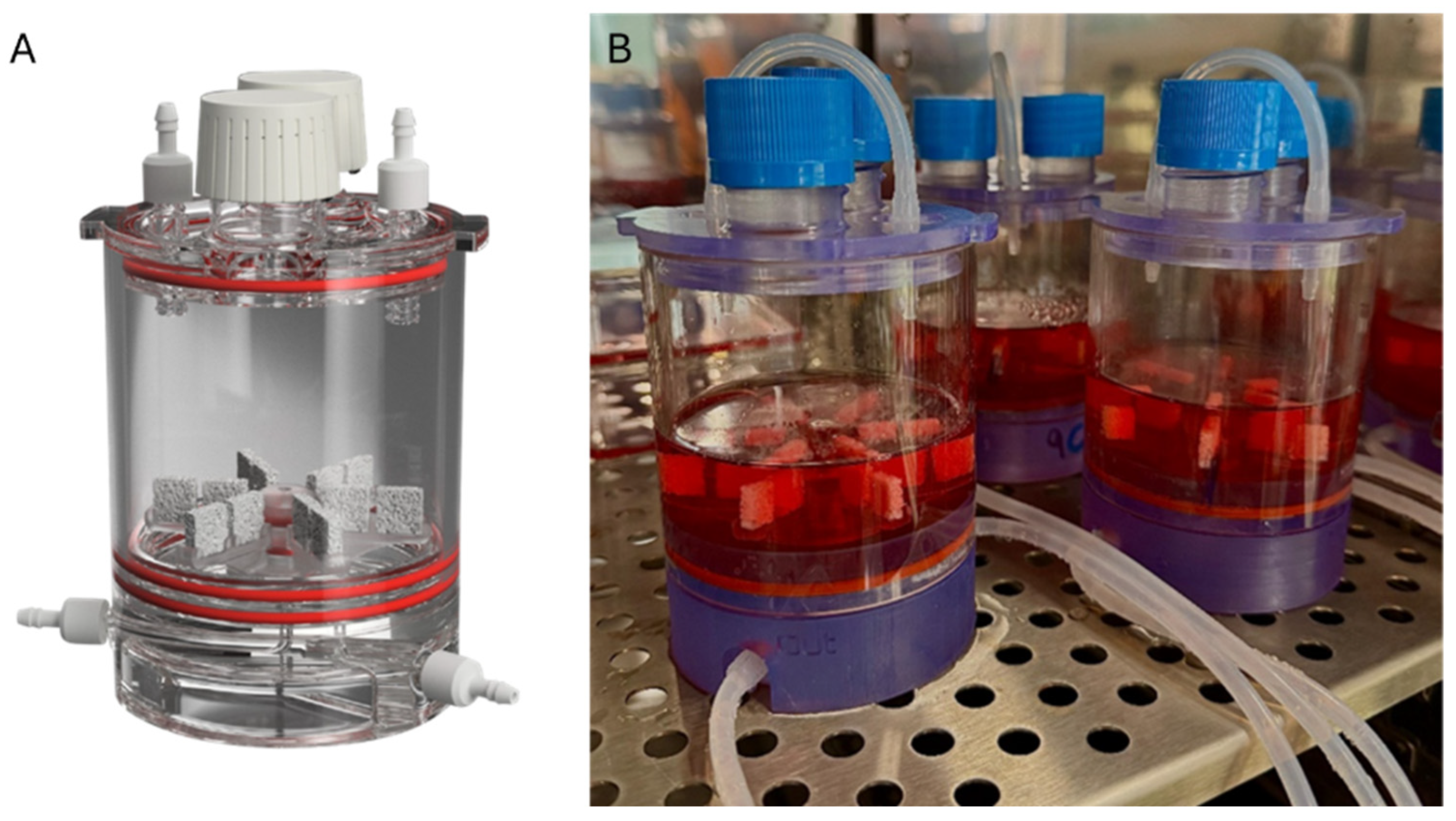
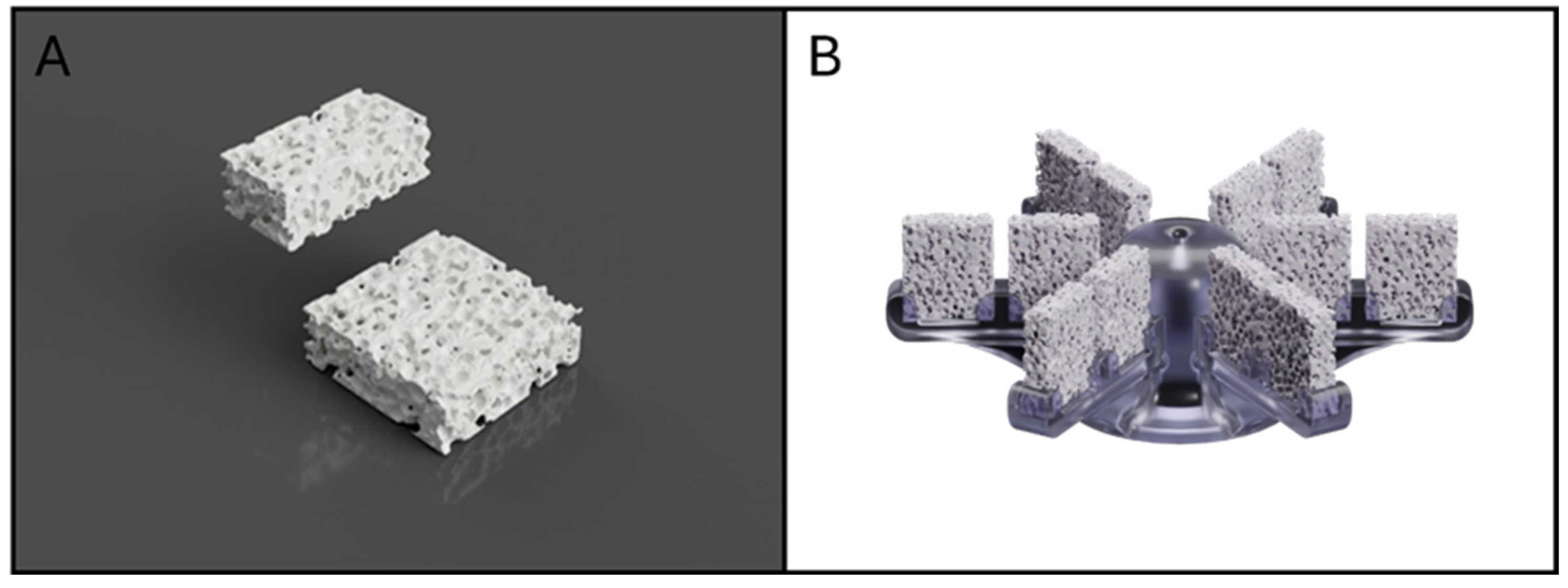
A commercially available bioreactor system, BioAxFlow (produced by Cellex S.r.l., Rome, Italy), was used in this study. The bioreactor comprises four main components: (1) a base (height 8 cm,
Figure 1A) integrating inlet and outlet ports for controlled media flow, (2) a cylindrical chamber (diameter 8 cm,
Figure 1A,B or 4 cm, not depicted), (3) scaffold stand for scaffold placement, and (4) a cap with two openings for vent caps and two sampling ports. All components were sterilized and assembled under the laminar flow hood and connected with sterile silicone tubing to a peristaltic pump (Watson Marlow 505 S, Watson-Marlow Fluid Technology Solutions, Cornwall, UK). The pump was operated using 1.6 mm ID silicone tubing, providing a stable flow rate of 80 mL/min for the 8 cm-diameter bioreactor and 40 mL/min for the 4 cm-diameter bioreactor, ensuring continuous medium recirculation through the bioreactor at the CNR-IFT laboratories (
Figure 1B).
For the seeding process, a cell suspension was injected into the main chamber, where scaffolds were positioned on the appropriate scaffold stand. The peristaltic pump was then activated to initiate cell seeding, an automated process designed to maximize cell use and ensure even cell distribution across scaffolds. The scaffolds are continuously surrounded and perfused by a recirculating cell culture medium (100 mL for the 8 cm-diameter bioreactor and 30 mL for the 4 cm-diameter bioreactor) in a closed-loop system. Medium enters the bioreactor from an inlet port at the base and exits through an inner outlet, with both inlet and outlet ports featuring an internal diameter of 1.6 mm. Oxygen supply was maintained by equilibration with the incubator atmosphere (5% CO2, 21% O2), ensuring adequate Dissolved Oxygen (DO) throughout the medium. The system is compatible with placement in a standard humidified incubator at 37 °C.
2.2. Fluid Dynamics Simulations
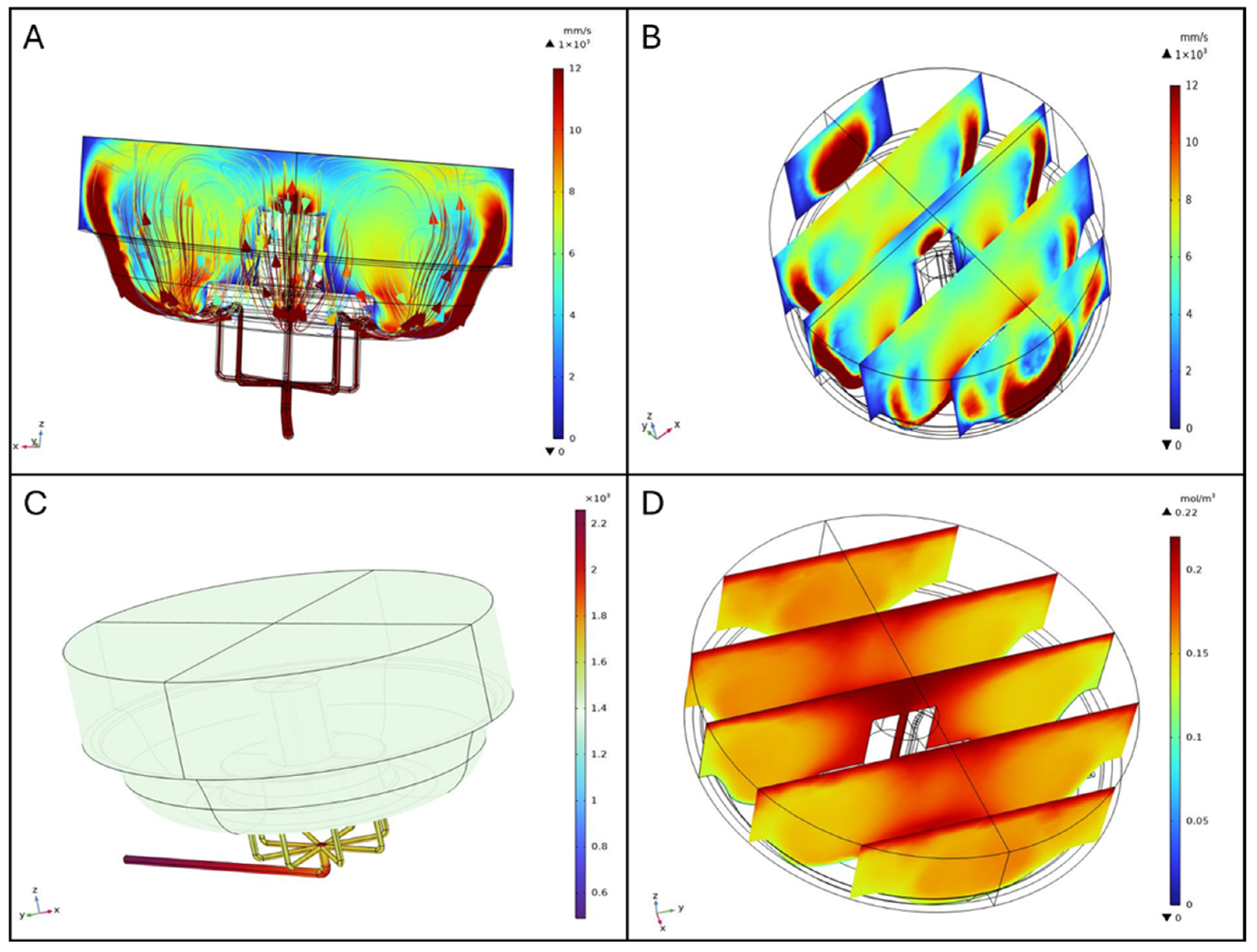
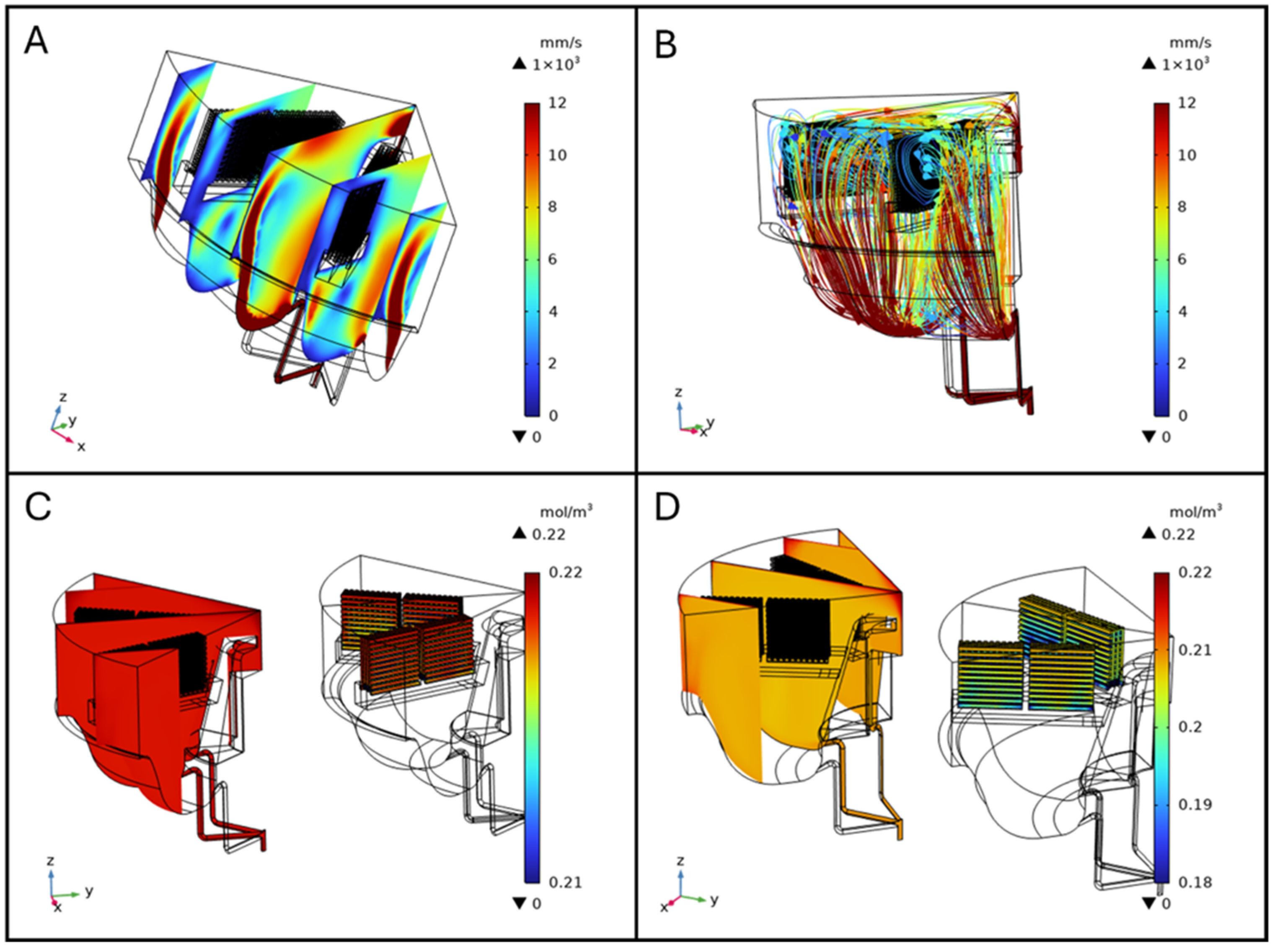
The computational modeling carried out in COMSOL focuses on recapitulating the fluid dynamics characteristics of the medium flow, by investigating the velocity profiles, pressure, and Oxygen distribution within the system under consideration. In the initial stages, the model did not include the scaffolds and their holders to reduce computational complexity and establish a baseline for comparison. This allowed the analysis to concentrate on macroscale interactions, such as mixing and Oxygenation phenomena. In a subsequent phase, the scaffolds and their supporting structures were incorporated into the simulations to provide a more realistic description of the bioreactor configuration. The Oxygen transport model included a reaction term to account for cellular consumption within the scaffolds, enabling the evaluation of the Oxygen concentration in the regions where cells were cultured. Although adding both the scaffolds and their stand into the simulations increased the computational demand, this approach represented a suitable balance between accuracy and complexity for the purposes of the study.
More specifically, to model the media perfused within the BioAxFlow (BAF) bioreactor, COMSOL Multiphysics® 6.3 (COMSOL AB, Stockholm, Sweden) was employed to streamline the construction of the initial simulation. The process began by defining global parameters, including the vessel’s diameter and height, as well as the internal channels and baffles in the base. Next, the fluid material was selected, with properties such as density and viscosity set to mimic water (1000 kg m−3 and 0.001 Pa s, respectively).
The key step involved specifying the physics of the model. This included defining the fluid domain and setting boundary conditions for both the chamber’s walls and the flow’s inlet and outlet. Additionally, initial values (such as for pressure or velocity) and free surface interactions were incorporated to accurately represent the system’s fluid dynamics.
The initial pressure and the initial velocity in all directions was set to zero. The motion of the fluid is governed by the Navier–Stokes equations, which can be seen as the application of Newton’s second law to fluid dynamics. For a compressible Newtonian fluid (Equation (1)), these equations take the form:
where
u represents fluid velocity,
p is fluid pressure,
ρ is fluid density, and
μ is the fluid dynamic viscosity. The terms in the equation correspond to inertial forces (first term), pressure forces (second term), viscous forces (third term), and external forces acting on the fluid (fourth term). The Navier–Stokes equations, developed by Navier, Saint-Venant, Poisson, and Stokes between 1827 and 1845, are always solved in conjunction with the continuity equation (Equation (2)):
The Navier–Stokes equations represent the conservation of momentum, while the continuity equation ensures the conservation of mass. Together, they form the foundation of fluid flow modeling. By solving these equations with specific boundary conditions—such as inlets, outlets, and walls—it is possible to predict the fluid’s velocity and pressure within a given geometry [
17]. These solutions are crucial for understanding and optimizing fluid dynamics in systems like the BioAxFlow bioreactor.
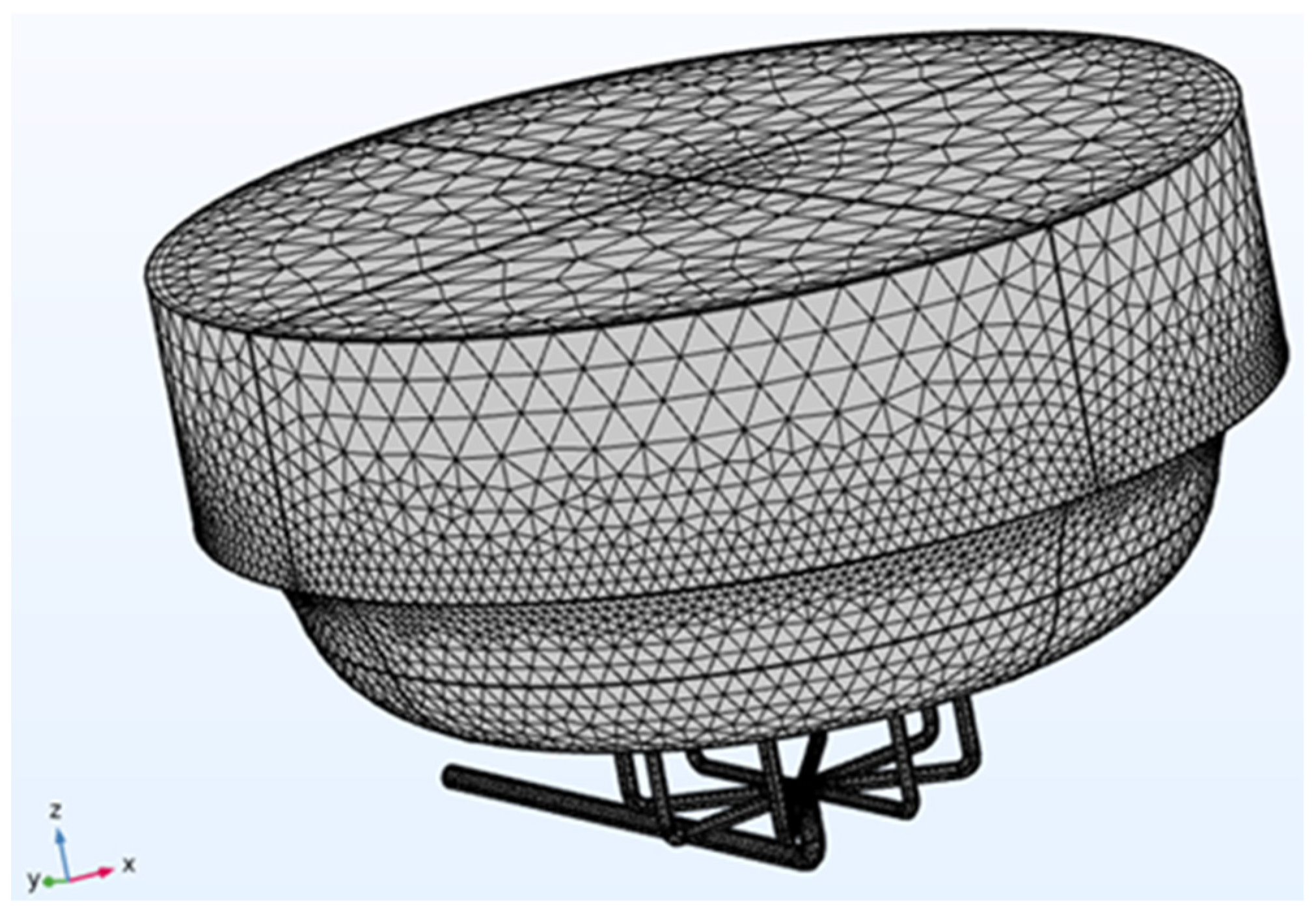
The next step in constructing the model involved setting up the mesh (
Figure 2), or finite element network, necessary to solve the defined boundary conditions. A physics-controlled mesh with normal element size was used to minimize computational demands, such as Random Access Memory (RAM) and simulation time. The finite element method converts the problem into a system of algebraic equations, yielding approximate values for the unknowns at discrete points within the domain. This approach divides the large problem into smaller, simpler parts called finite elements. The equations for each element are then assembled into a larger system that models the entire problem [
18].
The final step in the model setup involved selecting the appropriate study type, which also computed the initial conditions for time-dependent flow simulations within the vessel. Once all these steps were completed correctly, the computation could begin, with the process potentially taking several hours depending on available computational power.
2.3. Simulation of Oxygen Distribution
The CFD models described previously were used to simulate the spatial-temporal distribution of dissolved Oxygen. Used parameters are listed below:
D
O2, O
2 diffusion coefficient in aqueous media: 3 × 10
−9 m
2 s
−1 [
19]
Cell-normalized O
2 consumption rate in SAOS-2 cells: 2 nmol min
−1 10
−6 cells [
20]
Km, Michaelis–Menten constant: 5.6 mmHg [
21]
C0, O
2 concentration at air–liquid interface: 0, 214 mol m
−3 [
19]
KO2, Henry’s law constant: 932.4 atm mol
−1 L
−1 [
19]
Mass transport was estimated by advection and diffusion (Equation (3)), as described here:
where
c is the dissolved Oxygen concentration,
D is the Oxygen diffusion coefficient (m
2 s
−1),
R is the reaction rate (mol m
−3 s
−1), and
u is the 3D velocity field (m s
−1) [
22]. The concentration of Oxygen in the media at t = 0 was assumed to be in equilibrium with the concentration of Oxygen in the air, as described by Henry’s law (Equation (4)):
where
PO2 is the partial pressure of Oxygen in the air and
K O2 is the Henry’s law constant (refer to the parameters listed above, including references) and
C0 represents the concentration of dissolved Oxygen in the medium at the air–liquid interface, equilibrated with the surrounding air. In the presence of cells, local Oxygen concentrations would depend on the mass transport of Oxygen in the bioreactor and the rate of Oxygen consumption by the cells. The rate of Oxygen consumption by cells was modeled using a Michaelis-Menten (MM) kinetic approach, which is widely applied to describe Oxygen uptake in mammalian cell cultures rather than cell growth [
19]. The Oxygen consumption rate
R was therefore defined as (Equation (5)):
where
Vmax is the maximal Oxygen consumption rate (moles m
−3 s
−1),
Km is the MM constant (moles m
−3). Refer to the parameters listed above, including references. A cell-normalized Oxygen consumption rate (SAOS-2 cells) of 2 nmol min
−1 10
−6 was used, along with a
Km value of 5.6 mmHg. In line with previous studies on hepatocyte cultures [
19],
Km is treated as a constant empirical parameter describing the sensitivity of the Oxygen consumption rate to local dissolved Oxygen concentration. This simplification allows modeling Oxygen consumption without dynamically simulating changes in cell metabolism or growth. The total number of cells in BioAxFlow (d = 8 cm) was 11 million cells.
Vmax values were calculated by multiplying the cell-normalized Oxygen consumption rate by the number of cells in the bioreactor and then dividing by the volume of the vessel (110 mL). In this study, Michaelis–Menten kinetics is applied to model Oxygen consumption by a fixed number of adherent SAOS-2 cells, independently of cell growth. Vmax values are computed based on the actual cell numbers in the bioreactor or on the scaffolds for each simulation scenario. The model does not simulate cell proliferation; its aim is to predict spatial Oxygen distribution and consumption under controlled experimental conditions.
Building on these considerations, the scaffolds were incorporated to evaluate their impact on fluid dynamics and Oxygen distribution within the vessel. To reduce computational load, the simulation domain represents 1/4 of the total bioreactor volume, leveraging the system’s geometric symmetry. Given the complexity of the actual scaffold geometry, simplified scaffolds with regular, intersecting linear struts (horizontal and vertical) were used for fluid dynamic simulations. These simplified scaffolds preserved the same porosity (about 50%) as those employed in the cell culture experiments described in this study. Oxygen consumption on scaffold surfaces was applied as a surface reaction. For simulations including scaffolds, two different cell densities per scaffold were considered: 400,000 cells, representing the number of adherent cells 24 h after seeding, and 4 million cells per scaffold, used for the calculation of Vmax, reflecting the cell numbers observed in the experimental cultures. The maximal Oxygen consumption rate was then computed as the product of the total number of scaffolds by the number of cells per scaffold, divided by the total surface area of all scaffolds (0.01 m2 per scaffold). Furthermore, as the culture medium is continuously recirculated from the outlet back to the inlet through silicone tubing, which is permeable to Oxygen, it was assumed that the Oxygen concentration at the outlet is equal to that at the inlet.
2.4. Scaffold Fabrication
Bone inorganic matrix mimicking scaffolds have been fabricated according to the procedures described in Zenobi et al., 2023 [
23] using a percentage porosity of 52.5% for reproducing the healthy bone condition. The scaffolds were designed using Meshmixer 3.5 software (v.2018, Autodesk, San Rafael, CA, USA). Briefly, the process began with a solid of 10 mm × 10 mm × 3 mm. A three-dimensional random cluster of spheres was subtracted from this solid to create a porous structure. The sphere diameter (pore size) and center-to-center distance (spacing) values were set at 700 μm [
23]. The printing was performed using a commercially available fused-filament fabrication (FFF) 3D Printer (Prusa MK3S, Prusa Research, Prague, Czech Republic). The printer is equipped with a 0.4 mm brass nozzle, a direct-dive extrusion system, and a heated build plate, and operates with a layer height range of 0.05–0.30 mm and a maximum nozzle temperature of 300 °C. The printing material was a PLA filament (diameter 1.75 mm) supplied by FILOALFA (Italy). According to the manufacturer, the material has a density of 1.24 g/cm
3, a tensile strength of 53 MPa, and a tensile modulus of 3.6 GPa. The melting point is approximately 135 °C, consistent with typical PLA grades. This PLA filament was carefully heated to a precise extrusion temperature of 205 °C, allowing it to flow through a nozzle with a diameter of 0.4 mm. During the printing process, the printer bed was consistently maintained at a temperature of 60 °C to ensure optimal adhesion and stability. Importantly, it is worth noting that all samples underwent fabrication using identical printing parameters, thereby guaranteeing the homogeneity and standardization of the produced scaffolds and control specimens. The dimensions obtained for the parallelepiped scaffolds were 10 mm × 10 mm × 3 mm (
Figure 3A).
2.5. Scaffold Stand
During the scaffold stand fabrication procedure, a design approach aimed at optimizing the allocation of scaffolds within the bioreactor was adopted. The structure was conceived to simultaneously support twelve parallelepiped scaffolds (10 mm × 10 mm × 3 mm), ensuring efficient use of the available room. The scaffold stand, as well as the base and cap of the bioreactor, were designed using AutoCAD software (AutoCAD Fusion 360, San Rafael, CA, USA) a powerful CAD software that facilitates the creation of complex geometries and allows for precise modifications based on functional requirements (
Figure 3B). Each scaffold is designed to maximize cell interaction and nutrient flow, which is essential for the success of cell culture processes. The continuous recirculation of culture medium through the bioreactor, controlled by a peristaltic pump, ensures homogeneous nutrient and Oxygen distribution around the scaffolds. The flow rate was selected based on simulations showing a homogeneous distribution of flow lines, which was also confirmed experimentally to result in uniform cell distribution on scaffolds and oxygenation. Moreover, the configuration of the scaffold stand facilitates the insertion and removal of scaffolds from the bioreactor chamber, ensuring a homogeneous distribution of environmental parameters, such as temperature and Oxygen.
2.6. Cell Culture
The human osteosarcoma SAOS-2 cell line (ATCC, HTB-37, Rockville, MD, USA) was cultured in high-glucose Dulbecco’s modified Eagle’s Medium (DMEM; Euroclone, Pero (MI), Italy), supplemented with 10% heat-inactivated fetal bovine serum (FBS; Euroclone, Pero (MI), Italy), 2 mM L-glutamine (Sigma, St. Louis, MO, USA), 1.0 unit·mL−1 penicillin (Sigma, St. Louis, MO, USA), and 1.0 mg mL−1 streptomycin (Sigma). Cells were maintained in plastic Petri dishes at 37 °C in a humidified incubator with 5% CO2. For experiments, polylactic acid (PLA) scaffolds were sterilized by immersion in 70% ethanol for 30 min, rinsed with phosphate-buffered saline (PBS), and placed within the BAF bioreactor, using an appropriately printed stand to accommodate the parallelepipedal scaffolds, as described above (for dynamic culture conditions) or placed in plastic 6-well plates for static culture controls. Importantly, the static control group was conducted using the same 3D PLA scaffold model, and not 2D monolayer cultures, to ensure a fair comparison between the two culture conditions. SAOS-2 cells were cultured at a concentration of 150,000 cells mL−1 or 50,000 cells mL−1 directly inside the bioreactor chamber of two sizes (4 cm and 8 cm in diameter, respectively), in a volume of 30 mL and 100 mL, respectively, where PLA scaffolds had been placed. Parallel static cultures were established by seeding cells onto PLA scaffolds positioned in 6-well plates at the same cell concentrations used in the dynamic condition, with a total medium volume of 6 mL per well. Cultures in both conditions were maintained for up to 10 days, and medium changes were carried out after 24 h and subsequently on days 4 and 7.
2.7. Cell Adhesion and Growth Analysis
Cell adhesion and growth trend was quantified by Trypan Blue exclusion assay, a colorimetric method used to assess cell viability based on membrane integrity. Viable cells exclude the dye and appear clear, whereas non-viable cells with damaged membranes take up Trypan Blue and appear blue under the microscope. SAOS-2 cells cultured within the bioreactor (dynamic conditions) or seeded onto PLA scaffolds in multi-well plates (static conditions) were harvested with 0.1% trypsin–EDTA (Sigma, St. Louis, MO, USA), washed twice with PBS and the total number of nucleated and viable cells was counted by Trypan Blue dye (0.4%) (Sigma, St. Louis, MO, USA) exclusion assay using a Bürker hemacytometer chamber. This protocol was performed at days 1, 4, 7 and 10. Each experiment was repeated three times.
2.8. Real-Time Quantitative RT-PCR Analysis
Total RNA was extracted from SAOS-2 cells cultured on PLA scaffolds under dynamic (bioreactor) or static conditions. Cells were harvested with 0.1% trypsin–EDTA (Sigma, St. Louis, MO, USA), washed twice with PBS, and processed after 4, 7, and 10 days. RNA isolation was performed using TRIzol Reagent (Thermo Fisher Scientific, Waltham, MA, USA) according to the manufacturer’s protocol. First-strand cDNA synthesis was performed with 1 µg of total RNA using random primers and the iScript™ cDNA Synthesis Kit (Bio-Rad, Hercules, CA, USA). Gene expression was assessed by RT-qPCR using SsoAdvanced™ Universal SYBR
® Green Supermix (Bio-Rad, Hercules, CA, USA) on a Bio-Rad Real-Time PCR Detection System. Reactions were conducted in triplicate, with each 20 µL reaction containing 0.5 µL cDNA template and primers at a concentration of 250 nM. The primers used are listed in
Table 1.
Amplifications followed these cycling conditions:
50 °C for 2 min (Annealing)
95 °C for 10 min (DNA polymerase activation),
40 cycles at 95 °C for 15 s, and 60 °C for 1 min.
Melting curve analysis performed using Bio-Rad Dissociation Curves software (version 3.1) confirmed product specificity. This analysis generates derivative melt curves (−dF/dT) to assess amplicon specificity, highlighting the temperature at which the PCR product denatures, producing a distinct peak for each DNA species present. A single, sharp peak indicates a specific amplicon, whereas additional or broader peaks reveal nonspecific products or primer–dimer artifacts. Negative controls, omitting RNA or reverse transcriptase during cDNA synthesis, were included to rule out contamination. Relative gene expression was normalized to Glyceraldehyde-3-Phosphate Dehydrogenase (GAPDH) as an endogenous control, and data were analyzed using the 2
−ΔΔCt method as described by Livak and Schmittgen [
24]. The amount of target was calculated using the 2
−ΔCt equation.
Before using the ΔΔCt method for quantification, we performed a validation experiment to demonstrate that amplification efficiency for the target genes and the reference GAPDH gene was equal. The primers were designed using the GeneRunner software (version 6.0) and purchased from Eurofins; their respective sequences are reported in
Table 1.
2.9. Confocal Laser Scanning Microscopy
SAOS-2 cells cultured for 24 h on PLA scaffolds under dynamic (bioreactor) or static conditions were repeatedly washed with PBS and fixed in 4% paraformaldehyde for 15 min and rinsed twice with PBS. The cells were stained for nuclei localization with propidium iodide (2 μg mL−1; Sigma). Fluorescence analyses were performed using a LEICA TCS 4D confocal microscope (Leica Microsystems, Wetzlar, Germany). Z-stack images were collected across the full thickness of the scaffolds with optical sections acquired every 5 µm andthe image reported corresponds to a representative middle section. Laser intensity, gain, and pinhole settings were optimized to minimize background and enhance signal-to-noise ratio, ensuring accurate visualization of cell distribution across the scaffold.
2.10. Statistical Analysis
MedCalc software (version 23.0.9; MedCalc Software Ltd., Ostend, Belgium) was used for statistical analysis, and the significance level adopted for all analyses was p < 0.01. For the results of the cell adhesion analysis, data were analyzed by Student’s t-test. For cell growth analysis, data were analyzed by the two-way ANOVA test, in which one factor is the type of treatment (Static, BAF, Static to BAF and BAF to Static), and the other factor is time (1 day, 4 days, 7 days, and 10 days).
4. Discussion
In this study, we assessed the potential of the BioAxFlow (BAF) bioreactor to enhance the colonization, growth, and maintenance of the osteogenic and tumorigenic properties of SAOS-2 osteosarcoma cells cultured onto bone-mimicking scaffolds. These cells exhibit an osteoblast phenotype with features closely resembling those of human primary osteoblasts [
25]. Compared to other osteoblast-like cell lines, SAOS-2 cells better mimic primary human osteoblast behavior when interacting with biomaterials [
26]. These cells are characterized by high levels of Alkaline Phosphatase (ALP) activity, a hallmark of osteoblast differentiation, and exhibit growth factor expression and collagen production comparable to human primary osteoblasts [
27]. They express bone-specific markers, such as Collagen Type I, ALP, Osteocalcin (OCL), and Osteopontin (OPN), and produce bone matrix proteins. This makes them a preferred model for studying osteogenic differentiation and bone tissue dynamics. Additionally, SAOS-2 cells are widely used in osteosarcoma and bone-related research due to their osteoblastic properties and ability to replicate key aspects of bone biology and cancer pathology. SAOS-2 cells exhibit rapid proliferation and are resistant to certain apoptotic stimuli, making them ideal for studying the growth and survival of osteo-sarcoma cells under various conditions, including the effects of potential therapeutic agents. They also exhibit features of tumor progression, such as angiogenesis and metastatic potential and secrete Vascular Endothelial Growth Factor (VEGF), which supports new blood vessel formation, a critical factor in tumor growth and metastasis [
28]. Studies have highlighted the potential of targeting VEGF signaling in osteo-sarcoma, as its inhibition not only reduces angiogenesis but also promotes apoptosis, suggesting a promising therapeutic approach. This is especially relevant since VEGF overexpression is linked to worse prognosis in osteosarcoma patients [
29].
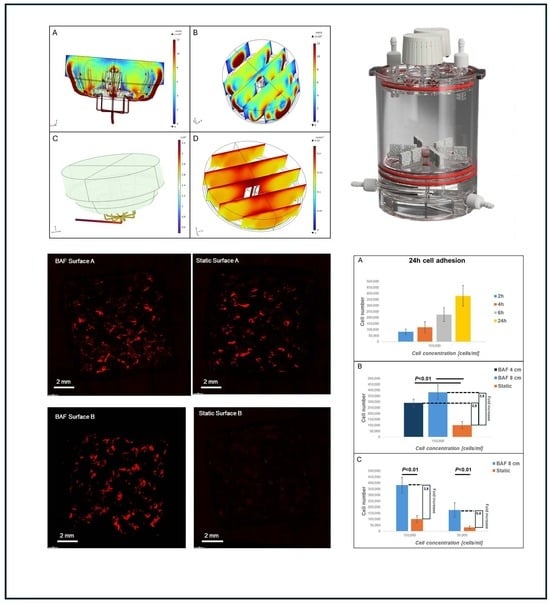
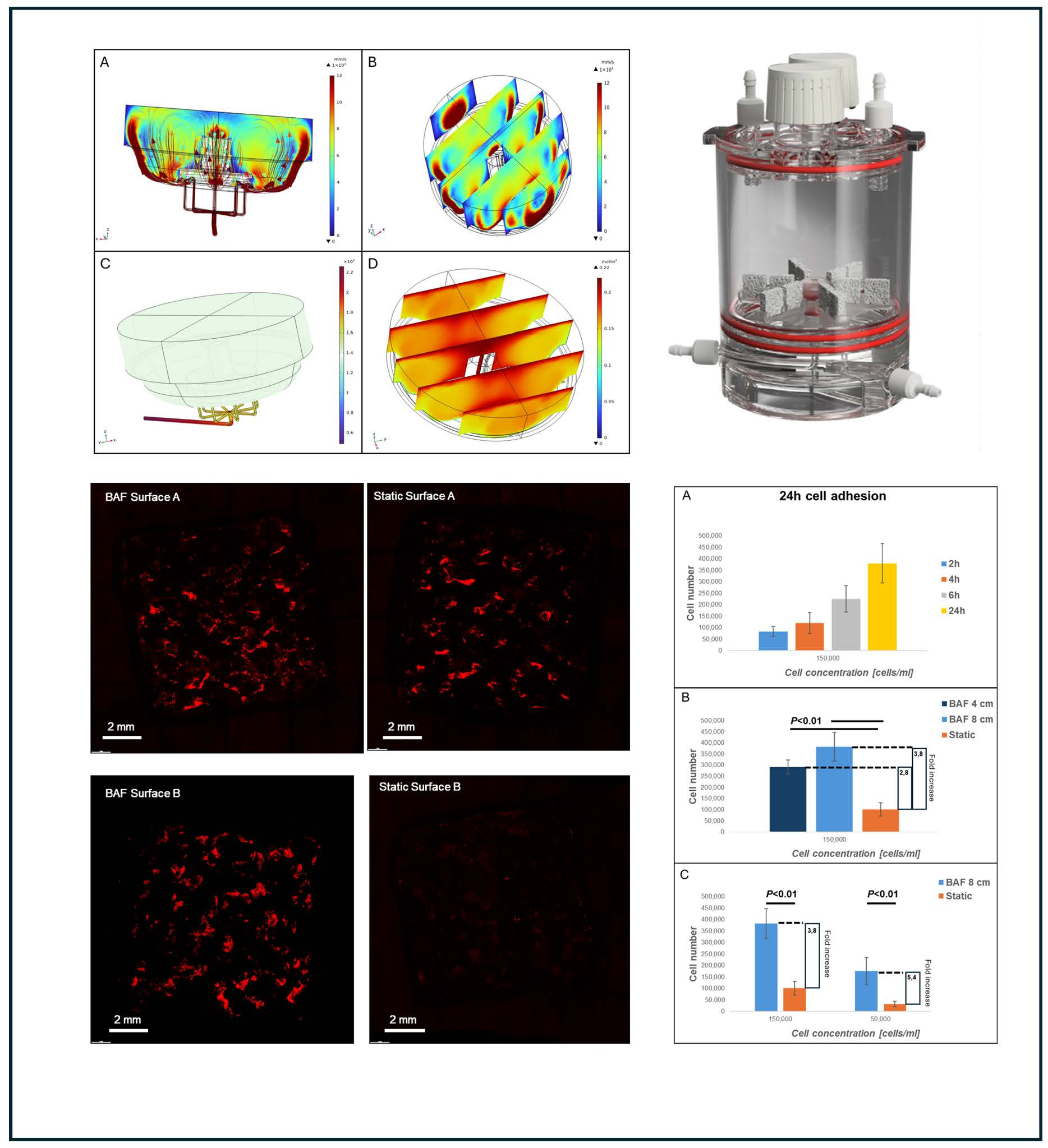
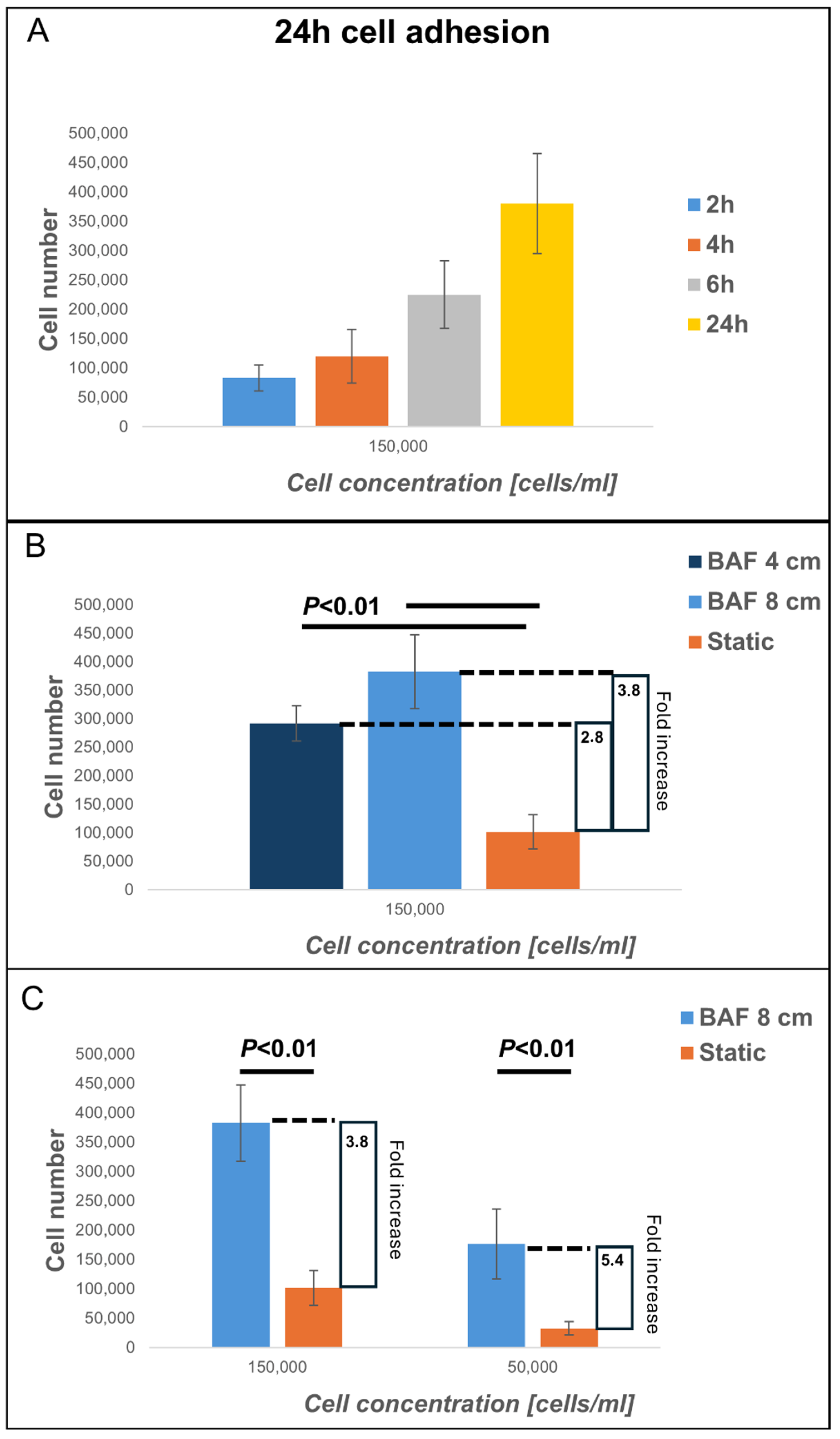
Our results revealed that the BAF bioreactor led to a substantial increase in cell adhesion compared to static conditions at a seeding cell concentration of 150,000 cells mL
−1 when using the 4 cm bioreactor. This effect was enhanced with the 8 cm bioreactor. Notably, even at a lower seeding concentration of 50,000 cells mL
−1, dynamic conditions in the larger bioreactor (8 cm) resulted in further improvement in the average cell adhesion. This underscores the BAF system’s ability to maintain effective cell–scaffold interactions despite reduced cell availability, consistent with previous studies that have demonstrated the benefits of dynamic fluid-based culture systems for promoting efficient cell seeding and biomaterial colonization [
30]. The fluid dynamics within the bioreactor, as highlighted by the COMSOL simulations, ensures uniformity in key parameters such as velocity, pressure, and gaseous distribution. Specifically, the simulations demonstrate the capability to achieve a homogeneous velocity and Oxygen distribution throughout the system, which is critical for a homogeneous distribution of cells and nutrients throughout the scaffold volume. The enhanced adhesion observed is likely due to the continuous fluid flow within the bioreactor, which improves nutrient and growth factor exchange, mimicking physiological environments more closely than static culture. This promotes greater cell interaction with biomaterial surfaces, supporting efficient scaffold seeding and better nutrient exposure. Furthermore, the improved adhesion when lower cell concentrations were used at seeding (50,000 cells mL
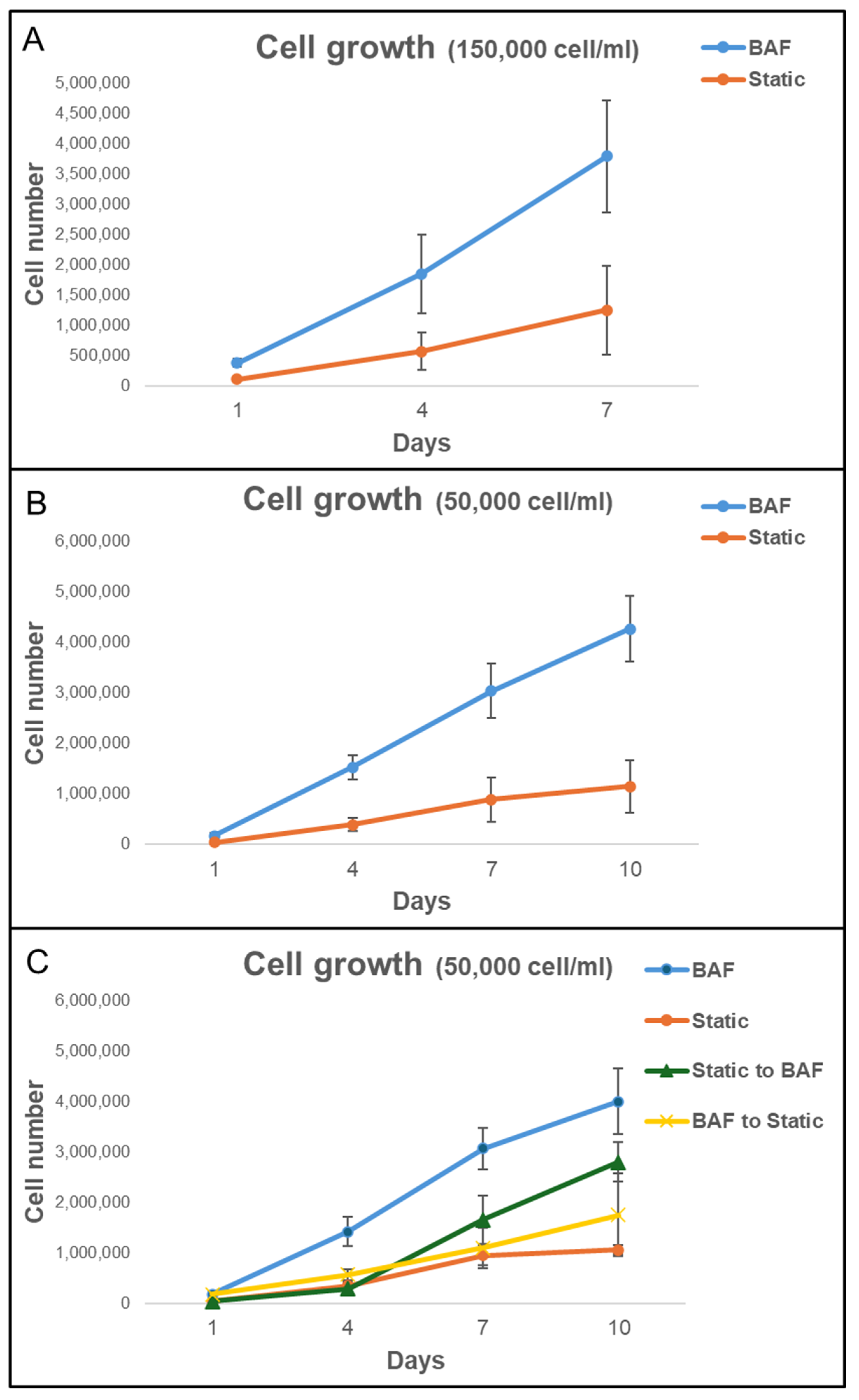
−1) demonstrates the bioreactor’s efficiency and scalability. The bioreactor’s advantage extended beyond initial cell adhesion, demonstrating superior performance in supporting sustained cell proliferation over time. When a cell concentration of 150,000 cells mL
−1 was used at seeding, dynamic culture conditions resulted in a 3-fold increase in the number of cells by day 7 as compared to static culture, which, in turn, showed reduced viability due to nutrient and Oxygen depletion, alongside waste accumulation, within the scaffold microenvironment. These findings align with previous reports emphasizing the challenges of maintaining cell vitality in static cultures, particularly at higher seeding cell densities [
31,
32]. Importantly, this performance advantage should be interpreted in the context of the well-known diffusion limitations intrinsic to 3D static culture, in which restricted mass transport limits nutrient supply and waste removal. By comparing the BAF system to an appropriate 3D static control, performed using the same 3D PLA scaffold models and not 2D monolayer cultures, we highlighted the specific added value of dynamic perfusion in overcoming these inherent constraints.
Importantly, at a lower seeding cell concentration of 50,000 cells mL
−1, the BAF bioreactor enabled consistent cell growth, achieving a nearly 4-fold higher number of cells compared to static culture by day 10, highlighting its capacity to maintain optimal growth conditions over extended periods. This is consistent with findings from similar studies that show enhanced cell proliferation in bioreactors due to continuous nutrient supply, prevention of nutrient depletion, and waste accumulation that typically limit cell growth in static systems [
33]. To assess whether the beneficial effects on cultured cells are merely linked to higher initial cell adhesion to the scaffolds or to better culture conditions achieved within the bioreactor, we used an approach consisting in culturing the scaffolds in static conditions for 24 h and then transferring them to the bioreactor, while other scaffolds, originally cultured in the bioreactor for 24 h, were shifted to static culture conditions. Scaffolds shifted from static to dynamic conditions (Static to BAF, in
Figure 6) exhibited a significant increase in cell proliferation compared to static culture. Conversely, scaffolds moved from dynamic to static conditions (BAF to Static, in
Figure 6) displayed slower growth, indicating reduced proliferation after removal from the bioreactor-dynamic environment. The recovery of cell growth rate observed when scaffolds were shifted from static to dynamic conditions underscores the bioreactor-effectiveness in enhancing proliferation even after initial suboptimal conditions. Conversely, the reduction in the growth rate observed when scaffolds were transitioned from dynamic to static culture conditions highlights the importance of sustained dynamic culture for maintaining cell proliferation and viability over time at optimal rates. By offering efficient scaffold seeding, robust cell expansion, and long-term viability, the bioreactor addresses critical challenges in scalable tissue engineering strategies. The BAF bioreactor not only supports rapid and efficient cell adhesion to the bone-mimicking scaffolds specifically designed for this study but also provides optimal conditions for sustained cell growth.
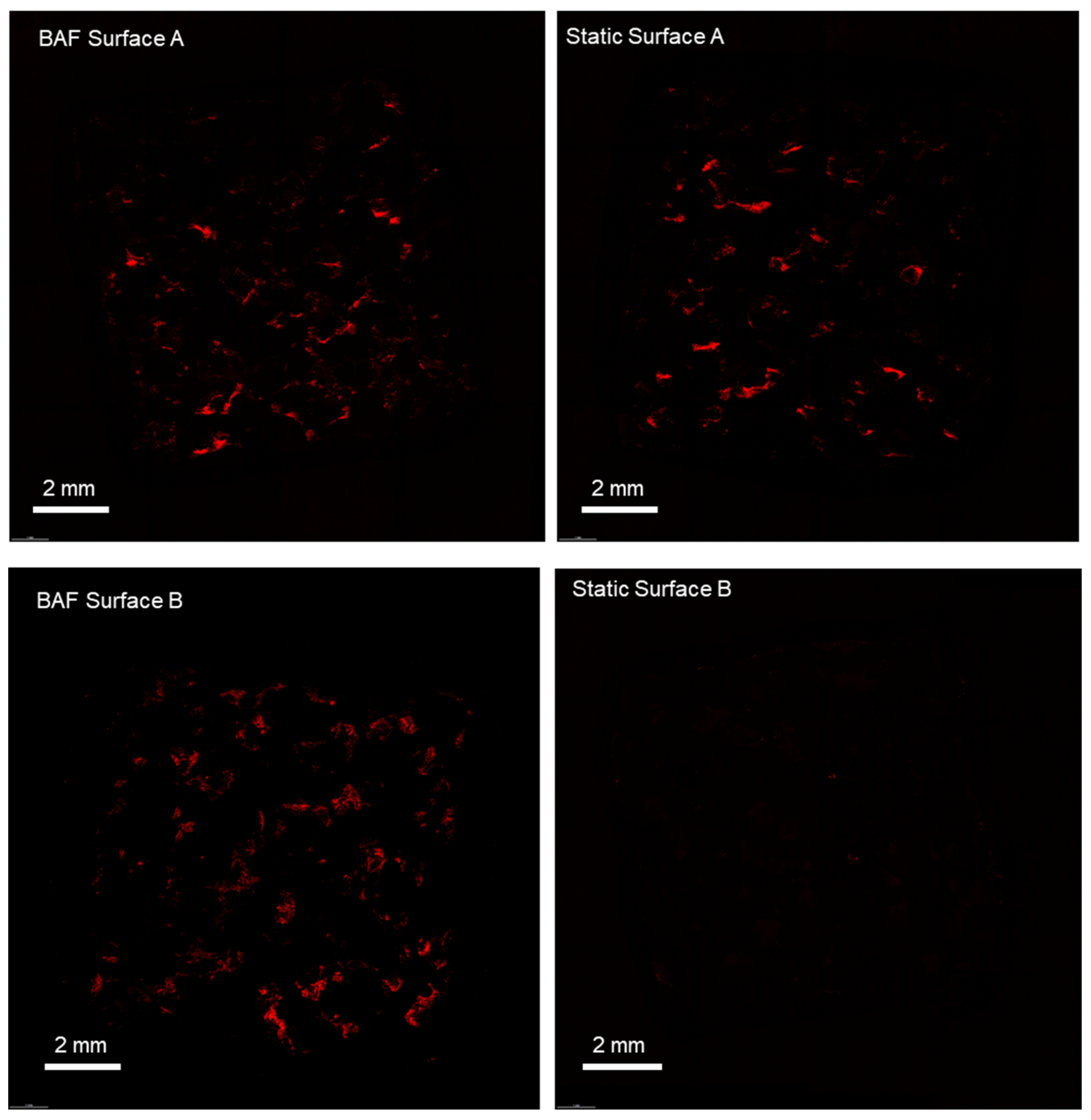
A crucial aspect of tissue engineering is the ability to achieve homogeneous cell distribution across the entire scaffold surface. When cultured using traditional static conditions, SAOS-2 cells were adhering to the surface directly exposed to the cell suspension, with minimal colonization observed on the opposite surface. In contrast, dynamic conditions facilitated uniform cell distribution across both scaffold surfaces, as demonstrated by fluorescent staining (
Figure 8). This finding underscores the importance of dynamic culture systems for achieving effective cell colonization of three-dimensional scaffolds, due to the maintenance of cell suspension, which is essential for developing functional tissues for regenerative medicine.
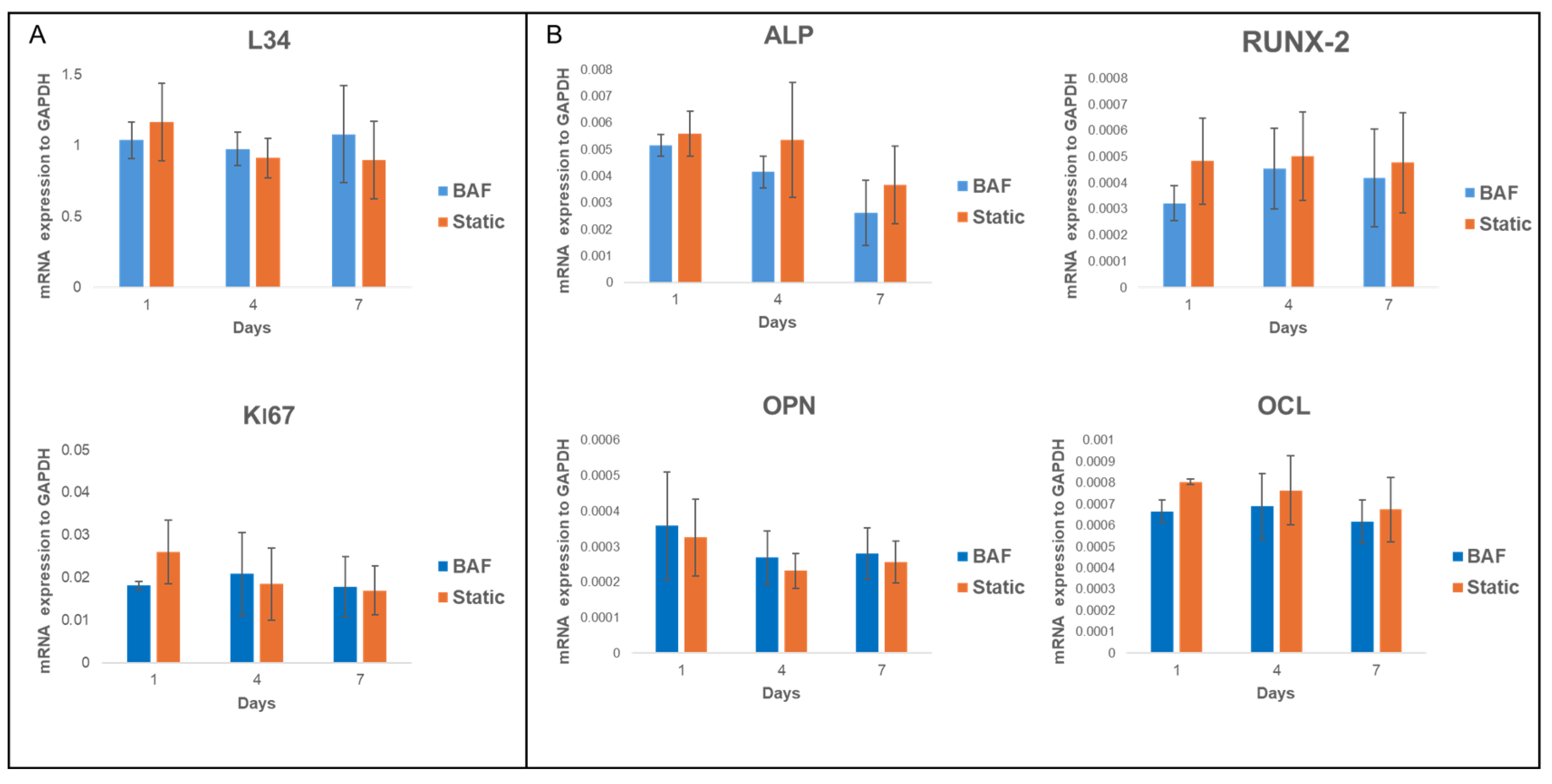
We also investigated the effect of dynamic culture on the osteogenic potential of SAOS-2 cells. Osteogenesis involves a sequence of events across three stages: (1) proliferation, (2) extracellular matrix (ECM) deposition and maturation, and (3) mineralization of the bone ECM [
34]. These phases are driven by transcription factors like RUNX2 and the activation of osteoblast-specific genes, including ALP, OCL, and OPN. ALP, an early differentiation marker, is expressed towards the end of the proliferative phase and during ECM maturation, while OPN and OCL—specific markers of the mineralization phase—are associated with advanced osteogenesis [
35]. The expression of key osteogenic markers, such as RUNX2, ALP, OPN, and OCL, was assessed over time under both dynamic and static culture conditions. Our data revealed that the expression of these markers remained comparable between dynamic and static cultures, indicating that the BAF bioreactor did not compromise the osteogenic commitment of SAOS-2 cells. This result is consistent with previous studies, which suggested that bioreactors can support the osteogenic differentiation of osteoblast-like cells by maintaining physiological conditions [
36].
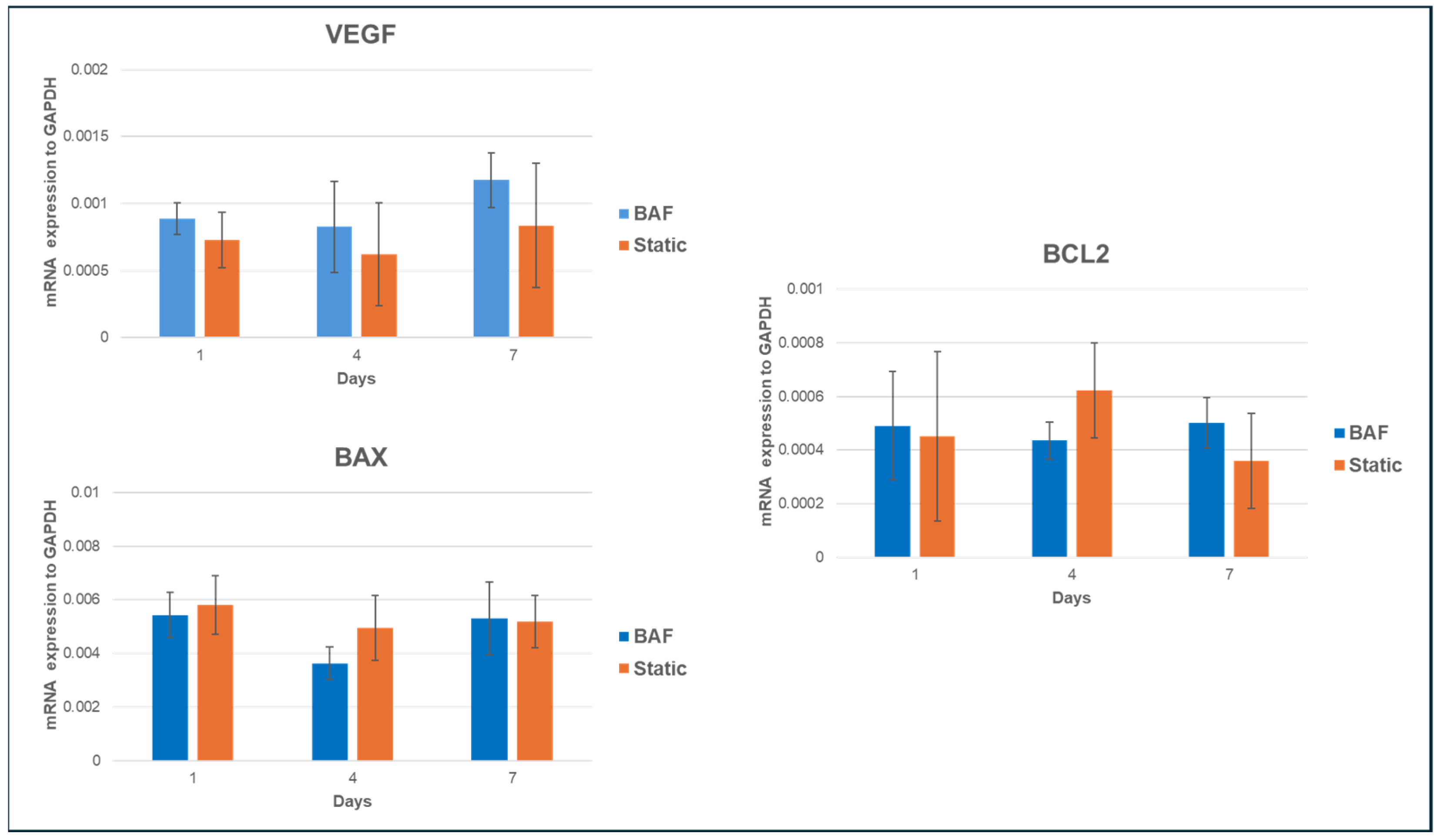
A key aspect of our study was the evaluation of dynamic culture conditions-impact on the tumor phenotype of SAOS-2 cells. We analyzed the expression of tumor-related markers, including VEGF (a key pro-angiogenic factor), and apoptotic genes, BAX (pro-apoptotic) and BCL2 (anti-apoptotic), to assess whether dynamic culture within the BAF bioreactor would alter the tumorigenic characteristics of SAOS-2 cells. We showed that there were no significant changes in the expression of these markers under dynamic culture conditions. Specifically, VEGF expression remained stable, suggesting that dynamic conditions did not exacerbate the pro-angiogenic phenotype of the cells. Similarly, the balance between BAX and BCL2 was maintained, supporting the conclusion that the BAF bioreactor does not induce significant apoptotic stress. The lack of significant differences in VEGF, BAX, and BCL2 expression indicates that dynamic culture conditions preserve the tumor phenotype while providing a more controlled and “biomimetic” in vitro environment. This gene expression stability can be viewed positively, as it suggests that the BAF bioreactor offers a consistent and less variable platform for drug-testing applications, particularly for therapies targeting angiogenesis and apoptosis.
These findings suggest that the BAF bioreactor can be used not only in the field of tissue engineering but also as an effective platform for studying the tumorigenic characteristics of osteosarcoma cells in vitro. Its ability to maintain tumor characteristics under dynamic conditions makes it particularly valuable for drug screening and the evaluation of targeted therapeutic strategies.
Bone tissue engineering requires effective colonization of biomimetic scaffolds to establish functional constructs that integrate seamlessly with host tissue. The controlled dynamic environment of the BAF bioreactor promotes rapid cell colonization, uniform distribution across bone-mimicking scaffolds, and high cell viability. The improvements observed when using lower cell concentrations highlight its potential for efficient and cost-effective cell culture strategies, minimizing resource demands while maintaining high-quality outcomes. This advantage is particularly useful for large-scale applications and the development of complex, multilayered constructs. To optimize its performance and scalability for clinical applications, future studies should explore different flow rates and scaffold geometries. Additionally, the integration of co-culture systems and diverse cell types would provide valuable insights into the bioreactor’s versatility and broader applicability. Importantly, integrating the BAF bioreactor with advanced biomaterial technologies could significantly expand its impact. Recently developed sponge-derived bioactive glass microspheres featuring bone-like structure and controlled drug-release capabilities [
37] represent an ideal class of materials that could be tested within the BAF platform. Their combination with dynamic perfusion would enable the evaluation of next-generation “smart” scaffolds capable of simultaneously supporting tissue regeneration and delivering targeted therapeutic agents. BioAxFlow can be used not only as a culture device but also as a versatile testing environment for the design and preclinical assessment of multifunctional therapeutic systems.



 ,
,