You are currently viewing a new version of our website. To view the old version click .
Horticulturae
  • Feature Paper
  • Article
  • Open Access

4 December 2025

Effect of Peat-Zeolite Substrates Used During Seedling Cultivation on the Growth, Physiology, and Yield of Sweet Peppers

,
and
Lithuanian Research Centre for Agriculture and Forestry, Institute of Horticulture, Kauno Str. 30, LT-54333 Babtai, Lithuania
*
Author to whom correspondence should be addressed.
This article belongs to the Special Issue Cultivation and Production of Greenhouse Horticulture

Abstract

The quality of seedlings and a plant’s yield are influenced by the different substrates used to grow the seedlings. Zeolite has been successfully used in growing media for containerized production systems. This study aimed to assess the effects of peat and zeolite substrates on sweet pepper (Capsicum annuum L.) seedling growth, photosynthetic parameters, and crop yield. The research was conducted at the Institute of Horticulture, Lithuanian Research Centre for Agriculture and Forestry. Sweet pepper seedlings were grown in different substrates: peat, peat+zeolite 1:1, peat+zeolite 2:1, and peat+zeolite 3:1. The biometric parameters of sweet pepper seedlings grown in a mixture of peat and zeolite at different ratios were affected differently. Adding zeolite to peat substrate positively affected the stomatal conductance and transpiration rate in sweet pepper seedling leaves. Sweet peppers whose seedlings had been grown in peat-zeolite substrates gave higher yields.

1. Introduction

Growing media provide support for plants and good conditions for plant growth, root development, and root function [1]. Substrates and their various properties, both directly and indirectly, influence plant growth and yield [2]. Therefore, the choice of substrate for seedling growth is a very important factor in vegetable production. Growing media from different sources are used for growing vegetable seedlings [3]. Some are organic (peat, tree bark, compost, coconut fiber, vermicompost, and rice ash) and others are inorganic (perlite, vermiculite, and zeolite) [4,5,6]. These growing substrates are used alone or in mixtures, usually with peat. However, the different growing media vary significantly in composition, particle size, pH, aeration, and their ability to retain water and nutrients [7]. Therefore, it is essential to identify the most suitable substrate mixtures for the growth and development of vegetable seedlings.
One inorganic substrate, zeolite, is widely used in agriculture for soil improvement in the open field and as a component of growing media for seedlings. Zeolites are hydrated aluminosilicates belonging to a group of minerals of volcanic origin that occur in the natural landscape. They contain about 50 mineral types, including clinoptilolite [8]. Investigating the potential of clinoptilolite as a substrate, it has been found that the addition of zeolite improves plant growth, nitrogen and potassium fertilizer uptake, and water infiltration and retention, increases crop yields, improves soil quality, and reduces nutrient loss from the soil [9]. In addition, zeolite positively affects plant nutrition and can be called a slow-release nitrogen fertilizer [10]. Manolov et al. [11] claim that zeolite is a good alternative to traditional potting media. It is also suitable as a substrate for hydroponic vegetable cultivation [12,13,14]. However, research data on the effect of zeolite as a component of growing media in a mixture with other organic matter is variable. Some studies show that zeolite and its mixtures with other substrates positively affect vegetable seedling growth and plant yield. Eghtedary-Naeini et al. [15] point out that combining zeolite with peat moss and perlite is one of the best-growing media as it is a good source of slow-release macro- and micro-nutrients for plants. Aghdak et al. [14] noted that adding 25% zeolite to perlite substrate significantly increased leaf area and fresh and dry biomass in pepper plants. Other results also showed that using perlite and zeolite as the growing media produced the highest tomato yield [16]. Some researchers compared different substrates for growing pepper and tomato seedlings: compost, turf, and substrate mix enriched with zeolites. The best results were obtained from the mixture of peat and Zeoplant [17]. Other studies show the opposite. According to Ayan et al. [18], adding 20% zeolite to the growth media harmed the morphological characteristics of seedlings.
The effect of natural zeolites on plant quality parameters may be limited and depends on the type of plant, its sensitivity to zeolites, the doses of zeolite used, environmental conditions, and other factors [19]. Zeolite has been successfully used as a growing medium for potted plants. Many experiments have been performed to study the effect of zeolite mixtures and other substrates (perlite, peat, turf, etc.) on seedling growth. However, there are different data on the most suitable ratio of zeolite to other substrates for each plant, as these depend on each vegetable species. There is also a lack of literature on how zeolite affects the growth of sweet pepper seedlings and in what ratios it should be mixed with other growing media in pots. Our hypothesis is as follows: the addition of zeolite to the peat substrate has a positive effect on the quality of sweet pepper seedlings and increases plant yield. This study’s objective was to investigate the effect of peat-zeolite mixtures on sweet pepper (Capsicum annuum) seedling development, photosynthesis parameters, and yield.

2. Materials and Methods

2.1. Growing Conditions

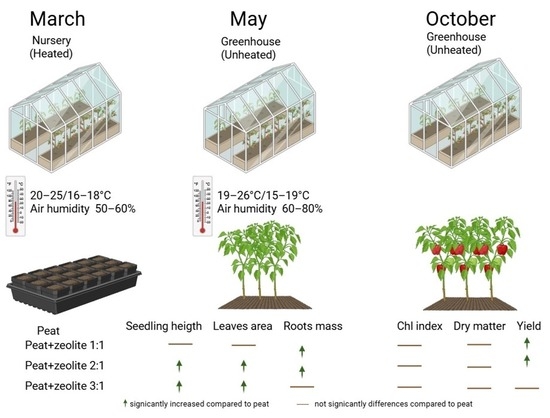
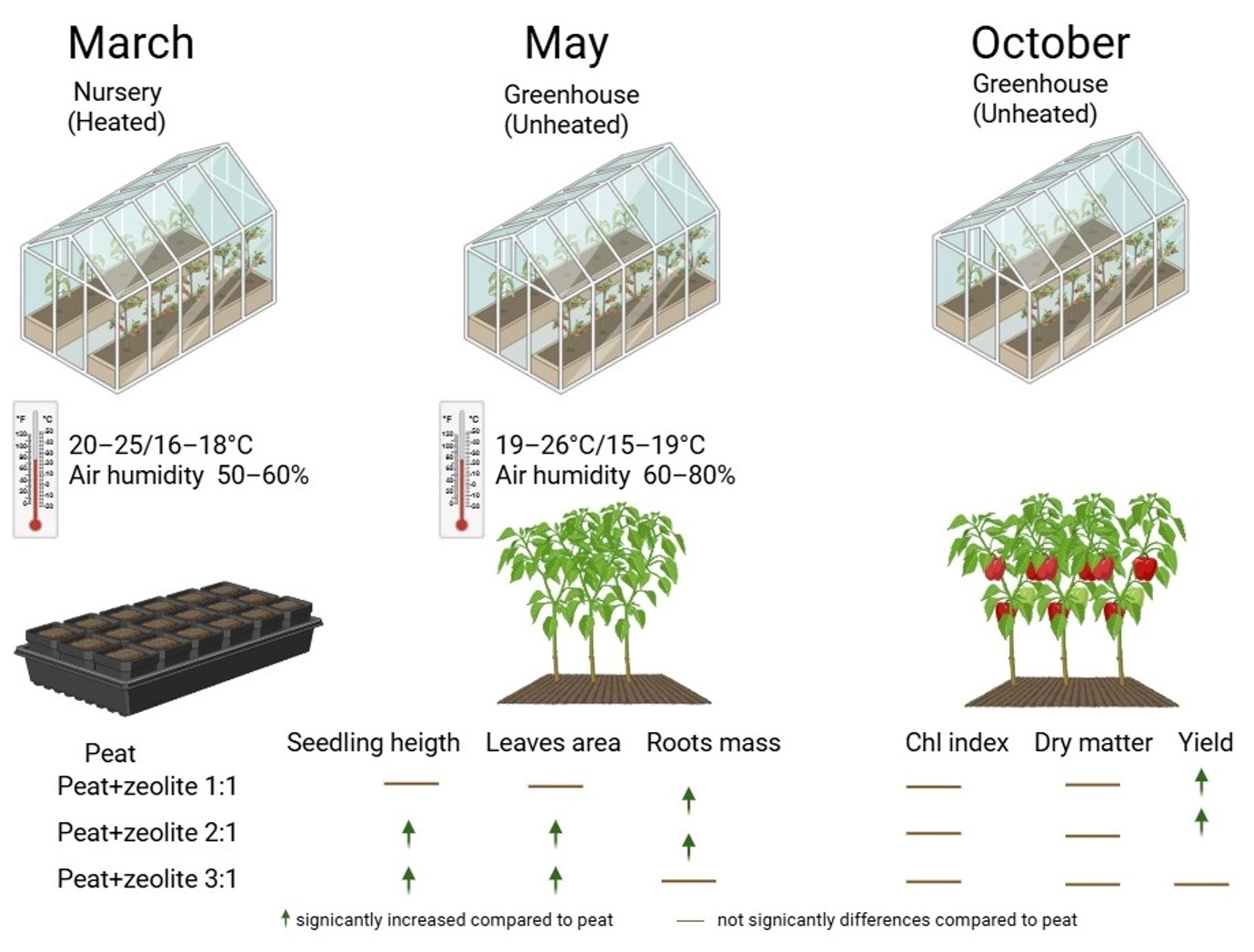
The experiment was conducted at the Institute of Horticulture, Lithuanian Research Centre for Agriculture and Forestry (55°60′ N, 23°48′ E), Babtai, Lithuania. Sweet peppers (Capsicum annuum L.) were grown in a greenhouse with a double polymer film in 2023–2024. Different substrates were investigated: peat (N 100–120, P2O5 30–80, K2O 120–200 mg L−1; microelements Fe, Mn, Cu, S, Mo, Zn; pH 5.5–6.5) (Profi 1, Durpeta, Kupiškis district, Lithuania), peat+zeolite 1:1, peat+zeolite 2:1, and peat+zeolite 3:1. The seedlings were cultivated for 60 days. The sweet pepper variety “Reda” (Lithuania) was grown in an experiment. The sweet peppers were sown at the beginning of March. The pots (volume 800 mL) were arranged on racks. The nursery was heated. The seedlings were watered once or twice a week to keep the substrate moist. This varied depending on the air temperature and lighting conditions. The amount of water per pot was 200–400 mL.
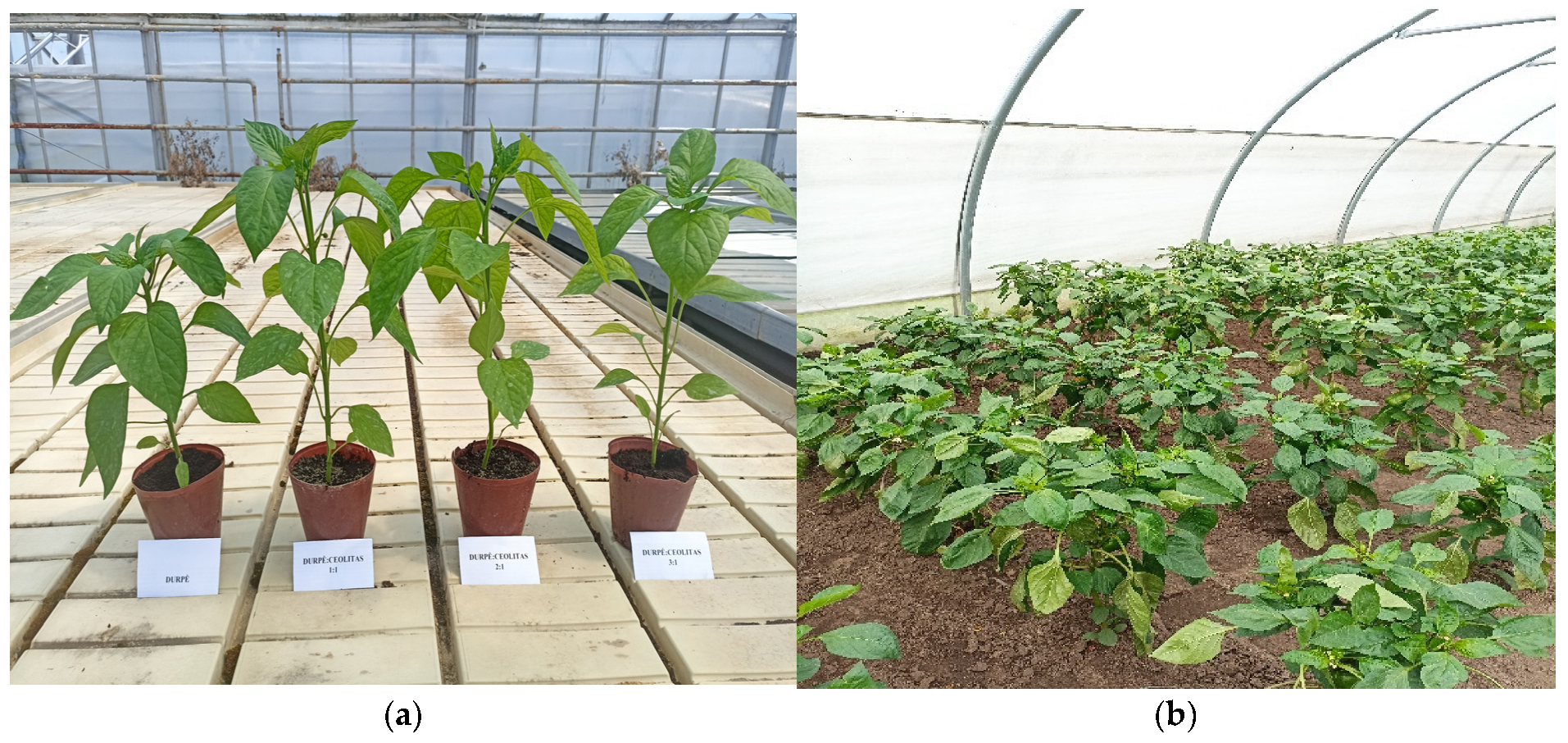
During seedling cultivation, the day/night temperature was 20–25/16–18 °C and the relative air humidity was 50–60%. Sweet pepper cultivation started at the end of May and lasted until the beginning of October (Figure 1a,b). The planting scheme for sweet peppers in a greenhouse was 70 × 40 cm (70 cm inter rows, 40 cm between plants in the row). The sweet peppers in the greenhouse were fertilized with “Nutricomplex” (NPK 14:11:25 + 2 MgO) (Tradecorp, Brussels, Belgium). The plants were watered every 7–10 days with a 0.2% solution of fertilizer. During plant cultivation, the day/night temperatures were 19–26 °C/15–19 °C, the relative air humidity was 60–80%, and the plot area was 4.8 m2. The experiment was conducted in a completely randomized design, where each treatment (growing medium) was replicated three times.
Figure 1. Sweet pepper seedlings were grown in different substrates (from left to right: peat, peat+zeolite 1:1, peat+zeolite 2:1, and peat+zeolite 3:1) (a), and the trial of sweet peppers in the greenhouse (b).

2.2. Biometric Measurements

Measurements of the seedlings were taken before the seedlings were planted in the greenhouse, i.e., at 60 days of seedling age. The growth parameters measured were seedling height to the tip of the youngest leaf and leaf number and area. The leaf area of the seedlings was measured by a “WinDias” leaf area meter (Delta-T Devices Ltd., Cambridge, UK). Five seedlings from each replicate were measured. The measurements were performed in three replicates (n = 3).

2.3. Determination of Dry Matter

The dry matter content of sweet pepper leaves was determined after drying in a drying oven (Venticell, MBT, 2, Czech Republic) at 105 °C until a constant weight was achieved. The measurements were performed in three replicates (n = 3).

2.4. Determination of Photosynthetic Parameters

Photosynthetic rate (Pr, μmol CO2 m−2 s−1), transpiration rate (Tr, mmol H2O m−2 s−1), and stomatal conductance (H2O mol m−2 s−1) were determined at 9:00–12:00 am by using an LI-6400XT portable open-flow gas exchange system (Li-COR 6400XT Biosciences, Lincoln, USA). The third most developed leaf of each plant was measured, each for one minute. Measurements are presented as the average of the plant from a one-minute measurement and were performed in three replicates (n = 3). Reference air [CO2] of 400 μmol mol−1, light intensity of 1000 μmol m−2 s−1, and a flow rate of 500 mmol s−1 were determined according to Laužikė et al. [20]. The leaf area covered by the chamber was 6 cm2.

2.5. Non-Destructive Measurements

The leaf chlorophyll index was determined using the Dualex 4 Scientific® (FORCE-A, Orsay, France) meter. The third most developed leaf of each plant was measured. Five seedlings from each replicate were measured. The measurements were performed in three replicates (n = 3).

2.6. Determination of Nitrogen (Ammonia/Ammonium) and Protein in Leaves

Plants for analysis were taken from three replicates of each treatment, 5 plants per replicate. Analyses were performed in three analytical repetitions. The total nitrogen in the seedlings’ leaves was determined using the Kjeldahl method (Directive 72/199/EEB). Protein content was determined using the Kjeldahl method (Directive 72/199/EEB). Approximately 1 g of raw material was hydrolyzed with 15 mL concentrated sulfuric acid (H2SO4) containing two copper catalyst tablets in a heat block (Kjeltec system 2020 digestor, Tecator Inc., Herndon, VA, USA) at 420 °C for 2 h. After cooling, H2O was added to the hydrolysates before neutralization and titration. The amount of total nitrogen in the raw materials was multiplied by the traditional conversion factor of 6.25 and species-specific conversion factors to determine total protein content.

2.7. Yielding of Plants

The sweet pepper yield was recorded at every harvest. Sweet pepper fruits were harvested once a week; next, they were separated into marketable and non-marketable (irregularly shaped, with spots, etc.) ones. The total yield was calculated by aggregating each harvest.

2.8. Statistical Analysis

Statistical analysis was performed using Microsoft Excel 2016 and Addinsoft XLSTAT 2022.1 XLSTAT statistical and data analysis (Long Island, NY, USA). The data are presented as averages of three replicates (n = 3) linked to the sampling points. One-way analysis of variance (ANOVA), followed by Tukey’s significant difference test (p < 0.05) for multiple comparisons, was used to evaluate differences between means of measurement.

3. Results

The biometric parameters of sweet pepper seedlings showed variation between the substrates used (Table 1). Seedlings grown in a peat-zeolite 2:1 and 3:1 substrate were significantly taller than seedlings grown in peat alone. The leaf area of these seedlings was also the largest—up to 770–774 cm2. Seedlings grown in a peat-only substrate were shorter than those grown in a peat-zeolite 2:1 and 3:1 substrate; their height reached only 30 cm. The shortest hypocotyl length was observed in seedlings grown in a peat-zeolite 2:1 substrate compared to those grown in peat. Although seedlings grown in a peat-zeolite 1:1 substrate were taller and formed more leaves, with a larger leaf area than control plants, these differences were not statistically significant. Among seedlings grown in peat and zeolite substrates, seedlings grown in a peat-zeolite 1:1 substrate had the smallest leaf area.
Table 1. The effect of different substrates on the biometric parameters of sweet pepper seedlings.
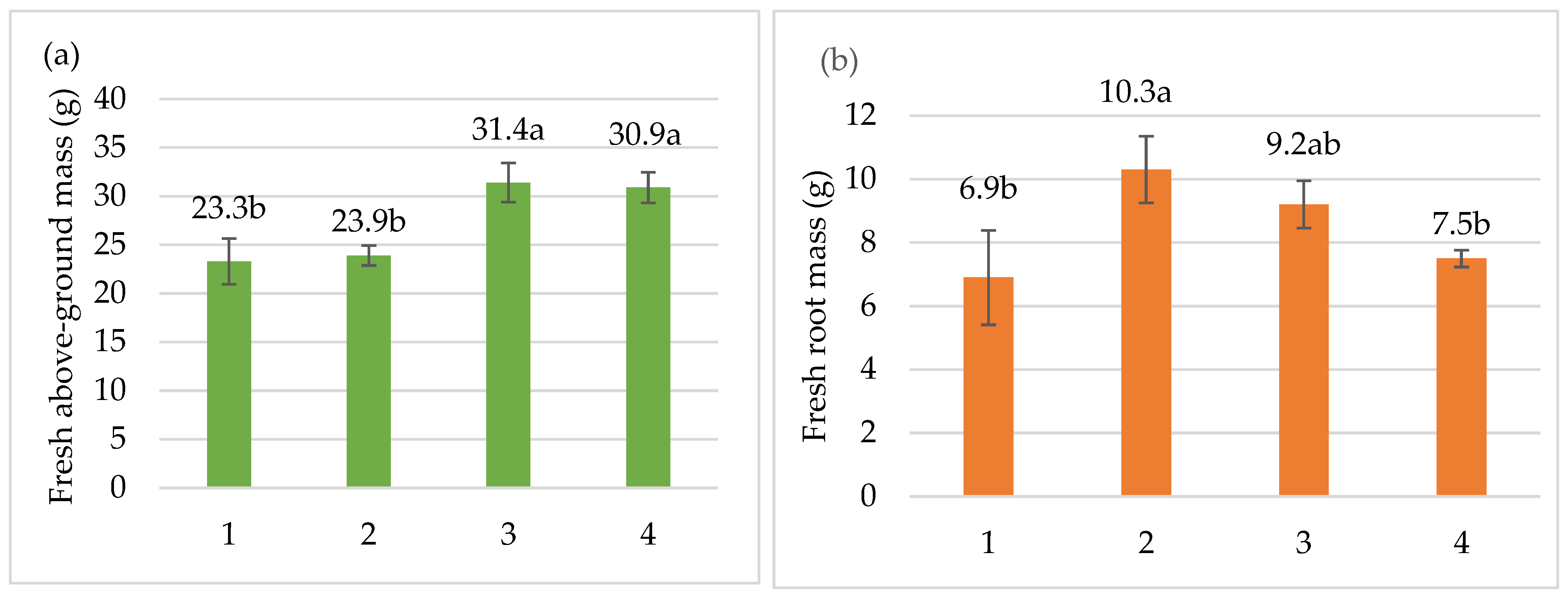
Zeolite and its ratio in peat substrate had different effects on the seedlings’ above-ground and root mass. The above-ground mass of seedlings grown in peat-zeolite substrate ranged from 23.9 to 30.9 g (Figure 2a). Seedlings grown in a peat-zeolite 2:1 and 3:1 substrate had higher above-ground mass than those grown in a peat-zeolite 1:1 substrate and peat alone. The root mass of plants grown in a peat-zeolite substrate increased insignificantly and varied from 7.5 to 10.3 g, depending on the quantity of incorporated zeolite (Figure 2b). As the ratio of zeolite in the peat substrate increased, the root mass of the seedlings was higher. Seedlings grown in a peat-zeolite 1:1 substrate had the highest root mass compared to the control seedlings. However, these seedlings also had the lowest above-ground mass among those grown in peat-zeolite substrates.
Figure 2. The effect of different substrates on the fresh above-ground (a) and root (b) mass of sweet pepper seedlings: 1—peat, 2—peat+zeolite 1:1, 3—peat+zeolite 2:1, 4—peat+zeolite 3:1. According to Tukey’s significant difference test, means with different letters are significantly different at the p < 0.05 level. Error bars show standard deviation.
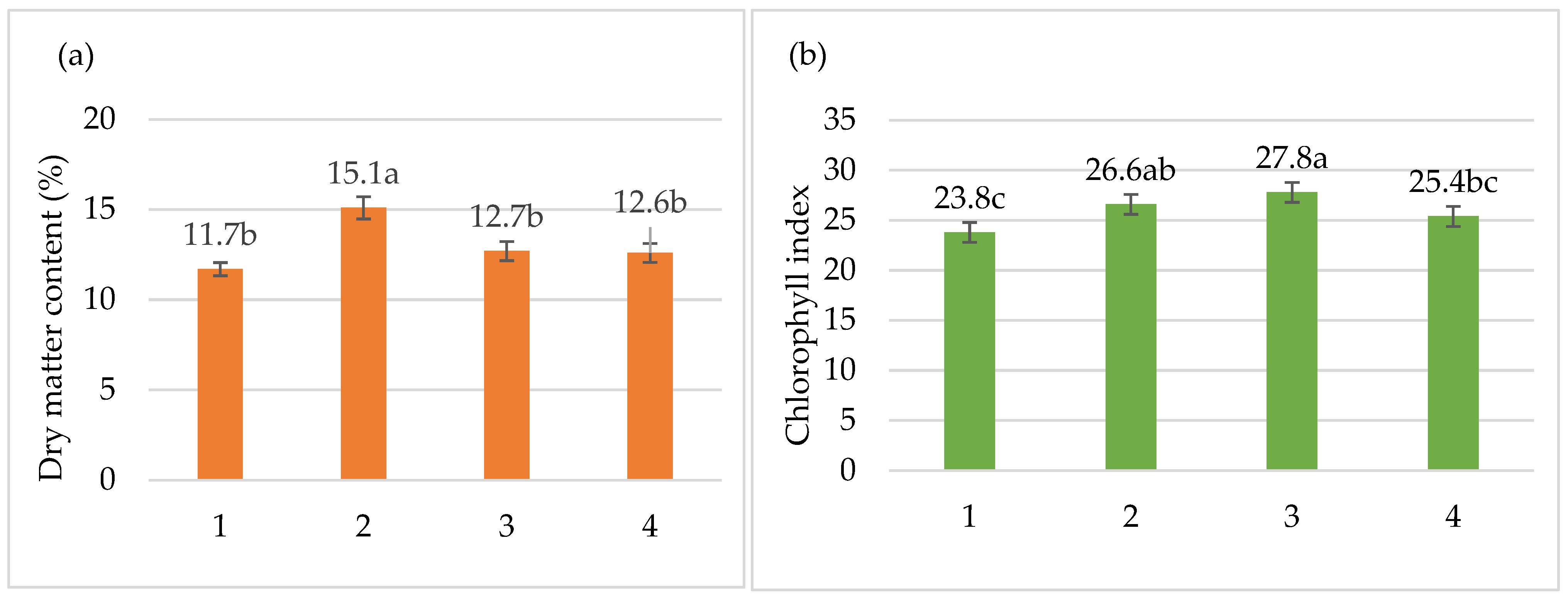
The percentage of dry matter and chlorophyll index in sweet pepper leaves varied with the growing substrate, as shown in Figure 3. The dry matter content in the seedlings grown in peat-zeolite 2:1 and 3:1 substrate leaves increased insignificantly compared to the dry matter content of the leaves from seedlings grown only in peat. Among the seedlings grown in peat and zeolite substrates, seedlings grown in a peat and zeolite 1:1 substrate accumulated the highest percent of dry matter in their leaves. The chlorophyll index in the leaves of seedlings depended on the amount of zeolite mixed into the peat substrate. Compared to seedlings grown in peat, the chlorophyll index was higher in the leaves of plants grown in a peat-zeolite 1:1 and 2:1 substrate. The highest chlorophyll index, 27.8, was detected in the leaves of seedlings grown in a peat-zeolite 2:1 substrate. In seedlings grown in peat-zeolite substrates, the lowest dry matter contents were determined in the leaves of seedlings grown in a peat-zeolite 2:1 and 3:1 substrate.
Figure 3. The effect of different substrates on the content of dry matter (a) and chlorophyll index (b) in leaves of sweet pepper seedlings: 1—peat, 2—peat+zeolite 1:1, 3—peat+zeolite 2:1, 4—peat+zeolite 3:1. According to Tukey’s significant difference test, means with different letters are significantly different at the p < 0.05 level. Error bars show standard deviation.
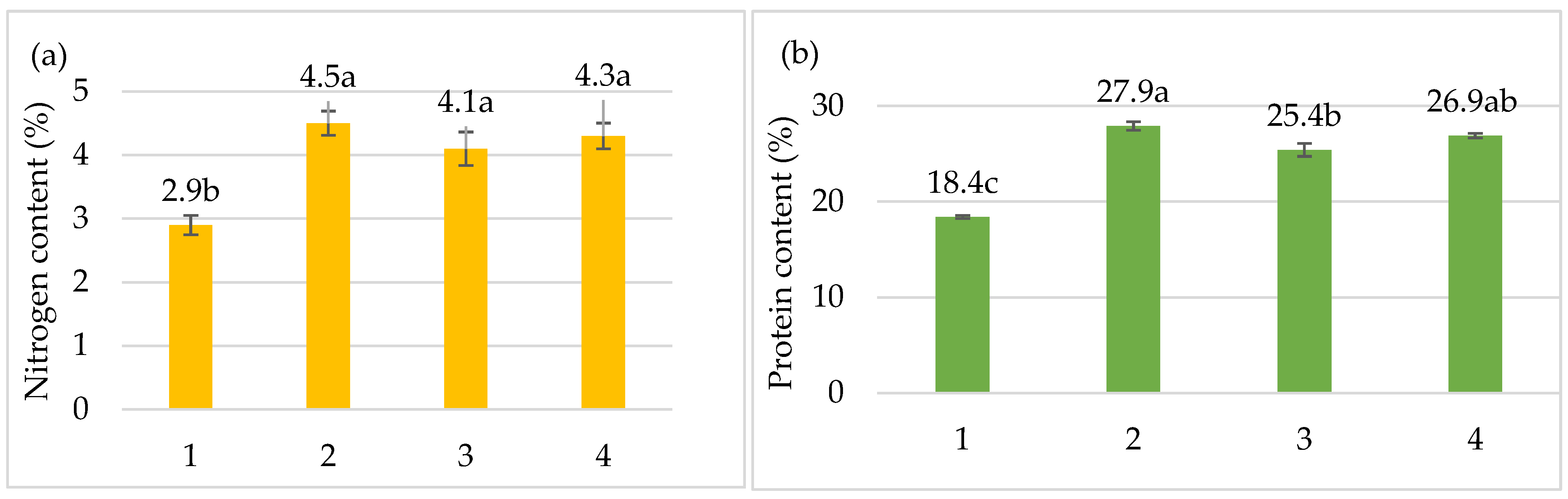
Adding zeolite to a peat substrate influenced the accumulation of nitrogen and protein in the leaves of seedlings. Seedlings grown in peat-zeolite substrates accumulated from 1.4 to 1.6 times more organic nitrogen in their leaves than in peat alone (Figure 4a). The different zeolite content had no significant effect on seedling leaf organic nitrogen content, which ranged from 4.1% to 4.5%. Adding zeolite to the peat substrate increased the protein content of the seedling leaves (Figure 4b). The protein content in the leaves of the seedlings was 1.4–1.5 times higher than in the leaves of seedlings grown in peat alone. Seedlings grown in a peat and zeolite 1:1 substrate accumulated the highest protein content in their leaves at 27.9%.
Figure 4. The effect of different substrates on the content of nitrogen (a) and protein (b) in leaves of sweet pepper seedlings: 1—peat, 2—peat+zeolite 1:1, 3—peat+zeolite 2:1, 4—peat+zeolite 3:1. According to Tukey’s significant difference test, means with different letters are significantly different at the p < 0.05 level. Error bars show standard deviation.
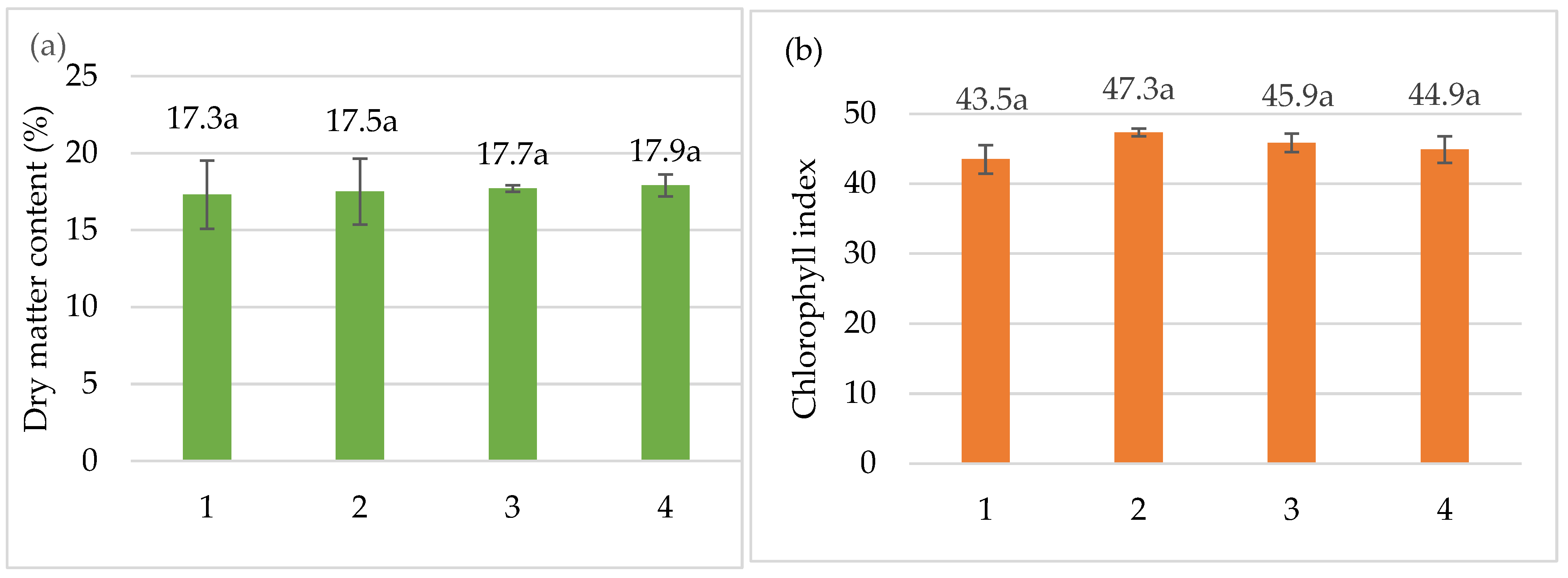
During fruiting, the percentage of dry matter in the leaves of plants grown from seedlings in peat-zeolite substrates did not increase significantly from that in the leaves of control plants, varying from 17.5 to 17.9% (Figure 5a). At the same time, the chlorophyll index of the leaves of these plants increased compared to the leaf chlorophyll index from seedlings grown only in peat (no significant difference) (Figure 5b). Among them, the chlorophyll index of plant leaves grown in a peat-zeolite 1:1 substrate was the highest, but this difference was not significant.
Figure 5. The effect of different substrates on the content of dry matter (a) and chlorophyll index (b) in leaves of sweet pepper plants during fruiting: 1—peat, 2—peat+zeolite 1:1, 3—peat+zeolite 2:1, 4—peat+zeolite 3:1. According to Tukey’s significant difference test, means with different letters are significantly different at the p < 0.05 level. Error bars show standard deviation.
The photosynthetic parameters of sweet pepper seedling leaves were influenced by the growing substrate, as shown in Table 2. Our data show that the photosynthetic rate of seedlings grown in peat-zeolite substrates did not increase significantly. The stomatal conductance of seedlings grown in peat-zeolite substrates was 6–8 times higher than that of seedlings grown in peat alone; however, no significant differences were found depending on the amount of zeolite. Meanwhile, the transpiration rate of sweet pepper seedling leaves was higher in seedlings grown in a peat-zeolite 1:1 and 3:1 mixture than in the control plants. Seedlings grown in a peat-zeolite 1:1 substrate had the highest leaf transpiration rate compared to the control, reaching 0.57 mmol H2O m−2 s−1.
Table 2. The effect of different substrates on photosynthetic parameters in the leaves of sweet pepper seedlings.
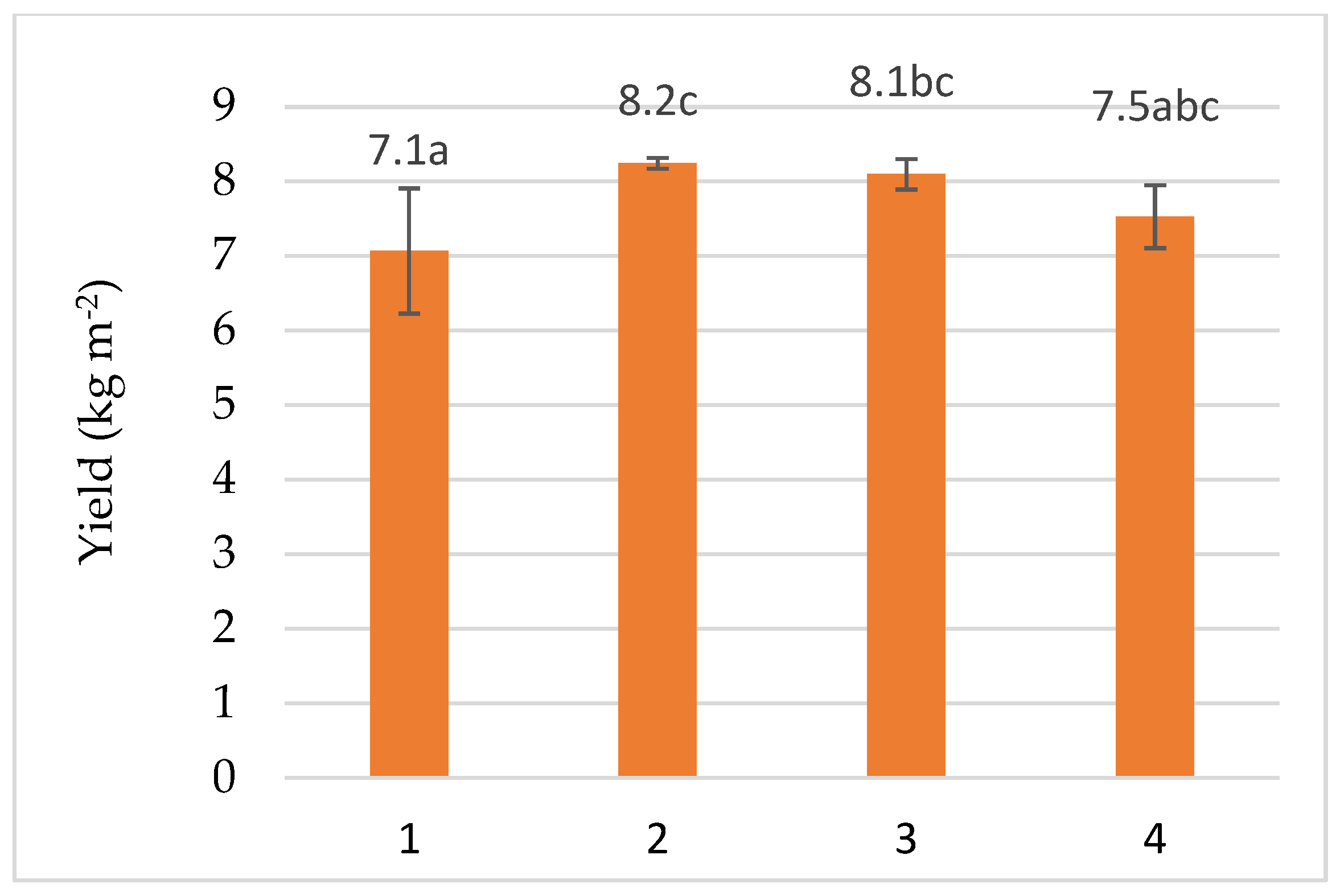
The yield of sweet peppers is shown in Figure 6. Adding zeolite to the peat substrate during seedling production affected the yield of sweet peppers. Plants grown from seedlings in peat-zeolite substrates were more productive than the control plants. The different amounts of zeolite added to the peat substrate had various effects on the pepper yield, which ranged from 8.2 to 7.5 kg m−2. A higher ratio of zeolite in the substrate resulted in higher yields. The highest yield was obtained from plants whose seedlings were grown in a peat-zeolite 1:1 and 2:1 substrate.
Figure 6. The effect of different substrates on total sweet pepper yield: 1—peat, 2—peat+zeolite 1:1, 3—peat+zeolite 2:1, 4—peat+zeolite 3:1. According to Tukey’s significant difference test, means with different letters are significantly different at the p < 0.05 level. Error bars show standard deviation.
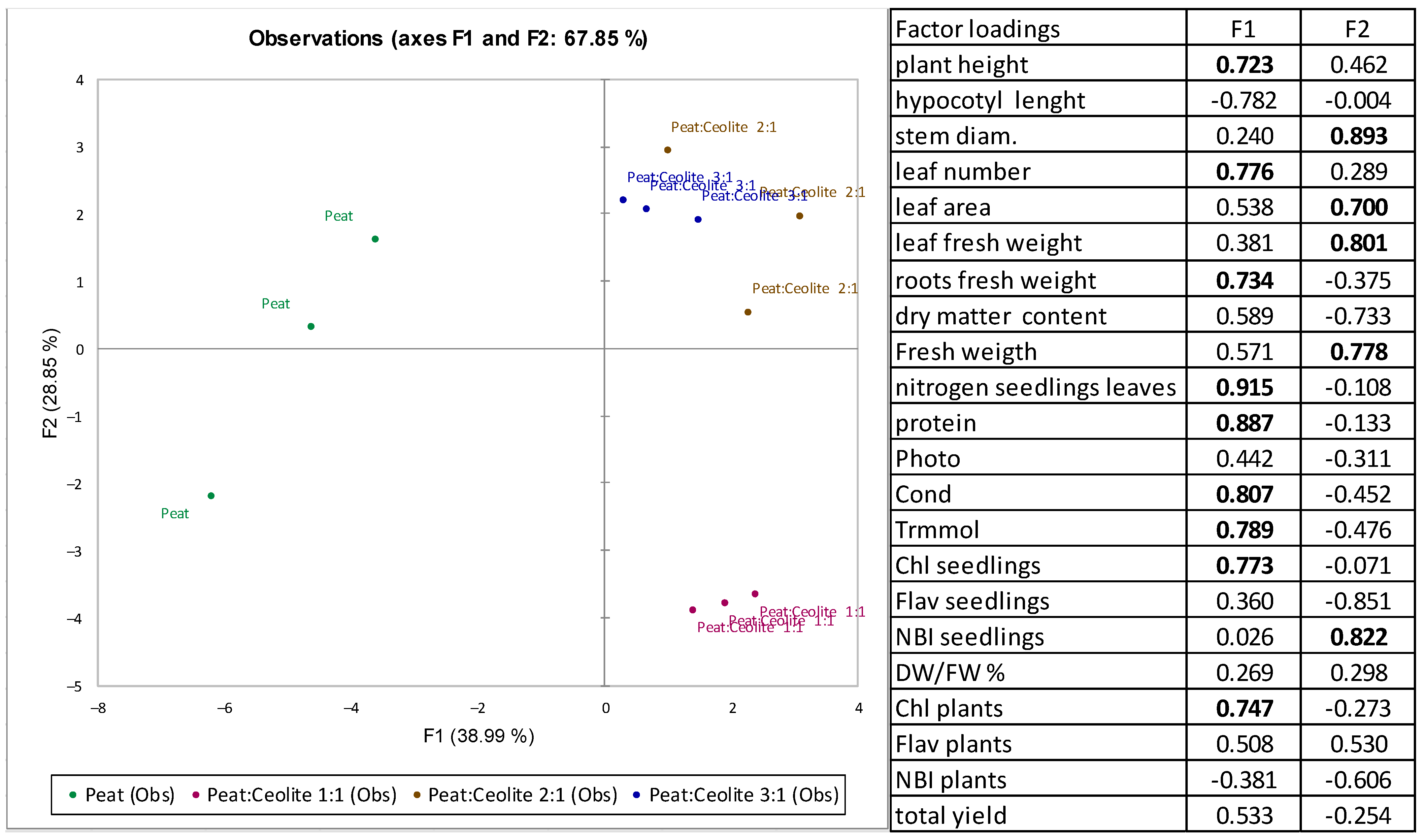
Principal component analysis (PCA) was conducted to evaluate the overall impact of zeolite addition on pepper seedlings (Figure 7). The first two factors, F1 and F2, accounted for 67.85% of the variability observed. F1 explained 38.99% of the total variability, primarily associated with several parameters, including plant height, leaf number, nitrogen content in seedling leaves, protein content, plant transpiration, and chlorophyll indices in both seedlings grown in peat-zeolite substrates and control plants. F2, on the other hand, accounted for 28.85% of the total variability and encompassed stem diameter and fresh and dry weights of the seedling plants.
Figure 7. Principal component analysis (PCA) and the factor loading effects of different substrates on sweet pepper parameters, bold numbers indicate statistically significant values.
After a comprehensive data distribution analysis, the treatments were classified into three groups. It was evident that the outcomes for plants cultivated in pure peat substrate exhibited significant differences when compared to those grown with zeolite addition. The delineation of these groups was primarily influenced by variations in the chlorophyll index, nitrogen content, and protein content in the leaves of the seedlings. Furthermore, the parameters included in F2 facilitated a further distinction between the peat-zeolite 1:1 treatment and the other two peat-zeolite treatment combinations (Figure 7). Peppers cultivated in a pure peat medium are distinctly positioned on the left side of the F1 axis. This positioning indicates that these plants demonstrate lower performance indicators across various parameters, including reduced plant height, fewer leaves, lower stomatal conductance, and diminished protein and nitrogen content. It is essential to note that peppers in this category exhibit comparatively lower productivity, especially in terms of physiological indicators; hence, this variant is the least optimal for achieving higher yields. Meanwhile, peat-zeolite 3:1 and 2:1 treatments, located in the right central zone of the graph, exhibit enhanced fresh root weight, an increased number of leaves, improved transpiration rates, and other favorable physiological parameters. On the F1 axis, these mixtures reveal an intermediate advantage. Plants grown in these zeolite-integrated media outperform those in pure peat, although their productivity is somewhat less than that of the 1:1 mixture, particularly regarding fresh weight and nitrogen content.
Peat-zeolite 1:1 treatment is prominently positioned at the bottom right of the F2 axis, indicating the maximum weight of fresh leaves, stems, and total fresh mass. The elevated values of F1 and F2 clearly illustrate that this mixture significantly enhances the morpho-physiological parameters of peppers. The results include taller plants, a greater number of leaves, increased overall biomass, and elevated levels of nitrogen and protein, along with improved transpiration and stomatal activity. The yield change was significantly affected in all treatments with zeolite compared to the peat substrate.
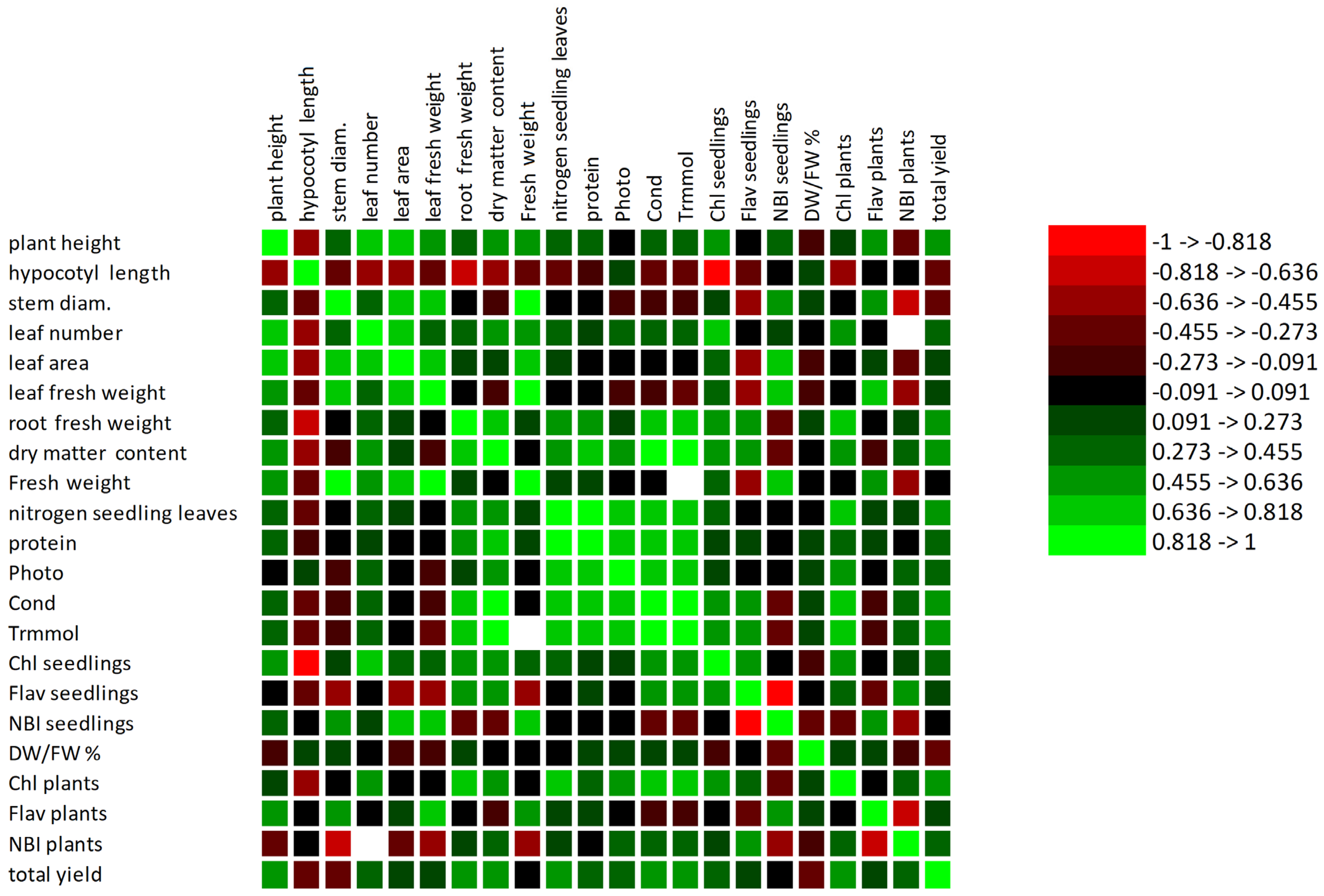
After a comprehensive analysis of the experimental data, we evaluated the correlations between various variables (Figure 8). Significant positive correlations were found between yield and factors such as dry matter content, nitrogen content in seedling leaves, and root mass. In addition, dry matter content showed a strong dependence on root mass and nitrogen and protein content in leaves, along with photosynthetic parameters and chlorophyll index. Similarly, a strong correlation was observed between root mass, photosynthetic parameters, and chlorophyll index. To summarize the results, optimum yields are closely linked to a well-developed root system and an efficient photosynthetic structure.
Figure 8. Correlation matrix of the effect of different substrates on sweet pepper parameters.

4. Discussion

The growing media directly impact seed germination and the seedlings’ growth and quality [21,22,23]. Some studies have shown that zeolite and its mixtures with other growing media have a positive effect on the quality of vegetable seedlings. According to Markovic [24], pepper seedlings grown in a peat substrate enriched with 1/3 zeolite were taller, had more leaves, and contained more dry matter. The results obtained by Harjoko et al. [25] show that mixing zeolite with other substrates (steamed husk and cocopeat) influenced the leaf number, chlorophyll content, root volume, dry weight, fruit number, and total fruit weight of hot pepper compared to plants grown only in husk charcoal. Prisa [26] also states that adding zeolite to the peat and pumice substrate improved the biometric indices of Friggitello pepper seedlings compared to seedlings grown in a substrate without zeolite. Following these authors, our research has shown that adding zeolite to the peat substrate affected the biometric parameters of sweet pepper seedlings (Table 1). In contrast, other studies show that zeolite has no significant effect. Results by some researchers show that using zeolite alone was ineffective for the vegetative growth of peppers [27]. Cativelo [28] states that zeolite does not affect the quality of lettuce, melon, and tomato seedlings.
Seedling biometric parameters depend on the ratio of zeolite added to the substrate. Moravčević et al. [29] found that adding 10% zeolite to the substrate gave the highest quality cucumber seedlings. The highest quality tomato and pepper seedlings were obtained when cultivated in a mixture of peat (2/3) and zeolite (1/3) [17]. It was found that adding 20 and 40% zeolite to the turf substrate increased the germination of pepper seeds: their seedlings were taller, had more leaves, and their fresh weight was higher than that of seedlings grown in 100% turf [21]. In another study, adding 10% zeolite to a peat-pumice substrate resulted in the Friggitello pepper seedlings forming more leaves, being taller, and having a higher vegetative and root mass compared with seedlings grown in a substrate without zeolite [26]. Tomato seedlings were grown in a media (peat+vermiculite 2:1) supplemented with zeolite. It was found that the biometric parameters of the seedlings increased with an increasing zeolite amount in the growing medium [30]. In agreement with these researchers, our data showed that the zeolite ratio affected the biometric parameters of the seedlings. The peat-zeolite 2:1 and 3:1 substrate had the largest effect on the height and leaf area of pepper seedlings. These seedlings were significantly taller and had the largest leaf area (Table 1).
Some researchers claim that adding zeolite to the substrate produced higher fresh or dry weight per plant [21,30]. However, zeolite’s effect on seedling fresh mass depends on the type of vegetable. Fadillioğlu and Başay [31] point out that the highest fresh mass of seedling roots and stems for tomato seedlings was achieved when grown in a substrate of farm manure, organic peat, and zeolite (FM + P + Z 1:2:1). However, the fresh mass of eggplant seedlings was not affected by zeolite. On the contrary, Castronuovo et al. [32] reported no difference in plant fresh weight and dry matter content when peppers were grown in pots with and without 2% zeolite. Our data showed that when zeolite in a ratio of 1:1 was added to the peat substrate, the seedlings accumulated more dry matter in their leaves than seedlings grown only in peat. Seedlings grown in a peat-zeolite 2:1 and 3:1 substrate had a higher above-ground fresh mass than seedlings grown only in peat (Figure 2 and Figure 3a).
According to some scientists, several factors influence leaf chlorophyll content: nutrient concentration, growing media, plant genotype, etc. [6,33,34,35]. Argüello et al. [8] state that the addition of 30% zeolite to the peat moss substrate improved the biometric parameters of tomato seedlings but had no significant effect on the chlorophyll index compared to the control plants grown in 100% peat moss substrate. Contrary to the results of Argüello et al. [8], our research has shown that adding zeolite to a peat substrate affected the leaf chlorophyll index of sweet pepper seedlings. The leaves of seedlings grown in peat-zeolite substrate had a higher chlorophyll index than that in the leaves of seedlings grown in peat alone (Figure 3b). The highest chlorophyll index was recorded in the leaves of seedlings grown in a peat-zeolite 2:1 substrate.
Adding zeolite to the peat substrate influenced the photosynthetic parameters of the seedlings. Abdi [36] points out that adding zeolite to the substrate resulted in a good K uptake by the S. lycopersicum plants, which later positively affected photosynthesis, stomatal conductance, and transpiration. De Smedt et al. [37] say zeolites improve water-use efficiency. This significantly affected photosynthesis in apple trees but did not affect photosynthesis in tomatoes. Jawad et al. [38] report that adding zeolite to substrates improves tomato growth and enhances physiological properties (i.e., chlorophyll content, photosynthetic rate, gas exchange, and transpiration rate). Adding zeolite to peat, vermiculite, and corn stalk substrates resulted in the highest chlorophyll content and photosynthetic parameters in the leaves of tomato seedlings compared to the control substrate (peat+vermiculite) [39]. Soliman and Mahmoud [40] point out that mixing organic fertilizers with zeolite increases photosynthetic rate, gas exchange, and water-use efficiency. This is due to the physicochemical properties of these substrates (aeration, water retention capacity, etc.). In addition, the higher nitrogen content increases the chlorophyll content in the leaves. This leads to an increase in chloroplast activity and photosynthetic productivity [41]. In agreement with these authors’ data, our study results showed that adding zeolite to peat substrates resulted in a higher organic nitrogen and chlorophyll accumulation in the leaves of sweet pepper seedlings, leading to a higher efficiency of some photosynthetic parameters (stomatal conductance and transpiration rate) (Table 2).
Many scientific studies have shown that adding zeolite to substrates affects the mineral content of plants [23,42,43]. When zeolite was added to other substrates, research indicated a significant effect on the quality parameters of cucumber seedlings, which accumulated more nitrogen and nutrients in their leaves [23,44]. In agreement with these authors, our data show that seedlings grown in peat-zeolite substrates accumulated more nitrogen than those grown in peat substrate alone (Figure 4a). On the contrary, Assimakopoulou et al. [43] report that adding zeolite to the soil did not change the nitrogen content in the leaves of “kolba” peppers. Chatzistathis et al. [45] reported that fertilization with zeolite (alone or mixed with vermiculite) significantly increased the potassium concentration in pepper leaves, with no significant effect on leaf nitrogen. Our studies have shown that adding zeolite to a peat substrate increases the protein content in the leaves of seedlings (Figure 4b). Nitrogen is one of the key elements for optimum crop yields and increases the protein content in the plant [46]. As a result, seedlings grown in peat-zeolite substrates accumulated more protein in their leaves.
Several studies have been performed on the possibility of using clinoptilolite as a substrate (alone or in mixtures), and it has been reported that clinoptilolite increases yields. Zeolite retains nutrients and enhances the soil’s ability to absorb them, leading to more efficient use of fertilizers and higher yields [47]. Lija et al. [48] point out that adding zeolite to growing media improves nitrogen absorption in plants. Nitrogen is a major plant nutrient, so improved uptake impacts plant yield [49]. In addition, zeolite is also a natural source of N, K, Ca, Mg, Fe, and other minerals. Therefore, its use results in higher crop yields. According to Leggo [50], zeolites can increase plant yields when applied to growing media due to controlled nutrient release, reduced nitrification rates, and nitrogen leaching. Many authors have found that adding zeolite to other substrates results in higher yields of tomatoes and cucumbers [51,52,53]. Aghdak et al. [14] state that adding zeolite and perlite to other substrates significantly increased bell pepper yield. Others claim that sweet pepper seedlings produced on the substrate of 2/3 peat from Grahovo and 1/3 zeolite gave the highest yield [24]. Results from other researchers also showed that using perlite-zeolite as the media produced the highest fruit number and yield, while plants grown in sawdust-zeolite produced less fruit [54]. In agreement with these authors, our study’s results showed that adding zeolite to a peat substrate affected the yield of sweet peppers (Figure 4a). The highest yields were obtained when sweet pepper seedlings were grown in a 1:1 ratio of peat to zeolite substrate.
In summary, it can be stated that the granulometric composition of zeolite influences plant yield. Several factors influence this: The use of zeolite increases the efficiency of nutrient uptake, especially nitrogen, due to its high cation exchange capacity and ability to absorb ammonium ions. This improves the availability of nutrients and their use efficiency [55]. Moreover, the porous structure of zeolite increases the water content of the soil, retaining moisture and gradually making it available to plants [56]. As a result, plants accumulate more dry matter, have a larger leaf area, and have a bigger root system, which has a positive effect on yield.

5. Conclusions

The study results showed that the admixture of zeolite into peat substrate affected the biometric parameters of sweet pepper seedlings. Seedlings grown in a peat-zeolite 2:1 and 3:1 substrate were significantly taller than seedlings grown in peat alone. These seedlings also had the largest leaf area. Although seedlings grown in a peat-zeolite 1:1 substrate were taller and formed more leaves, with a larger leaf area than control plants, these differences were not statistically significant. However, these seedlings had the highest root mass compared to the control seedlings. The stomatal conductance and transpiration rate of sweet pepper seedling leaves grown in peat-zeolite substrates were higher than in the control plants. Adding zeolite to the peat substrate during seedling production affected the yield of sweet peppers. Plants whose seedlings had been grown in peat-zeolite 1:1 and 2:1 substrates were more productive than the control plants.
In recent years, environmental and ecological problems have increased the need to reduce the use of peat. Its resources are decreasing every year, so it is necessary to search for other substrates. Zeolite is a suitable substrate for growing seedlings. It can be used alone or mixed with different substrates. According to our research, adding zeolite to peat substrate improves seedling quality and has a positive effect on plant yield. Further research is needed to determine the influence of zeolite on the agrochemical properties of substrates and the biochemical properties of fruits.

Author Contributions

Conceptualization, J.J. and K.L.; methodology, J.J. and K.L.; software, K.L. and V.L.; validation, J.J.; formal analysis, J.J.; investigation, J.J., K.L. and V.L.; resources, J.J.; data curation, J.J. and K.L.; writing—original draft preparation, J.J.; writing—review and editing, J.J. and K.L.; visualization, J.J.; supervision, K.L. and V.L. All authors have read and agreed to the published version of the manuscript.

Funding

This research received no external funding.

Institutional Review Board Statement

Not applicable.

Data Availability Statement

The original contributions presented in this study are included in the article. Further inquiries can be directed to the corresponding author.

Acknowledgments

This work was carried out within the framework of the long-term research program “Horticulture: agro-biological Basics and Technologies” implemented by the Lithuanian Research Centre for Agriculture and Forestry.

Conflicts of Interest

The authors declare no conflicts of interest. The funders had no role in the design of the study; in the collection, analyses, or interpretation of data; in the writing of the manuscript, or in the decision to publish the results.

References

  1. Radha, T.K.; Ganeshamurthy, A.; Mitra, D.; Sharma, K.; Rupa, T.; Selvakumar, G. Feasibility of Substituting Cocopeat with Rice Husk and Saw Dust Compost as a Nursery Medium for Growing Vegetable Seedlings. Bioscan 2018, 13, 659–663. [Google Scholar]
  2. Cantliffe, D.J.; Funes, J.; Jovicich, E.; Paranjpe, A.; Rodriguez, J.; Show, N. Media and containers for greenhouse soilless grown cucumbers, melons, peppers, and strawberry. Acta Hortic. 2003, 614, 199–203. [Google Scholar] [CrossRef]
  3. Mathowa, T.; Tshegofatso, N.; Mojeremane, W.; Matsuane, C.; Legwaila, G.M.; Oagile, O. Effect of commercial growing media on emergence, growth and development of tomato seedlings. Int. J. Agron. Agric. Res. 2016, 9, 83–91. [Google Scholar]
  4. Nair, A.; Ngouajio, M.; Biernbaum, J. Alfalfa-based organic amendment in peat compost growing medium for organic tomato transplant production. HortScience 2011, 46, 253–259. [Google Scholar] [CrossRef]
  5. Vaughn, S.F.; Deppe, N.A.; Palmquist, D.E.; Berhow, M.A. Extracted sweet corn tassels as renewable alternative to peat in greenhouse substrates. Ind. Crops Prod. 2011, 33, 514–517. [Google Scholar] [CrossRef]
  6. Bhat, N.R.; Suleiman, M.S.; Thomas, B.; Lekha, V.S.; George, P.; Ali, I.S. Growing substrate for organic lettuce production in Kuwait. World J. Agric. Sci. 2013, 9, 143–147. [Google Scholar] [CrossRef]
  7. Oagile, O.; Ramalekane, O.; Mojeremane, W.; Matsuane, C.; Legwaila, G.M.; Mathowa, T. Growth and development response of Kale (Brassica oleracea var. Acephala L.) seedlings to different commercial growing media. Int. J. Plant Soil Sci. 2016, 12, 1–7. [Google Scholar] [CrossRef]
  8. Argüello, B.M.; Reyes, I.V.; Flores, A.C.; De los Santos Villarreal, G.; Jiménez, L.I.; Saldivar, R.H.L. Water holding capacity of substrates containing zeolite and its effect on growth, biomass production and chlorophyll content of Solanum lycopersicum. Nova Sci. 2018, 10, 45–60. [Google Scholar] [CrossRef]
  9. Azam, F.M.S.; Al Labib, B.; Jabin, D.; Sayeed, M.S.R.; Islam, S.; Akter, S.; Eusufzai, T.K.; Khan, H.M.I.; Jahan, R.; Rahmatullah, M. Study of Zeolite application in soil on height and flowering of Solanum melongena L. (Solanaceae). Am.-Eurasian J. Sustain. Agric. 2012, 6, 271–275. [Google Scholar]
  10. Torma, S.; Vilcek, J.; Adamisin, P.; Huttmanova, E.; Hronec, O. Influence of natural zeolite on nitrogen dynamics in soil. Turk. J. Agric. For. 2014, 38, 739–744. [Google Scholar] [CrossRef]
  11. Manolov, I.; Antonov, D.; Stoilov, G.; Tsareva, I.; Baev, M. Jordanian zeolitic tuff as a raw material for the preparation of substrates used for plant growth. J. Cent. Eur. Agric. 2005, 6, 485–494. [Google Scholar] [CrossRef]
  12. Kanazirska, V.; Simidtchiev, H.R.; Chakalov, K. Effect of zeolite on yield and fruit quality of greenhouse cucumbers. In Proceedings of the Natural Zeolite Conference, Sofia, Italy, 21–29 September 1997; pp. 109–110. [Google Scholar]
  13. Stamatakis, M.; Koukouzas, N.; Vassilatos, C.H.; Kamenou, E.; Samantouros, K. The zeolites from evros region, Northern Greece: A potential use as cultivation substrate in hydroponics. Acta Hortic. 2001, 548, 93–104. [Google Scholar] [CrossRef]
  14. Aghdak, P.; Mobli, M.; Khoshgoftarmanesh, A.H. Effects of different growing media on vegetative and reproductive growth of bell pepper. J. Plant Nutr. 2016, 39, 967–973. [Google Scholar] [CrossRef]
  15. Eghtedary-Naeini, A.; Golabadi, M.; Hoodaji, M. Using enriched zeolite as a slow release iron fertilizer for soilless greenhouse cultivation of cucumber. J. Plant Nutr. 2015, 39, 523–530. [Google Scholar] [CrossRef]
  16. Djedidi, M.; Grasopoulos, D.; Maloupa, E. The effect of different substrates on the quality of f. Carmello tomatoes (Lycopersicon esculentum MILL) grown under protection in a hydroponic system. Cah. Options Mediterr. 1999, 31, 279–283. Available online: https://om.ciheam.org/ressources/om/pdf/c31/CI020860.pdf (accessed on 1 December 2025).
  17. Markovic, V.; Takac, A.; Ilin, Z. Enriched zeolite as a substrate component in the production of pepper and tomato seedlings. Acta Hortic. 1995, 396, 321–328. [Google Scholar] [CrossRef]
  18. Ayan, S.; Tillki, F. Morphological attributes of oriental spruce (Picea orientalis (L.) Link.) seedlings grown in peat–based amended with natural zeolite. Acta Agron. Hung. 2007, 55, 363–373. [Google Scholar] [CrossRef]
  19. Andronikashvili, T.G.; Urushadze, T.F. To influence of zeolitcantaining substrates and fertilizers on some qualitative indices of agricultural products. Ann. Agrar. Sci. 2010, 8, 1–20. [Google Scholar]
  20. Laužikė, K.; Uselis, N.; Kviklys, D.; Samuolienė, G. Orchard planting density and tree development stage affects physiological processes of apple (Malus domestica Borkh.) tree. Agronomy 2020, 10, 1912. [Google Scholar] [CrossRef]
  21. Demir, H.; Polat, E.; Sönmez, İ.; Yılmaz, E. Effects of different growing media on seedling quality and nutrient contents in pepper (Capsicum annuum L. var longum cv. Super Umut F1). J. Food Agric. Environ. 2010, 8, 894–897. Available online: https://www.researchgate.net/publication/261251842_Effects_of_different_growing_media_on_seedling_quality_and_nutrient_contents_in_pepper_Capsicum (accessed on 1 December 2025).
  22. Unal, M. Effect of organic media on the growth of vegetable seedlings. Pak. J. Agric. Sci. 2013, 50, 517–522. Available online: https://api.pakjas.com.pk/downloadPaper/2187.pdf (accessed on 1 December 2025).
  23. Yilmaz, E.; Sönmez, İ.; Demir, H. Effects of zeolite on seedlings quality and nutrient contents of cucumber plant (Cucumis sativus L. cv. Mostar F1) grown in different mixtures of growing media. Comm. Soil Sci. Plant Anal. 2014, 45, 2767–2777. [Google Scholar] [CrossRef]
  24. Markovic, V.; Djurovka, M.; Ilin, Z.; Lazic, B. Effect of seedling quality on yield and characters of plant and fruits of sweet pepper. Acta Hortic. 2000, 533, 113–120. [Google Scholar] [CrossRef]
  25. Harjoko, D.; Utami, R.S.; Arniputri, R.B. Hydroponic of Chili with substrates variation. IOP Conf. Ser. Earth Environ. Sci. 2018, 200, 012016. [Google Scholar] [CrossRef]
  26. Prisa, D. Study and evaluation of natural zeolite and dried zeolite for the cultivation of friggitello pepper. World J. Adv. Res. Rev. 2023, 19, 632–641. [Google Scholar] [CrossRef]
  27. Parandnia, M.; Najafi, P.; Tabatabaei, S.H. Effect of zeolite on germination and vegetative growth of bell pepper. Res. Crops 2011, 12, 796–799. Available online: https://www.researchgate.net/publication/287839443_Effect_of_zeolite_on_germination_and_vegetative_growth_of_bell_pepper (accessed on 1 December 2025).
  28. Cattivello, C. Use of substrates with zeolites for seedling vegetables and pot plant production. Acta Hortic. 1995, 401, 251–258. [Google Scholar] [CrossRef]
  29. Moravčević, D.; Simić, A.; Rakić, V.; Pavlović, N.; Ćosić, M.; Lipovac, A.; Kaludjerović, L. The effect of addition of different amounts of natural zeolites on the cucumber seedlings quality. In Proceedings of the 8th Serbian-Croatian-Slovenian Symposium on Zeolites, Belgrade, Serbia, 3–5 October 2019; pp. 66–69. [Google Scholar]
  30. Song, X.H.; Wang, X.F.; Zang, J.B. Effects of application of zeolite on tomato seedling growth. China Veg. 2004, 3, 7–9. [Google Scholar]
  31. Fadillioğlu, G.; Başay, S. Effects of Different Growing Media on Seedling Quality in Organic Seedling Production. MAKUFEBED 2023, 14, 282–291. [Google Scholar] [CrossRef]
  32. Castronuovo, D.; Satriani, A.; Rivelli, A.R.; Comegna, I.; Belviso, C.; Coppola, A.; Di Prima, S.; Cavalcante, F.; Lovelli, S. Effects of Zeolite and Deficit Irrigation on Sweet Pepper Growth. Horticulturae 2023, 9, 1230. [Google Scholar] [CrossRef]
  33. Soval-Villa, M.; Wood, C.W.; Guertal, E.A. Tomato leaf chlorophyll meter readings as affected by variety, nitrogen form, and nighttime nutrient solution strength. J. Plant Nutr. 2002, 25, 2129–2142. [Google Scholar] [CrossRef]
  34. Uddling, J.; Gelang-Alfredsson, J.; Piikki, K.; Pleijel, H. Evaluating the relationship between leaf chlorophyll concentration and SPAD-502 chlorophyll meter readings. Photosynth. Res. 2007, 91, 37–46. [Google Scholar] [CrossRef]
  35. Zapałowska, A.; Matłok, N.; Piechowiak, T.; Szostek, M.; Puchalski, C.; Balawejder, M. Physiological and Morphological Implications of Using Composts with Different Compositions in the Production of Cucumber Seedlings. Int. J. Mol. Sci. 2023, 24, 14400. [Google Scholar] [CrossRef] [PubMed]
  36. Abdi, G.; Khosh-Khui, M.; Eshghi, S. Effects of Natural Zeolite on Growth and Flowering of Strawberry Fragariaxananassa. Duch. Int. J. Agric. Res. 2006, 1, 384–389. [Google Scholar] [CrossRef]
  37. De Smedt, C.; Steppe, K.; Spanoghe, P. Beneficial effects of zeolites on plant photosynthesis. Adv. Mater. Sci. 2017, 2, 1–11. [Google Scholar] [CrossRef]
  38. Jawad, R.; Nawaz, A.; Ejaz, S.; Ali, S.; Saleem, M.S.; Hammad, H.M. Zeolite amendment reduces lead accumulation and improves growth and yield in tomato plants irrigated with sewage water. Environ. Sci. Pollut. Res. 2023, 30, 41970–41982. [Google Scholar] [CrossRef]
  39. Chen, S.; Song, S.; Zhao, C.; Zhao, J.; Li, Y. Effects of mixed corn stalk substrates on growth and photosynthesis of tomato seedlings. Acta Hortic. 2018, 1227, 463–470. [Google Scholar] [CrossRef]
  40. Soliman, A.S.; Mahmoud, A.M. Response of Adansonia digitata to compost and zeolite in replacement of chemical fertilization. Am.-Eurasian J. Agri. Environ. Sci. 2013, 13, 198–206. [Google Scholar] [CrossRef]
  41. Amin, F. Role of nitrogen (N) in plant growth, photosynthesis pigments, and N use efficiency: A review. Agrisost 2022, 28, 1–8. [Google Scholar] [CrossRef]
  42. Sönmez, İ.; Kaplan, M.; Demır, H.; Yilmaz, E. Effects of zeolite on seedling quality and nutrient contents of tomato plant (Solanum lycopersicon cv. Malike F1) grown in different mixtures of growing media. J. Food Agric. Environ. 2010, 8, 1162–1165. Available online: https://www.researchgate.net/publication/266169406_Effects_of_zeolite_on_seedling_quality_and_nutrient_contents_of_tomato_plant_Solanum_ (accessed on 1 December 2025).
  43. Assimakopoulou, A.; Dimitroulia, D.; Kosmidis, S.; Doula, M.K. Growth, yield and nutrient status of pepper plants grown on a soil substrate with olive mill waste sludge and natural zeolite addition. J. Plant Nutr. 2020, 43, 629–640. [Google Scholar] [CrossRef]
  44. Jankauskienė, J.; Brazaitytė, A.; Vaštakaitė Kairienė, V.; Zalatorius, V. Effects of peat and peat-zeolite substrates on quality, growth indices of cucumber seedlings and crop productivity. Acta Sci. Pol. Hortorum Cultus 2019, 18, 161–170. [Google Scholar] [CrossRef]
  45. Chatzistathis, T.; Tsaniklidis, G.; Papaioannou, A.; Koukounaras, A. Comparative Approach on the Effects of Soil Amendments and Controlled-Release Fertilizer Application on the Growth, Nutrient Uptake, Physiological Performance and Fruit Quality of Pepper (Capsicum annuum L.) Plants. Agronomy 2022, 12, 1935. [Google Scholar] [CrossRef]
  46. Mandapaka, M.; Murthy, A.N.G.; Shanker, A.K. Nitrogen Nutrition in Crops and Its Importance in Crop Quality. In The Indian Nitrogen Assessment; Abrol, Y.P., Adhya, T.K., Eds.; Elsevier Inc.: Amsterdam, The Netherlands, 2017; pp. 175–186. [Google Scholar] [CrossRef]
  47. Calzarano, F.; Valentini, G.; Arfelli, G.; Seghetti, L.; Manetta, A.C.; Metruccio, E.G.; Di Marco, S. Activity of Italian natural chabazite-rich zeolitites against grey mould, sour rot and grapevine moth, and effects on grape and wine composition. Phytopathol. Mediterr. 2019, 58, 307–321. [Google Scholar] [CrossRef]
  48. Lija, M.; Haruna, A.O.; Kasim, S. Maize (Zea mays L.) nutrient use efficiency as affected by formulated fertilizer with Clinoptilolite Zeolite. Emir. J. Food Agric. 2014, 26, 284–292. [Google Scholar] [CrossRef]
  49. Malekian, R.; Abedi, K.J.; Eslamian, S.S. Influences of clinoptilolite and surfactant-modified clinoptilolite zeolite on nitrate leaching and plant growth. J. Hazard. Mater. 2011, 185, 970–976. [Google Scholar] [CrossRef] [PubMed]
  50. Leggo, P. An investigation of plant growth in an organo-zeolitic substrate and its ecological significance. Plant Soil. 2000, 219, 135–146. [Google Scholar] [CrossRef]
  51. Ashraf, S. The effect of different substrates on the vegetative, productivity characters and relative absorption of some nutrient elements by the tomato plant. Adv. Environ. Biol. 2011, 5, 3091–3096. Available online: https://www.researchgate.net/publication/288408957_The_effect_of_different_substrates_on_the_vegetative_productivity_characters_and_relative_absorption_of_some_nutrient_elements_by_the_tomato_plant (accessed on 1 December 2025).
  52. Berar, V.; Poşta, G. Research concerning the zeolites influence, used in the culture substratum, upon the quality of greenhouse grown tomato. J. Hortic. For. Biotech. 2011, 5, 45–47. Available online: https://www.academia.edu/77333090/Researches_Concerning_the_Use_of_Zeolites_in_the_Culture_Substrate_of_Tomatoes_in_Greenhouses (accessed on 1 December 2025).
  53. Bozorgi, H.R.; Bidarigh, S.; Azarpour, E.; Danesh, R.K.; Moraditochaee, M. Effects of natural zeolite application under foliar spraying with humic acid on yield and yield components of cucumber (Cucumis sativus L.). Int. J. Agri. Crop Sci. 2012, 4, 1485–1488. Available online: https://www.internationalscholarsjournals.com/archive/ijas-volume-2-issue-4-year-2012.html (accessed on 1 December 2025).
  54. Bernardi, A.C.C.; Oliveira, P.P.A.; Monte, M.B.M.; Barros, F. Brazilian sedimentary zeolite use in agriculture. Microporous Mesoporous Mater. 2012, 167, 16–21. [Google Scholar] [CrossRef]
  55. Girijaveni, V.; Sammi Reddy, K.; Srinivasarao, C.H.; Raju, B.M.K.; Balakrishnan, D.; Sumanta Kundu, S.; Pushpanjali Rohit, J.; Singh, V.K. Role of mordenite zeolite in improving nutrient and water use efficiency in Alfisols. Front. Plant Sci. 2024, 15, 1404077. [Google Scholar] [CrossRef]
  56. Ramesh, K.; Biswas, A.K.; Somasundaram, J. Nanoporous zeolites in farming: Current status and issues ahead. Curr. Sci. 2010, 99, 760–764. Available online: https://www.researchgate.net/publication/285535061_Nanoporous_zeolites_in_farming_Current_status_and_issues_ahead (accessed on 1 December 2025).
Disclaimer/Publisher’s Note: The statements, opinions and data contained in all publications are solely those of the individual author(s) and contributor(s) and not of MDPI and/or the editor(s). MDPI and/or the editor(s) disclaim responsibility for any injury to people or property resulting from any ideas, methods, instructions or products referred to in the content.

Article Metrics

Citations

Article Access Statistics

Multiple requests from the same IP address are counted as one view.