Unraveling the Biosynthetic Logic Behind the Production of Ramoplanin and Related Lipodepsipeptide Antibiotics





Abstract
1. Introduction
2. Ramoplanin and Related Lipodepsipeptides: Producer Strains and History of Their Discovery
3. Structural Features of Rmp and Related Lipodepsipeptides
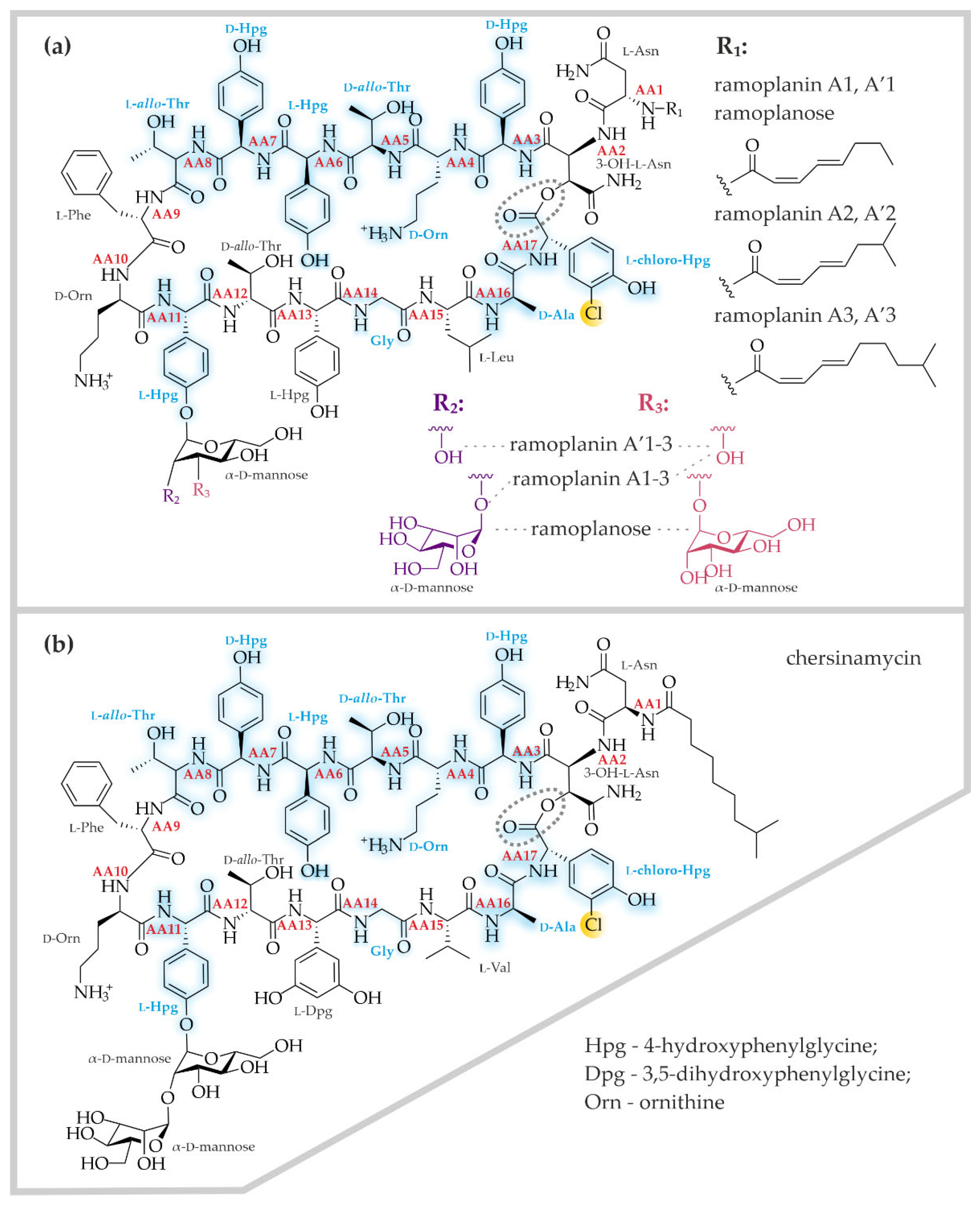
3.1. Rmp Complex, Ramoplanose, and Chersinamycin
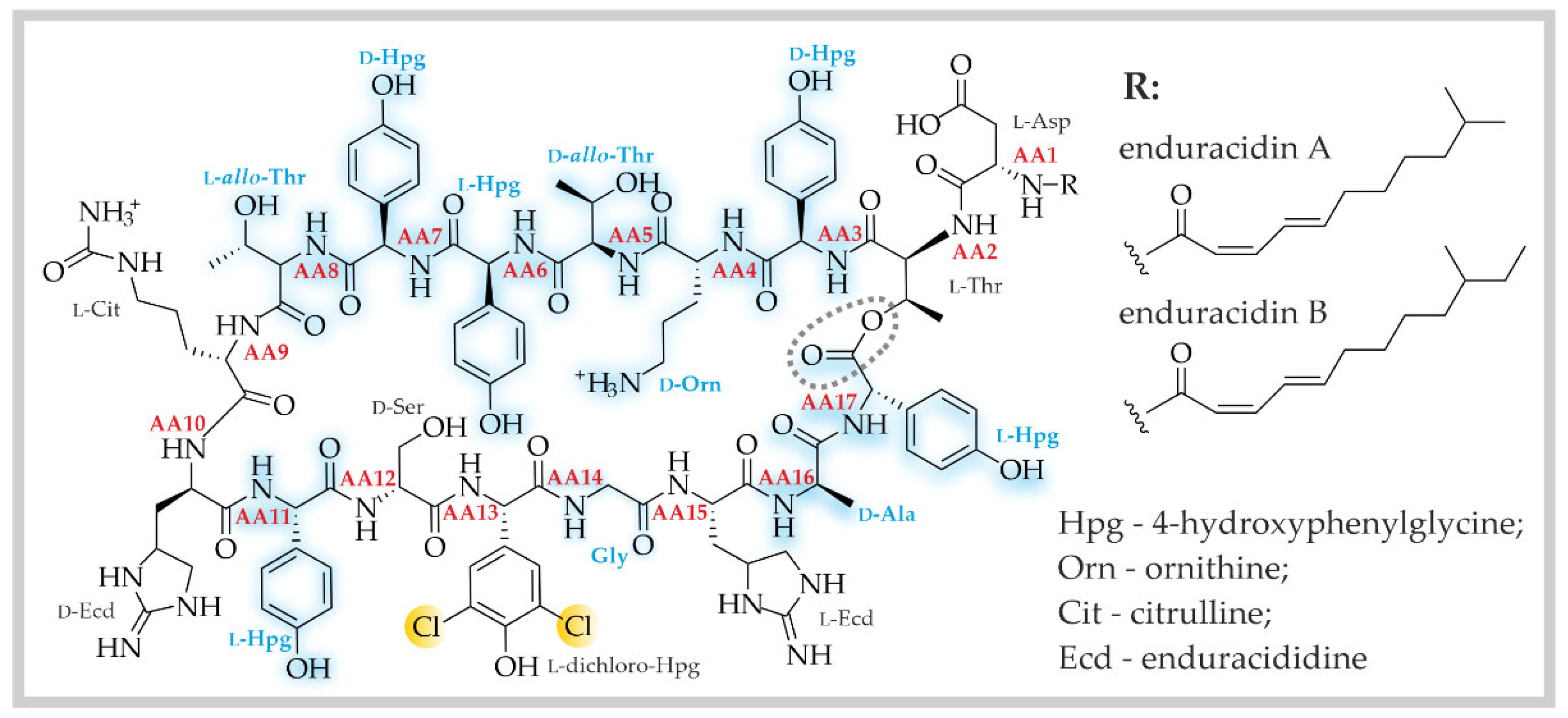
3.2. End and Janiemycin
4. Biosynthesis of Ramoplanin and Related Lipodepsipeptides: From Genes to Pathways and Compounds
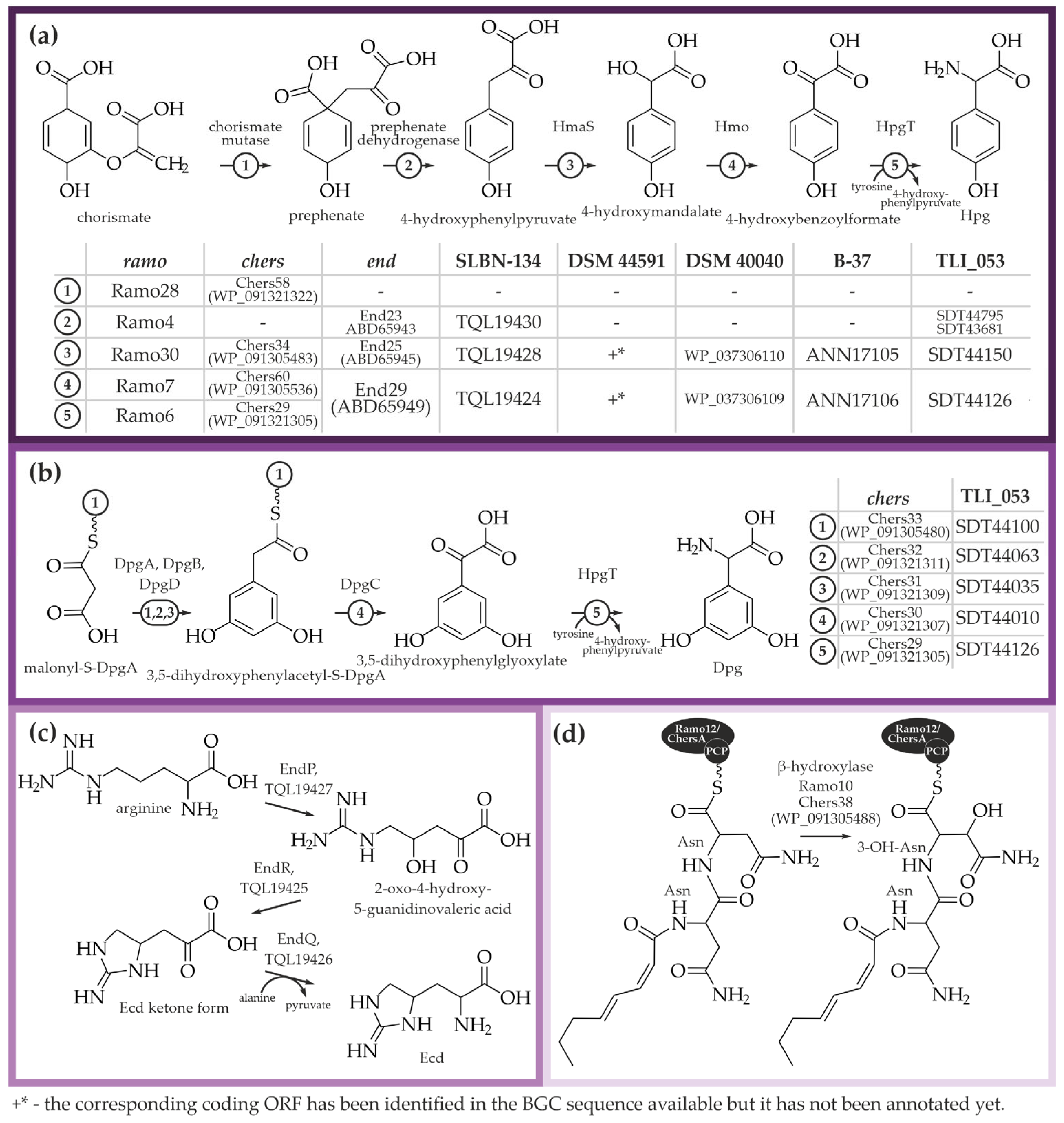
4.1. Biosynthesis of Non-Proteinogenic Amino Acids of RRLDPs
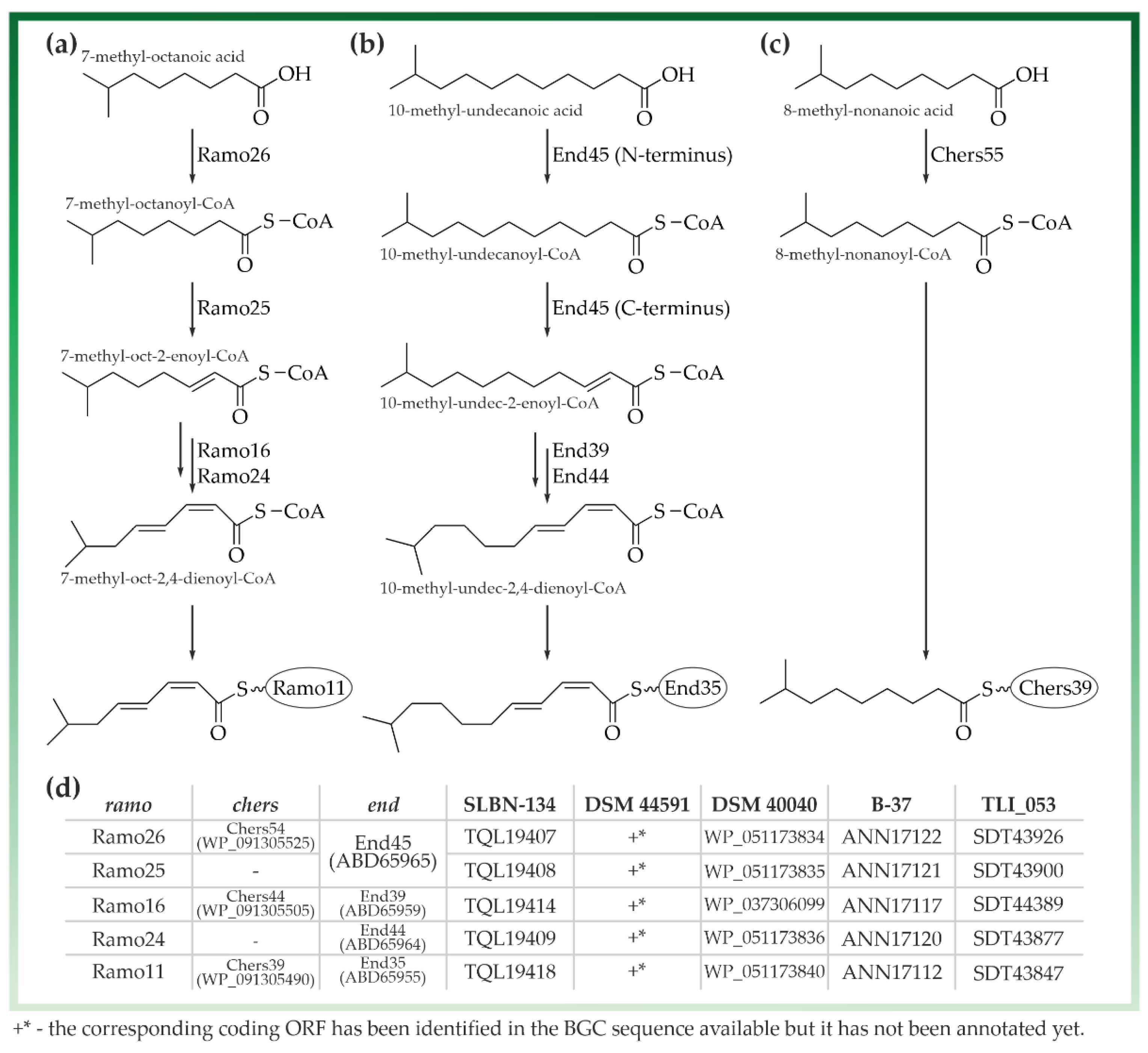
4.2. Modification and Activation of the Fatty Acid Starter Moieties
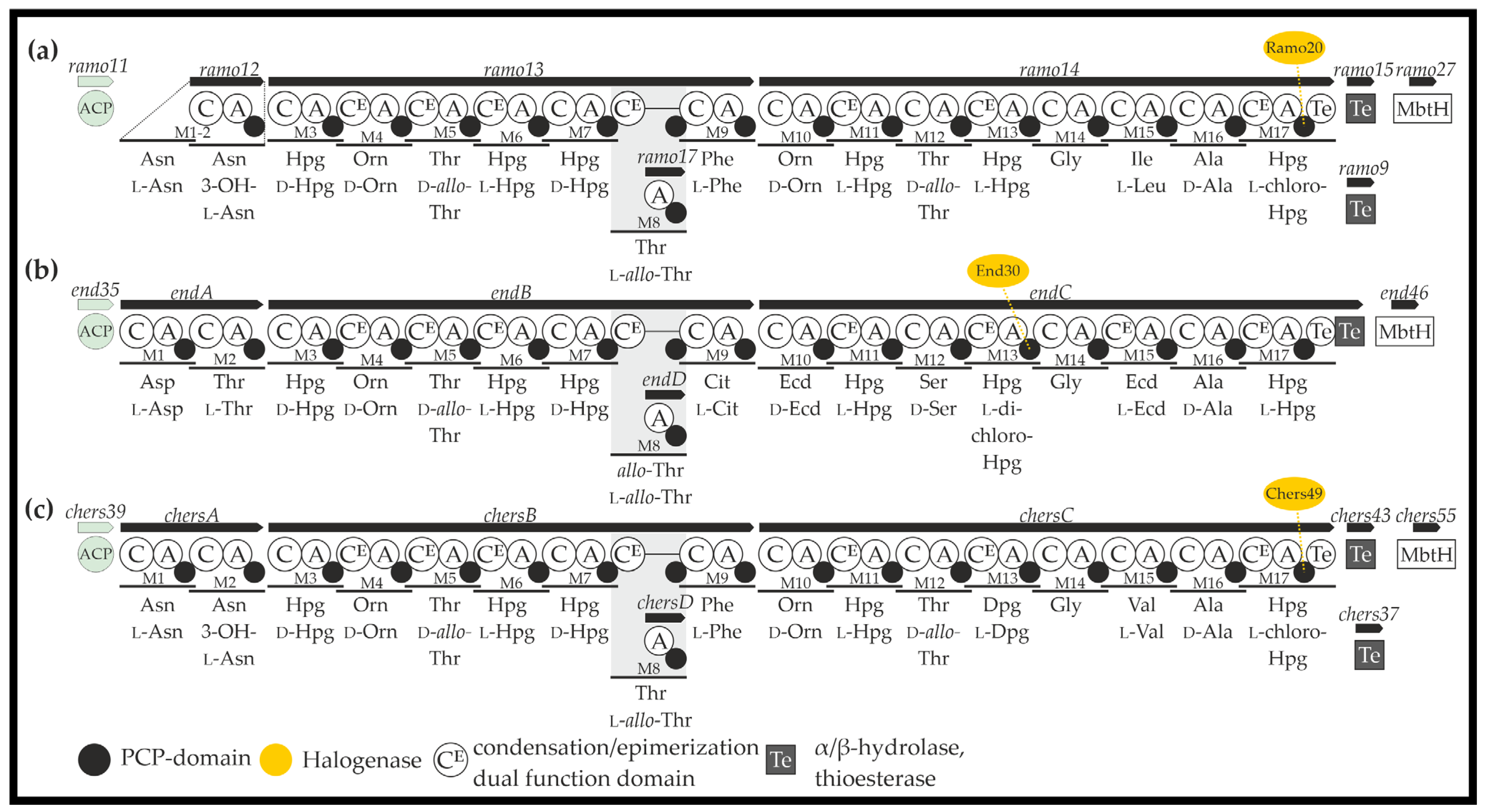
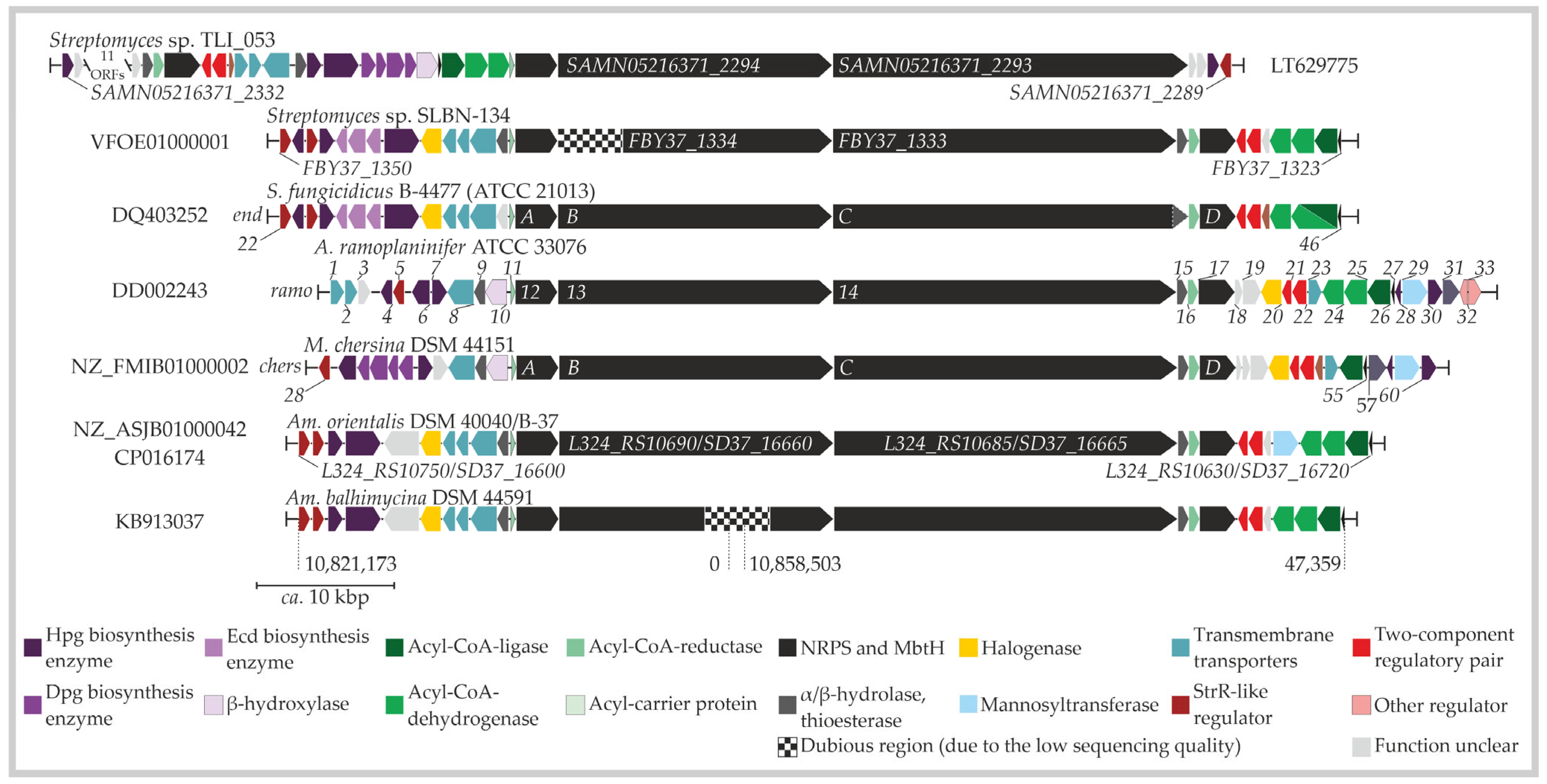
4.3. Genes and Proteins Associated with the Non-Ribosomal Assembly Line of RRLDPs
4.4. Glycosylation of RRLDPs
4.5. Transporters Coded Within RRLDP BGCs
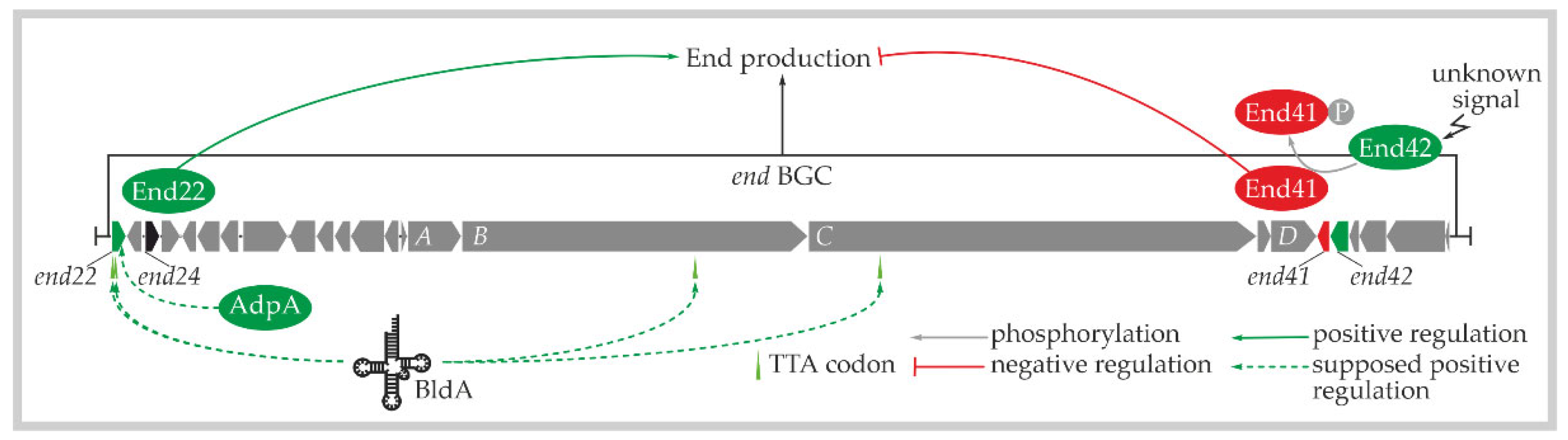
4.6. Transcriptional Regulation of RRLDP Biosynthesis
5. Tools for the Genetic and Genomic Engineering of RRLDP Producers

| Plasmid: | Used for: | Properties: | Reference: |
|---|---|---|---|
| pSET152 | Gene expression in Actinoplanes sp. SIPI-A.2006 (=ATCC 33076) | φC31-based integrative vector | [50,112,113,118] |
| pXY152a | Gene expression in S. fungicidicus ATCC 21013 | pSET152 [129] derivative, φC31-based integrative expression vector, gene expression achieved via ermEp promoter | [111,135] |
| pSET152ermE | Gene expression in S. fungicidicus ATCC 31731 (ATCC 21013 derivative) | pSET152 [129] derivative, φC31-based integrative expression vector, gene expression achieved via ermEp promoter | [123] |
| pIJ86 | Gene expression in S. fungicidicus ATCC 21013 | Replicative expression vector, pIJ101 [136] derivative, gene expression achieved via ermEp promoter | [119,137] |
| pMS17 | Gene expression in S. fungicidicus ATCC 21013 | φC31-based integrative expression vector, gene expression achieved via tetracycline-inducible promoter tcp830 | [119,138] |
| pXY300 | Gene knockouts in S. fungicidicus ATCC 21013 via homologous recombination | pGM160 [139] derivative carrying oriT from pOJ446 [132], thermosensitive pSG5 replicon-based replicative vector | [111,140] |
| pKC1139 | Gene knockouts in Actinoplanes sp. SIPI-A.2006 (=ATCC 21013), A. ramoplaninifer ATCC 21013, and S. fungicidicus TXX3120 (industrial End producer) via homologous recombination | Thermosensitive pSG5 replicon-based replicative vector | [50,112,118,132] |
| pHZ1358 | Gene knockouts in S. atrovirens MGR140 via homologous recombination | Replicative cos-site-containing pIJ101 [136] derivative, unstable and prone to chromosomal integration via homologous recombination | [40,141] |
| pCIMt005 | Gene knockouts in S. fungicidicus ATCC 31731 (ATCC 21013 derivative) via homologous recombination | Thermosensitive pSG5 replicon-based replicative vector, derivative of pBlueScript II KS (+), carrying indigoidine synthetase cassette (Streptomyces lavendulae CGMCC 4.1386 gene idgS co-expressed with Bacillus subtilis phosphopantetheinyl transferase gene sfp using ermEp) [142] and pUWL201PW [143] oriT; as the presence of indigoidine synthetase cassette leads to accumulation of blue indigoidine, application of pCIMt005 simplifies the screening of mutants (where the cassette is lost) | [123,142] |
6. Ways and Approaches to Improve RRLDP Production in Actinomycetes
| Antibiotic: | Producer Strain: | Vegetative Medium Composition (g/L): | Production Medium Composition (g/L): | Maximal Yield Achieved: | Reference: |
|---|---|---|---|---|---|
| Rmp | A. ramoplaninifer ATCC 33076 | Meat extract—3; Yeast extract—5; Tryptone—5; Soluble starch—24; Glucose—1; CaCO3—4 | Soybean meal—30; Glucose—40; CaCO3—1 | >60 h, >60 mg/L | [47] |
| A. ramoplaninifer ATCC 33076 | Glucose—12; Soluble starch—13; Soybean meal—13; CaCO3—4 | PB medium Glucose—4; Maltose—20; Starch—4; Glycerol—20; Sucrose—20; Soybean meal—30; CaCO3—6 | 96 h, >100 mg/L | [147] | |
| Chersinamycin | M. chersina DSM 44151 | Fish meal—10, dextrin—30; lactose—10; CaSO4—6; CaCO3—5 | H881 Starch—10; Pharmamedia—5; CaCO3—1; CuSO4—0.05; NaI—0.5 | 288 h, 1–3 mg/L after the purification | [38] |
| End | S. fungicidicus B-5477 | Not reported | Corn steep liquor—30; Glucose—20; Soluble starch—30; NaCl—5; CaCO3—10 | 120 h, 170 mg/L | [28,111] |
| S. fungicidicus B-5477 | Corn steep liquor—35; Corn flour—25; Corn gluten meal—5; CaCO3—30; Actocol antifoam—0.5 | Medium A Corn flour—80; Corn gluten meal—30; Corn steep liquor—5; NaCl—1; (NH4)2SO4—3; ZnCl2—0.1; Lactose—10; Chicken oil—14; Potassium lactate—5 | 192 h, 550 mg/L | [149] | |
| S. fungicidicus B-5477 | Corn steep liquor—35; Corn flour—25; Corn gluten meal—5; CaCO3—30; Actocol antifoam—0.5 | Medium B Corn flour—50; Corn gluten meal—40; Corn steep liquor—5; Na2H2PO4—26; NaCl—5; (NH4)2SO4—3; ZnCl2—0.1; Lactose—10; Chicken oil—14; Potassium lactate—1 | 192 h, 530 mg/L | [149] | |
| End | S. fungicidicus SG-01 | Glucose—30, Corn steep liquor—30, Yeast extract—5; Ca2CO3—20; NaCl—8 | Glucose—40; Soluble starch—40; Corn steep liquor—20; Corn gluten meal—30; NaCl—15; NH4Cl—5; Ca2CO3—15 | 240 h, ca. 300 mg/L | [52] |
| End | S. fungicidicus ATCC 31731 | Corn steep liquor—35; Corn starch—30; Glucose—20; CaCO3—20 | Sucrose—100; Glucose—10; Casamino acids—0.1; Yeast extract—5; MOPS—21; K2SO4—0.25; MgCl2—10; MnSO4—1 × 10⁻³; CuSO4—0.5 × 10⁻³; ZnSO4—1 × 10⁻³; CoCl2—1 | 192 h, 740 mg/L | [123] |
| End | S. fungicidicus TXX3120 | Corn flour—35; Corn steep liquor—28; Cottonseed meal—5; (NH4)2SO4—5; FeSO4—0.36; KH2PO4 1.25; Light calcium carbonate—5; Olive oil—0.5 mL/L | Corn flour—80; Soybean flour—28; (NH4)2SO4—4; Corn steep liquor—20; Glucose monohydrate—6; FeSO4—0.1; L-lactic acid—2; Light CoCO3—5; Thermostable α-Amylase—1500 IU/L; Soybean oil—0.5 mL/L | 144 h, ca. 4000 U/mL | [51] |
| End | S. atrovirens MGR140 | Not reported | Soluble starch—30; Soybean meal—10; Glucose—20; Yeast powder—10; CaCO3—10; NaCl—5 | Not reported, ca. 40 mg/L | [55] |
| End | Streptomyces sp. MC079 | Glucose—20; Yeast extract—3; Peptone—2; FeSO4—0.1; K2HPO4—2; NaCl—10 | Glucose—40; Peptone—5; FeSO4—0.1; K2HPO4—2; NaCl—10 | 160 h, 35 mg/L | [56] |
7. Conclusions and Outline
Author Contributions
Funding
Institutional Review Board Statement
Informed Consent Statement
Data Availability Statement
Conflicts of Interest
References
- Kleinkauf, H.; von Döhren, H. Peptide antibiotics, beta-lactams, and related compounds. Crit. Rev. Biotechnol. 1988, 8, 1–32. [Google Scholar] [CrossRef] [PubMed]
- Hancock, R.E.; Chapple, D.S. Peptide antibiotics. Antimicrob. Agents Chemother. 1999, 43, 1317–1323. [Google Scholar] [CrossRef] [PubMed]
- Arnison, P.G.; Bibb, M.J.; Bierbaum, G.; Bowers, A.A.; Bugni, T.S.; Bulaj, G.; Camarero, J.A.; Campopiano, D.J.; Challis, G.L.; Clardy, J.; et al. Ribosomally synthesized and post-translationally modified peptide natural products: Overview and recommendations for a universal nomenclature. Nat. Prod. Rep. 2013, 30, 108–160. [Google Scholar] [CrossRef] [PubMed]
- Finking, R.; Marahiel, M.A. Biosynthesis of nonribosomal peptides. Annu. Rev. Microbiol. 2004, 58, 453–488. [Google Scholar] [CrossRef]
- Gross, E.; Kiltz, H.H. The number and nature of α,β-unsaturated amino acids in subtilin. Biochem. Biophys. Res. Commun. 1973, 50, 559–565. [Google Scholar] [CrossRef]
- Gross, E.; Morell, J.L. The structure of nisin. J. Am. Chem. Soc. 1971, 93, 4634–4635. [Google Scholar] [CrossRef]
- Allgaier, H.; Jung, G.; Werner, R.G.; Schneider, U.; Zähner, H. Epidermin: Sequencing of a heterodetic tetracyclic 21-peptide amide antibiotic. Eur. J. Biochem. 1986, 160, 9–22. [Google Scholar] [CrossRef]
- Ross, K.F.; Ronson, C.W.; Tagg, J.R. Isolation and characterization of the lantibiotic salivaricin A and its structural gene salA from Streptococcus salivarius 20P3. Appl. Environ. Microbiol. 1993, 59, 2014–2021. [Google Scholar] [CrossRef]
- Gilmore, M.S.; Segarra, R.A.; Booth, M.C.; Bogie, C.P.; Hall, L.R.; Clewell, D.B. Genetic structure of the Enterococcus faecalis plasmid pAD1-encoded cytolytic toxin system and its relationship to lantibiotic determinants. J. Bacteriol. 1994, 176, 7335–7344. [Google Scholar] [CrossRef]
- Stoffels, G.; Nissen-Meyer, J.; Gudmundsdottir, A.; Sletten, K.; Holo, H.; Nes, I.F. Purification and characterization of a new bacteriocin isolated from a Carnobacterium sp. Appl. Environ. Microbiol. 1992, 58, 1417–1422. [Google Scholar] [CrossRef]
- Hug, J.J.; Frank, N.A.; Walt, C.; Šenica, P.; Panter, F.; Müller, R. Genome-guided discovery of the first myxobacterial biarylitide myxarylin reveals distinct C-N biaryl crosslinking in RiPP biosynthesis. Molecules 2021, 26, 1–17. [Google Scholar] [CrossRef] [PubMed]
- Gause, G.F.; Brazhnikova, M.G. Gramicidin S and its use in the treatment of infected wounds. Nature 1944, 154, 703. [Google Scholar] [CrossRef]
- Stansly, P.G.; Shepherd, R.G.; White, H.J. Polymyxin: A new chemotherapeutic agent. Bull. Johns Hopkins Hosp. 1947, 81, 43–54. [Google Scholar] [PubMed]
- Kunze, B.; Jansen, R.; Höfle, G.; Reichenbach, H. Ajudazols, new inhibitors of the mitochondrial electron transport from Chondromyces crocatus. Production, antimicrobial activity and mechanism of action. J. Antibiot. 2004, 57, 151–155. [Google Scholar] [CrossRef] [PubMed]
- Ling, L.L.; Schneider, T.; Peoples, A.J.; Spoering, A.L.; Engels, I.; Conlon, B.P.; Mueller, A.; Schäberle, T.F.; Hughes, D.E.; Epstein, S.; et al. A new antibiotic kills pathogens without detectable resistance. Nature 2015, 517, 455–459. [Google Scholar] [CrossRef]
- Christiansen, G.; Philmus, B.; Hemscheidt, T.; Kurmayer, R. Genetic variation of adenylation domains of the anabaenopeptin synthesis operon and evolution of substrate promiscuity. J. Bacteriol. 2011, 193, 3822–3831. [Google Scholar] [CrossRef]
- Müller, A.; Klöckner, A.; Schneider, T. Targeting a cell wall biosynthesis hot spot. Nat. Prod. Rep. 2017, 34, 909–932. [Google Scholar] [CrossRef]
- Pavelka, M.S.; Mahapatra, S.; Crick, D.C. Genetics of peptidoglycan biosynthesis. In Molecular Genetics of Mycobacteria; Wiley: Hoboken, NJ, USA, 2015; pp. 511–533. [Google Scholar] [CrossRef]
- de Kruijff, B.; van Dam, V.; Breukink, E. Lipid II: A central component in bacterial cell wall synthesis and a target for antibiotics. Prostaglandins Leukot. Essent. Fat. Acids 2008, 79, 117–121. [Google Scholar] [CrossRef]
- Manat, G.; Roure, S.; Auger, R.; Bouhss, A.; Barreteau, H.; Mengin-Lecreulx, D.; Touzé, T. Deciphering the metabolism of undecaprenyl-phosphate: The bacterial cell-wall unit carrier at the membrane frontier. Microb. Drug. Resist. 2014, 20, 199–214. [Google Scholar] [CrossRef]
- Marcone, G.L.; Binda, E.; Berini, F.; Marinelli, F. Old and new glycopeptide antibiotics: From product to gene and back in the post-genomic era. Biotechnol. Adv. 2018, 36, 534–554. [Google Scholar] [CrossRef]
- Binda, E.; Marinelli, F.; Marcone, G.L. Old and new glycopeptide antibiotics: Action and resistance. Antibiotics 2014, 3, 572–594. [Google Scholar] [CrossRef] [PubMed]
- And, H.C.; Hoover, D.G. Bacteriocins and their food applications. Compr. Rev. Food Sci. Food Saf. 2003, 2, 82–100. [Google Scholar] [CrossRef] [PubMed]
- Walker, S.; Chen, L.; Hu, Y.; Rew, Y.; Shin, D.; Boger, D.L. Chemistry and biology of ramoplanin: A lipoglycodepsipeptide with potent antibiotic activity. Chem. Rev. 2005, 105, 449–475. [Google Scholar] [CrossRef] [PubMed]
- Hamburger, J.B.; Hoertz, A.J.; Lee, A.; Senturia, R.J.; McCafferty, D.G.; Loll, P.J. A crystal structure of a dimer of the antibiotic ramoplanin illustrates membrane positioning and a potential Lipid II docking interface. Proc. Natl. Acad. Sci. USA 2009, 106, 13759–13764. [Google Scholar] [CrossRef]
- Somner, E.A.; Reynolds, P.E. Inhibition of peptidoglycan biosynthesis by ramoplanin. Antimicrob. Agents Chemother. 1990, 34, 413–419. [Google Scholar] [CrossRef]
- O’hare, M.D.; Ghosh, G.; Felmingham, D.; Grüeberg, R.N. In-vitro studies with ramoplanin (MDL 62,198): A novel lipoglycopeptide antimicrobial. J. Antimicrob. Chemother. 1990, 25, 217–220. [Google Scholar] [CrossRef]
- Higashide, E.; Hatano, K.; Shibata, M.; Nakazawa, K. Enduracidin, a new antibiotic. I Streptomyces fungicidicus no. B 5477, an enduracidin producing organism. J. Antibiot. 1968, 21, 126–137. [Google Scholar] [CrossRef]
- Pedroso, A.A.; Menten, J.F.M.; Lambais, M.R.; Racanicci, A.M.C.; Longo, F.A.; Sorbara, J.O.B. Intestinal bacterial community and growth performance of chickens fed diets containing antibiotics. Poult. Sci. 2006, 85, 747–752. [Google Scholar] [CrossRef]
- Wang, H.L.; Shi, M.; Xu, X.; Pan, L.; Zhao, P.F.; Ma, X.K.; Tian, Q.Y.; Piao, X.S. Effects of flavomycin, Bacillus licheniformis and enramycin on performance, nutrient digestibility, gut morphology and the intestinal microflora of broilers. J. Poult. Sci. 2016, 53, 128–135. [Google Scholar] [CrossRef]
- Chen, Y.C.; Yu, Y.H. Bacillus licheniformis–fermented products and enramycin differentially modulate microbiota and antibiotic resistome in the cecal digesta of broilers. Poult. Sci. 2022, 101, 102010. [Google Scholar] [CrossRef]
- Xuan, H.; Yao, X.; Pan, R.; Gao, Y.; Wei, J.; Shao, D.; Liu, K.; Li, Z.; Qiu, Y.; Ma, Z.; et al. Antimicrobial resistance in Enterococcus faecium and Enterococcus faecalis isolates of swine origin from eighteen provinces in China. J. Vet. Med. Sci. 2021, 83, 1952–1958. [Google Scholar] [CrossRef] [PubMed]
- Li, H.; Liang, T.; Chu, Q.; Xu, F.; Li, Y.; Fu, L.; Zhou, B. Effects of several in-feed antibiotic combinations on the abundance and diversity of fecal microbes in weaned pigs. Can. J. Microbiol. 2017, 63, 402–410. [Google Scholar] [CrossRef] [PubMed]
- Costa, M.C.; Bessegatto, J.A.; Alfieri, A.A.; Weese, J.S.; Filho, J.A.B.; Oba, A. Different antibiotic growth promoters induce specific changes in the cecal microbiota membership of broiler chicken. PLoS ONE 2017, 12, 1–13. [Google Scholar] [CrossRef] [PubMed]
- McCafferty, D.G.; Cudic, P.; Frankel, B.A.; Barkallah, S.; Kruger, R.G.; Li, W. Chemistry and biology of the ramoplanin family of peptide antibiotics. Biopolym. Pept. Sci. Sect. 2002, 66, 261–284. [Google Scholar] [CrossRef]
- Farver, D.K.; Hedge, D.D.; Lee, S.C. Ramoplanin: A lipoglycodepsipeptide antibiotic. Ann. Pharmacother. 2005, 39, 863–868. [Google Scholar] [CrossRef]
- Basśres, E.; Endres, B.T.; Dotson, K.M.; Jahangir Alam, M.; Garey, K.W. Novel antibiotics in development to treat Clostridium difficile infection. Curr. Opin. Gastroenterol. 2017, 33, 1–7. [Google Scholar] [CrossRef]
- Morgan, K.T.; Zheng, J.; McCafferty, D.G. Discovery of six ramoplanin family gene clusters and the lipoglycodepsipeptide chersinamycin. ChemBioChem 2021, 22, 176–185. [Google Scholar] [CrossRef]
- de la Cruz, M.; González, I.; Parish, C.A.; Onishi, R.; Tormo, J.R.; Martín, J.; Peláez, F.; Zink, D.; El Aouad, N.; Reyes, F.; et al. Production of ramoplanin and ramoplanin analogs by actinomycetes. Front. Microbiol. 2017, 8, 1–12. [Google Scholar] [CrossRef]
- Li, X.G.; Tang, X.M.; Xiao, J.; Ma, G.H.; Xu, L.; Xie, S.J.; Xu, M.J.; Xiao, X.; Xu, J. Harnessing the potential of halogenated natural product biosynthesis by mangrove-derived actinomycetes. Mar. Drugs 2013, 11, 3875–3890. [Google Scholar] [CrossRef]
- Jiang, W.; Wanner, J.; Lee, R.J.; Bounaud, P.Y.; Boger, D.L. Total synthesis of the ramoplanin A2 and ramoplanose aglycon. J. Am. Chem. Soc. 2002, 124, 5288–5290. [Google Scholar] [CrossRef]
- Marschall, E.; Cass, R.W.; Prasad, K.M.; Swarbrick, J.D.; McKay, A.I.; Payne, J.A.E.; Cryle, M.J.; Tailhades, J. Synthetic ramoplanin analogues are accessible by effective incorporation of arylglycines in solid-phase peptide synthesis. Chem. Sci. 2023, 15, 195–203. [Google Scholar] [CrossRef] [PubMed]
- Paquette, A.R.; Boddy, C.N. Macrocyclization strategies for the total synthesis of cyclic depsipeptides. Org. Biomol. Chem. 2023, 21, 8043–8053. [Google Scholar] [CrossRef] [PubMed]
- Kawakami, M.; Nagai, Y.; Fujii, T.; Mitsuhashi, S. Anti-microbial activities of enduracidin (enramycin) in vitro and in vivo. J. Antibiotics 1971, 24, 583–586. [Google Scholar] [CrossRef] [PubMed]
- Asai, M.; Muroi, M.; Sugita, N.; Kawashima, H.; Mizuno, K.; Miyake, A. Enduracidin, a new antibiotic. II Isolation and characterization. J. Antibiot. 1968, 21, 138–146. [Google Scholar] [CrossRef]
- Meyers, E.; Weisenborn, F.L.; Pansy, F.E.; Slusarchyk, D.S.; Von Saltza, M.H.; Rathnum, M.L.; Parker, W.L. Janiemycin, a new peptide antibiotic. J. Antibiot. 1970, 23, 502–507. [Google Scholar] [CrossRef]
- Cavalleri, B.; Pagani, H.; Volpe, G.; Selva, E.; Parenti, F. A-16686, a new antibiotic from Actinoplanes: I. Fermentation, isolation and preliminary physico-chemical characteristics. J. Antibiot. 1984, 37, 309–317. [Google Scholar] [CrossRef]
- Marcone, G.L.; Binda, E.; Reguzzoni, M.; Gastaldo, L.; Dalmastri, C.; Marinelli, F. Classification of Actinoplanes sp. ATCC 33076, an actinomycete that produces the glycolipodepsipeptide antibiotic ramoplanin, as Actinoplanes ramoplaninifer sp. nov. Int. J. Syst. Evol. Microbiol. 2017, 67, 4181–4188. [Google Scholar] [CrossRef]
- Skelton, N.J.; Harding, M.M.; Mortishire-Smith, R.J.; Rahman, S.K.; Williams, D.H.; Rance, M.J.; Ruddock, J.C. Structure elucidation and solution conformation of the glycopeptide antibiotic ramoplanose (UK-71,903): A cyclic depsipeptide containing an antiparallel β-sheet and a β-bulge. J. Am. Chem. Soc. 1991, 113, 7522–7530. [Google Scholar] [CrossRef]
- Pan, H.X.; Li, J.A.; Shao, L.; Zhu, C.B.; Chen, J.S.; Tang, G.L.; Chen, D.J. Genetic manipulation revealing an unusual N-terminal region in a stand-alone non-ribosomal peptide synthetase involved in the biosynthesis of ramoplanins. Biotechnol. Lett. 2013, 35, 107–114. [Google Scholar] [CrossRef]
- Zhang, J.; He, Z.; Xu, J.T.; Song, S.; Zhu, Q.; Wu, G.; Guan, Y.; Wu, X.; Yue, R.; Wang, Y.; et al. Semi-rational mutagenesis of an industrial Streptomyces fungicidicus strain for improved enduracidin productivity. Appl. Microbiol. Biotechnol. 2020, 104, 3459–3471. [Google Scholar] [CrossRef]
- Liu, L.; Hu, W.; Li, W.-J.; Wang, S.-Y.; Lu, D.; Tian, X.-J.; Mao, Y.-Q.; Liu, J.; Chen, J.-H. Heavy-ion mutagenesis significantly enhances enduracidin production by Streptomyces fungicidicus. Eng. Life Sci. 2019, 19, 112–120. [Google Scholar] [CrossRef] [PubMed]
- Zhang, D.; Wang, Q.; Liang, X. Breeding high producers of enduracidin from Streptomyces fungicidicus by combination of various mutation treatments. In Proceedings of the Lecture Notes in Electrical Engineering; Zhang, T.-C., Nakajima, M., Eds.; Springer: Berlin/Heidelberg, Germany, 2015; Volume 332, pp. 133–142. [Google Scholar]
- Hu, Y.; Yang, W.; Wan, W.; Shen, F.; Lei, Z.; Wang, D. Investigation on ultrasound-assisted extraction and separation of enduracidin from Streptomyces sp. NJWGY3665. Appl. Biochem. Biotechnol. 2012, 166, 830–838. [Google Scholar] [CrossRef] [PubMed]
- Zhong, T.H.; Zeng, X.M.; Zhang, Y.H.; Chan, Z.H.; Luo, Z.H.; Yang, X.W.; Xu, W. Discovery, gene modification, and optimization of fermentation of an enduracidin-producing strain. J. Asian Nat. Prod. Res. 2018, 20, 633–648. [Google Scholar] [CrossRef]
- Chan, Z.; Zhong, T.; Yi, Z.; Xiao, J.; Zeng, R. A pH shift feeding strategy for increased enduracidin production during fed–batch fermentation by a deep–sea bacterium Streptomyces sp. MC079. Biotechnol. Bioprocess Eng. 2015, 20, 908–914. [Google Scholar] [CrossRef]
- Mascher, T.; Margulis, N.G.; Wang, T.; Ye, R.W.; Helmann, J.D. Cell wall stress responses in Bacillus subtilis: The regulatory network of the bacitracin stimulon. Mol. Microbiol. 2003, 50, 1591–1604. [Google Scholar] [CrossRef]
- Mascher, T.; Zimmer, S.L.; Smith, T.A.; Helmann, J.D. Antibiotic-inducible promoter regulated by the cell envelope stress-sensing two-component system LiaRS of Bacillus subtilis. Antimicrob. Agents Chemother. 2004, 48, 2888–2896. [Google Scholar] [CrossRef]
- Gao, Q.; Thorson, J.S. The biosynthetic genes encoding for the production of the dynemicin enediyne core in Micromonospora chersina ATCC 53710. FEMS Microbiol. Lett. 2008, 282, 105–114. [Google Scholar] [CrossRef]
- Castiglione, F.; Marazzi, A.; Meli, M.; Colombo, G. Structure elucidation and 3D solution conformation of the antibiotic enduracidin determined by NMR spectroscopy and molecular dynamics. Magn. Reson. Chem. 2005, 43, 603–610. [Google Scholar] [CrossRef]
- Kurz, M.; Guba, W. 3D structure of ramoplanin: A potent inhibitor of bacterial cell wall synthesis. Biochemistry 1996, 35, 12570–12575. [Google Scholar] [CrossRef]
- Ciabatti, R.; Kettenring, J.K.; Winters, G.; Tuan, G.; Zerilli, L.; Cavalleri, B. Ramoplanin (A-16686), a new glycolipodepsipeptide antibiotic. III. Structure elucidation. J. Antibiot. 1989, 42, 254–267. [Google Scholar] [CrossRef]
- Iwasaki, H.; Horii, S.; Asai, M.; Mizuno, K.; Miyake, A.; Ueyanagi, J. Enduracidin, a new antibiotic: VIII: Structures of enduracidins A and B. Chem. Pharm. Bull. 1973, 21, 1184–1191. [Google Scholar] [CrossRef][Green Version]
- Yin, X.; Zabriskie, T.M. The enduracidin biosynthetic gene cluster from Streptomyces fungicidicus. Microbiology 2006, 152, 2969–2983. [Google Scholar] [CrossRef] [PubMed]
- Farnet, C.M.; Zazopoulos, E.; Staffa, A. Gene Cluster for Ramoplanin Biosynthesis. EP 1326983B1, 24 June 2001. [Google Scholar]
- Gastaldo, L.; Ciabatti, R.; Assi, F.; Restelli, E.; Kettenring, J.K.; Zerilli, L.F.; Romanò, G.; Denaro, M.; Cavalleri, B. Isolation, structure determination and biological activity of A-16686 factors A′ 1, A′ 2 and A′ 3 glycolipodepsipeptide antibiotics. J. Ind. Microbiol. 1992, 11, 13–18. [Google Scholar] [CrossRef] [PubMed]
- Mobarakai, N.; Quale, J.M.; Landman, D. Bactericidal activities of peptide antibiotics against multidrug-resistant Enterococcus faecium. Antimicrob. Agents Chemother. 1994, 38, 385–387. [Google Scholar] [CrossRef]
- Kettenring, J.K.; Ciabatti, R.; Winters, G.; Tamborini, G.; Cavalleri, B. Ramoplanin (A-16686), a new glycolipodepsipeptide antibiotic. IV. Complete sequence determination by homonuclear 2D NMR spectroscopy. J. Antibiot. 1989, 42, 268–275. [Google Scholar] [CrossRef]
- Hori, M.; Sugita, N.; Miyazak, M. Enduracidin, a new antibiotic: VI: Separation and determination of enduracidins A and B by column chromatography. Chem. Pharm. Bull. 1973, 21, 1171–1174. [Google Scholar] [CrossRef][Green Version]
- Hori, M.; Iwasaki, H.; Horii, S.; Yoshida, I.; Hongo, T. Enduracidin, a new antibiotic: VII: Primary structure of the peptide moiety. Chem. Pharm. Bull. 1973, 21, 1175–1183. [Google Scholar] [CrossRef][Green Version]
- Horii, S.; Kameda, Y. Enduracidin, a new antibiotic. V: Structures of new basic amino acids, enduracididine and allonduracididine. J. Antibiot. 1968, 21, 665–667. [Google Scholar] [CrossRef]
- Hamada, M.; Kondo, S.; Yokoyama, T.; Miura, K.; Iinuma, K.; Yamamoto, H.; Maeda, K.; Takeuchi, T.; Umezawa, H. Minosaminomycin, A new antibiotic containing myo-inosamine. J. Antibiot. 1974, 27, 81–83. [Google Scholar] [CrossRef][Green Version]
- He, H.; Williamson, R.T.; Shen, B.; Graziani, E.I.; Yang, H.Y.; Sakya, S.M.; Petersen, P.J.; Carter, G.T. Mannopeptimycins, novel antibacterial glycopeptides from Streptomyces hygroscopicus, LL-AC98. J. Am. Chem. Soc. 2002, 124, 9729–9736. [Google Scholar] [CrossRef]
- Atkinson, D.J.; Naysmith, B.J.; Furkert, D.P.; Brimble, M.A. Enduracididine, a rare amino acid component of peptide antibiotics: Natural products and synthesis. Beilstein J. Org. Chem. 2016, 12, 2325–2342. [Google Scholar] [CrossRef] [PubMed]
- Medema, M.H.; Kottmann, R.; Yilmaz, P.; Cummings, M.; Biggins, J.B.; Blin, K.; De Bruijn, I.; Chooi, Y.H.; Claesen, J.; Coates, R.C.; et al. Minimum information about a biosynthetic gene cluster. Nat. Chem. Biol. 2015, 11, 625–631. [Google Scholar] [CrossRef] [PubMed]
- Shawky, R.M.; Puk, O.; Wietzorrek, A.; Pelzer, S.; Takano, E.; Wohlleben, W.; Stegmann, E. The border sequence of the balhimycin biosynthesis gene cluster from Amycolatopsis balhimycina contains bbr, encoding a StrR-like pathway-specific regulator. J. Mol. Microbiol. Biotechnol. 2007, 13, 76–88. [Google Scholar] [CrossRef] [PubMed]
- Jeong, H.; Sim, Y.M.; Kim, H.J.; Lee, D.W.; Lim, S.K.; Lee, S.J. Genome sequence of the vancomycin-producing Amycolatopsis orientalis subsp. orientalis strain KCTC 9412T. Genome Announc. 2013, 1, e00408-13. [Google Scholar] [CrossRef]
- Lei, X.; Yuan, F.; Shi, Y.; Li, X.; Wang, L.; Hong, B. Draft genome sequence of norvancomycin-producing strain Amycolatopsis orientalis CPCC200066. Genome Announc. 2015, 3, e00296-15. [Google Scholar] [CrossRef]
- Dörr, T.; Delgado, F.; Umans, B.D.; Gerding, M.A.; Davis, B.M.; Waldor, M.K. A transposon screen identifies genetic determinants of Vibrio cholerae resistance to high-molecular-weight antibiotics. Antimicrob. Agents Chemother. 2016, 60, 4757–4763. [Google Scholar] [CrossRef]
- Hoertz, A.J.; Hamburger, J.B.; Gooden, D.M.; Bednar, M.M.; McCafferty, D.G. Studies on the biosynthesis of the lipodepsipeptide antibiotic ramoplanin A2. Bioorganic Med. Chem. 2012, 20, 859–865. [Google Scholar] [CrossRef]
- Yushchuk, O.; Ostash, B. Glycopeptide antibiotics: Genetics, chemistry, and new screening approaches. In Natural Products from Actinomycetes: Diversity, Ecology and Drug Discovery; Springer: Singapore, 2022; pp. 411–444. [Google Scholar] [CrossRef]
- Li, T.L.; Huang, F.; Haydock, S.F.; Mironenko, T.; Leadlay, P.F.; Spencer, J.B. Biosynthetic gene cluster of the glycopeptide antibiotic teicoplanin: Characterization of two glycosyltransferases and the key acyltransferase. Chem. Biol. 2004, 11, 107–119. [Google Scholar] [CrossRef]
- Yushchuk, O.; Ostash, B.; Pham, T.H.; Luzhetskyy, A.; Fedorenko, V.; Truman, A.W.; Horbal, L. Characterization of the post-assembly line tailoring processes in teicoplanin biosynthesis. ACS Chem. Biol. 2016, 11, 2254–2264. [Google Scholar] [CrossRef]
- Zhang, S.; Chen, Y.; Zhu, J.; Lu, Q.; Cryle, M.J.; Zhang, Y.; Yan, F. Structural diversity, biosynthesis, and biological functions of lipopeptides from Streptomyces. Nat. Prod. Rep. 2022, 40, 557–594. [Google Scholar] [CrossRef]
- Cacho, R.A.; Jiang, W.; Chooi, Y.H.; Walsh, C.T.; Tang, Y. Identification and characterization of the echinocandin B biosynthetic gene cluster from Emericella rugulosa NRRL 11440. J. Am. Chem. Soc. 2012, 134, 16781–16790. [Google Scholar] [CrossRef] [PubMed]
- Warneke, R.; Garbers, T.B.; Herzberg, C.; Aschenbrandt, G.; Ficner, R.; Stülke, J. Ornithine is the central intermediate in the arginine degradative pathway and its regulation in Bacillus subtilis. J. Biol. Chem. 2023, 299, 104944. [Google Scholar] [CrossRef] [PubMed]
- Hubbard, B.K.; Thomas, M.G.; Walsh, C.T. Biosynthesis of l-p-hydroxyphenylglycine, a non-proteinogenic amino acid constituent of peptide antibiotics. Chem. Biol. 2000, 7, 931–942. [Google Scholar] [CrossRef]
- Choroba, O.W.; Williams, D.H.; Spencer, J.B. Biosynthesis of the vancomycin group of antibiotics: Involvement of an unusual dioxygenase in the pathway to (S)-4-hydroxyphenylglycine. J. Am. Chem. Soc. 2000, 122, 5389–5390. [Google Scholar] [CrossRef]
- Nicolaou, K.C.; Boddy, C.N.C.; Bräse, S.; Winssinger, N. Chemistry, biology, and medicine of the glycopeptide antibiotics. Angew. Chem. Int. Ed. 1999, 38, 2096–2152. [Google Scholar] [CrossRef]
- Gavriilidou, A.; Adamek, M.; Rodler, J.-P.; Kubach, N.; Kramer, S.; Huson, D.H.; Cryle, M.J.; Stegmann, E.; Ziemert, N. Phylogenetic distance and structural diversity directing a reclassification of glycopeptide antibiotics. bioRxiv 2023, 2023.02.10.526856. [Google Scholar] [CrossRef]
- Culp, E.J.; Waglechner, N.; Wang, W.; Fiebig-Comyn, A.A.; Hsu, Y.P.; Koteva, K.; Sychantha, D.; Coombes, B.K.; van Nieuwenhze, M.S.; Brun, Y.V.; et al. Evolution-guided discovery of antibiotics that inhibit peptidoglycan remodelling. Nature 2020, 578, 582–587. [Google Scholar] [CrossRef]
- Gonsior, M.; Mühlenweg, A.; Tietzmann, M.; Rausch, S.; Poch, A.; Süssmuth, R.D. Biosynthesis of the peptide antibiotic feglymycin by a linear nonribosomal peptide synthetase mechanism. ChemBioChem 2015, 16, 2610–2614. [Google Scholar] [CrossRef]
- Xu, S.; Yang, Y.; Jin, R.; Zhang, M.; Wang, H. Purification and characterization of a functionally active Mycobacterium tuberculosis prephenate dehydrogenase. Protein Expr. Purif. 2006, 49, 151–158. [Google Scholar] [CrossRef]
- Kloosterman, H.; Hessels, G.I.; Vrijbloed, J.W.; Euverink, G.J.; Dijkhuizen, L. (De)regulation of key enzyme steps in the shikimate pathway and phenylalanine-specific pathway of the actinomycete Amycolatopsis methanolica. Microbiology 2003, 149, 3321–3330. [Google Scholar] [CrossRef]
- Thykaer, J.; Nielsen, J.; Wohlleben, W.; Weber, T.; Gutknecht, M.; Lantz, A.E.; Stegmann, E. Increased glycopeptide production after overexpression of shikimate pathway genes being part of the balhimycin biosynthetic gene cluster. Metab. Eng. 2010, 12, 455–461. [Google Scholar] [CrossRef]
- Goldfinger, V.; Spohn, M.; Rodler, J.P.; Sigle, M.; Kulik, A.; Cryle, M.J.; Rapp, J.; Link, H.; Wohlleben, W.; Stegmann, E. Metabolic engineering of the shikimate pathway in Amycolatopsis strains for optimized glycopeptide antibiotic production. Metab. Eng. 2023, 78, 84–92. [Google Scholar] [CrossRef] [PubMed]
- Yushchuk, O.; Ostash, B.; Truman, A.W.; Marinelli, F.; Fedorenko, V. Teicoplanin biosynthesis: Unraveling the interplay of structural, regulatory, and resistance genes. Appl. Microbiol. Biotechnol. 2020, 104, 3279–3291. [Google Scholar] [CrossRef] [PubMed]
- Chen, H.; Tseng, C.C.; Hubbard, B.K.; Walsh, C.T. Glycopeptide antibiotic biosynthesis: Enzymatic assembly of the dedicated amino acid monomer (S)-3,5-dihydroxyphenylglycine. Proc. Natl. Acad. Sci. USA 2001, 98, 14901–14906. [Google Scholar] [CrossRef] [PubMed]
- Pfeifer, V.; Nicholson, G.J.; Ries, J.; Recktenwald, J.; Schefer, A.B.; Shawky, R.M.; Schröder, J.; Wohlleben, W.; Pelzer, S. A polyketide synthase in glycopeptide biosynthesis. The biosynthesis of the non-proteinogenic amino acid (S)-3,5-dihydroxyphenylglycine. J. Biol. Chem. 2001, 276, 38370–38377. [Google Scholar] [CrossRef]
- Hatano, K.; Nogami, I.; Higashide, E.; Kishi, T. Biosynthesis of enduracidin: Origin of enduracididine and other amino acids. Agric. Biol. Chem. 1984, 48, 1503–1508. [Google Scholar] [CrossRef]
- Magarvey, N.A.; Haltli, B.; He, M.; Greenstein, M.; Hucul, J.A. Biosynthetic pathway for mannopeptimycins, lipoglycopeptide antibiotics active against drug-resistant Gram-positive pathogens. Antimicrob. Agents Chemother. 2006, 50, 2167–2177. [Google Scholar] [CrossRef]
- Han, L.; Schwabacher, A.W.; Moran, G.R.; Silvaggi, N.R. Streptomyces wadayamensis MppP is a pyridoxal 5’-phosphate-dependent l-arginine α-deaminase, γ-hydroxylase in the enduracididine biosynthetic pathway. Biochemistry 2015, 54, 7029–7040. [Google Scholar] [CrossRef]
- Burroughs, A.M.; Hoppe, R.W.; Goebel, N.C.; Sayyed, B.H.; Voegtline, T.J.; Schwabacher, A.W.; Zabriskie, T.M.; Silvaggi, N.R. Structural and functional characterization of MppR, an enduracididine biosynthetic enzyme from Streptomyces hygroscopicus: Functional diversity in the acetoacetate decarboxylase-like superfamily. Biochemistry 2013, 52, 4492–4506. [Google Scholar] [CrossRef][Green Version]
- Stinchi, S.; Carrano, L.; Lazzarini, A.; Feroggio, M.; Grigoletto, A.; Sosio, M.; Donadio, S. A derivative of the glycopeptide A40926 produced by inactivation of the β-hydroxylase gene in Nonomuraea sp. ATCC 39727. FEMS Microbiol. Lett. 2006, 256, 229–235. [Google Scholar] [CrossRef]
- Pan, H.X.; Chen, Z.Z.; Shao, L.; Li, J.A.; Chen, J.S.; Zhu, C.B.; Tang, G.L.; Chen, D.J. Production of ramoplanin analogues by genetic engineering of Actinoplanes sp. Biotechnol. Lett. 2013, 35, 1685–1692. [Google Scholar] [CrossRef] [PubMed]
- Felnagle, E.A.; Barkei, J.J.; Park, H.; Podevels, A.M.; McMahon, M.D.; Drott, D.W.; Thomas, M.G. MbtH-like proteins as integral components of bacterial nonribosomal peptide synthetases. Biochemistry 2010, 49, 8815–8817. [Google Scholar] [CrossRef] [PubMed]
- Pourmasoumi, F.; De, S.; Peng, H.; Trottmann, F.; Hertweck, C.; Kries, H. Proof-reading thioesterase boosts activity of engineered nonribosomal peptide synthetase. ACS Chem. Biol. 2022, 17, 2382–2388. [Google Scholar] [CrossRef] [PubMed]
- Kaniusaite, M.; Tailhades, J.; Marschall, E.A.; Goode, R.J.A.; Schittenhelm, R.B.; Cryle, M.J. A proof-reading mechanism for non-proteinogenic amino acid incorporation into glycopeptide antibiotics. Chem. Sci. 2019, 10, 9466–9482. [Google Scholar] [CrossRef] [PubMed]
- Kittilä, T.; Kittel, C.; Tailhades, J.; Butz, D.; Schoppet, M.; Büttner, A.; Goode, R.J.A.; Schittenhelm, R.B.; Van Pee, K.H.; Süssmuth, R.D.; et al. Halogenation of glycopeptide antibiotics occurs at the amino acid level during non-ribosomal peptide synthesis. Chem. Sci. 2017, 8, 5992–6004. [Google Scholar] [CrossRef]
- Puk, O.; Huber, P.; Bischoff, D.; Recktenwald, J.; Jung, G.; Süßmuth, R.D.; Van Pée, K.H.; Wohlleben, W.; Pelzer, S. Glycopeptide biosynthesis in Amycolatopsis mediterranei DSM5908: Function of a halogenase and a haloperoxidase/perhydrolase. Chem. Biol. 2002, 9, 225–235. [Google Scholar] [CrossRef]
- Yin, X.; Chen, Y.; Zhang, L.; Wang, Y.; Zabriskie, T.M. Enduracidin analogues with altered halogenation patterns produced by genetically engineered strains of Streptomyces fungicidicus. J. Nat. Prod. 2010, 73, 583–589. [Google Scholar] [CrossRef][Green Version]
- Han, J.; Chen, J.; Shao, L.; Zhang, J.; Dong, X.; Liu, P.; Chen, D. Production of the ramoplanin activity analogue by double gene inactivation. PLoS ONE 2016, 11, e0154121. [Google Scholar] [CrossRef]
- Chen, J.S.; Su, M.; Shao, L.; Wang, Y.X.; Lin, H.M.; Chen, D.J. Investigation of halogenation during the biosynthesis of ramoplanin in Actinoplanes sp. ATCC33076. Appl. Microbiol. Biotechnol. 2016, 100, 289–298. [Google Scholar] [CrossRef]
- Lairson, L.L.; Henrissat, B.; Davies, G.J.; Withers, S.G. Glycosyl transferases: Structures, functions, and mechanisms. Annu. Rev. Biochem. 2008, 77, 521–555. [Google Scholar] [CrossRef]
- Yushchuk, O.; Zhukrovska, K.; Berini, F.; Fedorenko, V.; Marinelli, F. Genetics behind the glycosylation patterns in the biosynthesis of dalbaheptides. Front. Chem. 2022, 10, 858708. [Google Scholar] [CrossRef] [PubMed]
- Sosio, M.; Stinchi, S.; Beltrametti, F.; Lazzarini, A.; Donadio, S. The gene cluster for the biosynthesis of the glycopeptide antibiotic A40926 by Nonomuraea species. Chem. Biol. 2003, 10, 541–549. [Google Scholar] [CrossRef] [PubMed]
- Yushchuk, O.; Vior, N.M.; Andreo-Vidal, A.; Berini, F.; Rückert, C.; Busche, T.; Binda, E.; Kalinowski, J.; Truman, A.W.; Marinelli, F. Genomic-led discovery of a novel glycopeptide antibiotic by Nonomuraea coxensis DSM 45129. ACS Chem. Biol. 2021, 16, 915–928. [Google Scholar] [CrossRef] [PubMed]
- Chen, J.S.; Wang, Y.X.; Shao, L.; Pan, H.X.; Li, J.A.; Lin, H.M.; Dong, X.J.; Chen, D.J. Functional identification of the gene encoding the enzyme involved in mannosylation in ramoplanin biosynthesis in Actinoplanes sp. Biotechnol. Lett. 2013, 35, 1501–1508. [Google Scholar] [CrossRef]
- Wu, M.C.; Styles, M.Q.; Law, B.J.C.; Struck, A.W.; Nunns, L.; Micklefield, J. Engineered biosynthesis of enduracidin lipoglycopeptide antibiotics using the ramoplanin mannosyltransferase Ram29. Microbiology 2015, 161, 1338–1347. [Google Scholar] [CrossRef]
- Yushchuk, O.; Zhukrovska, K.; Fedorenko, V. Insights into the phylogeny of transporters coded within biosynthetic gene clusters for glycopeptides and related antibiotics. Visnyk Lviv Univ. Biol. Ser. 2022, 86, 33–46. [Google Scholar] [CrossRef]
- Menges, R.; Muth, G.; Wohlleben, W.; Stegmann, E. The ABC transporter Tba of Amycolatopsis balhimycina is required for efficient export of the glycopeptide antibiotic balhimycin. Appl. Microbiol. Biotechnol. 2007, 77, 125–134. [Google Scholar] [CrossRef]
- Zhukrovska, K.; Binda, E.; Fedorenko, V.; Marinelli, F.; Yushchuk, O. The impact of heterologous regulatory genes from lipodepsipeptide biosynthetic gene clusters on the production of teicoplanin and A40926. Antibiotics 2024, 13, 115. [Google Scholar] [CrossRef]
- Chen, Y.W.; Liu, X.C.; Lv, F.X.; Li, P. Characterization of three regulatory genes involved in enduracidin biosynthesis and improvement of enduracidin production in Streptomyces fungicidicus. J. Appl. Microbiol. 2019, 127, 1698–1705. [Google Scholar] [CrossRef]
- Takano, E.; Tao, M.; Long, F.; Bibb, M.J.; Wang, L.; Li, W.; Buttner, M.J.; Bibb, M.J.; Deng, Z.X.; Chater, K.F. A rare leucine codon in adpA is implicated in the morphological defect of bldA mutants of Streptomyces coelicolor. Mol. Microbiol. 2003, 50, 475–486. [Google Scholar] [CrossRef]
- McCormick, J.R.; Flärdh, K. Signals and regulators that govern Streptomyces development. FEMS Microbiol. Rev. 2012, 36, 206–231. [Google Scholar] [CrossRef] [PubMed]
- Yushchuk, O.; Ostash, I.; Mösker, E.; Vlasiuk, I.; Deneka, M.; Rückert, C.; Busche, T.; Fedorenko, V.; Kalinowski, J.; Süssmuth, R.D.; et al. Eliciting the silent lucensomycin biosynthetic pathway in Streptomyces cyanogenus S136 via manipulation of the global regulatory gene adpA. Sci. Rep. 2021, 11, 3507. [Google Scholar] [CrossRef] [PubMed]
- Chater, K.F.; Chandra, G. The use of the rare UUA codon to define “expression space” for genes involved in secondary metabolism, development and environmental adaptation in Streptomyces. J. Microbiol. 2008, 46, 1–11. [Google Scholar] [CrossRef] [PubMed]
- Ohnishi, Y.; Kameyama, S.; Onaka, H.; Horinouchi, S. The A-factor regulatory cascade leading to streptomycin biosynthesis in Streptomyces griseus: Identification of a target gene of the A-factor receptor. Mol. Microbiol. 1999, 34, 102–111. [Google Scholar] [CrossRef]
- Du, Y.L.; Li, S.Z.; Zhou, Z.; Chen, S.F.; Fan, W.M.; Li, Y.Q. The pleitropic regulator AdpAch is required for natamycin biosynthesis and morphological differentiation in Streptomyces chattanoogensis. Microbiology 2011, 157, 1300–1311. [Google Scholar] [CrossRef]
- Guo, S.; Leng, T.; Sun, X.; Zheng, J.; Li, R.; Chen, J.; Hu, F.; Liu, F.; Hua, Q. Global regulator AdpA_1075 regulates morphological differentiation and ansamitocin production in Actinosynnema pretiosum subsp. auranticum. Bioengineering 2022, 9, 719. [Google Scholar] [CrossRef]
- Ostash, B.; Yushchuk, O.; Tistechok, S.; Mutenko, H.; Horbal, L.; Muryn, A.; Dacyuk, Y.; Kalinowski, J.; Luzhetskyy, A.; Fedorenko, V. The adpA-like regulatory gene from Actinoplanes teichomyceticus: In silico analysis and heterologous expression. World J. Microbiol. Biotechnol. 2015, 31, 1297–1301. [Google Scholar] [CrossRef]
- Bierman, M.; Logan, R.; O’Brien, K.; Seno, E.T.; Nagaraja Rao, R.; Schoner, B.E. Plasmid cloning vectors for the conjugal transfer of DNA from Escherichia coli to Streptomyces spp. Gene 1992, 116, 43–49. [Google Scholar] [CrossRef]
- Yushchuk, O.; Homoniuk, V.; Datsiuk, Y.; Ostash, B.; Marinelli, F.; Fedorenko, V. Development of a gene expression system for the uncommon actinomycete Actinoplanes rectilineatus NRRL B-16090. J. Appl. Genet. 2020, 61, 141–149. [Google Scholar] [CrossRef]
- Horbal, L.; Kobylyanskyy, A.; Yushchuk, O.; Zaburannyi, N.; Luzhetskyy, A.; Ostash, B.; Marinelli, F.; Fedorenko, V. Evaluation of heterologous promoters for genetic analysis of Actinoplanes teichomyceticus—Producer of teicoplanin, drug of last defense. J. Biotechnol. 2013, 168, 367–372. [Google Scholar] [CrossRef]
- Fei, X.; Yin, X.; Zhang, L.; Zabriskie, T.M. Roles of VioG and VioQ in the incorporation and modification of the capreomycidine residue in the peptide antibiotic viomycin. J. Nat. Prod. 2007, 70, 618–622. [Google Scholar] [CrossRef] [PubMed]
- Kieser, T.; Hopwood, D.A.; Wright, H.M.; Thompson, C.J. pIJ101, a multi-copy broad host-range Streptomyces plasmid: Functional analysis and development of DNA cloning vectors. Mol. Gen. Genet. 1982, 185, 223–238. [Google Scholar] [CrossRef] [PubMed]
- Healy, F.G.; Eaton, K.P.; Limsirichai, P.; Aldrich, J.F.; Plowman, A.K.; King, R.R. Characterization of γ-butyrolactone autoregulatory signaling gene homologs in the angucyclinone polyketide WS5995B producer Streptomyces acidiscabies. J. Bacteriol. 2009, 191, 4786–4797. [Google Scholar] [CrossRef] [PubMed]
- Rodríguez-García, A.; Combes, P.; Pérez-Redondo, R.; Smith, M.C.A.; Smith, M.C.M. Natural and synthetic tetracycline-inducible promoters for use in the antibiotic-producing bacteria Streptomyces. Nucleic Acids Res. 2005, 33, e87. [Google Scholar] [CrossRef]
- Muth, G.; Nußbaumer, B.; Wohlleben, W.; Pühler, A. A vector system with temperature-sensitive replication for gene disruption and mutational cloning in streptomycetes. MGG Mol. Gen. Genet. 1989, 219, 341–348. [Google Scholar] [CrossRef]
- Yin, X.; O’Hare, T.; Gould, S.J.; Zabriskie, T.M. Identification and cloning of genes encoding viomycin biosynthesis from Streptomyces vinaceus and evidence for involvement of a rare oxygenase. Gene 2003, 312, 215–224. [Google Scholar] [CrossRef]
- Sun, Y.; Zhou, X.; Liu, J.; Bao, K.; Zhang, G.; Tu, G.; Kieser, T.; Deng, Z. “Streptomyces nanchangensis”, a producer of the insecticidal polyether antibiotic nanchangmycin and the antiparasitic macrolide meilingmycin, contains multiple polyketide gene clusters. Microbiology 2002, 148, 361–371. [Google Scholar] [CrossRef]
- Li, P.; Li, J.; Guo, Z.; Tang, W.; Han, J.; Meng, X.; Hao, T.; Zhu, Y.; Zhang, L.; Chen, Y. An efficient blue-white screening based gene inactivation system for Streptomyces. Appl. Microbiol. Biotechnol. 2015, 99, 1923–1933. [Google Scholar] [CrossRef]
- Doumith, M.; Weingarten, P.; Wehmeier, U.F.; Salah-Bey, K.; Benhamou, B.; Capdevila, C.; Michel, J.M.; Piepersberg, W.; Raynal, M.C. Analysis of genes involved in 6-deoxyhexose biosynthesis and transfer in Saccharopolyspora erythraea. Mol. Gen. Genet. 2000, 264, 477–485. [Google Scholar] [CrossRef]
- Kieser, T.; Bibb, M.; Buttner, M.; Chater, K. Practical Streptomyces Genetics, 2nd ed.; John Innes Foundation: Norwich, UK, 2000; ISBN 0-7084-0623-8. [Google Scholar]
- Muth, G. The pSG5-based thermosensitive vector family for genome editing and gene expression in actinomycetes. Appl. Microbiol. Biotechnol. 2018, 102, 9067–9080. [Google Scholar] [CrossRef]
- Miyoshi-Saitoh, M.; Morisaki, N.; Tokiwa, Y.; Iwasaki, S.; Konishi, M.; Saitoh, K.; Oki, T. Dynemicins O, P and Q: Novel antibiotics related to dynemicin A. Isolation, characterization and biological activity. J. Antibiot. 1991, 44, 1037–1044. [Google Scholar] [CrossRef] [PubMed][Green Version]
- Brunati, M.; Bava, A.; Marinelli, F.; Lancini, G. Influence of leucine and valine on ramoplanin production by Actinoplanes sp. ATCC 33076. J. Antibiot. 2005, 58, 473–478. [Google Scholar] [CrossRef] [PubMed]
- Erkan, D.; Kayali, H.A. Replacement of soybean meal with animal origin protein meals improved ramoplanin a2 production by Actinoplanes sp. ATCC 33076. Appl. Biochem. Biotechnol. 2016, 180, 306–321. [Google Scholar] [CrossRef] [PubMed]
- Nogami, I.; Shirafuji, H.; Matsumura, S. Production of Enduracidin and Microorganisms Therefor. US 4465771A, 30 October 1981. [Google Scholar]
- Nam, J.; Shin, D.; Rew, Y.; Boger, D.L. Alanine scan of [l-Dap2]ramoplanin A2 aglycon: Assessment of the importance of each residue. J. Am. Chem. Soc. 2007, 129, 8747–8755. [Google Scholar] [CrossRef]
- Fang, X.; Nam, J.; Shin, D.; Rew, Y.; Boger, D.L.; Walker, S. Functional and biochemical analysis of a key series of ramoplanin analogues. Bioorganic Med. Chem. Lett. 2009, 19, 6189–6191. [Google Scholar] [CrossRef][Green Version]
- Waglechner, N.; McArthur, A.G.; Wright, G.D. Phylogenetic reconciliation reveals the natural history of glycopeptide antibiotic biosynthesis and resistance. Nat. Microbiol. 2019, 4, 1862–1871. [Google Scholar] [CrossRef]
- Spohn, M.; Kirchner, N.; Kulik, A.; Jochim, A.; Wolf, F.; Muenzer, P.; Borst, O.; Gross, H.; Wohlleben, W.; Stegmann, E. Overproduction of ristomycin a by activation of a silent gene cluster in Amycolatopsis japonicum MG417-CF17. Antimicrob. Agents Chemother. 2014, 58, 6185–6196. [Google Scholar] [CrossRef]


Disclaimer/Publisher’s Note: The statements, opinions and data contained in all publications are solely those of the individual author(s) and contributor(s) and not of MDPI and/or the editor(s). MDPI and/or the editor(s) disclaim responsibility for any injury to people or property resulting from any ideas, methods, instructions or products referred to in the content. |
© 2024 by the authors. Licensee MDPI, Basel, Switzerland. This article is an open access article distributed under the terms and conditions of the Creative Commons Attribution (CC BY) license (https://creativecommons.org/licenses/by/4.0/).
Share and Cite
Yushchuk, O.; Zhukrovska, K.; Binda, E.; Marinelli, F. Unraveling the Biosynthetic Logic Behind the Production of Ramoplanin and Related Lipodepsipeptide Antibiotics. Fermentation 2024, 10, 544. https://doi.org/10.3390/fermentation10110544
Yushchuk O, Zhukrovska K, Binda E, Marinelli F. Unraveling the Biosynthetic Logic Behind the Production of Ramoplanin and Related Lipodepsipeptide Antibiotics. Fermentation. 2024; 10(11):544. https://doi.org/10.3390/fermentation10110544
Chicago/Turabian StyleYushchuk, Oleksandr, Kseniia Zhukrovska, Elisa Binda, and Flavia Marinelli. 2024. "Unraveling the Biosynthetic Logic Behind the Production of Ramoplanin and Related Lipodepsipeptide Antibiotics" Fermentation 10, no. 11: 544. https://doi.org/10.3390/fermentation10110544
APA StyleYushchuk, O., Zhukrovska, K., Binda, E., & Marinelli, F. (2024). Unraveling the Biosynthetic Logic Behind the Production of Ramoplanin and Related Lipodepsipeptide Antibiotics. Fermentation, 10(11), 544. https://doi.org/10.3390/fermentation10110544