Skip to Content
FluidsFluids
  • Article
  • Open Access

27 February 2026

From Laboratory Measurements to AI-Driven Insights: Predicting Shaped Charge Performance with Advanced Machine Learning


,
,

,
,
and
Mewbourne School of Petroleum and Geological Engineering, Mewbourne College of Earth and Energy, The University of Oklahoma, Norman, OK 73019, USA
*
Authors to whom correspondence should be addressed.

Abstract

The accurate estimation of the perforation length is very vital to improve fluid flow as well as the management of charges. Traditional methods, including empirical correlations, analytical models, and API 19B surface tests, suffer from significant limitations in their scope, require frequent recalibration, and fail to capture the complex physics governing shaped charge penetration. This study develops and validates machine learning models for perforation length prediction using a comprehensive dataset of 1648 API 19B standardized tests encompassing diverse gun configurations, explosive properties, and completion parameters. The dataset was partitioned into 1318 tests for model training and hyperparameter optimization, with 330 independent tests reserved for blind validation. Ten regression algorithms were systematically evaluated, with XGBoost demonstrating superior performance, achieving an R2 coefficient of 0.956 on blind validation. Feature importance analysis revealed explosive weight as the dominant predictor, followed by temperature rating. The application of machine learning models offers an accurate, easier, instantaneous during planning and design workflows, and cheaper way of estimation as compared to traditional methods.

1. Introduction

1.1. Importance of Predicting the Length of Perforation

Perforation length (PL) is an important design parameter of well completion engineering, which directly affects the connectivity of reservoirs, productivity index, and eventual recovery of hydrocarbons in oil and gas wells [1,2,3]. PL determines the effective flow passage between the reservoir and the wellbore and, therefore, regulates the fluid influx capacity through the wellbore and formation [4,5]. This parameter essentially influences the skin factor, which measures the amount of damage to near-wellbore formation, and fluid flow resistivity, which ultimately influences the production rates, pressure drawdown demands, and well economics in the long run [6].
The design of optimal PL allows a uniform distribution of pressure in heterogeneous reservoir intervals and reduces the effect of premature water or gas breakthrough that affects the efficiency of production processes [7]. A lack of penetration depths causes insufficient contact with a reservoir, especially with multiple casing strings, and requires remedial measures such as reperforations, matrix acidizing, or hydraulic fracturing treatments at a high cost [8,9]. On the other hand, precise PL estimation will allow advance prevention of wellbore instability phenomena like sand production that increases the operational safety and sustainability of production [10].
The economic impact of perforation design, including initial completion costs, intervention costs, and optimization of production, is so significant that the need to have useful predictive methodologies is beyond doubt. Nevertheless, conventional estimation methods are limited by the fundamental limitations of the ability to reflect the multiphysics processes that regulate the penetration of shaped charges in varying downhole conditions.

1.2. Conventional Prediction Techniques and Their Drawbacks

The modern perforation length estimation techniques are represented by three main approaches: empirical correlations, analytical models, and standardized laboratory testing, which have their own strengths and inherent weaknesses [11]. Functional relationships between PL and parameters that govern it, such as reservoir properties (unconfined compressive strength, porosity, bulk density), charge characteristics (explosive weight, explosive type, temperature rating, liner configuration), gun parameters (diameter, shot density, phasing angle), casing properties (outer diameter, nominal weight, yield strength), cement parameters (compressive strength, thickness, composition), and in situ stress conditions, are established by empirical correlations, derived by statistical regression of experimental or field data, between PL and these parameters. Although they are computationally efficient and can be easily implemented, these correlations do not generally have much generalizability and often need to be recalibrated before use in any area other than the one in which they were originally derived [12].
The physical processes involved in the penetration of a shaped charge are complicated interactions between several factors. Effective stress is the difference between overburden pressure and pore pressure, and it is a major factor in determining the depth of penetration. High levels of stress normally lower jet performance, especially in conditions of high pressure and high temperature (HP/HT) environments [13,14]. Another dominant control is formation compressive strength because greater rock strength creates more resistance to penetration by jets, leading to lower depths of perforations [15]. Moreover, penetration performance directly correlates to explosive mass because it provides more energy transfer to the metallic liner to produce higher jet velocities and higher formation penetration capacity [16]. There are non-monotonic effects of wellbore conditions (type of fluid and pressure) on perforation efficiency, and moderate pressure differentials might increase penetration, while high pressures can hamper performance [17].
Empirical correlations, however, despite their intuitive attraction, have a number of basic weaknesses. They are normally developed based on simplified assumptions that ignore the transient behaviors that are characteristic of the perforation process (such as the dynamic variations in pressure, fluid–rock interactions, and time-dependent jet evolution) [18]. As a result of this, these models are less accurate with heterogeneous reservoirs, non-uniform stress environments, or unusual completion cases. This makes them lack physical rigor, which imposes a constraint on their ability to extrapolate and predict in a variety of conditions of operation.
These shortcomings are addressed in the analytical models that include the basic physics of shaped charge detonation, jet formation, and penetration of the target [19]. These methods combine concepts in fluid dynamics, continuum mechanics, and material science to model the complicated interaction between hypervelocity jets of metallic particles and target structures [20]. Advanced applications consider the profiles of jet velocity, distribution of densities, target mechanical properties, and triaxial stress condition. But the natural complexity of the perforation physics requires many simplifying assumptions with respect to the material’s constitutive behavior, failure criteria, and boundary conditions. Specification of parameters is still a challenge, especially on formations that are anisotropic in nature [21]. Moreover, the cost of computation and the need to calibrate the model make it difficult to be used in practice, particularly in the case of HP/HT environments, where the changes in material properties have a critical effect on predictive performance.
Standardized procedures used in assessing the performance of perforating systems through controlled laboratory testing are outlined in the American Petroleum Institute (API) Recommended Practice 19B (API RP 19B) [22]. Section 1 tests, which are performed at ambient conditions on concrete targets with a defined compressive strength, give a baseline performance, but they do not simulate downhole conditions [23]. The absence of confining stress creates critical discrepancies, which has a strong influence on penetration using stress-dependent rock failure mechanisms and stability of perforation tunnels [24,25,26]. The in situ stress regimes of overburden, minimum/maximum horizontal stresses, and near-wellbore stress concentrations have a significant impact on penetration depth, tunnel geometry, and fracture patterns induced, which are not observable in unconfined surface experiments [27].
Another major weakness of surface testing protocols is temperature effects. Explosive performance, formation fluid properties (viscosity and compressibility), and rock mechanical behavior are influenced by downhole temperatures, which increase with geothermal gradients [28]. These thermal processes can have a significant effect on the efficiency of penetration and the efficiency of cleaning up after perforation. Moreover, wellbore fluid type and incompatibility with formation fluids also affect perforation performance by processes such as fluid invasion, low relative permeability, and formation damage in a critical way [29].
Dynamic underbalance (DUB) is an important and vital operation parameter in perforating operations, which creates temporary pressure differentials to improve perforation cleanup as well as reduce formation damage [30]. Nonetheless, surface tests in static conditions are incapable of sufficiently modeling the multidimensional pressure transients of DUB operations, which may result in inaccurate performance forecasts of DUB operations [31]. Such limitations have led to the creation of API RP 19B Sections 4 and 5 that recommend testing in simulated downhole conditions with formation cores and representative stress, temperature, and fluid conditions [32]. Although these advanced protocols offer high predictive power, they are extremely expensive, have long testing times, and have technical difficulties in simulating extreme downhole conditions such as high pressures, high temperatures, and dynamic pressure impulses [33,34,35]. As a result, complete downhole testing is economically inapplicable to routine completion design work.

1.3. Machine Learning Models for Predicting PL

Machine learning (ML) and deep learning (DL) have been popular in recent years, particularly in petroleum engineering applications since they are more effective than the other alternatives [36,37,38,39,40,41]. ML models are therefore introduced as an option that may be used to predict perforation length since they can be used to overcome the limitations of empirical correlations, analytical models, and standard API-19B tests [42,43,44]. ML models are based on statistical models to recognize the association between groups of inputs and outputs, training on large datasets that bring in data from laboratory tests, field measurements, and numerical calculations [45,46]. The data-driven method enables the ML models to be able to capture non-linear relationships and other intricate interactions that would otherwise be hard to describe in other methods. Nevertheless, creating an appropriate and generalized ML model is not a simple undertaking because there are numerous alternative approaches and procedures one can utilize to address a specific problem, beginning with the data collection, moving to feature ranking and data preprocessing stages, then the model structure, and finally validation [47,48,49,50]. Although they are promising, available ML solutions to predict perforation are still limited due to small datasets, the absence of standardization, and validation. The majority of the published research uses synthetic data that does not reflect real-world complexity or scarce experimental data that is not sufficient to build a robust model. None of the existing studies have constructed and tested ML models using a systematic, standardized API 19B dataset covering the entire spectrum of industry-potentially relevant completion configurations.
This paper bridges this important gap by building ML models on 1648 real API 19B Section 1 laboratory tests, the largest known dataset used in this way. We carefully compared ten regression algorithms, optimized the hyperparameters over the algorithms by using rigorous cross-validation, and tested the performance by using 330 absolutely blind tests with no overlaps between the gun configurations or completion parameters. Moreover, we used SHAP analysis to make sure that our models do not reflect statistical artifacts but represent physically meaningful correlations, and these will not only give us accurate predictions but also give us mechanistic understanding over perforation physics. Machine learning models have demonstrated higher accuracy than empirical correlations and analytical models in numerous oil and gas applications [51,52,53]. In addition, they are cheaper compared to the API 19B standard test [54]. Such ML models can be implemented in perforation simulation programs that will give an immediate estimation of PL [55,56]. Moreover, these machine learning models can intuitively interplay with a broad variety of guns, well completions, and reservoir parameters, which a single empirical or analytical model was unable to accomplish [57].

2. Methodology

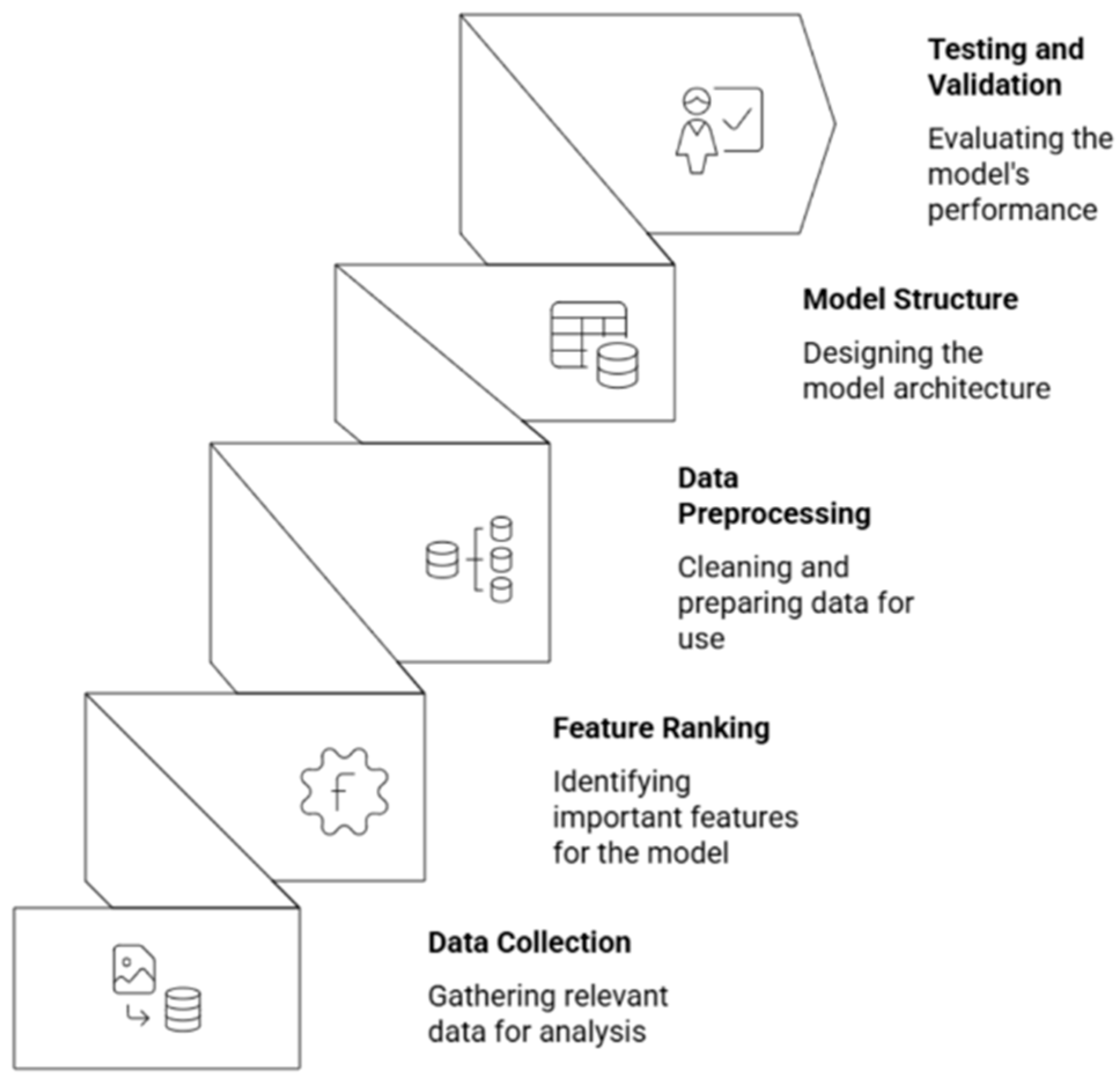
The current study is intended to answer the research questions in a systematic manner as indicated by the conceptual framework in Figure 1. The research approach focused on five large steps to ensure the research goal was accomplished.
Figure 1. Methodological framework.

2.1. Data Collection and Exploratory Analysis

A comprehensive dataset comprising 1648 standardized perforation tests conducted according to API 19B Section 1 protocols was assembled for this study. The dataset was compiled from consolidated industry laboratory test programs performed under standardized API procedures and subjected to systematic quality-control screening to remove duplicates, inconsistencies, and physically implausible records. The dataset encompasses nine key variables that characterize gun design, explosive properties, and completion parameters: gun diameter (GD), shot phasing (SP), perforation length (PL), temperature rating (TR), explosive weight (EXW), cement compressive strength (CCS), casing outer diameter (COD), casing nominal weight (CWT), and casing yield strength (CYS). The statistical properties of these parameters are summarized in Table 1, which presents the range, mean, and median values for each variable. The substantial variability observed across multiple parameters, spanning diverse reservoir conditions, completion configurations, and perforating gun specifications, necessitated the development of a generalized predictive framework capable of accommodating this heterogeneity. It is noted that CYS exhibits near-zero variance within this dataset, which is an inherent consequence of the standardized casing grades used in API 19B Section 1 testing. CYS was intentionally retained to preserve physical completeness and ensure framework extensibility to datasets with broader casing-grade variability; the SHAP analysis confirms that the model appropriately assigns negligible predictive weight to this feature under current data conditions.
Table 1. Exploratory statistical analysis of the database.
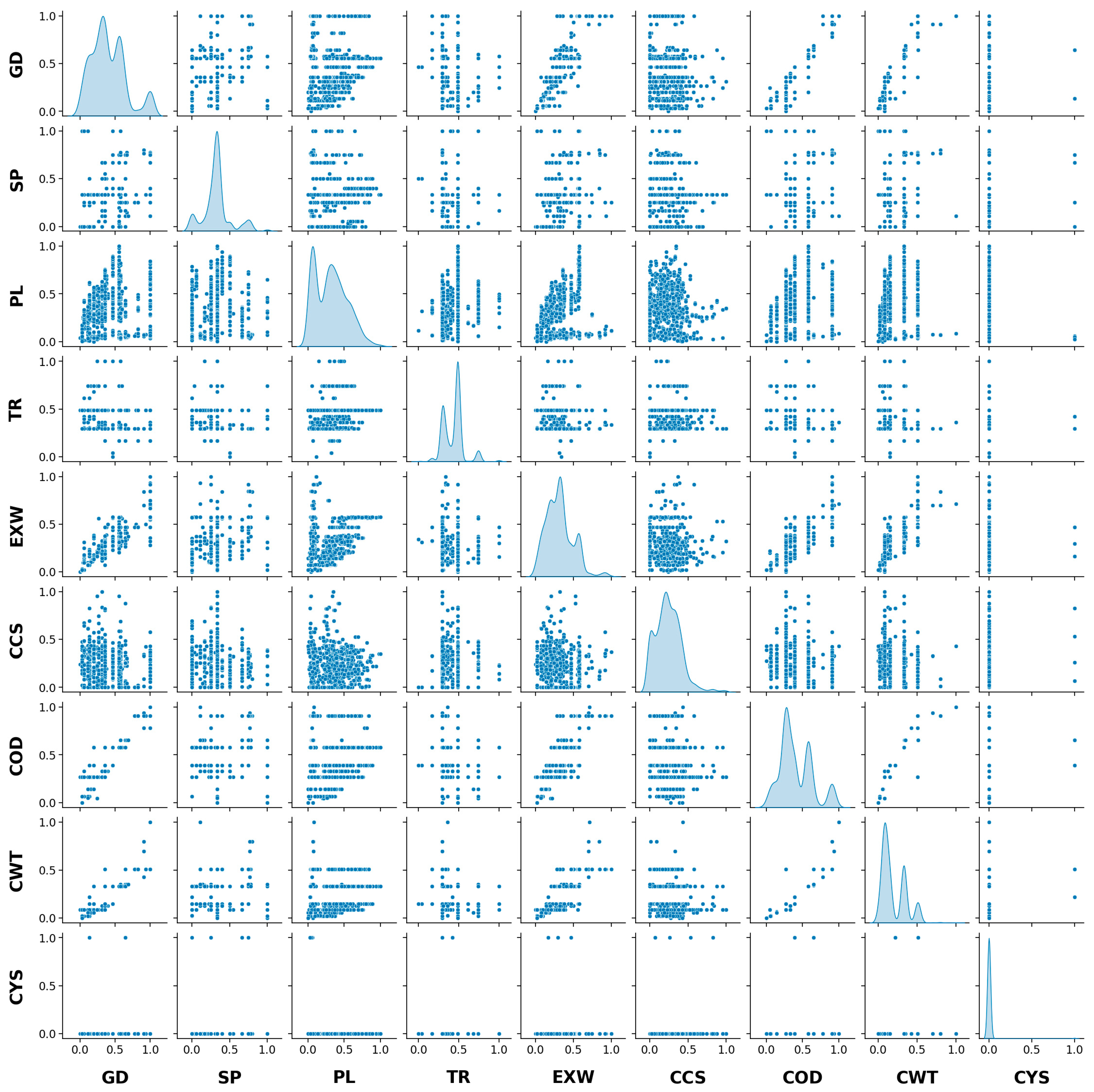
Figure 2 presents a comprehensive pair plot matrix that visualizes the multivariate structure of the dataset employed in this study. This visualization technique facilitates simultaneous examination of both univariate distributions (diagonal elements) and bivariate relationships (off-diagonal elements) among all predictor and response variables. The diagonal panels display kernel density estimates for each variable, revealing their respective distributional characteristics, while the off-diagonal scatter plots illustrate pairwise correlations and potential nonlinear dependencies. Notably, several variables exhibit moderate to strong correlations, suggesting multicollinearity considerations for linear modeling approaches. The target variable (PL) demonstrates varying degrees of correlation with different predictors, with the strongest linear relationships observed for EXW and TR. However, the scatter plots reveal substantial scatter around linear trends, indicating that nonlinear modeling techniques may be required to capture the complex functional relationships governing perforation penetration depth. This exploratory analysis informed subsequent feature engineering, model selection, and hyperparameter tuning strategies employed throughout this study.
Figure 2. Pair plot illustrating the dataset employed in PL prediction.
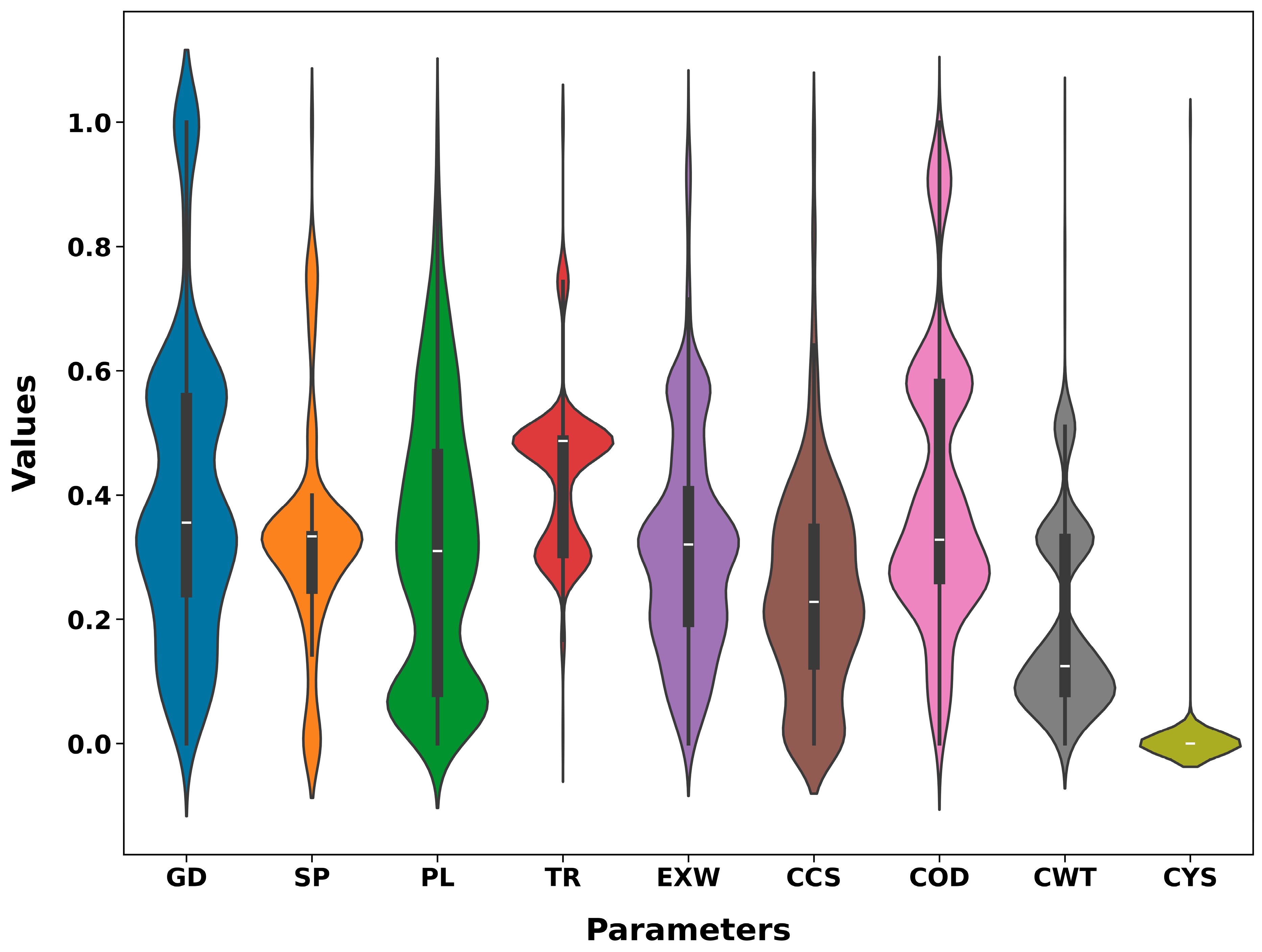
Figure 3 presents violin plots for all nine variables in the dataset following standardization, providing a comprehensive visualization of the distributional characteristics and data density across parameters. Violin plots combine the features of box plots and kernel density estimation, offering superior insight into the underlying data structure compared to traditional box-and-whisker representations. The width of each violin at any given value along the vertical axis represents the probability density of observations at that value, while the embedded box plot elements (white median marker, interquartile range depicted by the thick black bar, and whiskers extending to 1.5 times the IQR) provide standard descriptive statistics.
Figure 3. Distribution of each parameter shown with violin plots.
The distributional analysis reveals considerable heterogeneity across parameters. Several variables exhibit pronounced skewness, departing substantially from normality, as evidenced by asymmetric density profiles. Notably, CYS displays an extremely narrow, unimodal distribution concentrated near a single value, suggesting limited variability in casing yield strength specifications within the dataset. In contrast, parameters such as PL, GD, and EXW demonstrate broader, more dispersed distributions, indicating substantial variability in perforation length outcomes and gun design characteristics across the test population. Particularly interesting are the multimodal distributions observed for TR and SP, where distinct peaks in the density profiles suggest the presence of preferred operational configurations in industry practice (e.g., standard temperature ratings or common shot phasing angles). The bimodal character of COD and CWT similarly reflects the prevalence of discrete casing size specifications corresponding to standard API tubing and casing dimensions. These distributional insights informed subsequent data preprocessing decisions, including the application of appropriate scaling techniques and the consideration of nonlinear modeling approaches capable of capturing the complex, non-Gaussian structure inherent in the dataset.

2.2. Feature Ranking and Correlation Analysis

The predictive performance of machine learning algorithms is fundamentally dependent on the quality and relevance of input features, making feature importance assessment a critical component of model development. To comprehensively evaluate the relationships between predictor variables and the target variable (PL), as well as to identify potential multicollinearity among predictors, three distinct correlation coefficients were computed: Pearson’s r, Spearman’s ρ, and Kendall’s τ. Each metric captures different aspects of variable associations, providing complementary insights into the data structure.
Pearson’s correlation coefficient (r) quantifies the strength and direction of linear relationships between two continuous variables. It is defined as:
r x y = i = 1 n x i x y i y i = 1 n x i x 2 i = 1 n y i y 2 = n   x i y i   x i   y i n   x i 2   x i 2 n   y i 2   y i 2
where x and y are the two variables, n is the sample size, and x and y denote the respective means. Pearson’s r ranges from −1 to +1, where values approaching ± 1 indicate strong linear relationships (negative or positive), while values near zero suggest weak or absent linear associations. However, Pearson’s r is sensitive to outliers and assumes that relationships are linear, potentially underestimating associations that follow nonlinear patterns.
Spearman’s rank correlation coefficient (ρ) addresses this limitation by assessing monotonic relationships, both linear and nonlinear, through rank-based transformations. It is computed as:
ρ = c o v ( R ( x ) , R ( y ) ) σ R ( x ) σ R ( y ) = 1 6 i = 1 n d i 2 n n 2 1
where R ( x ) and R ( y ) are the rank variables of x and y , c o v ( R ( x ) , R ( y ) ) represents the covariance of ranks, σ R ( x ) and σ R ( y ) are the standard deviations of ranks, and d i denotes the difference between paired ranks. Spearman’s ρ equals ± 1 for perfect monotonic relationships and is robust to outliers, making it particularly suitable for datasets with nonGaussian distributions or nonlinear dependencies.
Kendall’s tau coefficient (τ) provides an alternative rank-based measure that evaluates concordance between paired observations:
τ = n c n d 1 2 n n 1 =   ( number   of   concordant   pairs )     ( number   of   discordant   pairs )   n 2
where n c represents the number of concordant pairs (observations ranked in the same order for both variables), n d represents discordant pairs (observations ranked in opposite orders), and n 2 is the total number of possible pairs. Kendall’s T typically yields smaller absolute values than Spearman’s ρ but offers superior statistical properties for hypothesis testing and is less sensitive to tied ranks, making it particularly appropriate for datasets with discrete or repeated values.
The rationale for employing all three correlation metrics stems from their complementary strengths: Pearson’s r efficiently captures linear relationships and is most powerful when parametric assumptions are satisfied; Spearman’s ρ detects both linear and nonlinear monotonic associations while maintaining robustness to outliers; and Kendall’s τ provides a probabilistic interpretation with better performance in small samples and data containing ties. Given the complex, potentially nonlinear nature of perforation physics and the presence of discrete parameter values in the dataset (as evidenced by Figure 3), this triangulated approach ensures comprehensive characterization of feature-target relationships.
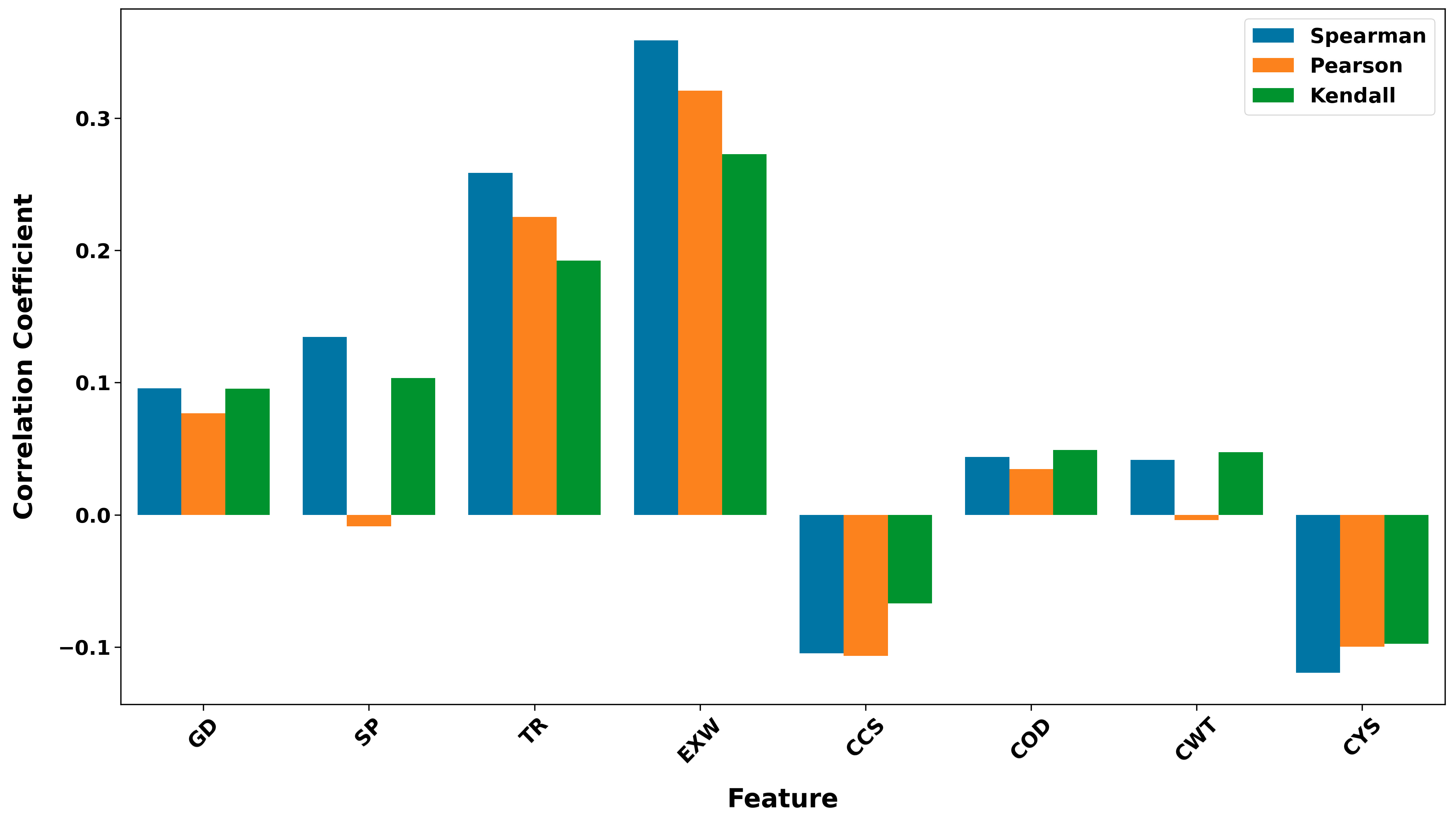
Figure 4 presents a comparative bar chart displaying all three correlation coefficients for each predictor variable with respect to PL. The analysis reveals that EXW, TR, and GD exhibit the strongest positive associations with perforation length across all three metrics, with EXW demonstrating the highest correlation (r = 0.321, ρ = 0.358, τ = 0.273). Temperature rating (TR) displays moderate positive correlation (r = 0.225, ρ = 0.258, τ = 0.192), suggesting that higher-temperature explosives possess enhanced energetic properties. Conversely, CYS, CCS, and COD exhibit weak to negligible correlations with PL, indicating that these completion parameters exert minimal direct influence on perforation depth within the range of conditions represented in the dataset. The close agreement among the three correlation measures for most variables suggests predominantly linear or monotonic relationships, though slight discrepancies for certain parameters (e.g., SP) indicate the presence of minor nonlinearities or outlier effects.
Figure 4. Relative importance of input features in PL prediction.
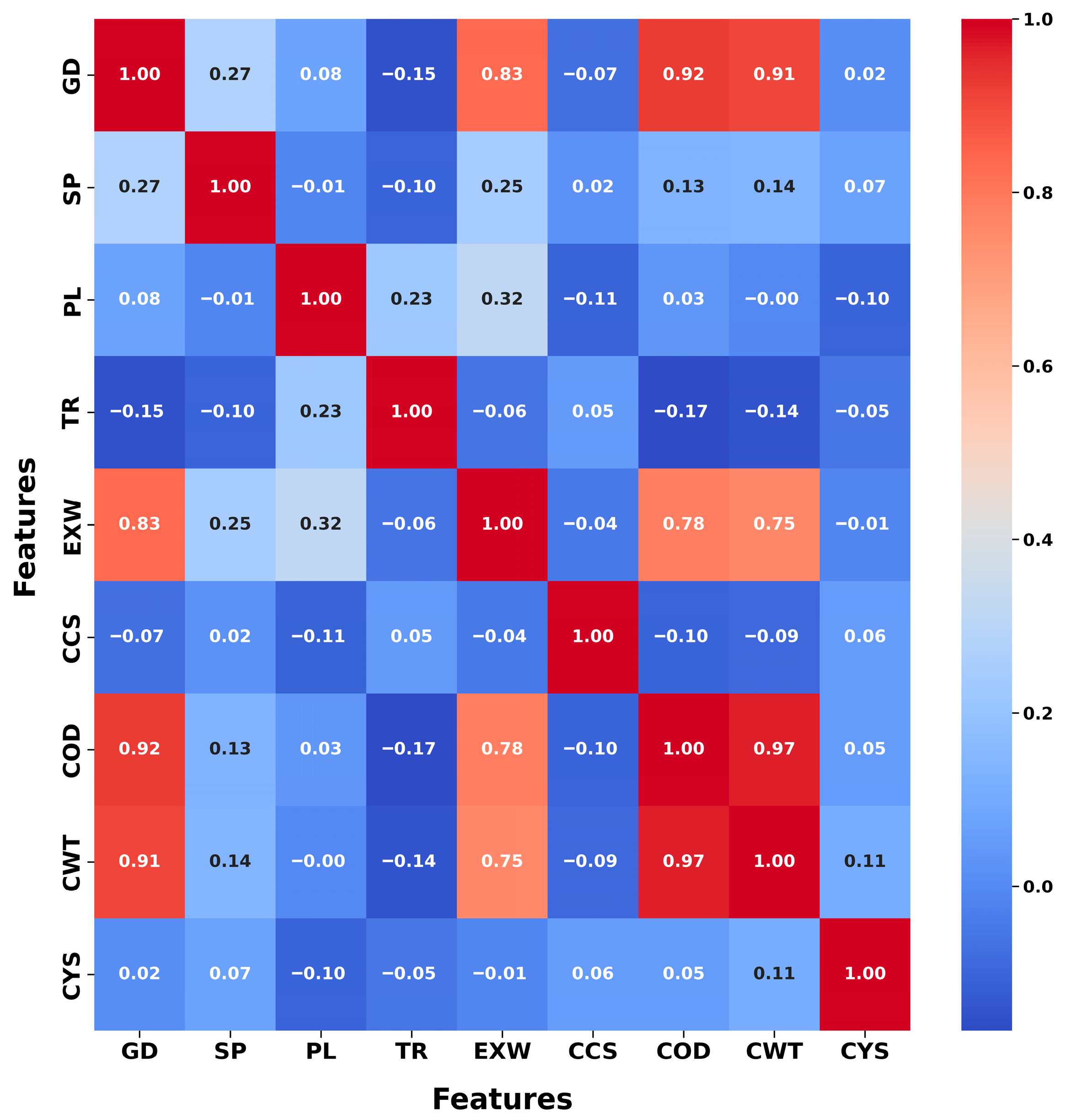
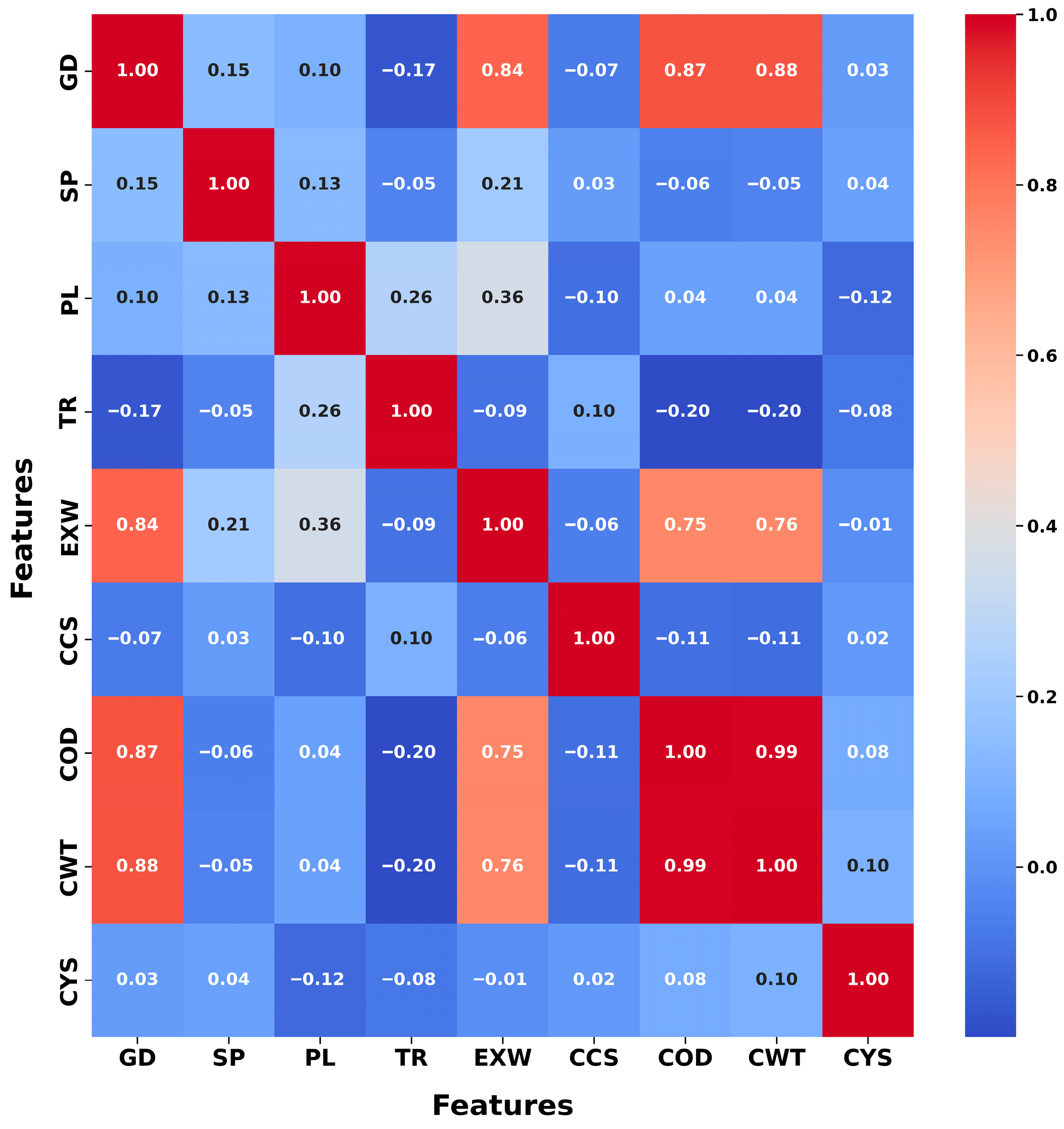
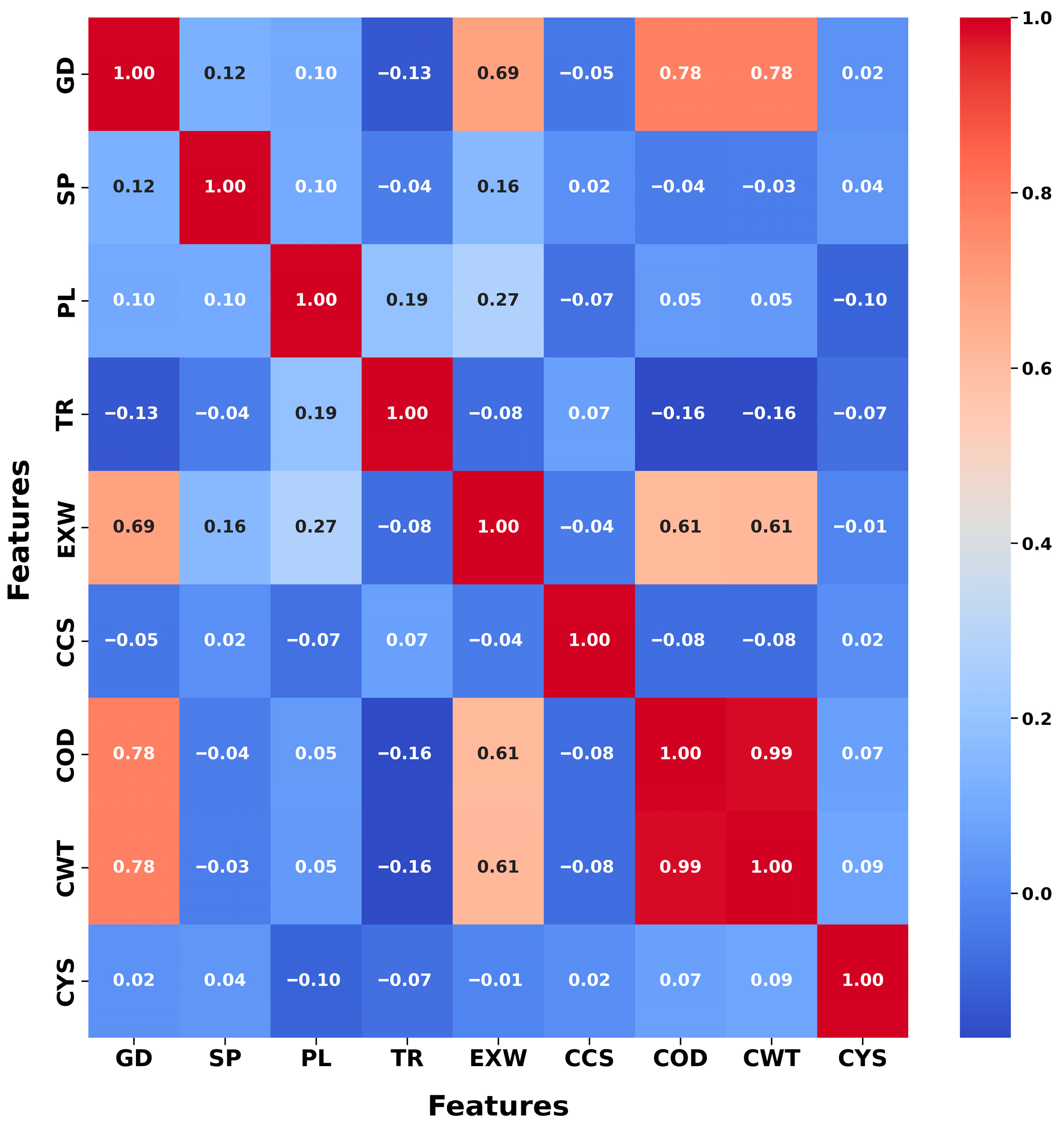
Figure 5, Figure 6 and Figure 7 present comprehensive correlation matrices computed using Pearson’s r, Spearman’s ρ, and Kendall’s τ, respectively, visualized as heatmaps with color intensity representing correlation strength. These matrices serve dual purposes: (1) identifying predictor-target relationships (PL row/column), and (2) revealing multicollinearity among predictor variables, which can adversely affect linear regression models. Strong intercorrelations are observed among casing parameters, with COD-CWT exhibiting correlations exceeding 0.96 across all three metrics, indicating near-perfect collinearity. Similarly, GD-EXW shows substantial positive correlation (r ≈ 0.83), reflecting the physical constraint that larger gun diameters accommodate greater explosive payloads. These multicollinearity patterns informed subsequent modeling decisions, particularly for linear methods (PLS, LASSO, Elastic Net) where regularization techniques were employed to mitigate adverse effects of correlated predictors. For tree-based algorithms (Random Forest, XGBoost), multicollinearity poses minimal concern due to their hierarchical splitting mechanisms. The consistency across all three correlation measures validates the robustness of these findings and confirms that the identified relationships are not artifacts of the chosen metric or distributional assumptions.
Figure 5. Pearson’s correlation coefficients for all dataset features used in PL prediction.
Figure 6. Spearman’s correlation coefficients for all dataset features used in PL prediction.
Figure 7. Kendall’s correlation coefficients for all dataset features used in PL prediction.

2.3. Data Preprocessing

The data preprocessing workflow comprised several systematic stages designed to ensure data quality and optimize model performance. Initially, a comprehensive data validation process was conducted to identify and eliminate erroneous entries from the assembled dataset. Subsequently, missing data were addressed through two complementary strategies. The first one is removal of observations containing missing values when the proportion of incomplete cases was negligible, and the second one is imputation of missing values based on domain expertise and physical constraints inherent to perforation testing protocols when data deletion would result in substantial information loss.
Following data cleansing procedures, outlier detection and treatment were performed to identify observations exhibiting extreme deviations from the central tendency that could disproportionately influence model training. Outliers were evaluated on a case-by-case basis to distinguish between measurement errors requiring removal and legitimate extreme values representing rare operational conditions that should be retained.
The final preprocessing stage involved feature scaling through standardization, a critical transformation for machine learning algorithms sensitive to the magnitude and scale of input variables. Standardization ensures that all features contribute proportionally to model training, preventing variables with larger numeric ranges from dominating the optimization process and mitigating the adverse effects of scale-dependent outliers. Among various normalization techniques available in the literature, Z-score standardization was selected for this study due to its statistical rigor, widespread adoption, and suitability for comparative modeling. Z-score standardization was applied uniformly across all models for methodological consistency; however, it does not correct skewed or multi-modal feature distributions, which may disproportionately affect distance-based algorithms while having minimal impact on tree-based ensemble methods.
Z-score standardization transforms each feature to have zero mean and unit variance, converting raw measurements to standardized scores that represent the number of standard deviations from the mean. The transformation is mathematically expressed as:
z = x μ σ
where z represents the standardized value, x denotes the original observation, μ is the population mean (or sample mean x in practice), and σ represents the population standard deviation (or sample standard deviation s in practice). This standardization procedure was systematically applied to all numerical features in the dataset, ensuring that the preprocessed data possessed comparable scales across all predictor variables prior to model training and evaluation. Although SP is expressed in degrees, it functions as a discrete, bounded ordinal design parameter in API 19B testing, not a periodic angular variable. Since 0° and 180° represent physically distinct configurations with no wrap-around equivalence, cyclic encoding is physically inappropriate, and Z-score standardization correctly preserves the ordinal structure of SP.

2.4. Models Structure

Ten distinct machine learning regression models were developed and systematically evaluated using the R programming environment (version 4.5.2) to predict perforation length from the preprocessed dataset. The selection of this diverse ensemble of algorithms was strategically motivated by the complex, potentially nonlinear nature of perforation physics, which involves interactions between explosive dynamics, cement, and wellbore conditions. Different algorithms possess complementary strengths: linear methods excel at interpretability and computational efficiency, tree-based methods naturally capture feature interactions and nonlinearities, kernel-based approaches can model complex decision boundaries, and ensemble techniques leverage multiple weak learners to achieve superior generalization. This multi-model approach provides robust validation, as convergent results across diverse algorithmic families strengthen confidence in the identified relationships between input parameters and perforation length.
The evaluated models span five broad categories: linear regression techniques including Partial Least Squares (PLS), Least Absolute Shrinkage and Selection Operator (LASSO), and Elastic Net; tree-based algorithms comprising Random Forest (RF), Gradient Boosting (GB), Adaptive Boosting (AdaBoost), and Extreme Gradient Boosting (XGBoost); instance-based learning represented by K-Nearest Neighbors (kNN); kernel methods exemplified by Support Vector Regression (SVR); and neural network approaches including Multi-Layer Perceptron (MLP). These algorithms were selected to span linear, tree-based ensemble, instance-based, kernel-based, and neural-network paradigms, enabling a systematic comparison of modeling strategies with varying levels of complexity, interpretability, and nonlinear learning capability relevant to engineering applications. Each model offers unique capabilities for capturing the functional relationship between perforating gun parameters, completion characteristics, and resultant penetration depth.
All models were rigorously optimized through repeated k-fold cross-validation with k equal to 5 and 3 repetitions to ensure robust hyperparameter selection and minimize overfitting risk. Hyperparameter tuning was performed using a grid search strategy over predefined, literature-informed parameter ranges, with cross-validated root mean squared error (RMSE) serving as the optimization criterion. This methodical approach ensured that inter-model performance comparisons reflected in Table 2 represented genuine algorithmic differences rather than suboptimal parameterization artifacts. Grid search was selected for its transparency, reproducibility, and suitability for the moderate-dimensional hyperparameter spaces considered; however, more advanced frameworks such as Bayesian optimization may provide greater efficiency and are recommended for future large-scale or higher-dimensional studies.
Table 2. Performance comparison of ten machine learning regression models for PL prediction using optimized hyperparameters. Models were evaluated through repeated k-fold cross-validation on the API 19B dataset. XGBoost achieved the highest predictive accuracy (R2 = 0.939, RMSE = 3.175 inches), followed by Gradient Boosting and kNN, while linear models exhibited comparatively lower performance.
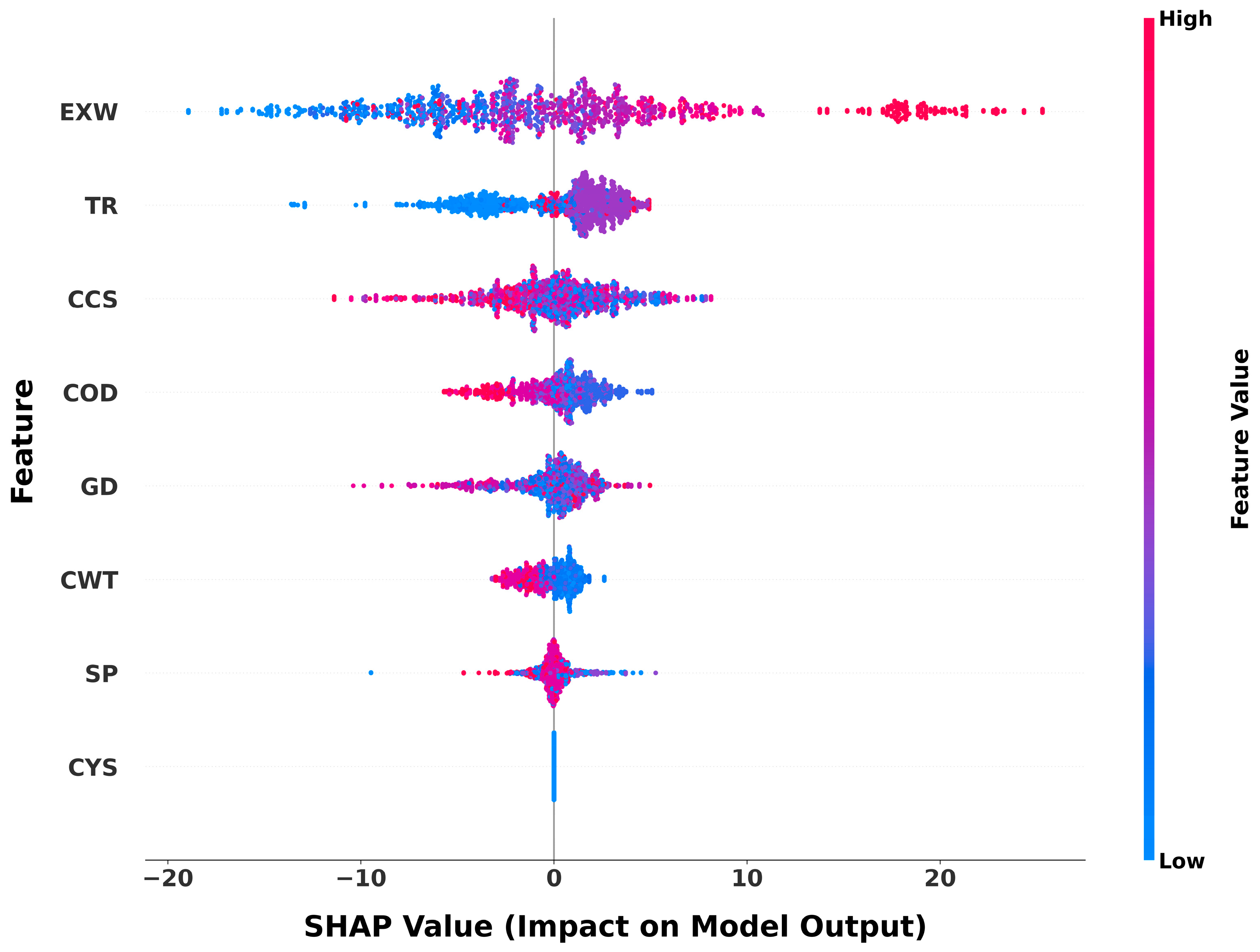
The SHAP summary plot (Figure 8) provides deeper mechanistic insights, demonstrating that higher explosive weight values consistently drive positive predictions toward increased perforation length, while elevated cement compressive strength predominantly reduces penetration depth. Temperature rating and shot phasing exhibit bidirectional effects depending on their magnitudes, suggesting complex nonlinear interactions. Gun diameter and casing properties show concentrated distributions near zero SHAP values, confirming their limited individual contributions while potentially participating in higher-order feature interactions captured by the ensemble model.
Figure 8. SHAP summary plot depicting the directional impact of each feature on perforation length predictions. Each point represents a single observation, with horizontal position indicating SHAP value magnitude and color denoting feature value magnitude.

3. Results and Discussion

3.1. Model Testing and Validation

A rigorous blind validation protocol was implemented to provide the most stringent assessment of model performance. Blind dataset validation represents the gold standard for evaluating machine learning models in practical applications, as it eliminates all potential sources of data leakage, selection bias, and overfitting artifacts that can artificially inflate apparent performance. The blind validation dataset (Table 3) comprised 330 independent API 19B perforation tests that were completely isolated from the model development process, with no overlap in specific gun configurations, casing specifications, cement properties, or test conditions represented in the training data. This strategic selection ensured that the validation set encompassed diverse operational scenarios spanning the full range of industry-relevant perforating conditions, thereby providing the most realistic assessment of model performance in field applications.
Table 3. Descriptive statistical analysis of the blind validation dataset comprising 330 API 19B perforation tests.
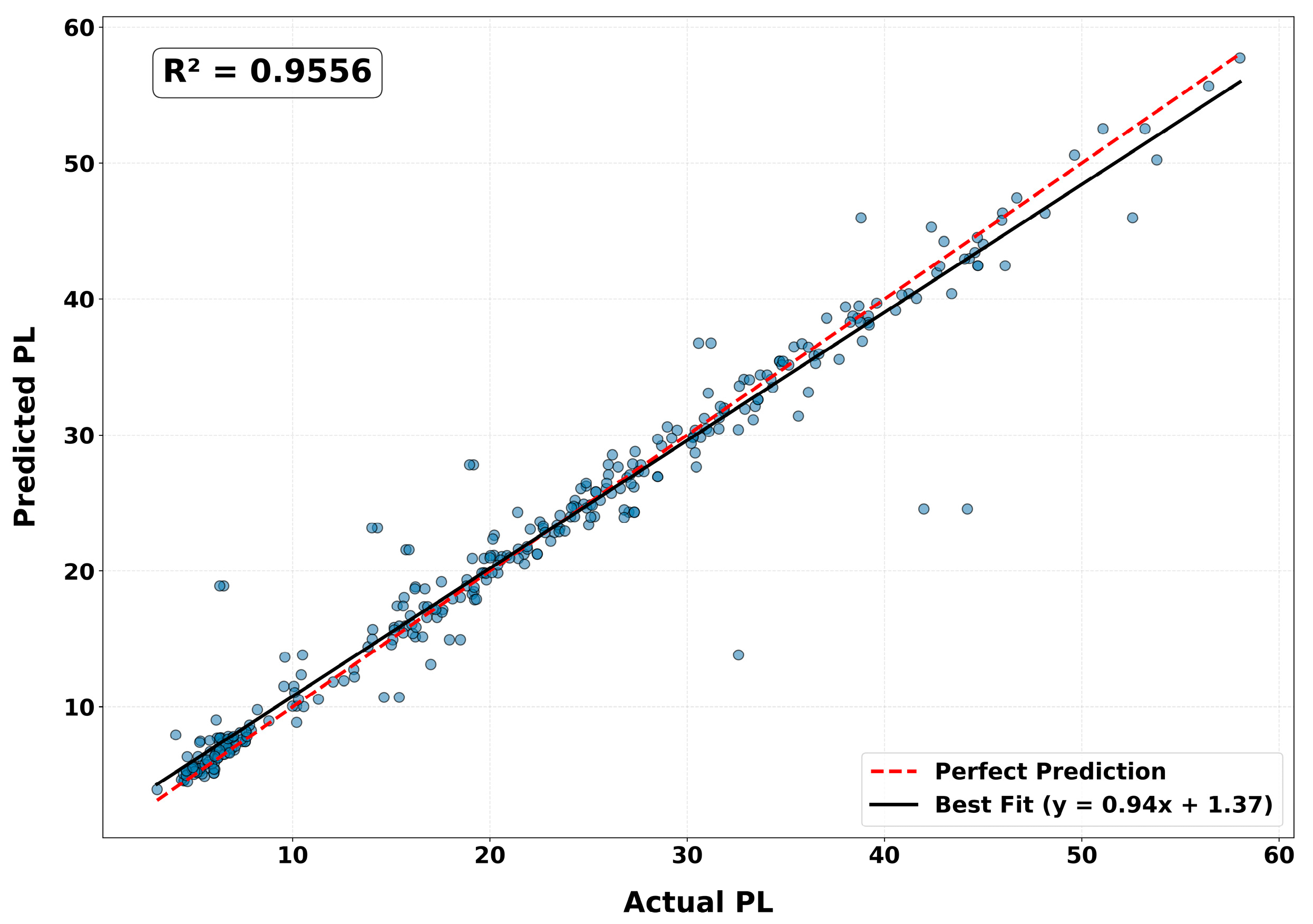
The results of blind validation, presented comprehensively in Table 4 and Figure 9, Figure 10, Figure 11, Figure 12, Figure 13 and Figure 14, confirm the robustness and reliability of the developed XGBoost model. The model achieved MSE of 7.329, RMSE of 2.707 inches, MAE of 1.348 inches, and R2 of 0.956 on the blind test dataset, demonstrating that predictive performance remained virtually unchanged compared to cross-validation results. This consistency validates that the model successfully learned generalizable physical relationships rather than memorizing training-specific patterns. A direct comparison with published empirical correlations was not pursued, as such correlations are inherently local models calibrated to specific conditions and cannot be reliably applied across the full design space of the present dataset. Instead, the linear models evaluated in Table 2 (PLS, LASSO, Elastic Net; R2 ≈ 0.377) serve as the most appropriate and scientifically rigorous internal baseline, demonstrating the substantial predictive advantage of the proposed framework. It is noted that the blind validation R2 (0.956) marginally exceeds the cross-validation average (0.939), which is statistically plausible as cross-validation averages inherently reflect greater variability across multiple challenging folds, while a single fixed holdout set can yield slightly higher R2 values due to sampling variation. The consistency of RMSE and MAE across both evaluations confirms the absence of data leakage or overfitting.
Table 4. Performance metrics of the developed XGBoost model on the independent blind test dataset comprising 330 API 19B perforation tests, demonstrating exceptional predictive accuracy and generalization capability.
Figure 9. Cross-plot of predicted versus actual perforation length for the XGBoost model on the blind test dataset, illustrating strong agreement between model predictions and experimental measurements with minimal systematic bias.
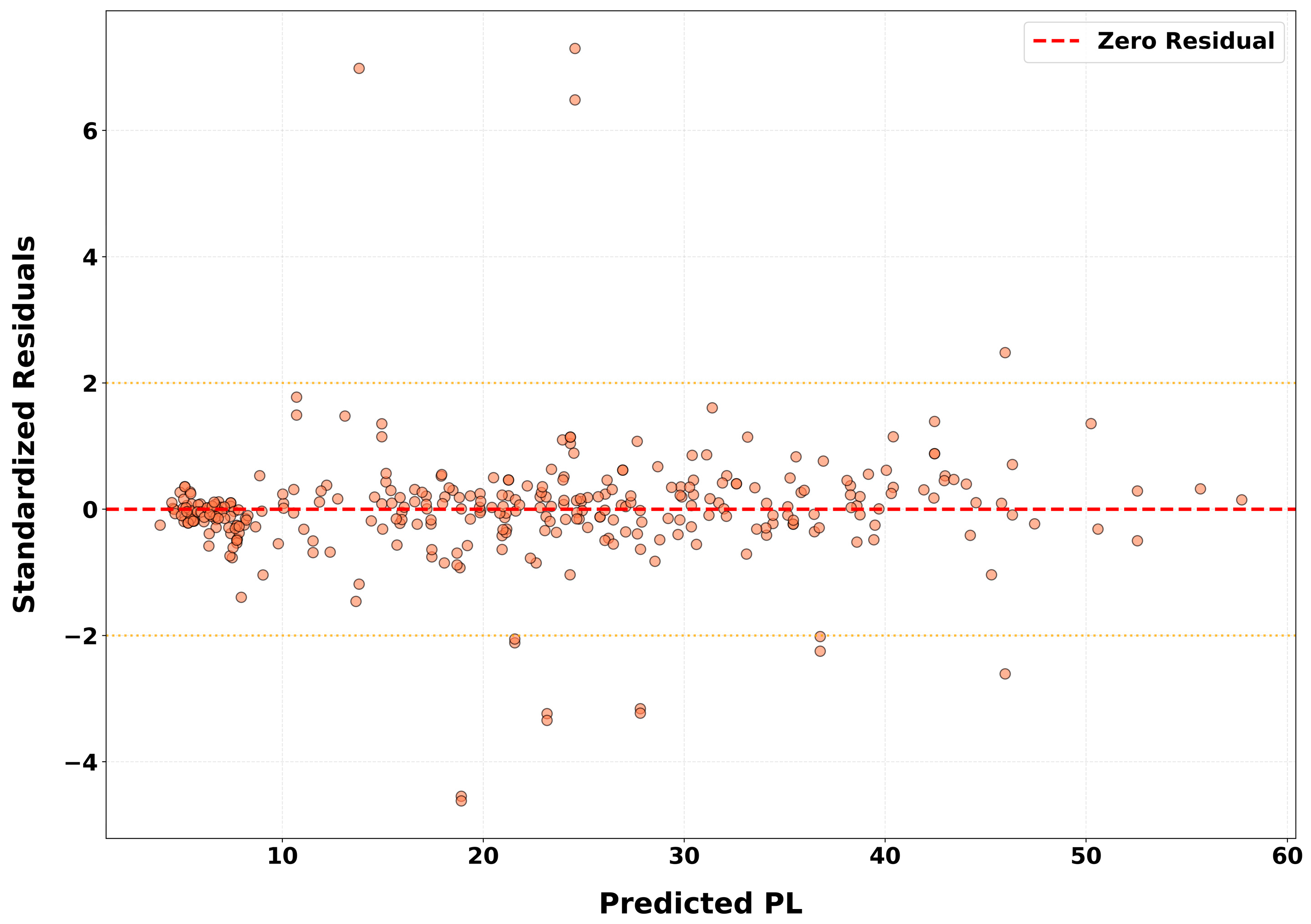
Figure 10. Standardized residuals plotted against predicted perforation length values, demonstrating homoscedastic error distribution with limited outliers and confirming model reliability across the prediction range.
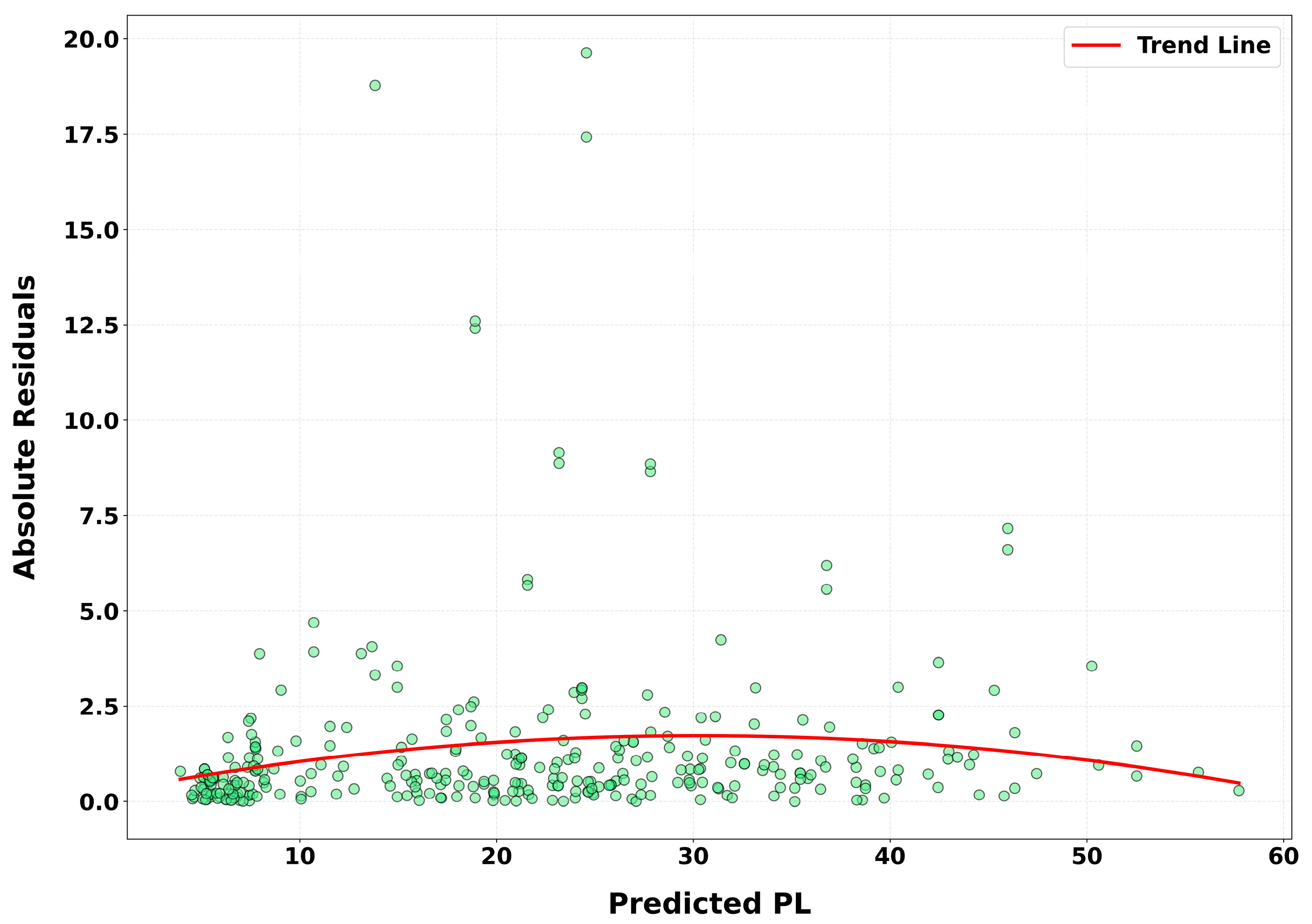
Figure 11. Absolute residuals versus predicted perforation length, revealing consistent prediction error magnitude across all penetration depths with mean absolute error of 1.348 inches.
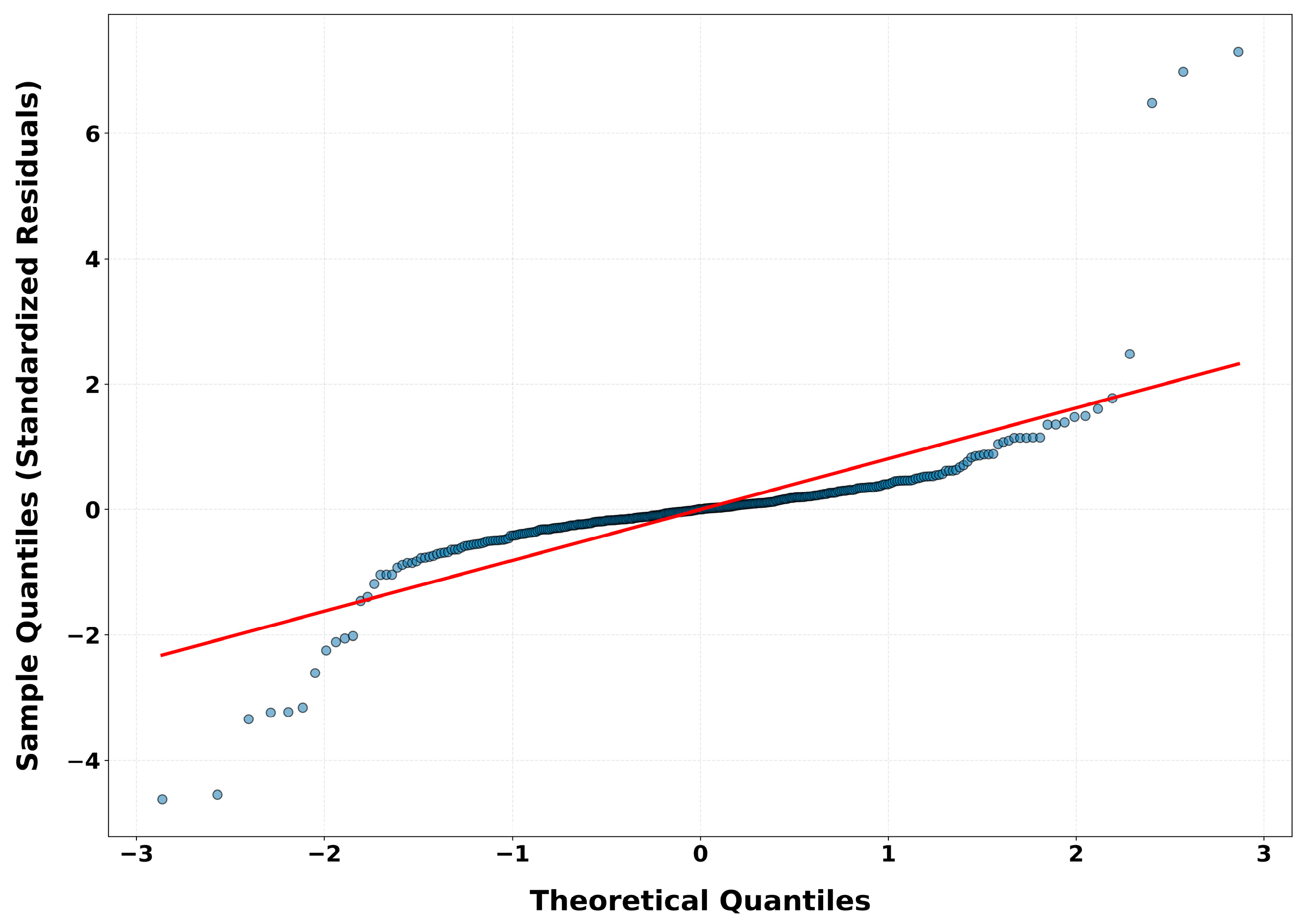
Figure 12. Quantile-quantile plot comparing the distribution of standardized residuals (blue dots) against the theoretical normal distribution (red line), indicating approximate normality with slight deviations in the extreme tails.
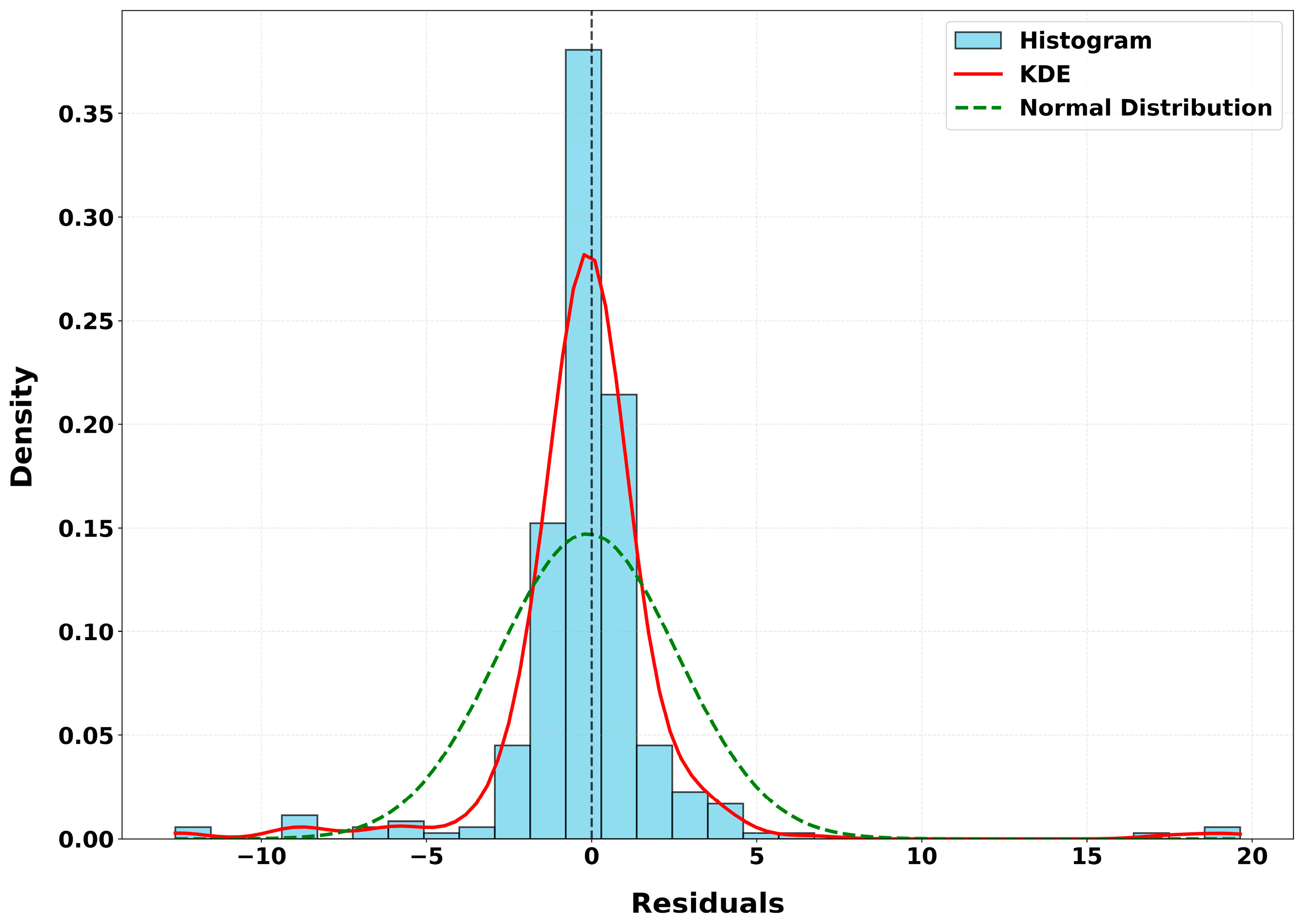
Figure 13. Histogram and kernel density estimation of residual distribution, exhibiting near-normal distribution centered at zero with slight positive skewness, confirming unbiased predictions.
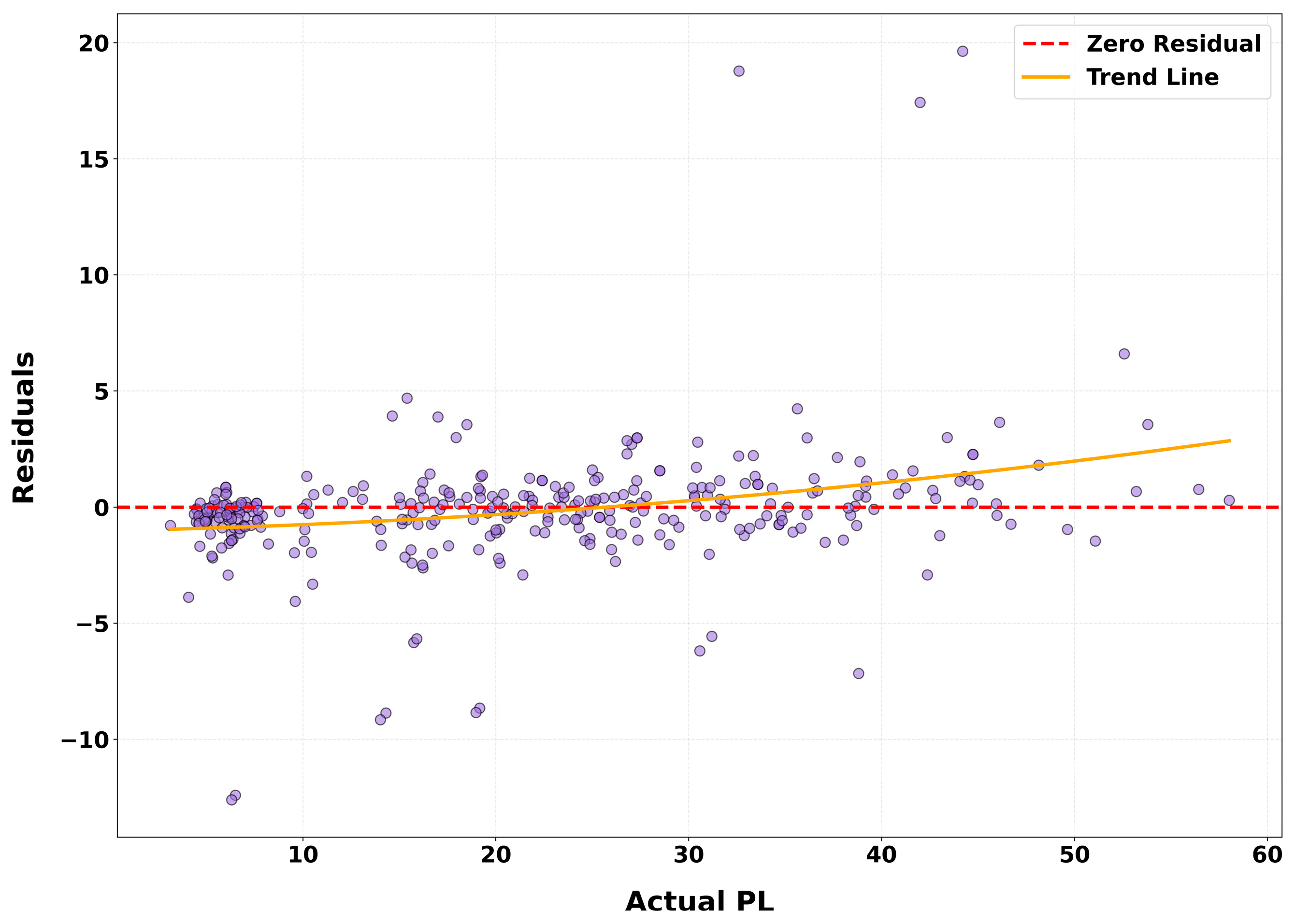
Figure 14. Residuals plotted against actual perforation length values to identify systematic prediction bias, showing random scatter around zero with no discernible patterns across the measurement range.
Figure 9 presents the fundamental diagnostic plot comparing predicted perforation length against actual measured values for all 330 blind validation tests. The strong linear agreement between predictions and observations, with data points tightly clustered along the ideal forty-five-degree identity line, confirms excellent model calibration across the entire range of perforation depths from approximately 3.1 to 58 inches. The regression equation indicates minimal systematic bias, with an intercept near zero and slope approaching unity, demonstrating that the model produces unbiased predictions without consistent over- or underestimation tendencies. The high coefficient of determination quantitatively confirms that the model explains over ninety-five percent of variance in perforation length, a remarkable achievement given the complex multiphysics nature of shaped charge penetration.
Figure 10 examines standardized residuals plotted against predicted values, serving as a critical diagnostic for identifying heteroscedasticity, nonlinear patterns, or systematic prediction bias. The residuals exhibit random scatter around zero across the full prediction range, with no discernible trends, funneling, or curvature, confirming that model assumptions are satisfied and prediction errors are independent of PL. The plot identifies 12 observations exceeding two standard deviations from the mean, representing approximately 3.64% of the validation dataset, which falls within expected ranges for normally distributed errors and likely reflects genuine experimental variability or unusual test conditions rather than model deficiencies.
Figure 11 displays absolute residuals against predicted values, providing complementary visualization of prediction error magnitude. The consistently low error levels across all perforation depths, with most absolute errors concentrated below three inches, demonstrate reliable performance regardless of whether predictions target shallow or deep penetrations. The mean absolute error of 1.348 inches represents exceptional accuracy for perforation length prediction, considering typical measurement uncertainties and the inherent variability in perforation testing.
Figure 12 and Figure 13 jointly assess the normality assumption for residuals, a key requirement for reliable statistical inference and prediction interval construction. The quantile–quantile plot in Figure 12 compares the empirical distribution of standardized residuals against theoretical quantiles from a standard normal distribution. The close alignment of observed quantiles with the diagonal reference line throughout the central portion of the distribution confirms approximate normality for the majority of residuals. Minor deviations in the extreme upper tail, where several observations exceed three standard deviations, indicate slight positive skewness, consistent with occasional large overpredictions. The residual distribution histogram and overlaid kernel density estimate in Figure 13 corroborate these findings, revealing a unimodal, approximately symmetric distribution centered near zero. While perfect normality is rarely achieved with real-world data, these diagnostics confirm that residual distribution is sufficiently normal for practical modeling purposes and that prediction intervals derived from normal theory will provide reasonable uncertainty quantification.
Finally, Figure 14 plots raw residuals against actual PL values to detect any systematic relationship between prediction errors and the true target values. The random scatter of points around the zero reference line, with no apparent patterns, trends, or clustering, confirms that prediction errors are independent of actual PL. This independence is crucial, as systematic variation in residuals with true values would indicate model miscalibration or missing predictive features. The relatively symmetric distribution of positive and negative residuals further validates the absence of consistent over- or under-prediction bias.
Collectively, these comprehensive diagnostic analyses demonstrate that the developed XGBoost model satisfies all key statistical assumptions, exhibits no systematic biases or pathological behaviors, and maintains exceptional predictive accuracy on completely independent data spanning diverse perforating conditions. The blind validation results provide strong evidence that the model has successfully captured the fundamental physical relationships governing shaped charge penetration and can be confidently deployed for perforation length prediction in field applications.

3.2. Limitations and Practical Considerations

Although the created XGBoost model proves to have outstanding predictive accuracy, there are several limitations that should be considered in terms of practical application. The predictions of the model are limited to the range of the operational parameters in the training dataset, as illustrated in Table 1. The extrapolation to any other boundaries, especially when gun diameter is not 1.375–7 inches, explosive weight is not 1.8–66.4 g, or cement compressive strength is over 10,905 psi, can provide inaccurate predictions and cannot be used without further validation.
The dataset comprises only API 19B Section 1 surface tests under standardized conditions. The model therefore fails to explicitly consider crucial downhole parameters such as the effective stress changes, pore pressure changes, the heterogeneity of the formation, the wellbore-fluid interactions, or dynamic underbalance forces that play a major role in the actual field performance. Accordingly, the model predicts standardized surface-test performance, and extension to true downhole penetration requires integration with stress-dependent correction factors or retraining using confined-core, API 19B Sections 4 and 5, or field-calibrated datasets. Although the model is effective in the prediction of the penetration depth under controlled laboratory conditions, it has to be carefully applied in the case of downhole application by taking note of these extra complexities.
Moreover, the model will be sensitive to inaccurate input parameters. Any uncertainties in explosive weight, cement properties, or casing specifications will be propagated in predictions, which may impact the accuracy. Appropriate quality control should be exercised by the users to guarantee the reliability of input data.
Even with these shortcomings, the model has considerable utility in perforation design, comparison of charge configurations, and screening of completion options quickly, and it is both time- and cost-saving over large-scale laboratory test programs and still has high predictive power when applied to well completion problems.

4. Conclusions and Future Work

This study successfully developed and validated a robust machine learning framework for predicting perforation length in oil and gas well completions using a comprehensive dataset of 1648 real API 19B laboratory tests. The dataset was strategically partitioned into 1318 tests for model training and hyperparameter optimization, with 330 independent tests completely isolated for rigorous blind validation to ensure unbiased performance assessment. Ten distinct regression algorithms spanning linear methods, tree-based ensembles, kernel methods, and instance-based learning approaches were systematically evaluated through rigorous hyperparameter optimization and cross-validation protocols. XGBoost emerged as the optimal model, achieving exceptional predictive accuracy with a root mean squared error of 2.707 inches, a mean absolute error of 1.348 inches, and a coefficient of determination of 0.956 on the blind validation dataset comprising tests with no overlap in gun configurations, casing specifications, or cement properties from the training set.
The analysis of the importance of features based on SHAP values revealed explosive weight as the primary predictor, then temperature rating and cement compressive strength with intermediate impact. Gun diameter and casing outer diameter were found to have a contribution, and casing parameters had little influence. Increased explosive weight is always the most effective in increasing penetration depth, and increased cement compressive strength consistently decreases penetration depth, which is the basic physics of perforation.
Extensive diagnostic analyses, including residual plots, normality assessments, and homoscedasticity evaluations, confirmed that the developed model satisfies all key statistical assumptions without systematic biases or pathological behaviors. The model’s consistent performance across diverse gun configurations, casing specifications, and cement properties demonstrates genuine generalization capability rather than memorization of training-specific patterns.
The developed XGBoost model provides a practical, accurate, and cost-effective alternative to expensive and time-consuming API 19B tests while overcoming the limitations of empirical correlations and analytical models. This framework can be readily integrated into perforation design software to enable real-time optimization of completion parameters, ultimately enhancing well productivity and economic returns in hydrocarbon production operations. In this context, “real-time” refers exclusively to instantaneous model inference during completion planning and design workflows, rather than live operational monitoring or reliance on real-time downhole measurements.
To improve the use of the models, a future study should include downhole stress conditions, pore pressure effects, and dynamic underbalance parameters. Incorporation of API 19B Sections 4 and 5 information, extrapolation to other formation lithologies, and the creation of uncertainty models would further enhance the predictive ability to apply in the field.

Author Contributions

Conceptualization, S.N.; Methodology, M.A.; Validation, B.M.; Formal analysis, O.E. and N.S.; Investigation, O.E.; Data curation, S.N.; Writing—original draft, S.N., M.A. and B.M.; Writing—review & editing, R.M.; Visualization, N.S.; Supervision, R.M.; Project administration, R.M. All authors have read and agreed to the published version of the manuscript.

Funding

This research received no external funding.

Institutional Review Board Statement

Not applicable.

Data Availability Statement

The original contributions presented in this study are included in the article. Further inquiries can be directed to the corresponding authors.

Conflicts of Interest

The authors declare no conflict of interest.

Nomenclature

αMixing parameter in Elastic Net regression (dimensionless)
λRegularization parameter (dimensionless)
μPopulation mean
ρSpearman’s rank correlation coefficient (dimensionless)
σPopulation standard deviation
τKendall’s tau correlation coefficient (dimensionless)
dDifference between paired ranks
kNumber of nearest neighbors in kNN algorithm
nSample size
rPearson’s correlation coefficient (dimensionless)
R2Coefficient of determination (dimensionless)
sSample standard deviation
xIndependent variable or predictor
x Sample mean
yDependent variable or response
y Sample mean of response variable
zStandardized score (z-score)
AdaBoostAdaptive Boosting
APIAmerican Petroleum Institute
CCSCement Compressive Strength
CODCasing Outer Diameter
CWTCasing Nominal Weight
CYSCasing Yield Strength
DLDeep Learning
DTDecision Tree
DUBDynamic Underbalance
EXWExplosive Weight
GBGradient Boosting
GDGun Diameter
HP/HTHigh-Pressure/High-Temperature
IQRInterquartile Range
kNNk-Nearest Neighbors
LASSOLeast Absolute Shrinkage and Selection Operator
MAEMean Absolute Error
MLMachine Learning
MLPMulti-Layer Perceptron Regressor
MSEMean Squared Error
PLPerforation Length
PLSPartial Least Squares
Q-QQuantile–Quantile
RBFRadial Basis Function
RFRandom Forest
RMSERoot Mean Squared Error
SDShot Density
SHAPShapley Additive Explanations
SPShot Phasing
SVRSupport Vector Regression
TRTemperature Rating
UCSUnconfined Compressive Strength
XGBoostExtreme Gradient Boosting
Units
Casing Outer Diameterinches
Casing Nominal Weightlb/ft
Casing Yield Strengthpsi
Cement Compressive Strengthpsi
Explosive Weightgrams (g)
Gun Diameterinches
Perforation Lengthinches
Shot Densityshots/ft
Shot Phasingdegrees (°)
Temperature Ratingdegrees Fahrenheit (°F)

References

  1. Snider, P.; Rindels, C.; Folse, K.; Hardesty, J.; Clark, N. Perforating System Selection for Optimum Well Inflow Performance, Alba Field, Equatorial Guinea. In SPE Annual Technical Conference and Exhibition, Denver, CO, USA, 5–8 October 2003; SPE: Richardson, TX, USA, 2003; p. SPE-84420-MS. [Google Scholar] [CrossRef]
  2. Zuliani, P.C.M.; Ulsen, C.; Policarpo, N.A. Well Perforating—More than Reservoir Connection. Upstream Oil Gas Technol. 2023, 11, 100088. [Google Scholar] [CrossRef]
  3. Alrashed, A.A.; Batarseh, S.I.; Alharith, A.M.; Alhamad, L.A. The Evolution of Perforation Techniques Over Time: An Overview. In SPE Conference at Oman Petroleum & Energy Show, Muscat, Oman, 12–14 May 2025; SPE: Richardson, TX, USA, 2025; p. D012S052R004. [Google Scholar] [CrossRef]
  4. Ansari, M.; Ijaz, M.; Ali Anjum, Z.; Inam, S.; Ul Hussnain, M.S.; Ullah, R.; Shafee, I.; Zia, F.; Atiq, I. Comparative Analysis of Well Deliverabilities Through Different Perforation Strategies in a Mature Field, Deployment of Completion Conveyed Underbalance Perforation—A Case Study. In SPE 2023 Symposium Compilation, Virtual, 19 December 2023; SPE: Richardson, TX, USA, 2023; p. D011S001R005. [Google Scholar] [CrossRef]
  5. Luan, Z.; Zhong, L.; Feng, W.; Li, J.; Gao, Z.; Li, J. A Review of Failures and Malfunctions in Hydraulic Sandblasting Perforation Guns. Appl. Sci. 2025, 15, 4892. [Google Scholar] [CrossRef]
  6. Allison, S.; Löhken, J.; Nelis, L.M.; Djayapertapa, L.; Byrne, M.; Watson, K.; Clarke, A. Understanding Perforation Geometry Influence on Flow Performance Using CFD. In SPE European Formation Damage Conference and Exhibition, Budapest, Hungary, 3–5 June 2015; SPE: Richardson, TX, USA, 2015; p. SPE-174194-MS. [Google Scholar] [CrossRef]
  7. Baumann, C.; Brinsden, M. Perforating Gunshock Loads: Simulation and Optimization in 2014. In IADC/SPE Asia Pacific Drilling Technology Conference, Bangkok, Thailand, 25–27 August 2014; SPE: Richardson, TX, USA, 2014; p. SPE-170552-MS. [Google Scholar] [CrossRef]
  8. Sedlacek, A.; Acosta, J.; Fernandez, R.; Da Silva, G.R.; Da Silva, A.L. Large Perforating Gun System Deployed Using Electric Line: Single 41 m Run of 7 in., 12 Spf Deep Penetration Charge. In SPE Annual Technical Conference and Exhibition, Virtual, 26–29 October 2020; SPE: Richardson, TX, USA, 2020; p. D021S003R002. [Google Scholar] [CrossRef]
  9. Elkhatib, O.; Abdallah, M.; Elnaggar, H.; Hanamertani, A.S.; Al-Shalabi, E.; Ahmed, S. Huff-N-Puff Foam Injection in Naturally Fractured Carbonates Using Supercritical CO2. In SPE Improved Oil Recovery Conference, Tulsa, OK, USA, 22–25 April 2024; SPE: Richardson, TX, USA, 2024; p. D021S001R003. [Google Scholar] [CrossRef]
  10. Baumann, C.; Lazaro, A.; Valdivia, P.; Williams, H.; Stecchini, P. Perforating Gunshock Loads—Prediction and Mitigation. In SPE/IADC Drilling Conference, Amsterdam, The Netherlands, 5–7 March 2013; SPE: Richardson, TX, USA, 2013. [Google Scholar] [CrossRef]
  11. Walton, I.C.; Johnson, A.B.; Behrmann, L.A.; Atwood, D.C. Laboratory Experiments Provide New Insights into Underbalanced Perforating. In SPE Annual Technical Conference and Exhibition, New Orleans, LA, USA, 30 September–3 October 2001; SPE: Richardson, TX, USA, 2001; p. SPE-71642-MS. [Google Scholar] [CrossRef]
  12. Grove, B.; Manning, D. Shaped Charge Perforation Depth at Full Downhole Conditions: New Understandings. In SPE Annual Technical Conference and Exhibition, Dallas, TX, USA, 24–26 September 2018; SPE: Richardson, TX, USA, 2018; p. D021S018R005. [Google Scholar] [CrossRef]
  13. Grove, B.; Heiland, J.; Walton, I.; Atwood, D. New Effective-Stress Law for Predicting Perforation Depth at Downhole Conditions. SPE Drill. Complet. 2009, 24, 678–685. [Google Scholar] [CrossRef]
  14. Grove, B.; DeHart, R.; McGregor, J.; Dennis, H.; Christopher, C. Operators Optimize High-Pressure/High-Temperature and Ultrahigh-Pressure Perforation Strategies Using Laboratory Testing. In Offshore Technology Conference, Houston, TX, USA, 6–9 May 2019; SPE: Richardson, TX, USA, 2019; p. D031S038R003. [Google Scholar] [CrossRef]
  15. Ayre, D.; Atwood, D.; Geerts, S.; Grove, B.; Haggerty, D.; Hardesty, J.; Lattanzio, D.; McNelis, L.; Sampson, T.; Sokolove, C. API RP 19B Section 2 Perforation Tests Conducted at Multiple Facilities to Guide the Latest Section 2 Revision. In SPE Annual Technical Conference and Exhibition, San Antonio, TX, USA, 9–11 October 2017; SPE: Richardson, TX, USA, 2017; p. D031S032R005. [Google Scholar] [CrossRef]
  16. Loehken, J.; Mcnelis, L.; Fricke, B.; Yosefnejad, D. The Influence of Decentralized Perforation Guns for Hydraulic Fracturing Applications in Highly Deviated or Horizontally Wells on Entry Hole Perforation Performance and Tunnel Geometry for Extreme Hard Rocks (>30k Psi). In SPE International Hydraulic Fracturing Technology Conference and Exhibition, Muscat, Sultanate of Oman, 12–14 September 2023; SPE: Richardson, TX, USA, 2023. [Google Scholar] [CrossRef]
  17. Halleck, P.M.; Deo, M. Effects of Underbalance on Perforation Flow. SPE Prod. Eng. 1989, 4, 113–116. [Google Scholar] [CrossRef]
  18. Walton, I.C. Optimum Underbalance for the Removal of Perforation Damage. In SPE Annual Technical Conference and Exhibition, Dallas, TX, USA, 1–4 October 2000; SPE: Richardson, TX, USA, 2000; p. SPE-63108-MS. [Google Scholar] [CrossRef]
  19. Boukadi, F.H.; Seibi, A.; Ghalambor, A.; Iluore, F.O. A New Mathematical Model for Estimating Perforation Penetration Length. In SPE International Symposium and Exhibition on Formation Damage Control, Lafayette, LA, USA, 10–12 February 2010; SPE: Richardson, TX, USA, 2010; p. SPE-126721-MS. [Google Scholar] [CrossRef]
  20. Araki, N.; Morita, N. Quantitative Analysis of the Effect of Perforation Interaction on Perforation Stability Using the Finite Element Method. SPE J. 2020, 25, 2234–2250. [Google Scholar] [CrossRef]
  21. Tonburinthip, T.; Norasaed, W. Revolutionizing the Perforation Process Via an End-To-End Automated Perforation Toolbox in the Gulf of Thailand (PerfSight). In Abu Dhabi International Petroleum Exhibition and Conference (ADIPEC), Abu Dhabi, UAE, 4–7 November 2024; SPE: Richardson, TX, USA, 2024; p. D021S068R004. [Google Scholar] [CrossRef]
  22. Procyk, A.D.; Burton, R.C.; Atwood, D.C.; Grove, B.M. Optimized Cased and Perforated Completion Designs Through the Use of API RP-19B Laboratory Testing to Maximize Well Productivity. In SPE Annual Technical Conference and Exhibition, San Antonio, TX, USA, 8–10 October 2012; SPE: Richardson, TX, USA, 2012; p. SPE-159920-MS. [Google Scholar] [CrossRef]
  23. Roostapour, A.; Yildiz, T. Post-Perforation Flow Models for API Recommended Practices 19B. In SPE Production Operations Symposium, Oklahoma City, OK, USA, 16–19 April 2005; SPE: Richardson, TX, USA, 2005; p. SPE-94245-MS. [Google Scholar] [CrossRef]
  24. Damjanac, B.; Maxwell, S.; Pirayehgar, A.; Torres, M. Numerical Study of Stress Shadowing Effect on Fracture Initiation and Interaction Between Perforation Clusters. In Proceedings of the 6th Unconventional Resources Technology Conference, Houston, TX, USA, 23–25 July 2018; American Association of Petroleum Geologists: Tulsa, OK, USA, 2018. [Google Scholar] [CrossRef]
  25. Haggerty, D.; McGregor, J.; Barker, J.; Manning, D.; DeHart, R. Penetration Performance of a Shaped Charge Perforator in Sandstone and Limestone Targets at Extreme Pore Pressures and Constant Effective Stress. In International Petroleum Technology Conference, Bangkok, Thailand, 14–16 November 2016; SPE: Richardson, TX, USA, 2016; p. D011S017R003. [Google Scholar] [CrossRef]
  26. Deng, Q.; Zhang, H.; Li, J.; Hou, X.; Wang, H. Analysis of Impact Load on Tubing and Shock Absorption during Perforating. Open Phys. 2019, 17, 214–221. [Google Scholar] [CrossRef]
  27. Haggerty, D.; Craddock, G.; McGregor, J. Investigating the Impact of Dynamic Effective Stress While Perforating Low-Strength Formations. In SPE/IADC Middle East Drilling Technology Conference and Exhibition, Abu Dhabi, UAE, 29–31 January 2018; SPE: Richardson, TX, USA, 2018; p. D021S005R002. [Google Scholar] [CrossRef]
  28. Fleming, N.; Karunakaran, M.; Hireche, S. Qualification and Implementation of Oil-Based Mud as a Cost-Effective and Low-Damaging Perforation Fluid for High-Pressure/High-Temperature Fields: Gudrun Case History. SPE Prod. Oper. 2019, 34, 429–445. [Google Scholar] [CrossRef]
  29. Karacan, C.O.; Grader, A.S.; Halleck, P.M. Effect of Pore Fluid Type on Perforation Damage and Flow Characteristics. In SPE Production and Operations Symposium, Oklahoma City, OK, USA, 24–27 March 2001; SPE: Richardson, TX, USA, 2001; p. SPE-67290-MS. [Google Scholar] [CrossRef]
  30. A’akif Fadzil, N.A.; Sapian, N.F.A.; Tusimin, F.; Latief Riyanto, L.R.; M Zaki, S.; Abu Bakar, A.M.; Sadan, N.S.; Bakar, M.F.; Adhi Naharindhra, A.N.; Misron, M.A.P.; et al. Maximizing Injection Performance Through Fit-for-Purpose Dynamic Underbalance Perforation Using Unconventional Gun System in Offshore Well, Sarawak, Malaysia. In IADC/SPE Asia Pacific Drilling Technology Conference, Virtual, 8–9 June 2021; SPE: Richardson, TX, USA, 2021; p. D011S003R001. [Google Scholar] [CrossRef]
  31. Haggerty, D.; McGregor, J.; Akhmadikin, V. Configuring Dynamic Underbalance to Achieve Perforation Tunnel Cleanup in a Gas Well at High Static Overbalance. In Abu Dhabi International Petroleum Exhibition & Conference, Abu Dhabi, UAE, 13–16 November 2017; SPE: Richardson, TX, USA, 2017; p. D031S094R005. [Google Scholar] [CrossRef]
  32. Grove, B.; Harvey, J.; Zhan, L.; Atwood, D. An Improved Technique for Interpreting Perforating-Flow-Laboratory Results: Honoring Observed Cleanup Mechanisms. SPE Drill. Complet. 2012, 27, 233–240. [Google Scholar] [CrossRef]
  33. Grove, B.; MacGillivray, J.; Lavery, J. Development of New Family of Perforating Charges for Stressed Rock Following a New Industry Standard. In International Petroleum Technology Conference, Dhahran, Saudi Arabia, 12 February 2024; SPE: Richardson, TX, USA, 2024; p. IPTC-23419-EA. [Google Scholar] [CrossRef]
  34. Bale, D.; Ji, M.; Satti, R.; Gilliat, J. Advances in Numerical Modeling of Downhole Dynamics for Perforated Well Completions. In SPE Annual Caspian Technical Conference and Exhibition, Astana, Kazakhstan, 12–14 November 2014; SPE: Richardson, TX, USA, 2014; p. SPE-172308-MS. [Google Scholar] [CrossRef]
  35. Anand, S.; Borhan, N.; Madon, B.; Khairuddin, M.; Bakar, H.B.; Hui, N.F.K.; Merang, M.; Nasron, B.; Awang @ Mohamed, Z.; Ibrahim, H.; et al. Evaluating Perforation Charge Performance—An Industry First Comprehensive Perforation Testing Program to Enhance Well Performance Completed Across Multiple Tubulars. In SPE/ICoTA Symposium and Exhibition—Well Intervention, Kuala Lumpur, Malaysia, 2–3 December 2025; SPE: Richardson, TX, USA, 2025; p. D011S005R001. [Google Scholar] [CrossRef]
  36. Alquraini, A.H.; Al Sadah, H.H.; AlBori, M.M.; Al-Kadem, M.S. The Utilization of Machine Learning and Deep Learning to Predict Real-Time ESP Well Status. In SPE Artificial Lift Conference and Exhibition—Americas, The Woodlands, Texas, USA, 20–22 August 2024; SPE: Richardson, TX, USA, 2024. [Google Scholar] [CrossRef]
  37. Thabet, S.; Elhadidy, A.; Elshielh, M.; Taman, A.; Helmy, A.; Elnaggar, H.; Yehia, T. Machine Learning Models to Predict Total Skin Factor in Perforated Wells. In SPE Western Regional Meeting, Palo Alto, CA, USA, 16–18 April 2024; SPE: Richardson, TX, USA, 2024; p. D011S004R007. [Google Scholar] [CrossRef]
  38. Mal, A.; Ødegård, S.I.; Helgeland, S.; Zulkhifly Sinaga, S.; Svendsen, M. Prediction of Stuck Pipe Incidents Using Models Powered by Deep Learning and Machine Learning. In IADC/SPE International Drilling Conference and Exhibition, Galveston, TX, USA, 8–10 March 2022; SPE: Richardson, TX, USA, 2022; p. D022S005R002. [Google Scholar] [CrossRef]
  39. Zhang, K.; Zhang, H.; Nie, J.; Deng, Q.; Jiang, J.; He, H. Research on a Model for Predicting Perforating Shock Loads by Numerical Simulation in Oil and Gas Wells. Processes 2025, 13, 2556. [Google Scholar] [CrossRef]
  40. Thabet, S.A.; Elhadidy, A.A.; Heikal, M.; Taman, A.; Yehia, T.A.; Elnaggar, H.; Mahmoud, O.; Helmy, A. Next-Gen Proppant Cleanout Operations: Machine Learning for Bottom-Hole Pressure Prediction. In Mediterranean Offshore Conference, Alexandria, Egypt, 20–22 October 2024; SPE: Richardson, TX, USA, 2024; p. D021S012R008. [Google Scholar] [CrossRef]
  41. Mohamed, B.A.; Aliyev, S.; Ibrahim, A.F.; Al-Shafloot, T. Real-Time Forecasting of Subsurface Porosity During Drilling Using Advanced Time Series Models. In Abu Dhabi International Petroleum Exhibition and Conference (ADIPEC), Abu Dhabi, UAE, 4–7 November 2024; SPE: Richardson, TX, USA, 2024; p. D041S140R004. [Google Scholar] [CrossRef]
  42. Thabet, S.A.; El-Hadydy, A.A.; Gabry, M.A. Machine Learning Models to Predict Pressure at a Coiled Tubing Nozzle’s Outlet During Nitrogen Lifting. In SPE/ICoTA Well Intervention Conference and Exhibition, The Woodlands, TX, USA, 19–20 March 2024; SPE: Richardson, TX, USA, 2024; p. D021S013R003. [Google Scholar] [CrossRef]
  43. Nguyen, S.; Gabry, M.A.; Soliman, M.Y.; Myers, M.; Ayman, A. Advanced Prediction of Sand Production Onset Using Data Analysis and Machine Learning Techniques: Insights from Adriatic Sea Gas Wells. In Mediterranean Offshore Conference, Alexandria, Egypt, 20–22 October 2024; SPE: Richardson, TX, USA, 2024; p. D021S023R001. [Google Scholar] [CrossRef]
  44. Viggen, E.M.; Grønsberg, S.; Brekke, S.; Hicks, B.; Wifstad, S.V. Improving Pipe Perforation Estimates from Ultrasonic Imaging Using Subpixel Machine Learning Trained on Optical Data. Geoenergy Sci. Eng. 2025, 246, 213541. [Google Scholar] [CrossRef]
  45. Nashed, S.; Moghanloo, R. Replacing Gauges with Algorithms: Predicting Bottomhole Pressure in Hydraulic Fracturing Using Advanced Machine Learning. Eng 2025, 6, 73. [Google Scholar] [CrossRef]
  46. Shojaei, P.; Trabia, M.; O’Toole, B.; Jennings, R. Predicting the Projectile Velocity of a Two-Stage Gas Gun Using Machine Learning. In ASME 2022 Pressure Vessels & Piping Conference, Volume 3: Fluid-Structure Interaction; High Pressure Technology, Las Vegas, NV, USA, 17–22 July 2022; American Society of Mechanical Engineers: New York, NY, USA, 2022; p. V003T05A014. [Google Scholar] [CrossRef]
  47. Nashed, S.; Moghanloo, R. Benchmarking ML Algorithms Against Traditional Correlations for Dynamic Monitoring of Bottomhole Pressure in Nitrogen-Lifted Wells. Processes 2025, 13, 2820. [Google Scholar] [CrossRef]
  48. Abdelaziem, O.E.; Khafagy, A.N.; Yehia, T.A. Innovative Approach of Generative AI for Automating Technical Bid Evaluations in Oil Companies. In Mediterranean Offshore Conference, Alexandria, Egypt, 20–22 October 2024; SPE: Richardson, TX, USA, 2024; p. D021S012R003. [Google Scholar] [CrossRef]
  49. Yehia, T.; Wahba, A.; Mostafa, S.; Mahmoud, O. Suitability of Different Machine Learning Outlier Detection Algorithms to Improve Shale Gas Production Data for Effective Decline Curve Analysis. Energies 2022, 15, 8835. [Google Scholar] [CrossRef]
  50. Gharieb, A.; Zidan, H.; Darraj, N. Advancing Recovery: A Data-Driven Approach to Enhancing Artificial Lift Pumps Longevity and Fault Detection in Oil Reservoirs Using Deep Learning, Computer Vision, and Dynamometer Analysis. In SPE Conference at Oman Petroleum & Energy Show, Muscat, Oman, 12–14 May 2025; SPE: Richardson, TX, USA, 2025; p. D011S007R005. [Google Scholar] [CrossRef]
  51. Thabet, S.A.; Zidan, H.A.; Elhadidy, A.A.; Helmy, A.G.; Yehia, T.A.; Elnaggar, H.; Elshiekh, M. Application of Machine Learning and Deep Learning to Predict Production Rate of Sucker Rod Pump Wells. In Gas and Oil Technology Showcase and Conference (GOTECH), Dubai, UAE, 7–9 May 2024; SPE: Richardson, TX, USA, 2024; p. D021S035R001. [Google Scholar] [CrossRef]
  52. Gharieb, A.; Elshaafie, A.; Gabry, M.A.; Algarhy, A.; Elsawy, M.; Darraj, N. Exploring an Alternative Approach for Predicting Relative Permeability Curves from Production Data: A Comparative Analysis Employing Machine and Deep Learning Techniques. In Offshore Technology Conference, Houston, TX, USA, 6–9 May 2024; SPE: Richardson, TX, USA, 2024; p. D041S054R003. [Google Scholar] [CrossRef]
  53. Roberts, G.; Saha, S.; Moreno, S.; Viggen, E.M.; Tymons, T. AI Enhanced Multi-Physics Imaging for Perforation Erosion Analysis: A Quantum Shift in the Accuracy and Efficiency of Unconventional Well Optimization. In SPE Hydraulic Fracturing Technology Conference and Exhibition, The Woodlands, TX, USA, 4–6 February 2025; SPE: Richardson, TX, USA, 2025; p. D031S009R003. [Google Scholar] [CrossRef]
  54. Brooks, J.E.; Haggerty, D. Laboratory Simulation of Flow through a Perforation. In SPE European Formation Damage Conference, Noordwijk, The Netherlands, 7–10 June 2011; SPE: Richardson, TX, USA, 2011; p. SPE-144187-MS. [Google Scholar] [CrossRef]
  55. Nashed, S.; Moghanloo, R. Hybrid Symbolic Regression and Machine Learning Approaches for Modeling Gas Lift Well Performance. Fluids 2025, 10, 161. [Google Scholar] [CrossRef]
  56. Noufal, A.; Sreekantan, J.; Belmeskine, R.; Amri, M.; Benaichouche, A. Machine Learning in Computer Vision Software for Geomechanics Modeling. In Abu Dhabi International Petroleum Exhibition & Conference, Abu Dhabi, UAE, 15–18 November 2021; SPE: Richardson, TX, USA, 2021; p. D042S285R001. [Google Scholar] [CrossRef]
  57. Tejo, S.; Amega, Y.; Dedy, I. Prediction of Perforation Efficiency in Gas Well Using Machine Learning. In SPE/IATMI Asia Pacific Oil & Gas Conference and Exhibition, Virtual, 12–14 October 2021; SPE: Richardson, TX, USA, 2021; p. D012S032R098. [Google Scholar] [CrossRef]
Disclaimer/Publisher’s Note: The statements, opinions and data contained in all publications are solely those of the individual author(s) and contributor(s) and not of MDPI and/or the editor(s). MDPI and/or the editor(s) disclaim responsibility for any injury to people or property resulting from any ideas, methods, instructions or products referred to in the content.

Article Metrics

Citations

Article Access Statistics

Article metric data becomes available approximately 24 hours after publication online.