1. Introduction
Blockchain, the new emerging technology, has captivated the interest of many researchers. It is a technology that can solve many different issues of security, safety, storage, confidentiality, and accessibility within diverse sectors of medicine, land, finance, IoT, etc., [
1]. This technology has proved itself in the health sector which is one of the most concerned sectors. It helps maintain patient information confidentiality while providing secure access to required authorities. A blockchain with IoT can take technology use to another level. Blockchain is a digitally distributed database that stores data electronically in blocks linked together by cryptography (a method of protecting information and communication through code) [
2]. The blocks are repositories of information having specific storage capacities. These blocks maintain a chronology in the chain by adding each fresh bit of knowledge that arrives after a newly added block in that block. When the block is filled, it is then sealed and joined to the block that came before it to complete the chain of data on the blockchain network [
3,
4,
5].
Blockchains are also known as distributed ledger technology (DLT) because they function as immutable ledgers or transaction records that cannot be edited, erased, or annihilated. This infrastructure allows concurrent access, validation, and record updating across a distributed and connected database [
6,
7,
8,
9]. A network of nodes maintains the ledgers, each with a copy of the ledger, verifies the data, and aids in establishing consensus. All blockchains are distributed ledgers, but all distributed ledgers are not blockchains. Although it is simple to read the records and add fresh data to the chain of transactions, every fresh transaction must pass numerous security checks before being put in the blockchain. Nobody can alter or delete existing data. Any effort to interfere with the ledger may be easily tracked back to the prospective hacker, who normally loses network access. Blockchains manage a large-scale record of transactions and data protected by various security levels. As a result, these systems are often considered to be reliable and secure. The most common utilization of blockchains is in cryptocurrency systems such as Bitcoin, which have a significant function as decentralized blockchains [
10]. In this case, the control is shared by all users, not just a select few. Every transaction leaves a permanent record accessible, making the data entered into the system irreversible.
There are two types of individuals involved in processing a blockchain transaction; one is the user, while the other is the miner or validator. Users are regular people who want to initiate a trade through blockchain. Miners or validators are people who validate or verify the authenticity of the incoming transaction of the blockchain system. Every transaction is first initiated by a user and broadcasted to all the computers in a network that operates on a peer-to-peer basis [
11]. These computers are known as nodes. Further, the transaction is sent to wait in the memory pool in the pending state. This is where the miners come into play. The miners or validators verify the transactions by checking them against some transaction rules established by the network’s designers on each computer. Every fresh block must be validated by a specified number of validator nodes, achieving a consensus and creating a new token to correspond with the newly minted data block. They are rewarded for doing so by the gas fees paid by the user during the initiation of the transaction. After being validated, transactions are kept in locked blocks (hash). The permanent history is then created by connecting these blocks together. As a result, the transaction is concluded [
12].
As a new technology, it has some parts that can be improvised to exponentially increase the use of blockchain in the future. These aspects are mainly blockchain storage, scalability, and availability. Many researchers have considered blockchain a new technology, including its storage, scalability, and availability as a scope [
13].
Blockchain technology provides a solid data storage foundation. Unlike a traditional centralized server controlled by a single entity, blockchain data storage offers a technique that breaks data into pieces and distributes it over multiple cloud-based storage devices. As a result, a robust blockchain-based data storage system is being developed. In short, using blockchain as data storage makes it easier to transfer files without having to bounce requests all over the network to only a few data centers. Data duplication among nodes causes storage issues, worsening as networks expand. As a result, there are issues with availability, performance, and scalability. One of the most frequently brought-up difficulties facing blockchains today is storage [
14].
Scalability in blockchain is the capability of any object to handle increasing numbers of data. It refers to handling increasing transactions and network nodes in a blockchain network. Scaling options are nonexistent due to the capacity investments made in security and decentralization. As a result, blockchains experience slow throughput and lengthy queues. The problem of scalability has been introduced previously. Since then, developers have developed scaling solutions to increase transactional speed [
15,
16]. The leading cause of this scalability problem is that all the participants in the blockchain must concurrently agree to the validity of a transaction.
Dependability properties, like availability, are critical for many applications, but the guarantees offered by blockchain technology still need to be clarified, especially from an application perspective. We demonstrate that while the read availability of blockchains is typically high, write availability—for transaction management—is low. One of the hottest topics of recent times, blockchain has a lot of scope for future expansion and improvement, including its storage, scalability, and availability. Many researchers from around the world have already been working on it to improve this new rising technology. A bibliometric study is necessary to understand the interest and progress in blockchain scalability, storage, and availability in recent years.
The bibliometric analysis is the quantitative study of research papers, books, and articles to give the researcher a clear idea and understanding of the research topic. This technology is recently being used in many fields for this purpose. Bibliometric analysis is a valuable research methodology for gaining insights into the evolving field of blockchain technology. This quantitative approach allows researchers to examine academic publications’ growth, impact, and interconnections in the blockchain domain. Tools like CiteSpace and VOSviewer enable researchers to visualize patterns, identify influential papers, and map the intellectual structure of blockchain research. This helps to draw a clear picture of the topic’s current status and allows the researcher to identify the direction of further investigation. This paper uses VOSviewer to plot the graphs for conducting detailed research on blockchain and its scalability, storage, and availability. Thus, it provides some clear directions for future research.
1.1. Research Questions
RQ1: Which authors actively participate in blockchain research and which country or institution do they belong to?
The answer to this question would provide researchers with the scope of collaboration with other researchers and professionals interested in this field. It may help them find answers to some of their deep questions by connecting with researchers or exploring other articles or papers under the same domain.
RQ2: What are the most discussed blockchain topics in recent years?
Answering this question would help researchers narrow their research direction by understanding the future scope and demand in the field.
RQ3: What recent trends and categories have emerged in this field during these years?
Answers to this question will give researchers insight into the prioritized trends and status of the research in this field.
RQ4: Which journals are cited the most in these recent blockchain publications?
Knowing the answer will help researchers narrow the search for accurate journals in this field.
RQ5: Which journals are cited highly as per the citation number?
This answer will help researchers know about particular papers and give further insights about countries and institutes that have been dedicated to this field of research.
1.2. Contributions
The current research paper is organized with the following contributions, which are as follows:
- i.
It performs a systematic review to investigate the research trend and the current state of the art on blockchain storage, scalability, and availability.
- ii.
It presents the popular research subjects and emerging trends related to blockchain storage, scalability, and availability using VOSviewer and CiteSpace tools.
- iii.
Finally, it provides an in-depth analysis of blockchain storage, scalability, and availability solutions through a wide range of graphs with comparison analysis of existing work.
1.3. Organizations
The structure for the rest of this paper is as follows:
Section 2 explains the data extraction and the methods used in the present research.
Section 3 outlines the related work on data storage, scalability, and availability in a blockchain environment.
Section 4 offers the results and discussion.
Section 5 provides the popular research subjects and emerging trends on various characteristics of data storage—scalability and availability in a blockchain environment.
Section 6 discusses the comparison analysis of existing work along with the present work.
Section 7 draws the summary and concluding remarks of the present research paper.
2. Data Extraction and Methods
2.1. Data Extraction
We used Dimensions.ai to collect many professional and scientific publications to comprehensively cover information about blockchain storage, scalability, and availability worldwide. Exported records from dimensions.ai included extensive and detailed data on publication year, author, institution, and source journal (complete records and cited references exported to text files). Dimensions.ai has the setting of search types like exclusive data, title, and abstract or DOI that helps researchers to know whether we want to extract only data on blockchain technology and storage separately or data on blockchain storage, scalability, and availability. The different sorts of searches mostly focused on keywords, titles, and abstracts to study correlation hypotheses and research material. Dimensions.ai produced 2002 valid papers for blockchain storage, 1298 for blockchain scalability, and 282 for blockchain availability research. The data was exported to the Dimensions.ai export center of the user account in the form of CSV (VOSViewer, Citespace) and RIS format. It was then downloaded from the export center of the user account. We also collected the analysis of publication output from the overview of the analytical view in Dimensions.ai.
2.2. Methods
CiteSpace, a popular tool created by Dr. Chen Chaomei, is written in Java. CiteSpace was used in this paper to create visual knowledge maps that included countries, institutions, authors, journals, keyword grouping, and reference citation bursts. Furthermore, Eck and Waltman’s VOSviewer is a powerful visualization tool. The co-occurrence network was loaded into VOSviewer for further examination. Some knowledge map classification techniques and parameters were used in the bibliometric analysis results which will be detailed in subsequent paragraphs. Furthermore, a node denoted an item (country, institution, journal, author, or keyword) and links characterized by co-citation or co-occurrence between these nodes.
The terms “blockchain storage”, “blockchain scalability”, and “blockchain availability” were chosen through preliminary study and comparison, and the retrieval publication period was set to run from 2012 to 2022, along with the top 10 researcher’s publications for blockchain storage, blockchain scalability, and blockchain availability.
To obtain the visualization maps of essential authors, co-cited authors, journals, nations, institutions, etc., we could insert the data into CiteSpace and pick the data we needed to input.
3. Related Works
3.1. Blockchain as Storage
Blockchain storage is a decentralized storage system with no single point of failure that allows users to own their data fully. A decentralized architecture is an alternative to centralized cloud storage that can address several problems with centralized systems [
1,
2,
3]. Blockchain data storage enhances the privacy and security of users’ data because it is decentralized [
4,
5]. As a result, this decentralized structure provides a vital substitute for standard storage systems. In layman’s terms, cryptography and blockchain technology power the decentralized storage system’s backend. As a result, the blockchain file storage network has been spread among several computers and servers. Blockchain-based data storage allows for more excellent storage and transparency by customizing data files as transactions and granting users access. Because of this, storing data on a blockchain provides immutable and more secure data. Creating the decentralized blockchain file storage allows for the global distribution of information storage across many nodes [
15,
16]. Some authors have contributed to related work on blockchain data storage.
Zhai et al. [
1] focused on digital currency’s infrastructure, comprising the information, network, consensus, contract, and application layers. The fundamentals of technology for encryption, such as hash function, asymmetric cryptosystem, and digital signature, are briefly introduced by the author. It illustrates how the blockchain system as a whole has been imprinted with cryptography [
4]. Many authors evaluated the difference between traditional central and decentralized cloud storage. Most importantly, authors now know how cryptography is integrated within a blockchain. Many of them have mentioned the usage of advanced encryption storage for implementing a security system and keeping the data in sequence using hashing [
17]. In addition to this, many symmetric vital cryptographic algorithms (RC4, AES, Blowfish, RC2, DES, Skipjack, and Triple DES) have been contrasted and assessed based on the length of time needed to encrypt data while taking into account variations in the file’s data types, sizes, densities, and key sizes. According to several authors, the primary objective is to assess how long different cryptographic techniques take to encrypt data depending on criteria like data type, size, density, and critical size [
3]. Further, authors are also focused on comparing Blowfish, DES, and AES, the three most widely used symmetric key cryptography algorithms. The performance of algorithms under varied conditions is the primary concern in this comparison; thus, it considers how the algorithm behaves and performs when different data loads are used. The comparison takes these elements—speeds, block dimension, and key size—into account [
18]. Several authors elaborated on using blockchain in the healthcare sector for information security. Before setting medical data in a blockchain, which may be made secure and impenetrable by developing linked intelligent contracts, the process leverages attribute-based access management to grant individuals dynamic, granular access to that data [
19]. Moreover, a blockchain-based decentralized storage solution is also implemented. It describes the user receiving a data integrity certificate from the storage provider. After confirming that the verification was successful, the user uses lightning network technology to pay the storage provider. The blockchain stores all proofs and payment details, ensuring the system’s security and dependability [
12,
13,
17]. Numerous frameworks were proposed for distributed document storage built on a blockchain. The authors also stated that with its protected cryptographic methods and immutability, blockchain technology has so far been able to prohibit unauthorized access while making the data tamper-proof. It creates an access control environment where only those with the necessary permissions can access the data using cryptographic techniques to prohibit unauthorized access to all records [
20,
21,
22].
Khalid et al. [
23] emphasized the significance of decentralized storage networks, which are fundamentally based on blockchain technologies. The author also provided a brief description of blockchain-based storage systems and how they work, followed by comparing them with cloud-based storage networks and evaluating various decentralized storage networks existing on the market, such as SIA, File Coin, and Storj. Moreover, the author’s study addresses a novel method of storing data to ensure privacy and security. Ren et al. [
24] proposed a blockchain-based secure storage mechanism that uses an on-chain and off-chain collaborative storage approach to address the shortage of blockchain storage capacity. The update sub vector commitment proposed in this paper was utilized to build an on-chain and off-chain safe authorization protocol that ensures the accuracy of on-chain and off-chain data and enables batch processing. Further, the author proposed a protocol to support batch processing, which allowed data verifiers to retrieve and validate data in batches and data owners to update data in storage servers in batches, which reduced computational costs. Finally, the protocol’s soundness and security were demonstrated, and the performance was evaluated.
Table 1 summarizes the research and review articles on blockchain as storage.
3.2. Blockchain as Scalability
Blockchain is no longer a technology, as in coming years, it will replace the existing process of every sector. It is a unique system designed for storing information in a distributed manner where manipulating or tampering is extremely difficult or nearly impossible. But it is limited to the Bitcoin and Ethereum crypto networks; others are yet to be acknowledged. Among all the obstacles, scalability is the key hindrance in the execution of blockchain for existent industries. Scalability is the capability to handle increasing transactions and nodes in a blockchain network [
21,
22,
23,
24]. According to the “blockchain trilemma” or “scalability trilemma,” traditional blockchain can only maximally utilize any two of the three properties, namely scalability, decentralization, and security. Bitcoin and Ethereum are the crypto networks that have to sacrifice scalability [
26,
27,
28], whereas Ripple chooses scalability [
27,
29] over other parameters. Blockchain experiences slow throughput and lengthy queues due to scalability issues. Here, we have systematically formulated the literature review part that mainly focuses on scalability in blockchain networks.
Zhou et al. [
20] covered the classification and explanation of current solutions to the scalability of blockchain networks. There are four types of scalability solutions: On-chain (Layer-1), Off-chain (Layer-2), Distributed Ledgers, and Consensus Mechanism. Off-chain solutions are still in the early stages of development. Several researchers focused on and compared different consensus mechanisms like PoW, PoS, Hybrid Form of PoW and PoS, PBFT, and Raft used in blockchain-based on energy saving, miner selection, scalability, 51% attack possibility, double spending attack possibility, transaction fees, etc. It also identified the issues and the algorithms of consensus mechanisms [
29]. Yadav and Kushwaha [
30] proposed a blockchain-based e-registry framework that uses the novel proposed consensus algorithm for choosing the system’s leader. This framework was suggested for the better management of land registration.
Moreover, many surveys are carried out in the Systematic Literature Review about the blockchain scalability issues, challenges, and solutions [
22]. Many new scalability solutions, including Side-chain, Child-chain, and Inter-chain, have been introduced by Kim et al. [
31]. All the findings also show how blockchain technology will be most commonly used in industries like energy, finance, resource management, healthcare, education, and agriculture. Recently, authors published and evaluated the issue of scalability from the perspectives of throughput, storage, and networking and put forth the existing enabling technologies for scalable blockchain systems based on the number of transactions in each block, block interval time, data storage technologies, and data transmission. Eklund and Beck [
26] focused on the significant differences between blockchain and traditional computer systems: performance and scalability factors. Another framework is G-PBFT (Geographic-PBFT), a brand-new scalable consensus protocol created for IoT-blockchain applications to solve the poor scalability and high overhead [
32,
33]. Through experimenting with G-PBFT against currently used consensus protocols with over 200 participating nodes, they discovered that G-PBFT dramatically lowers consensus time and network overhead and is scalable for IoT applications. Several authors reviewed and evaluated solutions for the healthcare field by looking into the scalability issues of blockchain in detail [
34]. Many authors [
1,
35,
36] have surveyed and concluded on the sharding technique, a first-level solution to blockchain’s scalability issue. Below is the table that lists some surveys and reviews on blockchain scalability. Sharma et al. [
37] discussed the requirements of a secure network in IoT by which it can commute information and services. This requirement is fulfilled by the TMS (Trust Management System) which ensures security by observing the system’s dynamic behavior. But, in the case of systems with many low-power devices, the accuracy reduces, giving rise to the BLAST-IoT solution (blockchain-assisted scalable trust model).
Gangwal et al. [
38] focused on the arrival of other cryptocurrencies after the rise of Bitcoin. At the same time, they discussed the major issue of blockchain scalability and the Layer 2 solutions in detail that came into existence in recent years. Zhou et al. [
39] suggested an architecture of scalable consortium blockchain designed with the working principle of world state collaborative storage technique. Finally, the efficiency and possibility of this model are measured to solve the scalability of blockchain storage.
Table 2 presents all the review articles related to blockchain as scalability.
3.3. Blockchain as Availability
Dependability properties, like availability, are significant for various applications, but the guarantees offered by blockchain technology still need to be clarified, especially from an application perspective. Weber et al. [
47] in their book
On Availability for Blockchain-Based Systems write about how a blockchain database does not require human involvement. The authors examined the limitations of two popular blockchains, Ethereum and Bitcoin. Finally, approaches for overcoming availability constraints were presented [
33]. Many frameworks have been proposed for availability, like ProvChain, BDUA, and AutAvailChain. Liang et al. [
48] gave a review on ProvChain. They proposed a decentralized and trusted cloud data provenance architecture for data accountability, forensics, and privacy using blockchain technology. This provenance data provides tamper-proof records, enables the transparency of data accountability in the cloud, and helps to enhance the confidentiality and availability of the provenance data. Kaaniche and Laurent [
49] discussed BDUA, a Blockchain-based Data Usage Auditing abbreviation. With the advent of distributed applications, suppliers can correlate their records to deliver client services. BDUA is a revolutionary blockchain-based data usage auditing system that ensures controlled and secure data transit. Camilo et al. [
50] reviewed AutAvailChain. They created an intervention solution to authorize their data access for each request, making frequent access to popular data less tedious. AutAvailChain is a software-defined networking (SDN) architecture that allows for the secure, autonomous, and widespread sharing of IoT data. Kaaniche and Laurent [
51] presented a Blockchain-based Data Usage Auditing Architecture with Improved Privacy and Availability. Combining hierarchical identity-based cryptographic mechanisms with emerging blockchain infrastructures provided a solution to security breaches that jeopardized users’ privacy, and it proposed a blockchain-based data usage auditing architecture that ensured availability and accountability while protecting users’ privacy [
52,
53,
54,
55]. As a result, data access, exchange, and processing are transparent and controlled. Recently, Liu et al. [
56] recommended a data availability scheme with robust dataset confidentiality, associating a zero-knowledge accumulator with advanced productivity and safety through local repair coding. This scheme decreases the possibility of invaders producing fraudulent data by copying the information of data blocks on the blockchain.
Table 3 outlines all the articles related to blockchain availability.
4. Results and Discussion
4.1. Analysis of Publication Outputs
Exploring the development phase, knowledge accumulation, and maturity of blockchain is made more accessible by the annual pattern of publishing activity that characterizes blockchain research.
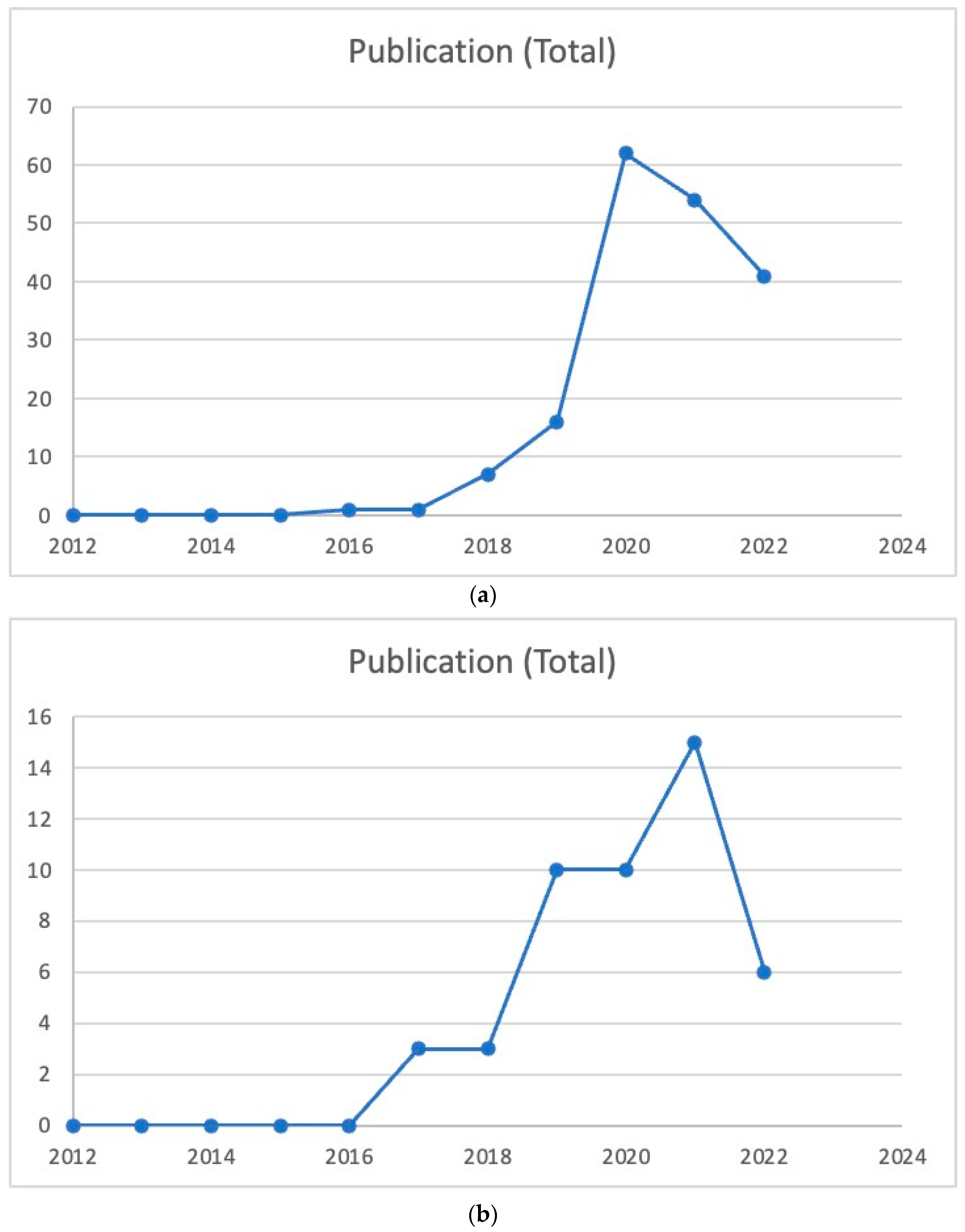
Table 4 presents the yearly research paper publications from 2012 to 2022. As presented in
Figure 1a, the number of publications about blockchain storage was at an initial stage between 2012 and 2015, but there was a slight increase in the number of publications between 2016 and 2018, and it reached its peak in 2020. Later, the number of publications decreased slightly during 2021–2022. Similarly, in
Figure 1b, the number of publications about blockchain scalability is at an initial stage between 2012 and 2015. Still, there was a slight increase in publications between 2016 and 2018, which peaked from 2012 to 2022. Moreover, in
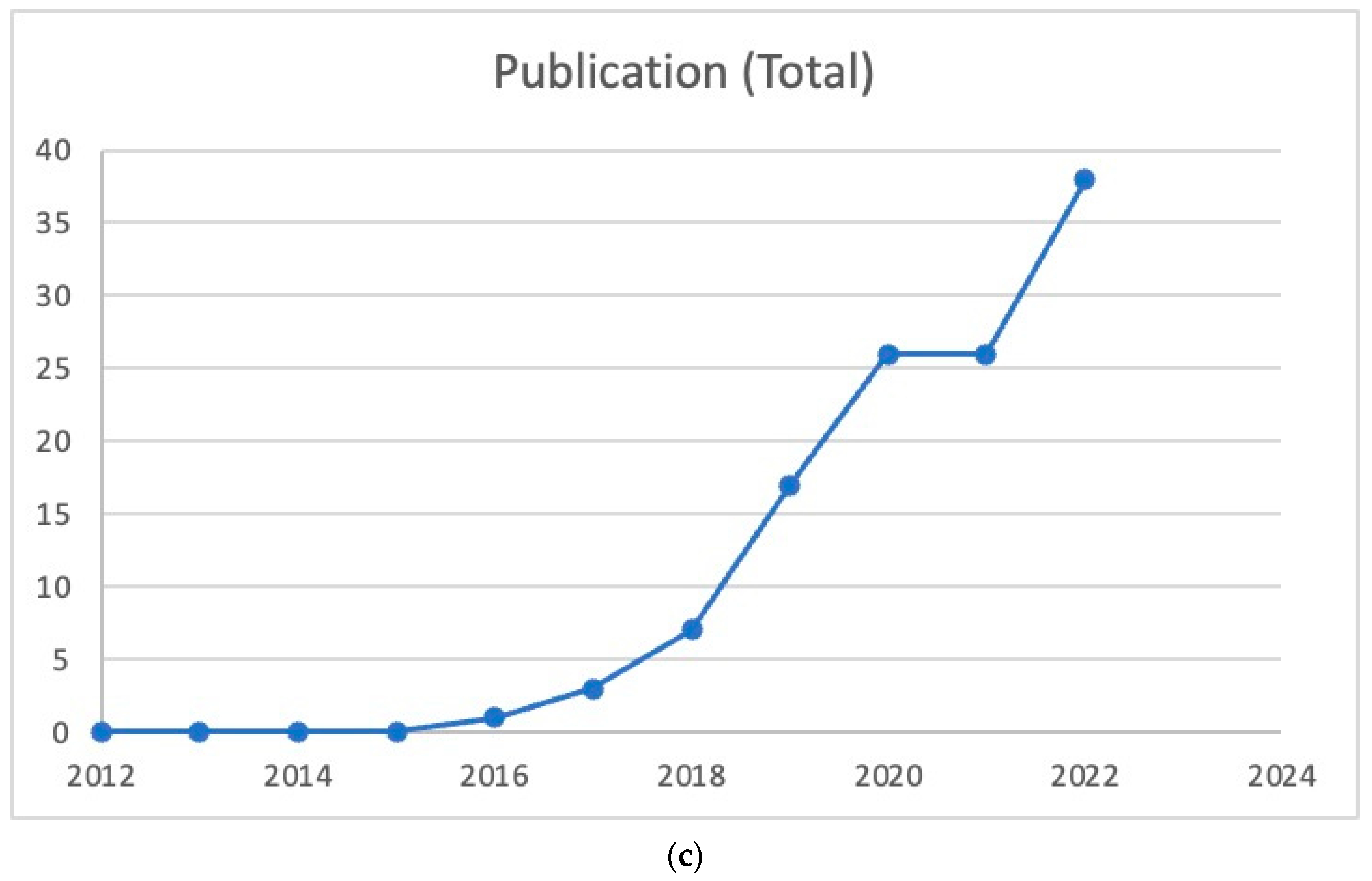
Figure 1c, the number of publications about blockchain availability was at an initial stage between 2012 and 2016. Still, there was a slight increase in the number of publications between 2017 and 2018, and it peaked in 2021. Later, the number of publications will decrease in 2022. In the present studies, we have taken the data source from Scopus database for the bibliometric analysis.
4.2. Analysis of Countries and Institutions
Table 5 had 406 publications with India having the highest number of publications in blockchain storage research. However, blockchain scalability had 225 publications, whereas India had the highest number of publications. Moreover, blockchain availability had 65 publications, whereas the United States had the highest number of publications.
According to
Table 6, the most productive institutions based on several publications were shown. Nirma University was found to be the most influential institution related to blockchain storage and blockchain scalability; however, the Federal University of Pernambuco was the most productive institution from a blockchain availability research perspective.
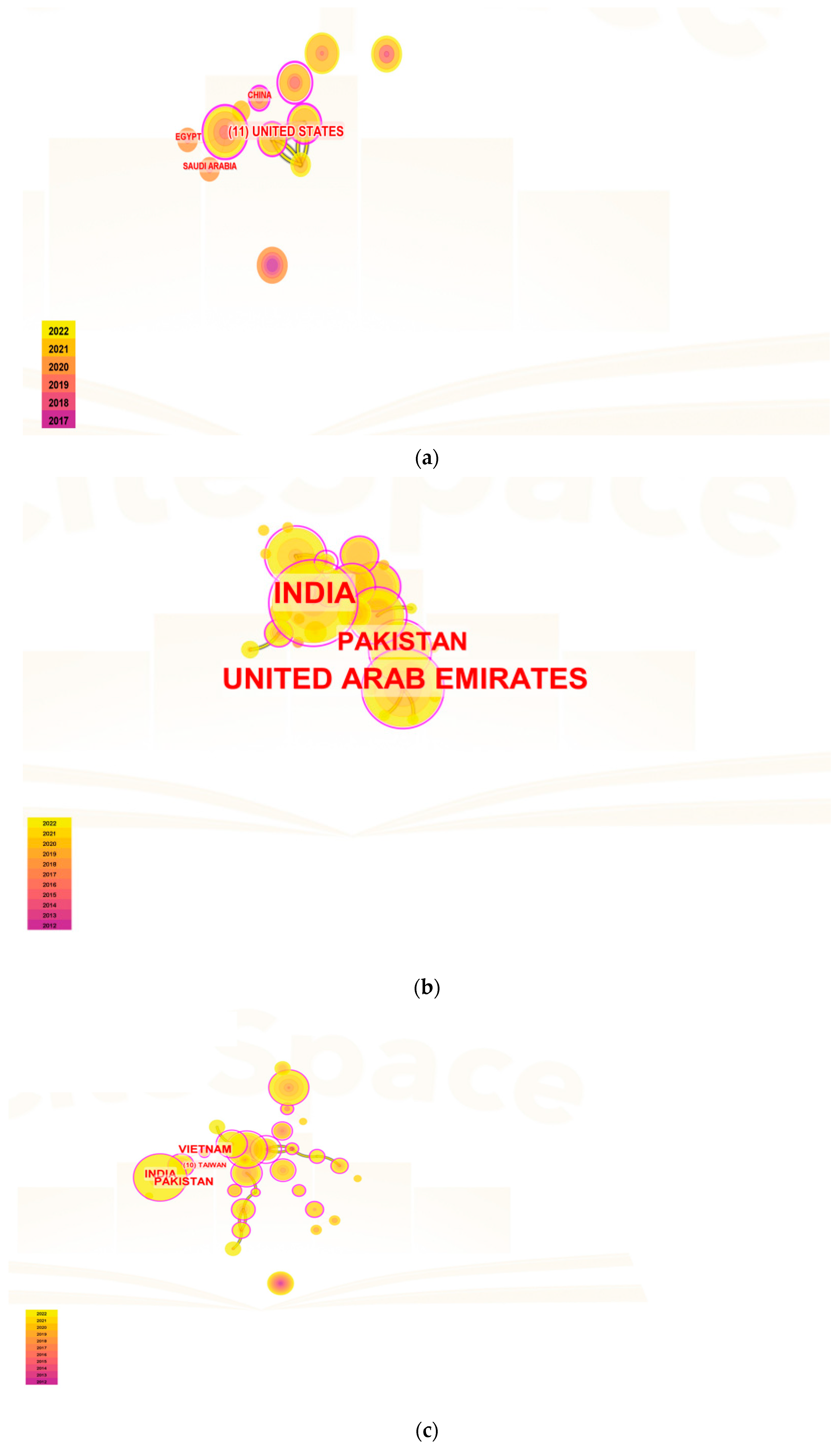
The country cooperation network of blockchain storage research is displayed in
Figure 2a, blockchain scalability in
Figure 2b, and blockchain availability in
Figure 2c (parameter settings: year(s) per slice: 1; node type: country; pruning: pathfinder and pruning the merged network; top N per slice: 50; top N%: 10%), with the size of nodes denoting the number of articles that were published in each country. The more nodes there were, the more papers were published.
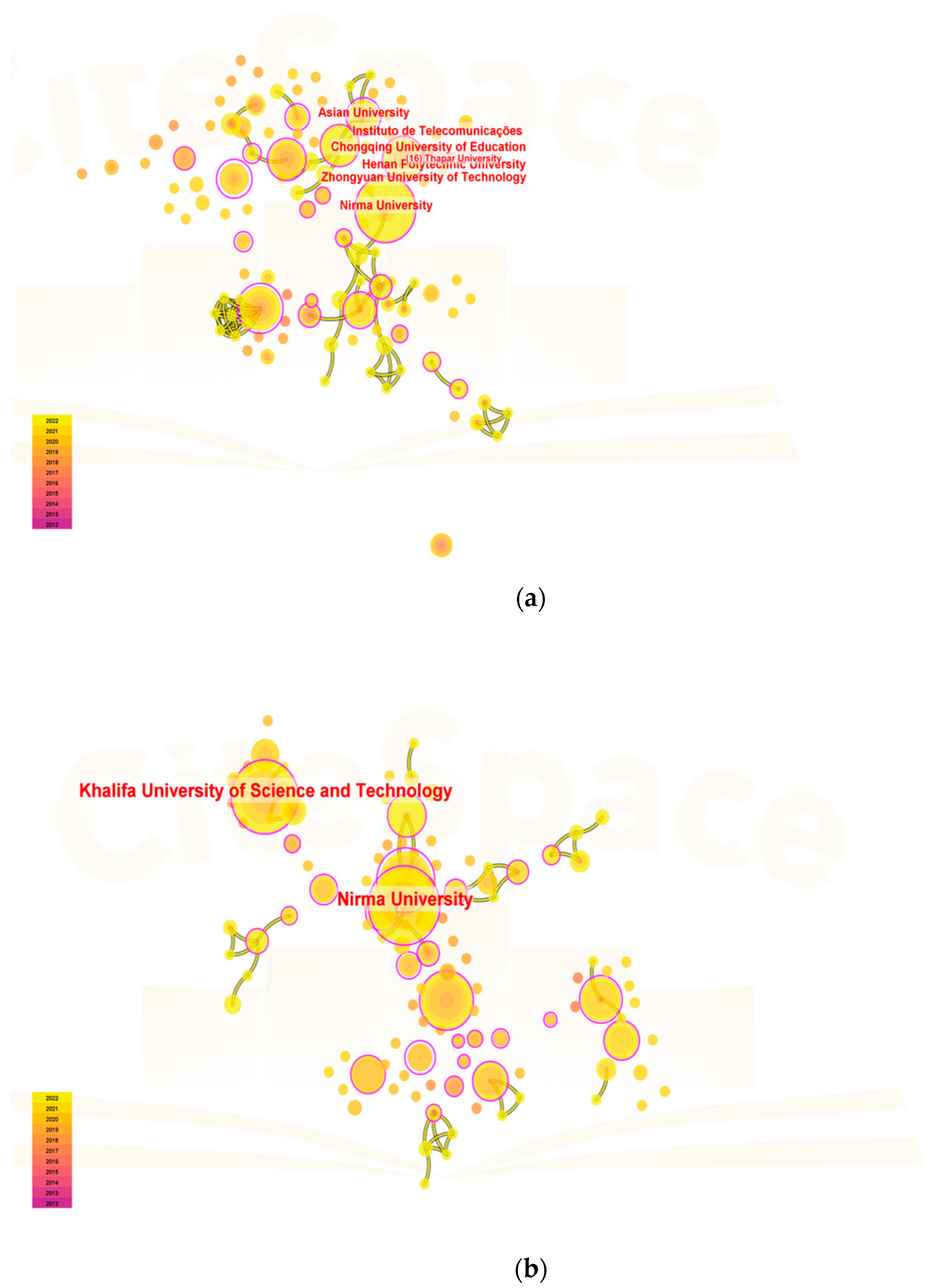
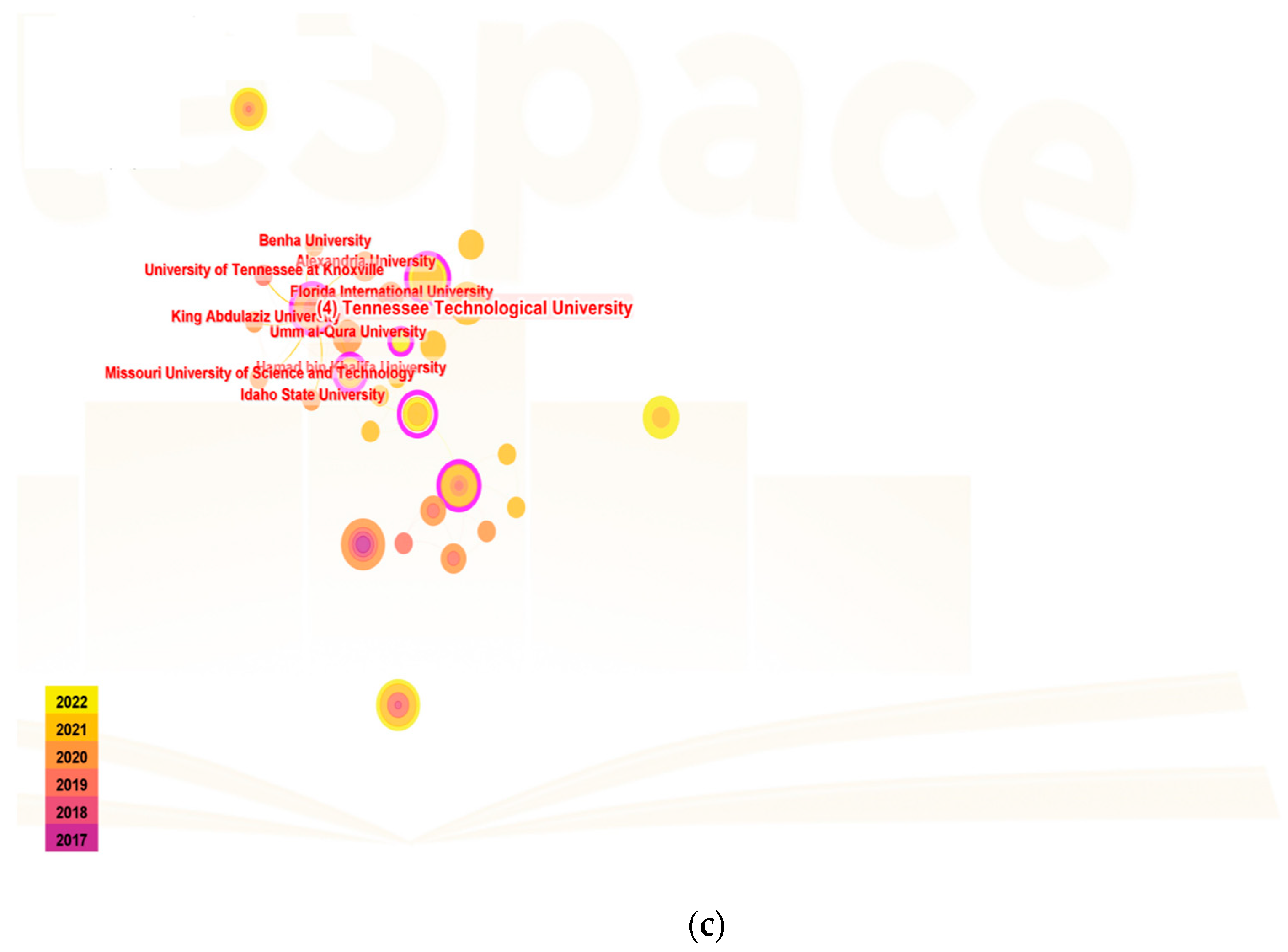
Several research institutions were substantially concentrated, as seen in
Figure 3a–c, (factor settings: year(s) per slice: 1; node type: institution; pruning: pathfinder and pruning the merged network; top N per slice: 50; top N%: 10%). The visualization map of institutions/countries involved in blockchain storage, blockchain scalability, and blockchain availability research: Mapping of central countries involved in blockchain storage, blockchain scalability, and blockchain availability research; Mapping of institutions engaged in blockchain storage, blockchain scalability, and blockchain availability research (the table above lists the top 10 publishing institutions).
4.3. Analysis of Author Cooperative and Author Co-Citation Network
According to
Table 7, related to blockchain storage, the most productive author was Salah Khaled, with 54 publications from Khalifa University of Science and Technology, UAE. The second most productive author was Tanwar Sudeep from Nirma University, India, with 47 publications. It was then preceded by Jayaramam Raja, Yaqoob Ibrar, Javaid Nadeem, Kumar Neeraj, Kanhere Salil, Omar Mohammed, and Jurdak Raja, and at the tenth position was Gupta Rajesh from Nirma University, India. The most productive author in blockchain scalability was Gupta Rajesh, with 25 publications from Nirma University, India. The second most productive author was Dorri Ali from the Queensland University of Technology, Australia, with 24 publications. It was then preceded by Kumari Aparna, Wang Yuyi, Tanwar Sudeep, Bhattacharya Pronaya, Kakkar Riya, and Xi, and at the tenth position was Decker Christian from Cornell University, United States. However, regarding blockchain availability, the most productive author was Park Jong Hyuk, with nine publications from Seoul National University of Science and Technology, South Korea. The second most productive author was Tauz Lev from the University of California, United States, with eight publications. It was then preceded by Dolecek Lara, Mitra Debarnab, Aloqaily Moayad, Guizani Mohsen, Mahmoud Mohamed, Maciel Paulo, Dantas Jamilson, and at the tenth position was Melo Carlos from the Federal University of Pernambuco, Brazil.
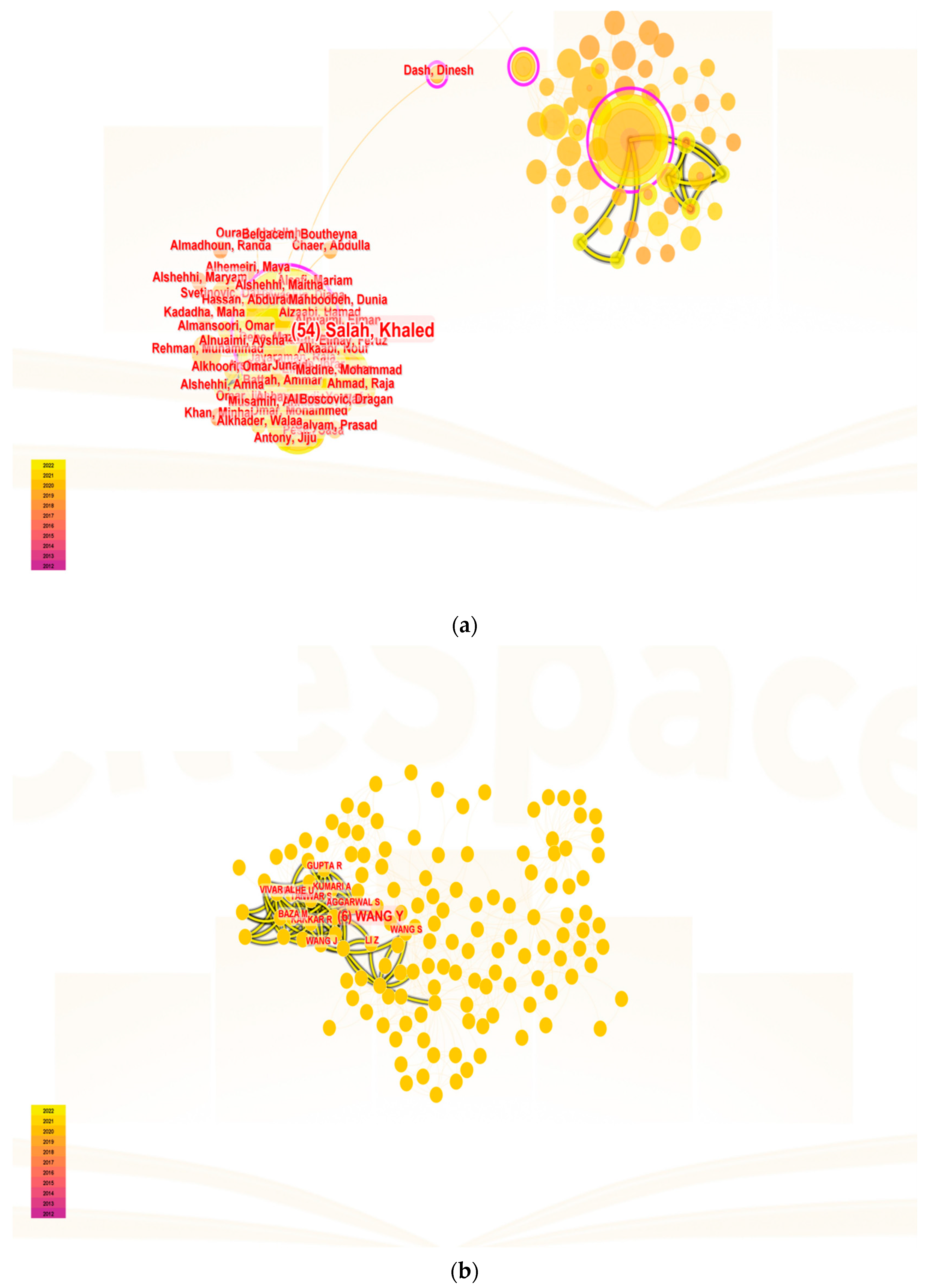
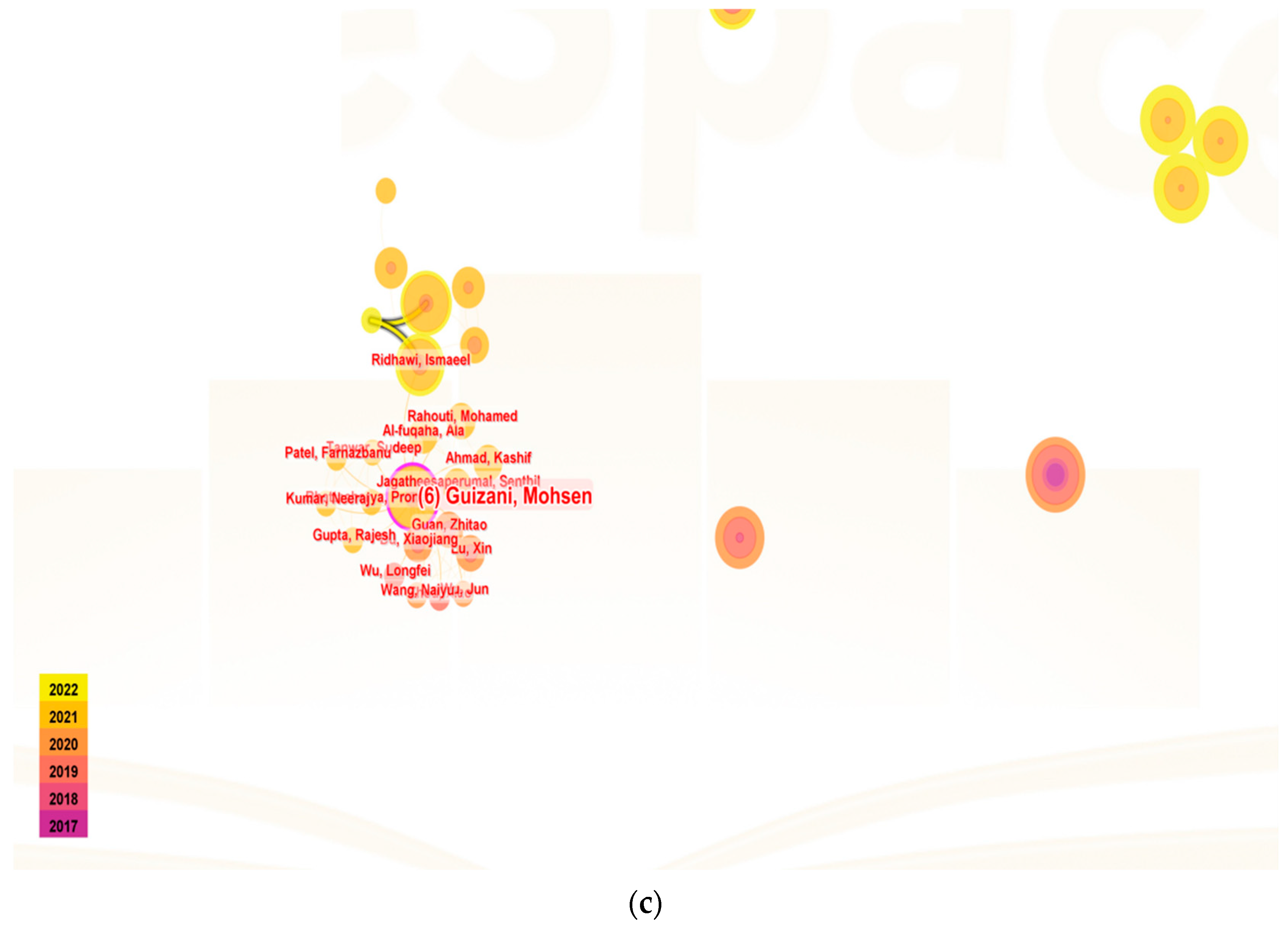
Based on extracted data for
Figure 4a–c (parameter settings: year(s) per slice: 1; node type: author; pruning: pathfinder and pruning the merged network; top N per slice: 50; top N%: 10%) from 2012 to 2022, the topmost productive authors were found in the form of mapping. Each node includes the name of a specific author, and this diagram shows Salah Khaled as the most influential author related to blockchain storage research. Moreover, Gupta Rajesh is the most influential author of blockchain scalability research, and Guizani Mohsen is the most influential author of blockchain availability research.
Table 8 shows the most cited authors and their highly cited articles on blockchain storage, blockchain scalability, and blockchain availability for 2012–2022. In blockchain storage, the most cited author was Gupta Rajesh with 28 articles, and this author’s most highly cited article was in
IEEE Systems Journal. Zhang Zijian was the second most cited author with 22 articles, and their highest cited article was in
IEEE Transactions on Network Science and Engineering. It was preceded by Kumari Aparna, R. Hasan Haya, Dorri Ali, Tanwar Sudeep, Zhang Yan, O. Novo, Salah Khaled, and S. Wang. Moreover, in the top cited authors and their highly cited articles on blockchain scalability for 2012–2022, the most cited author was Kakkar Riya, with 13 articles, and this author’s most highly cited article was in
IEEE Systems Journal. Decker Christian was the second most cited author with nine articles, and their highest cited article was in
Lecture Notes in Computer Science. It was preceded by Gupta Rajesh, Dorri Ali, Kumari Aparna, Luu Loi, Croman Kyle, Liu Mengting, and Kang Jieng. However, in the top cited authors and their highly cited articles on blockchain availability for 2012–2022, the most cited author was Anonymous with ten articles, and this author’s most highly cited article was in
IEEE Access. Dorri Ali was the second most cited author with six articles, and their highest cited article was in
Journal for General Philosophy of Science. It was preceded by Garg Shiva Raj, Sharma Pradip Kumar, Hu Xiao-Yu, Ridhawi Ismaeel, Yuntao Mondal, Christidis Konstantiros, Baza Mohamed, and Aitzhan NZ.
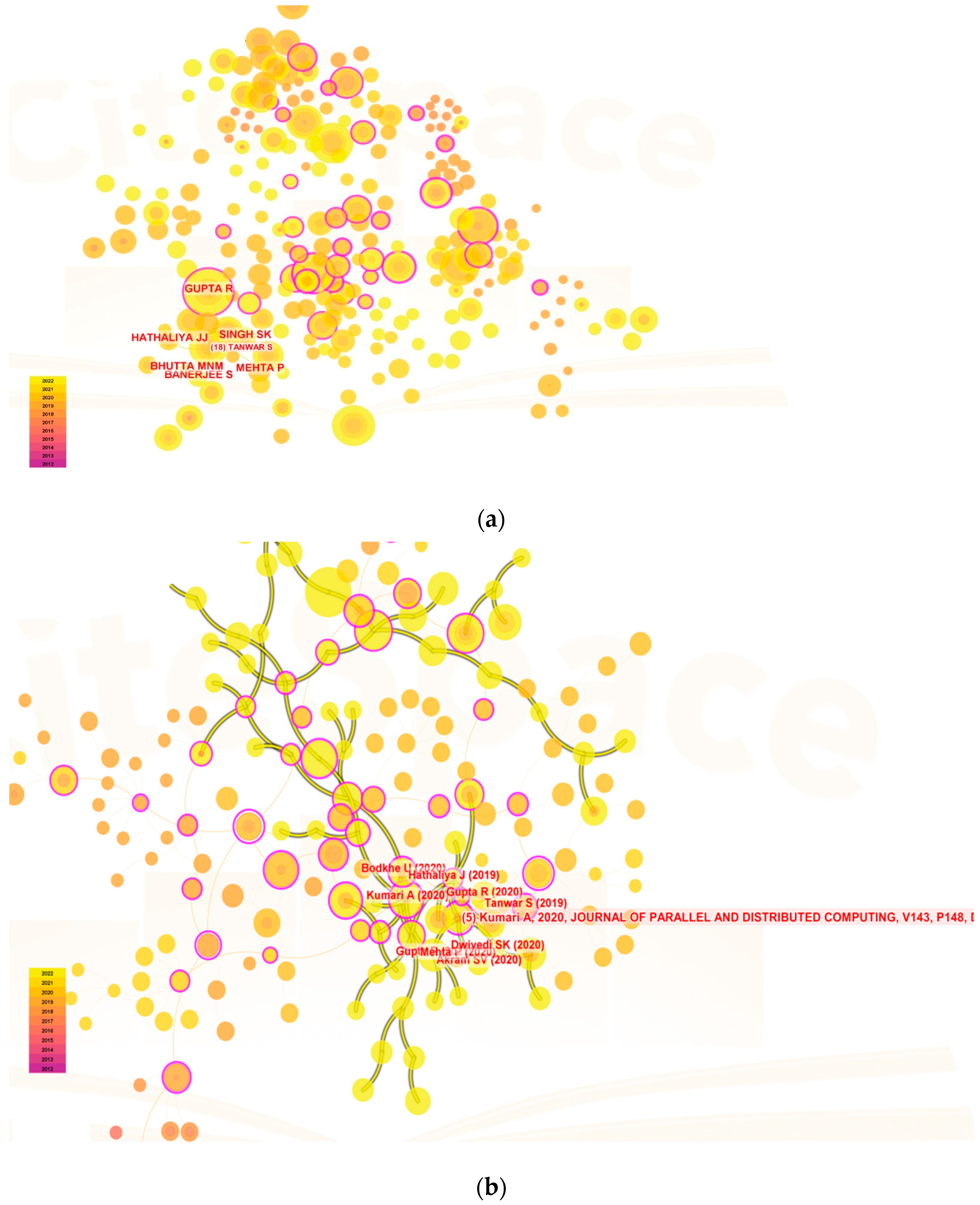
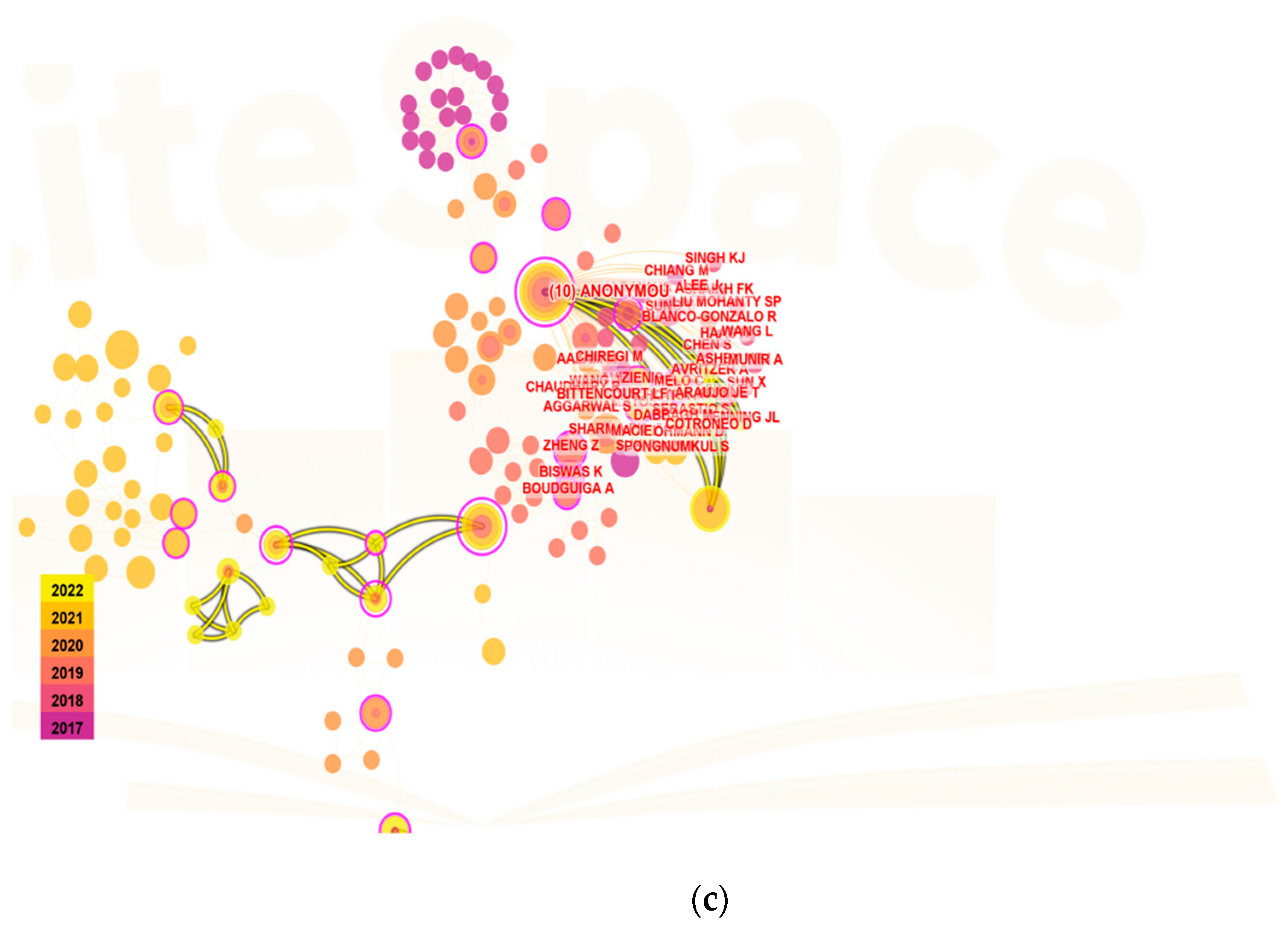
In terms of the co-authorship analysis in
Figure 5a–c, each node represents one author (parameter settings: year(s) per slice: 1; node type: cited author; pruning: pathfinder and pruning the merged network; top N per slice: 50; top N%: 10%). In the charts generated by CiteSpace, mapping showed the most co-cited authors related to blockchain storage as Tanwar Sudeep and Gupta Rajesh between 2012 to 2022, along with their journals as
Computers and Industrial Engineering and
2022 IEEE Globecom Workshops (GC Wkshps). Mapping in blockchain scalability showed the most co-cited authors as Kakkar Riya and Gupta Rajesh between 2012 to 2022 along with their journals as
IEEE Systems Journal and
IET Communications. Mapping in blockchain availability showed the most co-cited authors as Anonymous and Dorri Ali between 2012 to 2022 along with their journals as
IEEE Access and
Journal for General Philosophy of Science. 4.4. Analysis of Co-Citation of Journals
As per
Table 9, the most productive journals in blockchain storage for 2012–2022 saw
IEEE Access leading with 134 papers that covered 6.69% of papers.
Future Generation Computer Systems, IEEE Internet of Things Journal, IEEE Transactions on Industrial Informatics, and
Lecture Notes in Computer Science preceded it. Also, the most productive journals in blockchain scalability for 2012–2022 saw
IEEE Access leading with 67 papers that covered a total of 5.16% of papers. It was preceded by the
IEEE Internet of Things Journal,
IEEE Transactions on Industrial Informatics, IEEE Network, and
Lecture Notes in Computer Science. Here too, the most productive journals in blockchain availability for 2012–2022 saw
IEEE Access leading with 23 papers that covered 8.15% of papers. It was preceded by
Lecture Notes in Computer Science, IEEE Transactions on Industrial Informatics, IEEE Communications Magazine, and
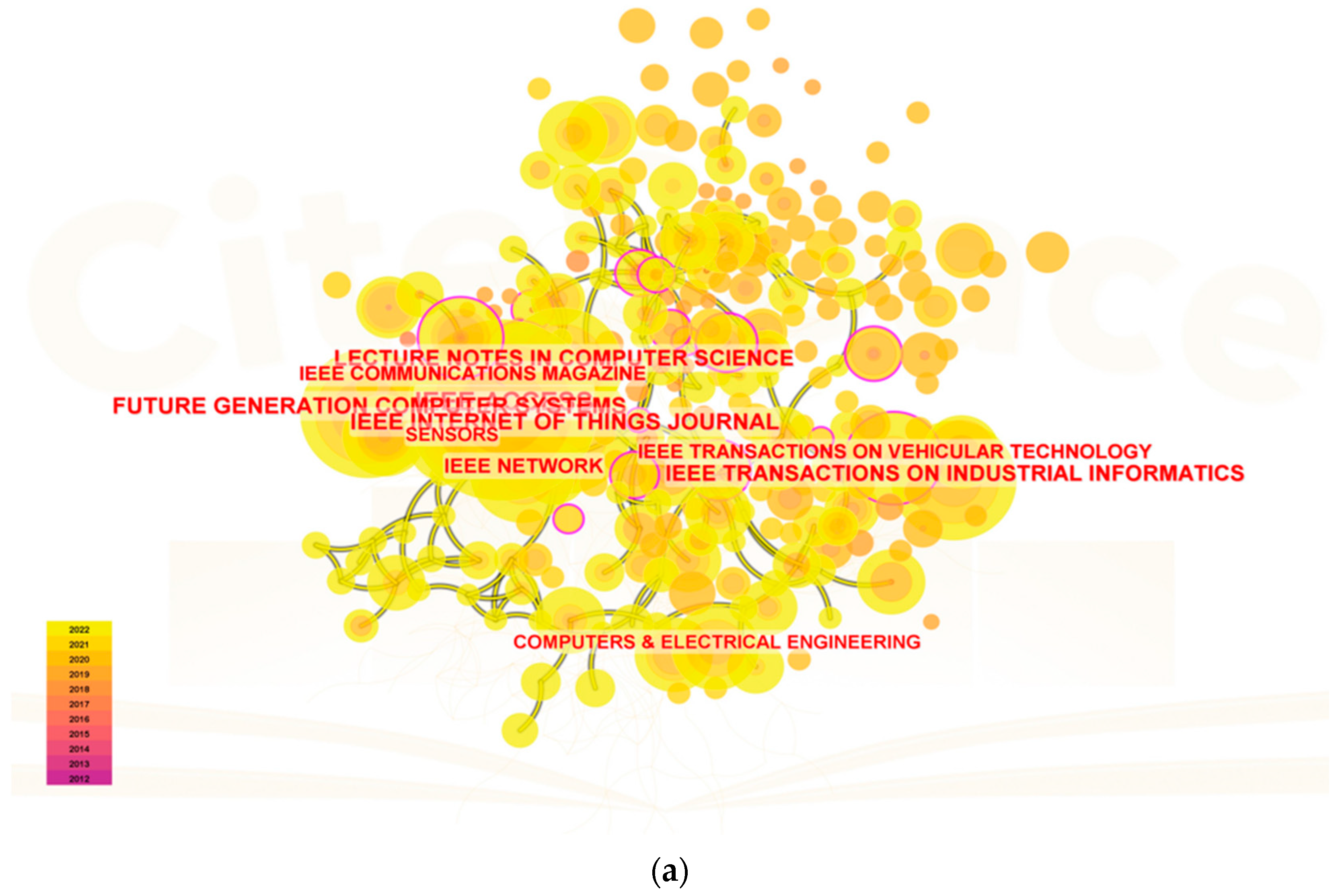
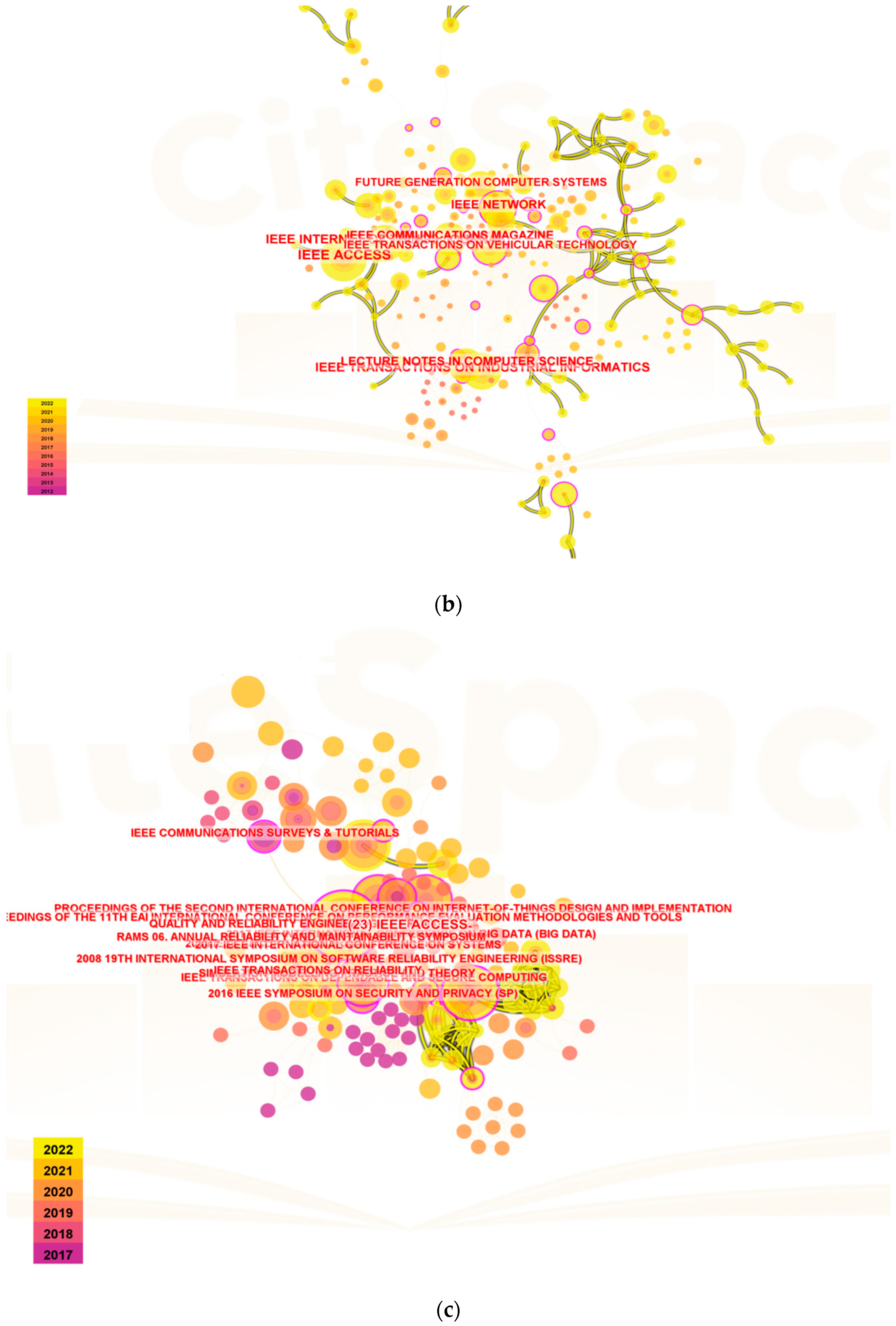
IEEE Transactions on Dependable and Secure Computing.The time zone perspective of the co-citation journals network is portrayed in
Figure 6a–c (parameter settings: year(s) per slice: 1; node type: cited journal; pruning: pathfinder and pruning the merged network; top N per slice: 50; top N%: 10%).
IEEE Access was the leading journal and preceded by
Future Generation Computer Systems, IEEE Internet of Things Journal, IEEE Transactions on Industrial Informatics, and
Lecture Notes in Computer Science in blockchain storage.
IEEE Access was the leading journal preceded by
IEEE Internet of Things Journal, IEEE Transactions on Industrial Informatics, IEEE Network, and
Lecture Notes in Computer Science in blockchain scalability.
IEEE Access was the leading journal preceded by
Lecture Notes in Computer Science, IEEE Transactions on Industrial Informatics, IEEE Communications Magazine, and
IEEE Transactions on Dependable and Secure Computing in blockchain availability.
4.5. Analysis of Cited References
The method of burst detection is a powerful analytical tool that may be used to spot urgent situations or significant information within a given window of time.
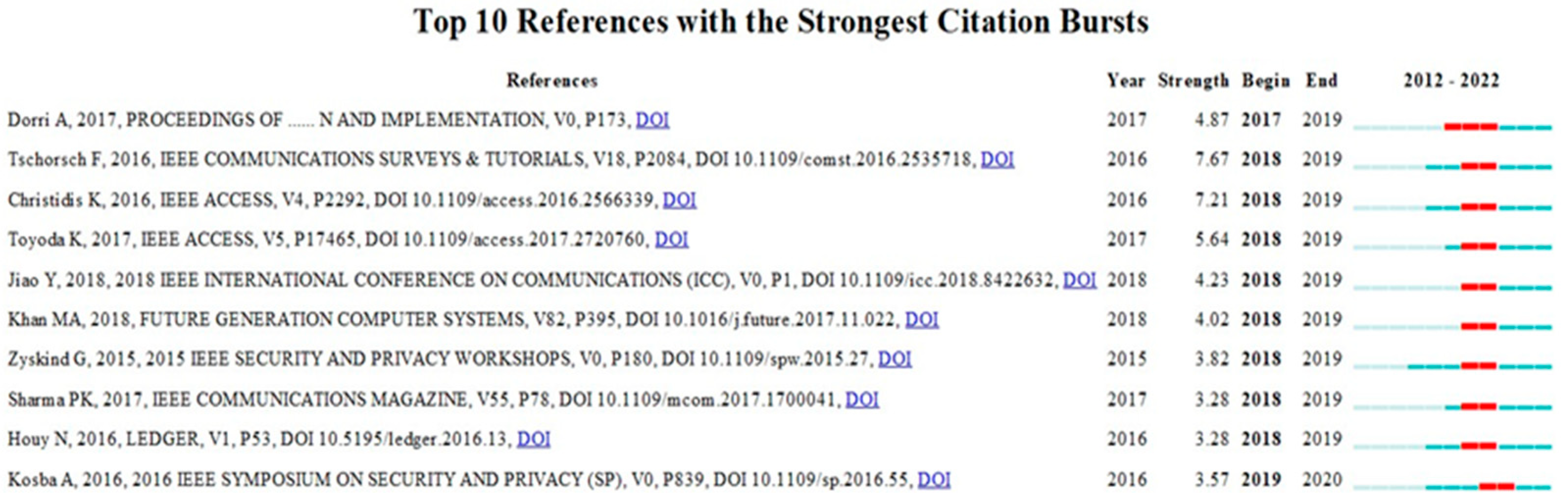
Figure 7 shows the top 30 strongest references identified by CiteSpace from 2012 to 2022 (parameter settings: year(s) per slice: 1; node type: reference; pruning: pathfinder; top N per slice: 50; top N%: 10%). In 2017, the largest citation burst strength, 4.87, came from a paper by Dorri Ali. The burst initiated in 2017 and completed in 2019. The author worked on the
Proceedings of the Second International Conference on Internet-of-Things Design and Implementation. In 2018, the two largest citations burst strengths derived from the papers by Tschorsch Florian (7.67) and Christidis Konstantinos (7.21), respectively.
As noticed, ten references were cited from 2017 to 2019. It was documented that the most extended citation period was two years, and the shortest was one year. It was surprising, however, to notice that all the papers were available after 2014, considering newly published studies tend to display citation burst analysis.
Table 10 lists the top ten reference articles in terms of citation frequency. Examining cited references helped academics understand the internal linkages between countries, organizations, and authors. Since blockchain research was quite mature and its application was broadened in 2018, the most widely referenced references were published in 2018. In the field of blockchain research, Khan Minhaj Ahmad’s article “IoT Security: Review, Blockchain Solutions, and Open Challenges” was a reference that was quoted rather frequently.
5. Popular Research Subjects and Emerging Trends
5.1. Author’s Keyword Search
This section categorizes the authors who were dynamic and active in blockchain study. For achieving this result, a top five author’s keyword search has been employed.
Table 11 includes the authors related to blockchain and the keywords related to blockchain. As per understood from
Table 11, Kim-Kwang Raymond Choo, Dusit Tao Niyato, Mohsen Mokhtar Guizani, and Mohsen Mokhtar Guizani take a lead in journals associated with blockchain. There are several other authors who are working on areas related to blockchain like data storage, scalability, availability, confidentiality, privacy, security, transparency, and traceability, etc. Blockchain is also highly correlated with bitcoin, smart contract, ethereum, cryptography, and IOT. These keywords are searched from the Scopus webpage, wherein we can use AND if both the keywords are required and OR if any one of the keywords is required.
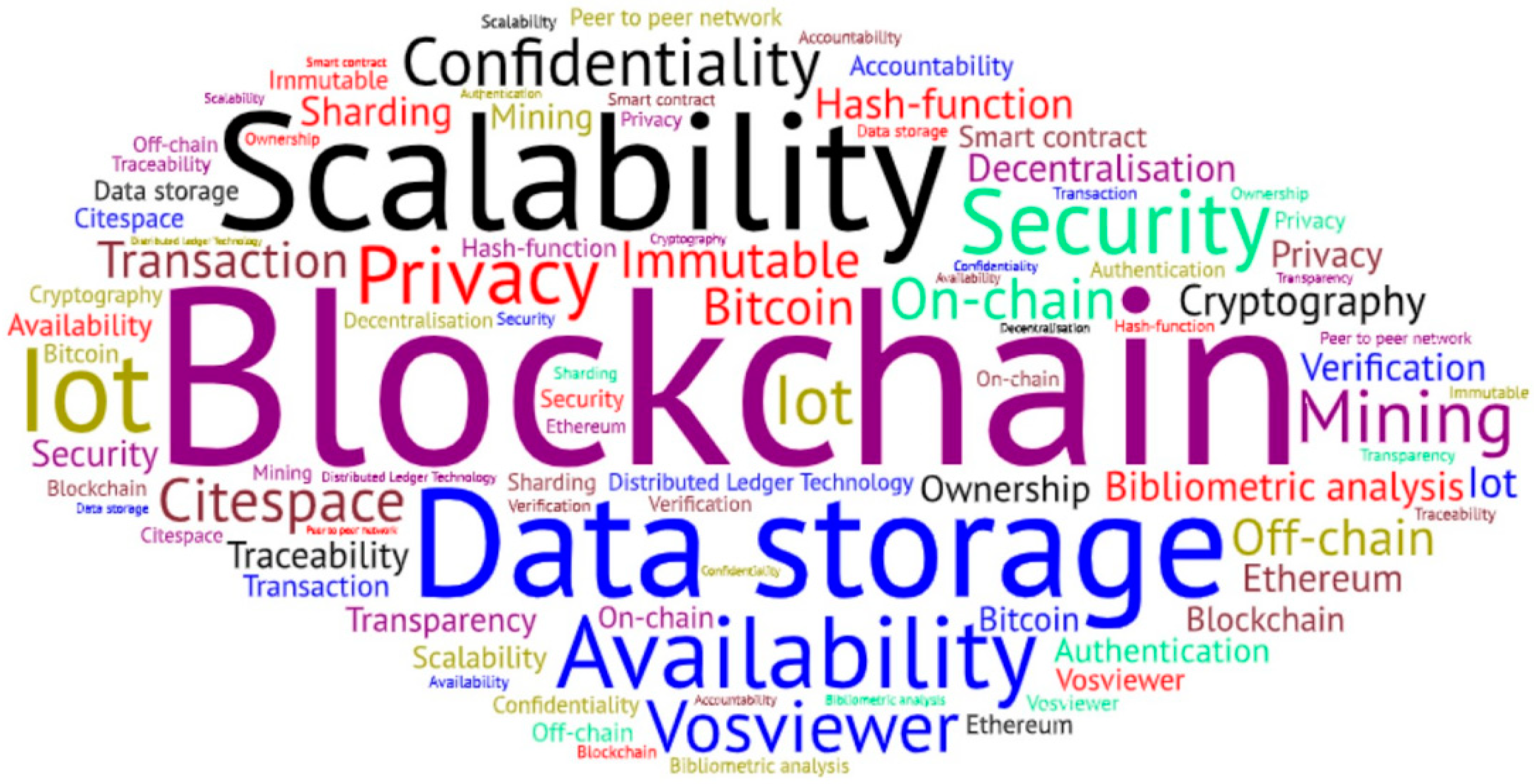
Figure 8 represents a bag of keywords which is created using a word cloud from a given text in Python and involves a few steps such as preprocessing the text, generating the word frequencies, and then creating the word cloud. It should be ensured that we have the necessary libraries installed such as matplotlib and wordcloud. Depending on the specific use case, we may want to preprocess the text to remove unnecessary elements like punctuation, stopwords, etc.
5.2. Popular Research Subjects
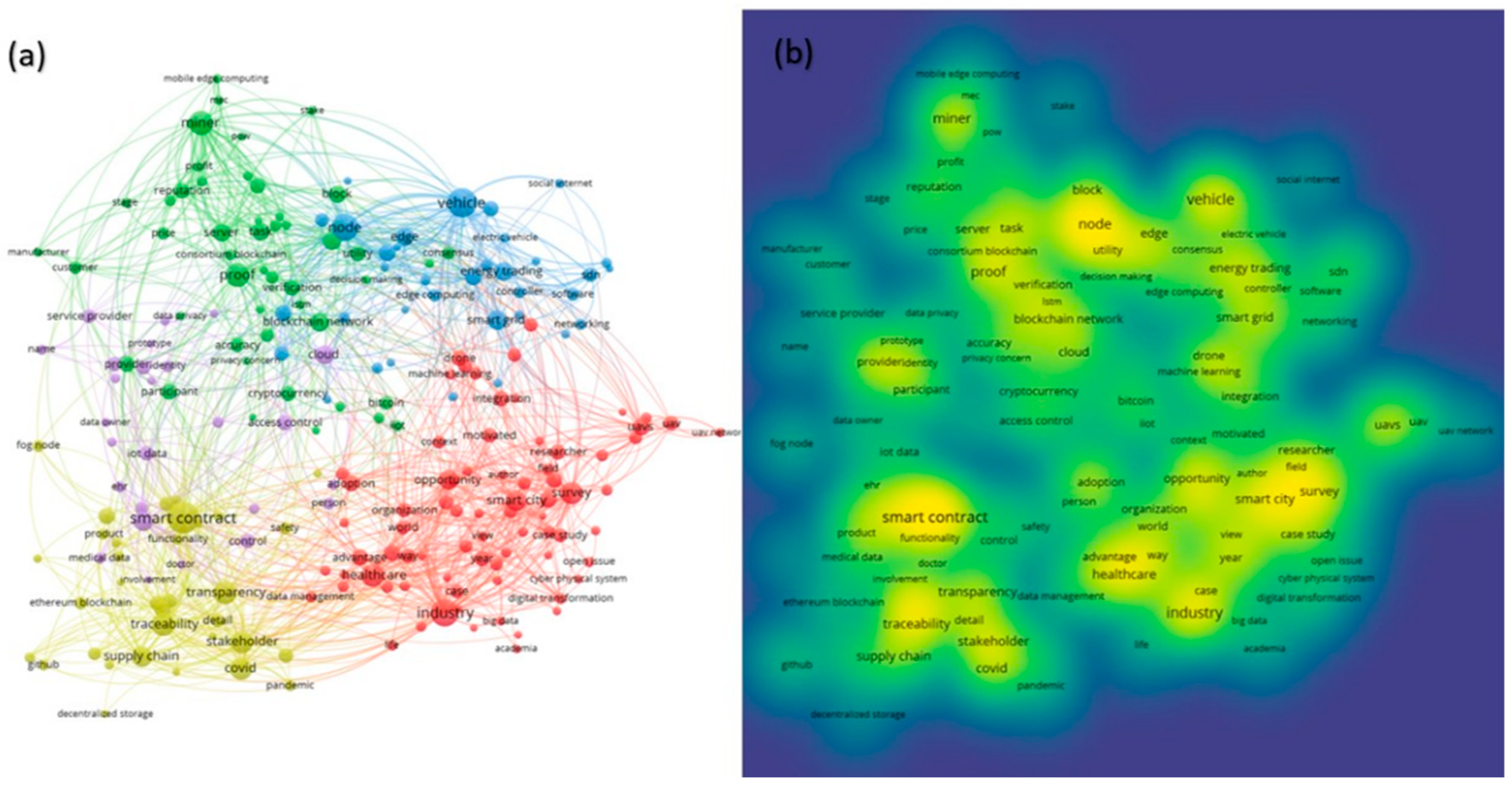
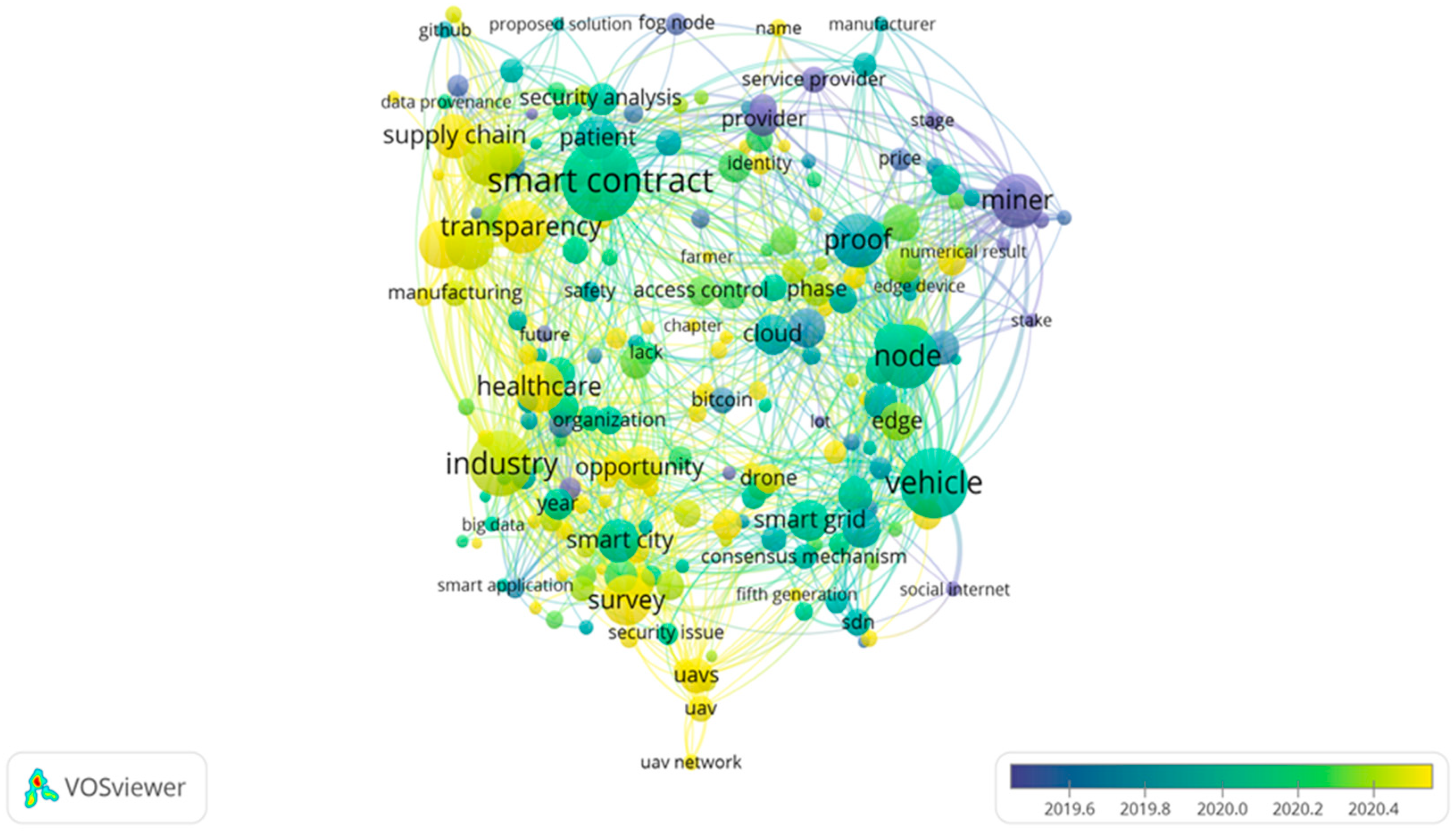
This paper created numerous keyword co-occurrence networks that roughly delineate the domains of blockchain research. This was performed because term frequency analysis may directly and effectively characterize study areas and vital substances of a certain subject. A knowledge domain map was drawn for the co-occurrence network of keywords as observed in
Figure 9a using the VOSviewer software (parameter settings: type of analysis: co-occurrence; counting method: complete counting; unit of study: title and abstract fields; node type: blockchain).
Figure 9b demonstrated the hot research topics using a density visualization map based on article weights.
Network: 1 (red cluster): The largest node was industry, which connected 185 keywords such as smart contract, survey, healthcare, traceability, supply chain, vehicle, miner, node, proof, and blockchain network. This cluster paid more attention to the application of blockchain.
Network: 2 (blue cluster): The blue cluster was the largest and mainly related to smart contracts, traceability, transparency, supply chain, and stakeholder. In the past few years, they have emerged to be popular topics. Although each issue had a distinct focus, the contents were interconnected.
Network: 3 (green cluster): The largest node was a vehicle, which connected 160 keywords in cluster 3. This branch of research was interested in blockchain’s utility, proof, verification, and accuracy.
Network: 4 (yellow cluster): The largest node was the smart grid, which mainly focused on digital technologies, sensors, and software. Implementing blockchain through a smart grid enables the community to retain system transactions in a consensus manner.
As observed in
Table 12, the smart contract was the most popular subject in the work of blockchain research with a frequency of 164, which was followed by vehicle (133), industry (119), and node (113). We can also analyze the popular research subjects and emerging trends where you can find the recent emerging key topics and some of the explanations of the critical issues like an intelligent contract, traceability, transparency, etc., in
Table 12.
In the previous studies of blockchain technology, there was a significant rise in curiosity about Bitcoin, IoT, security, smart contracts, etc. But after 2012, there was a rise in studies based on smart contracts, traceability, transparency, etc., which led researchers to think beyond the capabilities of blockchain technology.
5.3. Smart Contract
Nick Szabo, an American computer scientist who devised a virtual currency called “Bit Gold” in 1998 ten years before Bitcoin, advocated intelligent contracts in 1994. In reality, Szabo is frequently mistaken for Satoshi Nakamoto, the anonymous Bitcoin creator, a claim which he has disputed.
As a first exposure to blockchain technology, smart contracts are critical to making transactions safer, secure, and organized.
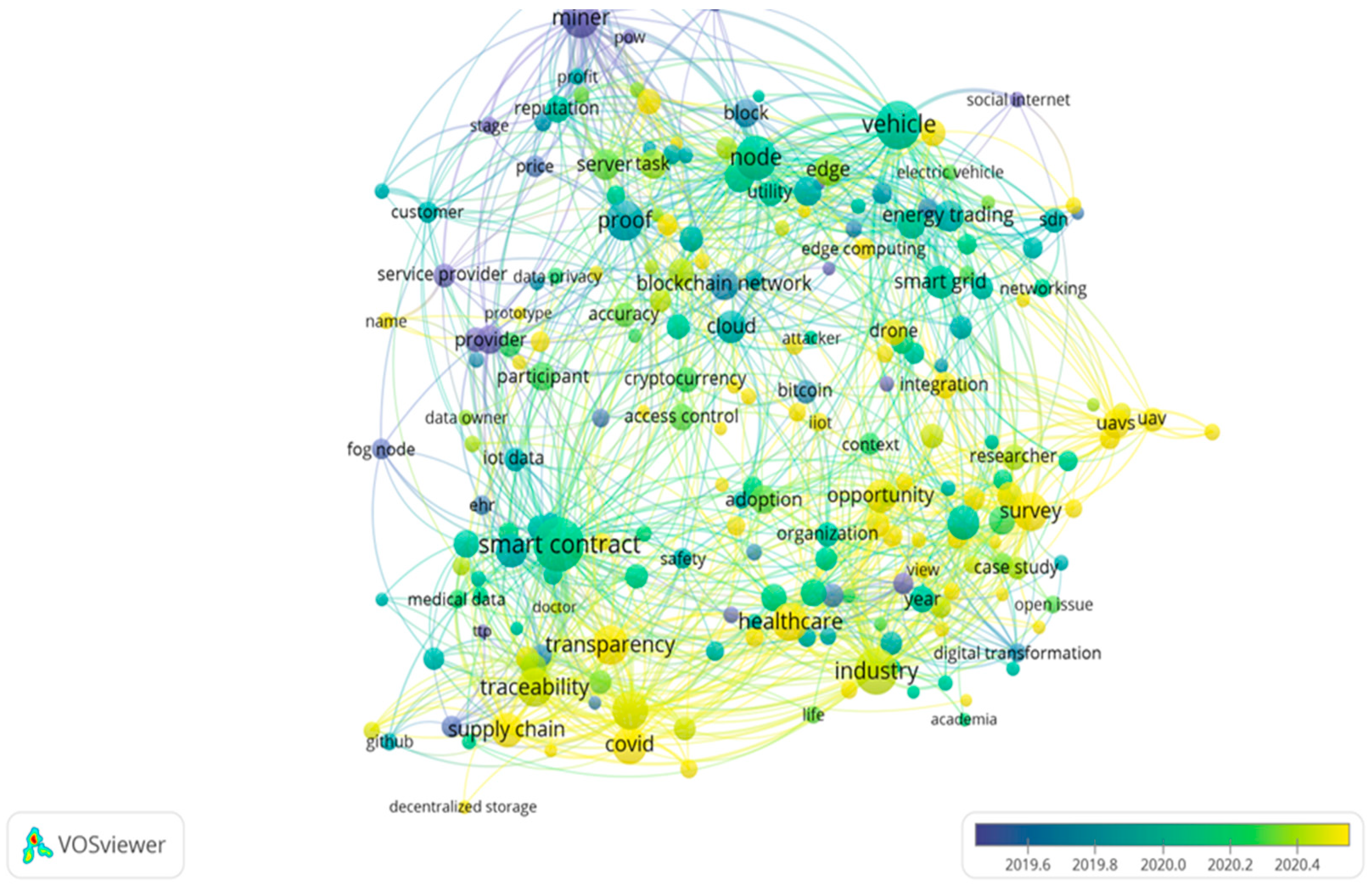
Smart contracts are computer programs or protocols that streamline transactions kept on a blockchain and executed in response to specific criteria being met. In other words, smart contracts automate the implementation of agreements so that all players can know the outcome as quickly as feasible without needing an intermediary or a time delay. The overlay visualization of an intelligent contract, complete with weighted linkages and citation scores, is depicted in
Figure 10.
5.4. Traceability
Blockchain traceability, the subject of university dissertations in the 1990s, was encapsulated by Satoshi Nakamoto’s 2008 scholarly publication. The first significant application was secure money transfer via Bitcoin tokens without using a central bank.
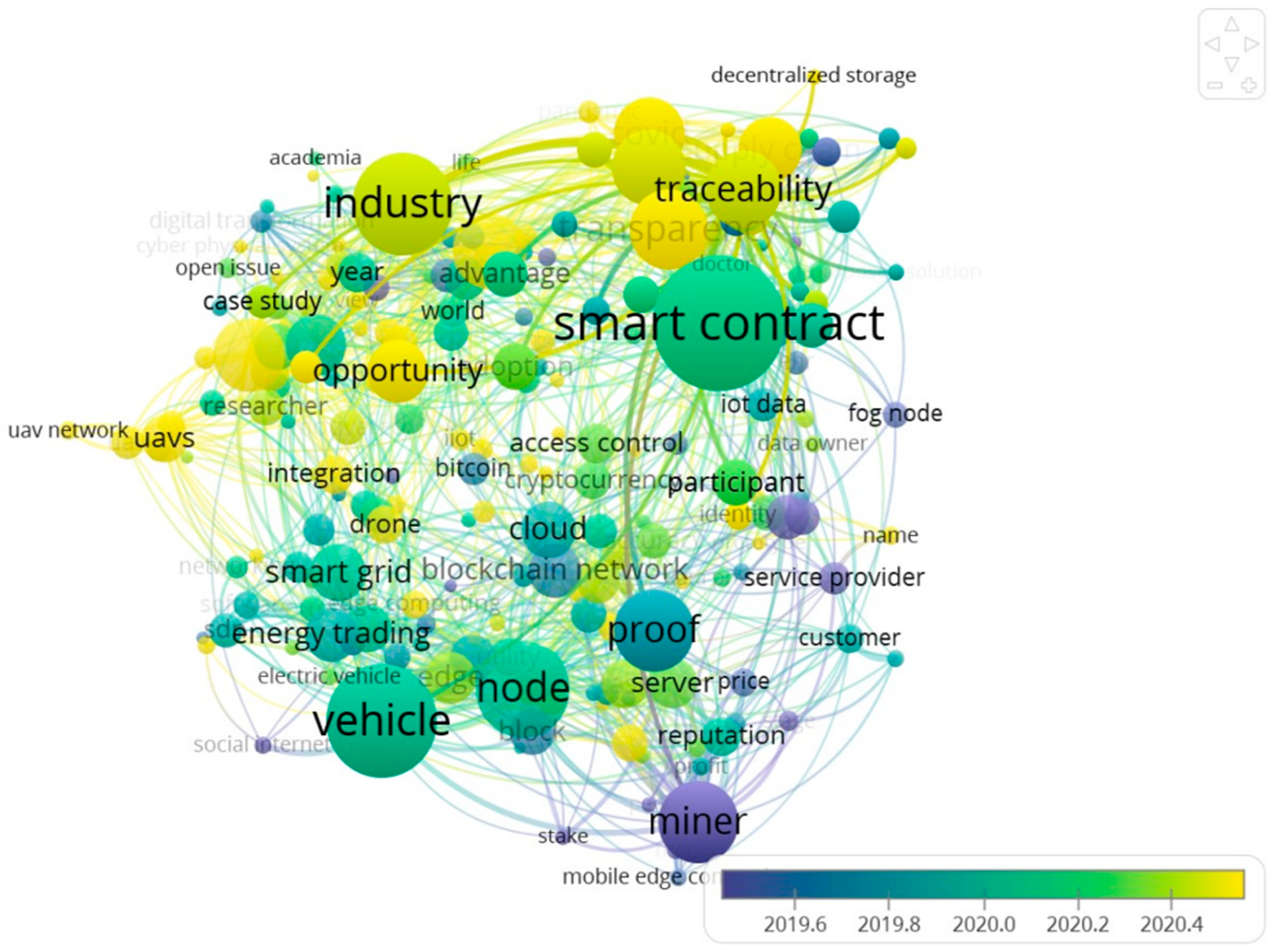
Traceability can be described as the collection of data on all product movements across the supply chain. Today, the pharmaceutical, food, cigarette, alcohol, and cosmetics industries employ traceability applications.
Traceability in the blockchain is also heavily reliant on the simplicity with which critical data points such as claims and certificates can be captured. As a result, it can aid in building confidence and facilitating open access to data. Third-party attesters validate the legitimacy of data points after they are registered on the blockchain. It is also worth noting that traceability in blockchain includes real-time updates and information authentication benefits. The overlay visualization of traceability with weighted linkages and citation scores is shown in
Figure 11.
5.5. Transparency
Chen Li, the CEO and founder of Youbi Capital, elaborated on transparency as the greatest feature of blockchain. This is because, in theory, the technology powers detectable and immutable transactions, allowing parties to trade with total confidence without the involvement of an intermediary. The framework eliminates conventional sources of authority, such as banks and governments, in order to decentralize modern life. In their opinion, transparency in the blockchain is game-changing—preferably in theory.
Blockchain might be utilized as the new norm for transparency since it makes data transparent in ways that have not existed in financial institutions. A block explorer, which is used to search the blocks of a blockchain, their contents, and their essential details, allows network participants to access the holdings and transactions of public addresses.
In cybersecurity, this means that decentralized threat data can be made available. While some claim that in-depth analyses and reports provide sufficient assurance that security systems are working as expected, bias may be present because these corporations pay for the study reports, certifications, and other acknowledgments in the beginning. The overlay visualization of transparency with weighted linkages and citation scores is presented in
Figure 12.
6. Comparative Analysis
In this section, the findings of the present bibliometric study are compared to the findings of earlier bibliometric analyses in order to offer information regarding the tools employed for both CiteSpace and VOSviewer, data storage, scalability, and availability of the blockchain system [
67,
68,
69,
70]. Recently, Sanka and Cheung [
40] reviewed blockchain scalability challenges and solutions, analyzes research trends, and discusses adoption, serving as a guide for blockchain scalability research. Liu et al. [
56] analyzes blockchain research from 2013 to 2020, highlighting key topics and trends. China leads in this field, focusing on computer science and engineering. Emerging areas include management, blockchain technology, energy, machine learning, and smart homes, with a call for regulatory standards. Firdaus et al. [
71] analyzes blockchain research from 2013 to 2018, emphasizing its diverse applications in IoT and healthcare, top research countries, and its versatility beyond digital currency.
Guo et al. [
72] presented the bibliometric analysis and visualization of blockchain and discussed in many areas. Further, Luo et al. [
73] uses bibliometrics to analyze blockchain research evolution from 2014 to 2020. It highlights key contributors, like China, and reveals that blockchain research is expanding into various areas. Future directions include integrating blockchain with cloud tech, smart contracts, and authentication. Whereas Kuzior and Sira [
74] focused on how Scopus-based bibliometric analysis of blockchain literature from 2007 to 2021 highlights the rapid growth in publications since 2016, China’s leading role in blockchain research, and shifting research priorities from Bitcoin to various blockchain applications. It also identifies three primary clusters of topics. Alam et al. [
75] analyzes blockchain research from 2012–2020 using Web of Science data. Major findings include China and the USA as leaders in blockchain research, a focus on computer science, and a growing interest in blockchain research in Pakistan. It underscores blockchain’s multidisciplinary impact and the importance of global collaboration and language diversity in research.
In our research work, VOSviewer and CiteSpace were used for bibliometric analysis. We obtained the data in CSV and RIS formats from the Dimensions.ai database. From 2012 to 2022, the search includes blockchain storage, scalability, and availability, as well as the top ten authors of each search result. While extracting visualization maps from CiteSpace, we had to export the CSV data in the form of Web of Science data in the CiteSpace Java application, and all of the selection criteria for extracting visualization maps were given in the application, including author, institution, country, reference, cited author, journal, and so on. We utilized VOSviewer software for bibliometric networks, importing data from RIS files and selecting the method of visualization of bibliometric networks.
7. Conclusions
In conclusion, this paper represents a crucial bridge between theoretical insights and practical applications in the ever-evolving realm of blockchain technology. Throughout our research, we have meticulously examined the complex interplay of blockchain storage, scalability, and availability, shedding light on the current research landscape and the pressing challenges practitioners and researchers face.
Sia, Storj, and IPFS are some prominent companies that have launched their cryptocurrencies, like Siacoin, Storjcoin X, and Filecoin, to create a market for buying and selling decentralized storage and encouraging its use. In recent years, several trends have emerged, and innovations to enhance transaction throughput, reduce latency, and improve user experience can shape the future of blockchain scalability. Blockchain availability can provide the finance sector with a transparent ledger system that may eliminate the need for intermediaries and lower transfer costs.
Using bibliometric analysis tools, CiteSpace and VOSviewer, has allowed us to distill a wealth of academic literature into meaningful insights. By identifying the prevailing research priorities and mapping the intellectual structure of the field, we have contributed to theoretical advancements and provided actionable takeaways for real-world implementations. The practical significance of our work lies in its potential to guide and inform the development of blockchain-based solutions that seamlessly balance data storage, scalability, and availability while upholding the paramount importance of security. By visualizing pathways to achieve these objectives, we have opened doors for innovators, businesses, and policymakers to make informed decisions in the rapidly evolving blockchain landscape.
Using Dimensions.ai data from 2012 to 2022, this bibliometric study examined 2002 valid papers on blockchain storage, 1298 proper papers on blockchain scalability, and 282 valid papers on blockchain availability. Since 2016, the quantity of publications on blockchain storage and scalability has steadily expanded, while the number of publications has steadily grown since 2017 on blockchain availability. India held a conspicuous leadership position among all nations, according to the examination of national and institutional cooperation. At the same time, China, South Korea, UAE, Australia, and the United States accomplished worthwhile projects and made significant contributions. Most productive institutions were from India, making up the leading institutions in the study of blockchain storage, blockchain scalability, and blockchain availability. Nirma University was the most influential institution in this field.
According to the authors’ analysis, several authors tended to work with a limited group of colleagues, resulting in numerous prominent author groups, such as Gupta Rajesh and Kakkar Riya. The number of articles and citations found in the journal IEEE Access indicated that it was both an influential and productive publication, as stated by the co-citation journals network. In recent years, the IEEE Internet of Things Journal has attracted significant attention and encouraged the production of articles related to blockchain technology. Most journals focused on the IEEE Transactions on Industrial Informatics publication, attracting the most innovative academics and practitioners worldwide.
The research hotspots provided by VOSviewer have supplied specific information on the relevant literature. Conceptual knowledge and popular research subjects on blockchain were primarily distributed in the following categories: (a) intelligent contracts, (b) vehicle, (c) industry, and (d) proof. Further comprehension of conceptual knowledge and hot research themes is required, which will be a promising answer to different types of blockchain challenges. CiteSpace’s evolving trends and patterns have provided a fresh, engaging, and complete understanding of how to perform research subject searches. More emphasis should be placed on the potential of smart contracts and machine learning, which will be promising blockchain research fields. Overall, this study used CiteSpace and VOSviewer to understand blockchain research fields better and stay current with the blockchain sector.
While using CiteSpace, the limitations occur in the case of the amount of data being extracted because if we take data of only blockchain storage or scalability or availability, then the references with the most robust citation bursts might not be possible to extract due to a lack of data availability. While showing visualization maps, it might only be possible to show some countries, institutions, journals, primary authors, etc. Still, it is possible only to show the value of a single node and its nearby nodes. The analysis also varies concerning the g-index, as each insight becomes a different map when its value changes. However, it could be more accurate and thorough on how research is performed and publishing works. Therefore, all the limitations were reduced by taking the value of the g-index to be constant, leading us to obtain valid results.