Sources of Heavy Metals and Their Effects on Distribution at the Sediment–Water Interface of the Yellow Sea Shelf off Northern Jiangsu


Abstract
1. Introduction
2. Materials and Methods
2.1. Study Area and Sample Collection
2.2. Sample Analysis and Quality Control
2.3. Principal Component Analysis (PCA)
2.4. Positive Matrix Factorization (PMF)
2.5. Random Forest (RF)
2.6. Source-Specific Partition Coefficient (S-Kp)
3. Results and Discussion
3.1. Distribution Characteristics of Water Environmental Factors
3.2. Occurrence and Spatial Distribution Characteristics of Heavy Metals in Water and Sediment
3.2.1. Occurrence and Spatial Distribution Characteristics of Heavy Metals in Water
3.2.2. Occurrence and Spatial Distribution Characteristics of Heavy Metals in Sediment
3.3. Source Apportionment and Contribution Rates of Heavy Metals
3.3.1. Driving Mechanisms of Water Environmental Factors on Heavy Metals
3.3.2. Source Apportionment of Heavy Metal Pollution in Sediment
3.4. Partitioning of Heavy Metals at the Sediment–Water Interface
3.5. Partitioning of Heavy Metals from Different Sources
4. Conclusions
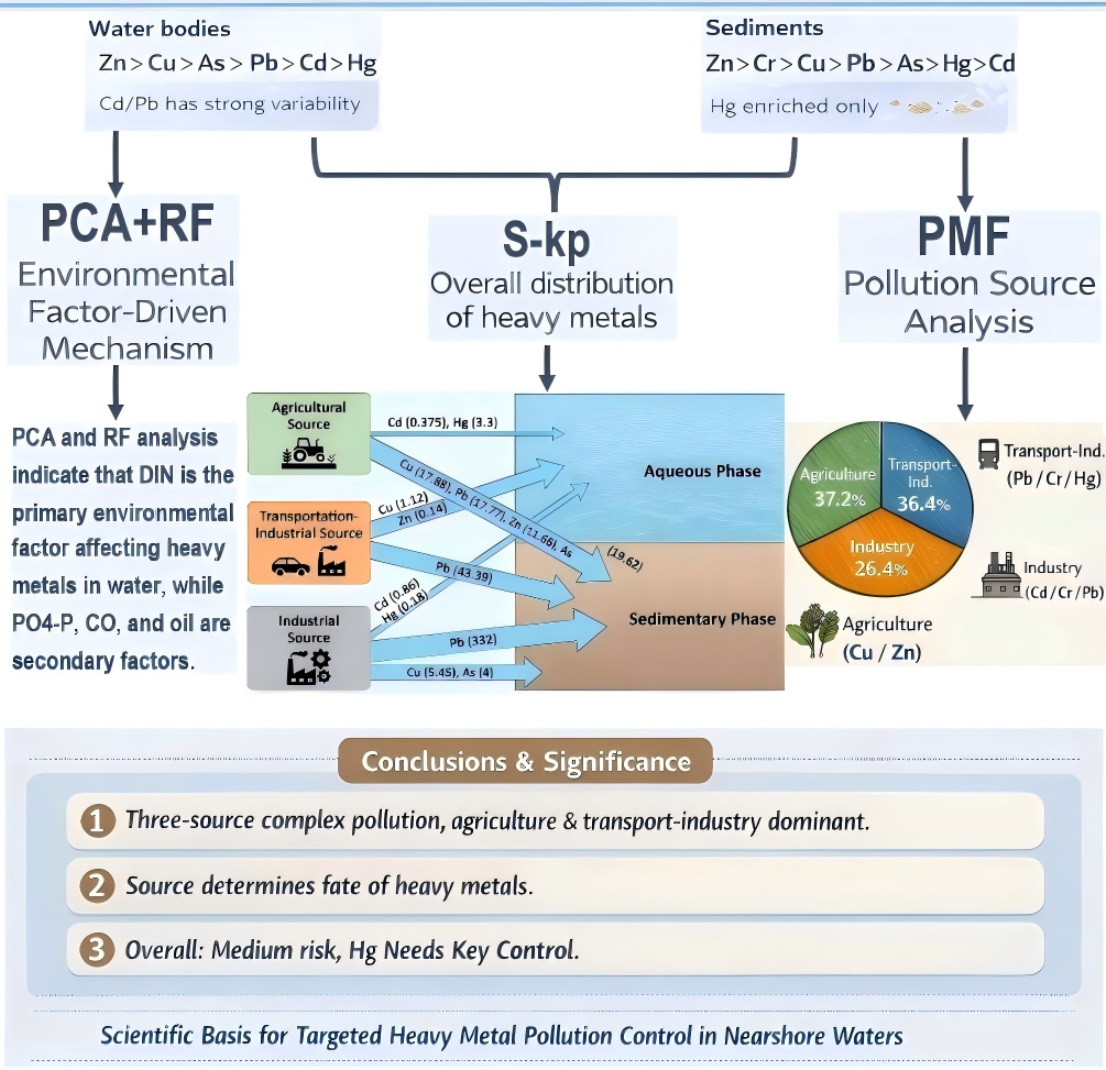
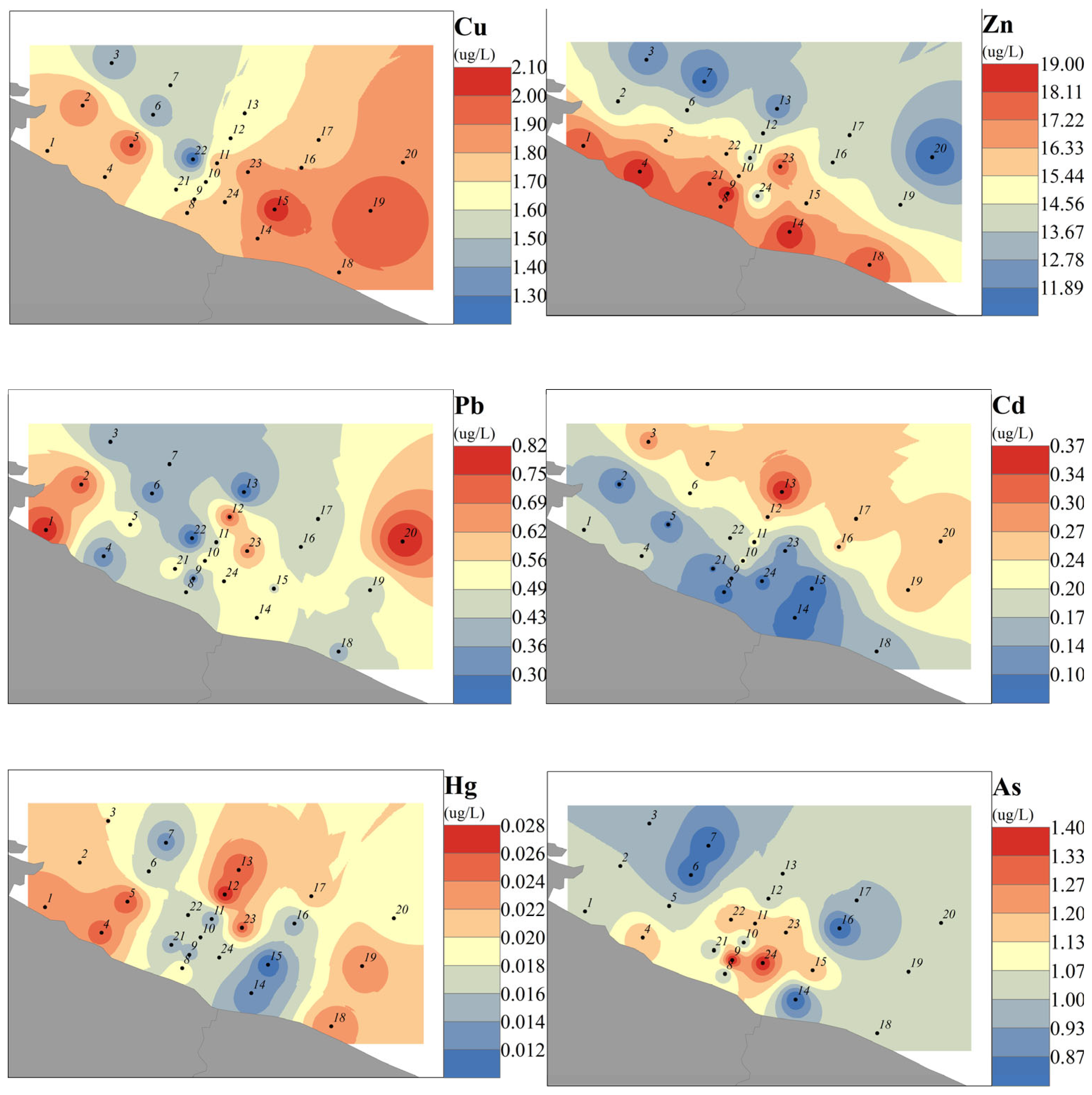
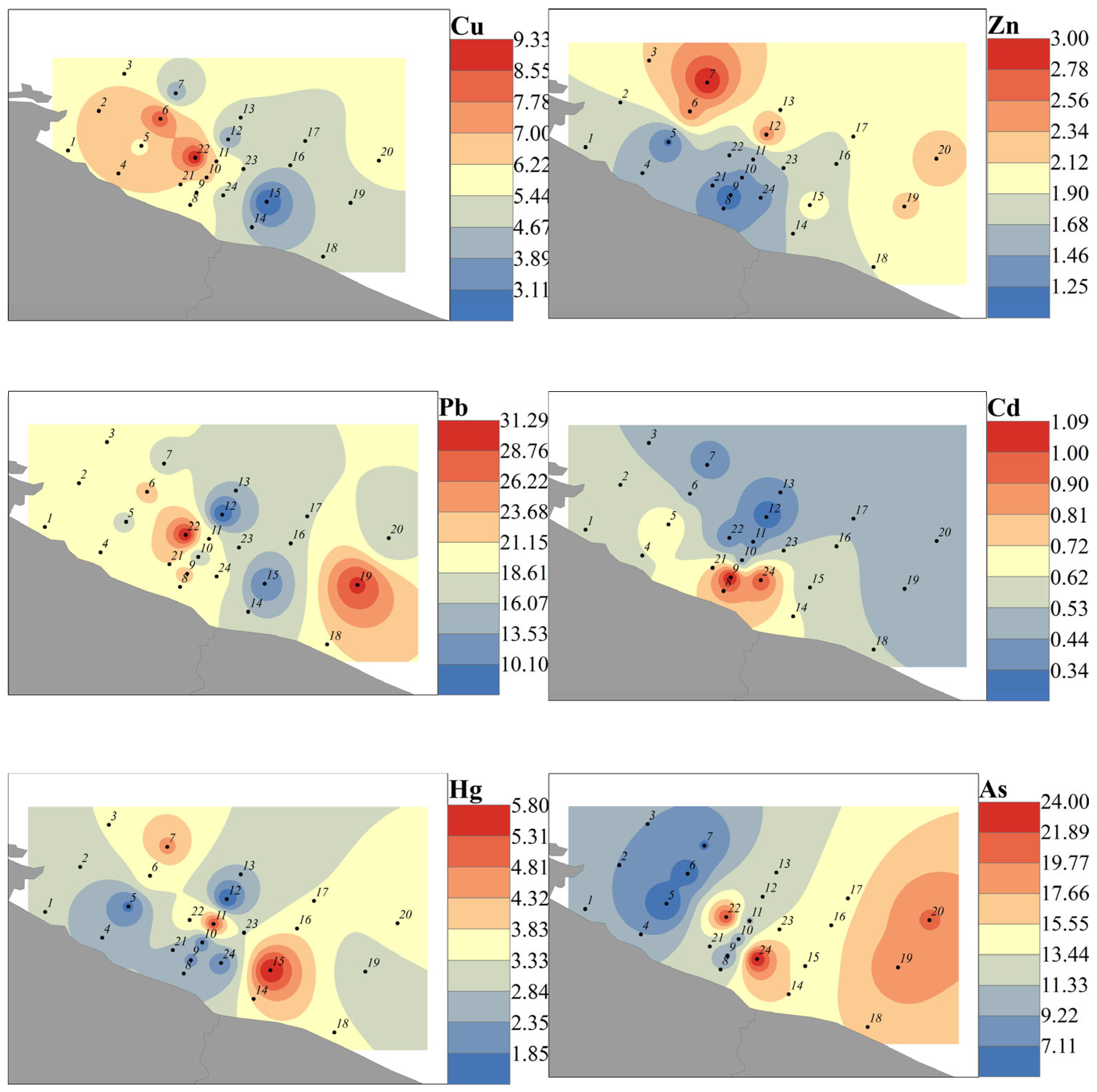
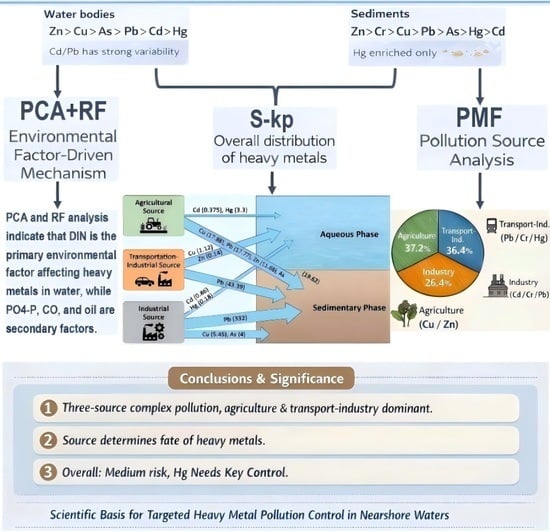
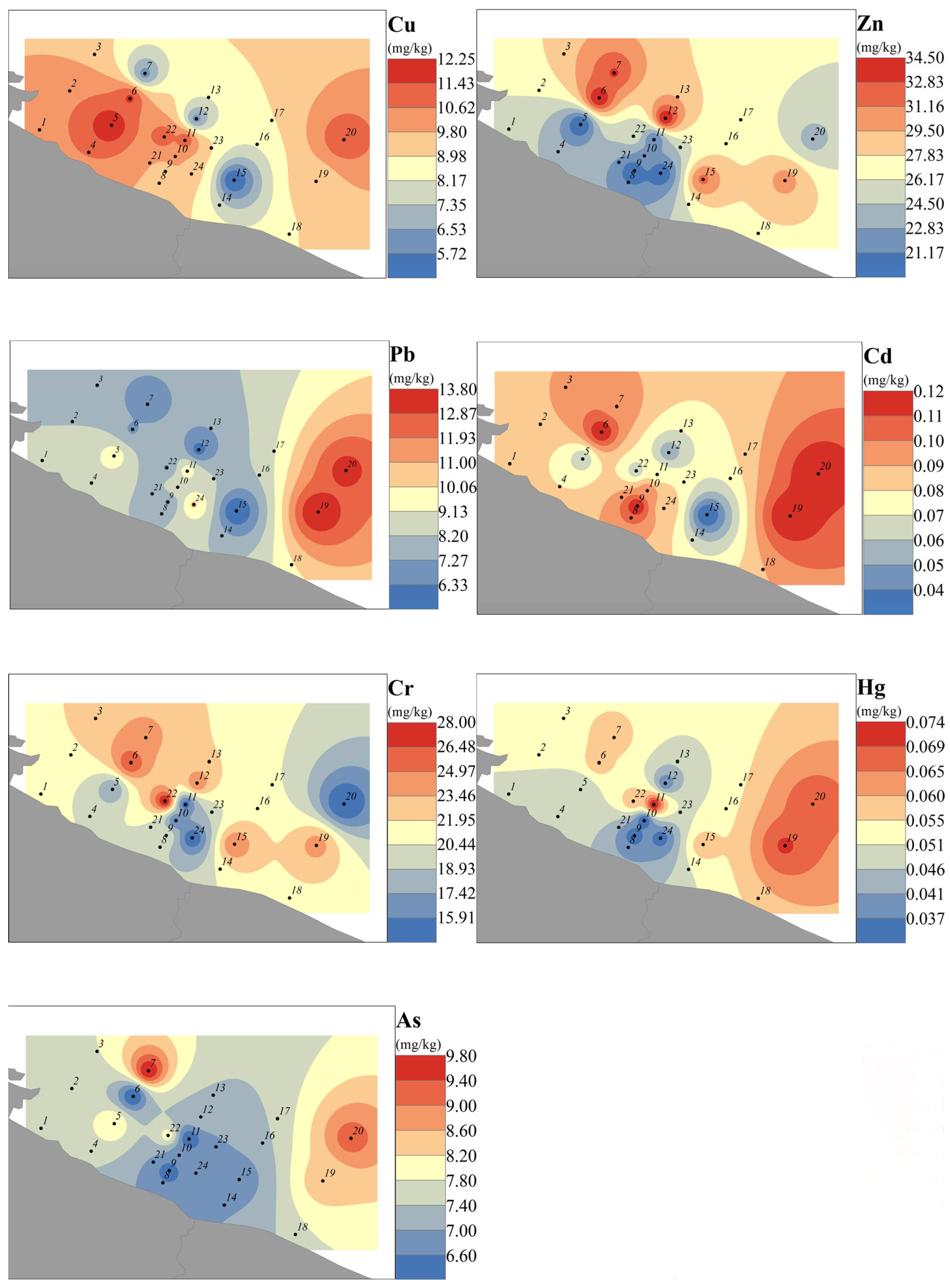
- The study area exhibits a low overall heavy metal pollution risk, but with localized accumulation and specific element concerns. The contents of heavy metals in water all complied with the national Class III seawater quality standards. Assessment using the Risk Quotient (RQ) indicated an overall low-to-moderate ecological risk level. Sediment heavy metal concentrations were generally below the Class I sediment quality standards. The geo-accumulation index (Igeo) revealed only slight to moderate enrichment of As, identifying it as the primary element of concern, while other elements showed no significant anthropogenic enrichment. Spatially, elements with strong spatial variability (e.g., Cd and Pb) and elements with moderate spatial variability (e.g., Hg) exhibited significant local heterogeneity, suggesting the influence of point sources or specific human activities.
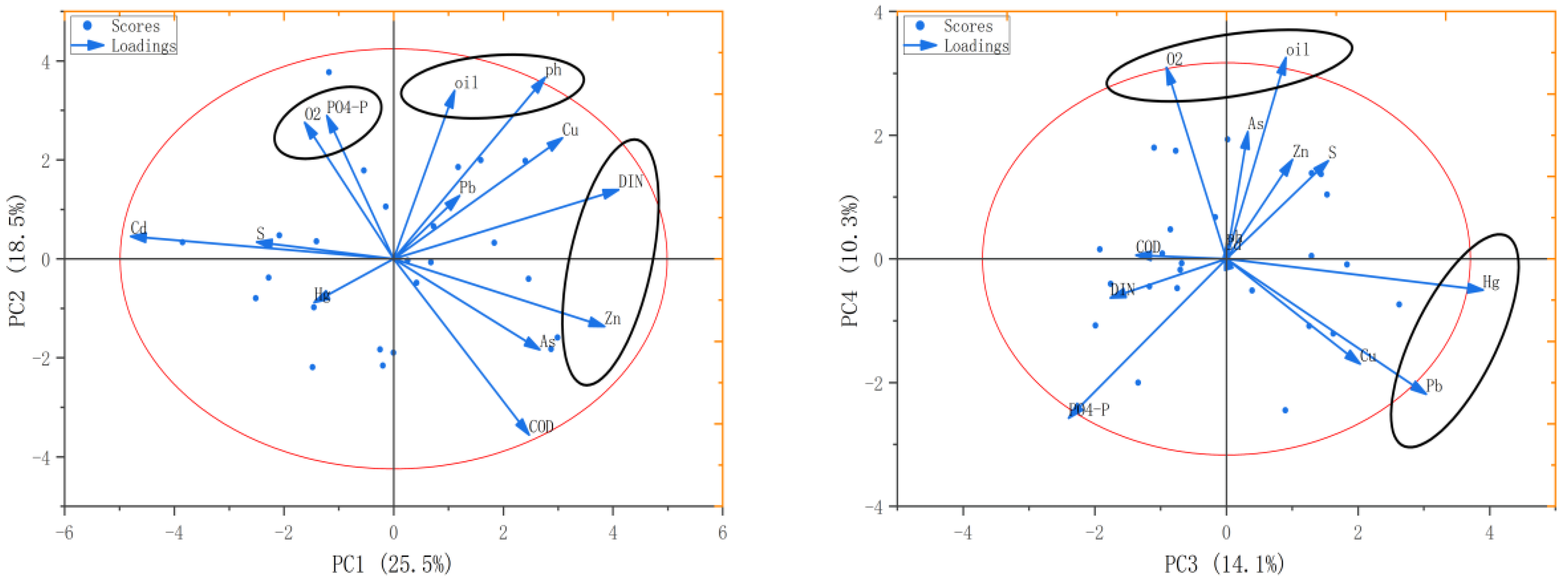
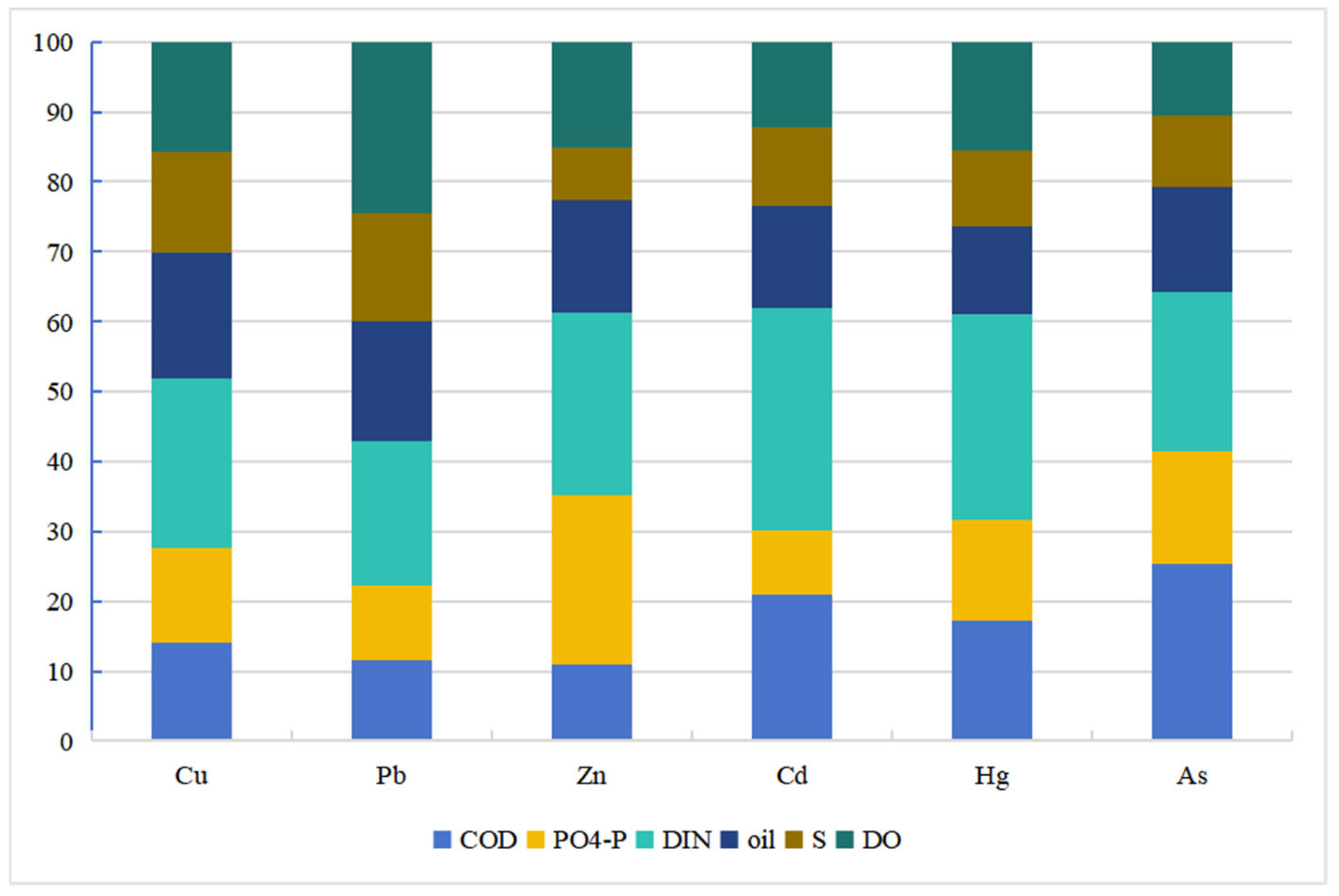
- Heavy metal distribution is significantly regulated by environmental factors, with dissolved inorganic nitrogen (DIN) playing a common dominant role. Combined PCA and random forest models revealed that the distribution of dissolved heavy metals in water is complexly influenced by multiple environmental factors. Among these, DIN demonstrated a common, core regulatory role across different heavy metals. It was the primary factor driving the distribution of Zn, As, and Cd and also significantly influenced the occurrence of Hg, Cu, and Pb. Dissolved oxygen (DO), phosphate phosphorus (PO4-P), oil content, and chemical oxygen demand (COD) acted as secondary factors, with their influence showing distinct heavy metal specificity.
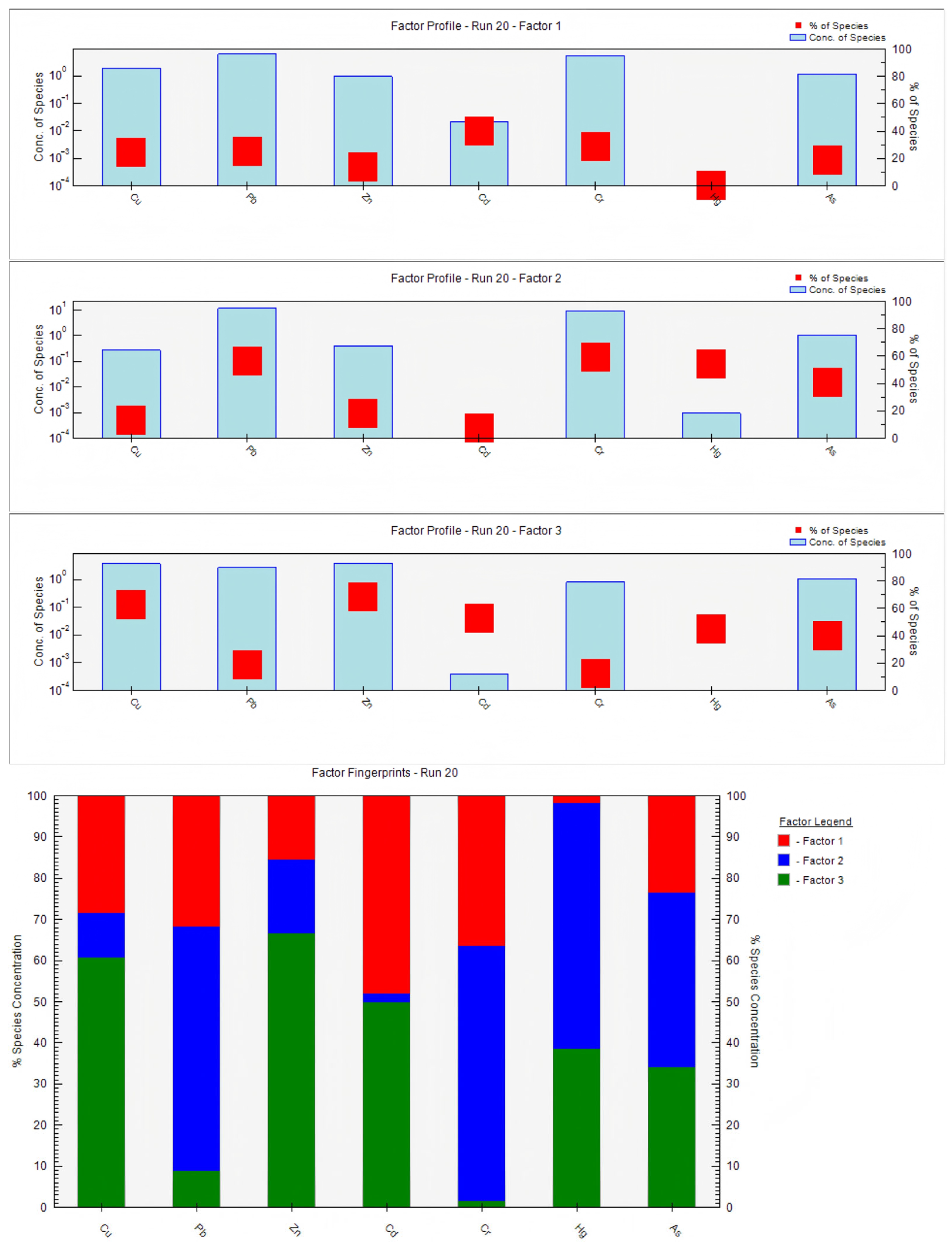
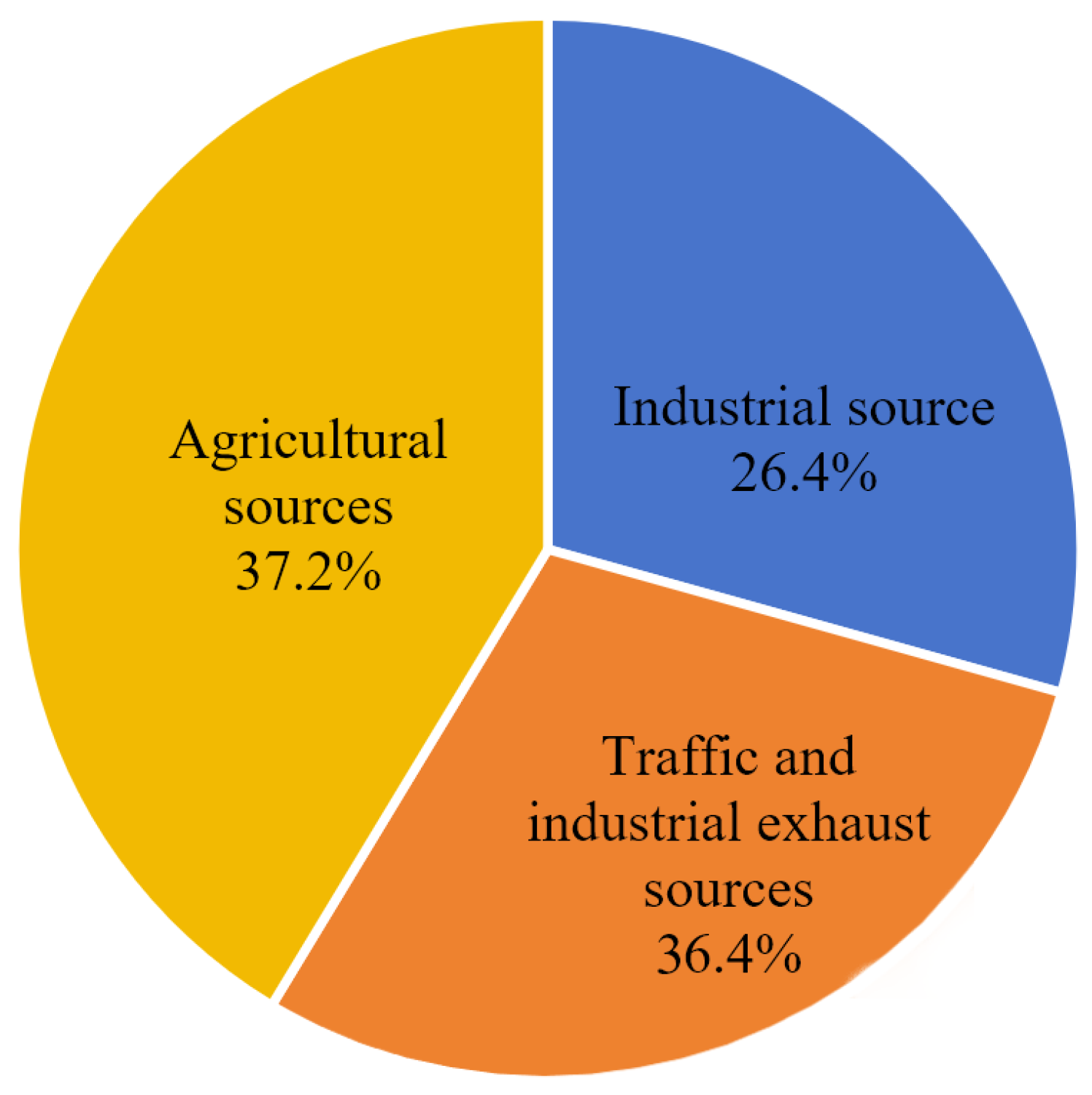
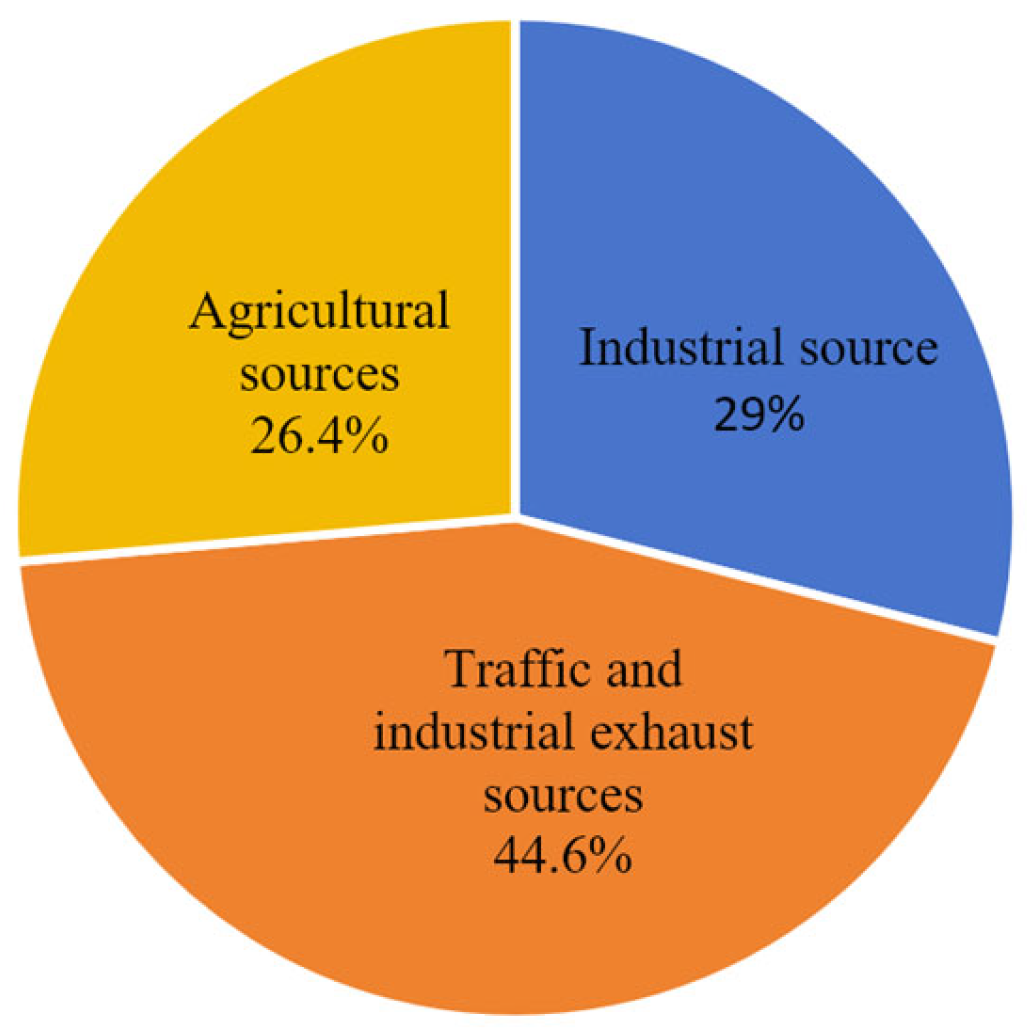
- Sediment heavy metals originate from a typical “industry-agriculture-traffic” composite pollution pattern. PMF source apportionment results indicated that sediment heavy metals primarily stem from three pollution sources with comparable contributions: agricultural sources, traffic and industrial exhaust sources, and industrial sources. Agricultural sources were the main contributors to Cu and Zn. Traffic and industrial exhaust sources dominated the inputs of Pb, Cr, and Hg, highlighting the importance of atmospheric deposition pathways. Industrial sources made prominent contributions to Cd, Cr, and Pb, reflecting the influence of adjacent industrial zones.
- The partitioning behavior of heavy metals at the sediment–water interface shows significant source-specific differences. The overall partition coefficients (Kp) indicated that Pb, As, and Cu are more readily adsorbed and immobilized in sediments, while Cd, Hg, and Zn tend to remain in the aqueous phase, possessing higher mobility and potential bioavailability. More importantly, S-Kp analysis revealed that the partitioning behavior of the same heavy metal element between the two phases differs fundamentally depending on its source. For example, Pb derived from industrial sources was almost entirely allocated to sediment, while traffic and industrial exhaust-source Cu and Zn were mainly distributed in the water column. Agricultural-source Cu, Pb, Zn, and As were prone to settle with particulates, yet the Cd and Hg inputs from this source remained higher in the aqueous phase. This unveils the new insight that the “pollution source determines environmental fate”.
Author Contributions
Funding
Institutional Review Board Statement
Informed Consent Statement
Data Availability Statement
Acknowledgments
Conflicts of Interest
Abbreviations
| PCA | Principal component analysis |
| PMF | Positive matrix factorization |
| RF | Random forest |
| Kp | Partition coefficient |
| S-Kp | Source-specific partition coefficient |
| Cu | Copper |
| Zn | Zinc |
| Pb | Plumbum |
| Cr | Chromium |
| As | Arsenic |
| Hg | Mercury |
| Cd | Cadmium |
References
- Masindi, V.; Mkhonza, P.; Tekere, M. Sources of heavy metals pollution. In Remediation of Heavy Metals; Masindi, V., Tekere, M., Eds.; Springer International Publishing: Berlin/Heidelberg, Germany, 2021; pp. 419–454. [Google Scholar] [CrossRef]
- Zhao, Y.; Li, J.; Liu, H. Heavy metal pollution in coastal sediments of the Yellow Sea: A review. Mar. Pollut. Bull. 2019, 149, 110652. [Google Scholar] [CrossRef]
- Angon, P.B.; Islam, M.S.; Das, A.; Anjum, N.; Poudel, A.; Suchi, S.A. Sources, effects and present perspectives of heavy metals contamination: Soil, plants and human food chain. Heliyon 2024, 10, e28741. [Google Scholar] [CrossRef]
- Liao, J.; Qian, X.; Liu, F.; Deng, S.; Lin, H.; Liu, X.; Wei, C. Multiphase distribution and migration characteristics of heavy metals in typical sandy intertidal zones: Insights from solid-liquid partitioning. Ecotoxicol. Environ. Saf. 2021, 208, 111674. [Google Scholar] [CrossRef] [PubMed]
- Wang, X.; Chen, J.; Zhang, L. Distribution and partitioning of heavy metals in water-sediment system of a typical coastal wetland in eastern China. Ecotoxicol. Environ. Saf. 2021, 214, 112103. [Google Scholar] [CrossRef]
- Han, S.H.; Wang, C.; Liu, X.P.; Yu, Y.; Xu, M.Q.; Shang, Q.W. On distribution characteristics and pollution evaluation of soil heavy metals in rice producing areas of Lianyungang. J. Southwest China Norm. Univ. (Nat. Sci. Ed.) 2021, 46, 74–78. [Google Scholar]
- Gao, Q.; Wang, N.; Xiang, L.; Sui, Q. Distribution and pollution assessment of heavy metals in seawater, surface sediments and marine organisms in Lianyungang offshore, China. Reg. Stud. Mar. Sci. 2025, 84, 104111. [Google Scholar] [CrossRef]
- Li, W.; Liu, F.; Zhang, W.; Wang, X. Spatial distribution, sources, and ecological risk assessment of heavy metals in Lianyungang coastal sediments of China. Environ. Monit. Assess. 2025, 197, 280. [Google Scholar] [CrossRef]
- Jin, M.; Yuan, H.; Liu, B.; Peng, J.; Xu, L.; Yang, D. Review of the distribution and detection methods of heavy metals in the environment. Anal. Methods 2020, 12, 5747–5766. [Google Scholar] [CrossRef]
- Liu, J.; Kang, H.; Tao, W.; Li, H.; He, D.; Ma, L.; Tan, Y.; Li, X. A spatial distribution–Principal component analysis (SD-PCA) model to assess pollution of heavy metals in soil. Sci. Total Environ. 2023, 859, 160112. [Google Scholar] [CrossRef] [PubMed]
- Zhiyuan, W.; Dengfeng, W.; Huiping, Z.; Zhiping, Q.I. Assessment of soil heavy metal pollution with principal component analysis and geoaccumulation index. Procedia Environ. Sci. 2011, 10, 1946–1952. [Google Scholar] [CrossRef]
- Chen, H.; Wu, D.; Wang, Q.; Fang, L.; Wang, Y.; Zhan, C.; Liu, Y.; Liu, S.; Shen, J. The predominant sources of heavy metals in different types of fugitive dust determined by principal component analysis (PCA) and positive matrix factorization (PMF) modeling in Southeast Hubei: A typical mining and metallurgy area in Central China. Int. J. Environ. Res. Public Health 2022, 19, 13227. [Google Scholar] [CrossRef]
- Paatero, P.; Tapper, U. Positive matrix factorization: A non-negative factor model with optimal utilization of error estimates of data values. Environmetrics 1994, 5, 111–126. [Google Scholar] [CrossRef]
- Wang, D.K.; Xu, L.M.; Zheng, J.L.; Bi, X.; Yao, Y.; Cai, Y.; Guo, X.; Liu, J.; Tan, B. Analysis of current status and source apportionment of soil heavy metal pollution based on PMF model and Pb isotope tracing. Geol. Bull. China 2025. Available online: https://link.cnki.net/urlid/11.4648.p.20250911.1014.002 (accessed on 27 January 2026).
- Miranda, L.S.; Wijesiri, B.; Ayoko, G.A.; Egodawatta, P.; Goonetilleke, A. Water-sediment interactions and mobility of heavy metals in aquatic environments. Water Res. 2021, 202, 117386. [Google Scholar] [CrossRef] [PubMed]
- Kong, M.; Zhu, Y.; Han, T.; Zhang, S.; Li, J.; Xu, X.; Gao, Y. Interactions of heavy metal elements across sediment-water interface in Lake Jiaogang. Environ. Pollut. 2021, 286, 117578. [Google Scholar] [CrossRef] [PubMed]
- Zhao, H.; Chen, X.D.; Li, M. Application of specific partition coefficient in source apportionment of heavy metals at the water-sediment interface. China Environ. Sci. 2023, 43, 689–698. [Google Scholar]
- GB 17378.3–2007; The Specification for Marine Monitoring—Part 3: Sample Collection, Storage and Transportation. General Administration of Quality Supervision, Inspection and Quarantine of the People’s Republic of China, & Standardization Administration of the People’s Republic of China. China Standards Press: Beijing, China, 2008.
- HY/T 147.1–2013; Specification for Ocean Monitoring Technology—Part 1: Sea Water. State Oceanic Administration. China Standards Press: Beijing, China, 2013.
- HY/T 147.2–2013; Specification for Ocean Monitoring Technology—Part 2: Sediment. State Oceanic Administration. China Standards Press: Beijing, China, 2013.
- GB 17378.5–2007; The Specification for Marine Monitoring—Part 5: Sediment Analysis. National Technical Committee for Marine Standardization (SAC/TC 283). China Standards Press: Beijing, China, 2007.
- Pang, K.; Luo, K.; Zhang, S.; Hao, L. Source-oriented health risk assessment of groundwater based on hydrochemistry and two-dimensional Monte Carlo simulation. J. Hazard. Mater. 2024, 479, 135666. [Google Scholar] [CrossRef]
- Men, C.; Wang, Y.; Liu, R.; Wang, Q.; Miao, Y.; Jiao, L.; Shoaib, M.; Shen, Z. Temporal variations of levels and sources of health risk associated with heavy metals in road dust in Beijing from May 2016 to April 2018. Chemosphere 2021, 270, 129434. [Google Scholar] [CrossRef]
- Wang, N.; Wang, N.; Qi, D.; Kang, G.; Wang, W.; Zhang, C.; Zhang, Z.; Zhang, Y.; Zhang, H.; Zhang, S.; et al. Comprehensive overview of antibiotic distribution, risk and priority: A study of large-scale drinking water sources from the lower Yangtze River. J. Environ. Manag. 2023, 344, 118705. [Google Scholar] [CrossRef]
- Liu, T.; Wang, M.; Wang, M.; Xiong, Q.; Jia, L.; Ma, W.; Guo, X. Identification of the primary pollution sources and dominant influencing factors of soil heavy metals using a random forest model optimized by genetic algorithm coupled with geodetector. Ecotoxicol. Environ. Saf. 2025, 290, 117731. [Google Scholar] [CrossRef]
- Zhang, L.; Bai, J.; Zhang, K.; Zhai, Y.; Wang, Y.; Liu, H.; Xiao, R.; Jorquera, M.A.; Xia, J. Spatial variability, source identification and risks assessment of antibiotics in multimedia of North China’s largest freshwater lake using positive matrix factorization and Monte Carlo simulation. J. Hazard. Mater. 2023, 457, 131751. [Google Scholar] [CrossRef]
- Li, Q.; Gao, J.; Zhang, Q.; Liang, L.; Tao, H. Distribution and risk assessment of antibiotics in a typical river in North China plain. Bull. Environ. Contam. Toxicol. 2017, 98, 478–483. [Google Scholar] [CrossRef]
- Day, J.W.; Rivera-Arriaga, E.; del Carmen Peña-Puch, A.; Hunter, R.G. Sustainability of Gulf of Mexico coastal estuaries and lagoons: Interactions with hydrocarbon production—A review with a look to the future. Sustainability 2024, 16, 8601. [Google Scholar] [CrossRef]
- Lin, Z.; Li, J.; Luan, Y.; Dai, W. Application of algae for heavy metal adsorption: A 20-year meta-analysis. Ecotoxicol. Environ. Saf. 2020, 190, 110089. [Google Scholar] [CrossRef]
- Zhang, R.; Zhang, F.; Ding, Y.; Gao, J.; Chen, J.; Zhou, L. Historical trends in the anthropogenic heavy metal levels in the tidal flat sediments of Lianyungang, China. J. Environ. Sci. 2013, 25, 1458–1468. [Google Scholar] [CrossRef]
- GB 3097–1997; Sea Water Quality Standard. State Oceanic Administration. China Standards Press: Beijing, China, 1997.
- Wheeler, J.R.; Grist, E.P.M.; Leung, K.M.Y.; Morritt, D.; Crane, M. Species sensitivity distributions: Data and model choice. Mar. Pollut. Bull. 2002, 45, 192–202. [Google Scholar] [CrossRef] [PubMed]
- Li, P.; Guo, X.; Yang, Q.; Luo, X.; Liu, F.; Dong, H.; Tan, C. Current status of heavy metal pollution in nearshore waters of the Pearl River Estuary. Mar. Environ. Sci. 2017, 36, 746–753. [Google Scholar]
- Ebrahimi-Sirizi, Z.; Riyahi-Bakhtiyari, A.; Ghasempouri, S.M. Heavy metals in Persian Gulf coastal waters: Pollution, sources, and ecological risk assessment. Mar. Pollut. Bull. 2022, 183, 114125. [Google Scholar] [CrossRef]
- U.S. Environmental Protection Agency (USEPA). Chesapeake Bay Water Quality Monitoring Program 2021; Report No. EPA-903-R-22-001; USEPA: Washington, DC, USA, 2022.
- Hwang, K.; Lee, J.; Kwon, I.; Park, S.Y.; Yoon, S.J.; Lee, J.; Khim, J.S. Large-scale sediment toxicity assessment over the 15,000 km of coastline in the Yellow and Bohai seas, East Asia. Sci. Total Environ. 2021, 792, 148371. [Google Scholar] [CrossRef]
- GB 18668–2002; Marine Sediment Quality. National Center of Ocean Standards and Metrology. China Standards Press: Beijing, China, 2002.
- Zaakour, F.; Kholaiq, M.; Khouchlaa, A.; El Mjiri, I.; Rahimi, A.; Saber, N. Assessment of heavy metal contamination using pollution index, geo-accumulation index, and potential ecological risk index in agricultural soil–A case study in the coastal area of Doukkala (Morocco). Ecol. Eng. Environ. Technol. 2023, 24, 160–173. [Google Scholar] [CrossRef]
- Wedepohl, K.H. The composition of the continental crust. Geochim. Cosmochim. Acta 1995, 59, 1217–1232. [Google Scholar] [CrossRef]
- Wang, R.; Zhang, C.; Huang, X.; Zhao, L.; Yang, S.; Struck, U.; Yin, D. Distribution and source of heavy metals in the sediments of the coastal East China sea: Geochemical controls and typhoon impact. Environ. Pollut. 2020, 260, 113936. [Google Scholar] [CrossRef] [PubMed]
- Abbasi, A.; Mirekhtiary, F. Heavy metals and natural radioactivity concentration in sediments of the Mediterranean Sea coast. Mar. Pollut. Bull. 2020, 154, 111041. [Google Scholar] [CrossRef] [PubMed]
- Ramasamy, V.; Senthil, S.; Paramasivam, K.; Suresh, G. Potential toxicity of heavy metals in beach and intertidal sediments: A comparative study. Acta Ecol. Sin. 2022, 42, 57–67. [Google Scholar] [CrossRef]
- Li, Y.; Gong, X. Effects of dissolved organic matter on the bioavailability of heavy metals during microbial dissimilatory iron reduction: A review. Rev. Environ. Contam. Toxicol. 2021, 257, 69–92. [Google Scholar]
- Zhao, S.; Feng, C.; Wang, D.; Liu, Y.; Shen, Z. Salinity increases the mobility of Cd, Cu, Mn, and Pb in the sediments of Yangtze Estuary: Relative role of sediments’ properties and metal speciation. Chemosphere 2013, 91, 977–984. [Google Scholar] [CrossRef]
- Mphuthi, B.R. Assessing the Pollutant Removal Efficiency of a Wetland as a Polishing Treatment for Municipal Wastewater. Master’s Thesis, Vaal University of Technology, Vanderbijlpark, South Africa, 2021. [Google Scholar]
- Liu, Z.; Fei, Y.; Shi, H.; Mo, L.; Qi, J. Prediction of high-risk areas of soil heavy metal pollution with multiple factors on a large scale in industrial agglomeration areas. Sci. Total Environ. 2022, 808, 151874. [Google Scholar] [CrossRef]
- Jiao, Y.F.; Wang, Y. Study on heavy metal content in soil of chemical industry zone in Lianyungang City. Sci. Technol. Vis. 2018, 228–229. [Google Scholar] [CrossRef]
- Han, R.; Luo, H.; Leng, H.; Wu, W.; Chen, L.; Liu, M.; He, B.J. Risk assessment of heavy metals in road dust and simulation of pollutant release in Lianyungang city. Chem. Ecol. 2025, 41, 995–1020. [Google Scholar] [CrossRef]
- Abderrahmane, B.; Naima, B.; Tarek, M.; Abdelghani, M. Influence of highway traffic on contamination of roadside soil with heavy metals. Civ. Eng. J. 2021, 7, 1459–1471. [Google Scholar] [CrossRef]
- Yuan, L.; Liu, Q.; Jian, H.; Mi, T.; Yang, F.; Yao, Q. Spatial and temporal distribution of metal elements in the rivers of Northern Jiangsu Province. J. Ocean Univ. China 2025, 24, 157–168. [Google Scholar] [CrossRef]
- Wan, Y.; Liu, J.; Zhuang, Z.; Wang, Q.; Li, H. Heavy metals in agricultural soils: Sources, influencing factors, and remediation strategies. Toxics 2024, 12, 63. [Google Scholar] [CrossRef] [PubMed]
- Salem, M.A.; Bedade, D.K.; Al-Ethawi, L.; Al-Waleed, S.M. Assessment of physiochemical properties and concentration of heavy metals in agricultural soils fertilized with chemical fertilizers. Heliyon 2020, 6, e05224. [Google Scholar] [CrossRef] [PubMed]







| Statistic | Cu | Pb | Zn | Cd | Hg | As |
|---|---|---|---|---|---|---|
| Maximum/(μg/L) | 2.1 | 0.82 | 19 | 0.37 | 0.028 | 1.4 |
| Minimum/(μg/L) | 1.2 | 0.23 | 11 | 0.07 | 0.01 | 0.8 |
| Standard deviation/(μg/L) | 1.73 | 0.49 | 15.3 | 0.18 | 0.019 | 1.04 |
| Coefficient of variation (%) | 12.1 | 31.85 | 16.5 | 43.87 | 26.11 | 15.65 |
| Maritime Space | Year | Cu (μg/L) | Pb (μg/L) | Zn (μg/L) | Cd (μg/L) | Hg (μg/L) | Data Source |
|---|---|---|---|---|---|---|---|
| This Research | 2021 | 1.73 | 0.49 | 15.83 | 0.19 | 0.021 | This study |
| Pearl River Estuary | 2018 | 2.56 | 0.82 | 22.1 | 0.31 | 0.035 | [33] |
| Hormuz | 2022 | 4.8 | 1.5 | 42.3 | 0.45 | 0.058 | [34] |
| Chesapeake Bay | 2021 | 1.5 | 0.45 | 14.7 | 0.18 | 0.020 | [35] |
| Coast of Korea | 2021 | 3 | 0.19 | 26.2 | 0.19 | 0.018 | [36] |
| Statistic | Cu | Pb | Zn | Cd | Cr | Hg | As |
|---|---|---|---|---|---|---|---|
| Maximum/(mg/kg) | 12.25 | 34.5 | 13.8 | 0.12 | 28 | 0.074 | 9.8 |
| Minimum/(mg/kg) | 4.9 | 19.5 | 5.4 | 0.04 | 14.4 | 0.032 | 6.2 |
| Standard deviation/(mg/kg) | 9.42 | 26.25 | 8.75 | 0.09 | 20.8 | 0.053 | 7.5 |
| Coefficient of variation (%) | 24.24 | 22.19 | 29.42 | 28.58 | 23.34 | 27.56 | 15.45 |
| Maritime Space | Year | Cu (mg/kg) | Pb (mg/kg) | Zn (mg/kg) | Cd (mg/kg) | Cr (mg/kg) | Data Source |
|---|---|---|---|---|---|---|---|
| This Research | 2021 | 9.42 | 26.25 | 8.75 | 0.09 | 20.8 | This study |
| Indian coastal | 2020 | 43.35 | 51.92 | 145.54 | / | 79.35 | [42] |
| Mediterranean coastal | 2020 | 25.91 | 15.47 | 45.84 | / | 32.6 | [41] |
| East China Sea | 2015 | 25 | 24.8 | 79.1 | 0.096 | / | [40] |
| Factors | Cu | Pb | Zn | Cd | Hg | As |
|---|---|---|---|---|---|---|
| Industrial source | 5.45 | 332 | 0.12 | 0.86 | 0.18 | 4 |
| Traffic and industrial sources | 1.12 | 43.39 | 0.14 | 0.2 | 4 | 6.8 |
| Agricultural sources | 17.88 | 17.77 | 11.66 | 0.375 | 3.3 | 19.62 |
Disclaimer/Publisher’s Note: The statements, opinions and data contained in all publications are solely those of the individual author(s) and contributor(s) and not of MDPI and/or the editor(s). MDPI and/or the editor(s) disclaim responsibility for any injury to people or property resulting from any ideas, methods, instructions or products referred to in the content. |
© 2026 by the authors. Licensee MDPI, Basel, Switzerland. This article is an open access article distributed under the terms and conditions of the Creative Commons Attribution (CC BY) license.
Share and Cite
Liu, W.; Li, Y.; Wang, X.; Cao, Y. Sources of Heavy Metals and Their Effects on Distribution at the Sediment–Water Interface of the Yellow Sea Shelf off Northern Jiangsu. Toxics 2026, 14, 133. https://doi.org/10.3390/toxics14020133
Liu W, Li Y, Wang X, Cao Y. Sources of Heavy Metals and Their Effects on Distribution at the Sediment–Water Interface of the Yellow Sea Shelf off Northern Jiangsu. Toxics. 2026; 14(2):133. https://doi.org/10.3390/toxics14020133
Chicago/Turabian StyleLiu, Wenyu, Yu Li, Xinjun Wang, and Yuhan Cao. 2026. "Sources of Heavy Metals and Their Effects on Distribution at the Sediment–Water Interface of the Yellow Sea Shelf off Northern Jiangsu" Toxics 14, no. 2: 133. https://doi.org/10.3390/toxics14020133
APA StyleLiu, W., Li, Y., Wang, X., & Cao, Y. (2026). Sources of Heavy Metals and Their Effects on Distribution at the Sediment–Water Interface of the Yellow Sea Shelf off Northern Jiangsu. Toxics, 14(2), 133. https://doi.org/10.3390/toxics14020133