


Abstract
Background: In the era of rapid technological advancement, digital transformation has emerged as a pivotal strategy for enhancing operational efficiency and competitiveness in logistics enterprises, particularly amid globalization and post pandemic recovery; this study aims to evaluate its multifaceted impact on business performance using a multi-criteria framework focused on Vietnamese firms. Methods: Employing structural equation modeling on primary survey data from 346 middle and senior level managers, alongside the Malmquist productivity index derived from data envelopment analysis on secondary financial indicators spanning 2020 to 2024, the research integrates latent variables such as organizational capability, technological innovation capability, institutional pressure, digital transformation, and business performance. Results: Key findings reveal a strong positive correlation between technological innovation capability and organizational capability (path coefficient 0.522), with organizational capability directly influencing business performance (0.359), while institutional pressure positively affects digital transformation (0.321) but negatively impacts business performance (−0.152); overall, digital transformation exhibits limited optimization, contributing to modest productivity gains and a potential 23% cost reduction through technologies like Internet of Things and artificial intelligence. Conclusions: These results underscore the necessity for logistics enterprises to strengthen organizational integration and training to maximize digital transformation benefits, thereby fostering sustainable competitiveness in global supply chains.
1. Introduction
1.1. Digital Transformation
Digital Transformation (DT) has become a central focus in business and management research in the digital era. The development of advanced technologies has created a new context, compelling businesses to adapt in order to maintain their competitive capabilities and achieve sustainable development [1]. Digital transformation is not merely the digitization of information or the automation of processes, but a comprehensive transformation process that includes corporate culture, business models, operational processes, and customer experience through the integration of digital technology into every aspect of the organization [2,3]. In the current context, DT is diverse, affecting various industries and business scales. Recent studies have focused on analyzing the drivers and barriers of digital transformation, its impact on operational performance and innovation, as well as developing frameworks and models to assess the digital maturity of organizations [4,5]. Particularly, after the COVID-19, the awareness of the importance of digital transformation has been reinforced, as businesses were forced to adapt quickly to the changing business environment and increase their reliance on digital platforms to sustain operations [6].
1.2. Literature Review
Digital transformation is a profound and rapid process of change in business activities, processes, capabilities, and organizational models to fully exploit the opportunities brought by digital technologies, according to a clearly prioritized strategy [7,8]. Digital transformation includes the digitization of sales and communication channels, creating new ways to interact with and attract customers, while also digitizing products and services to supplement or replace existing physical products. Furthermore, digital transformation promotes changes in business models through the application of digital technology, leading to improvements in products, organizational structures, and process automation [9,10]. According to the General Statistics Office of Vietnam (GSO), over 98.1% of all enterprises in Vietnam are SMEs, of which 99% face capital difficulties. For logistics service enterprises, 62.3% have a registered capital of less than VND 3 billion, and 31.5% have capital from VND 3 to 50 billion (Vietnamese Dong). Thus, 93.8% of logistics enterprises in Vietnam are SMEs [11]. A survey from the Vietnam Logistics Report (2023) on the investment costs for digital transformation shows that Vietnamese logistics enterprises are still limited in allocating their budgets for digital transformation. Specifically, 38% of surveyed enterprises spent less than VND 100 million, 39% spent between VND 100 million and 1 billion, and only 23% invested over VND 1 billion in digital transformation activities. This reflects a modest level of investment, which may affect the competitiveness and sustainable development of the logistics industry in the context of digitalization.
Researchers worldwide have applied Data Envelopment Analysis (DEA) and its extended models, such as the Malmquist productivity index (MPI) and the Super slacks-based model, to measure and compare operational efficiency in many fields. Among them, the MPI is used by authors to evaluate the operational performance of enterprises in a multi-dimensional manner, considering multiple input and output factors, while also analyzing efficiency at a specific point in time as well as productivity changes over time.
In 2021, author Khanh Nguyen [12] used the MPI to study the impact of the COVID-19 pandemic on logistics enterprises in Vietnam. The research results proposed a strategic cooperation solution between companies in the South and the North, helping parties leverage geographical advantages to exploit two-way freight transport, thereby saving significant logistics costs and enhancing competitiveness.
The study by Wang and Cahilig [13] focused on measuring and comparing the efficiency of the world’s leading innovative economies. The study provides a toolkit for transforming input resources into positive outcomes for the labor market. Digital transformation in the logistics industry has attracted great interest from researchers, with many quantitative methods being applied to analyze various aspects of this process. In 2025, the research group of Zhang, Fu, and Lu used an integrated model set to analyze the relationship between digital transformation and operational performance at logistics enterprises in China [14]. The results showed that operational performance was not yet stable, but there was a coordination between digital transformation and operational performance in the early stages. The study forecasted that this level of coordination will grow steadily in the future, while also emphasizing the significant differences in performance and technology integration levels among the road, waterway, and air transport sub-sectors. Also in 2025, a study by Oncioiu, Mandricel, and Hojda approached this topic by using Structural Equation Modeling (SEM) to identify the driving factors of AI-based digital transformation in the circular logistics sector [15].
2. Research Development
2.1. Identifying the Research Objectives
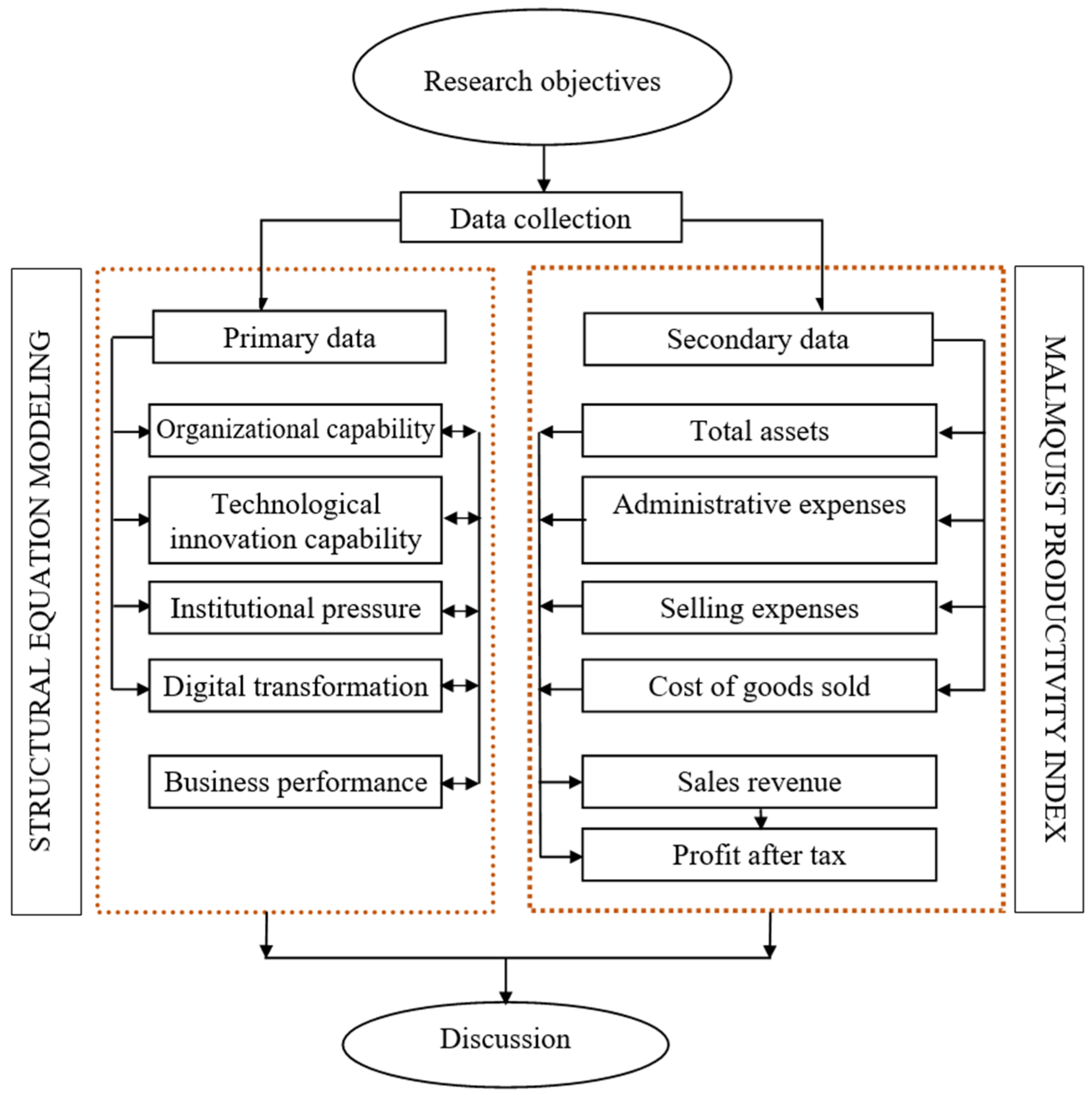
Currently, digital transformation is taking place in diverse forms, affecting various industries and businesses of different scales. Digital transformation is understood as a comprehensive change process that begins with transforming awareness, in which agencies and organizations fully digitize all assets and information, restructure operational processes and business activities, reorganize organizational structures, and simultaneously shift relationships from the traditional environment to the digital environment. Against this backdrop, studying the impact of digital transformation on the business performance of logistics enterprises using a multi-criteria evaluation approach is of urgent importance in order to provide strategic orientation for enterprises in the new economic era (this research development as in Figure 1).
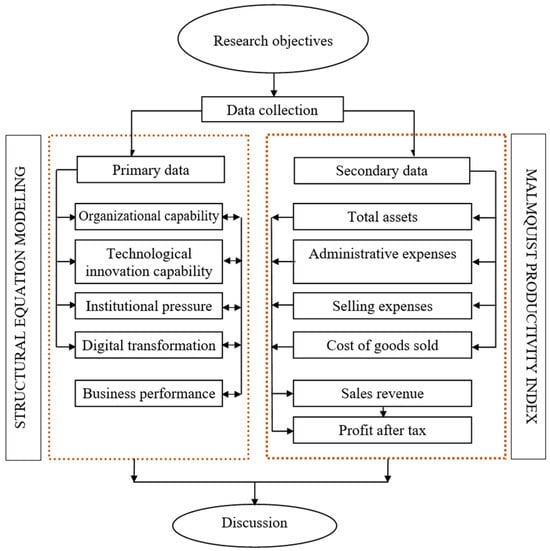
Figure 1.
Research development.
Structural equation modeling elucidates causal mechanisms among latent variables organizational capability, technological innovation capability, institutional pressure, digital transformation, and business performance derived from perceptual primary data, revealing subdued pathways attributable to implementation constraints. These insights contextualize the Malmquist productivity index analysis, which quantifies temporal efficiency shifts using objective financial inputs (total assets, cost of goods sold, administrative expenses, selling expenses). Thus, structural equation modeling provides explanatory depth for the quantitative productivity variations observed in data envelopment analysis.
2.2. Data Collection
Primary data: The delineation of observed variables in econometric modeling for logistics inquiries follows a logically sequenced, methodologically rigorous protocol, integrating theoretical underpinnings with empirical validation for practical deployment in volatile supply chains. Commencing with contextual objective articulation via exhaustive literature synthesis drawing on resource-based and institutional theories a provisional structural model and measurement scales are formulated, aligning latent constructs to avert endogeneity in cross-sectional analyses. Subsequent qualitative calibration engages expert consultations with senior logistics executives, refining scales to encapsulate emerging-market volatilities, thereby enhancing construct validity through inductive-deductive integration. A pilot quantitative phase surveys 100 stratified practitioners, applying Cronbach’s alpha (≥0.7) for reliability and confirmatory factor analysis (fit indices like CFI > 0.9) for convergent validity, informing iterative revisions. Finalization yields a robust instrument, administered to 346 managers by Google Forms. The measured factors include:
Organizational capability: measures the ability to update market conditions, monitor competitors, and adapt flexibly to force majeure risks [16].
Technological innovation capability: focuses on the ability to absorb new technologies and improve logistics service processes [17].
Institutional pressure: reflects pressures from government regulations, industry norms, and requirements from partners [18].
Digital transformation: assesses the degree of integration of digital technologies into the business model, operational processes, and customer experience [19].
Business performance: measured based on perceptions of market share growth, customer satisfaction, and cost efficiency relative to competitors [20].
This methodology bolsters generalizability in Vietnamese logistics amid digital shifts, advancing multi-criteria productivity assessments for strategic policy formulation.
Secondary data: The authors collected six financial indicators from the audited reports of logistics enterprises, including revenue, cost of goods sold, total assets, selling expenses, administrative expenses, and after-tax profit for the period 2020–2024. The selection of inputs and outputs for the data envelopment analysis Malmquist productivity index framework is rigorously grounded in extant efficiency literature, capturing capital intensity, operational costs, and financial outcomes quintessential to logistics operations, as exemplified in Nguyen (2021) and Wang and Cahilig (2025) [12,13]. This configuration mitigates multicollinearity while facilitating intertemporal comparisons in resource-constrained Vietnamese small and medium sized enterprises, where such metrics proxy digital transformation’s efficacy in value creation amid heterogeneity across nine decision-making units.
2.3. Data Processing
Primary data: The study conducted a formal survey of 346 middle- and senior-level managers at logistics enterprises. The measurement instrument consisted of 24 observed variables, employing a 5-point Likert scale to capture experts’ evaluative opinions on these factors. After data collection, the author applied the PLS-SEM approach to test the seven research hypotheses, with a focus on clarifying the role of these factors in influencing the business performance of the enterprises.
Secondary data: The author processed the secondary data using the MPI. This method enables the assessment of changes in total factor productivity based on two main components: the Catch-up index (technical efficiency), which measures the enterprise’s ability to optimize existing resources in order to move closer to the industry’s best-practice efficiency frontier, and the Frontier-shift index (technological change), which reflects advancements in technology and innovation-particularly digital transformation.
3. Materials and Methods
3.1. Secondary Data Collection
The authors collected data from the financial reports of logistics companies in Vietnam. The collected data included indicators such as Total assets (IP1), Cost of goods sold (IP2), Selling expenses (IP3), Administrative expenses (IP4), Sales revenue (OP1) and Profit after tax (OP2), aimed at analyzing and evaluating the effectiveness of digital transformation in logistics enterprises (secondary data collection show in Table 1, Table 2, Table 3, Table 4 and Table 5, currency unit: VND 1,000,000).

Table 1.
Data in 2020.
Table 2.
Data in 2021.
Table 3.
Data in 2022.
Table 4.
Data in 2023.
Table 5.
Data in 2024.
3.2. Structural Equation Modeling
Structural Equation Modeling is a second-generation multivariate statistical technique developed to simultaneously examine complex multidimensional relationships among multiple variables within a single theoretical model. These relationships can be represented through a system of simple and multiple regression equations. Linear Structural Relations modeling integrates quantitative data with correlation assumptions into a unified framework. As an extension of the general linear model, SEM enables researchers to test a set of regression equations concurrently. SEM effectively accommodates complex models across diverse data types, including longitudinal survey data, confirmatory factor analysis, non-standardized models, databases with autocorrelated error structures, non-normal data, and datasets containing missing values. The fundamental components of SEM include: Observed Variable; Latent Variable; Measurement Model; Structural Model: Specifies the relationships among latent variables themselves. These relationships can represent theoretical predictions of primary interest to researchers. The structural model captures the causal relationships between latent variables.
In structural equation modeling (SEM), sample size requirements are typically determined based on the minimum sample size threshold and the total number of observed variables included in the analysis [21,22,23]. According to Hair et al. (2011) [24], for the effective application of SEM, the minimum sample size should satisfy N ≥ 5 × t, where t denotes the total number of observed variables (also referred to as indicators or manifest variables), with an ideal minimum of N ≥ 100. Furthermore, a commonly recommended ratio is at least 5:1 (i.e., five observed variables per latent construct) to ensure model stability and reliable parameter estimation.
In the present study, 24 observed variables were incorporated into the measurement model. Applying the conservative rule of thumb, the minimum required sample size is therefore 24 × 5 = 120 observations. The actual dataset, collected from a survey of 346 managers across logistics enterprises, substantially exceeds this threshold, thereby satisfying the necessary conditions for robust SEM analysis.
3.3. Malmquist Productivity Index
Data Envelopment Analysis literature establishes that the minimum number of decision making units should exceed the total number of inputs and outputs (n > k + m) to ensure basic discriminatory power and reliable frontier estimation. In this study, the model incorporates four inputs and two outputs (k + m = 6). With 9 DMUs, the sample size satisfies this fundamental threshold (n > 6), thereby meeting the essential condition for valid DEA application.
According to Färe et al., the MPI is used to measure productivity change over time [25,26,27,28]. Accordingly, assume there are two time periods, k and k + 1, and the technology and production processes in each period are defined as presented above. Taking period k as the reference period, the input-oriented Malmquist index is:
MPIk compares two periods (ok+1, qk+1) with (ok, qk) by measuring their respective distances to the production frontier with constant returns to scale (CRS) of the reference period k. Similarly, with the reference period being k + 1, we can define the following index:
The MPIk+1 index measures the distance of the pair (ok+1, qk+1) and (ok, qk) to the CRS production frontier of period k + 1. To avoid the arbitrary selection of a reference period, Färe et al. [25] use the geometric mean of MPIk and MPIk+1, thus the MPI is:
The above formula is used for the Malmquist index in this study. The distance function here is defined according to the formula of the input distance function with reference to the CRS technology frontier. Thus, from the definition of the distance function, if MPI > 1, the average input levels in qk+1 are farther from the efficient frontier than the input levels in qk to achieve the corresponding outputs, and therefore, there is a decline in productivity between period k and k + 1. Thus, it can be seen that an MPI value of less than 1 represents an improvement in productivity, greater than 1 represents a decline, and equal to 1 means no change. Studies have shown that using the constant returns to scale reference technology is a reliable method for calculating this index. The Malmquist Productivity Index can be decomposed into smaller components such as technical efficiency change and technological change for a deeper analysis of the sources of productivity change.
The adoption of the constant returns to scale (CRS) assumption in computing the Malmquist productivity index is justified by its well-established reliability in quantifying intertemporal shifts in total factor productivity. Given that small- and medium-sized enterprises constitute the vast majority (93.8%) of firms in the Vietnamese logistics sector, characterized by limited capital (with over 62.3% having registered capital below VND 3 billion) and modest levels of digital investment scale inefficiencies are likely to be minimal. Consequently, the CRS assumption is appropriate for assessing aggregate productivity change across the nine decision making units examined in this study.
4. Results
4.1. Structural Equation Modeling Results
Prior to the examination of the empirical results, the authors assessed the goodness-of-fit indices for the structural equation model utilized in this investigation. The obtained metrics are as follows: CMIN/DF = 1.689 < 3; RMSEA = 0.045 < 0.05; GFI = 0.911 > 0.90; CFI = 0.946 > 0.90; TLI = 0.938 > 0.90. The estimated model was tested for the presence of multicollinearity. The results indicate that all VIF values are below 2. Therefore, multicollinearity is not present. These indicators collectively substantiate the exceptional congruence between the hypothesized model and the observed data in this study.
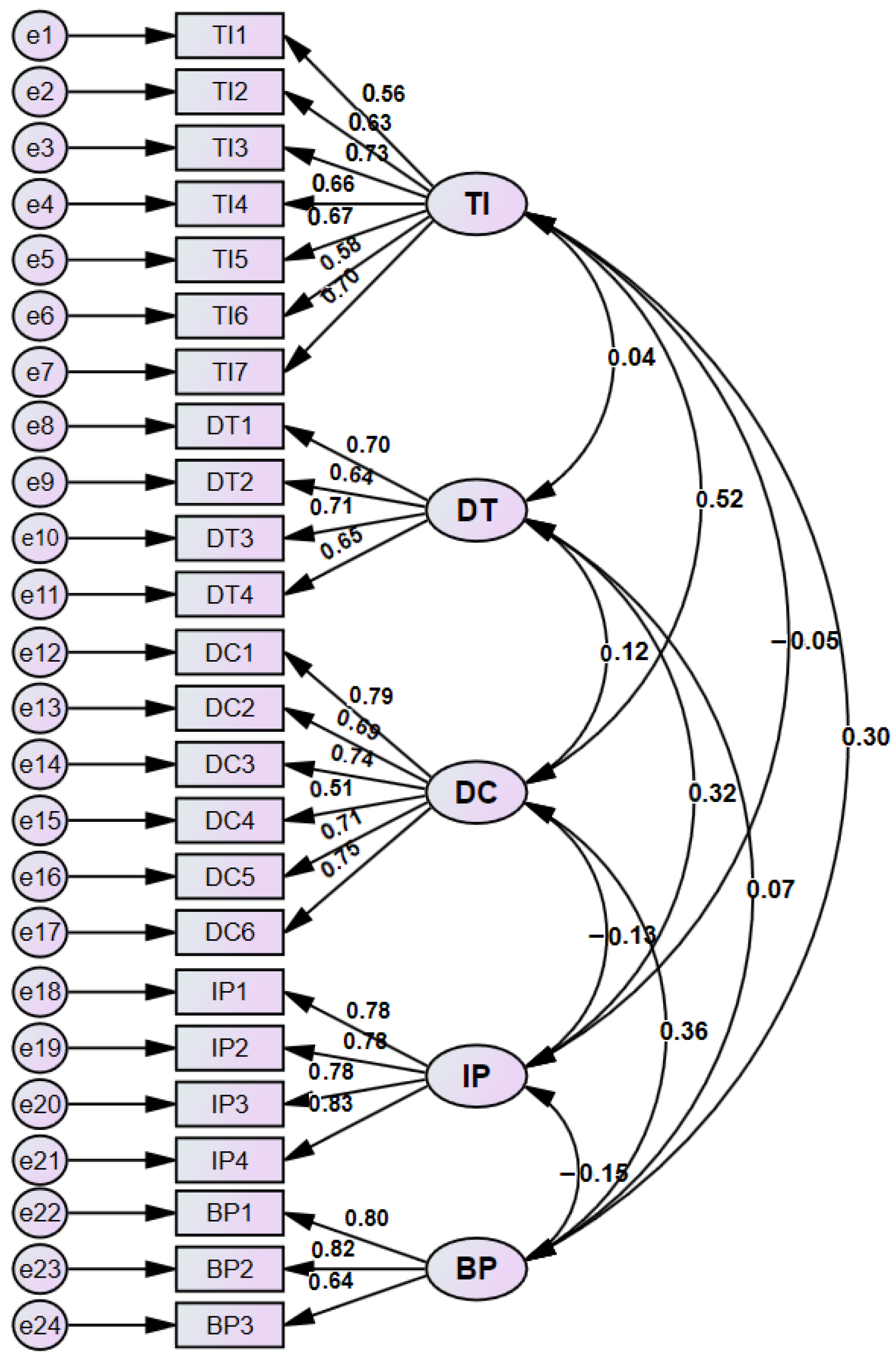
The SEM model analysis reveals the relationships among the latent variables: Technological Innovation Capability (TI), Digital Transformation (DT), Organizational Capability (DC), Institutional Pressure (IP), and Business Performance (BP) (show in Figure 2 and Table 6 and Table 7). The strongest coefficient is the correlation between TI and DC (0.522), indicating that technological innovation is closely dependent on organizational capability (training and culture). In the logistics sector, this reflects the application of IoT and AI to optimize supply chains, but a strong organizational foundation is required to achieve the best outcomes. The correlations between DC and BP (0.359) and between TI and BP (0.297) highlight the direct impacts on business performance, with an indirect effect of TI on BP through DC. This contributes to a 23% cost reduction through Industry 4.0 technologies. The correlation between IP and DT (0.321) aligns with institutional theory, where government policies and regulations promote digitalization. The correlation between IP and BP (−0.152) reflects regulatory barriers that reduce performance in logistics enterprises. The correlations between DT and BP (0.073) and between TI and DT (0.037) suggest that digital transformation has not yet been optimized, due to limited implementation (only 30–40% of enterprises have adopted it). Closer organizational integration is needed to enhance the effectiveness of digital transformation in these enterprises. Enterprises should prioritize training to fully exploit digital transformation, thereby reducing costs and improving global competitiveness.
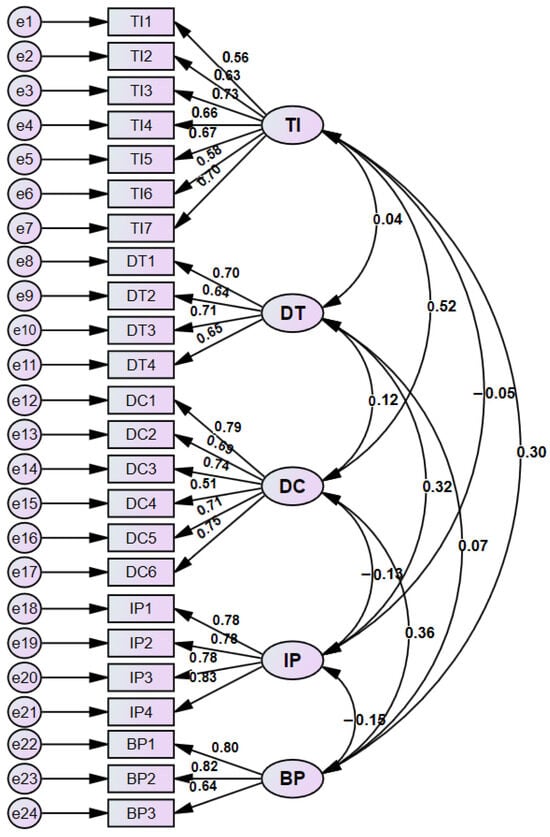
Figure 2.
Structural equation modeling results.
Table 6.
Standardized regression weights.
Table 7.
Correlations.
The model indicates that technological innovation capability has a strong positive influence on organizational capability with a path coefficient of 0.522. This relationship reflects the high loading of information technology team competence (0.733) and service planning capability (0.697), which support organizational flexibility. Technological Innovation capability promotes organizational capability by transforming technological knowledge into operational processes (0.735), which is consistent with re-source-based view theory.
In the Vietnamese logistics sector, the COVID-19 pandemic acted as a catalyst for accelerated digital adoption, particularly in warehouse management systems and transportation management systems, as firms adapted to disruptions in supply chains, e-commerce surges, and contactless operations. Building on the empirical evidence from this study wherein sustained enhancement of technological innovation capability and organizational integration positively influence business performance one may reasonably infer that continued strengthening of these constructs could magnify productivity gains and generate substantial cost efficiencies.
Institutional pressure exerts a positive effect on digital transformation with a path coefficient of 0.321, but a negative effect on organizational capability (−0.135) and business performance (−0.152). These impacts are driven predominantly by government regulations (0.780) and requirements from large-scale customers (0.832). While government policies promote digital transformation, they also increase compliance costs, thereby weakening overall organizational capability and business performance. In Vietnam, the cybersecurity law has delayed the progress of digital transformation in logistics enterprises.
The relationship between Technological Innovation Capability and Organizational Capability, with a path coefficient of 0.522, indicates that organizational capability (such as innovation culture and employee training) is a critical factor in supporting technological innovation. This finding aligns with Resource-Based View theory, which posits that a well-structured organization enables the effective exploitation of technology.
The relationship between Organizational Capability and Business Performance, with a path coefficient of 0.359, demonstrates a clear link: a strong internal organization (including supply chain management and leadership) leads to higher profitability, although other factors are required for full optimization.
The relationship between Institutional Pressure and Digital Transformation, with a path coefficient of 0.321, suggests that increased institutional pressure facilitates greater adoption of digitalization by enterprises, which is consistent with institutional theory.
The relationship between Technological Innovation Capability and Business Performance, with a path coefficient of 0.297, reflects that technological innovation directly improves business performance, highlighting the need to combine it with other variables (such as organizational capability) to achieve a stronger impact.
The relationship between organizational capability and digital transformation, with a path coefficient of 0.119, indicates that strong organizational capability supports digital transformation only to a limited extent, possibly due to technological barriers or high implementation costs. The relationship between digital transformation and business performance, with a path coefficient of 0.073, reveals that digitalization is not yet a decisive factor, potentially because of ineffective implementation or indirect measurement approaches. The relationship between technological innovation capability and digital transformation, with a path coefficient of 0.037, shows that technological innovation and digital transformation are not closely aligned, possibly because digital transformation focuses more on application than on fundamental innovation. The path from DC to BP is 0.41 (p < 0.01), highlighting its essential role in converting capabilities into sustained competitive advantage. While the direct effect remains significant at 0.23 (p < 0.05), the indirect effect through DC is 0.213. These results offer strong empirical support for dynamic capabilities theory and show that, in the logistics sector, superior performance is primarily achieved through the mediating role of organizational dynamic capability. The relationship between technological innovation capability and institutional pressure, with a path coefficient of (−0.054), indicates that institutional pressure slightly hinders technological innovation, likely due to rigid regulations reducing organizational flexibility. The relationship between institutional pressure and organizational capability, with a path coefficient of (−0.135), reflects that institutional pressure mildly weakens organizational capability, possibly because compliance with regulations consumes substantial resources. The relationship between institutional pressure and business performance, with a path coefficient of (−0.152), suggests that institutional pressure can reduce business performance owing to high compliance costs or policy instability.
4.2. Catch-Up Efficiency Change
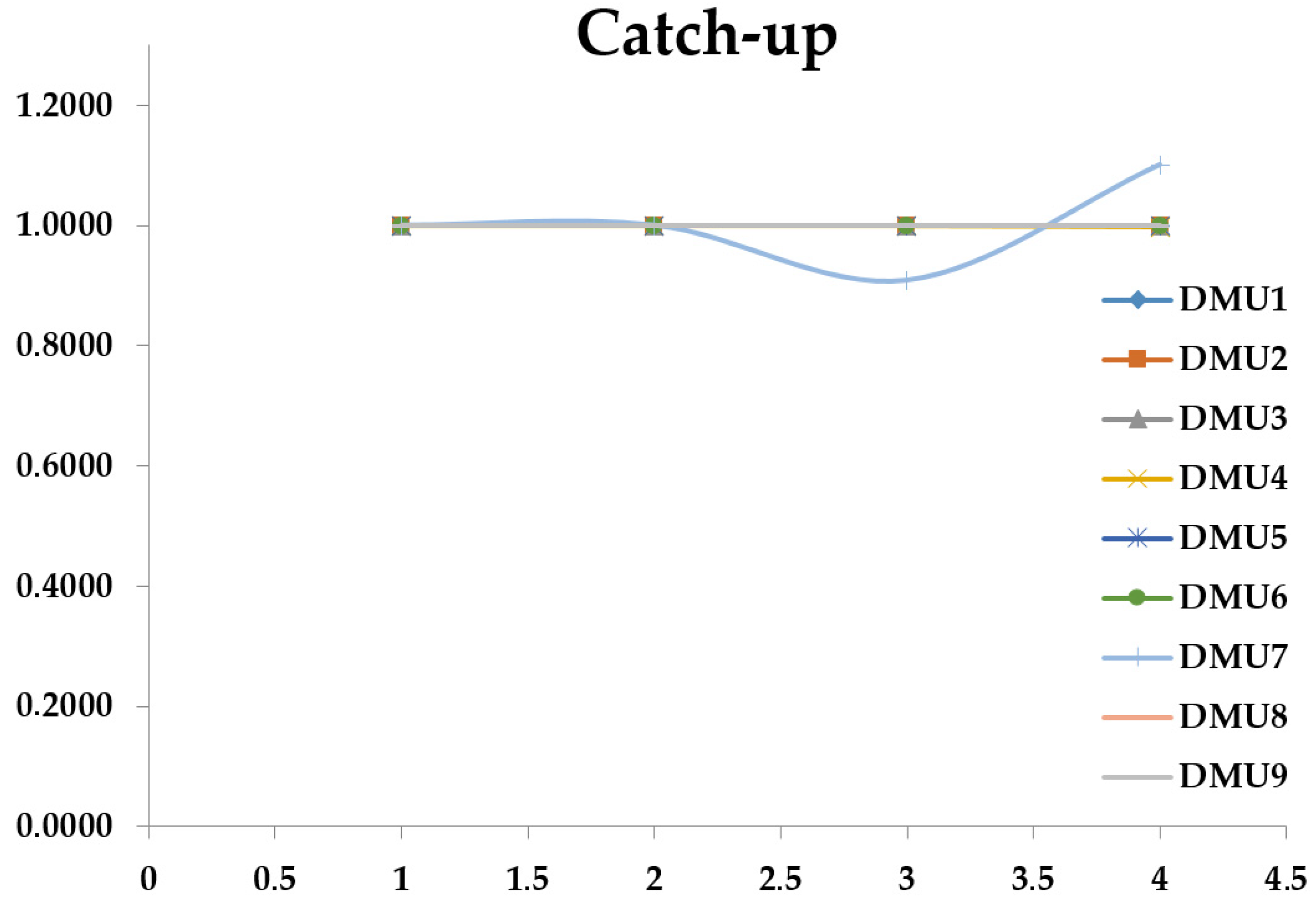
The Catch-up index measures the change in technical efficiency between two consecutive periods. The measurement results at 9 DMUs (representing logistics companies in Vietnam), with indices changing from 2020 to 2021 to 2023–2024, show in Table 8 and Figure 3:
Table 8.
Catch-Up Efficiency Change.
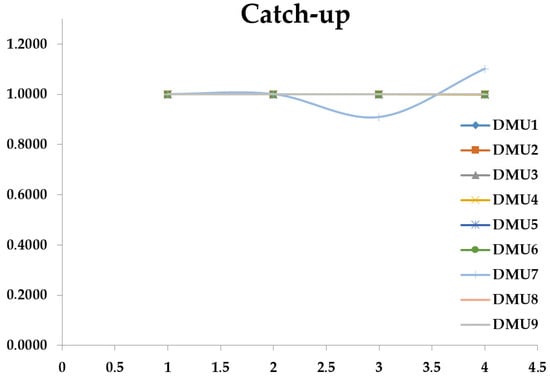
Figure 3.
Catch-up.
Period 2020–2021 and 2021–2022: All DMUs achieved 1.0000, Average = 1.000, Max = 1.0000, Min = 1.0000, and SD = 0.0000. This indicates no significant change in technical efficiency during the initial phase of the COVID-19 pandemic and the early recovery period (2020–2022). Logistics companies may have maintained stable efficiency by adapting quickly to supply chain disruptions, or the industry’s efficiency frontier did not shift significantly. This equilibrium can be attributed to the symmetric disruptions caused by the COVID-19 pandemic, which compelled logistics enterprises to undertake basic digital adaptation measures with relatively modest investments. Supported by the National Digital Transformation Program, these adaptations resulted in industry wide balance in technical efficiency. During the 2021–2022 period, stability persisted (Catch-up index = 1.0000 for all DMUs). This continued equilibrium occurred amid post-pandemic economic recovery, facilitated by the widespread adoption of foundational digital tools, moderate levels of investment, government subsidies, and the surge in electronic commerce.
Period 2022–2023: The average slightly decreased to 0.9898 (a decline of about 1.02% in average technical efficiency). This may reflect pressures from inflation, rising energy costs, or fierce competition post-pandemic, causing some companies to lag. An Standard Deviation of 0.0305 indicates the beginning of differentiation, with a Min of 0.9085 (the sharpest decline).
Period 2023–2024: The average increased to 1.0109 (an improvement of about 1.09%), compensating for the previous period. A max of 1.1007 shows that some companies improved significantly, perhaps due to technology investments (such as automation, AI in logistics) or supply chain optimization. The higher standard deviation of 0.0337 reflects continued differentiation.
The average Catch-up index result was 1.0002 with a low standard deviation (0.0008), indicating that most enterprises maintained stable technical efficiency, reflecting good risk management capabilities through internal process optimization, supply chain diversification, and minimization of transport disruptions. Specifically, 7 out of 9 DMUs achieved a perfect average Catch-up of 1.0000, proving they had caught up with the industry’s efficiency frontier, consistent with the recovery trend of Vietnam’s logistics sector post-COVID. However, DMU4 (0.9994) and DMU7 (1.0023) experienced greater fluctuations, mainly in the 2022–2023 period, reflecting challenges from inflation and the global economic downturn. This result shows the good resilience of the Logistics industry, with technical changes primarily concentrated in the post-pandemic period (2022–2024). Macroeconomic factors such as the global economic recovery, the shift in supply chains away and the digitalization of logistics may have supported this stability. However, the increasing differentiation (as shown by the rising standard deviation) warns that not all companies are adapting equally.
4.3. Frontier Shift Efficiency Change
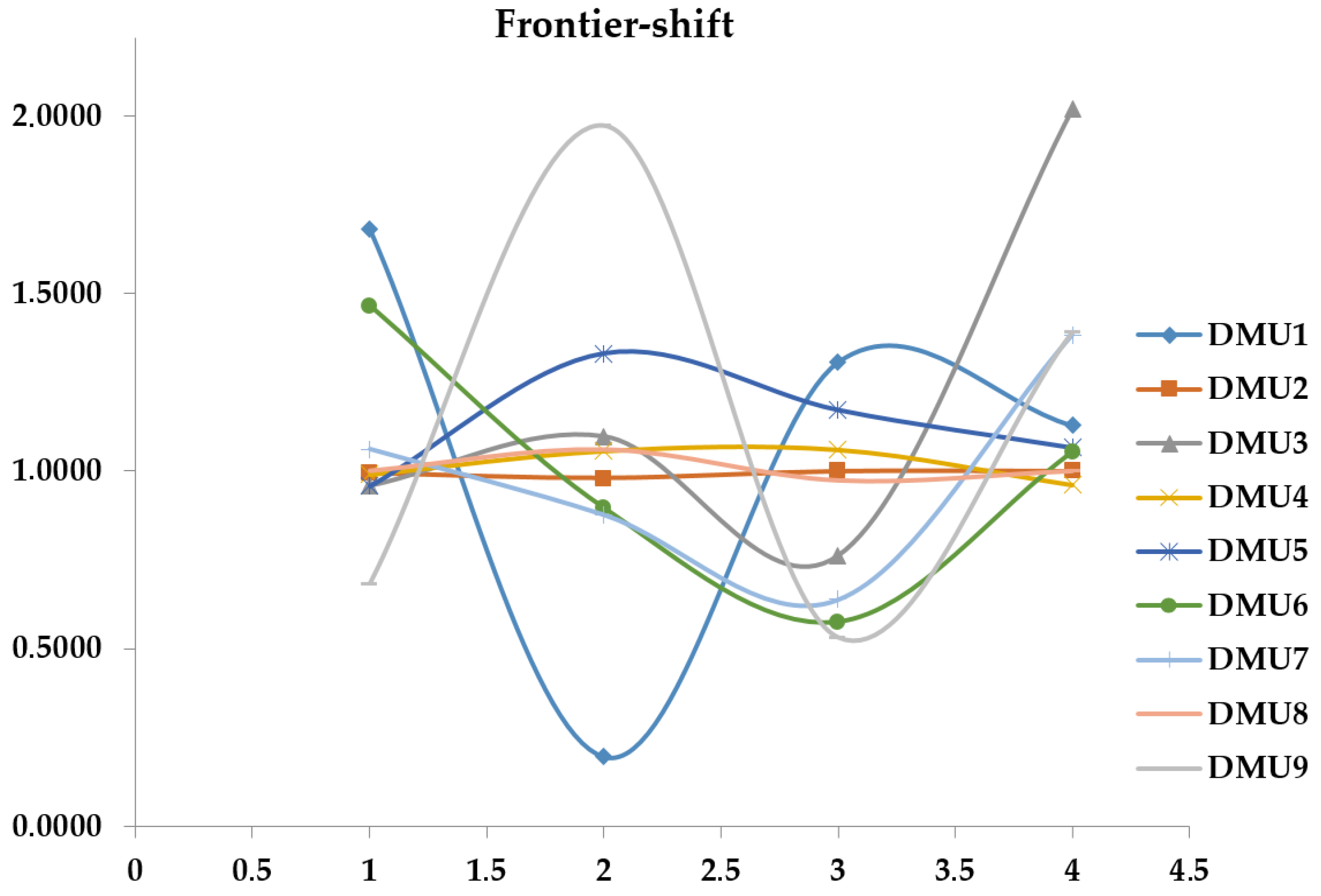
The Frontier index measures the shift in the technology frontier between two consecutive periods, reflecting progress or regression in technology and innovation within the industry. The results in Table 9 and Figure 4 show a trend of overall improvement but with a distinct period of decline, reflecting the impacts of the COVID-19, economic recovery, and digital transformation in the Logistics industry.
Table 9.
Frontier shift efficiency change.
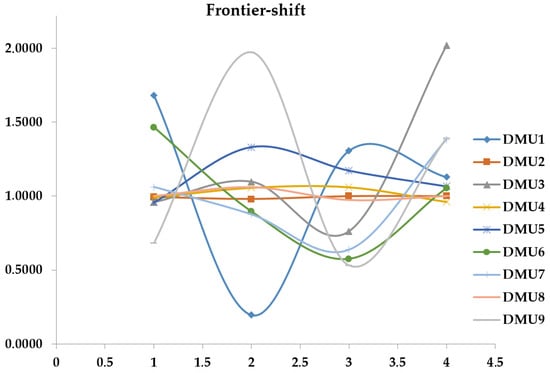
Figure 4.
Frontier.
Period 2020–2022: The averages were 1.0882 and 1.0521 respectively (improvements of about 8.82% and 5.21%). This could be due to the Logistics industry’s rapid adaptation to the pandemic, such as investing in digital technology and optimizing global supply chains. The high standard deviation (0.2997 and 0.4646) indicates early differentiation, with a high Max (1.6810 and 1.9749) from some companies leading innovation.
Period 2022–2023: The average dropped to 0.8911 (a decline of about 10.89%), with a min of 0.5307 (a decline of over 46.93%). This period may have been affected by global inflation, high energy costs (due to geopolitical conflicts), and post-pandemic supply chain disruptions, leading to a regression of the industry’s technology frontier. The standard deviation of 0.2760 reflects large fluctuations among companies.
Period 2023–2024: The average soared to 1.2227 (an improvement of about 22.27%), with a max of 2.0202 (more than double). This boom is likely due to strong digital transformation (AI, blockchain in logistics), supportive policies from free trade agreements, and investments in green technology. The high standard deviation of 0.3391 shows that differentiation continues.
The average index was 1.0635 (>1), with a standard deviation of 0.0811, indicating a positive shift in the industry’s technology frontier, mainly driven by digital transformation and transportation management systems. The technologies and operational practices that constitute the production frontier in the contemporary logistics context include the following: AI applied to demand forecasting analysis and route optimization; IoT sensor networks enabling real time asset tracking and inventory management; Blockchain protocols ensuring transparency and security in cross-border transactions; RPA and advanced warehouse automation systems, AGVs and drone based inventory counting. These frontier technologies and practices collectively represent the current state-of-the-art benchmark for technical efficiency in modern logistics operations. DMU3 led with an average Frontier of 1.2096, reflecting strong innovation, while DMU7 was the lowest (0.9899), showing a lag in technology investment. The largest fluctuation occurred in the 2021–2022 period (standard deviation 0.4646), coinciding with the post-pandemic recovery, when some DMUs like DMU9 capitalized on the e-commerce boom to grow. The overall assessment for this period shows logistics enterprises achieved 1.0635 (a slight improvement of about 6.35%), with an standard deviation of 0.0811, which is lower than in individual periods, indicating that despite short-term fluctuations, the logistics industry has made long-term technological progress. However, the differentiation (seen through high standard deviation in various periods) warns of a gap between leading and lagging companies, which could lead to industry consolidation or the elimination of weaker firms.
4.4. Malmquist Productivity Index Efficiency Change
The MPI measures the change in total factor productivity between two consecutive periods, resulting from changes in technical efficiency (Catch-up) and technological change (Frontier).
Malmquist = Catch-up × Frontier.
Therefore, total factor productivity is influenced by both factors: If Catch-up is stable (often = 1), then Malmquist primarily depends on Frontier; conversely, fluctuations in Catch-up can amplify or offset the Frontier effect.
Table 10.
Malmquist productivity index efficiency change.
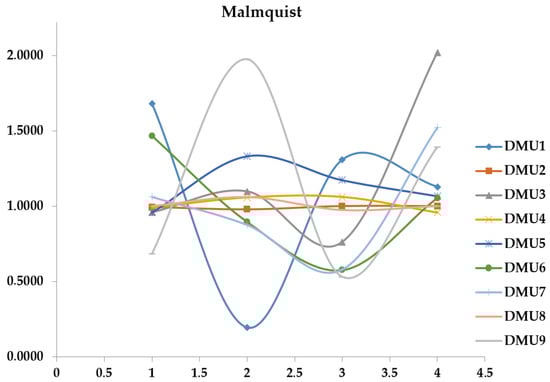
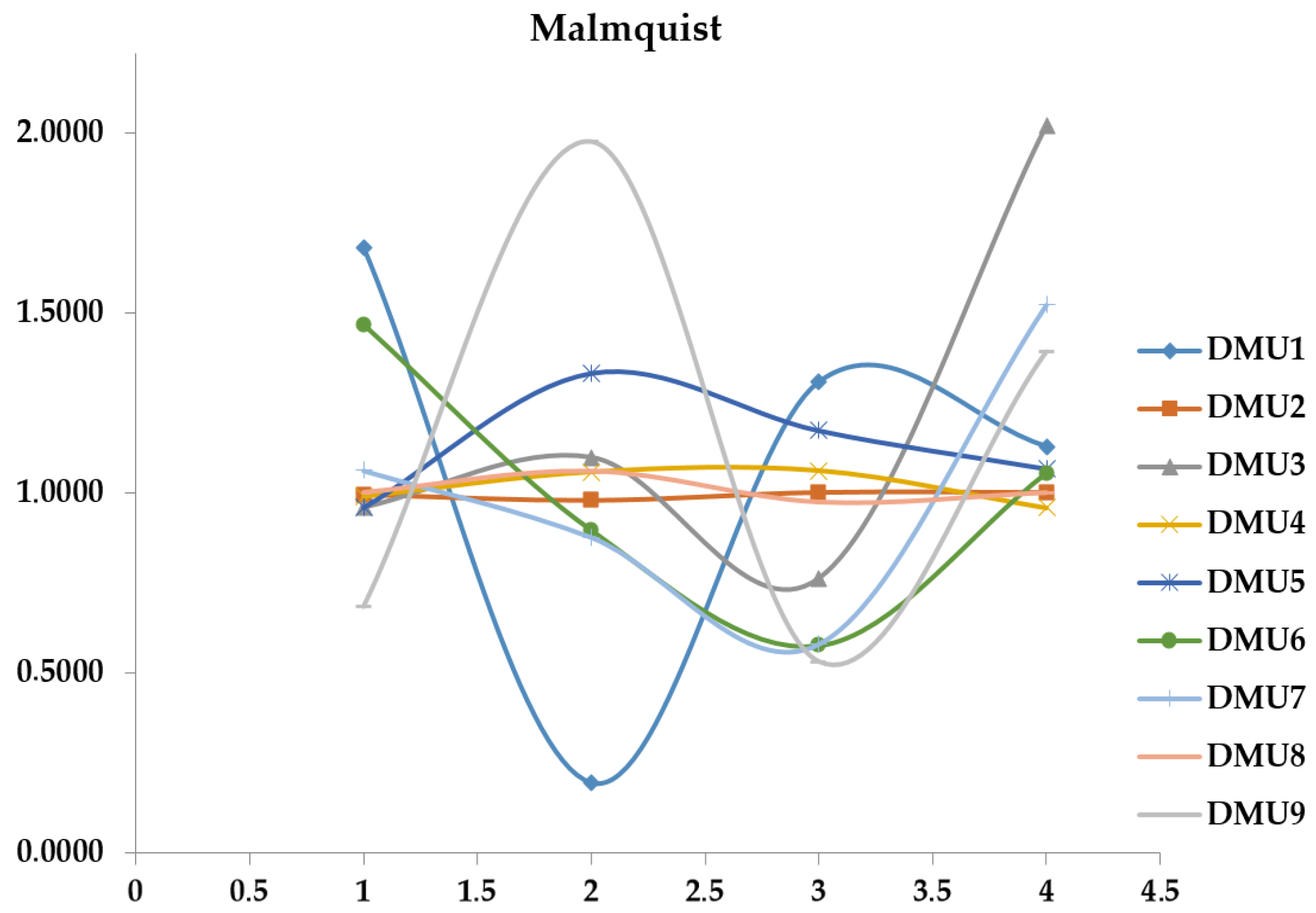
Figure 5.
Malmquist.
Period 2020–2022: Average Malmquist = 1.0882 and 1.0521 (an increase of 8.82% and 5.21%). The Catch-up was completely stable (all DMUs = 1), so productivity was mainly driven by the Frontier (improvement due to adaptation of digital technologies like online tracking and e-logistics during the pandemic). The high standard deviation (0.2997 and 0.4646) indicates early differentiation, with some DMUs leading technological innovation.
Period 2022–2023: Average Malmquist = 0.8846 (a decrease of 11.54%), the lowest in the period. Catch-up began to fluctuate (Average = 0.9898, with a decline in DMU7), combined with a sharp regression in the Frontier (Average = 0.8911), leading to a decrease in total factor productivity. External factors such as inflation, rising energy costs, and supply chain disruptions caused the industry’s technology frontier to regress, while the technical efficiency of some DMUs failed to keep pace.
Period 2023–2024: Average Malmquist = 1.2380 (an increase of 23.80%), the highest. An improved Catch-up (Average = 1.0109), multiplied by a booming Frontier (Average = 1.2227), resulted from technology investments (AI, blockchain, warehouse automation) and supportive policies. The high Standard Deviation of 0.3505 reflects continued differentiation.
Average for the entire period: Average = 1.0657, with an standard deviation of 0.0791, lower than in individual periods. The stable Catch-up (Average ≈ 1.0002) helped maintain a solid foundation, while the Frontier (Average ≈ 1.0635) was the main driver of productivity growth. However, the increasing differentiation (rising standard deviation) shows that technology creates a gap: highly innovative DMUs benefit greatly, while weak technical efficiency reduces productivity in the lagging group. Overall, technology (Frontier) is the decisive factor in productivity fluctuations, while technical efficiency (Catch-up) is mostly stable but can amplify declines (as in 2022–2023). The Vietnamese Logistics industry shows good resilience but needs uniform investment to reduce differentiation, especially in the context of the digital and green economy towards 2035.
5. Discussion
In this study, the authors simultaneously employ SEM and the MPI within DEA, adopting a multi-criteria approach to evaluate the impact of digital transformation on business performance in logistics enterprises. The results derived from Structural Equation Modeling are utilized to model the structural relationships among latent variables based on primary data. Factors such as organizational capability, technological innovation capability, and institutional pressure influence digital transformation, which in turn affects business performance. Structural Equation Modeling tests theoretical hypotheses, measures both direct and indirect relationships, and addresses measurement error an aspect of particular importance in the logistics sector, where digital transformation involves not only technological elements but also human factors and external environmental influences.
The Malmquist method analyzed the change in total factor productivity by decomposing it into two main components: technical efficiency change (Catch-up effect, reflecting the ability to catch up to the efficiency frontier) and technological change (Frontier-shift effect, reflecting the shift in the industry’s technology frontier). This result has provided a scientific perspective on enterprise performance and emphasized adaptive strategies in the post-pandemic context, as the Logistics industry faced supply chain disruptions, increased operating costs, and the need for digital transformation to ensure sustainability and flexibility.
From a technical efficiency perspective, the enterprises with the least change were those that maintained a Catch-up index of 1.0000 during this period, including DMU1, DMU2, DMU3, DMU5, DMU6, DMU8, and DMU9 (7/9 DMUs). The average score was 1.0000, reflecting absolute stability in technical efficiency throughout the 2020–2024 period. This result shows that these companies have achieved optimal technical efficiency, reflecting superior risk management capabilities, especially in the context where the Logistics sector was heavily affected by the COVID-19 pandemic and subsequent economic fluctuations. This stability may stem from the adoption of flexible supply chain management models, such as diversifying suppliers and optimizing warehouses through Radio Frequency Identification technology and AI-powered demand forecasting, which helped minimize the impact of external shocks.
From a technological perspective, the Logistics enterprises with the least change were those with an average score close to 1, including DMU2 (Average 0.9934), DMU7 (0.9899), DMU6 (0.9979), and DMU8 (1.0090). These companies demonstrated high stability in technological change with minimal negative fluctuations, reflecting an ability to maintain their position without heavy reliance on major market innovations. This suggests that the technological change in these Logistics enterprises did not shift significantly relative to the industry frontier, possibly because the enterprises focused on stable operational efficiency rather than high-risk investments in new technology. In the post-COVID-19 context, the scientific value here lies in the fact that these enterprises prioritized proven technologies like transportation management systems and warehouse management systems to optimize routes and reduce fuel costs, instead of venturing into innovations like blockchain or delivery drones-which require large capital and carry high risks in an unstable economic environment. In practice, post-pandemic, Logistics enterprises with a stable frontier-shift often gain a competitive advantage by focusing on sustainable logistics, such as reducing carbon emissions through electric vehicles and optimizing green logistics, which helps comply with new international regulations and enhance brand image.
From the impacts of technical and technological efficiency changes on Logistics enterprises, the enterprises with the most significant change in productivity were those with an average Malmquist index far from 1 and high volatility, including DMU3 (1.2096, the highest), DMU9 (1.1451), DMU5 (1.1316), and DMU1 (1.0780). Demonstrated through strong productivity changes primarily driven by technological change, this result emphasizes that in the post-COVID-19 context, total factor productivity growth mainly stems from applying digitalization technology for real-time cargo tracking and effective supply chain forecasting methods. From a professional perspective, these DMUs may have capitalized on the opportunities from the post-pandemic e-commerce boom. However, high volatility also warns of a lack of sustainability if risks are not controlled, suggesting that enterprises need to adopt models that integrate stable technical efficiency with technological innovation to maintain long-term growth and promote digital transformation, thereby enhancing their position in the post-pandemic global value chain.
Digital transformation facilitates the attainment of environmental objectives in logistics through multifaceted operational optimizations that curtail resource consumption and emissions. Principally, the integration of Internet of Things sensors and artificial intelligence enables real-time supply chain visibility, mitigating inefficiencies such as overstocking and circuitous routing, thereby diminishing fuel usage and carbon footprints. Furthermore, blockchain-enhanced traceability fosters sustainable sourcing, curbing deforestation-linked commodities, while predictive analytics optimizes fleet electrification transitions, reducing reliance on fossil fuels.
To mitigate the negative impacts, regulatory authorities should restructure the institutional framework toward a supportive mechanism. This transition should be implemented gradually over time, accompanied by the progressive adjustment (or raising) of regulatory thresholds and the application of decentralized/devolved regulatory authority. Logistics enterprises and the Vietnam Logistics Association should actively engage in policy advocacy and collaborative efforts, while adopting adaptive management practices and implementing automation-based compliance solutions in order to minimize negative intermediary effects. To promote the enabling factors for digital transformation, regulatory authorities should launch subsidized training programs, introduce innovation voucher schemes, and provide targeted grants for research and development activities. Meanwhile, enterprises need to establish strategic alliances and develop flexible organizational structures so as to achieve sustainable business performance and long-term competitiveness.
6. Conclusions
The integration of SEM and the MPI within DEA represents an innovative approach that provides mutual complementarity between the two methods. Structural Equation Modeling offers a structural perspective, explaining “why” and “how” digital transformation influences business performance, whereas the MPI within DEA quantifies “how much” by measuring specific efficiency levels and productivity changes. This combination overcomes the limitations inherent in each individual model: Structural Equation Modeling is strong in theoretical explanation but lacks the ability to measure absolute efficiency, while the Malmquist Productivity Index within the Data Envelopment Analysis excels in quantification but does not elucidate underlying mechanisms in depth. The profound significance of this approach lies in establishing a comprehensive scientific foundation for logistics managers. Rather than relying on intuition, they can employ this integrated model for strategic planning: identifying key drivers of digitalization through Structural Equation Modeling, and subsequently assessing return on investment via the Malmquist Productivity Index within Data Envelopment Analysis. This study demonstrates high scientific rigor through the integration of primary data from surveys and secondary financial data, resulting in a hybrid model well-suited to the dynamic logistics industry, where digitalization is reshaping global supply chains. These findings not only enhance sustainability by reducing waste and increasing resilience but also support data-driven decision-making, enabling enterprises to remain competitive in the era of Industry 4.0.
Notwithstanding the robust multi-criteria framework employed, this study is subject to several inherent limitations that warrant explicit acknowledgment. First, its empirical scope is confined to Vietnamese logistics enterprises, drawing on survey data from 346 managers and secondary data from only nine decision-making units. This narrow focus substantially restricts the generalizability of the findings to other geographical regions, levels of economic development, or sub-sectors within the logistics industry.
Future research should extend this line of inquiry through rigorous cross-national comparative studies to better elucidate contextual variations in the effectiveness of digital transformation. Employing larger and more heterogeneous samples, incorporating objective performance metrics rather than perceptual measures, adopting advanced econometric techniques, and systematically examining emerging technologies including blockchain and artificial intelligence would considerably enhance the analytical rigor and contribute to a deeper understanding of pathways toward sustainable productivity gains in global logistics ecosystems.
Author Contributions
Conceptualization, K.H.N.; Software, K.H.N.; Investigation, K.H.N. and L.Q.P.; Resources, K.H.N.; Data curation, K.H.N.; Writing—original draft, K.H.N. and L.Q.P.; Writing—review & editing, K.H.N. and L.Q.P. All authors have read and agreed to the published version of the manuscript.
Funding
This research received no external funding.
Institutional Review Board Statement
Ethical review and approval were waived for this study by Thu Dau Mot University because the study does not involve vulnerable populations, such as minors, prisoners, or individuals with impaired decision-making capacity; there are no foreseeable risks greater than those encountered in daily life or routine physical/psychological examinations; data collection procedures ensure anonymity or confidentiality, with no identifiable information linked to participants and the research aligns with educational practices or public benefit programs that do not require full IRB oversight.
Informed Consent Statement
Informed consent was obtained from all subjects involved in the study.
Data Availability Statement
The raw data supporting the conclusions of this article will be made available by the authors on request.
Conflicts of Interest
The authors declare no conflicts of interest.
References
- Nagorny, K.; Lima-Monteiro, P.; Barata, J.; Colombo, A.W. Big Data Analysis in Smart Manufacturing: A Review. Int. J. Commun. Netw. Syst. Sci. 2017, 10, 31–58. [Google Scholar] [CrossRef]
- Fitzgerald, M.; Kruschwitz, N.; Bonnet, D.; Welch, M. Embracing digital technology: A new strategic imperative. MIT Sloan Manag. Rev. 2014, 55, 1–12. [Google Scholar]
- Westerman, G.; Bonnet, D.; McAfee, A. Leading Digital: Turning Technology into Business Transformation; Harvard Business Press: Brighton, MA, USA, 2014. [Google Scholar]
- Verhoef, P.C.; Broekhuizen, T.; Bart, Y.; Bhattacharya, A.; Dong, J.Q.; Fabian, N.; Haenlein, M. Digital transformation: A multidisciplinary reflection and research agenda. J. Bus. Res. 2021, 122, 889–901. [Google Scholar] [CrossRef]
- Vial, G. Understanding digital transformation: A review and a research agenda. J. Strateg. Inf. Syst. 2019, 28, 118–144. [Google Scholar] [CrossRef]
- Queiroz, M.M.; Ivanov, D.; Dolgui, A.; Fosso Wamba, S. Impacts of epidemic outbreaks on supply chains: Mapping a research agenda amid the COVID-19 pandemic through a structured literature review. Ann. Oper. Res. 2022, 319, 1159–1196. [Google Scholar] [CrossRef]
- Demirkan, H.; Spohrer, J.C.; Welser, J.J. Digital innovation and strategic transformation. Commun. Assoc. Inf. Syst. 2016, 38, 14. [Google Scholar] [CrossRef]
- Veljović, M.; Tadić, S.; Krstić, M. Last Word in Last-Mile Logistics: A Novel Hybrid Multi-Criteria Decision-Making Model for Ranking Industry 4.0 Technologies. Mathematics 2024, 12, 2010. [Google Scholar] [CrossRef]
- Hess, T.; Matt, C.; Benlian, A.; Wiesböck, F. Options for formulating a digital transformation strategy. MIS Q. Exec. 2016, 15, 123–139. [Google Scholar]
- Stević, Ž.; Pamučar, D.; Kazimieras Zavadskas, E.; Ćirović, G.; Prentkovskis, O. The Selection of Wagons for the Internal Transport of a Logistics Company: A Novel Approach Based on Rough BWM and Rough SAW Methods. Symmetry 2017, 9, 264. [Google Scholar] [CrossRef]
- Lien, N.T.B. Digital Transformation in Vietnam Logistics Enterprises. Int. J. Eng. Invent. 2024, 13, 117–122. [Google Scholar]
- Nguyen, H.K. Application of mathematical models to assess the impact of the COVID-19 pandemic on logistics businesses and recovery solutions for sustainable development. Mathematics 2021, 9, 1977. [Google Scholar] [CrossRef]
- Wang, C.-N.; Cahilig, G. Algorithmic efficiency analysis in innovation-driven labor markets: A Super-SBM and Malmquist productivity index approach. Algorithms 2025, 18, 518. [Google Scholar] [CrossRef]
- Zhang, P.; Fu, Y.; Lu, B. Analyzing the coupling coordination and forecast trends of digital transformation and operational efficiency in logistics enterprises. J. Theor. Appl. Electron. Commer. Res. 2025, 20, 211. [Google Scholar] [CrossRef]
- Oncioiu, I.; Mândricel, D.A.; Hojda, M.H. Artificial intelligence-enabled digital transformation in circular logistics: A structural equation model of organizational, technological, and environmental drivers. Logistics 2025, 9, 102. [Google Scholar] [CrossRef]
- Ning, L.; Yao, D. The Impact of Digital Transformation on Supply Chain Capabilities and Supply Chain Competitive Performance. Sustainability 2023, 15, 10107. [Google Scholar] [CrossRef]
- Cichosz, M.; Wallenburg, C.M.; Knemeyer, A.M. Digital transformation at logistics service providers: Barriers, success factors and leading practices. Int. J. Logist. Manag. 2020, 31, 209–238. [Google Scholar] [CrossRef]
- Kauppi, K.; Luzzini, D. Measuring institutional pressures in a supply chain context: Scale development and testing. Supply Chain Manag. Int. J. 2022, 27, 79–107. [Google Scholar] [CrossRef]
- Chen, X.; Zhang, X.-E.; Cai, Z.; Chen, J. The Non-Linear Impact of Digitalization on the Performance of SMEs: A Hypothesis Test Based on the Digitalization Paradox. Systems 2024, 12, 139. [Google Scholar] [CrossRef]
- Huang, Y.-F.; Phan, V.-D.-V.; Do, M.-H. The Impacts of Supply Chain Capabilities, Visibility, Resilience on Supply Chain Performance and Firm Performance. Adm. Sci. 2023, 13, 225. [Google Scholar] [CrossRef]
- Dagli, B.Y. Application of a Statistical Regression Technique for Dynamic Analysis of Submarine Pipelines. J. Mar. Sci. Eng. 2024, 12, 955. [Google Scholar] [CrossRef]
- Rosak-Szyrocka, J.; Tiwari, S. Structural Equation Modeling (SEM) to Test Sustainable Development in University 4.0 in the Ultra-Smart Society Era. Sustainability 2023, 15, 16167. [Google Scholar] [CrossRef]
- Vispoel, W.; Lee, H.; Chen, T.; Hong, H. Using Structural Equation Modeling to Reproduce and Extend ANOVA-Based Generalizability Theory Analyses for Psychological Assessments. Psych 2023, 5, 249–273. [Google Scholar] [CrossRef]
- Hair, J.F.; Ringle, C.M.; Sarstedt, M. MPLS-SEM: Indeed a Silver Bullet. J. Mark. Theory Pract. 2011, 19, 139–152. [Google Scholar] [CrossRef]
- Färe, R.; Grosskopf, S.; Lindgren, B.; Roos, P. Productivity changes in Swedish pharmacies 1980–1989: A non-parametric Malmquist approach. J. Product. Anal. 1992, 3, 85–101. [Google Scholar] [CrossRef]
- Krišťáková, S.; Neykov, N.; Antov, P.; Sedliačiková, M.; Reh, R.; Halalisan, A.-F.; Hajdúchová, I. Efficiency of Wood-Processing Enterprises—Evaluation Based on DEA and MPI: A Comparison between Slovakia and Bulgaria for the Period 2014–2018. Forests 2021, 12, 1026. [Google Scholar] [CrossRef]
- Myeki, L.W.; Matthews, N.; Bahta, Y.T. Decomposition of Green Agriculture Productivity for Policy in Africa: An Application of Global Malmquist–Luenberger Index. Sustainability 2023, 15, 1645. [Google Scholar] [CrossRef]
- Zrelli, H.; Alsharif, A.H.; Tlili, I. Malmquist Indexes of Productivity Change in Tunisian Manufacturing Industries. Sustainability 2020, 12, 1367. [Google Scholar] [CrossRef]
Disclaimer/Publisher’s Note: The statements, opinions and data contained in all publications are solely those of the individual author(s) and contributor(s) and not of MDPI and/or the editor(s). MDPI and/or the editor(s) disclaim responsibility for any injury to people or property resulting from any ideas, methods, instructions or products referred to in the content. |
© 2026 by the authors. Licensee MDPI, Basel, Switzerland. This article is an open access article distributed under the terms and conditions of the Creative Commons Attribution (CC BY) license.