1. Introduction
Global maritime trade continues to show sustained growth, driven by globalization and accompanied by technological advances associated with Industry 4.0 [
1]. While Industry 4.0 does not directly cause this growth, it accelerates innovation and efficiency in global transportation networks. Demand for maritime transport, measured in ton-miles, is projected to increase by around 39% by 2050 compared to 2018 [
1]. In 2022, the United Nations Conference on Trade and Development anticipated a recovery in maritime traffic, projecting growth of 2.4% in 2023 after a slight contraction of 0.4% in 2022 [
2]. This trend, which has persisted for several decades with an average annual increase of 3 to 4%, is expected to lead to a 35–40% rise in global trade volumes by 2050 [
3]. This dynamic compels ports to modernize rapidly in order to meet growing customer demands and rising inter-port competition on both new and existing market segments [
4]. At the same time, the need to reduce the environmental impacts of port activities reinforces the urgency toward more sustainable operations [
5]. Port digitalization therefore becomes a key lever for contributing to international sustainability agendas, including the United Nations Sustainable Development Goals (SDGs), by improving energy efficiency, reducing emissions, and supporting more resilient maritime logistics. In this context, digital transformation emerges as a strategic lever to optimize performance and ensure port resilience in the face of current and future challenges [
6]. Beyond its operational benefits, it also represents a progressive pathway toward the smart port paradigm, which stands as the ultimate objective of this transition, a model combining technological innovation, data intelligence, and sustainable management to enhance competitiveness and long-term efficiency.
In this paper, we use the term “digital maturity” to describe the degree to which a port has deployed digital technologies, integrated them into its processes, trained its workforce for the required skills, and established governance mechanisms that allow consistent and reliable use of data in decision-making. These digital technologies rely on advanced solutions such as artificial intelligence (AI), the Internet of Things (IoT), big data, and process automation [
7]. We also define the term “smart port” as a port that systematically leverages connected digital infrastructure, real-time data, and advanced analytics to coordinate operations, manage resources, and minimize environmental impacts in line with broader sustainability and competitiveness objectives. One illustrative example of such a digital technology, a cost–benefit analysis of a Port Community System, a digital platform that connects all port stakeholders to exchange operational data in real time, demonstrated its positive impact on operational fluidity, reduced transit times, and stronger cooperation among stakeholders [
8]. Other technology-driven initiatives further highlight the benefits of digital transformation, such as the integration of AI at the Port of Hamburg, which significantly reduced waiting times and improved synchronization of logistical operations [
9]. Some countries have invested heavily in this digital transition, such as South Korea, which allocated 160 million USD between 2016 and 2018 to modernize the Port of Busan [
10]. However, these investments often encounter budgetary constraints, particularly for medium-sized ports that must balance digital modernization investments with economic viability [
11].
Digital transformation enhances the competitiveness, efficiency, and sustainability of ports. Nevertheless, several obstacles hinder this evolution, including economic, organizational, and technological challenges. The absence of a structured methodological framework complicates investment planning and prioritization [
12]. Poorly targeted investments may also result in underutilization of digital technologies, thereby reducing profitability and slowing port modernization [
13]. These issues are especially critical for medium-sized ports, which must constantly arbitrate between digital modernization based on advanced technologies and financial viability in an environment of rising budgetary constraints [
11]. Although digital transformation is a strategic imperative, it represents a considerable cost that many ports cannot afford, limiting their ability to adopt advanced technological solutions [
14]. For such ports, a gradual transition adapted to financial and organizational capacities is necessary to ensure a successful digital transformation [
15]. Additional barriers include a shortage of skilled labor, the absence of clear governance frameworks, and heterogeneous levels of digital maturity across port functional domains (e.g., cargo operations, logistics, and administrative services) and their supporting information systems, which complicate interoperability and integration at the scale of the whole port ecosystem [
16].
The literature proposes few methodological frameworks to structure port digital transformation. However, existing contributions remain limited within the port sector itself, while a significant number of frameworks have been developed in the manufacturing sector, pioneering engaged in the Industry 4.0 transition [
17]. For example, a nine-step methodological framework was designed specifically for Brazilian ports’ digital transformation, integrating governance and human resource parameters, which hinder its applicability to other contexts [
7]. Similarly, the sequential framework in [
18], although successfully applied at the Port of Valencia, is based on a rigid approach that impeded the flexibility of adaptation to ports with varying levels of digital maturity. Beyond these port-specific contributions (such as the Brazilian ports and the Port of Valencia), Port 4.0 models, digital-twin based frameworks, and Industry 4.0 maturity checklists tend to remain either descriptive, technology-centered, or weak on data governance and stakeholder engagement, which limits their transferability across ports of different sizes and institutional configurations. Critical issues such as data governance, system interoperability, and participatory mechanisms are often treated as secondary design choices rather than as central structuring dimensions of the transformation process. These limitations are particularly problematic for ports that seek to align digital investments with sustainability targets and SDG-related commitments.
From a methodological standpoint, the main gap is not the lack of digital solutions but the lack of actionable guidance on how to prioritize, sequence, and govern the transition across time. In practice, ports face intertwined decisions related to system architecture, interoperability requirements, data-sharing rules among stakeholders, and organizational change management, and these decisions strongly condition whether digital initiatives remain isolated pilots or evolve toward scalable, ecosystem-level capabilities. When governance, interoperability, and stakeholder alignment are not treated as structuring dimensions, investment planning becomes more uncertain and the probability of fragmented implementation increases, especially in ports with heterogeneous information systems and uneven maturity across functional domains.
Against this background, the present study addresses the following research question: how can ports, and especially medium-sized ports, structure their digital transition toward the smart port paradigm? This article proposes a digital transition roadmap designed to overcome the aforementioned limitations of existing frameworks by integrating an evolutionary stepwise approach, grounded in a systematic literature review of existing methodological frameworks and an exploratory case study on an advanced technology implementation project within a Canadian port. Rather than proposing a methodological break with existing theoretical models, this study complements them by positioning the roadmap as a governance- and data-oriented refinement of Port 4.0 and Industry 4.0 maturity approaches, generalizable to ports with different profiles while paying particular attention to the realities of medium-sized ports.
This focus is motivated by the fact that medium-sized ports are frequently encouraged to pursue smart port ambitions while facing tighter financial margins, fewer specialized digital skills, and more constrained information system integration capacity than major hubs, which increases the need for structured, feasible, and staged decision support for investments and implementation choices.
Specifically, the proposed roadmap rests on three key contributions. First, it integrates continuous digital maturity assessment, enabling ports to tailor their transition to their level of technological development and organizational capacity while ensuring strategic investment prioritization. Second, it emphasizes data governance to foster interoperability, ensuring coherent integration of digital technologies while mitigating risks of system incompatibility. Third, it adopts a collaborative approach that actively involves stakeholders through a structured consultation framework to align expectations and encourage commitment to digital initiatives.
The article begins by clarifying the conceptual foundations of the smart port and the main challenges associated with digital transition. It then details the dual methodological approach used in this research, combining a systematic literature review and an exploratory case study, which together support the development and validation-enrichment of a ten-step roadmap for port digital transition. The following parts present the theoretical synthesis of existing methodological frameworks, the proposed roadmap, and its empirical experimentation through the analysis of a trucking traceability technology implementation project within a Canadian port. The paper concludes by summarizing the principal findings, highlighting the roadmap’s practical contributions for decision support by port authorities and suggesting avenues for future research.
2. Smart Port
Several researchers have proposed definitions of the smart port concept without reaching a consensus. A first definition was introduced based on the main activity domains of a smart port in [
19,
20], followed by a more exhaustive enumeration of seven key domains, namely operations, human resources, safety, environment, energy, social aspects, and technological infrastructure [
4]. According to these authors, a smart port is defined as a port “connected, sustainable, safe, and automated, based on modern infrastructure, innovative managerial practices, and qualified personnel” [
4]. While these contributions converge on the central role of digital technologies and connectivity, they differ in the emphasis they place on technological infrastructure, governance mechanisms, and sustainability objectives. Some definitions remain predominantly technology-centered, whereas others foreground organizational practices, stakeholder coordination, or environmental performance as core components of smartness.
However, although definitions are becoming more precise, their implementation in operational reality remains a challenge [
5,
17,
21]. The adoption of digital technologies and practices depends not only on a theoretical vision, but also on the ability of ports to overcome organizational, technical, and financial obstacles [
5]. For instance, projects such as the smart port initiative in Hamburg have shown that significant investments do not always guarantee success, with difficulties often linked to stakeholder resistance, coordination issues, or integration barriers rather than to technology alone [
22]. The Port of Rotterdam also illustrates this complexity: it took nearly twenty years to implement a Port Community System, a digital platform designed to optimize the management of logistics flows and commercial operations by facilitating the exchange of information between port actors [
5]. This long trajectory underlines the importance of governance arrangements, standardization efforts, and progressive alignment of stakeholders around shared digital technologies and practices.
Beyond efficiency and competitiveness, smart port initiatives are increasingly expected to contribute to environmental sustainability and energy efficiency. Digital platforms, real-time monitoring, and predictive analytics can support reduced congestion, better energy management, and lower emissions at the port–city interface [
5,
22,
23,
24]. In this sense, port digitalization is closely linked to global sustainability agendas, including the United Nations SDGs, particularly SDG 9 on resilient infrastructure and innovation, SDG 11 on sustainable cities and communities, SDG 12 on responsible consumption and production, SDG 13 on climate action, and SDG 17 on partnerships. Positioning smart ports within this normative framework highlights that digital transition is not an end in itself, but a means to reconcile operational performance with decarbonization, territorial integration, and long-term resilience.
Despite the opportunities offered by digital transformation, many ports struggle to structure their transition toward the smart port model [
17]. One of the limiting factors lies in the absence of roadmaps adapted to their specific contexts, which complicates the assessment of digital maturity and the alignment of resources with strategic priorities and stakeholder expectations [
5,
17]. This observation highlights the need to develop and experiment with stepwise approaches tailored to the operational realities of each port, particularly medium-sized ports that face strong financial and organizational constraints [
21]. Nevertheless, the literature points to a deficit of a roadmap that can structure and, where possible, quantify the digital transformation process toward smart port [
17]. Although the benefits of such a transition are widely recognized [
5,
22,
23], there is no universally adopted framework to guide port authorities in this transformation [
5,
25].
In light of this gap, several researchers suggest drawing inspiration from pioneering advances toward Industry 4.0 in the manufacturing sector to facilitate the transition [
18,
26]. Specifically, proven digital transformation methodological frameworks can be adapted to the port sector [
26] to overcome the absence of sector-specific tools. Moreover, to address the lack of structured frameworks tailored to port specificities, several researchers have emphasized the importance of developing strategic roadmaps to guide the technological and organizational choices of port authorities [
21,
25]. Roadmaps provide a structured framework for decision-making that takes into account available resources, risk exposure, and expected impacts. For instance, some studies recommend the development of strategic roadmaps to support the implementation and operation of digital port platforms, highlighting the importance of a structured approach for achieving successful digital transformation [
14]. Other contributions propose the standardization of digital port services, offering a roadmap for their implementation within the “Port of the Future” framework [
25]. These initiatives aim to provide port authorities with actionable frameworks either to assess their digital maturity [
21,
25,
27] or to align their resources with strategic priorities and to respond effectively to stakeholder expectations.
At the same time, port authorities must also take into account the risks associated with technological investments [
28]. Some authors emphasize the importance of rigorous risk management, particularly regarding uncertainties linked to the adoption of new technologies, the profitability of such digital investments, and their integration in existing infrastructure [
14]. However, this literature does not propose a specific, stepwise model to structure such management, but rather insists on the need for strategic planning and prior impact assessments to minimize the vulnerabilities associated with digital transformations [
14]. This combination of fragmented transformation frameworks, and limited guidance on governance and risk management reinforces the need for a roadmap that explicitly integrates digital maturity assessment, stakeholder coordination, and data governance, as developed in the following sections.
3. Materials and Methods
This study is based on a two-part methodological approach: a systematic literature review leading to the proposal of a theoretical roadmap, and an empirical case study that tests and refines this roadmap. This dual approach makes it possible to examine the digital transformation of ports from two complementary perspectives: on the one hand, by relying on a synthesis of theoretical frameworks, and on the other hand, by identifying empirical findings from the assessment of the proposed roadmap on a real case study.
3.1. Systematic Literature Review—Theoretical Construction of the Roadmap
The literature review was carried out in two complementary phases, one focused on the maritime sector and the other on Industry 4.0. Searches were conducted in recognized databases such as ABI, Scopus, EBSCO, JCR, Emerald Insight, and ScienceDirect, using combinations of keywords like “smart port” AND “roadmap” AND “Industry 4.0” AND “maturity index”. Only peer-reviewed articles in French or English were retained.
The review period extends from January 2010 to May 2024, so that major developments in digital transformation in ports and in pioneering industrial sectors are covered. The starting point of 2010 corresponds to the emergence of the first smart-port initiatives and the diffusion of Industry 4.0 technologies, which have significantly reshaped logistics and maritime practices since that time [
26]. The end date, May 2024, corresponds to the most recent period available when the review was conducted, which allows the inclusion of up-to-date contributions.
The initial search produced a broader set of references that were first deduplicated. Titles and abstracts were then screened to retain articles that explicitly proposed a sequence of steps, phases, or stages for digital transformation in ports or in Industry 4.0 contexts. Full texts were consulted when relevance could not be clearly established from the abstract alone. The inclusion criteria required that a paper: describe a methodological or managerial framework for digital transition, and address at least one of the following dimensions: governance, stakeholder involvement, data management, or technology deployment. Publications that were not peer-reviewed, that only presented technical solutions without methodological or organizational considerations, or that referred to digitalization in a very generic manner were excluded.
After this process, 65 articles were selected. These articles constitute the theoretical foundation of the proposed roadmap, by integrating lessons drawn from previous studies and identifying recurrent steps and gaps. The steps appearing in each framework were mapped into a reconciliation matrix in order to compare the sequences proposed by smart port contributions and by Industry 4.0 transformation models. This comparative analysis made it possible to cluster convergent elements and to identify where key issues such as digital maturity assessment, data governance, and stakeholder participation were treated in depth, only mentioned, or largely ignored. On this basis, a ten-step roadmap was established to support ports’ transition toward a smart port model while reflecting operational constraints and the need for progressive digital transformation.
3.2. Exploratory Case—Empirical Testing of the Roadmap
The theoretical roadmap was tested through a retrospective exploratory case study of a trucking traceability technology implementation project at the Port of Trois-Rivières (PTR), Canada. This qualitative approach makes it possible to analyze a complex phenomenon in its real context and to confront theoretical assumptions with operational realities [
29,
30]. It also highlights organizational, technological, and managerial dimensions that influence port digital transformation [
31,
32]. Located on one of the gateways to the St. Lawrence–Great Lakes region, which represents the world’s third-largest economy, the PTR is a medium-sized, multi-cargo port (liquid bulk, dry bulk, and non-containerized cargo). This profile makes it representative of many ports that face limited financial and organizational resources while being encouraged to engage in digital transition.
The project studied concerns the deployment of an advanced traceability technology for trucking activities during their transit at the port, from the entry gate to the exit gate. The solution, developed by the technology firm SMATS Traffic Solutions, relies on IoT sensors that analyze and forecast truck traffic flows in near real time in order to reduce congestion and improve logistics management [
24]. Its implementation in a medium-sized port with diversified cargo flows offers a concrete example of the integration of Industry 4.0-type technologies into a port environment.
An inductive qualitative methodology was adopted to collect and analyze data. Semi-structured interviews were conducted with three categories of stakeholders involved in the project. In total, six participants were interviewed: the innovation manager and the executive vice-president at the port authority, the innovation director and the CEO-founder of the technology provider, and two academics conducting research on PTR logistics analytics. Three separate interview guides were designed to reflect the roles and responsibilities of these actors.
The guide for port authority personnel focused on motivations for the project, governance issues, and challenges related to integrating the technology into port management.
The guide for the technology provider examined deployment issues, compatibility with existing infrastructure, information systems, required adaptations, and perceived risks.
The guide for the academics explored the analytical needs that motivated the implementation of enhanced traceability, as well as how such new data unlocked by the solution could be used for logistics optimization and performance assessment.
This segmentation of interviews ensured a balanced representation of strategic, technical, and analytical perspectives and provided a comprehensive understanding of the project. The interviews were complemented by a documentary analysis of technical documentation, project progress reports, and meeting minutes, which ensured data triangulation and strengthened the validity of the results [
33]. The analysis was conducted using Nvivo software, 12 Plus (QSR International, 2018) which facilitated thematic and inductive coding of the material [
34,
35]. Codes were organized according to the ten steps of the proposed roadmap. For each step, we examined whether the conditions described in the theoretical roadmap were fully present, partially present, or absent in the project, based on interview evidence and documents.
This alignment between the coding scheme and the theoretical roadmap structure made it possible to identify where the case confirmed the relevance of the steps and where it revealed blind spots or ambiguities. In particular, recurrent difficulties were observed in relation to digital maturity assessment, stakeholder engagement, technology selection and integration, and data governance. These patterns were used to refine the initial theoretical roadmap within its existing ten-step structure, by clarifying the digital maturity assessment step, developing criteria-based tools for technology selection, and providing more explicit guidance on data governance and staged deployment.
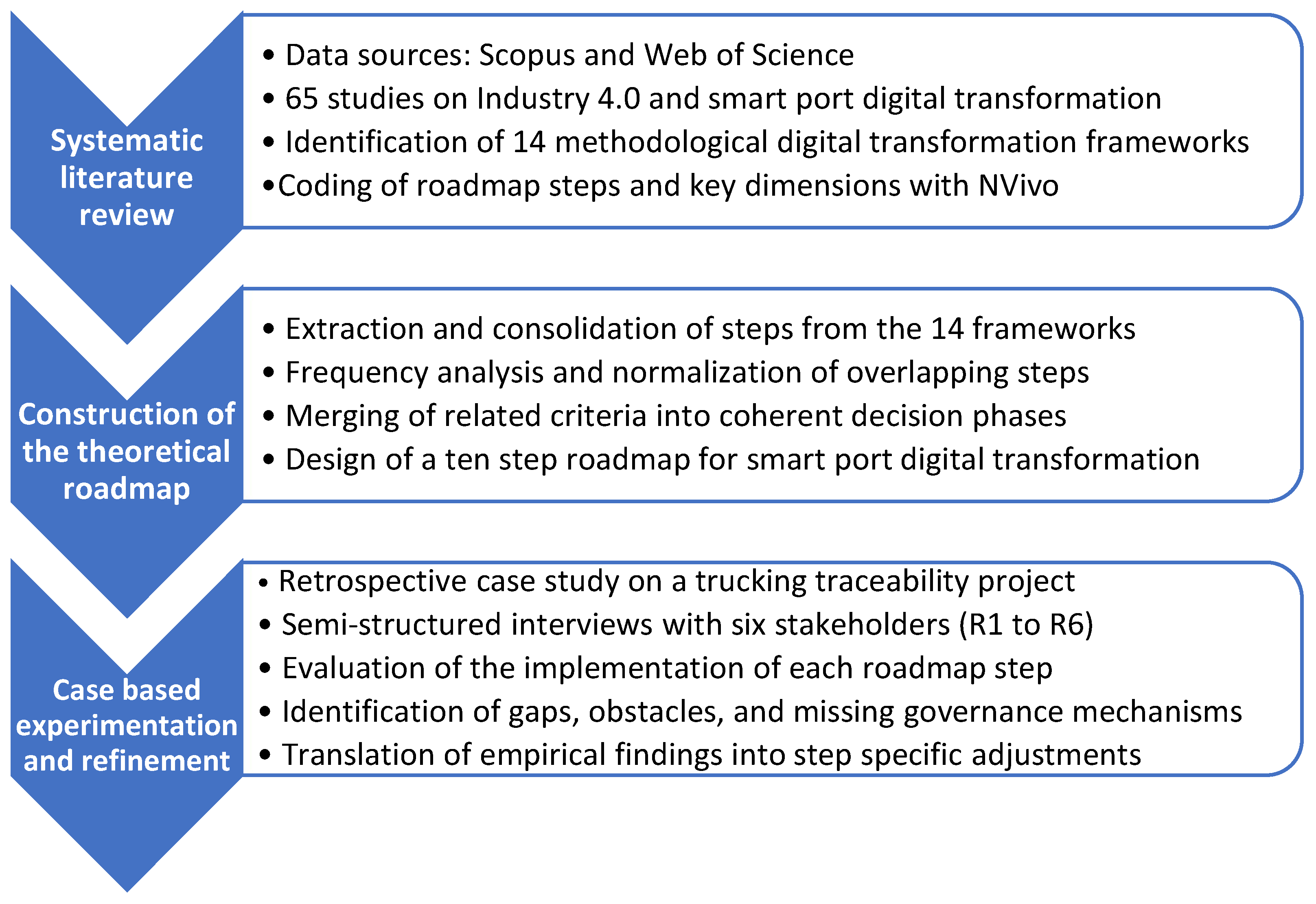
To summarize the overall research design,
Figure 1 provides an integrated view of the three main phases of the study, linking the systematic literature review, the construction of the initial theoretical roadmap, and its empirical refinement through the PTR case.
5. Experimentation of the Proposed Roadmap
The experimentation of the proposed roadmap is a pivotal phase for assessing both its theoretical robustness and its practical relevance. Rather than a simple descriptive check, this phase confronts the theoretical roadmap with the complex reality of a port environment in order to reveal its strengths, limitations, and areas for refinement. In line with design science research principles [
31], the aim is not to claim definitive validation, but to transform a conceptual artifact into a pragmatic framework that can be used by decision-makers in port authorities, thereby generating both scientific and managerial insights.
In this regard, the retrospective case study conducted at the PTR provides a privileged setting for such an experiment. Positioned on a path of progressive digitalization through the adoption of truck traceability technology, this medium-sized port serves as a particularly relevant empirical laboratory. Its environment, characterized by limited resources, and specific organizational constraints, mirrors the challenges faced by many ports worldwide. Analyzing this case thus enables the assessment of the roadmap’s transferability while enriching the understanding of the real conditions of digital transformation in the port sector.
The experimentation thus pursues a dual objective. From a scientific perspective, it tests normative hypotheses drawn from the literature, assessing their adaptability to a specific context and their capacity to yield generalizable lessons. From a managerial perspective, it aims to provide port authorities with a pragmatic framework for action, capable of guiding the prioritization of initiatives, the allocation of resources, and the management of risks.
The experimentation is structured into two parts. The first evaluates the relevance and degree of implementation of each step of the proposed theoretical roadmap, confronting theoretical prescriptions with practices observed in the case study. The second suggests adjustments to the theoretical roadmap, derived from identified gaps, with the purpose of enhancing its applicability, flexibility, and operational value. These refinements go beyond technical recommendations; they are framed within a process of organizational learning and continuous improvement, which is fundamental to any digital transformation journey.
By combining empirical confrontation with theoretical roadmap adjustments, this experimentation contributes to advancing the academic literature on smart ports while also equipping practitioners with an adaptable strategic framework. It therefore seeks to move beyond a simple juxtaposition of theoretical guidelines, offering instead an evolving stepwise decision support tool transferable to a variety of port contexts, whether they be large international hubs or medium-sized ports striving toward digital transformation.
5.1. First Part: Evaluation of the Relevance of the Different Steps of the Initial Roadmap
The evaluation of the steps of the initial and solely theoretical-based roadmap for the digital transformation of the PTR was carried out through a retrospective study, based on semi-structured interviews conducted with stakeholders involved in the technology implementation project. For confidentiality purposes, interviewees were coded from R1 to R6. This design allowed the researchers to confront the theoretical roadmap, derived from the systematic review, with the practices implemented in the field. The analysis thus focused on how each step was followed, applied, or, conversely, adapted according to any operational, organizational, and contextual constraints specific to the studied port.
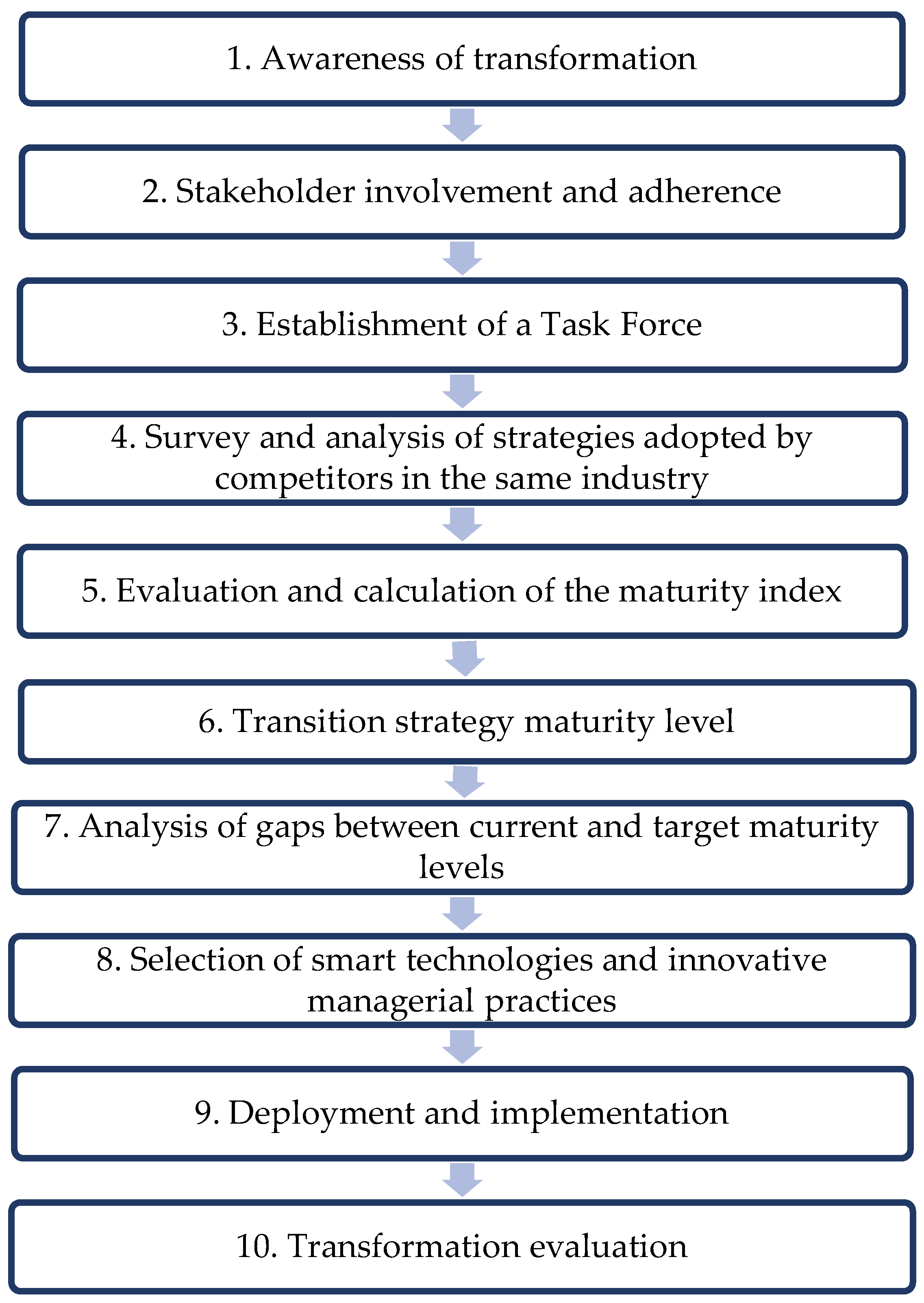
The first step of the roadmap, namely awareness of the transformation, aims to establish a common understanding of the smart port concept and its benefits. According to R1: “Our main objective is to provide efficient infrastructure […] By optimizing the use of our infrastructure, we aim to reduce transit times, which translates into significant environmental gains and an improvement in overall productivity.” As R1 notes, this step was not fully exploited: “Initial communication was not sufficiently thorough, which led to an uneven understanding of the project among stakeholders, complicating subsequent phases, […], this lack of communication generated misunderstandings and divergent expectations.” To strengthen this first step, the roadmap could be adjusted by integrating formal awareness and alignment mechanisms from the project launch, such as structured communication plans and interactive workshops to align expectations and avoid misunderstandings.
The second step, stakeholder involvement and adherence, appears not to have been completed. Although their active participation was decisive, the experience of the PTR highlighted insufficient involvement of field operators, leading to resistance and delays. As reported by R2: “Certain stakeholders, such as terminal operators, were not sufficiently engaged from the beginning, which led to resistance and delays in certain phases of the project”. This observation underlines the need for rigorous planning to ensure effective involvement of all parties from the initial stages.
The third step, the establishment of a working team within the TR dedicated to digital transformation, faced several difficulties, particularly related to frequent changes in team composition and internal coordination problems. R2 mentions in this context that: “Changes in team composition and coordination difficulties limited its effectiveness at the PTR.” R3 confirms that “The team composition had to be modified several times. Roles and responsibilities were not clearly defined or properly communicated, which compromised the effectiveness of monitoring and the smooth running of the project.” This experience highlights the importance of maintaining stability in team composition and ensuring effective coordination from the start of the project.
Step four, the inventory and study of strategies adopted by other companies in the sector, although theoretically relevant, revealed its limitations in the context of the PTR. As R3 pointed out: “The specificity of the PTR, which operates mainly in bulk, did not allow us to find examples to follow or to benefit from the experiences of pioneering port authorities in digital transformation.” This observation is also confirmed by R2: “I conducted a market study by researching on Google Scholar, but I found no examples of similar ports that had developed truck tracking and traceability technology” outside container terminals. Finally, R1 indicates: “I contacted port authorities to benefit from their experience, but I did not obtain conclusive answers or concrete examples implemented in the field.” Although comparative analysis with other ports could not be fully exploited, it remains essential to structure digital transition and anticipate challenges, provided that lessons are adapted to local realities.
Step five, the evaluation and calculation of the maturity index, was not formally carried out at the PTR. As R2 specifies: “No evaluation or calculation of maturity index was performed by the PTR” or any that may resemble to such. This observation is corroborated by R5, who adds: “This transformation project was proposed without stemming from an evaluation or calculation of the maturity index.” Similarly, R3 indicates: “No evaluation was carried out.” The absence of digital maturity evaluation complicated the identification of real needs and the prioritization of actions to be undertaken. A structured evaluation framework would have allowed for better guiding transformation efforts and ensuring a more coherent and measurable project progression.
The sixth step, the definition of port challenges and the target maturity level, was lacking at the PTR, which led to confusion about project priorities. As R6 underlines: “The port needed a traceability solution for road transport, as this part constituted a black box for the port authority. However, the PTR did not provide a clear definition of its challenges, nor did it prioritize or hierarchize them.” R1 also confirms the lack of clarity on the challenges: “There was no clear definition of the challenges, but chance and opportunity allowed the PTR to be placed on this digital transformation project.” This highlights the importance of clarifying challenges from the beginning to ensure coherence and efficient resource allocation.
Since step six was not performed, step seven of the analysis of gaps between the current and target maturity level, could not be carried out at the PTR as confirmed by R5 and R6. This absence of analysis limited the port’s ability to effectively target areas needing improvement.
The eighth step, the selection of advanced technologies and innovative managerial practices, was carried out without an exhaustive evaluation of available options, which possibly led to suboptimal choices. R4 explains: “It was a combination of luck, networking, and, of course, the presentation of our products at seminars, conferences, and events.” R1 adds: “We did not proceed with a technology selection process, but rather a partner proposal.” R3 supports: “In the absence of such an evaluation, the PTR encountered challenges related to the compatibility and integration of the chosen technology.” A more thorough and structured selection would have ensured better integration and sustainability.
For the ninth step, the deployment and implementation of new technologies, the PTR experienced various delays and interruptions, particularly due to insufficient planning and integration problems. R2 explains: “Our main problem lay in the PTR’s specifications, which lacked details on the tasks to be accomplished and the management of spare parts.” R4 specifies: “We focused on objectives without planning the details of implementation or including a verification period.” Furthermore, R5 mentions: “Since the supplier is based in another province, on-site travel was rare, and requests had to go through the CEO, lengthening response times.” Finally, R3 insists: “We had not planned who would be responsible in case of breakdown or additional costs, which leads us to consider abandoning the technology.” These testimonies underline the need for rigorous planning, post-deployment verification, and clear technical responsibilities.
The tenth step, the evaluation of digital transformation, was insufficiently implemented at the PTR. R5 emphasizes: “No evaluation or monitoring was carried out by the PTR to assess the expected results […] any change or visualization must go through the supplier and obtain their authorization.” R3 adds: “Since the departure of the PTR agent in charge of the project, no one has been monitoring the indicators or data for this project.” Furthermore, R6 specifies: “No one monitors the data collected by the sensors; no analysis or use of this data is made by the PTR. […] although these sensors are installed on the port, their use and ownership rights are held by the supplier.” The lack of monitoring and access to data restricted the port’s ability to fully benefit from the project’s lessons and to measure performance effectively.
Overall, the case analysis made it possible to assess the relevance of the ten steps and to highlight discrepancies between the theoretical roadmap and a practical field experience toward the smart port, thereby generating concrete lessons on how the proposed roadmap should be adapted to field specificities.
5.2. Second Part: Proposed Refinements to the Roadmap
Refinements of the port’s digital transformation roadmap can be derived from the analysis of the truck traceability implementation project in the case study. These adjustments aim to improve the effectiveness and alignment of digital transformation initiatives with operational realities and specific challenges encountered in the field.
Table 2 synthesizes, for each step of the theoretical roadmap, the main implementation issues observed at the PTR, the corresponding refinements, and the expected outcomes.
Table 2 operationalizes the theoretical roadmap presented in
Figure 2 by confronting it with empirical evidence from the PTR case study. Each step of the initial roadmap is thus revisited in light of observed field challenges and gaps, and specific refinements are proposed to strengthen its practical applicability. This process transforms the roadmap from a purely literature-based conceptual sequence into a more robust and actionable framework. By linking each adjustment directly to the corresponding step of the theoretical roadmap, the table clarifies how the latter evolves to better address real operational constraints such as resource stability, stakeholder engagement, and technology integration while preserving the original structure.
6. Discussion
Analysis of existing methodological frameworks highlights recurring limitations in terms of generalization, operationalization, and adaptation to port environments. Models such as those proposed by [
5,
7,
18,
45] offer valuable building blocks, particularly around maturity assessment and technological deployment, but they tend to remain either diagnostic, technology driven, or insufficiently explicit regarding governance, stakeholder coordination, and investment prioritization. The roadmap proposed in this article seeks to address these gaps by moving beyond a simple maturity assessment toward a detailed sequence of ten steps that combines strategic planning, technology selection and implementation, and systematic monitoring of transformation. In contrast to previous approaches, which largely focus on technological capabilities, the proposed framework explicitly integrates data governance mechanisms and stakeholder engagement as central dimensions of the transition process. This structuring supports a progressive and better-controlled adoption of digital solutions, while allowing adaptation to the specific characteristics of port infrastructure and resource constraints.
The retrospective experimentation at the PTR reinforces and refines this contribution. By confronting each step of the roadmap with practices observed in an advanced technology deployment project, the case study confirms the relevance of key stages such as awareness, maturity diagnosis, gap analysis, and post-deployment evaluation, but also reveals critical shortcomings when these stages are absent or weakly implemented. For example, the lack of a formal maturity assessment, the limited early involvement of terminal operators, the opportunistic selection of a technological partner, and the absence of structured performance monitoring all led to delays, integration issues, and reduced control over data. The adjustments proposed in
Table 2 translate these empirical findings into operational refinements for each step of the proposed roadmap, thereby transforming the latter from a purely theoretical construct into a more robust and actionable framework grounded in field realities. In this sense, the roadmap can be interpreted, in a design science perspective, as an artifact that iteratively evolves through the confrontation between prescriptive principles and contextual constraints.
From a managerial and organizational change perspective, the results confirm that port digital transformation cannot be reduced to isolated technology projects. It requires clear governance arrangements, rigorous planning, and proactive stakeholder management. Strategic alignment emerges as a central challenge, calling for explicit prioritization of investments and structured sequencing of initiatives according to organizational capabilities, risk exposure, and interoperability requirements. Effective governance, in this context, relies on a structured decision-making framework that clarifies roles and responsibilities, supports coordination between internal and external actors, and formalizes the rules governing data access, ownership, and sharing. Stakeholder involvement is likewise a key success factor, which demands transparent communication, awareness-raising mechanisms, and training programs designed to reduce resistance and build trust in new tools.
The proposed roadmap also carries policy and sustainability implications. By embedding maturity diagnosis, data governance, and performance indicators into a single structure, it offers public authorities a reference for assessing and supporting port digitalization programs. The emphasis on traceability, interoperability, and monitoring of operational and environmental indicators aligns with international sustainability agendas, in particular the United Nations SDGs related to industry, innovation, and infrastructure (SDG 9), sustainable cities and communities (SDG 11), responsible consumption and production (SDG 12), climate action (SDG 13), and partnerships for the goals (SDG 17) [
56]. The proposed roadmap is thus not only a port’s modernization decision support tool, but a structured lever for integrating operational efficiency, economic performance, and environmental responsibility within a unified transformation trajectory. At the same time, the lessons drawn from a single case of a medium-sized port should be seen as exploratory, calling for further validation across diverse port profiles and for the integration of quantitative performance indicators in future research.
7. Conclusions
This study aimed to propose a comprehensive roadmap for the digital transformation of ports, based on a synthesis of a significant corpus of the scientific literature and on empirical insights from a field experiment. The literature review highlighted that, despite the existence of several methodological frameworks to support the digital transition of ports [
5,
7,
18,
45], these approaches present recurrent limitations in terms of operationalization, data governance, and adaptability to port realities. In particular, no unified model simultaneously integrates a structured assessment of digital maturity, a progressive technological implementation strategy, and explicit mechanisms for stakeholder management.
Methodologically, this research is based on a dual approach. First, a systematic literature review made it possible to structure a ten-step roadmap that combines maturity diagnosis, gap analysis, technology selection, deployment, and evaluation. Second, an empirical experimentation was carried out through a retrospective case study at the PTR. This combination allowed the theoretical roadmap to be confronted with field realities and helped identify discrepancies between state-of-the-art methodological recommendations and their effective implementation in a medium-sized port context.
The results of the case study revealed several shortcomings in the digital transformation process followed by the studied port. The absence of structured planning, formal maturity assessment, and clear digital governance led to organizational challenges, particularly regarding stakeholder engagement, technology selection, and data management. These findings provide preliminary support for the relevance of the proposed roadmap to structure port digital transition and to guide managers in sequencing initiatives, clarifying roles, and formalizing data-governance rules. They also motivated refinements to the initial model, especially concerning stakeholder involvement, continuity of project teams, and the formalization of performance monitoring.
This study has limitations that open avenues for future research. The empirical validation relies on a single case, centered on a specific technology within a medium-sized Canadian port, which limits the diversity of empirical findings and thus proposed adjustments. Moreover, the analysis is primarily qualitative and does not include systematic quantitative performance indicators to measure changes in efficiency, competitiveness, or environmental impact. Future work should therefore test the adaptability of the roadmap on a larger sample of ports with diverse governance models, sizes, and technological profiles, and should integrate maturity indices and operational, economic, and environmental metrics to quantify the effects of digital transformation.
To succeed in their digital transformation, ports must adopt an integrated approach combining strategic planning, continuous evaluation, and adapted governance, so that technological innovations are aligned with the imperatives of competitiveness, sustainability, and operational efficiency in the maritime sector. In this perspective, the proposed roadmap should be viewed as a structured and evolving decision support tool, offering ports and public authorities a reference framework to design, steer, and progressively improve in their digital transformation and digitalization programs.