


Abstract
In recent years, due to growing interest in gut health, the potential benefits of probiotics on the gut have received much attention. Probiotics, now readily available in both dietary supplements and a variety of foods, have become a focal point of consumer health choices. This study aims to explore the impact of consumer-related factors, including socio-demographic profiles, health status, and probiotics knowledge, on the acceptance of probiotics products in Hong Kong. A total of 385 participants engaged in a survey, providing data for an in-depth analysis of how these factors influence attitudes toward probiotics. Findings revealed a general confidence in the safety of probiotics products among respondents; however, there was a noticeable gap in probiotics understanding. The study highlighted a correlation between probiotics knowledge and specific socio-demographic attributes, with higher educational attainment positively linked to greater probiotics awareness. Furthermore, the research indicated that women exhibit higher health consciousness and a greater propensity for probiotics consumption compared to men. Consequently, promoting enhanced probiotics education and fostering increased health awareness are crucial steps to prevent the misuse of probiotics and optimize health outcomes.
1. Introduction
As public awareness of health and nutrition has increased in recent years, particularly after the COVID-19 pandemic, there has been a significant re-evaluation of dietary habits [1,2]. The consumption of nutrient-rich foods or supplements has become very popular among people who strive to attain optimal health benefits [3]. In response to this demand, food industries have developed new healthy products or reformulated existing products. The term “functional food” refers to food that provides more than basic nutrition and has been specially formulated with substances (such as vitamins, minerals, or dietary fiber) or live microorganisms with the potential to enhance health or prevent diseases [4,5]. Several examples include milk fortified with calcium, yogurt enriched with probiotics and prebiotics, omega-3–enriched products, and foods high in antioxidants, including some fruits and vegetables [6]. Currently, probiotics are a hot topic in the field of nutrition, representing an ideal example of a functional food [7,8,9,10].
Probiotics have been utilized for thousands of years, predating the discovery of microorganisms [11]. Their contemporary definition characterizes them as live microorganisms beneficial to host health when administered in adequate quantities [12,13,14,15,16,17]. Most commercially available probiotics strains are Bifidobacterium, Lactobacillus, and Saccharomyces boulardii [18,19]. Each strain of probiotics bacteria makes its own health claim [18]. To have an effective health impact, it is imperative that probiotics (– cfu/g daily) added to food must survive in large numbers throughout the process of fermentation, storage, and consumption [5,20,21,22]. Certain probiotics products are required to be stored in the refrigerator before consumption to keep the probiotics active and to offer health benefits [8,23].
The escalating popularity of probiotics in recent years can be attributed to increased consumer awareness of potential health advantages and a growing interest in natural and alternative wellness approaches [24]. Probiotics have been extensively researched in a number of ways and have demonstrated their benefits and effectiveness in a variety of situations [25,26,27,28,29]. There is evidence that probiotics are beneficial for improving the composition of the gut microbiome, and they can reduce or prevent intestinal inflammation as well as other phenotypes associated with intestinal and systemic diseases [8,30,31,32,33]. There is a growing body of evidence showing that prebiotics and probiotics work synergistically to support a healthy gut environment, resulting in a more effective approach to improving gut health and overall well-being. Prebiotics are defined as non-digestible food constituents, most commonly fiber, which selectively stimulate the growth and/or activity of beneficial microorganisms in the intestines [6]. Keeping the microbiome balanced is crucial to the health of an individual, and the microbiome works in a symbiotic relationship with the host to control nutrient metabolism, protect the host against pathogens, and provide signals to the immune system to enhance host immunity and physiology [34,35,36]. As a result of their numerous health benefits and advertising, the probiotics market is gaining more and more popularity.
Functional foods with probiotics are increasingly available on the market in many countries. Over the past few years, more than 500 probiotics products have been introduced to the global market, and the number continues to grow [37]. Most commercially available probiotics products are dairy products and fermented products, such as yogurt, cheeses, and sauerkraut [38,39]. Probiotics products include both probiotic foods (such as milk, juice, sourdough bread, and chocolate bars) and dietary supplements (such as tablets, capsules, powders, and liquids) [40,41,42]. Growth of the probiotics market is related to consumer consumption, which is affected by factors such as health consciousness, culture, eating habits, and tastes [43,44]. Aside from these factors, food and beverage manufacturers have embraced the trend by incorporating probiotics into a variety of products, marketing them as promoting digestion and overall well-being. However, food products supplemented with probiotics may not be acceptable to some consumers, and may not be safe or effective for individuals with a variety of medical conditions [45]. Probiotics knowledge enables consumers to make informed decisions about which probiotic foods or supplements are most appropriate for their health or avoid misuse of them. For this reason, understanding the factors that influence consumer acceptance, proper use, as well as the current state of the market are vital for the successful launch of the product and the attainment of health benefits.
It has been reported that probiotics consumption can be affected by factors such as a person’s knowledge, attitude, and education, which have been studied in both the United Arab Emirates [46] and Turkey [40]. Although research on the acceptability of probiotics products has been carried out in different regions, there is a scarcity of studies on this subject in Asia, including Hong Kong. In fact, socio-demographic factors and consumer acceptance levels are regionally dependent, resulting in varying results across the country. Recently, Hong Kong has emerged as one of the most vibrant markets in Asia for health supplements [47]. In 2022, approximately 74% of Hong Kong residents aged 25 to 34 are expected to use nutritional supplements, with roughly 79% taking nutritional supplements in order to boost their immunity, according to the Over the Counter (OTC) & Nutraceuticals Markets Research Report. The city is characterized by a unique blend of Western and Chinese cultures, which influences the dietary practices and health behaviors of its residents [48]. As an international vibrant, cosmopolitan city with a diverse population, Hong Kong offers an intriguing context for studying probiotics acceptance and consumption.
Based on the findings of previous studies, individuals’ attitudes toward probiotics products and purchase decisions may be influenced by socio-demographic factors (such as age, gender, education, income, and cultural background), health status, and knowledge of probiotics [40,49]. Probiotics products are expanding in the Hong Kong market. However, there is no legislation or standard in Hong Kong governing the dissemination of relevant information regarding the safety and efficacy of dietary supplements. People may be compelled to purchase health-related products as a result of their health-consciousness and business marketing strategy. There is limited research regarding residents’ acceptance of probiotics products and their opinions of these products in Hong Kong. Hence, the purpose of this study is to determine the factors that will influence the decision-making process of Hong Kong residents by systematically assessing socio-demographic factors, health status, and knowledge levels regarding probiotics. Understanding these factors associated with probiotics product acceptability is crucial for business marketing. Additionally, the government can leverage the findings of this study in several ways to inform and enhance public health policies and regulations related to dietary supplements, particularly probiotics products, in Hong Kong.
2. Materials and Methods
2.1. Experimental Design
A comprehensive quantitative and descriptive investigation was undertaken utilizing a meticulously crafted questionnaire to analyze consumers’ reception and perspectives regarding probiotics consumption. The questionnaire comprised 27 questions segmented into four sections, each presenting multiple choices for participants to select from. Employing a non-random sampling technique, the survey was administered from June through mid-July 2024, with interviews conducted via online platforms, telephone, and face-to-face interactions. Participants completed the questionnaires within a time frame of 15 to 20 min. The sampling phase extended over approximately one and a half months. Before conducting the research, ethical approval by the Technological and Higher Education Institute of Hong Kong’s Human Subjects Ethics Committee (Ref. No.: SHE2024-008) was obtained on 5 March 2024.
2.2. Subject Recruitment and Sample Size
The study aimed to provide a comprehensive assessment of the socio-demographic factors, health status, and knowledge regarding probiotics product acceptability in Hong Kong. The target participants were Hong Kong residents and those who had resided in Hong Kong for a period of more than 6 months. To ensure that the data collected is exclusively from the Hong Kong market, the first two questions of the questionnaire asked about their willingness to participate and their residence.
As the sample size of the survey has a direct bearing on the quality and reliability of the results, it should be carefully selected to reflect the target population. Sample size for the current study was calculated based on a previous study, which determined sample size by using the standard error formula (Equation (1)) [40].
is the estimated sample size, X is the confidence interval (95% confidence is = 1.96), N is the size of the population, P is the sample portion (50%), and d is the degree of accuracy (0.05). In accordance with the 2021 census, Hong Kong has an estimated population of 7.41 million. The optimal sample size was calculated as: . Thus, a total of 385 participants were recruited for this study.
2.3. Socio-Demographic Characteristics of the Respondents
A frequency analysis was conducted to describe the socio-demographic characteristics of the 385 participants in the study (Table 1). Among the participants, the number of female participants (51.9%) is slightly higher than the male participants (47.8%), and those between the ages of 46 and 65 constituted the largest group (27.5%). As a means of obtaining a more accurate picture of the Hong Kong market, the participants’ age distribution was comparable to that of the Hong Kong population. Based on a census conducted by the Hong Kong Census and Statistics Department in June and August 2011, approximately 16% of Hong Kong’s population was under the age of 18, 6% were between the ages of 18 and 25, 13% were between the ages of 26 and 35, 14% were between the ages of 36 and 45, 31% were between the ages of 46 and 65, and 20% were over the age of 66.

Table 1.
Socio-demographic characteristics of the respondents.
2.4. Data Analysis
This study collected data using an online questionnaire developed from a Google form that consisted of multiple-choice questions. Tables and graphs were prepared using IBM SPSS Statistics version 28 for Windows and Microsoft Office Excel 365. The questionnaire’s reliability and internal consistency were assessed using Cronbach’s alpha reliability at a significance level of 0.05. Data normality was examined through both Kolmogorov–Smirnov and Shapiro–Wilk normality tests at the 0.05 significance level. The difference between scores was checked statistically using the Chi-squared test. The interaction between study variables was determined using Pearson correlation and regression analysis at the 0.05 level, aiming to ascertain the presence of a statistically significant relationship among the variables.
3. Results
3.1. Respondents’ Socio-Demographic Profile
In this study, 15.1% of respondents were under the age of 18, 16.4% were between 18 and 25 years old, 16.1% were between 26 and 35 years old, 10.6% were between 36 and 45 years old, 27.5% were between 46 and 65 years old, and approximately 14.3% were over 66 years old. The majority of respondents were over the age of 18 and were predominantly married (56.1%). A majority of respondents (28.6%) completed secondary education, followed by those with a bachelor’s degree (23.9%), master’s degrees or higher (21.6%), college (14.8%), and primary education (11.2%). The data revealed that most participants had a degree of education. The proportion of students responding to the questionnaire was the highest (22.9%), followed by professionals (12.2%). Among the respondents, those with incomes between HK $20,000 and 39,999 (37.7%) accounted for the majority, followed by those with incomes between HK $40,000 and above (25.5%) and those with incomes between HK $10,000 and 19,999 (24.2%).
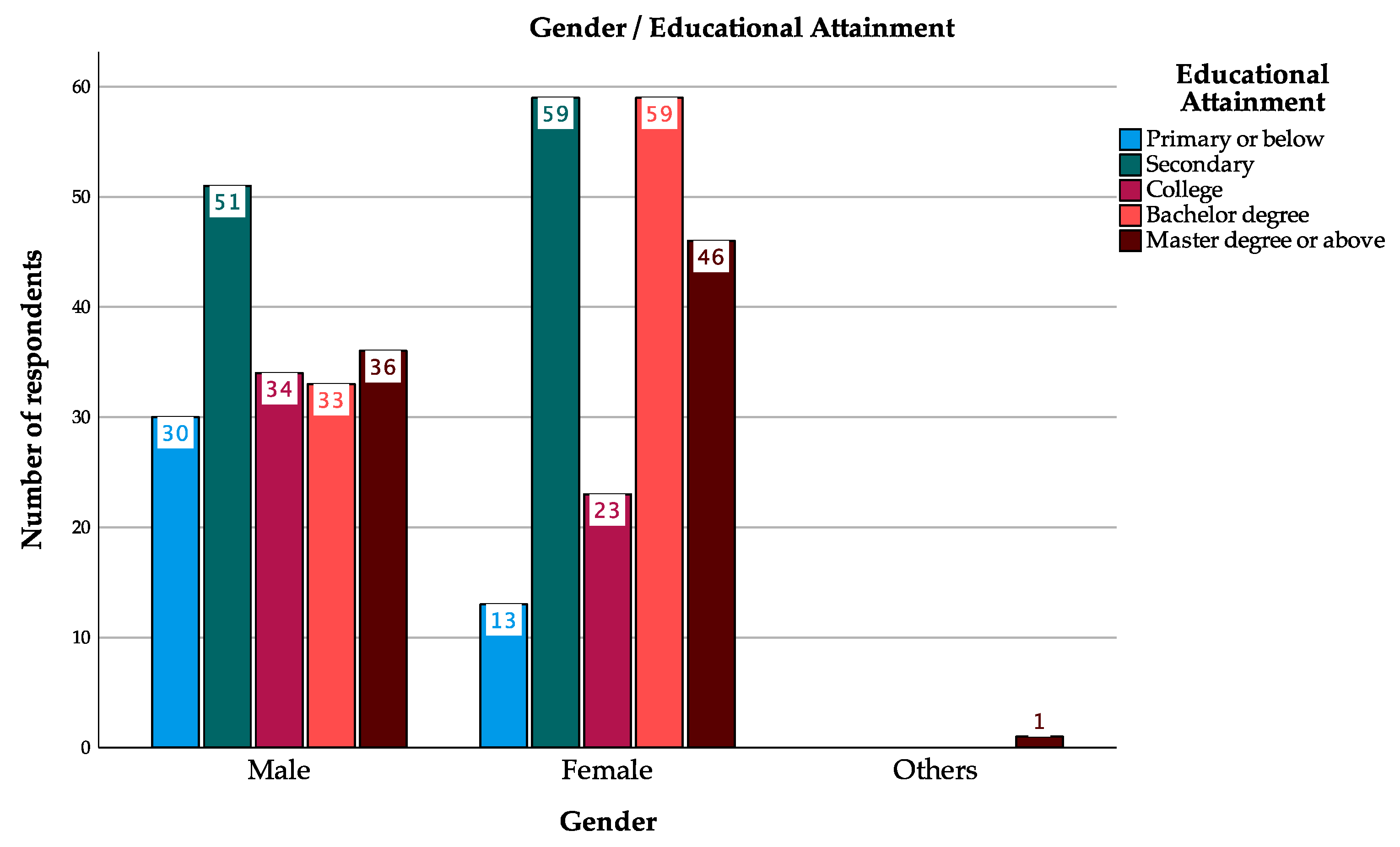
It is notable that women had higher education, with 15.32% having obtained a bachelor’s degree and 11.95% having obtained a master’s degree or above, respectively, while 8.57% of men had bachelor’s degrees and 9.35% had master’s degrees (Figure 1). But more male respondents had primary or below (7.79%) and college level (8.83%) than females.
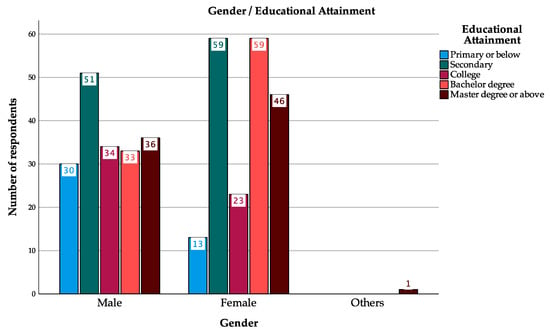
Figure 1.
Gender and Educational Attainment.
3.2. Health Assessments of Respondents
As part of the questionnaire, five questions were designed to obtain information regarding respondents’ health status. Among respondents who were asked to indicate their weight and exercise frequency, the majority perceived themselves to be of normal weight (70.6%) and most exercised regularly, but not more than 150 min per week of moderate-intensity aerobic exercise (35.5%) (Table 2). In order to assess respondents’ perceptions of their weight and height and the true prevalence, their body mass index (BMI) was calculated using the information they provided about their height and weight. It was found that the results slightly differed from what they reported. A majority of respondents were within the normal weight range, but a greater number of participants were actually underweighted (19.8%) than they reported (9.6%).
Table 2.
Participants’ weight and exercise status.
In response to the question ‘Do you have any of these health problems (you may answer more than one question)’, the majority of respondents reported no illness (57.9%), followed by gastrointestinal disease (15.3%) and allergies (10.4%) (Table 3). Females generally suffered from fewer health issues than males when gender and health were considered together. A higher percentage of females reported no disease, and there was a greater prevalence of obesity (71.4%), diabetes (63.3%), hypertension (72.4%), coronary heart disease (100%), and high cholesterol (71.4%) among males. The most common health problems reported by females were gastro-intestinal (72.4%), followed by osteoporosis (64.3%) and allergy (61.5%).
Table 3.
Health status of the respondents.
3.3. Respondents’ Awareness and Knowledge of Probiotics
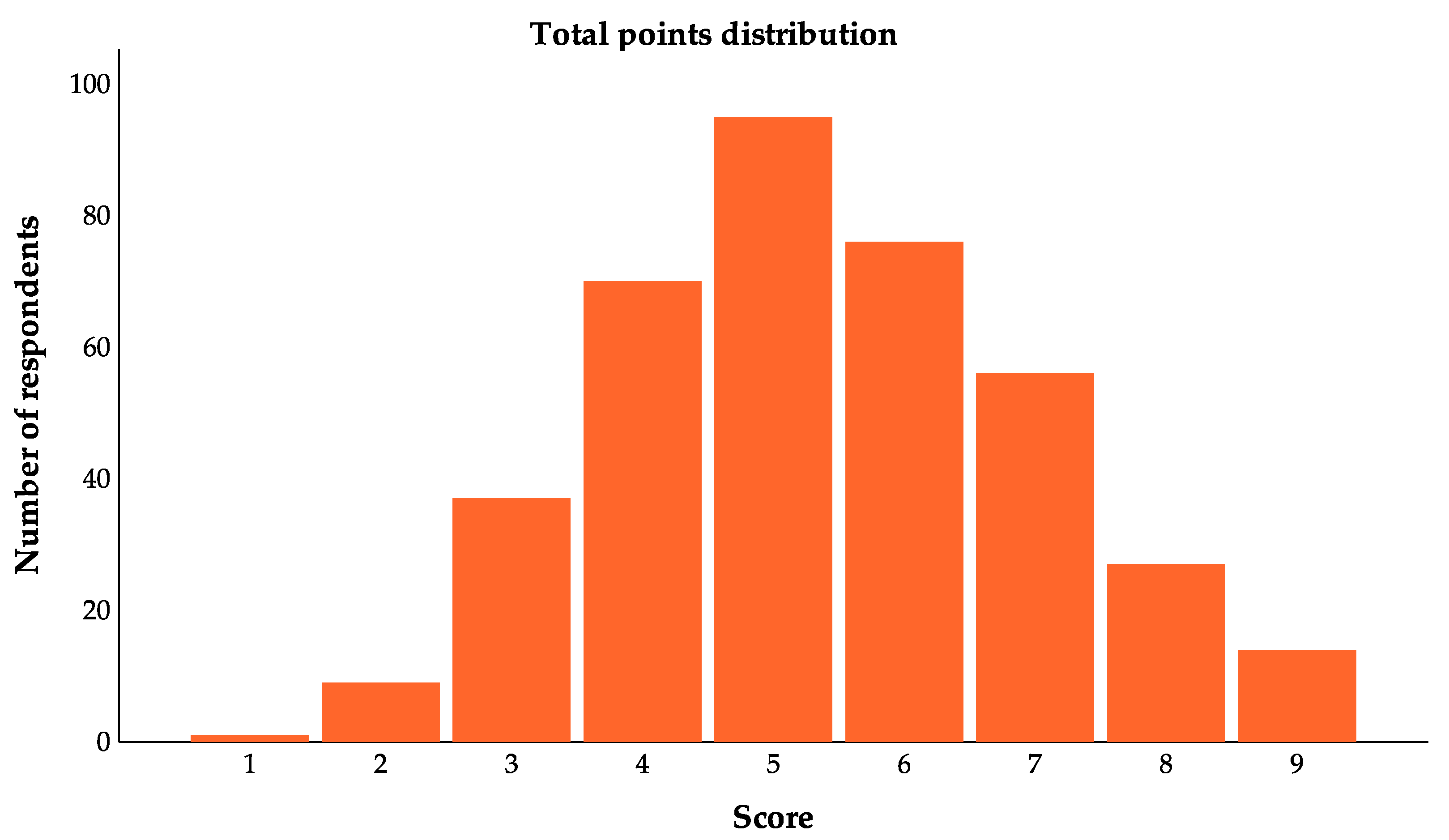
As part of the questionnaire, nine yes/no questions were included to assess respondents’ knowledge of probiotics (Table 4). The first three questions assessed respondents’ understanding of the definition of probiotics, the next three questions addressed the potential negative effects of probiotics, and the final three questions examined the mechanism of action of probiotics. There was a total score of nine points and an average score of five points among the 385 respondents (Figure 2). In accordance with the results of the test, most respondents had a fair understanding of probiotics (Table 4). It was found that 77.9% of respondents had a basic knowledge of probiotics, while approximately half were unaware of the concept of prebiotics (44.2%). Most respondents were aware of the relationship between probiotics and gut function (90.4%) and believed that probiotics were safe for everyone (69.9%).
Table 4.
Participants’ responses to the probiotics knowledge test.
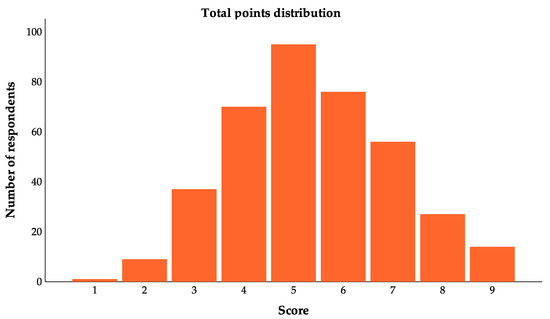
Figure 2.
Points distribution among the probiotics knowledge test.
3.4. Correlation between Socio-Demographic Factors, Health Status, and Knowledge
There was an examination of the Pearson correlation coefficients (r) and asymptotic significance (2-tailed) (p-value) for 10 variables pertaining to socio-demographic characteristics, health status, and knowledge on probiotics among 385 respondents (Table 5). The Pearson correlation coefficient (r) is a statistical test statistic used to measure a statistical relationship between two continuous variables. A greater r coefficient indicates a stronger correlation between the variables, and positive Pearson correlation coefficients indicate an increase in one value is accompanied by an increase in the other value. p-values are used in hypothesis testing to assist with the decision to accept or reject the null hypothesis. If the p-value is less than 0.05, it is more likely that the null hypothesis will be rejected.
Table 5.
Pearson correlation coefficients and Asymptotic significance among 10 variables.
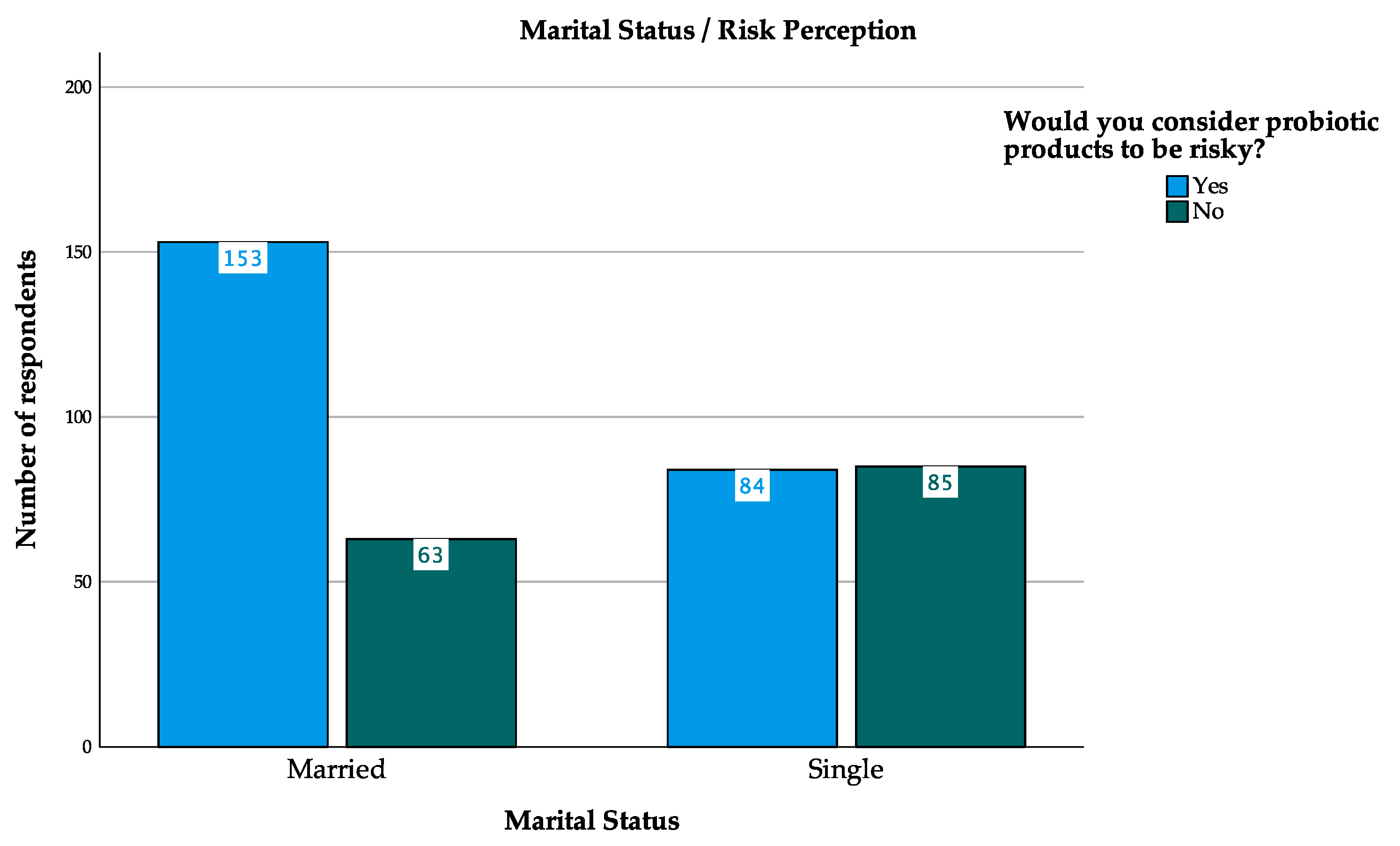
Data indicates that some socio-demographic variables are strongly positively correlated. It was found that the strongest association was between ‘Education Attainment’ and ‘Monthly household income’ (r = 0.273, p < 0.001), suggesting that the more educated the respondents, the higher their monthly income. Besides, there was a strong positive correlation between ‘Age’ and ‘Monthly household income’ (r = 0.269, p < 0.001), ‘Educational Attainment’ and ‘Score’ (r = 0.257, p < 0.001), ‘Marital Status’ and ‘Risk Perception’ (r = 0.216, p < 0.001), and ‘Monthly household income’ and ‘Score’ (r = 0.232, p < 0.001). The p-value for these associations was less than 0.05, indicating that the correlation was statistically significant and that the two variables were related. ‘Score’ refers to the results of the probiotics knowledge test in the questionnaire among respondents. Accordingly, probiotics knowledge was closely related to socio-demographic characteristics, and respondents with a higher level of education and monthly income had a higher knowledge of probiotics. Additionally, the results noted that risk awareness of probiotics products was associated with marital status. The positive correlation (r = 0.216, p < 0.001) refers to probiotics products that were perceived to be riskier by married participants (Figure 3). In terms of the negative relationship, there was a negative correlation between ‘Monthly household income’ and ‘Consumption frequency’ (r = −0.121, p = 0.018), that is, the lower the income, the lower the probability of probiotics consumption.
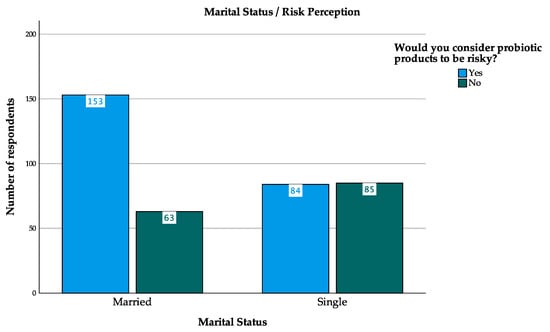
Figure 3.
Marital Status and Risk Perception.
Considering the correlation between respondents’ health status and variables (Table 6), age is closely related to health problems. With the exception of ‘Allergy’ and ‘No disease’, all other health problems were strongly positively correlated with age, especially the associations between ‘Age’ and ‘Diabetes’ (r = 0.258, p < 0.001), ‘Age’ and ‘Hypertension’ (r = 0.282, p < 0.001), ‘Age’ and ‘Cholesterol’ (r = 0.207, p < 0.001), and ‘Age’ and ‘Osteoporosis’ (r = 0.203, p < 0.001). The strongest association was between ‘Weight Define’ and ‘Obesity’ (r = 0.340, p < 0.001), suggesting that respondents who reported they were overweight were more likely to be obese and that the self-report was accurate.
Table 6.
Correlations between health problems and variables.
3.5. Consumption Habits and Risk Awareness of Probiotics Products
Nearly all respondents (94.8%) believed that probiotics products were readily available in Hong Kong (Table 7). Most respondents consumed and took probiotics products on a regular basis. The majority of respondents consumed probiotics products two times a week (19.5%) or three times a week or more (19.5%) (Table 8). However, the fewest respondents consumed probiotics products three times a day or more (0.8%). There were 11.2% of respondents who reported that they had never consumed probiotics products before. Most of them consumed probiotics irregularly (48.1%), and they are equally likely to take them after meals (17.7%) or with meals (16.1%) (Table 7). It appears that most respondents believed that probiotics posed some risks (61.6%), primarily due to ‘Improper production process’ (13%), ‘Low-quality probiotics product’ (20.3%), ‘Potential negative effects on the body’ (21%), and ‘Overstating benefits’ (22.9%) (Table 7). Among the respondents, fermented foods were their primary source of probiotics (60.5%), and dietary supplements (31.9%) were preferred over homemade probiotics products (6%). Besides, it was found that 37.9% of women chose probiotics products because of their health benefits, and 13.1% said it was due to advertising or marketing efforts, both of which were higher than for men (Table 9).
Table 7.
Participants’ responses to probiotics consumption habits and risk awareness.
Table 8.
Probiotics products consumption among respondents.
Table 9.
Gender and Reasons for choosing probiotics products.
4. Discussion
Consumer acceptance of probiotics products is a one of the key determinants of purchasing behavior. Probiotics have been found to have multiple health benefits for humans and can be used as a therapeutic treatment in certain circumstances [5,50,51,52]. It is generally considered safe to consume probiotics [53,54]. Promoting the consumption of probiotics products may be an effective strategy for improving people’s health [55,56]. Thus, the purpose of this study was to examine the acceptability of probiotics products in the Hong Kong market through an assessment of consumer-related factors, including socio-demographic factors, health status, and probiotics knowledge, among Hong Kong residents. The results for these variables are presented in the Results section and will be discussed further below.
According to this study, a greater percentage of women had higher educational attainment than men (Figure 1), and there was a positive correlation between ‘Educational Attainment’ and ‘Score’ (r = 0.257, p < 0.001) (Table 5). It means that respondents with higher scores on the probiotics knowledge test tend to have higher levels of education. There is evidence to suggest that women with higher education backgrounds possess a greater knowledge of probiotics than men. In this regard, the improvement of education may contribute to an increased level of health-related knowledge, which will subsequently result in a positive impact on health outcomes. A similar study was conducted in Saudi Arabia examining socio-demographic differences in probiotics knowledge, which found that males and females had significantly different probiotics knowledge scores at the same education level, but males scored much higher on knowledge tests than females [57]. This study was conducted among health science students and revealed that the age group of 25 to 26 years old performed better on the knowledge test than the other groups [57]. They set narrower age groups, which included 18–20, 21–22, 23–24, and 25–26. However, in the present study, the age group setting was wide, and there was no significant interaction between age and knowledge test. There may be a relationship between age and probiotics knowledge within a more specific age range. Therefore, in the next study, it is advisable to narrow the age range to study the relation between age and probiotics knowledge. A further limitation of the present study is that it does not consider the educational background of the respondents. People with a science background are more familiar with the concept of probiotics.
In addition to finding that female respondents possess a higher level of education and score higher on the probiotics knowledge test, the questionnaire found that more female respondents had not been diagnosed with any disease, and fewer reported chronic diseases (e.g., Diabetes, Hypertension, and Coronary heart disease) (Table 3). According to the latest data from the Centre for Health Protection of the Department of Health, the life expectancy of women in Hong Kong is 88 years, whereas that of men is 82 years. The mortality rate for women around the world was also lower [58]. Additionally, the study found that 37.9% of women chose probiotics primarily because of their health benefits and 13.1% because of advertising or marketing efforts, both of which were higher than the rate for men. The education level is likely to be a contributing factor to a greater number of females being healthy. Women are likely to be the first target of supplement manufacturers since they tend to purchase supplement products and pay attention to product claims regarding their health. Typically, women make the majority of decisions about family food choices, and a healthy diet can aid in preventing and controlling diseases, so the health status of family members may be directly related to women’s health consciousness. It is therefore extremely important to educate women on correct health knowledge so that misleading information will not be spread. A health improvement strategy that involves educating men about health knowledge as well as encouraging them to pursue higher education may be effective. While there was no significant difference in the consumption of probiotics between genders, females tend to consume more probiotics products (once a day, n = 32) (Table 8), indicating a slightly higher acceptance of these products among women.
In addition to gender differences in probiotics awareness, income may be a factor affecting probiotics purchases. Considering the market price for novel foods is generally higher than the market price for traditional foods [40], family income may be related to the consumption of probiotics products. Research in the past has shown that people with higher household incomes tend to consume higher-quality diets, prefer healthy foods, and have more disposable income to spend on healthy items [59]. In this study, 7.8% of respondents reported incomes below HK $10,000, 24.2% reported incomes between HK $10,000 and $19,999, 37.3% reported incomes between HK $20,000 and $ 39,999, 25.5% reported incomes over HK $ 40,000, and 4.9% reported that they were either unemployed or retired. A report from the Consumer Council of Hong Kong examined 40 probiotic dietary supplements on the market, with prices ranging from $99 to $788. The price of the probiotics product does not appear to be a significant factor that will deter Hong Kong consumers from purchasing it.
The results reveal that respondents possess a reasonable comprehension of probiotics (Figure 2). In this study, a segment of the questionnaire comprised nine yes/no questions to evaluate respondents’ knowledge of probiotics (Table 4). The responses to the initial three questions indicate that the majority of participants can recognize probiotics as non-drug substances and acknowledge their role in enhancing gut health by rebalancing the gut microbiota. But prebiotics were not clearly defined by approximately half of the respondents. It is suggested that the basic concept of probiotics is likely to be familiar to most Hong Kong residents. This may be due to the fact that probiotics have been mentioned more frequently than prebiotics in the market. Using the term ‘probiotics’ can find several related articles, while using the term ‘prebiotics’ cannot seem to find any related articles, according to the research results of the Consumer Council in Hong Kong. The information regarding probiotics attracts more attention. Recently, the Consumer Council conducted a market survey based on overseas standards and reviewed 40 probiotics products but has not yet researched prebiotics products. The majority of respondents agreed that probiotics are safe (69.9%). Nearly half of the respondents believe that probiotics may be used as drugs to treat diseases. It appears most people may be aware of the connection between probiotics and gut health through advertising and education, but may still be uncertain about the actual role and impact of probiotics, which may lead to inappropriate use. Thus, it is imperative to inform individuals about the precautions when using probiotics. In reviewing the findings of the last three questions about probiotics mechanisms of action, it appears that more than half of the respondents were aware that probiotics produce positive effects through their action in the gut. However, most were unaware of the interaction between probiotics and other organs or tissues. Several respondents (54.4%) expressed disagreement with the idea that probiotics can produce neurotransmitters and other signaling molecules that influence mood and cognitive function. In fact, probiotics are capable of doing more than improving intestinal health; they may also have an indirect effect on the brain via the Gut–Brain Axis [60]. A study found that probiotics could improve mood and reduce depressive disorders through the alteration of gut microbiota [61]. Consequently, it is suggested that there is a connection between the brain and the gut, and that gut health is of great importance. According to these findings, respondents were familiar with basic concepts of probiotics but did not fully comprehend their potential roles and effects on the health of humans. For the purpose of preventing the improper use of probiotics by consumers as well as the importance of gut function to human health, both the government and manufacturers should be responsible for tightening surveillance and marketing the products properly.
Considering the limitations of this study and points to be considered in future investigation, the total number of participants in the survey (385) may not be representative of Hong Kong residents compared to the more than 2000 participants in the government survey. To obtain more representative data for further study, it is recommended to launch a study with a larger number of participants to examine the acceptability of probiotics products in Hong Kong. The age group set in the questionnaire was too broad and does not specifically include younger children (under 10 years old) or older populations (over 80 years old). People from diverse backgrounds are encouraged to participate in further studies. Furthermore, the questionnaire did not include questions regarding mental health and factors that may affect consumption, nor did it directly ask participants whether they were willing to purchase probiotics. Therefore, incorporating these factors into future studies will result in more accurate results.
5. Conclusions
There is growing popularity of probiotics products in the food market through innovative marketing methods, and researchers are paying increasing attention to the subject as well. Consumers’ demand and acceptance play a crucial role in enticing manufacturers to develop such novel products to improve health, well-being, and quality of life. As a result of the findings, it is suggested that probiotics products in Hong Kong are generally well-accepted and well-distributed. Probiotics product acceptance differs by gender and is influenced by education level. Females with higher levels of education could be the primary target of probiotics products. Most Hong Kong residents have a basic understanding of probiotics, but they are not fully acquainted with them and are uncertain about their proper use. As Hong Kong currently does not have any specific legislation or standards governing the provision of information regarding relevant safety and efficacy of dietary supplements, Hong Kong residents are advised to know the correct information and how to use probiotics properly by themselves to prevent side effects of misuse. According to the study results, the majority of Hong Kong residents can afford the price of novel probiotics products. With the increasing health awareness, it is expected that more and more people will buy probiotics products in the future, and the quality and safety of probiotics products are the major concerns of consumers. A report published by the Consumer Council in 2024 concluded that probiotics products on the market are chaotic and unreliable. Enterococcus faecalis was detected in two samples, which is an unstable strain, easily contaminated, and not recommended for use as a probiotic in humans. Moreover, most probiotics products have incomplete labeling and lack sufficient scientific evidence to support certain claims of efficacy. This study indicates a relationship between probiotics understanding and education attainment. The positive correlation suggests that encouraging individuals to pursue higher education may be an effective strategy for improving health outcomes. Considering the results of this study, people should be motivated to read more about scientific research relevant to their lives in order to obtain unbiased health information. And the Hong Kong government has the responsibility to pay more attention to this and urgently introduce relevant policies. As well, schools are encouraged to incorporate extended education into all major curricula in order to enhance students’ understanding of the current topic. Incorporate educational programs that provide information on probiotics and prebiotics, identify probiotic foods and probiotic supplements, and provide considerations when consuming probiotics to improve health outcomes.
Studying the consumer’s acceptance of novel products can provide valuable information to manufacturers in designing marketing strategies. It may also serve as the basis for developing regulations by government agencies. In this study, only a limited number of consumer characteristics, preferences, health status, and probiotics knowledge were considered to assess the acceptability of probiotics products. To gain a more comprehensive understanding of consumer acceptance of probiotics products, more research is needed, including the relationship between education background and probiotics knowledge, the effect of cultural background on probiotic foods selection, and the impact of income on the acceptance of probiotics products.
Author Contributions
Conceptualization, Z.X., N.W. and S.W.C.; methodology, Z.X., N.W. and S.W.C.; validation, Z.X. and N.W.; formal analysis, Z.X.; data curation, Z.X.; writing—original draft preparation, Z.X.; writing—review and editing, Z.X., N.W. and S.W.C.; Supervision, S.W.C.; Projection administration, S.W.C.; Funding acquisition, S.W.C. All authors have read and agreed to the published version of the manuscript.
Funding
This study was supported by Faculty Development Scheme (Research Grants Council, Hong Kong), grant number: UGC/FDS25/M03/21 and Research Matching Grant (Research Grants Council, Hong Kong), grant number: RMG/042.
Data Availability Statement
The original contributions presented in the study are included in the article, further inquiries can be directed to the corresponding author.
Conflicts of Interest
The authors declare no conflict of interest.
References
- Rodriguez-Leyva, D.; Pierce, G.N. The Impact of Nutrition on the COVID-19 Pandemic and the Impact of the COVID-19 Pandemic on Nutrition. Nutrients 2021, 13, 1752. [Google Scholar] [CrossRef] [PubMed]
- Koirala, S.; Anal, A.K. Probiotics-based foods and beverages as future foods and their overall safety and regulatory claims. Future Foods 2021, 3, 100013. [Google Scholar]
- Nag, M.; Siddiqua, F.; Baruah, N.; Das, S.; Basumatary, B.; Deka, M.; Saikia, K.K.; Malick, P. Functional Foods: Formulation, Fortification, and Combating COVID-19. In The Functional Foods; Apple Academic Press: New York, NY, USA, 2024; pp. 117–148. [Google Scholar]
- Temple, N.J. A rational definition for functional foods: A perspective. Front. Nutr. 2022, 9, 957516. [Google Scholar] [CrossRef] [PubMed]
- Maftei, N.-M.; Raileanu, C.R.; Balta, A.A.; Ambrose, L.; Boev, M.; Marin, D.B.; Lisa, E.L. The Potential Impact of Probiotics on Human Health: An Update on Their Health-Promoting Properties. Microorganisms 2024, 12, 234. [Google Scholar] [CrossRef]
- Obayomi, O.V.; Olaniran, A.F.; Owa, S.O. Unveiling the role of functional foods with emphasis on prebiotics and probiotics in human health: A review. J. Funct. Foods 2024, 119, 106337. [Google Scholar]
- Begum, P.S.; Madhavi, G.; Rajagopal, S.; Viswanath, B.; Razak, M.A.; Venkataratnamma, V. Probiotics as functional foods: Potential effects on human health and its impact on neurological diseases. Int. J. Nutr. Pharmacol. Neurol. Dis. 2017, 7, 23–33. [Google Scholar]
- Palanivelu, J.; Thanigaivel, S.; Vickram, S.; Dey, N.; Mihaylova, D.; Desseva, I. Probiotics in functional foods: Survival assessment and approaches for improved viability. Appl. Sci. 2022, 12, 455. [Google Scholar] [CrossRef]
- Syngai, G.G.; Gopi, R.; Bharali, R.; Dey, S.; Lakshmanan, G.A.; Ahmed, G. Probiotics-the versatile functional food ingredients. J. Food Sci. Technol. 2016, 53, 921–933. [Google Scholar]
- Szydłowska, A.; Sionek, B. Probiotics and postbiotics as the functional food components affecting the immune response. Microorganisms 2022, 11, 104. [Google Scholar] [CrossRef]
- McFarland, L.V. From yaks to yogurt: The history, development, and current use of probiotics. Clin. Infect. Dis. 2015, 60, S85–S90. [Google Scholar] [CrossRef]
- Ayivi, R.D.; Gyawali, R.; Krastanov, A.; Aljaloud, S.O.; Worku, M.; Tahergorabi, R.; Silva, R.C.d.; Ibrahim, S.A. Lactic acid bacteria: Food safety and human health applications. Dairy 2020, 1, 202–232. [Google Scholar] [CrossRef]
- Hill, C.; Guarner, F.; Reid, G.; Gibson, G.R.; Merenstein, D.J.; Pot, B.; Morelli, L.; Canani, R.B.; Flint, H.J.; Salminen, S.; et al. The International Scientific Association for Probiotics and Prebiotics consensus statement on the scope and appropriate use of the term probiotic. Nat. Rev. Gastroenterol. Hepatol. 2014, 11, 506–514. [Google Scholar] [CrossRef]
- Guo, X.; Long, R.; Kreuzer, M.; Ding, L.; Shang, Z.; Zhang, Y.; Yang, Y.; Cui, G. Importance of functional ingredients in yak milk-derived food on health of Tibetan nomads living under high-altitude stress: A review. Crit. Rev. Food Sci. Nutr. 2014, 54, 292–302. [Google Scholar] [CrossRef] [PubMed]
- Food and Agriculture Organization (FAO). Guidelines for the Evaluation of Probiotics in Food; Report of a Joint FAO/WHO Working Group on Drafting Guidelines for the Evaluation of Probiotics in Food; FAO: London, ON, Canada, 2002. [Google Scholar]
- Martín, R.; Langella, P. Emerging health concepts in the probiotics field: Streamlining the definitions. Front. Microbiol. 2019, 10, 1047. [Google Scholar] [CrossRef]
- Bisht, D.; Pal, D.; Shrestha, R. Introduction to Probiotics, Prebiotics, and Synbiotics: A Holistic Approach. In Probiotics; CRC Press: Boca Raton, FL, USA, 2024; pp. 1–28. [Google Scholar]
- Mishra, S.; Acharya, S. A brief overview on probiotics: The health friendly microbes. Biomed. Pharmacol. J. 2021, 14, 1869–1880. [Google Scholar] [CrossRef]
- Tarapatzi, G.; Filidou, E.; Kandilogiannakis, L.; Spathakis, M.; Gaitanidou, M.; Arvanitidis, K.; Drygiannakis, I.; Valatas, V.; Kotzampassi, K.; Manolopoulos, V.G.; et al. The Probiotic Strains Bifid οbacterium lactis, Lactobacillus acidophilus, Lactiplantibacillus plantarum and Saccharomyces boulardii Regulate Wound Healing and Chemokine Responses in Human Intestinal Subepithelial Myofibroblasts. Pharmaceuticals 2022, 15, 1293. [Google Scholar] [CrossRef] [PubMed]
- Sahni, C.; Gupta, R.K.; Nand, P. Insignificant viability of the granules of probiotic and prebiotic with skimmed milk powder. Biomed. Prev. Nutr. 2014, 4, 603–605. [Google Scholar] [CrossRef]
- Wang, S.; Naumovski, N.; Ajlouni, S.; Ayyash, M.; Silva, R.; Balthazar, C.F.; Esmerino, E.A.; Freitas, M.Q.; da Silva, M.C.; Sant’Ana, A.S.; et al. Nonbovine milk and its products as sources of probiotics delivery: An overview of its viability, functionality and product quality characteristics. Int. J. Dairy Technol. 2023, 76, 482–511. [Google Scholar] [CrossRef]
- Tripathi, M.K.; Giri, S.K. Probiotic functional foods: Survival of probiotics during processing and storage. J. Funct. Foods 2014, 9, 225–241. [Google Scholar] [CrossRef]
- Liang, D.; Wu, F.; Zhou, D.; Tan, B.; Chen, T. Commercial probiotic products in public health: Current status and potential limitations. Crit. Rev. Food Sci. Nutr. 2024, 64, 6455–6476. [Google Scholar] [CrossRef]
- Di Cerbo, A.; Palmieri, B. The market of probiotics. Pak. J. Pharm. Sci. 2015, 28, 2199–2206. [Google Scholar] [PubMed]
- Kaur, H.; Kaur, G.; Ali, S.A. Dairy-based probiotic-fermented functional foods: An update on their health-promoting properties. Fermentation 2022, 8, 425. [Google Scholar] [CrossRef]
- Dahiya, D.; Nigam, P.S. Probiotics, prebiotics, synbiotics, and fermented foods as potential biotics in nutrition improving health via microbiome-gut-brain axis. Fermentation 2022, 8, 303. [Google Scholar] [CrossRef]
- Das, T.K.; Pradhan, S.; Chakrabarti, S.; Mondal, K.C.; Ghosh, K. Current status of probiotic and related health benefits. Appl. Food Res. 2022, 2, 100185. [Google Scholar] [CrossRef]
- Ranjha, M.M.A.N.; Shafique, B.; Batool, M.; Kowalczewski, P.Ł.; Shehzad, Q.; Usman, M.; Manzoor, M.F.; Zahra, S.M.; Yaqub, S.; Aadil, R.M. Nutritional and health potential of probiotics: A review. Appl. Sci. 2021, 11, 11204. [Google Scholar] [CrossRef]
- da Silva, T.F.; Glória, R.d.A.; Americo, M.F.; Freitas, A.d.S.; de Jesus, L.C.L.; Barroso, F.A.L.; Laguna, J.G.; Coelho-Rocha, N.D.; Tavares, L.M.; Le Loir, Y.; et al. Unlocking the potential of probiotics: A comprehensive review on research, production, and regulation of probiotics. Probiotics Antimicrob. Proteins 2024. [Google Scholar] [CrossRef]
- Behera, K.K.; Bist, R.; Mohanty, S.; Bhattacharya, M. Prebiotics, Probiotics and Nutraceuticals; Springer: Berlin/Heidelberg, Germany, 2022. [Google Scholar]
- Di Vincenzo, F.; Del Gaudio, A.; Petito, V.; Lopetuso, L.R.; Scaldaferri, F. Gut microbiota, intestinal permeability, and systemic inflammation: A narrative review. Intern. Emerg. Med. 2024, 19, 275–293. [Google Scholar] [CrossRef] [PubMed]
- Marques, T.M.; Ganda-Mall, J.P.; Forsgård, R.; Wall, R.; Brummer, R.J.; De Vos, W.M. Correlating the gut microbiome to health and disease. In The Gut-Brain Axis; Elsevier: Amsterdam, The Netherlands, 2024; pp. 1–36. [Google Scholar]
- Fasano, A.; Matera, M. Probiotics to Prevent Celiac Disease and Inflammatory Bowel Diseases. In Probiotics and Child Gastrointestinal Health: Advances in Microbiology, Infectious Diseases and Public Health Volume 19; Springer: Berlin/Heidelberg, Germany, 2024; pp. 95–111. [Google Scholar]
- Bäumler, A.J.; Sperandio, V. Interactions between the microbiota and pathogenic bacteria in the gut. Nature 2016, 535, 85–93. [Google Scholar] [CrossRef]
- Tomasulo, A.; Simionati, B.; Facchin, S. Microbiome One Health Model for a Healthy Ecosystem. Sci. One Health 2024, 3, 100065. [Google Scholar] [CrossRef]
- Ross, F.C.; Patangia, D.; Grimaud, G.; Lavelle, A.; Dempsey, E.M.; Ross, R.P.; Stanton, C. The interplay between diet and the gut microbiome: Implications for health and disease. Nat. Rev. Microbiol. 2024. [Google Scholar] [CrossRef]
- Wang, Y. Progress of Research on Probiotics as Dietary Supplements to Support Gut Health in Humans. Highlights Sci. Eng. Technol. 2024, 91, 333–337. [Google Scholar] [CrossRef]
- Savaiano, D.A.; Hutkins, R.W. Yogurt, cultured fermented milk, and health: A systematic review. Nutr. Rev. 2021, 79, 599–614. [Google Scholar] [CrossRef] [PubMed]
- Granato, D.; Branco, G.F.; Nazzaro, F.; Cruz, A.G.; Faria, J.A. Functional foods and nondairy probiotic food development: Trends, concepts, and products. Compr. Rev. Food Sci. Food Saf. 2010, 9, 292–302. [Google Scholar] [CrossRef] [PubMed]
- Yilmaz-Ersan, L.; Ozcan, T.; Akpinar-Bayizit, A. Assessment of socio-demographic factors, health status and the knowledge on probiotic dairy products. Food Sci. Hum. Wellness 2020, 9, 272–279. [Google Scholar] [CrossRef]
- Mollakhalili, M.N.; Mortazavian, A.M.; Sohrabvandi, S.; Cruz, A.G.D.; Mohammadi, R. Probiotic supplements and food products: Comparison for different targets. Appl. Food Biotechnol. 2017, 4, 123–132. [Google Scholar]
- Hossain, M.N.; Ranadheera, C.S.; Fang, Z.; Ajlouni, S. Healthy chocolate enriched with probiotics: A review. Food Sci. Technol. 2020, 41, 531–543. [Google Scholar] [CrossRef]
- Muchiri, M.N.; McCartney, A.; Methven, L. Sensory profile and consumer preference of novel probiotic yoghurt enriched with orange sweet potato (Ipomoea batatas). Afr. J. Food Agric. Nutr. Dev. 2020, 20, 16471–16489. [Google Scholar] [CrossRef]
- Machado-Oliveira, M.C.; Rodrigues, H.; Bisconsin-Junior, A.; Camillo, G.H.; Sierra, H.; Alegbeleye, O.; Gomez-Corona, C.; Micetic-Turk, D.; Paucar-Menacho, L.M.; Chincha, A.A.; et al. The role of culture in the representation of probiotic foods. Food Res. Int. 2024, 194, 114859. [Google Scholar] [CrossRef]
- Kothari, D.; Patel, S.; Kim, S.-K. Probiotic supplements might not be universally-effective and safe: A review. Biomed. Pharmacother. 2019, 111, 537–547. [Google Scholar] [CrossRef]
- Alqaydi, T.K.; Bedir, A.S.; Abu-Elsaoud, A.M.; El-Tarabily, K.A.; Al Raish, S.M. An Assessment of the Knowledge, Attitude, and Practice of Probiotics and Prebiotics among the Population of the United Arab Emirates. Foods 2024, 13, 2219. [Google Scholar] [CrossRef]
- Yu, M.; Watson, S. Market Overview of Health and Wellness Food Products. In Flavor-Associated Applications in Health and Wellness Food Products; Springer: Berlin/Heidelberg, Germany, 2024; pp. 3–19. [Google Scholar]
- Chao, M.M.; Hong, Y.-Y. Being a Bicultural Chinese: A Multilevel Perspective to Biculturalism. J. Psychol. Chin. Soc. 2007, 8, 141–157. [Google Scholar]
- Bogue, J.; Yu, H. The influence of sociodemographic and lifestyle factors on consumers’ healthy cereal food choices. J. Food Prod. Mark. 2016, 22, 398–419. [Google Scholar]
- Bodke, H.; Jogdand, S. Role of probiotics in human health. Cureus 2022, 14, e31313. [Google Scholar]
- Abouelela, M.E.; Helmy, Y.A. Next-generation probiotics as novel therapeutics for improving human health: Current trends and future perspectives. Microorganisms 2024, 12, 430. [Google Scholar] [CrossRef]
- Zhou, P.; Chen, C.; Patil, S.; Dong, S. Unveiling the therapeutic symphony of probiotics, prebiotics, and postbiotics in gut-immune harmony. Front. Nutr. 2024, 11, 1355542. [Google Scholar]
- Jankovic, I.; Sybesma, W.; Phothirath, P.; Ananta, E.; Mercenier, A. Application of probiotics in food products—Challenges and new approaches. Curr. Opin. Biotechnol. 2010, 21, 175–181. [Google Scholar] [CrossRef]
- Zaib, S.; Hayat, A.; Khan, I. Probiotics and their beneficial health effects. Mini Rev. Med. Chem. 2024, 24, 110–125. [Google Scholar] [PubMed]
- Kechagia, M.; Basoulis, D.; Konstantopoulou, S.; Dimitriadi, D.; Gyftopoulou, K.; Skarmoutsou, N.; Fakiri, E.M. Health benefits of probiotics: A review. Int. Sch. Res. Not. 2013, 2013, 481651. [Google Scholar] [CrossRef] [PubMed]
- Ma, T.; Shen, X.; Shi, X.; Sakandar, H.A.; Quan, K.; Li, Y.; Jin, H.; Kwok, L.-Y.; Zhang, H.; Sun, Z. Targeting gut microbiota and metabolism as the major probiotic mechanism-An evidence-based review. Trends Food Sci. Technol. 2023, 138, 178–198. [Google Scholar] [CrossRef]
- Al Hossan, A.A.; Syed, W.; Babelghaith, S.D.; Al Arifi, M.N. Knowledge, Attitude, and Practice of Probiotics Among Saudi Health Care Students—A Cross-Sectional Study From Saudi University in Riyadh Saudi Arabia. INQUIRY J. Health Care Organ. Provis. Financ. 2024, 61, 00469580231224821. [Google Scholar]
- Sundberg, L.; Agahi, N.; Fritzell, J.; Fors, S. Why is the gender gap in life expectancy decreasing? The impact of age-and cause-specific mortality in Sweden 1997–2014. Int. J. Public Health 2018, 63, 673–681. [Google Scholar] [CrossRef] [PubMed]
- French, S.A.; Tangney, C.C.; Crane, M.M.; Wang, Y.; Appelhans, B.M. Nutrition quality of food purchases varies by household income: The SHoPPER study. BMC Public Health 2019, 19, 231. [Google Scholar]
- AnaMaria, C.; Vodnar, D.C. Exploring the gut-brain Axis: Potential therapeutic impact of Psychobiotics on mental health. Prog. Neuro-Psychopharmacol. Biol. Psychiatry 2024, 134, 111073. [Google Scholar]
- Jia, L.; Xiao, L.; Fu, Y.; Shao, Z.; Jing, Z.; Yuan, J.; Xie, Y.; Guo, J.; Wang, Y.; Geng, W. Neuroprotective effects of probiotics on anxiety-and depression-like disorders in stressed mice by modulating tryptophan metabolism and the gut microbiota. Food Funct. 2024, 15, 2895–2905. [Google Scholar] [CrossRef]
Disclaimer/Publisher’s Note: The statements, opinions and data contained in all publications are solely those of the individual author(s) and contributor(s) and not of MDPI and/or the editor(s). MDPI and/or the editor(s) disclaim responsibility for any injury to people or property resulting from any ideas, methods, instructions or products referred to in the content. |
© 2024 by the authors. Licensee MDPI, Basel, Switzerland. This article is an open access article distributed under the terms and conditions of the Creative Commons Attribution (CC BY) license (https://creativecommons.org/licenses/by/4.0/).