Review

Glycemic Index Values of Pasta Products: An Overview
1
Department of Food and Drug, University of Parma, Via Volturno 39, 43124 Parma, Italy
2
Department of Animal Science, Food and Nutrition (DiANA), Università Cattolica del Sacro Cuore, Via Parmense 84, 29122 Piacenza, Italy
*
Author to whom correspondence should be addressed.
Foods 2021, 10(11), 2541; https://doi.org/10.3390/foods10112541
Submission received: 28 August 2021 / Revised: 18 October 2021 / Accepted: 19 October 2021 / Published: 22 October 2021
(This article belongs to the Special Issue Durum Wheat Products - Recent Advances)

Abstract

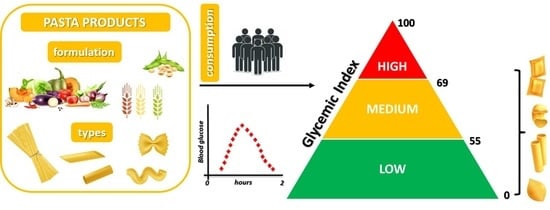
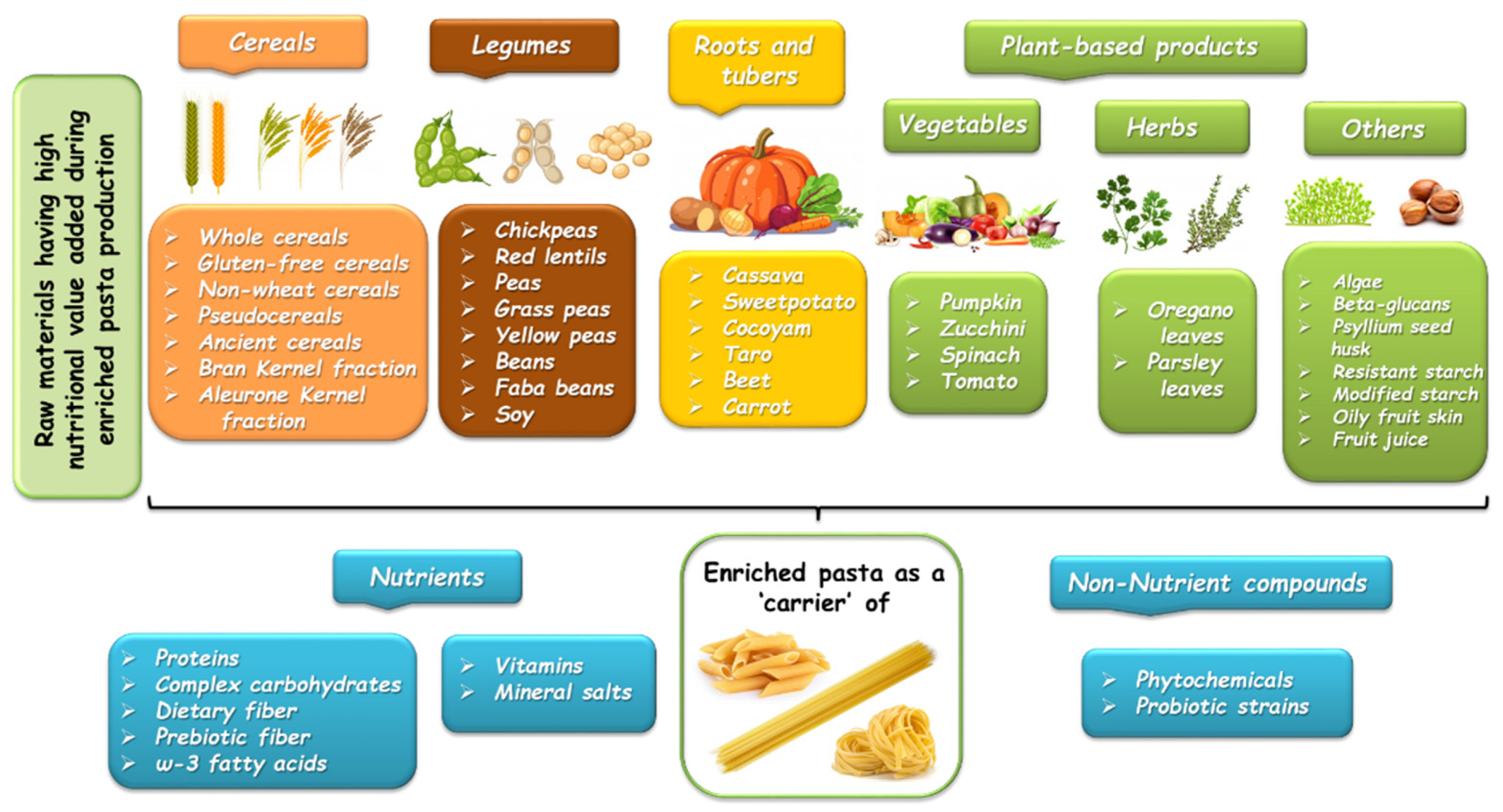
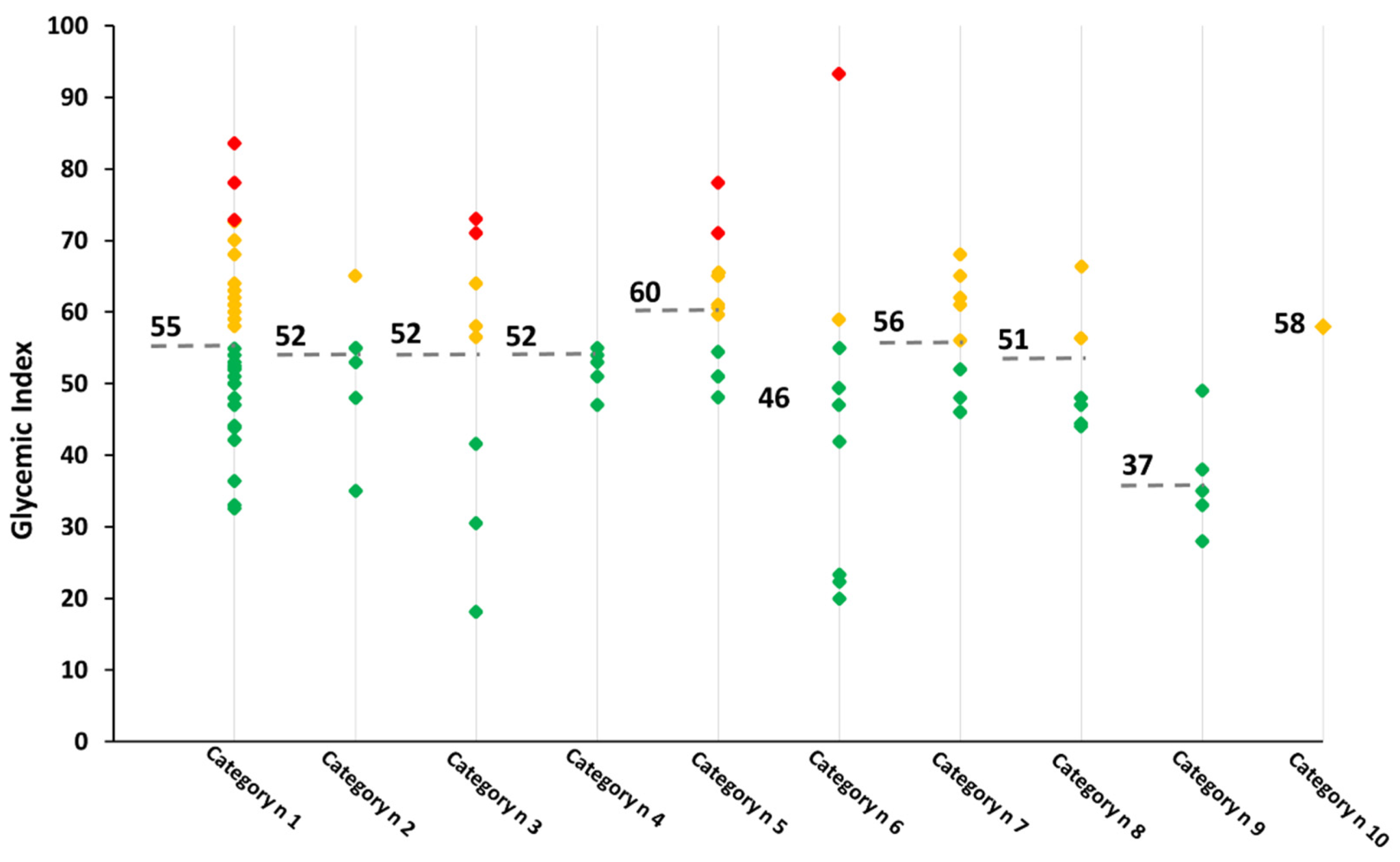
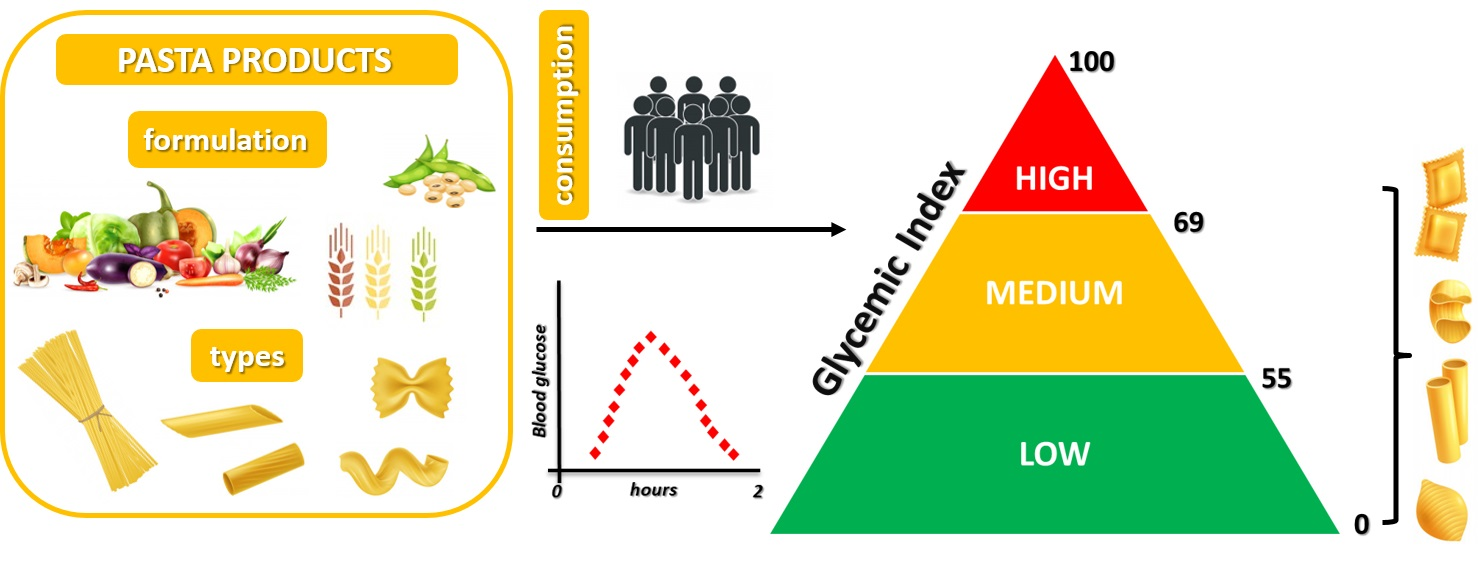
Durum wheat pasta is considered a low-glycemic index (GI) food. In recent years, the interest in developing enriched pasta has increased. Since both the formulation and processing technologies may affect the GI, this study aimed to investigate the GI values of pasta products (pp) reported in the literature until 2020. GI values of pp analyzed following the ISO guidelines were included in this survey. A total of 95 pp were identified and, according to their formulation, classified into 10 categories (n, mean GI): category n 1: 100% refined wheat (35, 55); category n 2: 100% whole wheat (6, 52); category n 3: other cereal-based products (8, 52); category n 4: containing egg (5, 52); category n 5: gluten free (11, 60); category n 6: containing legumes (9, 46); category n 7: noodles and vermicelli (9, 56); category n 8: containing vegetable or algae (6, 51); category n 9: containing other ingredients (5, 37); category n 10: stuffed (1, 58). Overall, pasta is confirmed to be a medium–low-GI food, even if a high variability among or within each category emerged. The formulation of enriched pp able to elicit a controlled glycemic response could represent a strategy to improve the nutritional value of pasta.
Keywords: pasta; glycemic index; enrichment; carbohydrate; ingredient; database; formulation; quality pasta; glycemic index; enrichment; carbohydrate; ingredient; database; formulation; quality
Graphical Abstract