A Population-Based Study of U.S. Trends in Selected Congenital Anomalies (2016–2023) and Socio-Demographic Disparities: A CDC WONDER Analysis


Highlights
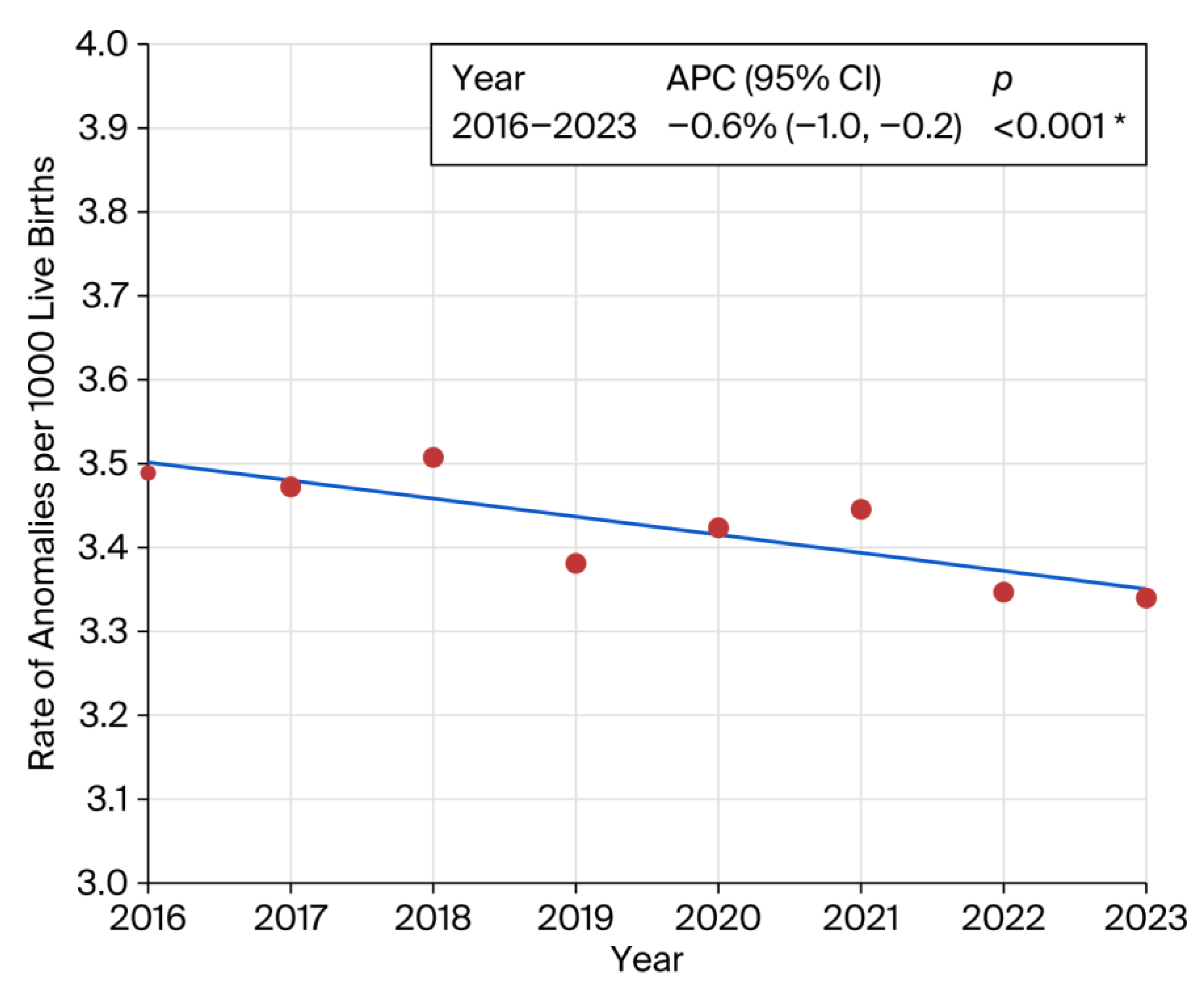
- Overall prevalence of selected congenital anomalies was 3.3 per 1000 live births in 2023.
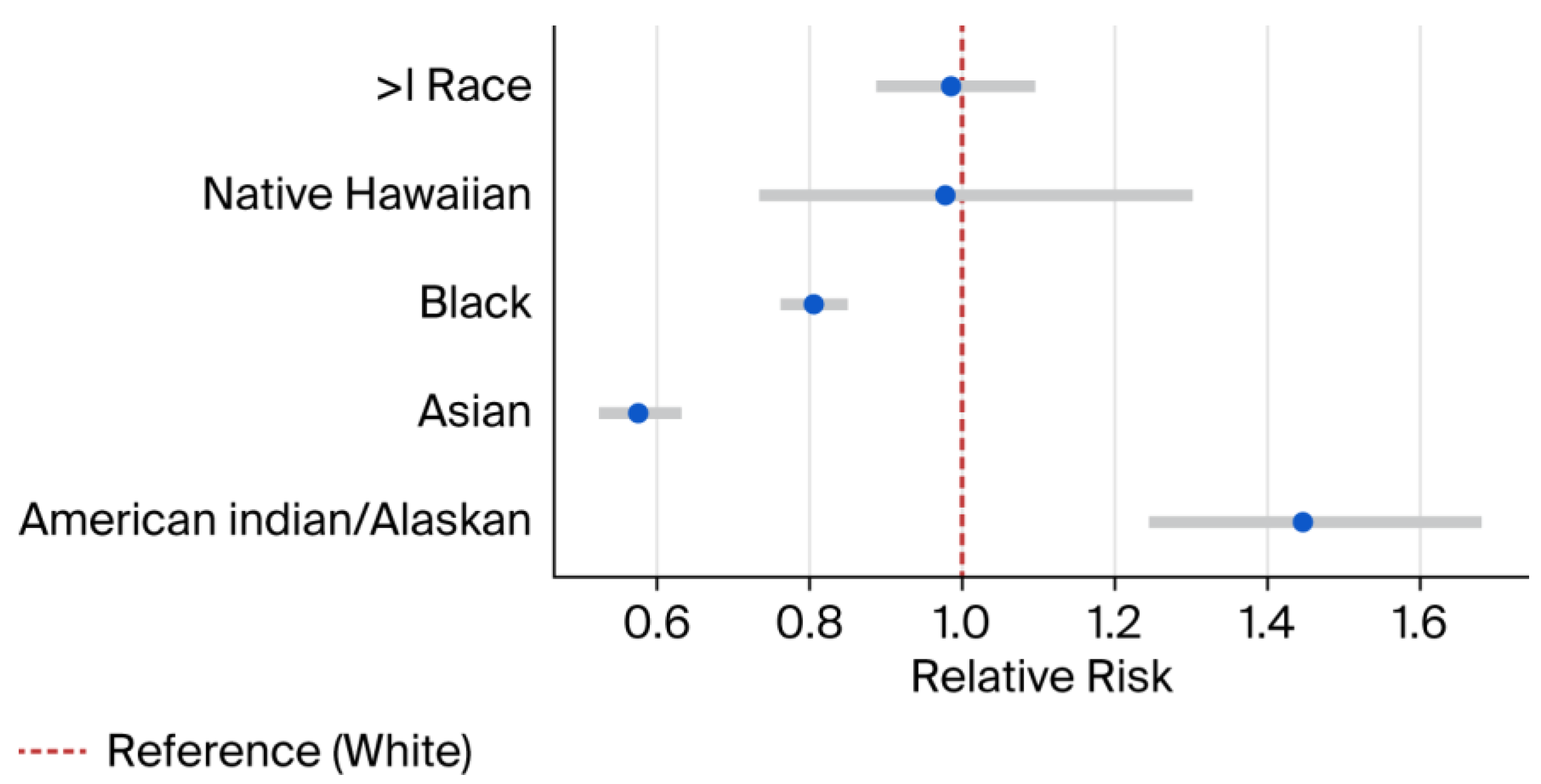
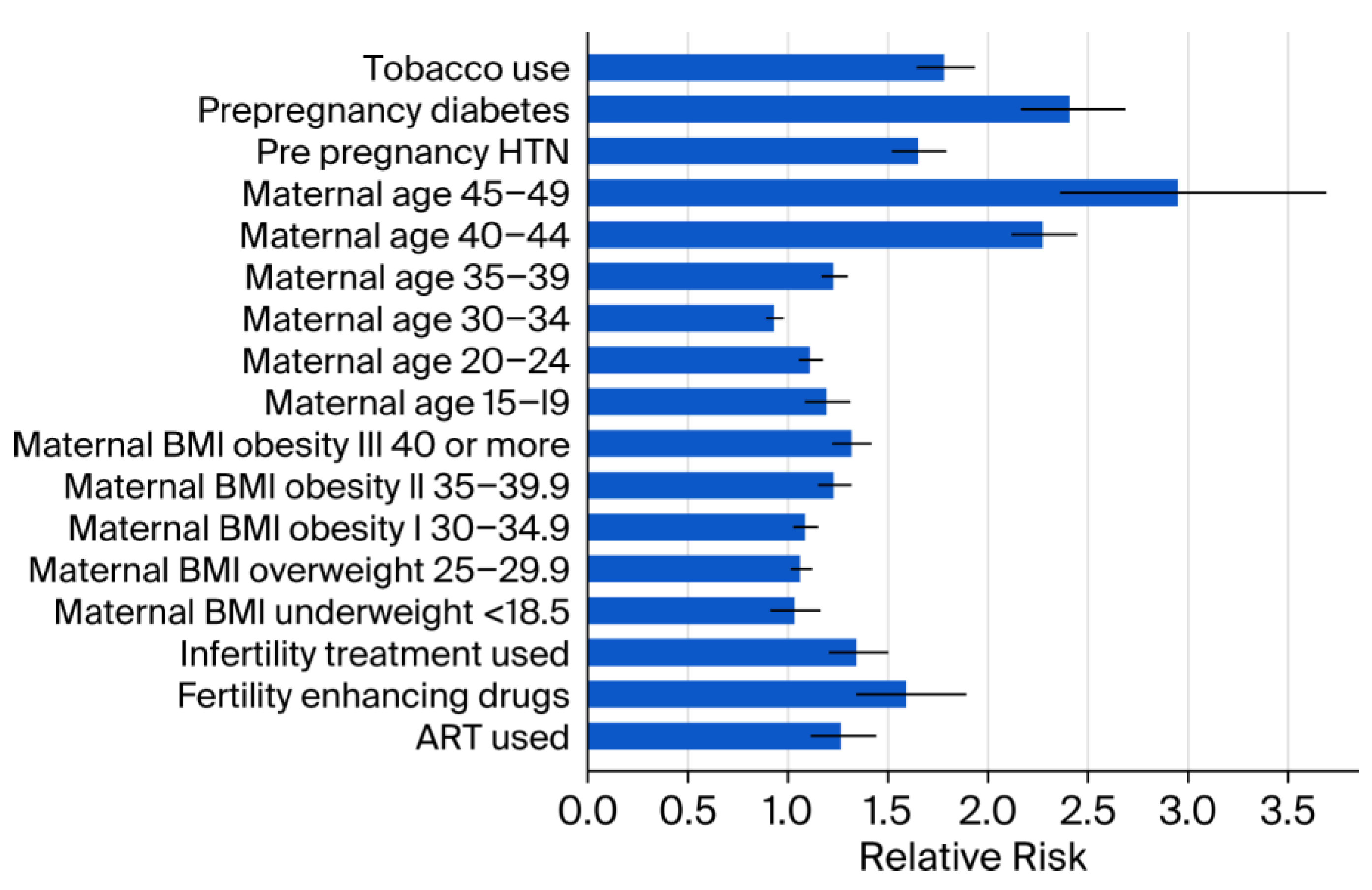
- Higher risk was observed with pre-pregnancy diabetes, advanced maternal age, tobacco use, and higher BMI and among American Indian/Alaska Native infants.
- Targeted preconception and early prenatal interventions may reduce modifiable risks and address disparities.
- Continued national surveillance can inform policy and resource allocation for prevention and care.
Abstract
1. Introduction
2. Materials and Methods
3. Results
4. Discussion
5. Conclusions
Supplementary Materials
Author Contributions
Funding
Institutional Review Board Statement
Informed Consent Statement
Data Availability Statement
Conflicts of Interest
Abbreviations
| APC | annual percent change |
| ART | assisted reproductive technology |
| BMI | body mass index |
| CI | confidence interval |
| NCHS | National Center for Health Statistics |
| RR | relative risk |
| VSCP | Vital Statistics Cooperative Program |
References
- Moges, N.; Anley, D.T.; Zemene, M.A.; Adella, G.A.; Solomon, Y.; Bantie, B.; Felek, S.F.; Dejenie, T.A.; Bayih, W.A.; Chanie, E.S.; et al. Congenital anomalies and risk factors in Africa: A systematic review and meta-analysis. BMJ Paediatr. Open 2023, 7, e002022. [Google Scholar] [CrossRef]
- Dolk, H.; Loane, M.; Garne, E. The prevalence of congenital anomalies in Europe. Adv. Exp. Med. Biol. 2010, 686, 349–364. [Google Scholar]
- Baldacci, S.; Gorini, F.; Santoro, M.; Pierini, A.; Minichilli, F.; Bianchi, F. Environmental and individual exposure and the risk of congenital anomalies: A review of recent epidemiological evidence. Epidemiol. Prev. 2018, 42, 1–34. [Google Scholar]
- Ajao, A.E.; Adeoye, I.A. Prevalence, risk factors and outcome of congenital anomalies among neonatal admissions in OGBOMOSO, Nigeria. BMC Pediatr. 2019, 19, 88. [Google Scholar] [CrossRef]
- Collaborators, G.B.D.C.M. Global, regional, national, and selected subnational levels of stillbirths, neonatal, infant, and under-5 mortality, 1980–2015: A systematic analysis for the Global Burden of Disease Study 2015. Lancet 2016, 388, 1725–1774. [Google Scholar] [CrossRef] [PubMed]
- CDC WONDER. 2024. Available online: https://wonder.cdc.gov/natality-expanded-current.html (accessed on 4 October 2024).
- Schraw, J.M.; Jaime, E.; Shumate, C.J.; Canfield, M.A.; Lupo, P.J. Prevalence of congenital anomalies according to maternal race and ethnicity, Texas, 1999–2018. Birth Defects Res. 2024, 116, e2274. [Google Scholar] [CrossRef]
- Janitz, A.E.; Dao, H.D.; Campbell, J.E.; Stoner, J.A.; Peck, J.D. Distribution of congenital anomalies by race/ethnicity and geospatial location in Oklahoma, 1997–2009. Birth Defects Res. 2020, 112, 262–269. [Google Scholar] [CrossRef]
- Mohamed, M.A.; Aly, H. Birth region, race and sex may affect the prevalence of congenital diaphragmatic hernia, abdominal wall and neural tube defects among US newborns. J. Perinatol. 2012, 32, 861–868. [Google Scholar] [CrossRef][Green Version]
- Parkes, B.; Hansell, A.L.; Ghosh, R.E.; Douglas, P.; Fecht, D.; Wellesley, D.; Kurinczuk, J.J.; Rankin, J.; de Hoogh, K.; Fuller, G.W.; et al. Risk of congenital anomalies near municipal waste incinerators in England and Scotland: Retrospective population-based cohort study. Environ. Int. 2020, 134, 104845. [Google Scholar] [CrossRef] [PubMed]
- Paśnicki, M.; Wiśniewska, K.; Materna-Kiryluk, A.; Latos-Bieleńska, A.; Krawczyński, M. The congenital malformations in children aged 0–2 in Zielona Góra province (1988–1997) and Lubuskie province (1998–2007) according to the Polish Registry of Congenital Malformations. Part 3.Age of mother and frequency of congenital malformations in children. Pediatr. Pol. 2013, 88, 9. [Google Scholar]
- Persson, M.; Razaz, N.; Edstedt Bonamy, A.K.; Villamor, E.; Cnattingius, S. Maternal Overweight and Obesity and Risk of Congenital Heart Defects. J. Am. Coll. Cardiol. 2019, 73, 44–53. [Google Scholar] [CrossRef] [PubMed]
- Petrova, J.G.; Vaktskjold, A. The incidence of neural tube defects in Norway and the Arkhangelskaja Oblast in Russia and the association with maternal age. Acta Obstet. Gynecol. Scand. 2009, 88, 667–672. [Google Scholar] [CrossRef] [PubMed]
- Kirby, R.S.; Marshall, J.; Tanner, J.P.; Salemi, J.L.; Feldkamp, M.L.; Marengo, L.; Meyer, R.E.; Druschel, C.M.; Rickard, R.; Kucik, J.E. Prevalence and correlates of gastroschisis in 15 states, 1995 to 2005. Obstet. Gynecol. 2013, 122, 275–281. [Google Scholar] [CrossRef]
- Liu, S.; Joseph, K.S.; Lisonkova, S.; Rouleau, J.; Van den Hof, M.; Sauve, R.; Kramer, M.S. Association between maternal chronic conditions and congenital heart defects: A population-based cohort study. Circulation 2013, 128, 583–589. [Google Scholar] [CrossRef] [PubMed]
- Li, Z.Y.; Chen, Y.M.; Qiu, L.Q.; Chen, D.Q.; Hu, C.G.; Xu, J.Y.; Zhang, X.H. Prevalence, types, and malformations in congenital anomalies of the kidney and urinary tract in newborns: A retrospective hospital-based study. Ital. J. Pediatr. 2019, 45, 50. [Google Scholar] [CrossRef]
- Liu, S.; Evans, J.; MacFarlane, A.J.; Ananth, C.V.; Little, J.; Kramer, M.S.; Joseph, K.S. Association of maternal risk factors with the recent rise of neural tube defects in Canada. Paediatr. Perinat. Epidemiol. 2019, 33, 145–153. [Google Scholar] [CrossRef]
- Luo, Y.L.; Wang, W.; Gao, X.H.; Huang, Y.H.; Xu, Q.; Cheng, Y.L. Birth prevalence of orofacial clefts among perinatal infants: A register-based study in Bao’an district, Shenzhen, China. Birth Defects Res. 2019, 111, 353–359. [Google Scholar] [CrossRef]
- Vo, L.U.; Langlois, P.H. Time trends in prevalence of gastroschisis in Texas, 1999 to 2011: Subgroup analyses by maternal and infant characteristics. Birth Defects Res. A Clin. Mol. Teratol. 2015, 103, 928–940. [Google Scholar] [CrossRef]
- McGivern, M.R.; Best, K.E.; Rankin, J.; Wellesley, D.; Greenlees, R.; Addor, M.C.; Arriola, L.; de Walle, H.; Barisic, I.; Beres, J.; et al. Epidemiology of congenital diaphragmatic hernia in Europe: A register-based study. Arch. Dis. Child. Fetal Neonatal Ed. 2015, 100, F137–F144. [Google Scholar] [CrossRef]
- Miller, A.; Riehle-Colarusso, T.; Siffel, C.; Frias, J.L.; Correa, A. Maternal age and prevalence of isolated congenital heart defects in an urban area of the United States. Am. J. Med. Genet. A 2011, 155, 2137–2145. [Google Scholar] [CrossRef]
- Nazer, H.J.; Cifuentes, O.L. Congenital malformations among newborns of teenage mothers. Rev. Medica Chile 2013, 141, 1300–1306. [Google Scholar]
- Stothard, K.J.; Tennant, P.W.; Bell, R.; Rankin, J. Maternal overweight and obesity and the risk of congenital anomalies: A systematic review and meta-analysis. JAMA 2009, 301, 636–650. [Google Scholar] [CrossRef]
- Macumber, I.; Schwartz, S.; Leca, N. Maternal obesity is associated with congenital anomalies of the kidney and urinary tract in offspring. Pediatr. Nephrol. 2017, 32, 635–642. [Google Scholar] [CrossRef]
- Hedermann, G.; Hedley, P.L.; Gadsbøll, K.; Thagaard, I.N.; Krebs, L.; Hagen, C.M.; Sørensen, T.I.A.; Christiansen, M.; Ekelund, C.K. Maternal obesity, interpregnancy weight changes and congenital heart defects in the offspring: A nationwide cohort study. Int. J. Obes. 2024, 48, 1126–1132. [Google Scholar] [CrossRef]
- Kumar, S.D.; Dheen, S.T.; Tay, S.S. Maternal diabetes induces congenital heart defects in mice by altering the expression of genes involved in cardiovascular development. Cardiovasc. Diabetol. 2007, 6, 34. [Google Scholar] [CrossRef] [PubMed]
- Roest, P.A.; van Iperen, L.; Vis, S.; Wisse, L.J.; Poelmann, R.E.; Steegers-Theunissen, R.P.; Molin, D.G.M.; Eriksson, U.J.; Groot, A.C.G. Exposure of neural crest cells to elevated glucose leads to congenital heart defects, an effect that can be prevented by N-acetylcysteine. Birth Defects Res. A Clin. Mol. Teratol. 2007, 79, 231–235. [Google Scholar] [CrossRef] [PubMed]
- Morgan, S.C.; Relaix, F.; Sandell, L.L.; Loeken, M.R. Oxidative stress during diabetic pregnancy disrupts cardiac neural crest migration and causes outflow tract defects. Birth Defects Res. A Clin. Mol. Teratol. 2008, 82, 453–463. [Google Scholar] [CrossRef]
- Gittenberger-de Groot, A.C.; Calkoen, E.E.; Poelmann, R.E.; Bartelings, M.M.; Jongbloed, M.R. Morphogenesis and molecular considerations on congenital cardiac septal defects. Ann. Med. 2014, 46, 640–652. [Google Scholar] [CrossRef]
- Moazzen, H.; Lu, X.; Ma, N.L.; Velenosi, T.J.; Urquhart, B.L.; Wisse, L.J.; Gittenberger-de Groot, A.C.; Feng, Q. N-Acetylcysteine prevents congenital heart defects induced by pregestational diabetes. Cardiovasc. Diabetol. 2014, 13, 46. [Google Scholar] [CrossRef]
- Padmanabhan, S.; Zen, M.; Lee, V.; Cheung, N.W. Pre-existing diabetes in pregnancy. Minerva Endocrinol. 2016, 41, 122–137. [Google Scholar]
- Coton, S.J.; Nazareth, I.; Petersen, I. A cohort study of trends in the prevalence of pregestational diabetes in pregnancy recorded in UK general practice between 1995 and 2012. BMJ Open 2016, 6, e009494. [Google Scholar] [CrossRef] [PubMed]
- Chung, C.S.; Myrianthopoulos, N.C. Factors affecting risks of congenital malformations. II. Effect of maternal diabetes on congenital malformations. Birth Defects Orig. Artic. Ser. 1975, 11, 23–38. [Google Scholar]
- Eidem, I.; Stene, L.C.; Henriksen, T.; Hanssen, K.F.; Vangen, S.; Vollset, S.E.; Joner, G. Congenital anomalies in newborns of women with type 1 diabetes: Nationwide population-based study in Norway, 1999–2004. Acta Obstet. Gynecol. Scand. 2010, 89, 1403–1411. [Google Scholar] [CrossRef] [PubMed]
- Knight, K.M.; Pressman, E.K.; Hackney, D.N.; Thornburg, L.L. Perinatal outcomes in type 2 diabetic patients compared with non-diabetic patients matched by body mass index. J. Matern. Fetal Neonatal Med. 2012, 25, 611–615. [Google Scholar] [CrossRef] [PubMed]
- Nielsen, G.L.; Norgard, B.; Puho, E.; Rothman, K.J.; Sorensen, H.T.; Czeizel, A.E. Risk of specific congenital abnormalities in offspring of women with diabetes. Diabet. Med. 2005, 22, 693–696. [Google Scholar] [CrossRef]
- Liu, S.; Rouleau, J.; Leon, J.A.; Sauve, R.; Joseph, K.S.; Ray, J.G.; System, C.P.S. Impact of pre-pregnancy diabetes mellitus on congenital anomalies, Canada, 2002–2012. Health Promot. Chronic Dis. Prev. Can. 2015, 35, 79–84. [Google Scholar] [CrossRef]
- Becerra, J.E.; Khoury, M.J.; Cordero, J.F.; Erickson, J.D. Diabetes mellitus during pregnancy and the risks for specific birth defects: A population-based case-control study. Pediatrics 1990, 85, 1–9. [Google Scholar] [CrossRef]
- Jenkins, K.J.; Correa, A.; Feinstein, J.A.; Botto, L.; Britt, A.E.; Daniels, S.R.; Elixson, M.; Warnes, C.A.; Webb, C.L. Noninherited risk factors and congenital cardiovascular defects: Current knowledge: A scientific statement from the American Heart Association Council on Cardiovascular Disease in the Young: Endorsed by the American Academy of Pediatrics. Circulation 2007, 115, 2995–3014. [Google Scholar] [CrossRef]
- Wahabi, H.A.; Alzeidan, R.A.; Esmaeil, S.A. Pre-pregnancy care for women with pre-gestational diabetes mellitus: A systematic review and meta-analysis. BMC Public Health 2012, 12, 792. [Google Scholar] [CrossRef]
- McLeod, L.; Ray, J.G. Prevention and detection of diabetic embryopathy. Community Genet. 2002, 5, 33–39. [Google Scholar] [CrossRef]
- Da Silva, A.M.; De Lavor, J.R.; Freitas, V.S.; Vieira, A.R. Risk of orofacial clefts in relation to maternal body mass index, diabetes and hypertension. J. Neonatal Perinat. Med. 2024, 17, 41–48. [Google Scholar] [CrossRef]
- Li, D.K.; Yang, C.; Andrade, S.; Tavares, V.; Ferber, J.R. Maternal exposure to angiotensin converting enzyme inhibitors in the first trimester and risk of malformations in offspring: A retrospective cohort study. BMJ 2011, 343, d5931. [Google Scholar] [CrossRef]
- Zeitlin, J.; Mohangoo, A.; Cuttini, M. The European Perinatal Health Report: Comparing the health and care of pregnant women and newborn babies in Europe. J. Epidemiol. Community Health 2009, 63, 681–682. [Google Scholar] [CrossRef] [PubMed]
- Borsari, L.; Malagoli, C.; Werler, M.M.; Rothman, K.J.; Malavolti, M.; Rodolfi, R.; De Girolamo, G.; Nicolini, F.; Vinceti, M. Joint Effect of Maternal Tobacco Smoking and Pregestational Diabetes on Preterm Births and Congenital Anomalies: A Population-Based Study in Northern Italy. J. Diabetes Res. 2018, 2018, 2782741. [Google Scholar] [CrossRef] [PubMed]
- Sabbagh, H.J.; Baghlaf, K.K.; Jamalellail, H.M.H.; Bakhuraybah, A.S.; AlGhamdi, S.M.; Alharbi, O.A.; AlHarbi, K.M.; Hassan, M.H.A. Environmental tobacco smoke exposure and non-syndromic orofacial cleft: Systematic review and meta-analysis. Tob. Induc. Dis. 2023, 21, 76. [Google Scholar] [CrossRef]
- Elizur, S.E.; Tulandi, T. Drugs in infertility and fetal safety. Fertil. Steril. 2008, 89, 1595–1602. [Google Scholar] [CrossRef]
- Sharma, S.; Ghosh, S.; Singh, S.; Chakravarty, A.; Ganesh, A.; Rajani, S.; Chakravarty, B.N. Congenital malformations among babies born following letrozole or clomiphene for infertility treatment. PLoS ONE 2014, 9, e108219. [Google Scholar] [CrossRef] [PubMed]
- Morris, J.K.; Springett, A.L.; Greenlees, R.; Loane, M.; Addor, M.C.; Arriola, L.; Barisic, I.; Bergman, J.E.H.; Csaky-Szunyogh, M.; Dias, C.; et al. Trends in congenital anomalies in Europe from 1980 to 2012. PLoS ONE 2018, 13, e0194986. [Google Scholar] [CrossRef]


Disclaimer/Publisher’s Note: The statements, opinions and data contained in all publications are solely those of the individual author(s) and contributor(s) and not of MDPI and/or the editor(s). MDPI and/or the editor(s) disclaim responsibility for any injury to people or property resulting from any ideas, methods, instructions or products referred to in the content. |
© 2026 by the authors. Licensee MDPI, Basel, Switzerland. This article is an open access article distributed under the terms and conditions of the Creative Commons Attribution (CC BY) license.
Share and Cite
Ali, M.; Vidavalur, R.; Hussain, N. A Population-Based Study of U.S. Trends in Selected Congenital Anomalies (2016–2023) and Socio-Demographic Disparities: A CDC WONDER Analysis. Children 2026, 13, 192. https://doi.org/10.3390/children13020192
Ali M, Vidavalur R, Hussain N. A Population-Based Study of U.S. Trends in Selected Congenital Anomalies (2016–2023) and Socio-Demographic Disparities: A CDC WONDER Analysis. Children. 2026; 13(2):192. https://doi.org/10.3390/children13020192
Chicago/Turabian StyleAli, Mahmoud, Ramesh Vidavalur, and Naveed Hussain. 2026. "A Population-Based Study of U.S. Trends in Selected Congenital Anomalies (2016–2023) and Socio-Demographic Disparities: A CDC WONDER Analysis" Children 13, no. 2: 192. https://doi.org/10.3390/children13020192
APA StyleAli, M., Vidavalur, R., & Hussain, N. (2026). A Population-Based Study of U.S. Trends in Selected Congenital Anomalies (2016–2023) and Socio-Demographic Disparities: A CDC WONDER Analysis. Children, 13(2), 192. https://doi.org/10.3390/children13020192