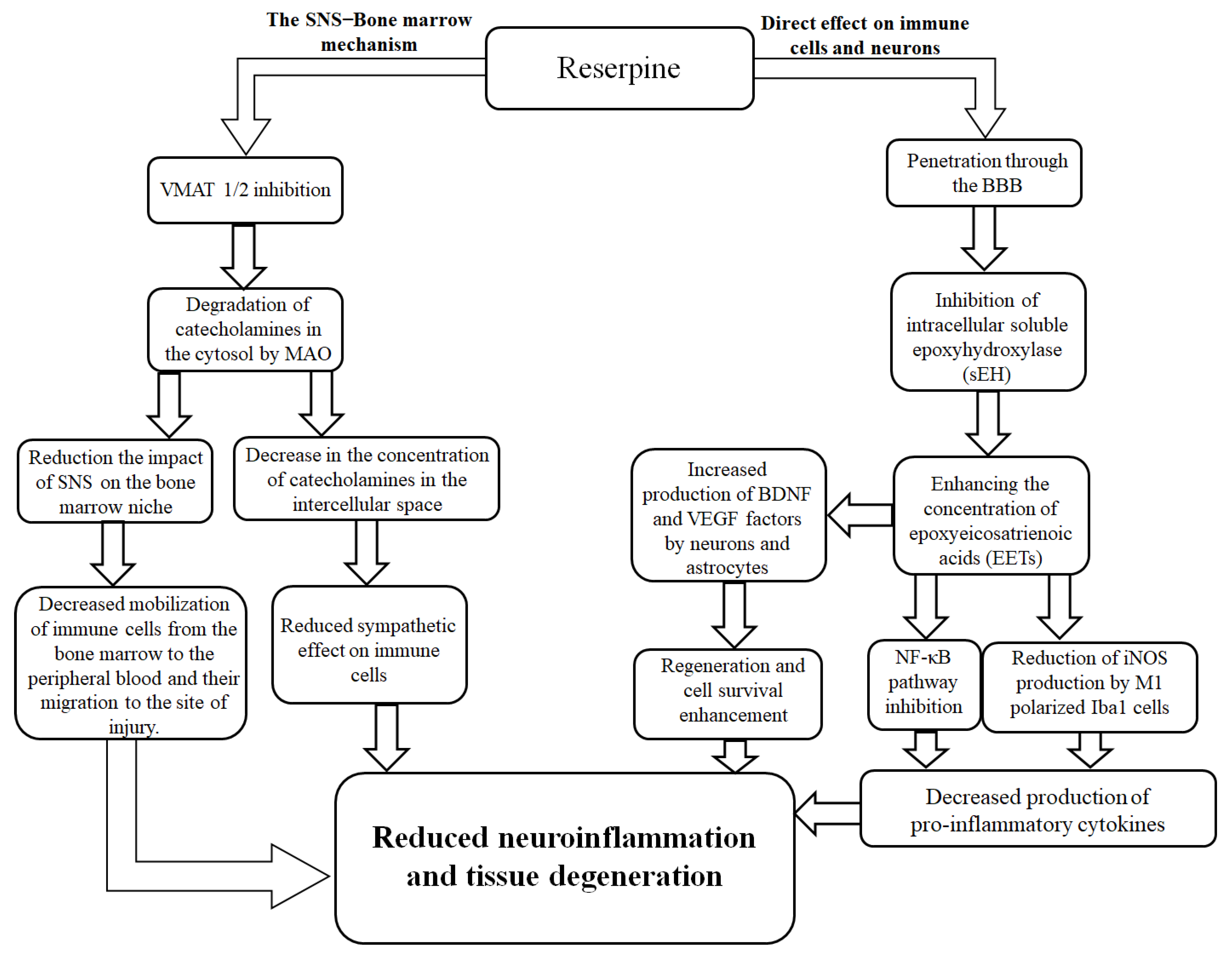
Sympathetic Regulation of Hematopoiesis and the Mobilization of Inflammatory Cells in ICR Mice with Traumatic Brain Injury: A Novel Approach to Targeting Neuroinflammation and Degenerative Processes

 , , , ,
 Abstract
Share and Cite
Ermakova, N.; Skurikhina, V.; Pan, E.; Zhukova, M.; Zharkikh, I.; Pan, V.; Dygai, A. Sympathetic Regulation of Hematopoiesis and the Mobilization of Inflammatory Cells in ICR Mice with Traumatic Brain Injury: A Novel Approach to Targeting Neuroinflammation and Degenerative Processes. Biomedicines 2025, 13, 3080. https://doi.org/10.3390/biomedicines13123080
Ermakova N, Skurikhina V, Pan E, Zhukova M, Zharkikh I, Pan V, Dygai A. Sympathetic Regulation of Hematopoiesis and the Mobilization of Inflammatory Cells in ICR Mice with Traumatic Brain Injury: A Novel Approach to Targeting Neuroinflammation and Degenerative Processes. Biomedicines. 2025; 13(12):3080. https://doi.org/10.3390/biomedicines13123080
Chicago/Turabian StyleErmakova, Natalia, Victoria Skurikhina, Edgar Pan, Mariia Zhukova, Irina Zharkikh, Valentina Pan, and Alexander Dygai. 2025. "Sympathetic Regulation of Hematopoiesis and the Mobilization of Inflammatory Cells in ICR Mice with Traumatic Brain Injury: A Novel Approach to Targeting Neuroinflammation and Degenerative Processes" Biomedicines 13, no. 12: 3080. https://doi.org/10.3390/biomedicines13123080
APA StyleErmakova, N., Skurikhina, V., Pan, E., Zhukova, M., Zharkikh, I., Pan, V., & Dygai, A. (2025). Sympathetic Regulation of Hematopoiesis and the Mobilization of Inflammatory Cells in ICR Mice with Traumatic Brain Injury: A Novel Approach to Targeting Neuroinflammation and Degenerative Processes. Biomedicines, 13(12), 3080. https://doi.org/10.3390/biomedicines13123080