Effects of Transcranial Neuromodulation on Rehabilitation Outcomes After Anterior Cruciate Ligament Injury: A Systematic Review of Randomized Controlled Trials

 ,
,  , , , , ,
  , ,
, ,
Abstract
1. Introduction
2. Materials and Methods
2.1. Protocol Registration
2.2. Data Sources and Search Strategy
2.3. Inclusion Criteria
2.4. Study Selection
2.5. Data Extraction
2.6. Risk of Bias and Quality Assessment
2.7. Evidence Synthesis
3. Results
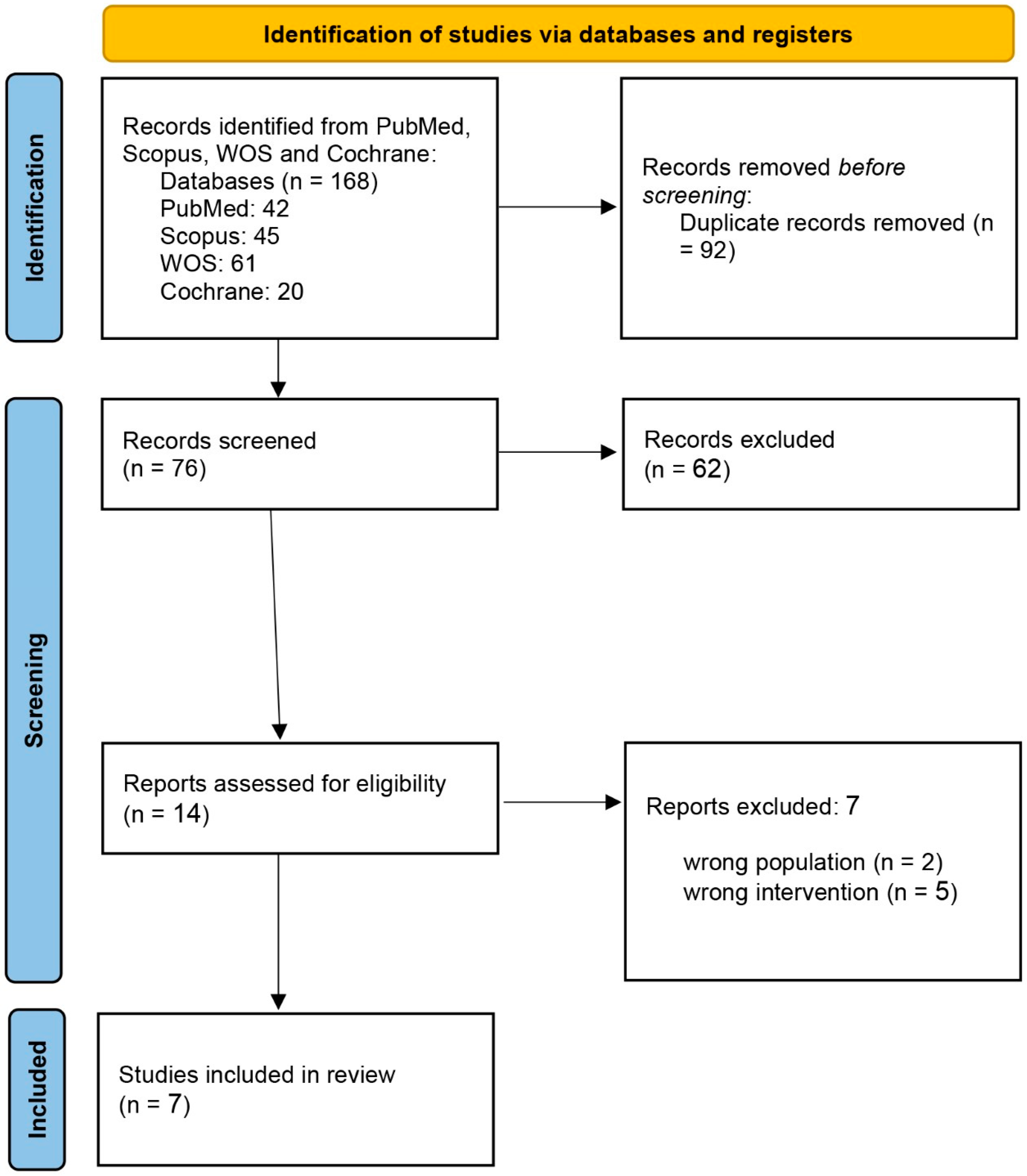
3.1. Search Results and Study Selection
3.2. Study Characteristics
Stimulation Parameters and Clinical Outcomes Analysis
3.3. Patient Population
3.4. Outcomes
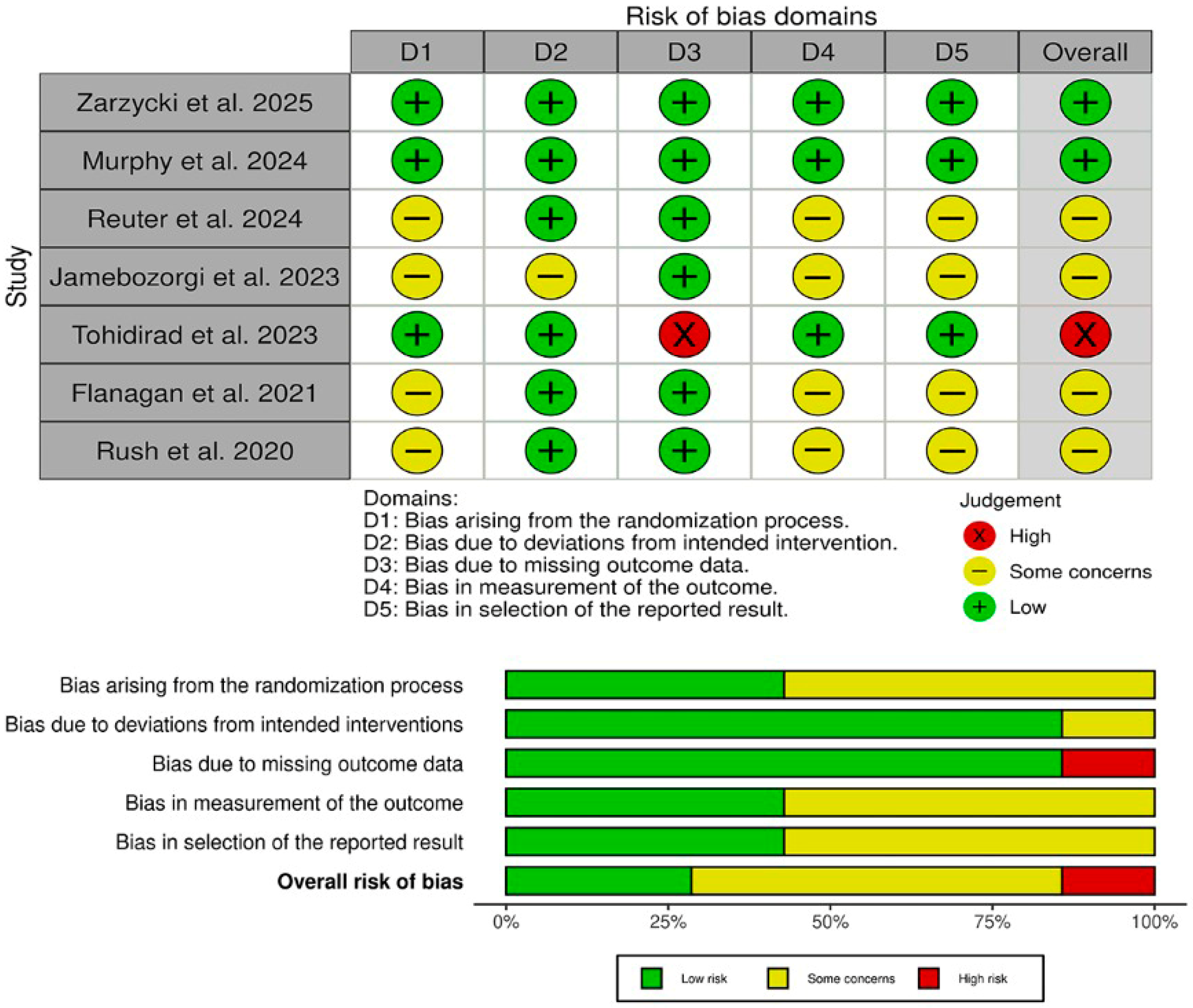
3.5. Risk of Bias
4. Discussion
4.1. Limitations
4.2. Implications for Future Research
Supplementary Materials
Author Contributions
Funding
Institutional Review Board Statement
Informed Consent Statement
Data Availability Statement
Acknowledgments
Conflicts of Interest
References
- Reuter, S.; Lambert, C.; Schadt, M.; Imhoff, A.B.; Centner, C.; Herbst, E.; Stöcker, F.; Forkel, P. Effects of transcranial direct current stimulation and sensorimotor training in anterior cruciate ligament patients: A sham-controlled pilot study. Sportverletz. Sportschaden 2024, 38, 73–78. [Google Scholar] [CrossRef]
- Tohidirad, Z.; Ehsani, F.; Bagheri, R.; Jaberzadeh, S. Priming effects of anodal transcranial direct current stimulation on the effects of conventional physiotherapy on balance and muscle performance in athletes with anterior cruciate ligament injury. J. Sport Rehabil. 2023, 32, 315–324. [Google Scholar] [CrossRef]
- Sanders, T.L.; Maradit Kremers, H.; Bryan, A.J.; Larson, D.R.; Dahm, D.L.; Levy, B.A.; Krych, A.J. Incidence of anterior cruciate ligament tears and reconstruction: A 21-year population-based study. Am. J. Sports Med. 2016, 44, 1502–1507. [Google Scholar] [CrossRef]
- Rush, J.L.; Lepley, L.K.; Davi, S.; Lepley, A.S. The immediate effects of transcranial direct current stimulation on quadriceps muscle function in individuals with a history of anterior cruciate ligament reconstruction: A preliminary investigation. J. Sport Rehabil. 2020, 29, 1121–1130. [Google Scholar] [CrossRef]
- Lepley, A.S.; Gribble, P.A.; Thomas, A.C.; Tevald, M.A.; Sohn, D.H.; Pietrosimone, B.G. Quadriceps neural alterations in anterior cruciate ligament reconstructed patients: A 6-month longitudinal investigation. Scand. J. Med. Sci. Sports 2015, 25, 828–839. [Google Scholar] [CrossRef]
- Murphy, M.C.; Sylvester, C.; White, C.; D’Alessandro, P.; Rio, E.K.; Vallence, A.M. Anodal transcranial direct current stimulation (tDCS) modulates quadriceps motor cortex inhibition and facilitation during rehabilitation following anterior cruciate ligament (ACL) reconstruction: A triple-blind, randomised controlled proof-of-concept trial. BMJ Open Sport Exerc. Med. 2024, 10, e002080. [Google Scholar]
- Gianotti, S.M.; Marshall, S.W.; Hume, P.A.; Bunt, L. Incidence of anterior cruciate ligament injury and other knee ligament injuries: A national population-based study. J. Sci. Med. Sport 2009, 12, 622–627. [Google Scholar] [CrossRef] [PubMed]
- Kvist, J.; Kartus, J.; Karlsson, J.; Forssblad, M. Results from the Swedish National Anterior Cruciate Ligament Register. Arthroscopy 2014, 30, 803–810. [Google Scholar] [CrossRef]
- Costa, L.A.; Foni, N.O.; Antonioli, E.; Teixeira de Carvalho, R.; Paião, I.D.; Lenza, M.; Ferretti, M. Analysis of 500 anterior cruciate ligament reconstructions from a private institutional register. PLoS ONE 2018, 13, e0191414. [Google Scholar] [CrossRef]
- Sugimoto, D.; Myer, G.D.; Bush, H.M.; Klugman, M.F.; Medina McKeon, J.M.; Hewett, T.E. Compliance with neuromuscular training and anterior cruciate ligament injury risk reduction in female athletes: A meta-analysis. J. Athl. Train. 2012, 47, 714–723. [Google Scholar] [CrossRef]
- Flaxman, T.E.; Smith, A.J.J.; Benoit, D.L. Sex-related differences in neuromuscular control: Implications for injury mechanisms or healthy stabilization strategies? J. Orthop. Res. 2014, 32, 310–317. [Google Scholar] [CrossRef] [PubMed]
- Frobell, R.B.; Lohmander, L.S.; Roos, H.P. Acute rotational trauma to the knee: Poor agreement between clinical assessment and magnetic resonance imaging findings. Scand. J. Med. Sci. Sports 2007, 17, 109–114. [Google Scholar] [CrossRef]
- Bahr, R.; Holme, I. Risk factors for sports injuries—A methodological approach. Br. J. Sports Med. 2003, 37, 384–392. [Google Scholar] [CrossRef]
- Zarzycki, R.; Morton, S.M.; Charalambous, C.C.; Pietrosimone, B.; Williams, G.N.; Snyder-Mackler, L. Examination of corticospinal and spinal reflexive excitability during the course of postoperative rehabilitation after anterior cruciate ligament reconstruction. J. Orthop. Sports Phys. Ther. 2020, 50, 516–522. [Google Scholar] [CrossRef]
- Jenkins, S.M.; Guzman, A.; Gardner, B.B.; Bryant, S.A.; del Sol, S.R.; McGahan, P.; Chen, J. Rehabilitation after anterior cruciate ligament injury: Review of current literature and recommendations. Curr. Rev. Musculoskelet. Med. 2022, 15, 170–179. [Google Scholar] [CrossRef] [PubMed]
- Higbie, S.; Kleihege, J.; Duncan, B.; Lowe, W.R.; Bailey, L. Utilizing hip abduction strength-to-body weight ratios in return to sport decision-making after ACL reconstruction. Int. J. Sports Phys. Ther. 2021, 16, 1295–1301. [Google Scholar] [CrossRef]
- Lepley, L.K.; Palmieri-Smith, R.M. Quadriceps strength, muscle activation failure, and patient-reported function at the time of return to activity in patients following anterior cruciate ligament reconstruction: A cross-sectional study. J. Orthop. Sports Phys. Ther. 2015, 45, 1017–1025. [Google Scholar] [CrossRef]
- Neto, T.; Sayer, T.; Theisen, D.; Mierau, A. Functional brain plasticity associated with ACL injury: A scoping review of current evidence. Neural Plast. 2019, 2019, 3480512. [Google Scholar] [CrossRef] [PubMed]
- Sherman, D.A.; Rush, J.; Glaviano, N.R.; Norte, G.E. Knee joint pathology and efferent pathway dysfunction: Mapping muscle inhibition from motor cortex to muscle force. Musculoskelet. Sci. Pract. 2024, 74, 103204. [Google Scholar] [CrossRef]
- Scheurer, S.A.; Sherman, D.A.; Glaviano, N.R.; Ingersoll, C.D.; Norte, G.E. Corticomotor function is associated with quadriceps rate of torque development in individuals with ACL surgery. Exp. Brain Res. 2020, 238, 283–294. [Google Scholar] [CrossRef]
- Hortobágyi, T.; Richardson, S.P.; Lomarev, M.; Shamim, E.; Meunier, S.; Russman, H.; Dang, N.; Hallett, M. Chronic low-frequency rTMS of primary motor cortex diminishes exercise training-induced gains in maximal voluntary force in humans. J. Appl. Physiol. 2009, 106, 403–411. [Google Scholar] [CrossRef]
- Muellbacher, W.; Ziemann, U.; Wissel, J.; Dang, N.; Kofler, M.; Facchini, S.; Boroojerdi, B.; Poewe, W.; Hallett, M. Early consolidation in human primary motor cortex. Nature 2002, 415, 640–644. [Google Scholar] [CrossRef]
- Jamebozorgi, A.; Rahimi, A.; Daryabor, A.; Kazemi, S.M.; Jamebozorgi, F. The effects of transcranial direct current stimulation (tDCS) and biofeedback on proprioception and functional balance in athletes with ACL-deficiency. Middle East J. Rehabil. Health Stud. 2023, 10, e130364. [Google Scholar] [CrossRef]
- Lowe, T.; Dong, X.N. The use of hamstring fatigue to reduce quadriceps inhibition after anterior cruciate ligament reconstruction. Percept. Mot. Skills 2018, 125, 81–92. [Google Scholar] [CrossRef]
- Hart, J.M.; Kuenze, C.M.; Diduch, D.R.; Ingersoll, C.D. Quadriceps muscle function after rehabilitation with cryotherapy in patients with anterior cruciate ligament reconstruction. J. Athl. Train. 2014, 49, 733–739. [Google Scholar] [CrossRef]
- Sonnery-Cottet, B.; Saithna, A.; Quelard, B.; Daggett, M.; Borade, A.; Ouanezar, H.; Thaunat, M.; Blakeney, W.G. Arthrogenic muscle inhibition after ACL reconstruction: A scoping review of the efficacy of interventions. Br. J. Sports Med. 2019, 53, 289–298. [Google Scholar] [CrossRef]
- Zarzycki, R.; Leung, A.; Abraham, R.; Hammoud, S.; Perrone, M.; Kantak, S. Determining the safety, feasibility, and effects of anodal transcranial direct current stimulation on corticospinal excitability and quadriceps performance after anterior cruciate ligament reconstruction: A randomized crossover design. Ann. Jt. 2025, 10, 3. [Google Scholar] [CrossRef]
- Dissanayaka, T.; Zoghi, M.; Farrell, M.; Egan, G.F.; Jaberzadeh, S. Does transcranial electrical stimulation enhance corticospinal excitability of the motor cortex in healthy individuals? A systematic review and meta-analysis. Eur. J. Neurosci. 2017, 46, 1968–1990. [Google Scholar] [CrossRef]
- Jannati, A.; Oberman, L.M.; Rotenberg, A.; Pascual-Leone, A. Assessing the mechanisms of brain plasticity by transcranial magnetic stimulation. Neuropsychopharmacology 2023, 48, 191–208. [Google Scholar] [CrossRef]
- Lefaucheur, J.-P.; André-Obadia, N.; Antal, A.; Ayache, S.S.; Baeken, C.; Benninger, D.H.; Cantello, R.M.; Cincotta, M.; de Carvalho, M.; De Ridder, D.; et al. Evidence-based guidelines on the therapeutic use of repetitive transcranial magnetic stimulation (rTMS). Clin. Neurophysiol. 2014, 125, 2150–2206. [Google Scholar] [CrossRef]
- Talelli, P.; Wallace, A.; Dileone, M.; Hoad, D.; Cheeran, B.; Oliver, R.; Rothwell, J.C. Theta burst stimulation in the rehabilitation of the upper limb: A semirandomized, placebo-controlled trial in chronic stroke patients. Neurorehabil. Neural Repair. 2012, 26, 976–987. [Google Scholar] [CrossRef] [PubMed]
- Tang, X.; Zhang, N.; Shen, Z.; Guo, X.; Xing, J.; Tian, S.; Xing, Y. Transcranial direct current stimulation for upper extremity motor dysfunction in poststroke patients: A systematic review and meta-analysis. Clin. Rehabil. 2024, 38, 749–769. [Google Scholar] [CrossRef] [PubMed]
- Krogh, S.; Aagaard, P.; Jønsson, A.B.; Figlewski, K.; Kasch, H. Effects of repetitive transcranial magnetic stimulation on recovery in lower limb muscle strength and gait function following spinal cord injury: A randomized controlled trial. Spinal Cord 2022, 60, 135–141. [Google Scholar] [CrossRef] [PubMed]
- Li, X.; Lu, T.; Yu, H.; Shen, J.; Chen, Z.; Yang, X.; Huang, Z.; Yang, Y.; Feng, Y.; Zhou, X.; et al. Repetitive transcranial magnetic stimulation for neuropathic pain and neuropsychiatric symptoms in traumatic brain injury: A systematic review and meta-analysis. Neural Plast. 2022, 2022, 2036736. [Google Scholar] [CrossRef]
- Perrey, S. A new way to treat central nervous system dysfunction caused by musculoskeletal injuries using transcranial direct current stimulation: A narrative review. Brain Sci. 2025, 15, 101. [Google Scholar] [CrossRef]
- Adams, W.; Idnani, S.; Kim, J. Transcranial direct current stimulation for orthopedic pain: A systematic review with meta-analysis. Brain Sci. 2024, 14, 66. [Google Scholar] [CrossRef]
- Page, M.J.; McKenzie, J.E.; Bossuyt, P.M.; Boutron, I.; Hoffmann, T.C.; Mulrow, C.D.; Moher, D. The PRISMA 2020 Statement: An Updated Guideline for Reporting Systematic Reviews. BMJ 2021, 372, n71. [Google Scholar] [CrossRef]
- Cumpston, M.; Li, T.; Page, M.; Chandler, J.; Welch, V.; Higgins, J.P.; Thomas, J. Updated guidance for trusted systematic reviews: A new edition of the Cochrane Handbook for Systematic Reviews of Interventions. Cochrane Database Syst. Rev. 2019, 10, ED000142. [Google Scholar] [CrossRef]
- Ouzzani, M.; Hammady, H.; Fedorowicz, Z.; Elmagarmid, A. Rayyan—A web and mobile app for systematic reviews. Syst. Rev. 2016, 5, 210. [Google Scholar] [CrossRef]
- Flemyng, E.; Moore, T.H.; Boutron, I.; Higgins, J.P.; Hróbjartsson, A.; Nejstgaard, C.H.; Dwan, K. Using Risk of Bias 2 to assess results from randomised controlled trials: Guidance from Cochrane. BMJ Evid. Based Med. 2023, 28, 260–266. [Google Scholar] [CrossRef]
- Flanagan, S.D.; Proessl, F.; Dunn-Lewis, C.; Sterczala, A.J.; Connaboy, C.; Canino, M.C.; Beethe, A.Z.; Eagle, S.R.; Szivak, T.K.; Onate, J.A.; et al. Differences in brain structure and theta burst stimulation-induced plasticity implicate the corticomotor system in loss of function after musculoskeletal injury. J. Neurophysiol. 2021, 125, 1006–1021. [Google Scholar] [CrossRef] [PubMed]
- Zech, A.; Hübscher, M.; Vogt, L.; Banzer, W.; Hänsel, F.; Pfeifer, K. Neuromuscular training for rehabilitation of sports injuries: A systematic review. Med. Sci. Sports Exerc. 2009, 41, 1831–1841. [Google Scholar] [CrossRef] [PubMed]
- Mittal, N.; Majdic, B.C.; Peterson, C.L. Intermittent Theta Burst Stimulation Modulates Biceps Brachii Corticomotor Excitability in Individuals with Tetraplegia. J. Neuroeng. Rehabil. 2022, 19, 73. [Google Scholar] [CrossRef] [PubMed]
- Kim, Y.; Kim, H.; Jung, J.; Lee, S. Synergistic effects of joint-biased rehabilitation and combined transcranial direct current stimulation (tDCS) in chronic ankle instability: A single-blind, three-armed randomized controlled trial. Brain Sci. 2025, 15, 458. [Google Scholar] [CrossRef]
- Modulation of Cortical Excitability Induced by Repetitive Transcranial Magnetic Stimulation: Influence of Timing and Geometrical Parameters and Underlying Mechanisms. Available online: https://pubmed.ncbi.nlm.nih.gov/21056619/ (accessed on 7 November 2025).
- Revill, K.P.; Haut, M.W.; Belagaje, S.R.; Nahab, F.; Drake, D.; Buetefisch, C.M. Hebbian-type primary motor cortex stimulation: A potential treatment of impaired hand function in chronic stroke patients. Neurorehabil. Neural Repair 2020, 34, 159–171. [Google Scholar] [CrossRef]
- Hunter, S.K.; McNeil, C.J.; Butler, J.E.; Gandevia, S.C.; Taylor, J.L. Short-interval cortical inhibition and intracortical facilitation during submaximal voluntary contractions change with fatigue. Exp. Brain Res. 2016, 234, 2541–2551. [Google Scholar] [CrossRef]
- Seo, H.G.; Yun, S.J.; Farrens, A.J.; Johnson, C.A.; Reinkensmeyer, D.J. A systematic review of the learning dynamics of proprioception training: Specificity, acquisition, retention, and transfer. Neurorehabil. Neural Repair 2023, 37, 744–757. [Google Scholar] [CrossRef]
- Wójcik, M.; Vlček, P.; Siatkowski, I.; Grünerová-Lippertová, M. Effects of a single tDCS with mirror therapy stimulation on hand function in healthy individuals. Front. Hum. Neurosci. 2025, 19, 1607022. [Google Scholar] [CrossRef]
- Cahn, B.R.; Goodman, M.S.; Peterson, C.T.; Maturi, R.; Mills, P.J. Yoga, meditation and mind-body health: Increased BDNF, cortisol awakening response, and altered inflammatory marker expression after a 3-month yoga and meditation retreat. Front. Hum. Neurosci. 2017, 11, 315. [Google Scholar] [CrossRef]



| Study ID | Study Design | Country | Total Sample Size | ACL Condition | Inclusion Criteria | Type of TNM | Target Brain Region | Concurrent Treatments | Follow-Up Duration | Endpoints | |
|---|---|---|---|---|---|---|---|---|---|---|---|
| TNM | Control | ||||||||||
| Zarzycki et al., 2025 [27] | A randomized crossover design | USA | 10 | 10 | Anterior Cruciate ligament reconstruction | Participants aged between 18 and 42 years who were 4 to 6 months post-primary anterior cruciate ligament reconstruction (ACLR). All participants had a “quiet knee,” defined as full range of motion, minimal or no effusion, and no observable gait deviation. | Anodal tDCS (single session) | Primary motor cortex (M1) | Stationary cycling | The outcomes were reported immediately. No long-term follow-up | Active Motor Threshold, Slope of the stimulus-response curve, Peak Torque, and Rate of Torque Development |
| Murphy et al., 2024 [6] | A triple-blind, randomized controlled trial | Australia | 11 | 10 | Acute ACL rupture, post-reconstruction | Participants aged 18–60 with a primary, non-contact acute ACL rupture from type 1 or 2 physical activity, requiring surgical reconstruction with an ipsilateral hamstring tendon graft | Anodal tDCS (2 mA, 20 min, three times per week) | Primary Motor cortex (M1) | exercise-based rehabilitation | 6 Weeks | Active Motor Threshold, Maximal Voluntary Isometric Contraction, Quadriceps, Pre-TMS EMG (Quadriceps, Hamstrings), Short Intracortical Inhibition, Quadriceps, Long Intracortical Inhibition, Quadriceps, Short Interval Cortical Facilitation, Quadriceps, Hamstrings |
| Reuter et al., 2024 [1] | a sham-controlled randomized pilot study. | Germany | 6 | 6 | a complete unilateral tear of the ACL | Patients with a complete unilateral ACL tear within the past 90 days who underwent arthroscopic reconstruction using an ipsilateral semitendinosus tendon graft were able to fully weight-bear, demonstrated quadriceps control, and had at least 90° knee flexion and full extension | Anodal (2 mA, 20 min, 3 sessions/week) | Primary Motor cortex | Sensorimotor training (balance and stability exercises, 3×/week for 6 weeks) | 6 weeks | CoP ML (mediolateral), CoP AP (anteroposterior), CoP Velocity |
| Jamebozorgi et al., 2023 [23] | quasi-experimental study. | Iran | 11 | 11 | isolated and complete ACL rupture | subjects with an isolated and complete ACL injury in the 18–30 age range, injured for at least four months, and diagnosed with an ACL rupture by an orthopedist using MRI | Anodal tDCS (1 mA, 20 min, 10 sessions) | Occipital cortex | Isometric contraction exercises | 4 weeks | The Star Excursion Balance Test (SEBT) (Anterior, Lateral, Posterior), Knee absolute error (at 30°, 45°, and 90°) |
| Tohidirad et al., 2023 [2] | Double-blind, randomized clinical trial | Iran | 17 | 17 | Partial ACL rupture | Participants were included if they were aged from 22 to 40 years, had an acute and subacute phase of injury (maximum 1 months after injury), incurred partial rupture of ACL on the right side, had a body mass index of 20 to 25, and had at least 1 year experience in the sport. | Anodal tDCS (2 mA, 20 min, 10 sessions) | primary motor cortex (M1) | different physical therapy (PT) techniques | 4 weeks | Center of pressure (COP), Ankle plantar flexor (APF), ankle plantar extension (APE) |
| Flanagan et al., 2021 [41] | randomized, shame-controlled, double-blind, crossover study design. | USA | 9 | 11 | unilateral anterior cruciate ligament rupture | N.A. | intermittent theta burst stimulation (iTBS) | Primary motor cortex (M1) | N.A. | N.A. | T VL EMG, VL: BF coactivation, BF EMG |
| Rush et al., 2020 [4] | A randomized crossover design | USA | 10 | 10 | Anterior Cruciate Ligament Reconstruction | To be included, participants reported the history of a unilateral ACLR and were a minimum of 6 months post-reconstruction with full clearance for return to activity/sport by their physician. | Anodal tDCS (2.2 mA, 20 min, one session) | Primary Motor Cortex (M1) | Walking on a treadmill | Immediate Post- Intervention Assessment. No long-term follow-up | VM% %EMG max Activity, VL% %EMG max Activity, Isometric Strength, central activation ratio (CAR), KOOS Sx, KOOS Pn |
| Study ID | Main Findings |
|---|---|
| Zarzycki et al., 2025 [27] | tDCS is safe and feasible. There was no significant condition by time interaction for CSE (p ≥ 0.17) or quadriceps performance (p ≥ 0.53), though there was a significant main effect of time for RTD200 (p = 0.02) with decreased RTD200 post-intervention regardless of condition. |
| Murphy et al., 2024 [6] | Anodal-tDCS selectively modulated quadriceps excitability, producing significant group-by-time interactions in SICI and SICF, while quadriceps LICI remained unchanged. Quadriceps MVIC significantly increased over time regardless of group (β = 60.667, p = 0.004). In the hamstrings, inhibition (SICI) increased over time, LICI consistently differed between groups, and SICF showed a significant group-by-time interaction without overall time or group effects. |
| Reuter et al., 2024 [1] | Sensorimotor training has a significant effect on CoP ML (p = 0.025) and CoP in AP direction (p = 0.03) in the leg, where an anterior cruciate ligament tear occurred. but the addition of anodal transcranial direct-current stimulation placed over the primary motor cortex did not potentiate the adaptive responses of the sensorimotor training. |
| Jamebozorgi et al., 2023 [23] | No significant between-group differences were found for knee proprioception or functional balance (SEBT) across biofeedback, tDCS, and control conditions (p > 0.05). Within-group analyses showed that biofeedback improved SEBT performance in all eight directions and proprioceptive accuracy at 30°, 45°, and 90° (p < 0.05), while tDCS enhanced balance in six directions (all but anterior-lateral and posterior) and proprioception at all tested angles. |
| Tohidirad et al., 2023 [2] | One month after treatment, the displacement of the pressure center decreased in the intervention group (p < 0.05), while there were no changes in the control group. Y-axis of center of pressure decreased in the intervention group relative to the control group, although the average of power of flexor and extensor muscles increased immediately in both groups, but the rise in the intervention group was larger than that in the control group (p < 0.05). |
| Flanagan et al., 2021 [41] | In ACL participants, iTBS significantly increased injured-leg quadriceps activation (↑ T VL EMG, p = 0.05) and eliminated asymmetry in quadriceps-hamstring coactivation (VL: BF ratio, p = 0.25), normalizing neuromuscular function. Conversely, iTBS reduced quadriceps activation (↓ T VL EMG, p = 0.01) and impaired force production in controls. |
| Rush et al., 2020 [4] | Active tDCS showed no significant benefit over sham stimulation: Both conditions resulted in immediate declines in quadriceps EMG activity, strength, and voluntary activation after exercise, with similarly small (non-significant) improvements in self-reported pain and symptoms. The lack of between-group differences indicates that a single tDCS session does not acutely enhance muscle function or reduce pain in ACL-reconstructed individuals. |
| Study ID | Age (Years), Mean (SD) | Male (N) | Height (cm), Mean (SD) | Weight (kg), Mean (SD) | BMI, Mean (SD) | |||||
|---|---|---|---|---|---|---|---|---|---|---|
| TNM | Control | TNM | Control | TNM | Control | TNM | Control | TNM | Control | |
| Zarzycki et al., 2025 [27] | 23.9 (6.3) | 9 | N.A. | N.A. | 24.3 (3.3) | |||||
| Murphy et al., 2024 [6] | 24 (5) | 25 (5) | 13 | 173 (8) | 181 (12) | 77 (15) | 86 (18) | N.A. | N.A. | |
| Reuter et al., 2024 [1] | 31.8 (4.8) | 34.8 (8.4) | 5 | 176.2 (2.5) | 166.8 (13.1) | 84.2 (11) | 72.5 (12.8) | 27.1 (3.6) | 25.9 (1.9) | |
| Jamebozorgi et al., 2023 [23] | 29.91 (8.75) | 30.25 (1.25) | All were male. | 177 (7.26) | 178 (5.35) | 81.37 (16.36) | 78.75 (5.37) | 25.85 (4.49) | 24.62 (1.75) | |
| Tohidirad et al., 2023 [2] | 31.53 (7.2) | 31.73 (7.05) | 10 | 9 | 169.4 (11.4) | 170.73 (11.13) | 72.53 (15) | 75.86 (20) | 24.7 (4.44) | 26.15 (5.3) |
| Flanagan et al., 2021 [41] | 20.6 (2.3) | 20.3 (1.4) | All were females. | 166.1 (8) | 165 (5.3) | 68.1 (9.1) | 65.7 (8.4) | N.A. | N.A. | |
| Rush et al., 2020 [4] | 22.9 (4.23) | 5 | 175.26 (10.86) | 80.87 (16.86) | N.A. | |||||
Disclaimer/Publisher’s Note: The statements, opinions and data contained in all publications are solely those of the individual author(s) and contributor(s) and not of MDPI and/or the editor(s). MDPI and/or the editor(s) disclaim responsibility for any injury to people or property resulting from any ideas, methods, instructions or products referred to in the content. |
© 2025 by the authors. Licensee MDPI, Basel, Switzerland. This article is an open access article distributed under the terms and conditions of the Creative Commons Attribution (CC BY) license (https://creativecommons.org/licenses/by/4.0/).
Share and Cite
Vicente-Mampel, J.; Belda-Antolí, M.; Jaenada-Carrilero, E.; Pascual-Leone, A.; Baraja-Vegas, L.; Pascual-Leone, N.; Ferrer-Torregrosa, J.; Falaguera-Vera, F.J.; Pascual-Leone, Á.; Tormos-Muñoz, J.M. Effects of Transcranial Neuromodulation on Rehabilitation Outcomes After Anterior Cruciate Ligament Injury: A Systematic Review of Randomized Controlled Trials. Biomedicines 2025, 13, 3068. https://doi.org/10.3390/biomedicines13123068
Vicente-Mampel J, Belda-Antolí M, Jaenada-Carrilero E, Pascual-Leone A, Baraja-Vegas L, Pascual-Leone N, Ferrer-Torregrosa J, Falaguera-Vera FJ, Pascual-Leone Á, Tormos-Muñoz JM. Effects of Transcranial Neuromodulation on Rehabilitation Outcomes After Anterior Cruciate Ligament Injury: A Systematic Review of Randomized Controlled Trials. Biomedicines. 2025; 13(12):3068. https://doi.org/10.3390/biomedicines13123068
Chicago/Turabian StyleVicente-Mampel, Juan, Mariola Belda-Antolí, Eloy Jaenada-Carrilero, Andrés Pascual-Leone, Luís Baraja-Vegas, Nicolás Pascual-Leone, Javier Ferrer-Torregrosa, Francisco J. Falaguera-Vera, Álvaro Pascual-Leone, and José María Tormos-Muñoz. 2025. "Effects of Transcranial Neuromodulation on Rehabilitation Outcomes After Anterior Cruciate Ligament Injury: A Systematic Review of Randomized Controlled Trials" Biomedicines 13, no. 12: 3068. https://doi.org/10.3390/biomedicines13123068
APA StyleVicente-Mampel, J., Belda-Antolí, M., Jaenada-Carrilero, E., Pascual-Leone, A., Baraja-Vegas, L., Pascual-Leone, N., Ferrer-Torregrosa, J., Falaguera-Vera, F. J., Pascual-Leone, Á., & Tormos-Muñoz, J. M. (2025). Effects of Transcranial Neuromodulation on Rehabilitation Outcomes After Anterior Cruciate Ligament Injury: A Systematic Review of Randomized Controlled Trials. Biomedicines, 13(12), 3068. https://doi.org/10.3390/biomedicines13123068