
Applications of Medical Mediation: A Systematic Review of Its Role in Healthcare Dispute Resolution and Bioethical Decision-Making
 , , ,
, , ,  and
and
Abstract
1. Introduction
2. Methods
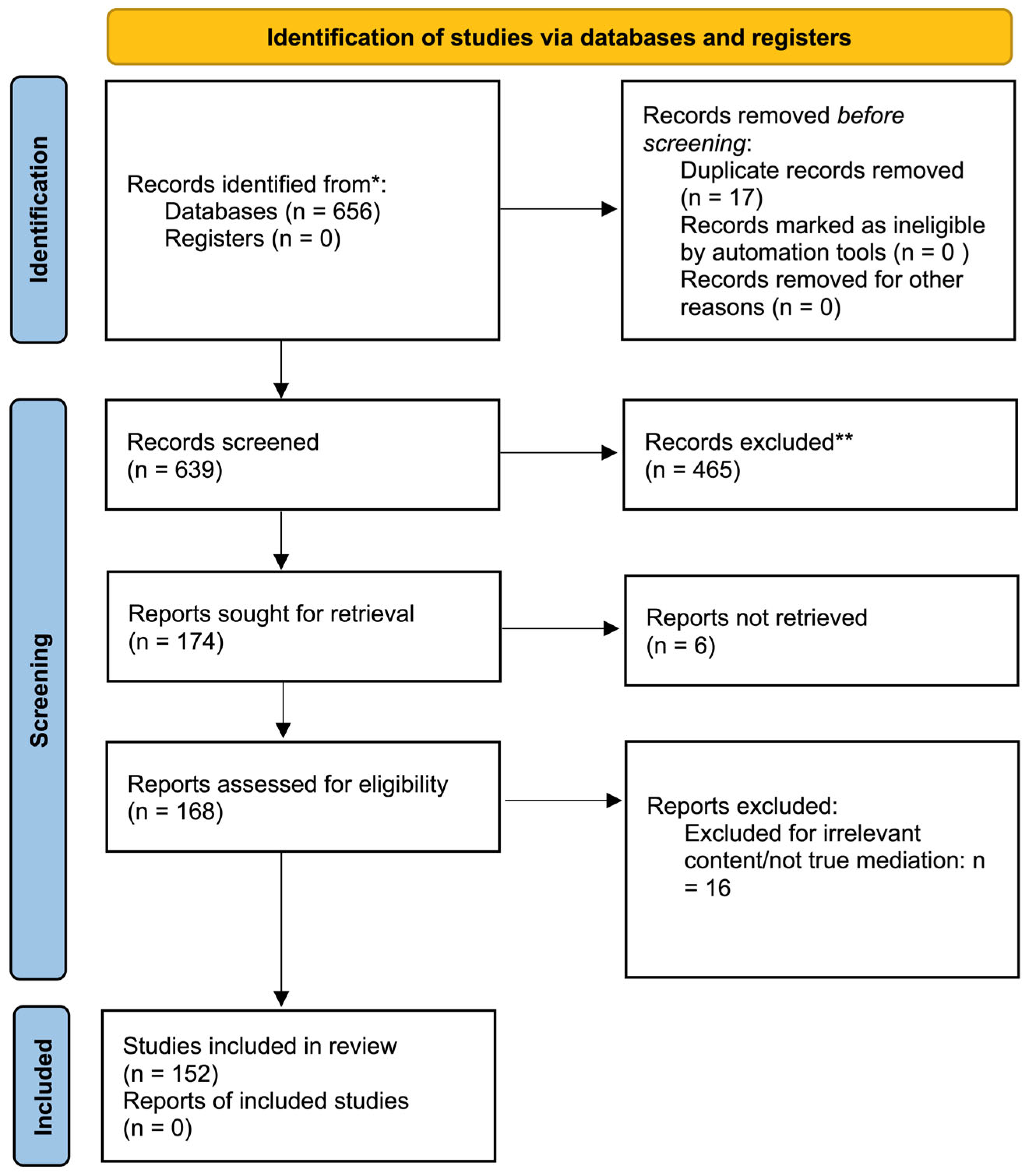
2.1. Search Strategy and Eligibility Criteria
2.2. Risk of Bias and Quality Appraisal
2.3. Selection and Categorization
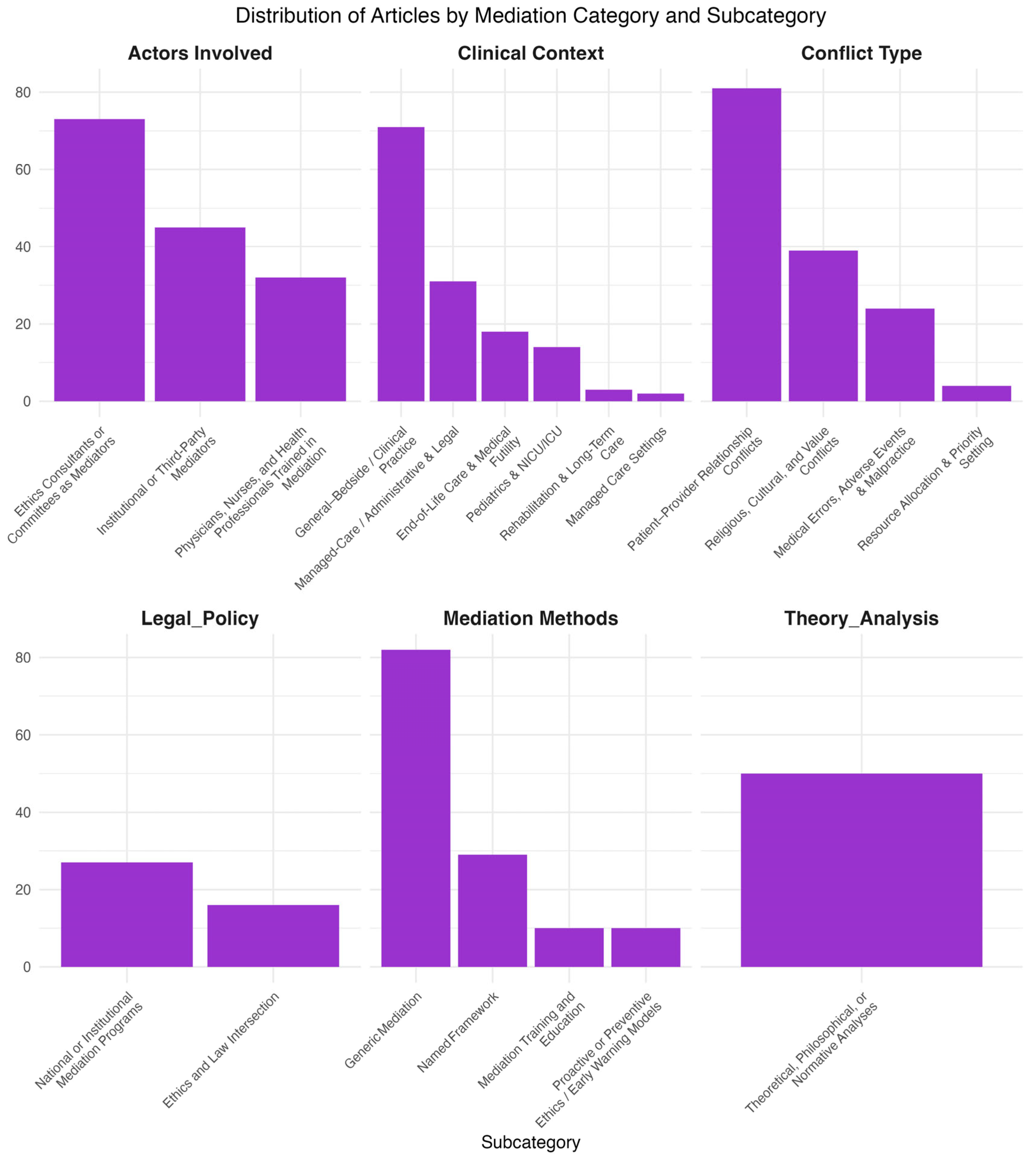
- Clinical context of mediation. In this category, we classified the articles based on where the mediation takes place or which aspect of clinical practice was addressed. The subcategories were as follows: (1) end-of-life care and medical futility; (2) pediatrics and neonatal intensive care units or intensive care units (NICUs or ICUs, respectively); (3) general—bedside/clinical practice; (4) managed care/administrative and legal; and (5) long-term care or rehabilitation.
- Actors involved in mediation. Articles were classified based on the types of actors involved. The categories were as follows: (1) ethics consultants or committees acting as mediators; (2) physicians, nurses, and health professionals trained in mediation; and (3) institutional or third-party mediators.
- Types of conflict in mediation. Articles were classified into the following categories: (1) medical errors, adverse events and malpractice; (2) religious, cultural, and value conflicts; (3) resource allocation and priority setting; and finally, (4) patient—provider relationship conflicts.
- Mediation methodologies and frameworks. This category classified articles based on the types, models, or methods of mediation used. It had the following categories: (1) named or formal mediation frameworks; (2) generic or conceptual bioethics mediation; (3) mediation training and education; and (4) proactive or preventive ethics/early warning models.
- Legal and policy frameworks. This domain categorized articles that discussed either (1) national or institutional mediation programs or (2) the intersection of ethics and law.
- Theoretical, philosophical, or normative analyses. This last domain included articles that addressed theoretical–philosophical aspects of medical mediation (also in relation to alternatives) or normative structures underlying medical mediation.
3. Findings
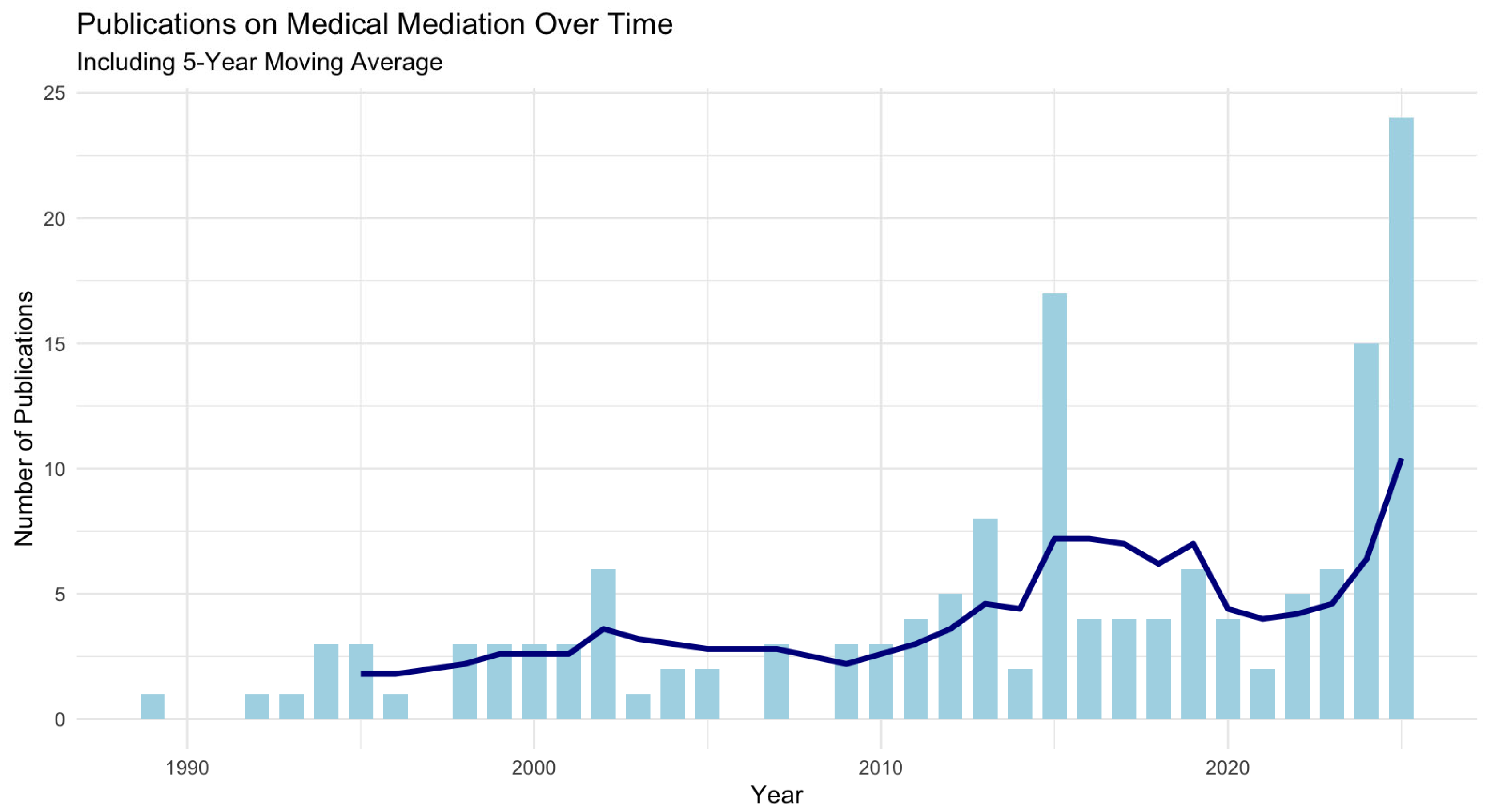
3.1. Included Studies
3.2. Risk-of-Bias Assessment
3.3. Study Categorization
4. Discussion
5. Conclusions
Supplementary Materials
Author Contributions
Funding
Institutional Review Board Statement
Informed Consent Statement
Data Availability Statement
Acknowledgments
Conflicts of Interest
References
- Hyman, C.S.; Liebman, C.B.; Schechter, C.B.; Sage, W.M. Interest-Based Mediation of Medical Malpractice Lawsuits: A Route to Improved Patient Safety? J. Health Politics Policy Law 2010, 35, 797–828. [Google Scholar] [CrossRef] [PubMed]
- Fiester, A. Mediation and Moral Aporia. J. Clin. Ethics 2007, 18, 355–356. [Google Scholar] [CrossRef]
- Dubler, N.N. The Art of the Chart Note in Clinical Ethics Consultation and Bioethics Mediation: Conveying Information That Can Be Understood and Evaluated. J. Clin. Ethics 2013, 24, 148–155. [Google Scholar] [CrossRef] [PubMed]
- Dubler, N.N.; Liebman, C.B. Bioethics Mediation: A Guide to Shaping Shared Solutions; Vanderbilt University Press: Nashville, TN, USA, 2011; ISBN 0-8265-1773-0. [Google Scholar]
- Gallagher, T.H.; Mello, M.M.; Sage, W.M.; Bell, S.K.; McDonald, T.B.; Thomas, E.J. Can Communication-And-Resolution Programs Achieve Their Potential? Five Key Questions. Health Aff. 2018, 37, 1845–1852. [Google Scholar] [CrossRef]
- Wang, M.; Liu, G.G.; Zhao, H.; Butt, T.; Yang, M.; Cui, Y. The Role of Mediation in Solving Medical Disputes in China. BMC Health Serv. Res. 2020, 20, 225. [Google Scholar] [CrossRef]
- Page, M.J.; McKenzie, J.E.; Bossuyt, P.M.; Boutron, I.; Hoffmann, T.C.; Mulrow, C.D.; Shamseer, L.; Tetzlaff, J.M.; Akl, E.A.; Brennan, S.E.; et al. The PRISMA 2020 Statement: An Updated Guideline for Reporting Systematic Reviews. BMJ 2021, 372, n71. [Google Scholar] [CrossRef]
- Munn, Z.; Barker, T.H.; Moola, S.; Tufanaru, C.; Stern, C.; McArthur, A.; Stephenson, M.; Aromataris, E. Methodological Quality of Case Series Studies: An Introduction to the JBI Critical Appraisal Tool. JBI Database Syst. Rev. Implement. Rep. 2020, 18, 2127–2133. [Google Scholar] [CrossRef]
- Craig, K. Medical Mediation. Med. War 1993, 9, 62–65. [Google Scholar] [CrossRef]
- Sproule, R. Update on the Medical Mediation Panels. Wis. Med. J. 1989, 88, 25–26. [Google Scholar] [PubMed]
- Kass, J.S.; Rose, R.V. Medical Malpractice Reform--Historical Approaches, Alternative Models, and Communication and Resolution Programs. AMA J. Ethics 2016, 18, 299–310. [Google Scholar] [CrossRef] [PubMed]
- Metzloff, T.B.; Peeples, R.A.; Harris, C.T. Empirical Perspectives on Mediation and Malpractice. Law Contemp. Probl. 1997, 60, 107. [Google Scholar] [CrossRef][Green Version]
- Kwon, O.-T.; Seon, J.G.; Kim, S.Y. Discussions and Implications of the Recent Enactment & Revision of the Healthcare Law. J. Korean Med. Sci. 2012, 27, S82–S87. [Google Scholar] [CrossRef]
- Dubler, N.N. Mediation and Managed Care. J. Am. Geriatr. Soc. 1998, 46, 359–364. [Google Scholar] [CrossRef]
- Cheng, K.K.; le Roux-Kemp, A. Mediation and Resolving Disputes Involving Emergency Nurses in Hong Kong: A Legal Empirical Inquiry. Hong Kong Law J. 2017, 47, 763–791. [Google Scholar]
- Selandari, J.O.; de la Portilla, M.; Ciruzzi, M.S.; Couceiro, C.; García, H.O.; Iervolino, M.d.L.Á.; Marín, D.N.; Miranda, C.; Novali, L.; Ortega, L.; et al. Feasibility, effectiveness, and satisfaction achieved by the transdisciplinary intervention of a clinical-hospital ethics committee. A qualitative and quantitative study. Arch. Argent. Pediatr. 2022, 120, 30–38. [Google Scholar] [CrossRef]
- Dimitrov, K.; Miteva-Katrandzhieva, T. Mediation in Healthcare: Enhancing Conflict Resolution Between Patients and Physicians Beyond the Courtroom. Cureus 2024, 16, e75487. [Google Scholar] [CrossRef] [PubMed]
- Chen, P.-Y.; Fu, C.-P.; Wang, C.-C. Narratives in the Medicolegal Field from the Perspective of Physicians Involved in Medical Dispute Mediation Meetings in Taiwan. Heliyon 2023, 9, e13716. [Google Scholar] [CrossRef] [PubMed]
- Nakanishi, T. Disclosing Unavoidable Causes of Adverse Events Improves Patients’ Feelings towards Doctors. Tohoku J. Exp. Med. 2014, 234, 161–168. [Google Scholar] [CrossRef][Green Version]
- Mitello, L. When the patient asks for counselling, when the patient doesn’t ask for counselling, when the patient refuses therapy. Prof. Inferm. 2004, 57, 216–221. [Google Scholar] [PubMed][Green Version]
- Blanco Portillo, A.; García-Caballero, R.; Real de Asúa, D.; Olaciregui Dague, K.; Herreros, B. What Ethics Support for Resolving Ethical Conflicts Do Internists Use in Spanish Hospitals? J. Bioeth. Inq. 2024, 21, 285–293. [Google Scholar] [CrossRef]
- Przylepa-Lewak, A. Contemporary Challenges of Medical Mediation. Kryt. Prawa 2023, 15, 238–254. [Google Scholar] [CrossRef]
- Decoulx, M.; Scherpereel, P. For a more humane hospital: Experience of medical mediators. Presse Med. 2013, 42, 389–394. [Google Scholar] [CrossRef]
- Voultsos, P.; Tsompanian, A.; Tsaroucha, A.K. The Medical Futility Experience of Nursing Professionals in Greece. BMC Nurs. 2021, 20, 254. [Google Scholar] [CrossRef]
- Zanni, A. Organ Transplantation in Greece: The Need for Mediation. Transplant. Proc. 2014, 46, 3164–3167. [Google Scholar] [CrossRef] [PubMed]
- Díaz Rivera, Y.A. Project for the Creation of a Medical or Hospital Ethical Committee at a Local Level in the San Miguel Arcangel Hospital, District of San Miguelito, Province of Panama. Year 2013. Cuad. Bioet. 2015, 26, 292–301. [Google Scholar] [PubMed]
- Ribeiro, W.C. Mediation as a Means of Resolving Conflicts in the Healthcare Area. Rev. Direito Sanit. 2018, 18, 62–75. [Google Scholar] [CrossRef]
- Dubler, N.N. Commentary on Bergman: “Yes… But”. J. Clin. Ethics 2013, 24, 25–31. [Google Scholar] [CrossRef] [PubMed]
- DuBois, J.M. The Bioethicist as Healer. Hastings Cent. Rep. 2024, 54, 2. [Google Scholar] [CrossRef]
- Forbat, L.; Mnatzaganian, G.; Barclay, S. The Healthcare Conflict Scale: Development, Validation and Reliability Testing of a Tool for Use across Clinical Settings. J. Interprof. Care 2019, 33, 680–688. [Google Scholar] [CrossRef]
- Hauschildt, K.; De Vries, R. Reinforcing Medical Authority: Clinical Ethics Consultation and the Resolution of Conflicts in Treatment Decisions. Sociol. Health Illn. 2020, 42, 307–326. [Google Scholar] [CrossRef]
- Gatter, R. Institutionally Sponsored Mediation and the Emerging Medical Trust Movement in the U.S. Med. Law 2004, 23, 201–210. [Google Scholar]
- Regis, C.; Poitras, J. Healthcare Mediation and the Need for Apologies. Health Law J. 2010, 18, 31–49. [Google Scholar]
- Nelson, C.M.; Nazareth, B.A. Nonbeneficial Treatment and Conflict Resolution: Building Consensus. Perm. J. 2013, 17, 23–27. [Google Scholar] [CrossRef][Green Version]
- Powell, T.; Hulkower, A. A Good Death. Hastings Cent. Rep. 2017, 47, 28–29. [Google Scholar] [CrossRef]
- Singer, P.A.; Barker, G.; Bowman, K.W.; Harrison, C.; Kernerman, P.; Kopelow, J.; Lazar, N.; Weijer, C.; Workman, S. Hospital Policy on Appropriate Use of Life-Sustaining Treatment. University of Toronto Joint Centre for Bioethics/Critical Care Medicine Program Task Force. Crit. Care Med. 2001, 29, 187–191. [Google Scholar] [CrossRef] [PubMed]
- Meller, S.; Barclay, S. Mediation: An Approach to Intractable Disputes between Parents and Paediatricians. Arch. Dis. Child. 2011, 96, 619–621. [Google Scholar] [CrossRef] [PubMed]
- Miles, F.; Barclay, S.; Menson, E.; Shepherd, T.; Webster, L. Boldly Going… Introducing Conflict Management Training to Starship Children’s Hospital. J. Paediatr. Child Health 2023, 59, 424–426. [Google Scholar] [CrossRef] [PubMed]
- Hoffman, D.N.; Strand, G.R. “Sit down and Thrash It out”: Opportunities for Expanding Ethics Consultation during Conflict Resolution in Long-Term Care. New Bioeth. 2024, 30, 152–162. [Google Scholar] [CrossRef]
- Savage, T.A.; Parson, J.; Zollman, F.; Kirschner, K.L. Rehabilitation Team Disagreement: Guidelines for Resolution. PM R 2009, 1, 1091–1097. [Google Scholar] [CrossRef]
- Wood, E.; Karp, N. Mediation: Reframing Care Conflicts in Nursing Homes. Generations 1994, 18, 54–57. [Google Scholar]
- Geppert, C.M.A.; Shelton, W. Health Care Ethics Committees as Mediators of Social Values and the Culture of Medicine. AMA J. Ethics 2016, 18, 534–539. [Google Scholar] [CrossRef][Green Version]
- Kayser, J.B.; Kaplan, L.J. Conflict Management in the ICU. Crit. Care Med. 2020, 48, 1349–1357. [Google Scholar] [CrossRef]
- Chiarchiaro, J.; White, D.B.; Ernecoff, N.C.; Buddadhumaruk, P.; Schuster, R.A.; Arnold, R.M. Conflict Management Strategies in the ICU Differ Between Palliative Care Specialists and Intensivists. Crit. Care Med. 2016, 44, 934–942. [Google Scholar] [CrossRef]
- Forbat, L.; Teuten, B.; Barclay, S. Conflict Escalation in Paediatric Services: Findings from a Qualitative Study. Arch. Dis. Child. 2015, 100, 769–773. [Google Scholar] [CrossRef]
- Shen, Y.; Li, G.; Tang, Z.; Wang, Q.; Zhang, Z.; Hao, X.; Han, X. Analysis of the Characteristics, Efficiency, and Influencing Factors of Third-Party Mediation Mechanisms for Resolving Medical Disputes in Public Hospitals in China. BMC Public Health 2024, 24, 1823. [Google Scholar] [CrossRef]
- Gatter, R. Unnecessary Adversaries at the End of Life: Mediating End-of-Life Treatment Disputes to Prevent Erosion of Physician-Patient Relationships. Boston Univ. Law Rev. 1999, 79, 1091–1137. [Google Scholar]
- Cline, C. Why Some Conflicts Involving “‘difficult’ Patients” Should Remain Outside the Province of the Ethics Consultation Service. Am. J. Bioeth. 2012, 12, 16–18. [Google Scholar] [CrossRef]
- Mondi, A.; Cozzi-Lepri, A.; Tavelli, A.; Cingolani, A.; Giacomelli, A.; Orofino, G.; De Girolamo, G.; Pinnetti, C.; Gori, A.; Saracino, A.; et al. Persistent Poor Clinical Outcomes of People Living with HIV Presenting with AIDS and Late HIV Diagnosis—Results from the ICONA Cohort in Italy, 2009–2022. Int. J. Infect. Dis. 2024, 142, 106995. [Google Scholar] [CrossRef] [PubMed]
- Khushf, G. When Religious Language Blocks Discussion About Health Care Decision Making. HEC Forum 2019, 31, 151–166. [Google Scholar] [CrossRef] [PubMed]
- Dubler, N.N. Mediating Disputes in Managed Care: Resolving Conflicts over Covered Services. J. Health Care Law Policy 2002, 5, 479–501. [Google Scholar] [PubMed]
- Madden, S.; Martin, D.K.; Downey, S.; Singer, P.A. Hospital Priority Setting with an Appeals Process: A Qualitative Case Study and Evaluation. Health Policy 2005, 73, 10–20. [Google Scholar] [CrossRef]
- Fiester, A. A Dubious Export: The Moral Perils of American-Style Ethics Consultation. Bioethics 2013, 27, ii–iii. [Google Scholar] [CrossRef]
- Bergman, E.J. Identifying Sources of Clinical Conflict: A Tool for Practice and Training in Bioethics Mediation. J. Clin. Ethics 2015, 26, 315–323. [Google Scholar] [CrossRef] [PubMed]
- Buchanan, S.F.; Desrochers, J.M.; Henry, D.B.; Thomassen, G.; Barrett, P.H.J. A Mediation/Medical Advisory Panel Model for Resolving Disputes about End-of-Life Care. J. Clin. Ethics 2002, 13, 188–202. [Google Scholar] [CrossRef] [PubMed]
- Fournier, V.; Spranzi, M.; Foureur, N.; Brunet, L. The “Commitment Model” for Clinical Ethics Consultations: Society’s Involvement in the Solution of Individual Cases. J. Clin. Ethics 2015, 26, 286–296. [Google Scholar] [CrossRef]
- Glover, A.; Bertino, J. Bioethics Mediation: A Practical Approach to Physician Assistant Ethics Education. J. Physician Assist. Educ. 2018, 29, 247–250. [Google Scholar] [CrossRef]
- Kayser, J.B. Mediation Training for the Physician: Expanding the Communication Toolkit to Manage Conflict. J. Clin. Ethics 2015, 26, 339–341. [Google Scholar] [CrossRef]
- McGreevy, J. In the Ethos of the Safety Net: An Expanded Role for Clinical Ethics Mediation. J. Clin. Ethics 2015, 26, 336–338. [Google Scholar] [CrossRef] [PubMed]
- Pavlish, C.; Brown-Saltzman, K.; Fine, A.; Jakel, P. Making the Call: A Proactive Ethics Framework. HEC Forum 2013, 25, 269–283. [Google Scholar] [CrossRef]
- Yoo, S.H.; Kim, Y.; Choi, W.; Shin, J.; Kim, M.S.; Park, H.Y.; Keam, B.; Yim, J.-J. Ethical Issues Referred to Clinical Ethics Support at a University Hospital in Korea: Three-Year Experience After Enforcement of Life-Sustaining Treatment Decisions Act. J. Korean Med. Sci. 2023, 38, e182. [Google Scholar] [CrossRef]
- Martínez-López, J.Á.; Lozano, E.B.; Gómez, P.M.; Ayala, J.A.G. The right to euthanasia: Mediation in end-of-life decision-making. Prism. Social. 2023, 43, 262–282. [Google Scholar]
- Dubler, N.N. Commentary on Fiester’s “Ill-Placed Democracy: Ethics Consultations and the Moral Status of Voting. J. Clin. Ethics 2011, 22, 373–379. [Google Scholar] [CrossRef]
- Ahmadi Nasab Emran, S. The Four-Principle Formulation of Common Morality Is at the Core of Bioethics Mediation Method. Med. Health Care Philos. 2015, 18, 371–377. [Google Scholar] [CrossRef] [PubMed]
- Parker, M.J. Bioethics and the Value of Disagreement. J. Med. Ethics, 2024; online ahead of print. [Google Scholar] [CrossRef]
- Martin, P.A. Bioethics and the Whole: Pluralism, Consensus, and the Transmutation of Bioethical Methods into Gold. J. Law Med. Ethics 1999, 27, 316–327. [Google Scholar] [CrossRef]
- Ab Rahim, S.F.; Kusumaningrum, A.E. Tort Litigation Versus Mediation in Medico-Legal Disputes: Evaluating The Limits Of Mediation and Proposals for Reform. J. Ftw. Mgt. Res. 2025, 30, 176–197. [Google Scholar] [CrossRef]
- Alexander, A.A. Complaints, Grievances, and Claims against Physicians: Does Tort Reform Make a Difference? J. Healthc. Risk Manag. 2010, 30, 32–42. [Google Scholar] [CrossRef]
- Alvarez Baranga, M.J. Right and Duty of the Doctor and the Patient" Hospital Mediation: Reality or Utopia? Louvain Med. 2023, 142, 275–287. [Google Scholar]
- Ando, T. Healthcare Mediation Model for Nerologists. Rinsho Shinkeigaku = Clin. Neurol. 2011, 51, 827–829. [Google Scholar] [CrossRef] [PubMed]
- Bergman, E.J. A Response to Dubler’s Commentary on “Surmounting Elusive Barriers: The Case for Bioethics Mediation”. J. Clin. Ethics 2013, 24, 144–147. [Google Scholar] [CrossRef]
- Beyleveld, D.; Brownsword, R.; Wallace, S. Clinical Ethics Committees: Clinician Support or Crisis Management? HEC Forum 2002, 14, 13–25. [Google Scholar] [CrossRef]
- Bowen, T. Using Mediation in Situations of Withholding or Withdrawing Life-Sustaining Treatment: A New South Wales Perspective. J. Law Med. 2009, 17, 74–81. [Google Scholar]
- Bowman, K.W. Communication, Negotiation, and Mediation: Dealing with Conflict in End-of-Life Decisions. J. Palliat. Care 2000, 16, S17–S23. [Google Scholar] [CrossRef]
- Brazg, T.; Lindhorst, T.; Dudzinski, D.; Wilfond, B. Defining Patient Advocacy for the Context of Clinical Ethics Consultation: A Review of the Literature and Recommendations for Consultants. J. Clin. Ethics 2016, 27, 176–184. [Google Scholar] [CrossRef]
- Brown, C.E.; Marshall, A.R.; Cueva, K.L.; Snyder, C.R.; Kross, E.K.; Young, B.A. Physician Perspectives on Addressing Anti-Black Racism. JAMA Netw. Open 2024, 7, e2352818. [Google Scholar] [CrossRef] [PubMed]
- Casarett, D.J.; Daskal, F.; Lantos, J. The Authority of the Clinical Ethicist. Hastings Cent. Rep. 1998, 28, 6–11. [Google Scholar] [CrossRef] [PubMed]
- Craig, Y.J. Patient Decision-Making: Medical Ethics and Mediation. J. Med. Ethics 1996, 22, 164–167. [Google Scholar] [CrossRef]
- Crigger, B.J. Negotiating the Moral Order: Paradoxes of Ethics Consultation. Kennedy Inst. Ethics J. 1995, 5, 89–112. [Google Scholar] [CrossRef]
- DeAngelo, L.M. Mediation in Health Care Settings: Some Theoretical and Practical Concepts. J. Clin. Psychol. Med. Settings 2000, 7, 133–139. [Google Scholar] [CrossRef]
- Dimitrov, K.Y.; Miteva-Katrandzhieva, T. Exploring Patient Awareness and the Feasibility of Mediation in Healthcare: A Pilot Study in Bulgaria. Healthcare 2025, 13, 629. [Google Scholar] [CrossRef]
- Fiester, A.M. Ill-Placed Democracy: Ethics Consultations and the Moral Status of Voting. J. Clin. Ethics 2011, 22, 363–372. [Google Scholar] [CrossRef]
- DuVal, G.; Sartorius, L.; Clarridge, B.; Gensler, G.; Danis, M. What Triggers Requests for Ethics Consultations? J. Med. Ethics 2001, 27 (Suppl. S1), i24–i29. [Google Scholar] [CrossRef]
- Eves, M.M.; Esplin, B.S. “She Just Doesn’t Know Him Like We Do”: Illuminating Complexities in Surrogate Decision Making. J. Clin. Ethics 2015, 26, 350–354. [Google Scholar] [CrossRef]
- Felder, R.M. Toward a New Clinical Pragmatism: Method in Clinical Ethics Consultation. Med. Health Care Philos. 2024, 27, 445–454. [Google Scholar] [CrossRef]
- Fiester, A. The Failure of the Consult Model: Why “Mediation” Should Replace “Consultation”. Am. J. Bioeth. 2007, 7, 31–32. [Google Scholar] [CrossRef]
- Fiester, A. Mediation and Advocacy. Am. J. Bioeth. 2012, 12, 10–11. [Google Scholar] [CrossRef]
- Fiester, A. Neglected Ends: Clinical Ethics Consultation and the Prospects for Closure. Am. J. Bioeth. 2015, 15, 29–36. [Google Scholar] [CrossRef]
- Fiester, A. The “Ladder of Inference” as a Conflict Management Tool: Working with the “Difficult” Patient or Family in Healthcare Ethics Consultations. HEC Forum 2024, 36, 31–44. [Google Scholar] [CrossRef]
- Fiester, A. Defending Dubler’s Legacy: Relocating the Role of Conflict Management from the Ethics Consultation Service to Patient and Guest Relations. J. Clin. Ethics 2025, 36, 385–395. [Google Scholar] [CrossRef] [PubMed]
- Fiester, A. The Transformative Power of Reasons Relitigates Concerns about Non-Facilitated Healthcare Ethics Consultation. Am. J. Bioeth. 2025, 25, 24–26. [Google Scholar] [CrossRef] [PubMed]
- Flicker, L.; Powell, T. The House That Nancy Built. J. Clin. Ethics 2025, 36, 309–314. [Google Scholar] [CrossRef] [PubMed]
- Forbat, L.; Barclay, S. Reducing Healthcare Conflict: Outcomes from Using the Conflict Management Framework. Arch. Dis. Child. 2019, 104, 328–332. [Google Scholar] [CrossRef]
- Forbat, L.; Simons, J.; Sayer, C.; Davies, M.; Barclay, S. Training Paediatric Healthcare Staff in Recognising, Understanding and Managing Conflict with Patients and Families: Findings from a Survey on Immediate and 6-Month Impact. Arch. Dis. Child. 2017, 102, 250–254. [Google Scholar] [CrossRef]
- François, K.; Lobb, E.; Barclay, S.; Forbat, L. The Nature of Conflict in Palliative Care: A Qualitative Exploration of the Experiences of Staff and Family Members. Patient Educ. Couns. 2017, 100, 1459–1465. [Google Scholar] [CrossRef] [PubMed]
- Gibson, J.M. Mediation for Ethics Committees: A Promising Process. Generations 1994, 18, 58–60. [Google Scholar] [PubMed]
- Gibson, K. Mediation in the Medical Field. Is Neutral Intervention Possible? Hastings Cent. Rep. 1999, 29, 6–13. [Google Scholar] [CrossRef]
- Goranova-Spasova, R.; Gradinarova, N. Application of mediation in the field of healthcare. General Med. 2022, 24, 36–40. [Google Scholar]
- Greco, E. Disputing Death: Medical Futility Laws and Procedures to Facilitate End of Life Discussions among Patients, Family, and Practitioners. SDL Rev. 2025, 70, 130. [Google Scholar] [CrossRef]
- Herron, P.D. Honoring Chosen Family: Revisiting the Doctor-Proxy Relationship. J. Clin. Ethics 2025, 36, 332–338. [Google Scholar] [CrossRef]
- Howe, E.G. Nancy Dubler’s Contributions to Clinical Ethics Consultation. J. Clin. Ethics 2025, 36, 295–302. [Google Scholar] [CrossRef]
- Johal, H.K.; Birchley, G.; Huxtable, R. Exploring Physician Approaches to Conflict Resolution in End-of-Life Decisions in the Adult Intensive Care Unit: Protocol for a Systematic Review of Qualitative Research. BMJ Open 2022, 12, e057387. [Google Scholar] [CrossRef]
- Kolak, J.; Hulkower, A. Dialogic Engagement and the Epistemic Norms of Bioethics Mediation. J. Clin. Ethics 2025, 36, 339–352. [Google Scholar] [CrossRef]
- Latham, S. Facilitated Discussion: Good and Good for You. Am. J. Bioeth. 2015, 15, 58–59. [Google Scholar] [CrossRef]
- Lee, D.W.H.; Lai, P.B.S. The Practice of Mediation to Resolve Clinical, Bioethical, and Medical Malpractice Disputes. Hong Kong Med. J. 2015, 21, 560–564. [Google Scholar] [CrossRef] [PubMed]
- Lindsey, J.; Doyle, M.; Wazynska-Finck, K. Securing Therapeutic Justice through Mediation: The Challenge of Medical Treatment Disputes. Leg. Stud. 2025, 45, 40–57. [Google Scholar] [CrossRef]
- Lindsey, J.; Francis, G.; Doyle, M. Mediation of Medical Treatment Disputes: A Therapeutic Justice Model End of Project Report; University of Oxford: Oxford, UK, 2025. [Google Scholar]
- Linney, M.; Hain, R.D.W.; Wilkinson, D.; Fortune, P.-M.; Barclay, S.; Larcher, V.; Fitzgerald, J.; Arkell, E. Achieving Consensus Advice for Paediatricians and Other Health Professionals: On Prevention, Recognition and Management of Conflict in Paediatric Practice. Arch. Dis. Child. 2019, 104, 413–416. [Google Scholar] [CrossRef]
- Lyons, O.; Forbat, L.; Menson, E.; Chisholm, J.C.; Pryde, K.; Conlin, S.; Felton, V.; Ingle, S.; McKenzie, C.; Ramachandran, R.; et al. Transforming Training into Practice with the Conflict Management Framework: A Mixed Methods Study. BMJ Paediatr. Open 2021, 5, e001088. [Google Scholar] [CrossRef] [PubMed]
- Matchett, N.J. Philosophical Counseling as an Alternative Process to Bioethics Mediation. Am. J. Bioeth. 2015, 15, 56–58. [Google Scholar] [CrossRef] [PubMed]
- Maung, A.A.; Toevs, C.C.; Kayser, J.B.; Kaplan, L.J. Conflict Management Teams in the Intensive Care Unit: A Concise Definitive Review. J. Trauma Acute Care Surg. 2015, 79, 314–320. [Google Scholar] [CrossRef] [PubMed]
- McClimans, L.; Pressgrove, G.; Campbell, E. Objectives and Outcomes of Clinical Ethics Services: A Delphi Study. J. Med. Ethics 2019, 45, 761–769. [Google Scholar] [CrossRef]
- Miller, R.B. Extramural Ethics Consultation: Reflections [Correction of Relections] on the Mediation/Medical Advisory Panel Model and a Further Proposal. J. Clin. Ethics 2002, 13, 203–215. [Google Scholar] [CrossRef]
- Morreim, H. Conflict Resolution in the Clinical Setting: A Story Beyond Bioethics Mediation. J. Law Med. Ethics 2015, 43, 843–856. [Google Scholar] [CrossRef]
- Morreim, H. From Philosopher in Residence to Healthcare Mediation. J. Law Med. Ethics 2024, 52, 321–323. [Google Scholar] [CrossRef]
- Morreim, E.H. A Great Gift … with Great Caveats: Bioethics Mediation versus Bona Fide Mediation. J. Clin. Ethics 2025, 36, 375–384. [Google Scholar] [CrossRef]
- Munuera Gómez, P. Medical mediation in the international context. Rev. Med. Chil. 2020, 148, 792–798. [Google Scholar] [CrossRef] [PubMed]
- Nicolas, P.; Sullivan, L.S.; Chuang, E. Mediation of Medical Distrust Due to Racial Injustice: The Legacy of Nancy Dubler. J. Clin. Ethics 2025, 36, 363–374. [Google Scholar] [CrossRef]
- Oh, E.H.; Shin, J.E.; Bae, J.Y.; Lee, Y.S.; Park, Y.; Kwon, Y.H.; Paik, C.N.; Lee, J.K.; Lee, T.H. Medical Disputes Involving Lower Gastrointestinal Endoscopies: Cases from the Korean Medical Dispute Mediation and Arbitration Agency. Korean J. Intern. Med. 2025, 40, 404–426. [Google Scholar] [CrossRef]
- Omelianchuk, A.; Ansari, A.A.; Parsi, K. What Is It That You Want Me To Do? Guidance for Ethics Consultants in Complex Discharge Cases. HEC Forum 2024, 36, 513–526. [Google Scholar] [CrossRef] [PubMed]
- Ong, C. Medical Mediation: Bringing Everyone to the Table. Bull. Am. Coll. Surg. 2013, 98, 17–20. [Google Scholar]
- Orr, R.D.; deLeon, D.M. The Role of the Clinical Ethicist in Conflict Resolution. J. Clin. Ethics 2000, 11, 21–30. [Google Scholar] [CrossRef] [PubMed]
- Orr, R.D.; Marshall, P.A.; Osborn, J. Cross-Cultural Considerations in Clinical Ethics Consultations. Arch. Fam. Med. 1995, 4, 159–164. [Google Scholar] [CrossRef]
- Orr, R.D. Methods of Conflict Resolution at the Bedside. Am. J. Bioeth. 2001, 1, 45–46. [Google Scholar] [CrossRef]
- Orr, R.D. Working toward Peace in the Clinical Setting: The Role of Clinical Ethics in Conflict Resolution. Todays Christ. Dr. 2002, 33, 26–30. [Google Scholar]
- Paquette, E.T.; Kolaitis, I.N. Intensive Care, Intense Conflict: A Balanced Approach. J. Clin. Ethics 2015, 26, 346–349. [Google Scholar] [CrossRef] [PubMed]
- Perangin-Angin, T.A.; Silaban, L.S.; Batubara, S.A.; Sinaga, J. Mediation as an Alternative to Legal Dispute Resolution in Health Services in Hospitals. JUSTISI 2025, 11, 192–202. [Google Scholar] [CrossRef]
- Phillipson, J.; Barclay, S.; Menson, E.; Lyons, O. Healthcare Decision-Makers’ Perspectives on Evaluating Conflict Management Training in Paediatric Healthcare: A Utilisation-Focused Qualitative Study. BMJ Paediatr. Open 2024, 8, e003047. [Google Scholar] [CrossRef]
- Phua, J. Healthcare Mediation: Bridging the Gap. In Contemporary Issues in Mediation: Volume 7; World Scientific Publishing: Singapore, 2022; Volume 7, pp. 45–52. [Google Scholar]
- Rangkutir, R.; Risdawati, I. The role of hospital management in resolution of medical disputes through mediation paths in the hospital. Int. Conf. Health Sci. Green Econ. Educ. Rev. Technol. 2024, 6, 12–24. [Google Scholar]
- Reynolds, D.F. Consultectonics: Ethics Committee Case Consultation as Mediation. Bioeth. Forum 1994, 10, 54–60. [Google Scholar]
- Rotily, M.; Lamouroux-Delay, A.; Cristina Rojas-Vergara, A. Recours à La Médiation En Santé Chez Les Patients En Situation de Précarité: L’exemple Du Recours Aux Urgences. Santé Publique 2025, 37, 217–228. [Google Scholar] [CrossRef]
- Saito, Y.; Takeda, K.; Akama, N.; Yamauchi, T. Significance of Training in Healthcare Mediation to Resolve Conflicts between Health Professionals and Patients. Jpn. J. Natl. Med. Serv. 2012, 66, 566–569. [Google Scholar]
- Sari, I. Alternative Dispute Resolution In Medical Dispute Resolution: Initiating The Establishment Of An Alternative Medical Dispute Resolution Institution In Indonesia. Fox Justi J. Ilmu Huk. 2025, 15, 392–408. [Google Scholar]
- Schildmann, J.; Nadolny, S.; Haltaufderheide, J.; Gysels, M.; Vollmann, J.; Bausewein, C. Do We Understand the Intervention? What Complex Intervention Research Can Teach Us for the Evaluation of Clinical Ethics Support Services (CESS). BMC Med. Ethics 2019, 20, 48. [Google Scholar] [CrossRef]
- Schlairet, M.C. Bioethics Mediation: The Role and Importance of Nursing Advocacy. Nurs. Outlook 2009, 57, 185–193. [Google Scholar] [CrossRef] [PubMed]
- Scofield, G.R. In Medias Res: The Ethicist as Mediator. Trends Health Care Law Ethics 1995, 10, 7–14. [Google Scholar]
- Sriwidodo, J.; Wahid, S.H.; Kususiyanah, A. Toward Equitable Healthcare: A Medical Dispute Resolution Framework to Address Medical Supply Delays in Health Law. J. Leg. Aff. Disput. Resolut. Eng. Constr. 2025, 17, 04525040. [Google Scholar] [CrossRef]
- Stevenson, J.; Clinch, A.; Ftanou, M.; Delany, C. What Is Known about the Role of Clinical Ethics Services in Cancer Care? A Systematic/Narrative Literature Review. BMJ Support. Palliat. Care 2024, 14, 403–410. [Google Scholar] [CrossRef]
- Tan, H.S. What’s Best and Who Decides for Seriously Ill Infants? A Malaysian Perspective. Asian Bioeth. Rev. 2025, 17, 343–355. [Google Scholar] [CrossRef]
- Tantiono, P.; Darma, I.M.W.; Kurniawan, I.G.A. The Rights of Families of Terminal Patients to Refuse Futile Treatment: Legal and Ethical Limitations. J. Pena Justisia 2025, 24, 5886–5908. [Google Scholar] [CrossRef]
- Teremetskyi, V.; Tokarieva, K.; Batryn, O.; Myrza, S.; Mosondz, S.; Matviichuk, A. Mediation as an Effective Mechanism for Resolving Disputes Caused by Medical Errors. Azerbaijan Pharm. Pharmacother. J. 2024, 23, 45–52. [Google Scholar]
- Trotter, G. Bioethics and Healthcare Reform: A Whig Response to Weak Consensus. Camb. Q. Healthc. Ethics 2002, 11, 37–51. [Google Scholar] [CrossRef] [PubMed]
- Turner, K. Hidden Fault Lines in the Bedrock: A Critical Examination of Surrogate Decision-Making Standards in Ethics Consultation. J. Clin. Ethics 2024, 35, 155–168. [Google Scholar] [CrossRef]
- Wada, Y. Suggestions from Sites of Healthcare Mediation. IRYO-Jpn. J. Natl. Med. Serv. 2012, 66, 553–555. [Google Scholar]
- Waldman, E. Mediating Difference: Normative Conflict as Opportunity. Am. J. Bioeth. 2003, 3, 25–27. [Google Scholar] [CrossRef]
- Walton, M.K. Patient-Centered Care and the Mediator’s Skills. J. Clin. Ethics 2015, 26, 333–335. [Google Scholar] [CrossRef]
- Watkins, L.T.; Sacajiu, G.; Karasz, A. The Role of the Bioethicist in Family Meetings about End of Life Care. Soc. Sci. Med. 2007, 65, 2328–2341. [Google Scholar] [CrossRef]
- Weaver, M.S.; Boss, R.D.; Christopher, M.J.; Gray, T.F.; Harman, S.; Madrigal, V.N.; Michelson, K.N.; Paquette, E.T.; Pentz, R.D.; Scarlet, S.; et al. Top Ten Tips Palliative Care Clinicians Should Know About Their Work’s Intersection with Clinical Ethics. J. Palliat. Med. 2022, 25, 656–661. [Google Scholar] [CrossRef]
- Weinstein, M.S. A Second Opinion: A Case Narrative on Clinical Ethics Mediation. J. Clin. Ethics 2015, 26, 331–332. [Google Scholar] [CrossRef] [PubMed]
- Welie, J.V. Clinical Ethics: Theory or Practice? Theor. Med. Bioeth. 1998, 19, 295–312. [Google Scholar] [CrossRef]
- West, M.B.; Gibson, J.M. Facilitating Medical Ethics Case Review: What Ethics Committees Can Learn from Mediation and Facilitation Techniques. Camb. Q. Healthc. Ethics 1992, 1, 63–74. [Google Scholar] [CrossRef] [PubMed]
- Widjaja, G. Settlement of medical disputes due to minor offences by health workers through mediation. INJOSEDU Int. J. Soc. Educ. 2025, 2, 1846–1855. [Google Scholar]
- Wilkinson, D.; Barclay, S.; Savulescu, J. Disagreement, Mediation, Arbitration: Resolving Disputes about Medical Treatment. Lancet 2018, 391, 2302–2305. [Google Scholar] [CrossRef]
- Wright, L.; Ross, K.; Daar, A.S. The Roles of a Bioethicist on an Organ Transplantation Service. Am. J. Transplant. 2005, 5, 821–826. [Google Scholar] [CrossRef] [PubMed]
- Zákány, J. Alternative dispute resolution in healthcare sector in Hungary: The role of conciliation boards. Curentul Jurid. 2025, 102, 61–72. [Google Scholar] [CrossRef]
- Zhang, J. Reevaluating Benevolent Deception: A Trust-Oriented Approach to Ethical Mediation in Multicultural Healthcare. J. Clin. Ethics 2025, 36, 353–362. [Google Scholar] [CrossRef] [PubMed]


Disclaimer/Publisher’s Note: The statements, opinions and data contained in all publications are solely those of the individual author(s) and contributor(s) and not of MDPI and/or the editor(s). MDPI and/or the editor(s) disclaim responsibility for any injury to people or property resulting from any ideas, methods, instructions or products referred to in the content. |
© 2025 by the authors. Licensee MDPI, Basel, Switzerland. This article is an open access article distributed under the terms and conditions of the Creative Commons Attribution (CC BY) license (https://creativecommons.org/licenses/by/4.0/).
Share and Cite
Lioupi, O.; Kostoulas, P.; Griva, K.; Billinis, C.; Tsiamis, C. Applications of Medical Mediation: A Systematic Review of Its Role in Healthcare Dispute Resolution and Bioethical Decision-Making. Healthcare 2025, 13, 3235. https://doi.org/10.3390/healthcare13243235
Lioupi O, Kostoulas P, Griva K, Billinis C, Tsiamis C. Applications of Medical Mediation: A Systematic Review of Its Role in Healthcare Dispute Resolution and Bioethical Decision-Making. Healthcare. 2025; 13(24):3235. https://doi.org/10.3390/healthcare13243235
Chicago/Turabian StyleLioupi, Olympia, Polychronis Kostoulas, Konstadina Griva, Charalambos Billinis, and Costas Tsiamis. 2025. "Applications of Medical Mediation: A Systematic Review of Its Role in Healthcare Dispute Resolution and Bioethical Decision-Making" Healthcare 13, no. 24: 3235. https://doi.org/10.3390/healthcare13243235
APA StyleLioupi, O., Kostoulas, P., Griva, K., Billinis, C., & Tsiamis, C. (2025). Applications of Medical Mediation: A Systematic Review of Its Role in Healthcare Dispute Resolution and Bioethical Decision-Making. Healthcare, 13(24), 3235. https://doi.org/10.3390/healthcare13243235