The Effect of Endometriosis on In Vitro Fertilization Outcomes: A Systematic Review and Meta-Analysis

 ,
,  , and
, and 
Abstract
1. Introduction
2. Materials and Methods
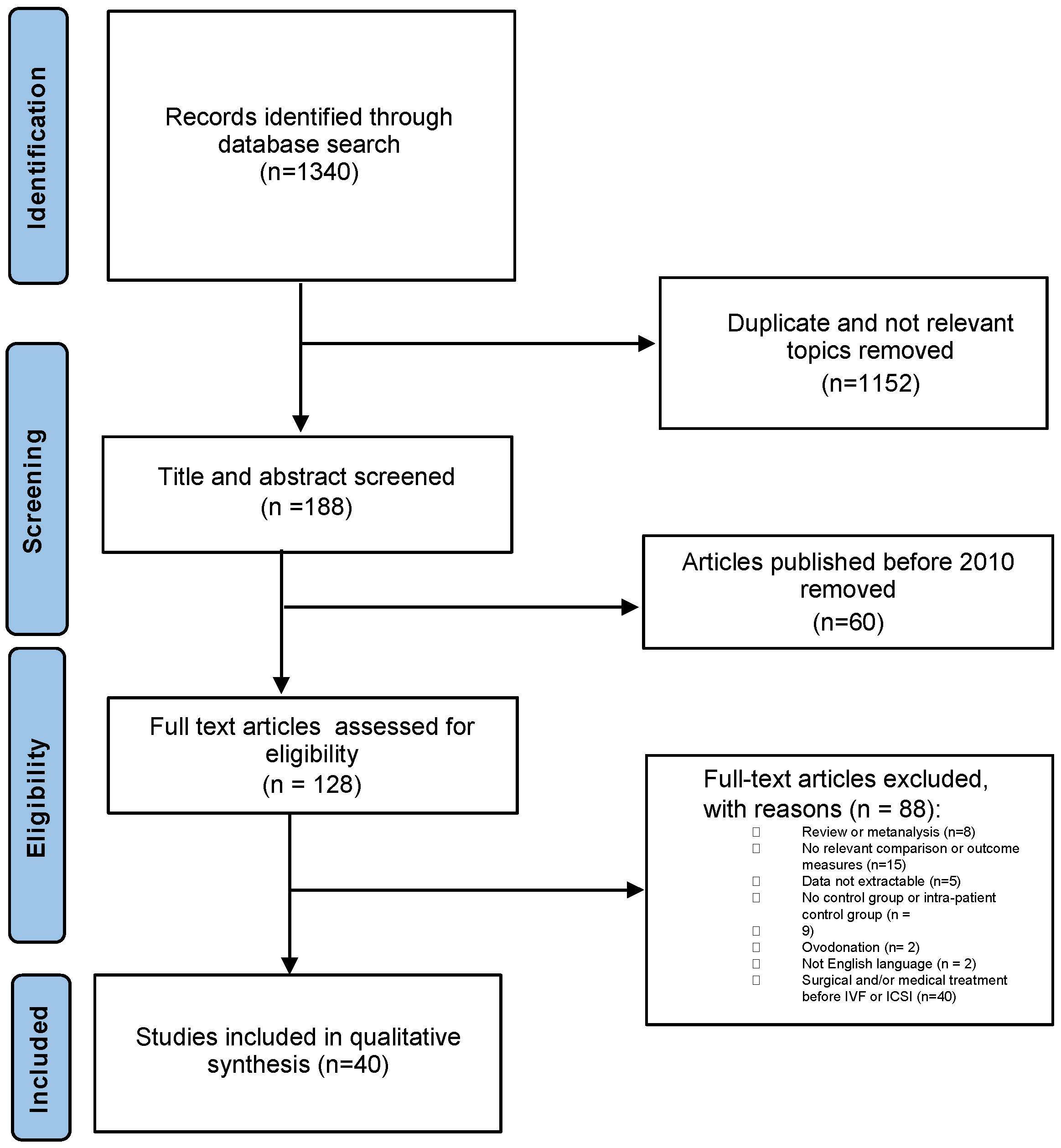
2.1. Search Strategy and Selection Criteria
- (a)
- Clinical pregnancy rate (CPR), defined by the ultrasound visualization of an intrauterine gestational sac;
- (b)
- Fertilization rate (FR), defined as the percentage of transformation of micro injected oocytes into two pronuclei;
- (c)
- Implantation rate (IR): number of implanted embryos/number of embryos transferred.
2.2. Data Extraction and Quality Assessment
2.3. Statistical Analysis
3. Results
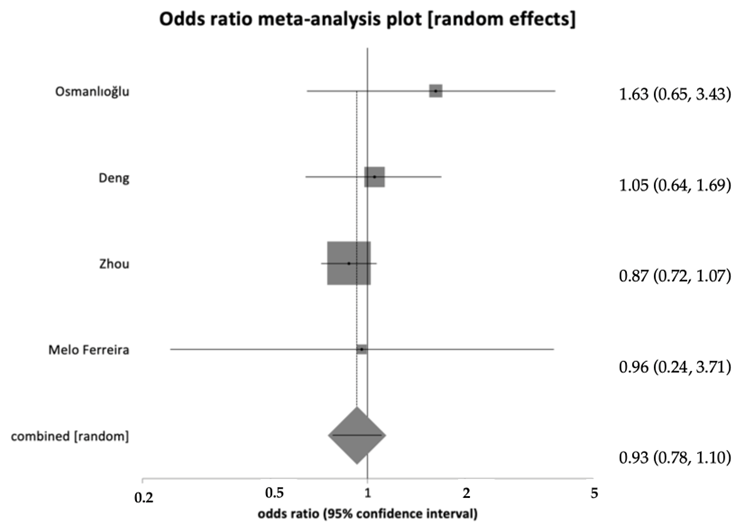
3.1. Live Births
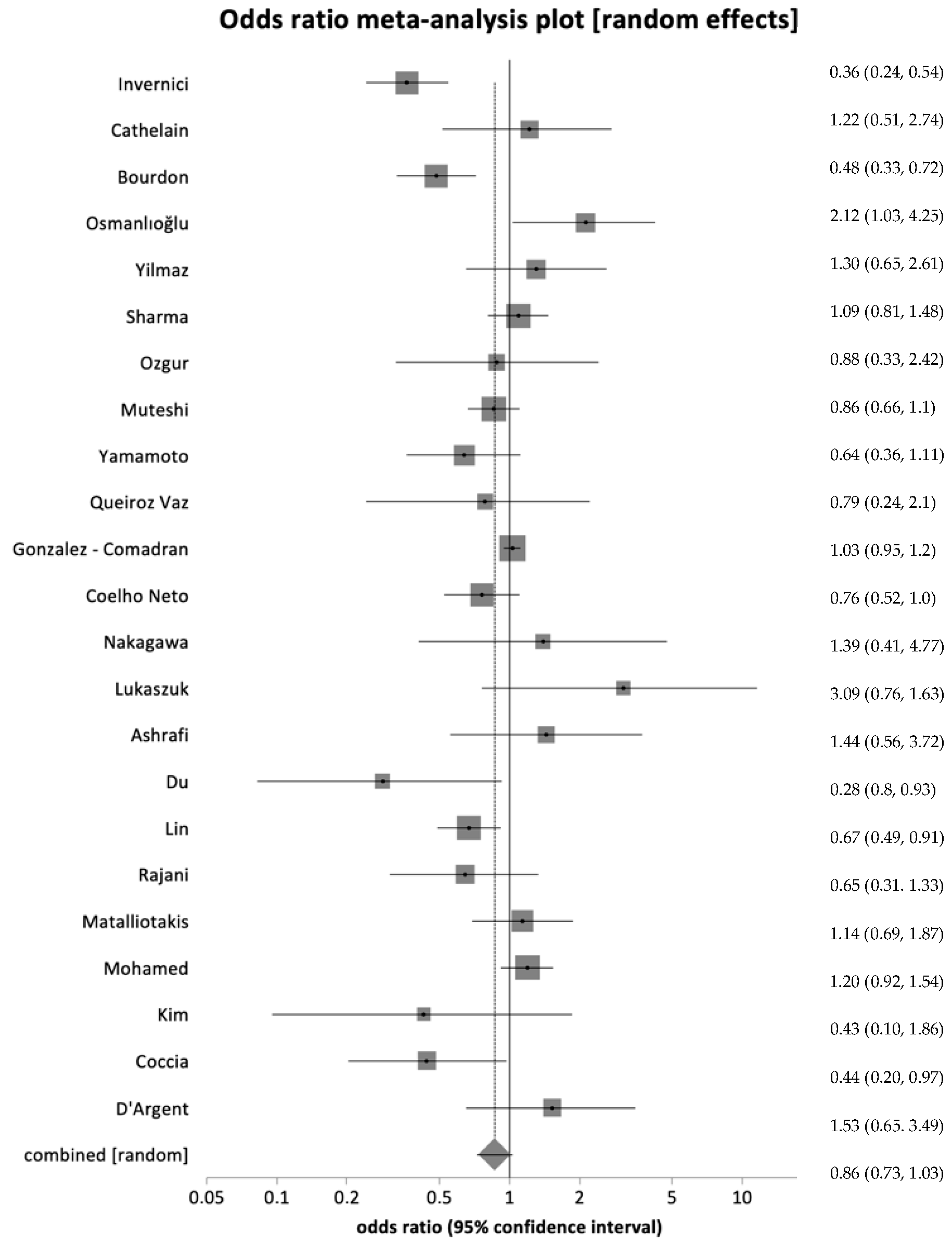
3.2. Clinical Pregnancies
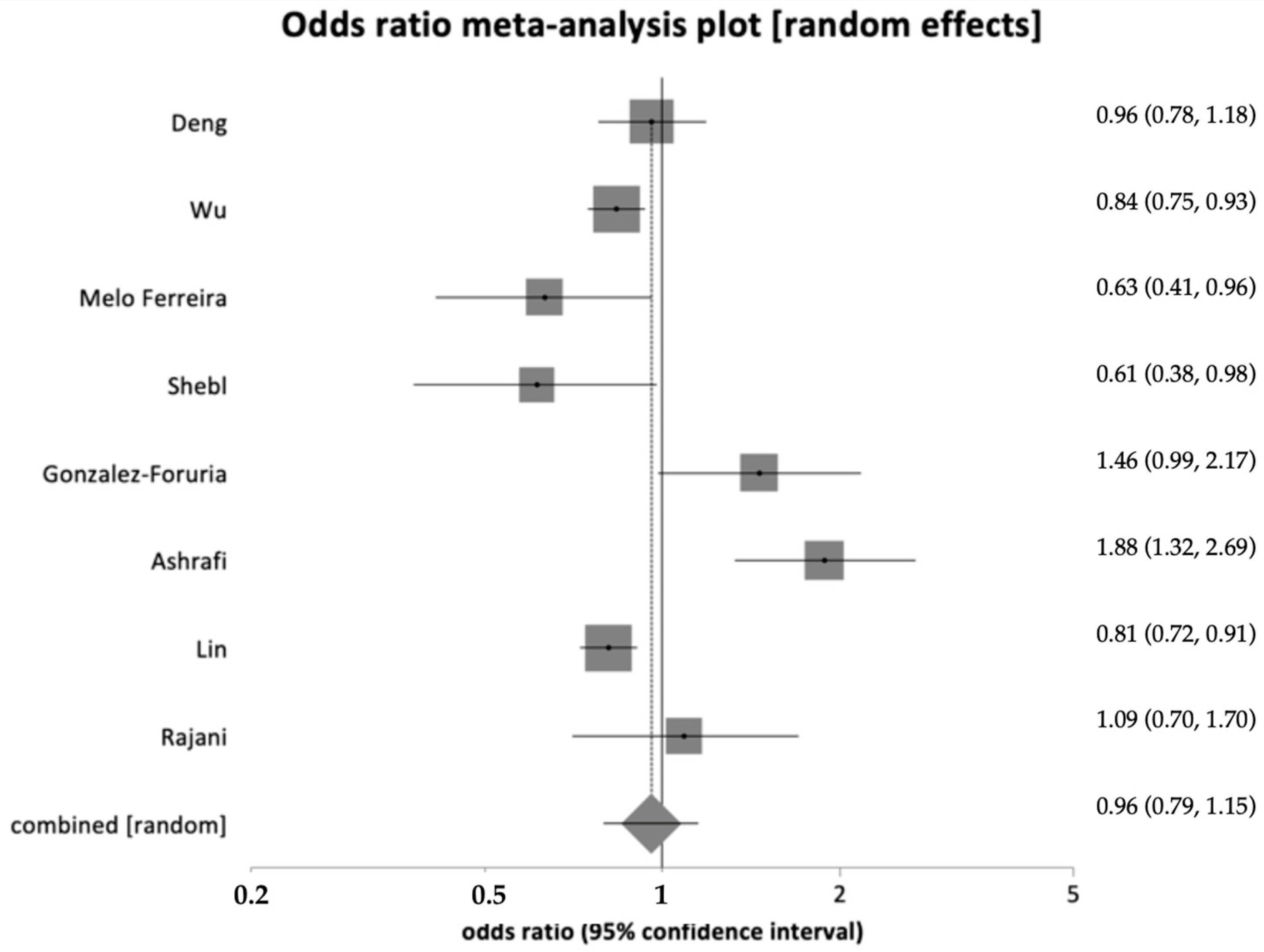
3.3. Fertilization Rate
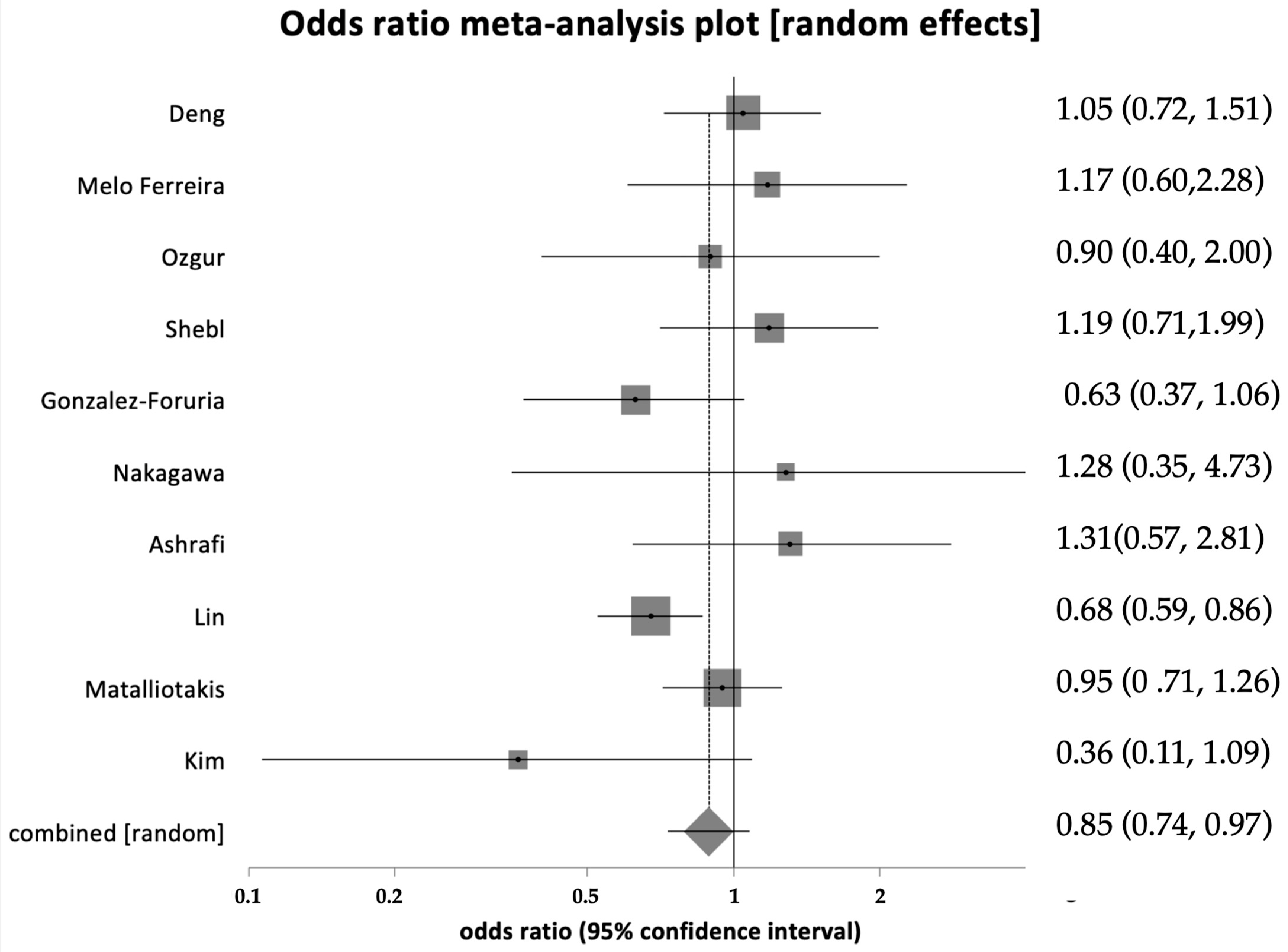
3.4. Implantation Rate
4. Discussion
4.1. Main Findings
4.2. Strengths and Limitations
4.3. Interpretation
Supplementary Materials
Author Contributions
Funding
Institutional Review Board Statement
Informed Consent Statement
Data Availability Statement
Acknowledgments
Conflicts of Interest
References
- Johnson, N.P.; Hummelshoj, L.; Adamson, G.D.; Keckstein, J.; Taylor, H.S.; Abrao, M.S.; Bush, D.; Kiesel, L.; Tamimi, R.; Sharpe-Timms, K.L.; et al. World Endometriosis Society consensus on the classification of endometriosis. Hum. Reprod. 2017, 32, 315–324. [Google Scholar] [CrossRef] [PubMed]
- Zondervan, K.T.; Becker, C.M.; Missmer, S.A. Endometriosis. N. Engl. J. Med. 2020, 382, 1244–1256. [Google Scholar] [CrossRef]
- Ozkan, S.; Murk, W.; Arici, A. Endometriosis and infertility: Epidemiology and evidence-based treatments. Ann. N. Y. Acad. Sci. 2008, 1127, 92–100. [Google Scholar] [CrossRef] [PubMed]
- Boucher, A.; Brichant, G.; Gridelet, V.; Nisolle, M.; Ravet, S.; Timmermans, M.; Henry, L. Implantation Failure in Endometriosis Patients: Etiopathogenesis. J. Clin. Med. 2022, 11, 5366. [Google Scholar] [CrossRef]
- Muzii, L.; DITucci, C.; Galati, G.; Mattei, G.; Chinè, A.; Cascialli, G.; Palaia, I.; Benedetti Panici, P. Endometriosis-associated infertility: Surgery or IVF? Minerva Obs. Gynecol. 2021, 73, 226–232. [Google Scholar] [CrossRef] [PubMed]
- De Ziegler, D.; Borghese, B.; Chapron, C. Endometriosis and infertility: Pathophysiology and management. Lancet 2010, 376, 730–738. [Google Scholar] [CrossRef]
- Wang, X.M.; Ma, Z.Y.; Song, N. Inflammatory cytokines IL-6, IL-10, IL-13, TNF-α and peritoneal fluid flora were associated with infertility in patients with endometriosis. Eur. Rev. Med. Pharmacol. Sci. 2018, 22, 2513–2518. [Google Scholar] [CrossRef]
- Hogg, C.; Horne, A.W.; Greaves, E. Endometriosis-Associated Macrophages: Origin, Phenotype, and Function. Front. Endocrinol. 2020, 11, 7. [Google Scholar] [CrossRef] [PubMed]
- Jeljeli, M.; Riccio, L.G.C.; Chouzenoux, S.; Moresi, F.; Toullec, L.; Doridot, L.; Nicco, C.; Bourdon, M.; Marcellin, L.; Santulli, P.; et al. Macrophage Immune Memory Controls Endometriosis in Mice and Humans. Cell Rep. 2020, 33, 108325. [Google Scholar] [CrossRef]
- Coccia, M.E.; Nardone, L.; Rizzello, F. Endometriosis and Infertility: A Long-Life Approach to Preserve Reproductive Integrity. Int. J. Environ. Res. Public. Health 2022, 19, 6162. [Google Scholar] [CrossRef]
- Marquardt, R.M.; Kim, T.H.; Shin, J.H.; Jeong, J.W. Progesterone and Estrogen Signaling in the Endometrium: What Goes Wrong in Endometriosis? Int. J. Mol. Sci. 2019, 20, 3822. [Google Scholar] [CrossRef] [PubMed]
- Leyendecker, G.; Kunz, G.; Wildt, L.; Beil, D.; Deininger, H. Uterine hyperperistalsis and dysperistalsis as dysfunctions of the mechanism of rapid sperm transport in patients with endometriosis and infertility. Hum. Reprod. 1996, 11, 1542–1551. [Google Scholar] [CrossRef]
- Sanchez, A.M.; Viganò, P.; Somigliana, E.; Panina-Bordignon, P.; Vercellini, P.; Candiani, M. The distinguishing cellular and molecular features of the endometriotic ovarian cyst: From pathophysiology to the potential endometrioma-mediated damage to the ovary. Hum. Reprod. Update. 2014, 20, 217–230. [Google Scholar] [CrossRef]
- Pirtea, P.; de Ziegler, D.; Ayoubi, J.M. Endometrial receptivity in adenomyosis and/or endometriosis. Fertil Steril. 2023, 119, 741–745. [Google Scholar] [CrossRef]
- Abramiuk, M.; Grywalska, E.; Małkowska, P.; Sierawska, O.; Hrynkiewicz, R.; Niedźwiedzka-Rystwej, P. The Role of the Immune System in the Development of Endometriosis. Cells. 2022, 11, 2028. [Google Scholar] [CrossRef] [PubMed]
- Patel, B.G.; Lenk, E.E.; Lebovic, D.I.; Shu, Y.; Yu, J.; Taylor, R.N. Pathogenesis of endometriosis: Interaction between Endocrine and inflammatory pathways. Best. Pract. Res. Clin. Obstet. Gynaecol. 2018, 50, 50–60. [Google Scholar] [CrossRef] [PubMed]
- Invernici, D.; Reschini, M.; Benaglia, L.; Somigliana, E.; Galati, G.; La Vecchia, I.; Vigano’, P.; Vercellini, P. The impact of endometriosis on IVF efficacy: Qualitative and quantitative assessment of ovarian response and embryo development. Reprod. Biomed. Online. 2022, 45, 275–281. [Google Scholar] [CrossRef]
- Chen, J.-P.; Zhang, Y.-Y.; Jin, J.-N.; Ying, Y.; Song, Z.-M.; Xu, Q.-Q.; Tu, M.-X.; Ye, X.-H.; Tang, H.-N.; Ni, F.-D.; et al. Effects of Dysregulated Glucose Metabolism on the Occurrence and ART Outcome of Endometriosis. Eur. J. Med. Res. 2023, 28, 305. [Google Scholar] [CrossRef]
- Cathelain, A.; Simon, V.; Wattier, J.M.; Robin, G.; Ramdane, N.; Decanter, C.; Plouvier, P.; Rubod, C. Pain Assessment in Women with or without Endometriosis during the IVF Process: A Prospective Study. Reprod. BioMedicine Online 2023, 47, 103250. [Google Scholar] [CrossRef]
- Bourdon, M.; Alwohaibi, A.; Maignien, C.; Marcellin, L.; Chargui, A.; Pocate Cheriet, K.; Patrat, C.; Chapron, C.; Santulli, P. IVF/ICSI Outcomes After a Freeze-All Strategy: An Observational Cohort Study. Reprod. Sci. 2023, 30, 2283–2291. [Google Scholar] [CrossRef]
- Li, Y.; Wang, N.; Jing, Y.; He, J.; Li, F.; Zhang, X. Down-Regulation of the FTO Gene in Follicular Fluid of Infertile Women with Ovarian Endometriosis. Gynecol. Endocrinol. 2023, 39, 2269273. [Google Scholar] [CrossRef] [PubMed]
- Wang, Y.; Yi, Y.-C.; Guu, H.-F.; Chen, Y.-F.; Kung, H.-F.; Chang, J.-C.; Chen, L.-Y.; Chuan, S.-T.; Chen, M.-J. Impact of Adenomyosis and Endometriosis on IVF/ICSI Pregnancy Outcome in Patients Undergoing Gonadotropin-Releasing Hormone Agonist Treatment and Frozen Embryo Transfer. Sci. Rep. 2023, 13, 6741. [Google Scholar] [CrossRef] [PubMed]
- Osmanlıoğlu, Ş.; Berker, B.; Aslan, B.; Şükür, Y.E.; Özmen, B.; Sönmezer, M.; Atabekoğlu, C.S.; Aytaç, R. Presence of Endometrioma Does Not Impair Embryo Quality and Assisted Reproductive Technology (ART) Cycle Outcome in Diminished Ovarian Reserve (DOR) Patients. Reprod. Sci. 2023, 30, 1540–1547. [Google Scholar] [CrossRef]
- Deng, Y.; Ou, Z.; Yin, M.; Chen, Z.; Chen, S.; Sun, L. Does Current Ovarian Endometrioma Increase the Time for DOR Patients to Reach Live Birth in IVF? BMC Pregnancy Childbirth 2022, 22, 324. [Google Scholar] [CrossRef]
- Zhou, L.; Wang, L.; Geng, Q.; Zhang, H.; Xu, S.; Diao, L.; Zeng, Y.; Mo, M.; Li, L. Endometriosis Is Associated with a Lowered Cumulative Live Birth Rate: A Retrospective Matched Cohort Study Including 3071 in Vitro Fertilization Cycles. J. Reprod. Immunol. 2022, 151, 103631. [Google Scholar] [CrossRef]
- Wu, Y.; Yang, R.; Lan, J.; Lin, H.; Jiao, X.; Zhang, Q. Ovarian Endometrioma Negatively Impacts Oocyte Quality and Quantity But Not Pregnancy Outcomes in Women Undergoing IVF/ICSI Treatment: A Retrospective Cohort Study. Front. Endocrinol. 2021, 12, 739228. [Google Scholar] [CrossRef] [PubMed]
- Boucret, L.; Bouet, P.-E.; Riou, J.; Legendre, G.; Delbos, L.; Hachem, H.E.; Descamps, P.; Reynier, P.; May-Panloup, P. Endometriosis Lowers the Cumulative Live Birth Rates in IVF by Decreasing the Number of Embryos but Not Their Quality. J. Clin. Med. 2020, 9, 2478. [Google Scholar] [CrossRef] [PubMed]
- Yilmaz, N.; Ceran, M.U.; Ugurlu, E.N.; Gulerman, H.C.; Ustun, Y.E. Impact of Endometrioma and Bilaterality on IVF/ICSI Cycles in Patients with Endometriosis. J. Gynecol. Obstet. Hum. Reprod. 2021, 50, 101839. [Google Scholar] [CrossRef]
- Feichtinger, M.; Nordenhök, E.; Olofsson, J.I.; Hadziosmanovic, N.; Rodriguez-Wallberg, K.A. Endometriosis and Cumulative Live Birth Rate after Fresh and Frozen IVF Cycles with Single Embryo Transfer in Young Women: No Impact beyond Reduced Ovarian Sensitivity—A Case Control Study. J. Assist. Reprod. Genet. 2019, 36, 1649–1656. [Google Scholar] [CrossRef]
- Ferreira, E.M.; Giorgi, V.S.I.; Rodrigues, J.K.; De Andrade, A.Z.; Junior, A.A.J.; Navarro, P.A. Systemic Oxidative Stress as a Possible Mechanism Underlying the Pathogenesis of Mild Endometriosis-Related Infertility. Reprod. BioMedicine Online 2019, 39, 785–794. [Google Scholar] [CrossRef]
- Sharma, S.; Bathwal, S.; Agarwal, N.; Chattopadhyay, R.; Saha, I.; Chakravarty, B. Does Presence of Adenomyosis Affect Reproductive Outcome in IVF Cycles? A Retrospective Analysis of 973 Patients. Reprod. BioMedicine Online 2019, 38, 13–21. [Google Scholar] [CrossRef] [PubMed]
- Ozgur, K.; Bulut, H.; Berkkanoglu, M.; Coetzee, K. Reproductive Outcomes of Segmented In Vitro Fertilization in Patients Diagnosed with Endometriomas. J. Minim. Invasive Gynecol. 2018, 25, 105–110. [Google Scholar] [CrossRef] [PubMed]
- Muteshi, C.M.; Ohuma, E.O.; Child, T.; Becker, C.M. The Effect of Endometriosis on Live Birth Rate and Other Reproductive Outcomes in ART Cycles: A Cohort Study. Hum. Reprod. Open 2018, 2018, hoy016. [Google Scholar] [CrossRef] [PubMed]
- Yamamoto, A.; Johnstone, E.B.; Bloom, M.S.; Huddleston, H.G.; Fujimoto, V.Y. A Higher Prevalence of Endometriosis among Asian Women Does Not Contribute to Poorer IVF Outcomes. J. Assist. Reprod. Genet. 2017, 34, 765–774. [Google Scholar] [CrossRef]
- Shebl, O.; Sifferlinger, I.; Habelsberger, A.; Oppelt, P.; Mayer, R.B.; Petek, E.; Ebner, T. Oocyte Competence in in Vitro Fertilization and Intracytoplasmic Sperm Injection Patients Suffering from Endometriosis and Its Possible Association with Subsequent Treatment Outcome: A Matched Case–Control Study. Acta Obstet. Gynecol. Scand. 2017, 96, 736–744. [Google Scholar] [CrossRef] [PubMed]
- González-Comadran, M.; Schwarze, J.E.; Zegers-Hochschild, F.; Souza, M.D.C.B.; Carreras, R.; Checa, M.Á. The Impact of Endometriosis on the Outcome of Assisted Reproductive Technology. Reprod. Biol. Endocrinol. 2017, 15, 8. [Google Scholar] [CrossRef]
- Queiroz Vaz, G.; Evangelista, A.V.; Almeida Cardoso, M.C.; Gallo, P.; Erthal, M.C.; Pinho Oliveira, M.A. Frozen Embryo Transfer Cycles in Women with Deep Endometriosis. Gynecol. Endocrinol. 2017, 33, 540–543. [Google Scholar] [CrossRef]
- Coelho Neto, M.A.; de P. Martins, W.; da Luz, C.M.; Jianini, B.T.G.M.; Ferriani, R.A.; Navarro, P.A. Endometriosis, Ovarian Reserve and Live Birth Rate Following In Vitro Fertilization/Intracytoplasmic Sperm Injection. Rev. Bras. Ginecol. Obstet. 2016, 38, 218–224. [Google Scholar] [CrossRef]
- Senapati, S.; Sammel, M.D.; Morse, C.; Barnhart, K.T. Impact of Endometriosis on in Vitro Fertilization Outcomes: An Evaluation of the Society for Assisted Reproductive Technologies Database. Fertil. Steril. 2016, 106, 164–171.e1. [Google Scholar] [CrossRef]
- González-Foruria, I.; Peñarrubia, J.; Borràs, A.; Manau, D.; Casals, G.; Peralta, S.; Creus, M.; Ferreri, J.; Vidal, E.; Carmona, F.; et al. Age, Independent from Ovarian Reserve Status, Is the Main Prognostic Factor in Natural Cycle in Vitro Fertilization. Fertil. Steril. 2016, 106, 342–347.e2. [Google Scholar] [CrossRef]
- Nakagawa, K.; Hisano, M.; Sugiyama, R.; Yamaguchi, K. Measurement of Oxidative Stress in the Follicular Fluid of Infertility Patients with an Endometrioma. Arch. Gynecol. Obstet. 2016, 293, 197–202. [Google Scholar] [CrossRef] [PubMed]
- Coelho Neto, M.A.; Martins, W.P.; Lima, M.L.S.; Barbosa, M.A.P.; Nastri, C.O.; Ferriani, R.A.; Navarro, P.A. Ovarian Response Is a Better Predictor of Clinical Pregnancy Rate Following Embryo Transfer than Is Thin Endometrium or Presence of an Endometrioma: Thin Endometrium, Endometrioma and Clinical Pregnancy. Ultrasound Obstet. Gynecol. 2015, 46, 501–505. [Google Scholar] [CrossRef] [PubMed]
- Borges, E., Jr.; Braga, D.P.A.F.; Setti, A.S.; Vingris, L.S.; Figueira, R.C.S.; Iaconelli, A., Jr. Endometriosis Affects Oocyte Morphology in Intracytoplasmic Sperm Injection Cycles. JBRA Assist. Reprod. 2015, 19, 235–240. [Google Scholar] [CrossRef]
- Polat, M.; Boynukalın, F.K.; Yaralı, İ.; Esinler, İ.; Yaralı, H. Endometriosis Is Not Associated with Inferior Pregnancy Rates in in Vitro Fertilization: An Analysis of 616 Patients. Gynecol. Obstet. Invest. 2014, 78, 59–64. [Google Scholar] [CrossRef]
- Łukaszuk, K.; Kunicki, M.; Liss, J.; Bednarowska, A.; Jakiel, G. Probability of Live Birth in Women with Extremely Low Anti-Müllerian Hormone Concentrations. Reprod. BioMedicine Online 2014, 28, 64–69. [Google Scholar] [CrossRef][Green Version]
- Ashrafi, M.; Fakheri, T.; Kiani, K.; Sadeghi, M.; Akhoond, M.R. Impact of the Endometrioma on Ovarian Response and Pregnancy Rate in in Vitro Fertilization Cycles. Int. J. Fertil. Steril. 2014, 8, 29–34. [Google Scholar] [PubMed]
- Du, Y.-B.; Gao, M.-Z.; Shi, Y.; Sun, Z.-G.; Wang, J. Endocrine and Inflammatory Factors and Endometriosis-Associated Infertility in Assisted Reproduction Techniques. Arch. Gynecol. Obstet. 2013, 287, 123–130. [Google Scholar] [CrossRef]
- Benaglia, L.; Bermejo, A.; Somigliana, E.; Faulisi, S.; Ragni, G.; Fedele, L.; Garcia-Velasco, J.A. In Vitro Fertilization Outcome in Women with Unoperated Bilateral Endometriomas. Fertil. Steril. 2013, 99, 1714–1719. [Google Scholar] [CrossRef]
- Benaglia, L.; Bermejo, A.; Somigliana, E.; Scarduelli, C.; Ragni, G.; Fedele, L.; Garcia-Velasco, J.A. Pregnancy Outcome in Women with Endometriomas Achieving Pregnancy through IVF. Hum. Reprod. 2012, 27, 1663–1667. [Google Scholar] [CrossRef]
- Lin, X.-N.; Wei, M.-L.; Tong, X.-M.; Xu, W.-H.; Zhou, F.; Huang, Q.-X.; Wen, G.-F.; Zhang, S.-Y. Outcome of in Vitro Fertilization in Endometriosis-Associated Infertility: A 5-Year Database Cohort Study. Chin. Med. J. 2012, 125, 2688–2693. [Google Scholar]
- Rajani, S.; Chattopadhyay, R.; Goswami, S.K.; Ghosh, S.; Sharma, S.; Chakravarty, B. Assessment of Oocyte Quality in Polycystic Ovarian Syndrome and Endometriosis by Spindle Imaging and Reactive Oxygen Species Levels in Follicular Fluid and Its Relationship with IVF-ET Outcome. J. Hum. Reprod. Sci. 2012, 5, 187–193. [Google Scholar] [CrossRef] [PubMed]
- Matalliotakis, I.M.; Sakkas, D.; Illuzzi, J.; Matalliotaki, C.; Arici, A. Implantation Rate Remains Unaffected in Women with Endometriosis Compared to Tubal Factor Infertility. J. Endometr. 2011, 3, 86–92. [Google Scholar] [CrossRef]
- Mohamed, A.M.F.; Chouliaras, S.; Jones, C.J.P.; Nardo, L.G. Live Birth Rate in Fresh and Frozen Embryo Transfer Cycles in Women with Endometriosis. Eur. J. Obstet. Gynecol. Reprod. Biol. 2011, 156, 177–180. [Google Scholar] [CrossRef] [PubMed]
- Kim, C.; Ahn, J.; Kim, S.; Chae, H.; Kang, B. Effects on in Vitro Fertilization–Embryo Transfer Outcomes of Vascular Endothelial Growth Factor Receptor-1, -2 and -3 in Eutopic Endometrial Tissue of Women with Endometriosis. J. Obs. Gynaecol. 2011, 37, 1631–1637. [Google Scholar] [CrossRef]
- Coccia, M.E.; Rizzello, F.; Mariani, G.; Bulletti, C.; Palagiano, A.; Scarselli, G. Impact of Endometriosis on in Vitro Fertilization and Embryo Transfer Cycles in Young Women: A Stage-dependent Interference. Acta Obs. Gynecol. Scand. 2011, 90, 1232–1238. [Google Scholar] [CrossRef]
- Mathieu d’Argent, E.; Coutant, C.; Ballester, M.; Dessolle, L.; Bazot, M.; Antoine, J.-M.; Daraï, E. Results of First in Vitro Fertilization Cycle in Women with Colorectal Endometriosis Compared with Those with Tubal or Male Factor Infertility. Fertil. Steril. 2010, 94, 2441–2443. [Google Scholar] [CrossRef]
- Thompson, S.G. Why sources of heterogeneity in meta-analysis should be investigated. BMJ 1994, 309, 1351–1355. [Google Scholar] [CrossRef]
- Cozzolino, M.; Tartaglia, S.; Pellegrini, L.; Troiano, G.; Rizzo, G.; Petraglia, F. The Effect of Uterine Adenomyosis on IVF Outcomes: A Systematic Review and Meta-analysis. Reprod. Sci. 2022, 29, 3177–3193. [Google Scholar] [CrossRef]
- Qu, H.; Du, Y.; Yu, Y.; Wang, M.; Han, T.; Yan, L. The effect of endometriosis on IVF/ICSI and perinatal outcome: A systematic review and meta-analysis. J. Gynecol. Obstet. Hum. Reprod. 2022, 51, 102446. [Google Scholar] [CrossRef]
- Harb, H.M.; Gallos, I.D.; Chu, J.; Harb, M.; Coomarasamy, A. The effect of endometriosis on in vitro fertilisation outcome: A systematic review and meta-analysis. BJOG 2013, 120, 1308–1320. [Google Scholar] [CrossRef]
- Bulun, S.E.; Cheng, Y.H.; Pavone, M.E.; Xue, Q.; Attar, E.; Trukhacheva, E.; Tokunaga, H.; Utsunomiya, H.; Yin, P.; Luo, X.; et al. Estrogen receptor-beta, estrogen receptor-alpha, and progesterone resistance in endometriosis. Semin. Reprod. Med. 2010, 28, 36–43. [Google Scholar] [CrossRef] [PubMed]
- Selam, B.; Arici, A. Implantation defect in endometriosis: Endometrium or peritoneal fluid. J. Reprod. Fertil. Suppl. 2000, 55, 121–128. [Google Scholar] [PubMed]
- Goyri, E.; Kohls, G.; Garcia-Velasco, J. IVF stimulation protocols and outcomes in women with endometriosis. Best. Pract. Res. Clin. Obstet. Gynaecol. 2024, 92, 102429. [Google Scholar] [CrossRef] [PubMed]



| Author | Year | Country | Period | Endometriosis Group | Control Group | Outcomes | Study Design |
|---|---|---|---|---|---|---|---|
| Invernici [17] | 2022 | Italy | Jan 2014–Dec 2020. | Endometriosis (n = 218) | No endometriosis (n = 248) | CPR, LBR | Retrospective study |
| Chen [18] | 2023 | China | Feb 2019–Dec 2020 | Endometriosis (n = 412) | No endometriosis (n = 1551) | IR, CPR, LBR | Retrospective study |
| Cathelain [19] | 2023 | France | Nov 2019–Jun 2021 | Endometriosis (n = 73) | No endometriosis (n = 205) | CPR | Prospective cohort study |
| Bourdon [20] | 2023 | France | Sep 2016–Sep 2018 | Endometriosis (n = 190) | No endometriosis (OHSS risk) (n = 281) | CPR, LBR | Prospective cohort study |
| Li [21] | 2023 | China | May 2021–Apr 2022 | Ovarian endometriosis (n = 37) | No endometriosis (n = 37) | FR, IR, CPR | Prospective study |
| Wang [22] | 2023 | Taiwan | Jan 2016–Dec 2019 | Endometriosis (n = 229) cycles | No endometriosis/ademyosis (n = 1002) cycles | CPR, LBR | Retrospective study |
| Osmanlıoğlu [23] | 2022 | Turkey | Jan 2015–Dec 2020 | Ovarian endometriosis (n = 64) | No endometrioma (n = 225) | CPR, LBR | Retrospective case control study |
| Deng [24] | 2022 | China | Jan 2014–Dec 2018 | Ovarian endometriosis (n = 90) 191 cycles | No endometriosis (n = 403) 888 cycles | FR, IR, LBR | Retrospective case control study |
| Zhou [25] | 2022 | China | Jan 2012–Dec 2014 | Endometriosis (n = 433) | Tubal factor infertility (n = 1299) | FR, CPR, LBR | Retrospective study |
| Wu [26] | 2021 | China | Jan 2011–Dec 2019 | Ovarian endometriosis (n = 293 without surgery) | No endometriosis (n = 862) | FR, CPR, LBR | Retrospective study |
| Boucret [27] | 2020 | France | Jan 2014–Mar 2018 | Endometriosis (n = 90) 155 cycles | No endometriosis (n = 590) 969 cycles | LBR | Retrospective cohort study |
| Yilmaz [28] | 2019 | Turkey | Mar 2015–Mar 2018 | Ovarian endometriosis (n = 73), unilateral or bilateral | No endometriosis (n = 86) | CPR, LBR | Retrospective study |
| Feichtinger [29] | 2019 | Sweden | Jan 2009–Dec 2013 | Endometriosis (n = 172) | No endometriosis (n = 2585) | LBR | Cross-sectional case control |
| Melo Ferreira [30] | 2019 | Brazil | Oct 2009–Oct 2010 | Endometriosis (n = 35) | Male factor infertility (n = 60) | FR, IR, CPR LBR | Prospective case control study |
| Sharma [31] | 2019 | India | Jan 2010–Jan 2015 | Endometriosis (n = 355). | Tubal factor infertility (n = 466) | CPR, LBR | Retrospective cohort study |
| Ozgur [32] | 2018 | Turkey | Sep2014–Sep 2016 | Ovarian endometirosis (n = 29), unilateral or bilateral | No endometrioma (n = 60) | IR, CPR | Retrospective matched case control study |
| Muteshi [33] | 2018 | UK | Jan 2000–Dec 2014 | Endometriosis (n = 531), all stages | No endometriosis (n = 737) | CPR, LBR | Retrospective cohort study |
| Yamamoto [34] | 2017 | USA | Jan 2008–Dec 2009 | Endometriosis (n = 68) | No endometriosis (n = 649) | CPR | Retrospective study |
| Shebl [35] | 2017 | Austria | 2013 | Endometriosis (n = 114) 129 cycles | No endometriosis (n = 119) 129 cycles | FR, IR, LBR | Retrospective case control study |
| Gonzalez [36]–Comadran [37] | 2017 | Spain | Jan 2010–Dec 2012 | Endometriosis (n = 3583) | No endometriosis (n = 18,833) | FR, CPR, LBR | Retrospective cohort study |
| Queiroz Vaz [38] | 2017 | Brazil | Jan 2007–Dec 2013 | DIE (n = 27) | No endometriosis (n = 154) | CPR | Retrospective cohort study |
| Coelho Neto [39] | 2016 | Brazil | Jan 2011–Dec 2012 | Endometriosis (n = 241) | No endometriosis (n = 546) | CPR, LBR | Retrospective cohort study |
| Senapati [40] | 2016 | USA | 2008–2010 | Endometriosis (n = 12,335) cycles | Tubal factor infertility (n = 22,778), unexplained (n = 38,713), others (n = 196,295)–No endometriosis 257,786 | IR, LBR | Retrospective cohort study |
| Gonzalez-Foruria [41] | 2016 | Spain | Jan 2010–Dec 2014 | Endometriosis (n = 101) 326 cycles | Male factor infertility (n = 68) 202 cycles; Tubal factor infertility (n = 44) 125 cycles; Unexplained infertility (n = 81) 243 cycles; Mixed aetiology (n = 26) 51 cycles–No endometriosis 219 | FR, IR, CPR | Retrospective cohort study |
| Nakagawa [42] | 2015 | Japan | Dec 2011–Jul 2013 | Ovarian endometirosis (n = 26), unilateral | Male factor and unexplained infertility (n = 29) | IR, CPR | Retrospective case control study |
| Coelho Neto [43] | 2015 | Brazil | Jan 2011–Dec 2012 | Endometrioma (n = 39) | No endometrioma (n = 478) | CPR | Retrospective cohort study |
| Borges [44] | 2015 | Brazil | Jan 2005–May 2014 | Endometriosis (n = 431) cycles stages III/IV | No endometriosis (n =) 2510 cycles | FR, CPR | Prospective cohort study |
| Polat [45] | 2014 | Turkey | Jul 2005–Nov 2012 | Endometriosis (n = 485) | Tubal factor infertility (n = 131) | CPR, LBR | Retrospective case control study |
| Lukaszuk [46] | 2014 | Poland | May 2007–Jan 2011 | Moderate-to-severe endometriosis (n = 23) (49 cycles) | No endometriosis (n = 78) | CPR, LBR | Retrospective study |
| Ashrafi [47] | 2014 | Iran | Mar 2005–Dec 2007 | Ovarian endometriosis (n = 47) | Mild male factor infertility (n = 57) | FR, IR, CPR | Prospective cohort study |
| Du [48] | 2013 | Japan | 2010 | Endometriosis (n = 29) | No endometriosis (n = 36) | CPR | Retrospective study |
| Benaglia [49] | 2013 | Spain, Italy | Jan 2006–Jul 2010 | Ovarian endometriosis (n = 39) | No endometriosis (n = 78) | IR, CPR, LBR | Retrospective cohort study |
| Benaglia [50] | 2012 | Italy | Jan 2005–Dec 2009 | Ovarian endometriosis (n = 78) | No endometriosis (n = 156) | LBR | Retrospective cohort study |
| Lin [51] | 2012 | China | Jan 2006–Dec 2010 | Endometriosis (n = 177) | No endometriosis (n = 4267) | FR, IR, CPR | Retrospective cohort study |
| Rajani [52] | 2012 | India | nr | Endometriosis (n = 56) | No endometriosis (n = 111) | FR, CPR | Prospective study |
| Matalliotakis [53] | 2011 | USA | 1996–2002 | Endometriosis (n = 130) | No endometriosis (n = 163) | IR, CPR, LBR | Retrospective cohort study |
| Mohamed [54] | 2011 | UK | Jan 2000–Dec 2008 | Endometriosis (n = 415) 415 cycles | No endometriosis (n = 6871) 6871 cycles | CPR, LBR | Retrospective cohort study |
| Kim [55] | 2011 | Korea | Endometriosis (n = 20) (20 cycles) | Tubal factor infertility (n = 20) 20 cycles | IR, CPR, LBR | Retrospective cohort study | |
| Coccia [56] | 2011 | Italy | Feb 2001–Mar 2007 | Endometriosis (n = 148) | Tubal factor infertility (n = 72) | CPR | Retrospective cohort study |
| D’Argent [57] | 2010 | France | Jan 2007–Oct 2008 | Colorectal endometriosis (n = 29) | No endometriosis (n = 497) | CPR, LBR | Retrospective study |
| Author | Case Cohort Representative | Selection of Non-Exposed Cohort | Ascertaiment of Exposure | Outcome Negative at Start | Comparability by Design | Comparability by Analysis | Outcome Assessment | Duration of Follow Up | Score |
|---|---|---|---|---|---|---|---|---|---|
| Invernici [17] | * | * | * | * | * | * | * | * | 8 |
| Chen [18] | * | * | * | * | * | * | * | * | 8 |
| Cathelain [19] | * | * | * | * | * | * | * | * | 8 |
| Bourdon [20] | * | * | * | * | * | * | * | x | 7 |
| Li [21] | * | * | * | * | * | * | * | * | 8 |
| Wang [22] | * | * | * | * | * | * | * | * | 8 |
| Osmanlıoğlu [23] | * | * | * | * | * | * | * | * | 8 |
| Deng [24] | * | * | * | * | * | * | * | * | 8 |
| Zhou [25] | * | * | * | * | * | * | * | * | 8 |
| Wu [26] | * | * | * | * | * | * | * | x | 7 |
| Boucret [27] | * | * | * | * | * | * | * | x | 7 |
| Yilmaz [28] | * | x | * | * | * | * | * | x | 6 |
| Feichtinger [29] | * | * | * | x | * | * | * | * | 7 |
| Melo Ferreira [30] | * | * | * | * | * | * | * | * | 8 |
| Sharma [31] | * | * | * | * | * | * | * | * | 8 |
| Ozgur [32] | * | * | * | * | * | * | x | * | 7 |
| Muteshi [33] | * | * | * | * | * | * | * | * | 8 |
| Yamamoto [34] | * | * | * | * | * | x | * | * | 7 |
| Shebl [35] | * | * | * | * | * | * | * | * | 8 |
| Gonzalez [36]–Comadran [37] | * | * | * | * | * | * | * | * | 8 |
| Queiroz Vaz [38] | * | * | * | * | * | * | * | * | 8 |
| Coelho Neto [39] | * | * | * | * | ** | * | * | * | 9 |
| Senapati [40] | * | * | * | * | * | * | * | + | 8 |
| Gonzalez-Foruria [41] | * | * | * | * | ** | * | * | * | 8 |
| Nakagawa [42] | * | * | * | * | * | * | * | * | 8 |
| Coelho Neto [43] | * | * | * | * | * | * | * | x | 7 |
| Borges [44] | * | * | * | * | ** | * | * | * | 9 |
| Polat [45] | * | * | * | x | * | * | * | x | 6 |
| Lukaszuk [46] | * | * | * | * | * | * | * | * | 8 |
| Ashrafi [47] | * | * | * | * | * | * | * | * | 8 |
| Du [48] | * | * | * | * | * | * | * | * | 8 |
| Benaglia [49] | * | * | * | * | ** | * | * | * | 9 |
| Benaglia [50] | * | * | * | * | ** | * | * | * | 9 |
| Lin [51] | * | * | * | * | * | * | * | * | 8 |
| Rajani [52] | * | * | * | * | * | * | * | * | 8 |
| Matalliotakis [53] | * | * | * | * | * | * | * | * | 8 |
| Mohamed [54] | * | * | * | * | * | * | x | * | 7 |
| Kim [55] | * | * | * | x | * | * | x | * | 6 |
| Coccia [56] | * | * | * | * | * | * | * | x | 7 |
| D’Argent [57] | * | * | * | * | ** | * | * | * | 9 |
| Outcome | Studies | Population (Case vs. Control) | Pooled OR (95% CI) | I2 (%) | p-Values |
|---|---|---|---|---|---|
| Livebirth (per person) | 15 | 3210/8186 vs. 7124/30,247 | 1.03 (0.75–1.41) | 93.5 | 0.845 |
| Livebirth (per transfer) | 4 | 274/748 vs. 942/2483 | 0.93 (0.78–1.10) | 0 | 0.388 |
| Livebirth (per cycle) | 7 | 398/435 vs. 270/7462 | 0.99 (0.86–1.15) | 0 | 0.890 |
| Clinical pregnancy (per person) | 23 | 1833/6552 vs. 9716/34,691 | 0.86 (0.72–1.02) | 72.5 | 0.098 |
| Clinical pregnancy (per transfer) | 4 | 345/759 vs. 996/1856 | 0.91 (0.76–1.09) | 0 | 0.292 |
| Clinical pregnancy (per cycle) | 3 | 271/990 vs. 505/1571 | 0.95 (0.76–1.17) | 0 | 0.616 |
| Fertilization rate | 8 | 4153/5661 vs. 43,979/62,972 | 0.96 (0.79–1.15) | 80.5 | 0.641 |
| Implantation rate | 10 | 406/2032 vs. 3573/11,120 | 0.85 (0.74–0.97) | 37.5 | 0.023 |
Disclaimer/Publisher’s Note: The statements, opinions and data contained in all publications are solely those of the individual author(s) and contributor(s) and not of MDPI and/or the editor(s). MDPI and/or the editor(s) disclaim responsibility for any injury to people or property resulting from any ideas, methods, instructions or products referred to in the content. |
© 2024 by the authors. Licensee MDPI, Basel, Switzerland. This article is an open access article distributed under the terms and conditions of the Creative Commons Attribution (CC BY) license (https://creativecommons.org/licenses/by/4.0/).
Share and Cite
Mappa, I.; Page, Z.P.; Di Mascio, D.; Patelli, C.; D’Antonio, F.; Giancotti, A.; Gebbia, F.; Mariani, G.; Cozzolino, M.; Muzii, L.; et al. The Effect of Endometriosis on In Vitro Fertilization Outcomes: A Systematic Review and Meta-Analysis. Healthcare 2024, 12, 2435. https://doi.org/10.3390/healthcare12232435
Mappa I, Page ZP, Di Mascio D, Patelli C, D’Antonio F, Giancotti A, Gebbia F, Mariani G, Cozzolino M, Muzii L, et al. The Effect of Endometriosis on In Vitro Fertilization Outcomes: A Systematic Review and Meta-Analysis. Healthcare. 2024; 12(23):2435. https://doi.org/10.3390/healthcare12232435
Chicago/Turabian StyleMappa, Ilenia, Zoe Pauline Page, Daniele Di Mascio, Chiara Patelli, Francesco D’Antonio, Antonella Giancotti, Francesco Gebbia, Giulia Mariani, Mauro Cozzolino, Ludovico Muzii, and et al. 2024. "The Effect of Endometriosis on In Vitro Fertilization Outcomes: A Systematic Review and Meta-Analysis" Healthcare 12, no. 23: 2435. https://doi.org/10.3390/healthcare12232435
APA StyleMappa, I., Page, Z. P., Di Mascio, D., Patelli, C., D’Antonio, F., Giancotti, A., Gebbia, F., Mariani, G., Cozzolino, M., Muzii, L., & Rizzo, G. (2024). The Effect of Endometriosis on In Vitro Fertilization Outcomes: A Systematic Review and Meta-Analysis. Healthcare, 12(23), 2435. https://doi.org/10.3390/healthcare12232435