Barriers and Facilitators of Physical Activity in Pregnancy and Postpartum Among Iranian Women: A Scoping Review

 , ,
, ,  ,
,  and
and 
Abstract
1. Introduction
2. Materials and Methods
2.1. First Stage: Aim and Research Questions
2.2. Second Step: Relevant Studies Identified
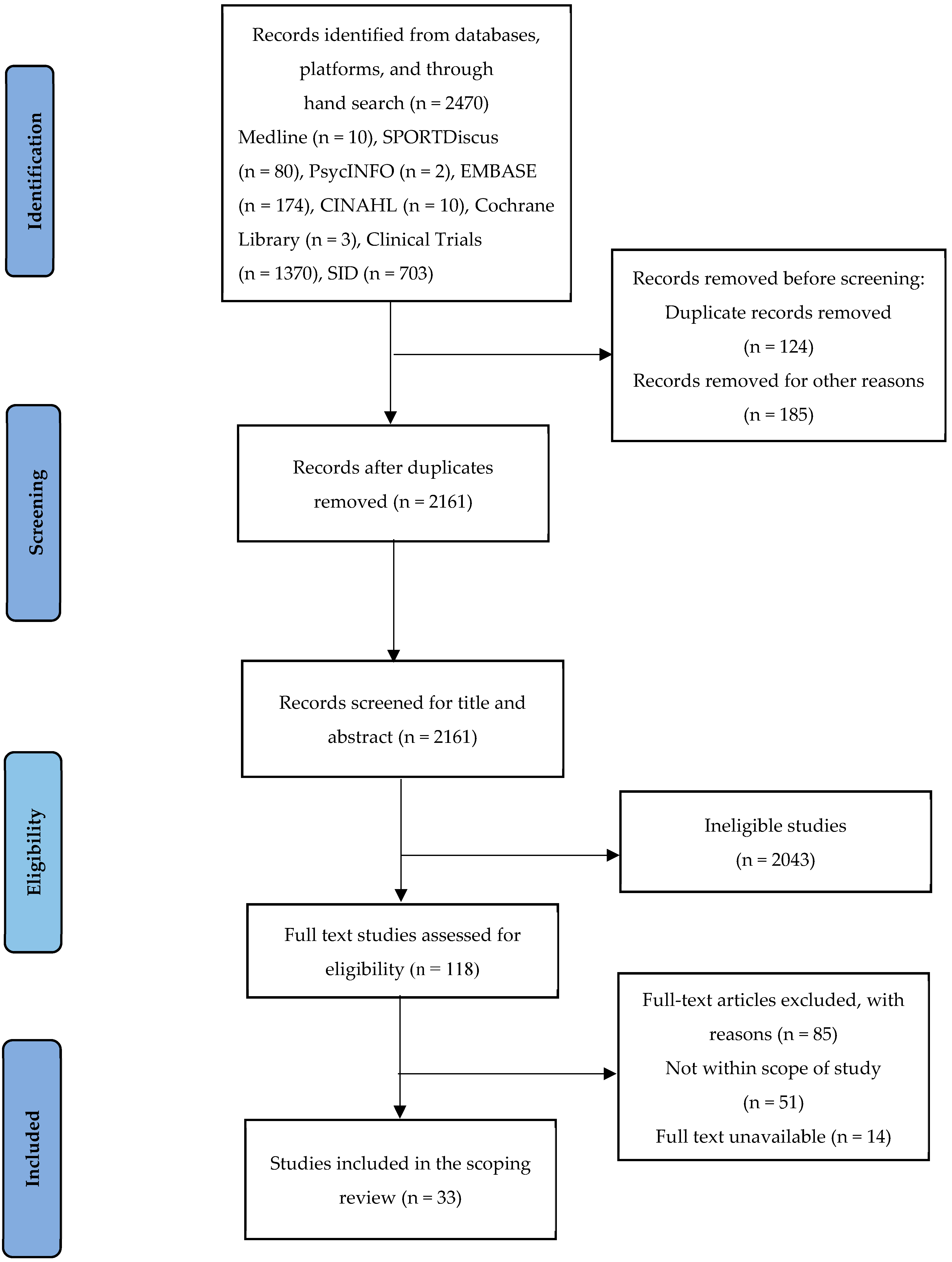
2.3. Third Step: Study Selection
2.4. Fourth Step: Charting the Data
2.5. Fifth Step: Collating, Summarizing, and Reporting Results
Consultation
3. Results
3.1. Characteristics of the Studies
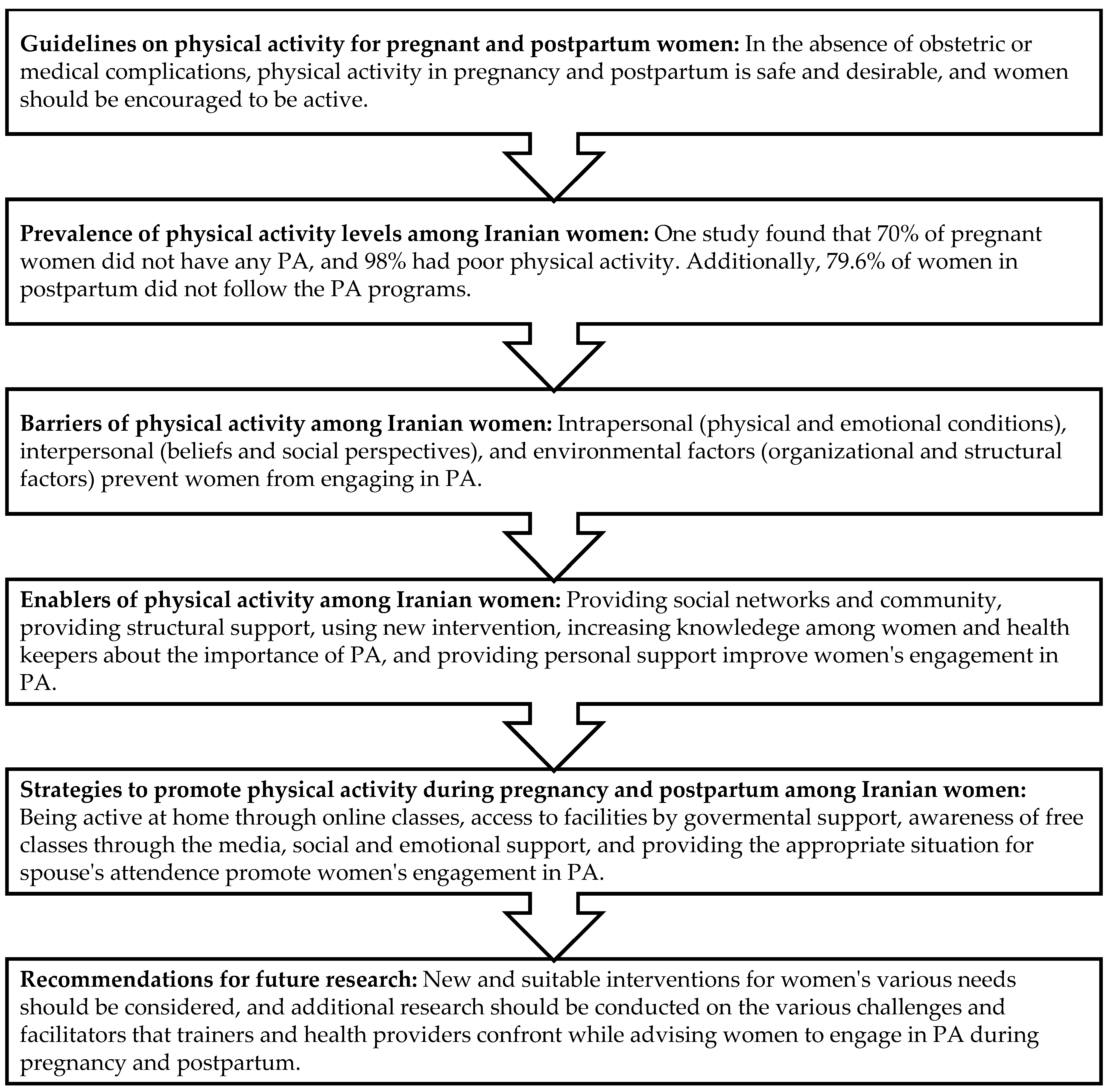
3.2. What Barriers Affect the Physical Activity Level in Pregnancy and Postpartum?
3.2.1. Intrapersonal Factors
3.2.2. Interpersonal Factors
3.2.3. Environmental Factors
3.3. What Facilitators Affect the Physical Activity Level in Pregnancy and Postpartum?
3.4. The Role of Men as a Barrier or Facilitator
3.5. What Strategies Increase Physical Activity Levels in Pregnancy and Postpartum?
4. Discussion
4.1. Strengths and Limitations
4.2. Recommendation for Practice and Research
5. Conclusions
Supplementary Materials
Author Contributions
Funding
Institutional Review Board Statement
Informed Consent Statement
Data Availability Statement
Conflicts of Interest
References
- ACOG. Physical Activity and Exercise During Pregnancy and the Postpartum Period. 2020. Available online: https://www.acog.org/clinical/clinical-guidance/committee-opinion/articles/2020/04/physical-activity-and-exercise-during-pregnancy-and-the-postpartum-period (accessed on 1 April 2020).
- Mottola, M.F.; Davenport, M.H.; Ruchat, S.-M.; Davies, G.A.; Poitras, V.J.; Gray, C.E.; Garcia, A.J.; Barrowman, N.; Adamo, K.B.; Duggan, M.; et al. 2019 Canadian guideline for physical activity throughout pregnancy. Br. J. Sports Med. 2018, 52, 1339–1346. [Google Scholar] [CrossRef] [PubMed]
- Szumilewicz, A.; Worska, A.; Santos-Rocha, R.; Oviedo-Caro, M.Á. Evidence-based and practice-oriented guidelines for exercising during pregnancy. In Exercise and Physical Activity During Pregnancy and Postpartum; Springer: Berlin/Heidelberg, Germany, 2022; pp. 177–217. [Google Scholar]
- Esmaelzadeh Saeyeh, S.; Taavoni, S.; Ahmadi, Z.; Haghani, H. Trend of exercise before, During, and after Pregnancy. Iran. J. Nurs. 2008, 21, 135–141. [Google Scholar]
- Bahadoran, P.; Mohamadirizi, S. Relationship between physical activity and quality of life in pregnant women. Iran. J. Nurs. Midwifery Res. 2015, 20, 282–286. [Google Scholar]
- Physical Activity Guidelines Advisory Committee. Physical Activity Guidelines Advisory Committee Scientific Report; Physical Activity Guidelines Advisory Committee: Washington, DC, USA, 2018. [Google Scholar]
- Saftlas, A.F.; Logsden-Sackett, N.; Wang, W.; Woolson, R.; Bracken, M.B. Work, leisure-time physical activity, and risk of preeclampsia and gestational hypertension. Am. J. Epidemiol. 2004, 160, 758–765. [Google Scholar] [CrossRef]
- Santos-Rocha, R.; Gutiérrez, I.C.; Szumilewicz, A.; Pajaujiene, S. Exercise testing and prescription for pregnant women. In Exercise and Sporting Activity During Pregnancy; Springer: Berlin/Heidelberg, Germany, 2019; pp. 183–230. [Google Scholar]
- Shojaeian, N.A.; Shojaei, M.; Ghasemi, A.; Glascoe, F. Does Maternal Exercise Program During Pregnancy Affect Infants Development? A Randomized Controlled Trial. J. Exerc. Health Sci. 2021, 1, 53–64. [Google Scholar]
- Brown, W.J.; Hayman, M.; Haakstad, L.A.H.; Lamerton, T.; Mena, G.P.; Green, A.; Keating, S.E.; Gomes, G.A.; Coombes, J.S.; Mielke, G.I. Australian guidelines for physical activity in pregnancy and postpartum. J. Sci. Med. Sport 2022, 25, 511–519. [Google Scholar] [CrossRef] [PubMed]
- Hajimiri, K.; Shakibazadeh, E.; Haeri Mehrizi, A.A.; Shab-Bidar, S.; Sadeghi, R. The role of perceived barrier in the postpartum women’s health promoting lifestyle: A partial mediator between self-efficacy and health promoting lifestyle. J. Educ. Health Promot. 2018, 7, 38. [Google Scholar]
- Szumilewicz, A.; Santos-Rocha, R.; Worska, A.; Piernicka, M.; Yu, H.; Pajaujiene, S.; Shojaeian, N.A.; Caro, M.A.O. How to HIIT while pregnant? The protocol characteristics and effects of high intensity interval training implemented during pregnancy—A systematic review. Balt. J. Health Phys. Act. 2022, 14, 1–16. [Google Scholar] [CrossRef]
- Shojaeian, N.; Shojaei, M.; Ghasemi, A. The Effect of Physical Activity during Pregnancy on Development of Social Skills in Infants: A Short Report. J. Rafsanjan Univ. Med. Sci. 2017, 16, 381–388. [Google Scholar]
- Newton, E.R.; May, L. Adaptation of Maternal-Fetal Physiology to Exercise in Pregnancy: The Basis of Guidelines for Physical Activity in Pregnancy. Clin. Med. Insights Women’s Health 2017, 10, 1179562X17693224. [Google Scholar] [CrossRef]
- Nejadghaderi, S.A.; Ahmadi, N.; Rashidi, M.-M.; Ghanbari, A.; Noori, M.; Abbasi-Kangevari, M.; Nasserinejad, M.; Rezaei, N.; Yoosefi, M.; Fattahi, N.; et al. Physical activity pattern in Iran: Findings from STEPS 2021. Front. Public Health 2022, 10, 1036219. [Google Scholar] [CrossRef] [PubMed]
- Subramanian MK, P.; Van der Graaf, P.; Dawson, R.; Hayes, L.; Ells, L.J.; Sachdeva, K.; Azevedo, L. Barriers and Facilitators for Physical Activity in Already Active Pregnant and Postpartum Women? Findings from a Qualitative Study to Inform the Design of an Intervention for Active Women. Obstet. Gynecol. Res. 2022, 5, 280–287. [Google Scholar] [CrossRef]
- Abedzadeh, M.; Taebi, M.; Sadat, Z.; Saberi, F. Knowledge and performance of pregnant women referring to Shabihkhani hospital on exercises during pregnancy and postpartum periods. J. Jahrom Univ. Med. Sci. 2011, 8, 212–218. [Google Scholar] [CrossRef][Green Version]
- Eldoumi, H.; Gates, G. Physical Activity of Arab Muslim Mothers of Young Children Living in the United States: Barriers and Influences. Ethn. Dis. 2019, 29, 469–476. [Google Scholar] [CrossRef]
- Juwono, I.D. Barriers and Incentives to Physical Activity: Findings from Indonesian Pregnant and Postpartum Mothers. Physical Activity Review. Phys. Act. Rev. 2022, 10, 97–110. [Google Scholar]
- Kiani, N.; Pirzadeh, A. Mobile-application intervention on physical activity of pregnant women in Iran during the COVID-19 epidemic 2020. J. Educ. Health Promot. 2021, 10, 328. [Google Scholar] [PubMed]
- Garshasbi, A.; Moayed Mohseni, S.; Rafeiy, M.G.Z. Evaluation of women’s exercise and physical activity beliefs and behaviors during their pregnancy and postpartum based on the planned behavior theory. Daneshvar Med. 2020, 22, 7–16. [Google Scholar]
- Safarzade, S.; Behboodi Moghaddam, Z.; Saffari, M. The Impact of Education on Performing Postpartum Exercise Based on Health Belief Model. Med. J. Mashhad Univ. Med. Sci. 2014, 57, 776–784. [Google Scholar]
- Kianfard, L.; SHokravi, F.A.; Rakhshanderou, S.; Niknami, S. Investigating the Effect of Positive, Intermediate, and Negative Enabling and Training Factors Affecting Physical Activity in Pregnant Women. Res. Sq. 2021; Preprint. [Google Scholar] [CrossRef]
- Noohi, E.; Nazemzadeh, M.; Nakhei, N. The study of knowledge, attitude and practice of puerperal women about exercise during pregnancy. Iran. J. Nurs. 2010, 23, 64–72. [Google Scholar]
- Riyazi, H.; Bashirian, S.; Ghelich Khani, S. Kegel Exercise Application during Pregnancy and Postpartum in Women Visited at Hamadan Health Care Centers. Iran. J. Obstet. Gynecol. Infertil. 2006, 10, 47–54. [Google Scholar]
- Kianfard, L.; Niknami, S.; Shokravi, F.; Rakhshanderou, S. Determine Facilitators, Barriers and Structural Factors of Physical Activity in Nulliparous Pregnant Women: A Qualitative Study Using Maxqda. Health Educ. Health Promot. 2022, 10, 555–563. [Google Scholar]
- Fathnezhad-Kazemi, A.; Aslani, A.; Hajian, S. Association between Perceived Social Support and Health-Promoting Lifestyle in Pregnant Women: A Cross-Sectional Study. J. Caring Sci. 2021, 10, 96–102. [Google Scholar] [CrossRef] [PubMed]
- Sadeghi, S.; Khatibi, S.R.; Mahdizadeh, M.; Peyman, N.; Zare Dorniani, S. Prevalence of Gestational Diabetes in Iran: A Systematic Review and Meta-analysis. Med. J. Islam. Repub. Iran 2023, 37, 83. [Google Scholar] [CrossRef] [PubMed]
- Ghaderpanah, N.; Mohaddesi, H.; Vahabzadeh, D.; Khalkhali, H. The effect of 5A model on behavior change of physical activity in overweight pregnant women. Iran. J. Obstet. Gynecol. Infertil. 2017, 20, 101–114. [Google Scholar]
- Levac, D.; Colquhoun, H.; O’Brien, K.K. Scoping studies: Advancing the methodology. Implement. Sci. 2010, 5, 69. [Google Scholar] [CrossRef] [PubMed]
- Peters, M.D.J.; Marnie, C.; Tricco, A.C.; Pollock, D.; Munn, Z.; Alexander, L.; McInerney, P.; Godfrey, C.M.; Khalil, H. Updated methodological guidance for the conduct of scoping reviews. JBI Evid. Synth. 2020, 18, 2119–2126. [Google Scholar] [CrossRef]
- Mokhtari, F.; Mokhtari, L.; Rezaei Adariani, A. Preparation of protocol for removing physical, psychological, environmental, and social barriers of physical activity in pregnant women. J. Birjand Univ. Med. Sci. 2019, 26, 259–269. [Google Scholar]
- Moridi, M. Examining Exercise Behavior Beliefs of Pregnant Women in Second and third trimester: Using Health Belief Model. Int. J. Musculoskelet. Pain Prev. 2016, 1, 69–74. [Google Scholar]
- Khodabandeh, F.; Mirghafourvand, M.; KamaliFard, M.; Mohammad-Alizadeh-Ch, S.; Asghari Jafarabadi, M. Effect of educational package on lifestyle of primiparous mothers during postpartum period: A randomized controlled clinical trial. Health Educ. Res. 2017, 32, 399–411. [Google Scholar] [CrossRef]
- Veisy, A.; Mohammad-Alizadeh-Ch, S.; Abbas-Alizadeh, S.; Mirghafourvand, M.; Ghaderi, F.; Haghighi, M. Monitored home-based with or without face-to-face exercise for maternal mental health during the COVID-19 pandemic. J. Reprod. Infant Psychol. 2022, 42, 110–125. [Google Scholar] [CrossRef]
- Arefi, Z.; Sadeghi, R.; Shojaeizadeh, D.; Yaseri, M.; Shahbazi Sighaldeh, S. Development and Psychometric Properties of the Physical Activity Scale for Pregnant Women. Health Educ. Health Promot. 2022, 10, 467–475. [Google Scholar]
- Kolivand, M.; Keramat, A.; Rahimi, M.; Motaghi, Z.; Shariati, M.; Emamian, M. Self-care Education Needs in Gestational Diabetes Tailored to the Iranian Culture: A Qualitative Content Analysis. Iran. J. Nurs. Midwifery Res. 2018, 23, 222–229. [Google Scholar] [PubMed]
- Amiri-Farahani, L.; Ahmadi, K.; Hasanpoor-Azghady, S.B.; Pezaro, S. Development and psychometric testing of the ‘barriers to physical activity during pregnancy scale’ (BPAPS). BMC Public Health 2021, 21, 1483. [Google Scholar] [CrossRef] [PubMed]
- Akbari, Z.; Tol, A.; Shojaeizadeh, D.; Aazam, K.; Kia, F. Assessing of physical activity self-efficacy and knowledge about benefits and safety during pregnancy among women. Razi J. Med. Sci. 2016, 22, 76–87. [Google Scholar]
- Ouji, Z.; Barati, M.; Bashirian, S. Application of BASNEF Model to Predict Postpartum Physical Activity in Mothers Visiting Health Centers in Kermanshah. J. Educ. Community Health 2014, 1, 54–62. [Google Scholar] [CrossRef]
- Mousavi, A.; Shakibazadeh, E.; Sadeghi, R.; Tol, A.; Rahimi Foroushani, A.; Mohebbi, B. The effect of educational intervention on physical activity self-efficacy and knowledge about benefits and safety among pregnant women. Razi J. Med. Sci. 2020, 26, 98–111. [Google Scholar]
- Solhi, M.; Ahmadi, L.; Taghdisi, M.H.; Haghani, H. The Effect of Trans Theoretical Model (TTM) on Exercise Behavior in Pregnant Women Referred to Dehaghan Rural Health Center. Iran. J. Med. Educ. 2012, 11, 942–950. [Google Scholar]
- Kianfard, L.; SHokravi, F.A.; Rakhshanderou, S.; Niknami, S. Perceptual Factors (Awareness, Attitude) and Positive, Indeterminate and Negative Nurturing Factors Affecting Physical Activity of Pregnant Women Visiting Health-care Centers in Tehran: Examination and Analyses. Res. Sq. 2021; Preprint. [Google Scholar] [CrossRef]
- Kianfard, L.; Niknami, S.; SHokravi, F.A.; Rakhshanderou, S. Facilitators, Barriers, and Structural Determinants of Physical Activity in Nulliparous Pregnant Women: A Qualitative Study. J. Pregnancy 2022, 2022, 5543684. [Google Scholar] [CrossRef]
- Abdollahi, M.; Peyman, N. The effect of education based on self-efficacy strategies in changing postpartum physical activity. Med. J. Mashhad Univ. Med. Sci. 2016, 59, 328–336. [Google Scholar]
- Ahmadi, K.; Amiri-Farahani, L.; Haghani, S.; Hasanpoor-Azghady, S.B.; Pezaro, S. Exploring the intensity, barriers, and correlates of physical activity In Iranian pregnant women: A cross-sectional study. BMJ Open Sport Exerc. Med. 2021, 7, e001020. [Google Scholar] [CrossRef]
- Heidari Dehui, P.; Negarandeh, R.; Pashaeypoor, S. Weight Management Challenges in Nulliparous Women Being Overweight or Obese Due to Pregnancy: A Qualitative Study. Int. J. Community Based Nurs. Midwifery 2023, 11, 190–200. [Google Scholar]
- Dolatabadi, Z.; Amiri-Farahani, L.; Ahmadi, K.; Pezaro, S. Barriers to physical activity in pregnant women living in Iran and its predictors: A cross-sectional study. BMC Pregnancy Childbirth 2022, 22, 815. [Google Scholar] [CrossRef]
- Pouriayevali, B.; Ehteshami, A.; Kohan, S.; Saghaeiannejad Isfahani, S. Mothers’ views on mobile health in self-care for pregnancy: A step towards mobile application development. J. Educ. Health Promot. 2023, 12, 308. [Google Scholar] [CrossRef] [PubMed]
- Shakeri, M.; Fekri, S.; Shahnavaz, A.; Shakibazadeh, E. Effectiveness of a Group-based Educational Program on Physical Activity among Pregnant Women. J. Hayat 2012, 18, 1–9. [Google Scholar]
- Shayanmanesh, M.; Goli, S.; Soleymani, B. Survey of Midwives’ Practice and its Related Factors toward Exercise Instruction during Pregnancy in Health Centers of Isfahan in 2011. Iran. J. Obstet. Gynecol. Infertil. 2013, 15, 17–23. [Google Scholar]
- Kiani, F.; Maddadzadeh, N.; Heidarnia, B. Examining how to exercise and the effective factors on it based on perspective of pregnant women referring to health centers in Astara city. J. Health Breeze 2012, 1, 34–40. [Google Scholar]
- Firouzan, V.; Noroozi, M.; Farajzadegan, Z.; Mirghafourvand, M. Barriers to men’s participation in perinatal care: A qualitative study in Iran. BMC Pregnancy Childbirth 2019, 19, 1–9. [Google Scholar] [CrossRef] [PubMed]
- Abdolalipour, S.; Mousavi, S.; Hadian, T.; Meedya, S.; Mohammad-Alizadeh-Charandabi, S.; Mohammadi, E.; Mirghafourvand, M. Adolescent pregnant women’s perception of health practices: A qualitative study. Nurs. Open 2023, 10, 6186–6196. [Google Scholar] [CrossRef]
- Rahmanian, F.; Seifi, F.; Tafazolim, M.; Tatari, M. Comparison of the Effect of Teaching an Educational Package to Spouses Using Two Methods of In-Person and Distance Education in Childbirth Preparation Classes on Pregnant Women’s Mental Health. J. Midwifery Reprod. Health 2021, 9, 2853–2862. [Google Scholar]
- Thompson, E.L.; Vamos, C.A.; Daley, E.M. Physical activity during pregnancy and the role of theory in promoting positive behavior change: A systematic review. J. Sport Health Sci. 2017, 6, 198–206. [Google Scholar] [CrossRef]
- Hajian, S.; Mehran, N.; Simbar, M.; Alavi Majd, H. The Barriers and Facilitators of Iranian Men’s Involvement in Perinatal Care: A Qualitative Study. Reprod. Health 2020, 19, 48. [Google Scholar] [CrossRef]
- Nasiri, S.; Vaseghi, F.; Moravvaji, S.A.; Babaei, M. Men’s educational needs assessment in terms of their participation in prenatal, childbirth, and postnatal care. J. Educ. Health Promot. 2019, 8, 59. [Google Scholar] [PubMed]
- Kieffer, E.C.; Willis, S.K.; Arellano, N.; Guzman, R. Perspectives of pregnant and postpartum Latino women on diabetes, physical activity, and health. Health Educ. Behav. 2002, 29, 542–556. [Google Scholar] [CrossRef] [PubMed]
- Leiferman, J.; Gutilla, M.J.; Nicklas, J.M.; Paulson, J. Effect of Online Training on Antenatal Physical Activity Counseling. Am. J. Lifestyle Med. 2016, 12, 166–174. [Google Scholar] [CrossRef] [PubMed]
- Tabatabaei, S.V.A.; Ardabili, H.E.; Haghdoost, A.A.; Nakhaee, N.; Shams, M. Promoting physical activity in Iranian women: A qualitative study using social marketing. Electron. Physician 2017, 9, 5279–5286. [Google Scholar] [CrossRef][Green Version]



| Inclusion Criteria | Exclusion Criteria |
|---|---|
| Iranian-based research articles | Abstracts without full text |
| Iranian women in pregnancy and postpartum periods | Articles focusing on the participant, not within the scope of this review (e.g., investigating the barriers to and facilitators of PA in women who are not in these periods) |
| Articles published in peer-reviewed or grey literature | Articles that did not include the concepts of facilitators of and barriers to PA for this population |
| Articles published in Persian and English | Articles not in Persian or English language |
| Qualitative and quantitative research designs including, but not limited to, natural experiments with pre–post measures, content analysis, systematic or non-systematic reviews, commentary, guidelines and manuals, policy, or practice papers | Non-Iranian-based research articles |
| Articles stating the context and concept of barriers and facilitators of PA levels | Duplicated articles in Persian and English |
| Title | Author(s), Year | Study Design | Description/Objective(s) | Participants | Key Findings |
|---|---|---|---|---|---|
| “Preparation of Protocol for Removing Physical, Psychological, Environmental, and Social Barriers to Physical Activity in Pregnant Women” | Mokhtari et al. [32], 2019 | Descriptive analytics method (cross-sectional studies) | To develop a protocol to remove barriers of physical activity in healthy pregnant women admitted to Shahid Beheshti Health Center and Hospital in Isfahan | 380 pregnant women and experts | To promote and increase the amount of physical activity during pregnancy, attention and recommendation to implement this protocol in routine prenatal care is essential. The authors assessed 61 solutions in physical, mental, social, and environmental dimensions and introduced as the facilitators of PA. |
| “Examining Exercise Behavior Beliefs of Pregnant Women in Second and Third Trimester: Using Health Belief Model” | Moridi et al. [33], 2016 | Pre–post test (intervention) | To examine women’s exercise behavior from their second to third pregnancy trimester using the health belief model (HBM) | 100 pregnant women | The educational program based on the HBM could provide pregnant women with a conceptual framework to improve their beliefs regarding exercise. |
| “The Role of Perceived Barriers in Postpartum Women’s Health-Promoting Lifestyle: A Partial Mediator between Self-Efficacy and Health-Promoting Lifestyle” | Hajimiri et al. [11], 2017 | Cross-sectional study with mediational analysis | To determine the effects of self-efficacy and perceived barriers on Iranian women’s health-promoting lifestyle (HPL) in the first year after childbirth | 310 women in postpartum | Self-efficacy not only promotes women’s HPL but also indirectly affects women’s lifestyles by reducing perceived barriers. |
| “Effect of Educational Package on the Lifestyle of Primiparous Mothers During the Postpartum Period: A Randomized Controlled Clinical Trial” | Khodabandeh et al. [34], 2017 | Randomized clinical trial (intervention) | To determine the effects of a lifestyle educational package in primiparous women | 220 primiparous women | The training provided positively affected certain health behaviors in the mothers; however, it failed to improve their physical activity level and nutritional status. |
| “Monitored Home-Based with or without Face-to-Face Exercise for Maternal Mental Health during the COVID-19 Pandemic” | Veisy et al. [35], 2022 | Randomized controlled trial (RCT) with three parallel arms | To investigate adherence to face-to-face plus monitored home exercise versus monitored home-based exercise alone on maternal mental health and outcomes | 150 women during pregnancy and postpartum | It is not reported yet. |
| “Development and Psychometric Properties of the Physical Activity Scale for Pregnant Women” | Arefi et al. [36], 2022 | Sequential explanatory mixed-methods design (qualitative and quantitative methods) | To develop a scale for measuring physical activity based on social cognitive theory in pregnant Iranian women | 240 pregnant women | The psychometric properties of the physical activity scale are valid and reliable scales that can help us better understand aspects associated with physical activity in pregnant women. |
| “Association between Perceived Social Support and Health-Promoting Lifestyle in Pregnant Women: A Cross-Sectional Study” | Fathnezhad et al. [27], 2021 | Quantitative cross-sectional study | To investigate the association between social support and health-promoting lifestyle in pregnancy | 360 pregnant women | Pregnant women with better perception of social support had a better performance in adopting health-promoting lifestyle changes like PA. |
| “Self-Care Education Needs in Gestational Diabetes Tailored to the Iranian Culture: A Qualitative Content Analysis” | Kolivand et al. [37], 2018 | Qualitative research | To determine the needs of women as an essential first step to formulating a self-care guide fitting the Iranian culture | 13 diabetic pregnant women and 10 care providers | There are main aspects of self-care educational/supportive needs in domains of lifestyle, awareness and capability, mental health, and family that can affect the physical activity level. |
| “Development and Psychometric Testing of the ‘Barriers to Physical Activity during Pregnancy Scale’ (BPAPS)” | Amiri Farahani et al. [38], 2021 | Mixed methods (qualitative and quantitative methods) | To develop and validate a scale to assess barriers to physical activity in a pregnant population | 320 pregnant women and 10 experts | The final BPAPS could realize the barriers of PA during pregnancy and include four factors, including pregnancy-related intrapersonal barriers, non-pregnancy-related intrapersonal barriers, interpersonal barriers, and environmental barriers. |
| “The Study of Knowledge, Attitude, and Practice of Puerperal Women about Exercise during Pregnancy” | Noohi et al. [24], 2010 | Correlation study design (cross-sectional studies) | To determine the knowledge, attitude, and practice of puerperal women admitted to Kerman hospitals about exercise during pregnancy | 256 pregnant women | Mothers’ concern about exercise during pregnancy is due to their knowledge deficit about permitted exercises during pregnancy. Giving information and education would be helpful to promote their practice. |
| “Evaluation of Women’s Exercise and Physical Activity Beliefs and Behaviors during Their Pregnancy and PostPartum Based on the Planned Behavior Theory” | Garshasbi et al. [21], 2020 | Descriptive analytics method (cross-sectional studies) | To evaluate beliefs and physical performance during pregnancy and postpartum | 200 women within 1 year of a child’s birth | Compared to during pregnancy, physical activity decreased after delivery. Despite pregnancy and postpartum promoting a sedentary lifestyle, this period is an ideal time to engage with healthcare centers to educate and encourage women to change their attitudes, beliefs, and behaviors towards physical activity. |
| “Assessing Physical Activity Self-Efficacy and Knowledge about Benefits and Safety during Pregnancy among Women” | Akbari et al. [39], 2016 | Descriptive analytics method (cross-sectional studies) | To assess physical activity level, self-efficacy, and knowledge about benefits and safety during pregnancy | 205 pregnant women | Education played an important role in women’s information about health benefits and safety knowledge related to physical activity during pregnancy. |
| “The Effect of the 5A Model on Behavior Change of Physical Activity in Overweight Pregnant Women” | Ghaderpanah et al. [29], 2017 | Randomized clinical trial (intervention) | To determine the effect of the 5A model on behavior change of physical activity in overweight pregnant women | 120 overweight pregnant women | The self-management intervention based on the 5A model has an effective role in changing pregnant women’s behavior and can lead to motivation, attitude, and behavioral modifications. |
| “Trend of Exercise before, during, and after Pregnancy” | Esmaelzadeh et al. [4], 2008 | Descriptive analytics method (cross-sectional studies) | To determine the trend of mother’s physical exercise before, during, and after pregnancy and postpartum | 225 postpartum women | The trend of physical activity regressed from the period before pregnancy to 3 months after. The authors suggested that professional care try to advance exercise among women during pregnancy and the postpartum period. |
| “Application of BASNEF Model to Predict Postpartum Physical Activity in Mothers Visiting Health Centers in Kermanshah” | Ouji et al. [40], 2014 | Descriptive analytics method (cross-sectional studies) | To identify predictors of postpartum physical activity among women visiting health centers in Kermanshah | 400 postpartum women | The majority of mothers were inactive during the postpartum period. Relevant interventions should be designed to modify mothers’ behavioral intentions and promote physical activity after childbirth. |
| “The Effect of Educational Intervention on Physical Activity Self-Efficacy and Knowledge about Benefits and Safety among Pregnant Women” | Mousavi et al. [41], 2020 | Pre–post test (intervention) | To determine the effect of an educational intervention to improve self-efficacy and knowledge of physical activity benefits and safety among pregnant women | 144 pregnant women referred to health centers in south Tehran | Conducting educational interventions can be effective to improve pregnant women’s awareness about the advantages and benefits of physical activity and to improve their self-efficacy during pregnancy. |
| “The Effect of Trans Theoretical Model (TTM) on Exercise Behavior in Pregnant Women Referred to Dehaghan Rural Health Center” | Solhi et al. [42], 2012 | Quasi-experimental study, pre–post test | To assess the effect of the Trans Theoretical Model (TTM) on physical activity in pregnant women | 100 pregnant women | The application of TTM for physical activity intervention indicates that the procedure was very effective in improving attitudes and encouraging women to exercise more during pregnancy. |
| “Perceptual Factors (Awareness, Attitude) and Positive, Indeterminate, and Negative Coping Strategies in Pregnant Women on Regular Physical Activity” | Kianfard et al. [43], 2021 | Quasi-experimental study, pre–post test | To determine the effect of perceptual factors (awareness, attitude) and positive, intermediate, and negative nurturing factors on the physical activity of pregnant women visiting health centers in Tehran | 250 pregnant women | E-learning can increase the PA level. Also, the administration of pregnancy training classes promotes behaviors related to a healthy lifestyle and leads to increased physical activity. |
| “Facilitators, Barriers, and Structural Determinants of Physical Activity in Nulliparous Pregnant Women: A Qualitative Study” | Kianfard et al. [44], 2022 | Qualitative methods (cross-sectional study) | To recognize the facilitators, barriers, and structural factors that influence activity among pregnant women | 52 pregnant women | Lack of awareness and misinformation, accessibility obstacles, and economic problems are the worst physical activity barriers during pregnancy. Being among other pregnant women and the physicians’ recommendations are the best facilitators of physical activity during pregnancy. |
| “The Effect of Education Based on Self-Efficacy Strategies in Changing Postpartum Physical Activity” | Abdollahi et al. [45], 2016 | Randomized controlled trial (intervention) | To examine self-efficacy as a moderator on changes in postpartum physical activity | 80 postpartum women | According to the effect of self-efficacy on physical activity, it is suggested that workshops should be held in health centers based on self-efficacy physical activity strategies for postpartum women. |
| “Knowledge and Performance of Pregnant Women Referring to Shabihkhani Hospital on Exercises During Pregnancy and PostPartum Periods” | Abedzadeh et al. [17], 2011 | Descriptive statistical method (cross-sectional study) | To review the knowledge and the performance level of pregnant women about exercise during pregnancy and postpartum in pregnant women | 200 pregnant women | Most of the women had moderate knowledge about physical activities and performed poorly. Therefore, the authors emphasized educating women about the importance of exercise and its role in improving their performance during pregnancy. |
| “Exploring the Intensity, Barriers and Correlates of Physical Activity in Iranian Pregnant Women: A Cross-Sectional Study” | Ahmadi et al. [46], 2021 | Correlation study design (cross-sectional study) | To determine the intensity, barriers to, and correlates of physical activity (PA) in pregnant Iranian women | 300 pregnant women | Encouraging individuals to be more physically active before pregnancy and enhanced support from family and spouses who incite women to exercise during and after pregnancy may increase the intensity of PA most effectively. |
| “Weight Management Challenges in Nulliparous Women Being Overweight or Obese Due to Pregnancy: A Qualitative Study” | Heidari Dehui et al. [47], 2023 | Qualitative research (conventional qualitative content analysis method) | To explain the challenges in performing post-pregnancy weight-management behaviors in nulliparous women who are overweight and obese due to pregnancy | 15 pregnant women | Motivational and support programs should be developed for all involved people, including the mother herself, her family, and health personnel. Improving healthy behaviors not only requires relevant stakeholders’ commitment but also demands women, their families, and communities’ intention to engage in healthy behaviors. |
| “Barriers to Physical Activity in Pregnant Women Living in Iran and Its Predictors: A Cross-Sectional Study” | Dolatabadi et al. [48], 2022 | Correlation study design (cross-sectional study) | To determine the barriers of PA and its predictors in pregnant Iranian women | 300 pregnant women | Raised awareness and education about the benefits of PA during pregnancy and more support from family and spouses may increase PA during pregnancy. PA interventions including increased access to sports facilities, and gymnasiums need to be targeted toward those with lower levels of education and income whose PA levels are low. |
| “Determine of Facilitators, Barriers, and Structural Factors of Physical Activity in Nulliparous Pregnant Women: A Qualitative Study Using Maxqda” | Kianfard et al. [26], 2022 | Qualitative study (interview and content analysis) | To recognize facilitators of, barriers to, and structural influences on behavior of physical activityamong pregnant women | 30 pregnant women | The need for sufficient information on the advantages of physical activity and the role of nurturing factors were the important obstacles to PA. Also, facilitating factors included using E-learning to educate pregnant women and awareness of the existence of sports classes. |
| “Investigating the Effect of Positive, Intermediate, and Negative Enabling and Training Factors Affecting Physical Activity in Pregnant Women” | Kianfard et al. [23], 2021 | Randomized controlled trial (pre–post test, intervention) | To investigate the implementation of comprehensive educational methods based on the conditions and facilities of the educational environment | 250 pregnant women | Intervention based on E-learning has a significant effect on training and enabling factors to increase physical activity in pregnant women. |
| “Mothers’ Views on Mobile Health in Self-Care for Pregnancy: A Step towards Mobile Application Development” | Pouriayevali et al. [49], 2023 | Qualitative study (interviews and conventional content analysis) | To explore mothers’ views on mobile health in self-care for pregnancy to develop a mobile application | 14 pregnant women | The findings showed the amount, intensity, and type of PA that women need in pregnancy. Also, findings can be useful for designing an APSC that is localized based on the operational needs of pregnant women to make them capable and self-caring in controlling pre-risk situations. |
| “Kegel Exercise Application during Pregnancy and PostPartum in Women Visited at Hamadan Health Care Centers” | Riyazi et al. [25], 2007 | Qualitative study (interviews and conventional content analysis) | To determine the rate of making use of Kegel exercise during pregnancy and postpartum | 245 women in pregnancy and postpartum | Women were not familiar with the Kegel exercise and one of the reasons may be insufficient attention of healthcare providers to the Kegel exercise. |
| “Effectiveness of a Group-Based Educational Program on Physical Activity among Pregnant Women” | Shakeri et al. [50], 2012 | Randomized controlled trial (pre–posttest, intervention) | To assess the effectiveness of a group educational program on pregnant women’s physical activity | 280 pregnant women | The group-based educational program seemed to promote physical activity during pregnancy. These kinds of programs should be implemented in prenatal clinics. |
| “The Impact of Education on Performing Postpartum Exercise Based on Health Belief Model” | Safarzadeh et al. [22], 2014 | Randomized controlled trial (intervention) | To evaluate the impact of education, based on the health belief model, on performing postpartum exercise in primipara Iranian women | 195 women in postpartum | Health belief model-based education has positive impacts on behavioral improvement and PA level. |
| “Survey of Midwives’ Practice and Its Related Factors toward Exercise Instruction during Pregnancy in Health Centers of Isfahan in 2011” | Shayanmanesh et al. [51], 2013 | Descriptive statistical method (correlation study design) | To determine midwives’ practice and its related factors toward exercise training during pregnancy | 40 health care providers and midwives | All participants had weak performance, and most midwives had intermediate knowledge of exercise training during pregnancy. |
| “Examining How to Exercise and the Effective Factors on it Based on the Perspective of Pregnant Women Referring to Health Centers in Astara City” | Kiani et al. [52], 2012 | Descriptive study (cross-sectional study) | To investigate the reasons for the tendency of pregnant women in Astara to exercise during pregnancy | 200 pregnant women | The findings highlighted the significant role of doctors, midwives, and healthcare personnel in influencing women’s willingness to exercise during pregnancy. Additionally, the attitudes of these professionals towards exercising during pregnancy should be evaluated and corrected as needed. |
| “Mobile-Application Intervention on Physical Activity of Pregnant Women in Iran during the COVID-19 Epidemic in 2020” | Kiani et al. [20], 2021 | Quasi-experimental design (intervention) | To determine the impact of an educational intervention based on mobile apps for physical activity in pregnant women | 93 pregnant women | Mobile apps can be used to promote physical activity in pregnant women. Therefore, it is recommended that mobile app education should be applied to face-to-face classes in health centers for physical activity in pregnant women during the pandemic situation. |
| Theme | Subtheme | Categories | Subcategories |
|---|---|---|---|
| Barriers of PA | 1. Intrapersonal Factors | Health-related barriers |
|
| Non-health-related barriers |
| ||
| 2. Interpersonal Factors | Family and social support |
| |
| Cultural and religious beliefs |
| ||
| 3. Environmental Factors | Physical environment: |
| |
| Socioeconomic factors: |
| ||
| Work-related constraints |
| ||
| Facilitators of PA | 1. Social Support and Community Networks | Family and spousal support |
|
| Community support |
| ||
| 2. Educational and Intervention Programs | Health education and awareness |
| |
| Exercise intervention methods |
| ||
| Training for healthcare providers |
| ||
| 3. Structural Support | Access to facilities |
| |
| Policy and program support |
| ||
| 4. Personal Factors | Increased self-efficacy |
| |
| Motivation and attitude change |
|
| Author(s) | Title | Results |
|---|---|---|
| Shakeri et al. [50] | “Effectiveness of a Group-Based Educational Program on Physical Activity among Pregnant Women” | The study assessed the effectiveness of a group educational program on pregnant women’s physical activity. Women in the experimental group attended eight 90-min sessions covering anatomical and physiological changes, the effects of physical activity during pregnancy, and Q&A counseling and group exercises. Questionnaire results indicated that the program promoted physical activity during pregnancy. The study suggested implementing such programs in prenatal clinics. |
| Moridi et al. [33] | “Examining Exercise Behavior Beliefs of Pregnant Women in Second and Third Trimester: Using the Health Belief Model” | The intervention involved eight 40-min exercise classes with 15-day intervals. Sessions included neuromuscular training, patterned breathing, proper positions during pregnancy and labor, and 30 min of practical exercise. The health belief model-based educational program improved perceived threats, benefits, barriers, cues to action, and self-efficacy in participants, enhancing their beliefs about exercise during pregnancy. |
| Hajimiri et al. [11] | “The Role of Perceived Barriers in the PostPartum Women’s Health-Promoting Lifestyle: A Partial Mediator between Self-Efficacy and Health-Promoting Lifestyle” | Self-efficacy was measured using the Self-Rated Abilities for Health Practices Questionnaire, assessing nutrition, exercise, psychological well-being, and responsible health practices. Perceived barriers, measured by the Barriers to Health-Promoting Activities for Disabled Persons Scale, were the mediator variable. Health-promoting lifestyle (HPL), the dependent variable, was measured using six dimensions: physical activity, health responsibility, nutrition, stress management, spiritual growth, and interpersonal relations. The study found that low self-efficacy predicted physical activity levels, and improving self-efficacy could address barriers such as postpartum depression, loss of quality of life, lack of social support, breastfeeding, and baby care among postpartum women. |
| Khodabandeh et al. [34] | “Effect of Educational Package on Lifestyle of Primiparous Mothers during Postpartum Period: A Randomized Controlled Clinical Trial” | In the intervention group, mothers received face-to-face, phone, and SMS counseling as well as a booklet in addition to routine postpartum training, covering physical activity, diet, mental health, and postpartum health problem prevention. Data were collected using the Health Behaviors, Food Frequency, and International Physical Activity Questionnaires. The findings showed that the training positively impacted certain health behaviors in mothers but did not improve their physical activity level and nutritional status. |
| Veisy et al. [35] | “Monitored Home-Based with or without Face-to-Face Exercise for Maternal Mental Health during the COVID-19 Pandemic” | In two groups (face-to-face plus monitored home exercise vs. only monitored home-based exercise), the exercise programs were performed and participants were assessed at specific intervals during pregnancy and postpartum. The exercise diary was used to assess adherence, while the Edinburgh Depression Scale and the Positive and Negative Affect Schedule assessed prenatal and postnatal depression and affect, respectively. This study stated that the cost of current exercise methods is an important barrier for women during pregnancy and postpartum. Thus, combining face-to-face with monitored home exercise could effectively improve women’s health at a lower cost compared to conventional supervised exercise interventions. |
| Arefi et al. [36] | “Development and Psychometric Properties of the Physical Activity Scale for Pregnant Women” | This study aimed to identify the factors affecting the physical activity (PA) of pregnant women based on the framework of social cognitive theory and to develop a standard and practical tool for further research. Conducted in two stages, the initial phase involved designing and validating items in Persian. A qualitative study identified key elements of PA, and an exploratory factor analysis (EFA) was performed to determine the major factor structure, followed by confirmatory factor analysis (CFA) for coherence. The findings indicated that self-efficacy had the highest effect on PA in pregnant women, revealing a six-factor structure: self-efficacy, self-regulation, family support, friend support, outcome expectancy, and self-efficacy in overcoming barriers. |
| Fathnezhad et al. [27] | “Association between Perceived Social Support and Health-Promoting Lifestyle in Pregnant Women: A Cross-Sectional Study” | The goal of this study was to investigate the association between social support and health-promoting lifestyle during pregnancy. Data were collected using three questionnaires: a self-reported demographic and obstetric questionnaire, the Health-Promoting Lifestyle Profile, and the Perceived Social Support Questionnaire. The findings showed that the dimensions of spiritual growth, nutrition, health responsibility, stress management, and physical activity had scores ranging from highest to lowest. According to the results, barriers to adopting a healthy lifestyle included a lack of support from healthcare providers and family, family issues (especially with the spouse), and negative interactions with healthcare providers. |
| Kolivand et al. [37] | “Self-Care Education Needs in Gestational Diabetes Tailored to the Iranian Culture: A Qualitative Content Analysis” | This study aimed to identify the self-care needs of women to develop a guide that fits Iranian culture. Semi-structured interviews, each lasting no more than 50 min, were conducted. The findings highlighted the main aspects of self-care educational/supportive needs, particularly in lifestyle (physical activity and diet), awareness and capability, mental health, and family. The results emphasized the importance of these needs in creating comprehensive self-care educational programs, focusing on physical activity, mental health, family roles, and religious interests. |
| Amiri Farahani et al. [38] | “Development and Psychometric Testing of the ‘Barriers to Physical Activity during Pregnancy Scale’ (BPAPS)” | Pregnancy can affect the amount of physical activity that women engage in, making it challenging to ensure adequate activity levels. This study aimed to explore and identify barriers to physical activity in pregnant women through a two-phase approach. Phase 1 involved a comprehensive literature review and extraction of scale items, while Phase 2 focused on determining the psychometric properties of these items. Qualitative and quantitative face validity were assessed through interviews with pregnant women. The study developed and validated the BPAPS, a scale with 29 items across four factors: pregnancy-related intrapersonal barriers, non-pregnancy-related barriers, interpersonal barriers, and environmental barriers. |
| Noohi et al. [24] | “The Study of Knowledge, Attitude, and Practice of Puerperal Women about Exercise during Pregnancy” | This study aimed to assess the knowledge, attitude, and practice of puerperal women in Kerman hospitals regarding exercise during pregnancy. A researcher-made questionnaire based on the theory of planned behavior was used, covering demographic characteristics, knowledge, attitude, and practice regarding exercise. Face-to-face interviews were conducted for data collection. The results showed a weak positive correlation between knowledge, attitude, and practice. The findings suggest that maternal concerns about exercise stem from a lack of knowledge about safe and beneficial exercises. Providing information and education could improve mothers’ knowledge, attitudes, and practices regarding exercise during pregnancy. |
| Garshasbi et al. [21] | “Evaluation of Women’s Exercise and Physical Activity Beliefs and Behaviors during Their Pregnancy and Postpartum Based on the Planned Behavior Theory” | The study aimed to evaluate beliefs and physical performance during pregnancy and postpartum. The Global Physical Activity Questionnaire and the Exercise Beliefs Questionnaire were used to assess physical activity and exercise beliefs (behavioral, normative, and control). Key behavioral beliefs included improvements in mood and fitness, while common normative beliefs involved influences from spouses, mothers, and healthcare employees. Control beliefs such as fatigue, lack of energy, and time constraints were prevalent. The study concluded that physical activity generally decreases after delivery, and both pregnancy and postpartum periods tend to encourage a sedentary lifestyle. |
| Akbari et al. [39] | “Assessing Physical Activity Self-Efficacy and Knowledge about Benefits and Safety during Pregnancy among Women” | The study aimed to assess physical activity levels, self-efficacy, and knowledge about the benefits and safety of exercise during pregnancy. Using a self-reported questionnaire, IPAQ, and a demographics form, the study found a significant relationship between physical activity self-efficacy and maternal education and activity levels. No significant links were found between self-efficacy, age, and gestational status. Only 33.1% of participants were aware that exercise could boost maternal energy. Thus, improving education on the benefits and safety of physical activity during pregnancy is essential. |
| Ghaderpanah et al. [29] | “The Effect of 5A Model on Behavior Change of Physical Activity in Overweight Pregnant Women” | The study aimed to assess the impact of the 5A model on physical activity behavior in overweight pregnant women. Participants in the intervention group received face-to-face training based on the 5A self-management model over 3 months, following five steps: question, assessment, guidance, agreement, help, and follow-up. The group sessions aimed to increase PA, with participants tracking their weekly activities. The study found that the 5A model significantly enhanced behavior change, motivation, and attitudes toward physical activity and helped manage weight gain in line with guidelines. |
| Esmaelzadeh et al. [4] | “Trend of Exercise before, during, and after Pregnancy” | The study aimed to assess physical activity (PA) levels before, during, and after pregnancy. Data were collected through a questionnaire with three sections: demographics, exercise activity, and exercise beliefs. The findings indicated a decrease in PA levels from before pregnancy to 3 months postpartum, suggesting that professional care providers should focus on encouraging continued PA in prenatal and postpartum settings. |
| Ouji et al. [40] | “Application of BASNEF Model to Predict Postpartum Physical Activity in Mothers Visiting Health Centers in Kermanshah” | The study used the Beliefs, Attitudes, Subjective Norms, and Enabling Factors (BASNEF) model to identify predictors of postpartum physical activity among women in Kermanshah, Iran. Questionnaires measured demographic variables, BASNEF constructs, and physical activity levels. Results showed that 83% of mothers had low physical activity. Knowledge, attitude, and subjective norms significantly predicted the intention to engage in PA, with behavioral intention being the strongest predictor. Interventions should focus on altering behavioral intentions to increase postpartum physical activity. |
| Mousavi et al. [41] | “The Effect of Educational Intervention on Physical Activity Self-Efficacy and Knowledge about Benefits and Safety among Pregnant Women” | The study aimed to evaluate the effectiveness of an educational intervention in improving self-efficacy, knowledge about the benefits of PA, and safety tips for pregnant women. Data were collected using several questionnaires. The intervention involved face-to-face or small group sessions where participants received comprehensive information about PA during pregnancy, including its benefits, safety guidelines, and strategies to enhance self-efficacy. Additionally, participants attended an in-person training session at the center three weeks later to cover further content and address any questions. Each face-to-face session lasted between 45 to 60 min, and participants had the opportunity to ask questions at the end of each session. Following the intervention, there was a significant increase in PA self-efficacy and an improvement in knowledge regarding the benefits and safety of physical activity. The study concluded that such educational interventions are effective in enhancing pregnant women’s awareness and self-efficacy concerning physical activity. |
| Solhi et al. [42] | “The Effect of Trans Theoretical Model (TTM) on Exercise Behavior in Pregnant Women Referred to Dehaghan Rural Health Center” | Despite the known benefits of PA during pregnancy, many women do not engage in it, likely due to a lack of knowledge. The study aimed to evaluate the effectiveness of the Transtheoretical Model (TTM) in promoting physical activity among pregnant women. The intervention consisted of five one-hour sessions that included discussions, lectures, and films about PA, its benefits, and perceived barriers. Data were collected using a researcher-developed questionnaire based on the standard questionnaire for physical activities during pregnancy and TTM. The results support the effectiveness of using TTM for PA interventions. The study found that the intervention significantly improved attitudes toward exercise and encouraged greater physical activity among pregnant women. |
| Kianfard et al. [43] | “Perceptual Factors (Awareness, Attitude) and Positive, Indeterminate, and Negative Nurturing Factors Affecting Physical Activity of Pregnant Women Visiting Healthcare Centers in Tehran: Examination and Analyses” | The study aimed to investigate the impact of perceptual factors (awareness and attitude) and nurturing factors (positive, intermediate, and negative) on physical activity among pregnant women visiting health centers in Tehran. The research was conducted in two stages. For the qualitative stage, a literature review was followed by semi-structured interviews with pregnant women to identify criteria for increasing PA. For the quantitative stage, based on the findings from the first stage, an E-learning program intervention was implemented using the PEN-3 cultural model. This quasi-experimental study assessed the effect of the E-learning program on PA. The results showed that the E-learning intervention had a statistically significant effect on perceptual factors and effectively increased PA among pregnant women. |
| Kianfard et al. [26] | “Determine Facilitators, Barriers, and Structural Factors of Physical Activity in Nulliparous Pregnant Women: A Qualitative Study Using Maxqda” | The study aimed to identify facilitators, barriers, and structural factors affecting PA among nulliparous pregnant women. Using Maxqda for qualitative analysis, several themes were extracted from open-ended responses regarding obstacles to PA during pregnancy. The facilitators were nurturing factors such as socio-cultural, socioeconomic, and individual elements. The barriers were socio-cultural and socioeconomic challenges as well as individual and structural issues, including environmental and organizational constraints. The findings highlight the need to address structural problems in the community to enhance facilities and support for pregnant women to engage in PA during pregnancy. |
| Kiani et al. [20] | “Mobile-Application Intervention on Physical Activity of Pregnant Women in Iran during the COVID-19 Epidemic in 2020” | This study assessed the impact of a mobile app-based educational intervention on physical activity in pregnant women during the COVID-19 pandemic. Utilizing validated questionnaires, the intervention covered 12 domains, including a description of PA, various types of proper pregnancy exercises, exercise planning, massage techniques, stretching, relaxation techniques, reminders for important exercise points, exercise demonstration movements, and educational videos. The results indicated that the mobile app significantly promoted physical activity, with high scores for perceived benefits and enjoyment. The study suggested that mobile app education, combined with face-to-face classes, can effectively enhance PA among pregnant women, particularly in a pandemic context. |
| Kianfard et al. [23] | “Investigating the Effect of Positive, Intermediate and Negative Enabling and Training Factors Affecting Physical Activity in Pregnant Women” | The goal of this qualitative study was to identify new approaches to the underlying factors of PA in pregnant women. The study used the Pregnancy Physical Activity Questionnaire (PPAQ) and a questionnaire designed based on needs assessment results and the dimensions of the PEN-3 model. This quasi-experimental study evaluated the effect of an E-learning program on PA. The results indicated that the E-learning intervention significantly impacted enabling and training factors, effectively increasing PA in pregnant women. |
| Ahmadi et al. [46] | “Exploring the Intensity, Barriers and Correlates of Physical Activity in Iranian Pregnant Women: A Cross-Sectional Study” | The study aimed to determine the intensity, barriers, and correlates of PA among Iranian pregnant women using a demographic and obstetrical history questionnaire, the Pregnancy Physical Activity Questionnaire, and the Exercise Benefits/Barriers Scale. Results indicated that the highest barriers were time expenditure and family discouragement. PA intensity was significantly associated with factors such as pre-pregnancy or early pregnancy body mass index, ethnicity, education level, number of children, gestational age, participation in childbirth preparation classes, habitual exercise before pregnancy, and income. PA barriers were significantly associated with ethnicity, income, and habitual exercise before pregnancy. To enhance PA intensity, it is essential to encourage physical activity before pregnancy and provide support from friends and family during pregnancy, particularly targeting women with a low income and education. |
| Kianfard et al. [44] | “Facilitators, Barriers, and Structural Determinants of Physical Activity in Nulliparous Pregnant Women: A Qualitative Study” | This study aimed to identify facilitators, barriers, and structural factors influencing physical activity among pregnant women. Using open-ended questions, researchers identified six themes categorized into the PEN-3 model’s facilitators, barriers, and structural factors. Key barriers included lack of awareness, misinformation, accessibility issues, and economic problems, while the primary facilitators were social support from other pregnant women and recommendations from physicians. |
| Dolatabadi et al. [48] | “Barriers to Physical Activity in Pregnant Women Living in Iran and Its Predictors: A Cross-Sectional Study” | The study aimed to identify barriers to PA and its predictors in Iranian pregnant women using the Pregnancy Physical Activity Questionnaire and the Barriers to Physical Activity during Pregnancy Scale. The findings indicated that interpersonal barriers were the most prevalent. It is recommended that perinatal care providers actively encourage, educate, and reassure pregnant women, their spouses, and their families about the benefits and safe practices of PA during pregnancy. |
| Shayanmanesh et al. [51] | “Survey of Midwives’ Practice and Its Related Factors toward Exercise Instruction during Pregnancy in Health Centers of Isfahan in 2011” | The study aimed to assess midwives’ practices and related factors concerning exercise training during pregnancy. Data were collected through two questionnaires and an observation checklist. The questionnaires covered midwives’ characteristics, sources of information, and perceived obstacles to exercise training, as well as their knowledge and attitudes toward exercise. The observation checklist evaluated their performance in this area. The results revealed that most midwives cited a lack of training and time as barriers to providing exercise training. Many midwives had intermediate knowledge and neutral attitudes about exercise training. A significant relationship was found between practice and demographic variables, with those citing time constraints showing poorer performance. Overall, midwives demonstrated weak performance in exercise training, and most had only intermediate knowledge of the topic. |
| Safarzadeh et al. [22] | “The Impact of Education on Performing Postpartum Exercise Based on Health Belief Model” | The study aimed to evaluate the impact of health belief model-based education on postpartum exercise in Iranian primiparous women. The intervention included four 60-min sessions of theoretical and practical training on PA, focusing on perceived susceptibility, severity, barriers, benefits, self-efficacy, and action guidelines. A control group received a CD and training booklet. The results showed that the health belief model-based education significantly improved postpartum PA, with increased scores for perceived susceptibility, severity, benefits, barriers, action guidance, and self-efficacy. |
| Riyazi et al. [25] | “Kegel Exercise Application during Pregnancy and Postpartum in Women Visited at Hamadan Health Care Centers” | The study aimed to determine the prevalence of Kegel exercise use during pregnancy and postpartum. Data were collected through questionnaires and interviews, revealing that many women were unfamiliar with Kegel exercises, and healthcare programs often neglected education on pelvic floor muscle strengthening. Consequently, few women received instruction on Kegel exercises, and among those who did, only a few performed them correctly. |
| Mokhtari et al. [32] | “Preparation of Protocol for Removing Physical, Psychological, Environmental and Social Barriers to Physical Activity in Pregnant Women” | The study aimed to develop a protocol to address barriers to PA among healthy pregnant women at health centers and hospitals in Isfahan. Pregnant women completed questionnaires on demographics and PA, and solutions to overcome PA barriers were developed using Delphi methodology, a literature review, and expert input. The study identified 61 barriers across physical, psychological, environmental, and social dimensions, with physical and psychological barriers being the most significant. Key facilitators included increasing awareness, education, and massage. The study recommended integrating this protocol into routine prenatal care to enhance PA during pregnancy. |
| Kiani et al. [52] | “Examining How to Exercise and the Effective Factors on It Based on Perspective of Pregnant Women Referring to Health Centers in Astara City” | This study examined the factors influencing the willingness to exercise during pregnancy in Astara. Data collected via questionnaires (knowledge and the amount of PA) revealed that 45% of pregnant women exercised, while 55% did not. The primary motivator for exercising was recommendations from doctors, midwives, and healthcare personnel. Notably, women in rural areas showed a higher inclination to exercise compared to their urban counterparts. The study highlighted the need for retraining healthcare personnel and improving their knowledge and attitudes towards prenatal exercise to better support and encourage PA during pregnancy. |
| Abedzadeh et al. [17] | “Knowledge and Performance of Pregnant Women Referring to Shabihkhani Hospital on Exercises during Pregnancy and Postpartum Periods” | This study assessed pregnant women’s knowledge and performance regarding exercise during pregnancy and the postpartum period. Data were collected through a questionnaire covering demographic characteristics and knowledge of, and engagement in, exercise. Results indicated a high percentage of poor knowledge about exercise among pregnant women. The study suggested that increasing awareness of exercise benefits is crucial and recommended regular training sessions, educational pamphlets, and enhanced education for medical and midwifery students to improve women’s attitudes towards exercise during pregnancy. |
| Abdollahi et al. [45] | “The Effect of Education Based on Self-Efficacy Strategies in Changing Postpartum Physical Activity” | The study examined self-efficacy as a moderator of changes in postpartum PA using the Exercise Self-Efficacy Scale (ESS) and the International Physical Activity Questionnaire (IPAQ). An educational intervention, consisting of two 80-min sessions and practical activities, was designed around self-efficacy strategies. This included posters, fact sheets, a physical activity self-monitoring checklist, and a social network for active mothers on Telegram and the website. Before the intervention, only 15% of mothers had high exercise self-efficacy, and 35% engaged in moderate-to-vigorous physical activity (MVPA). Two months after the intervention, there was a significant increase in physical activity levels. The study suggests that workshops based on self-efficacy and PA strategies should be implemented in health centers for postpartum women. |
| Heidari Dehui et al. [47] | “Weight Management Challenges in Nulliparous Women Being Overweight or Obese Due to Pregnancy: A Qualitative Study” | This study explored barriers to post-pregnancy weight-management behaviors among obese women using individual, in-depth, semi-structured face-to-face interviews with open-ended questions. The findings revealed that postpartum constraints differed from prenatal ones, particularly in individual and social aspects as well as environmental and health-related factors. To improve healthy behaviors like PA, it is crucial to involve not only relevant stakeholders but also to foster commitment and engagement from women, their families, and their communities. |
| Pouriayevali et al. [49] | “Mothers’ Views on Mobile Health in Self-Care for Pregnancy: A Step towards Mobile Application Development” | This study aimed to identify the operational needs for a pregnancy self-care application from the perspective of pregnant Iranian women. Through face-to-face semi-structured interviews, the study assessed pregnant women’s perceptions, attitudes, and interests regarding the app’s features. The findings highlighted the importance of managing maternal PA in pregnancy care and emphasized the need for guidance on exercise type, duration, and intensity. The study concluded that a localized pregnancy self-care application is essential to support pregnant women in monitoring health behaviors, preventing obesity, and planning PA programs. |
Disclaimer/Publisher’s Note: The statements, opinions and data contained in all publications are solely those of the individual author(s) and contributor(s) and not of MDPI and/or the editor(s). MDPI and/or the editor(s) disclaim responsibility for any injury to people or property resulting from any ideas, methods, instructions or products referred to in the content. |
© 2024 by the authors. Licensee MDPI, Basel, Switzerland. This article is an open access article distributed under the terms and conditions of the Creative Commons Attribution (CC BY) license (https://creativecommons.org/licenses/by/4.0/).
Share and Cite
May, L.E.; Moss, S.J.; Szumilewicz, A.; Santos-Rocha, R.; Shojaeian, N.A. Barriers and Facilitators of Physical Activity in Pregnancy and Postpartum Among Iranian Women: A Scoping Review. Healthcare 2024, 12, 2416. https://doi.org/10.3390/healthcare12232416
May LE, Moss SJ, Szumilewicz A, Santos-Rocha R, Shojaeian NA. Barriers and Facilitators of Physical Activity in Pregnancy and Postpartum Among Iranian Women: A Scoping Review. Healthcare. 2024; 12(23):2416. https://doi.org/10.3390/healthcare12232416
Chicago/Turabian StyleMay, Linda E., Sarah J. Moss, Anna Szumilewicz, Rita Santos-Rocha, and Najmeh A. Shojaeian. 2024. "Barriers and Facilitators of Physical Activity in Pregnancy and Postpartum Among Iranian Women: A Scoping Review" Healthcare 12, no. 23: 2416. https://doi.org/10.3390/healthcare12232416
APA StyleMay, L. E., Moss, S. J., Szumilewicz, A., Santos-Rocha, R., & Shojaeian, N. A. (2024). Barriers and Facilitators of Physical Activity in Pregnancy and Postpartum Among Iranian Women: A Scoping Review. Healthcare, 12(23), 2416. https://doi.org/10.3390/healthcare12232416