1. Introduction
The Gibbs–Wilbraham phenomenon, introduced in [
1], is an important topic in function approximation and attracts much interest amongst researchers. It appears in different types of approximations, with its specific characteristics linked to each one. In brief, we can describe the phenomenon as the peculiar behavior of the approximations of a function with a jump discontinuity, using the usual Fourier series or different types of interpolation polynomials. Near the singularity, we have a large oscillation, and far away from the singularity, we have uniform convergence. Refs. [
2,
3,
4,
5,
6,
7,
8,
9] are devoted to researching the Gibbs–Wilbraham phenomena; however, all of them, though in different contexts, only refer to functions with jump discontinuities. A complete view of the recent research is reflected in [
10].
In the recent article [
11], we have studied the behavior of the Lagrange interpolators of
based on the Chebyshev and Chebyshev–Lobatto nodal systems with an odd number of nodal points, or if preferred, when 0 is part of the nodal system. The approximation of
by polynomials is an important topic since the paper of S. Bernstein, see [
12]. We must refer to the introduction of this paper for the relevance of the problem and its possible development. The most relevant result, studied in depth, is that the approximations present a new Gibbs–Wilbraham phenomenon case. Indeed, we establish where and when the phenomenon occurs and give an accuracy approximation.
At least using interpolation, when we have the Gibbs–Wilbraham phenomenon, it is usual that minor changes in the nodal system have no effect on the shape of the phenomenon nor on its amplitudes, (see [
3]). Therefore, we assumed that the study of the same interpolation problem changing the parity of the nodal systems had no interest, but we found that this was a mistake. In the present piece of work, we study the behavior of the Lagrange interpolators of
based on the Chebyshev and Chebyshev–Lobatto nodal systems with even order and, in the end, we conclude that the Gibbs–Wilbraham phenomena are strongly different in shape and amplitude.
This piece of work maintains a close logical connection with [
11], even though we have reformulated its structure to make it less extensive and easier to read. For instance, we have recovered some interesting sums. We want to point out the key role of Lemma 2, which is an important advance with respect to the methods developed in that paper.
The article is structured as follows:
- 1.
After this introductory section, in
Section 2, we present two Lagrange interpolatory problems in the unit circle
,
, related to the function
. We must point out that we do not justify the interest of these problems in this section. The results obtained here will be translated in a well-known and short way to the real problem in
Section 3, which is devoted to the problem and its results on the real line.
- 2.
In
Section 4, we present some numerical examples and the corresponding graphs.
- 3.
Finally, in
Section 5, we present the conclusions and further developments.
2. On the Unit Circle
As we have said, we consider two different nodal systems on the unit circle. One of them,
, is constituted by the
roots of
with
(
p a natural number), being the related nodal polynomial, that we denote by
, just
. The other one,
, is constituted by the
roots of 1 with
(
p a natural number), being the related nodal polynomial, that we denote
, just
. An important feature that
and
have in common is that
i does not belong to them. Indeed,
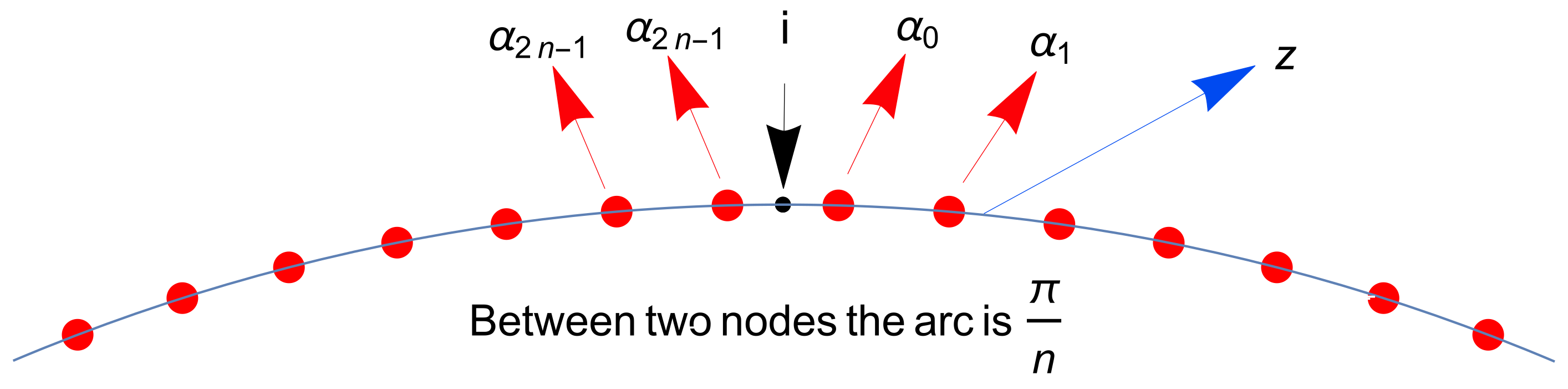
i is exactly the middle of the arc between two consecutive nodal points. Moreover, we can denote the systems in a common way by
; both are equidistributed nodal systems on
and we can think that
is
and that the system is clockwise ordered (see
Figure 1 below). The reasons for these choices and the notation will be seen clearly in
Section 3. We use these nodal systems to interpolate the function
, which is the translation to
of
through the Joukowsky transformation (see [
13] for details).
The interpolation on the unit circle is not usually performed on the algebraic polynomial spaces. Instead of this, we use, due to completeness reasons, interpolation in subspaces of the space of Laurent polynomials
and usually balanced spaces are used. Thus, in our case, we interpolate
in the space
and we denote the corresponding interpolating polynomials by
and
, that is, corresponding to
and
, respectively. This problem is well-known, and in [
3], we have given expressions for the interpolation polynomial in a quite general situation. Next, we translate some of them to our particular conditions.
- 1.
The Laurent polynomials
and
have the following expressions
and
- 2.
The barycentric formulae of type II for
and
are
Barycentric formulae are easy to use and numerically stable in the sense of [
14] in these cases.
Using exactly the same ideas as in [
11], we can obtain an expression for the error between
and its interpolants when
z is an element of
with
,
. We obtain
and
We know that this error is, at most, of order
and we therefore study
and
. After changing the index of the summation, we obtain:
and
Notice that the only, but relevant, differences between (
4) and (
5) and the expressions stated in [
11] are just the superior limit of the summation and the corresponding nodal polynomials.
We can describe
z as
. Taking into account the previous description of the nodal system, we have
and
(see
Figure 1). These choices make the reinterpretation of the previous expressions possible. Indeed, it is easy to obtain
when
n is even and newly
when
n is odd.
On the other hand,
and
For the last equality, we have used
(see [
11] for details).
Hence, we have for
and the expression is also true for
.
Lemma 1. It holds
- (i)
.
- (ii)
.
Proof. All the sums that we gather in this lemma can be reconsidered as a sum of different geometric progressions by taking into account that and . Thus, the different problems can be confidently solved by a symbolic calculator. We have used Mathematica® 12.2 (Wolfram, Champaign, IL, USA) in all cases and made some elementary simplifications when necessary. □
Proposition 1. For , it holds Proof. We can neglect the imaginary part of
in (
7) as a consequence of Lemma 1 (i). We obtain the same result for
because (
7) is valid for it too. We must point out that the same expression is correct for both errors although we have the difference in the parity of
n, which we need to take into account. □
In the next Lemma, we present an auxiliary result, which represents an important advance in the methods developed in [
11].
Proof. We use
to simplify the exposition. Because
we have, taking
,
Thus, we can define
, that is, as in (10), and we can also take
After using Lemma 1 (ii), we obtain for
the expression
Notice that
is affected by the parity of
n, and we conclude (
9) because, when
n is even, we have
, and when
n is odd, we have
. □
In the sequel, we use the special function Phi of Hurwitz–Lerch with
as first argument, that is,
. It is defined by
Moreover, in our case,
. Thus, we use
, which we denote by
(see [
15] for the details).
To obtain the main results of this section, we need some intermediate statements that we gather in Lemmas 3 and 4.
In [
11], we have considered the expression
closely related to
. Next, we obtain some results about
based on that paper.
Lemma 3. It holds:
- (i)
If , then , for all n.
- (ii)
If , then , when n is even.
- (iii)
If , then , when n is odd.
Proof. (i), (ii) and (iii) are, respectively, consequences of Propositions 5–7 (ii) of the last cited paper. Although the limits for d are different (they do not contain ), the behaviors do not change. □
Lemma 4. If , it holds
- (i)
.
- (ii)
.
- (iii)
.
- (iv)
If, then.
Proof. (i) It is obtained thanks to the Mean Value Theorem (MVT). It is verified that
We obtain (ii) newly applying the MVT. It is verified that
Note that as .
(iii) It is a consequence of (i) and (ii) because
(iv) It can be proved in the same way as (ii). □
Theorem 1. Let. If, thenand.
Proof. First, we prove our thesis for
, that is, when
n is even. We know that
, with
given in (
9) and (
10). We can write
This expression is more complex, but it is convenient as we can see that
(see Lemma 3 (ii) and Lemma 4 (iv)) and
(see Lemma 4 (iii)). Thus, we have . Taking into account that , we have the result for .
We use the same ideas for
, that is, when
n is odd, and we obtain
and
and
. These elements lead us to the same result for
. □
Lemma 5. If, then.
Proof. Let us suppose that . In this case, we write . When and , we obtain □
Proof. Considering (
11), we have
The term
of (
13) is, in our case,
. For the other term, which is the relevant one, and taking into account that
, Lemma 3 (i) and Lemma 5, we obtain
Therefore, using newly
, we obtain
For the last equality of (
14), we have used the well-known facts that
and
are both
, when
x is small. Thus, we can conclude (
12). □
Theorem 2. Letand.
- (i)
If n is even, thenMoreover, for n large enough,behaves likeand the error is.
- (ii)
If n is odd, then. Moreover, for n large enough,behaves likeand the error is.
Proof. Both facts are straightforward consequences of Proposition 1 and Lemmas 2 and 6. Both expressions can be approximated by . □
We can conclude the following:
- 1.
It appears a Gibbs–Wilbraham phenomenon. Theorem 1 states and converge uniformly to 0 far from i but, as a consequence of Theorem 2, they present a strong oscillation close to i. The limits for these behaviors are clearly stated.
- 2.
An important consequence of Theorem 2 is that we can asymptotically approximate
(or
) near
i by
. Notice that the extrema of the error must be asymptotically near the extrema of the approximation. It is easy to obtain these last extrema. We have done this by using the sequence of Mathematica
® commands gathered in the extremaerror file of
https://github.com/eberriochoa/Absolute-value-interpolation-The-even-cases (accessed on 2 June 2022). The results are presented in
Table 1.
- 3.
Finally, the more relevant result is that the Gibbs–Wilbraham phenomenon is completely different with the corresponding phenomenon when
i belongs to the nodal systems (see [
11]). This can be appreciated in shapes and extrema.
3. Interpolation of on Chebyshev and Chebyshev–Lobatto Nodal Systems with Even Nodes
In the sequel,
denotes the Lagrange interpolation polynomial which interpolates
on the Chebyshev nodal system constituted by the
m roots of
, the Chebyshev polynomial of degree
m. Similarly,
denotes the Lagrange interpolation polynomial which interpolates
on the Chebyshev–Lobatto nodal system constituted by the
m roots of
, the Chebyshev polynomial of degree
m, plus
. In both cases, we consider
m even. Classical references about Chebyshev polynomials are [
16,
17]. Taking into account the symmetry of the problem, it is immediate that
. Thus,
cannot have odd monomials, and it is a polynomial of degree
at most. Similarly,
is a polynomial of degree
m at most. If we consider the Joukowsky–Szego transformation with
x and
z related to
, we have that the Chebyshev nodes are related to
(the
roots of
) and the Chebyshev–Lobatto nodes are related to
(the
roots of 1). Moreover,
interpolates
on
. As
belongs to
, we can conclude that
. Furthermore, as this is a roundtrip, we know the behavior of
, taking into account the behavior of
. A similar affirmation is true for
. Thus, we can state the next theorems.
Theorem 3. For, it holds
- 1.
If, then
- 2.
If, then
and
.
Proof. Take into account the preceding paragraph and Theorems 1 and 2. □
4. Numerical Experiments and Graphs
All the graphs which can be seen below have been obtained by using a sequence of commands of Mathematica
® 12.2. We share these codes and the graphs through the link
https://github.com/eberriochoa/Absolute-value-interpolation-The-even-cases (accessed on 2 June 2022). The representations are always related to the function
and the interpolation polynomial
for
. For simplicity, we use the variable
, with
, in the plots.
We have tested that the graphs for other values of n do not present changes.
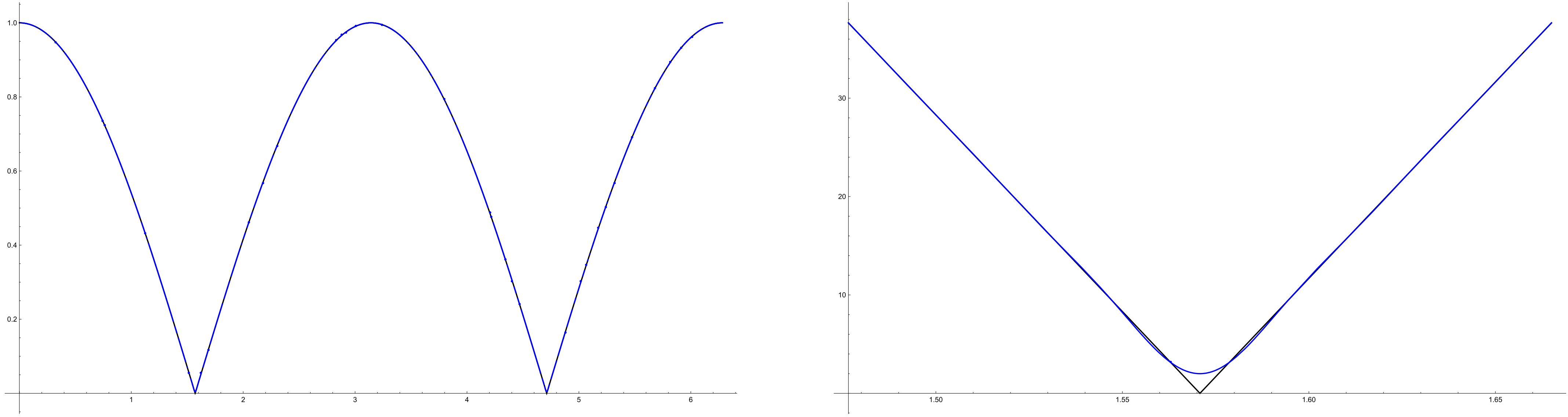
Figure 2 presents a general view of the interpolation on the left-hand side. On the right-hand side, we have the representation considering both functions multiplied by
, and we can appreciate that the interpolation has problems near
i, or equivalently
.
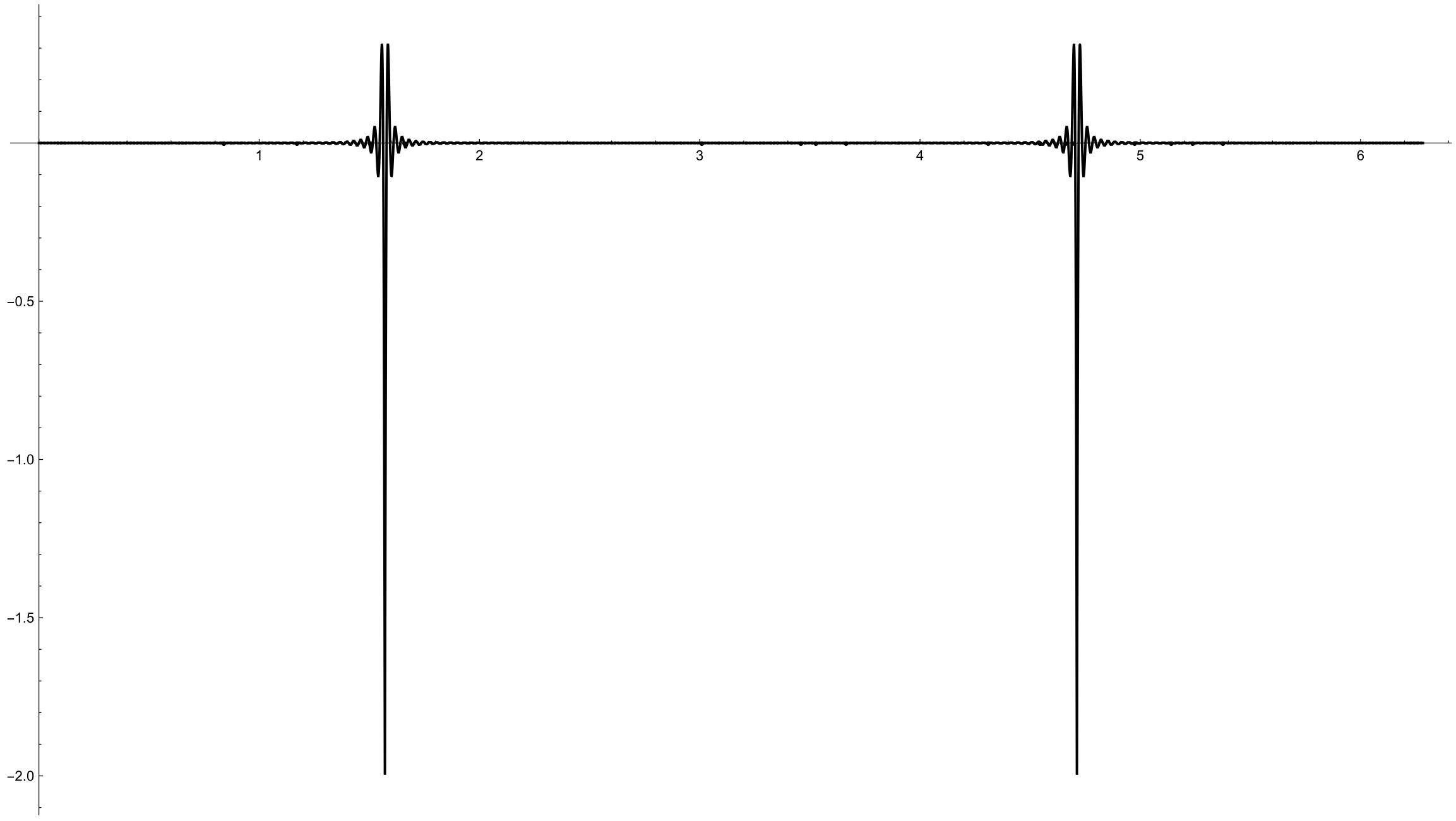
Figure 3 gives a good idea of the Gibbs–Wilbraham phenomenon. It presents the difference between
and
multiplied by
, that is,
. It is clear that far enough from
, this difference is close to 0. On the other hand, when we are near the singularities, the function presents an oscillatory behavior. This behavior is more pronounced the closer we get to the singularities.
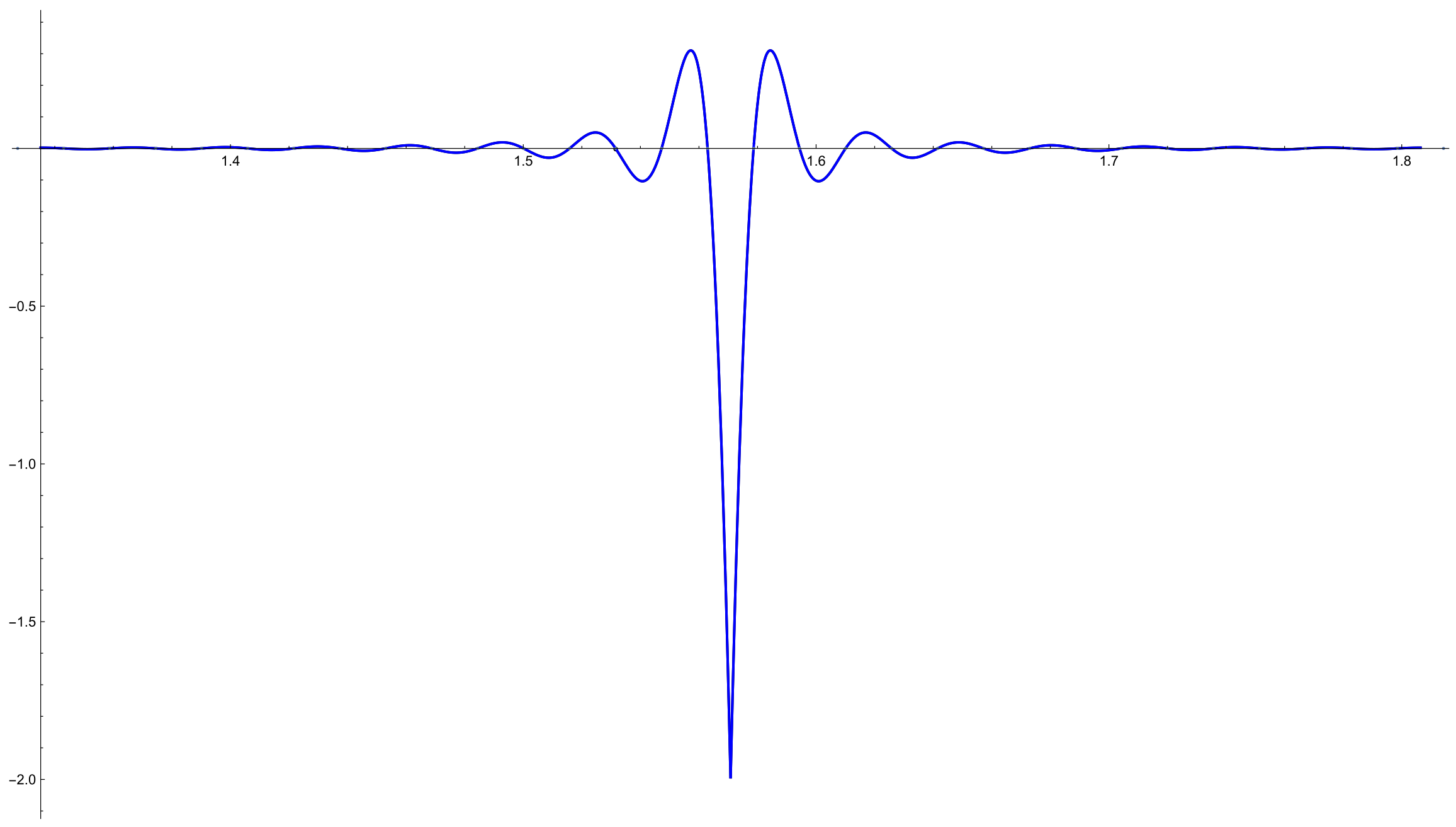
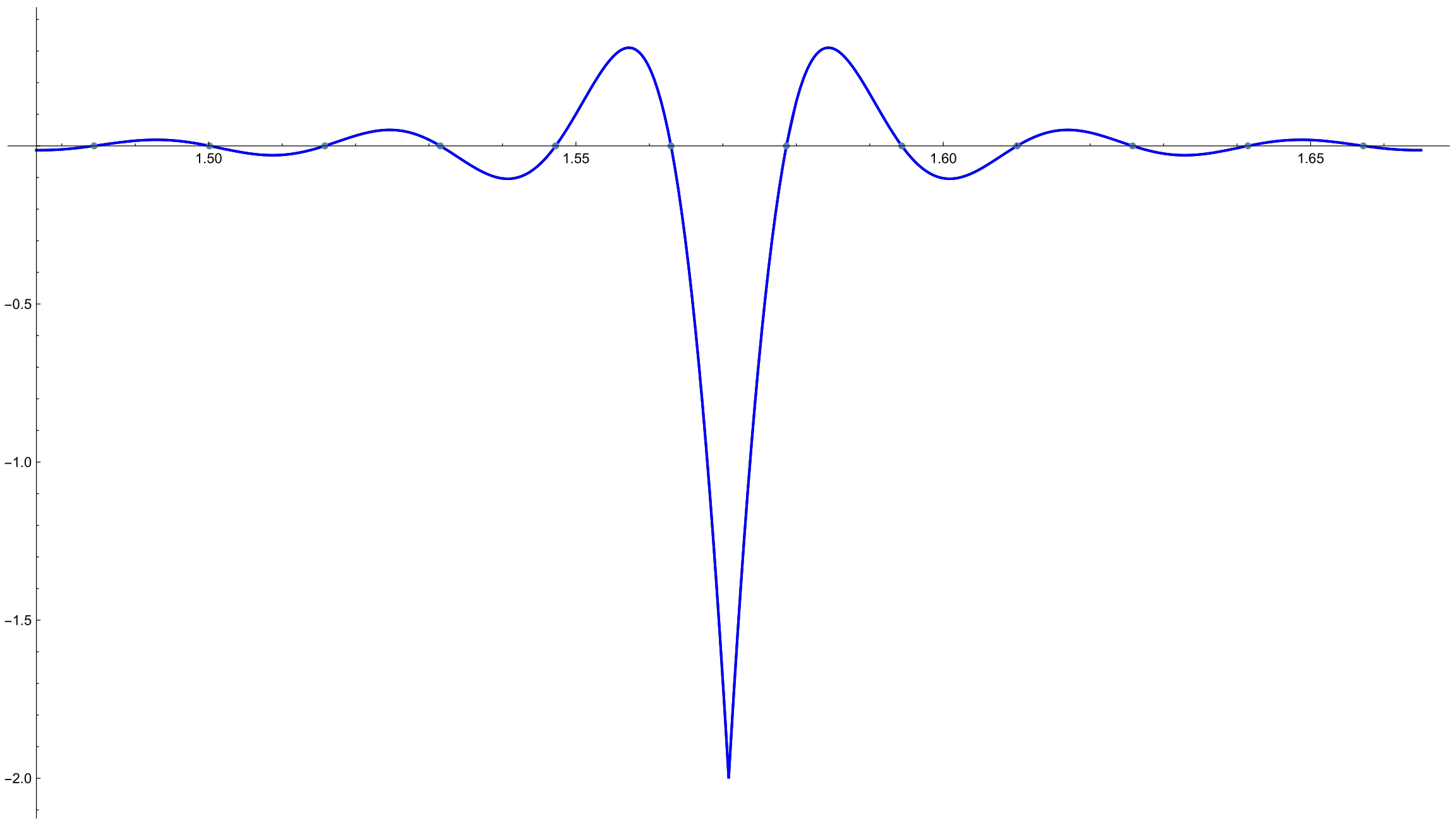
Figure 4 gives a good idea of the behavior near
i. The figure presents
and the approximation given in Theorem 2 along 30 arcs centered in
i. We must point out that the functions are indistinguishable.
Figure 5 is a detail of
Figure 4.
and the approximation given in Theorem 2 along 30 arcs centered in
i are presented. We must point out that the functions are indistinguishable.
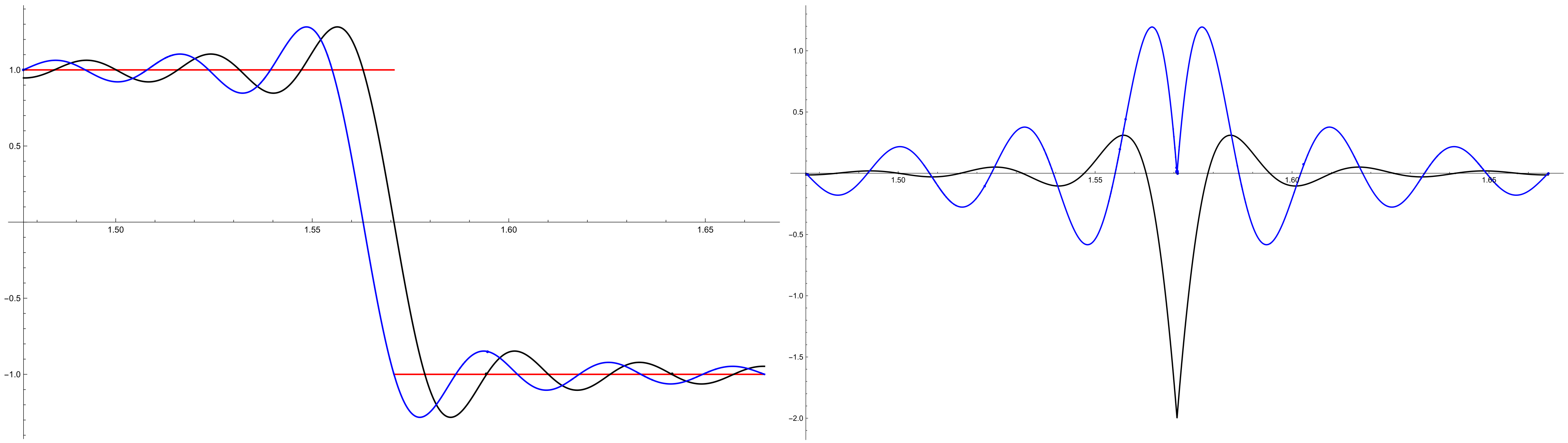
Figure 6 shows us an important difference between the Gibbs–Wilbraham phenomenon in the interpolation of the jump function, defined by
, and the Gibbs–Wilbraham phenomenon in the interpolation of the absolute value function. The Gibbs–Wilbraham phenomenon does not depend on the parity of the nodal system in the first case; meanwhile, it depends on the parity in the second one.
In
Figure 6 (at the left), we represent the Lagrange interpolation polynomials of the jump function based on the roots of
(in black) and on the roots of
(in blue); it is remarkable that the Gibbs–Wilbraham phenomena are similar in shape and extrema.
On the other hand,
Figure 6 (at the right) presents the Lagrange interpolation polynomials of the absolute value based on the roots of
(in black) and on the roots of
(in blue); it is remarkable that the Gibbs–Wilbraham phenomena are completely different in shape and extrema.
5. Conclusions and Future Work
The objective of this work is not to suppress the Gibbs–Wilbraham phenomena, but a better knowledge of them could help to develop the research with this goal. Refs. [
18,
19] are interesting papers of this research line.
We think that there is a lot of possible future work related to the Gibbs–Wilbraham phenomena for functions with very local singularities.
First of all, we have evidence about the phenomenon when the singularity is 0 (or thinking in ). Therefore, we must perform some work to extend our knowledge to problems related to arbitrary points.
A second point of interest is the order of the derivative which has the singularity. We have evidence only for 0 (Jump function) and 1 (absolute value), but it is clear that the same problem for derivatives of greater order could be of interest. In this sense, we want to emphasize the role that Lemma 2, a key point in this article, could play in the development of this research.
7. Discussion
Recently, we have published the paper [
11], which presents the behavior of the Lagrange interpolation polynomial of the continuous absolute value function, using Chebyshev and Chebyshev–Lobatto systems with an odd number of points.
The aim of the present piece of work is to continue the analysis of this new Gibbs–Wilbraham phenomenon. Our study establishes the error of the Lagrange polynomial interpolants of the function |x| on the bounded interval , using Chebyshev and Chebyshev–Lobatto nodal systems with an even number of points.
It could be thought that there is no novelty in this approach. Indeed, at the beginning, we thought that the results would have to be the same or quite similar. Nevertheless, as we said in our introduction, this is a presumed idea. Moreover, relevant changes with respect to the odd cases in the shape and the extrema of the error are given. This is an important difference with the usual Gibbs–Wilbraham phenomenon related to the Lagrange interpolation of functions with jump discontinuities.
We think that the findings presented in our paper would be useful for applied mathematicians and numerical analysts interested in the reconstruction of a function using Lagrange interpolation and approximation theory.



 ,
,