


Abstract
Ambassadors for Biodiversity (EmBio) is an ocean literacy research project that contributes to the improvement of literacy on marine and coastal biodiversity, namely encompassing the areas covered by the Natura 2000 Network, by promoting coastal and oceanic resources conservation and natural and cultural values preservation of the Portuguese western Atlantic coast. This project directly promotes the achievement of the Sustainable Development Goals (SDGs) and the implementation of 2030 Agenda developed by the United Nations and adopted by most countries in the world, which define the priorities and aspirations for global sustainable development until the year of 2030, mobilizing a world-wide effort to meet a common set of goals and objectives. This paper contributes to understanding how ocean literacy, and specifically the EmBio research project, fits into the international agenda for sustainable development and the SDGs and its targets. Through an analysis and a comparison between the project EmBio and the SDGs, it was possible to identify connections on 11 out of 17 goals and 31 out of 169 targets, with a special emphasis on the SDG 14—Life Below Water. The results highlight the relevance of this project and, especially, ocean literacy for the accomplishment of the SDGs.
1. Introduction
The world is currently facing serious challenges that are becoming more and more complex, uncertain and with major consequences for humanity, mainly due to population growth [1,2,3]. Some of those challenges are socioeconomic, such as the increase in poverty, high unemployment rates, criminality increase and political crisis, as well as environmental ones, such as land-use changes, air and water pollution, climate change and biodiversity loss [4,5]. To face these challenges, people all over the world have developed different adaptation strategies to reduce the risk of exposure to these threats, which can help maintain human well-being and lead to a better quality of life [2]. One important way of addressing these issues is through behavioral changes [6], that can be achieved through environmental education [7,8]. The concept of environmental education was first brought up in the late 1960s and 1970s when the International Working Meeting on Environmental Education in the School Curriculum was held in 1970 by IUCN/UNESCO [9,10,11,12]. Since then, the definition went through numerous readjustments and updates and the concept was shaped to account for a more holistic view. Currently, environmental education can be perceived as a way for increasing public awareness, knowledge and consciousness about the environment, equipping people with tools and skills to make responsible decisions to adequately address environmental problems and to contribute towards sustainable development [3,7,13]. According to Ferlal Ors [14], the central aim of environmental education is to raise environmental awareness in all sectors of society and disseminate positive and long-term behavioral changes. For that, it is crucial to address a substantial number of economic, social and environmental problems that society is facing [3,4], which have serious effects on human beings [15].
Environmental education plays an important role in achieving sustainable development [4,7,13,16,17], and during the United Nations Decade of Education for Sustainable Development (2005–2014) this issue was highly discussed [18,19]. The role of education in the context of sustainable development won even more attention with the approval of the 17 Sustainable Development Goals (SDGs) in September of 2015 by UN member states [18,19,20]. Oghenekohwo and Frank-Oputu [20] point out that achieving these goals can only be possible through non-formal education instruments and methodologies with “appropriate orientation, commitment, attitudinal change and genuine non-formal learning approaches among citizens”. In fact, an investment in education can contribute substantially to the accomplishment of the SDGs, because of the competencies, technical expertise and skills that are required for the development and implementation of policies [21,22].
Although marine ecosystems are extremely productive and diverse, they are currently under a lot of human pressure, due to unsustainable fishing practices, pollution, tourism and growth of urban infrastructures [23,24]. These practices are leading to the degradation of marine ecosystems, and even, in some extreme cases, to its disappearance [23]. For that reason, the SDG 14—Life Below Water—was proposed to ensure the protection and sustainable management of marine areas and ocean literacy becomes an important tool to achieve this goal.
Ambassadors for Biodiversity (EmBio) is a research literacy project that targets the achievement of the SDGs, by promoting the preservation and conservation of natural resources. Besides that, this project also encourages improvements in society regarding marine and coastal biodiversity literacy, as well as promoting the preservation of local traditions related to the sea, namely traditional fishing techniques and the cultural aspects of this ancient activity. Through environmental awareness activities and informative content, such as an exhibition, educational books, and lectures involving the local communities, this project was able to reach a large number of people from all age groups, meeting the project objectives.
As we enter in the “Decade of Action”, one of the political priorities in most of the developed countries focuses on the challenge of covering the SDGs at the local level, to step up responses to make a difference where it matters—in people’s lives, communities, and local organizations committed to this commitment. That can contribute to increasing the social mobilization to act individually and collectively, locally and globally to achieve these common goals [25,26].
Therefore, the key question for this paper is how ocean literacy, through this project, can contribute to the accomplishment of the SDGs at the local level and what are the links between the two. To accomplish this, an evaluation of the 2030 Agenda for Sustainable Development Report was conducted, with all 17 SDGs and respective 169 targets carefully analyzed and compared with the project products, actions and objectives. This analysis allowed us to understand how many SDGs this project targets, and how strong that connection is.
1.1. Sustainability of Marine and Coastal Areas and the Sustainable Development Goals
The concept of Sustainable Development was first presented in the Brundtland Report, also entitled Our Common Future, published by the World Commission on Environment and Development in 1987 [21,27]. In the report, “Sustainable Development” is defined as “[…] a development that meets the needs of the present without compromising the ability of future generations to meet their own needs” [21,27,28,29,30], and it encompasses social, economic and environmental dimensions [29,31].
According to Palea [32], the European Union (EU) has, since the beginning of the union project, made serious efforts to achieve sustainability and contribute to sustainable development in Europe and developing countries [33]. Even though the EU has invested in policies and programs that address sustainable development, achieving sustainability is a complex and challenging issue [34] that takes into account different scales, from local to global dimensions [35]. In fact, sustainable development is a challenging concept which incorporates a wide range of disciplines [36]. Moreover, citizens and organizations around the world, such as companies, cities or governments, are committed to incorporating sustainability into their agendas [37], as well as sharing knowledge, policies and technologies [38,39] to improve it. However, as sustainability becomes an important part of the agendas and it is a widely discussed topic across the world, a significant question arises: how to achieve “sustainable development” in the marine and coastal environment context?
Marine and coastal environments have been, for centuries, crucial for human activities and become intensively attractive, mainly due to their richness of beauty, resources and ecosystem services, and, because of that, the population living in coastal areas has increased significantly [40,41] over the last decades. Consequently, the ocean has become overexploited and polluted, which resulted in intensive transformations and degradation of habitats, that highly contributed to biodiversity and ecosystem services losses [42]. Nevertheless, as most of these problems are cross-bordered, it is important to involve local, national and international decision-makers, as well as international organizations through treaties and policies that can help achieve both conservation and economic growth in marine environments [41,43].
Having this in mind, the United Nations approved, in September 2015, an action plan to address sustainable development in every context, until 2030, [35,44,45] in all its dimensions—economic, social and environmental [46]. This action plan, known as 2030 Agenda for Sustainable Development, incorporates 17 SDGs that cover all aspects of sustainability [44], and are unfolded in 169 targets, that are usually regarded as important objectives to be accomplished in terms of environment and human development up to 2030 [47]. The SDGs (Figure 1) were built on the Millennium Development Goals and seek to reach what the previous goals did not [48], covering a wider range of issues in all countries and not only in the developing ones [49]. These goals, adopted by almost all the countries of the world [46,50], incorporate areas that influence the quality of life of all the citizens of the world, and its future generations, which require worldwide actions of governments, corporations and citizens to eradicate poverty and create a life with dignity and opportunities for all, within the boundaries of the planet [48].
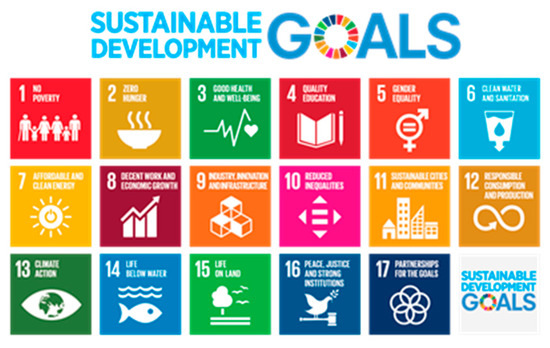
Figure 1.
Sustainable Developments Goals for the period of 2015–2030 (United Nations).
The SDGs were not created to deal only with marine and coastal environment threats. They encompass a range of different areas. However, efforts were made to address the concerns regarding the ocean and marine environments through the SDG 14—Life Below Water—that aims to “conserve and sustainably use the oceans, seas and marine resources for sustainable development”. With this specific goal, a more effective management of the marine resources is expected, as well as regulation improvements to reduce the environmental problems related to the oceans, namely, overfishing, pollution and climate change consequences, such as acidification or sea-level increase.
To evaluate the progress towards the implementation of the SDGs worldwide, the United Nations releases, every year since 2016, an annual report to inform the high-level political forum, as mandated by a resolution of the General Assembly. These reports are supported by a set of selected indicators and provide a global overview of the current situation of the goals. The Sustainable Development Goals Report 2020, the last report to be released, reviews progress in the third year of implementation of the 2030 Agenda for Sustainable Development and presents highlights of progress and remaining gaps for all 17 SDGs, based on the latest available data, and examines some of the interconnections across goals and targets [51,52,53].
The 2030 Agenda, according to the United Nations [48], is guided by the purposes and principles of the Charter of the United Nations, including full respect for international law. It is grounded in the Universal Declaration of Human Rights, international human rights treaties, the Millennium Declaration, and the 2005 World Summit Outcome. It is informed by other instruments such as the Declaration on the Right to Development.
1.2. Ocean Literacy and Education
The oceans cover nearly three-quarters of the planet [54,55] and many coastal populations depend on them for their livelihood and prosperity [23]. Oceans provide invaluable environmental services, notably the oxygen we breathe, a large number of marine resources, and act as climate regulators [56]. However, despite the critical importance of oceans, the growing impacts of climate change (including acidification of the oceans), overfishing and marine pollution are compromising the progress in protecting the oceans of the Earth [23,24,57]. Due to the cross-border nature of the oceans, the management of marine resources requires interventions at all levels (national, regional, and global) to mitigate threats, and ocean literacy can actively contribute to this purpose.
Although ocean literacy may be considered a recent concept, there are already some publications and initiatives focused in this issue, namely the Ocean Literacy—The Essential Principles and Fundamental Concepts of Ocean Sciences for Learners of All Ages, Ocean Literacy Scope and Sequence for Grades K-12, published in 2005 in the USA, or the Conhecer o Oceano (Knowing the Ocean), the first initiative regarding ocean literacy in Portugal [58]. Some of these actions not only contributed to the dissemination of knowledge about the ocean and marine environment, but also to the creation of ocean and coastal management policies that help the protection and conservation of marine biodiversity and respective habitats.
Ocean literacy is understood as the ocean’s influence on humans and their influence on the ocean [58], and, according to UNESCO [59], ocean literacy can lead to an improvement in “economic stability and national security, and to allow society to understand critical issues associated with important ocean-related topics spanning ecology, trade, energy exploration, climate change, biodiversity, the ocean and human health, and developing a sustainable future”. In addition to this, in order to protect the oceans and marine environments, it is important to improve citizens’ knowledge regarding these issues [60,61] contributing to an attitude change, but also to responsible policies, regulations and management strategies [62,63] to ensure the sustainability of the ocean.
When it comes to literacy in general, schools are the main institution responsible to teach and pass on knowledge to people—where children are included—about several areas. This kind of education is usually referred to as formal education and it is usually adopted across the world [64], even though every country has its own educational system. However, in recent decades, non-formal education has gained ground and more relevance and different “out-of-school” instructional strategies [64,65,66] have arisen to improve the demands for education regarding science communication. In this sense, new institutions, such as research centers, museums and other organizations, started to come up with non-formal educational projects and materials, focused on experience-based learning, to meet educational demands. In this way, not only does non-formal education lead to numerous benefits to individuals and organizations, but it also provides a broader perspective on learning.
2. Materials and Methods
2.1. Case Study
Ambassadors for Biodiversity is a non-formal ocean literacy research project, developed on the Portuguese’s western Atlantic coast, mainly in the coastal municipalities of Torres Vedras and Lourinhã (Figure 2), that targets the protection of the environment and the promotion of efficient usage of natural resources, focusing on areas with high coastal and marine biodiversity, including the habitats of the Natura 2000 Network. This project started in 2017 and aims to expand the “coastal and oceanic environmental culture” at the local level, promoting partnerships between different governmental bodies of the public domain and private entities, and enhancing the symbioses between scientific research and field actions by developing very practical activities in both municipalities. Additionally, the project also has contributed to the dissemination of knowledge of the local biodiversity and local traditions, inspiring sustainable behaviors towards coastal and marine environments by enhancing the increase in environmental awareness in schools as well as the active participation of the local community.
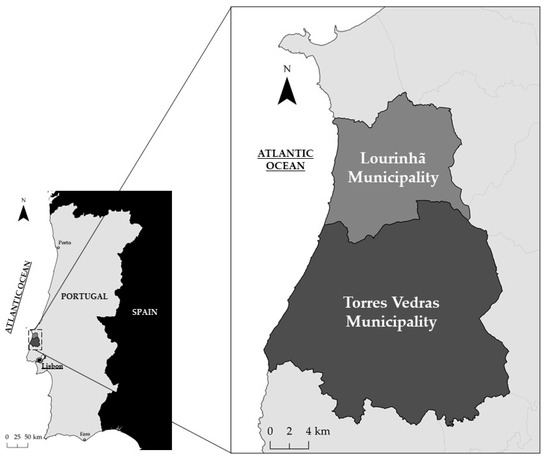
Figure 2.
Location of Torres Vedras and Lourinhã Municipalities, Portugal.
To achieve that, an awareness and education plan with the active involvement of various stakeholders, based on the successful experiences of MARGov [67] and MARLISCO [68] projects, was established and put into action between 2017 and 2018. During this period, various contents and actions of awareness and environmental education were developed for and with the entire coastal community, namely an itinerant exhibition, an educational project for local schools and various awareness and action campaigns (Figure 3). Young, elderly, students, fishermen, farmers, traders, teachers, decision-makers and others were actively mobilized and involved in a genuine process of intergenerational knowledge transfer.
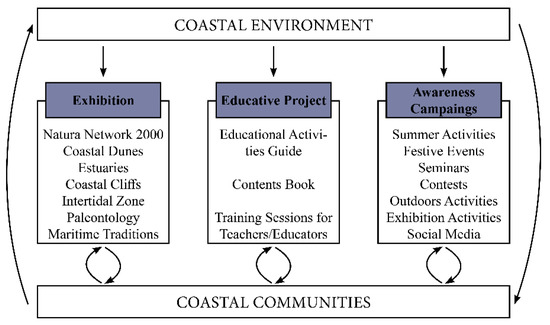
Figure 3.
Conceptual Scheme of Ambassadors for Biodiversity (EmBio) Research Project.
Besides the non-formal aspect of the project, it was the strong relationship established with the local communities and all the knowledge held by them that made the difference and contributed to its success, not only because of the knowledge of specific local communities, but also because of the existing traditional/cultural knowledge often held by the elderly.
2.1.1. Itinerant Exhibition
The exhibition “Biodiversity—Knowing to Preserve the Coastline of Torres Vedras and Lourinhã” is an itinerant exhibition (Figure A1 and Figure A2) about the region’s natural and cultural heritage and coastal and marine ecosystems. It was specially designed to be displayed in public spaces such as shopping centers, squares, public events and in local schools to reach the greatest possible number of people. It has an informative and playful character and aims to create edginess and restlessness and motivate people to explore it, searching for answers and triggering mechanisms of questioning.
The exhibition, as well as the project in general, is organized in seven themes—Natura 2000 Network, Coastal Dunes, Estuaries and Riverside Zones, Coastal Cliffs, Intertidal Zone, Paleontology and Maritime Traditions—and it is displayed in four parallelepiped-form modules, made from natural wood. Besides that, some of the local entities and project partners were invited to participate in the exhibition and kindly donated some pieces to incorporate in the exhibition, such as fossil replicas and traditional fishing materials. During the period of the project, the exhibition was displayed in 18 schools and one shopping center, having reached more than 180,000 people. After the project time frame, the exhibition will be held by the two municipalities and will be available to be displayed in schools, cultural or educational organizations, public spaces, or other places, in order to be further visited and explored for the entire community.
2.1.2. Educative Project
The educative project, mentioned here, consists of capacitating and training educators and students about nature and ocean conservation, to empower them to change their behavior and attitudes regarding these questions. To accomplish these aims, three actions and products were developed—A Guide of Educational Activities, a Contents Book and a Training Session for Teachers and Educators.
Compiling a total of 24 activities designed for students, the Guide of Educational Activities (Figure A3a) aims to promote environmental education in the sense of accountability, understanding and resolution of issues and problems related to marine and coastal ecosystems and it is composed of tools and supporting materials that contain information and suggestions of activities related to biodiversity and ecosystem preservation, to support teachers and educators in the conception, preparation, development and evaluation of their Environmental Educational Projects.
A book that theoretically explores the contents of the project was also published in 2019, transcribing to a publication the contents of the itinerant exhibition, with a higher demanding level (Figure A3b). This publication is subdivided into the seven major themes of the project and operates autonomously, as a book on the natural heritage of Torres Vedras and Lourinhã Municipalities. However, it may alternatively be an important complement for the itinerant exhibition and the Guide of Educational Activities.
Finally, two certified training courses were carried out for teachers and educators, one short-duration course of 8 h for 74 participants, and 18 h training for 40 participants, focusing on the topics presented in the exhibition, the activities guide and the contents book, having both theoretical and practical approaches (Figure A4 and Figure A5).
2.1.3. Action and Awareness Campaigns
Awareness and action campaigns play a key role in environmental citizenship and result from a combination of different components, particularly regarding information, awareness, attitudes, beliefs, education, training and knowledge. The development and dynamization of activities on the field—that induces a confrontation with reality—contributes to a critical reflection of the participants, allowing for greater environmental awareness towards biodiversity and nature preservation, leading to the creation of new and more responsible skills and behaviors on this theme [67].
During the project implementation, a program of campaigns/activities was developed aimed at the overall community, to consolidate the knowledge of the participants on biodiversity in coastal and marine ecosystems, raising awareness about the main threats, problems and risks associated with their conservation. Until 31 December 2018, more than 30 awareness actions were carried out, including beach clean-ups, thematic scavenger hunts, field lessons/living laboratories, visits to the itinerant exhibition and seminars (Figure A6). Those activities were developed in partnership with various entities and associations in festivals and events related to the theme of the project, or on commemorative dates relating to biodiversity and environment (e.g., World Oceans Day, International Day of Biodiversity), and reached more than 500 people, from children to seniors.
2.2. Research Methods
Nowadays, most of the policies in both developed and developing countries, are progressively focusing on SDGs [44] and a considerable number of actions and projects are developed every year by companies, organizations and academia that seek the same purpose. Yet, it is important to acknowledge that every country has different priorities, depending on their economic and social status, and, consequently, has different ways of addressing these issues. Not all projects focus on the same subject and, while some target the basic human needs in developing countries, like poverty, hunger or health problems, others aim to improve economic growth or to create more equal and fair societies.
Besides that, one of the main objectives of the SDGs, that is common to all countries, regardless of their location, is to improve environmental sustainability and the quality of life for everyone. Moreover, to achieve this, Education for Sustainable Development, identified in the target 4.7 of the SDG 4 (Education), is considered as crucial for success as all other 17 SDGs [69,70]. However, according to [71], despite the ambitious agenda of the United Nations regarding the SDGs, with the establishment of goals, targets and metrics, little has been done and said about education, as predicted in the agenda.
As noted by Vladimirova and Le Blanc [19], global reports produced in recent years have stated the connections between education and all 17 SDGs, with some of these links being intuitive, and others not so much. Having this in mind, the main goal of this research is to understand how an ocean literacy project targeting the conservation of coastal and marine ecosystems (EmBio) can contribute to the implementation of the SDGs and what connections exist between them. To accomplish this, the research was divided into two phases, as shown in Figure 4.
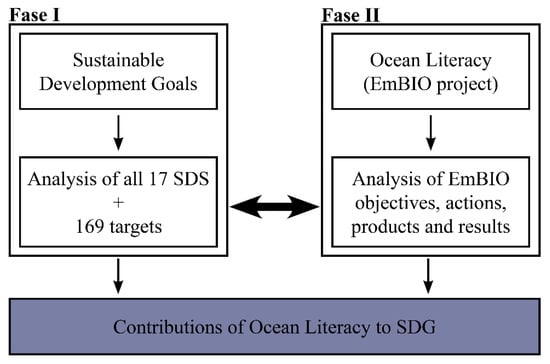
Figure 4.
Methodological scheme of the research.
The first phase of the research focused entirely on the SDGs. Firstly, an evaluation of the 2030 Agenda for Sustainable Development Report was conducted, where all 17 SDGs, as well as their respective 169 targets, were cautiously reviewed and analyzed.
This step, similar to the Barthélemy et al. [69] methodology, was extremely important to understand which were the goals and the targets proposed by the United Nations, in other to provide context to the authors of this paper about the strategic options for the next step in the methodological process.
The second phase of this research had as the focal point the analysis of EmBio actions, products and objectives. The actions and products of the project refer to everything produced, material or immaterial, which, among others, include the exhibition (displayed in 18 schools during the school year 2017/2018), the Guide of Educational Activities (launched in September of 2018) and all the action and awareness campaigns developed over 2017 and 2018, and the conceptual options supporting all the processes.
Finally, the information gathered in the previous phases was subject to a detailed and integrated analysis, based on specific criteria (Table 1), to understand how many SDGs the EmBio research project contributes to, and how apparent that connection is. In this analysis, each action, product, and objective of the project was analyzed according to every target of the 17 SDGs. If there was not any connection between the action, product or objective and the target considered, that target was not included in the Table 2, reporting the results. Otherwise, if the actions, products, or objectives addressed directly or indirectly the target considered, that target was included. Thus, it is possible to understand if the project reflects the targets of the SDGs and which of those are well or poorly represented, which is registered in Table 3.

Table 1.
Inclusion and exclusion criteria used in the analysis of the actions, products and objectives of the project according to the targets of the Sustainable Development Goals (SDGs).
Though ocean literacy is not explicitly referred to in the SDGs, the intensity of the presence of these goals, more than anything else, reveals how relevant this project is for sustainability, as it is referred in the next section.
3. Results and Discussion
The main objective of this research was to show how important ocean literacy is for the accomplishment of sustainability in coastal and marine environments, through the analysis of SDGs and the actions of one case-study—the EmBio research project. By looking at Table 2, it is possible to conclude that this specific project was able to address 11 of the 17 SDGs, which means that more than 60% of the total goals are achieved.
Table 2.
Sustainable Development Goals and specific targets achieved with the EmBio.
Nevertheless, if we look deeper into the evaluation, only 32 targets have connections with this project, which is 19% of the total targets. This shows a clear connection between the case-study and the overall SDGs. However, for the purpose of this research, just looking at the number of targets reached may not be the most adequate approach, once all goals and targets have a specific meaning that requires a sounder interpretation.
Since this project has a strong educational component, where teachers and educators from many different fields, as well as students from different grades, were involved and challenged to participate in it, the connection to the SDG 4—Quality Education—is obvious. Yet, when the definition of SDG took place in 2015, 10 targets were designed for this specific goal, and only one of them is addressed within this project (SDG 14—Life Below Water). Although this result may seem odd at a first glance, once the targets are run through, it becomes obvious that most of the targets of SDG 4 focus on actions of formal education, rather than non-formal ones. Here, education is seen as a basic need fundamental to achieving sustainable development [49], one of the focuses of the members of the UN. Ensuring free, equitable and quality primary and secondary education, as well as superior education for everyone in the world is a priority, especially for developing countries.
Despite this, ocean literacy is extremely important to achieve sustainable development. Even if some of the topics regarding the ocean and marine ecosystems are taught in classrooms relying on traditional instructional methods, ocean literacy is not commonly included in common teaching practices [8]. In addition to this, ocean literacy programs are often considered non-formal education—like EmBio project—based on new methodologies, outside of classrooms, that seek changes in individual behaviors of children and adults. Proper ocean literacy can lead, in fact, to individual behaviors that are crucial to promoting conservation of marine and coastal environments and only when everyone understands the vital role of the ocean, can restoration and preservation efforts be made [58].
Contributing to Sustainable Cities and Communities (SDG 11) and dealing with Climate Change (SDG 13) are also important goals that deserve special attention when it comes to ocean literacy, particularly the last one, considering the ocean plays a crucial role when it comes to climate change mitigation. It is well known that urbanization and human activities have brought huge challenges to natural ecosystems and accurate strategies to reverse or minimize these pressures are necessary, especially in a place with a large coastal area, like Portugal. Not only can ocean literacy promote the protection of natural heritage through community involvement and mobilization, but it can also lead to the development of programs that seek the resilience of communities regarding environmental risks and climate change.
Even though ocean literacy answers to several of SDGs and the respective targets, SDG 14 and 15 are, without a doubt, the ones that require the most attention and that is no surprise. EmBio is a research project that focuses highly on the protection of the environment and the promotion of efficient usage of natural resources, focusing on areas with high coastal and marine biodiversity. Looking at the premise of SDG 14, which is conserving and guaranteeing the sustainable use of the oceans, seas and marine resources, the connections between this goal and the case-study of this research are obvious and can be enhanced by some of the project numbers. During the project period, it was possible to reach more than 10,000 students and 60 teachers in the 18 schools where the exhibition was displayed and, besides that, around 1800 guided visits to the exhibition were conducted, with students of all ages. Additionally, more than 1000 people participated in the awareness campaigns and the social media platforms had more than 1500 followers (Figure A7). Although these numbers do not represent a direct link with the SDGs, they are important to evaluate the effectiveness of this project, as well as the role of ocean literacy in behavior changes. As more people are reached, the awareness increases, and the chances of management policy implementation are also bigger.
Although the study area focuses on marine environments, coastal areas also play a vital role in EmBio research project and ocean literacy in general, as these ecosystems are rich in biodiversity. However, because of that, coastal areas are extremely vulnerable to human pressures and climate change, which can lead to ecosystem destruction and biodiversity loss. Coastal areas are included in the SDG 15, which aims to protect, restore and promote sustainable use of terrestrial ecosystems, sustainably manage forests, combat desertification, and halt and reverse land degradation and biodiversity loss. Ocean literacy becomes, in this sense, a fundamental tool to achieve this goal, as shown in Table 2.
To accomplish sustainable development, a stronger commitment to partnership and cooperation between different countries of the world is necessary and, to achieve this, coherent policies are needed. So, the SDG 17 was created to improve cooperation between developed countries and developing ones. Even though ocean literacy does not necessarily contribute directly to this purpose, the EmBio research project allowed some collaborations with developing countries, namely Brazil and Cape Verde, to promote and boost the replication of the project in these countries. EmBio became, as such, an example of how a project can contribute and lead to partnerships and can help improving sustainability and promote peaceful and inclusive societies.
Due to the nature of this project, not every SDG is fulfilled in the same way, even if all SDGs have the same weight and importance to achieve sustainability. In Table 3, it is possible to understand, in a summarized way, which are the SDGs aligned with the overall EmBio project, as well as the level of contribution to each of them (strong, average and weak) and the main issues covered. The more direct connection the project has with the targets, the stronger the contribution to the respective SDGs, as shown in the table below.
Table 3.
Level of contribute of the project to each SDGs and the main issues covered.
The products, materials and actions developed under the scope of Ambassadors for Biodiversity project cover a great deal of the targets of the SDGs stablished by the United Nations. Even though the level of commitment to them is different (and should be highlighted), the issues covered in each SDGs are important and relevant in their own way. Ocean literacy does not necessarily address all SDGs, but, due to the multidisciplinary approach of this case-study, it was possible to prove that many can be achieved, contributing to sustainability in local communities.
As seen in the previous table, regarding gender equality (SDG 5) or peace, justice and strong institutions (SDG 16), for example, as relevant as these SDGs are at an international level for human development, especially in developing countries, for the scope of this project, they are not necessarily addressed in the same way as SDG 14—Life Below Water. The same applies to Decent Work and Economic Growth, Reduced Inequalities, Responsible Consumption and Production and Partnerships for the Goals (SDGs 8, 10, 12 and 17). However, some goals, such as Sustainable Cities and Communities, Climate Action and Life on Land (SDGs 11, 13 and 15) which are very important to some municipalities’ policy agendas, especially in developed countries, were covered averagely with this project. Despite SDGs being global objectives, one of the political priorities in most of the developed countries is to ensure that the SDGs are being covered at the local level. In this way, the lives of the citizens and the community are directly impacted, and local organizations start to become committed to these common goals.
4. Conclusions
In recent years, ocean literacy has gained more recognition among all society sectors, namely industries, policymakers, researchers and common citizens. Not only can ocean literacy lead to economic growth, but it can also contribute to the ocean and marine environment preservation. Therefore, ocean literacy projects like Ambassadors for Biodiversity are extremely important as citizens can improve their knowledge regarding the ocean and marine resources management. Nevertheless, this kind of project must be based on a broader strategy, with well-defined goals and objectives. The Sustainable Development Goals are key to designing and conducting a project like the one presented here, contributing to fulfilling the targets defined by them at a local level. Thus, it is also essential to evaluate projects, namely identifying their affinity to the SDGs.
As is shown in the results and discussion section, the SDG 14—Life Below Water—is the one that has the most targets addressed by the EmBio research project. As an ocean literacy project that aims for the protection and conservation of marine and natural ecosystems, this result is not unexpected. Besides this, the project addresses four targets in both the SDG 13 and 15, which are goals that have a direct connection with the project. Additionally, considering the project has a strong element of collaboration and partnership with several institutions and organizations, also four targets of the SDG 17 are addressed by the project.
EmBio research project had the main goal to achieve the protection and preservation of the natural features of the two municipalities through the knowledge, awareness and accountability of the values and vulnerabilities of local communities. That is why certain types of actions were carried out, seeking to reach the whole community and the several formal and informal groups that integrate it. With the motto “know to preserve”, the educational component of the overall project, with a hands-on approach and valuing direct application on the ground, was the effective way to achieve the desired outcomes. The feedback received from the local population and the different specific stakeholders of this project was also important to testify to the effective involvement and appropriation of the project.
To conclude, since the implementation of the SDGs in 2015, a lot of actions and projects have been developed in order to contribute to the 2030 Agenda, that encompasses all dimensions of sustainable development. However, there has been almost no recognition regarding these projects and few people know about what is happening in this matter. For that reason, this paper contributes to understanding how ocean literacy, and specifically the EmBio research project, fits into the international agenda for sustainable development and the SDGs and their targets at the local level. However, more studies like this should be developed to understand the importance and how the SDGs are being interpreted by the international community and how they are being accomplished.
Author Contributions
Conceptualization, J.C.F., L.V., R.M. and F.F.; Data curation, R.M. and C.M.D.; Formal analysis, J.C.F., R.M. and F.Z.S.; Funding acquisition, J.C.F.; Investigation, J.C.F., R.M., F.Z.S. and C.M.D.; Methodology, J.C.F., L.V., R.M. and F.F.; Supervision, J.C.F. and F.Z.S.; Validation, J.C.F., L.V., R.M. and C.M.D.; Visualization, J.C.F., F.Z.S. and C.M.D.; Writing—original draft, J.C.F., R.M. and C.M.D.; Writing—review & editing, J.C.F., L.V., R.M. and F.F. All authors have read and agreed to the published version of the manuscript.
Funding
This research is funded by Fundação para a Ciência e a Tecnologia, with granted number of UIDB/04292/2020 and by PO SEUR-Operational Programme for Sustainability and Efficient Use of Resources—granted number EMBIO-POSEUR-03-2215-FC-000020 (European Commission Structural and Investment Funds/Portugal2020 Strategy).The research team thanks the Municipality of Torres Vedras and the Municipality of Lourinhã for their excellent collaboration, research support and funding.
Institutional Review Board Statement
Not applicable.
Informed Consent Statement
Not applicable.
Data Availability Statement
Not applicable.
Conflicts of Interest
The authors declare no conflict of interest.
Appendix A
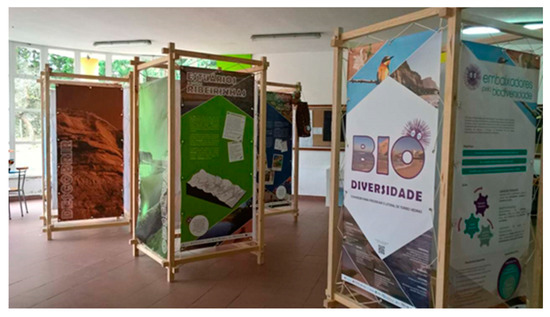
Figure A1.
Itinerant Exhibition “Biodiversity–Knowing to Preserve the Coastline of Torres Vedras and Lourinhã” in a school.
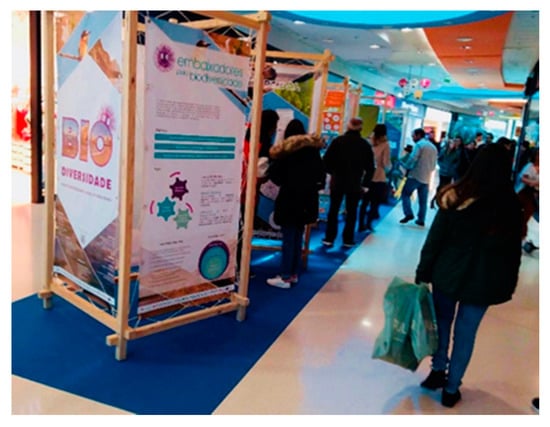
Figure A2.
Itinerant Exhibition “Biodiversity–Knowing to Preserve the Coastline of Torres Vedras and Lourinhã” in the regional shopping center.
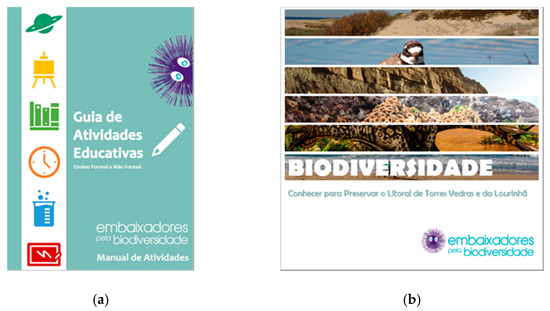
Figure A3.
(a) Guide of educational activities and (b) contents book.
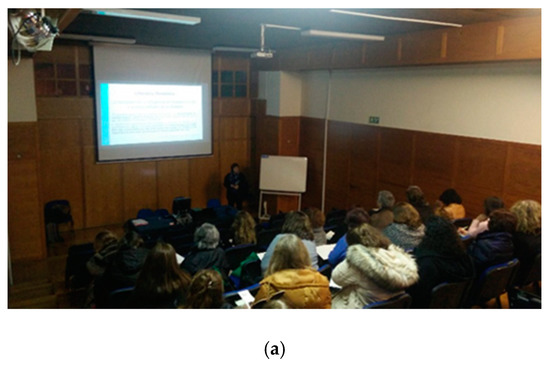
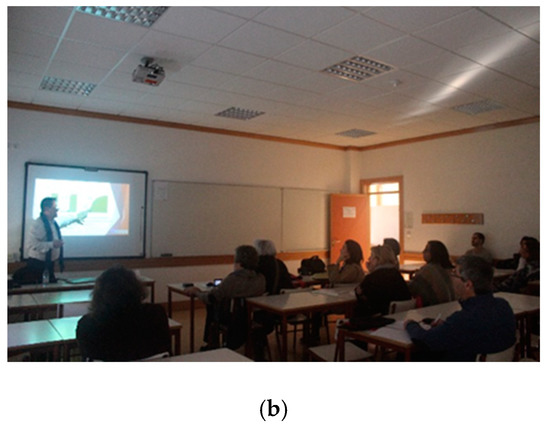
Figure A4.
Theorical classes of the training session for teachers and educators in an auditorium (a) and class room (b).
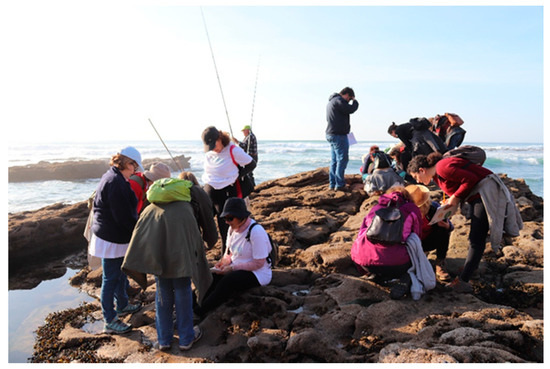
Figure A5.
Field trip as part of training session for teachers and educators.
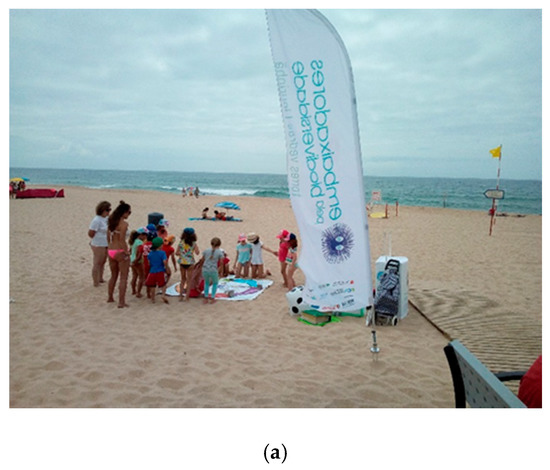
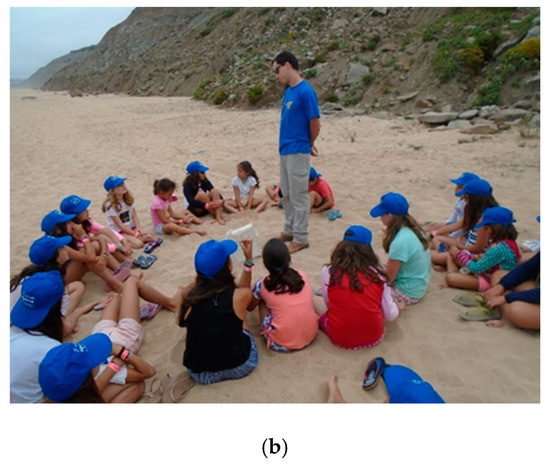
Figure A6.
Awareness and action campaigns in Torres Vedras (a) and Lourinhã (b).
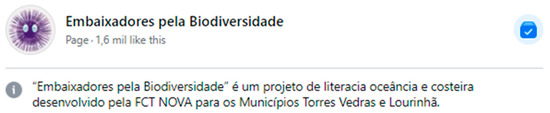
Figure A7.
Social media platforms (Facebook) with 1600 followers.
References
- Al-Kofahi, S.D.; Jamhawi, M.M.; Hajahjah, Z.A. Investigating the Current Status of Geospatial Data and Urban Growth Indicators in Jordan and Irbid Municipality: Implications for Urban and Environmental Planning. Environ. Dev. Sustain. 2018, 20, 1067–1083. [Google Scholar] [CrossRef]
- Fedele, G.; Locatelli, B.; Djoudi, H.; Colloff, M.J. Reducing Risks by Transforming Landscapes: Cross-Scale Effects of Land-Use Changes on Ecosystem Services. PLoS ONE 2018, 13, e0195895. [Google Scholar] [CrossRef]
- Potter, G. Environmental Education for the 21st Century: Where Do We Go Now? J. Environ. Educ. 2009, 41, 22–33. [Google Scholar] [CrossRef]
- Erhabor, N.I. Developing Leaders through Mentoring in Environmental Education. Electron. Green J. 2018, 1, 2–10. [Google Scholar] [CrossRef]
- Rukumnuaykit, P. Urbanisation, Poverty and Subjective Well-Being: Empirical Evidence from Thailand. Urban Policy Res. 2015, 33, 98–118. [Google Scholar] [CrossRef]
- Otto, S.; Pensini, P. Nature-Based Environmental Education of Children: Environmental Knowledge and Connectedness to Nature, Together, Are Related to Ecological Behaviour. Glob. Environ. Chang. 2017, 47, 88–94. [Google Scholar] [CrossRef]
- Varela-Candamio, L.; Novo-Corti, I.; García-Álvarez, M.T. The Importance of Environmental Education in the Determinants of Green Behavior: A Meta-Analysis Approach. J. Clean. Prod. 2018, 170, 1565–1578. [Google Scholar] [CrossRef]
- McPherson, K.; Wright, T.; Tyedmers, P. Challenges and Prospects to the Integration of Ocean Education into High School Science Courses in Nova Scotia. Appl. Environ. Educ. Commun. 2020, 19, 129–140. [Google Scholar] [CrossRef]
- Palmer, J.A. Environmental Education in the 21st Century: Theory, Practice, Progress and Promise—PDF Free Download. Available online: https://epdf.pub/environmental-education-in-the-21st-century-theory-practice-progress-and-promise.html (accessed on 18 May 2020).
- Derman, M.; Gurbuz, H. Environmental Education in the Science Curriculum in Different Countries: Turkey, Australia, Singapore, Ireland, and Canada. J. Educ. Sci. Environ. Health 2018, 4, 129–141. [Google Scholar] [CrossRef][Green Version]
- de Andrade Guerra, J.B.S.O.; Garcia, J.; de Andrade Lima, M.; Barbosa, S.B.; Heerdt, M.L.; Berchin, I.I. A Proposal of a Balanced Scorecard for an Environmental Education Program at Universities. J. Clean. Prod. 2018, 172, 1674–1690. [Google Scholar] [CrossRef]
- UNESCO. Environmental Education: Module for Pre-Service Training of Social Science Teachers and Supervisors for Secondary Schools; UNESCO: Paris, France, 1985.
- Artun, H.; Özsevgec, T. Influence of Environmental Education Modular Curriculum on Academic Achievement and Conceptual Understanding. Int. Electron. J. Environ. Educ. 2018, 8, 150–171. [Google Scholar]
- Ors, F. Environmental Education and the Role of Media in Environmental Education in Turkey. Procedia Soc. Behav. Sci. 2012, 46, 1339–1342. [Google Scholar] [CrossRef][Green Version]
- von Hauff, M.; Kuhnke, C.; Kuhnke, C. Sustainable Development Policy: A European Perspective; Routledge: London, UK, 2017; ISBN 978-1-315-26917-7. [Google Scholar]
- Hares, M.; Eskonheimo, A.; Myllyntaus, T.; Luukkanen, O. Environmental Literacy in Interpreting Endangered Sustainability: Case Studies from Thailand and the Sudan. Geoforum 2006, 37, 128–144. [Google Scholar] [CrossRef]
- Kopnina, H. Education for Sustainable Development Goals (ESDG): What Is Wrong with ESDGs, and What Can We Do Better? Educ. Sci. 2020, 10, 261. [Google Scholar] [CrossRef]
- Dlouhá, J.; Pospíšilová, M. Education for Sustainable Development Goals in Public Debate: The Importance of Participatory Research in Reflecting and Supporting the Consultation Process in Developing a Vision for Czech Education. J. Clean. Prod. 2018, 172, 4314–4327. [Google Scholar] [CrossRef]
- Vladimirova, K.; Le Blanc, D. Exploring Links Between Education and Sustainable Development Goals Through the Lens of UN Flagship Reports. Sustain. Dev. 2016, 24, 254–271. [Google Scholar] [CrossRef]
- Oghenekohwo, J.E.; Frank-Oputu, A.E. Literacy Education and Sustainable Development in Developing Societies. Int. J. Educ. Lit. Stud. 2017, 5, 126. [Google Scholar] [CrossRef]
- Gusmão Caiado, R.G.; Leal Filho, W.; Quelhas, O.L.G.; Luiz de Mattos Nascimento, D.; Ávila, L.V. A Literature-Based Review on Potentials and Constraints in the Implementation of the Sustainable Development Goals. J. Clean. Prod. 2018, 198, 1276–1288. [Google Scholar] [CrossRef]
- Munamati, M.; Nhapi, I.; Misi, S. Exploring the Determinants of Sanitation Success in Sub-Saharan Africa. Water Res. 2016, 103, 435–443. [Google Scholar] [CrossRef] [PubMed]
- Barbier, E.B. Marine Ecosystem Services. Curr. Biol. 2017, 27, R507–R510. [Google Scholar] [CrossRef]
- Sun, C.; Wang, Y.; Zou, W. The Marine Ecosystem Services Values for China Based on the Emergy Analysis Method. Ocean Coast. Manag. 2018, 161, 66–73. [Google Scholar] [CrossRef]
- United Nations Remarks to High-Level Political Forum on Sustainable Development. Available online: https://www.un.org/sg/en/content/sg/speeches/2019-09-24/remarks-high-level-political-sustainable-development-forum (accessed on 27 January 2021).
- United Nations Decade of Action. United Nations Sustainable Development. Available online: https://www.un.org/sustainabledevelopment/decade-of-action/ (accessed on 13 August 2020).
- Sinakou, E.; Boeve-de Pauw, J.; Goossens, M.; Van Petegem, P. Academics in the Field of Education for Sustainable Development: Their Conceptions of Sustainable Development. J. Clean. Prod. 2018, 184, 321–332. [Google Scholar] [CrossRef]
- Brundtland, G.H. World Commission on Environment and Development. Our Common Future 1987, 17, 8–9. [Google Scholar]
- Giddings, B.; Hopwood, B.; O’Brien, G. Environment, Economy and Society: Fitting Them Together into Sustainable Development. Sustain. Dev. 2002, 10, 187–196. [Google Scholar] [CrossRef]
- Shah, M.M. Sustainable Development. In Encyclopedia of Ecology; Jørgensen, S.E., Fath, B.D., Eds.; Academic Press: Oxford, UK, 2008; pp. 3443–3446. ISBN 978-0-08-045405-4. [Google Scholar]
- Owen, A.; Kruijsen, J. Chapter 30—The Transition to Future Energy. In Future Energy, 2nd ed.; Letcher, T.M., Ed.; Elsevier: Boston, MA, USA, 2014; pp. 667–677. ISBN 978-0-08-099424-6. [Google Scholar]
- Palea, V. Financial Reporting for Sustainable Development: Critical Insights into IFRS Implementation in the European Union. Account. Forum 2018, 42, 248–260. [Google Scholar] [CrossRef]
- European Union Treaty of Lisbon Amending the Treaty on European Union and the Treaty Establishing the European Community. Available online: https://eur-lex.europa.eu/legal-content/EN/TXT/?uri=OJ:C:2007:306:TOC (accessed on 18 May 2020).
- Broman, G.I.; Robèrt, K.-H. A Framework for Strategic Sustainable Development. J. Clean. Prod. 2017, 140, 17–31. [Google Scholar] [CrossRef]
- Szopik-Depczyńska, K.; Kędzierska-Szczepaniak, A.; Szczepaniak, K.; Cheba, K.; Gajda, W.; Ioppolo, G. Innovation in Sustainable Development: An Investigation of the EU Context Using 2030 Agenda Indicators. Land Use Policy 2018, 79, 251–262. [Google Scholar] [CrossRef]
- Urbaniec, K.; Mikulčić, H.; Wang, Y.; Duić, N. System Integration Is a Necessity for Sustainable Development. J. Clean. Prod. 2018, 195, 122–132. [Google Scholar] [CrossRef]
- Halati, A.; He, Y. Intersection of Economic and Environmental Goals of Sustainable Development Initiatives. J. Clean. Prod. 2018, 189, 813–829. [Google Scholar] [CrossRef]
- Chapman, A.; Shigetomi, Y. Developing National Frameworks for Inclusive Sustainable Development Incorporating Lifestyle Factor Importance. J. Clean. Prod. 2018, 200, 39–47. [Google Scholar] [CrossRef]
- Mikulčić, H.; Duić, N.; Dewil, R. Environmental Management as a Pillar for Sustainable Development. J. Environ. Manag. 2017, 203, 867–871. [Google Scholar] [CrossRef]
- Kummu, M.; de Moel, H.; Salvucci, G.; Viviroli, D.; Ward, P.J.; Varis, O. Over the Hills and Further Away from Coast: Global Geospatial Patterns of Human and Environment over the 20th–21st Centuries. Environ. Res. Lett. 2016, 11, 034010. [Google Scholar] [CrossRef]
- Bennett, N.J. Marine Social Science for the Peopled Seas. Coast. Manag. 2019, 47, 244–252. [Google Scholar] [CrossRef]
- Worm, B.; Barbier, E.B.; Beaumont, N.; Duffy, J.E.; Folke, C.; Halpern, B.S.; Jackson, J.B.C.; Lotze, H.K.; Micheli, F.; Palumbi, S.R.; et al. Impacts of Biodiversity Loss on Ocean Ecosystem Services. Science 2006, 314, 787–790. [Google Scholar] [CrossRef]
- Humphreys, J.; Herbert, R.J.H. Marine Protected Areas: Science, Policy & Management. Estuar. Coast. Shelf Sci. 2018, 215, 215–218. [Google Scholar] [CrossRef]
- Fleming, A.; Wise, R.M.; Hansen, H.; Sams, L. The Sustainable Development Goals: A Case Study. Mar. Policy 2017, 86, 94–103. [Google Scholar] [CrossRef]
- Stafford-Smith, M.; Griggs, D.; Gaffney, O.; Ullah, F.; Reyers, B.; Kanie, N.; Stigson, B.; Shrivastava, P.; Leach, M.; O’Connell, D. Integration: The Key to Implementing the Sustainable Development Goals. Sustain. Sci. 2017, 12, 911–919. [Google Scholar] [CrossRef] [PubMed]
- Keesstra, S.D.; Bouma, J.; Wallinga, J.; Tittonell, P.; Smith, P.; Cerdà, A.; Montanarella, L.; Quinton, J.N.; Pachepsky, Y.; van der Putten, W.H.; et al. The Significance of Soils and Soil Science towards Realization of the United Nations Sustainable Development Goals. SOIL 2016, 2, 111–128. [Google Scholar] [CrossRef]
- Salvia, A.L.; Leal Filho, W.; Brandli, L.L.; Griebeler, J.S. Assessing Research Trends Related to Sustainable Development Goals: Local and Global Issues. J. Clean. Prod. 2018. [Google Scholar] [CrossRef]
- United Nations Transforming Our World: The 2030 Agenda for Sustainable Development: Sustainable Development Knowledge Platform. Available online: https://sustainabledevelopment.un.org/post2015/transformingourworld/publication (accessed on 18 May 2020).
- Blanc, D.L. Towards Integration at Last? The Sustainable Development Goals as a Network of Targets. Sustain. Dev. 2015, 23, 176–187. [Google Scholar] [CrossRef]
- Annan-Diab, F.; Molinari, C. Interdisciplinarity: Practical Approach to Advancing Education for Sustainability and for the Sustainable Development Goals. Int. J. Manag. Educ. 2017, 15, 73–83. [Google Scholar] [CrossRef]
- United Nations The Sustainable Development Goals Report 2018 Multimedia Library—United Nations Department of Economic and Social Affairs. Available online: https://www.un.org/development/desa/publications/the-sustainable-development-goals-report-2018.html (accessed on 18 May 2020).
- United Nations The Sustainable Development Goals Report. 2019. Available online: https://unstats.un.org/sdgs/report/2019/ (accessed on 18 May 2020).
- United Nations. The Sustainable Development Goals Report 2020; United Nations: New York, NY, USA, 2020; p. 68. [Google Scholar]
- Fauville, G.; Strang, C.; Cannady, M.A.; Chen, Y.-F. Development of the International Ocean Literacy Survey: Measuring Knowledge across the World. Environ. Educ. Res. 2018, 25, 1–26. [Google Scholar] [CrossRef]
- Lutgens, F.K.; Tarbuck, E.J. Essentials of Geology, 12th ed.; Pearson: Boston, MA, USA, 2015; ISBN 978-0-321-94773-4. [Google Scholar]
- Bolund, P.; Hunhammar, S. Ecosystem Services in Urban Areas. Ecol. Econ. 1999, 29, 293–301. [Google Scholar] [CrossRef]
- TEEB. TEEB Ecological and Economic Foundations. Available online: http://www.teebweb.org/our-publications/teeb-study-reports/ecological-and-economic-foundations/ (accessed on 18 May 2020).
- Costa, S.; Caldeira, R. Bibliometric Analysis of Ocean Literacy: An Underrated Term in the Scientific Literature. Mar. Policy 2018, 87, 149–157. [Google Scholar] [CrossRef]
- UNESCO. Ocean Literacy for All: A Toolkit—UNESCO Digital Library. Available online: https://unesdoc.unesco.org/ark:/48223/pf0000260721 (accessed on 18 May 2020).
- Steel, B.S.; Smith, C.; Opsommer, L.; Curiel, S.; Warner-Steel, R. Public Ocean Literacy in the United States. Ocean Coast. Manag. 2005, 48, 97–114. [Google Scholar] [CrossRef]
- Kotowicz, D.M.; Richmond, L.; Hospital, J. Exploring Public Knowledge, Attitudes, and Perceptions of the Marianas Trench Marine National Monument. Coast. Manag. 2017, 45, 452–469. [Google Scholar] [CrossRef]
- Guest, H.; Lotze, H.K.; Wallace, D. Youth and the Sea: Ocean Literacy in Nova Scotia, Canada. Mar. Policy 2015, 58, 98–107. [Google Scholar] [CrossRef]
- Fletcher, S.; Potts, J. Ocean Citizenship: An Emergent Geographical Concept. Coast. Manag. 2007, 35, 511–524. [Google Scholar] [CrossRef]
- Fauville, G.; Säljö, R.; Dupont, S. Impact of Ocean Acidification on Marine Ecosystems: Educational Challenges and Innovations. Mar. Biol. 2013, 160, 1863–1874. [Google Scholar] [CrossRef]
- La Belle, T.J. Formal, Nonformal and Informal Education: A Holistic Perspective on Lifelong Learning. Int. Rev. Educ. 1982, 28, 159–175. [Google Scholar] [CrossRef]
- Maddock, M. Community Involvement in Research as a Formal and Informal Mechanism for Science Education: Project Egret Watch. Res. Sci. Educ. 1992, 22, 415–416. [Google Scholar] [CrossRef]
- Vasconcelos, L.; Ramos Pereira, M.J.; Caser, U.; Gonçalves, G.; Silva, F.; Sá, R. MARGov—Setting the Ground for the Governance of Marine Protected Areas. Ocean Coast. Manag. 2013, 72, 46–53. [Google Scholar] [CrossRef]
- Veiga, J.M.; Vlachogianni, T.; Pahl, S.; Thompson, R.C.; Kopke, K.; Doyle, T.K.; Hartley, B.L.; Maes, T.; Orthodoxou, D.L.; Loizidou, X.I.; et al. Enhancing Public Awareness and Promoting Co-Responsibility for Marine Litter in Europe: The Challenge of MARLISCO. Mar. Pollut. Bull. 2016, 102, 309–315. [Google Scholar] [CrossRef] [PubMed]
- Barthélemy, E.J.; Park, K.B.; Johnson, W. Neurosurgery and Sustainable Development Goals. World Neurosurg. 2018, 120, 143–152. [Google Scholar] [CrossRef] [PubMed]
- Payyappallimana, U.; Fadeeva, Z. Ensure Healthy Lives and Promote Well-Being for All: Experiences of Community Health, Hygiene, Sanitation and Nutrition; United Nations University Institute for the Advanced Study of Sustainability: Tokyo, Japan, 2018. [Google Scholar]
- VanderDussen Toukan, E. Expressions of Liberal Justice? Examining the Aims of the UN’s Sustainable Development Goals for Education. Interchange 2017, 48, 293–309. [Google Scholar] [CrossRef]
Publisher’s Note: MDPI stays neutral with regard to jurisdictional claims in published maps and institutional affiliations. |
© 2021 by the authors. Licensee MDPI, Basel, Switzerland. This article is an open access article distributed under the terms and conditions of the Creative Commons Attribution (CC BY) license (http://creativecommons.org/licenses/by/4.0/).