1. Introduction
The space industry has entered the New Space era, transitioning from government-led to private-sector-driven initiatives, resulting in lower entry barriers and continued industry growth [
1]. Morgan Stanley forecasts that the global space industry, valued at
$350 billion in 2018, will generate over
$1.1 trillion by 2040, with satellite broadband services for low Earth orbit (LEO) clusters accounting for 50% of this growth [
2]. Consequently, innovations are actively pursued to reduce the cost per launch, including the development of larger launch vehicles and the application of reusability technologies. Reusability and scale of the vehicle are considered the most effective methods to reduce launch costs, and many companies and research institutes are working on these technologies, especially following SpaceX’s success with Falcon 9 recovery and reusability [
3,
4].
South Korea entered the launch vehicle industry with the KSLV-II program and is now advancing its capabilities. The KSLV-III development project, planned for 2022 to 2032, aims to meet domestic and international space demands while aligning with global trends in the space industry. One aspect under consideration in this effort is first-stage reuse [
1,
5]. However, the reuse of the first stage has already become a common technology, and in order to secure a competitive advantage in the launch vehicle market, new technical innovations are necessary. Therefore, there is potential to consider the reuse of the second stage to fully realize vehicle reusability and further reduce launch costs. SpaceX is also conducting research on the reuse of the second stage through its Starship program, which is expected to significantly reduce low Earth orbit satellite launch costs.
The most critical element in the development of reusable launch vehicle technology is the recovery method, as it directly affects the cost structure of the reusable system. While numerous studies have examined concepts for launch vehicle reuse and recovery, most have remained limited to survey-oriented and qualitative discussions. Quantitative comparisons of efficiency or performance among different reuse strategies are relatively scarce, and such analyses have typically been conducted for a single launch vehicle or a specific vehicle class. In particular, despite the significant technical and economic implications of upper-stage recovery, quantitative evaluations of second-stage reuse strategies are almost nonexistent. Furthermore, recent trends indicate a shift toward larger and super-heavy launch vehicles. Accordingly, comparative analyses of recovery strategies across different vehicle scales are essential for understanding the scalability and applicability of reuse concepts. This study addresses these research gaps by conducting a quantitative comparative analysis of second-stage recovery methods across different launch vehicle scales [
6,
7,
8,
9,
10].
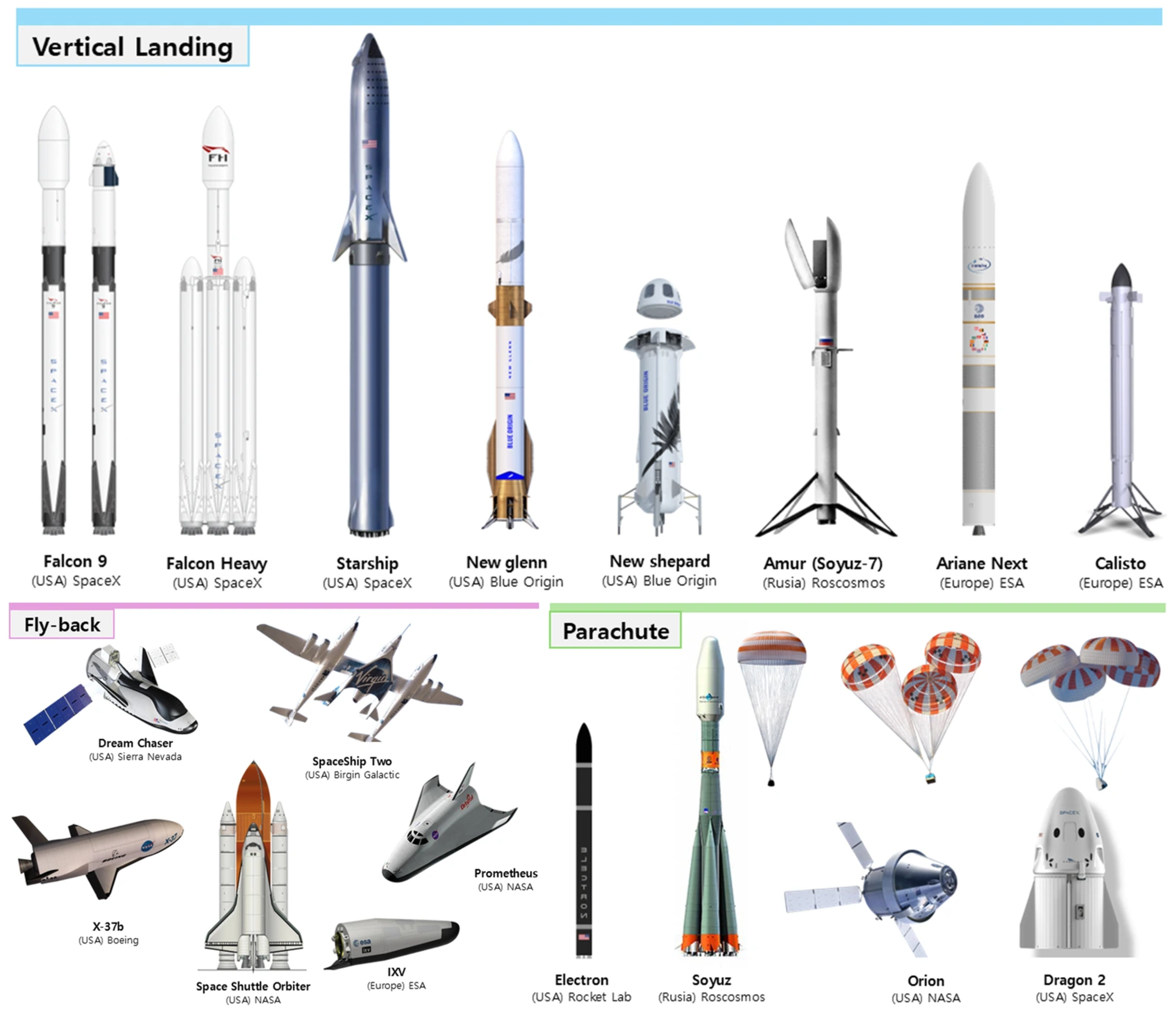
Examples of recovery methods for reusable launch vehicles are provided in
Figure 1. The most widely adopted approach today is the vertical landing method demonstrated by SpaceX. This method decelerates the vehicle through engine re-ignition and thrust reversal, enabling a vertical touchdown. Similar technologies are being pursued by Blue Origin, ESA, and China’s iSpace and Link Space. Despite its technical complexity and high development cost, vertical landing offers advantages such as simplified recovery operations and applicability to celestial bodies without an atmosphere, such as the Moon or Mars. However, SpaceX’s launch vehicles employing vertical landing are super-heavy systems, and recovering a heavy upper stage is significantly more costly than the first-stage recovery [
7]. Therefore, whether such an approach is suitable for upper stages of launch vehicles with different sizes or specifications requires further examination [
9].
Parachute recovery is a traditional method where parachutes are deployed during re-entry to slow down and land on the ground or water. This method has been used in manned missions, such as Apollo, Orion, and Soyuz. It is technically less complex and has lower recovery system development costs. Recently, it has been applied to NASA’s Orion re-entry capsules, Blue Origin’s New Shepard, and Rocket Lab’s Electron, which uses a helicopter for recovery after parachute water landing.
Fly-back recovery involves using aerodynamic lift to slow down the vehicle and land on a runway, similar to an aircraft. This method does not require additional fuel during landing, and it facilitates easier ground recovery. It is particularly advantageous for crewed missions due to its design flexibility. NASA’s Space Shuttle, Boeing’s X-37B, and Virgin Galactic’s SpacesShipTwo have employed this method, while other systems like Sierra Space’s Dream Chaser and ESA’s IXV are under development.
Launch vehicles are classified according to their payload capacity as small-lift (payload < 2 t), medium-lift (2 t < payload < 20 t), heavy-lift (20 t < payload < 50 t), and super-heavy-lift vehicles (50 t < payload) [
20]. In this study, the medium-class launch vehicle is modeled based on KSLV-III, while the super-heavy launch vehicle is modeled after SpaceX’s Starship. Using these reference configurations, the effective payload capability is evaluated for three recovery methods—vertical landing, parachute, and fly-back. By comparing their respective advantages and disadvantages, this study aims to propose suitable second-stage recovery strategies according to vehicle scale.
3. Recovery System Design
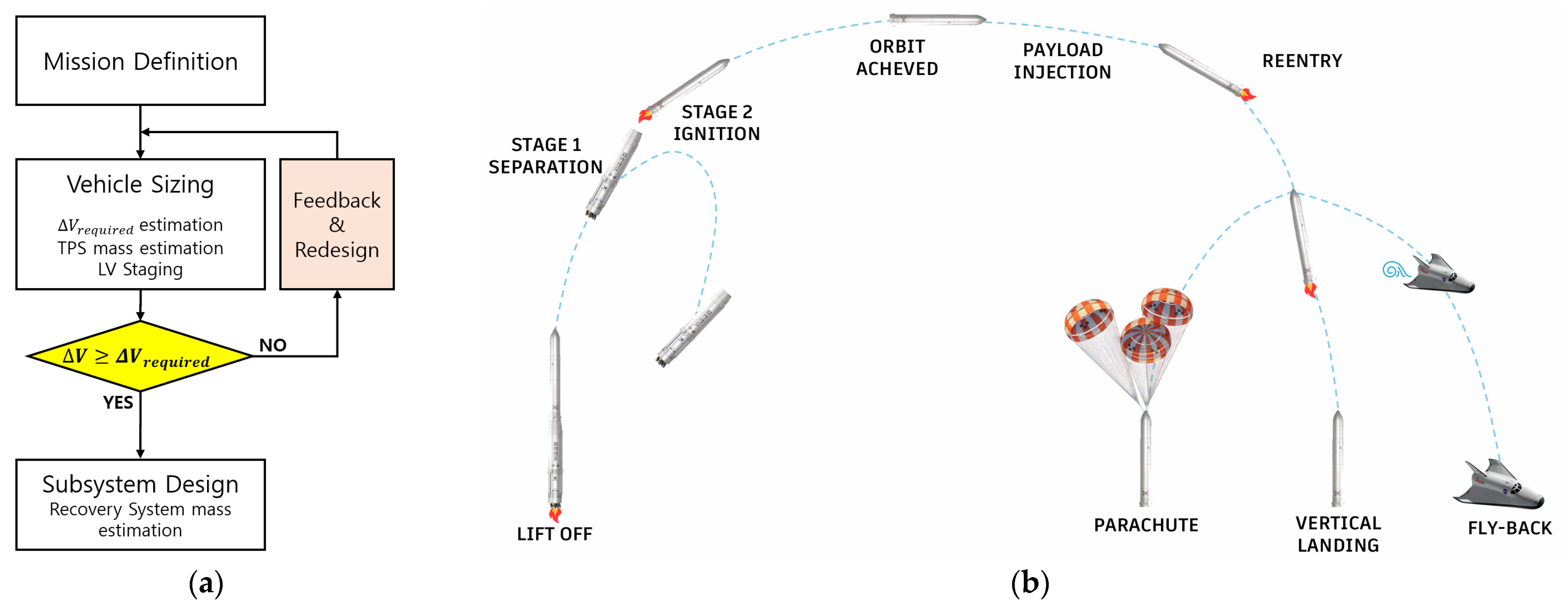
For the three recovery methods, the recovery system for each will be designed, and the corresponding mass will be estimated and applied as a loss from the baseline payload. The tasks for each method will be analyzed, and the necessary assumptions will be defined through task analysis. For example, the re-entry sequence will be established, and a reference launch vehicle will be selected. Subsequently, the recovery system design required for mass estimation will be carried out, and the mass will be estimated accordingly. It is assumed that all three methods initiate re-entry at an orbital altitude of 200 km.
To enter the Earth’s atmosphere, it is necessary to decelerate the orbital velocity, a process referred to as Deorbit Burn. If the deceleration is too excessive, the re-entry time will shorten, causing a sharp increase in frictional heating. Therefore, the deceleration rate is set to 1.3% [
39]. The fuel required for re-entry is calculated using the Tsiolkovsky rocket equation.
3.1. Vertical Landing
Vertical landing is a technology that enables ground landing through second-stage re-entry combined with controlled engine thrust. Currently, there are no operational reusability cases for the second stage. The main items required for estimating the recovery system mass for vertical landing are the fuel required for reignition and aerodynamic control flaps. The increase in structural mass, such as tanks, due to the increase in fuel, is not considered.
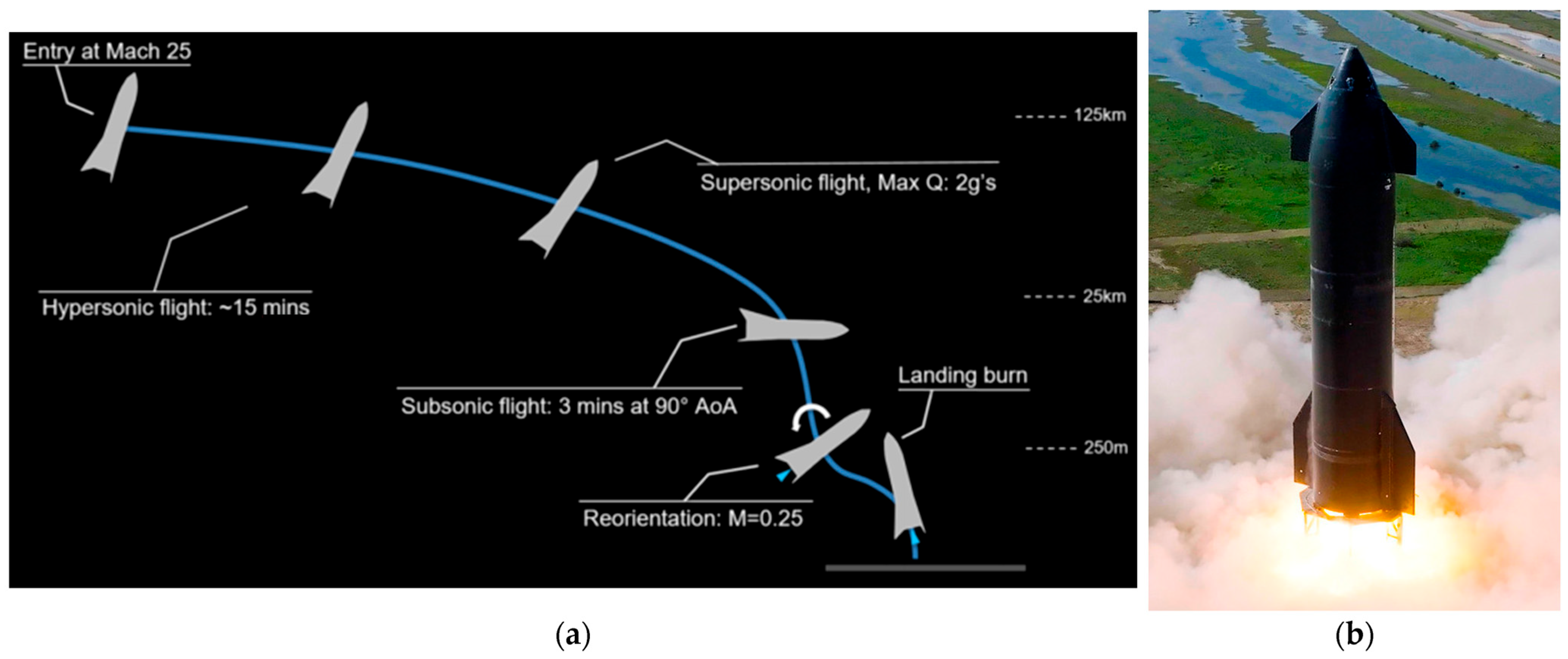
The vertical landing recovery sequence is based on the flight test case of Starship, shown in
Figure 7a. After performing the Deorbit Burn and entering the atmosphere, the vehicle glides through aerodynamic control to reduce speed, transitioning from hypersonic to supersonic flight, and finally to subsonic flight. Subsequently, the vehicle flies at a 90° angle of attack before performing a Flip maneuver near the ground, drastically changing its orientation. Afterward, the engine is reignited to perform the Landing Burn, reducing the speed to zero. The fuel required for the Landing Burn is calculated by substituting the vehicle’s speed just before reignition into the rocket equation. The deceleration speed can be referenced from Starship’s flight case; however, since this is not a successful case, the descent speed of other re-entry vehicles was also investigated. Before reaching the ground, both the Vertical landing and Fly-back approaches involve gliding, so the speed data for approaching the runway is provided in
Table 4. A conservative deceleration of approximately 150 m/s was assumed, considering the speed loss due to the Flip maneuver.
In
Figure 7b, Starship’s aerodynamic control flaps consist of the Forward flaps located near the nose cone and the Aft flaps located near the engine. The weight of the flaps varies depending on the aerodynamic coefficient of their shape, so the area of the flaps is estimated under the assumption that the vehicle’s shape is identical. Using an image of Starship, the area of the Block 2 flaps was estimated using Open VSP of NASA. The length of the Forward flap is assumed to be 7.4 m, the width 3.5 m, resulting in an area of 36.3 m
2, and the length of the Aft flap is assumed to be 13 m, with a width of 4.5 m, giving an area of 88.4 m
2. When scaling down the wings to match Starship, the length is reduced by a factor of 2/5, resulting in an estimated area of 5.8 m
2 for the Forward flap and 14.2 m
2 for the Aft flap. Furthermore, the weight of the vertical tail of the aircraft, as described in
Section 3.3 of this paper, was used to estimate the weight of the flaps [
47]. The data necessary for the calculations, including the load factor, were taken from [
48]. The additional weight of the TPS attached to the flaps is included to determine the total weight of the reusable recovery system.
The propulsion system assumptions for vertical landing are simplified at the conceptual design level. The KRE-020 engine applied to the second stage of KSLV-III is designed as a high-altitude engine with a large nozzle expansion ratio; if nozzle pressure mismatch under near-ground conditions is explicitly considered, the effective thrust would be reduced to zero. Therefore, practical second-stage vertical landing would require a propulsion architecture similar to that of Starship, in which engines optimized for high-altitude operation and near-ground operation are separated. In this study, when vertical landing is considered, it is assumed that the second stage is equipped with engines suitable for both operating regimes, and that the engine optimized for near-ground operation is used during the landing phase. This assumption enables a consistent conceptual-level comparison among different recovery methods.
3.2. Parachute Recovery
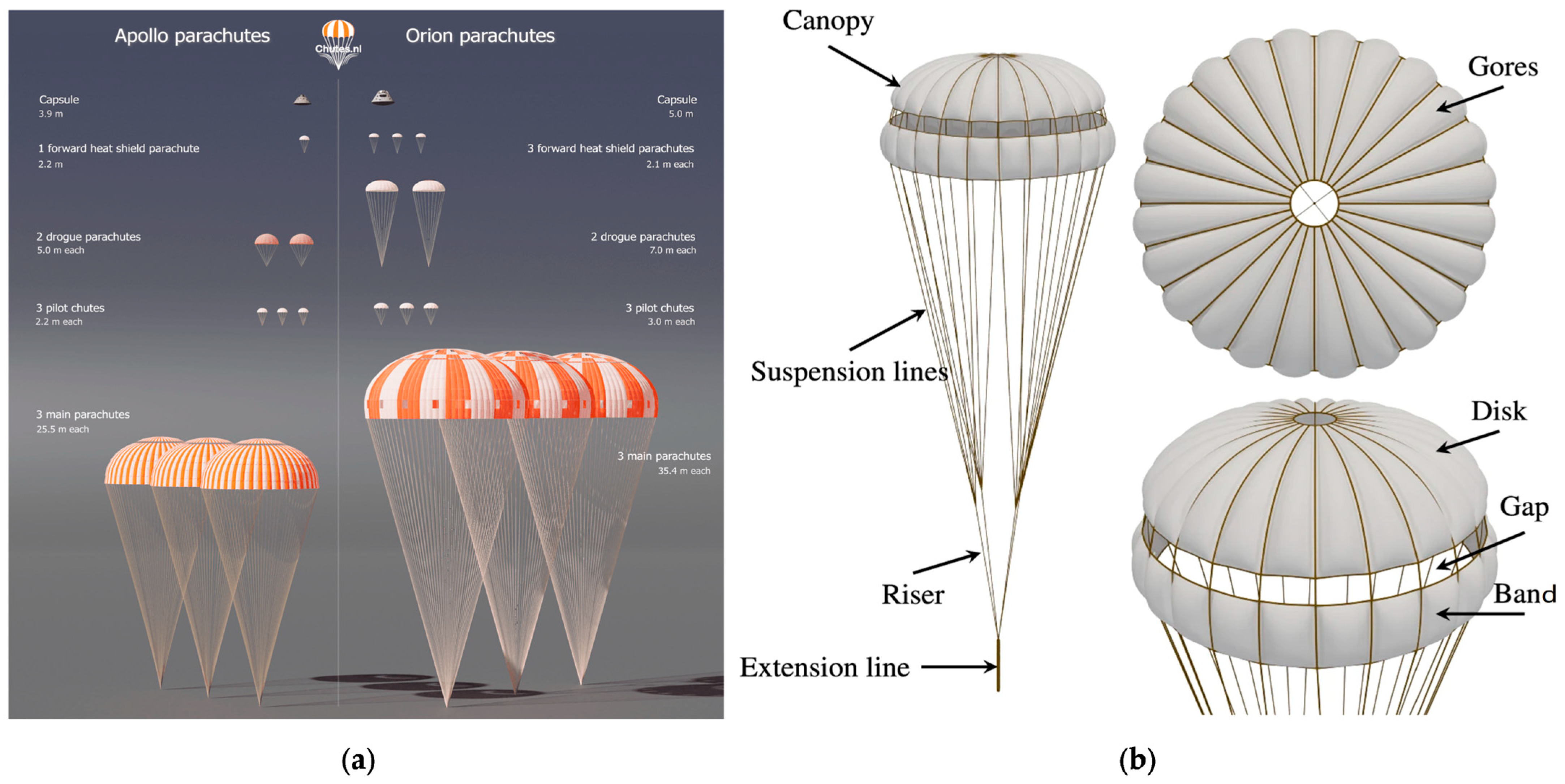
The parachute recovery method involves deploying a parachute during re-entry to slow the vehicle down before landing on the ground or water. The re-entry sequence proceeds as follows: Deorbit burn for re-entry, followed by free fall, parachute deployment, and finally landing. In this study, the recovery system mass includes the parachute canopy and suspension lines. The parachutes for vehicle recovery are deployed in the following order: pilot parachute, drogue parachute, and main parachute. NASA’s Apollo and Orion missions used three pilot parachutes, two drogue parachutes, and three main parachutes. The number of parachutes was adopted from NASA’s Orion capsule, which has a similar recovery mass [
49].
Figure 8 shows the shape and number of parachutes. Since parachutes are deployed in high-speed environments during re-entry, all parachutes are selected to be in a Disk-gap-band shape, which provides stability during high-altitude and high-speed descents. The canopy material is MIL-C-7350 nylon, which offers excellent lightness, durability, and strength, with a weight of 0.0763 kg/m
2 per unit area. The size of the pilot parachute is determined not by mass, but is borrowed from the Orion system [
49]. The drogue and main parachutes are sized according to the landing load of the Orion spacecraft, using a proportionality formula. The landing load also includes the weight of the parachute itself.
This suggests that parachute recovery may have limitations for super-heavy launch vehicles. If the same parachute size as the Orion parachutes is used, 21 parachutes would be required. However, this would make the system overly complex, and the risk of parachute line interference would significantly reduce its operability. In practice, the maximum number of deployable parachutes is generally limited to approximately 9–10, as the use of more than 12 military-class parachutes is known to cause significant mutual interference and unstable operation. Accordingly, a configuration employing 10 parachutes is assumed in this study as a more realistic upper bound [
50].
Figure 8.
(
a) Parachute deployment [
51]. (
b) Disk-gap-band design [
52].
Figure 8.
(
a) Parachute deployment [
51]. (
b) Disk-gap-band design [
52].
3.3. Fly-Back Recovery
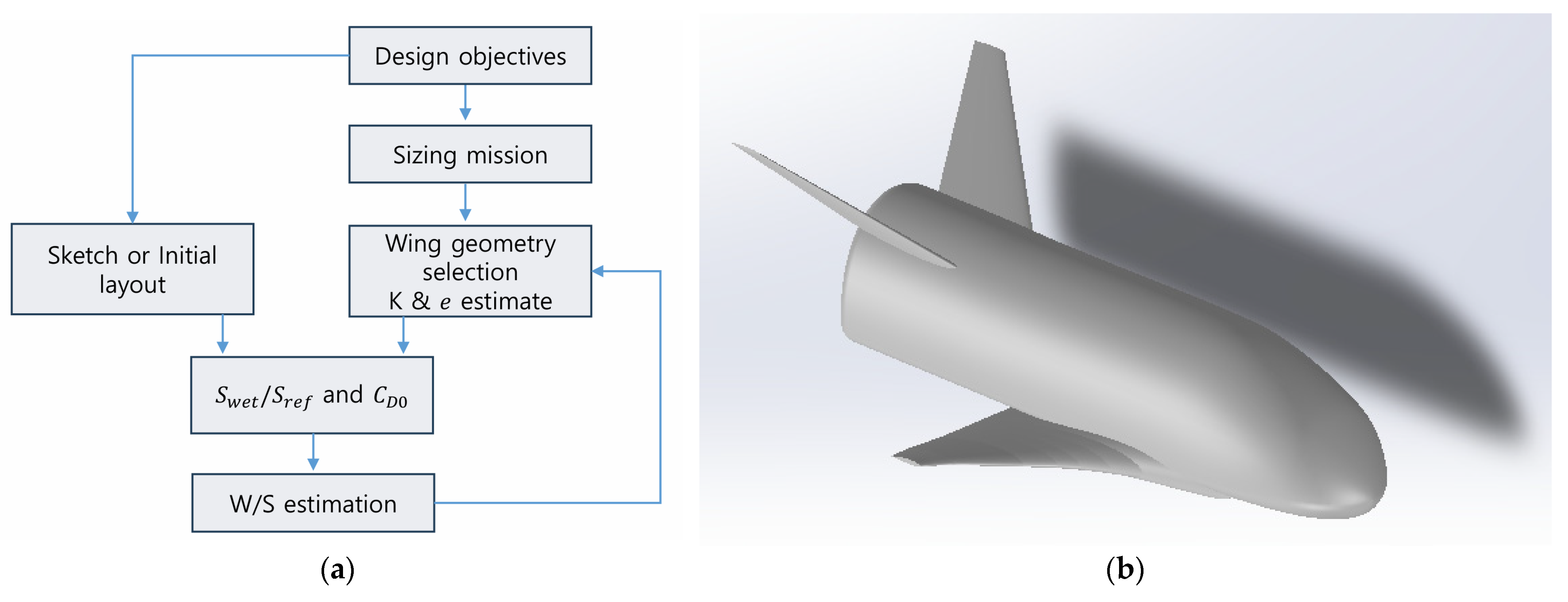
Fly-back recovery involves designing vehicles with an exterior similar to an aircraft, using aerodynamic lift to reduce speed and land on a runway. This method requires advanced vehicle control technology but offers the advantage of minimal fuel consumption. It is also suitable for crewed missions due to its internal space configuration. The re-entry sequence is as follows: During re-entry, the Deorbit burn is performed to reduce orbital velocity, followed by gliding without power, and finally landing on the runway. The recovery system design is based on aircraft conceptual design principles, following the Refined Sizing Method presented in [
47]. It is assumed that no fuel is used during the glide phase, and the fuel fraction is set to 1. The recovery system mass estimate includes the main wing, tail wing, and landing gear. The external shape of the vehicle is designed to resemble that of an aircraft, so it differs from the second stage of the Enhanced KSLV-III. The vehicle size is chosen to accommodate a cargo space of at least 60 m
2, based on satellite density [
53]. The reference aircraft for design is Boeing’s X-37B, which uses a delta-wing shape for easy direction control during re-entry.
The wing loading is estimated by comparing the values from the X-37B [
54], stall speed estimates, and lift-to-drag ratio values, selecting the lowest value derived from the lift-to-drag ratio. The results of these methods are shown in
Table 5.
The wing loading derived using the lift-to-drag ratio method satisfies the required glide angle of 7.5° near the surface. Using Equations (3)–(8), C
D,0 is estimated, and S
ref is calculated. The wing loading value will vary depending on the aircraft’s shape and weight [
55]. The other shape design and landing gear are estimated using statistical formulas from jet fighter designs. The final design shape is shown in
Figure 9b, with weight estimation based on the experience of jet fighter aircraft designs. Although the windged configuration is thought to have some effect on the aerodynamic characteristics at launch, it was assumed to be insignificant and not considered in this preliminary design stage.
Re-entry vehicles and fighter jets share similar characteristics but are distinct types of aircraft. Re-entry vehicles must endure more extreme environmental conditions than fighter jets, and their wing structures, in particular, tend to be denser compared to those of conventional aircraft [
56]. Due to these differences, the trend in the weight of re-entry vehicles can be estimated using fighter jet experience-based formulas, but the accuracy of the resulting values may be of a different order of magnitude, making them potentially unreliable.
To address this, the approximate empty weight buildup method [
47], which is commonly used in aircraft conceptual design, was applied in this study to estimate the wing weight based on the specifications of the Space Shuttle Orbiter (including empty weight and engines) and the X-37B. The corresponding results are presented in
Figure 10. When the W/S-based method employed in this study (fighter aircraft experience-based formula) was applied to the Orbiter configuration, the wing weights estimated using the approximate empty weight buildup method were 6637 kg for the Space Shuttle Orbiter and 343.9 kg for the X-37B. These values are approximately 1.65 times and 1.79 times larger, respectively, than those predicted by the same experience-based formula. Based on these comparisons, a correction factor of 1.6 was introduced and applied to the fighter aircraft experience-based formula to obtain more reasonable wing weight estimates at the conceptual design stage. This approach helps compensate for the limitations of experience-based formulas when applied to re-entry vehicles by incorporating comparisons with actual load-related data. The uncertainty associated with the proposed method is estimated to be on the order of 20%, and detailed wing structural analysis will be required in future design phases to further refine the weight estimation. Reasonable variations (±20%) in the adopted correction factor do not change the relative ranking of recovery strategies.
4. Results and Discussions
The detailed specifications of the recovery systems for the three recovery methods are shown in
Table 6,
Table 7 and
Table 8 across two vehicle scales. The mass of the recovery systems and the available payload are included, reflecting the changes in the TPS area. The mass of each recovery system can be included in the fuel and structural mass.
It is assumed that the TPS is attached to one side of the second stage, and thus, the attachment area varies depending on the surface area of the second stage. For the parachute, the external shape of the Enhanced KSLV-III second stage is similar. In contrast, the fly-back and vertical landing methods have a larger TPS attachment area due to the larger wing. Vertical landing presents the fuel amounts required for the two burns and the specifications of the flaps in
Table 6.
The parachute method provides the weight of the three parachutes, the mass corresponding to canopy area, the mass associated with suspension lines, and the fuel required for the re-entry burn in
Table 7. Fly-back landing presents the specifications of the main wing and tail wing, as well as the weight of the landing gear, as shown in
Table 8.
4.1. Starship Class
The specifications of Starship were based on the Block 2 version, and missing specifications were estimated [
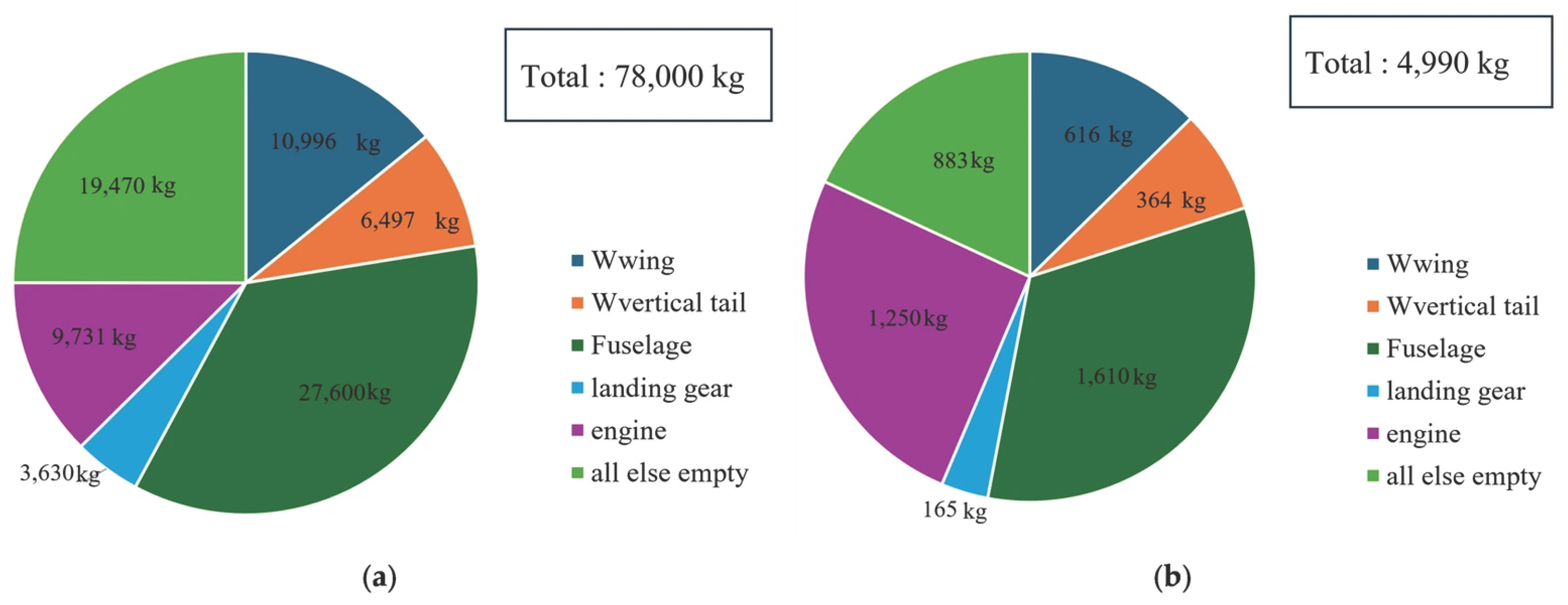
19]. The number of parachutes was realistically adjusted. The Enhanced KSLV-III and Starship classes are completely different vehicles with different missions and stage mass ratios, so the comparison of recovery system weight was made based on the structure mass of the second stage during re-entry.
The estimated Starship class specifications and recovery system weight are shown in
Table 9.
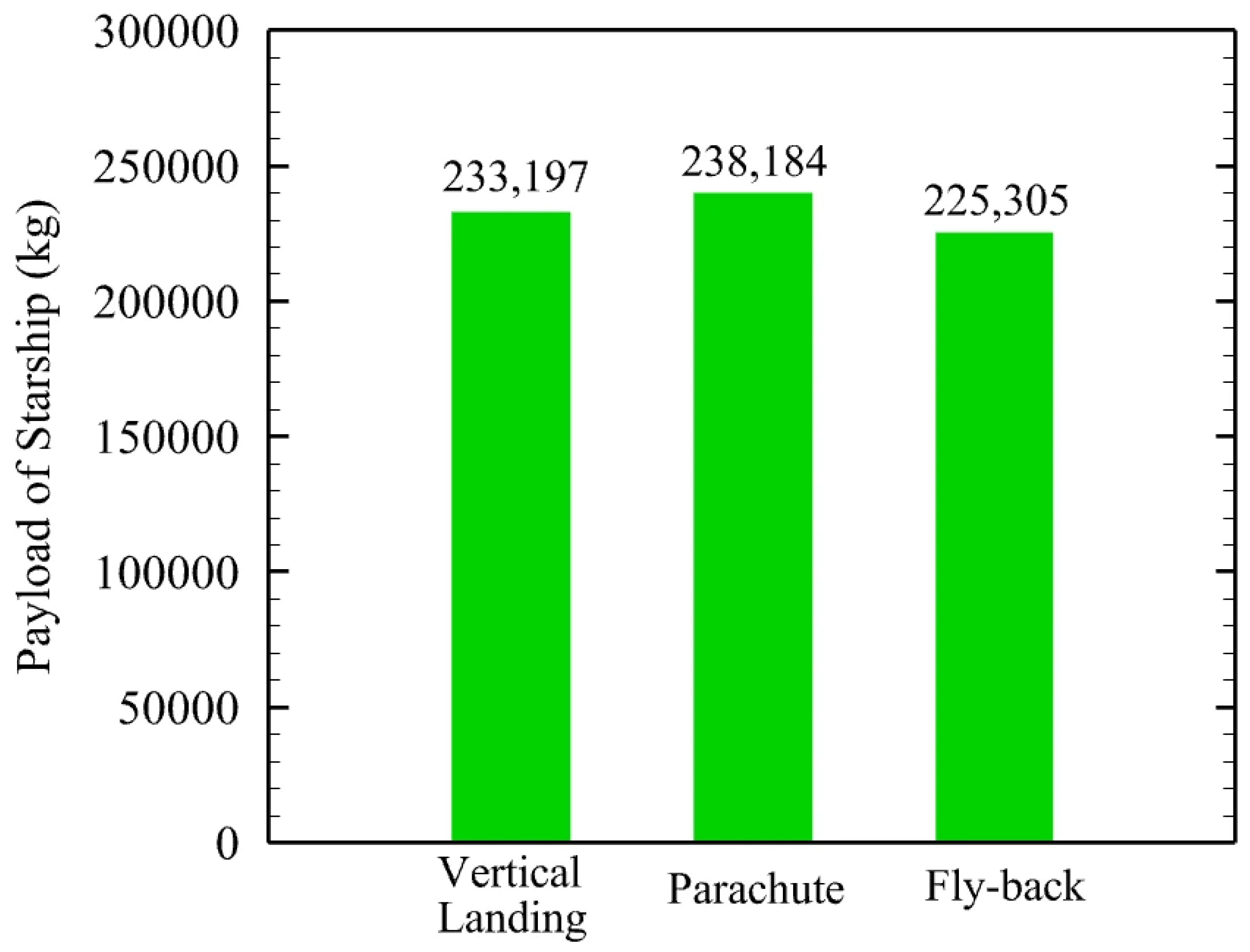
Figure 11 compares the available effective payload calculated by subtracting the recovery system mass from the payload loss when Starship’s baseline payload is 250 t. While parachutes had the highest available effective payload, similar to the Enhanced KSLV-III, vertical landing and Fly-back showed higher available effective payloads compared to the Enhanced KSLV-III case. The reason why vertical landing is more advantageous than fly-back is that, despite using fuel, vertical landing results in a smaller difference in wing size as the scale increases, whereas Fly-back typically has larger wings.
For Starship Class vehicles, parachutes become unrealistically large and aerodynamically unstable, making manufacturing and storage difficult. According to the NASA LDSD project, two test flights of a large supersonic parachute with a diameter of 30 m failed [
57]. Excessive shock loads were applied during parachute deployment, causing ruptures at the edges, and damage accumulated due to asymmetric deployment. The test vehicle used in these experiments was a 30-ton vehicle, the heaviest attempt to land using parachutes. This suggests that parachute recovery may have limitations for super-heavy launch vehicles.
As discussed in
Section 3.2, this study assumes a configuration employing a total of 10 parachutes as a realistic upper bound. Under this assumption, the required diameter of a single main parachute for second-stage recovery of a super-heavy launch vehicle is estimated to exceed 50 m, as summarized in
Table 7. The corresponding canopy area is approximately 23,140 m
2, which is equivalent to about four standard soccer fields. Such a large canopy leads to a substantial increase in stowage volume and degrades deployment stability, thereby imposing severe constraints on parachute system design and operation. For reference, the canopy area of the main parachute used on the Orion spacecraft is approximately 1000 m
2. Furthermore, the deployment load required for a super-heavy launch vehicle is estimated to exceed 85 tons, whereas the maximum deployment load that can be realistically sustained by a single parachute system is generally limited to 20–30 tons. Operating far beyond this range makes it extremely difficult to ensure structural reliability. While the main parachute used on the Orion spacecraft has a canopy mass of approximately 450 kg, the estimated canopy mass of a single main parachute for a super-heavy launch vehicle reaches approximately 1272 kg, clearly demonstrating the unavoidable scaling-induced increase in system size, structural complexity, and operational difficulty. In addition, as the vehicle scale increases, the number of suspension lines grows rapidly. For the super-heavy configuration considered in this study, approximately 94 suspension lines are required for the drogue parachute and 188 suspension lines for the main parachute, which is significantly higher than the approximately 80 suspension lines used in the Orion system. This increase substantially raises the likelihood of twisting, entanglement, and asymmetric deployment, thereby increasing the probability of deployment failure and further reducing the practical operability of parachute-based recovery systems [
49].
In the case of fly-back recovery, when the recovery system is mounted on the second stage, the total mass of the recovery target is 99.5 t, which approaches the 100 t maximum landing load of the Space Shuttle. For a safe landing, a runway length of approximately 3600 m is required. NASA built a 4600 m long dedicated runway at the Kennedy Space Center for the Space Shuttle [
58]. Such long runways are found only at a few airports worldwide, and other commercial aircraft must be excluded from access when landing the Space Shuttle. Therefore, the Starship class, being significantly larger than the Space Shuttle, would have very few available runways. Moreover, as the mass increases, the cost of transporting the vehicle to the reusability site after recovery and additional costs for runway infrastructure are expected to reduce launch cost efficiency. According to reference [
10], the maintenance cost for reusability represents 10.8% of the launch cost, making it a significant factor. If the Starship class is recovered using fly-back, the maintenance cost would further increase.
4.2. Enhanced KSLV-III
The weight of the recovery system is lightest for the parachutes, followed by fly-back, with vertical landing being the heaviest. The parachute system, consisting only of the canopy and suspension lines, weighs a total of 315.8 kg, making it the lightest recovery system and providing the most available payload. In contrast, vertical landing weighs 2463.8 kg, and fly-back weighs 2197.2 kg. While these two systems have similar weights, vertical landing is slightly heavier.
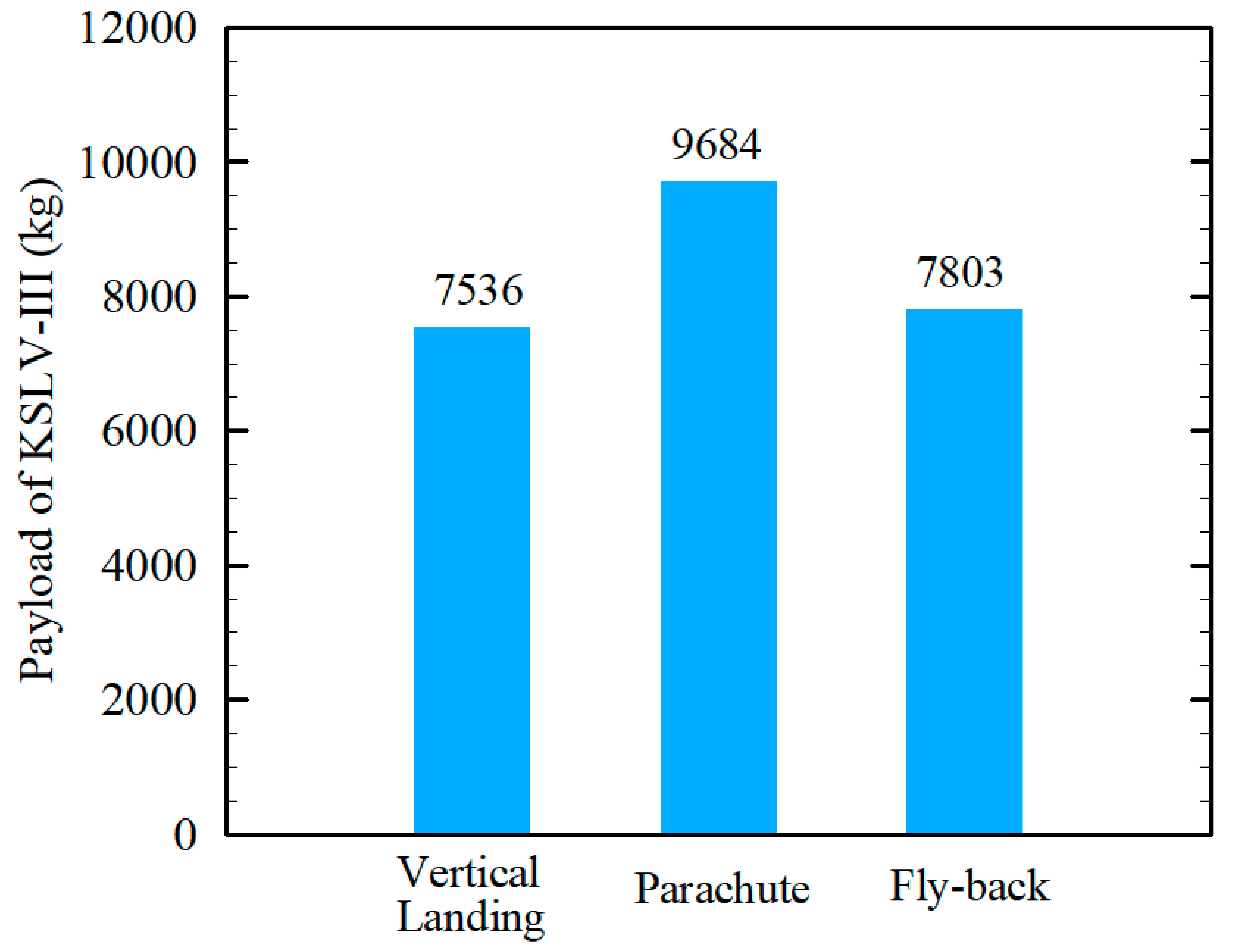
Table 10 combines the TPS weight with the structural mass and adds the fuel and structural masses of each recovery system, as shown in the final specifications. The final effective payload, considering the TPS weight and recovery system mass, is compared graphically in
Figure 12. As shown in
Figure 12, the effective payloads are 9684.2 kg for the parachute method, 7802.8 kg for the fly-back method, and 7536.2 kg for the vertical landing method. The parachute landing recovery system, composed only of the parachute canopy and lines, has the smallest recovery system mass of 315.8 kg, making it the most efficient in terms of effective payload.
Figure 12.
Comparison of effective payloads of Enhanced KSLV-III with reusable 2nd stage.
Figure 12.
Comparison of effective payloads of Enhanced KSLV-III with reusable 2nd stage.
Figure 13.
Recovery system weight comparison.
Figure 13.
Recovery system weight comparison.
Vertical landing is currently the most actively researched method, but it has yielded the lowest insertion performance. The changes in fuel tank size and structure accompanying the increased fuel were not considered, so the actual performance could potentially be even lower. The reason why vertical landing resulted in the lowest insertion performance can be summarized as follows. First, the transport payload of the Enhanced KSLV-III is smaller compared to vehicles that currently use vertical landing. A larger payload indicates a larger launch vehicle, and when recovered by parachutes or Fly-back, which are mostly structural in mass, a sharp increase in structural costs is expected. Additionally, if the baseline payload had been larger, the ratio of available payload could have been different. Second, the second-stage engine of the Enhanced KSLV-III is not suitable for vertical landing recovery. The vacuum thrust of the KRE-020 (second stage engine of KSLV-III) is 20 ton-force, much smaller than the 690-tonf-class thrust of SpaceX’s Starship during landing. Even considering that Starship’s dry mass is heavier than that of the Enhanced KSLV-III, lower thrust means that the engine must burn for a longer time, resulting in lower efficiency. For the upper-stage engine, the low nozzle exit pressure causes significant pressure losses when used near the ground, which leads to higher fuel consumption. In this study, the thrust of the KRE-020 engine is assumed to be fully offset by nozzle exit pressure losses, resulting in an effective thrust of zero. Therefore, for practical vertical landing, an engine with a nozzle expansion ratio suitable for near-ground operation is essential. For example, Starship uses three ground Raptor engines and three vacuum engines, for a total of six engines, to perform vertical landing.
For the Enhanced KSLV-III, the fly-back method exhibits slightly higher performance than the vertical landing method. However, this performance difference is based on conceptual-level mass modeling, and the absolute difference in payload capacity may be limited within the range of modeling uncertainty. Nevertheless, for the vertical landing method, a trend is observed in which the wing mass increases relative to the total structural mass as the vehicle scale decreases. This behavior arises because, while the fly-back and vertical landing methods have comparable levels of wing mass, the fly-back method does not require landing propellant. In this study, the same wing mass estimation methodology is applied to both recovery methods, which implies that, unlike the Starship-class vehicle, the wing areas required for vertical landing and fly-back are similar for the Enhanced KSLV-III.
4.3. Discussions on the Scale Effects
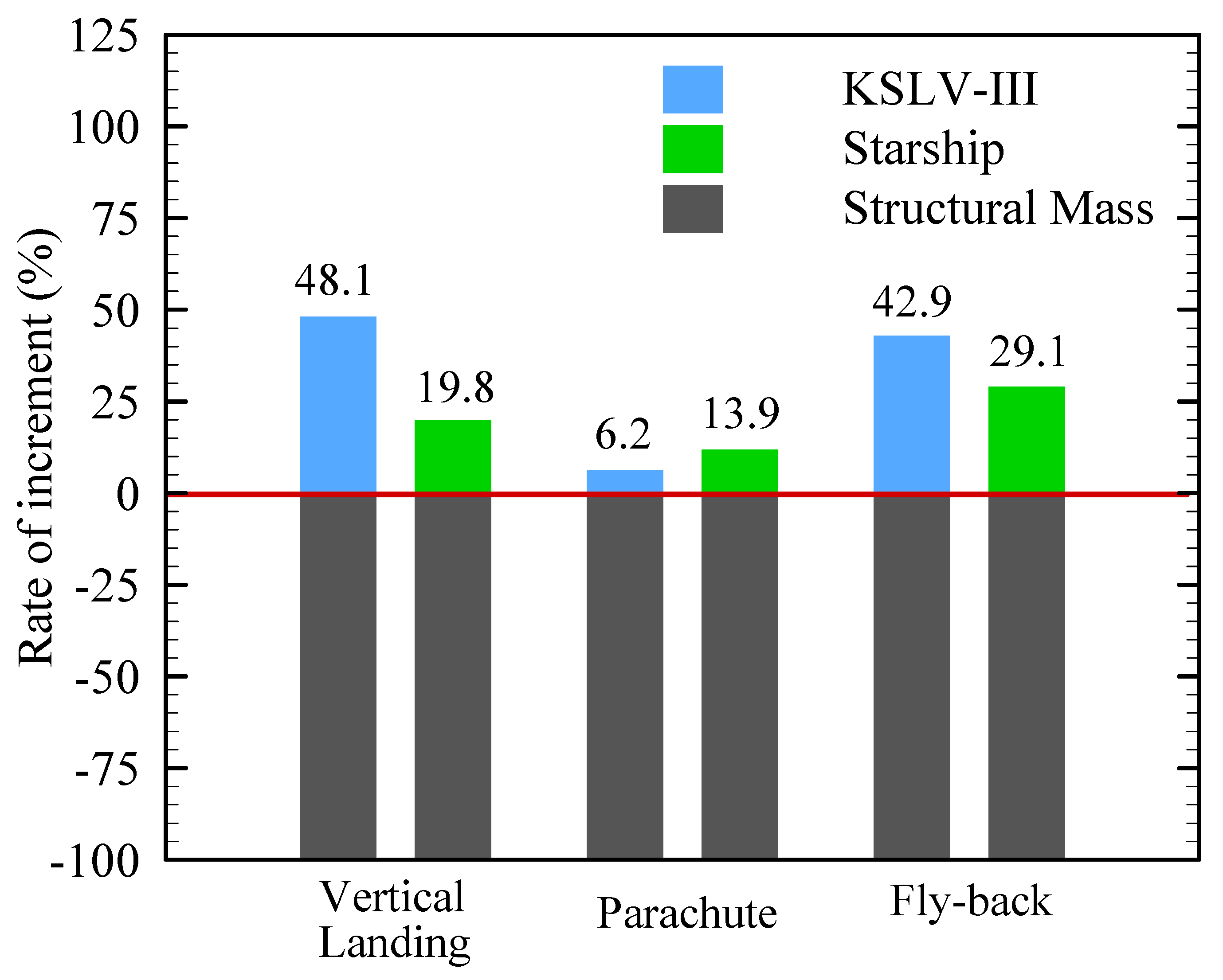
Figure 13 compares the mass increase ratio of the recovery system based on the mass of the second-stage structure, with the second-stage structure mass set as the baseline. When there is no recovery system mass, the increase is 0%. The weight increase due to the recovery system for each method can be observed, and at 100% increase, the mass of the second-stage structure and the recovery system are equal. This allows for a quantitative evaluation of how much additional mass the recovery system contributes relative to the second-stage structure mass.
The recovery system and available payload values for both launch vehicles are summarized in
Table 11. The rate of increment compares the mass increase ratio of the recovery system based on the mass of the recovered second-stage structure. When no recovery system mass is present, the rate is 0%, and when the recovery system requires the full mass of the second-stage structure, the rate is 100%. This allows for an understanding of how much additional mass the recovery system adds relative to the second-stage structure mass.
Figure 13 presents the rate of increment in graphical form. In other words, it shows the mass increase ratio of the recovery system with the second-stage structure mass as the baseline. From this graph, it can be seen that, for the Enhanced KSLV-III, the recovery system using parachutes is the lightest, while the vertical landing recovery system is the heaviest. For the Starship Class, although the parachute system is also the lightest, the Fly-back recovery system is the heaviest.
When comparing the recovery methods, the parachute system for Enhanced KSLV-III is lighter than the Starship Class recovery system, and the ratio of recovery system mass to the total system mass is much higher for Starship Class. This is because, as the parachute size increases, both the canopy and suspension lines also increase. In contrast, Fly-back and vertical landing methods tend to be lighter for the Starship class.
Notably, vertical landing shows the greatest difference in recovery system mass as the scale increases. The Starship Class becomes even lighter than the KSLV-III, making it more advantageous as the scale grows. While Fly-back also becomes more favorable with a larger vehicle size, the difference is not as significant as for vertical landing. Both vertical landing and fly-back recovery methods employ aerodynamic surfaces for gliding, but only the vertical landing method requires propellant during the terminal landing phase. For medium-class launch vehicles, the wing areas required for vertical landing and fly-back are of comparable magnitude, resulting in vertical landing being the heavier recovery option due to the additional landing propellant. However, as vehicle size increases, the relative contribution of wing mass to the overall structural mass diminishes, and the difference in wing mass between the two recovery methods grows in favor of vertical landing for super-heavy launch vehicles. Consequently, the reduction in wing mass offsets the additional propellant required for vertical landing, ultimately making vertical landing the lighter recovery option at larger scales. These trends suggest that, depending on the size of the launch vehicle, engineers may realistically choose different recovery methods.
4.4. Payload Fractions
In this study, the payload capacity of each recovery method was analyzed to compare their relative efficiencies. In the conceptual design of a launch vehicle, one of the key indicators representing payload capacity is the payload fraction, which can be effectively used to estimate the approximate range of transportation capability depending on the design parameters. The payload fraction is defined as the ratio of the payload mass to the total launch vehicle mass, as expressed in Equation (9).
By combining the structural coefficient (Equation (10)) with Tsiolkovsky’s rocket equation (Equation (11)), Equation (12) can be derived.
From Equation (12), it can be seen that the payload fraction is a function of exhaust velocity, velocity increment, and structural coefficient. The exhaust velocity () determines the specific impulse (), which represents the performance of the engine. In the case of a multi-stage rocket, the upper mass () of the first stage is the sum of the second stage mass and the actual payload, and the overall payload fraction of the launch vehicle can be obtained by multiplying the payload fractions of each stage.
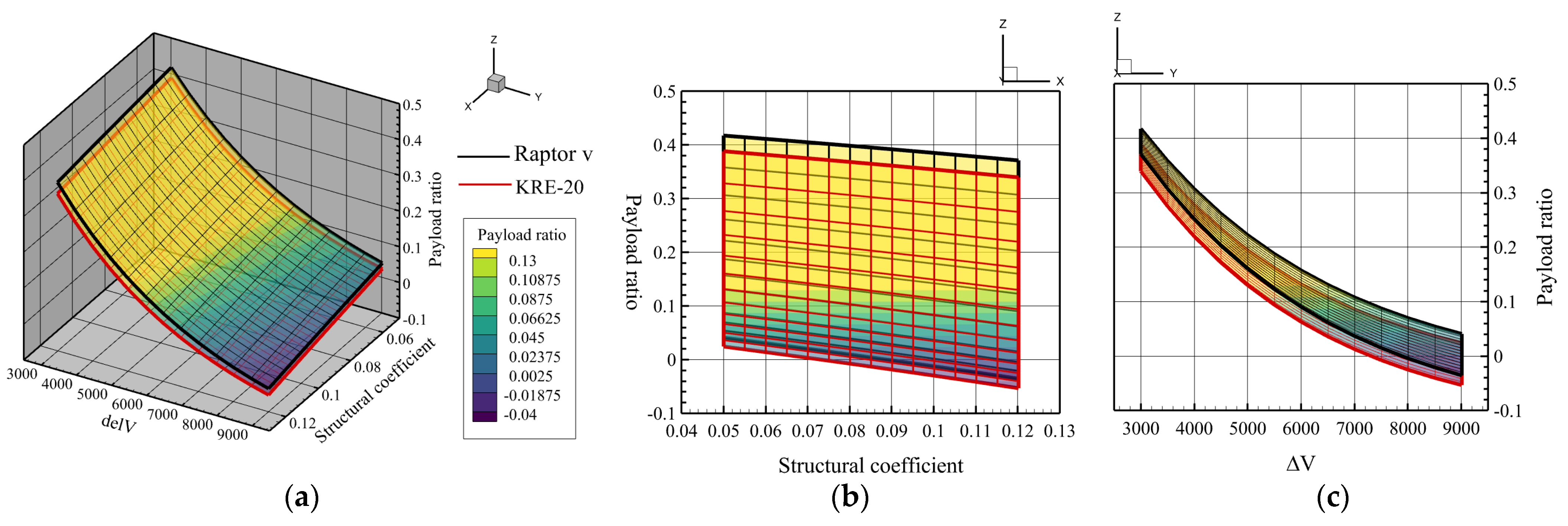
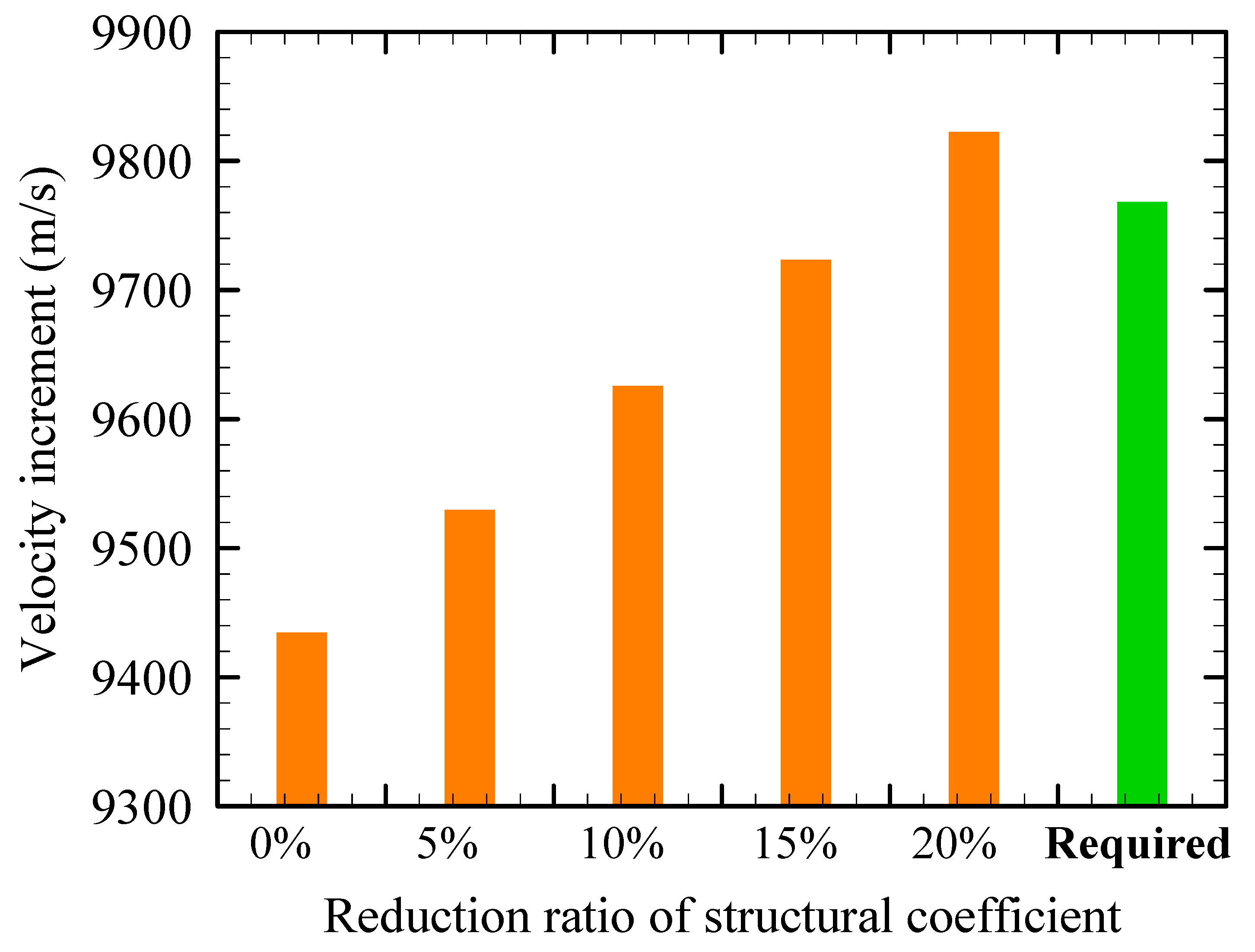
Figure 14 illustrates a three-dimensional surface of the payload fraction as a function of the structural coefficient, velocity increment, and exhaust velocity, based on Equation (12). Referring to the cases of Starship and KSLV-III, the structural coefficient is represented in the range of 0.05–0.12, and the velocity increment is shown between 3000–9000 m/s.
Figure 14b presents the relationship between the structural coefficient and payload fraction, while
Figure 14c shows that between the velocity increment and payload fraction. These results correspond to the cases using the second-stage engines—KRE-020 for KSLV-III and Raptor v3 Vacuum for Starship—with each surface representing a constant exhaust velocity (
). The Raptor v3 Vacuum exhibits an exhaust velocity approximately 250 m/s higher than that of the KRE-020, resulting in a higher payload fraction under the same structural coefficient and velocity increment conditions.
In
Figure 14b, the payload fraction decreases inversely as the structural coefficient increases. The structural coefficient represents the fraction of the total vehicle mass excluding propellant and is closely related to the practical manufacturing technology of the rocket. It is defined as the reciprocal of the mass ratio, and a smaller value indicates better rocket performance. The structural coefficient is influenced not only by structural design but also by systems and propulsion engineering aspects. Through design optimization, Starship successfully reduced its structural coefficient to about 0.05, and as shown in
Figure 14b, decreasing the structural coefficient from 0.1 to 0.05 results in approximately a 5% increase in payload fraction.
In the conceptual design of a launch vehicle, after determining the required velocity increment, stage design is performed by appropriately distributing the ∆V among the stages.
Figure 14c shows that as the required ∆V increases, the payload fraction decreases. This indicates that, for the same structural coefficient and exhaust velocity, achieving a larger ∆V requires a smaller payload mass (
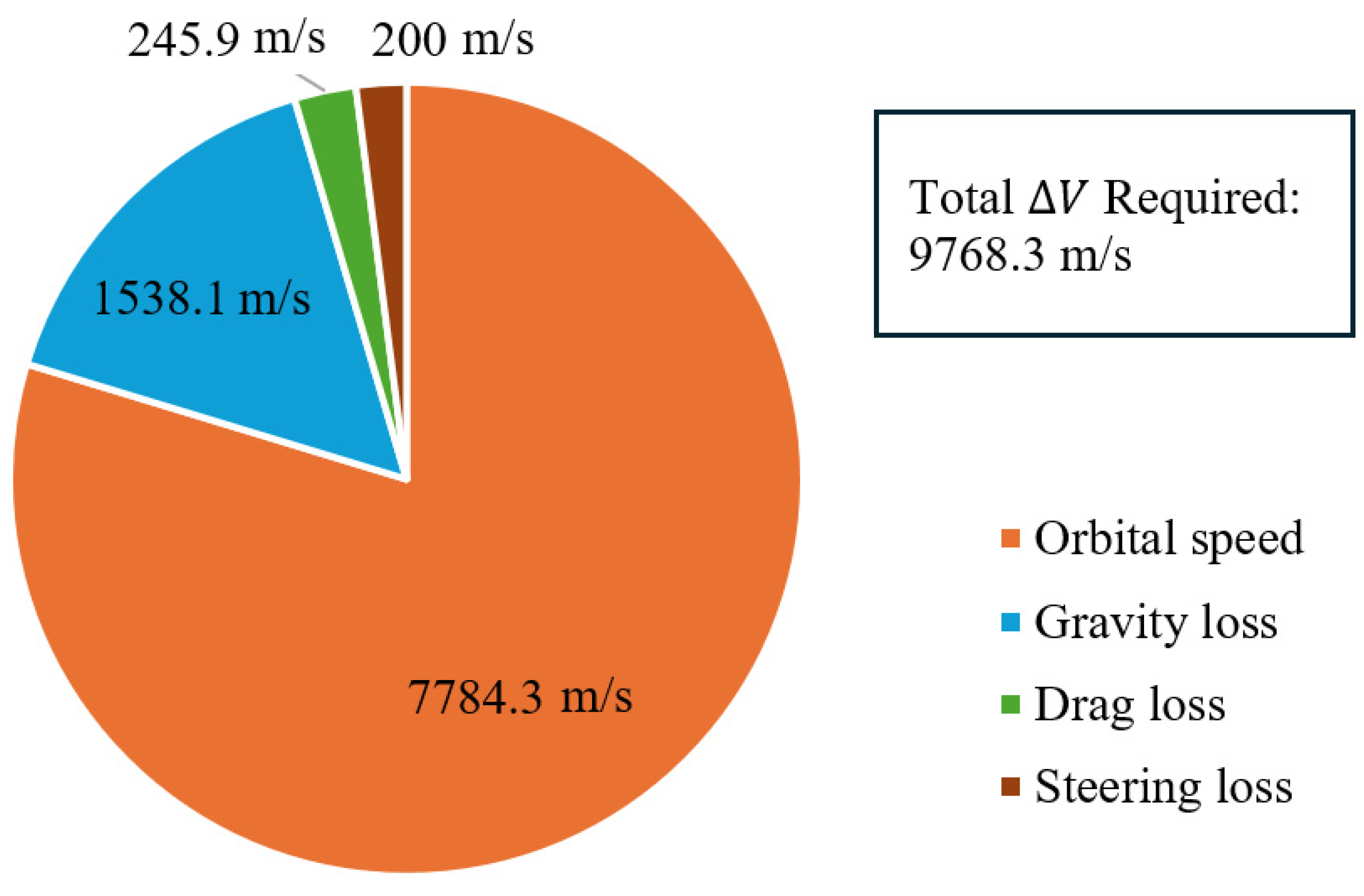
) relative to the total vehicle mass. Therefore, minimizing velocity losses is crucial to reduce the required ∆V. Since velocity losses vary significantly depending on the vehicle system design, it is important to ensure that they are not excessively large.
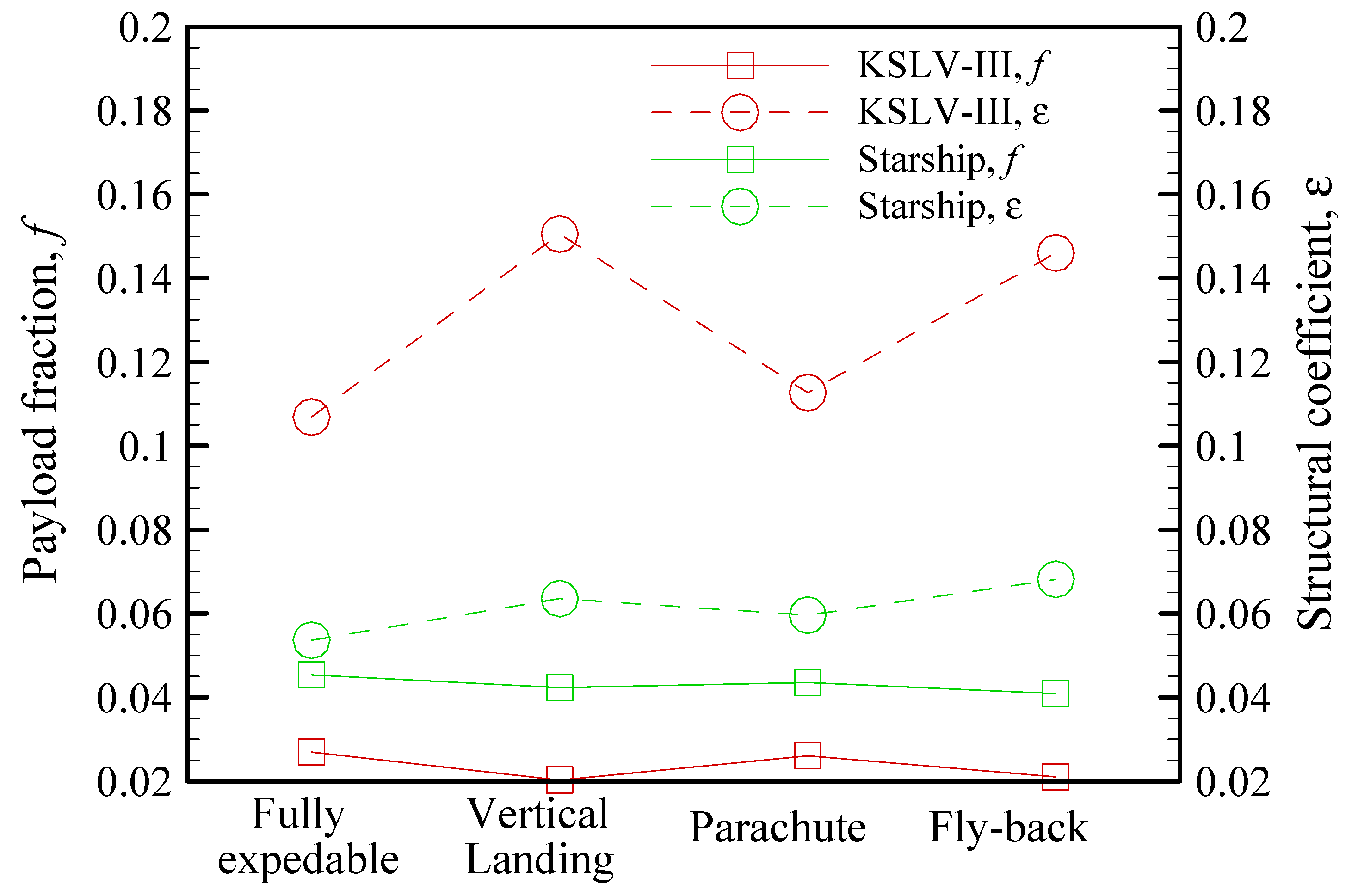
The mass of the recovery system is not included in the propellant mass term of the rocket equation’s mass ratio, thus affecting the structural coefficient. By recalculating the modified structural coefficient reflecting the recovery system and substituting it into Equation (12), the corresponding change in payload fraction can be quantitatively evaluated. The results are presented in
Table 12 and
Figure 15, showing an inverse relationship between the structural coefficient and the payload fraction, which is consistent with the analysis presented in
Section 4.3.
Table 12.
Payload fraction derived from structural coefficients.
Table 12.
Payload fraction derived from structural coefficients.
| | Enhanced KSLV-III | Starship Class |
|---|
| | | | | |
| Fully expandable | 0.1068 | 0.0269 | 0.0536 | 0.0454 |
| Vertical Landing | 0.1505 | 0.0203 | 0.0636 | 0.0423 |
| Parachute | 0.1127 | 0.0261 | 0.0596 | 0.0435 |
| Fly-back | 0.1460 | 0.0210 | 0.0681 | 0.0409 |
5. Conclusions
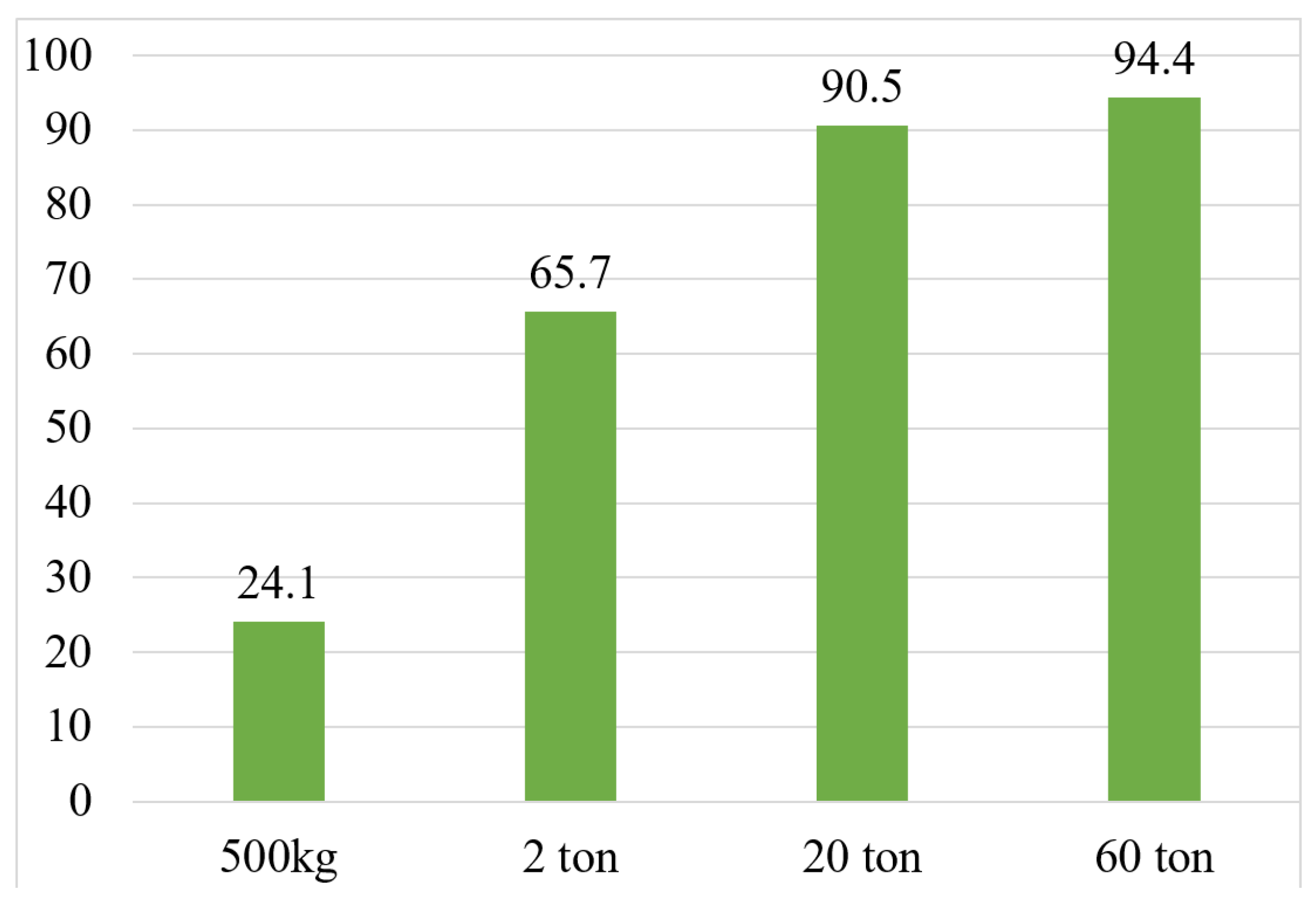
This study demonstrates that second-stage recovery strategies must be selected according to vehicle scale rather than prevailing technological trends. The results of this paper suggest that recovery strategies should be tailored according to the vehicle size when reusing the second stage. For medium-sized launch vehicles like the Enhanced KSLV-III, recovery strategies should consider methods other than vertical landing, such as parachutes or fly-back recovery. For super-heavy launch vehicles, however, parachute and fly-back recovery methods are limited due to structural constraints. As shown in
Figure 16, this trend indicates that as the vehicle size increases, the cost per kilogram of payload decreases [
10].
Recently, the preference for vertical landing as a reusable recovery method has become dominant because the scale of the vehicle has proven to be an effective way to reduce launch costs per unit of payload. Therefore, vertical landing is not necessarily the optimal recovery method when building a super-heavy launch vehicle is not feasible.
Thus, recovery methods are closely linked to the direction of reusable launch vehicle development. The appropriate recovery method should be selected based on the vehicle’s size, mission type, and frequency of operation. When the number of reuses is low, the parachute recovery method, with its simple structure and low initial cost, is appropriate. However, since parachutes must be replaced each time they are used, and there could be repair costs due to damage to the vehicle’s exterior from landing on water or harsh ground impacts, fly-back recovery becomes more efficient for frequent reuses. In terms of mission type and operation frequency, parachute recovery is ideal for low-cost, single-use launch vehicles for Earth-bound missions, while fly-back recovery is suitable for missions with frequent reuses due to its lower maintenance costs and ease of operation. For deep space exploration, or in the case of super-heavy launch vehicles where parachutes are difficult to use, vertical landing should be considered.
For small launch vehicles, the simpler parachute method is most feasible, while medium and large vehicles may consider parachute or fly-back recovery. For super-heavy launch vehicles, vertical landing remains the preferred option.
In conclusion, to maximize the efficiency of reusable launch vehicles, it is crucial to consider the overall system characteristics and select the optimal recovery strategy, rather than uniformly applying the vertical landing method. The results presented in this study were derived to evaluate the feasibility of second-stage recovery methods during the early design phase of launch vehicles. Future work should improve the accuracy of the analysis by incorporating higher-fidelity atmospheric models, trajectory optimization based on numerical integration of reentry equations of motion, and more detailed mass modeling.