


Abstract
Background: Chionanthus retusus Lindl. et Paxt., a deciduous tree of the genus Chionanthus (Oleaceae), represents a significant native species and a widely cultivated ornamental. Its tender leaves can be processed into tea, traditionally consumed in southern China under the common name “Nuomi Cha”. Methods: Our team quantified the tea polyphenol content across 150 individual trees of C. retusus and selected three low-polyphenol (ZB_D_14, AQ_2, AQ_1) and three high-polyphenol (SX_3, SXG_D_8, TS_D_13) lines for transcriptome sequencing of their young leaves. The resulting data were analyzed to screen for candidate genes. Subsequently, transgenic plants were constructed, and their tea polyphenol content was determined. Results: A significant difference in tea polyphenol content was confirmed between the high- and low-polyphenol lines. Weighted Gene Co-expression Network Analysis (WGCNA) pinpointed a key module strongly associated with tea polyphenol synthesis, encompassing 432 DEGs, which were predominantly enriched in pathways like phenylpropanoid biosynthesis. A comparative transcriptomic analysis further yielded 84 DEGs (40 up- and 44 down-regulated). Enrichment analysis showed these were primarily involved in flavonoid and phenylpropanoid biosynthesis pathways. Expression profiling of genes in the tea polyphenol biosynthetic pathway indicated that several key genes (e.g., 4CL, CHS, DFR) were highly expressed in the high-content lines. A gene interaction network related to this synthesis identified 20 hub genes (e.g., CrHSP70-14, CrMYB44, CrbHLH92). Functional validation of four hubs (CrMYB44, CrHSP70-14, CrCDC6B, CrRAE1) via tobacco transient transformation assays demonstrated that all four significantly elevated tea polyphenol levels, with CrHSP70-14 overexpression yielding the highest content. Furthermore, stable CrHSP70-14 overexpression transgenic tobacco lines were generated, exhibiting significantly higher leaf tea polyphenol content versus controls. Conclusions: This study identifies multiple regulatory genes involved in C. retusus tea polyphenol biosynthesis, provides initial mechanistic insights, and establishes a molecular foundation for breeding specialized tea cultivars of this species.
1. Introduction
Tea, one of the world’s three major beverages, is consumed by approximately two-thirds of the global population [1]. Its widespread popularity is largely due to its diverse health benefits and unique flavor profile, which originate mainly from its rich abundance of secondary metabolites, including tea polyphenols (TPs), purine alkaloids, amino acids, and volatile compounds [2]. TPs, one of the primary secondary metabolites in tea, comprise six major compound classes: flavanones, anthocyanins, flavonols, flavan-3-ols (leucoanthocyanidins), phenolic acids, and depsides [3]. Among these, flavan-3-ols (mainly catechins) are the most predominant, accounting for 60–80% of total TPs, followed by flavonoids, while other phenolic classes are present in relatively minor amounts [3]. TPs exert multiple beneficial effects on human health. These compounds can mitigate cancer risk [4], ameliorate metabolic disorders [5], alleviate insulin resistance, activate antioxidant defenses, and promote wound healing in diabetes [6]. Concurrently, TPs have been shown to reduce myocardial fibrosis, improve cardiac function [7], and confer protective effects against stroke [8].
The biosynthesis of TPs originates from the phenylpropanoid and flavonoid pathways. Here, phenylalanine is sequentially catalyzed by PAL, C4H, and 4CL to produce coumaroyl-CoA [9]. Leucoanthocyanidin is subsequently formed through various biological steps and converted to non-ester-type catechins via the leucoanthocyanidin reductase (LAR) pathway [10]. Esterification requires gallic acid activation to form galloylglucose by UGGT, followed by galloyl transfer to catechins, catalyzed by ECGT, to generate ester-type catechins [11]. Tea polyphenol (TP) biosynthesis is coordinately regulated by multiple factors, including environmental cues, plant hormones, transcription factors (TFs), and structural genes, with transcriptional regulation being pivotal [12,13]. Studies indicate that TP synthesis is governed by a hierarchical regulatory network involving various structural genes and TFs, such as MYB, bHLH, and WD40 proteins [14]. In Camellia sinensis, the R2R3-MYB subfamily member CsMYB34 specifically activates the acyltransferase gene CsSCPL4, thereby promoting TP synthesis [15]. The CsbHLH89 protein interacts with MYB TFs to form complexes that co-activate key genes in the phenylpropanoid and flavonoid pathways, enhancing TP accumulation [16]. CsWRKY12 directly binds to the promoters of the ester-type catechin biosynthesis genes CsSCPL4 and CsSCPL5, activating their expression to drive the galloylation reactions producing EGCG and ECG [17]. Meanwhile, SBP/MADS-class TFs inhibit competing pathway genes (e.g., CHS, F3H, ANS), reducing flux into anthocyanin and proanthocyanidin branches and redirecting carbon toward catechin synthesis [18]. Furthermore, silencing CsUGT84A significantly reduces ester-type catechins (EGCG, ECG) and accumulates non-ester-type catechins (EGC, EC), confirming its role as a key rate-limiting enzyme in the esterification reaction [19].
Chionanthus retusus Lindl. & Paxt. is a deciduous tree of the genus Chionanthus (Oleaceae), classified as a national second-class protected plant in China and natively distributed across China, Korea, and Japan [20]. It exhibits remarkable ecological adaptability, possessing concurrent tolerance to drought, salinity, and waterlogging [21], making it a preferred species for reforesting barren land and urban greening. Its dense, snow-like spring inflorescences confer high ornamental value. The young leaves and flowers can be processed into a traditional herbal tea, locally known as “Nuomi Cha” [22]. The young leaves are rich in flavonoids (e.g., quercetin, kaempferol) and polyphenolic compounds, demonstrating significant antioxidant, anti-inflammatory, and neuroprotective activities, with potential intervention effects against chronic inflammation and neurodegenerative diseases [23]. However, research on TPs in C. retusus remains unreported. Therefore, this study measured TP content across different varieties, screening three high- and three low-content varieties for subsequent analysis of their young leaves. Transcriptome analysis was employed to identify differentially expressed genes (DEGs) and key regulatory genes controlling TP biosynthesis, providing a preliminary elucidation of the biosynthetic mechanism. To gain deeper insight, we generated transgenic tobacco plants overexpressing the key candidate gene CrHSP70-14 involved in TP biosynthesis and analyzed its functional role in this process.
2. Materials and Methods
2.1. Plant Materials
Young leaves (the 4th to 8th leaves from the apical bud) were collected from the middle branches of 150 individual Chionanthus retusus plants in May 2023. All plant materials were derived from two-year-old grafted branches grown at the Shandong Agricultural University experimental field (36°10′ N, 117°9′ E). For each plant, approximately 5–10 g of leaf tissue was sampled for the determination of TP content. Based on the determination results, young leaves were sampled from three low-TP content lines (ZB_D_14, AQ_2, AQ_1) and three high-TP content lines (SX_3, SXG_D_8, TS_D_13) cultivated in the experimental field of Shandong Agricultural University. For each line, three biological replicates were sampled. All collected samples were immediately flash-frozen in liquid nitrogen and stored at −80 °C until subsequent RNA extraction for transcriptome sequencing.
2.2. Tea Polyphenol Extraction and Content Measurement
TP content was determined according to the Chinese National Standard GB/T8313-2008, using the ferrous tartrate colorimetric method. Precisely 1.00 g of leaf tissue from each of the six superior Chionanthus retusus accessions was weighed (three replicates per accession) and steeped in 45 mL of boiling water for 45 min to extract TPs. The resulting extracts were centrifuged at 3500 rpm for 10 min, and the supernatant was brought to a final volume of 50 mL. A 1 mL aliquot of the test solution was pipetted into a 25 mL volumetric flask, followed by the sequential addition of 5 mL deionized water and 5 mL ferrous tartrate solution, with thorough mixing after each addition. The mixture was diluted to the mark with phosphate buffer (pH 7.5). Absorbance was measured at 540 nm using a microplate reader.
2.3. Transcriptome Sequencing and Data Analysis
Young leaf samples from the low-TP (ZB_D_14, AQ_2, AQ_1) and high-TP (SX_3, SXG_D_8, TS_D_13) lines were selected and sent to Novogene Technology Co., Ltd. (Novogene Co., Ltd., Beijing, China) for transcriptome analysis. RNA quality was assessed using a Bioanalyzer (Agilent 2100, Santa Clara, CA, USA), and cDNA libraries were constructed. Raw sequencing reads underwent quality control using fastp. Clean reads were aligned to the C. retusus genome (sequenced in-house) using HISAT2. Transcript assembly was performed with StringTie v2.2.0, which employs a network flow algorithm and allows for de novo assembly; novel transcripts were annotated using Pfam, Superfamily, GO, and KEGG databases. Gene expression levels were quantified as FPKM (Fragments Per Kilobase of transcript per Million mapped reads). Principal Component Analysis (PCA) was performed on the FPKM values from all samples using linear algebra calculations. Differentially expressed genes (DEGs) were identified using the DESeq2 R package 1.20.0. Genes with raw counts < 10 across all samples were first filtered out. DEG screening was then performed using thresholds of an adjusted p-value (FDR an absolute log2 fold change ≥ 1.0. Enrichment analyses for DEGs were conducted using the GO and KEGG databases. A protein–protein interaction network) ≤ 0.05 and for the DEGs was analyzed using the STRING database and visualized in Cytoscape (v3.5.1). A gene co-expression network was constructed using the Weighted Gene Co-expression Network Analysis (WGCNA) algorithm.
2.4. Validation of Expression Patterns by Quantitative Real-Time PCR (qRT-PCR)
Fifteen genes associated with TP biosynthesis were selected for validation by qRT-PCR. Primer sequences were designed using Primer Premier 5.0. qRT-PCR reactions were performed using the SYBR Green Premix Pro Taq HS qPCR Kit AG96 on a CFX-2 Real-Time PCR Detection System (Bio-Rad, Hercules, CA, USA) integrated with a PCR instrument (biometra GmbH, analytik jena, Jena, Germany). The ubiquitin carrier protein 2 (UBC2) gene of C. retusus served as the internal reference. Relative gene expression levels were calculated using the 2^(−ΔΔCt) method. All primers are listed in Table S1.
2.5. Functional Validation of Tea Polyphenol-Related Genes from C. retusus in Tobacco
The coding sequences of four genes (CrMYB44, CrHSP70-14, CrCDC6B, and CrRAE1) were amplified from high-TP C. retusus lines using gene-specific primers and cloned into the pBI121 expression vector via homologous recombination. Recombinant vectors were sequenced for verification. Agrobacterium tumefaciens GV3101 harboring the recombinant vectors was used for transient transformation of tobacco leaves; TP content was measured three days post-infiltration. For stable transformation, the CrHSP70-14 CDS was amplified and similarly cloned into pBI121, with the recombinant plasmid confirmed by sequencing. A. tumefaciens GV3101 carrying the vector was used for stable tobacco transformation via the leaf disc method [24]. Putative transgenic plants were cultured to seedling stage, and RNA was extracted for qRT-PCR to identify positive lines. TP content was ultimately determined in mature positive transgenic plants. All primers are listed in Table S1.
3. Results
3.1. Determination of Tea Polyphenol Content in High- and Low-TP Content Lines
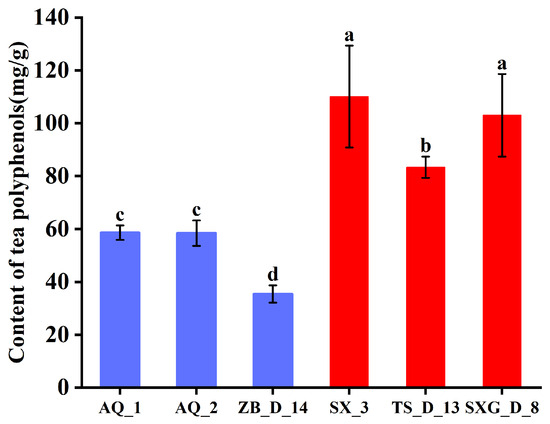
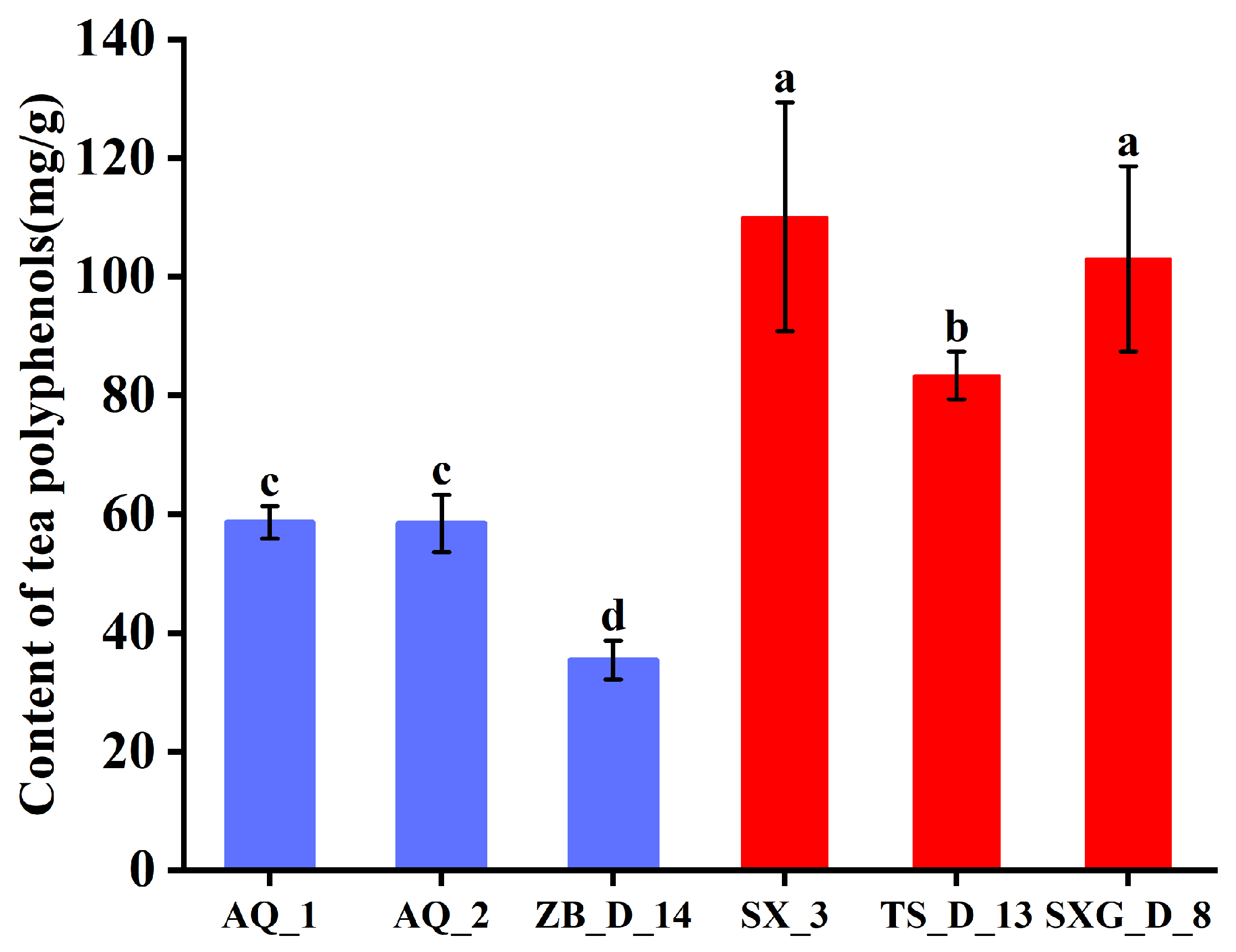
Our preliminary study quantified the TP content in young leaves of 150 Chionanthus retusus individuals (unpublished data), revealing substantial variation among them. The TP content in lines AQ_1, AQ_2, and ZB_D_14 was significantly lower than that in lines SX_3, TS_D_13, and SXG_D_8 (Figure 1). The average TP content was 50.82 mg/g in the low-content lines and 98.81 mg/g in the high-content lines. The mean content in the high-content lines was approximately 90% greater than that in the low-content lines, indicating a pronounced disparity among the six selected lines.
Figure 1.
Tea polyphenol (TP) content in germplasms with high and low TP levels. Data are presented as mean ± standard deviation (n = 6). Significant differences among the lines (p < 0.05) are denoted by different lowercase letters (a–d), according to Duncan’s test.
3.2. Lines Transcriptome Sequencing and Differential Expression Gene Analysis
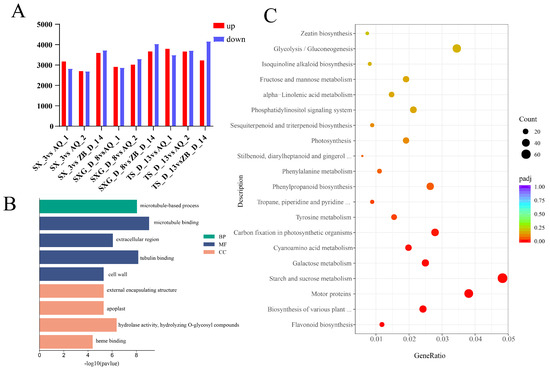
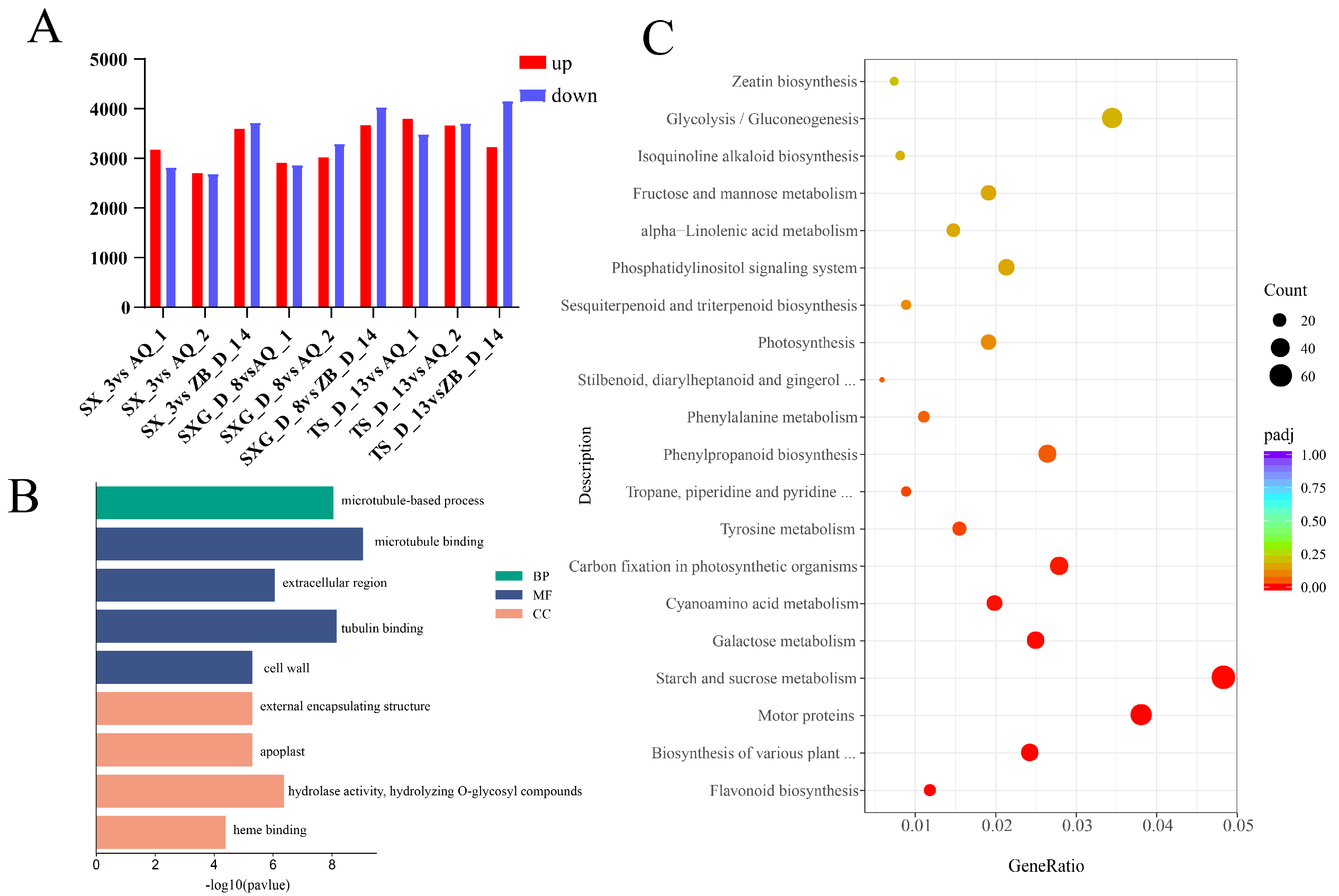
To investigate the molecular mechanism of TP biosynthesis in C. retusus, transcriptome sequencing was performed on young leaves from the six lines, yielding a total of 855,953,122 clean reads (Table S2). The Q30 percentage and GC content were 94.66% and 43.83%, respectively (Table S2). Principal component analysis (PCA) revealed that the first and second principal components (PC1 and PC2) were the major axes separating the samples. PC1 accounted for 23.92% of the total variance, while PC2 explained 18.80%, together contributing 42.72% of the cumulative variance and effectively capturing the major variation among samples. All biological replicates (three per line) clustered tightly within their respective line groups in the PCA plot. Furthermore, the transcriptome correlation coefficient between any two replicates exceeded 0.984 (Figure S1), demonstrating high within-group reproducibility and technical consistency of the experiment. Three low-TP lines (ZB_D_14, AQ_1, AQ_2) were each compared with three high-TP lines (SX_3, SXG_D_8, TS_D_13), revealing a substantial number of differentially expressed genes (DEGs) ranging from 5395 to 7705 across all pairwise comparisons. The comparison between SXG_D_8 and ZB_D_14 yielded the highest total number of DEGs (7705), while SX_3 vs. AQ_1 showed the greatest number of up-regulated genes (3174). In contrast, the comparison between TS_D_13 and ZB_D_14 contained the most down-regulated genes (4160) (Figure 2A). Existing studies have demonstrated that the biosynthesis of tea polyphenols primarily occurs through the flavonoid biosynthesis and phenylpropanoid biosynthesis pathways [25]. Gene Ontology (GO) enrichment analysis indicated that the DEGs were predominantly enriched in terms such as “cell wall and external encapsulating structure,” “xyloglucan xyloglucosyl transferase activity,” and “glycosyl bond hydrolase activity” (Figure 2B). Kyoto Encyclopedia of Genes and Genomes (KEGG) pathway analysis showed that among the top 20 enriched pathways, several were associated with TP synthesis, including flavonoid biosynthesis, phenylalanine metabolism, and phenylpropanoid biosynthesis (Figure 2C). In our research, differentially expressed genes were also predominantly enriched in these same pathways—flavonoid biosynthesis and phenylpropanoid biosynthesis. This alignment with established knowledge further indicates that tea polyphenol biosynthesis in Chionanthus retusus is largely derived from the flavonoid and phenylpropanoid biosynthesis pathways.
Figure 2.
Statistical and functional enrichment analysis of differentially expressed genes (DEGs). (A) Number of up-regulated and down-regulated DEGs. (B) KEGG enrichment analysis of DEGs. (C) GO enrichment analysis of DEGs.
3.3. Co-Expression Network Analysis of Tea Polyphenols in High- and Low-Content Lines
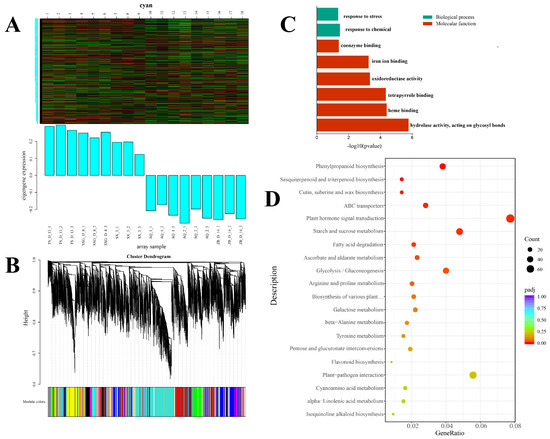
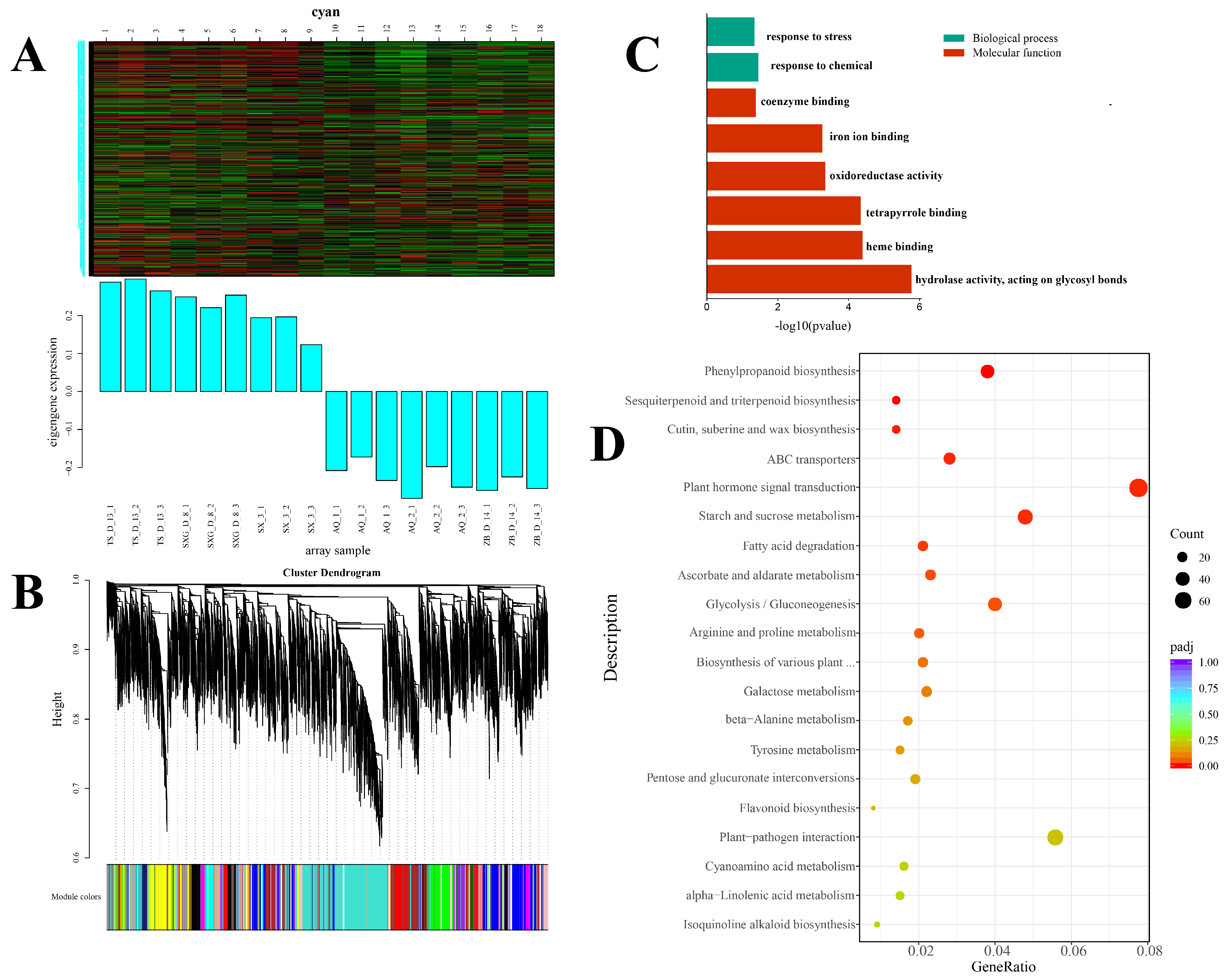
To uncover potential associations between gene expression patterns and phenotypic traits, we employed Weighted Gene Co-expression Network Analysis (WGCNA) to construct a gene co-expression network and identify key functional modules and hub genes. WGCNA clustered the DEGs into 28 distinct modules (Figure 3B). The ‘Cyan’ module, comprising 486 genes and demonstrating consistently high expression across the three high-TP lines (SX_3, SXG_D_8, and TS_D_13), was selected for further analysis (Figure 3A). GO enrichment analysis of these 486 genes revealed significant enrichment in functional categories including hydrolase activity, coenzyme binding, and iron ion binding (Figure 3C). KEGG pathway analysis further indicated that these DEGs were predominantly enriched in pathways related to TP synthesis, including flavonoid biosynthesis, sesquiterpenoid and triterpenoid biosynthesis, and phenylpropanoid biosynthesis (Figure 3D). Further analysis of this module identified key genes within the tea polyphenol biosynthetic pathway, such as PAL and CHS. Additionally, the module contained genes associated with secondary metabolism, including members of the MYB transcription factor family.
Figure 3.
Weighted gene co-expression network analysis (WGCNA). (A) Expression patterns of genes within the cyan module. (B) Hierarchical clustering dendrogram of gene co-expression modules. (C) GO enrichment analysis for genes in the cyan module. (D) KEGG pathway enrichment analysis for genes in the cyan module.
3.4. Analysis of Key Genes in the Tea Polyphenol Biosynthetic Pathway
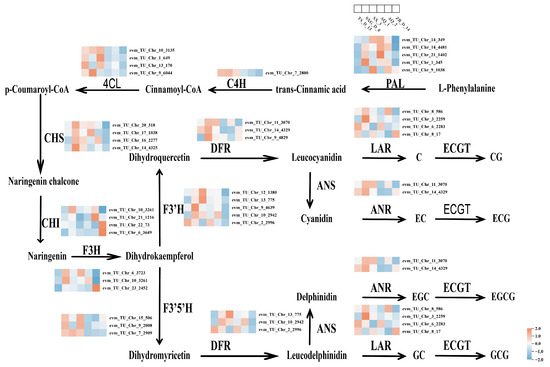
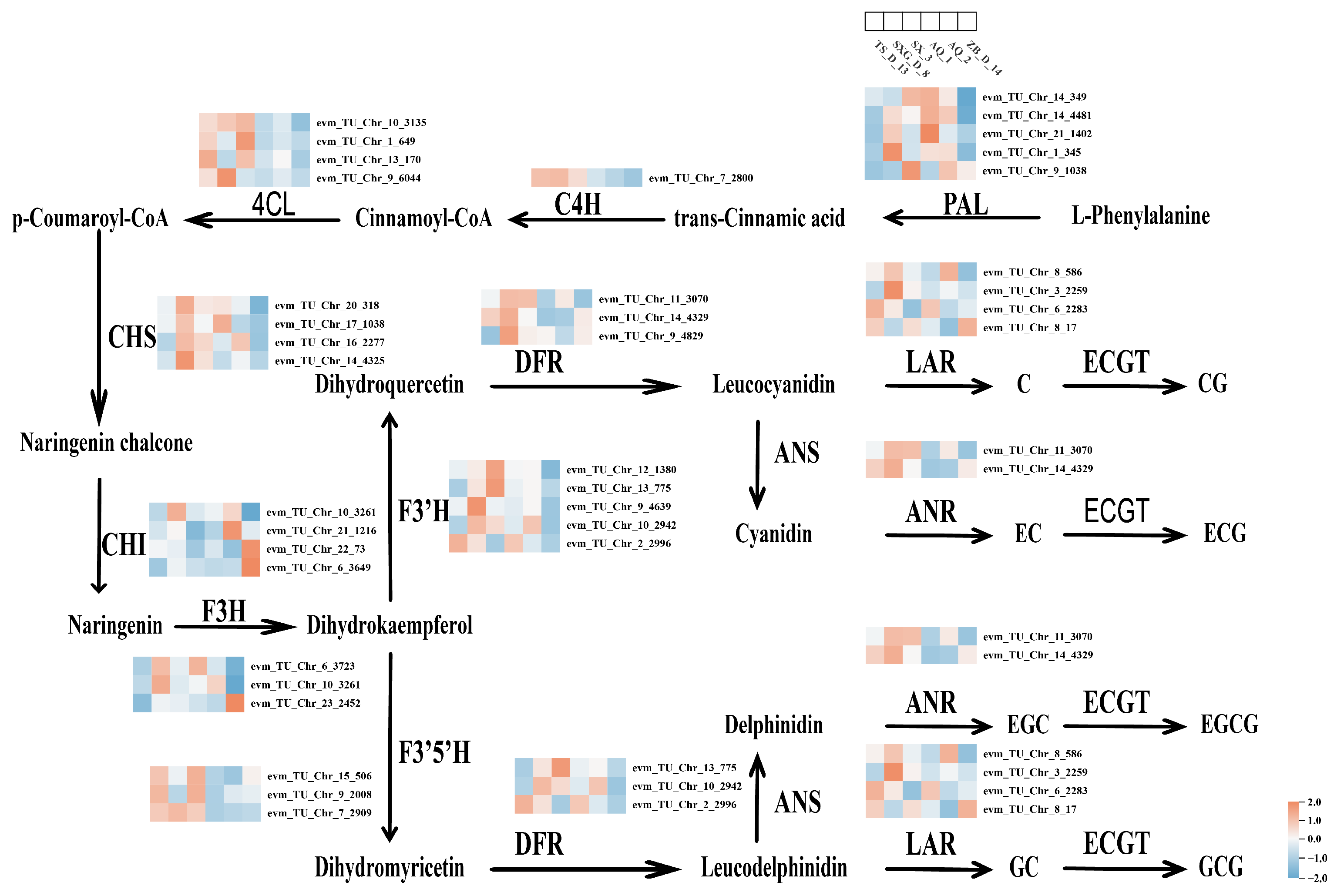
Based on transcriptomic data, the TP biosynthetic pathway in C. retusus was mapped. The results revealed a consistent expression pattern for genes involved in the pathway from L-phenylalanine to catechin gallates (e.g., PAL, 4CL, CHS, F3′5′H, DFR, ANR, and LAR) (Figure 4). The expression levels of key rate-limiting enzyme genes (PAL, CHS, ANR, and LAR) [26,27,28,29] were significantly higher in the high-TP lines (SX_3, SXG_D_8, TS_D_13) than in the low-TP lines (ZB_D_14, AQ_2, AQ_1). These enzymes are established as crucial regulators collectively controlling TP biosynthesis: PAL is the initial key enzyme in the phenylpropanoid pathway, providing core precursors; CHS is the first key enzyme in the flavonoid pathway, determining flavonoid synthesis rate and metabolic flux; LAR and ANR catalyze the production of non-gallated catechins downstream, regulating the final TP composition. The differential expression of these key enzymes explains the higher TP content in the high-content lines and underscores the critical roles of PAL, CHS, and LAR in this process.
Figure 4.
Proposed biosynthetic pathway for tea polyphenols in Chionanthus retusus. Expression trends of key structural genes are indicated adjacent to their corresponding enzyme symbols. Abbreviations: PAL, phenylalanine ammonia-lyase; C4H, cinnamate-4-hydroxylase; 4CL, 4-coumarate-CoA ligase; CHS, chalcone synthase; CHI, chalcone isomerase; F3H, flavanone 3-hydroxylase; F3′H, flavonoid 3′-hydroxylase; F3′5′H, flavonoid 3′,5′-hydroxylase; DFR, dihydroflavonol 4-reductase; ANS, anthocyanidin synthase; LAR, leucoanthocyanidin reductase; ANR, anthocyanidin reductase; ECGT, epicatechin:O-galloyltransferase; C, catechin; CG, catechin gallate; EC, epicatechin; ECG, epicatechin gallate; EGC, epigallocatechin; EGCG, epigallocatechin gallate; GC, gallocatechin; GCG, gallocatechin gallate.
3.5. Comparative Transcriptome Analysis of Differentially Expressed Genes
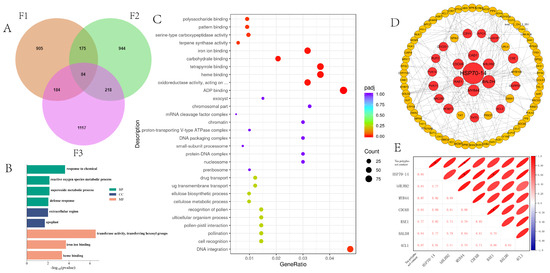
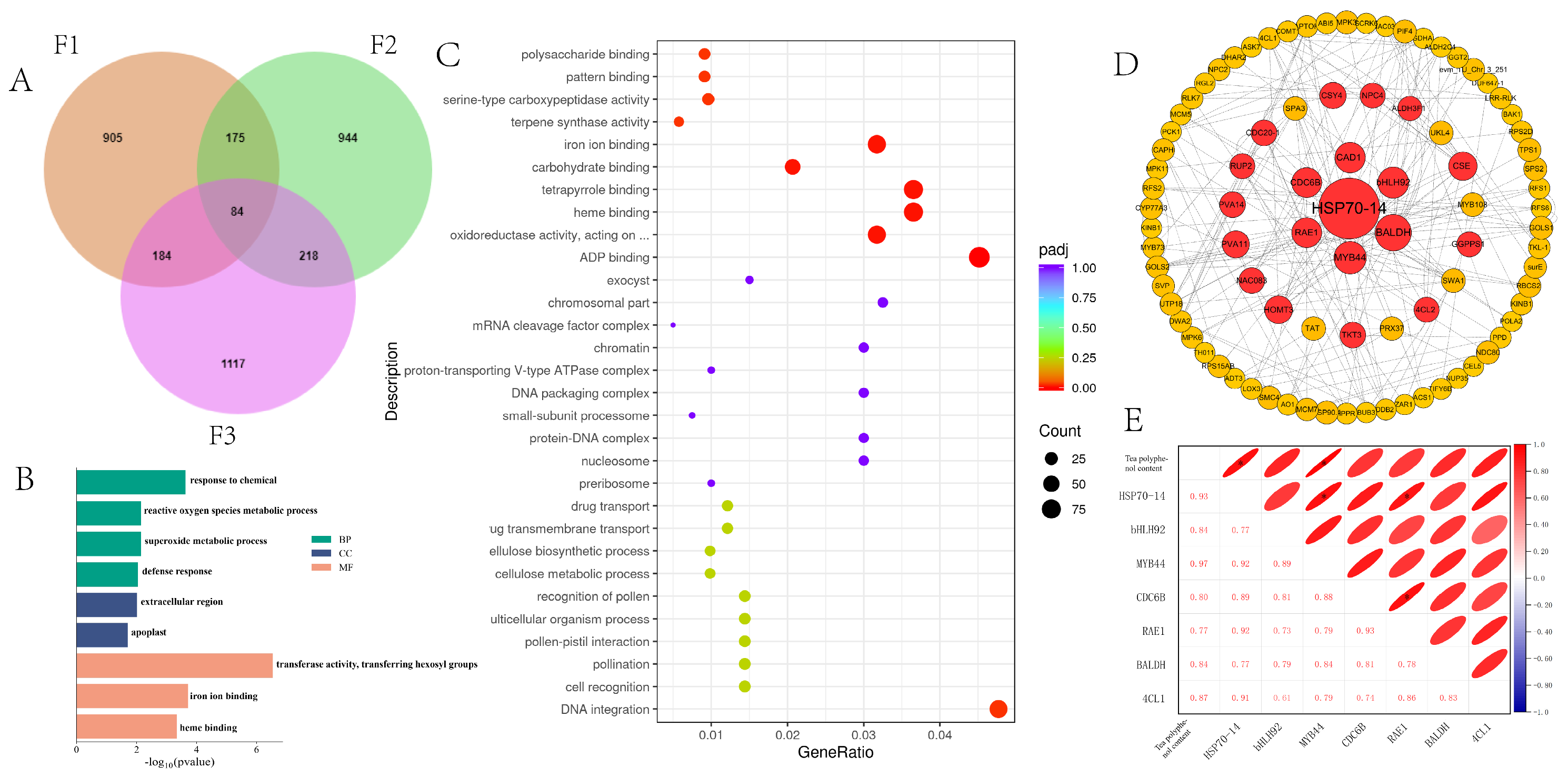
To further investigate the molecular basis of TP synthesis, we conducted an in-depth comparative transcriptome analysis. Gene sets were defined as follows: F1 represents the intersection of DEGs from comparisons of SX_3 versus ZB_D_14, AQ_2, and AQ_1; F2 from SXG_D_8 versus AQ_1, AQ_2, and ZB_D_14; and F3 from TS_D_13 versus AQ_1, AQ_2, and ZB_D_14. Screening identified 84 common DEGs shared across the F1, F2, and F3 gene sets (Figure 5A). KEGG enrichment analysis of these 84 DEGs showed significant enrichment in starch and sucrose metabolism, plant secondary metabolite biosynthesis, flavonoid biosynthesis, and phenylpropanoid biosynthesis (Figure 5B). GO enrichment analysis indicated primary association with heme binding, oxidoreductase activity, and hexosyl group transferase activity (Figure 5C). A TP interaction regulatory network was constructed using Cytoscape, from which the top 16 genes with the highest connectivity scores were selected as candidate hub genes (Figure 5D). These include 3 transcription factors (CrMYB44, CrbHLH92, CrNAC083), 11 metabolic enzymes (CrCAD1, CrTKT3, CrNPC4, Cr4CL2, CrBALDH, CrALDH3F1, CrCSE, CrGGPPS1, CrHOMT3, CrRUP2, CrRAE1), 5 structural proteins (CrCDC20-1, CrCDC6B, CrCSY4, CrPVA11, CrPVA14), and 1 molecular chaperone (CrHSP70-14). Correlation analysis revealed that TP content was significantly positively correlated with the expression levels of CrHSP70-14 and CrMYB44. The expression pattern of CrHSP70-14 showed positive correlation with both CrMYB44 and CrRAE1, and CrRAE1 expression was positively correlated with CrCDC6B, indicating strong mutual positive correlations among these genes (Figure 5E).
Figure 5.
Regulatory mechanisms of tea polyphenol synthesis in high- and low-content genotypes. (A) Venn diagram showing common differentially expressed genes (DEGs) among comparison groups F1, F2, and F3. (B) Top 20 significantly enriched GO terms for the 84 common DEGs. (C) Top 20 significantly enriched KEGG pathways for the 84 common DEGs. (D) Protein–protein interaction (PPI) network of tea polyphenol-related genes. (E) Heatmap showing correlations between expression levels of key candidate genes and tea polyphenol content. The asterisk (∗) indicates significant difference (p < 0.05).
3.6. Validation of Differentially Expressed Gene Expression Patterns
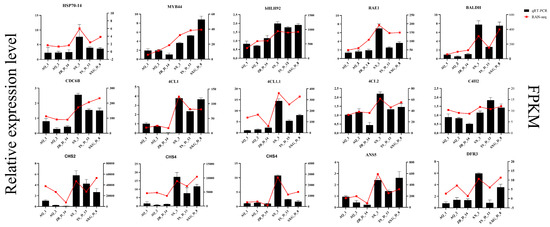
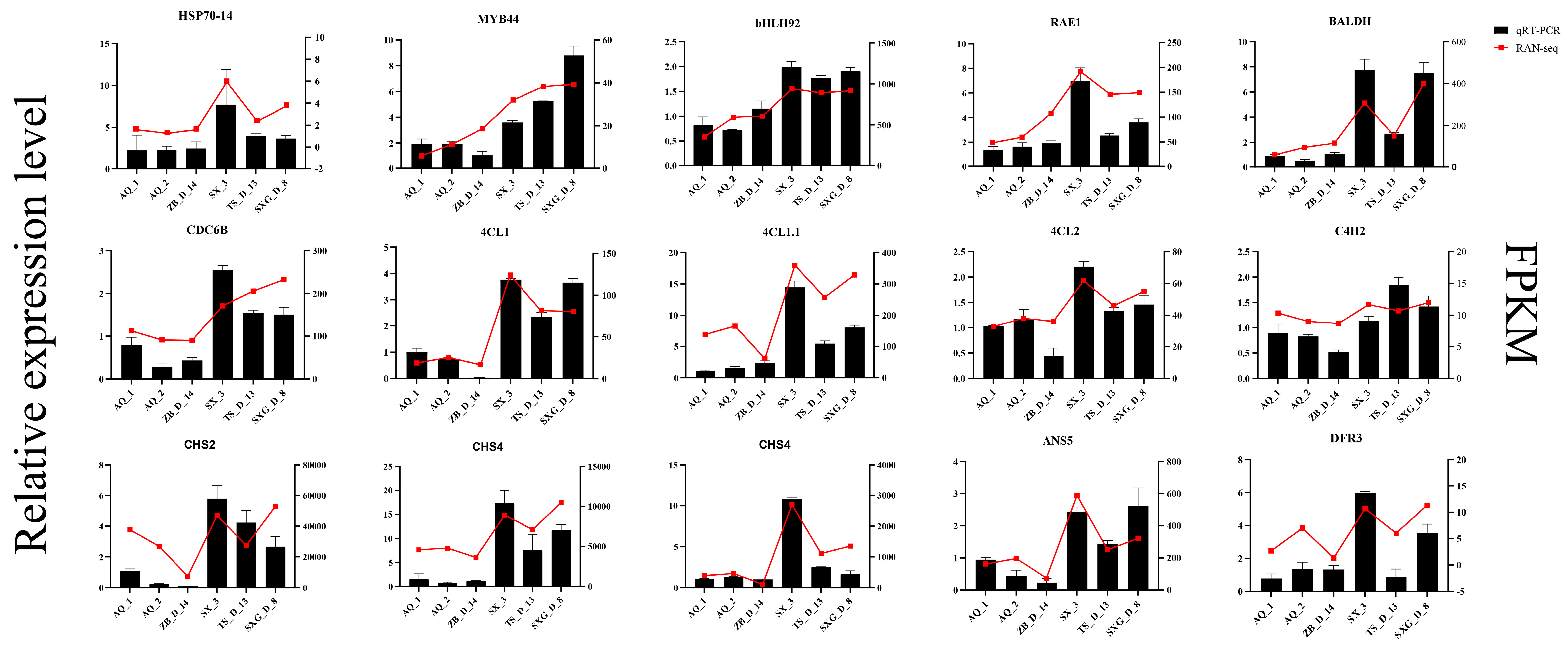
To validate the accuracy and reproducibility of the transcriptome data, 15 genes involved in TP biosynthesis regulation, including CrHSP70-14, CrBALDH, CrbHLH92, CrMYB44, CrRAE1, CrCDC6B, and Cr4CL1, were selected for qRT-PCR analysis (Figure 6). The results demonstrated strong concordance between qRT-PCR measurements and the corresponding FPKM values. Notably, CrHSP70-14 exhibited significantly upregulated expression in the high-TP lines. Most genes analyzed showed consistent expression patterns between the two methodologies, confirming the reliability of the RNA-Seq data.
Figure 6.
Validation of expression patterns for 15 differentially expressed genes. Bar charts compare relative expression levels from qRT-PCR with FPKM values from RNA-Seq for selected genes. UBC2 served as the internal reference gene, and expression level of each target gene in AQ_1 was set to 1. Data represent mean ± standard deviation (n = 15).
3.7. Effects of Overexpressing CrHSP70-14, CrMYB44, CrCDC6B, and CrRAE1 on Tea Polyphenol Content in Tobacco
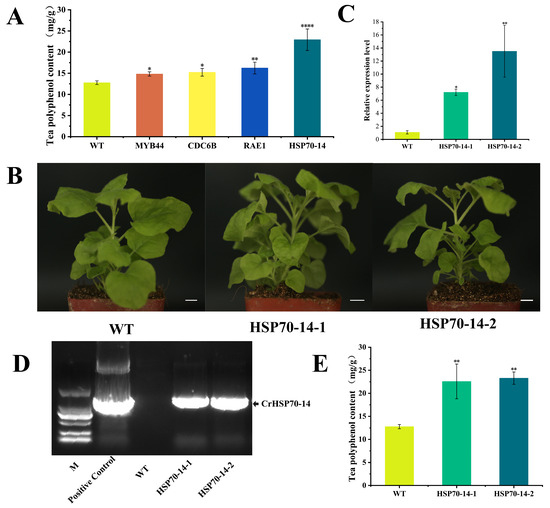
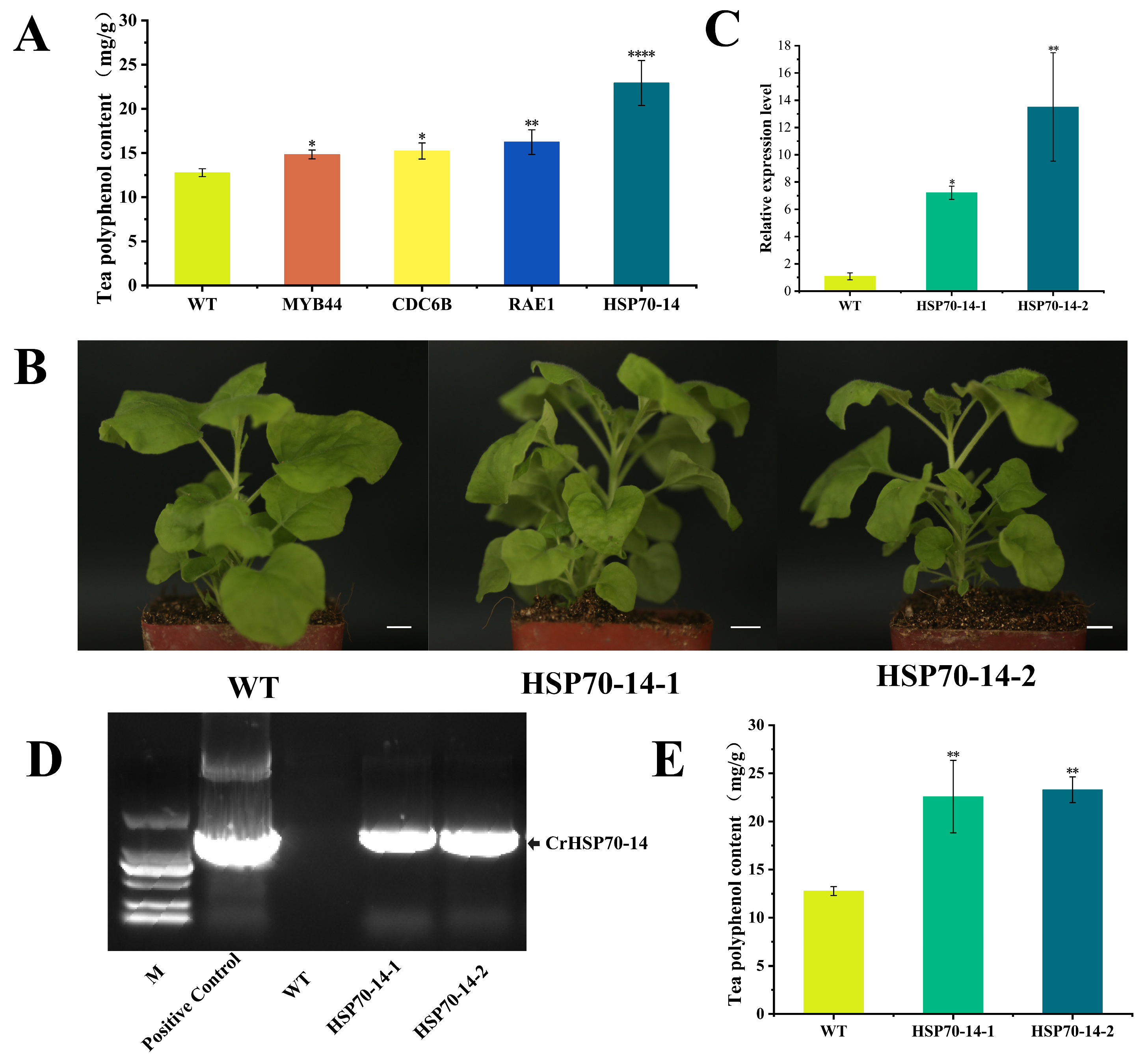
To further elucidate the molecular mechanism of TP biosynthesis, we investigated the function of four hub genes (CrMYB44, CrHSP70-14, CrCDC6B, and CrRAE1) using tobacco transient transformation assays. The results demonstrated that TP content in tobacco leaves transiently expressing each of the four hub genes was significantly higher than in the control (Figure 7A). Among them, transient overexpression of CrHSP70-14 resulted in the highest TP accumulation (22.9 mg/g), followed by CrRAE1. The control group showed the lowest content (approximately 12.76 mg/g), indicating a significant difference compared to all four gene transformations. These results confirm that CrMYB44, CrCDC6B, CrRAE1, and CrHSP70-14 all positively regulate TP biosynthesis. To further validate the role of the candidate gene, we generated stable CrHSP70-14 overexpression transgenic tobacco lines (Figure 7B). PCR and qPCR analyses confirmed the successful generation of two independent transgenic lines, exhibiting 4.4-fold and 9.7-fold upregulation of CrHSP70-14 expression, respectively (Figure 7C,D). TP content was significantly higher in both transgenic lines compared to the control. The CrHSP70-14-1 line accumulated 22.58 mg/g (1.76-fold increase over control), while the CrHSP70-14-2 line reached 23.28 mg/g (1.82-fold increase) (Figure 7E). This result conclusively demonstrates that CrHSP70-14 significantly enhances TP biosynthesis.
Figure 7.
Phenotypic and molecular characterization of CrHSP70-14 transgenic tobacco lines. (A) Tea polyphenol content in wild-type and tobacco leaves transiently expressing the four candidate genes. (B) Phenotype comparison of two independent CrHSP70-14 overexpression lines with wild-type control. (C) Relative expression levels of CrHSP70-14 in transgenic lines. (D) PCR validation of the CrHSP70-14 transgene in putative transgenic plants. M: Marker 2000 molecular weight marker; Positive Control: pBI121 overexpression vector harboring the CrHSP70-14 gene. (E) Tea polyphenol content in stable CrHSP70-14 overexpression lines versus wild-type control. Asterisks indicate significant differences compared to WT (t-test): * p < 0.05, ** p < 0.01, **** p < 0.0001.
4. Discussion
As a traditional native Chinese tree species, Chionanthus retusus shows considerable potential for development as a novel, alternative tea resource, with its leaves serving as the primary material. Tea polyphenols (TPs) represent a key indicator for evaluating the organoleptic quality (color, aroma, taste) and health benefits of tea plants, making the elucidation of their biosynthetic pathway crucial for the genetic improvement and industrial utilization of tea-oriented C. retusus varieties. Our analysis revealed significant variation in TP content among different lines, with the ZB_D_14 line exhibiting the lowest content (35.41 mg/g) and the SX_3 line the highest (110.09 mg/g) (Figure 1). Notably, the TP content in SX_3 (110.09 mg/g) is comparable to previously reported levels in green tea (126.59 ± 2.09 mg/g) [30], indicating that young leaves of high-polyphenol C. retusus lines approach the polyphenol levels of commercial green tea and confirming the species’ potential as a tea resource. Subsequent transcriptome sequencing of young leaves from three low-TP (ZB_D_14, AQ_2, AQ_1) and three high-TP (SX_3, SXG_D_8, TS_D_13) lines identified 58,563 differentially expressed genes (DEGs) potentially involved in TP biosynthesis in C. retusus.
WGCNA clusters genes with similar expression patterns [31] and constructs co-expression networks to identify modules of co-expressed genes. We selected the Cyan module, comprising 486 genes (Figure 3A), which exhibited significantly low expression in low-TP lines and significantly high expression in high-TP lines. Genes within this module were significantly enriched in pathways related to TP biosynthesis, such as flavonoid and phenylpropanoid biosynthesis. To further identify key enzymes in the TP biosynthetic pathway of C. retusus, we mapped the pathway, revealing that high expression levels of C4H and 4CL lead to the production of p-coumaroyl-CoA, providing abundant precursor metabolites for TP synthesis [32]. This likely constitutes a key reason for the high TP content in leaves of SX_3, SXG_D_8, and TS_D_13. Chalcone synthase (CHS) and chalcone isomerase (CHI) catalyze the conversion of p-coumaroyl-CoA to naringenin [33]. The high expression of CHS in high-TP lines facilitates substantial naringenin biosynthesis, supplying essential intermediates for downstream TP production. F3H, F3′5′H, F3′H, and DFR are crucial enzymes in the TP pathway, catalyzing the formation of leucodelphinidin and leucocyanidin [34,35]. The elevated expression of DFR in high-content lines promotes the biosynthesis of these leucoanthocyanidins. All differentially expressed DFR genes showed higher expression in high-content lines, indicating that DFR serves as the primary reductase in C. retusus, playing a pivotal role in TP biosynthesis by catalyzing leucodelphinidin and leucocyanidin formation. Leucoanthocyanidin reductase (LAR) utilizes leucoanthocyanidins to produce catechin and gallocatechin [36], while anthocyanidin reductase (ANR) uses anthocyanidins to yield epicatechin and epigallocatechin [37]. These non-gallated catechins subsequently serve as precursors for ester-type catechin formation via esterification catalyzed by ECGT.
TP biosynthesis is a complex physiological and biochemical process regulated by multiple pathways involving environmental and genetic factors [38,39]. Elucidating this mechanism is crucial for understanding TP synthesis regulation and provides a theoretical foundation for breeding tea-oriented C. retusus with improved quality. To investigate potential regulatory genes, we constructed a gene co-expression network (Figure 5D) and selected the top 20 genes by connectivity as candidates. These included 3 transcription factors (CrMYB44, CrbHLH92, CrNAC083), 11 metabolic enzymes (CrCAD1, CrTKT3, CrNPC4, Cr4CL2, CrBALDH, CrALDH3F1, CrCSE, CrGGPPS1, CrHOMT3, CrRUP2, CrRAE1), 5 structural proteins (CrCDC20-1, CrCDC6B, CrCSY4, CrPVA11, CrPVA14), and 1 molecular chaperone (CrHSP70-14). Integrated correlation and expression pattern analyses suggested that CrMYB44, CrbHLH92, CrNAC083, CrCDC6B, CrRAE1, and CrHSP70-14 play significant roles in TP synthesis. Numerous studies show that CsMYB4a can specifically bind to promoters of key catechin synthesis genes like ANS, ANR, and LAR, directly activating their transcription and enhancing TP content [40]. Furthermore, research across plant species indicates that MYB transcription factors participate conservatively in TP biosynthesis regulation [41,42], recognizing that cis-acting elements in target gene promoters coordinately activate anthocyanin and proanthocyanidin pathways, thereby promoting TP accumulation [43]. Here, the expression pattern of CrMYB44 showed significant positive correlation with TP content. Subsequent functional validation via transient expression in tobacco significantly increased TP levels, confirming that CrMYB44 promotes TP biosynthesis. The RAE family belongs to the F-BOX protein family, encoding nucleus-localized F-box proteins with important roles in plant stress resistance [44]. We found that CrRAE1 was highly expressed in high-TP lines and its expression level correlated with TP biosynthesis, suggesting its potential involvement. This was confirmed by transient overexpression in tobacco, which increased TP content, indicating CrRAE1 is a positive regulator. HSP70 family genes are primarily known for roles in protein homeostasis and heat stress response [45,46], with no prior reports linking them to TP synthesis regulation. In our research, CrHSP70-14 expression was 1.82-fold higher in high-content lines and showed significant positive correlation with TP content. Through both transient transformation and stable CrHSP70-14 transgenic tobacco lines, we demonstrated that its overexpression significantly enhances TP levels, establishing CrHSP70-14 as a positive regulator.
5. Conclusions
In summary, this study conducted transcriptome analysis on young leaves of Chionanthus retusus with low- and high-TP contents, revealing that the DEGs were predominantly enriched in phenylpropanoid and flavonoid biosynthetic pathways. Through WGCNA and a TP interaction regulatory network, we identified genes highly correlated with TP content, including transcription factors, metabolic enzymes, and molecular chaperones such as CrMYB44, CrbHLH92, CrCDC6B, CrRAE1, and CrHSP70-14. Agrobacterium-mediated transient transformation assays demonstrated that transient expression of CrMYB44, CrCDC6B, CrHSP70-14, and CrRAE1 in tobacco leaves significantly enhanced TP accumulation. Stable CrHSP70-14 overexpression transgenic tobacco lines exhibited significantly higher leaf TP content compared to wild-type controls. Collectively, this research provides novel insights into the TP biosynthetic mechanism in C. retusus, establishes a transcriptional regulatory network, and offers a preliminary elucidation of the molecular regulatory mechanism underlying TP biosynthesis in this species.
Supplementary Materials
The following supporting information can be downloaded at https://www.mdpi.com/article/10.3390/metabo16010026/s1, Figure S1: Principal component analysis (PCA) of transcriptome samples. The horizontal axis represents PC1, the vertical axis represents PC2, indicating scores of the first and second principal components, respectively; Table S1: Summary of RNA-Seq data filtering statistics; Table S2: List of primers used for qRT-PCR analysis.
Author Contributions
Conceptualization, Conception, J.W. (Jinnan Wang), J.L. (Jihong Li) and L.G.; writing—original draft preparation, L.G.; bioinformatics analysis, L.G. and H.W.; transcriptome analyses, Y.W. and M.N.; RNA isolation and qRT-PCR experiment, S.Z. and M.W.; samples, W.S.; photos, J.L. (Jiaxun Liu) and J.W. (Jingyu Wang); writing—review and editing, J.W. (Jinnan Wang); funding acquisition, J.L. (Jihong Li). All authors have read and agreed to the published version of the manuscript.
Funding
This work was supported by the Subject of Key R & D Plan of Shandong Province (Major Scientific and Technological Innovation Project) Mining and Accurate Identifcation of Forest Tree Germplasm Resources (No. 2021LZGC023); and Agricultural science and Technology Fund Project of Shandong province (No. 2019LY001-4).
Institutional Review Board Statement
Not applicable.
Informed Consent Statement
Not applicable.
Data Availability Statement
The genomic information of the Chionanthus retusus mentioned in the article is available from the corresponding author upon reasonable request. This assembly used HiC and PacBio methods. The Hi-C and ONT data, as well was the assemblies have been deposited to China National GeneBank DataBase with Bioproject ID of CNP0008503.
Conflicts of Interest
The authors declare no conflicts of interest.
Abbreviations
The following abbreviations are used in this manuscript:
| TP(s) | Tea Polyphenol(s) |
| DEG(s) | Differentially Expressed Gene(s) |
| WGCNA | Weighted Gene Co-expression Network Analysis |
| FPKM | Fragments Per Kilobase of transcript per Million mapped reads |
| PCA | Principal Component Analysis |
| GO | Gene Ontology |
| KEGG | Kyoto Encyclopedia of Genes and Genomes |
| qRT-PCR | Quantitative Real-Time Polymerase Chain Reaction |
References
- Pan, S.Y.; Nie, Q.; Tai, H.C.; Song, X.L.; Tong, Y.F.; Zhang, L.J.; Wu, X.W.; Lin, Z.H.; Zhang, Y.Y.; Ye, D.Y.; et al. Tea and tea drinking: China’s outstanding contributions to the mankind. Chin. Med. 2022, 17, 27. [Google Scholar] [CrossRef] [Scilit]
- Wang, L.; Santos, E.; Schenk, D.; Rabago-Smith, M. Kinetics and Mechanistic Studies on the Reaction between Cytochrome c and Tea Catechins. Antioxidants 2014, 3, 559–568. [Google Scholar] [CrossRef] [Scilit]
- Wang, H.; Provan, G.J.; Helliwell, K. Tea flavonoids: Their functions, utilisation and analysis. Trends Food Sci. Technol. 2000, 11, 152–160. [Google Scholar] [CrossRef] [Scilit]
- Bettuzzi, S.; Brausi, M.; Rizzi, F.; Castagnetti, G.; Peracchia, G.; Corti, A. Chemoprevention of human prostate cancer by oral administration of green tea catechins in volunteers with high-grade prostate intraepithelial neoplasia: A preliminary report from a one-year proof-of-principle study. Cancer Res. 2006, 66, 1234–1240. [Google Scholar] [CrossRef] [Scilit]
- Iso, H.; Date, C.; Wakai, K.; Fukui, M.; Tamakoshi, A. The Relationship between Green Tea and Total Caffeine Intake and Risk for Self-Reported Type 2 Diabetes among Japanese Adults. Ann. Intern. Med. 2006, 144, 554–562. [Google Scholar] [CrossRef] [Scilit] [PubMed]
- Olcha, P.; Winiarska-Mieczan, A.; Kwiecień, M.; Nowakowski, Ł.; Miturski, A.; Semczuk, A.; Kiczorowska, B.; Gałczyński, K. Antioxidative, Anti-Inflammatory, Anti-Obesogenic, and Antidiabetic Properties of Tea Polyphenols—The Positive Impact of Regular Tea Consumption as an Element of Prophylaxis and Pharmacotherapy Support in Endometrial Cancer. Int. J. Mol. Sci. 2022, 23, 6703. [Google Scholar] [CrossRef] [Scilit] [PubMed]
- Khan, N.; Mukhtar, H. Tea Polyphenols in Promotion of Human Health. Nutrients 2019, 11, 39. [Google Scholar] [CrossRef] [Scilit]
- Negishi, H.; Xu, J.; Ikeda, K.; Njelekela, M.; Nara, Y.; Yamori, Y. Black and Green Tea Polyphenols Attenuate Blood Pressure Increases in Stroke-Prone Spontaneously Hypertensive Rats. J. Nutr. 2004, 134, 38–42. [Google Scholar] [CrossRef] [Scilit]
- Wang, L.; Tang, X.; Zhang, S.; Xie, X.; Li, M.; Liu, Y.; Wang, S. Tea GOLDEN2-LIKE Genes Enhance Catechin Biosynthesis Through Activating R2R3-MYB Transcription Factor. Plant Physiol. 2022, 189, 1236–1251. [Google Scholar] [CrossRef] [Scilit]
- Wang, P.; Zhang, L.; Jiang, X.; Dai, X.; Xu, L.; Li, T.; Xing, D.; Li, Y.; Li, M.; Gao, L.; et al. Evolutionary and Functional Characterization of Leucoanthocyanidin Reductases from Camellia sinensis. Planta 2018, 247, 139–154. [Google Scholar] [CrossRef] [Scilit]
- Liu, Y.; Gao, L.; Liu, L.; Yang, Q.; Lu, Z.; Nie, Z.; Wang, Y.; Xia, T. Purification and Characterization of a Novel Galloyltransferase Involved in Catechin Galloylation in the Tea Plant (Camellia sinensis). J. Biol. Chem. 2012, 287, 44406–44417. [Google Scholar] [CrossRef] [Scilit]
- Shan, R.; Zhang, Y.; You, X.; Kong, X.; Zhang, Y.; Li, X.; Wang, L.; Wang, X.; Chen, C. Revealing the Molecular Regulatory Mechanism of Flavonoid Accumulation in Tender Leaves of Tea Plants by Transcriptomic and Metabolomic Analyses. Plants 2025, 14, 625. [Google Scholar] [CrossRef] [Scilit]
- Zhao, L.-Q.; Shan, C.-M.; Shan, T.-Y.; Li, Q.-L.; Ma, K.-L.; Deng, W.-W.; Wu, J.-W. Comparative Transcriptomic Analysis Reveals the Regulatory Mechanisms of Catechins Synthesis in Different Cultivars of Camellia sinensis. Food Res. Int. 2022, 157, 111375. [Google Scholar] [CrossRef] [Scilit]
- Xu, J.; Li, J.; Liu, Y.; Zheng, P.; Liu, S.; Sun, B. A Genus-Specific R2R3 MYB Transcription Factor, CsMYB34, Regulates Galloylated Catechin Biosynthesis in Camellia sinensis. Plant Physiol. Biochem. 2025, 219, 109401. [Google Scholar] [CrossRef] [Scilit]
- Li, J.; Liu, S.; Chen, P.; Cai, J.; Tang, S.; Yang, W.; Cao, F.; Zheng, P.; Sun, B. Systematic Analysis of the R2R3-MYB Family in Camellia sinensis: Evidence for Galloylated Catechins Biosynthesis Regulation. Front. Plant Sci. 2022, 12, 782220. [Google Scholar] [CrossRef] [Scilit]
- Zhang, K.; Lin, C.; Chen, B.; Lin, Y.; Su, H.; Du, Y.; Zhang, H.; Zhou, H.; Ji, R.; Zhang, L. A Light Responsive Transcription Factor CsbHLH89 Positively Regulates Anthocyanidin Synthesis in Tea (Camellia sinensis). Sci. Hortic. 2024, 327, 112784. [Google Scholar] [CrossRef] [Scilit]
- Zhang, Y.; Wang, J.; Xiao, Y.; Wu, Y.; Li, N.; Ding, C.; Hao, X.; Yu, Y.; Wang, L.; Wang, X. CsWRKY12 Interacts with CsVQ4L to Promote the Accumulation of Galloylated Catechins in Tender Leaves of Tea Plants. Plant J. 2024, 120, 2861–2873. [Google Scholar] [CrossRef] [Scilit]
- Zheng, C.; Ma, J.-Q.; Chen, J.-D.; Ma, C.-L.; Chen, W.; Yao, M.-Z.; Chen, L. Gene Coexpression Networks Reveal Key Drivers of Flavonoid Variation in Eleven Tea Cultivars (Camellia sinensis). J. Agric. Food Chem. 2019, 67, 9967–9978. [Google Scholar] [CrossRef] [Scilit]
- Cui, L.; Yao, S.; Dai, X.; Yin, Q.; Liu, Y.; Jiang, X.; Wu, Y.; Qian, Y.; Pang, Y.; Gao, L.; et al. Identification of UDP-glycosyltransferases involved in the biosynthesis of astringent taste compounds in tea (Camellia sinensis). Plant Physiol. Biochem. 2016, 102, 97–105. [Google Scholar] [CrossRef] [Scilit]
- Song, J.H.; Kim, C.H.; Hong, S.P. Morphological Characteristics, Distribution and Taxonomic Consideration of Chionanthus retusus in Korea. Korean J. Plant Taxon. 2011, 41, 156–163. [Google Scholar] [CrossRef] [Scilit]
- Niu, M.; Zhao, T.; Xu, D.; Liu, C.; Liu, Y.; Sun, M.; Xie, H.; Li, J. Physiological Responses of Chionanthus retusus Seedlings to Drought and Waterlogging Stresses. Forests 2023, 14, 429. [Google Scholar] [CrossRef] [Scilit]
- Zhao, T.R.; Liu, Y.; Sun, M.; Xie, H.; Li, J. Growth and Photosynthetic Physiological Characteristics Response of Chionanthus retusus Seedlings to Water and Salt Stress. Forests 2024, 15, 112–124. [Google Scholar]
- Lee, Y.-G.; Lee, H.; Jung, J.-W.; Seo, K.-H.; Lee, D.-Y.; Kim, H.-G.; Ko, J.-H.; Lee, D.-S.; Baek, N.-I. Flavonoids from Chionanthus retusus (Oleaceae) Flowers and Their Protective Effects against Glutamate-Induced Cell Toxicity in HT22 Cells. Int. J. Mol. Sci. 2019, 20, 3517. [Google Scholar] [CrossRef] [Scilit]
- Wang, P.; Si, H.; Li, C.; Xu, Z.; Guo, H.; Jin, S.; Cheng, H. Plant genetic transformation: Achievements, current status and future prospects. Plant Biotechnol. J. 2025, 23, 2034–2058. [Google Scholar] [CrossRef] [Scilit]
- Wei, K.; Wang, L.; Zhang, C.; Wu, L.; Li, H.; Zhang, F.; Cheng, H. Transcriptome analysis reveals key flavonoid 3′-hydroxylase and flavonoid 3′,5′-hydroxylase genes in affecting the ratio of dihydroxylated to trihydroxylated catechins in Camellia sinensis. PLoS ONE 2015, 10, e0137925. [Google Scholar] [CrossRef] [Scilit]
- Battistoni, B.; Ibáñez, J.; Ballesta, P.; Fiol, A.; Ahumada, S.; Meisel, L.A.; Morales, H.; Peña-Neira, Á.; Lin-Wang, K.; Allan, A.C.; et al. The R2R3 MYB700 activates the expression of biosynthetic genes involved in the accumulation of (+)-catechin but not (-)-epicatechin in Chinese plum fruits (Prunus salicina Lindl.). Sci. Hortic. 2024, 338, 113798. [Google Scholar] [CrossRef] [Scilit]
- Li, M.; Wang, W.; Wang, Y.; Guo, L.; Liu, Y.; Jiang, X.; Gao, L.; Xia, T. Duplicated chalcone synthase (CHS) genes modulate flavonoid production in tea plants in response to light stress. J. Integr. Agric. 2024, 23, 1940–1955. [Google Scholar] [CrossRef] [Scilit]
- Sun, P.; Zhang, Z.; Zhu, Q.; Zhang, G.; Xiang, P.; Lin, Y.; Lai, Z.; Lin, J. Identification of miRNAs and target genes regulating catechin biosynthesis in tea (Camellia sinensis). J. Integr. Agric. 2018, 17, 1154–1164. [Google Scholar] [CrossRef] [Scilit]
- Zhang, L.; Zhao, Z.; Yao, Z.; Mu, L.; Wang, X.; Liu, Y.; Li, Q.; Yu, X. Optimizing germination to enhance antioxidant and nutritional quality of sunflower seed oil: Role of phenylalanine ammonia-lyase. Food Chem. 2025, 493, 145773. [Google Scholar] [CrossRef] [Scilit]
- Tran, P.L.; Nguyen, Y.T.M.; Nguyen, M.Q.; Nguyen, T.N.; Tran, H.T.M. Fermented or not fermented: A comparative study of the biological activities and microbiomes of a non-fermented green tea and a five-year-old fermented tea prepared from young leaves of Shan tea. Int. J. Food Sci. Technol. 2024, 59, 4693–4700. [Google Scholar] [CrossRef] [Scilit]
- Zhang, B.; Horvath, S. A General Framework for Weighted Gene Co-Expression Network Analysis. Stat. Appl. Genet. Mol. Biol. 2005, 4, 17. [Google Scholar] [CrossRef] [Scilit]
- Yonekura-Sakakibara, K.; Higashi, Y.; Nakabayashi, R. The Origin and Evolution of Plant Flavonoid Metabolism. Plant Cell Physiol. 2019, 60, 1740–1766. [Google Scholar] [CrossRef] [Scilit]
- Dao, T.T.H.; Linthorst, H.J.M.; Verpoorte, R. Chalcone Synthase and Its Functions in Plant Resistance. Phytochem. Rev. 2011, 10, 397–412. [Google Scholar] [CrossRef] [Scilit]
- Jiao, T.; Zhou, J.; Xu, S.; Li, Y.; Song, Z.; Li, J.; Li, M.; Liu, X.; Zhang, X.; Zhang, Y.; et al. Quantitative Effect of the Expression Level of Key Genes in Naringenin Synthesis on the Accumulation Level of Target Products. Sheng Wu Gong Cheng Xue Bao 2019, 35, 1256–1265. [Google Scholar] [CrossRef]
- Winkel-Shirley, B. Flavonoid Biosynthesis. A Colorful Model for Genetics, Biochemistry, Cell Biology, and Biotechnology. Plant Physiol. 2001, 126, 485–493. [Google Scholar] [CrossRef] [Scilit] [PubMed]
- Bogs, J.; Downey, M.O.; Harvey, J.S.; Ashton, A.R.; Tanner, G.J.; Robinson, S.P. Proanthocyanidin Synthesis and Expression of Genes Encoding Leucoanthocyanidin Reductase and Anthocyanidin Reductase in Developing Grape Berries and Grapevine Leaves. Plant Physiol. 2005, 139, 652–663. [Google Scholar] [CrossRef] [Scilit] [PubMed]
- Yang, N.; Li, J.-W.; Deng, Y.-J.; Teng, R.-M.; Luo, W.; Li, G.-N.; Hu, Z.-H.; Liu, H.; Xiong, A.-S.; Zhang, J.; et al. Ectopic Biosynthesis of Catechin of Tea Plant Can Be Completed by Co-expression of the Three CsANS, CsLAR, and CsANR Genes. Hortic. Res. 2024, 11, uhae304. [Google Scholar] [CrossRef] [Scilit] [PubMed]
- Punyasiri, P.A.; Abeysinghe, I.S.B.; Kumar, V.; Treutter, D.; Duy, D.; Gosch, C.; Martens, S.; Fischer, T.C. Flavonoid Biosynthesis in the Tea Plant Camellia sinensis: Properties of Enzymes of the Prominent Epicatechin and Catechin Pathways. Arch. Biochem. Biophys. 2004, 431, 22–30. [Google Scholar] [CrossRef] [Scilit]
- Ashihara, H.; Mizuno, K.; Kato, M.; Suzuki, T.; Crozier, A. Plant Secondary Metabolism in Tea: Biosynthesis of Catechins. Phytochemistry 2010, 71, 1195–1205. [Google Scholar] [CrossRef] [Scilit]
- Li, M.; Li, Y.; Guo, L.; Gong, N.; Pang, Y.; Jiang, W.; Liu, Y.; Jiang, X.; Zhao, L.; Wang, Y.; et al. Functional Characterization of Tea (Camellia sinensis) MYB4a Transcription Factor Using an Integrative Approach. Front. Plant Sci. 2017, 8, 943. [Google Scholar] [CrossRef] [Scilit]
- Tang, D.; Shen, Y.; Li, F.; Yue, R.; Duan, J.; Ye, Z.; Lin, Y.; Zhou, W.; Yang, Y.; Chen, L.; et al. Integrating Metabolite and Transcriptome Analysis Revealed the Different Mechanisms of Characteristic Compound Biosynthesis and Transcriptional Regulation in Tea Flowers. Front. Plant Sci. 2022, 13, 1016692. [Google Scholar] [CrossRef] [Scilit] [PubMed]
- Liu, X.; Shi, J.; Zhang, J.; Jakada, B.H.; Guo, H.; Zeng, K.; Lan, X. Integrated Metabolome-Transcriptome Analyses Reveal Key Pathways Regulating Staminate Catkin Development and Pollen Maturation in Betula platyphylla. J. Plant Biol. 2025, 15, 123–135. [Google Scholar] [CrossRef] [Scilit]
- Morishita, T.; Kojima, Y.; Maruta, T.; Nishizawa-Yokoi, A.; Yabuta, Y.; Shigeoka, S. Arabidopsis NAC Transcription Factor, ANAC078, Regulates Flavonoid Biosynthesis under High-Light. Plant Cell Physiol. 2009, 50, 2210–2222. [Google Scholar] [CrossRef] [Scilit]
- Yan, X.; Liu, J.; Kim, H.; Liu, B.; Huang, X.; Yang, Z.; Lin, Y.; Chen, H.; Yang, C.; Wang, J.P.; et al. CAD1 and CCR2 protein complex formation in monolignol biosynthesis in Populus trichocarpa. New Phytol. 2018, 221, 855–870. [Google Scholar] [CrossRef] [Scilit] [PubMed]
- Mayer, M.P.; Bukau, B. Hsp70 chaperones: Cellular functions and molecular mechanism. Cell. Mol. Life Sci. 2005, 62, 670–684. [Google Scholar] [CrossRef] [Scilit]
- Liu, Y.; Gampert, L.; Nething, K.; Steinacker, J.M. Response and function of skeletal muscle heat shock protein 70. J. Appl. Physiol. 2006, 101, 1048–1055. [Google Scholar] [CrossRef] [Scilit] [PubMed]
Disclaimer/Publisher’s Note: The statements, opinions and data contained in all publications are solely those of the individual author(s) and contributor(s) and not of MDPI and/or the editor(s). MDPI and/or the editor(s) disclaim responsibility for any injury to people or property resulting from any ideas, methods, instructions or products referred to in the content. |
© 2025 by the authors. Licensee MDPI, Basel, Switzerland. This article is an open access article distributed under the terms and conditions of the Creative Commons Attribution (CC BY) license.