Are Dental Caries Associated with Oxidative Stress in Saliva in Children and Adolescents? A Systematic Review

 , ,
, ,  ,
, 
Abstract
1. Introduction
2. Materials and Methods
2.1. Registration
2.2. Eligibility Criteria
2.3. Information Source
2.4. Search Strategy/Selection Process
2.5. Data Items
2.6. Study Risk of Bias Assessment
2.7. Certainty Assessment
3. Results
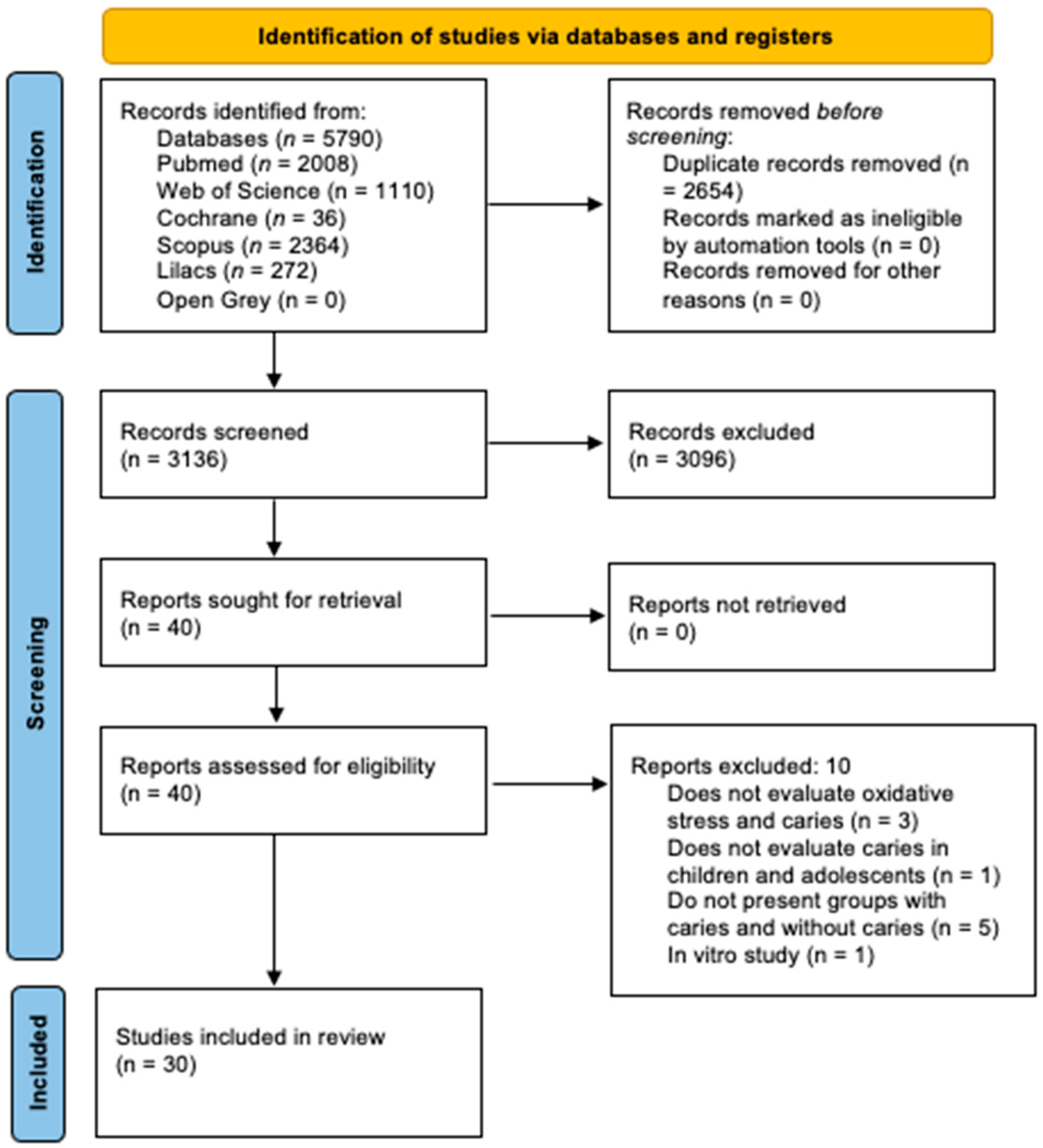
3.1. Selection and Characteristics of the Studies
3.2. Individual Results of Included Studies
3.3. Qualitative Assessment of Studies and Risk of Bias
3.4. Certainty of Evidence
4. Discussion
5. Conclusions
Supplementary Materials
Author Contributions
Funding
Data Availability Statement
Acknowledgments
Conflicts of Interest
References
- Mc-Donald, R.E.; Avery, D.R.; Stookey, G.K. Dental caries in the child and adolescent. In Dentistry for the Child and Adolescent, 8th ed.; Mc-Donald, R.E., Avery, D.R., Dean, J.A., Eds.; Elsevier: New Delhi, India, 2005; pp. 203–235. [Google Scholar]
- Takahashi, N.; Nyvad, B. The role of bacteria in the caries process: Ecological perspectives. J. Dent. Res. 2011, 90, 294–303. [Google Scholar] [CrossRef] [Scilit] [PubMed]
- Shafer, W.G.; Hine, M.K.; Levy, B.M.E.D. A Text Book of Oral Pathology, 5th ed.; Saunders Company: Philadelphia, PA, USA, 1993; pp. 567–658. [Google Scholar]
- Buzalaf, M.A.; Hannas, A.R.; Kato, M.T. Saliva and dental erosion. J. Appl. Oral Sci. 2012, 20, 493–502. [Google Scholar] [CrossRef] [Scilit]
- Edgar, M.; Dawes, C.; O’Mullane, D. Saliva and Oral Health; British Dental Association: London, UK, 2004; 146p. [Google Scholar]
- Nagler, R.M.; Klein, I.; Zarzhevsky, N.; Drigues, N.; Reznick, A.Z. Characterization of the differentiated antioxidant profile of human saliva. Free Radic. Biol. Med. 2002, 32, 268–277. [Google Scholar] [CrossRef] [Scilit]
- Lee, Y.H.; Wong, D.T. Saliva: An emerging biofluid for early detection of diseases. Am. J. Dent. 2009, 22, 241–248. [Google Scholar] [PubMed]
- Pierce, J.D.; Cackler, A.B.; Arnett, M.G. Why should you care about free radicals? Because these molecules appear to play a role in the development of heart disease, cancer, diabetes, and other diseases. Understanding how free radicals form and what you can do to help keep them in balance is essential to maximizing the care you provide now--and in the future. Rn 2004, 67, 38–44. [Google Scholar] [PubMed]
- Zalewska, A.; Maciejczyk, M.; Szulimowska, J.; Imierska, M.; Błachnio-Zabielska, A. High-fat diet affects ceramide content, disturbs mitochondrial redox balance, and induces apoptosis in the submandibular glands of mice. Biomolecules 2019, 9, 877. [Google Scholar] [CrossRef] [Scilit] [PubMed]
- Chen, Y.; McMillan-Ward, E.; Kong, J.; Israels, S.J.; Gibson, S.B. Oxidative stress induces autophagic cell death independent of apoptosis in transformed and cancer cells. Cell Death Differ. 2008, 15, 171–182. [Google Scholar] [CrossRef] [Scilit]
- Agarwal, A.; Gupta, S.; Sikka, S. The role of free radicals and antioxidants in reproduction. Curr. Opin. Obstet. Gynecol. 2006, 18, 325–332. [Google Scholar] [CrossRef] [Scilit]
- Kamodyová, N.; Červenka, T.; Celec, P. Salivary markers of oxidative stress in oral diseases. Front. Cell. Infect. Microbiol. 2015, 5, 73. [Google Scholar]
- Ahmadi-Motamayel, F.; Goodarzi, M.T.; Mahdavinezhad, A.; Jamshidi, Z.; Darvishi, M. Salivary and serum antioxidant and oxidative stress markers in dental caries. Caries Res. 2018, 52, 565–569. [Google Scholar] [CrossRef] [Scilit]
- Jurczak, A.; Kościelniak, D.; Skalniak, A.; Papież, M.; Vyhouskaya, P.; Krzyściak, W. The role of the saliva antioxidant barrier to reactive oxygen species with regard to caries development. Redox Rep. 2017, 22, 524–533. [Google Scholar] [CrossRef] [Scilit] [PubMed]
- Araujo, H.C.; Nakamune, A.C.M.S.; Garcia, W.G.; Pessan, J.P.; Antoniali, C. Carious Lesion Severity Induces Higher Antioxidant System Activity and Consequently Reduces Oxidative Damage in Children’s Saliva. Oxid. Med. Cell Longev. 2020, 2020, 3695683. [Google Scholar] [CrossRef] [Scilit]
- Moher, D.; Liberati, A.; Tetzlaff, J.; Altman, D.G.; PRISMA Group. Preferred reporting items for systematic reviews and meta-analyses: The PRISMA statement. J. Clin. Epidemiol. 2009, 62, 1006–1012. [Google Scholar] [CrossRef] [Scilit] [PubMed]
- Stang, A. Critical evaluation of the Newcastle-Ottawa scale for the assessment of the quality of nonrandomized studies in meta-analyses. Eur. J. Epidemiol. 2010, 25, 603–605. [Google Scholar] [CrossRef] [Scilit] [PubMed]
- McMaster University. GRADEpro GDT: GRADEpro Guideline Development Tool [Software]; Evidence Prime, Inc.: Hamilton, ON, Canada, 2021; Available online: gradepro.org (accessed on 11 June 2022).
- The GRADE Working Group. GRADE Handbook for Grading Quality of Evidence and Strength of Recommendations; Updated October 2013; Schünemann, H., Brożek, J., Guyatt, G., Oxman, A., Eds.; The GRADE Working Group: Hamilton, ON, Canada, 2013; Available online: guidelinedevelopment.org/handbook (accessed on 11 June 2022).
- Balshem, H.; Helfand, M.; Schünemann, H.J.; Oxman, A.D.; Kunz, R.; Brozek, J.; Vist, G.E.; Falck-Ytter, Y.; Meerpohl, J.; Norris, S.; et al. GRADE guidelines: 3. Rating the quality of evidence. J. Clin. Epidemiol. 2011, 64, 401–406. [Google Scholar] [CrossRef] [Scilit]
- Ahmadi-Motamayel, F.; Goodarzi, M.T.; Hendi, S.S.; Kasraei, S.; Moghimbeigi, A. Total antioxidant capacity of saliva and dental caries. Med. Oral Patol. Oral Cir. Bucal 2013, 18, e553. [Google Scholar] [CrossRef] [Scilit]
- AlAnazi, G.S.; Pani, S.C.; AlKabbaz, H.J. Salivary antioxidant capacity of children with severe early childhood caries before and after complete dental rehabilitation. Arch. Oral Biol. 2018, 95, 165–169. [Google Scholar] [CrossRef] [Scilit]
- Banda, N.R.; Singh, G.; Markam, V. Evaluation of total antioxidant level of saliva in modulation of caries occurrence and progression in children. J. Indian Soc. Pedod. Prev. Dent. 2016, 34, 227. [Google Scholar] [CrossRef] [Scilit]
- Corvalán, M.; González, A.; Molina, H.; Abud, M. La caries y su relación con los radicales libres del oxígeno en niños de edad escolar. CES Odontol. 1996, 9, 115–117. [Google Scholar]
- da Silva, P.V.; Troiano, J.A.; Nakamune, A.C.M.; Pessan, J.P.; Antoniali, C. Increased activity of the antioxidants systems modulate the oxidative stress in saliva of toddlers with early childhood caries. Arch. Oral Biol. 2016, 70, 62–66. [Google Scholar] [CrossRef] [Scilit]
- Hegde, A.; Rai, K.; Padmanabhan, V. Total antioxidant capacity of saliva and its relation with early childhood caries and rampant caries. J. Clin. Pediatric Dent. 2009, 33, 231–234. [Google Scholar] [CrossRef] [Scilit] [PubMed]
- Hegde, A.; Neekhra, V.; Shetty, S. Evaluation of levels of nitric oxide in saliva of children with rampant caries and early childhood caries: A comparative study. J. Clin. Pediatric Dent. 2008, 32, 283–286. [Google Scholar] [CrossRef] [Scilit]
- Krawczyk, D.; Blaszczak, J.; Borowicz, J.; Mielnik-Blaszczak, M. Life style and risk of development of dental caries in a population of adolescents. Ann. Agric. Environ. Med. 2014, 21, 31. [Google Scholar] [CrossRef] [Scilit] [PubMed]
- Krawczyk, D.; Sikorska-Jaroszyńska, M.H.J.; Mielnik-Błaszczak, M.; Pasternak, K.; Kapeć, E.; Sztanke, M. Dental caries and total antioxidant status of unstimulated mixed whole saliva in patients aged 16–23 years. Adv. Med. Sci. 2012, 57, 163–168. [Google Scholar] [CrossRef] [Scilit]
- Kumar, D.; Pandey, R.K.; Agrawal, D.; Agrawal, D. An estimation and evaluation of total antioxidant capacity of saliva in children with severe early childhood caries. Int. J. Paediatr. Dent. 2011, 21, 459–464. [Google Scholar] [CrossRef] [Scilit] [PubMed]
- Mahjoub, S.; Ghasempour, M.; Gharage, A.; Bijani, A.; Masrourroudsari, J. Comparison of total antioxidant capacity in saliva of children with severe early childhood caries and caries-free children. Caries Res. 2014, 48, 271–275. [Google Scholar] [CrossRef] [Scilit] [PubMed]
- Muchandi, S.; Walimbe, H.; Bijle, M.N.; Nankar, M.; Chaturvedi, S.; Karekar, P. Comparative evaluation and correlation of salivary total antioxidant capacity and salivary pH in caries-free and severe early childhood caries children. J. Contemp. Dent. Pract. 2015, 16, 234–237. [Google Scholar] [PubMed]
- Pandey, P.; Reddy, N.V.; Rao, V.A.P.; Saxena, A.; Chaudhary, C.P. Estimation of salivary flow rate, pH, buffer capacity, calcium, total protein content and total antioxidant capacity in relation to dental caries severity, age and gender. Contemp. Clin. Dent. 2015, 6 (Suppl. S1), S65. [Google Scholar]
- Prabhakar, A.R.; Dodawad, R.; Raju, O.S. Evaluation of flow rate, pH, buffering capacity, calcium, total protein and total antioxidant levels of saliva in caries free and caries active children—An in vivo study. Int. J. Clin. Pediatric Dent. 2009, 2, 9. [Google Scholar] [CrossRef] [Scilit]
- Pyati, S.A.; Naveen Kumar, R.; Kumar, V.; Praveen Kumar, N.H.; Parveen Reddy, K.M. Salivary flow rate, pH, buffering capacity, total protein, oxidative stress and antioxidant capacity in children with and without dental caries. J. Clin. Pediatric Dent. 2018, 42, 445–449. [Google Scholar] [CrossRef] [Scilit]
- Rahmani, M.; Ghoorchi, V.; Rezaei, F.; Raygani, A.V. Evaluation of total antioxidant capacity of saliva in high school students. Glob. J. Health Sci. 2016, 8, 89. [Google Scholar] [CrossRef] [Scilit] [PubMed]
- Eagappan, A.S.; Rao, V.A.P.; Sujatha, S.; Senthil, D.; Sathiyajeeva, J.; Rajaraman, G. Evaluation of salivary nitric oxide level in children with early childhood caries. Dent. Res. J. 2016, 13, 338. [Google Scholar] [CrossRef] [Scilit]
- Tulunoglu, Ö.; Demirtas, S.; Tulunoglu, I. Total antioxidant levels of saliva in children related to caries, age, and gender. Int. J. Paediatr. Dent. 2006, 16, 186–191. [Google Scholar] [CrossRef] [Scilit] [PubMed]
- Aliakbarpour, F.; Mahjoub, S.; Masrour-Roudsari, J.; Seyedmajidi, S.; Ghasempour, M. Evaluation of salivary thiobarbituric acid reactive substances, total protein, and pH in children with various degrees of early childhood caries: A case–control study. Eur. Arch. Paediatr. Dent. 2021, 22, 1095–1099. [Google Scholar] [CrossRef] [Scilit] [PubMed]
- Amrollahi, N.; Enshaei, Z.; Kavousi, F. Salivary Malondialdehyde Level as a Lipid Peroxidation Marker in Early Childhood Caries. Iran. J. Pediatrics 2021, 31, 1–6. [Google Scholar] [CrossRef] [Scilit]
- Farghaly, J.G.; Fachin, L.V.; Otton, R.; Guaré, R.O.; Leite, M.F. Efeito do gênero (masculino e feminino) sobre a cárie dentária e parâmetros salivares de crianças. Pesqui. Bras. Em Odontopediatria E Clínica Integr. 2013, 13, 11–15. [Google Scholar] [CrossRef] [Scilit]
- Hendi, S.S.; Goodarzi, M.T.; Moghimbeigi, A.; Ahmadi-Motamayel, F. Evaluation of the status of salivary antioxidants in dental caries. Infect. Disord. Drug Targets Former. Curr. Drug Targets-Infect. Disord. 2020, 20, 816–821. [Google Scholar] [CrossRef] [Scilit]
- Karthika, G.; Jogendra Avula, S.S.; Sridevi, E.; Pranitha, K.; Sankar, K.S.; Nayak, P. Assessing Vitamin E and Glutathione Peroxidase Levels in Salivary Samples of Children with and without Dental Caries. J. Clin. Diagn. Res. 2021, 15, 6–9. [Google Scholar] [CrossRef] [Scilit]
- Ravikumar, D.; Ramani, P.; Gayathri, R. Comparative Evaluation of Salivary Malondialdehyde Levels in Children with Different Caries Status- A Cross-Sectional Observational Study. J. Pharm. Res. Int. 2021, 33, 147–154. [Google Scholar] [CrossRef] [Scilit]
- Salman, B.N.; Darvish, S.; Goriuc, A.; Mazloomzadeh, S.; Hossein Poor Tehrani, M.; Luchian, I. Salivary Oxidative Stress Markers’ Relation to Oral Diseases in Children and Adolescents. Antioxidants 2021, 10, 1540. [Google Scholar] [CrossRef] [Scilit]
- Shaki, F.; Arab-Nozari, M.; Maleki, F.; Yazdani Charati, J.; Nahvi, A. Evaluation of Some Caries-Related Factors in the Saliva of 3–5 Year Old Children in Sari, Northern Iran. Int. J. Pediatrics 2020, 8, 11115–11123. [Google Scholar] [CrossRef] [Scilit]
- Syed, M.; Sachdev, V.; Chopra, R. Intercomparison of salivary nitric oxide as a biomarker of dental caries risk between caries-active and caries-free children. Eur. Arch. Paediatr. Dent. 2016, 17, 239–243. [Google Scholar] [CrossRef] [Scilit] [PubMed]
- Aas, J.A.; Griffen, A.L.; Dardis, S.R.; Lee, A.M.; Olsen, I.; Dewhirst, F.E.; Leys, E.J.; Paster, B.J. Bacteria of dental caries in primary and permanent teeth in children and young adults. J. Clin. Microbiol. 2008, 46, 1407–1417. [Google Scholar] [CrossRef] [Scilit] [PubMed]
- Fedorova, M.; Bollineni, R.C.; Hoffmann, R. Protein carbonylation as a major hallmark of oxidative damage: Update of analytical strategies. Mass Spectrom Rev. 2014, 33, 79–97. [Google Scholar] [CrossRef] [Scilit]
- Valavanidis, A.; Vlachogianni, T.; Fiotakis, C. 8-hydroxy-2’ -deoxyguanosine (8-OHdG): A critical biomarker of oxidative stress and carcinogenesis. J. Environ. Sci. Health C Environ. Carcinog. Ecotoxicol. Rev. 2009, 27, 120–139. [Google Scholar] [CrossRef] [Scilit]
- Sürmelioğlu, D.; Gündoğar, H.; Taysi, S.; Bağiş, Y.H. Effect of different bleaching techniques on DNA damage biomarkers in serum, saliva, and GCF. Hum. Exp. Toxicol. 2021, 40, 1332–1341. [Google Scholar] [CrossRef] [Scilit]
- Fernández-Bertólez, N.; Azqueta, A.; Pásaro, E.; Laffon, B.; Valdiglesias, V. Salivary leucocytes as suitable biomatrix for the comet assay in human biomonitoring studies. Arch. Toxicol. 2021, 95, 2179–2187. [Google Scholar] [CrossRef] [Scilit]
- Momenzadeh, D.; Zadeh, S.R.; Rezaei-Tavirani, M.; Baradaran-Rafii, A.; Ghasemvand, F.; Heidari-Keshel, S. ZNF797 plays an oncogenic role in gastric cancer. Genet. Mol. Res. 2014, 13, 8421–8427, Retraction in Genet Mol Res. 2015, 14, 788. [Google Scholar] [CrossRef] [Scilit]
- Morris, S.M.; Billiar, T.R. New insights into regulation of inducible nitric oxide synthesis. Am. J. Physiol. 1994, 266, E829–E839. [Google Scholar] [CrossRef] [Scilit]
- Marletta, M.A. Nitric oxide synthase structure and mechanism. J. Biol. Chem. 1993, 268, 12231–12234. [Google Scholar] [CrossRef] [Scilit]
- Moncada, S. Nitric oxide: Physiology, pathophysiology and pharmacology. Pharmacol. Rev. 1991, 43, 109–142. [Google Scholar] [PubMed]
- Olin, A.C.; Aldenbratt, A.; Ekman, A.; Ljungkvist, G.; Jungersten, L.; Alving, K.; Torén, K. Increased nitric oxide in exhaled air after intake of a nitrate-rich meal. Respir. Med. 2001, 95, 153–158. [Google Scholar] [CrossRef] [Scilit] [PubMed]
- Sheikhi, M.; Bouhafs, R.K.; Hammarström, K.J.; Jarstrand, C. Lipid peroxidation caused by oxygen radicals from Fusobacterium-stimulated neutrophils as a possible model for the emergence of periodontitis. Oral Dis. 2001, 7, 41–46. [Google Scholar] [PubMed]
- Maxwell, S.R.; Dietrich, T.; Chapple, I.L. Prediction of serum total antioxidant activity from the concentration of individual serum antioxidants. Clin. Chim. Acta 2006, 372, 188–194. [Google Scholar] [CrossRef] [Scilit]
- Ames, B.N.; Cathcart, R.; Schwiers, E.; Hochstein, P. Uric acid provides an antioxidant defense in humans against oxidant and radical-caused aging and cancer: A hypothesis. Proc. Natl. Acad. Sci. USA 1981, 78, 6858–6862. [Google Scholar] [CrossRef] [Scilit]
- Halliwell, B. Antioxidant defence mechanisms: From the beginning to the end (of the beginning). Free. Radic. Res. 1999, 31, 261–272. [Google Scholar] [CrossRef] [Scilit] [PubMed]
- Saran, M.; Michel, C.; Bors, W.; Czapski, G. Reaction of NO with O2-. Implications for the action of endothelium-derived relaxing factor (EDRF). Free. Radic. Res. Commun. 1990, 10, 221–226. [Google Scholar] [CrossRef] [Scilit] [PubMed]
- McIntyre, M.; Bohr, D.F.; Dominiczak, A.F. Endothelial function in Hypertension. Hypertension 1999, 34, 539–545. [Google Scholar] [CrossRef] [Scilit]
- Lu, S.C. Regulation of glutathione synthesis. Curr. Top. Cell Regul. 2000, 36, 95–116. [Google Scholar]
- Jones, D.P. Redox potential of GSH/GSSG couple: Assay and biological significance. In Methods in Enzymology; Academic Press: Cambridge, MA, USA, 2002; Volume 348, pp. 93–112. [Google Scholar]
- Vijayavel, K.; Gopalakrishnan, S.; Thilagam, H.; Balasubramanian, M.P. Dietary ascorbic acid and α-tocopherol mitigates oxidative stress induced by copper in the thornfish Terapon jarbua. Sci. Total Environ. 2006, 372, 157–163. [Google Scholar] [CrossRef] [Scilit]
- Pietta, P.G. Flavonoids as antioxidants. J. Nat. Prod. 2000, 63, 1035–1042. [Google Scholar] [CrossRef] [Scilit] [PubMed]
- Vyas, T.; Nagi, R.; Bhatia, A.; Bains, S.K. Therapeutic effects of green tea as an antioxidant on oral health-A review. J. Fam. Med. Prim. Care 2021, 10, 3998. [Google Scholar] [CrossRef] [Scilit] [PubMed]
- Volgenant, C.M.; Zaura, E.; Brandt, B.W.; Buijs, M.J.; Tellez, M.; Malik, G.; Ismail, A.I.; Jacob, M.; van der Veen, M.H. Red fluorescence of dental plaque in children—A cross-sectional study. J. Dent. 2017, 58, 40–47. [Google Scholar] [CrossRef] [Scilit] [PubMed]
- Hathout, A.S.; Mohamed, S.R.; El-Nekeety, A.A.; Hassan, N.S.; Aly, S.E.; Abdel-Wahhab, M.A. Ability of Lactobacillus casei and Lactobacillus reuteri to protect against oxidative stress in rats fed aflatoxins-contaminated diet. Toxicon 2011, 58, 179–186. [Google Scholar] [CrossRef] [Scilit]


| Author/Country/Year | Study Design | N | Age (Years) | Caries Diagnostic | Biochemical Analysis Method | Biochemical Method | Results |
|---|---|---|---|---|---|---|---|
| Ahmadi-Motamayel et al./Iran/2013 [21] | Case-control | 100 50—Caries free 50—Caries active | 15–17 | DMFT | TAC | Antioxidant commercial assay kit (Cayman Chemical, ABTS oxidation inhibition, wavelength: 405 nm). | The exposed group (active caries) showed higher TAC levels in comparison to the control group (caries-free; p < 0.001). Regarding the inter- and intragender comparisons, there was no difference between females in the exposed and control groups. The male participants showed higher TAC levels in the active caries group when compared to those in the caries-free group. |
| Ahmadi-Motamayel et al./Iran/2018 [13] | Case-control | 118 56—Caries free 62—Caries active | 15–19 | DMFT | TAC and LPO | TAC: Ferric Ion Reducing Antioxidant Power Assay (wavelength 593 nm) LPO: Thiobarbituric Acid Reactive Species assay (wavelength: 520 nm). | There was no statistical difference between the exposed and control groups regarding the TAC levels. The LPO levels were higher in the exposed group (active caries) when compared to those in the control group (caries-free; p = 0.001). Considering the comparison between genders, the LPO levels were higher in male participants (p = 0.02) when compared to female participants. |
| Alanazi et al./Saudi Arabia/2018 [22] | Case-control | 40 20—Caries free 20—Caries active | 5.13 ± 0.79 | Not informed | TAC | Evaluated by a commercial kit of Oxygen Radical Absorbance Antioxidant Assay (Zen-Bio ORAC™, AMS Biotechnology). | The TAC levels were higher in the exposed group (severe early childhood caries) when compared to those in the control group (p = 0.003). |
| Aliakbarpour et al./Iran/2021 [39] | Case-control | 90 30—Caries free 60—Caries active | 3–5 | DMFS | LPO | Evaluataed by the level of TBARS in saliva. | The mean of salivary TBARS in saliva was higher in the caries active group compared to the caries free group (p < 0.001). |
| Amrollahi et al./Iran/2021 [40] | Case-Control | 84 42—Caries free 42—Caries active | 4–6 | DMFT | LPO | The salivary MDA was analyzed using a commercial kit (ZellBio GmbH, Germany), according to the manufacturer’s instructions. The absorbance was obtained with a microplate reader/ELISA reader at 535 nm. | The mean salivary MDA in the ECC group (4.8 ± 0.6) was significantly higher than that in the caries-free group (2.9 ± 0.5) (p = 0.01). |
| Araujo et al./Brazil/2020 [15] | Cross-sectional | 120 30—Caries free 90—Caries active | 1–3 | ICCMS™ index | Total Proteins, LPO, TAC, SOD, and uric acid. | Total Proteins: Biuret method (wavelength 660 nm); LPO: Thiobarbituric Acid Reactive Species assay (wavelength 535 nm); TAC: Ferric Ion Reducing Antioxidant Power assay (wavelength 595 nm); SOD: Pyrogallol autoxidation reducing capacity (wavelength 420 nm); Uric acid: Commercial kit assay (Labtest Diagnóstica). | Total protein levels were higher in the extensive caries groups when compared to those in the other groups (p < 0.001). Moreover, there was a moderate positive correlation between protein levels and caries severity (Spearman’s r = 0: 7084, p < 0.0001); The LPO levels were lower in the extensive caries group when compared to those in the other groups (p < 0.0001). Moreover, there was a strong negative correlation between LPO levels and caries severity (Spearman’s r = −0.8570, p < 0.0001). The TAC levels were higher in the extensive caries group when compared to those in the other groups (p < 0.001), and there was a strong positive correlation between caries severity and TAC levels (Spearman’s r = 0.8.425, p < 0.0001); The SOD activity was higher in the extensive caries group when compared to those in the other groups (p < 0.001), and there was a strong and positive correlation between caries severity and SOD activity (Spearman’s r = 0.7320, p < 0.0001); The salivary uric acid levels were higher in the extensive caries group compared to those in the other groups (p < 0.0001). Also, there was a weak and positive correlation between uric acid levels (corrected by protein levels) and caries severity (Spearman’s r = 0.4659, p < 0.0001). |
| Banda et al./India/2016 [23] | Cross-sectional | 60 30—Caries free 30—Caries active | 6–12 | DMFT | TAC | Phosphomolybdenum assay (wavelength 695 nm). | There was a strong and positive correlation between the DMFT score and TAC level. |
| Corvalán et al./Argentina/1996 [24] | Cross-sectional | 95 13—Caries free 82—Caries active | 6–14 | Not informed | Xanthine oxidase, ROS content, LPO, GSH-px, GSH, vitamin C, CAT, SOD, and TAC | The parameters were assessed by spectrophotometric methods. | The xanthine oxidase and ROS levels were absent in the caries-free group but present in the active caries group. The TAC and SOD levels were higher in the caries-free group and reduced in the active caries group. The LPO levels, assessed by malondialdehyde levels, were low in all groups. Vitamin C and GSH were present in the caries-free group, and their values were recorded in the caries groups. The GSH-px levels were lower in patients with active caries. CAT activity was absent in all groups. |
| Eagappan et al./India/2016 [37] | Case-control | 120 40—Caries free 80—Caries active | 4–5 | DMFS | Total nitrites and nitrates | Griess reaction method (wavelength 540 nm). | The mean concentration of nitrites and nitrates was lower in the exposed group in both conditions: early childhood caries and severe early childhood caries. |
| Farghaly et al./Brasil/2013 [41] | Cross-sectional | 46 28—Caries free 18—Caries active | 4–6 | DMFS | Total salivary peroxidase activity | The peroxidase activity was evaluated by the variation of absorbance measured in a Beckman DU-68 spectrophotometer at 460 nm. | There was no statistical difference between the caries free group and the caries active group (p = 0.425), concerning the total salivary peroxidase activity. |
| Hegde et al./India/2008 [27] | Cross-sectional | 120 60—Caries free 60—Caries active | 6–12 | DMFT | Total nitrites and nitrates | Griess reaction method. | The exposed group (active caries) had lower levels of total nitrites and nitrates when compared to those in the control group. There was a positive correlation between nitrites/nitrates concentration and age. |
| Hegde et al./India/2009 [26] | Cross-sectional | 100 50—Caries free 50—Caries active | 6–12 | The dental caries status was assessed using the WHO Oral Assessment Form. | TAC | Assessed by thiobarbituric reactive species production inhibition. | In both situations, the exposed groups, early childhood caries and rampant caries, had higher TAC levels than in the control groups (p < 0.05). |
| Hendi et al./Iran/2019 [42] | Case-Control | 100 50—Caries free 50—Caries active | 15–17 | A senior dental student performed all the intraoral examinations. Dental mirrors and explorers were used for the detection of caries. | SOD, UA, GSH-Px, CAT, Peroxidase | SOD: RANSOD kit (Randox Laboratories Ltd., Crumlin UK) UA: Pars Azmun Co. kit (Tehran, Iran) with spectrophotometry GSH-Px: RANSEL kit (Randox Laboratories Ltd., Crumlin, UK) CAT: Spectrophotometer. | The results showed higher UA(p = 0.641), CAT (p = 0.491), and GSHPx (p = 0.004), Prox (p = 0.072), and lower SOD (p = 0.935) in the caries active group compared to the caries-free group. However, only GSHPx increased in the caries-active subjects was significant. |
| Jurczak et al./Poland/2017 [14] | Cross-sectional | 81 27—Caries free 54—Caries active | 2–5 | ICDAS | GSH, GSSG, and TAC | TAC: Ferric Ion Reduction Power, wavelength 593 nm; GSH and GSSG: Reaction of Griffith’s method with Tietze’s modification, wavelength 412 nm. | All the biochemical parameters were higher in the active caries group (p < 0.001). |
| Karthika et al./India/2021 [43] | Cross-sectional | 100 50—Caries free 50—Caries active | 6–12 | DMFT | Vitamin E, GPx | Vitamin E: spectrophotometer GPx: spectrophotometer. | There was a decrease in vitamin E levels in the caries active (1.25 ± 0.01) group when compared with the caries-free (1.37 ± 0.01) group. The mean GPx levels decreased in the values in caries active (0.53 ± 0.08) group when compared to the caries-free (1.62 ± 0.14) group. |
| Krawczyk et al./Poland/2014 [28] | Case-control | 113 25—Caries free 88—Caries active | 15–17 | DMFT, oral hygiene index | TAC | Antioxidant commercial assay kit (Randox Laboratories Ltd. ABTS oxidation inhibition method, wavelength 600 nm). | The salivary antioxidant status in the exposed group was lower than the levels found in the control group. |
| Krawczyk et al./Poland/2012 [29] | Case-control | 60 30—Caries free 30—Caries active | 16–18 | DMFT, DMFS | TAC | Antioxidant commercial assay kit (Randox Laboratories Ltd. ABTS oxidation inhibition method, wavelength 600 nm). | The salivary TAC levels in the exposed group (active caries) were higher than those in the control group (caries-free). Moreover, the TAC level was higher in younger participants. |
| Kumar et al./India/2011 [30] | Cross-sectional | 100 50—Caries free 50—Caries active | 3–5 | DMFT | TAC | Antioxidant commercial assay kit (Cayman Chemical, ABTS oxidation inhibition, wavelength 405 nm or 750 nm). | The salivary TAC levels in the exposed group (active caries) were higher than those in the control group (caries-free). |
| Mahjoub et al./Iran/2014 [31] | Cross-sectional | 80 40—Caries free 40—Caries active | 3–5 | DMFS | TAC and Total Protein Levels | TAC: Ferric Ion Reducing Antioxidant Power assay (wavelength 593 nm); Total Protein Levels: Bradford’s method (wavelength 595 nm). | The salivary TAC levels were higher in the exposed group (active caries) when compared to those in the control group (caries-free; p = 0.025). Moreover, the salivary protein levels were higher in the exposed group (p = 0.033). |
| Muchandi et al./India/2015 [32] | Cross-sectional | 50 25—Caries free 25—Caries active | 3–5 | Preliminary examination | TAC | They were assessed by thiobarbituric acid reactive species production inhibition (wavelength 532 nm). | The salivary TAC levels in the exposed group (severe early childhood caries) were higher than those in the control group (caries-free). |
| Pandey et al./India/2015 [33] | Cross-sectional | 120 60—Caries free 60—Caries active | 7–15 | DMFS | TAC and Total Protein Levels | TAC: Ferric Ion Reducing Antioxidant Power assay (wavelength 600 nm) Total Protein Levels: Biuret method (wavelength 545 nm). | The salivary TAC levels in the exposed group (active caries) were higher than those in the control group (caries-free). Moreover, the total protein levels were higher than in the control group. |
| Prabhakar et al./India/2009 [34] | Cross-sectional | 120 60—Caries free 60—Caries active | 7–14 | DMFS | TAC and Total Protein Levels | Human diagnostic kit (Germany). | The salivary TAC and total protein levels increased significantly in the exposed group when compared to those in the control group. |
| Pyati et al./India/2018 [35] | Cross-sectional | 100 50—Caries free 50—Caries active | 6–12 | DMFS | TAC, LPO, and Total Protein Levels | TAC: Assessed by thiobarbituric reactive species production inhibition (wavelength 532 nm); LPO: Thiobarbituric acid reactive species (wavelength 530 nm); Total Protein Levels: Biuret method (wavelength 545 nm). | The TAC and MDA levels increased in children with active caries when compared to caries-free controls (p < 0.05). Moreover, the total protein levels also increased in the active caries group when compared to those in the control group (p = 0.017). |
| Rahmani et al./Iran/2015 [36] | Case-control | 120 60—Caries free 60—Caries active | 14–18 | DMFT | TAC | Antioxidant commercial assay kit (ZellBio kit, Ferric Reduction Antioxidant Power method, wavelength 520 nm). | The TAC levels were significantly lower in patients with dental caries when compared to patients without caries. |
| Ravikumar et al./India/2021 [44] | Cross-Sectional | 60 20—Caries free 40—Caries active | 3–6 | DMFS | LPO | LPO: Spectrophotometer. | The caries active groups showed higher LPO compared to the caries free groups (p < 0.05). |
| Salman et al./Iran/2021 [45] | Case-control | 163 85—Caries free 78—Caries active | 3–18 | Caries Index | LPO, TAC | LPO: TBARS TAC: Spectrophotometer. | When generally observed, LPO and TAC levels did not present significant differences. When only adolescents from 13 to 18 years of age were observed, the TAC showed a significant decrease in the group with caries when compared with the group without caries of the same age. |
| Shaki et al./Iran//2020 [46] | Cross-sectional | 80 40—Caries free 40—Caries active | 3–5 | DMFT | TAC, NO | TAC: Ferric reducing antioxidant power (FRAP) NO: Commercial kits based on the Griess reagent. | The TAC was significantly higher in the active caries group when compared to control group (p < 0.05). The NO level were lower in the group with caries active compares to control group (p < 0.001). |
| Da Silva et al./Brazil/2016 [25] | Cross-sectional | 60 30—Caries free 30—Caries active | 0–3 | DMFS | LPO, TAC, SOD, and Uric acid | LPO: Thiobarbituric acid reactive substance (wavelength 535 nm); TAC: Ferric reducing antioxidant power assay (wavelength 595 nm); SOD: Pyrogallol autoxidation reducing capacity (wavelength 420 nm); Uric acid: Commercial kit assay (Labtest Diagnóstica). | The TAC was significantly higher in the active caries group when compared to that in the control group (p < 0.05). LPO, SOD, and uric acid levels were more elevated in the active caries group when compared to those in the control group (p < 0.05). |
| Syed et al./India/2016 [47] | Cross-sectional | 100 50—Caries free 50—Caries active | 6–12 | DMFT | NO | NO: Griess reaction method. | The salivary NO level was significantly higher in the caries free group (581.3 ± 134.6) compared to the caries active group (335.4 ± 111.2) (p = 0.000). |
| Tulonuglo et al./Turkey/2006 [38] | Cross-sectional | 80 40—Caries free 40—Caries active | 7–15 | DMFS | TAC and Total Protein Levels | TAC: ABTS oxidation inhibition method Total Protein Levels: Biuret method (wavelength 545 nm). | TAC and total protein levels were higher in the group with active caries, except for girls aged 11–15. |
| Authors | Selection | Comparability | Exposure | |||||
|---|---|---|---|---|---|---|---|---|
| Case Definition Adequate | Representativeness of the Cases | Selection of Controls | Definition of Controls | Control vs. Case | Ascertainment of Exposure | Same Method of Ascertainment for Cases and Controls | Non-Response Rate | |
| Ahmadi et al., 2013 [21] | * | - | * | * | * | * | * | - |
| Ahmadi et al., 2018 [13] | * | * | * | * | ** | * | * | - |
| Alanazi et al., 2018 [22] | - | * | - | * | * | * | * | - |
| Aliakbarpour et al., 2021 [39] | * | * | * | * | ** | * | * | * |
| Amrollahi et al., 2021 [40] | * | * | * | * | ** | * | * | * |
| Eagappan et al., 2016 [37] | * | * | * | * | * | * | * | * |
| Hendi et al., 2019 [42] | * | * | * | * | * | * | * | * |
| Krawczyk et al., 2014 [28] | - | * | * | * | * | * | * | * |
| Krawczyk et al., 2012 [29] | * | * | * | * | ** | * | * | * |
| Kumar et al., 2011 [30] | * | * | * | * | ** | * | * | * |
| Rahmani et al., 2015 [36] | * | * | * | * | ** | * | * | - |
| Salman et al., 2021 [45] | * | * | * | * | ** | * | * | * |
| Authors | Selection | Comparability | Exposure | ||||
|---|---|---|---|---|---|---|---|
| Case Definition Adequate | Sample Size | Non-Respondents | Ascertainment of the Exposure (Risk Factor) | Control vs. Case | Ascertainment of Outcome | Statistical Test | |
| Araujo et al., 2020 [15] | * | * | * | * | ** | ** | * |
| Banda et al., 2016 [23] | * | * | * | * | ** | ** | * |
| Covalán et al., 1996 [24] | * | * | - | * | * | * | * |
| Farghaly et al., 2013 [41] | * | - | * | ** | ** | ** | * |
| Hegde et al., 2008 [27] | * | * | - | * | ** | ** | * |
| Hegde et al., 2009 [26] | * | * | - | * | ** | ** | * |
| Jurczak et al., 2017 [14] | * | * | * | * | ** | ** | * |
| Karthika et al., 2021 [43] | * | * | * | ** | ** | ** | * |
| Mahjoub et al., 2014 [31] | * | * | * | * | ** | ** | * |
| Muchandi et al., 2015 [32] | * | * | * | * | * | ** | * |
| Pandey et al., 2015 [33] | * | - | * | * | ** | ** | * |
| Prabhakar et al., 2009 [34] | * | * | * | * | ** | ** | * |
| Pyati et al., 2018 [35] | * | * | * | ** | ** | ** | * |
| Ravikumar et al., 2021 [44] | * | * | * | ** | ** | ** | * |
| Shaki et al., 2020 [46] | * | * | * | ** | ** | ** | * |
| Da Silva et al., 2016 [25] | * | * | * | * | ** | ** | * |
| Syed et al., 2016 [47] | * | * | * | ** | ** | ** | * |
| Tulunoglui et al., 2006 [35] | * | * | * | * | ** | ** | * |
| Certainty Assessment | Effect | Certainty | ||||||
|---|---|---|---|---|---|---|---|---|
| N° of Datasets | Design of the Studies | Risk of Bias | Inconsistency | Indirectness | Imprecision | Other Considerations | (Summary Narrative Description) | |
| Total Antioxidant Capacity (TAC) | ||||||||
| 19 | Observational studies | Not serious | Serious a | Not serious | Not serious | None | For most studies (14 of 19), the TAC was higher in individuals with dental caries than in those without caries. | ⨁◯◯◯ VERY LOW |
| Lipid Peroxidation (LPO) | ||||||||
| 7 | Observational studies | Not serious | Serious a | Not serious | Serious b | None | Most studies (6 of 7) reported higher levels of LPO for individuals with dental caries. | ⨁◯◯◯ VERY LOW |
| Nitrate/Nitrite (NO) Levels | ||||||||
| 4 | Observational studies | Not serious | Serious a | Not serious | Serious b | None | All studies showed higher nitrate/nitrite levels in the caries-free group. | ⨁◯◯◯ VERY LOW |
Publisher’s Note: MDPI stays neutral with regard to jurisdictional claims in published maps and institutional affiliations. |
© 2022 by the authors. Licensee MDPI, Basel, Switzerland. This article is an open access article distributed under the terms and conditions of the Creative Commons Attribution (CC BY) license (https://creativecommons.org/licenses/by/4.0/).
Share and Cite
de Sousa Né, Y.G.; Frazão, D.R.; Bittencourt, L.O.; Fagundes, N.C.F.; Marañón-Vásquez, G.; Crespo-Lopez, M.E.; Maia, L.C.; Lima, R.R. Are Dental Caries Associated with Oxidative Stress in Saliva in Children and Adolescents? A Systematic Review. Metabolites 2022, 12, 858. https://doi.org/10.3390/metabo12090858
de Sousa Né YG, Frazão DR, Bittencourt LO, Fagundes NCF, Marañón-Vásquez G, Crespo-Lopez ME, Maia LC, Lima RR. Are Dental Caries Associated with Oxidative Stress in Saliva in Children and Adolescents? A Systematic Review. Metabolites. 2022; 12(9):858. https://doi.org/10.3390/metabo12090858
Chicago/Turabian Stylede Sousa Né, Yago Gecy, Deborah Ribeiro Frazão, Leonardo Oliveira Bittencourt, Nathalia Carolina Fernandes Fagundes, Guido Marañón-Vásquez, Maria Elena Crespo-Lopez, Lucianne Cople Maia, and Rafael Rodrigues Lima. 2022. "Are Dental Caries Associated with Oxidative Stress in Saliva in Children and Adolescents? A Systematic Review" Metabolites 12, no. 9: 858. https://doi.org/10.3390/metabo12090858
APA Stylede Sousa Né, Y. G., Frazão, D. R., Bittencourt, L. O., Fagundes, N. C. F., Marañón-Vásquez, G., Crespo-Lopez, M. E., Maia, L. C., & Lima, R. R. (2022). Are Dental Caries Associated with Oxidative Stress in Saliva in Children and Adolescents? A Systematic Review. Metabolites, 12(9), 858. https://doi.org/10.3390/metabo12090858