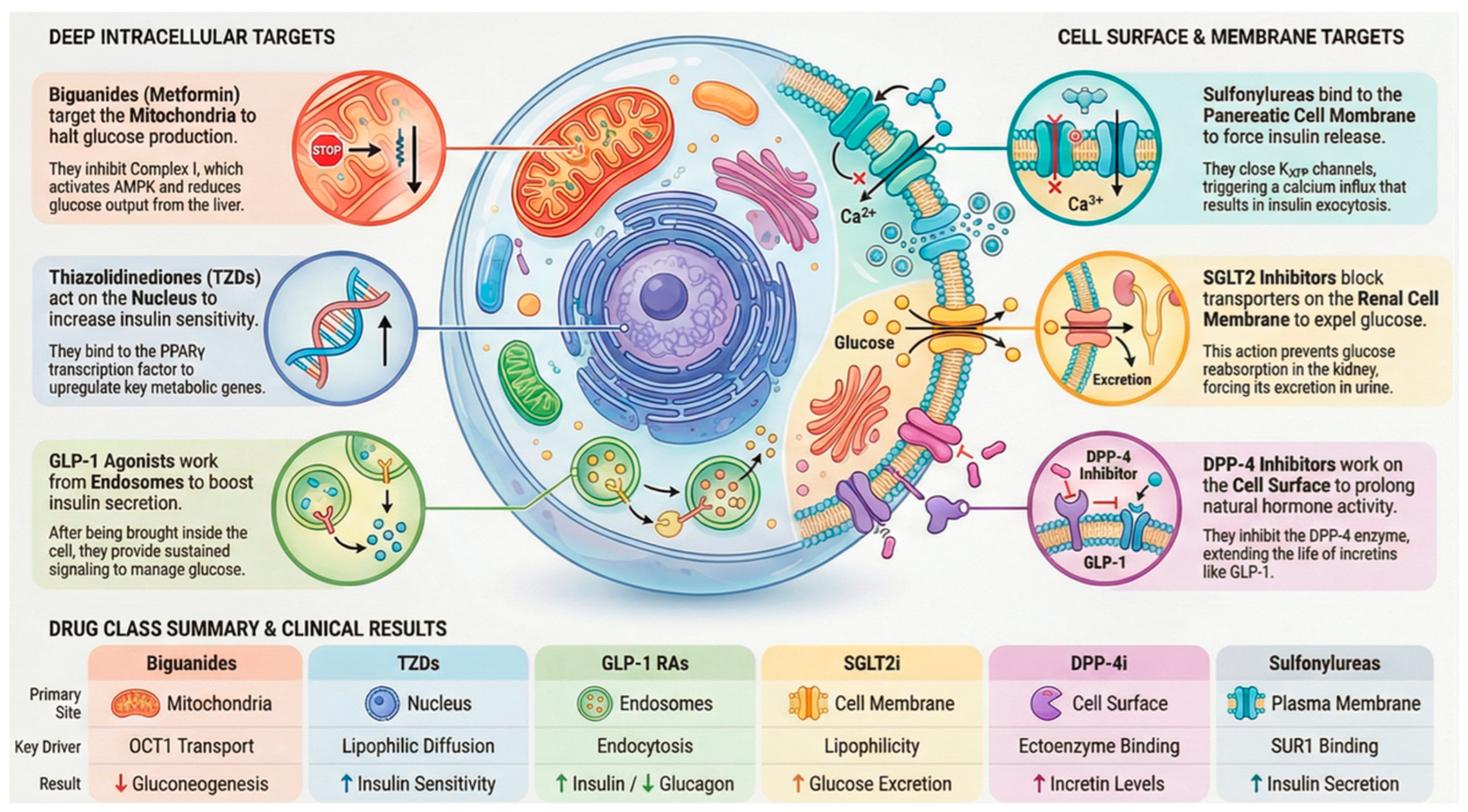

Intracellular Pharmacokinetics of Antidiabetic Drugs: A Focused Narrative Review of Subcellular Distribution (2015–2025)


Abstract
1. Introduction
2. Materials and Methods
3. Results and Discussion
3.1. Determinants of Intracellular Distribution
3.1.1. Conceptual Framework of Intracellular Pharmacokinetics
3.1.2. Physicochemical Determinants
3.1.3. Transporter-Mediated Distribution
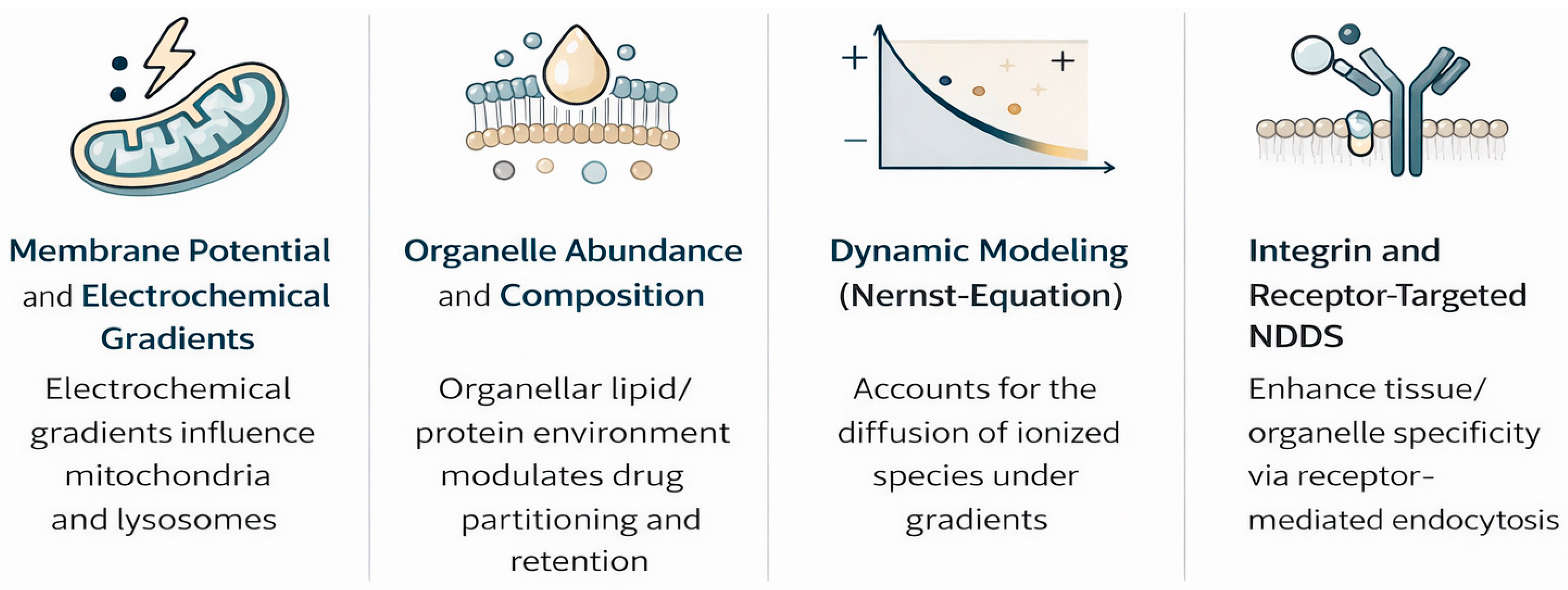
3.1.4. Organelle-Specific Accumulation
3.1.5. Additional Determinants of Subcellular Distribution
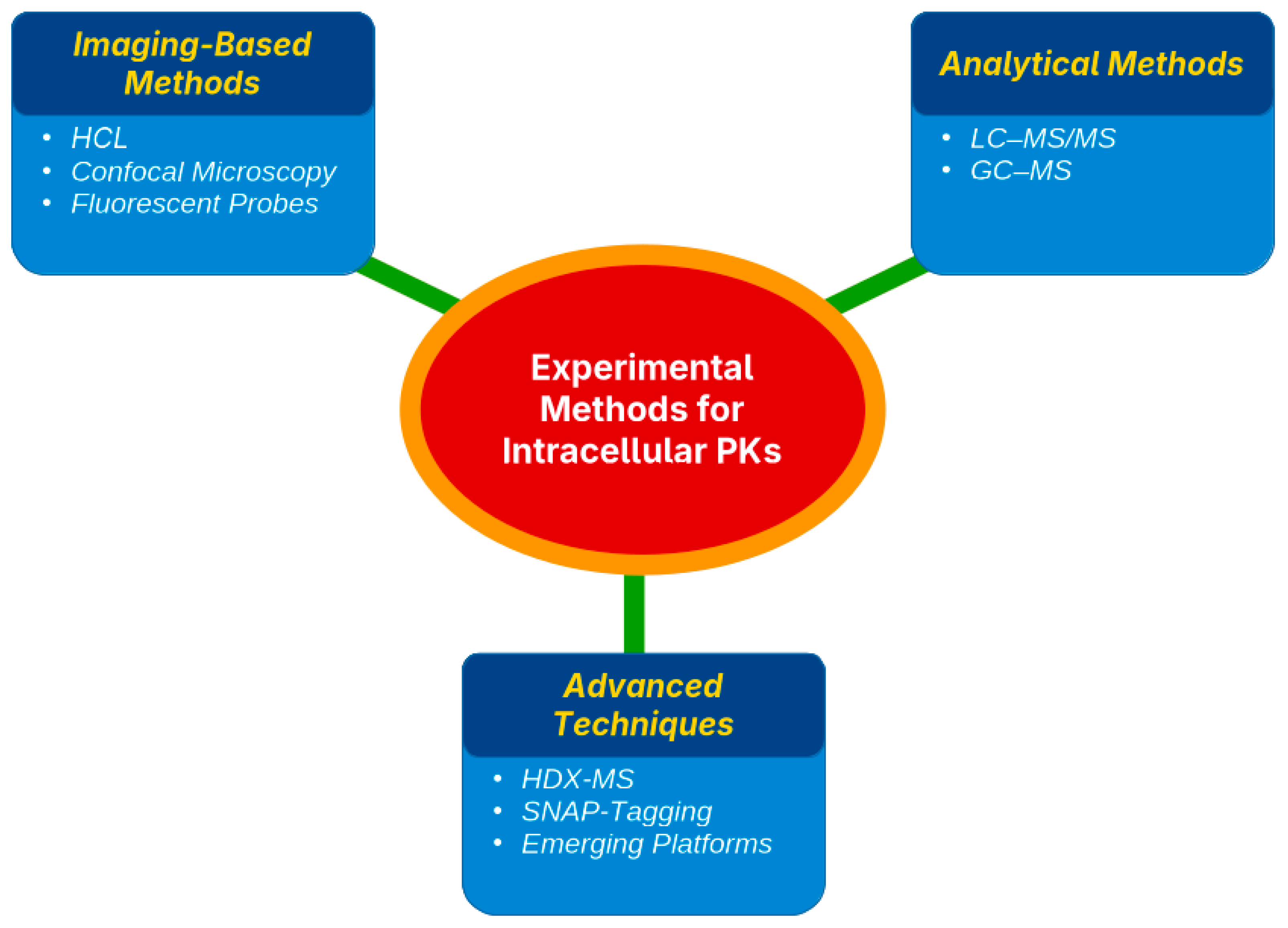
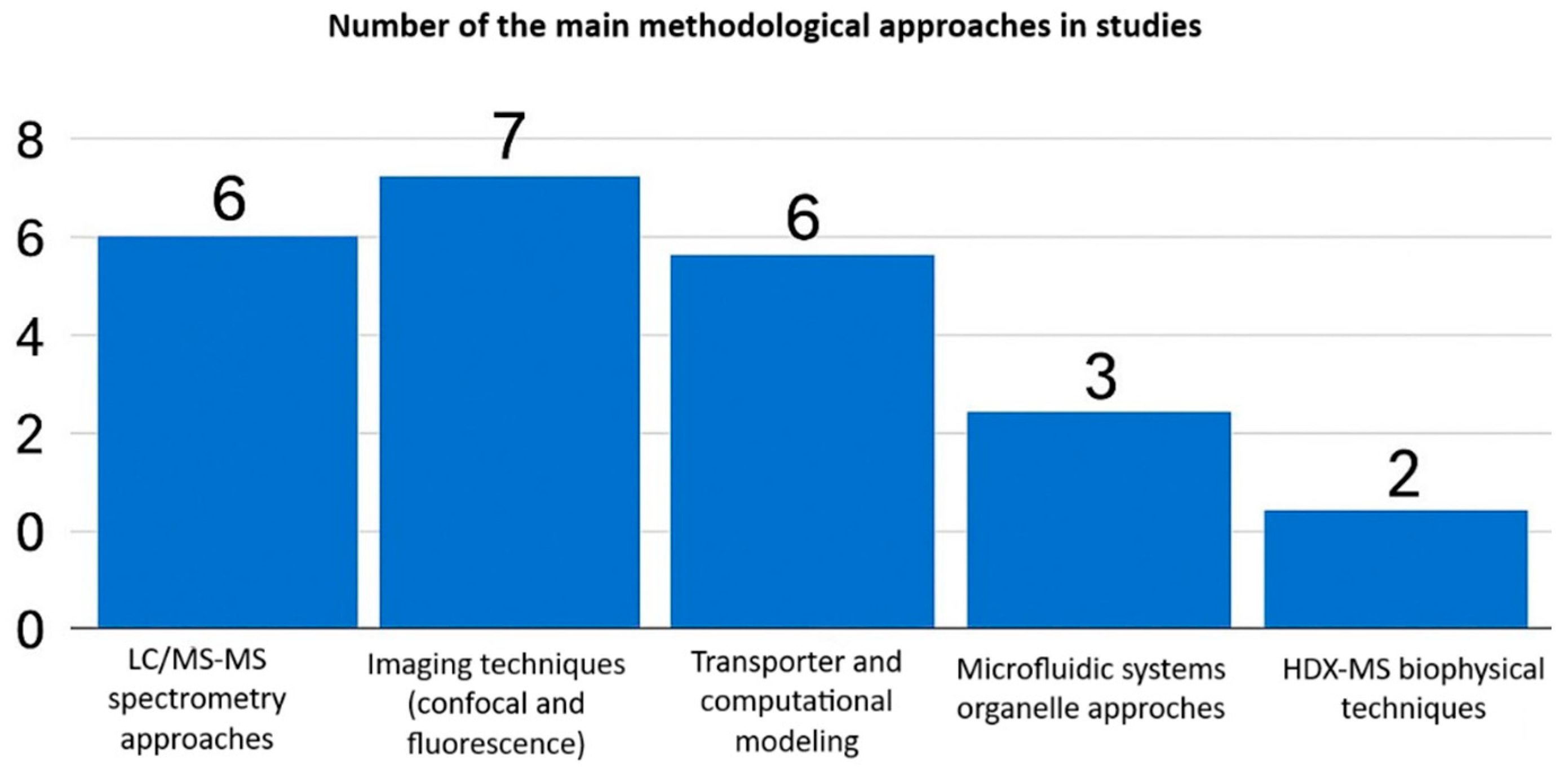
4. Methodological Approaches for Quantifying Intracellular PK
4.1. Imaging-Based Methods (HCI, Confocal Microscopy, and Fluorescent Probes)
4.2. Fractionation and Analytical Methods (LC–MS/MS, GC–MS)
4.3. Advanced Techniques (HDX-MS, SNAP-Tagging, Emerging Platforms)
4.4. Strengths and Limitations of Current Methodologies
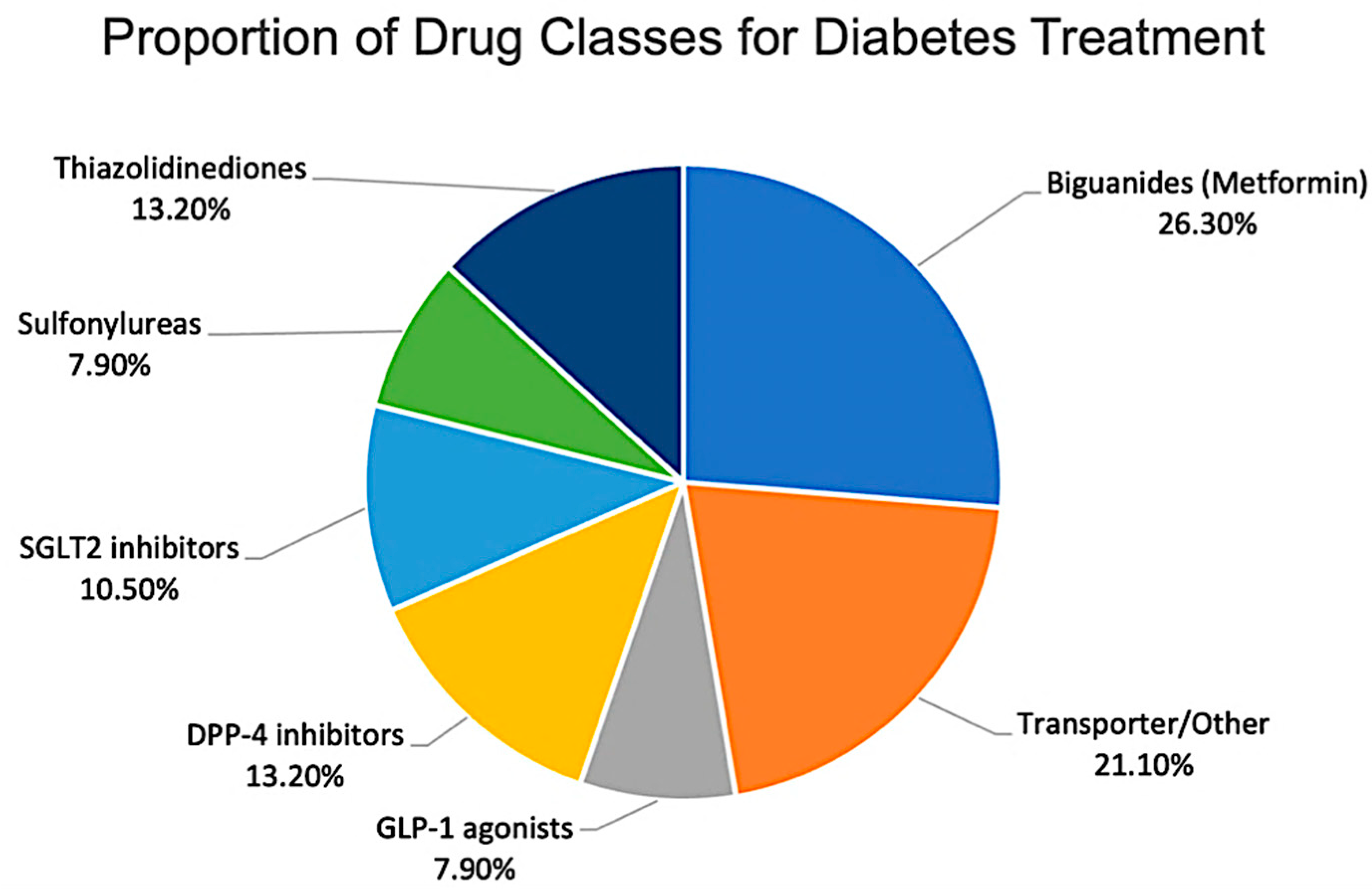
5. Class-by-Class Analysis of Antidiabetic Drugs
5.1. Biguanides (Metformin)
5.2. SGLT2 Inhibitors
5.3. Dipeptidyl Peptidase-4 (DPP-4) Inhibitors
5.4. Thiazolidinediones (TZDs)
5.5. Glucagon-like Peptide-1 (GLP-1) Receptor Agonists
5.6. Sulfonylureas (Glibenclamide, Glipizide)
6. Clinical and Translational Implications
6.1. Methodological Constraints
6.2. Translational Barriers
6.3. Species Variability
6.4. Limited Coverage of Newer Therapies
6.5. Inadequate Human-Relevant Models
6.6. Opportunities for Advancement
6.7. Critical Appraisal of Mechanistic Evidence
6.8. Roadmap for Clinical Implementation
7. Conclusions
Funding
Institutional Review Board Statement
Informed Consent Statement
Data Availability Statement
Acknowledgments
Conflicts of Interest
Abbreviations
| Abbreviation | Full Term |
| ABCB1 | P-glycoprotein |
| AMPK | AMP-activated protein kinase |
| ATP | Adenosine triphosphate |
| CLSM | Confocal laser scanning microscopy |
| DPP-4 | Dipeptidyl peptidase-4 |
| GLP-1 | Glucagon-like peptide-1 |
| GLP-1R | Glucagon-like peptide-1 receptor |
| GLUT4 | Glucose transporter 4 |
| HCI | High-content imaging |
| HPLC-MS/MS | High-performance liquid chromatography–tandem mass spectrometry |
| HDX-MS | Hydrogen–deuterium exchange mass spectrometry |
| iPSC | Induced pluripotent stem cells |
| KATP | ATP-sensitive potassium channels |
| logP | Lipophilicity |
| MATEs | Multidrug and toxin extrusion proteins |
| MSI | Mass spectrometry imaging |
| OCT1 | Organic cation transporter 1 |
| OCT2 | Organic cation transporter 2 |
| OCTs | Organic cation transporters |
| PBPK | Physiologically based pharmacokinetic modeling |
| pKa | Ionization constant |
| PEPCK | Phosphoenolpyruvate carboxykinase |
| PK | Pharmacokinetics |
| PPARγ | Peroxisome proliferator-activated receptor γ |
| RXR | Retinoid X receptor |
| SGLT2 | Sodium–glucose cotransporter-2 |
| SUR1 | Sulfonylurea receptor 1 |
| T2DM | Type 2 diabetes mellitus |
| TZDs | Thiazolidinediones |
References
- International Diabetes Federation. IDF Diabetes Atlas, 10th ed.; International Diabetes Federation: Brussels, Belgium, 2021; Available online: https://diabetesatlas.org (accessed on 8 December 2025).
- Sun, H.; Saeedi, P.; Karuranga, S.; Pinkepank, M.; Ogurtsova, K.; Duncan, B.B.; Stein, C.; Basit, A.; Chan, J.C.; Mbanya, J.C.; et al. IDF Diabetes Atlas: Global, regional and country-level diabetes prevalence estimates for 2021 and projections for 2045. Diabetes Res. Clin. Pract. 2022, 183, 109119. [Google Scholar] [CrossRef]
- Eggleton, J.S.; Jialal, I. Thiazolidinediones. In StatPearls; StatPearls Publishing: Treasure Island, FL, USA, 2023. Available online: https://www.ncbi.nlm.nih.gov/books/NBK551656/ (accessed on 8 December 2025).
- DeFronzo, R.A.; Ferrannini, E.; Groop, L.; Henry, R.R.; Herman, W.H.; Holst, J.J.; Hu, F.B.; Kahn, C.R.; Raz, I.; Shulman, G.I.; et al. Type 2 diabetes mellitus. Nat. Rev. Dis. Primers 2015, 1, 15019. [Google Scholar] [CrossRef] [PubMed]
- Tuntland, T.; Eagling, V.A.; Kharola, S.; Licklider, L.; Puri, R.; Hanna, R.; Clark, D. Implementation of pharmacokinetic and pharmacodynamic strategies in early research phases of drug discovery. Front. Pharmacol. 2014, 5, 174. [Google Scholar] [CrossRef]
- Fromm, M.F. The role of drug transporters for tissue-specific pharmacokinetics and toxicokinetics. Handb. Exp. Pharmacol. 2021, 266, 3–20. [Google Scholar] [CrossRef]
- Dujic, T.; Zhou, K.; Yee, S.; van Leeuwen, N.; de Keyser, C.; Javorský, M.; Goswami, S.; Zaharenko, L.; Christensen, M.H.; Out, M.; et al. Variants in Pharmacokinetic Transporters and Glycemic Response to Metformin: A Metgen Meta-Analysis. Clin. Pharmacol. Ther. 2016, 101, 763–772. [Google Scholar] [CrossRef] [PubMed]
- Dujic, T.; Zhou, K.; Donnelly, L.A.; Tavendale, R.; Palmer, C.N.; Pearson, E.R. Association of organic cation transporter 1 with intolerance to metformin in type 2 diabetes: A GoDARTS study. Diabetes 2015, 64, 1786–1793. [Google Scholar] [CrossRef]
- Shu, Y.; Sheardown, C.B.; Brown, C.; Owen, R.P.; Zhang, S.; Castro, R.A.; Ianculescu, A.G.; Yue, L.; Lo, J.C.; Burchard, E.G.; et al. Effect of genetic variation in the organic cation transporter 1 (OCT1) on metformin action. J. Clin. Investig. 2007, 117, 1422–1431. [Google Scholar] [CrossRef]
- Christensen, M.M.; Pedersen, R.S.; Stage, T.B.; Brasch-Andersen, C.; Nielsen, F.; Damkier, P.; Beck-Nielsen, H.; Brøsen, K. A gene–gene interaction between polymorphisms in the OCT2 and MATE1 genes influences the renal clearance of metformin. Pharmacogenet. Genom. 2013, 23, 526–534. [Google Scholar] [CrossRef]
- Dormandy, J.A.; Charbonnel, B.; Eckland, D.J.A.; Erdmann, E.; Massi-Benedetti, M.; Moules, I.K.; Skene, A.M.; Tan, M.H.; Lefèbvre, P.J.; Leiter, L.A.; et al. Secondary prevention of macrovascular events in patients with type 2 diabetes in the PROactive Study (PROspective pioglitAzone Clinical trial In macroVascular Events): A randomised controlled trial. Lancet 2005, 366, 1279–1289. [Google Scholar] [CrossRef]
- Kernan, W.N.; Viscoli, C.M.; Furie, K.L.; Young, L.H.; Inzucchi, S.E.; Gorman, M.; Guarino, P.D.; Lovejoy, A.M.; Peduzzi, P.N.; Conwit, R.; et al. Pioglitazone after ischemic stroke or transient ischemic attack. N. Engl. J. Med. 2016, 374, 1321–1331. [Google Scholar] [CrossRef]
- Wilke, R.A.; Rege, B.D.; Vidoni, M.N.; O’Connell, J.R.; Shuldiner, A.R.; Mitchell, B.D.; Beitelshees, A.L. Organic cation transporter 1 variants and therapeutic response to metformin in type 2 diabetes. Pharmacogenomics 2011, 12, 1465–1471. [Google Scholar] [CrossRef]
- Kalli, A.C.; Reithmeier, R.A.F. Interaction of membrane proteins and lipids with solvents and detergents. Biochim. Biophys. Acta Biomembr. 2021, 1863, 183514. [Google Scholar] [CrossRef]
- Tricco, A.C.; Lillie, E.; Zarin, W.; O’Brien, K.K.; Colquhoun, H.; Levac, D.; Moher, D.; Peters, M.D.J.; Horsley, T.; Weeks, L.; et al. PRISMA Extension for Scoping Reviews (PRISMA-ScR): Checklist and Explanation. Ann. Intern. Med. 2018, 169, 467–473. [Google Scholar] [CrossRef] [PubMed]
- Bramer, W.M.; Rethlefsen, M.L.; Kleijnen, J.; Franco, O.H. Optimal database combinations for literature searches in systematic reviews: A prospective exploratory study. Syst. Rev. 2017, 6, 245. [Google Scholar] [CrossRef] [PubMed]
- Page, M.J.; McKenzie, J.E.; Bossuyt, P.M.; Boutron, I.; Hoffmann, T.C.; Mulrow, C.D.; Shamseer, L.; Tetzlaff, J.M.; Akl, E.A.; Brennan, S.E.; et al. The PRISMA 2020 statement: An updated guideline for reporting systematic reviews. BMJ 2021, 372, n71. [Google Scholar] [CrossRef]
- Moher, D.; Liberati, A.; Tetzlaff, J.; Altman, D.G.; The PRISMA Group. Preferred Reporting Items for Systematic Reviews and Meta-Analyses: The PRISMA Statement. PLoS Med. 2009, 6, e1000097. [Google Scholar] [CrossRef]
- Bosgra, S.; Sips, L.; van Ravenzwaay, B.; Rietjens, I.M.C.M.; Punt, A. In vitro-in silico-based analysis of the dose-dependent in vivo oestrogenicity of the soy phytoestrogen genistein in humans. Br. J. Pharmacol. 2014, 171, 2732–2743. [Google Scholar] [CrossRef]
- Koepsell, H. Organic Cation Transporters in Health and Disease. Pharmacol. Rev. 2020, 72, 253–319. [Google Scholar] [CrossRef]
- Avdeef, A. Absorption and Drug Development: Solubility, Permeability, and Charge State, 2nd ed.; John Wiley & Sons: Hoboken, NJ, USA, 2012. [Google Scholar]
- Tsuda, M.; Terada, T.; Ueba, M.; Sato, T.; Masuda, S.; Katsura, T.; Inui, K.-I. Involvement of Human Multidrug and Toxin Extrusion 1 in the Drug Interaction between Cimetidine and Metformin in Renal Epithelial Cells. J. Pharmacol. Exp. Ther. 2009, 329, 185–191. [Google Scholar] [CrossRef]
- Faller, B. Artificial membrane assays to assess permeability. Curr. Drug Metab. 2008, 9, 886–892. [Google Scholar] [CrossRef]
- De Duve, C.; De Barsy, T.; Poole, B.; Trouet, A.; Tulkens, P.; Van Hoof, F. Lysosomotropic agents. Biochem. Pharmacol. 1974, 23, 2495–2531. [Google Scholar] [CrossRef]
- Krämer, S.D.; Wunderli-Allenspach, H. Physicochemical properties in pharmacokinetic lead optimization. Farmaco 2001, 56, 145–148. [Google Scholar] [CrossRef]
- Ma, T.; Li, X.; Zhang, J.; Zhu, Y.; Wang, Y.; Li, J.; Wu, J.; Wei, X.; Qu, Q.; Yu, Y.; et al. Low-dose metformin targets the lysosomal AMPK pathway through PEN2. Nature 2022, 603, 459–465. [Google Scholar] [CrossRef]
- Kazmi, F.; Hensley, T.; Pope, C.; Funk, R.S.; Loewen, G.J.; Buckley, D.B.; Parkinson, A. Lysosomal sequestration (trapping) of lipophilic amine (cationic amphiphilic) drugs in immortalized human hepatocytes (Fa2N-4 cells). Drug Metab. Dispos. 2013, 41, 897–905. [Google Scholar] [CrossRef]
- Wheaton, W.W.; Weinberg, S.E.; Hamanaka, R.B.; Soberanes, S.; Sullivan, L.B.; Anso, E.; Glasauer, A.; Dufour, E.; Mutlu, G.M.; Budigner, G.S.; et al. Metformin inhibits mitochondrial complex I in a GSH-dependent manner. Nat. Chem. Biol. 2014, 10, 337–339. [Google Scholar] [CrossRef]
- Zachariou, M.; Min, M.; Scott, I. Methods for measuring mitochondrial membrane potential within cells. Methods Mol. Biol. 2022, 2497, 187–207. [Google Scholar] [CrossRef]
- Kaufmann, A.M.; Krise, J.P. Lysosomal Sequestration of Amine-Containing Drugs: Analysis and Therapeutic Implications. J. Pharm. Sci. 2007, 96, 729–746. [Google Scholar] [CrossRef] [PubMed]
- Krämer, S.D.; Aschmann, H.E.; Hatibovic, M.; Hermann, K.F.; Neuhaus, C.S.; Brunner, C.; Belli, S. When barriers ignore the “rule-of-five”. Adv. Drug Deliv. Rev. 2016, 101, 62–74. [Google Scholar] [CrossRef] [PubMed]
- Groop, P.; Cooper, M.E.; Perkovic, V.; Hocher, B.; Kanasaki, K.; Haneda, M.; Schernthaner, G.; Sharma, K.; Stanton, R.C.; Toto, R.; et al. Linagliptin and its effects on hyperglycaemia and albuminuria in patients with type 2 diabetes and renal dysfunction: The randomized MARLINA-T2D trial. Diabetes, Obes. Metab. 2017, 19, 1610–1619. [Google Scholar] [CrossRef] [PubMed]
- Graefe-Mody, U.; Retlich, S.; Friedrich, C. Clinical Pharmacokinetics and Pharmacodynamics of Linagliptin. Clin. Pharmacokinet. 2012, 51, 411–427. [Google Scholar] [CrossRef]
- Herrmann, I.K.; Wood, M.J.A.; Fuhrmann, G. Extracellular vesicles as a next-generation drug delivery platform. Nat. Nanotechnol. 2021, 16, 748–759. [Google Scholar] [CrossRef]
- Deacon, C.F. Physiology and pharmacology of DPP-4 in glucose homeostasis and the treatment of type 2 diabetes. Front. Endocrinol. 2019, 10, 80. [Google Scholar] [CrossRef]
- Staud, F.; Cerveny, L.; Ahmadimoghaddam, D.; Ceckova, M. Multidrug and toxin extrusion proteins (MATE/SLC47); role in pharmacokinetics. Int. J. Biochem. Cell Biol. 2013, 45, 2007–2011. [Google Scholar] [CrossRef]
- Mora Lagares, L.; Novič, M. Recent advances on P-glycoprotein (ABCB1) transporter modelling with in silico methods. Int. J. Mol. Sci. 2022, 23, 14804. [Google Scholar] [CrossRef] [PubMed]
- Chen, L.; Shu, Y.; Liang, X.; Chen, E.C.; Yee, S.W.; Zur, A.A.; Li, S.; Xu, L.; Keshari, K.R.; Lin, M.J.; et al. OCT1 is a high-capacity thiamine transporter that regulates hepatic steatosis and is a target of metformin. Proc. Natl. Acad. Sci. USA 2014, 111, 9983–9988. [Google Scholar] [CrossRef] [PubMed]
- Rani, P.; Mandal, P.; Rajak, B.K.; Singh, D.V. A review on dynamics of permeability-glycoprotein in efflux of chemotherapeutic drugs. Front. Drug Discov. 2024, 4, 1363364. [Google Scholar] [CrossRef]
- Marzook, A.; Tomas, A.; Jones, B. The interplay of glucagon-like peptide-1 receptor trafficking and signalling in pancreatic beta cells. Front. Endocrinol. 2021, 12, 678055. [Google Scholar] [CrossRef] [PubMed]
- Mima, A. Mitochondria-targeted drugs for diabetic kidney disease. Heliyon 2022, 8, e08878. [Google Scholar] [CrossRef]
- Hraběta, J.; Belhajová, M.; Šubrtová, H.; Merlos Rodrigo, M.A.; Heger, Z.; Eckschlager, T. Drug sequestration in lysosomes as one of the mechanisms of chemoresistance of cancer cells and the possibilities of its inhibition. Int. J. Mol. Sci. 2020, 21, 4392. [Google Scholar] [CrossRef]
- Di Marzio, D. Peroxisome proliferator-activated receptor-γ agonists and diabetes: Current evidence and future perspectives. Vasc. Health Risk Manag. 2008, 4, 297–304. [Google Scholar] [CrossRef]
- Upadhyay, A. SGLT2 inhibitors and kidney protection: Mechanisms beyond tubuloglomerular feedback. Kidney360 2024, 5, 771–782. [Google Scholar] [CrossRef]
- Becker, R.H.M.; Dahmen, R.; Bergmann, K.; Schroeder, M.; Neumann, J.; Wanke, C. Linagliptin pharmacokinetics in patients with renal impairment. Clin. Pharmacokinet. 2013, 52, 393–404. [Google Scholar]
- Zhang, C.; Wei, Y.; Yan, X.; Huang, B.; Hong, K. Advanced imaging techniques for tracking drug dynamics at the subcellular level. Adv. Drug Deliv. Rev. 2023, 199, 114978. [Google Scholar] [CrossRef]
- Buchberger, A.R.; DeLaney, K.; Johnson, J.; Li, L. Mass spectrometry imaging: A review of emerging advancements and future insights. Anal. Chem. 2018, 90, 240–265. [Google Scholar] [CrossRef]
- Deak, A.T.; Park, O.K.; Nam, S.J.; Gibaud, S.; Zheng, X.; Swanson, J.A.; Puri, A. High-resolution imaging of STIM/Orai subcellular localization using array confocal laser scanning microscopy. Methods Mol. Biol. 2018, 1843, 175–187. [Google Scholar] [CrossRef]
- Jonkman, J.; Brown, C.M.; Wright, G.D.; Anderson, K.I.; North, A.J. Tutorial: Guidance for quantitative confocal microscopy. Nat. Protoc. 2020, 15, 1585–1611. [Google Scholar] [CrossRef] [PubMed]
- Miyashita, T. Confocal microscopy for intracellular co-localization of proteins. Protein-Protein Interact. 2004, 18, 399–410. [Google Scholar] [CrossRef]
- Sorkin, A.; von Zastrow, M. Signal transduction and endocytosis: Close encounters of many kinds. Nat. Rev. Mol. Cell Biol. 2002, 3, 600–614. [Google Scholar] [CrossRef] [PubMed]
- McCarty, S.M.; Clasby, M.C.; Sexton, J.Z. High-throughput methods for the discovery of small molecule modulators of pancreatic beta-cell function and regeneration. Assay Drug Dev. Technol. 2024, 22, 148–159. [Google Scholar] [CrossRef] [PubMed]
- Bickle, M. High-content screening: A new primary screening tool? IDrugs 2008, 11, 822–826. [Google Scholar] [PubMed]
- Specht, E.A.; Braselmann, E.; Palmer, A.E. A critical and comparative review of fluorescent tools for live-cell imaging. Annu. Rev. Physiol. 2017, 79, 93–117. [Google Scholar] [CrossRef]
- Lichtman, J.W.; Conchello, J.A. Fluorescence microscopy. Nat. Methods 2005, 2, 910–919. [Google Scholar] [CrossRef]
- Steiert, C.; Busto, J.V.; Melchionda, L.; Wiedemann, N. Subcellular fractionation by differential centrifugation for mitochondrial studies. Methods Enzymol. 2024, 698, 61–73. [Google Scholar] [CrossRef]
- Clayton, D.A.; Shadel, G.S. Purification of mitochondria by sucrose step density gradient centrifugation. Cold Spring Harb. Protoc. 2014, 2014, pdb.prot080028. [Google Scholar] [CrossRef]
- Foulon, N.; Goonatilleke, E.; MacCoss, M.J.; Emrick, M.A.; Hoofnagle, A.N. Multiplexed quantification of insulin and C-peptide by LC-MS/MS without the use of antibodies. J. Mass Spectrom. Adv. Clin. Lab. 2022, 25, 19–26. [Google Scholar] [CrossRef]
- Vogeser, M.; Seger, C. A decade of HPLC-MS/MS in the routine clinical laboratory—Goals for further developments. Clin. Biochem. 2008, 41, 649–662. [Google Scholar] [CrossRef] [PubMed]
- Pan, N.; Standke, S.J.; Kothapalli, N.R.; Sun, M.; Bensen, R.C.; Burgett, A.W.G.; Yang, Z. Quantification of drug molecules in live single cells using the single-probe mass spectrometry technique. Anal. Chem. 2019, 91, 9018–9024. [Google Scholar] [CrossRef] [PubMed]
- Boutros, M.; Heigwer, F.; Laufer, C. Microscopy-Based High-Content Screening. Cell 2015, 163, 1314–1325. [Google Scholar] [CrossRef]
- Papini, N.; Giussani, P.; Tringali, C. Metformin lysosomal targeting: A novel aspect to be investigated for metformin repurposing in neurodegenerative diseases? Int. J. Mol. Sci. 2024, 25, 8884. [Google Scholar] [CrossRef]
- Klein, K.; Tremmel, R.; Winter, S.; Fehm, T.; Häusler, S.F.M.; Haubner, R.; since, J. The role of LC-MS/MS for the quantification of intracellular metabolites in clinical research. J. Chromatogr. B Analyt. Technol. Biomed. Life Sci. 2015, 1002, 143–152. [Google Scholar] [CrossRef][Green Version]
- Chaudhari, K.; Singh, A.; Bajpai, V.K. Determination of metformin bio-distribution by LC-MS/MS in mice treated with a clinically relevant paradigm. PLoS ONE 2020, 15, e0234571. [Google Scholar] [CrossRef]
- Elsby, R.; Surry, D.D.; Smith, V.N.; Gray, A.J. Validation and application of Caco-2 assays for the in vitro evaluation of development candidate drugs as substrates or inhibitors of P-glycoprotein to support regulatory submissions. Xenobiotica 2008, 38, 1140–1164. [Google Scholar] [CrossRef]
- Mbughuni, M.M.; Jannetto, P.J.; Langman, L.J. Mass spectrometry applications for toxicology. EJIFCC 2016, 27, 272–287. [Google Scholar]
- Wiśniewski, J.R.; Wegler, C.; Artursson, P. Subcellular fractionation of human liver reveals limits in global proteomic quantification from isolated fractions. Anal. Biochem. 2016, 509, 82–88. [Google Scholar] [CrossRef]
- Ozohanics, O.; Ambrus, A. Hydrogen-deuterium exchange mass spectrometry: A novel structural biology approach to structure, dynamics and interactions of proteins and their complexes. Life 2020, 10, 286. [Google Scholar] [CrossRef] [PubMed]
- Narang, D.; Lento, C.; Wilson, D.J. HDX-MS: An analytical tool to capture protein motion in action. Biomedicines 2020, 8, 224. [Google Scholar] [CrossRef] [PubMed]
- FitzGerald, L.I.; Aurelio, L.; Chen, M.; Yuen, D.; Rennick, J.J.; Graham, B.; Johnston, A.P.R. A molecular sensor to quantify the localization of proteins, DNA and nanoparticles in cells. Nat. Commun. 2020, 11, 4860. [Google Scholar] [CrossRef] [PubMed]
- Wang, R.; Yuan, Y.; Shao, H.; Sun, Y.; Lai, C.; Zhang, M.; Song, W.; Zhang, T.; Zhuang, F.; Chen, Q.; et al. Real-time visualization of drug-target interactions in native subcellular microenvironments for lysosome-targeted drug discovery. J. Pharm. Anal. 2025, 15, 101428. [Google Scholar] [CrossRef]
- Sun, J.; Warden, A.R.; Ding, X. Recent advances in microfluidics for drug screening. Biomicrofluidics 2019, 13, 061503. [Google Scholar] [CrossRef]
- Foretz, M.; Guigas, B.; Bertrand, L.; Pollak, M.; Viollet, B. Metformin: From mechanisms of action to therapies. Cell Metab. 2014, 20, 953–966. [Google Scholar] [CrossRef]
- Rena, G.; Hardie, D.G.; Pearson, E.R. The mechanisms of action of metformin. Diabetologia 2017, 60, 1577–1585. [Google Scholar] [CrossRef] [PubMed]
- Graham, G.G.; Punt, J.; Arora, M.; Day, R.O.; Doogue, M.P.; Duong, J.K.; Furlong, T.J.; Greenfield, J.R.; Greenup, L.C.; Kirkpatrick, C.M.; et al. Clinical pharmacokinetics of metformin. Clin. Pharmacokinet. 2011, 50, 81–98. [Google Scholar] [CrossRef]
- Apostolova, N.; Iannantuoni, F.; Gruevska, A.; Muntane, J.; Rocha, M.; Victor, V.M. Mechanisms of action of metformin in type 2 diabetes: Effects on mitochondria and leukocyte-endothelium interactions. Redox Biol. 2020, 34, 101517. [Google Scholar] [CrossRef] [PubMed]
- Shu, Y.; Brown, C.; Castro, R.A.; Shi, R.J.; Lin, E.T.; Owen, R.P.; Sheardown, S.A.; Yue, L.; Burchard, E.G.; Brett, C.M.; et al. Effect of genetic variation in the organic cation transporter 1, OCT1, on metformin pharmacokinetics. Clin. Pharmacol. Ther. 2008, 83, 273–280. [Google Scholar] [CrossRef] [PubMed]
- Kimura, N.; Masuda, S.; Tanihara, Y.; Ueo, H.; Okuda, M.; Katsura, T.; Inui, K. Metformin is a superior substrate for renal organic cation transporter OCT2 rather than hepatic OCT1. Drug Metab. Pharmacokinet. 2005, 20, 379–386. [Google Scholar] [CrossRef]
- Owen, M.R.; Doran, E.; Halestrap, A.P. Evidence that metformin exerts its anti-diabetic effects through inhibition of complex 1 of the mitochondrial respiratory chain. Biochem. J. 2000, 348, 607–614. [Google Scholar] [CrossRef]
- Suo, Y.; Wright, N.J.; Guterres, H.; Fedor, J.G.; Butay, K.J.; Borgnia, M.J.; Im, W.; Lee, S.Y. Molecular basis of polyspecific drug binding and transport by OCT1 and OCT2. bioRxiv 2023. [Google Scholar] [CrossRef]
- Zhou, G.; Myers, R.; Li, Y.; Chen, Y.; Shen, X.; Fenyk-Melody, J.; Wu, M.; Ventre, J.; Doebber, T.; Fujii, N.; et al. Role of AMP-activated protein kinase in mechanism of metformin action. J. Clin. Investig. 2001, 108, 1167–1174. [Google Scholar] [CrossRef]
- Fontaine, E. Metformin-induced mitochondrial complex I inhibition: Facts, uncertainties, and consequences. Front. Endocrinol. 2018, 9, 753. [Google Scholar] [CrossRef]
- Viollet, B.; Guigas, B.; Sanz Garcia, N.; Leclerc, J.; Foretz, M.; Andreelli, F. Cellular and molecular mechanisms of metformin: An overview. Clin. Sci. 2012, 122, 253–270. [Google Scholar] [CrossRef]
- Vial, G.; Detaille, D.; Guigas, B. Role of mitochondria in the mechanism(s) of action of metformin. Front. Endocrinol. 2019, 10, 294. [Google Scholar] [CrossRef] [PubMed]
- Dujic, T.; Causevic, A.; Bego, T.; Malenica, M.; Velija-Asimi, Z.; Pearson, E.R.; Semiz, S. Organic cation transporter 1 variants and gastrointestinal side effects of metformin in patients with Type 2 diabetes. Diabet. Med. 2016, 33, 511–514. [Google Scholar] [CrossRef]
- Mudaliar, S.; Polidori, D.; Zambrowicz, B.; Henry, R.R. Sodium-glucose cotransporter inhibitors: Effects on renal and intestinal glucose transport: From bench to bedside. Diabetes Care 2015, 38, 2344–2353. [Google Scholar] [CrossRef]
- Komoroski, B.; Vachharajani, N.; Boulton, D.; Kornhauser, D.; Geraldes, M.; Li, L.; Pfister, M. Dapagliflozin, a novel SGLT2 inhibitor, induces dose-dependent glucosuria in healthy subjects. Clin. Pharmacol. Ther. 2009, 85, 520–526. [Google Scholar] [CrossRef]
- Kim, S.-Y.; Lee, J.-H.; Yu, Y.-G.; Kang, S.-G.; Lee, M. Effects of molecular lipophilicity on cellular uptake and intracellular distribution of pharmaceutical compounds. Mol. Pharm. 2022, 19, 2999–3010. [Google Scholar] [CrossRef]
- Scheen, A.J. Pharmacokinetic and pharmacodynamic profile of empagliflozin, a sodium glucose co-transporter 2 inhibitor. Clin. Pharmacokinet. 2014, 53, 213–225. [Google Scholar] [CrossRef] [PubMed]
- Yasmin, S.; Capone, F.; Laghezza, A.; Piaz, F.D.; Loiodice, F.; Vijayan, V.; Devadasan, V.; Mondal, S.K.; Atlı, Ö.; Baysal, M.; et al. Novel benzylidene thiazolidinedione derivatives as partial PPARγ agonists and their antidiabetic effects on type 2 diabetes. Sci. Rep. 2017, 7, 14776. [Google Scholar] [CrossRef] [PubMed]
- Devchand, P.R.; Liu, T.; Altman, R.B.; FitzGerald, G.A.; Schadt, E.E. The pioglitazone trek via human PPAR gamma: From discovery to a medicine at the FDA and beyond. Front. Pharmacol. 2018, 9, 1093. [Google Scholar] [CrossRef]
- Quintanilla, R.A.; Jin, Y.N.; Fuenzalida, K.; Bronfman, M.; Johnson, G.V.W. Rosiglitazone treatment prevents mitochondrial dysfunction in mutant huntingtin-expressing cells. J. Biol. Chem. 2008, 283, 25628–25637. [Google Scholar] [CrossRef]
- Leal, N.S.; Martins, L.M. Mind the gap: Mitochondria and the endoplasmic reticulum in neurodegenerative diseases. Biomedicines 2021, 9, 227. [Google Scholar] [CrossRef] [PubMed]
- Zheng, Z.; Zong, Y.; Ma, Y.; Tian, Y.; Pang, Y.; Zhang, C.; Gao, J. Glucagon-like peptide-1 receptor: Mechanisms and advances in therapy. Signal Transduct. Target. Ther. 2024, 9, 231. [Google Scholar] [CrossRef]
- Li, X.-T.; Yun, M.-Z. The impact of sulfonylureas on diverse ion channels: An alternative explanation for the antidiabetic actions. Front. Cell Dev. Biol. 2025, 13, 1528369. [Google Scholar] [CrossRef] [PubMed]
- Walczewska-Szewc, K.; Nowak, W. Photo-switchable sulfonylureas binding to ATP-sensitive potassium channel reveal the mechanism of light-controlled insulin release. J. Phys. Chem. B 2021, 125, 13111–13121. [Google Scholar] [CrossRef]
- Martin, G.M.; Kandasamy, B.; DiMaio, F.; Yoshioka, C.; Shyng, S.-L. Anti-diabetic drug binding site in a mammalian KATP channel revealed by Cryo-EM. eLife 2017, 6, e31054. [Google Scholar] [CrossRef]
- Rovira-Clavé, X.; Jiang, S.; Bai, Y.; Zhu, B.; Barlow, G.; Bhate, S.; Coskun, A.F.; Han, G.; Ho, C.K.; Hitzman, C.; et al. Subcellular localization of biomolecules and drug distribution by high-definition ion beam imaging. Nat. Commun. 2021, 12, 4642. [Google Scholar] [CrossRef]
- U.S. Food and Drug Administration. Pharmacokinetics in Patients with Impaired Renal Function—Study Design, Data Analysis, and Impact on Dosing and Labeling. Draft Guidance. 2024. Available online: https://www.fda.gov/media/78573/download (accessed on 8 December 2025).
- Eichler, H.G.; Pignatti, F.; Schwarzer-Daum, B.; Hidalgo-Simon, A.; Eichler, I.; Arlett, P.; Humphreys, A.; Vamvakas, S.; Brun, N.; Rasi, G. Randomized controlled trials versus real world evidence: Neither magic nor myth. Clin. Pharmacol. Ther. 2021, 109, 1212–1218. [Google Scholar] [CrossRef] [PubMed]
- European Medicines Agency. Guideline on Clinical Investigation of Medicinal Products in the Treatment/Prevention of Type 2 Diabetes Mellitus. EMA/CHMP/430679/2017. 2019. 2024. Available online: https://www.ema.europa.eu/en/documents/scientific-guideline/guideline-clinical-investigation-medicinal-products-treatment-or-prevention-diabetes-mellitus-revision-2_en.pdf (accessed on 8 December 2025).
- Marshall, S.F.; Burghaus, R.; Cosson, V.; Cheung, S.Y.; Chenel, M.; DellaPasqua, O.; Frey, N.; Hamrén, B.; Harnisch, L.; Ivanow, F.; et al. Good practices in model-informed drug discovery and development: Practice, application, and documentation. CPT Pharmacomet. Syst. Pharmacol. 2016, 5, 93–122. [Google Scholar] [CrossRef]
- Lai, Y.; Chu, X.; Di, L.; Gao, W.; Guo, Y.; Liu, X.; Lu, C.; Mao, J.; Shen, H.; Tang, H.; et al. Recent advances in the translation of drug metabolism and pharmacokinetics science for drug discovery and development. Acta Pharm. Sin. B 2022, 12, 2751–2777. [Google Scholar] [CrossRef]
- Jamei, M.; Marciniak, S.; Feng, K.; Barnett, A.; Tucker, G.; Rostami-Hodjegan, A. The Simcyp population-based ADME simulator. Expert Opin. Drug Metab. Toxicol. 2009, 5, 211–223. [Google Scholar] [CrossRef]
- Chan, A.; Tsourkas, A. Intracellular protein delivery: Approaches, challenges, and clinical applications. BME Front. 2024, 5, 0035. [Google Scholar] [CrossRef]
- Edmondson, R.; Broglie, J.J.; Adcock, A.F.; Yang, L. Three-dimensional cell culture systems and their applications in drug discovery and cell-based biosensors. Assay Drug Dev. Technol. 2014, 12, 207–218. [Google Scholar] [CrossRef] [PubMed]
- Martignoni, M.; Groothuis, G.M.M.; de Kanter, R. Species differences between mouse, rat, dog, monkey and human CYP-mediated drug metabolism, inhibition and induction. Expert Opin. Drug Metab. Toxicol. 2006, 2, 875–894. [Google Scholar] [CrossRef] [PubMed]
- Martinez, M.N.; Amidon, G.L.; Amidon, G.E.; Straubinger, R.M. Application of physiologically based absorption modeling to understand the influence of dissolution, solubility, and permeability on the oral bioavailability of drugs. AAPS J. 2016, 18, 1045–1055. [Google Scholar] [CrossRef]
- Floerl, S.; Kuehne, A.; Hagos, Y. Functional and pharmacological comparison of human, mouse, and rat organic cation transporter 1 toward drug and pesticide interaction. Int. J. Mol. Sci. 2020, 21, 6871. [Google Scholar] [CrossRef]
- Khetani, S.R.; Bhatia, S.N. Microscale culture of human liver cells for drug development. Nat. Biotechnol. 2008, 26, 120–126. [Google Scholar] [CrossRef]
- Dahlén, A.D.; Dashi, G.; Maslov, I.; Attwood, M.M.; Jonsson, J.; Trukhan, V.; Schiöth, H.B. Trends in antidiabetic drug discovery: FDA approved drugs, new drugs in clinical trials and global sales. Front. Pharmacol. 2022, 12, 807548. [Google Scholar] [CrossRef]
- Deacon, C.F. A review of dipeptidyl peptidase-4 inhibitors. Hot topics from randomized controlled trials. Diabetes Obes. Metab. 2018, 20, 34–46. [Google Scholar] [CrossRef]
- Hyrsova, L.; Smutny, T.; Carazo, A.; Moravcik, S.; Mandikova, J.; Trejtnar, F.; Gerbal-Chaloin, S.; Pavek, P. The pregnane X receptor down-regulates organic cation transporter 1 (SLC22A1) in human hepatocytes by competing for (‘squelching’) SRC-1 coactivator. Br. J. Pharmacol. 2016, 173, 1703–1715. [Google Scholar] [CrossRef]
- Wilkening, S.; Stahl, F.; Bader, A. Comparison of primary human hepatocytes and hepatoma cell line HepG2 with regard to their biotransformation properties. Drug Metab. Dispos. 2003, 31, 1035–1042. [Google Scholar] [CrossRef] [PubMed]
- Rulcova, A.; Krausova, L.; Smutny, T.; Vrzal, R.; Dvorak, Z.; Jover, R.; Pavek, P. Glucocorticoid receptor regulates organic cation transporter 1 (OCT1, SLC22A1) expression via HNF4α upregulation in primary human hepatocytes. Pharmacol. Rep. 2013, 65, 1322–1335. [Google Scholar] [CrossRef]
- Sahi, J.; Grepper, S.; Smith, C. Hepatocytes as a tool in drug metabolism, transport and safety evaluations in drug discovery. Curr. Drug Discov. Technol. 2010, 7, 188–198. [Google Scholar] [CrossRef] [PubMed]
- Zou, H.; Banerjee, P.; Leung, S.S.Y.; Yan, X. Application of pharmacokinetic-pharmacodynamic modeling in drug delivery: Development and challenges. Front. Pharmacol. 2020, 11, 997. [Google Scholar] [CrossRef] [PubMed]
- D’Souza, A.A.; Shegokar, R. Polyethylene glycol (PEG): A versatile polymer for pharmaceutical applications. Expert Opin. Drug Deliv. 2016, 13, 1257–1275. [Google Scholar] [CrossRef]
- Jagarapu, A.; Piovoso, M.J.; Zurakowski, R. An integrated spatial dynamics-pharmacokinetic model explaining poor penetration of anti-retroviral drugs in lymph nodes. Front. Bioeng. Biotechnol. 2020, 8, 667. [Google Scholar] [CrossRef]
- Danhof, M.; de Lange, E.C.; Della Pasqua, O.E.; Ploeger, B.A.; Voskuyl, R.A. Mechanism-based pharmacokinetic-pharmacodynamic (PK-PD) modeling in translational drug research. Trends Pharmacol. Sci. 2008, 29, 186–191. [Google Scholar] [CrossRef] [PubMed]



| Determinant | Influence on Intracellular Distribution | Representative Drug (Class) | logP | pKa | MW (Da) | Subcellular Driver |
|---|---|---|---|---|---|---|
| Molecular weight | High MW restricts passive diffusion and organelle entry | Pioglitazone (TZD) | 3.2 | 5.8 | 356.4 | Lipophilic nuclear diffusion |
| Ionization constant (pKa) | Weak bases accumulate in acidic organelles (lysosomotropism) | Linagliptin (DPP-4i) | 1.4 | 7.1 | 472.5 | Lysosomal pH trapping |
| Lipophilicity (logP) | Determines membrane permeability and organelle affinity | Glipizide (sulfonylurea) | 1.9 | 5.9 | 445.5 | ER calcium modulation |
| Net charge | Cationic drugs accumulate in mitochondria due to the membrane potential | Metformin (biguanide) | –2.5 | 12.4 | 129.1 | Mitochondrial cation trapping |
| Intracellular protein binding | Creates intracellular reservoirs; reduces free fraction | Metformin (Complex I interaction) | –2.5 | 12.4 | 129.1 | Complex I modulation |
| Organelle metabolism | Lysosomal processing forms intracellular slow-release pools | Linagliptin (DPP-4i) | 1.4 | 7.1 | 472.5 | Lysosomal retention |
| DNA/nuclear binding | Enhances nuclear retention and transcriptional effects | TZDs (PPARγ activation) | 3.2 | 5.8 | 356.4 | Nuclear receptor binding |
| Organelle membrane permeability | The mitochondrial inner membrane restricts hydrophilic drugs | Metformin (biguanide) | –2.5 | 12.4 | 129.1 | Limited mitochondrial penetration |
| Vesicular trafficking | Endosomal routing prolongs receptor–drug residence | Semaglutide (GLP-1RA) | –1.8 | 8.6 | 4113.6 | Endosomal receptor retention |
| Method | Principle | Quantitative Capability | Spatial Resolution | Strengths | Limitations |
|---|---|---|---|---|---|
| High-content imaging (HCI) | Fluorescent probes and microscopy | Semi-quantitative | High (subcellular) | Spatial localization, live-cell tracking | Limited to fluorescent molecules, costly |
| LC–MS/MS | Mass-based quantification | High | None | Highly sensitive, absolute quantification, organelle-specific | No spatial resolution |
| HDX–MS | Hydrogen–deuterium exchange | Semi-quantitative | None | Detects protein–drug interactions and binding dynamics | Technically complex, indirect |
| SNAP-tagging | Genetically encoded protein labeling | Semi-quantitative | High | High specificity, real-time visualization | Requires genetic engineering |
| Subcellular fractionation | Organelle isolation and analysis | Moderate–High | Low | Quantitative per compartment | Risk of cross-contamination |
| Drug Class | Primary Site of Action | Key Mechanism | Clinical Effect |
|---|---|---|---|
| Biguanides | Liver mitochondria | AMPK activation via Complex I inhibition | Reduced gluconeogenesis |
| Sulfonylureas | Pancreatic β-cell KATP channel | Channel closure → Ca2+ influx → insulin secretion | Increased insulin release |
| TZDs | Nuclear PPARγ | Gene regulation of glucose/lipid metabolism | Improved insulin sensitivity |
| SGLT2 inhibitors | Renal proximal tubule | Glucose excretion via SGLT2 blockade | Glucosuria, plasma glucose reduction |
| DPP-4 inhibitors | Plasma/endothelial DPP-4 enzyme | Prolongs incretin activity | Enhanced glucose-dependent insulin |
| GLP-1 RAs | GLP-1 receptors (multiorgan) | Receptor agonism → insulin ↑, glucagon ↓, gastric emptying ↓, appetite ↓ | Glycemic control and weight loss |
| Regulatory Aspect | Current Status (FDA/EMA) | Gap/Challenge for Intracellular PK |
|---|---|---|
| PK evaluation requirements | Plasma PK, tissue distribution, exposure–response relationships | Absence of regulatory guidance for subcellular drug exposure or organelle-level PK |
| Drug safety assessment | Organ-level toxicity, histopathology, clinical biomarkers | Lack of validated approaches to assess organelle-specific toxicity (e.g., mitochondrial or lysosomal injury) |
| Dose selection and optimization | Systemic exposure-based dose justification | No framework linking intracellular exposure to pharmacodynamic response or safety margins |
| Companion diagnostics | Genetic and molecular biomarkers mainly in oncology | Intracellular PK-informed biomarkers not being integrated into metabolic or diabetes drug development |
| Standardized reporting frameworks | MIAME, proteomics, and metabolomics reporting standards | No standardized minimum reporting guidelines for intracellular PK methodologies and data |
| Model-informed drug development (MIDD) | Increasing use of PBPK and exposure–response modeling | Intracellular and subcellular PK parameters not incorporated into regulatory modeling frameworks |
| Area of Limitation | Specific Challenge | Suggested Future Direction |
|---|---|---|
| Experimental models | Organelle cross-contamination in fractionation | Development of purer isolation methods |
| Translational validity | Rodent–human transporter differences (e.g., OCT1) | Humanized models, clinical validation |
| Drug classes | Limited data for GLP-1 agonists and SGLT2 inhibitors | Expand studies to newer agents |
| Computational tools | Lack of predictive models for organelle PK | Integration of machine learning and PKPD |
| Regulatory science | No subcellular PK guidance | Establish standardized frameworks |
Disclaimer/Publisher’s Note: The statements, opinions and data contained in all publications are solely those of the individual author(s) and contributor(s) and not of MDPI and/or the editor(s). MDPI and/or the editor(s) disclaim responsibility for any injury to people or property resulting from any ideas, methods, instructions or products referred to in the content. |
© 2026 by the author. Licensee MDPI, Basel, Switzerland. This article is an open access article distributed under the terms and conditions of the Creative Commons Attribution (CC BY) license.
Share and Cite
Bafail, D.A. Intracellular Pharmacokinetics of Antidiabetic Drugs: A Focused Narrative Review of Subcellular Distribution (2015–2025). Diseases 2026, 14, 62. https://doi.org/10.3390/diseases14020062
Bafail DA. Intracellular Pharmacokinetics of Antidiabetic Drugs: A Focused Narrative Review of Subcellular Distribution (2015–2025). Diseases. 2026; 14(2):62. https://doi.org/10.3390/diseases14020062
Chicago/Turabian StyleBafail, Duaa Abdullah. 2026. "Intracellular Pharmacokinetics of Antidiabetic Drugs: A Focused Narrative Review of Subcellular Distribution (2015–2025)" Diseases 14, no. 2: 62. https://doi.org/10.3390/diseases14020062
APA StyleBafail, D. A. (2026). Intracellular Pharmacokinetics of Antidiabetic Drugs: A Focused Narrative Review of Subcellular Distribution (2015–2025). Diseases, 14(2), 62. https://doi.org/10.3390/diseases14020062