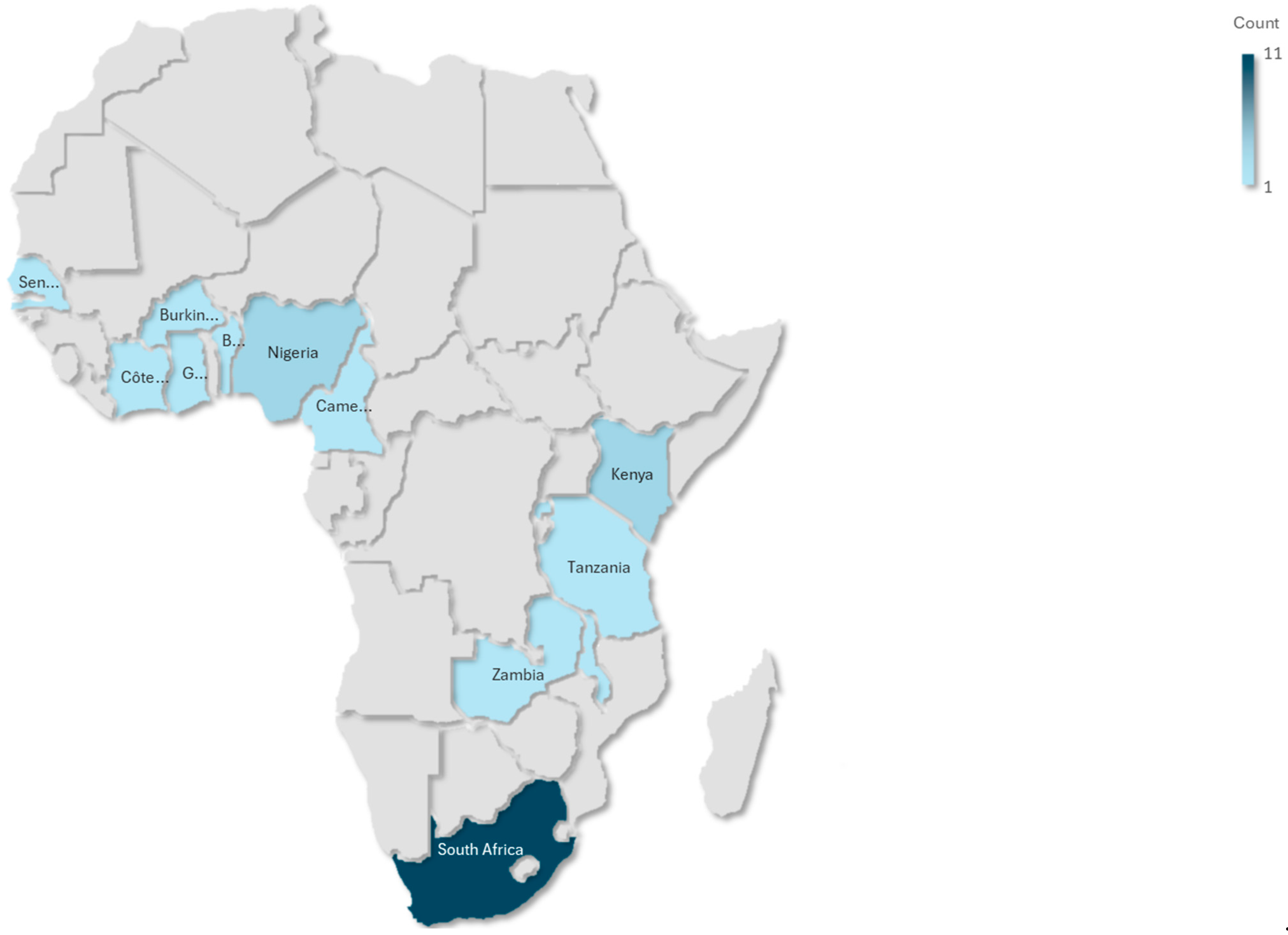

Non-Communicable Disease Burden and Dietary Determinants in Women of Reproductive Age in Sub-Saharan Africa: A Scoping Review

 ,
,  ,
, 

Abstract
1. Introduction
2. Materials and Methods
2.1. Methodological Approach
- Identifying the research question;
- Identifying relevant studies;
- Study selection;
- Charting the data;
- Collating, summarizing, and reporting the results.
2.2. Search Strategy
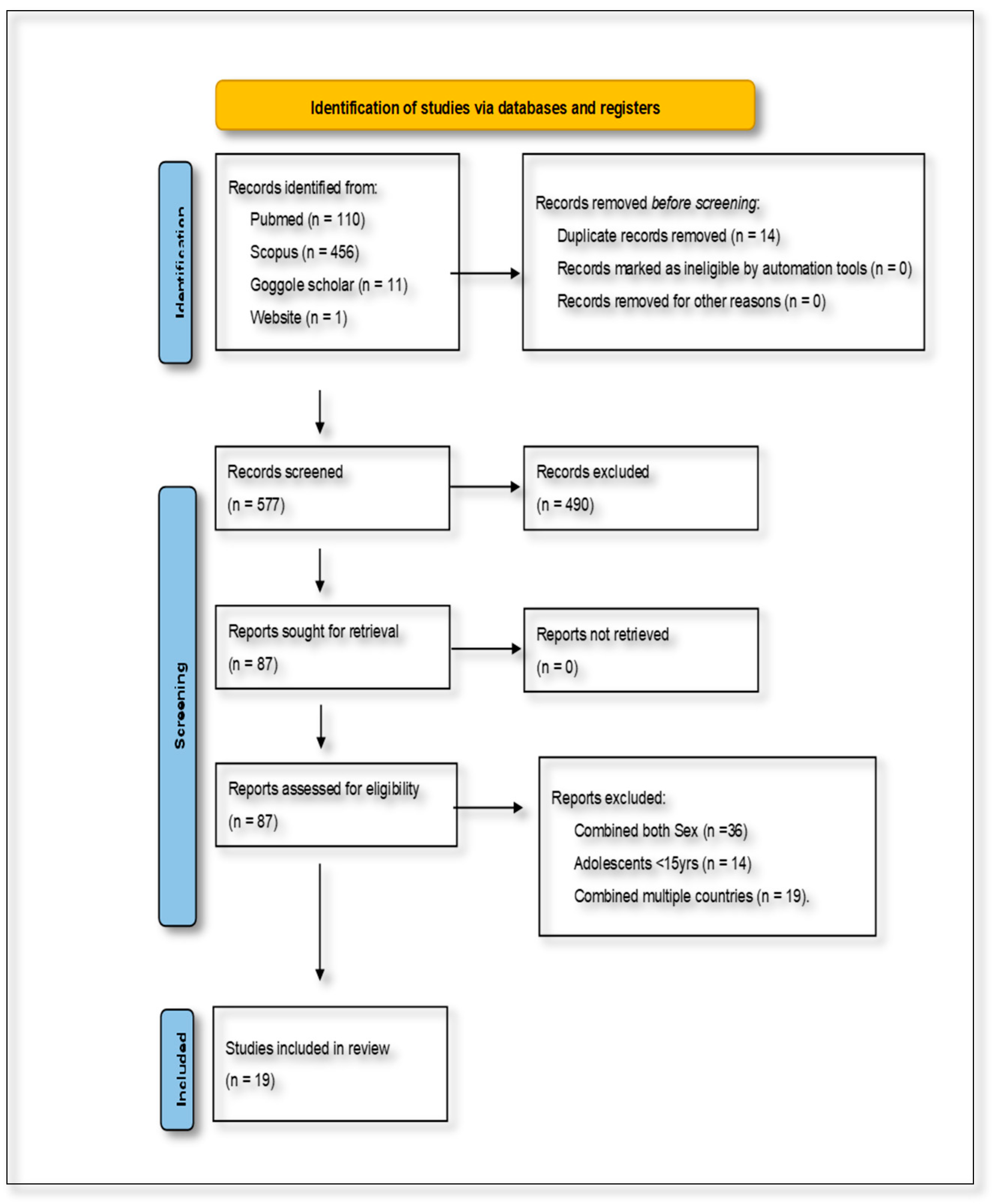
2.3. Study Selection
- Titles and abstracts were reviewed for relevance;
- Full-text articles were evaluated against inclusion and exclusion criteria.
Eligibility Criteria
- Focused on women aged 15 to 49 years (women of reproductive age);
- Examined dietary factors or nutritional status in relation to NCD outcomes;
- Were conducted in SSA;
- Used original research designs (cross-sectional, cohort, RCTs, or mixed methods).
- The MEDLINE search string included combinations of the following terms:
- Population terms: “Reproductive-Aged Women”, “Women 15–49 Years”, “WRA”, and “female”;
- NCD terms: “Non-communicable Diseases”, “diabetes”, “hypertension”, “obesity”, and “cardiovascular diseases”;
- Dietary terms: “Dietary Determinants”, “Nutritional Status”, “Dietary Patterns”, and “Food Security”;
- Context terms: “Sub-Saharan Africa”, “Southern Africa”, and “South Africa”.
2.4. Data Charting and Analysis
3. Results
3.1. Study Characteristics
3.2. Individual-Level Determinants
3.3. Socioeconomic and Cultural Influences
3.4. Biological Mediators and Health Outcomes
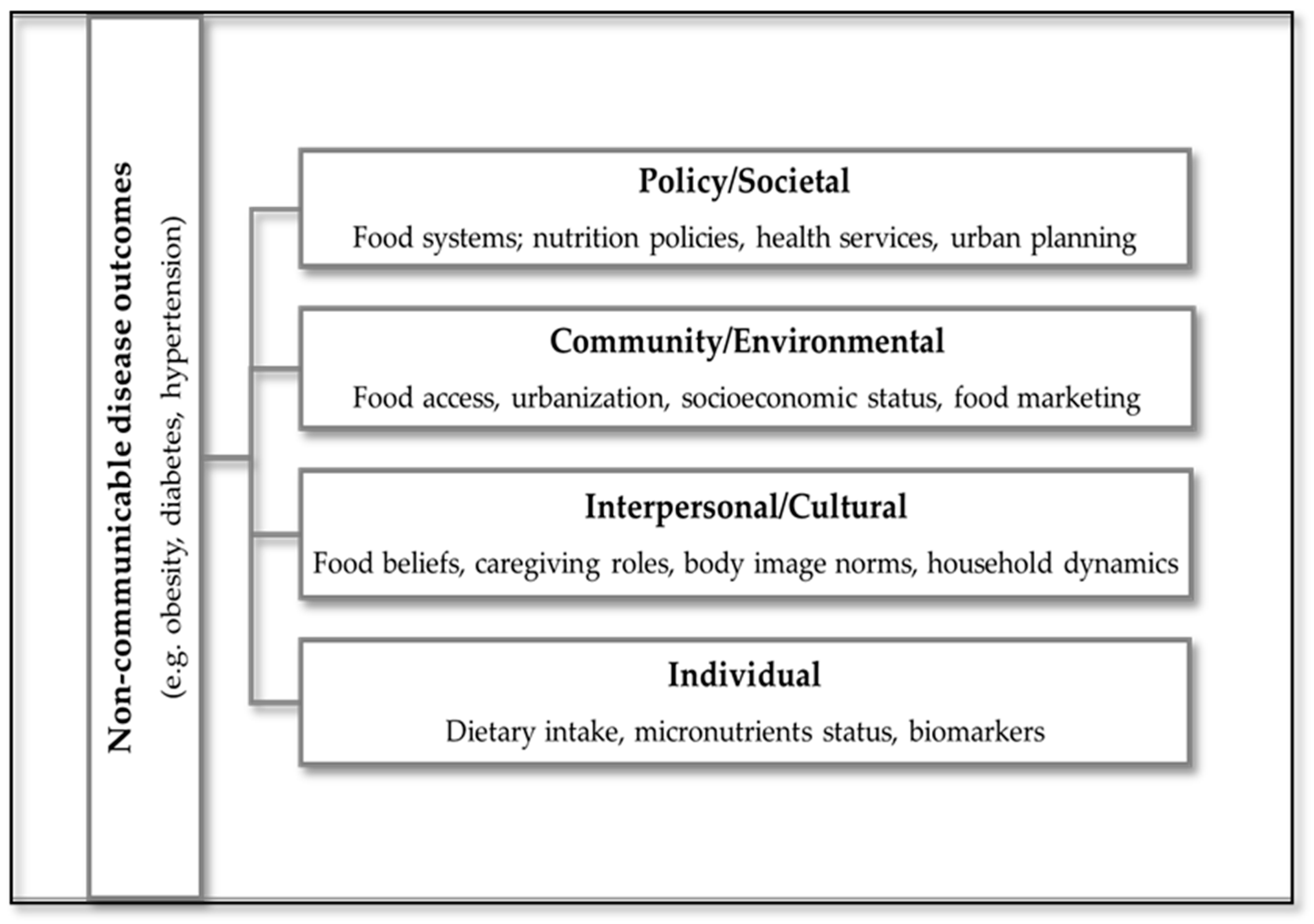
3.5. Conceptual Framework
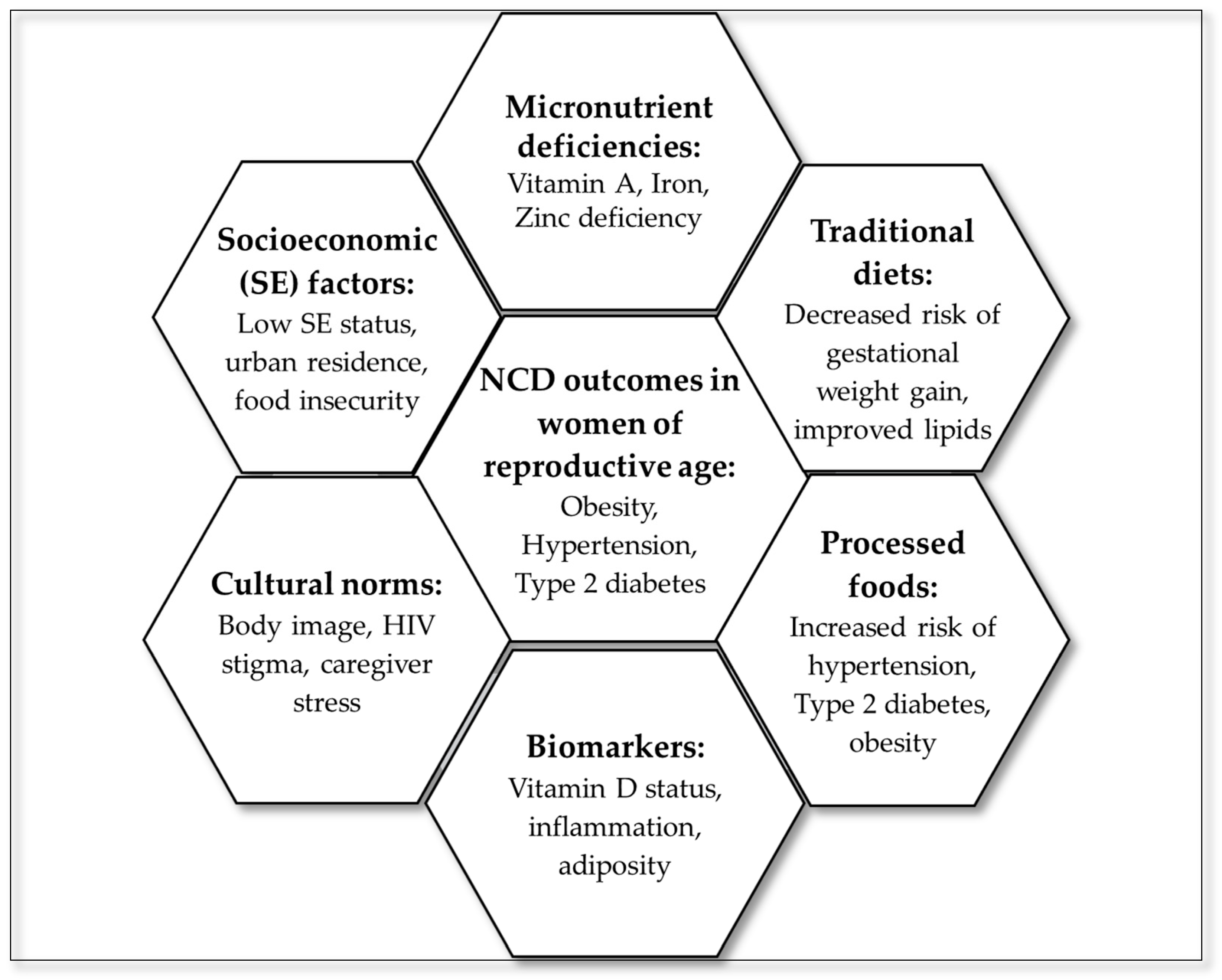
3.6. Summary of Evidence
4. Discussion
5. Conclusions
Supplementary Materials
Author Contributions
Funding
Institutional Review Board Statement
Informed Consent Statement
Data Availability Statement
Conflicts of Interest
Abbreviations
| 24HR | 24-hour dietary recall questionnaire |
| aPR | Adjusted prevalence ratio |
| FFQ | Food frequency questionnaire |
| JBI | Joanna Briggs Institute |
| LDL | Low-density lipoprotein cholesterol |
| LNSs | Lipid-based nutrient supplements |
| MEDLINE | Medical Literature Analysis and Retrieval System Online |
| MeSHs | Medical Subject Headings |
| NCDs | Non-communicable diseases |
| PCC | Population–Concept–Context |
| PRISMA-ScR | Preferred Reporting Items for Systematic Reviews and Meta-Analyses extension for Scoping Reviews |
| SSA | Sub-Saharan Africa |
| SSBs | Sugar-sweetened beverages |
| TRE | Time-restricted eating |
References
- Bhuiyan, M.A.; Galdes, N.; Cuschieri, S.; Hu, P. A comparative systematic review of risk factors, prevalence, and challenges contributing to non-communicable diseases in South Asia, Africa, and Caribbeans. J. Health Popul. Nutr. 2024, 43, 140. [Google Scholar] [CrossRef] [Scilit]
- Ngaruiya, C.; Bernstein, R.; Leff, R.; Wallace, L.; Agrawal, P.; Selvam, A.; Hersey, D.; Hayward, A. Systematic review on chronic non-communicable disease in disaster settings. BMC Public Health 2022, 22, 1234. [Google Scholar] [CrossRef] [Scilit] [PubMed]
- Modjadji, P. Communicable and non-communicable diseases coexisting in South Africa. Lancet Glob. Health 2021, 9, e889–e890. [Google Scholar] [CrossRef] [Scilit]
- Cuadros, D.F.; Moreno, C.M.; Tomita, A.; Singh, U.; Olivier, S.; Castle, A.; Moosa, Y.; Edwards, J.A.; Kim, H.-Y.; Siedner, M.J.; et al. Geospatial assessment of the convergence of communicable and non-communicable diseases in South Africa. J. Multimorb. Comorbidity 2023, 13, 26335565231204119. [Google Scholar] [CrossRef] [Scilit]
- Mahlangu, K.; Modjadji, P.; Madiba, S. The Nutritional Status of Adult Antiretroviral Therapy Recipients with a Recent HIV Diagnosis; A Cross-Sectional Study in Primary Health Facilities in Gauteng, South Africa. Healthcare 2020, 8, 290. [Google Scholar] [CrossRef] [Scilit] [PubMed]
- Modjadji, P.; Mokgalaboni, K.; Nonterah, E.A.; Lebelo, S.L.; Mchiza, Z.J.-R.; Madiba, S.; Kengne, A.P. A Systematic Review on Cardiometabolic Risks and Perinatal Outcomes among Pregnant Women Living with HIV in the Era of Antiretroviral Therapy. Viruses 2023, 15, 1441. [Google Scholar] [CrossRef] [Scilit]
- Bonita, R.; Beaglehole, R. Women and NCDs: Overcoming the neglect. Glob. Health Action 2014, 7, 23742. [Google Scholar] [CrossRef] [Scilit]
- Modjadji, P. Socio-Demographic determinants of overweight and obesity among mothers of primary school children living in a rural health and demographic surveillance system site, South Africa. Open Public Health J. 2020, 13, 518–528. [Google Scholar] [CrossRef] [Scilit]
- Juma, K.; Juma, P.; Shumba, C.; Otieno, P.; Asiki, G. Non-Communicable Diseases and Urbanization in African Cities: A Narrative Review. In Public Health in Developing Countries: Challenges and Opportunities; IntechOpen: London, UK, 2019. [Google Scholar] [CrossRef] [Scilit]
- Owobi, O.; Okonji, O.; Nzoputam, C.; Ekholuenetale, M. Country-Level Variations in Overweight and Obesity among Reproductive-Aged Women in Sub-Saharan Countries. Women 2022, 2, 313–325. [Google Scholar] [CrossRef] [Scilit]
- Yaya, S.; Ekholuenetale, M.; Bishwajit, G. Differentials in prevalence and correlates of metabolic risk factors of non-communicable diseases among women in sub-Saharan Africa: Evidence from 33 countries. BMC Public Health 2018, 18, 1168. [Google Scholar] [CrossRef] [Scilit] [PubMed]
- Popkin, B.M.; Ng, S.W. The nutrition transition to a stage of high obesity and noncommunicable disease prevalence dominated by ultra-processed foods is not inevitable. Obes. Rev. 2022, 23, e13366. [Google Scholar] [CrossRef] [Scilit]
- Vorster, H.H.; Kruger, A.; Margetts, B.M. The nutrition transition in Africa: Can it be steered into a more positive direction? Nutrients 2011, 3, 429–441. [Google Scholar] [CrossRef] [Scilit]
- Nnyepi, M.S.; Gwisai, N.; Lekgoa, M.; Seru, T. Evidence of nutrition transition in Southern Africa. Proc. Nutr. Soc. 2015, 74, 478–486. [Google Scholar] [CrossRef] [Scilit] [PubMed]
- Shetty, P. Nutrition Transition and Its Health Outcomes. Indian J. Pediatr. 2013, 80, 21–27. [Google Scholar] [CrossRef] [Scilit]
- Yiga, P.; Seghers, J.; Ogwok, P.; Matthys, C. Determinants of dietary and physical activity behaviours among women of reproductive age in urban sub-Saharan Africa: A systematic review. Br. J. Nutr. 2020, 124, 761–772. [Google Scholar] [CrossRef] [Scilit]
- Delisle, H.; Agueh, V.-D.; Sodjinou, R.; Ntandou-Bouzitou, G.D.; Daboné, C. Dietary Quality and the Nutrition Transition in Sub-Saharan Africa. In Diet Quality: An Evidence-Based Approach; Preedy, V.R., Hunter, L.-A., Patel, V.B., Eds.; Springer: New York, NY, USA, 2013; Volume 2, pp. 263–279. [Google Scholar] [CrossRef] [Scilit]
- Osei-Kwasi, H.; Mohindra, A.; Booth, A.; Laar, A.; Wanjohi, M.; Graham, F.; Pradeilles, R.; Cohen, E.; Holdsworth, M. Factors influencing dietary behaviours in urban food environments in Africa: A systematic mapping review. Public Health Nutr. 2020, 23, 2584–2601. [Google Scholar] [CrossRef] [Scilit]
- Gissing, S.C.; Pradeilles, R.; Osei-Kwasi, H.A.; Cohen, E.; Holdsworth, M. Drivers of dietary behaviours in women living in urban Africa: A systematic mapping review. Public Health Nutr. 2017, 20, 2104–2113. [Google Scholar] [CrossRef] [Scilit] [PubMed]
- Oldewage-Theron, W.H.; Dicks, E.G.; Napier, C. Poverty, household food insecurity and nutrition: Coping strategies in an informal settlement in the Vaal Triangle, South Africa. Public Health 2006, 120, 795–804. [Google Scholar] [CrossRef] [Scilit] [PubMed]
- Labadarios, D.; Steyn, N.P.; Nel, J. How diverse is the diet of adult South Africans? Nutr. J. 2011, 10, 33. [Google Scholar] [CrossRef] [Scilit] [PubMed]
- Micha, R.; Peñalvo, J.L.; Cudhea, F.; Imamura, F.; Rehm, C.D.; Mozaffarian, D. Association Between Dietary Factors and Mortality From Heart Disease, Stroke, and Type 2 Diabetes in the United States. JAMA 2017, 317, 912–924. [Google Scholar] [CrossRef] [Scilit] [PubMed]
- WHO. Non-Communicable Diseases and Reproductive Health in Sub-Saharan Africa: Bridging the Policy-Implementation Gaps. Reproductive Health, 2020. 2020. Available online: https://www.who.int/news-room/fact-sheets/detail/noncommunicable-diseases (accessed on 8 July 2025).
- Harika, R.; Faber, M.; Samuel, F.; Kimiywe, J.; Mulugeta, A.; Eilander, A. Micronutrient Status and Dietary Intake of Iron, Vitamin A, Iodine, Folate and Zinc in Women of Reproductive Age and Pregnant Women in Ethiopia, Kenya, Nigeria and South Africa: A Systematic Review of Data from 2005 to 2015. Nutrients 2017, 9, 1096. [Google Scholar] [CrossRef] [Scilit] [PubMed]
- Coomson, J.B.; Smith, N.W.; McNabb, W. Impacts of Food Fortification on Micronutrient Intake and Nutritional Status of Women of Reproductive Age in Africa—A Narrative Review. Adv. Nutr. 2025, 16, 100463. [Google Scholar] [CrossRef] [Scilit]
- Leng, G.; Adan, R.A.H.; Belot, M.; Brunstorm, J.M.; de Graaf, K.; Dickson, S.L.; Hare, T.; Maier, S.; Menzies, J.; Preissl, H.; et al. The determinants of food choice. Proc. Nutr. Soc. 2017, 76, 316–327. [Google Scholar] [CrossRef] [Scilit] [PubMed]
- Jayasinghe, S.; Byrne, N.M.; Hills, A.P. Cultural influences on dietary choices. Prog. Cardiovasc. Dis. 2025, 90, 22–26. [Google Scholar] [CrossRef] [Scilit]
- Monterrosa, E.C.; Frongillo, E.A.; Drewnowski, A.; de Pee, S.; Vandevijvere, S. Sociocultural Influences on Food Choices and Implications for Sustainable Healthy Diets. Food Nutr. Bull. 2020, 41 (Suppl. S2), 59S–73S. [Google Scholar] [CrossRef] [Scilit]
- Janmohamed, A.; Baker, M.M.; Doledec, D.; Ndiaye, F.; Konan, A.C.L.; Leonce, A.; Kouadio, K.L.; Beye, M.; Danboyi, D.; Jumbe, T.J.; et al. Dietary Quality and Associated Factors among Women of Reproductive Age in Six Sub-Saharan African Countries. Nutrients 2024, 16, 1115. [Google Scholar] [CrossRef] [Scilit]
- Kiran, A.; Wakeel, A.; Mahmood, K.; Mubaraka, R.; Hafsa; Haefele, S.M. Biofortification of Staple Crops to Alleviate Human Malnutrition: Contributions and Potential in Developing Countries. Agronomy 2022, 12, 452. [Google Scholar] [CrossRef] [Scilit]
- Labadarios, D.; Steyn, N.P.; Maunder, E.; MacIntryre, U.; Gericke, G.; Swart, R.; Huskisson, J.; Dannhauser, A.; Vorster, H.H.; Nesmvuni, A.E.; et al. The National Food Consumption Survey (NFCS): South Africa, 1999. Public Health Nutr. 2005, 8, 533–543. [Google Scholar] [CrossRef] [Scilit]
- Modjadji, S.E.P.; Alberts, M.; Mamabolo, R.L. Folate and iron status of South African non-pregnant rural women of childbearing age, before and after fortification of foods. S. Afr. J. Clin. Nutr. 2007, 20, 89–93. [Google Scholar] [CrossRef] [Scilit]
- Thurnham, D.I. Nutrition of Adolescent Girls in Low and Middle Income Countries. Sight Life Mag. Focus Afr. 2013, 27, 26–36. [Google Scholar] [CrossRef] [Scilit]
- Bechoff, A. Fortification Strategies for Nutritional Improvement: Insights from the Journal of Fortification. J. Nutr. Hum. Health 2024, 8, 220. [Google Scholar]
- Peters, M.D.J.; Marnie, C.; Tricco, A.C.; Pollock, D.; Munn, Z.; Alexander, L.; McInerney, P.; Godfrey, C.M.; Khalil, H. Updated methodological guidance for the conduct of scoping reviews. JBI Evid. Synth. 2020, 18, 2119–2126. [Google Scholar] [CrossRef] [Scilit]
- Tricco, A.C.; Lillie, E.; Zarin, W.; O’Brien, K.K.; Colquhoun, H.; Levac, D.; Moher, D.; Peters, M.D.J.; Horsley, T.; Weeks, L.; et al. PRISMA Extension for Scoping Reviews (PRISMA-ScR): Checklist and Explanation. Ann. Intern. Med. 2018, 169, 467–473. [Google Scholar] [CrossRef] [Scilit]
- Arksey, H.; O’Malley, L. Scoping studies: Towards a methodological framework. Int. J. Soc. Res. Methodol. 2005, 8, 19–32. [Google Scholar] [CrossRef] [Scilit]
- Levac, D.; Colquhoun, H.; O’Brien, K.K. Scoping studies: Advancing the methodology. Implement. Sci. 2010, 5, 69. [Google Scholar] [CrossRef] [Scilit]
- Hoosen, F.; Pico, M.L.; Goedecke, J.H.; Dave, J.A.; Quist, J.S.; Færch, K.; Grunnet, L.G.; de Villiers, A.; Aagaard-Hansen, J.; Mendham, A.E. Development and feasibility testing of a time-restricted eating intervention for women living with overweight/obesity and HIV in a resource-limited setting of South Africa. BMC Public Health 2024, 24, 2768. [Google Scholar] [CrossRef] [Scilit] [PubMed]
- Abreu, A.M.; Young, R.R.; Buchanan, A.; Lofgren, I.E.; Okronipa, H.E.T.; Lartey, A.; Ashorn, P.; Adu-Afarwuah, S.; Dewey, K.G.; Oaks, B.M. Maternal Blood Pressure in Relation to Prenatal Lipid-Based Nutrient Supplementation and Adverse Birth Outcomes in a Ghanaian Cohort: A Randomized Controlled Trial and Cohort Analysis. J. Nutr. 2021, 151, 1637–1645. [Google Scholar] [CrossRef] [Scilit]
- Tateyama, Y.; Musumari, P.M.; Techasrivichien, T.; Suguimoto, S.P.; Zulu, R.; Dube, C.; Feldman, M.D.; Ono-Kihara, M.; Kihara, M. Dietary habits, body image, and health service access related to cardiovascular diseases in rural Zambia: A qualitative study. PLoS ONE 2019, 14, e0212739. [Google Scholar] [CrossRef] [Scilit] [PubMed]
- Oldewage-Theron, W.; Egal, A. The Effect of Consumption of Soy Foods on the Blood Lipid Profile of Women: A Pilot Study from Qwa-Qwa. J. Nutr. Sci. Vitaminol. 2013, 59, 431–436. [Google Scholar] [CrossRef] [Scilit] [PubMed]
- Godbharle, S.; Kesa, H.; Jeyakumar, A. Processed food consumption and risk of non-communicable diseases (NCDs) in South Africa: Evidence from Demographic and Health Survey (DHS) VII. J. Nutr. Sci. 2024, 13, e19. [Google Scholar] [CrossRef] [Scilit] [PubMed]
- Semagn, B.E.; Abubakari, A.; Kebede, S.D. Magnitude of sugar-sweetened beverage consumption and associated factors among women aged 15–49 years old in two Sub-Saharan African countries. BMC Women’s Health 2023, 23, 650. [Google Scholar] [CrossRef] [Scilit]
- Kantarama, E.; Uwizeye, D.; Muvunyi, C.M.; Uwineza, A. Prevalence of Central Obesity and its Association with Cardiovascular Risk Factors among Women of Reproductive Age in Rwanda. Afr. J. Biomed. Res. 2023, 26, 37–43. [Google Scholar]
- Motadi, S.A.; Zwidofhelangani, M.; Harriet, M.P.; Phumuzo, M.; Masindi, M.; Mushaphi, L. Assessment of Nutritional Status and Dietary Intake of Pregnant Women in Rural Area of Vhembe District, Limpopo Province. Ecol. Food Nutr. 2020, 59, 229–242. [Google Scholar] [CrossRef] [Scilit] [PubMed]
- Parker, W.A.; McHiza, Z.J.; Sewpaul, R.; Job, N.; Chola, L.; Sithole, M.; Labadarios, D. The impact of sociodemography, diet, and body size on serum retinol in women 16–35 years of age: SANHANES-1. Ann. N. Y. Acad. Sci. 2017, 1416, 48–65. [Google Scholar] [CrossRef] [Scilit] [PubMed]
- Said-Mohamed, R.; Prioreschi, A.; Nyati, L.H.; van Heerden, A.; Munthali, R.J.; Kahn, K.; Tollman, S.M.; Gómez-Olivé, F.X.; Houle, B.; Dunger, D.B.; et al. Rural-urban variations in age at menarche, adult height, leg-length and abdominal adiposity in black South African women in transitioning South Africa. Ann. Hum. Biol. 2018, 45, 123–132. [Google Scholar] [CrossRef] [Scilit] [PubMed]
- Alaofè, H.; Asaolu, I. Maternal and Child Nutrition Status in Rural Communities of Kalalé District, Benin: The Relationship and Risk Factors. Food Nutr. Bull. 2019, 40, 56–70. [Google Scholar] [CrossRef] [Scilit] [PubMed]
- Mtintsilana, A.; Micklesfield, L.K.; Chorell, E.; Olsson, T.; Shivappa, N.; Hebert, J.R.; Kengne, A.P.; Goedecke, J.H. Adiposity Mediates the Association between the Dietary Inflammatory Index and Markers of Type 2 Diabetes Risk in Middle-Aged Black South African Women. Nutrients 2019, 11, 1246. [Google Scholar] [CrossRef] [Scilit] [PubMed]
- Rhodes, E.C.; Suchdev, P.S.; Narayan, K.M.V.; Cunningham, S.; Weber, M.B.; Tripp, K.; Mapango, C.; Ramakrishnan, U.; Hennink, M.; Williams, A.M. The Co-Occurrence of Overweight and Micronutrient Deficiencies or Anemia among Women of Reproductive Age in Malawi. J. Nutr. 2020, 150, 1554–1565. [Google Scholar] [CrossRef] [Scilit]
- Prioreschi, A.; Wrottesley, S.V.; Norris, S.A. Physical Activity Levels, Food Insecurity and Dietary Behaviours in Women from Soweto, South Africa. J. Community Health 2021, 46, 156–164. [Google Scholar] [CrossRef] [Scilit]
- Soepnel, L.M.; Mabetha, K.; Draper, C.E.; Silubonde, T.M.; Smuts, C.M.; Pettifor, J.M.; Norris, S.A. A Cross-Sectional Study of the Associations between Biomarkers of Vitamin D, Iron Status, and Hemoglobin in South African Women of Reproductive Age: The Healthy Life Trajectories Initiative, South Africa. Curr. Dev. Nutr. 2023, 7, 100072. [Google Scholar] [CrossRef] [Scilit]
- Mosuro, A.; Bodunde, I.; Adeniyi, K. Overweight and obesity are prevalent among female adults in selected areas in Ibadan, Oyo State, Nigeria. Clin. Epidemiol. Glob. Health 2023, 22, 101314. [Google Scholar] [CrossRef] [Scilit]
- Wrottesley, S.V.; Pisa, P.T.; Norris, S.A. The Influence of Maternal Dietary Patterns on Body Mass Index and Gestational Weight Gain in Urban Black South African Women. Nutrients 2017, 9, 732. [Google Scholar] [CrossRef] [Scilit]
- Holdsworth, M.; Delpeuch, F.; Landais, E.; Gartner, A.; Eymard-Duvernay, S.; Maire, B. Knowledge of dietary and behaviour-related determinants of non-communicable disease in urban Senegalese women. Public Health Nutr. 2006, 9, 975–981. [Google Scholar] [CrossRef] [Scilit]
- Stevens, G.A.; Beal, T.; Mbuya, M.N.N.; Luo, H.; Neufeld, L.M. Micronutrient deficiencies among preschool-aged children and women of reproductive age worldwide: A pooled analysis of individual-level data from population-representative surveys. Lancet Glob. Health 2022, 10, e1590–e1599. [Google Scholar] [CrossRef] [Scilit]
- Seifu, B.L.; Mare, K.U.; Legesse, B.T.; Tebeje, T.M. Double burden of malnutrition and associated factors among women of reproductive age in sub-Saharan Africa: A multilevel multinomial logistic regression analysis. BMJ Open 2024, 14, e073447. [Google Scholar] [CrossRef] [Scilit]
- Kiely, M.E.; McCarthy, E.K.; Hennessy, Á. Iron, iodine and vitamin D deficiencies during pregnancy: Epidemiology, risk factors and developmental impacts. Proc. Nutr. Soc. 2021, 80, 290–302. [Google Scholar] [CrossRef] [Scilit]
- Turawa, E.; Awotiwon, O.; Dhansay, M.A.; Cois, A.; Labadarios, D.; Bradshaw, D.; Pillay-van Wyk, V. Prevalence of Anaemia, Iron Deficiency, and Iron Deficiency Anaemia in Women of Reproductive Age and Children under 5 Years of Age in South Africa (1997–2021): A Systematic Review. Int. J. Environ. Res. Public Health 2021, 18, 12799. [Google Scholar] [CrossRef] [Scilit] [PubMed]
- Miko, E.; Csaszar, A.; Bodis, J.; Kovacs, K. The Maternal-Fetal Gut Microbiota Axis: Physiological Changes, Dietary Influence, and Modulation Possibilities. Life 2022, 12, 424. [Google Scholar] [CrossRef] [Scilit] [PubMed]
- Christian, P.; Stewart, C.P. Maternal Micronutrient Deficiency, Fetal Development, and the Risk of Chronic Disease1. J. Nutr. 2010, 140, 437–445. [Google Scholar] [CrossRef] [Scilit]
- Bosire, E.N.; Cohen, E.; Erzse, A.; Goldstein, S.J.; Hofman, K.J.; Norris, S.A. ‘I’d say I’m fat, I’m not obese’: Obesity normalisation in urban-poor South Africa. Public Health Nutr. 2020, 23, 1515–1526. [Google Scholar] [CrossRef] [Scilit] [PubMed]
- Manafe, M.; Chelule, P.K.; Madiba, S. The Perception of Overweight and Obesity among South African Adults: Implications for Intervention Strategies. Int. J. Environ. Res. Public Health 2022, 19, 12335. [Google Scholar] [CrossRef] [Scilit] [PubMed]
- Draper, C.E.; Davidowitz, K.J.; Goedecke, J.H. Perceptions relating to body size, weight loss and weight-loss interventions in black South African women: A qualitative study. Public Health Nutr. 2016, 19, 548–556. [Google Scholar] [CrossRef] [Scilit] [PubMed]
- WHO. Action Framework for Developing and Implementing Public Food Procurement and Service Policies for a Healthy Diet; World Health Organization: Geneva, Switzerland, 2021; Available online: https://www.who.int/publications/i/item/9789240018341 (accessed on 8 July 2025).


| Author(s), Year | Country/Region | Life Stage | Study Setting | Study Design | HIV Status | Population Characteristics |
|---|---|---|---|---|---|---|
| Hoosen et al., 2024 [39] | South Africa (Khayelitsha, Cape Town) | Non-pregnant/non-lactating women (20–45 years) | Community health center in a resource-limited urban settlement (peri-urban) | Mixed-method, feasibility pilot trial with in-depth interviews (IDIs) and focus group discussions (FGDs); 4-week single-arm intervention | Living with HIV | 33 isiXhosa-speaking women, BMI ≥ 25 kg/m2, on dolutegravir-based ART, mostly unemployed, living in informal housing, with moderate food insecurity |
| Abreu et al., 2021 [40] | Ghana, West Africa | Pregnant women (≥18 years) | Semiurban prenatal clinics in Yilo and Manya Krobo districts | Randomized controlled trial and prospective cohort analysis | HIV negative | 1320 pregnant women (≤20 weeks gestation, no severe illness, living ≤20 km from clinic) |
| Tateyama et al., 2019 [41] | Zambia (Mumbwa District, Central Province) | Non-pregnant/non-lactating women (aged 40+) | Rural community setting, Mumbwa Township Clinic catchment area | Qualitative study (in-depth interviews and focus group discussions) | Living with HIV | 67 adults (40 women); mostly Christian, many widowed, with low education and income levels. 32.8% reported hypertension, 6% diabetes, 9% history of stroke. |
| Oldewage-Theron & Egal A, 2013 [42] | South Africa (Qwa-Qwa, Free State Province) | Non-pregnant/non-lactating women (aged 19–75 years) | Peri-urban community setting | Single-system longitudinal design over 18 months | Not specified | 90 Sotho-speaking women, low-income (household income < ZAR 2000), not on lipid-lowering medication, with 40% classified as hypercholesterolemic |
| Godbharle et al., 2024 [43] | South Africa (nationally representative sample) | Adolescents (aged 15+) | Household-based; urban and rural areas across all nine provinces | Cross-sectional analysis of secondary data from SADHS 2016 | HIV negative | 10,336 adults, of which 59.3% (n ≈ 6126) were women; mostly Black African, diverse in education and wealth index |
| Semagn et al., 2023 [44] | Kenya and Burkina Faso (sub-Saharan Africa) | Adolescents and adults (aged 15–49 years) | Household-based survey across rural and urban areas | Cross-sectional study using secondary data (IPUMS-PMA 2018) | HIV negative | 3759 women; median age 27; 72.72% unemployed; 38% severely food-insecure households |
| Kantarama et al., 2023 [45] | Rwanda | Postpartum women (aged 18–45 years) | Two public family planning centers in Kigali City | Cross-sectional study | HIV negative | 138 women, non-pregnant, physically healthy, not on chronic disease treatment; 71% ate meat weekly, 75% sedentary lifestyle, 66.7% breastfeeding, 71% not consuming alcohol |
| Motadi et al., 2020 [46] | Vhembe District, Limpopo Province, South Africa | Pregnant (ages 15–50 years) | Rural area; 16 clinics in Vhembe District | Cross-sectional descriptive study | HIV negative | 240 pregnant women; 78% had secondary education, 77% unemployed; 52.5% received iron, folate, and calcium supplements |
| Parker et al., 2017 [47] | South Africa | Non-pregnant/non-lactating women (aged 16–35 years) | National household survey | Cross-sectional survey (secondary analysis of SANHANES-1 data) | Not specified | Non-pregnant women (n = 1205); 85% Black African, 53.5% urban formal residents, 35% low-income households |
| Modjadji, 2020 [8] | South Africa (Limpopo Province) | Postpartum women (mean age 37 ± 7 years) | Rural Dikgale Health and Demographic Surveillance System (HDSS) Site | Cross-sectional study | Not specified | 508 mothers of primary school children; 63% single, 82% unemployed, 41% low literacy |
| Said-Mohamed et al., 2018 [48] | South Africa (Urban Soweto, Johannesburg, rural Agincourt HDSS, Mpumalanga) | Adolescents (aged 21–23 and aged 18–21) | Urban (Soweto) and rural (Agincourt HDSS) communities | Cross-sectional study | Not specified | Sample Size: 482 urban women and 509 rural women Demographics: Black South African women; urban participants from the Birth-to-Twenty cohort, rural participants from Agincourt HDSS Key Traits: Age at menarche, adult height, leg-length, waist circumference |
| Alaofè & Asaolu, 2019 [49] | Benin (Kalalé District, northern region) | Postpartum women (aged 15–49) | Rural households across 16 villages (intervention and control) | Cross-sectional study | HIV negative | 426 non-pregnant women with children aged 6–59 months; 15.5% overweight/obese, 8.2% underweight, mostly involved in agriculture or business occupations |
| Mtintsilana et al., 2019 [50] | South Africa (Soweto, Johannesburg) | Non- pregnant/non-lactating women (median age 53) | Urban community-based (Birth-to-Twenty Plus cohort) | Cross-sectional study | HIV negative | 190 middle-aged Black South African women, non-pregnant, not diabetic, residing in Soweto |
| Rhodes et al., 2020 [51] | Malawi | Adolescents (aged 15–49 years) | National survey (urban and rural areas) | Cross-sectional analysis of the 2015–2016 Malawi Micronutrient Survey (MNS) | Not specified | Non-pregnant women (n = 723); 90.9% rural, 9.1% urban; 79% with less than secondary education |
| Prioreschi et al., 2021 [52] | Soweto, South Africa | Adolescents (aged 18–25 years) | Urban area with formal and informal housing; high population density (6357 people/km2) | Cross-sectional household survey | Not specified | Women (n = 1698); 44% overweight/obese; majority had completed high school; 38% unemployed; low-leisure-time physical activity |
| Soepnel et al., 2023 [53] | South Africa (Soweto) | Adolescents (aged 18–25 years) | Urban, low-income setting | Cross-sectional sub-study of the Healthy Life Trajectories Initiative (HeLTI) pilot trial | Living with HIV | 493 women; median age 21 years; 27.6% vitamin D deficient, 5.6% deficient; 39.1% anemic; 37.5% iron deficient |
| Mosuro et al., 2023 [54] | Ibadan, Oyo State, Nigeria | Non-pregnant/non-lactating women (aged 45–60 years) | Urban (Felele) and peri-urban (Oje) communities in Ibadan | Cross-sectional survey | Not specified | 300 female adults (150 from each location) |
| Wrottesley et al., 2017 [55] | South Africa (Soweto, Johannesburg) | Pregnant women (aged ≥18 years) | Chris Hani Baragwanath Hospital, Soweto—urban, poor African context | Longitudinal cohort study (Soweto First 1000-Day Study) | Living with HIV | 538 pregnant urban Black South African women; <20 weeks gestation; singleton, naturally conceived pregnancies |
| Janmohamed et al., 2024 [29] | Cameroon, Côte d’Ivoire, Kenya, Nigeria (Adamawa, Benue, Nasarawa states), Senegal, Tanzania | Women of reproductive age (15–49 years) | National and sub-national surveys in rural and urban areas | Cross-sectional, multi-country dietary survey | Not specified | N = 16,584 women, with varied education, rural/urban residence, and household wealth levels |
| Author(s), Year | Dietary Focus | Dietary Assessment Method | NCD Outcomes Investigated | Key Findings | Risk/Association Measures |
|---|---|---|---|---|---|
| Hoosen et al., 2024 [39] | Time-restricted eating (TRE) | Qualitative self-report via interviews and use of a daily eating window calendar. | Weight perception, appetite control, energy levels, eating habits; no direct clinical NCD biomarkers measured in this pilot. | TRE improved energy levels, weight control, and appetite regulation. Cultural barriers noted. | Qualitative benefits; 100% retention in trial. |
| Abreu et al., 2021 [40] | Nutrient supplements (LNS) | Intervention-controlled supplementation with biweekly home visits for adherence reporting and unconsumed supplement counts. | Maternal hypertension (systolic BP ≥ 130 mm Hg or diastolic BP ≥ 80 mm Hg). | LNS did not reduce maternal BP; high DBP linked to low birth weight and preterm birth. | RR for LBW = 2.58; RR for PTB = 3.30. |
| Tateyama et al., 2019 [41] | High salt/sugar/oil intake | Qualitative self-report during interviews and field observations. | Perceived risk and experience of hypertension, stroke, diabetes, obesity; body image beliefs related to HIV stigma; no biomarker measurements conducted. | Diet, stress, and poverty linked to hypertension and stroke. Cultural norms influenced dietary choices. | Qualitative links between stress, diet, and NCD risk. |
| Oldewage-Theron & Egal A, 2013 [42] | Soybean consumption | 3-day 24-hour dietary recall interviews (multi-pass), analyzed with FoodFinder® software, version 3.0. | Blood lipids (total cholesterol, HDL-C, LDL-C, triglycerides), BMI (obesity prevalence). | Improved LDL-C and HDL–LDL ratio in hypercholesterolemic women. HDL-C remained low. | LDL-C decreased (5.4 to 3.9 mmol/L, p = 0.032). |
| Godbharle et al., 2024 [43] | Processed food intake | Structured survey questionnaire; frequency-based food consumption self-reported. | Self-reported diagnosis of hypertension, cardiac arrest, stroke, cancer, hypercholesterolaemia, diabetes, asthma, chronic bronchitis. | Processed foods increased the odds of hypertension, diabetes, and cardiac arrest. | AOR: takeaway foods and hypertension = 1.42 (p < 0.05). |
| Semagn et al., 2023 [44] | Sugar-sweetened beverages (SSBs) | 24-hour dietary recall on SSBs and snack consumption; MDD assessed via 10-group dietary diversity score. | Not directly measured; study investigated risk behaviors linked to NCD (SSB intake as proxy for diet-related NCD risk) | Higher SSB intake is linked to education, employment, and snack consumption. | AOR: Primary school = 1.35; Secondary = 1.46. |
| Kantarama et al., 2023 [45] | Meat, alcohol, coffee intake | Structured interviews with frequency-based recall (past 4 weeks). | Central obesity, lipid profile (TC, HDL, LDL, TG), blood pressure (SBP, DBP), HbA1C, hs-CRP. | Central obesity associated with age, alcohol, and meat intake (OR = 5.3). | OR for meat intake = 5.3 (p < 0.05). |
| Motadi et al., 2020 [46] | Micronutrient deficiencies | Food frequency questionnaire (FFQ), adapted from the National Food Consumption Survey (2005) to include indigenous foods. | Maternal malnutrition (underweight, overweight, obesity), micronutrient deficiencies, pregnancy complications (e.g., preterm birth, low birth weight). | Low protein/micronutrient intake linked to poor fetal development. | Unemployment and low SES correlated with malnutrition. |
| Parker et al., 2017 [47] | Vitamin A deficiency | Qualitative food frequency questionnaire (FFQ) with 7-day recall. | Vitamin A deficiency, inflammation status (CRP levels). | Vitamin A deficiency prevalence higher in Black women and low-income households. | OR for Black race = 1.89 (p = 0.031). |
| Modjadji, 2020 [8] | Household determinants | Not specified. | Overweight, obesity, abdominal obesity (WC, WHR, WHtR). | Spouse-headed households and multiple pregnancies linked to obesity. | OR for spouse-headed households = 3.5 (95% CI: 1.97–6.31). |
| Said-Mohamed et al., 2018 [48] | Urban vs. rural diets | Not specified. | Abdominal adiposity (waist circumference). | Urban women had earlier menarche and shorter stature, but similar waist circumference. | β = −2.41 for urban waist circumference (95% CI: −3.31 to −1.51). |
| Alaofè & Asaolu, 2019 [49] | Dietary diversity | 24-hour dietary recall; dietary diversity score (DDS). | Overweight/obesity in mothers (BMI ≥ 25), underweight (BMI < 18.5); co-occurrence with child undernutrition as a form of household double burden of malnutrition (DBM). | Higher SES and TV exposure linked to obesity; education protective. | AOR for SES = 4.82; TV watching = 3.19. |
| Mtintsilana et al., 2019 [50] | Pro-inflammatory diet | 7-day food frequency questionnaire (FFQ), analyzed via validated DII scoring algorithm. | Markers of type 2 diabetes (T2D) risk: fasting glucose, insulin, HbA1c, 2-hour OGTT glucose, insulin sensitivity (Matsuda Index), HOMA2-IR; inflammatory cytokines: TNF-α, IL-8, MCP-1. | Higher E-DII linked to T2D risk markers; visceral adipose tissue mediated effects. | β = 1.70 for fasting insulin (p = 0.008). |
| Rhodes et al., 2020 [51] | Micronutrient deficiencies | Biomarker analysis (serum samples for micronutrients, hemoglobin for anemia), anthropometry (BMI); no direct dietary intake data collected. | Overweight/obesity (BMI ≥ 25 kg/m2) and co-occurring micronutrient deficiencies or anemia (double burden of malnutrition, DBM). | Urban women had higher prevalence of obesity and micronutrient deficiency. | aPR for urban residence = 2.0 (95% CI: 1.1–3.5). |
| Prioreschi et al., 2021 [52] | Food insecurity | Questionnaire (adapted CCHIP index for food insecurity); self-reported street vendor use frequency; household dietary responsibility scores. | Obesity (BMI ≥ 30 kg/m2), overweight (BMI 25–29.9 kg/m2). | Street vendor use reduced obesity; SES are linked to food insecurity. | B = −0.236 for street vendor use (p < 0.05). |
| Soepnel et al., 2023 [53] | Vitamin D deficiency | Questionnaire (three questions on household food insecurity). | Vitamin D deficiency, iron deficiency, anemia, adiposity (Fat Mass Index, FMI). | No link between vitamin D and anemia; FMI inversely related to vitamin D. | B = −0.01 for FMI (95% CI: −0.016 to −0.003). |
| Mosuro et al., 2023 [54] | High meat/starchy foods | Food frequency questionnaire (FFQ) and interviewer-administered questionnaire. | Overweight and obesity (BMI, waist–hip ratio). | Overweight (45.4%) and obesity (31.6%) are linked to meat/poultry intake. | Significant association with age (p < 0.05). |
| Wrottesley et al., 2017 [55] | Dietary patterns (Western, traditional) | Interviewer-administered quantitative food frequency questionnaire (QFFQ). | Gestational weight gain (GWG), BMI-specific weight gain categories (inadequate, adequate, excessive) GWG is a predictor of future risk of obesity, T2DM, and CVD. | Western diet increased GWG; traditional diet reduced excessive GWG. | OR for Western diet = 1.30 (p = 0.014). |
| Janmohamed et al., 2024 [29] | Dietary quality and NCD-related food patterns | 24-hour recall (DQQ tool). | No specific clinical NCD outcomes measured; instead, dietary risk indicators (e.g., NCD-risk score, NCD-protect score) were assessed as proxies for NCD risk. | Low dietary diversity in Tanzania (43%) and Cameroon (46%); high sweet consumption (up to 80%); low vitamin A-rich food and egg intake. | Higher MDD-W associated with urban residence and secondary+ education (Kenya OR = 10.40); rural residence linked to lower MDD-W. |
Disclaimer/Publisher’s Note: The statements, opinions and data contained in all publications are solely those of the individual author(s) and contributor(s) and not of MDPI and/or the editor(s). MDPI and/or the editor(s) disclaim responsibility for any injury to people or property resulting from any ideas, methods, instructions or products referred to in the content. |
© 2025 by the authors. Licensee MDPI, Basel, Switzerland. This article is an open access article distributed under the terms and conditions of the Creative Commons Attribution (CC BY) license (https://creativecommons.org/licenses/by/4.0/).
Share and Cite
Modjadji, P.; Thovhogi, N.; Sekgala, M.D.; Monyeki, K.D. Non-Communicable Disease Burden and Dietary Determinants in Women of Reproductive Age in Sub-Saharan Africa: A Scoping Review. Diseases 2025, 13, 313. https://doi.org/10.3390/diseases13100313
Modjadji P, Thovhogi N, Sekgala MD, Monyeki KD. Non-Communicable Disease Burden and Dietary Determinants in Women of Reproductive Age in Sub-Saharan Africa: A Scoping Review. Diseases. 2025; 13(10):313. https://doi.org/10.3390/diseases13100313
Chicago/Turabian StyleModjadji, Perpetua, Ntevhe Thovhogi, Machoene Derrick Sekgala, and Kotsedi Daniel Monyeki. 2025. "Non-Communicable Disease Burden and Dietary Determinants in Women of Reproductive Age in Sub-Saharan Africa: A Scoping Review" Diseases 13, no. 10: 313. https://doi.org/10.3390/diseases13100313
APA StyleModjadji, P., Thovhogi, N., Sekgala, M. D., & Monyeki, K. D. (2025). Non-Communicable Disease Burden and Dietary Determinants in Women of Reproductive Age in Sub-Saharan Africa: A Scoping Review. Diseases, 13(10), 313. https://doi.org/10.3390/diseases13100313