Research on Enhancing Disaster-Resilient Power Supply Capabilities in Distribution Networks Through Coordinated Clustering of Distributed PV Systems and Mobile Energy Storage System

Abstract
1. Introduction
2. Disaster-Resilient Power Supply Strategy Based on Distributed PV Cluster Partitioning and MESS Coordination
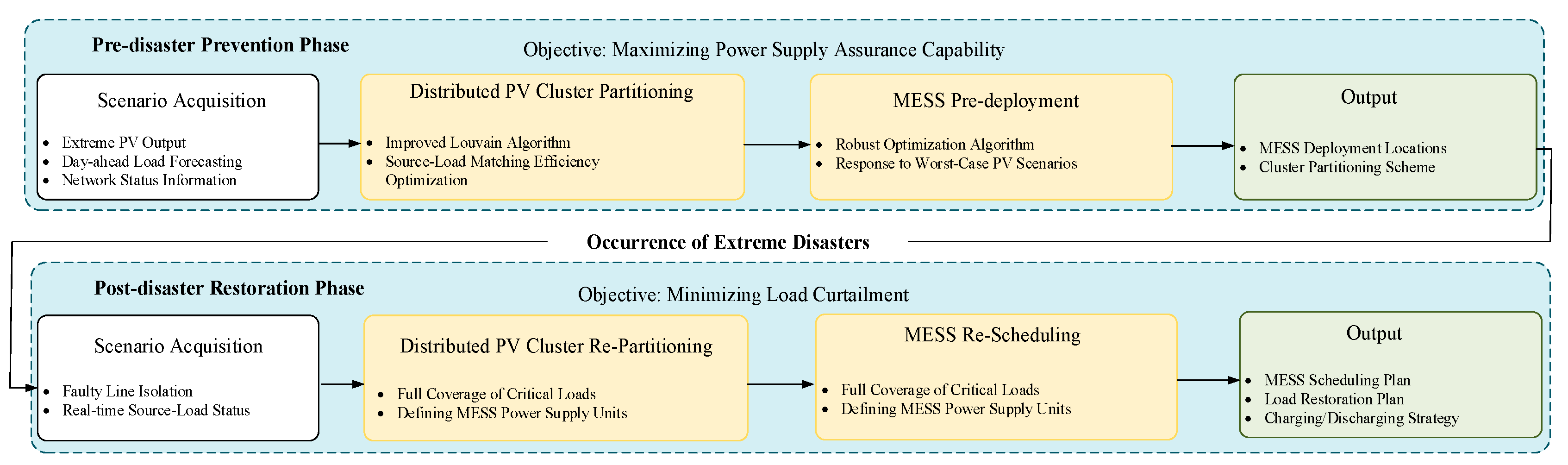
2.1. Framework for Resilience Enhancement in Power Supply Assurance Through Coordinated Distributed PV Cluster Partitioning and MESS
2.1.1. Pre-Disaster Prevention Phase
2.1.2. Post-Disaster Restoration Phase
2.2. Distributed PV Cluster Partitioning Based on an Improved Louvain Algorithm
3. Mathematical Model and Solution for the Two-Stage Power Supply Assurance Strategy
3.1. Model for Distributed PV Cluster Partitioning and MESS Pre-Deployment in the Pre-Disaster Prevention Phase
3.1.1. Pre-Disaster Phase Objective Function
3.1.2. Constraints
- (1)
- Constraints on Pre-deployment of MESS Within Clusters
- (2)
- PV Uncertainty Constraints
- (3)
- Load curtailment constraints
- (4)
- Constraints of radial topology in distribution networks
- (5)
- Current Safety Operation Constraints
3.2. Power Supply Model for Distributed PV Cluster Re-Partitioning and MESS Re-Scheduling in the Post-Disaster Restoration Phase
3.2.1. Post-Disaster Phase Objective Function
3.2.2. Constraints
- (1)
- Spatio-Temporal Dispatch Constraints of MESS
- (2)
- PV output constraints
- (3)
- Power balance constraint
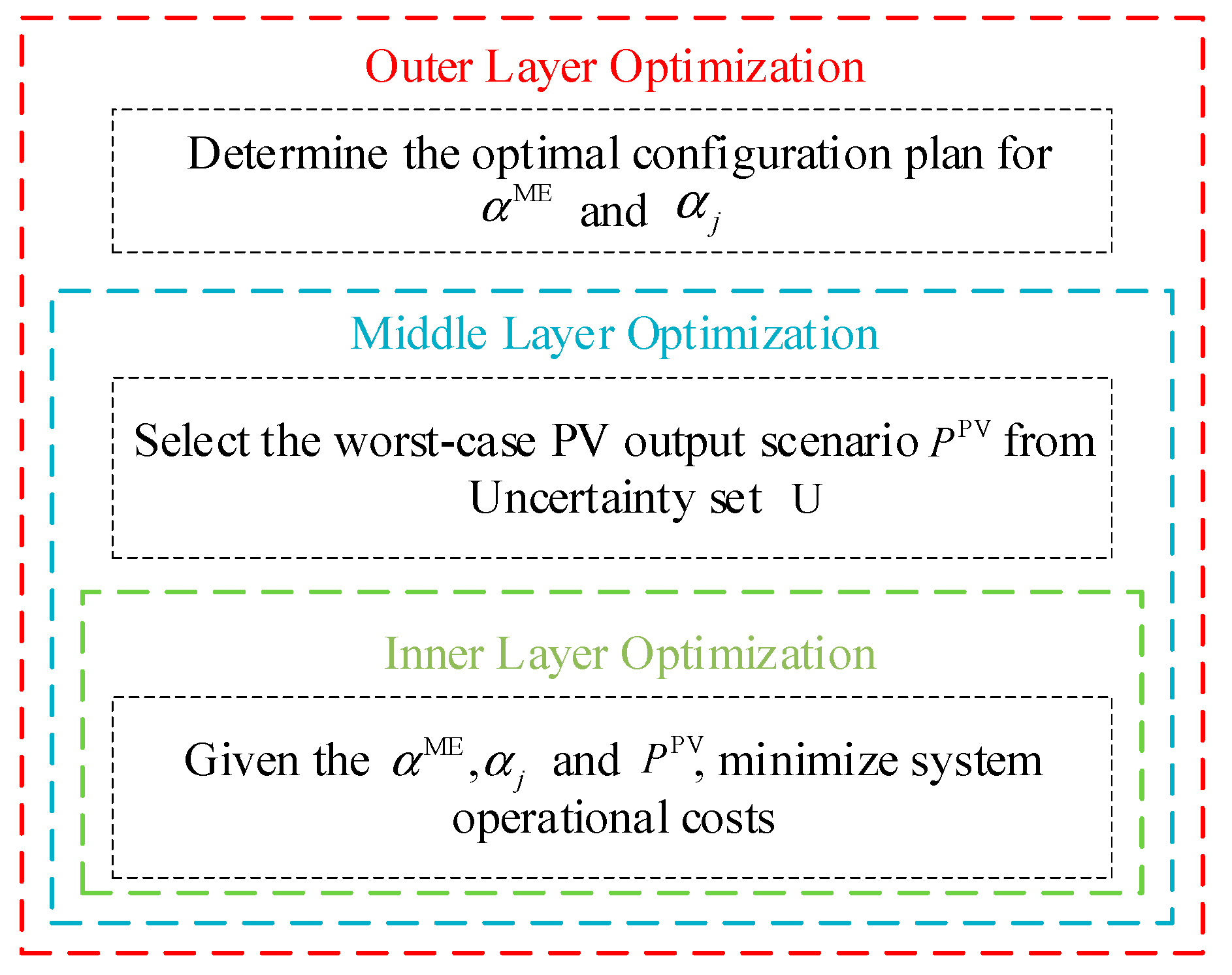
3.3. Model Solution
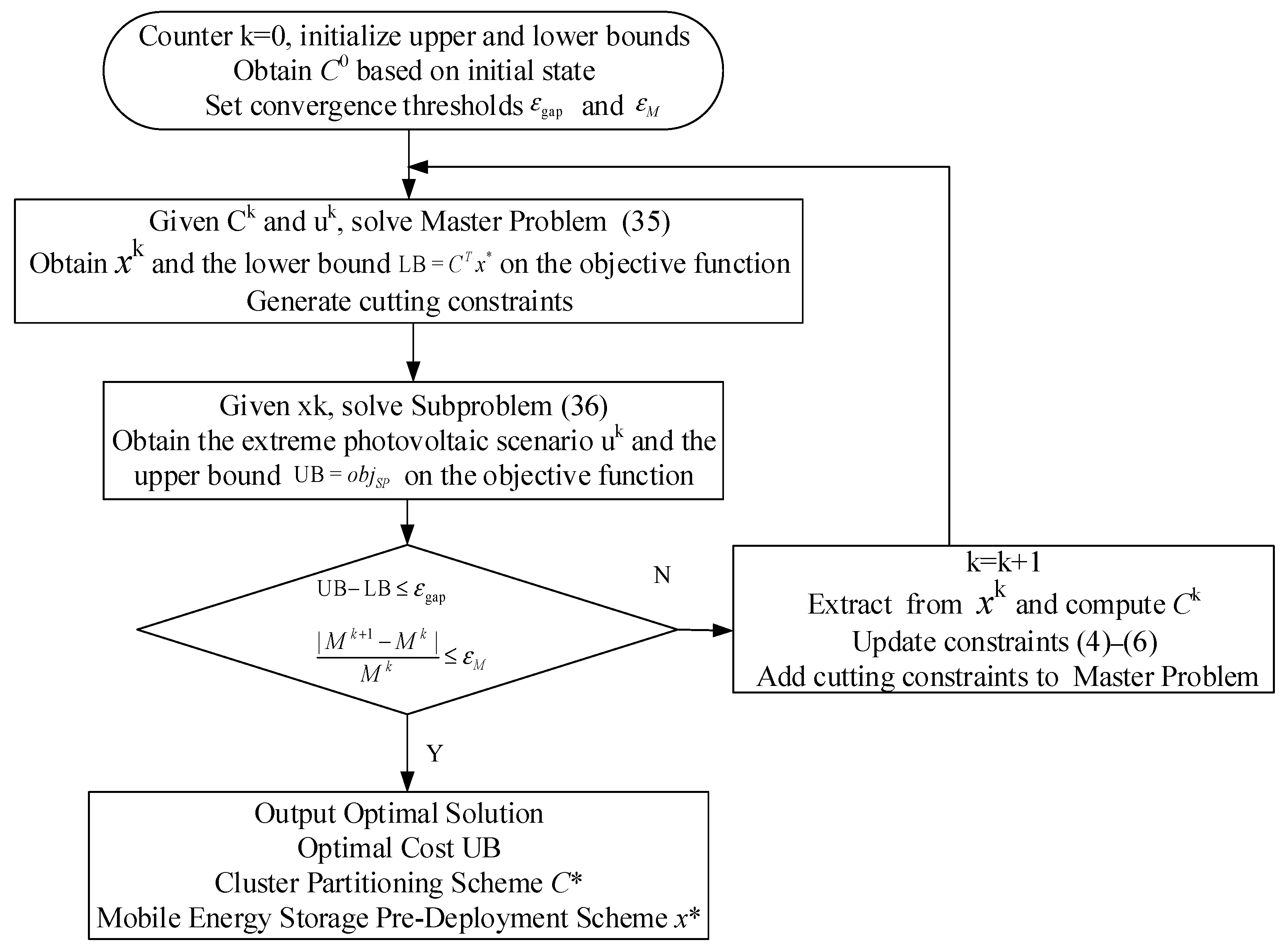
3.3.1. Pre-Disaster Model Solution
3.3.2. Post-Disaster Model Solution
4. Case Study
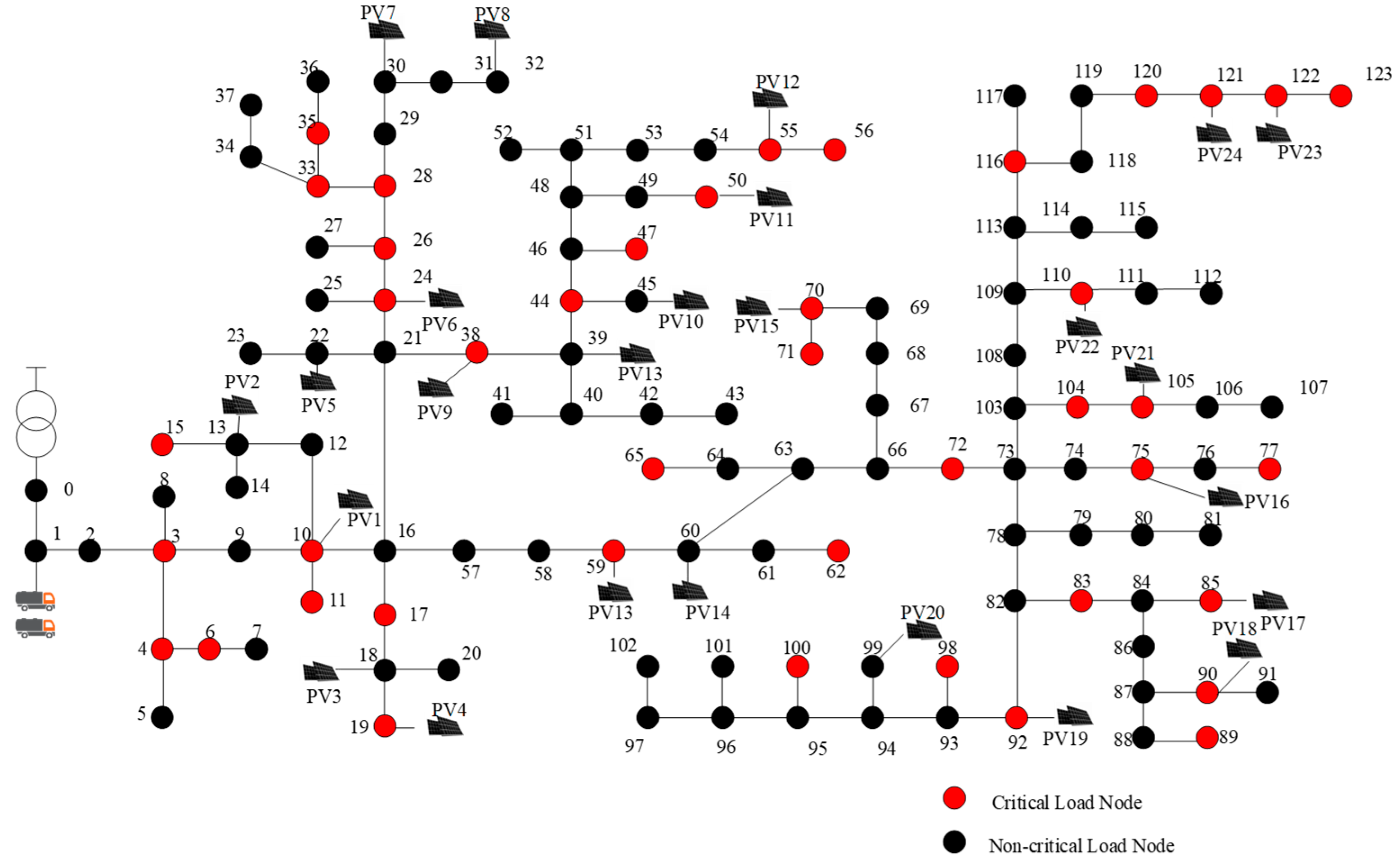
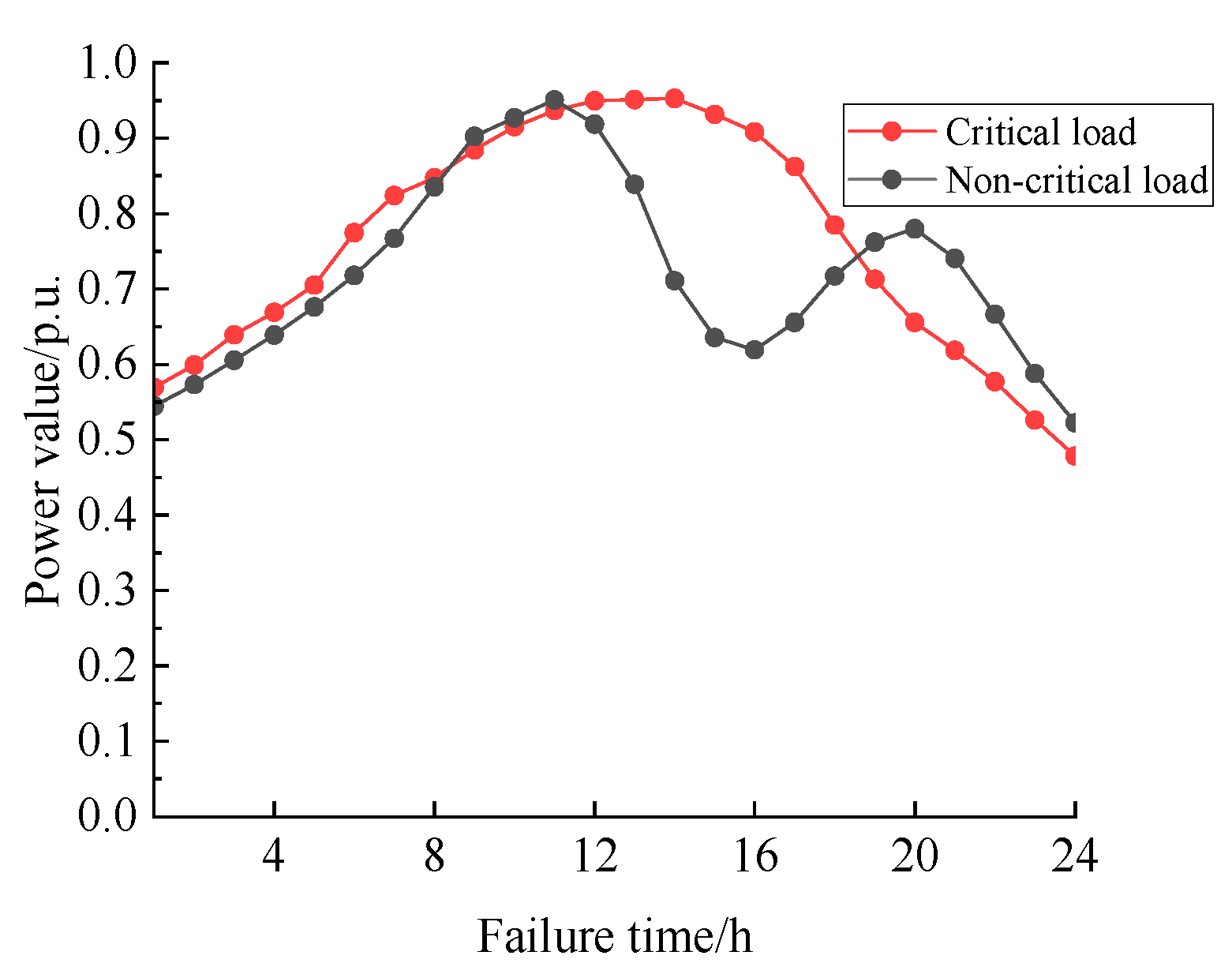
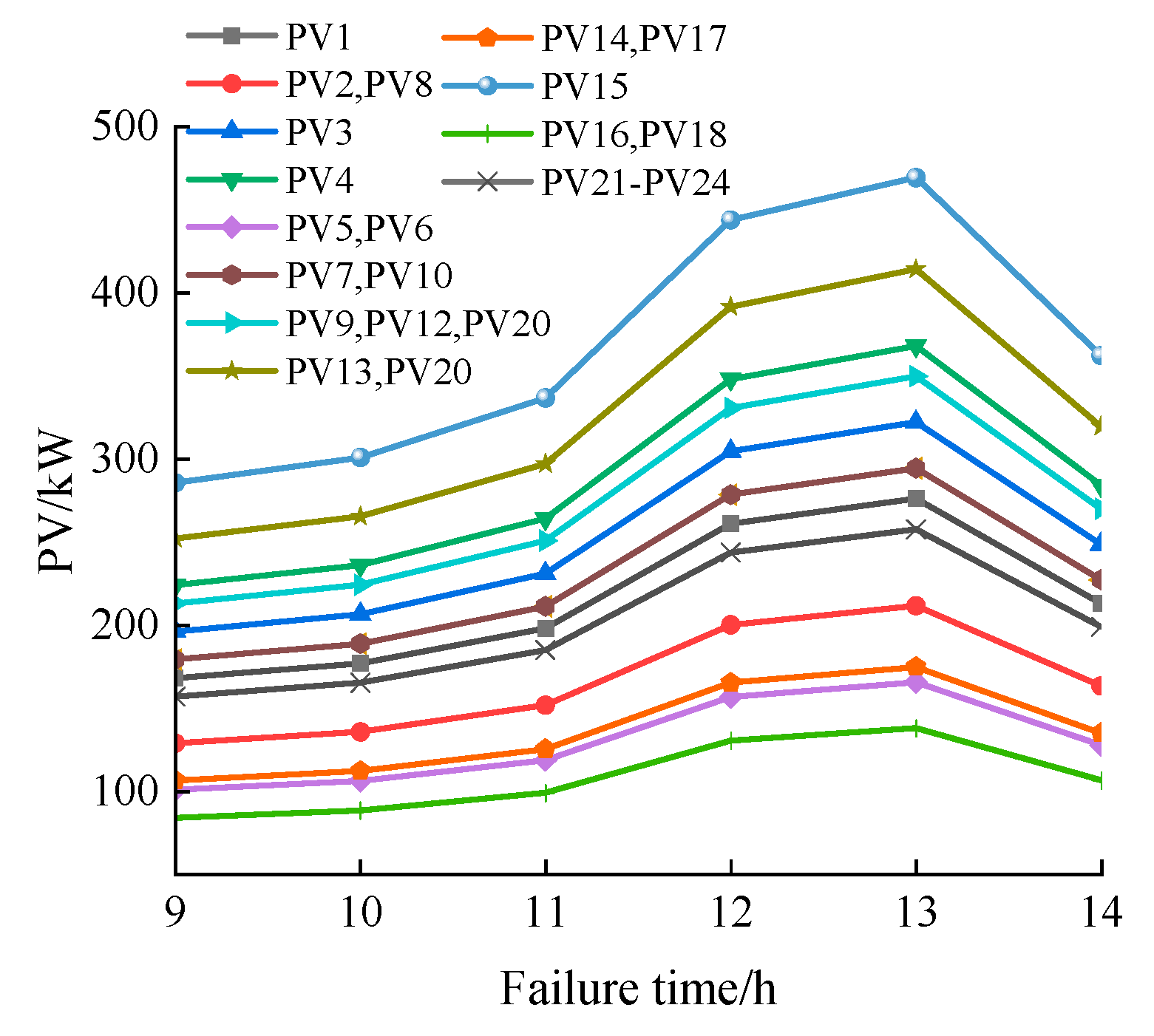
4.1. Case Study Scenario
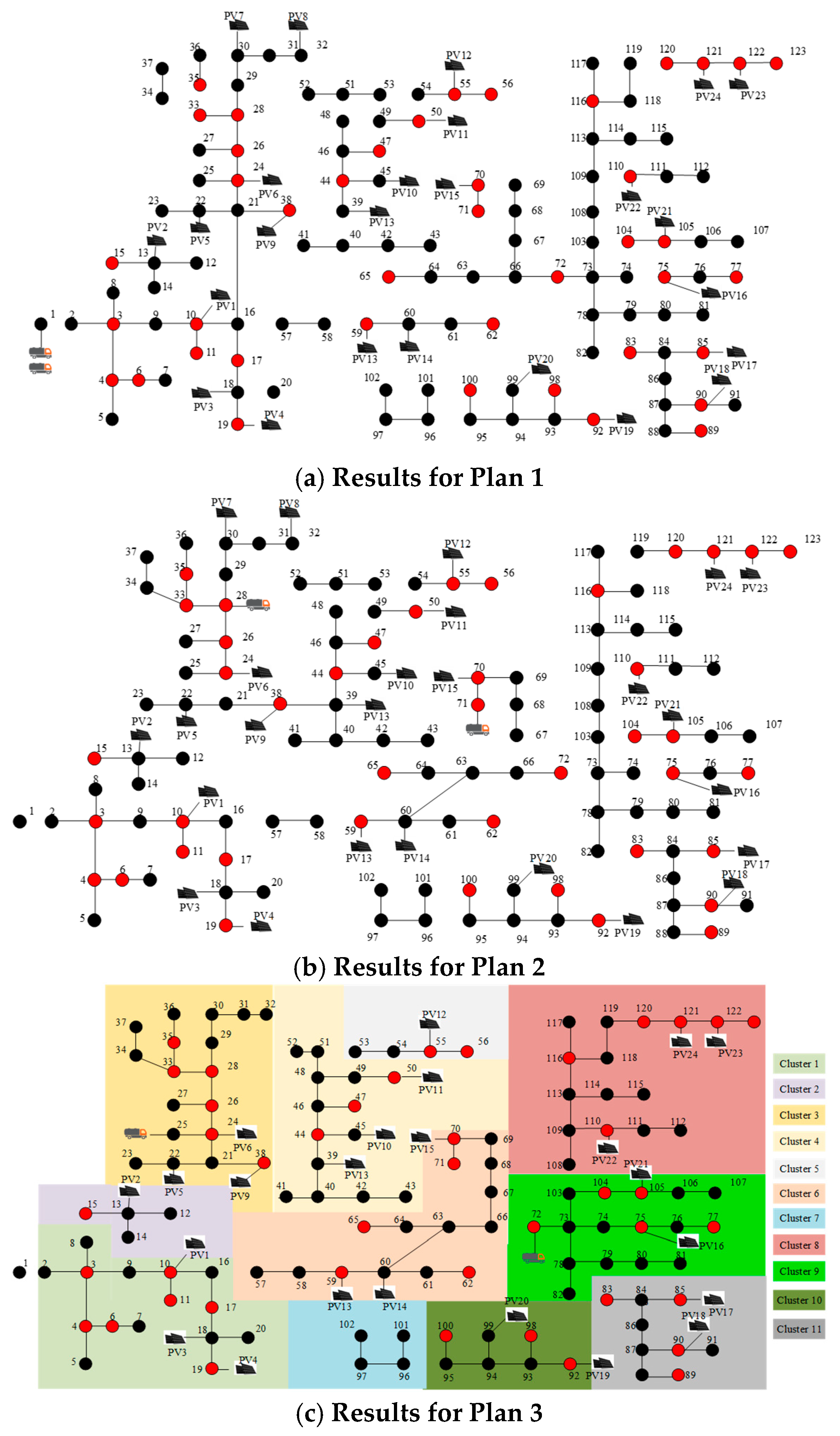
4.2. Pre-Disaster Results Analysis
4.2.1. Cost Analysis
4.2.2. Analysis of Branch Disconnection Rationality in Cluster Partitioning
4.2.3. Analysis of MESSs Deployment Logic
4.3. Post-Disaster Results Analysis
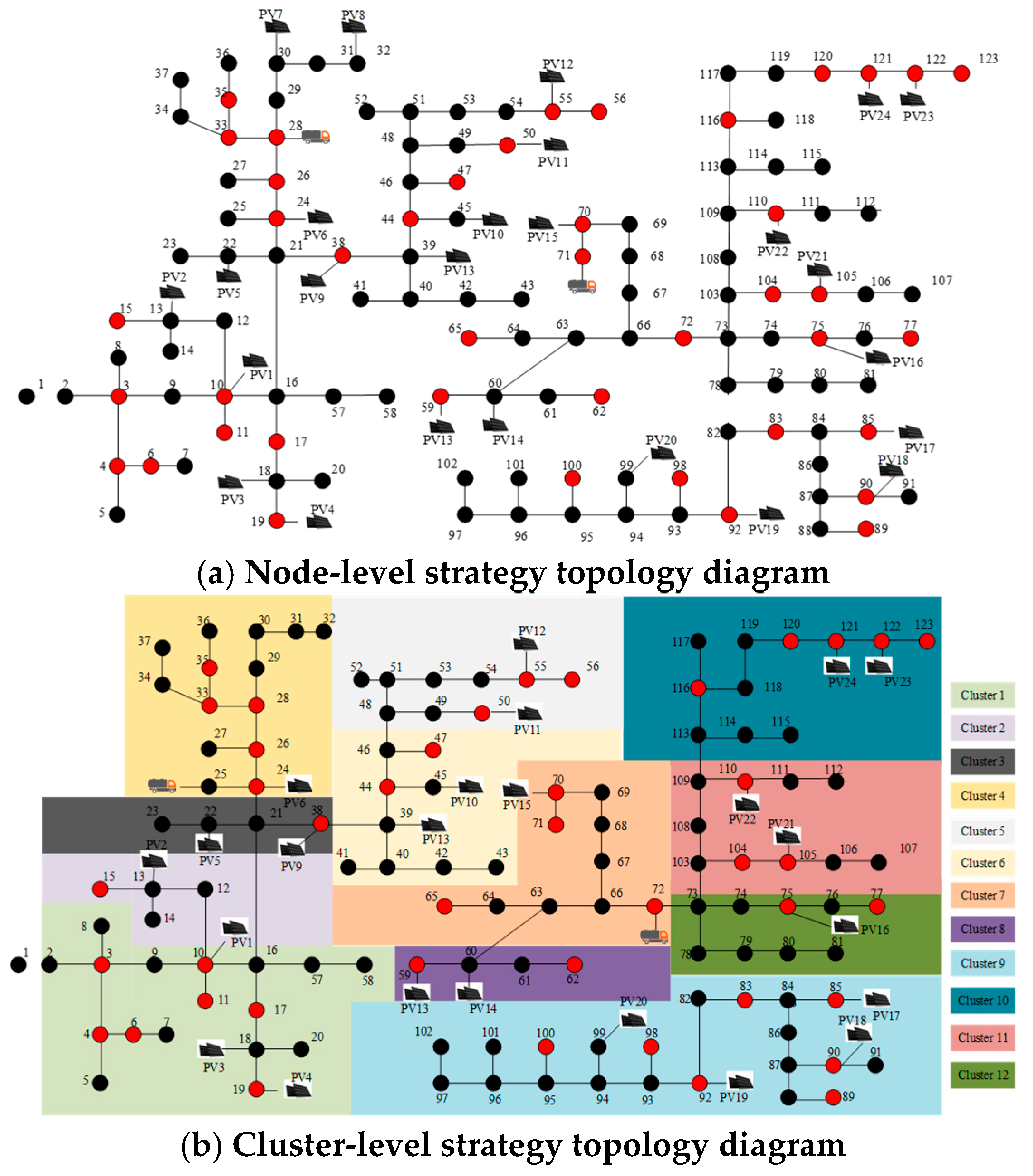
4.3.1. Overall Performance Comparison
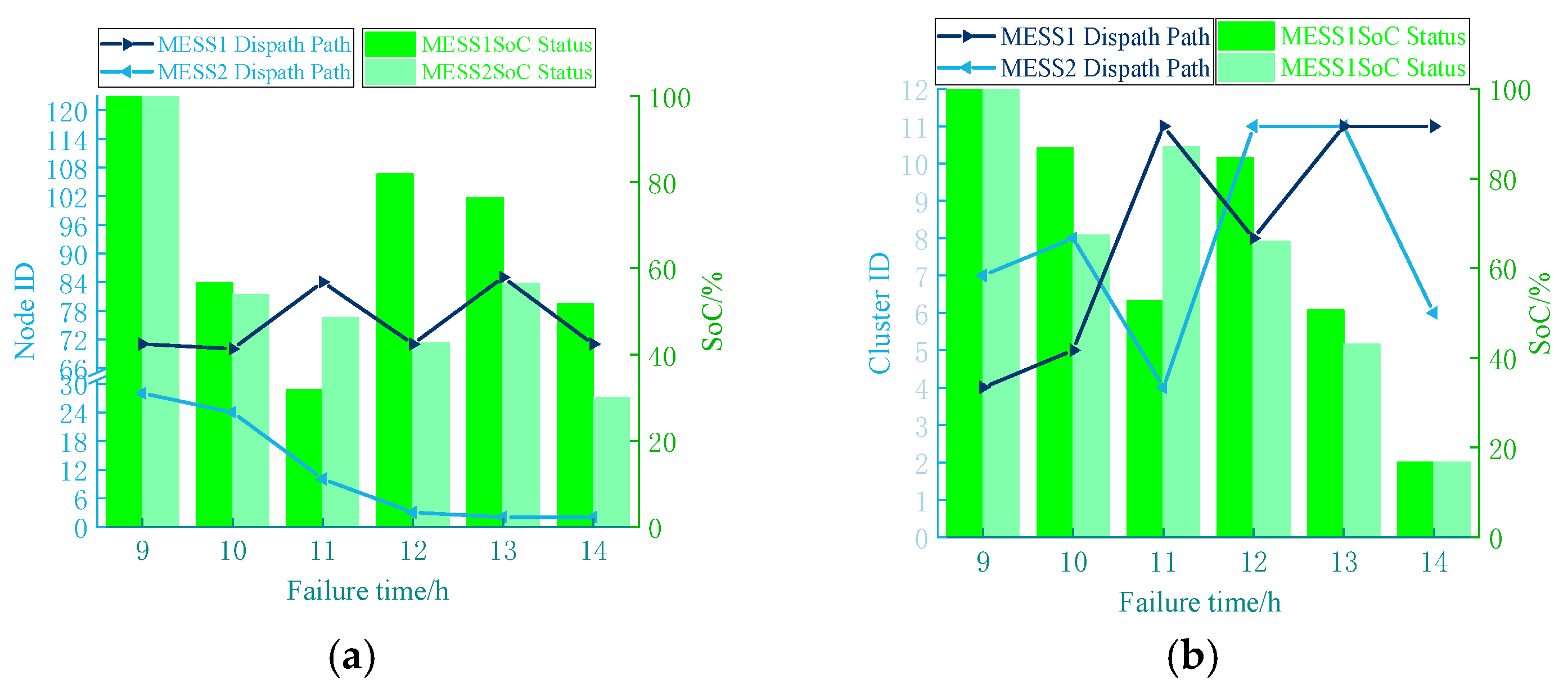
4.3.2. MESS Dispatch Analysis
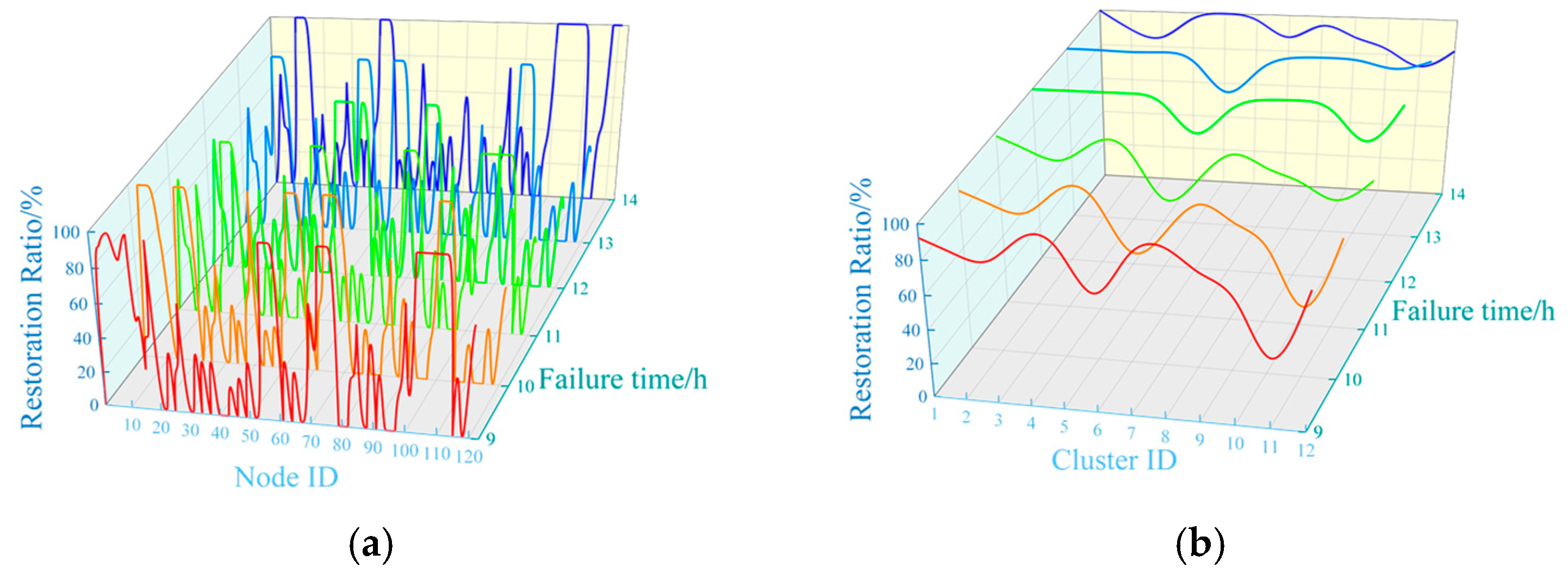
4.3.3. Load Restoration Analysis
5. Conclusions
6. Limitations and Future Work
6.1. Limitation: Simplified Constraints on Transportation Network and MESS Deployment
6.2. Limitation: Fixed Weights for Cluster Partitioning Metrics
Author Contributions
Funding
Data Availability Statement
Conflicts of Interest
Nomenclature
| PV | photovoltaic | the actual charge power of MESS | |
| MESS | mobile energy storage system | the actual discharge power of MESS | |
| SoC | State of Charge | the active power output from PV systems within cluster c at time | |
| the connection weight between node i and node j | the active load within cluster | ||
| and node | the virtual injection power at node | ||
| the voltage sensitivity parameter | the set of branch endpoints flowing out from node | ||
| the reactive power support | the branch virtual power flow | ||
| the active power support | the virtual power source 0–1 variable indicator | ||
| the MESS affiliation variables | the sufficiently large constant | ||
| the branch switching decision variables | the cost curtailment for critical load units within cluster | ||
| the distributed PV active power output | the cost curtailment for non-critical load units within cluster | ||
| the distributed PV reactive power output | the power curtailment for critical/non-critical loads in cluster during period | ||
| the unit deployment cost of MESS | the power curtailment for critical/non-critical loads in cluster during period | ||
| the MESS pre-deployment decision variable | the actual energy storage capacity of the -th MESS unit at time | ||
| the load curtailment cost weight for node | the charge–discharge efficiency of the MESS | ||
| the predefined upper limit | |||
| the charging status | the -th island formed post-disaster | ||
| the discharging status |
Appendix A

| Power Source | Maximum Active Power/kW | Maximum Reactive Power/kvar | Charge/Discharge Efficiency | Energy Storage Capacity/(kW·h) |
|---|---|---|---|---|
| MESS1, MESS2 | 200 | 170 | 0.98 | 600 |
| Parameter | Value |
|---|---|
| Rated Voltage | 12.66 kV |
| Voltage Upper Limit | 13.92 kV |
| Voltage Lower Limit | 11.39 kV |
| System Rated Capacity | 10 MVA |
| Unit Deployment Cost of MESS | 500/yuan |
| Unit Curtailment Cost for Critical Loads | 5/yuan |
| Unit Curtailment Cost for Non-Critical Loads | 1/yuan |
| PV Unit | Predicted Power/kW |
|---|---|
| PV1, PV7, PV10, PV11, | 320 |
| PV2, PV8 | 230 |
| PV3, PV4, PV12, PV19 | 380 |
| PV5, PV6, PV14, PV17 | 180 |
| PV13, PV20 | 450 |
| PV15 | 510 |
| PV16, PV18 | 150 |
| PV21, PV22, PV23, PV24 | 280 |

References
- International Energy Agency (IEA). Renewables 2024: Analysis and Forecast to 2030; IEA: Paris, France, 2024. [Google Scholar]
- Zhang, W.; Wang, Y.; Zeeshan, M.; Han, F.; Song, K. Super-twisting sliding mode control of grid-side inverters for wind power generation systems with parameter perturbation. Int. J. Electr. Power Energy Syst. 2025, 165, 110501. [Google Scholar] [CrossRef]
- Qi, Z.; Feng, Y.; Wang, S.; Li, C. Enhancing hydropower generation predictions: A comprehensive study of XGBoost and Support Vector Regression models with advanced optimization techniques. Ain Shams Eng. J. 2025, 16, 103206. [Google Scholar] [CrossRef]
- Koirala, A.; Van Acker, T.; D’hulst, R.; Van Hertem, D. Hosting capacity of photovoltaic systems in low voltage distribution systems: A benchmark of deterministic and stochastic approaches. Renew. Sustain. Energy Rev. 2022, 155, 111899. [Google Scholar] [CrossRef]
- Licari, J.; Rhaili, S.E.; Micallef, A.; Staines, C.S. Addressing voltage regulation challenges in low-voltage distribution networks due to high renewable integration and electric vehicles: A critical review. Energy Rep. 2025, 14, 2977–2997. [Google Scholar] [CrossRef]
- Xu, J.; Mu, Y.; Cheng, W.; Gong, G.; Huang, J.; Zhang, T.; Hu, Q.; Chen, K.; Wu, A.Y. A Distributed Robust Voltage Control Framework for Active Distribution Systems. IEEE Trans. Ind. Appl. 2025, 61, 1896–1906. [Google Scholar] [CrossRef]
- Rouholamini, M.; Wang, C.; Magableh, S.; Wang, X. Resiliency of electric power distribution networks: A review. J. Infrastruct. Preserv. Resil. 2025, 6, 39. [Google Scholar] [CrossRef]
- Wang, Y.; Chen, C.; Wang, J.; Baldick, R. Research on Resilience of Power Systems Under Natural Disasters—A Review. IEEE Trans. Power Syst. 2016, 31, 1604–1613. [Google Scholar] [CrossRef]
- Panteli, M.; Mancarella, P. The Grid: Stronger, Bigger, Smarter?: Presenting a Conceptual Framework of Power System Resilience. IEEE Power Energy Mag. 2015, 13, 58–66. [Google Scholar] [CrossRef]
- Chen, C.; Wang, J.; Qiu, F.; Zhao, D. Resilient Distribution System by Microgrids Formation After Natural Disasters. IEEE Trans. Smart Grid 2016, 7, 958–966. [Google Scholar] [CrossRef]
- Panteli, M.; Trakas, D.N.; Mancarella, P.; Hatziargyriou, N.D. Power Systems Resilience Assessment: Hardening and Smart Operational Enhancement Strategies. Proc. IEEE 2017, 105, 1202–1213. [Google Scholar] [CrossRef]
- de Caro, F.; Carlini, E.M.; Villacci, D. Flexibility sources for enhancing the resilience of a power grid in presence of severe weather conditions. In Proceedings of the 2019 AEIT International Annual Conference (AEIT), Florence, Italy, 18–20 September 2019; pp. 1–6. [Google Scholar]
- Lei, S.; Chen, C.; Zhou, H.; Hou, Y. Routing and Scheduling of Mobile Power Sources for Distribution System Resilience Enhancement. IEEE Trans. Smart Grid 2019, 10, 5650–5662. [Google Scholar] [CrossRef]
- Kong, H.; Ma, J.; Cheng, P.; Jia, L. Resilience Two-stage Fault Recovery Strategy for Distribution Network Based on Disaster Scenario Prediction. Power Syst. Technol. 2024, 48, 3812–3821. [Google Scholar]
- Wang, Y.; Liu, W.; Yao, Q.; Wan, H.; He, J.; Xiong, X. Pre-layout and Dynamic Scheduling Strategy of Mobile Energy Storage for Resilience Enhancement of Distribution Network. Autom. Electr. Power Syst. 2022, 46, 37–45. [Google Scholar]
- Liu, Y.; Wu, M.; Li, Y.; Yuan, Y.; Xi, Y.; Zhao, F. Strategy for Enhancing Disaster Resistance of Distribution Networks Considering MESS Configuration and Scheduling. China Electr. Power 2025, 58, 10–22. [Google Scholar]
- Nazemi, M.; Dehghanian, P.; Lu, X.; Chen, C. Uncertainty-Aware Deployment of MESS Systems for Distribution Grid Resilience. IEEE Trans. Smart Grid 2021, 12, 3200–3214. [Google Scholar] [CrossRef]
- Luo, C.; Wu, H.; Zhou, Y.; Qiao, Y.; Cai, M. Network partition-based hierarchical decentralised voltage coordination control for distribution networks with distributed PV systems. Int. J. Electr. Power Energy Syst. 2021, 130, 106929. [Google Scholar] [CrossRef]
- Abdelsalam, H.A.; Eldosouky, A.; Srivastava, A.K. Enhancing distribution system resiliency with microgrids formation using weighted average consensus. Int. J. Electr. Power Energy Syst. 2022, 141, 108161. [Google Scholar] [CrossRef]
- Li, Y.; Lü, N.; Liu, X. Output Evaluation Method of Distributed Photovoltaic Cluster Considering Renewable Energy Accommodation and Power Loss of Network. Electr. Power Constr. 2022, 43, 136–146. [Google Scholar]
- Ge, J.; Liu, Y.; Pang, D.; Wang, C.; Wang, Z.; Liu, Z. Cluster Division Voltage Control Strategy of Photovoltaic Distribution Network with High Permeability. High Volt. Eng. 2024, 50, 74–82. [Google Scholar]
- Chen, K.; Wang, J.; Wang, H.; Sun, J.; Ke, D.; Xu, J. Cluster Partitioning and Operation Scheduling Strategy of Distribution Network Considering Electric Vehicles and Distributed PV Collaboration. South. Power Syst. Technol. 2025, 19, 15–23. [Google Scholar]
- Dugan, J.; Mohagheghi, S.; Kroposki, B. Application of Mobile Energy Storage for Enhancing Power Grid Resilience: A Review. Energies 2021, 14, 6476. [Google Scholar] [CrossRef]
- Gu, J.; Li, Y.; Ju, L.; Zuo, X.; Zhao, Y. Flexible Resource Optimal Allocation Strategy for Distribution System Resilience Improvement Under Failure Uncertainty. J. Phys. Conf. Ser. 2024, 2703, 012030. [Google Scholar] [CrossRef]
- Li, H.; Song, K.; Meng, F.; Wang, Z.; Wang, C. Voltage Control Strategy of a High-Permeability Photovoltaic Distribution Network Based on Cluster Division. Front. Energy Res. 2024, 12, 1377841. [Google Scholar] [CrossRef]
- Duan, X.; Zhang, J.; Li, H.; Li, Y.; Niu, S.; Zhang, J. Multi Objective Cluster Partitioning and Voltage Coordination Control in Distribution Networks Based on Improved Louvain Algorithm and BAAM-ADMM. Smart Power 2024, 52, 32–39+102. [Google Scholar]
- Chang, J.-W.; Moon, H.S.; Moon, S.-I.; Yoon, Y.T.; Glick, M.B.; Kim, S.W. Improved Feeder Flow Control Method for a Virtual Power Plant with Various Resources to Reduce Communication Dependency. IEEE Access 2020, 8, 206820–206834. [Google Scholar] [CrossRef]
- Schneider, K.P.; Tuffner, F.K.; Elizondo, M.A.; Liu, C.C.; Xu, Y.; Backhaus, S.; Ton, D. Enabling Resiliency Operations Across Multiple Microgrids with Grid Friendly Appliance Controllers. IEEE Trans. Smart Grid 2018, 9, 4755–4764. [Google Scholar] [CrossRef]



| Equation | Symbols | Constraint Meaning |
|---|---|---|
| (4) | : Set of branches within the cluster. : State variable (0/1) of branch . : Permissible disconnection ratio of branches within a cluster (0 to 1). : Set of all clusters. | Defines the topological connectivity constraint within clusters. It prevents excessive fragmentation during optimization, ensuring clusters remain internally connected to avoid isolated sub-grids and enhance supply reliability. |
| (5) and (6) | : The 0–1 decision variable for deploying MESS at node in cluster . : Number of MESS instances deployed within the cluster. : Maximum total MESS deployment limit. | Govern the pre-deployment of MESS. Each cluster may deploy at most one MESS unit, and the total number of MESS units deployed in the system is fixed. |
| (7)–(9) | : Charging/discharging status. : Actual charge/discharge power. : Upper and lower power limits | Define MESS charge/discharge operational limits. The status indicators are mutually exclusive. The charge/discharge power must remain within specified maximum limits. |
| (10) | : Total active power output from PV systems in cluster . : Total active load in cluster . : Net power output from MESS within the cluster. | Enforces active power balance within a cluster. This constraint guides the optimal clustering of resources during pre-disaster pre-deployment to achieve a self-balancing power supply within each cluster. |
| Plan | Pre-Deployment Location | Pre-Deployment Cost (CNY) | Number of Disconnected Branches |
|---|---|---|---|
| 1 | Node 1, Node 1 | 18,273.3986 | 19 |
| 2 | Node 28, Node 71 | 13,447.6374 | 17 |
| 3 | Node 25 in Cluster 3, Node 72 in Cluster 9 | 12,387.7475 | 11 |
| Metric | Node-Level Strategy | Cluster-Level Strategy |
|---|---|---|
| Total Load Curtailment (MW) | 10.8403 | 4.3946 |
| Overall Restoration Rate (%) | 61.20 | 86.27 |
| Total Cost (CNY) | 53,010.98 | 31,351.97 |
| Total PV Output (MW) | 19.745 | 27.681 |
| PV Utilization Rate (%) | 47.05 | 86.25 |
| MESS Utilization Rate (%) | 47.77 | 83.38 |
Disclaimer/Publisher’s Note: The statements, opinions and data contained in all publications are solely those of the individual author(s) and contributor(s) and not of MDPI and/or the editor(s). MDPI and/or the editor(s) disclaim responsibility for any injury to people or property resulting from any ideas, methods, instructions or products referred to in the content. |
© 2026 by the authors. Licensee MDPI, Basel, Switzerland. This article is an open access article distributed under the terms and conditions of the Creative Commons Attribution (CC BY) license.
Share and Cite
Gao, Y.; Gao, L.; Fan, M.; Huang, Y.; Wang, J.; Ma, P. Research on Enhancing Disaster-Resilient Power Supply Capabilities in Distribution Networks Through Coordinated Clustering of Distributed PV Systems and Mobile Energy Storage System. Electronics 2026, 15, 299. https://doi.org/10.3390/electronics15020299
Gao Y, Gao L, Fan M, Huang Y, Wang J, Ma P. Research on Enhancing Disaster-Resilient Power Supply Capabilities in Distribution Networks Through Coordinated Clustering of Distributed PV Systems and Mobile Energy Storage System. Electronics. 2026; 15(2):299. https://doi.org/10.3390/electronics15020299
Chicago/Turabian StyleGao, Yan, Long Gao, Maosen Fan, Yuan Huang, Junchao Wang, and Peixi Ma. 2026. "Research on Enhancing Disaster-Resilient Power Supply Capabilities in Distribution Networks Through Coordinated Clustering of Distributed PV Systems and Mobile Energy Storage System" Electronics 15, no. 2: 299. https://doi.org/10.3390/electronics15020299
APA StyleGao, Y., Gao, L., Fan, M., Huang, Y., Wang, J., & Ma, P. (2026). Research on Enhancing Disaster-Resilient Power Supply Capabilities in Distribution Networks Through Coordinated Clustering of Distributed PV Systems and Mobile Energy Storage System. Electronics, 15(2), 299. https://doi.org/10.3390/electronics15020299