1. Introduction
Photoprotection can slow down or completely prevent skin damage caused by UV radiation. Sunscreens reduce skin damage through either chemical or physical mechanisms. There are also broad-spectrum filters that are effective against both UVA and UVB radiation, which can be combined with other UV filters [
1].
The stability of photoprotective products is considered a fundamental prerequisite for ensuring proper photoprotection and safety. After absorbing radiation, UV filters transition into excited energy states. The absorbed energy is subsequently released primarily as heat, allowing the molecule to return to its original energy state. However, some UV filters may undergo photoisomerization, and in certain cases, irreversible bond cleavage can occur. These processes may result in the formation of photodegradation products, which can negatively affect the overall efficacy and safety of sunscreens. Some of these degradation products may react with cellular components, becoming toxic and potentially causing DNA damage. In addition, the stability of other ingredients present in photoprotective formulations may also be affected [
2].
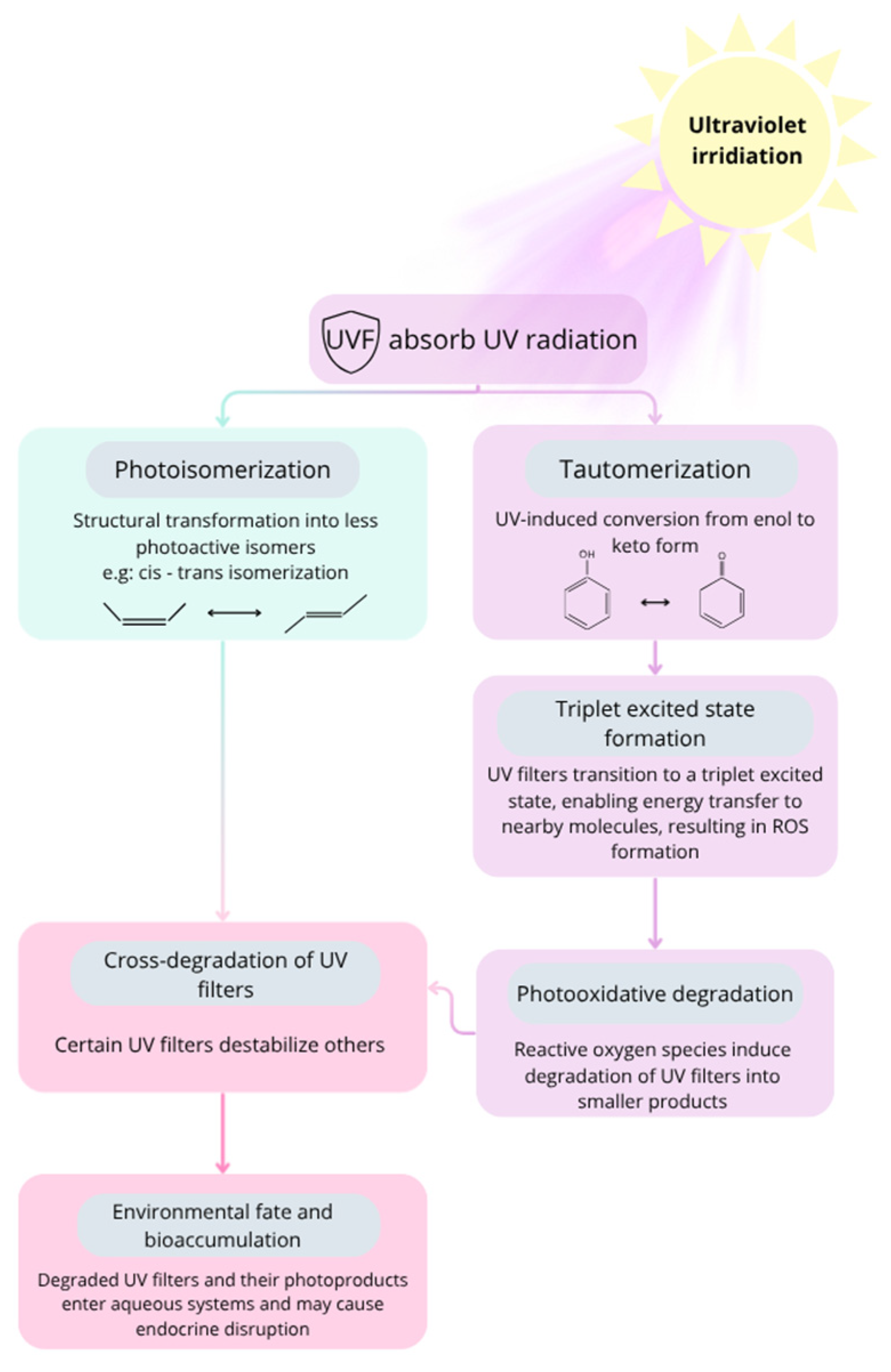
The photodegradation of UV filters plays a crucial role in the stability of sunscreen products. The outcomes of photodegradation may lead to reduced efficacy of the products, formation of by-products, and potential toxicity concerns. Several degradation pathways influence the stability of individual UV filters, with the most significant being photoisomerization, tautomerization, oxidative fragmentation, and triplet-state energy formation [
3] (as shown schematically in
Figure 1). Therefore, understanding the mechanisms of photodegradation is essential in the development of sunscreens that provide long-term UV protection without compromising consumer safety.
Antioxidants represent important substances that help protect the skin against the signs of aging. They act by reducing oxidative stress caused by unstable free radicals, which can damage cells, weaken the natural protective barrier of the skin, and accelerate the aging process. Skin aging is influenced by two main factors: intrinsic and extrinsic factors. Intrinsic factors include genetic predisposition and the natural chronological aging of the organism, while extrinsic factors mainly involve photoaging caused by exposure to UV radiation. Both types of aging are associated with changes in the physical, morphological, and physiological properties of the epidermis and dermis [
4].
A wide range of antioxidants can be incorporated into sunscreen formulations, where they perform multiple functions. Their primary role is to mitigate oxidative stress in the skin, thereby reducing the visible signs of aging. In addition, they may also be useful in the treatment of certain UV-sensitive dermatoses. Numerous studies [
5,
6,
7,
8,
9,
10] highlight the importance of topically applied antioxidants in photoprotection. Antioxidants can contribute to the reduction in skin erythema and may also influence the immune response. Some organic UV filters become unstable after exposure to sunlight, which can lead to the formation of oxidized by-products. As a result, the phototoxicity of these products may increase while their protective efficacy decreases. For these reasons, compounds with antioxidant activity are added to sunscreen formulations to enhance the stability of UV filters and help protect the skin from damage caused by free radicals [
11].
Several approaches can be used to improve the photostability of photoprotective products, including the incorporation of antioxidants, encapsulation of active substances (UV filters), and the combination of multiple UV filters. These strategies contribute to increased stability of UV filters, preservation of their protective function, and overall improved efficacy of sunscreen products [
2].
Among the antioxidants commonly used in photoprotection is vitamin C (
l-ascorbic acid), which is well known for its ability to neutralize reactive oxygen species and regenerate oxidized vitamin E. Despite its strong antioxidant activity, ascorbic acid is chemically unstable, particularly in aqueous formulations, which has led to the development of more stable derivatives with improved skin permeation. In addition to its antioxidant effects, vitamin C has been shown to increase the skin deposition of mineral UV filters without increasing systemic absorption, thereby prolonging the photoprotective effect of sunscreen formulations [
11]. Furthermore, vitamin C supports collagen synthesis and inhibits UV-induced alterations in elastin associated with skin photoaging [
12]. Several studies also suggest that the combination of vitamins C and E may improve the stability of UV filters such as avobenzone [
2,
13].
Ferulic acid is another important antioxidant used in photoprotective formulations. Besides its antioxidant properties, it also exhibits anti-inflammatory activity and the ability to absorb UV radiation. Its derivatives have increased lipophilicity, which may enhance their suitability for topical formulations. Ferulic acid has been shown to reduce UVB-induced erythema and to exert synergistic effects with UV filters and other polyphenols, potentially increasing SPF values and improving UVA protection [
11,
14]. As Peres et al. [
14] found, incorporation of ferulic acid into topical vitamin formulations improved the vitamins’ chemical stability and strengthened their photoprotective properties, leading to decreased erythema and reduced corneocyte apoptosis.
Carrot macerate, with antioxidants as its main component in the form of carotenoids, including β-carotene, lutein, and zeaxanthin, has also demonstrated photoprotective potential. Studies indicate their ability to neutralize free radicals generated following UV exposure, thereby contributing to DNA protection and reduction of oxidative stress. Beneficial effects have been reported after both systemic and topical administration of β-carotene [
15].
The present study investigated the effect of the antioxidants mentioned above (vitamin C, carrot macerate, ferulic acid) on the SPF value and photostability of sunscreen formulations.
The studied antioxidants were selected based on the review by Jesus et al. (2023) [
11], which analyzed the most commonly used antioxidants in sunscreen formulations. Tocopherol and its derivatives ranked among the most frequently utilized antioxidants and were therefore incorporated into all formulations. As a lipophilic antioxidant, tocopherol primarily stabilizes the oil phase of the cream. However, its effect on SPF values immediately after preparation and following UV exposure was not investigated in this study. Other commonly used antioxidants included vitamin C and ferulic acid, which were also incorporated into the formulations. Carrot macerate was selected to evaluate its potential efficacy, as it is intended to be prepared for future use as a natural stabilizing agent in cosmetic products.
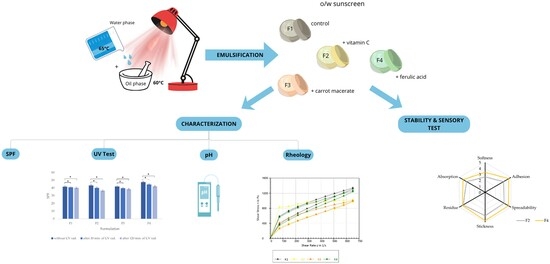
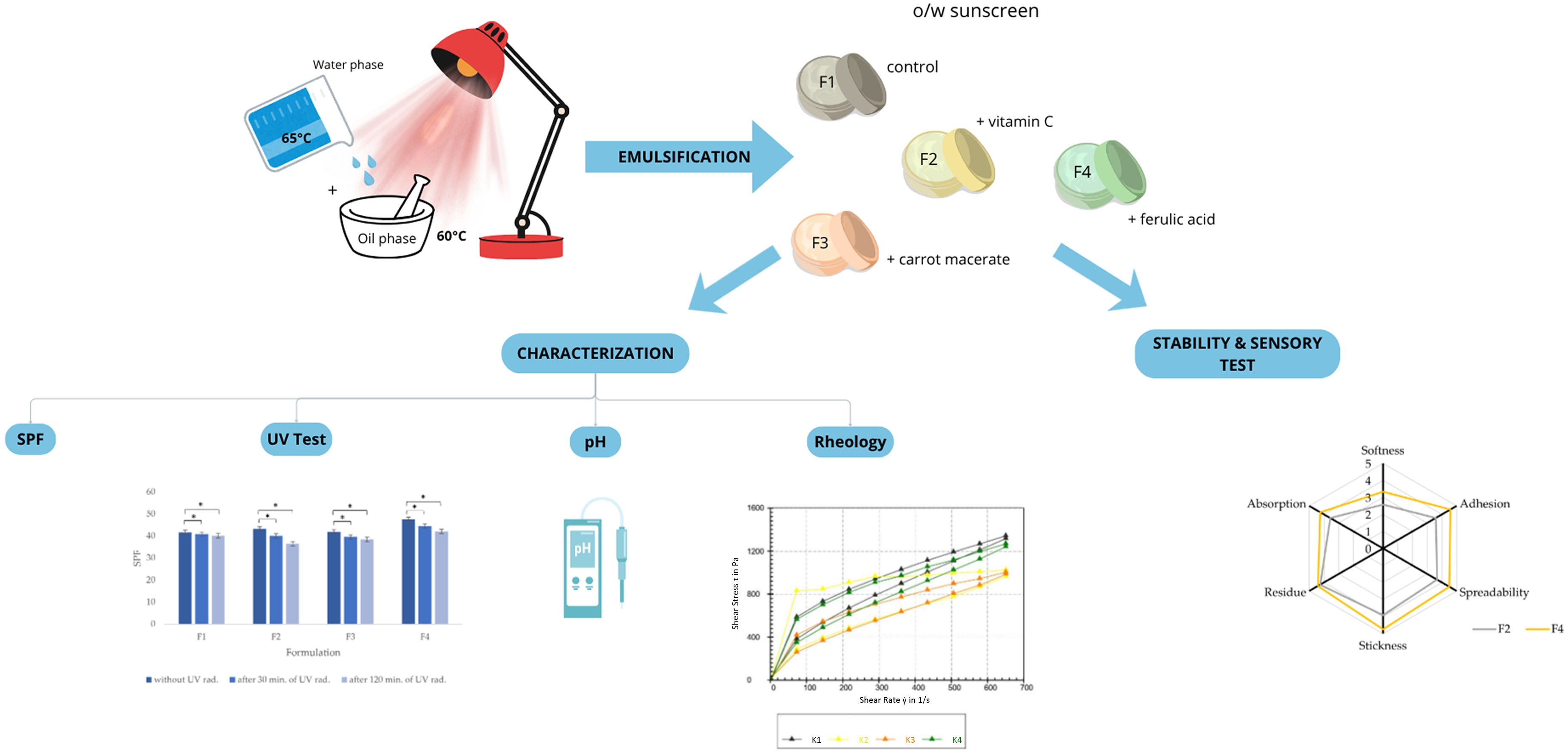
The aim of the study is to determine to what extent the type of antioxidant used in a sunscreen formulation may influence, on the one hand, the overall SPF value, and on the other hand, the degree to which the SPF is preserved after exposure to UV radiation. The experimentally investigated antioxidants were vitamin C, carrot macerate, and ferulic acid. Specifically, four sunscreens incorporating various antioxidants were prepared, and their sun protection factor (SPF) was determined. The study further investigated the effect of UV radiation on the stability and SPF values of the formulations. Rheological properties and pH values were also assessed to characterize the formulations. The stability of each preparation was evaluated through a series of stability tests, and finally, sensory analysis was conducted on the two best-performing samples to assess their suitability for practical application.
The UV filter system was selected to provide broad-spectrum photoprotection and to achieve a high level of UV protection suitable for daily-use sunscreen formulations. The selection of individual UV filters was based on their complementary absorption profiles and compatibility within the formulation, allowing effective coverage of both UVB and UVA spectral regions. The final combination was optimized through preliminary formulation studies, which showed that the simultaneous incorporation of all selected UV filters resulted in the highest SPF values, suggesting a beneficial synergistic effect.
2. Materials and Methods
Beautyderm® K10 and Span® 80 were obtained from Merck KGaA (Darmstadt, Germany); cetyl alcohol and glycerol 85% were supplied by Galvex (Banská Bystrica, Slovakia); Cosgard® preservative, ferulic acid, carrot macerate, Olivem® 1000 MB, stabilized vitamin C (sodium ascorbyl phosphate), and xanthan gum E415 were purchased from Ekokoza (Fryčovice, Czech Republic); purified olive oil and tocopherol acetate were provided by Fagron (Olomouc, Czech Republic); ethanol 96% was obtained from CentralChem (Bratislava, Slovakia); Sunhancer™ ECO SPF Booster was obtained from Lubrizol (Wickliffe, OH, USA); Tinosorb® M, Tinosorb® S, and Uvinul® MC 80 were purchased from BASF (Mannheim, Germany); Xyliance was obtained from Vegis.sk (Poruba, Slovakia); purified water was produced by reverse osmosis at the Department of Galenic Pharmacy (Bratislava, Slovakia).
2.1. Preparation of the Sunscreens
Four photoprotective creams were prepared with identical compositions of UV filters and excipients. The samples differed only in the type of antioxidant used. The percentage composition of the individual samples is presented in
Table 1.
The specified amounts of lipophilic components (olive oil, Beautyderm® K10, Olivem® 1000, cetyl alcohol, Xyliance, tocopherol, Tinosorb® S, Uvinul® MC 80, Span® 80) were weighed into a stainless steel mortar. The mortar was subsequently placed under an infrared lamp and heated to approximately 60 °C.
A measured amount of purified water was transferred into a glass beaker, followed by the addition of xanthan gum, which was allowed to hydrate and swell for approximately 2 h. The dispersion was then subjected to continuous stirring using a magnetic stirrer at low rotations to minimize air incorporation and ensure uniform hydration. After complete swelling, the remaining aqueous-phase components (glycerol and Tinosorb® M) were added. The mixture was subsequently heated under constant stirring on a hot plate to a temperature approximately 5 °C higher than that of the lipophilic phase.
The emulsification process was carried out by gradual incorporation of the hydrophilic phase into the lipophilic phase under continuous stirring, ensuring controlled addition and formation of a stable emulsion. The resulting cream was stirred until it cooled to ambient temperature. Subsequently, a precisely weighed amount of the booster was incorporated, followed by homogenization of the formulation. Finally, four drops of Cosgard® were added as a preservative to enhance microbiological stability of the aqueous phase.
The remaining formulations (F2–F4) were prepared using an analogous procedure, with minor variations in the method of antioxidant incorporation. In formulation F2, stabilized vitamin C was added to the aqueous phase. In formulation F3, carrot macerate was incorporated into the lipophilic phase. In formulation F4, ferulic acid was introduced into the hydrophilic phase prior to emulsification.
2.2. SPF Determination in Sunscreens
The sun protection factor (SPF) values of the individual sunscreens were determined using an in vitro spectrophotometric method according to Mbanga et al. (2015) [
16], based on the measurement of absorbance of ethanolic (96%,
v/
v) solutions over a defined wavelength range.
Approximately 1.0 g of each prepared sample was accurately weighed into a wide-neck flask and diluted with ethanol (96%; v/v) to a final mass of 100.0 g. The flask was sealed with cellophane film and subjected to ultrasonic treatment for 5 min to ensure complete dispersion. Then, the mixture was homogenized using a magnetic stirrer at 1000 rpm.
Subsequently, the sample solution was filtered through filter paper into a glass beaker. An aliquot of 5 mL of the filtrate was transferred into a 100 mL volumetric flask and diluted to the mark with ethanol (96%; v/v), followed by thorough mixing. A further 5 mL of this solution was then pipetted into a 25 mL volumetric flask, diluted to volume with ethanol (96%; v/v), and mixed again to obtain the final solution for analysis.
The prepared solution was analyzed by UV–VIS spectrophotometry in the wavelength range of 290–320 nm at 5 nm intervals, using ethanol (96%; v/v) as a blank reference. This procedure was applied to all four samples, with five parallel measurements performed for each formulation.
The
SPF values were subsequently calculated using the following Equation (1):
where
Abs represents the measured absorbance at a given wavelength,
CF is the correction factor,
EE denotes the erythemal effect spectrum, and
I corresponds to the solar intensity spectrum [
16]. The predetermined EE × I values corresponding to the individual wavelengths are listed in
Table 2.
The prepared sunscreens were subjected to controlled UV irradiation to evaluate the effect of UV exposure on SPF values. Approximately 1.1 g of each formulation was applied using a syringe onto Transpore™ 3M tape (3M Company, St. Paul, MN, USA; width 7.5 cm). The samples were evenly distributed over a pre-marked circular area (diameter 2.7 cm), ensuring consistent layer thickness across all tested samples. Three parallel measurements were carried out.
The edges of the tape were fixed onto a metal holder to allow uniform UV irradiation not only of the sample surface but also of its surrounding area. The samples were placed in a laminar flow cabinet equipped with a UV lamp and exposed for predetermined time intervals.
After 30 min of irradiation, the samples were removed. Then, 1.0 g of the formulation was carefully transferred from the Transpore™ tape into a wide-neck flask using a spatula, and its SPF value was determined according to the previously described method. The same procedure was followed for samples that were exposed to UV irradiation for 120 min. The values of absorbance and calculated factor (SPF) are recorded in
Supplementary Materials, Tables S1–S4.
2.3. Physical Characterization of the Sunscreens
2.3.1. Electrical Conductivity
Electrical conductivity was determined using a microammeter (Metra, Blansko, Czech Republic). The electrode was immersed in the sample, and the measurement was recorded after stabilization of the reading. Subsequently, the electrode was rinsed with distilled water and carefully dried prior to the next measurement. Each determination was performed in triplicate for every sample. All measurements were conducted at a controlled temperature of 25 ± 0.5 °C.
2.3.2. pH Determination
The pH of individual samples was determined using a method adapted and slightly modified according to Omar et al. (2021) [
17]. First, 1.0 g of each sample was accurately weighed into a vial and diluted with 9 mL of distilled water. The distilled water was preheated to approximately 80 °C to facilitate rapid dispersion of the cream. The mixture was thoroughly shaken until a homogeneous dispersion was achieved and the temperature decreased to approximately 25 ± 0.5 °C.
Subsequently, the electrode of a pH meter (SevenDirects SD20, Mettler Toledo, Greifensee, Switzerland) was immersed in the prepared dispersion, and the measurement was recorded after stabilization of the reading. The electrode was then rinsed with distilled water and carefully dried before further use. For each formulation, five parallel measurements (n = 5) were performed to ensure data reliability. All pH determinations were carried out at a controlled laboratory temperature of 25 ± 0.5 °C.
2.3.3. Rheological Measurement
The rheological properties of the prepared photoprotective creams were evaluated using a rotational viscometer (RheolabQC, Anton Paar, Graz, Austria). Approximately 2 mL of each sample was introduced into the gap of the stationary cylinder up to the marked level, after which it was connected to the rotating part of the measuring system CC27. Prior to measurement, the samples were equilibrated to a temperature of 25 ± 0.5 °C for 20 min directly in the viscometer.
The rheological measurements were performed in two consecutive cycles. During the first cycle, the shear rate was gradually increased from 0 to 650 s
−1. Apparent viscosity (mPa·s) and shear stress (Pa) were recorded automatically every 10 s at the following shear rates: 72.2, 144.0, 217.0, 289.0, 361.0, 433.0, 506.0, 578.0, and 650.0 s
−1. In the second cycle, the same parameters were recorded at identical shear rates. However, the shear rate was decreased stepwise from 650 to 0 s
−1. The resulting flow curves were used to evaluate the thixotropic behavior of the formulations. The obtained experimental data were analyzed and graphically processed using RheoCompass™ software (version 1.31.69). Between individual measurements, the measuring system was thoroughly cleaned, rinsed with distilled water, and dried to ensure the accuracy and reproducibility of the results [
18].
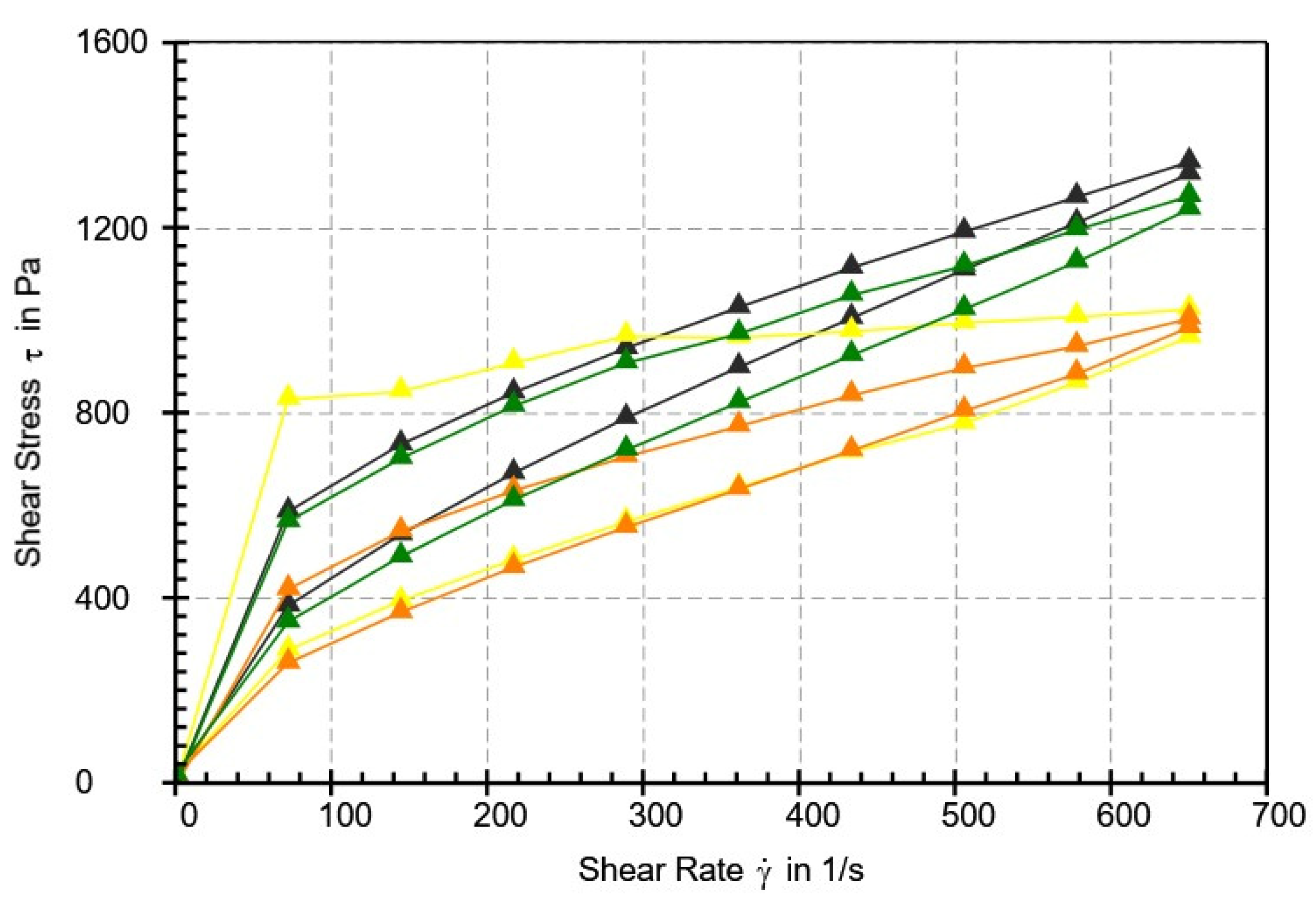
The hysteresis loop area (HLA) was determined as the area enclosed between the upward and downward flow curves in the shear stress–shear rate diagram. The area was calculated by numerical integration of the difference between the shear stresses measured during the increasing and decreasing shear-rate ramps using the trapezoidal rule. The HLA value was used as an indicator of the degree of thixotropy, with larger values corresponding to a greater extent of structure breakdown and slower structural recovery.
2.4. Stability Assessment of the Sunscreens
2.4.1. Centrifugation Test for Stability Assessment
The stability of the prepared formulations F1–F4 was evaluated using a centrifugation test based on the method described by Navarro-Pérez et al. (2021) [
19], with minor modifications to accommodate laboratory conditions. Approximately 10 g of each sample was weighed into glass test tubes, which were subsequently sealed. The samples were then subjected to centrifugation at 3000 rpm for 5 min. After centrifugation, the samples were removed and visually assessed for any signs of instability, such as phase separation or changes in texture, in order to evaluate the stability of the individual photoprotective creams.
2.4.2. Freeze–Thaw Cycling Test
The stability of the prepared formulations F1–F4 was further assessed using a freeze–thaw cycling method [
20], with slight adaptations to suit the available experimental conditions. Approximately 10.0 g of each sample was transferred into sealable glass test tubes. The samples were stored at −18 ± 0.5 °C for 24 h, followed by storage at room temperature (25 ± 0.5 °C) for an additional 24 h. This sequence constituted one complete cycle. The procedure was repeated four times in total. After each cycle, the samples were visually examined for any changes, including phase separation, alterations in consistency, or other signs of destabilization.
2.4.3. Stability Monitoring over Time
The physical stability of the formulated sunscreens was evaluated following established cosmetic stability testing principles [
21]. Samples were transferred into sealed containers and stored at controlled room temperature (25 ± 0.5 °C) for the duration of the study. Stability was monitored over a 12-week period, with evaluations conducted at 4, 8, and 12 weeks. At each time point, formulations were subjected to visual inspection to detect signs of physical instability. Particular attention was given to organoleptic and structural parameters, including changes in color, phase separation phenomena (e.g., creaming or coalescence), and alterations in consistency such as thickening or loss of homogeneity. These characteristics are widely considered critical indicators of emulsion destabilization and product degradation.
2.5. Sensory Analysis
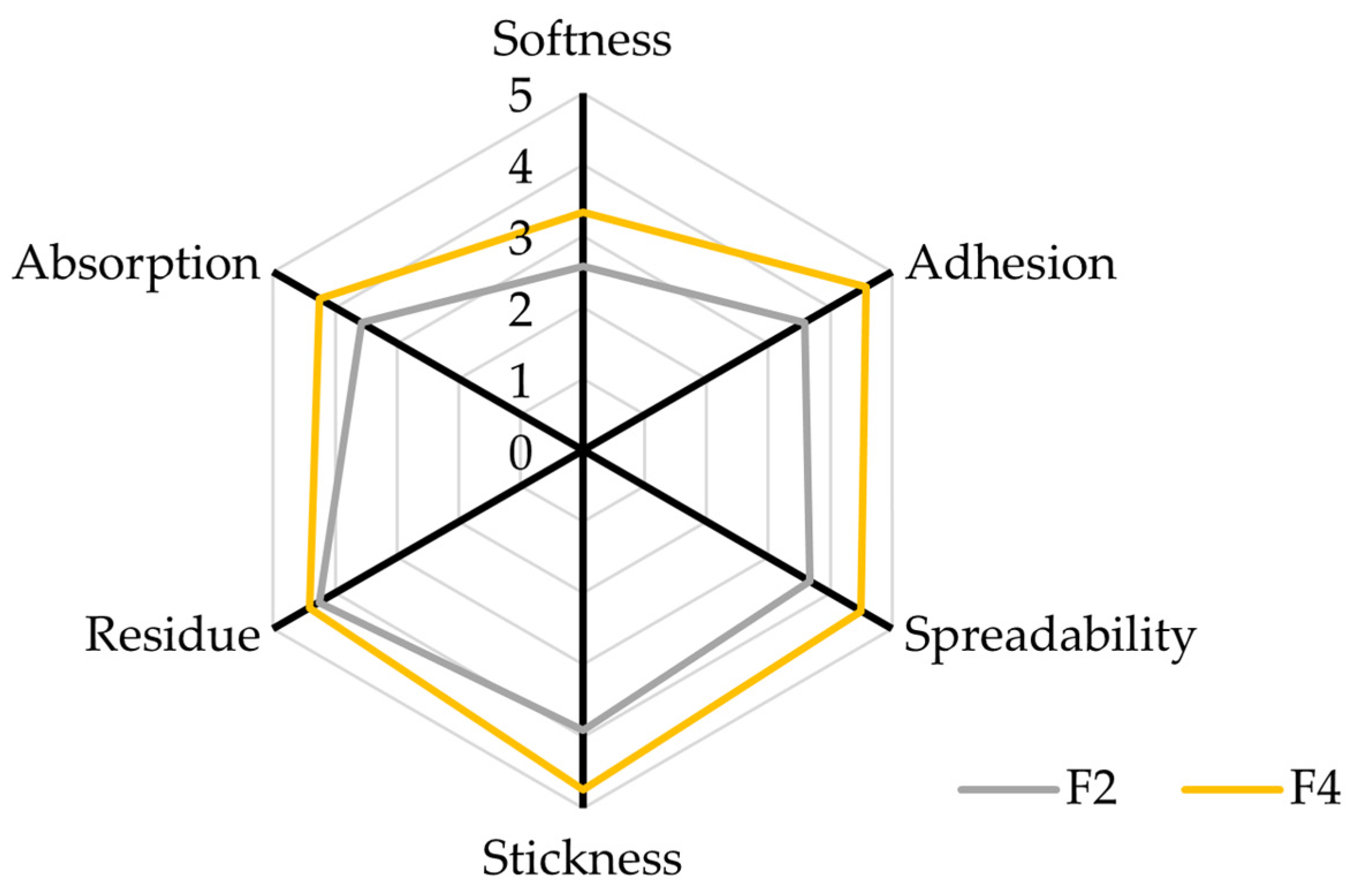
Sensory analysis of the selected formulations was carried out using 12 volunteer participants. The evaluation focused on key physicochemical and sensory attributes of the tested photoprotective creams, including appearance, spreadability, softness upon skin contact, stickiness, residual film after application, and absorption capacity.
Each participant compared two samples according to predefined evaluation criteria [
18,
22]. The evaluation questionnaire template is provided in
Supplementary Materials as
Table S5. Individual attributes were assessed using a five-point rating scale, where the lowest score indicated the least favorable perception and the highest score reflected a high level of volunteer satisfaction with the sensory properties of the sample. The mean values for each evaluated parameter were calculated and graphically illustrated for better visualization and comparison.
2.6. Statistical Analysis
The results are presented as the mean of three or five independent measurements (physical characterization: n = 3; SPF determination: n = 5) ± standard deviation (SD). Statistical differences between groups were evaluated using Student’s t-test. A p-value ≤ 0.05 was considered statistically significant. Levels of significance are indicated in figures and tables.
4. Discussion
Intrinsic skin aging is closely associated with the action of free radicals and oxidative stress, which lead to damage of cellular structures, degradation of collagen and elastin, and consequently to the formation of wrinkles and loss of skin elasticity [
27]. Moreover, several forms of radiation can threaten skin health, including ionizing radiation, ultraviolet (UV) rays, infrared (IR) radiation, visible light, radiofrequency radiation, and microwaves [
28].
Our goal was to develop a photoprotective sunscreen with an optimal formulation and to study the effect of various antioxidants on the product’s photostability. The selection of UV filters used in the formulation was based on previous research [
18], in which various combinations of chemical UV filters were evaluated. That study indicated that achieving high levels of photoprotection, with SPF values approaching 50, required the combination of all selected chemical UV filters at their maximum permitted concentrations. The primary objective was to develop a stable sunscreen formulation with the highest achievable SPF while maintaining acceptable physicochemical and sensory properties.
The chosen UV filter system was designed to provide broad-spectrum UV protection. Tinosorb
® M (methylene bisbenzotriazolyl tetramethylbutylphenol, also known as bisoctrizole) is a broad-spectrum organic UV filter providing protection throughout the UVB and UVA regions, including substantial UVA-I coverage [
29]. Tinosorb
® S (bis-ethylhexyloxyphenol methoxyphenyl triazine, also known as bemotrizinol) is a highly photostable broad-spectrum UV filter covering both UVB and UVA wavelengths, with particularly strong absorption in the UVA-I region [
30]. Uvinul
® MC 80 (ethylhexyl methoxycinnamate, also known as octinoxate) is an efficient UVB filter with maximum absorption around 310–311 nm. It was included primarily to provide strong UVB protection [
18] and to complement the broad-spectrum coverage provided by Tinosorb
® M and Tinosorb
® S.
Based on the results of a previous study [
18], which confirmed the SPF booster effect, the same booster type, Sunhancer™ ECO SPF Booster, was selected in the formulations. It is a natural SPF-enhancing ingredient composed of micronized particles derived from sustainably sourced Carnauba wax and Rice bran wax. Carnauba wax contains cinnamic acid derivatives with UV-absorbing and antioxidant properties, which contribute to improved sunscreen performance. Rice bran wax is rich in bioactive compounds, particularly flavonoids, that provide protection against ultraviolet radiation [
18,
31].
For effective free-radical neutralization, topical antioxidants need to penetrate and remain within the skin after application. In contrast, physical UV filters should stay on the skin’s surface rather than being absorbed, allowing them to block ultraviolet radiation while minimizing potential toxicity [
32]. Additionally, antioxidants applied topically should accumulate locally in the skin reservoir instead of entering systemic circulation.
The role of antioxidants in dermal formulations is multifaceted. Antioxidants in skincare products perform several important functions, helping to stimulate regenerative processes and collagen synthesis, thereby promoting increased skin firmness and reducing wrinkles. At the same time, they improve the skin’s overall appearance by enhancing its radiance [
33]. On the other hand, they play a key role in stabilizing cosmetic formulations, as they inhibit oxidative and photodegradation processes not only during storage but also after application to the skin, thereby protecting active ingredients from degradation induced by external factors such as the effect of radiation.
Köckler et al. [
34] investigated the photostability of UV filters using a method based on their incorporation into an oil-in-water emulsion applied to polymethyl methacrylate (PMMA) plates. The prepared samples were subsequently exposed to radiation from a solar simulator (λ > 290 nm) at a dose of 650 Wh/m
2 over defined time intervals. An irradiation period of 120 min was established as the threshold between acceptable and insufficient photostability, corresponding to the recommended reapplication interval of sunscreen products every two hours. In the present study, this methodology was adapted to the available laboratory conditions and instrumentation.
PMMA plates are currently considered the preferred substrate for many in vitro sunscreen photostability studies because of their photostable, non-reactive nature and highly reproducible surface characteristics [
34]. PMMA plates are recommended in both European and U.S. methodologies for the determination of UVA protection factor and critical wavelength and are therefore widely used for broad-spectrum sunscreen evaluation [
35,
36]. Furthermore, Ahn et al. [
37] identified PMMA plates as the most suitable substrate among commercially available options, including Transpore™ tape and Vitro-Skin
®, due to their mechanical strength, ease of handling, and reduced interference from substrate properties.
Nevertheless, the choice of substrate should depend on the specific objective of the study. Several investigations have demonstrated that although PMMA plates are advantageous for UVA and photostability testing, Transpore™ tape may provide better agreement between in vitro and in vivo SPF measurements. Garoli et al. [
36] reported that Transpore™ tape showed stronger correlations with in vivo SPF values than PMMA plates. Similar observations were reported by Dimitrovska Cvetkovska et al. [
38], who found that Transpore™-based methodologies produced a closer correlation between in vitro and in vivo SPF results than methods employing PMMA substrates.
For these reasons, Transpore™ 3M tape was selected in the present work for practical and methodological purposes. The porous structure of Transpore™ tape has been widely used in dermatological and sunscreen research and facilitates homogeneous spreading, retention, and subsequent recovery of semisolid formulations. In addition, its porous microstructure provides a textured surface that may better reproduce certain aspects of skin microrelief than the comparatively rigid PMMA substrate. Scalia et al. [
39] demonstrated that PMMA plates and Transpore™ tapes provide comparable results before irradiation, indicating that both substrates are suitable for non-irradiated in vitro sunscreen evaluation. However, after UV exposure, PMMA plates generally showed a greater reduction in SPF and a better correlation between spectrophotometric and HPLC measurements of UV-filter degradation, suggesting that PMMA plates may provide a more reliable assessment of sunscreen photostability.
In our experiment, we applied 1.1 g of sample on the Transpore™ tape because approximately 1 g is required for the subsequent spectrophotometric SPF analysis after extraction and homogenization of the sample in ethanol (96%, v/v). The additional 10% compensated for material losses during recovery from the tape. This was necessary to obtain a sufficient amount of irradiated sample for reliable SPF determination. A thinner layer could have been achieved by spreading the formulation over a larger area. However, this would have increased sample losses and reduced the accuracy and reproducibility of the measurements.
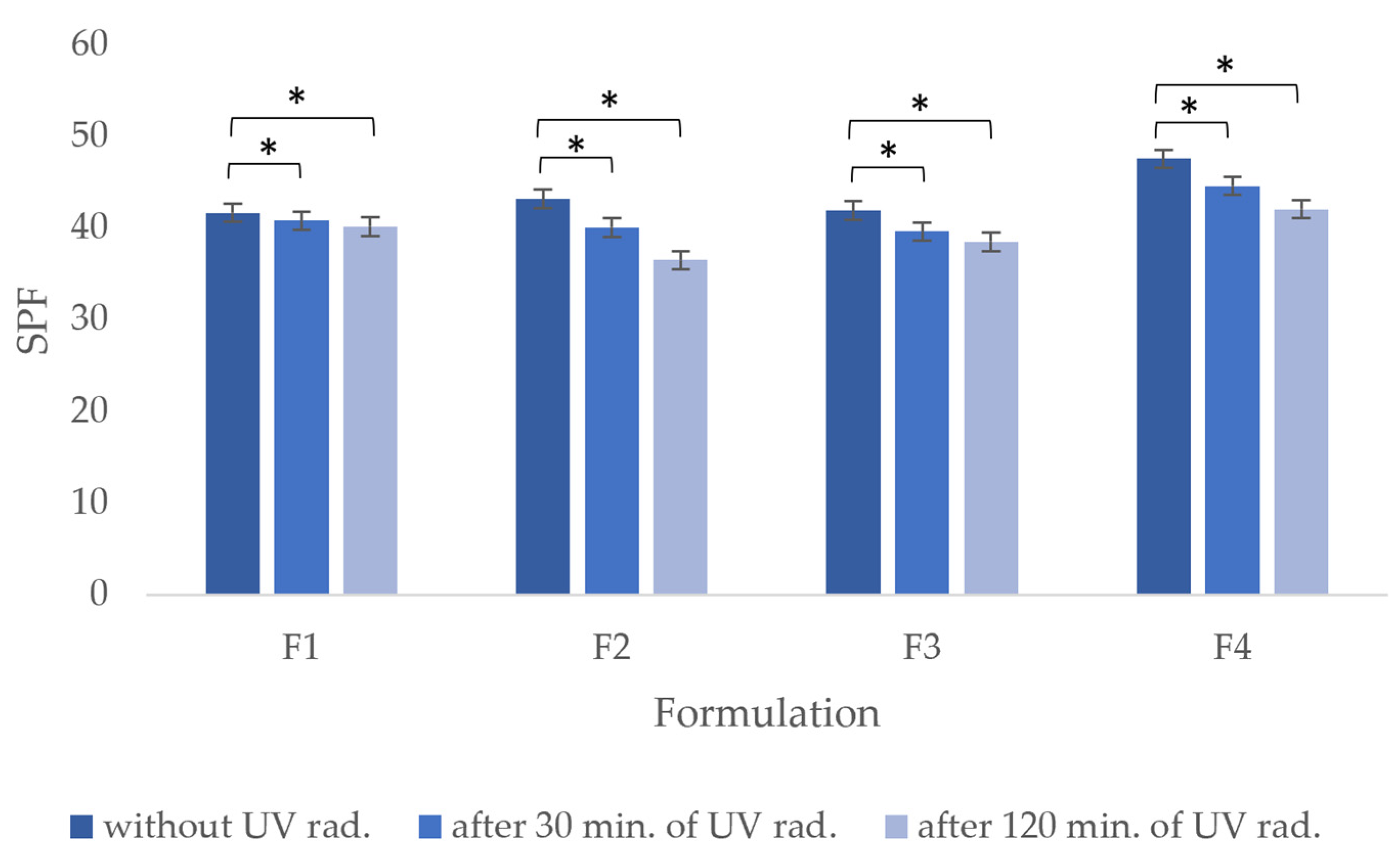
The results demonstrate that the type of investigated antioxidant significantly influences both the initial SPF and its preservation after UV exposure. The incorporation of antioxidants led to an increase in SPF compared to the reference formulation (F1), with the most pronounced effect observed for ferulic acid (F4). Peres et al. (2018) [
14] demonstrate that ferulic acid not only improves formulation stability but also enhances the photoprotective efficacy of sunscreen systems. When combined with UV filters, ferulic acid exhibits a synergistic effect, significantly increasing SPF and UVA protection, thereby acting as a photoprotective booster and improving overall sunscreen performance.
A moderate increase was observed for vitamin C (F2) and carrot macerate (F3). These differences can be attributed to the distinct chemical structures and antioxidant mechanisms of the tested compounds.
The antioxidant activity of vitamin C is based on its chemical structure and its ability to act as an electron donor. It neutralizes free radicals and ROS (reactive oxygen species) through electron transfer, becoming oxidized to the relatively stable ascorbyl (semidehydroascorbate) radical. Further oxidation of this intermediate leads to the formation of dehydroascorbic acid [
11,
12]. One possible explanation for the decrease in SPF after 120 min of UV exposure is the gradual oxidation of vitamin C. As ascorbic acid undergoes oxidative transformations during its antioxidant action, its ability to neutralize free radicals may become limited under prolonged UV irradiation, which could be reflected in a reduction in SPF [
40].
In the case of formulation F3 containing carrot macerate, the moderate increase in SPF may be associated with the presence of carotenoids. Their antioxidant activity is related to their ability to scavenge singlet oxygen and peroxyl radicals generated during UV irradiation [
41]. Through these mechanisms, carotenoids may contribute to the improvement of the photoprotective properties of the formulation, which may be reflected in a moderate increase in SPF.
However, when evaluating photostability, a different trend emerged. Although the reference sample without antioxidants (F1) showed the smallest relative decrease in SPF after UV irradiation, this formulation still exhibited lower absolute SPF values compared to F4. Importantly, the formulation containing ferulic acid maintained the highest SPF after 120 min of UV exposure, indicating superior long-term protective efficacy. In contrast, vitamin C showed the greatest reduction in SPF, which may be related to its susceptibility to photodegradation and limited stability under UV conditions.
The observed behavior highlights the dual role of antioxidants in sunscreen formulations. While some antioxidants can initially boost SPF, their effectiveness in stabilizing UV filters under prolonged irradiation varies significantly. Ferulic acid appears particularly effective due to its known ability to absorb UV radiation and stabilize reactive intermediates, thus preventing degradation of UV filters.
Antioxidants incorporated into sunscreens may contribute not only to SPF enhancement but also to biological photoprotection by reducing oxidative stress and inhibiting ROS-mediated cellular damage. Several antioxidants have been shown to suppress inflammatory pathways, decrease matrix metalloproteinase activation, and limit collagen degradation associated with photoaging [
5].
Although vitamin C increased the initial SPF value, the formulation containing stabilized vitamin C showed the greatest decrease in SPF after UV irradiation. This finding agrees with previous reports describing the limited photostability and oxidative instability of vitamin C and some of its derivatives in topical formulations, particularly under prolonged UV exposure [
42]. The improved SPF retention observed in formulation F4 may indicate a stabilizing effect of ferulic acid on the UV filters used in the formulation. Previous studies have demonstrated that ferulic acid can act as a UV absorber and radical scavenger [
43], thereby limiting photooxidative degradation of sunscreen filters. Mancuso et al. (2021) [
44] found that after absorbing UV light, ferulic acid forms a stable phenoxy radical, enabling it to terminate free radical chain reactions. Freire et al. (2023) [
45] report that ferulic acid helped preserve avobenzone and octyl methoxycinnamate during thermal/photo stress. This preservation is directly linked to reduced degradation of filters under UV exposure. Lu et al. (2025) [
46] describe enhanced photostability and UV resistance in a supramolecular system with avobenzone and ferulic acid.
Adding ferulic acid to a topical formulation containing 15%
l-ascorbic acid and 1% α-tocopherol increased the stability of both vitamins and enhanced photoprotection against simulated sunlight, raising protection from about fourfold to roughly eightfold, as shown by reductions in erythema and sunburn cell formation [
47]. Queiroz et al. (2026) [
48] confirmed the sun protection effect of ferulic acid alone, demonstrating that nanoemulsion-based formulations with low concentrations of encapsulated ferulic acid (0.2%, 0.3%, and 0.5%) exhibited progressively increasing SPF values (2.28, 2.70, and 2.96, respectively) in a concentration-dependent manner.
Carrot macerate also contains phenolic acids, including ferulic acid, as minor constituents [
49], but its predominant antioxidants are carotenoids, especially β-carotene, and lipophilic antioxidants such as tocopherols [
50]. Regarding its SPF-boosting effect, its performance is comparable to that of vitamin C in formulation F2. However, a key advantage is its superior stability, as it is less prone to degradation than vitamin C. On the downside, it imparts a slightly orange tint to the cream, which may not always be acceptable to consumers. The relatively small SPF enhancement observed for carrot macerate may be related to the lower concentration or reduced availability of active antioxidant constituents compared to purified antioxidant compounds such as ferulic acid.
The use of vitamin C as a stabilizer and antioxidant in the formulation is further limited by its pronounced instability, an increase in the formulation’s pH, and a significant reduction in SPF following 120 min of UV exposure. However, if vitamin C is intended to be used as an active ingredient, its stability within the product could be improved through encapsulation in an appropriate carrier system. In general, nanoparticle-based formulations can be engineered to enhance targeted antioxidant delivery and improve retention within the skin [
28].
The physical characterization further supports the suitability of the developed formulations. All samples were identified as oil-in-water emulsions, which are generally preferred for dermal application due to their favorable sensory and skin compatibility properties.
The pH values of most formulations were within the physiologically acceptable range. Formulations containing vitamin C slightly deviate from the recommended pH range for dermal products. Although ascorbic acid is inherently acidic and would typically be expected to lower the pH, this effect can be influenced by the overall composition of the formulation and interactions of vitamin C with other ingredients. Ascorbic acid tends to degrade through oxidation, which can alter pH behavior over time. Despite exhibiting a somewhat higher pH compared to the other samples, no signs of irritation were reported by volunteers evaluating the sensory attributes of formulation F2 containing vitamin C.
Stability testing revealed that formulations containing ferulic acid and vitamin C demonstrated improved resistance to phase separation under stress conditions (centrifugation and freeze–thaw cycles), whereas formulations F1 and F3 were less stable. This suggests that certain antioxidants may also contribute to emulsion stability, likely by influencing the interfacial properties of the system.
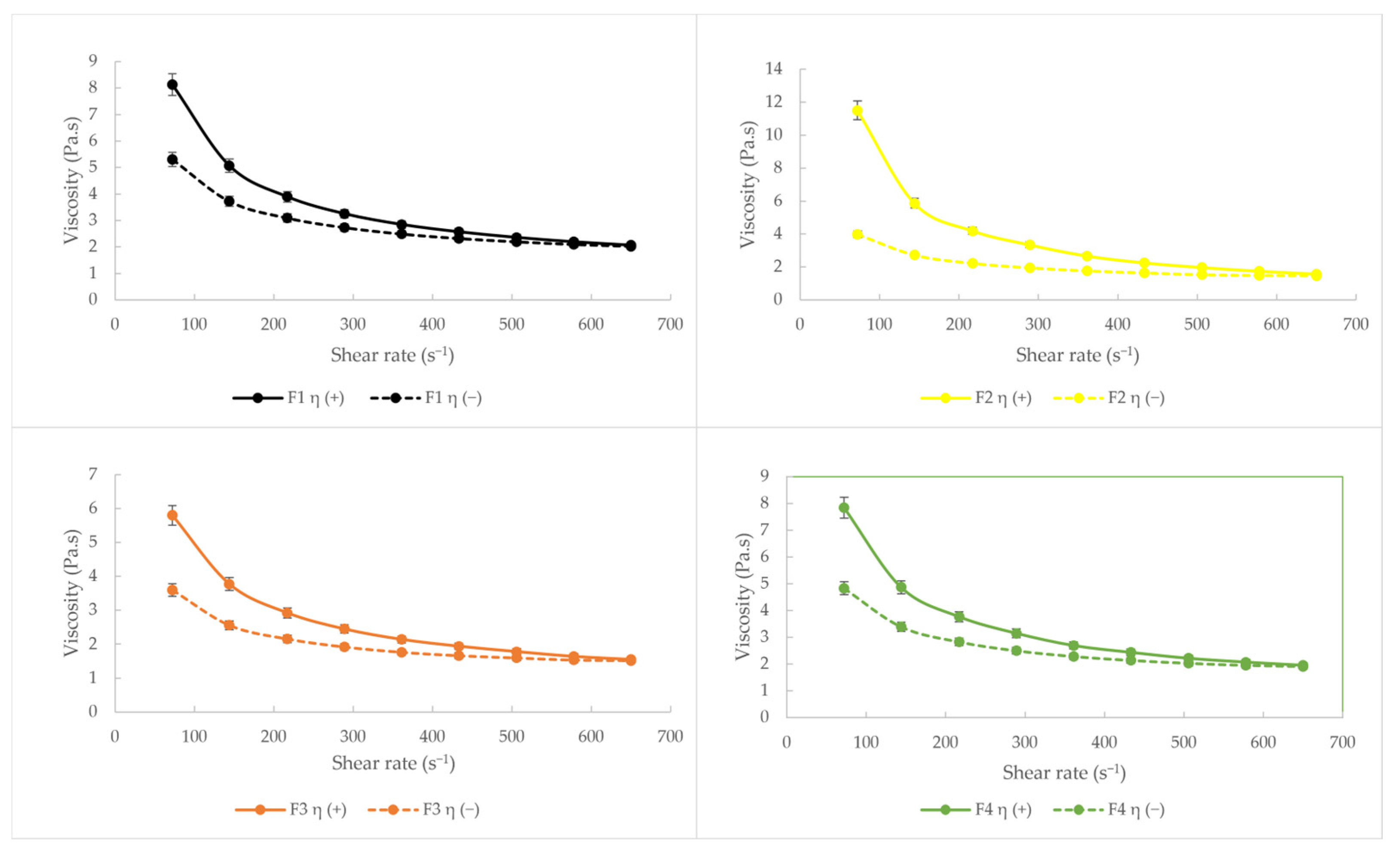
Rheological analysis confirmed thixotropic behavior of all formulations, which is desirable for topical products, as it ensures good spreadability during application and structural recovery afterward. Thixotropy is a reversible rheological phenomenon typical of non-Newtonian fluids, characterized by a decrease in apparent viscosity under increasing shear stress, which disrupts the internal structure of the system. Once the shear stress is reduced, the material gradually returns to its original viscosity as its internal structure is rebuilt. The hysteresis loop offers qualitative insight into the extent of structural breakdown and subsequent recovery during the cycle of applied stress and relaxation [
51]. As evident in
Figure 3 and
Figure 4, the addition of the antioxidant was reflected in a change not only in apparent viscosity but also in HLA. This differed only slightly between formulations F1 and F3 (73.02 ± 0.04 kPa·s
−1 and 71.74 ± 0.04 kPa·s
−1). However, statistical analysis confirmed that the difference was significant. In contrast, stabilized vitamin C and ferulic acid markedly increased HLA, with vitamin C causing an approximately 2.5-fold increase. From a technological perspective, this behavior may influence the product’s spreadability and sensory properties during application. Generally, the observed thixotropic behavior is advantageous for topical sunscreen formulations, as apparent viscosity decreases during spreading, facilitating application onto the skin, while structural recovery after application helps maintain a uniform protective film.
Sensory evaluation further indicated that, among the two tested formulations (F2 and F4), the formulation containing ferulic acid (F4) was preferred by the volunteers, achieving the highest scores across most evaluated parameters.
Current cosmetic research increasingly focuses on multifunctional ingredients capable of simultaneously enhancing SPF, improving photostability, reducing oxidative stress, and providing favorable sensory properties [
11]. Ferulic acid appears to fulfill several of these requirements. Despite these promising findings, several limitations of the present study should be mentioned. First, SPF values were determined using an in vitro spectrophotometric method rather than an in vivo approach. While in vitro methods are widely accepted for preliminary formulation screening and comparative studies, they cannot fully reproduce the complexity of sunscreen performance under real-life conditions on human skin. Second, photostability testing was conducted using Transpore™ tape instead of the PMMA plates more commonly employed in standardized photostability studies, which may limit direct comparison with data from other investigations. Furthermore, the study evaluated only a relatively small number of antioxidants and employed comparatively short irradiation times. These limitations highlight the need for future research.