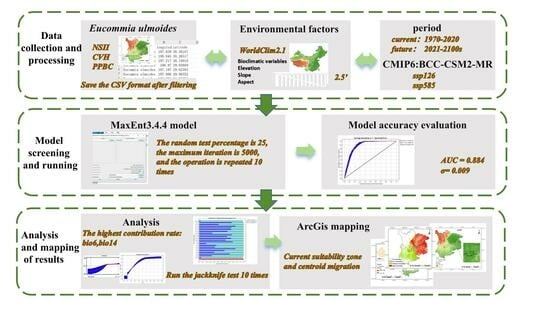
Simple Summary
This study integrates MaxEnt modeling with geospatial analysis to assess future habitat suitability for Eucommia ulmoides, a medicinal Tertiary relict species, under SSP1-2.6 and SSP5-8.5 climate scenarios. Key findings reveal precipitation seasonality, thermal extremes, and elevation as primary distribution drivers, with projected southward centroid shifts and habitat contraction in Chongqing. These insights inform conservation strategies for this ecologically vulnerable species.
Abstract
As a Chinese endemic species with dual medicinal–industrial importance, Eucommia ulmoides faces habitat challenges under climate change. Using 21 bioclimatic variables and 704 occurrence records, we modeled current and future (2021–2100) distributions via MaxEnt 3.4.4 and ArcGIS 10.8. The results indicate the following: (1) current optimal habitats cluster in the mid-elevation valleys of Daba–Wuling Mountains (Guizhou–Chongqing core); (2) SSP5-8.5 projections suggest a 19.2% reduction in high-suitability areas by 2081–2100 versus SSP1-2.6; and (3) distribution centroids migrate southward under both scenarios. Our multi-temporal analysis provides actionable intelligence for ex situ conservation and agroforestry planning.
1. Introduction
Climate change serves as a primary driver of plant habitat evolution [1,2,3,4,5]. Projections by the IPCC indicate that under moderate-to-high-emission scenarios (e.g., SSP2-4.5 to SSP5-8.5), global warming will exceed the 1.5 °C threshold during this century [6,7]. This trend is expected to compel endangered plant species to shift toward higher latitudes or altitudes, thereby jeopardizing biodiversity [8]. Analyzing habitat suitability zones is essential for prioritizing biodiversity protection.
Ecological niche models (ENMs) [9] predict species distributions by quantifying habitat suitability or ecological niches. Common ENM methods include MaxEnt [10], GARP [11], and Climex [12]. MaxEnt is widely adopted due to its user-friendly interface, low sample requirements, and high predictive accuracy [13,14]. CMIP6 (Coupled Model Intercomparison Project Phase 6) integrates the Scenario MIP subproject, which includes four Shared Socioeconomic Pathways (SSPs): SSP1-2.6 (low radiative forcing, upgrading RCP2.6 with negative emissions), and SSP5-8.5 (high radiative forcing, exceeding RCP8.5 CO2 levels with enhanced non-CO2 mitigation efforts) [15,16].
Eucommia ulmoides Oliv., a perennial deciduous tree, represents the sole extant Tertiary relict species within the genus Eucommia [17]. Recognized as a rare and endangered species, it holds Class II protected status under China’s conservation legislation [18]. Beyond its renowned pharmacological applications in tonifying liver–kidney functions, enhancing osteogenic capacity, and stabilizing gestational processes, this species serves as a strategic bioresource with multifaceted ecological and economic significance [19]. Its industrial utility spans urban–rural afforestation programs, natural rubber production (notably gutta-percha extraction), and nutraceutical development [20,21].
The native distribution of Eucommia ulmoides Oliv. historically centered in Hanzhong (Shaanxi Province) and Yuzhou (Henan Province), with Sichuan, Chongqing, and Guizhou emerging as primary cultivation hubs since the Ming Dynasty (1368–1644) [22]. Since the 20th century, wild populations have faced critical endangerment due to overexploitation driven by traditional medicinal demand, unsustainable silvicultural practices in early plantations, and adverse impacts of pre-industrial resource extraction [23]. In southwestern China, a key native habitat, prolonged deficiencies in systematic conservation and scientific management have accelerated population decline. Natural forest cover reduction, genetic diversity erosion, and ecosystem function degradation further exacerbated this trend.
Previous studies employing the MaxEnt model have simulated the potential habitats and mapped optimal cultivation zones for Eucommia ulmoides Oliv. across China [24,25,26]. Historical records trace its native distribution to Hanzhong (modern-day Shaanxi) and Yuzhou (present-day Henan Province), with Sichuan, Chongqing, and Guizhou emerging as dominant cultivation hubs since the Ming Dynasty (1368–1644) [27]. Building on this framework, the present study utilizes the MaxEnt model coupled with ArcGIS technology to forecast potential distributions of Eucommia ulmoides Oliv. in southwestern China under SSP5-8.5 and SSP1-2.6 climate scenarios, spanning sequential 20-year intervals (2021–2040, 2041–2060, 2061–2080, and 2081–2100). Through systematic identification of bioclimatic determinants governing habitat suitability, this analysis establishes an evidence-based foundation for optimizing silvicultural practices and adaptive resource governance under evolving climatic regimes.
2. Materials and Methods
2.1. Introduction to the Research Region
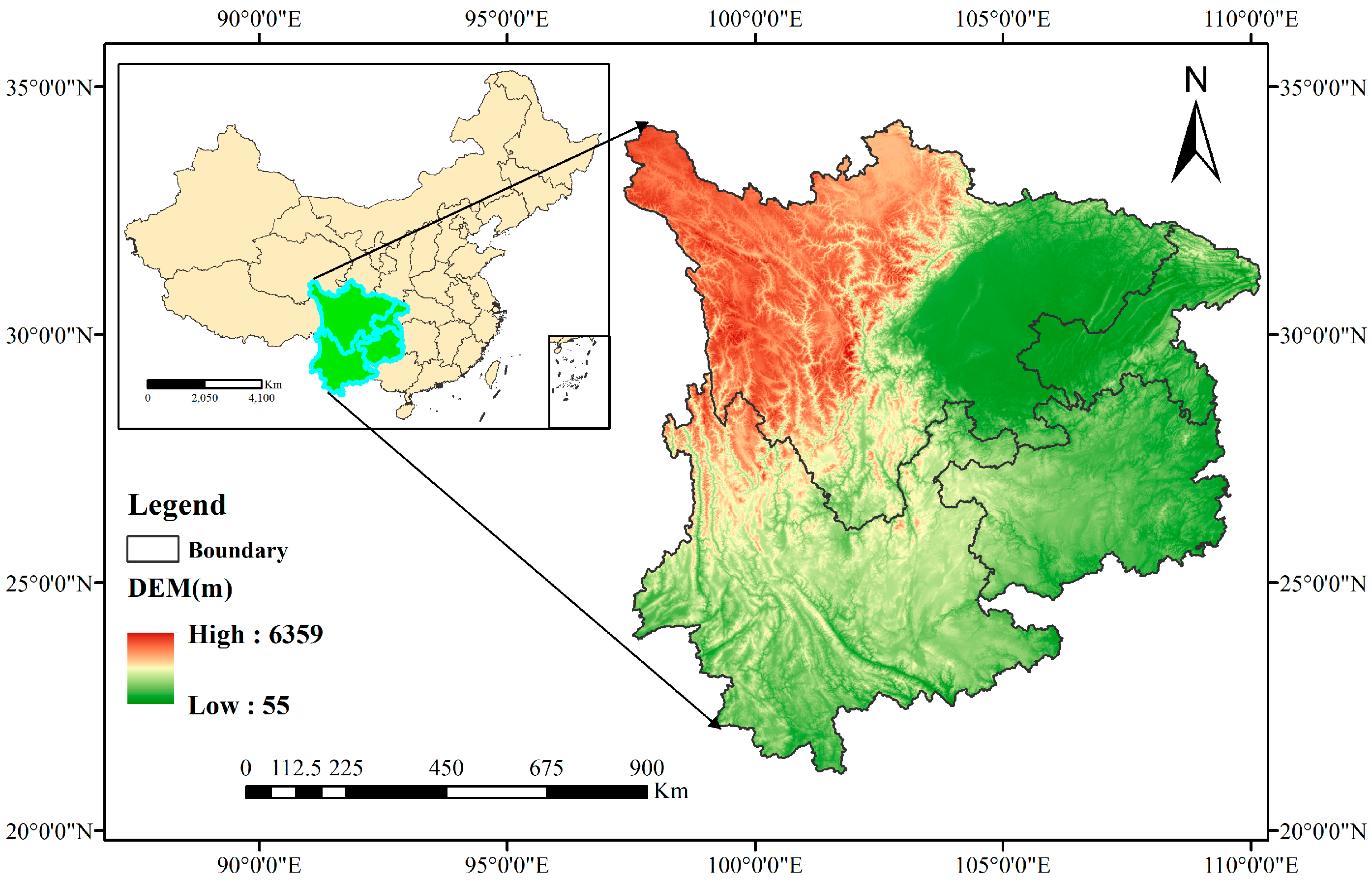
Southwestern China, located at the nation’s southern extremity, extends across geographic coordinates between 97° E and 110° E longitude and 21° N and 34° N latitude. This vast territory comprises four primary administrative divisions: Sichuan Province, Guizhou Province, Yunnan Province, and Chongqing Municipality [28]. The region’s topography features an elevation gradient descending from western to eastern sectors and northern to southern zones, with landscape composition dominated by basin formations and hilly terrains that collectively form one of China’s most geomorphologically diverse regions [29]. Under climate change impacts since the turn of the century, forested areas in this region have demonstrated persistent temperature increases alongside decreasing precipitation patterns and reduced solar radiation exposure [30]. As China’s second-largest contiguous forest ecosystem, this area holds dual recognition as both one of the country’s 25 key biodiversity priority zones and a global conservation hotspot. Ecologically, it maintains crucial functions as a strategic water resource reserve and a national repository for genetic diversity, supporting numerous endemic species [31,32] (Figure 1).
Figure 1.
Overview of Southwest China.
2.2. Species Distribution Information
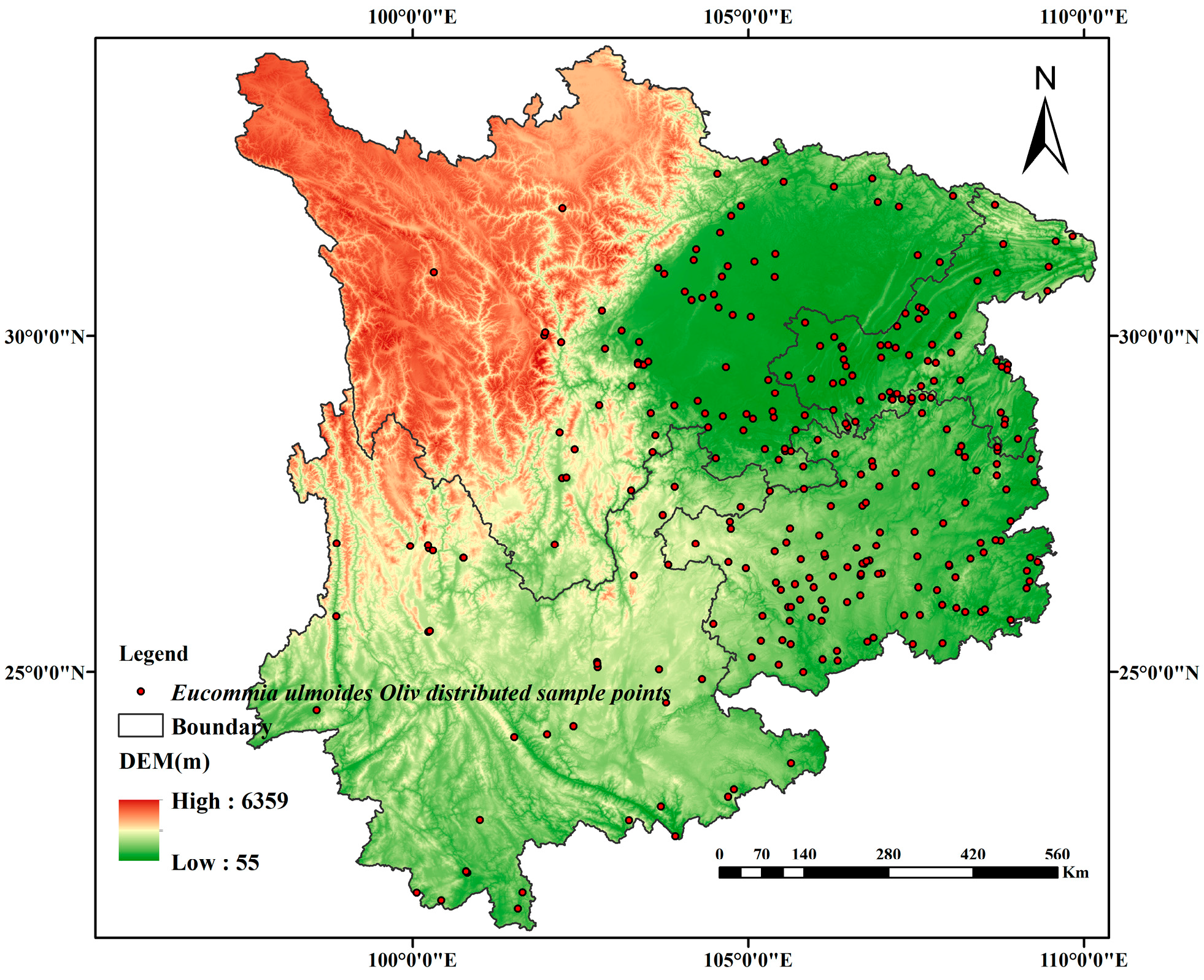
Geospatial occurrence data for Eucommia ulmoides were acquired through three national databases: the China National Resources Platform (http://www.nsii.org.cn/2017/home.php, accessed on 13 January 2024), China Digital Plant Herbarium (https://www.cvh.ac.cn/, accessed on 15 January 2024), and China Plant Image Library (https://ppbc.iplant.cn/, accessed on 19 January 2024). Following the elimination of non-compliant and redundant entries [33], 704 validated distribution records were retained, with provincial allocations as follows: Guizhou (119), Sichuan (75), Yunnan (39), and Chongqing (61). Spatial coordinate deduplication enabled generation of the distribution map for southwestern China at 300-unit resolution (Figure 2), with base cartography (1:4,000,000) digitally reproduced from the National Basic Geographic Information System (http://bzdt.ch.mnr.gov.cn/, accessed on 5 December 2024) All georeferenced coordinates were archived in standardized CSV format to facilitate subsequent ecological modeling applications.
Figure 2.
Site plot illustrating the distribution of Eucommia ulmoides.
2.3. Collection and Evaluation of Environmental Data
Climatic and topographic parameters were obtained from WorldClim2.1 (https://worldclim.org/, accessed on 9 July 2024) at 2.5 arcminute resolution, including nineteen bioclimatic variables and elevation data spanning 1970–2000. Slope and aspect layers were calculated using the digital elevation model (Table 1). Future climate projections for four 20-year intervals (2021–2100) were generated through the BCC-CSM2-MR model [34] developed by China’s National Climate Center, employing CMIP6’s SSP1-2.6 and SSP5-8.5 scenarios [35,36] at equivalent spatial resolution. To address potential biases from variable interdependence [24], we implemented a Spearman correlation threshold (r > 0.8) coupled with contribution rate screening, systematically excluding collinear predictors and low-impact factors.
Table 1.
Twenty-two environmental variables.
2.4. Development of the Model Architecture and Parameter Optimization
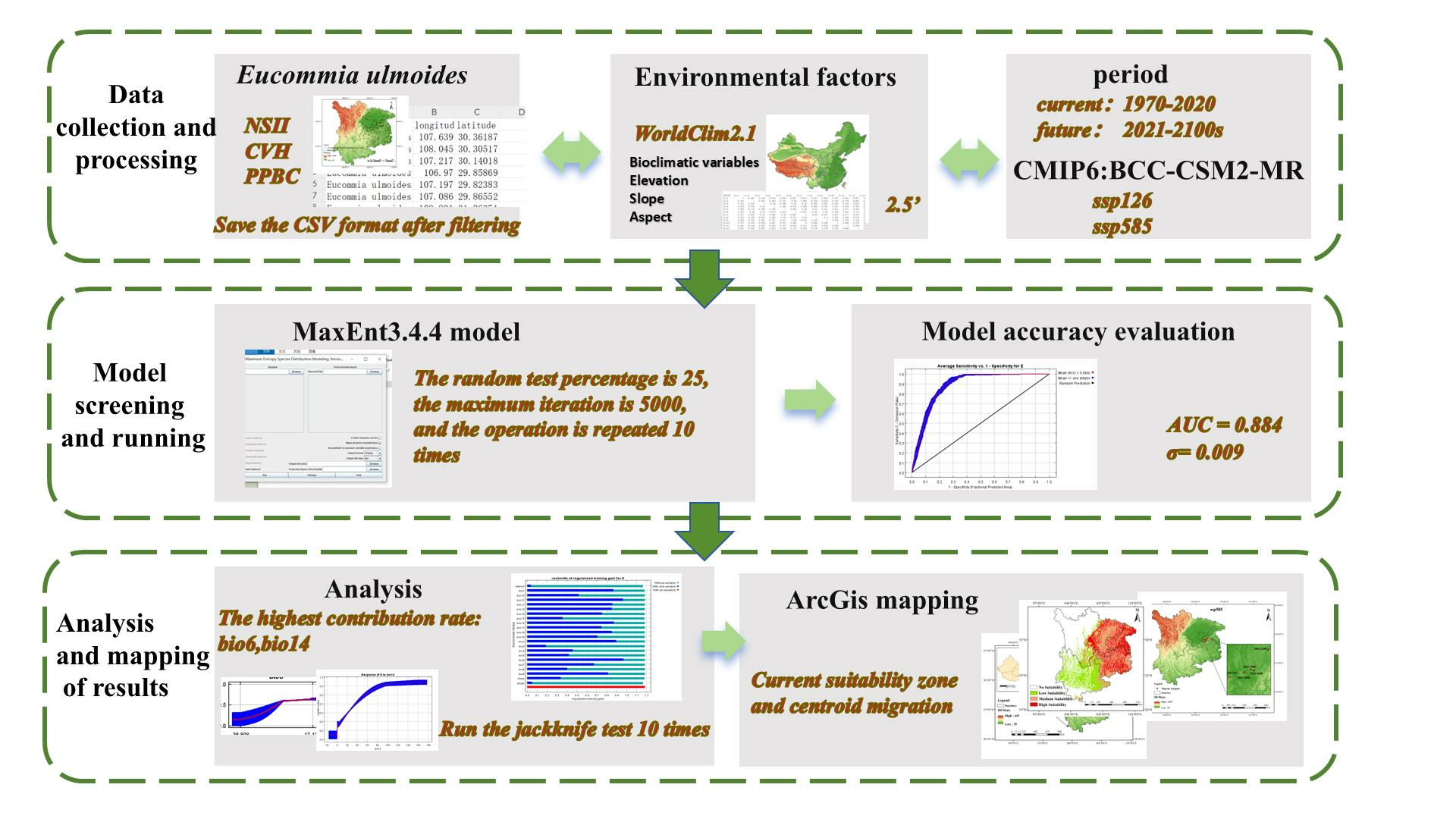
The filtered species occurrence records and environmental variables were imported into the MaxEnt 3.4.4 model for analysis. Model configuration included a random test percentage of 25, regularization multiplier of 1, maximum background points of 1000, and maximum iterations of 5000. Model robustness was ensured through 10-fold cross-validation, with environmental variable significance quantified via jackknife tests. All analyses maintained default parameter configurations, generating predictive outputs as ASCII grid files. The ROC curve (receiver operating characteristic curve) is a graphical tool for evaluating classifier performance [37]. It plots the relationship between the true positive rate (TPR) and false positive rate (FPR) across different classification thresholds. Model validation employed receiver operating characteristic (ROC) curve analysis [38], where the Area Under the Curve (AUC) served as the quantitative performance metric. AUC interpretation followed established ecological modeling standards [39]: 0.5–0.6 (marginal credibility); 0.6–0.7 (acceptable certainty); 0.7–0.8 (medium predictive certainty); 0.8–0.9 (high confidence); 0.9–1.0 (exceptional accuracy).
2.5. Appropriate Zoning of Eucommia
Habitat suitability modeling outputs from MaxEnt3.4.4 were processed through ArcGIS 10.8 to generate predictive distribution maps across China. Zone classification was based on two criteria: Maximum Training Sensitivity plus Specificity (MTSS) and the Balance between Training Omission, Predicted Area, and Threshold Value (BTPT) [40]. The output raster underwent threshold-based classification using four habitat suitability index (P) categories: non-suitable (p < 0.2), low suitability (0.2–0.4), moderate suitability (0.4–0.6), and high suitability (p ≥ 0.6).
2.6. Projected Centroid Shift of Eucommia ulmoides Under Future Climate Scenarios
Habitat suitability projections from MaxEnt 3.4.4 were processed through ArcGIS 10.8’s Geoprocessing tools to quantify current and future distribution areas for Eucommia ulmoides. The SDM framework executed climate scenario analyses using ASCII grid outputs, with habitat viability thresholds calculated via Spatial Analyst functions. Subsequent cartographic visualization integrated classified suitability layers (present/future) through standardized symbology protocols.
3. Results
3.1. Evaluation and Selection of Environmental Variables
Based on Spearman rank correlation analysis, environmental variables with pairwise correlation coefficients exceeding 0.8 were eliminated to address collinearity. Ten MaxEnt 3.4.4 model runs were performed to identify high-contribution environmental predictors, resulting in eight key factors for final modeling (Table 2). Dominant variables included the following: precipitation of the driest month (Bio14, 27.2%), minimum temperature of the coldest month (Bio6, 22.1%), precipitation of the wettest month (Bio13, 14.9%), annual precipitation (Bio12, 10.4%), mean temperature of the coldest quarter (Bio11, 4.2%), slope (3.0%), mean temperature of the driest quarter (Bio9, 2.2%), and elevation (1.9%). These factors collectively accounted for 85.9% of the model’s explanatory power, significantly exceeding the contributions of other variables.
Table 2.
Environmental variables and their contribution rate screened by Eucommia ulmoides MaxEnt mode.
3.2. Evaluation of Model Accuracy
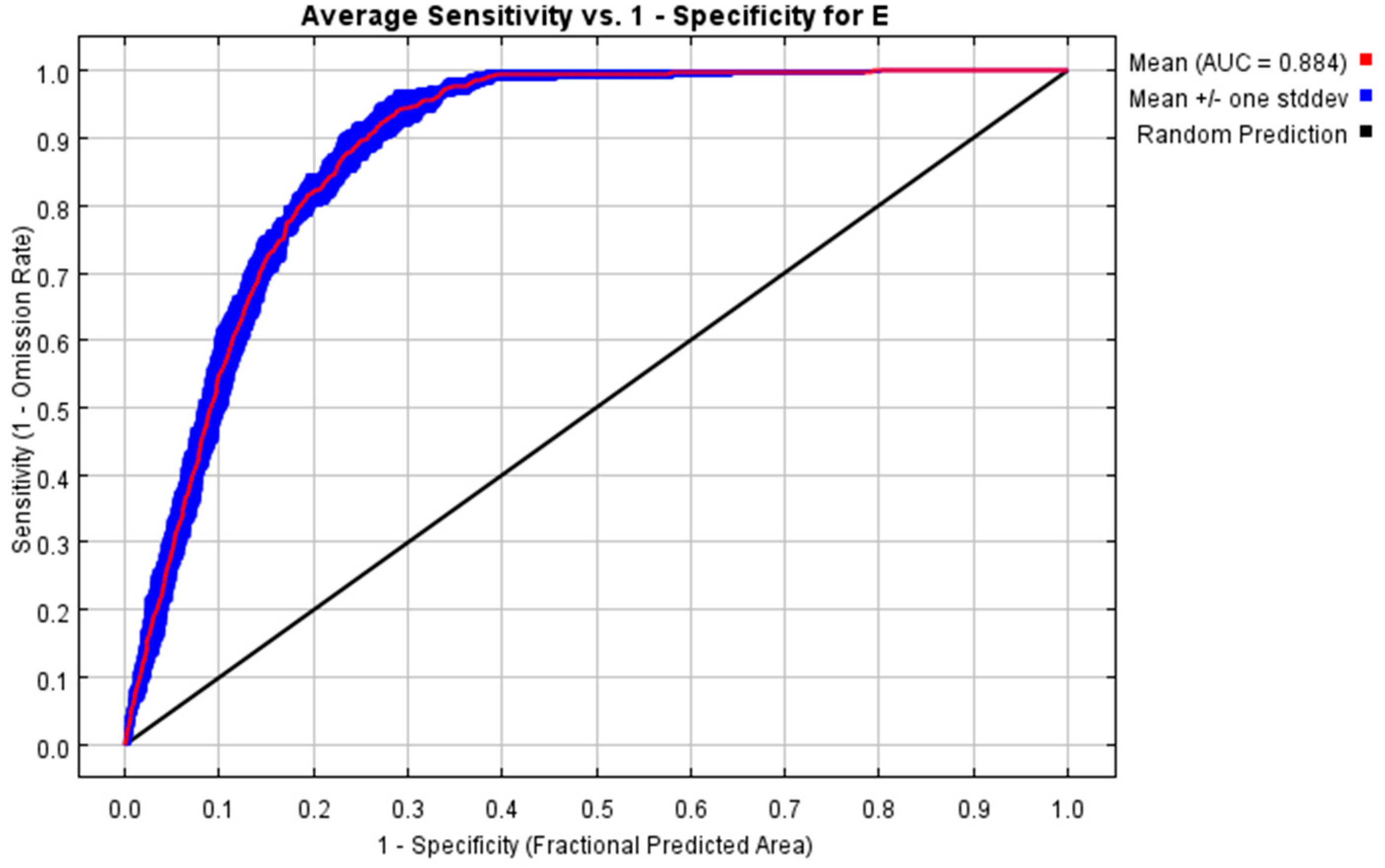
Receiver operating characteristic (ROC) curves for the identical dataset were calculated as mean values from repeated simulations (Figure 3). The mean training AUC across replicates was 0.884 (SD = 0.009), indicating robust predictive performance and high reliability of the Eucommia ulmoides potential distribution model.
Figure 3.
Receiver operating characteristic (ROC) curves for the same data.
3.3. The Primary Environmental Factors Influencing the Growth of Eucommia ulmoides
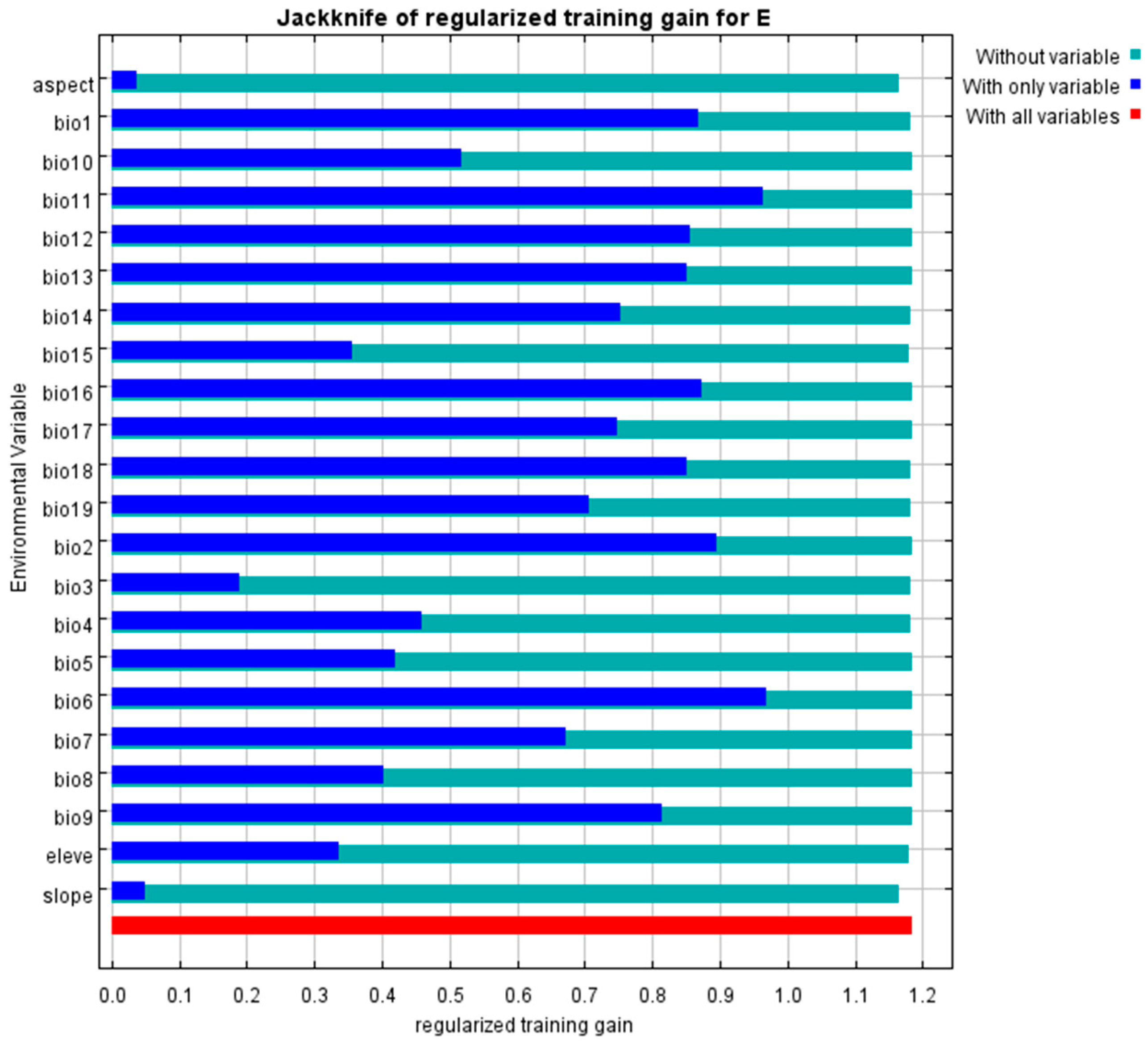
Jackknife test results from 10 MaxEnt 3.4.4 model runs identified environmental variable effects (Figure 4). The coldest month’s minimum temperature (Bio6) achieved the highest variable gain when used individually. Conversely, aspect (slope direction) caused the most significant model gain reduction when omitted. Three criteria—contribution rate, permutation importance, and jackknife test results-identified eight key environmental determinants of Eucommia ulmoides distribution: precipitation of the driest month (Bio14, 27.2%), minimum temperature of the coldest month (Bio6, 22.1%), precipitation of the wettest month (Bio13, 14.9%), annual precipitation (Bio12, 10.4%), mean temperature of the coldest quarter (Bio11, 4.2%), slope (3.0%), mean temperature of the driest quarter (Bio9, 2.2%), and elevation (1.9%).
Figure 4.
Test results of environmental variables.
3.4. Correlation Between Eucommia Distribution and Environmental Factors
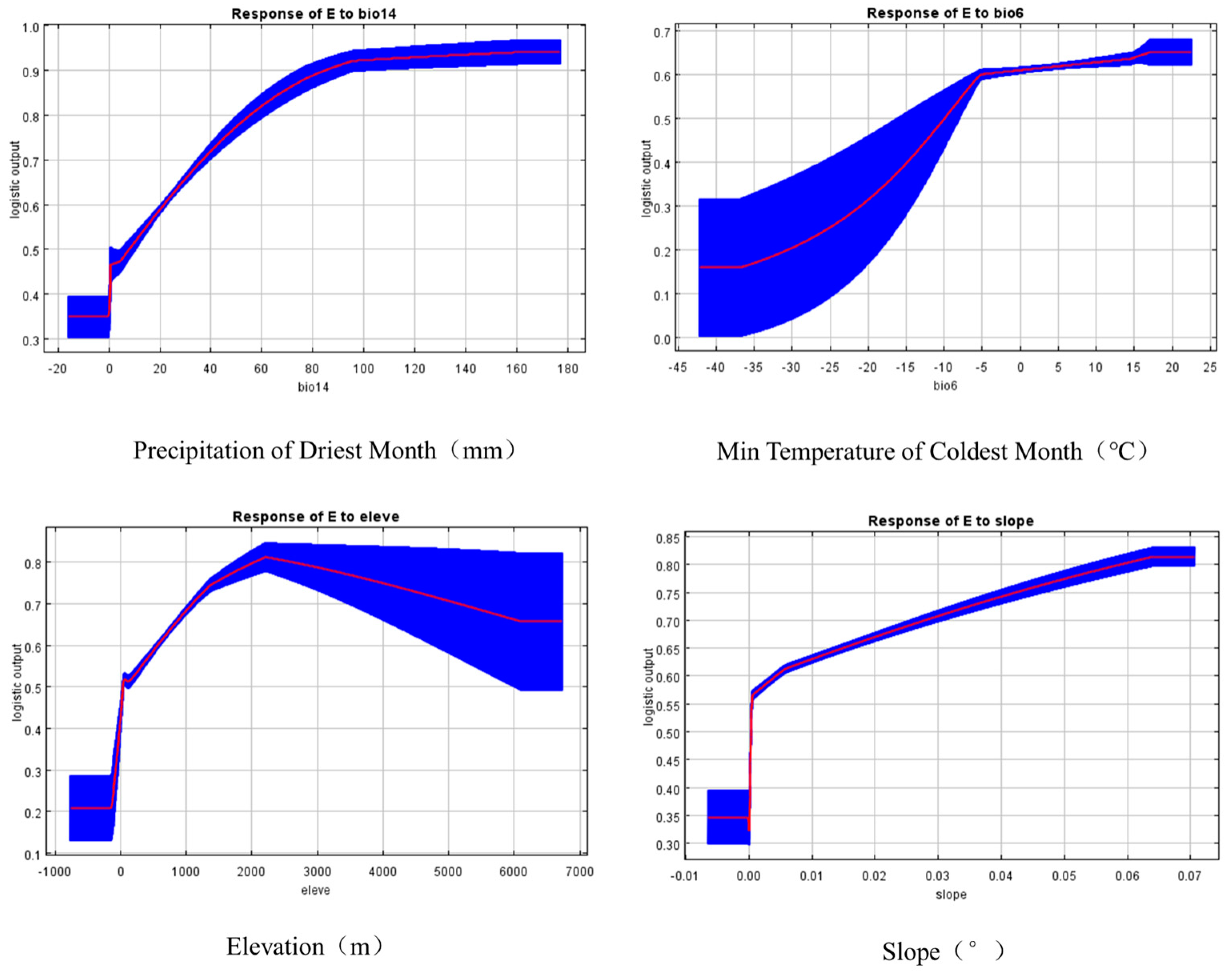
Response curves quantify the probabilistic relationship between Eucommia ulmoides habitat suitability and environmental factors, with a probability threshold ≥ 0.5 defining optimal habitat ranges (Figure 5). Analysis revealed peak growth suitability under the following conditions: precipitation of the driest month (12.6–96.5 mm), minimum temperature of the coldest month (−4 °C to 6 °C), precipitation of the wettest month (184–345 mm), annual precipitation (216–970 mm), mean temperature of the coldest quarter (0.7–9.8 °C), mean temperature of the driest quarter (3–11.7 °C), and elevation (13.9–756 m) (Table 3). This analysis demonstrates Eucommia ulmoides distribution is primarily constrained by precipitation regimes, thermal conditions, and altitudinal gradients.
Figure 5.
Response curves of the main environmental variable.
Table 3.
Thresholds of key environmental factors.
3.5. Projected Distribution Range of Eucommia ulmoides Under Present Climatic Conditions
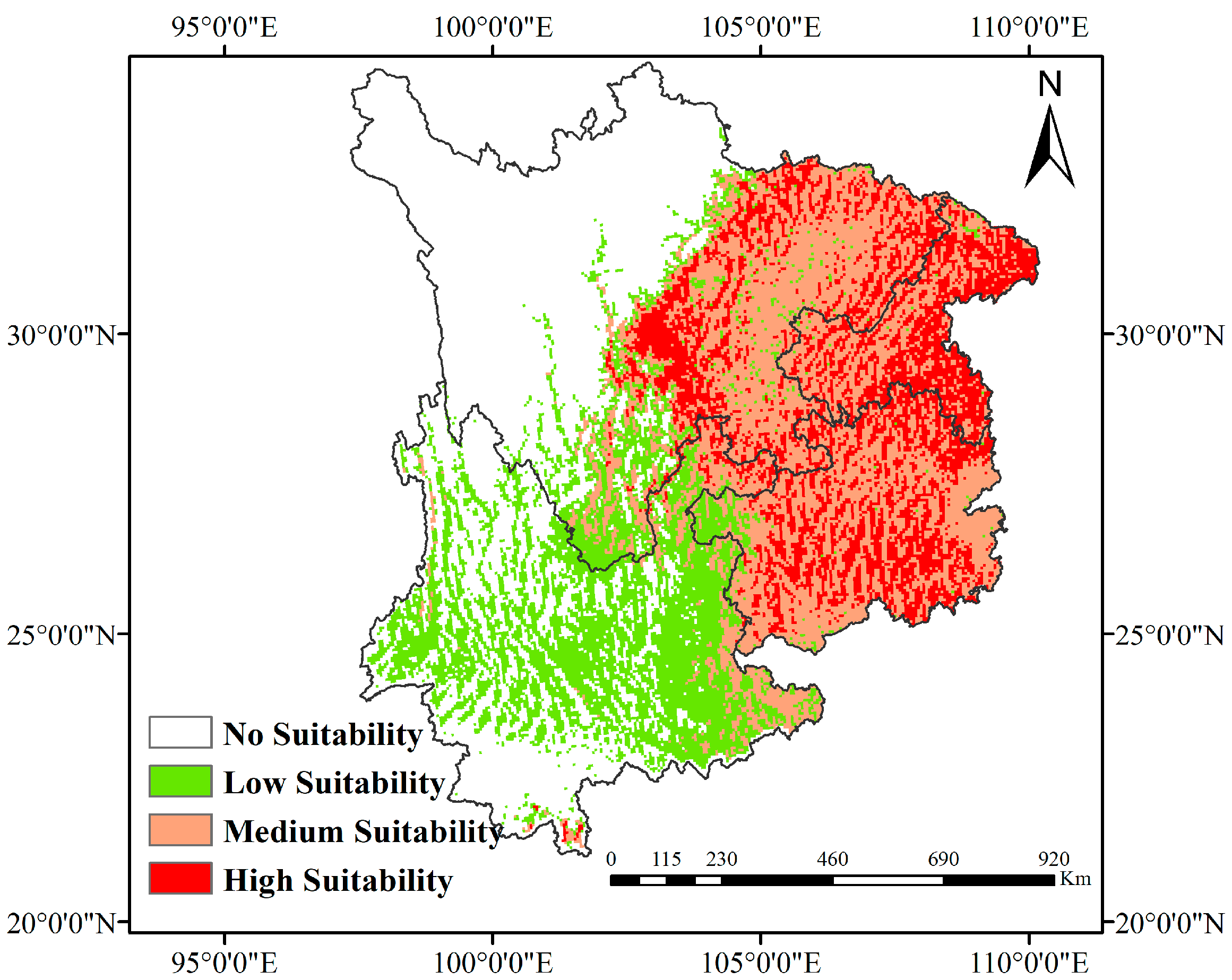
Empirical field data and geospatial analysis (Figure 2) reveal Eucommia ulmoides primarily clusters in mid-elevation valleys (13.9–756 m asl) across Southwest China’s Daba and Wuling mountain systems, with distribution hotspots in central Guizhou and Chongqing municipalities, and marginal occurrences in Yunnan. Ecological niche modeling through MaxEnt3.4.4 integrated with ArcGIS10.8 spatial analysis (Figure 6) identifies the optimal habitats under current bioclimatic conditions as the following: mid-elevation zones (400–1200 m) of the Dabashan karst valleys; moderately elevated plateaus (600–1500 m) in Guizhou’s karst terrain. Moderate suitability areas extend through Sichuan Basin peripheries and eastern Yunnan’s transitional ecotones. These model outputs demonstrate strong congruence with empirical distribution patterns, validating the combined SDM-GIS methodology.
Figure 6.
The potential suitable area for Eucommia ulmoides under current climate conditions.
3.6. Projected Distribution Range of Eucommia ulmoides Under Future Climate Scenarios
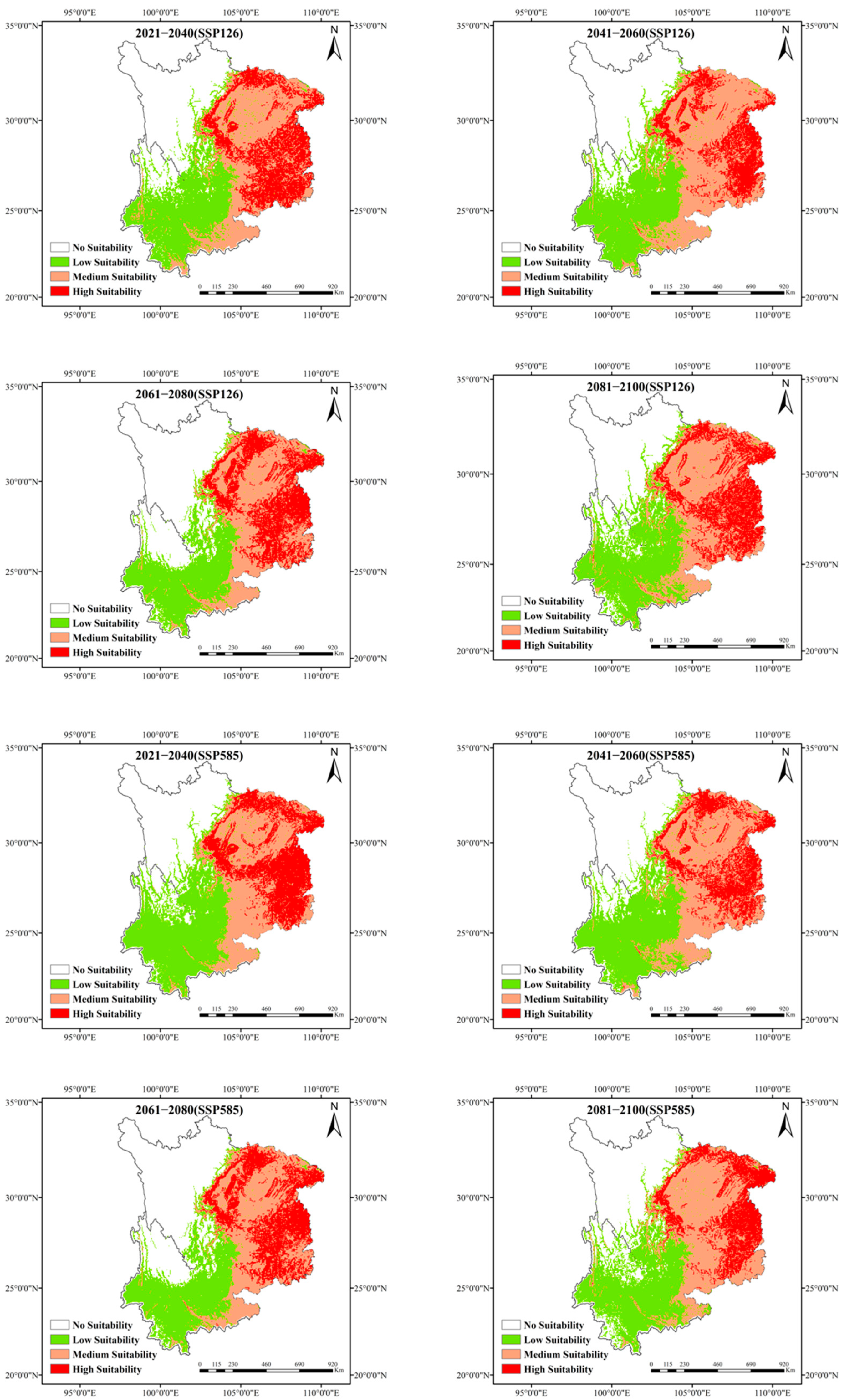
Under the SSP126 climate scenario, Eucommia ulmoides exhibited habitat range expansion, while its high-suitability zones contracted toward mountainous areas in northeastern Guizhou under SSP5-8.5 (Figure 7). Projections indicate the following: low-emission scenario (SSP1-2.6): total suitable habitat increases from 28,931 km2 (current) to 40,643 km2 (2081–2100), with high-suitability areas expanding from 7255 km2 to 10,082 km2; high-emission scenario (SSP5-8.5): total habitat continues growing, but high-suitability zones decline from 10,633 km2 (2061–2080) to 8594 km2 (2081–2100), showing irregular 20-year fluctuation patterns (Table 4).
Figure 7.
Projected suitable habitat range of Eucommia ulmoides under future climate conditions.
Table 4.
Suitable habitat area of Eucommia ulmoides in Southwest China under future climate scenarios.
3.7. Centroid Shift of Eucommia ulmoides Distribution in High-Suitability Regions Under Future Climate Scenarios
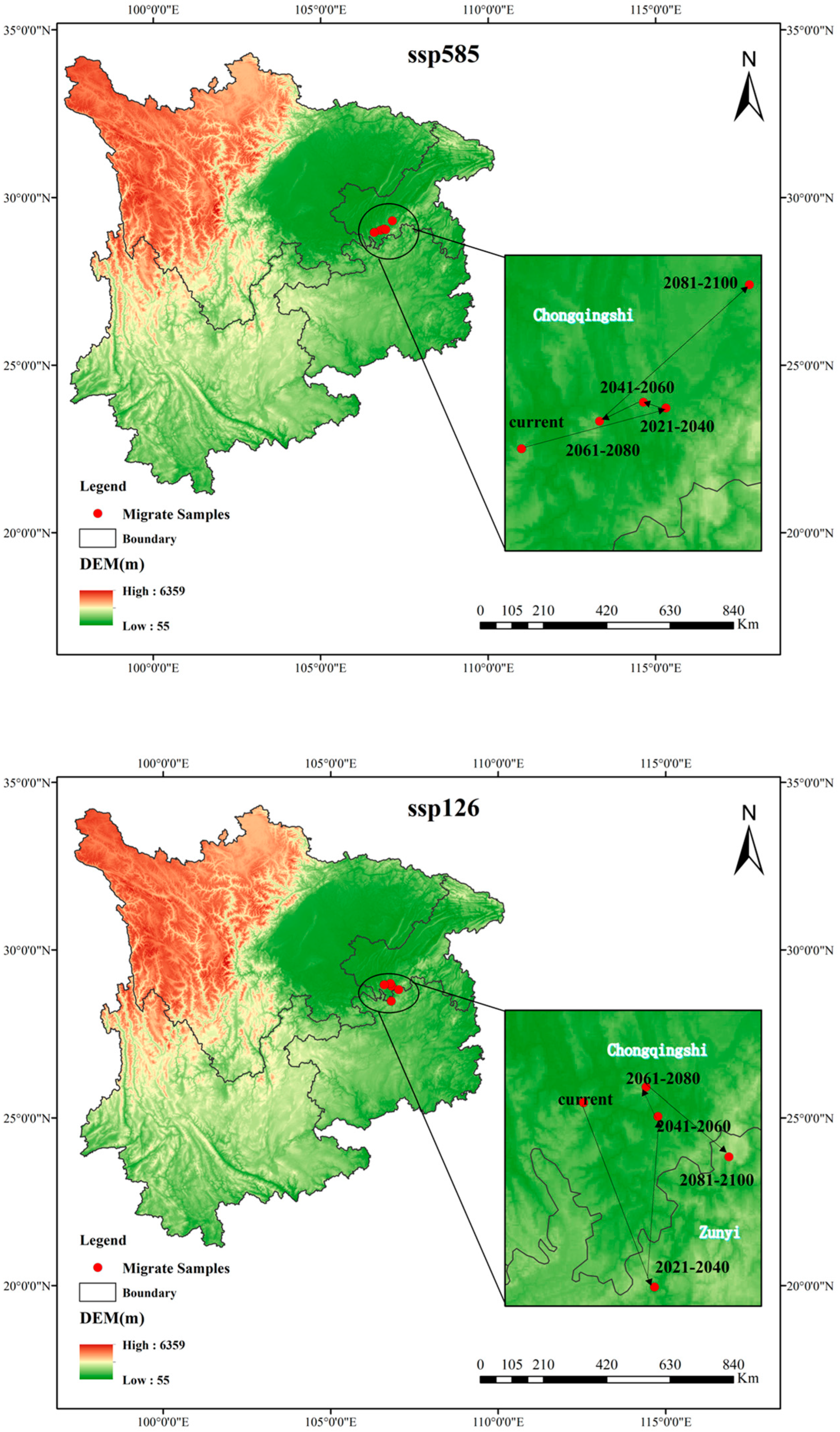
Eucommia ulmoides will exhibit minor range centroid shifts under future climate scenarios (Figure 8). Current high-suitability core areas are centered in Chongqing Municipality. Climate projections indicate the following: low-emission scenario (SSP1-2.6): the centroid shifts southwest toward lower latitudes, relocating from Chongqing to Zunyi County; high-emission scenario (SSP5-8.5): the habitat core demonstrates northward movement to higher latitudes.
Figure 8.
Geographic centroid displacement of high-suitability zones for Eucommia ulmoides under future climate conditions.
4. Discussion
4.1. Response of Potential Suitable Areas for Eucommia ulmoides to Climate Change in Southwest China
Climatic analysis reveals Eucommia ulmoides exhibits optimal growth in low-mountain ecosystems (300–500 m asl), particularly in valley slopes with sparse forest cover, under annual precipitation regimes of 400–1500 mm and mean temperatures of 11.0–18.0 °C [41]. However, cultivation remains contraindicated in hydromorphic soils with poor drainage or saline–alkaline substrates [23].
Southwestern China exhibits pronounced climatic heterogeneity, with tropical/subtropical monsoon systems dominating southeastern sectors contrasting northwestern plateau montane regimes [42,43]. Under anthropogenic warming (1961–2008), plateau regions experienced accelerated winter thermal anomalies (+1.2 °C/decade, p < 0.05), while basin and hilly landscapes showed moderated warming trends (ΔT < 0.3 °C/decade). Precipitation patterns demonstrate a marked west–east gradient, ranging from 1600 mm annual accumulation in eastern Qinghai–Tibet Plateau to <800 mm in western Sichuan Plateau, with transitional zones in SW/NE Guizhou exceeding 1300 mm [44,45].
4.2. Projected Response of the Potential Habitat Area of Eucommia ulmoides in Southwest China to Future Climate Scenarios
Recent decades have witnessed substantial transformations in terrestrial ecosystems, characterized by widespread forest clearance and grassland deterioration, coupled with demographic expansion, urban sprawl, and escalating environmental contaminants, collectively exacerbating greenhouse gas emissions and planetary warming trends [46,47]. Climatic modeling indicates that thermal elevation may amplify atmospheric moisture retention, hasten cryosphere destabilization (encompassing glaciers and permafrost), augment oceanic level rise, and amplify evapotranspiration rates. Furthermore, modifications in hydrologic regimes are predicted to induce temporal–spatial redistribution of precipitation events [48]. Under ongoing climatic warming scenarios, meteorological projections suggest a pronounced escalation of persistent climatic anomalies in southeastern Southwest China from 2025 to 2055, contrasted by a significant reduction in such events across the western Sichuan Plateau [49]. Particularly concerning is the projected rainfall deficit spanning Guizhou, Chongqing, and Yunnan provinces, where diminished precipitation could trigger extended aridity periods with detrimental consequences for phytomass development [50].
4.3. The Impact of Climate Change on the Cultivation of Eucommia ulmoides in the Future
As a silviculturally significant species in China, Eucommia ulmoides Oliv. exhibits notable ecological plasticity and broad distribution across diverse habitats [51]. Originating from mountainous ecosystems in southwestern China, its core germplasm reserves are concentrated in the southern Qinling Mountain range, encompassing Sichuan, Guizhou, Hubei, and Hunan provinces [52]. Recent decades have witnessed severe depletion of wild populations due to climatic perturbations exacerbated by anthropogenic overexploitation, necessitating a shift toward anthropogenic cultivation. The National Eucommia Industry Development Plan (2016–2030) issued by the National Forestry Administration designates Guizhou, Sichuan, Hunan, and Jiangxi as priority regions for standardized cultivation. This study employs the MaxEnt 3.4.4 ecological niche model integrated with ArcGIS 10.8 spatial analysis to predict optimal habitat suitability and identify critical environmental determinants (e.g., bioclimatic variables, topographic features), thereby establishing scientific guidelines for standardized cultivation protocols and germplasm resource conservation.
The integration of MaxEnt modeling with ArcGIS spatial analysis provides critical insights into habitat suitability dynamics for Eucommia cultivation in Southwest China. Contemporary climatic conditions delineate optimal habitats (probability > 0.6) within mid–low elevation valleys (13.9–756 m ASL) of central Guizhou, Chongqing metropolitan areas, and the Dabashan–Wulingshan mountain ranges. Multivariate analysis identifies precipitation of the driest month (Bio14, 27.2% contribution), minimum temperature of the coldest month (Bio6, 22.1%), and slope gradient (3%) as dominant bioclimatic determinants. Projections under contrasting climate scenarios reveal divergent trajectories: under SSP126 (low radiative forcing), total suitable areas expand to 40,600 km2 (2081–2100) with centroid migration toward lower latitudes (e.g., Zunyi County), whereas SSP585 (high emissions) precipitates contraction of high-suitability habitats to 8600 km2 accompanied by pronounced northward centroid shifts, underscoring climate-induced spatial heterogeneity in habitat suitability.
These findings inform adaptive silvicultural strategies. Priority conservation zones should target current high-suitability nuclei (e.g., karst landscapes in central Guizhou), implementing optimized cultivation protocols to mitigate drought stress (optimal dry-season precipitation: 12.6–96.5 mm) [53,54,55]. Anticipating centroid migration patterns, climate-resilient cultivation belts spanning southern Chongqing to northeastern Guizhou require establishment, complemented by cold-tolerant cultivar development for marginal zones like the western Sichuan Plateau (cold tolerance threshold: –4 to 6 °C). The altitudinal constraint (<756 m ASL) necessitates the avoidance of high-elevation afforestation while enhancing terrain-specific resource utilization in mid–low elevation hills through microtopographic engineering.
The MaxEnt model exhibits inherent limitations: default parameter selections (e.g., feature classes [FCs], regularization multipliers [RMs]) may elevate model complexity, increasing overfitting risks and reducing prediction accuracy [56]. While optimization via parameter-specific toolkits is feasible, highly complex models paradoxically demonstrate improved species distribution fitting within training zones [57]. Critically, the model lacks universally applicable optimization criteria, necessitating case-specific parameter calibration.
Methodological limitations arising from unmodeled variables (e.g., edaphic properties, anthropogenic land use changes) mandate integration with ground-truthing investigations. Periodic model recalibration (5–10-year intervals) using updated climate datasets enables dynamic recalibration of cultivation schemes, ensuring alignment with evolving bioclimatic realities. The predictive modeling framework integrating MaxEnt and ArcGIS establishes a scientific foundation for Eucommia ulmoides cultivation optimization in Southwest China. Future conservation strategies should prioritize monitoring precipitation variability and thermal regime alterations in core production zones, with coordinated implementation of adaptive silvicultural practices, genotype enhancement through selective breeding, and policy-driven regulatory frameworks to ensure sustainable resource utilization and industrial development.
5. Conclusions
This study employed the MaxEnt 3.4.4 species distribution model integrated with ArcGIS 10.8 to predict the potential habitats of Eucommia ulmoides Oliv. under SSP5-8.5 and SSP126 climate scenarios across four temporal intervals: 2021–2040, 2041–2060, 2061–2080, and 2081–2100. Analysis of geospatial distribution data and environmental variables revealed that current high-suitability habitats (probability >0.6) predominantly cluster in mid–low elevation valleys of the Daba Mountains and mesic zones of karst plateaus. Moderate-suitability areas extend across central Sichuan, eastern Guizhou, and marginally in eastern Yunnan. Optimal growth thresholds were quantified as precipitation of the driest month (12.6–96.5 mm), minimum temperature of the coldest month (−4–6 °C), and elevation range (13.9–756 m), confirming precipitation and thermal regimes as dominant bioclimatic determinants.
Under the high-emission scenario (SSP5-8.5), projections indicate a 23.7% contraction of high-suitability habitats by 2081–2100 compared to current conditions, coupled with a latitudinal migration trend toward higher latitudes. These findings collectively establish an ecological niche framework for guiding resource allocation, notably suggesting targeted afforestation in climate-resilient corridors (e.g., southern Chongqing karst basins) and genotype selection optimized for thermal tolerance gradients. The methodology provides theoretical guidance for sustainable resource utilization and precision cultivation protocols aligned with climate adaptation strategies in subtropical montane ecosystems.
Author Contributions
Conceptualization, Q.L. and L.L.; methodology, L.L.; software, Q.L.; validation, P.S., L.L. and J.X.; formal analysis, S.L.; investigation, Q.L.; resources, L.L.; data curation, Q.L.; writing—original draft preparation, L.L.; writing—review and editing, Q.L.; visualization, J.X.; supervision, P.S.; project administration, S.L.; funding acquisition, S.L. All authors have read and agreed to the published version of the manuscript.
Funding
This research was funded by the “National Natural Science Foundation of China (82260767), National and Provincial Science” and “Technology Innovation Talent Team Cultivation Project of Guizhou University of Traditional Chinese Medicine (No.: Guizhong Medicine TD He Zi [2024] 001)”.
Institutional Review Board Statement
Not applicable.
Informed Consent Statement
Informed consent was obtained from all subjects involved in the study.
Data Availability Statement
The original contributions presented in this study are included in the article. Further inquiries can be directed to the corresponding author.
Conflicts of Interest
The authors declare that they have no competing financial interests or personal relationships that could have appeared to influence the findings reported in this paper.
References
- Yang, Q.; Liu, G.Y.; Yang, Z.F. A novel framework for biodiversity systems analysis in response to climate change and land use transformation. Acta Ecol. Sin. 2024, 44, 871–884. [Google Scholar]
- Wang, P.; Luo, W.; Zhang, Q.; Han, S.; Jin, Z.; Liu, J.; Li, Z.; Tao, J. Assessing the impact of climate change on three Populus species in China: Distribution patterns and implications. Glob. Ecol. Conserv. 2024, 50, e02853. [Google Scholar] [CrossRef]
- Jacobsen, K.H.; E Waggett, C.; Berenbaum, P.; Bayles, B.R.; Carlson, G.L.; English, R.; Guzmán, C.A.F.; Gartin, M.L.; Grant, L.; Henshaw, T.L.; et al. Planetary health learning objectives: Foundational knowledge for global health education in an era of climate change. Lancet Planet. Health 2024, 8, 706–713. [Google Scholar] [CrossRef] [PubMed]
- Pascual, L.S.; Segarra-Medina, C.; Gómez-Cadenas, A.; López-Climent, M.F.; Vives-Peris, V.; I Zandalinas, S. Climate change-associated multifactorial stress combination: A present challenge for our ecosystems. J. Plant Physiol. 2022, 276, 153764. [Google Scholar] [CrossRef]
- Sheng, G.L.; Zheng, M.M.; Xiao, B.; Yuan, J.X. Progress on ancient DNA investigation of Late Quaternary mammals in China. Yi Chuan 2025, 47, 46–57. [Google Scholar] [PubMed]
- Zhang, X.; Fan, Y.; Niu, F.; Lu, S.; Du, W.; Wang, X.; Zhou, X. Impacts of Climate Change on the Potential Suitable Ecological Niches of the Endemic and Endangered Conifer Pinus bungeana in China. Forests 2025, 16, 462. [Google Scholar] [CrossRef]
- Shruti, S.; Trivedi, A.; Chaudhary, K.B.; Ghadiali, J. Global Climate Change and Its Effects on Medicinal and Aromatic Plants: A Review Article. Int. J. Environ. Clim. Change 2024, 14, 149–160. [Google Scholar] [CrossRef]
- Bentley, L.K.; Robertson, M.P.; Barker, N.P. Range contraction to a higher elevation: The likely future of the montane vegetation in South Africa and Lesotho. Biodivers. Conserv. 2019, 28, 131–153. [Google Scholar] [CrossRef]
- Cai, J.Y.; Zhang, M.M.; Su, H.J.; Zhang, H.B. Application of niche model in habitat selection of species. J. Econ. Anim. 2014, 18, 47–52+58. [Google Scholar]
- Wang, X.F.; Duan, Y.X.; Jin, L.L.; Wang, C.Y.; Peng, M.C.; Li, Y.; Wang, X.H.; Ma, Y.F. Prediction of historical, present and future distribution of Quercus sect. Heterobalanus based on the optimized MaxEnt model in China. Acta Ecol. Sin. 2023, 43, 6590–6604. [Google Scholar]
- Jian, S.; Kong, L.; Dou, S.; Han, Y.; Wang, J. Study on the Distribution Range and Influencing Factors of Salix oritrepha Schneid. and Picea crassifolia Kom. in the Watershed of the Yellow River Under Future Climate Models. Forests 2025, 16, 448. [Google Scholar] [CrossRef]
- Thuiller, W.; Guéguen, M.; Georges, D.; Bonet, R.; Chalmandrier, L.; Garraud, L.; Renaud, J.; Roquet, C.; Van Es, J.; Zimmermann, N.E.; et al. Are different facets of plant diversity well protected against climate and land cover changes? A test study in the French Alps. Divers. Distrib. 2019, 25, 1077–1090. [Google Scholar] [CrossRef] [PubMed]
- Phillips, S.J.; Anderson, R.P.; Dudík, M.; Schapire, R.E.; Blair, M.E. Opening the black box: An open-source release of Maxent. Ecography 2017, 40, 887–893. [Google Scholar] [CrossRef]
- Ma, F.; He, M.; Wang, M.; Chu, G.; Yang, Z.; Luo, C.; Zhou, M.; Hui, Y.; Ding, J. Assessing Habitat Suitability for Hippophae rhamnoides subsp. turkestanica Amid Climate Change Using the MaxEnt Model. Forests 2025, 16, 468. [Google Scholar] [CrossRef]
- Wang, J.; Cheng, J.; Zhang, C.; Feng, Y.; Jin, L.; Wei, S.; Yang, H.; Cao, Z.; Peng, J.; Luo, Y. Prediction of the Future Evolution Trends of Prunus sibirica in China Based on the Key Climate Factors Using MaxEnt Modeling. Biology 2024, 13, 973. [Google Scholar] [CrossRef]
- Shi, W.J.; Zhang, D.F.; Guo, X.D. Analysis and prediction of suitable areas of Malus sinensis in the context of climate change. J. Qinghai Univ. 2023, 41, 24–31+47. [Google Scholar]
- Zhang, H.; Zhang, X.; Zhang, G.; Sun, X.; Chen, S.; Huang, L. Assessing the quality ecology of endemic tree species in China based on machine learning models and UPLC methods: The example of Eucommia ulmoides Oliv. J. Clean. Prod. 2024, 452, 142021. [Google Scholar] [CrossRef]
- Cui, X.P.; Yan, B.B.; Zhang, X.B.; Peng, Z.; Guo, X.Z.; Sun, J.H.; Zhan, W.L.; Yang, H.J.; Zhang, Y.; Guo, L.P.; et al. Discussion on Ecological Planting of Eucommia ulmoides and Its Enlightenment to Development of Health Industry. Mod. Chin. Med. 2022, 24, 905–912. [Google Scholar]
- Cui, W.; Li, Y. A new historical opportunity for the development of Eucommia industry was published in The National Eucommia ulmoides Industry Development Plan (2016–2030). China For. Ind. 2017, 30–33. [Google Scholar]
- Xiang, Z.; Li, H.; Shen, X.; Lin, H.; Peng, C.; Wang, W.; Yu, H. Chemical Constituents, Pharmacological Effect, and Product Development of Eucommia ulmoides with Both Medicinal and Edible Values: A Review. Chin. J. Exp. Tradit. Med. Formulae 2024, 30, 190–202. [Google Scholar]
- Feng, J.; Wang, J.; Chen, M.; Chen, G.; Wu, Z.; Ying, L.; Zhuo, Q.; Zhang, J.; Wang, W. miR-200a suppresses cell growth and migration by targeting MACC1 and predicts prognosis in hepatocellular carcinoma. Oncol. Rep. 2015, 33, 713–720. [Google Scholar] [CrossRef] [PubMed]
- Wang, Q.; Zhou, H.; Zhou, X.; Zhang, Q.; Jia, D.; Lu, X.; Xiao, S.; Zhou, J.; Chen, M.; Zhan, Z. Herbal Textual Research on Eucommiae Cortex in Famous Classical Formulas. Chin. J. Exp. Tradit. Med. Formulae 2023, 29, 88–96. [Google Scholar]
- Duzhong Industry Research Task Group. Current Situation and Prospects of Duzhong Biological Industry Development. China For. Ind. 2022, 11, 18–47. [Google Scholar]
- Liu, P.F.; Wang, L.; Du, Q.X.; Du, L.Y. Estimation of potential suitable distribution area and the ecological characteristics of Eucommia ulmoides Oliv. in China. Acta Ecol. Sin. 2020, 40, 5674–5684. [Google Scholar]
- Cao, G.; Yuan, X.; Shu, Q.; Gao, Y.; Wu, T.; Xiao, C.; Xu, J.; Zhang, Y. Prediction of the potentially suitable areas of Eucommia ulmoides Oliver in China under climate change based on optimized Biomod2 and MaxEnt models. Front. Plant Sci. 2024, 15, 1359271. [Google Scholar] [CrossRef]
- Zeng, J.; Xu, Q.H.; Zhang, Y.; Yang, Z.S. Temporal and Spatial Characteristics of Temperature in Southwest China during the Past Century. J. Chengdu Univ. Inf. Technol. 2022, 37, 412–421. [Google Scholar]
- Zhang, Z.B.; Yang, Y.; Zhang, X.P.; Chen, Z.J. Wind speed changes and its influencing factors in Southwestern China. Acta Ecol. Sin. 2014, 34, 471–481. [Google Scholar] [CrossRef]
- Cao, Y.; Chen, Z.X.; Mo, J.F.; Sun, Y.L.; Yan, H. Study on the spatial-temporal evolution characteristics and driving factors of forest NEP in Southwest China. Acta Ecol. Sin. 2025, 7, 1–15. [Google Scholar]
- Li, T.; Li, L.; Tang, M.; Deng, H. Heterogeneous Impacts of Human Activity Intensity on Regional Ecological Security Patterns. Case Southwest China 2024, 13, 2172. [Google Scholar] [CrossRef]
- Chen, T.; Wang, Y.; Zeng, X.; Wang, Q. Characteristics and the constraint relationship between ecosystem services and vegetation coverage in the Southwest China. Acta Ecol. Sin. 2023, 43, 2253–2270. [Google Scholar]
- Zhao, R.F.; Wang, S.J.; Chen, S.Y. Predicting the potential habitat suitability of Saussurea species in China under future climate scenarios using the optimized Maximum Entropy (MaxEnt) model. J. Clean. Prod. 2024, 474, 143552. [Google Scholar] [CrossRef]
- Song, Y.F.; Chen, F.L.; Chen, H.B.; Ding, Z.T.; Wu, G.Y.; Luo, X.; Huang, S. Future Temperature and Precipitation Trend Analysis and Runoff Simulation in the Kaiduhe River Basin Based on BCC-CSM2-MR Model. Water Resour. Power 2024, 42, 1–5. [Google Scholar]
- Zhang, Y.; Yang, H.; Jiamahate, A.; Yang, H.; Cao, L.; Dang, Y.; Lu, Z.; Yang, Z.; Bozorov, T.A.; Wang, X. Potential Ecological Distribution of the Beetle Agrilus mali Matsumura (Coleoptera: Buprestidae) in China under Three Climate Change Scenarios, with Consequences for Commercial and Wild Apple Forests. Biology 2024, 13, 803. [Google Scholar] [CrossRef]
- Xi, X.-G.; Wu, T.-W.; Zhang, J.; Li, W.-P.; Zhang, Y.-W.; Jie, Y.; Ji, W.-H.; Zhang, L.; Li, X.; Li, J.-L.; et al. Introduction of BCC models and its participation in CMIP6. Clim. Change Res. 2019, 15, 533–539. [Google Scholar]
- Hao, Y.; Dong, P.; Wang, L.; Ke, X.; Hao, X.; He, G.; Chen, Y.; Guo, F. Predicting the Potential Distribution of Hypericum perforatum under Climate Change Scenarios Using a Maximum Entropy Model. Biology 2024, 13, 452. [Google Scholar] [CrossRef]
- Yu, J.; Cao, G.C.; Rong, Z.L.; Li, H.F. Prediction of potential distribution of Ophiocordyceps sinensis in Chain based on Maxent model. Ecol. Sci. 2023, 42, 202–210. [Google Scholar]
- Wang, Y.; Xie, B.; Wan, F.; Xiao, Q.; Dai, L. Application of ROC curve analysis in evaluating the performance of alien species’ potential distribution models. Biodivers. Sci. 2007, 15, 365. [Google Scholar]
- Kang, C.Z.; Wang, Q.Q.; Zhou, T.; Jiang, W.K.; Xiao, C.H.; Xie, Y. Study on Ecological Suitability Regionalization of Eucommia ulmoides in Gui-zhou. J. Chin. Med. Mater. 2014, 37, 760–766. [Google Scholar]
- Msadek, J.; Tlili, A.; Chouikhi, F.; Ragkos, A.; Tarhouni, M. Assessing the Impacts of Climate Change Scenarios on Soil-Adjusted Vegetation Index in North African Arid Montane Rangeland: Case of Toujane Region. Climate 2025, 13, 59. [Google Scholar] [CrossRef]
- Tang, J.M. Activity Rhythm and Potential Distribution Prediction of Silver Pheasant (Lophura nycthemera) in Hunan Province in Hunan Province. Master’s Thesis, Central South University of Forestry & Technology, Changsha, China, 2023. [Google Scholar]
- Xing, Y.F.; He, D.; Wang, Y.; Zeng, W.; Zhang, C.; Lu, Y.; Su, N.; Kong, Y.H.; Xing, X.H. Chemical constituents, biological functions and pharmacological effects for comprehensive utilization of Eucommia ulmoides Oliver. Food Sci. Hum. Wellness 2019, 8, 177–188. [Google Scholar] [CrossRef]
- Xu, B.; Zhu, W.Q.; Li, P.X. Potential distributions of Alsophila spinulosa under different climates in China. Acta Ecol. Sin. 2020, 40, 6105–6117. [Google Scholar]
- Hou, B.; Li, Q.Q.; Yang, Y.R.; Zhang, L.Y. Dynamic change of forest fire with topographic factors in Southwest China from 2003 to 2020 based on MODIS data. Ecol. Sci. 2024, 43, 131–137. [Google Scholar]
- Ye, Z.; Luo, G.G.; Tang, H.Y.; Li, G.; Zhou, H.; Liu, X.R. Analysis of Spatial-Temporal Features of Winter Temperature in Southwestern China. J. Southwest Univ. Nat. Sci. Ed. 2011, 33, 113–119. [Google Scholar]
- Zhang, Q.; Li, Y.Q. Climatic Variation of Rainfall and Rain Day in Southwest China for Last 48 Years. Plateau Meteorol. 2014, 33, 372–383. [Google Scholar]
- Liu, L.; Liang, S.; Xie, C.; Liu, J.; Zheng, Y.; Xue, J. Predicting the Potential Distribution of Aralia chinensis L. (Wild Vegetable) in China Under Different Climate Change Scenarios. Biology 2024, 13, 937. [Google Scholar] [CrossRef] [PubMed]
- Yang, G.A.; Bin, L.I.; Zhen, F.E.; Xiao, Z. Global Climate Change and Geological Disaster Response Analysis. J. Geomech. 2017, 23, 65–77. [Google Scholar]
- Hu, Z.H.; Li, Y.H.; Hu, Y.W.; Wang, Y. Prediction of future change of persistent climate event in Southwest China. J. Meteorol. Sci. 2020, 40, 829–837. [Google Scholar]
- Zhang, J.Y.; Li, Y.; Wang, Y.T.; Li, Z.Y.; Huang, C.R. Impact of Climate Change on Geological Disaster in Southwest China. Plateau Mt. Meteorol. Res. 2020, 40, 70–77. [Google Scholar]
- Sun, Y.; He, M.Z.; Wang, L. Effects of precipitation control on plant diversity and biomass in a desert region. Acta Ecol. Sin. 2018, 38, 2425–2433. [Google Scholar] [CrossRef]
- Zhang, M.; Liang, F.N.; Sun, Y.W.; Han, F.; Zhou, Y.; Rong, Y.F.; Qiu, F.; Ding, L.Q. Research progress on chemical constituents, pharmacological effects and clinical application of Eucommia ulmoides. Chin. Tradit. Herb. Drugs 2023, 54, 4740–4761. [Google Scholar]
- Peng, M.F.; Liu, B.S.; Yan, P.P.; Li, B.X.; Zhang, X.F.; Zheng, Y.; Song, Y.G.; Liu, T.; Yang, L.; Miao, M.S. Review of chemical constituents, pharmacological effects, and quality control status of Eucommiae Cortex and prediction of its Q-markers. China J. Chin. Mater. Medica 2025, 50, 946–958. [Google Scholar]
- Yang, B.Y.; Zhang, T.; Tian, J.Y.; Li, J.Z.; Feng, P. Ecological risk assessment in the Ziya watershed under the influences of land use change and water resource shortage. CATENA 2024, 244, 108255. [Google Scholar] [CrossRef]
- Ren, Y.T.; Zhang, F.; Li, J.P.; Zhao, C.L.; Jiang, Q.S.; Cheng, Z.Q. Ecosystem health assessment based on AHP-DPSR model and impacts of climate change and human disturbances: A case study of Liaohe River Basin in Jilin Province. Ecol. Indic. 2022, 142, 109171. [Google Scholar] [CrossRef]
- Guo, W.W.; Jin, L.; Liu, X.; Wang, W.T. Vulnerability and driving mechanism of four typical grasslands in China under the coupled impacts of climate change and human activities. Sci. Total Environ. 2024, 951, 175560. [Google Scholar] [CrossRef]
- Zhu, G.P.; Qiao, H.J. Impact of MaxEnt model complexity on species potential distribution prediction. Biodivers. Sci. 2016, 24, 1189–1196. [Google Scholar] [CrossRef]
- Radosavljevic, A.; Anderson, R.P. Making better MAXENT models of species distributions: Complexity, overfitting and evaluation. J. Biogeogr. 2014, 41, 629–643. [Google Scholar] [CrossRef]
Disclaimer/Publisher’s Note: The statements, opinions and data contained in all publications are solely those of the individual author(s) and contributor(s) and not of MDPI and/or the editor(s). MDPI and/or the editor(s) disclaim responsibility for any injury to people or property resulting from any ideas, methods, instructions or products referred to in the content. |
© 2025 by the authors. Licensee MDPI, Basel, Switzerland. This article is an open access article distributed under the terms and conditions of the Creative Commons Attribution (CC BY) license (https://creativecommons.org/licenses/by/4.0/).