You are currently viewing a new version of our website. To view the old version click .
Coatings
  • Article
  • Open Access

23 December 2025

Study on the Interface Regulation Mechanism of Rejuvenators on Virgin and Aged Asphalt Based on Molecular Diffusion Theory

,
,
,
and
1
School of Transportation and Geomatics Engineering, Shenyang Jianzhu University, Shenyang 110168, China
2
College of Civil Engineering, Taiyuan University of Technology, Taiyuan 030024, China
*
Author to whom correspondence should be addressed.
This article belongs to the Special Issue Surface Treatments and Coatings for Asphalt and Concrete

Abstract

To address the issue of inefficient interfacial diffusion between virgin asphalt and the aged asphalt in Reclaimed Asphalt Pavement (RAP), this study investigates how a rejuvenator improves the interfacial blending behavior and restores the functional properties of aged asphalt. Molecular dynamics (MD) simulations were employed to construct aged asphalt–rejuvenator models with varying rejuvenator contents and to establish a bilayer dynamic model of the virgin-aged asphalt–rejuvenator diffusion system. The kinetic characteristics of the diffusion process were analyzed based on system density and relative concentration profiles, while the mean square displacement (MSD) and diffusion coefficients were calculated to elucidate the diffusion mechanism. The accuracy of the MD simulation results was validated using Fourier Transform Infrared Spectroscopy (FTIR) and Differential Scanning Calorimetry (DSC), and the regulatory mechanism of the rejuvenator on the interfacial diffusion between virgin and aged asphalt was revealed at the microscopic scale. The results demonstrated that the addition of the rejuvenator effectively promotes the blending and diffusion at the virgin-aged asphalt interface. Specifically, a 6% rejuvenator significantly improved the diffusion efficiency at elevated temperatures, optimized system density toward virgin asphalt properties, and achieved the most uniform molecular distribution, thereby facilitating balanced intermolecular interactions. Meanwhile, the regenerant effectively restored the aromatic fraction content, reduced polar functional groups such as sulfoxide, and significantly lowered the glass transition temperature (Tg), thereby enhancing the low-temperature crack resistance and overall mechanical performance of RAP.

1. Introduction

Asphalt pavements are widely used in highways and urban infrastructure due to their excellent durability, smooth surface, and resistance to wear. However, with the continuous increase in traffic loads and the effects of complex climatic conditions, asphalt pavements inevitably undergo deterioration. It has been estimated that approximately 30% of road surfaces in China exhibit varying degrees of damage, with the majority of the damage occurring to asphalt pavements. To address this issue, milling techniques have been employed to repair damaged pavements, generating a large amount of reclaimed asphalt pavement (RAP) in the process, which enables the recycling of resources. According to recent estimates, China generates nearly 150 million tons of RAP annually from pavement milling and rehabilitation activities [1]. Simultaneously, as high-quality coarse aggregates become increasingly scarce, the recycling and reuse of RAP are regarded as both economically and environmentally advantageous. Against this background, research has focused on the macroscopic properties and mix design optimization of RAP in asphalt mixture [2,3], alongside investigations into its physical and chemical properties. As the demand for recycled RAP [4] and its quality continues to increase, studying recycled asphalt from a microscopic molecular perspective can help clarify the mechanism of asphalt recycling, improve recycling efficiency, and enhance quality. This method provides a theoretical foundation for strengthening the internal structure of modified asphalt materials and refining rejuvenator formulations in real-world engineering applications.
Natural aging leads to the migration of chemical components and the irreversible degradation of the colloidal structure in RAP asphalt [5,6]. The formation of ketones, sulfoxides, and alcohols during the aging process has been identified as a primary cause of increased brittleness and stiffness in asphalt [7,8], which increases the risk of fatigue cracking in asphalt mixtures. A common practice adopted by transportation departments is to limit the incorporation rate of RAP [9], treating it primarily as a substitute for aggregate. High RAP content necessitates the use of composite regeneration methods, where rejuvenators with low viscosity are applied to restore the rheological behavior of aged asphalt [10,11,12,13,14]. Several factors influence asphalt regeneration, including the type of rejuvenator [15,16], the degree of RAP aging [17], the RAP content [18], and the incorporation technique [19]. Arshad et al. [20] evaluated the rutting resistance of asphalt mixtures containing varying amounts of RAP content through the Hamburg wheel tracking test, demonstrating that adding RAP notably improves the mixture’s performance against high-temperature rutting. Ghabchi et al. [21] confirmed, based on surface free energy methods, that the RAP content is positively correlated with the water resistance of recycled mixtures.
Molecular dynamics (MD) simulations are not constrained by experimental setups or detection methods, providing a robust approach to address gaps in macroscopic testing. From a microscopic perspective, the underlying mechanisms of macroscopic behaviors can thus be revealed. Through the application of Newtonian mechanics, the energy dissipation processes of numerous molecules over time and space are elucidated [22]. Benefiting from powerful and detailed molecular simulation capabilities [23,24,25,26], this study has preliminarily achieved a systematic investigation into the oxidative aging behavior of asphalt [27] and regeneration processes involving aged, virgin, and rejuvenated asphalt [28]. In this context, a comprehensive review by Meng et al. [29] has summarized the applications of this technique in studying the properties of virgin asphalt, modified asphalt, and asphalt mixtures, highlighting that multi-factor integrated analysis will constitute a key direction for future research. Ding et al. [30] utilized MD simulations to explore the diffusion behavior between virgin and aged asphalt, and their findings were corroborated through gel permeation chromatography (GPC). The study demonstrated that the addition of a rejuvenator notably improves the diffusion rate within the aged asphalt matrix. That temperature has a more pronounced effect on the migration of asphaltenes than on resins or aromatics. In addition, Cui et al. [31,32,33,34] emphasized that the diffusion rate of asphalt molecules is closely related to the molecular weights of its various components, making it a critical influencing factor. Among these, saturates exhibit the highest self-diffusion efficiency, followed by aromatics, resins, and asphaltenes. MD simulation methods have been demonstrated to effectively elucidate the diffusion behavior of asphalt molecules to some extent, providing valuable insights and approaches for studying regeneration mechanisms.
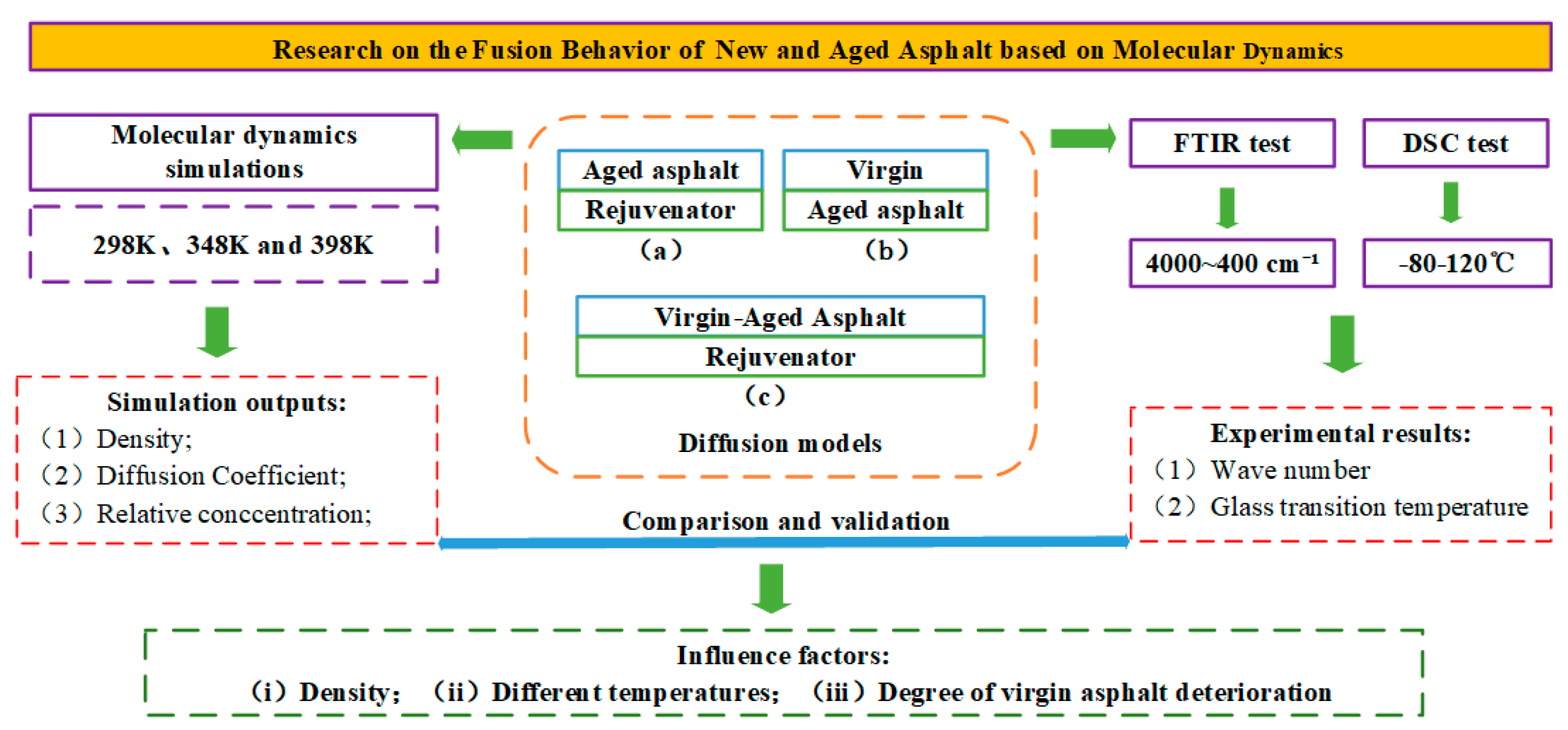
In summary, current research has primarily focused on optimizing the road performance of recycled mixtures by adding rejuvenators, selecting different types of rejuvenators to alter physical and chemical properties, and using MD simulations to model asphalt-aggregate adhesion, asphalt modifier compatibility studies, aging and recycling behavior studies, and asphalt self-healing capacity research. At the same time, there is limited discussion on studies based on molecular diffusion theory regarding the diffusion and fusion interface between virgin and aged asphalt. In particular, the lack of a coupled micro–macro framework linking molecular diffusion characteristics with experimentally observed physicochemical evolution restricts the mechanistic interpretation of rejuvenation efficiency. In this study, a microscopic model of the fusion and diffusion between virgin and aged asphalt was constructed based on molecular diffusion theory. Unlike previous studies, this work explicitly focuses on the formation and evolution of the diffusion interface, quantitatively characterizing molecular mobility and component interaction during the regeneration process. Combined with Fourier transform infrared spectroscopy (FTIR) and differential scanning calorimetry (DSC) tests, the evolution of molecular configurations during the diffusion process and their correlation with macroscopic properties were revealed. The regulatory mechanism of the rejuvenator was elucidated, providing theoretical support for optimizing rejuvenator design and improving RAP performance. The flowchart detailing the simulation and analytical procedures is shown in Figure 1.
Figure 1. Flow chart of MD simulations and experimental analyses.

2. Materials and Methods

2.1. Preparation of Raw Materials and Aged Asphalt

2.1.1. Raw Materials

(a) Virgin Asphalt
To ensure the repeatability and consistency of the experiments, Liaoning 90# virgin asphalt was selected for material preparation. The performance parameters of the asphalt are presented in Table 1.
Table 1. Basic performance indexes of Liaohe Virgin asphalt for penetration 90.
(b) Rejuvenator
Based on previous research conducted by the group, a self-developed bio-inspired and environmentally friendly rejuvenator [35,36] was employed in this study. In previous studies, this rejuvenator has been demonstrated to effectively reduce the stiffness of aged asphalt, enhance low-temperature crack resistance, and improve fatigue performance without significantly compromising high-temperature rutting resistance, indicating its balanced performance in recycled asphalt systems. This rejuvenator exhibits excellent restorative capability for aged asphalt, and its relevant performance indicators are presented in Table 2.
Table 2. Basic performance indexes of the asphalt rejuvenator.
To clarify its chemical composition, the rejuvenator was subjected to elemental analysis using an organic elemental analyzer (EA), with CHNS and O modes applied. The test results indicate that the rejuvenator primarily consists of aromatic organic compounds made up of CHO elements, which is consistent with its intended function of supplementing aromatic fractions and enhancing molecular mobility within aged asphalt. The corresponding data are presented in Table 3.
Table 3. Organic element analysis test results.

2.1.2. Preparation of Aged Asphalt

According to the Specifications for Testing of Asphalt and Asphalt Mixtures for Highway Engineering (JTG E20-2011), the Rolling Thin Film Oven Test (RTFOT) was conducted at 163 ± 0.5 °C. The resulting residue was subjected to Pressure Aging Vessel (PAV) aging at 100 °C and 2.1 MPa for 20 h. Laboratory samples of aged asphalt, both short-term and long-term, were eventually obtained, and their corresponding test results are presented in Table 4. Rejuvenators were added to virgin asphalt, short-term aged asphalt, and long-term aged asphalt at different temperatures, and the mixtures were thoroughly blended to prepare asphalt samples with varying temperatures, rejuvenator contents, and aging levels. Asphalt samples at the same temperature were then selected for subsequent microscopic testing.
Table 4. Basic performance indexes of Aged asphalt.

2.2. Molecular Dynamics Simulation

To gain a deeper understanding of the diffusion behavior between virgin and aged asphalt and rejuvenator molecules, this study introduced molecular dynamics diffusion theory to explore the diffusion mechanism at the molecular level. As a practical approach for studying the microstructure and diffusion characteristics of materials, MD enables the tracking of intermolecular interactions and molecular trajectories within asphalt systems. By constructing diffusion models under varying contents and temperature conditions, the influence of rejuvenators on interface fusion can be quantitatively analyzed, thereby providing theoretical support for optimizing RAP design. To investigate the influence of the actual pavement temperature field, this study selected three characteristic temperatures for simulation analysis. Three temperatures (298 K, 348 K, and 398 K) were selected for the MD simulations to reflect the representative temperature conditions experienced by asphalt materials. Specifically, 298 K corresponds to ambient service conditions, 348 K approximates the warm-mixing temperature range, and 398 K represents elevated construction temperatures where interfacial diffusion is significantly accelerated. This temperature span allows for a comprehensive evaluation of the diffusion behavior under realistic pavement conditions.

2.2.1. Virgin Asphalt Model

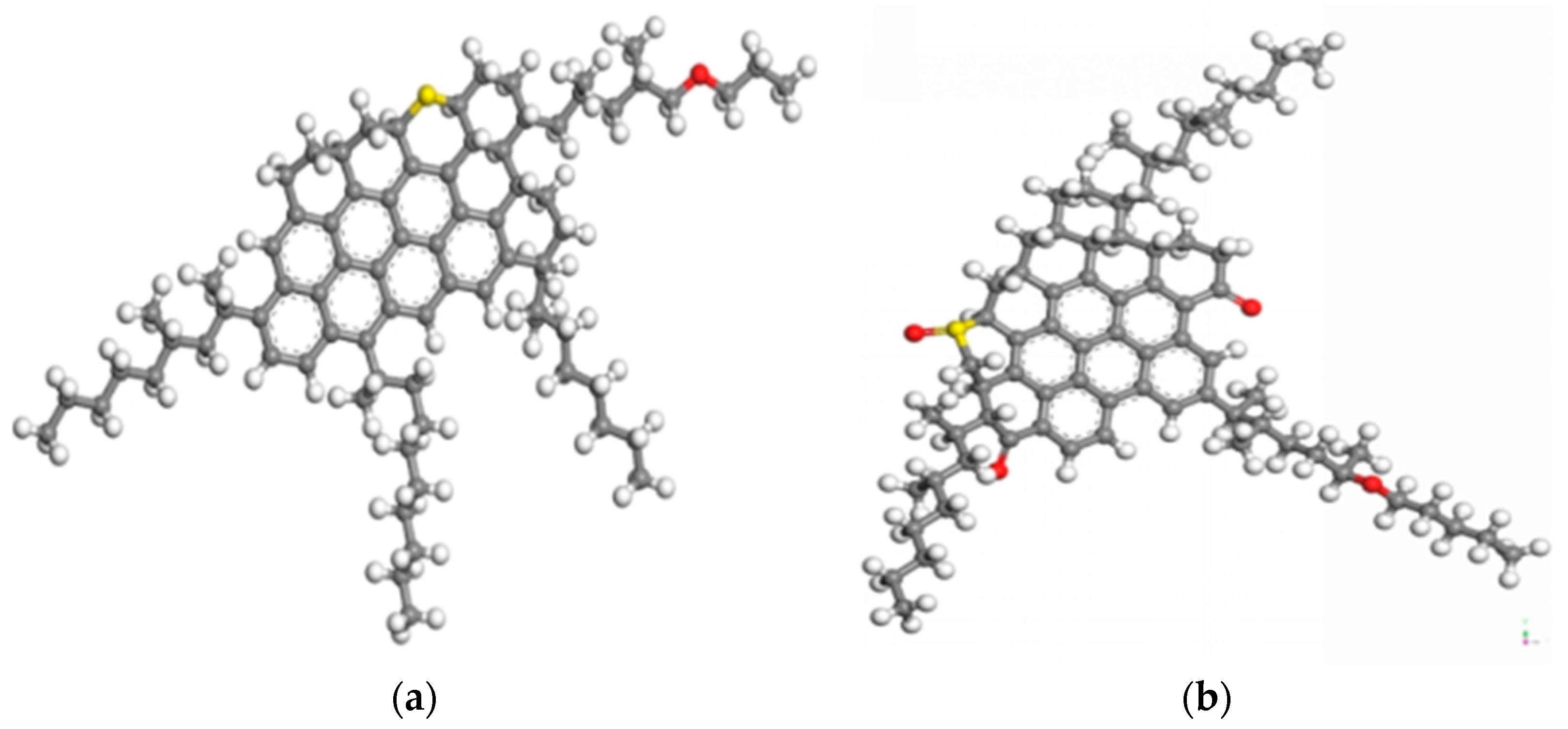
The construction of asphalt molecular models is essential in MD simulation [37,38]. Asphalt is a complex blend primarily consisting of high-molecular-weight hydrocarbons and their oxidized products, and its molecular structure and aging behavior play a vital role in determining RAP performance. However, the considerable differences in chemical composition among various asphalt types make it challenging to construct molecular dynamics models that fully reflect the actual molecular makeup of asphalt. This paper models virgin asphalt based on the average molecular structure model of asphalt proposed by Sun [39]. Subsequently, aged asphalt molecular models and diffusion fusion models were established for aged asphalt, and these were compared with those of virgin asphalt. The specific structural parameters of the molecular models are listed in Table 5. Models corresponding to PEN20 and PEN100 grades were selected for modeling, with their structural parameters shown in Table 6. Utilizing the structural parameters of the selected molecules, the molecular structure of virgin asphalt was established. The corresponding average molecular model is depicted in Figure 2a.
Table 5. Structural parameters of the asphalt molecular model.
Table 6. Average molecular model structural parameters of PEN20 and PEN100.
Figure 2. Construction of molecular models: (a) Virgin asphalt; (b) Aged asphalt (C75H100O4S).

2.2.2. Aged Asphalt Model

Prolonged environmental exposure induces irreversible changes in asphalt, including oxidative aging, depletion of volatiles, migration of light components into aggregates, and thermally induced structural stiffening. In the blending process between virgin and aged asphalt, oxidative aging is typically recognized as the dominant mechanism. This reaction facilitates the development of polar functional groups containing oxygen within asphalt molecules, ultimately resulting in the hardening of the asphalt through oxidation. Therefore, the aged asphalt model was developed by introducing sulfoxide (S=O) and ketone (C=O) groups to simulate the oxidative aging process, reflecting the chemical changes in sulfides and benzylic carbons oxidizing into polar functional groups [40]. The molecular structure is shown in Figure 2b. Notably, the aged asphalt model was derived directly from the virgin asphalt molecular framework by introducing oxygen-containing functional groups, ensuring structural continuity between the two models. This modeling strategy enables a direct comparison of molecular diffusion behavior and intermolecular interactions before and after aging, and has been commonly adopted in previous MD studies on asphalt aging and rejuvenation [41,42].

2.2.3. Rejuvenator Model

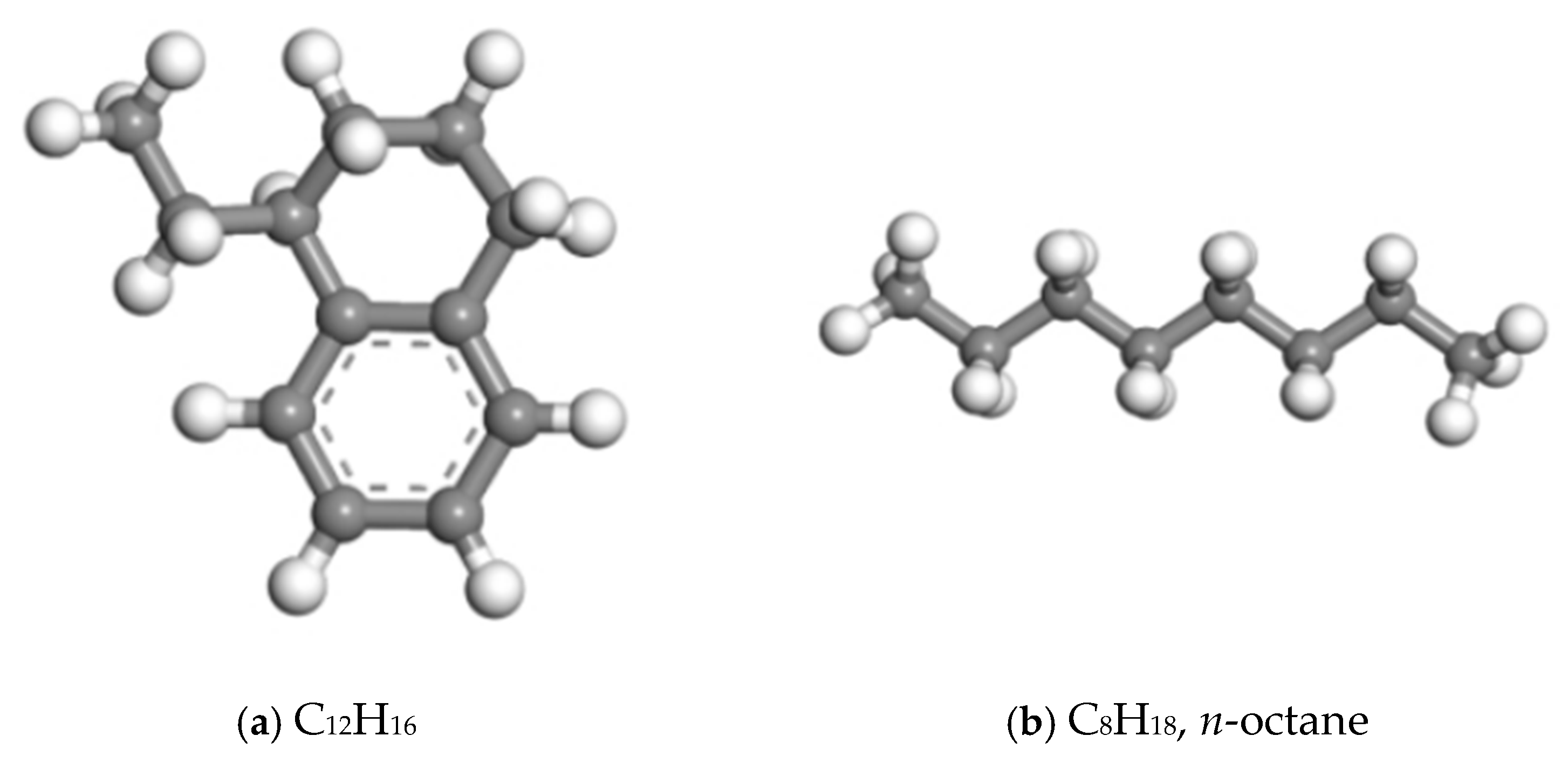
Since the effects of rejuvenators vary depending on their types, their diffusion behaviors at the molecular level also differ. By altering the ratio of light to heavy components in asphalt, rejuvenators can consequently influence its performance. According to the component adjustment theory, light fractions in aged asphalt tend to transform into heavier ones during aging, resulting in an increase in viscosity due to the higher molecular weight and rigidity of the heavier components. To regulate the proportion of light components, the rejuvenator model was designed with two representative molecules: aromatics (C12H16) and saturates (C8H18, n-octane). Their molecular structures are illustrated in Figure 3.
Figure 3. Rejuvenator molecular model.

2.2.4. Bilayer Asphalt Diffusion Model Under the Effect of Rejuvenator

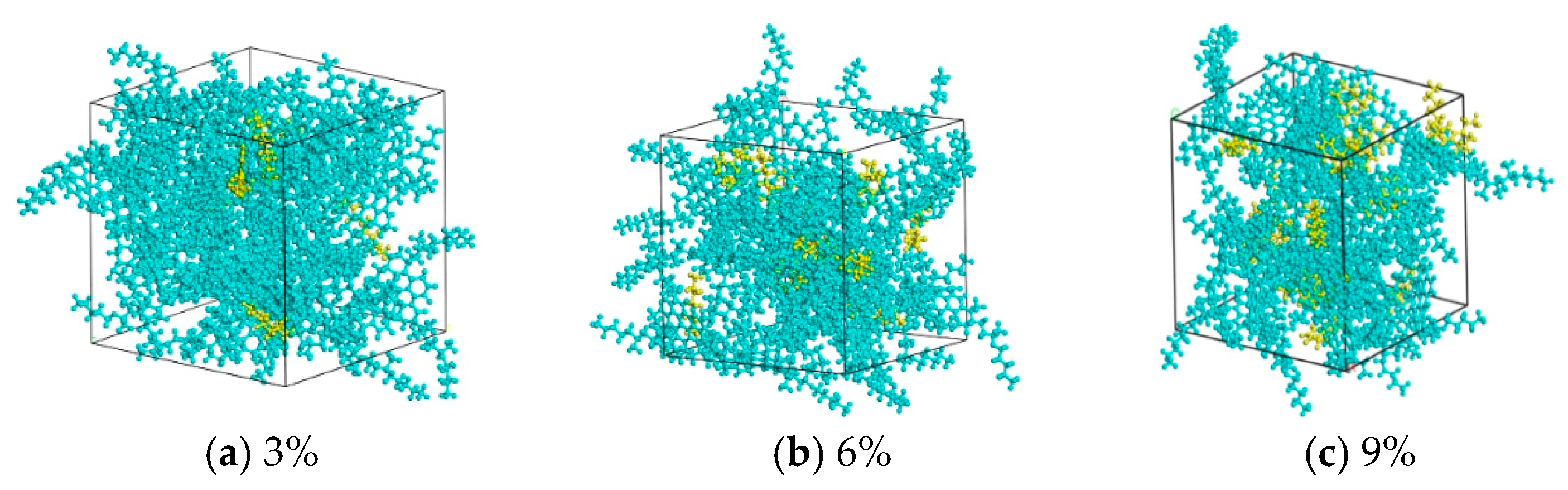
To elucidate the molecular contact diffusion mechanisms at the interfaces of different asphalt types, three diffusion models were constructed in Materials Studio (MS), namely aged asphalt–rejuvenator, virgin–aged asphalt, and virgin–aged asphalt–rejuvenator systems. By employing the Amorphous Cell module in MS, diffusion models of aged asphalt and rejuvenator were constructed with rejuvenator mass fractions of 3%, 6%, and 9%, by adjusting the number of rejuvenator molecules. The COMPASS force field was then applied to perform geometry optimization and system relaxation of the amorphous cells, thereby obtaining stable aged asphalt–rejuvenator diffusion models, as shown in Figure 4.
Figure 4. Aged asphalt and rejuvenator crystal cell model.
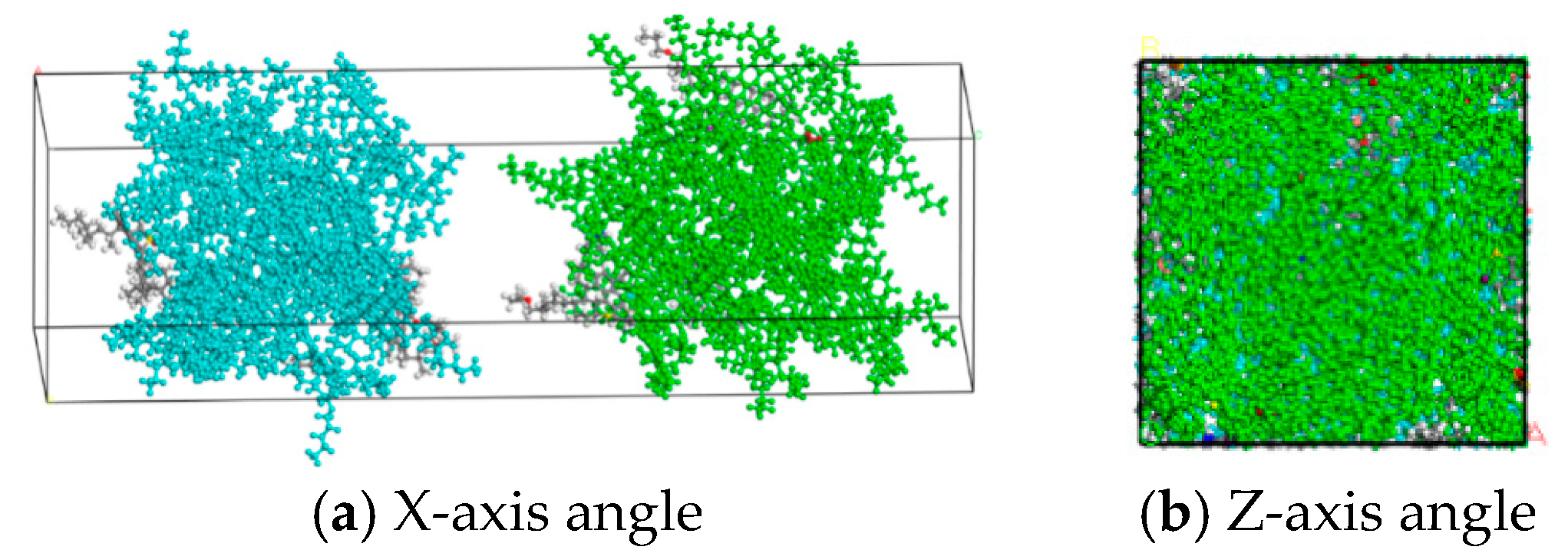
Meanwhile, following geometry optimization and annealing treatments performed on the obtained virgin asphalt crystal cell model and aged asphalt models with varying rejuvenator contents, an NPT ensemble was applied under a standard atmospheric pressure of 0.0001 GPa. Subsequently, the Build Layer module in MS was used to construct bilayer diffusion models of virgin–aged asphalt and virgin–aged asphalt–rejuvenator systems with varying rejuvenator contents. The corresponding models are shown in Figure 5 and Figure 6.
Figure 5. Virgin and aged asphalt double-layer contact diffusion model.
Figure 6. Double-layer diffusion model of virgin, aged asphalt and rejuvenator.

2.3. Microscopic Experimental Validation

2.3.1. Characteristic Functional Group Analysis

The tests were conducted using a Frontier Fourier transform infrared spectrometer manufactured by PerkinElmer in the United States. The test range was 400–4000 cm−1, with 32 scans and a resolution of 4 cm−1. FTIR spectroscopy was used to characterize the chemical functional groups in asphalt both qualitatively and quantitatively, elucidating the compositional effects on self-healing performance. The absorption characteristics of key functional groups reflect variations in molecular structure and chemical composition. The influence of functional group composition and content on the self-healing performance of asphalt was assessed by analyzing the ratios of characteristic peak areas, as outlined in Equations (1)–(3).
I n = A n A
where In denotes the peak area of the selected absorption band, An corresponds to the calculated peak height area, and ∑A represents the total quantified peak area.
I C O = A ( 1600 ) A ( 1460 ) + A ( 1375 )
I S O = A ( 1030 ) A ( 1460 ) + A ( 1375 )
where A represents the area of the absorption peak near the wavenumber corresponding to the functional group in the infrared spectrum.

2.3.2. Glass Transition Temperature

The Tg of asphalt was measured using a Q20 DSC instrument manufactured by TA Instruments, USA. The obtained data were used to analyze the changes in aging characteristics and low-temperature performance after rejuvenation, thereby confirming the reliability of the asphalt molecular model. The test procedure involved heating from 30 °C to 120 °C at a rate of 10 °C/min, holding for 2 min, cooling to −75 °C at 10 °C/min, holding for 1 min, and finally reheating to 120 °C at 10 °C/min. The DSC test was conducted over −80 °C to 120 °C to ensure full capture of the glass transition process and thermal evolution of asphalt binders. Asphalt exhibits significant changes in molecular mobility and free volume at low temperatures; thus a wide thermal scanning range is required to accurately identify Tg and characterize thermal responses across the entire low-to-intermediate temperature domain.

3. Results and Discussion

3.1. Molecular Simulation Results

3.1.1. Diffusion Coefficient

At the molecular level, the contact and diffusion behavior between asphalt and rejuvenator can be quantified by mean square displacement (MSD) and diffusion coefficient (D), which serve as evaluation indicators of the rejuvenator’s diffusion capability [43]. MSD characterizes the positional changes of particles over time and is defined as shown in Equation (4).
M S D = 1 n i = 1 n x i ( t ) x i ( 0 ) 2
where xi(0) and xi(t) represent the position vectors of the i-th particle at the initial time and at time t, respectively; n denotes the number of particles, and t is the elapsed time.
D characterizes the diffusion rate of gases or solids, and can be calculated using the Einstein-Smoluchowski equation. Its definition is given in Equation (5).
D = lim t 1 6 t · M S D ( t ) 1 6 k
where xi(0) and xi(t) represent the position vectors of the i-th particle at the initial time and at time t, respectively; n denotes the number of particles; and t is the elapsed time. k represents the slope of the MSD–time curve in the diffusive regime.
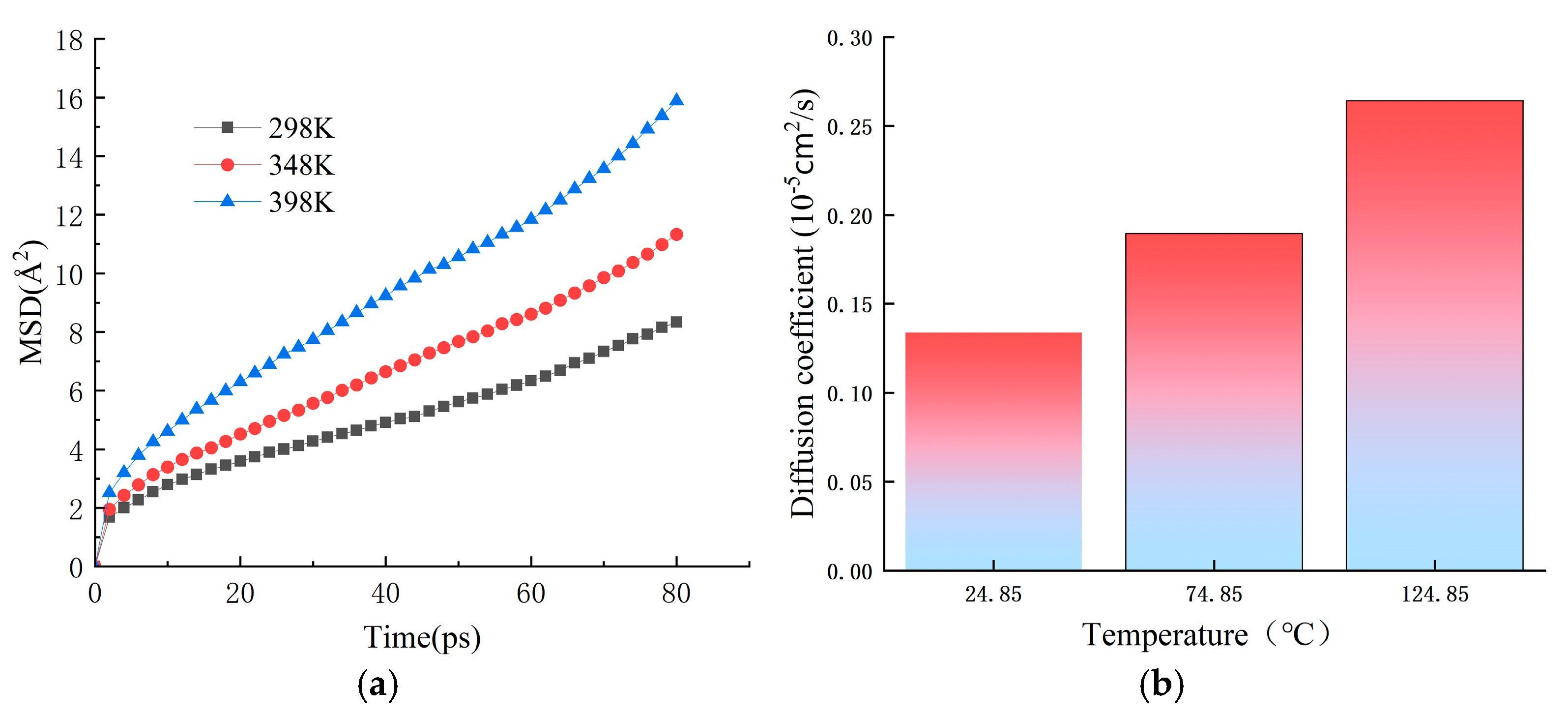
To investigate the effect of temperature on the diffusion coefficient, this study used an aged asphalt- rejuvenator model with a rejuvenator ratio of 3% as the object, adopted the NVT ensemble, and conducted MSD analysis at 298 K, 348 K, and 398 K. Figure 7a substantiates a significant temperature-dependent rise in MSD, confirming that molecular thermal motion intensifies with elevated temperatures to accelerate diffusion. Within the time interval of 0 to 10 ps, the system temperature increased rapidly, accompanied by a swift rise in MSD values; subsequently, the growth of MSD exhibited a gradual deceleration. Although the temperature rise facilitates intermolecular diffusion, prolonged high temperatures may affect molecular cohesion, thereby influencing diffusion efficiency. The diffusion coefficients at various temperatures were calculated by fitting the MSD curves and applying Equation (2). As illustrated in Figure 7b, the aged asphalt–rejuvenator system exhibits a temperature-dependent increase in diffusion coefficient, aligning with the trend of the MSD curve slopes. This temperature-driven enhancement in molecular mobility further confirms that the introduction of the rejuvenator effectively facilitates the diffusion of aged asphalt.
Figure 7. (a) Mean square displacement curves; (b) diffusion coefficient.

3.1.2. Diffusion System Density

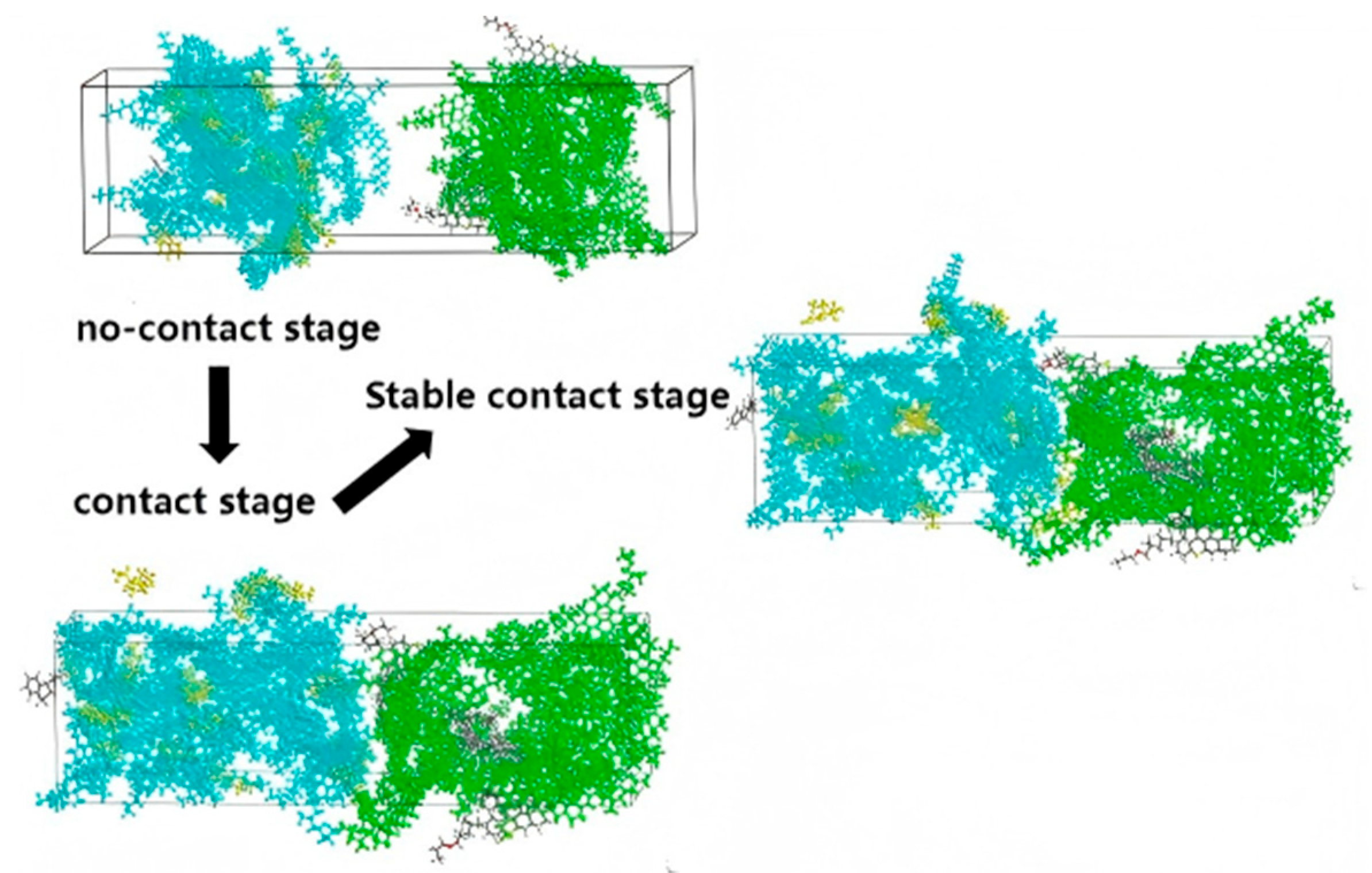
In the bilayer diffusion model, density values can be employed as analytical indicators. The variation in density over time serves as a metric to reflect the evolution of the model’s properties during the dynamic simulation. The density of the virgin–aged asphalt–rejuvenator bilayer system gradually increased with simulation time, reflecting the relationship between the overall system density and molecular internal motion. The simulation process, as reflected by the density profile, consists of three distinct stages: non-contact, initial contact, and stabilized contact. In the non-contact stage, from 0 to 20 ps, the virgin–aged asphalt–rejuvenator bilayer model initially exhibited a relatively large volume and low density. Under the conditions of constant pressure and temperature in the NPT ensemble, the system underwent a gradual volume reduction during the simulation, resulting in a corresponding increase in density. During the contact stage, from 20 to 30 ps, the density of the bilayer system tended to stabilize, indicating that molecules from both phases began to prepare for mutual diffusion. In the stable contact stage, from 30 to 100 ps, the system maintained a stable density while sufficient interdiffusion occurred between the two phases. Although slight fluctuations in density were observed, overall equilibrium was maintained, suggesting that the molecular motions had reached a dynamic balance at this density. The morphological changes in the virgin–aged asphalt–rejuvenator diffusion system at each stage are illustrated in Figure 8.
Figure 8. Model evolution of the bilayer diffusion system under the influence of the rejuvenator.
To assess the impact of rejuvenator content and temperature on system density, the densities of bilayer diffusion models with rejuvenator contents of 0%, 3%, 6%, and 9% were analyzed at temperatures of 298 K, 348 K, and 398 K during the stable contact stage, as shown in Table 7. The results indicated that increasing temperature significantly reduced the system density, thereby promoting molecular diffusion. Elevated temperatures increase molecular thermal motion and enlarge intermolecular spacing, thereby reducing the system density. A further decrease in density occurs with higher rejuvenator content, mainly due to a greater proportion of light components and a lower average molecular weight. At 398 K, the density of the 6% content sample is closest to the original density of the virgin asphalt, indicating that this content maintains the integrity of the system structure while significantly improving the distribution of intermolecular free volume, thereby achieving optimal fusion and diffusion effects. In contrast, while a 9% content further reduces density, the overly loose molecular structure may be detrimental to maintaining mechanical properties. Therefore, a 6% rejuvenator content achieves the optimal balance between high-temperature diffusion and asphalt structural stability.
Table 7. Density table for the stable contact stage of a double-layer model at different temperatures.

3.1.3. Relative Concentration Analysis During Diffusion

Stochastic molecular displacement within the asphalt binder system induced region-specific density fluctuations across the interfacial diffusion region. The presence of a concentration gradient during the diffusion process led to mutual molecular motion within the system. Therefore, relative concentration analysis can be performed for different systems, enabling the evaluation of the molecular density distribution throughout the simulation cell. The calculation method is presented in Equation (6).
ρ r = ρ i ρ t o t a l
where ρr represents the relative concentration of particles at position r within the simulation cell, ρi denotes the local number density of particles around position r, and ρtotal is the total number density of the corresponding particles within the entire simulation cell.
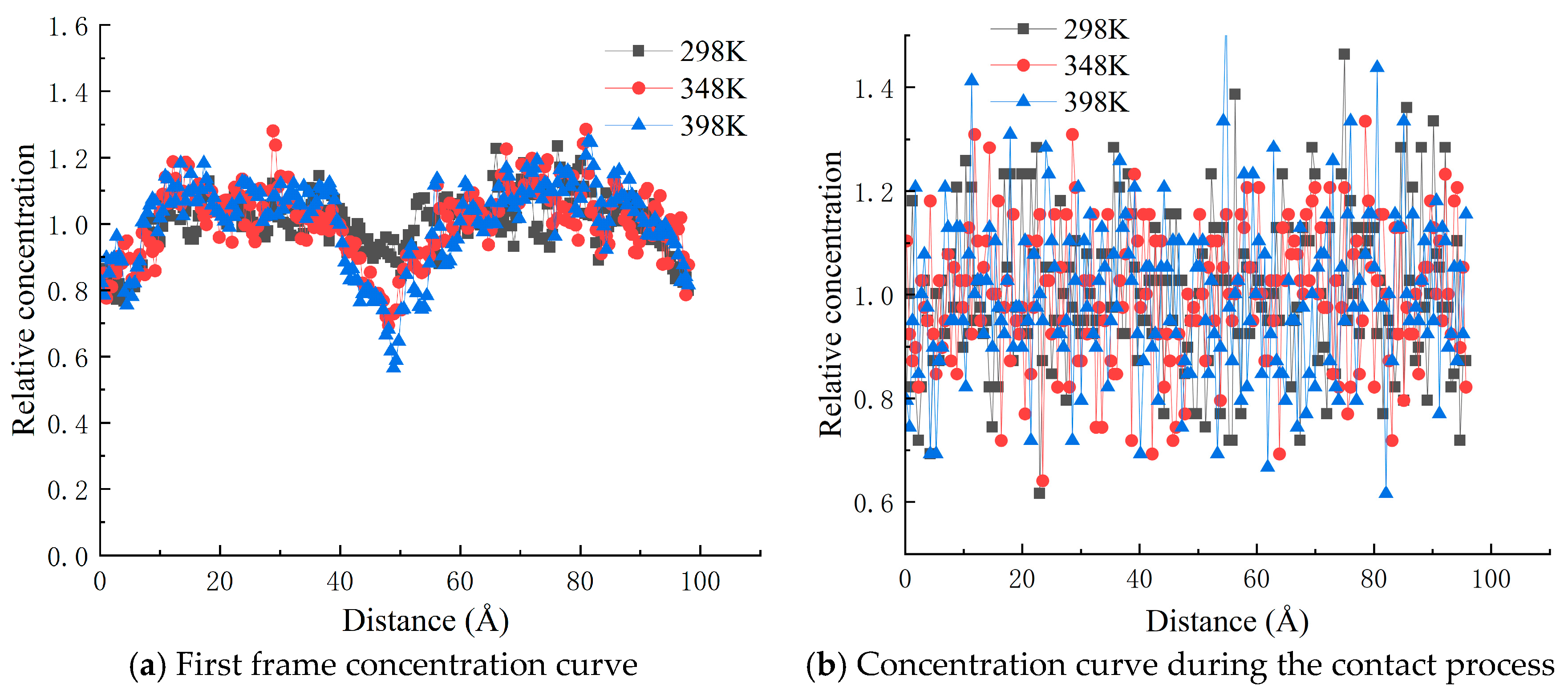
The molecular relative concentration was determined using the Forcite module in MS, with the distribution orientation specified along the Z-axis. Upon sufficient diffusion of the rejuvenator, its spatial distribution along the OX, OY, and OZ directions was assessed through the relative concentration function. Figure 9a illustrates that molecules exhibit an aggregated distribution on both sides of the interface at approximately 50 Å, with the lowest concentration observed at the interface, reflecting the initial separation state between the virgin and aged asphalt. Figure 9b presents the relative concentration distributions of asphalt diffusion along the OX and OY directions during the diffusion process. During the contact process, the concentration gradient was significantly reduced. At 398 K, the molecular distribution along the OX and OY directions became uniform, indicating that elevated temperature facilitated molecular diffusion and interfacial blending. This enhancement is attributed to the increased kinetic energy and reduced viscous resistance of molecules at higher temperatures, which promotes mass exchange across the interface. The convergence trend of the curves at 348 K and 398 K suggests that the rate of diffusion efficiency improvement may decelerate beyond a certain temperature threshold, implying an optimal temperature range for practical thermal mixing. This behavior confirms that elevated temperature effectively overcomes intermolecular interaction barriers, promotes rejuvenator-assisted molecular migration, and accelerates the interfacial diffusion between virgin and aged asphalt.
Figure 9. Concentration distribution curve of virgin and aged asphalt model.
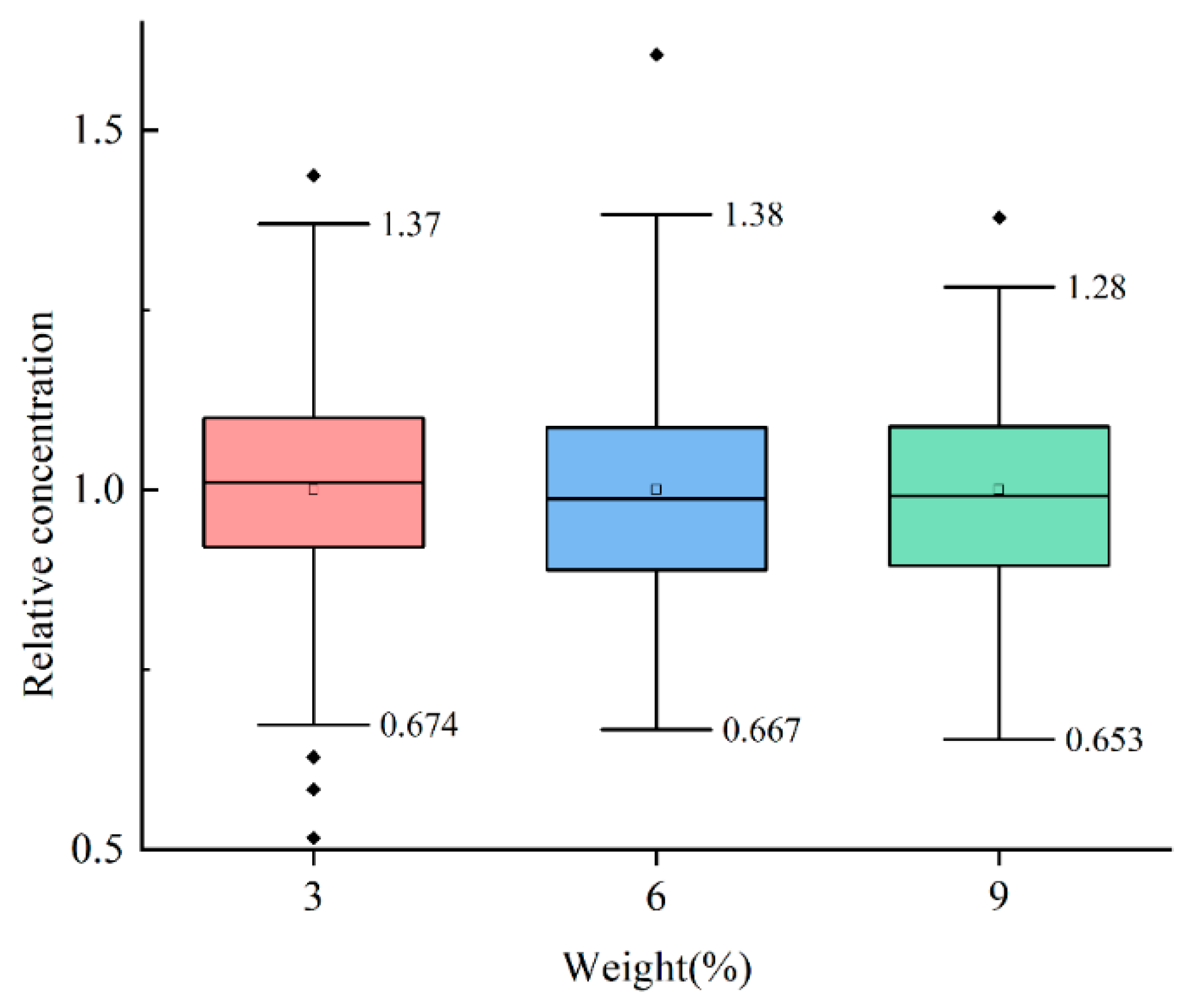
To gain further insight into the impact of rejuvenator content on molecular distribution uniformity, the distribution characteristics of the relative concentration were evaluated using box plots for rejuvenator contents of 3%, 6%, and 9% at 398 K. As illustrated in Figure 10, the 6% rejuvenator content exhibited the lowest dispersion at 398 K, with a notably narrowed whisker range observed in the box plot. This outcome indicates that molecular mobility was enhanced and interfacial blending was optimized under these conditions. Although the 9% rejuvenator content exhibited relatively low dispersion, its concentration distribution showed slight fluctuations, which were attributed to local aggregation caused by an excessive number of light components, thereby weakening the stability of interfacial blending. In contrast, the 6% rejuvenator content achieved an optimal balance between concentration uniformity and interfacial blending efficiency by optimizing the proportion of light components. Its diffusion coefficient and density were superior to those observed at 3% and 9% contents, demonstrating that 6% represents the optimal rejuvenator content. These microscopic changes indicate potential impacts on the macroscopic performance of asphalt, providing a foundation for subsequent experimental analyses.
Figure 10. Box plot of relative concentration during the contact process.

3.2. Fourier Transform Infrared Spectroscopy (FTIR)

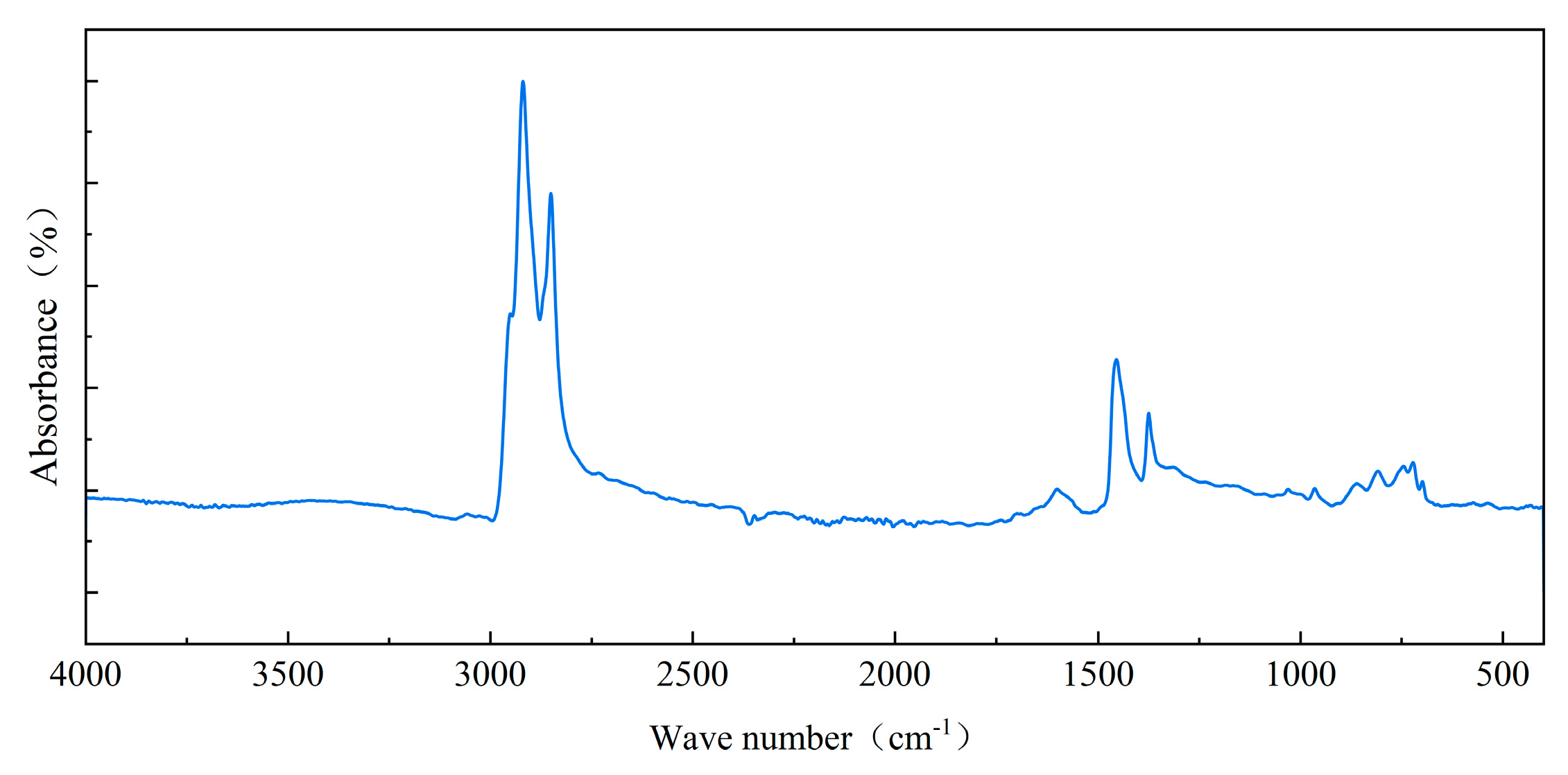
As illustrated in Figure 11, distinct peaks appeared at 2920 cm−1 and 2850 cm−1 in the characteristic spectrum of the asphalt material, mainly corresponding to C–H bonds. The overall intensity of these peaks exhibited minimal variation during the aging process. Within the fingerprint region ranging from 1800 to 500 cm−1, the peak at 1600 cm−1 was attributed to benzene ring vibrations, while those at 1460 cm−1 and 1376 cm−1 were associated with CH2 and CH3 group vibrations, respectively. Additionally, a peak at 1030 cm−1 was assigned to S=O vibrations. This spectral region enabled the quantitative analysis of specific molecular characteristics.
Figure 11. Asphalt material peak.
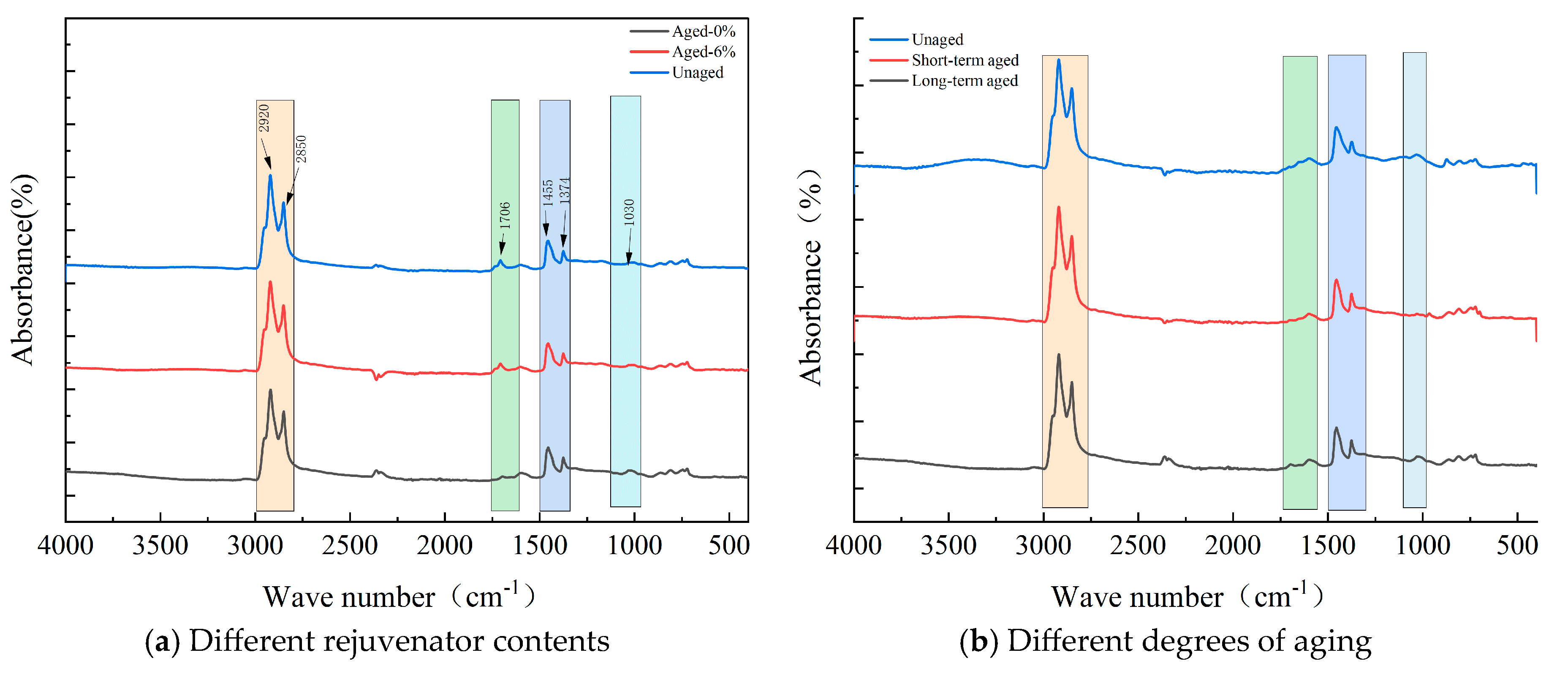
Infrared spectra of asphalt materials with varying rejuvenator contents and aging degrees were plotted, as shown in Figure 12. The different FTIR curves in the figure exhibit similar peaks, indicating that the main functional group types in the system have not changed, with only the peak intensity and peak area varying with the treatment.
Figure 12. FTIR spectrum.
The infrared spectra of samples with varying rejuvenator contents and aging degrees were analyzed. Characteristic peak area indices were derived from Equations (1)–(3), with statistical data compiled in Table 8. The FTIR results indicate that aging significantly degrades the aromatic structures in asphalt, as evidenced by the decreasing trends of A1600 and I1600 values, reflecting the cleavage of the aromatic backbone and enrichment of polar structures. Simultaneously, the content of carbonyl and sulfoxide groups in aged asphalt increased significantly, reflecting an enhanced polarity of the molecular structure, which in turn inhibited the free movement of molecular chain segments. After the addition of 6% rejuvenator, the aromaticity index I1600 increased from 0.019 to 0.021.
Table 8. FTIR characteristic peak area and indicators.
In contrast, the sulfoxide index (ISO) decreased from 0.31 to 0.24, indicating that the rejuvenator effectively alleviated the enrichment of polar functional groups that occurred during the aging process. Combined with the MSD analysis, under the same temperature conditions, the molecular diffusion slope was highest and the migration path was longest at the 6% content. These results demonstrate that the rejuvenator significantly enhances the microscopic diffusion performance of asphalt molecules by reducing the number of polar functional groups and weakening intermolecular interactions. More importantly, the FTIR results provide experimental validation for the molecular diffusion mechanism revealed by the MD simulations. The increase in aromaticity index (I1600) and the reduction in sulfoxide and carbonyl indices indicate that the rejuvenator restores light and aromatic components while suppressing the accumulation of polar functional groups. This chemical evolution weakens intermolecular polarity and hydrogen-bond-like interactions, thereby reducing molecular mobility constraints. These trends are highly consistent with the MD simulation results, in which the 6% rejuvenator system exhibited the highest diffusion coefficient, longest molecular migration paths, and the most uniform relative concentration distribution. Therefore, the FTIR analysis supports the relevance and reliability of the proposed MD-based diffusion model by confirming that the simulated molecular diffusion behavior corresponds to experimentally observed chemical structure regulation.

3.3. Differential Scanning Calorimetry (DSC)

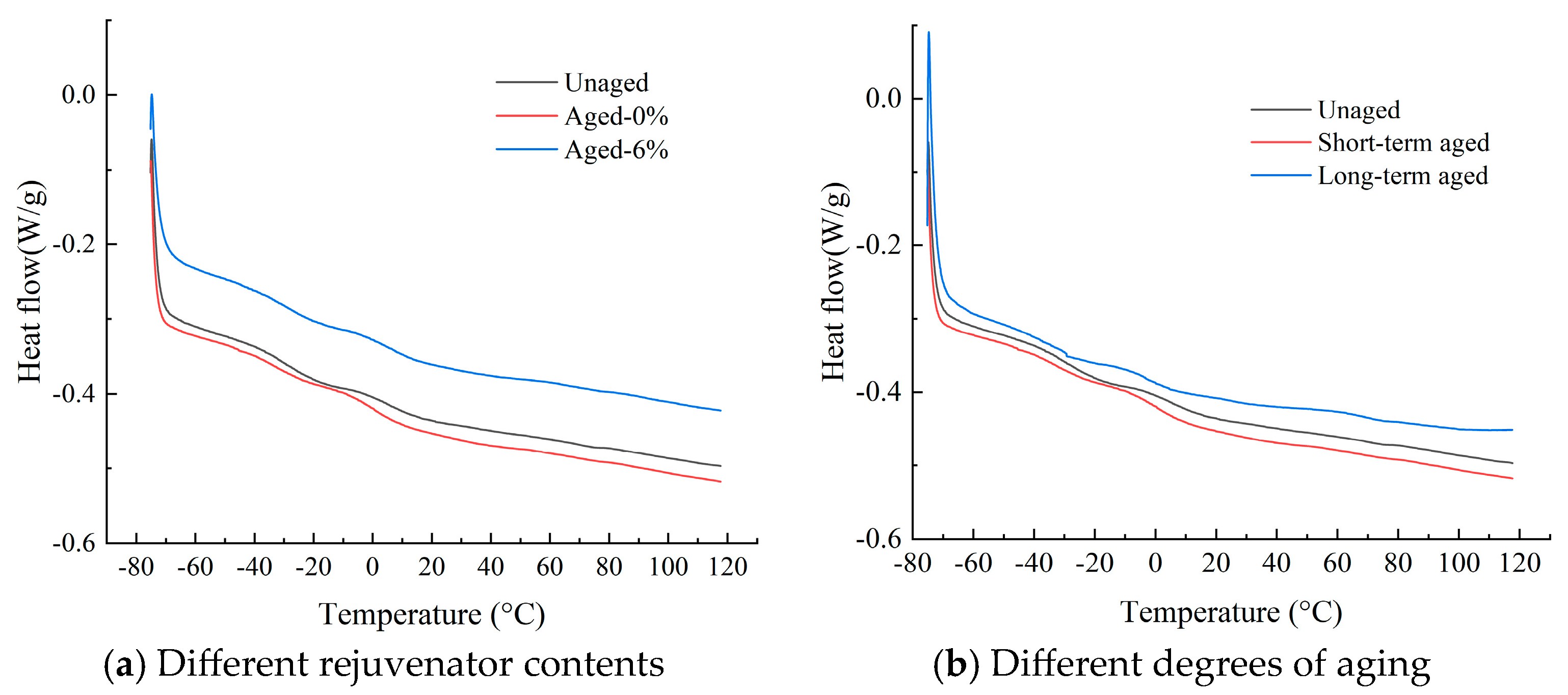
DSC was employed to analyze the Tg of asphalt, reflecting changes in the ratio of saturates to asphaltenes [44]. The Tg values are summarized in Table 9. At the same time, DSC curves for asphalt samples with varying aging degrees and rejuvenator contents are presented in Figure 13. Short-term aging resulted in an increase in Tg to −24.57 °C, indicating the loss of light components and an increase in asphaltenes, which led to the reorganization of the colloidal structure and a tendency toward material brittleness. The addition of 6% rejuvenator reduced the Tg of long-term aged samples to −28.32 °C, approaching the level of the unaged asphalt. This finding is consistent with the diffusion coefficient and lower density observed for the 6% rejuvenator model at 398 K in the simulations, indicating that the replenishment of light components enhances molecular mobility and improves low-temperature performance. These results validate the fusion effects predicted by the simulations and provide a basis for optimizing the low-temperature performance of RAP.
Table 9. Glass transition temperature of the sample.
Figure 13. DSC curves.

4. Conclusions and Recommendations

This study established molecular models representing virgin asphalt, aged asphalt, and rejuvenated asphalt blended with a rejuvenator based on molecular diffusion theory and constructed a bilayer interfacial diffusion system to evaluate the effect of the rejuvenator. The regulatory mechanism of rejuvenator-induced interfacial diffusion was validated through FTIR and DSC tests, thereby forming a verification framework between micro-level mechanisms and macro-scale performance. The main conclusions are as follows:
(1) Under the condition of 398 K, a 6% rejuvenator content significantly enhanced the interfacial diffusion efficiency between virgin and aged asphalt, with the diffusion coefficient reaching 2.643 × 10⁻⁶ cm2/s. The system density stabilized at 0.999 g/cm3, closely aligning with the typical density of virgin asphalt. Furthermore, the reduced fluctuation in the relative concentration profile indicated a more homogeneous molecular distribution, suggesting an optimal coupling between structural stability and diffusion performance. In contrast, 9% content led to local concentration fluctuations due to excessive light components, thereby weakening the interface fusion and further confirming 6% as the optimal content for rejuvenation.
(2) The 6% rejuvenator content significantly enhanced the retention capacity of the aromatic structures, with the aromatic index I1600 increasing to 0.021, while both ISO and ICO significantly decreased. Compared with lower rejuvenator contents, the 6% content supplied sufficient light and aromatic components to restore the molecular balance of aged asphalt, facilitating the performance recovery of aged asphalt through a microscopic mechanism. In contrast, excessive rejuvenator content may introduce local compositional fluctuations, which weaken interfacial stability. These findings are consistent with the simulation results, where interface fusion was enhanced, and the molecular distribution uniformity was improved in the molecular dynamics simulations. The modification mechanism study confirms that the OR-HV-HE modifier and asphalt form a cross-linked network through a free radical copolymerization reaction to delay the breaking of molecular chains.
(3) The incorporation of 6% rejuvenator reduced the Tg of the long-term aged asphalt to −28.32 °C, approaching that of the unaged asphalt and significantly outperforming the long-term aged sample. The introduction of light components in the rejuvenator effectively enhanced the molecular chain mobility and free volume of the asphalt molecules, thereby improving the flowability of the system at low temperatures. At this content, the enhanced molecular mobility improves low-temperature crack resistance without compromising interfacial stability. Higher rejuvenator contents tend to induce excessive molecular mobility, which weakens the synergistic effect between diffusion enhancement and structural integrity. This enhancement in low-temperature crack resistance was consistent with the increased diffusion coefficients and the more uniform molecular concentration distribution observed in the MD simulations, jointly confirming the synergistic mechanism by which the rejuvenator optimizes both low-temperature performance and interfacial compatibility.
(4) MD simulation serves as a practical approach to elucidate the microscopic diffusion and performance mechanisms of asphalt materials. It not only provides theoretical guidance and parameter references for experimental design but also holds promise for reducing the dependence on conventional macroscopic tests in future studies, thereby decreasing testing complexity and cost. This approach enables the identification of suitable rejuvenator contents that balance diffusion efficiency and performance recovery. By constructing rational molecular models and layered diffusion systems, the intrinsic relationships among rejuvenator content, diffusion behavior, and performance evolution can be predicted in advance. This offers methodological guidance and optimization strategies for laboratory testing, ultimately promoting RAP-related research toward higher efficiency, lower consumption, and mechanism-oriented development.


Author Contributions

Writing—review & editing, conceptualization, Y.Y. (Yanhai Yang); Writing—original draft, methodology, data curation, Z.C.; writing—review & editing, methodology, X.J.; writing—review & editing, methodology, Y.Y. (Ye Yang); data curation, software, C.W. All authors have read and agreed to the published version of the manuscript.

Funding

This research was funded by the National Natural Science Foundation of China (Grant No. 52278454), the Project of Department of Education of Liaoning Province (Grant No. LJ232510153003), and the Natural Science Foundation of Liaoning Province for Doctoral Startup (Grant No. 2025-BS-0484).

Institutional Review Board Statement

Not applicable.

Data Availability Statement

Data is contained within the article.

Acknowledgments

This Research was performed at Shenyang Jianzhu University.

Conflicts of Interest

The authors declare no conflicts of interest.

References

  1. Qiao, Y.; Dave, E.; Parry, T.; Valle, O.; Mi, L.; Ni, G.; Yuan, Z.; Zhu, Y. Life Cycle Costs Analysis of Reclaimed Asphalt Pavement (RAP) Under Future Climate. Sustainability 2019, 11, 5414. [Google Scholar] [CrossRef]
  2. Liu, Y.; Yang, J.; Wang, H.; Liu, S.; Fan, Y.; Zhou, Y.; Gong, M.; Huang, W. Energy Consumption and Carbon Emissions of Mixing Plant in Asphalt Pavement Construction with a Case Study in China and Reduction Measures. Case Stud. Constr. Mater. 2025, 22, e04165. [Google Scholar] [CrossRef]
  3. Aguiar-Moya, J.P.; Salazar-Delgado, J.; Baldi-Sevilla, A.; Leiva-Villacorta, F.; Loria-Salazar, L. Effect of Aging on Adhesion Properties of Asphalt Mixtures with the Use of Bitumen Bond Strength and Surface Energy Measurement Tests. Transp. Res. Rec. 2015, 2505, 57–65. [Google Scholar] [CrossRef]
  4. Li, Y.; Guo, X.; Wang, X.; Wang, X.; Xu, J.; Wang, C.; Li, R.; Fang, Z. Investigation on the Survival and Activating Behavior of Rejuvenator-Loaded Fibers in Asphalt Pavement. Constr. Build. Mater. 2025, 475, 141282. [Google Scholar] [CrossRef]
  5. Mirwald, J.; Werkovits, S.; Camargo, I.; Maschauer, D.; Hofko, B.; Grothe, H. Understanding Bitumen Ageing by Investigation of Its Polarity Fractions. Constr. Build. Mater. 2020, 250, 118809. [Google Scholar] [CrossRef]
  6. Caputo, P.; Eskandarsefat, S.; Porto, M.; Loise, V.; Abe, A.A.; Calandra, P.; Venturini, L.; Rossi, C.O. Effect and Mechanism of Rejuvenation of Field-Aged Bitumen Extracted from Reclaimed Asphalt Pavement. Transp. Res. Procedia 2023, 69, 863–870. [Google Scholar] [CrossRef]
  7. Wang, R.; Zhang, G.; Chen, B.; Ma, X. A Multi-Scale Perspective on the Effectiveness of UV and Water Aging on the Interfacial Properties of the Asphalt-Aggregate Systems Modified by Warm Agents/Polymers. Constr. Build. Mater. 2025, 496, 143768. [Google Scholar] [CrossRef]
  8. Petersen, J.C.; Glaser, R. Asphalt Oxidation Mechanisms and the Role of Oxidation Products on Age Hardening Revisited. Road Mater. Pavement Des. 2011, 12, 795–819. [Google Scholar] [CrossRef]
  9. Mokhtari, A.; Bozorgzad, A.; Hasa, E.; Lee, H.D.; Guymon, C.A. Field Implementation of WMA Mixtures Containing Recycled Asphalt Shingles (RAS). Constr. Build. Mater. 2020, 250, 118836. [Google Scholar] [CrossRef]
  10. Ingrassia, L.P.; Lu, X.; Ferrotti, G.; Canestrari, F. Chemical, Morphological and Rheological Characterization of Bitumen Partially Replaced with Wood Bio-Oil: Towards More Sustainable Materials in Road Pavements. J. Traffic Transp. Eng. 2020, 7, 192–204. [Google Scholar] [CrossRef]
  11. Wang, H.; Ma, Z.; Chen, X.; Hasan, M.R.M. Preparation Process of Bio-Oil and Bio-Asphalt, Their Performance, and the Application of Bio-Asphalt: A Comprehensive Review. J. Traffic Transp. Eng. 2020, 7, 137–151. [Google Scholar] [CrossRef]
  12. Pradhan, S.K.; Sahoo, U.C. Performance Assessment of Aged Binder Rejuvenated with Polanga Oil. J. Traffic Transp. Eng. 2019, 6, 608–620. [Google Scholar] [CrossRef]
  13. Yang, Y.; Yang, Y.; Qian, B. Performance and Microstructure of Cold Recycled Mixes Using Asphalt Emulsion with Different Contents of Cement. Materials 2019, 12, 2548. [Google Scholar] [CrossRef]
  14. Yanhai, Y.; Hanbin, W.; Ye, Y.; Huaizhi, Z. Evaluation of the Evolution of the Structure of Cold Recycled Mixture Subjected to Wheel Tracking Using Digital Image Processing. Constr. Build. Mater. 2021, 304, 124447. [Google Scholar] [CrossRef]
  15. Im, S.; Zhou, F.; Lee, R.; Scullion, T. Impacts of Rejuvenators on Performance and Engineering Properties of Asphalt Mixtures Containing Recycled Materials. Constr. Build. Mater. 2014, 53, 596–603. [Google Scholar] [CrossRef]
  16. Qurashi, I.A.; Swamy, A.K. Viscoelastic Properties of Recycled Asphalt Binder Containing Waste Engine Oil. J. Clean. Prod. 2018, 182, 992–1000. [Google Scholar] [CrossRef]
  17. Lo Presti, D.; Carrion, A.J.d.B.; Airey, G.; Hajj, E. Towards 100% Recycling of Reclaimed Asphalt in Road Surface Courses: Binder Design Methodology and Case Studies. J. Clean. Prod. 2016, 131, 43–51. [Google Scholar] [CrossRef]
  18. Mangiafico, S.; Di Benedetto, H.; Sauzeat, C.; Olard, F.; Pouget, S.; Planque, L. New Method to Obtain Viscoelastic Properties of Bitumen Blends from Pure and Reclaimed Asphalt Pavement Binder Constituents. Road Mater. Pavement Des. 2014, 15, 312–329. [Google Scholar] [CrossRef]
  19. Ma, Y.; Hu, W.; Polaczyk, P.A.; Han, B.; Xiao, R.; Zhang, M.; Huang, B. Rheological and Aging Characteristics of the Recycled Asphalt Binders with Different Rejuvenator Incorporation Methods. J. Clean. Prod. 2020, 262, 121249. [Google Scholar] [CrossRef]
  20. Arshad, A.A.; Karim, Z.A.; Shaffie, E.; Hashim, W.; Rahman, Z.A. Marshall Properties and Rutting Resistance of Hot Mix Asphalt with Variable Reclaimed Asphalt Pavement (RAP) Content. IOP Conf. Ser. Mater. Sci. Eng. 2017, 271, 012078. [Google Scholar] [CrossRef]
  21. Ghabchi, R.; Singh, D.; Zaman, M. Evaluation of moisture susceptibility of asphalt mixes containing RAP and different types of aggregates and asphalt binders using the surface free energy method. Constr. Build. Mater. 2014, 73, 479–489. [Google Scholar] [CrossRef]
  22. Tang, Y.; Fu, Z.; Raos, G.; Ma, F.; Zhao, P.; Hou, Y. Molecular Dynamics Simulation of Adhesion at the Asphalt-Aggregate Interface: A Review. Surf. Interf. 2024, 44, 103706. [Google Scholar] [CrossRef]
  23. Pan, J.; Hossain, M.I.; Tarefder, R.A. Temperature and Moisture Impacts on Asphalt Before and after Oxidative Aging Using Molecular Dynamics Simulations. J. Nanomech. Micromech. 2017, 7, 04017010. [Google Scholar] [CrossRef]
  24. Fallah, F.; Khabaz, F.; Kim, Y.R.; Kommidi, S.R.; Haghshenas, H.F. Molecular Dynamics Modeling and Simulation of Bituminous Binder Chemical Aging due to Variation of Oxidation Level and Saturate-Aromatic-Resin-Asphaltene Fraction. Fuel 2019, 237, 71–80. [Google Scholar] [CrossRef]
  25. Yanhai, Y.; Guanliang, C.; Ye, Y.; Liang, Y.; Jian, X. Advances in Salt-Storage Materials, Road and Anti-Freezing Performances of Salt-Storage Asphalt Mixture: A Review. Coatings 2022, 12, 1323. [Google Scholar]
  26. Yanhai, Y.; Baichuan, L.; Ye, Y.; Yumeng, C.; Linlin, Z. Micro-Damage Characteristics of Cold Recycled Mixture under Freeze–Thaw Cycles Based on Discrete-Element Modeling. Constr. Build. Mater. 2023, 409, 136881. [Google Scholar]
  27. Xiao, Y.; Li, C.; Wan, M.; Zhou, X.; Wang, Y.; Wu, S.; You, Z.; Dai, Q.B.; Xiao, F. Study of the diffusion of rejuvenators and its effect on aged bitumen binder. Appl. Sci. 2017, 7, 7040397. [Google Scholar] [CrossRef]
  28. Chen, L.; He, Z.; Chen, H.; Wang, X.; Xiang, H. Rheological Characteristics and Molecular Dynamics Simulation of Interface Regeneration Between Virgin and Aged Asphalts. China J. Highway Transp. 2019, 32, 25–33. (In Chinese) [Google Scholar]
  29. Wu, M.; Yin, L.; Li, M.; You, Z.; Jin, D.; Xin, K. A State-of-the-Art Review of Asphalt Aging Behavior at Macro, Micro, and Molecular Scales. Constr. Build. Mater. 2025, 460, 139738. [Google Scholar] [CrossRef]
  30. Ding, Y.; Huang, B.; Shu, X.; Zhang, Y.; Woods, M.E. Use of Molecular Dynamics to Investigate Diffusion Between Virgin and Aged Asphalt Binders. Fuel 2016, 174, 267–273. [Google Scholar] [CrossRef]
  31. Cui, B.Y. The Blending Mechanism of Virgin and Aged Asphalt binders in Hot Recycled Asphalt Based on Molecular Dynamics Simulations. Master’s Thesis, Southeast University, Nanjing, China, 2020. (In Chinese). [Google Scholar] [CrossRef]
  32. Ye, Y.; Sun, Z.G.; Yang, Y.H.; Yue, L.; Chen, G.L. Effects of freeze-thaw cycles on performance and microstructure of cold recycled mixtures with asphalt emulsion. Coatings 2022, 12, 802. [Google Scholar]
  33. Yanhai, Y.; Liang, Y.; Hong, C.; Ye, Y. Simulation and Evaluation of Fatigue Damage of Cold Recycled Mixtures with Bitumen Emulsion. Constr. Build. Mater. 2023, 364, 129976. [Google Scholar]
  34. Yang, Y.; Chen, Y.; Li, B.; Yang, Y. Micro-Scale Fracture Characteristics of Emulsified Asphalt Cold Recycled Mixture Based on Discrete Element Method. Coatings 2024, 14, 1436. [Google Scholar] [CrossRef]
  35. Yang, Y.; Sun, Y.; Jin, X.; Yang, Y. Research on the influencing factors of road performance of bio-based warm mix recycled asphalt mixture. J. Build. Mater. 2025, 28, 340–349. (In Chinese) [Google Scholar]
  36. Jin, X.; Fu, H.; Li, D.; Yang, Y.; Li, Y.; Wang, F.; Zhang, J. Research on the preparation and performance of biomimetic warm-mix regeneration for asphalt mixtures. Coatings 2024, 14, 825. [Google Scholar] [CrossRef]
  37. Shen, S.; Lu, X.; Liu, L.; Zhang, C. Investigation of the Influence of Crack Width on Healing Properties of Asphalt Binders at Multi-Scale Levels. Constr. Build. Mater. 2016, 126, 197–205. [Google Scholar] [CrossRef]
  38. Sun, D.; Sun, G.; Zhu, X.; Ye, F.; Xu, J. Intrinsic Temperature-Sensitive Self-Healing Character of Asphalt Binders Based on Molecular Dynamics Simulations. Fuel 2018, 211, 609–620. [Google Scholar] [CrossRef]
  39. Sukhija, M.; Coleri, E. A systematic review on the role of reclaimed asphalt pavement materials: Insights into performance and sustainability. Clean. Mater. 2025, 16, 100316. [Google Scholar] [CrossRef]
  40. Pan, J.; Tarefder, R.A. Investigation of asphalt aging behaviour due to oxidation using molecular dynamics simulation. Mol. Simul. 2016, 42, 667–678. [Google Scholar] [CrossRef]
  41. Xu, G.J.; Wang, H. Molecular Dynamics Study of the Oxidative Aging Effect on Asphalt Binder Properties. Fuel 2017, 188, 1–10. [Google Scholar] [CrossRef]
  42. Tarefder, R.A.; Arisa, I. Molecular Dynamic Simulations for Determining Change in Thermodynamic Properties of Asphaltene and Resin Because of Aging. Energy Fuels 2011, 25, 2211–2222. [Google Scholar] [CrossRef]
  43. Wang, Y.; Li, R.; Qiao, J. Study on the Diffusion Behaviour of Styrene-Butadiene Rubber Modifier and Asphalt Components Based on Molecular Dynamics Simulation. Road Mater. Pavement Des. 2024, 25, 2225–2241. [Google Scholar] [CrossRef]
  44. Gong, M.; Jiao, B. Thermodynamic properties analysis of warm-mix recycled asphalt binders using molecular dynamics simulation. Road Mater. Pavement Des. 2024, 25, 239–258. [Google Scholar] [CrossRef]
Disclaimer/Publisher’s Note: The statements, opinions and data contained in all publications are solely those of the individual author(s) and contributor(s) and not of MDPI and/or the editor(s). MDPI and/or the editor(s) disclaim responsibility for any injury to people or property resulting from any ideas, methods, instructions or products referred to in the content.

Article Metrics

Citations

Article Access Statistics

Article metric data becomes available approximately 24 hours after publication online.