


Abstract
Background: Antibiotic prescription practices in primary care in Singapore have received little scholarly attention. In this study, we ascertained prescription prevalence and identified care gaps and predisposing factors. Methods: A retrospective study was conducted on adults (>21 years old) at six public primary care clinics in Singapore. Prescriptions >14 days were excluded. Descriptive statistics were used to showcase the prevalence data. We used chi-square and logistic regression analyses to identify the factors affecting care gaps. Results: A total of 141,944 (4.33%) oral and 108,357 (3.31%) topical antibiotics were prescribed for 3,278,562 visits from 2018 to 2021. There was a significant reduction in prescriptions (p < 0.01) before and after the pandemic, which was attributed to the 84% reduction in prescriptions for respiratory conditions. In 2020 to 2021, oral antibiotics were most prescribed for skin (37.7%), genitourinary (20.2%), and respiratory conditions (10.8%). Antibiotic use in the “Access” group (WHO AWaRe classification) improved from 85.6% (2018) to 92.1% (2021). Areas of improvement included a lack of documentation of reasons for antibiotic use, as well as inappropriate antibiotic prescription for skin conditions. Conclusion: There was a marked reduction in antibiotic prescriptions associated with the onset of the COVID-19 pandemic. Further studies could address the gaps identified here and evaluate private-sector primary care to inform antibiotic guidelines and the local development of stewardship programs.
1. Introduction
Antimicrobial resistance is widely recognized as a global public health threat [1]. No new classes of antibiotics have been discovered in the past 30 years, and prescription rates are at an all-time global high. This threatens our ability to respond effectively to the global and enduring threat of infectious diseases [2].
Singapore launched its National Strategic Action Plan on Antimicrobial Resistance in 2017 in response to the Global Action Plan for antimicrobial resistance developed by the World Health Assembly [2,3]. This led to the setup of antimicrobial stewardship programs across all public restructured hospitals. A similar initiative, however, is lacking in primary care [4]. Despite electronic prescribing being implemented in most healthcare settings in Singapore, prescription data remains difficult to access, monitor, and regulate [5]. While primary care accounts for 80% of antibiotic prescription in developed countries, 50% of these prescriptions are deemed inappropriate [6]. As healthcare in Singapore reforms towards a population health model called Healthier Singapore [7], this provides an excellent opportunity to launch a primary care antimicrobial stewardship program. Studying the existing data in public primary care institutions could shed light on the current practices, and act as a first step in this momentous push toward appropriate antimicrobial usage in the community.
During the COVID-19 pandemic, changes in patients’ behavior in terms of seeking healthcare and physicians’ prescription patterns may have affected community antibiotic prescription rates [8]. Several studies that have been performed in developed countries revealed a general trend of a reduction in antibiotic prescription in primary care during the pandemic [9,10]. A local study performed in an inpatient setting showed a reduction in antimicrobial prescriptions in 2020 compared to before the pandemic [11]. To date, no study has been conducted concerning antibiotic prescriptions in primary care in Singapore post-COVID-19 pandemic; hence, there is a need to replicate the abovementioned study in the outpatient primary care setting.
In our study, we aim to examine the current patterns of antibiotic prescriptions for adults in primary care, as well as to identify potential care gaps for improvement, and factors influencing these gaps. We hope that this will pave the way for the development of local antibiotic guidelines within primary care and improve governance and stewardship in the post COVID-19 era, toward the creation of a Healthier Singapore.
2. Method
2.1. Data Source and Study Population
A retrospective observational study was conducted using data extracted from electronic health records (CPSS2 and EPIC) of patients from 6 public primary care clinics (National University Polyclinics) in Singapore, from 2018 to 2021. This included April 2020, which was the peak of the COVID-19 pandemic in Singapore [12]. De-identification was performed by a centralized, trusted third party (institution research office) before passing over to study team for analysis. The study included patients above 21 years of age who visited these 6 clinics and were prescribed an oral or topical antibiotic. Patients on long-term antibiotics for prophylaxis or treatment for more than 14 days were excluded.
Variables included patient demographics, visit diagnoses, presence of chronic diseases, such as diabetes mellitus and chronic kidney disease, antibiotic name and class, and prescriber information, such as place of practice, number of years of practice, training location, and family physician’s accreditation status. Visit diagnoses in clinics were coded using the International Classification of Disease (ICD-10). Institution level data on the total number of visits for each visit diagnosis were also collected to determine the antibiotic prescription rate for each condition. For the purposes of this study, each antibiotic prescribed equates to 1 antibiotic prescription, regardless of number of visits.
2.2. Diagnosis Categorization and Antibiotic Classifications
To analyze antibiotic prescription by diagnoses, visits prescribed with oral antibiotics were grouped into categories based on the indicated diagnosis. These categories consisted of respiratory, skin, genitourinary, gastrointestinal, infectious disease, and dental conditions. Prescriptions for miscellaneous or chronic disease diagnoses where indications were unable to ascertain were listed as ‘Undefined’. The diagnosis categorization was conducted independently by two family physicians based on the World Health Organization (WHO) International Classification of Diseases 10th revision (ICD-10) [13], and split into conditions whereby antibiotics were often required versus not often required. Discrepancies in categorizations were de-conflicted afterwards. For antibiotic classification, we adopted the 2021 WHO AWaRe classification [14].
Often, there were oral antibiotics prescribed for visits with multiple diagnoses. We coded a tiered ranking logic system (Figure A1) to select infective conditions over non-infective conditions, and prioritized ranking of conditions in terms of which antibiotics were often required, until each antibiotic prescription belonged to only one category (Table A1). For prescriptions that we were unable to determine the indication of from the listed diagnoses (multiple infective conditions or conditions where antibiotics were often required), they were grouped under ‘multiple diagnoses’.
For visits prescribed with topical antibiotics that were incongruent with the coded diagnosis, we reclassified the diagnosis such that they were prescribed for their indicated conditions and route (i.e., skin topical antibiotics prescribed for skin conditions). In the case of topical ciprofloxacin, which can be used as an eye or ear drop, we differentiated them by the prescribed dosage, duration, and route of application.
Data from 1 clinic were analyzed for the prescription rate of oral antibiotics, but was excluded from other analyses as the clinic was newly built and lacked data before 2021. All antibiotics prescribed by dentists were assumed to be for dental conditions. To ensure data validity and accuracy of ranking classification, 100 case notes were randomly selected and extracted for audits. All information was true and corresponded to the diagnoses and antibiotic characteristics that were extracted. This also ensured and validated the accuracy and robustness of the tiered ranking logic system in diagnosis selection, topical antibiotic diagnosis reclassification, and ciprofloxacin eye and ear drop dichotomization.
2.3. Statistical Analysis
Rstudio (R version 4.2.0), IBM SPSS Statistics Version 29.0 and Microsoft Excel 2010 were used in data cleaning and analysis. p-value of <0.05 in the two-sided test was considered statistically significant. Descriptive statistics were performed, and numerical variables were represented as mean with standard deviations, or n (%) for categorical variables. Antibiotic prescription rate was derived by dividing the number of prescriptions over the total number of patient visits. Segmented regression analysis was performed to describe antibiotic prescription trends before and after the peak of the pandemic. Chi-square tests were used for categorical variables (i.e., gender, race, and presence of chronic conditions) while logistic regression was performed for continuous variables (i.e., patient’s age and physician’s number of years of practice) to analyze antibiotic prescription for undefined conditions, “Watch” group antibiotic prescriptions, topical antibiotic prescriptions with irrelevant diagnoses, and dual antibiotic prescriptions for skin and soft tissue conditions. Subsequently, combined multivariate logistic regression was performed, considering all variables collected on the gaps identified.
2.4. Ethical Considerations
The research was conducted in accordance with the Declaration of Helsinki national and institutional standards and approved by the NHG Domain-Specific Review Board (DSRB) on June 2022 (2022/00319).
3. Results
A total of 141,944 oral and 108,357 topical antibiotics were prescribed for 3,278,562 patient visits from 2018 to 2021, giving an overall prescription rate of 4.33% and 3.31%, respectively. For the purposes of analysis, the antibiotic prescriptions from Clinic F were removed due to its introduction in 2021; despite this, Clinic F’s oral antibiotic prescription rate was consistent compared with the other clinics. There was a reduction in the oral antibiotic prescription rate from 5.11% to 3.38% from 2018 to 2021 (Table 1). In particular, we noted a significant reduction in 1926.8 prescriptions (p < 0.01) before and after the peak of the COVID-19 pandemic in Singapore in April 2020 (Figure 1). The percentages displayed in the top row of Table 1 were achieved by dividing the total number of antibiotic prescriptions over the total number of patient visits for that year. We noted that this reduction in the antibiotic prescription rate was consistent across all age groups, genders, races, and clinics. The oral antibiotic prescription rates were the highest among younger age groups (22–44) and females. While the majority of antibiotics were prescribed for those of Chinese ethnicity, they had the lowest oral antibiotic prescription rate per clinic visit. The majority of antibiotics were prescribed by family physicians (58.3%) and overseas trained doctors (63.0%).

Table 1.
Oral antibiotic prescriptions, 2018–2021.
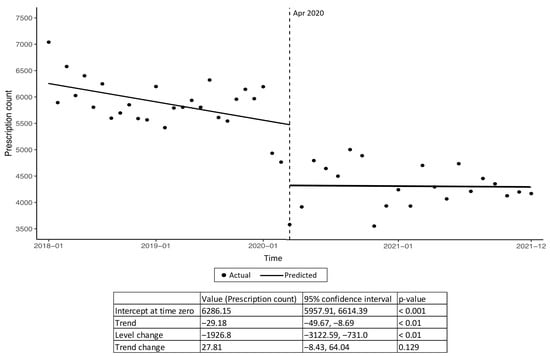
Figure 1.
Segmented regression analysis of oral antibiotic prescriptions from 2018 to 2021 (April 2020 was observed as the peak of COVID-19 pandemic in Singapore).
Oral antibiotics were most prescribed for respiratory conditions (29.6%), skin and soft tissue conditions (28.9%), and genitourinary conditions (15.2%) (Table 2). In 2021, skin and soft tissue conditions (37.7%) and genitourinary conditions (20.2%) overtook respiratory conditions to become the top two most common conditions when oral antibiotics were prescribed. This was due to an 84% reduction in respiratory antibiotic prescriptions, with a 5.22% absolute reduction in respiratory condition visits prescribed with oral antibiotics (Figure 2).
Table 2.
Oral antibiotic prescriptions group by visit diagnoses, 2018–2021.
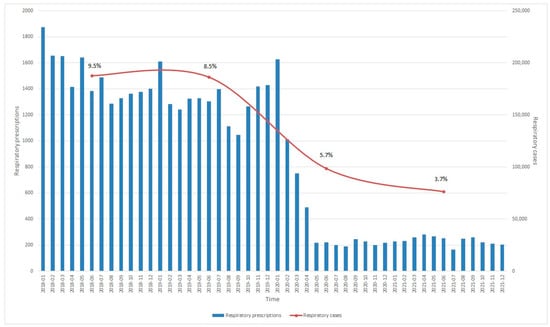
Figure 2.
Respiratory visits and antibiotic prescriptions, 2018–2021.
Prescriptions for dental, skin and soft tissue, and ear, nose, and throat (ENT) conditions remained stable from 2018 to 2021 (Table 2). While the absolute number of prescriptions for dental conditions remained low, it had the highest percentage of visits that were prescribed with antibiotics (17.8%). The number of visits with multiple infectious conditions reduced from 3.69% in 2018 to 1.67% in 2021. The number of antibiotics prescribed for undefined conditions (diagnoses listed that were non-infectious in nature, such as chronic diseases) rose from 10.8% to 17.2% in terms of the total antibiotics prescribed across 2018 to 2021. While the patient’s age (OR 1.005, 95% CI 1.004–1.006) was associated with antibiotic prescription for undefined conditions, the physician’s years of practice (OR 0.993, 95% CI 0.991–0.995) was found to have an inverse relationship (Table A2). On a multivariate analysis after adjusting for the patient’s age and physician’s years of practice, the female gender (OR 1.12, 95% CI 1.08–1.15), race (p < 0.001), presence of diabetes mellitus (OR 1.34, 95% CI 1.29–1.40) and chronic kidney disease (OR 1.31, 95% CI 1.26–1.37), place of practice (p < 0.001), and having an accredited family physician (OR 1.16, 95% CI 1.12–1.20) were significantly associated with antibiotic prescriptions for undefined conditions (Table A2).
Figure 3 describes all the available oral antibiotics split into diagnoses and grouped according to the WHO AWaRE classification. The most common oral antibiotic prescribed from 2018 to 2021 was amoxicillin/clavulanate (58.8%). Skin and soft tissue infections had the highest percentage of antibiotic use in the Access group (98%). The overall increase in the use of antibiotics in the Access group from 85.6% (2018) to 92.1% (2021) was due to the reduction in clarithromycin use, particularly for respiratory conditions. Ciprofloxacin constituted the largest proportion (68%) among the antibiotics used by the Watch group in 2021, of which the majority (70.6%) were prescribed for genitourinary conditions. Ciprofloxacin was 7 and 16 times more likely to be prescribed for genitourinary (OR 7.41, 95% CI 7.05–7.78) and gastrointestinal (OR 16.1, 95% CI 14.9–17.4) conditions, respectively, compared to other conditions.
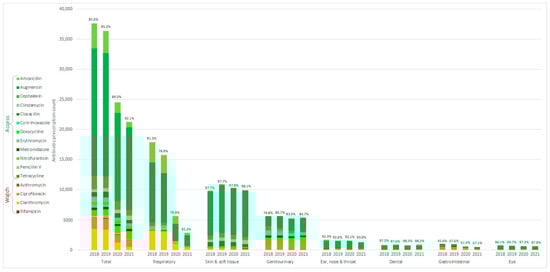
Figure 3.
Oral antibiotics classified according to WHO AWaRe, 2018–2021.
The changes in antibiotic prescription habits observed in 2020 and 2021 prompted us to assess the factors contributing to the prescription of Watch group antibiotics. This is showcased in Table A3. On a multivariate analysis (after adjusting for the patient’s age), being male (OR 1.26, 95% CI 1.19–1.35) with gastrointestinal (OR 28.5, 95% CI 24.1–33.8), respiratory (OR 11.9, 95% CI 10.6–13.3), or genitourinary conditions (OR 10.2, 95% CI 9.07–11.4) made one significantly more likely to be prescribed a Watch group antibiotic. Factors such as the physician’s years of experience, being local trained (OR 1.22, 95% CI 1.14–1.30), having an accredited family physician (OR 1.17, 95% CI 1.09–1.25), and the place of practice significantly contributed to the Watch group’s antibiotic prescriptions (Table A3).
Topical antibiotic prescriptions were highest in the younger age groups (age 22–44), with gradual increments of ENT (0.463% to 0.59%) and skin (1.69% to 1.90%) topical antibiotic prescription rates from 2018 to 2021. This is described in Table 3, Table 4 and Table 5, respectively. Topical antibiotic prescriptions also differed between clinics. Topical antibiotics for skin conditions also saw the highest prescriptions among patients with diabetes and chronic kidney disease (Table 5). While the number of topical antibiotic prescriptions differed from clinic to clinic from 2018 to 2021, Clinic C had the highest topical eye and skin antibiotic prescription rate (Table 4 and Table 5).
Table 3.
Topical ENT antibiotic prescriptions, 2018–2021.
Table 4.
Topical eye antibiotic prescriptions, 2018–2021.
Table 5.
Topical skin antibiotic prescriptions, 2018–2021.
Topical antibiotics prescribed without s relevant diagnoses increased most significantly for skin conditions, where the number of prescriptions for non-skin-related diagnoses increased from 5122 (35.2%) in 2018 to 5934 (40.1%) in 2021 (Table A4). Patient factors such as the patient’s age (OR 1.013, 95% CI 1.012–1.015), female gender (OR 1.19, 95% CI 1.15–1.23), Chinese race, presence of diabetes mellitus (OR 1.50, 95% CI 1.44–1.56), and chronic kidney disease (OR 1.23, 95% CI 1.18–1.29) were significantly associated with topical skin antibiotics prescribed for irrelevant diagnoses (Table A5). Factors such as the physician’s years of experience, place of practice, being locally trained (OR 1.07, 95% CI 1.03–1.11), and having an accredited family physician (OR 1.10, 95% CI 1.06–1.14) were significantly associated with inappropriate diagnoses coding during topical antibiotic prescriptions (Table A5).
A significant percentage (35.8%) of same-visit prescriptions of oral and topical antibiotics for skin conditions was also observed compared to oral antibiotic prescriptions. Younger patient ages (OR 0.994, 95% CI 0.993–0.995) and higher years of experience of the physician (OR 1.017, 95% CI 1.015–1.019) were associated with dual antibiotic prescriptions (Table A5). In the multivariate analysis, the female gender (OR 1.13, 95% CI 1.08–1.18), diabetes mellitus (OR 1.06, 95% 1.001–1.11), and the absence of chronic kidney disease (OR 1.11, 95% CI 1.05–1.17) were significant predictors for dual antibiotic prescriptions (Table A6). Factors such as the physician’s years of experience, being overseas trained (OR 1.18, 95% CI 1.13–1.24), having an family physician accredited (OR 1.16, 95% CI 1.11–1.21), and the place of practice were significantly associated with dual antibiotic prescriptions (Table A6).
4. Discussion
This observational study is one of the first conducted on oral and topical antibiotic use within primary care clinics in Singapore, showcasing the prevalence of prescription practices and revealing the care gaps. All prescription data were included as they were extracted from a health records database, with no missing data. Diagnoses were mapped to prescription data, with prescription rates calculated based on the overall patient visits, which showcased the actual burden of antibiotic use. Some physician and patient factors affecting antibiotic prescription were also included and analyzed, with meaningful and applicable results. However, this was not an exhaustive list; future studies should focus on this area to help build a more complete picture.
The antibiotic prescription rate reduced with age, which was likely due to a higher proportion of older patients attending for chronic disease visits compared to younger patients. This could also be due to poorer knowledge associated with younger patients in Singapore, leading to more presentations and antibiotic requests [15]. Notably, overall, oral antibiotic prescriptions reduced at a greater proportion compared to visits for respiratory conditions from 2018 to 2021. This was also observed in many countries worldwide [8,10,16,17]. The segmented regression analysis performed showed a significant reduction in antibiotic prescriptions after the peak of the COVID-19 pandemic in April 2020, which was consistent with a previous inpatient local study [11]. This demonstrates that this was due to public health measures, which influenced both outpatient and inpatient antibiotic prescriptions. While previous local studies have suggested possible knowledge gaps among patients and physicians in terms of the variability of prescriptions for respiratory infections [18], the sustained reduction was largely due to increased public awareness and hygiene protocols during the pandemic [19], reduced visits due to altered patient health-seeking behavior, and increased referrals to hospitals for severe disease, which was not presented in primary care [20,21]. In 2020 and 2021, the increased accessibility of testing to the public and usage in primary care clinics for the diagnosis of COVID-19 [22,23], nationwide vaccination drives, and the implementation of vaccine-differentiated safe management measures may have amplified this phenomenon [24]. Future studies should be performed to assess the improvement in knowledge, attitudes, and practices of patients toward antibiotic use pertaining to respiratory infections to compared with the pre-COVID-19 pandemic studies [25].
Data from 2021 also showed that skin and genitourinary conditions accounted for the majority (57.9%) of total oral antibiotic prescriptions, highlighting shifts in antibiotic prescription habits among physicians and patient’s antibiotic requests. The high percentage of antibiotic prescriptions for dental conditions could be attributed to our algorithm for diagnosis classification (Figure A1). Further studies are needed to explore the accuracy of these gaps.
Within the clinics, the lack of prioritization in terms of ensuring the accurate coding of diagnosis for antibiotic prescriptions made the assessment and determination of the indications for antibiotic prescriptions challenging. This was evident in the two gaps that we identified: the increase in oral antibiotics prescribed for chronic condition diagnoses and topical skin antibiotic prescriptions with non-skin diagnoses. Similar gaps were discovered in the USA; the antibiotic prescribed was not listed as a diagnostic code in over 50% of cases [26]. We postulate that the similarity in the identified patient and physician factors could be due to a reduced prioritization of accurate coding with an increased consult complexity and diagnostic uncertainty, perceived demand and expectation from certain patient groups (older and female), and a laxity with regulation and dispensing of antibiotics, which differs from practice to practice and physician seniority [27]. Certainly, further research could be performed in this area to ascertain the accuracy and strength of these associations. The potential collinearity assessed between the factors is a limitation of our study, which we found difficult to adjust for.
While the increase in the “Access” group’s antibiotic prescriptions was due to reduced clarithromycin use in respiratory conditions, the “Watch” group’s antibiotic utility remained high in genitourinary and gastrointestinal conditions. As we discovered that more experienced, locally trained family physicians were more likely to prescribe “Watch” group antibiotics, this could stem from previous outdated local antimicrobial guidelines, in terms of encouraging ciprofloxacin use for urinary tract infections [28]. This local guideline also recommended ciprofloxacin as a first line for male urinary tract infections, which could possibly explain the factors that we identified (male patients and locally trained physicians). Updated antimicrobial guidelines based on latest antibiograms, whilst important, may not positively influence changes in prescription habits due to significant variability between clinics and physicians [29]. Future interventions such as academic detailing and decision support tools may be effective in monitoring “Watch” group antibiotic prescriptions [30].
Our study discovered an increasing use of dual oral and topical antibiotics for skin conditions, despite discouragement from international guidelines and studies due to a possible increased risk of antimicrobial resistance [31]. The factors identified as predisposing to dual antibiotic usage were as follows: demand and expectation from certain groups (younger patients), differences in co-morbidities that shaped their perceived severity (CKD), differing practices, and regulations in prescriptions (resulting in discrepancies in doctor experience, training location, seniority level, and place of practice) [27]. Further research could be performed to ascertain the burden of specific skin conditions and address the potential knowledge gaps.
A potential limitation in this study is selection bias (due to the use of one public primary care cluster in Singapore), which may not be representative of the whole primary care landscape. Our study found that oral antibiotics were prescribed in 3–5% of all patient visits; this was likely an under-estimate, given that a result of 10% was reported in the USA [32]. Studies conducted abroad were larger in scale and encompassed more data [31]. Compared with the national data, the antibiotic prescription patterns in our study cohort were found to be like the other healthcare clusters [33]. In Singapore, private clinics account for 80% of all primary care services, with 86% of consultations being acute consultations [34]. Most clinics adopted the same prescriber dispenser model, so we expect antibiotic prescriptions to be less regulated, and further studies in private practices to better reflect the antimicrobial gaps of care. Missing diagnoses coding and multiple visit diagnoses might affect the robustness of the tiered ranking system in diagnoses classification, resulting in a misrepresentation of antibiotics prescribed for certain diagnoses (such as dental conditions). An indication of antibiotic prescription might not necessarily equate to visit diagnoses; medical record reviews using machine learning could uncover this difference. The factors affecting the gaps identified should be further brainstormed, extracted, and evaluated to formulate a more accurate representation of antibiotic prescription patterns and habits, and these should be further triangulated in subsequent studies. Due to the lack of guidelines, antibiotic appropriateness could not be determined from this study.
5. Conclusions
This study showcases the prevalence of antibiotic prescriptions within public primary care in Singapore and their significant reduction, particularly for respiratory conditions during the COVID-19 pandemic. The gaps identified include inaccurate diagnosis coding for oral and topical antibiotic prescriptions, and dual antibiotic use for skin and soft tissue infections. These are associated with certain patient and physician factors. While the usage of “Watch” group antibiotics has decreased, greater emphasis can be placed on antibiotics prescribed for certain diagnoses. This paves the way for further studies in primary care in Singapore and lays the foundation for updated antimicrobial guidelines and stewardship programs in primary care in Singapore.
Author Contributions
S.W.C.K.—conceptualization, methodology, formal analysis, investigation, writing—original draft preparation, writing—review and editing, visualization. V.M.E.L.—methodology, formal analysis, writing—review and editing. S.H.L.—formal analysis, data curation, visualization. W.Z.T.—formal analysis, data curation, writing—original draft preparation, visualization. J.M.V.—conceptualization, methodology, supervision, project administration. V.W.K.L.—conceptualization, methodology, supervision. M.S.—conceptualization, methodology, supervision, writing—review and editing. L.Y.H.—conceptualization, methodology, project administration, funding acquisition. All authors have read and agreed to the published version of the manuscript.
Funding
This research is supported by the Singapore Ministry of Health’s National Medical Research Council under its Centre Grant Program (MOH-001010-00).
Institutional Review Board Statement
The study was conducted according to the guidelines of the Declaration of Helsinki, and approved by the Institutional Review Board of the National Healthcare Group on 9 June 2022 (2022/00319).
Informed Consent Statement
Patient consent was waived as this study involved a de-identified retrospective extraction of antibiotic prescription records from an internal database. The risks to participants were minimal, with no interventions or procedures performed. Informed consent would not have been possible in this case as participants were not contacted. The information collected was not sensitive in nature, and data obtained were derived from institutional protocols.
Data Availability Statement
The data presented in the study are available on request from the corresponding author.
Acknowledgments
We would like to thank Chang Yang Yi and Chew Hui Shan (Family Medicine Development, National University Polyclinics) for the data extraction, and Waseemah Begum (National University Health System Pharmacy) for antibiotic coding and advice.
Conflicts of Interest
The authors have no conflict of interest to declare.
Appendix A
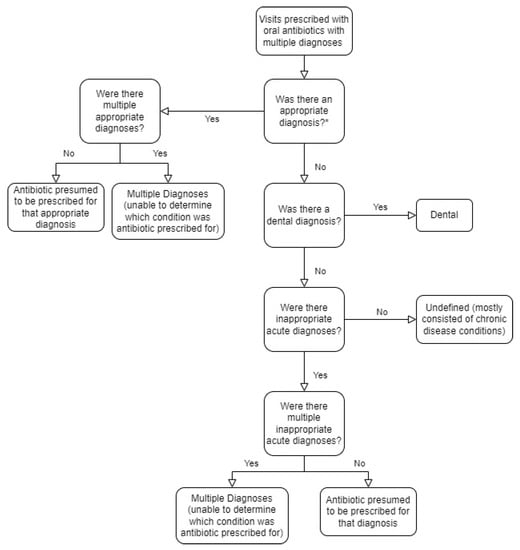
Figure A1.
Tiered logic ranking system.
Table A1.
List of diagnosis codes and categorizations.
Table A1.
List of diagnosis codes and categorizations.
| Respiratory Conditions (Presumed To Be Infective) | |||||||
| respiratory tuberculosis unspecified, without mention of bacteriological or histological confirmation | tuberculosis | pneumonia | pneumonia, unspecified | COPD | chronic obstructive pulmonary disease, unspecified | chronic obstructive pulmonary disease (COPD) | CAP (community acquired pneumonia) |
| asthma-copd overlap syndrome | bronchiectasis | whooping cough, unspecified | |||||
| Respiratory Conditions (Presumed To Be Non-Infective) | |||||||
| acute bronchitis, unspecified | acute upper respiratory infection, unspecified | asthma | asthma, unspecified | influenza with other respiratory manifestations, influenza virus identified | upper respiratory tract infection | URTI (acute upper respiratory infection) | COVID-2019: suspect case |
| URTI | influenza-like illness | acute bronchitis | disorder of respiratory system | respiratory disorder, unspecified | other respiratory conditions | asthma (bronchial) | coronavirus infection, unspecified site |
| pulmonary embolism without mention of acute cor pulmonale | pulmonary embolism | coronavirus infection | respiration disorder | cough | |||
| Skin Conditions (Presumed To Be Infective) | |||||||
| acne, unspecified | abscess | carbuncle of skin and/or subcutaneous tissue | cellulitis | cellulitis, unspecified | burn of unspecified body region, unspecified thickness | disorder of nail | unspecified diabetes mellitus with foot ulcer due to multiple causes |
| furuncle of skin or subcutaneous tissue | nail disorder, unspecified | DM foot | open wound of unspecified body region | ulcer of lower limb, not elsewhere classified | burns | skin infection | open wound |
| diabetic foot ulcer | nail disease | chronic ulcer of lower extremity | acne | FB skin | multiple wounds | cutaneous abscess, furuncle and carbuncle, unspecified | decubitus ulcer and pressure area, unspecified |
| injury | injury, unspecified | superficial foreign body (splinter) of unspecified body region | other injuries | other breast conditions | burn | wound cellulitis | pressure ulcer |
| superficial burn | boil | furuncle | paronychia of left thumb | laceration | dog bite | cat bite | skin abscess |
| folliculitis | foreign body (FB) in soft tissue | mastitis | paronychia of great toe of left foot | paronychia of finger | acute mastitis | paronychia of third toe of right foot | cellulitis of foot, right |
| breast abscess | erysipelas | foot ulcer due to secondary dm | surgical wound breakdown | superficial foreign body | |||
| Skin Conditions (Presumed To Be Non-Infective) | |||||||
| skin disorder | dermatomycosis | disorder of skin and subcutaneous tissue | disorder of skin and subcutaneous tissue, unspecified | flexural atopic dermatitis | fungal infection | nonscarring hair loss, unspecified | other atopic dermatitis |
| other psoriasis | scabies | superficial mycosis, unspecified | unspecified contact dermatitis, unspecified cause | viral warts | contusion | warts | eczema |
| abrasion | pruritus | psoriasis | corn/callus | urticaria | other skin conditions | alopecia | neonatal jaundice |
| corns and callosities | other specified soft tissue disorders, site unspecified | soft tissue disorder | varicose veins of lower extremities without ulcer or inflammation | varicose veins, legs | dermatitis | atopic dermatitis | neonatal jaundice, unspecified |
| contact dermatitis | skin abnormalities | sebaceous cyst | varicose veins of lower extremity | viral wart | tinea pedis | corn | asteatotic eczema |
| lipoma | callus | skin tag | abrasion of heel | callus of hand | squamous cell carcinoma of skin | rash | melanocytic naevi |
| tinea corporis | ingrowing toenail | ingrowing left great toenail | ingrown left big toenail | IGTN (ingrowing toe nail) | ingrowing right great toenail | ingrown nail of great toe | disorder of skin |
| lump in neck | granuloma of skin | neck mass | follow-up examination after surgery for other conditions | atherosclerotic pvd with ulceration | tinea unguium | ganglion cyst | ganglion, site unspecified |
| swelling of left side of face | |||||||
| Genitourinary Conditions (Presumed To Be Infective) | |||||||
| Gonococcal infection of lower genitourinary tract without periurethral or accessory gland abscess | urinary tract infection | urinary tract infection, site not specified | UTI | unspecified sexually transmitted disease | vaginal discharge | balanitis | sexually transmitted disease |
| male genital lesion | UTI (urinary tract infection) | BV (bacterial vaginosis) | cystitis | bacterial vaginosis | chronic prostatitis | other venereal disease | |
| Genitourinary Conditions (Presumed To Be Non-Infective) | |||||||
| Candidiasis | Candidiasis, unspecified | haematuria | unspecified haematuria | disorder of kidney and ureter, unspecified | unspecified condition associated with female genital organs and menstrual cycle | urinary incontinence | unspecified urinary incontinence |
| urinary calculus, unspecified | sexual dysfunction | other male genital disorders | other gynaecological conditions | dysmenorrhoea | menorrhagia | calculus, urinary tract | other urinary disorders |
| abnormal uterine and vaginal bleeding, unspecified | calculus, urinary | disorder of kidney and ureter | genital herpes (recurrent) | undescended testicle, unspecified laterality, unspecified site | unspecified sexual dysfunction, not caused by organic disorder or disease | disorder of menstrual bleeding | bph associated with nocturia |
| BPH (benign prostatic hyperplasia) | phimosis of penis | congenital anomaly of urinary system | congenital anomaly of female genital system | uterine fibroid | PCOS (polycystic ovarian syndrome) | calculus of ureter | Candidiasis of vagina |
| Candidiasis of vulva and vagina | vulvovaginal Candidiasis | prolapse of female pelvic organs | menopause | urinary disorder | urine abnormality | benign essential microscopic haematuria | urolithiasis |
| albuminuria | bladder disorder | fibroid | post-menopausal atrophic vaginitis | atrophic vaginitis | disorder of male genital organ | disorder of male genital organs, unspecified | disorder of female genital organs |
| female genital disorder | renal stone | AKI (acute kidney injury) | congenital malformation of urinary system, unspecified | ||||
| Gastrointestinal Conditions (Presumed To Be Infective) | |||||||
| anorectal abscess | other gastroenteritis and colitis of unspecified origin | peptic ulcer, unspecified as acute or chronic, without haemorrhage or perforation | peptic ulcer disease | acute appendicitis unspecified | perineal abscess | perianal abscess | |
| Gastrointestinal Conditions (Presumed To Be Non-Infective) | |||||||
| GORD (gastro oesophageal reflux disease) | gastroesophageal reflux disease | gastroenteritis, acute | anal fissure, unspecified | anal fistula | dysphagia | functional dyspepsia | gastroduodenitis, unspecified |
| gastro-oesophageal reflux disease without oesophagitis | haemorrhoids | irritable bowel syndrome without diarrhoea | noninfectious gastroenteritis and colitis | unspecified abdominal hernia without obstruction or gangrene | unspecified haemorrhoids without complication | incontinence/enuresis | constipation |
| gerd | piles | gastritis | other git conditions | dyspepsia | disease of intestine, unspecified | foreign body in alimentary tract, part unspecified | other and unspecified abdominal pain |
| abdominal pain | dyspepsia and disorder of function of stomach | IBS | vomiting of pregnancy, unspecified | disorder of intestine | anal fissure | gastroduodenitis | abdominal hernia |
| irritable bowel syndrome | gastroenteritis | piles (haemorrhoids) | diarrhoea | intestinal disorder | GERD (gastroesophageal reflux disease) | foreign body in alimentary tract | perianal fistula |
| intestinal bleeding | inguinal hernia | enteritis,ge | enteritis | ||||
| Infectious Disease Conditions (Presumed To Be Infective) | |||||||
| infectious disease | other and unspecified infectious diseases | other infections (non-notifiable) | |||||
| Infectious Disease Conditions (Presumed To Be Non-Infective) | |||||||
| dengue fever [classical dengue] | enteroviral vesicular stomatitis with exanthem | varicella without complication | zoster without complication | herpes zoster | dengue | chickenpox | herpes zoster without complication |
| unspecified arthropod-borne viral fever | varicella uncomplicated | viral illness | fever | hand, foot and mouth disease (HFMD) | parasite infection | viral hepatitis | |
| Dental Conditions | |||||||
| necrosis of pulp | reversible pulpitis | irreversible pulpitis | periodontitis | dental caries | gingivitis | defective dental restoration | retained dental root |
| combined periodontal and endodontic lesion | caries | tooth abrasion | arrested dental caries | fracture of crown, enamel, and dentin of tooth without pulp exposure | dentine hypersensitivity | fracture of crown, enamel, and dentin of tooth with pulp exposure | abrasion of teeth |
| fracture of dental restoration | gingival hyperplasia | fracture of tooth | teeth problem | gum disease | disorder of teeth and supporting structures | disorder of teeth and supporting structures, unspecified | other and unspecified lesions of oral mucosa |
| teeth & supporting structure disease | disease of salivary gland, unspecified | disorder of oral soft tissue | disorder of salivary gland | oral soft tissue disease | abscess of buccal space of mouth | impacted third molar tooth | cracked tooth |
| impacted teeth with abnormal position | oral infection | horizontal fracture of tooth | vertical fracture of root of tooth | peri-implantitis, dental | fascial space infection of mouth | infection of buccal space | fracture of root of tooth |
| periodontal abscess | pericoronitis | symptomatic periapical periodontitis | alveolar osteitis | symptomatic irreversible pulpitis | chronic apical abscess | pulpal necrosis | apical abscess |
| ENT Conditions (Presumed To Be Infective) | |||||||
| acute tonsillitis | disorder of ear | disorder of ear, unspecified | otitis externa, unspecified | otitis media, unspecified | otitis externa | otitis media | acute sinusitis |
| chronic sinusitis | disorder of nose | acute infective otitis externa | infective otitis externa | external otitis of left ear | sinus disorder | sinusitis | cervical lymphadenopathy |
| ENT Conditions (Presumed To Be Non-Infective) | |||||||
| allergic rhinitis, unspecified | epistaxis | allergic rhinitis | chronic mucoid otitis media | chronic secretory otitis media | foreign body in ear | foreign body in nostril | impacted cerumen |
| ear wax | other ear conditions | FB ear | hearing loss, unspecified | hearing loss | mumps without complication | problems with hearing | foreign body in nose |
| MUMPS | |||||||
| Eye Conditions (Presumed To Be Infective) | |||||||
| FB eye | conjunctivitis | chalazion | conjunctivitis, unspecified | eyelid disorder | disorder of eyelid, unspecified | foreign body on external eye, part unspecified | foreign body in external eye |
| blepharitis of eyelid of left eye | external hordeolum | infected eye lid | hordeolum | blepharitis | stye external | stye | periorbital cellulitis |
| Eye Conditions (Presumed To Be Non-Infective) | |||||||
| disorder of eye | disorder of eye and adnexa, unspecified | disorder of refraction, unspecified | glaucoma, unspecified | refractive vision | cataracts | other eye conditions | cataract, unspecified |
| disorder of eyelid | congenital anomaly of eye | eye disorder | cataract | dry eyes | glaucoma | eye discomfort | disorder of refraction and accommodation |
| blindness of one eye | conjunctival haemorrhage | H/O subconjunctival haemorrhage | vitreous haemorrhage of left eye | congenital malformation of eye, unspecified | |||
| Unspecified | |||||||
| Impaired glucose regulation | Bursitis | Encounter for education | Acquired absence of leg at or below knee | Generalised osteoarthritis | Routine child health examination | Osteoporosis-fracture-vertebral | Chronic renal failure |
| Impaired glucose regulation without complication | Acquired absence of foot | Status post below-knee amputation | Administrative encounter | Gynaecological examination (general)(routine) | Routine postpartum follow-up | Stroke (infarct) | Chronic renal insufficiency, stage iii (moderate) |
| Impaired glucose tolerance | Peripheral venous insufficiency | Medical care complication | Allergy, unspecified | Headache | Schizophrenia, unspecified | TIA | CKD stage 2 (EGFR 60–89) |
| Personal history of long-term (current) use of other medicaments, insulin | Arthralgia | De quervain’s tenosynovitis | Anaemia, unspecified | Heart disease, unspecified | Severe depressive episode without psychotic symptoms, not specified as arising in the postnatal period | Hypertension (diet only) | Osteopenia |
| Type 1 diabetes mellitus without complication | Venous embolism and thrombosis | Frozen shoulder | Arthropathy | Hereditary and idiopathic neuropathy, unspecified | Special screening | Epilepsy | Achilles tendinitis |
| Type 2 diabetes mellitus | Vomiting as reason for care in pregnancy | Disorder of gallbladder | Myalgia, site unspecified | Hyperlipidaemia | Special screening examination, unspecified | Sprain/strain | Cerebral palsy |
| Type 2 diabetes mellitus without complication | Complication related to pregnancy | Congenital anomaly of musculoskeletal system | Arthrosis, unspecified, site unspecified | Hyperlipidaemia, unspecified | Sprain, strain | Well women clinic | Arrhythmias |
| Unspecified diabetes mellitus with background retinopathy | Unwanted pregnancy | Back pain | Atherosclerosis of arteries of extremities | Hyperplasia of prostate | Stroke | Hyperlipidemia (diet only) | Thyroiditis |
| Unspecified diabetes mellitus with hypoglycaemia | Cobalamin deficiency | Dyslipidaemia | Atrial fibrillation | Hypertension | Stroke, not specified as haemorrhage or infarction | Non–DM nephropathy–incipient | Gall bladder disease |
| Impaired fasting glucose(IFG) | Folic acid deficiency | Itch | Atrial fibrillation and flutter | Hypothyroidism, unspecified | Supervision of normal pregnancy, unspecified | Other screening/growth monitoring. Questionnaires | Adverse effect, medication, chemical |
| DM retinopathy | Lateral Epicondylitis (Tennis Elbow) | Low Back Pain | Back Ache | IHD (ischaemic heart disease) | Tendency To Fall, Nec | Insomnia | Iron Deficiency |
| Impaired Glucose Tolerance(IGT) | Synovitis and tenosynovitis | TIA (transient ischaemic attack) | Bell’s palsy | Ill-defined condition | Thalassaemia, unspecified | Med exam/investigations | Menopausal disorders |
| Dm neuropathy | Tendinitis | Mammogram abnormal | Benign neoplasm of unspecified site | Inappropriate diet and eating habits | Thyrotoxicosis, unspecified | Schizophrenia | Family planning |
| DM nephropathy - ESRF on dialysis | Transient ischemic attack | Disease of circulatory system | Breast lump | Isolated proteinuria | Tobacco use, current | Osteoporosis | Pes planus |
| DM type i on medication | Fatty liver | Osa (obstructive sleep apnoea) | Cardiac arrhythmia, unspecified | Liver disease, unspecified | Transient cerebral ischaemic attack, unspecified | Antenatal care | Down’s syndrome |
| DM type ii on medication | Neck ache | Palpitations | Carpal tunnel syndrome | Loss of consciousness of unspecified duration | Trigeminal neuralgia | Acute ischemic heart disease | Other renal disorders |
| DM nephropathy - overt | Benign neoplasm | Metastatic malignant neoplasm | Other cvs conditions | Malignant neoplasm | Unspecified adverse effect of drug or medicament | Health education | Unspecified mental retardation without mention of impairment of behaviour |
| DM nephropathy - incipient | Well adult exam | Thyroid nodule | Chest pain, unspecified | Malignant neoplasm without specification of site | Unspecified dementia | Malignant neoplasms | Adjustment disorders |
| DM type ii (diet only) | Fracture neck of femur | Depressive illness | Chronic ischaemic heart disease, unspecified | Menopausal and perimenopausal disorder, unspecified | Unspecified disorder of bone density and structure, site unspecified | Anemia (except thal.) | Bipolar affective disorder, unspecified |
| Current use of insulin | Abnormal bone density screening | Stroke, haemorrhagic | Chronic nephritic syndrome, unspecified | Menopausal and postmenopausal disorder | Unspecified dorsalgia, site unspecified | Code not in dimension | Unspecified complication of procedure |
| Diabetes mellitus with incipient diabetic nephropathy | Idiopathic peripheral neuropathy | Prenatal consult | Chronic liver disease | Mental and behavioural disorders due to use of alcohol, acute intoxication | Unspecified lump in breast | Travel clinic | Contact with and exposure to other communicable diseases |
| Diabetes mellitus with retinopathy | Benign neoplastic disease | Chronic glomerulonephritis | Condition originating in the perinatal period, unspecified | Migraine, unspecified | Unspecified mental disorder due to brain damage and dysfunction and to physical disease | Stroke (haemorrhage) | Need for immunisation against unspecified combinations of infectious diseases |
| Impaired fasting glucose | Parkinson disease | Sprain and strain | Congenital malformation of heart, unspecified | Mild cognitive disorder | Unspecified nonorganic psychosis | Dementia | Radial styloid tenosynovitis [de quervain] |
| Hypoglycaemia | Dietary counselling and surveillance | Optional surgery | Congenital malformation of musculoskeletal system, unspecified | Neurotic disorder, unspecified | Unspecified osteoporosis, site unspecified | Depression (others) | Other and unspecified abnormalities of gait and mobility |
| Type 2 diabetes mellitus with hyperosmolarity with coma | Non-compliance with treatment | Encounter for postnatal visit | Congestive heart failure | Nutritional deficiency, unspecified | Unspecified synovitis and tenosynovitis, site unspecified | Non – dm nephropathy – overt | Unspecified harmful use of non-dependence producing substance |
| Diabetes mellitus, type ii | Cognitive dysfunction | Female infertility | Arthralgia & myalgia | Obesity | Chronic ischemic heart disease | Parkinsonism | Examination for adolescent development state |
| Diabetes mellitus | Trigger finger | Complication of the puerperium, postpartum | Contusion of unspecified body region | Obesity due to excess calories | Thyrotoxicosis | Migraine | Other problems related to housing and economic circumstances |
| Diabetic kidney disease | Mood disorder | Engorgement of breasts associated with childbirth, delivered | Counselling, unspecified | Obesity, unspecified | Backache | Preventive measures/immunisation child | Other specified postprocedural states;previously initiated endodontic therapy completed |
| IFG (impaired fasting glucose) | Hyperthyroidism | Subfertility of couple | Delayed milestone | Osteoarthritis | Anxiety | Headache, not specified | Other specified prophylactic measures |
| Type 1 diabetes mellitus | Thalassaemia | Mood and affect disturbance | Depressive episode, unspecified, not specified as arising in the postnatal period | Other amnesia | Benign neoplasms | Drp | Persistent delusional disorder, unspecified |
| Type 2 diabetes mellitus with hyperosmolar coma | Allergic drug reaction | Injured in road traffic accident | Disease of blood and blood-forming organs, unspecified | Other and unspecified disorders of breast associated with childbirth, without mention of attachment difficulty | Head injury | Hernia | Pregnancy-related condition, unspecified |
| Hypoglycaemia associated with diabetes | Elective surgical procedure | Gad (generalised anxiety disorder) | Disease of gallbladder, unspecified | Other and unspecified disorders of circulatory system | Ccf | Follow-up exam. | Cerebral palsy, unspecified |
| Diabetic retinopathy | Disorder of brain | Normal psychiatric assessment | Dislocation, sprain and strain of unspecified body region | Other examinations for administrative purposes | Spinal disorder | Nephritis (eg glomerulonephritis) | Cognitive impairment |
| DM (diabetes mellitus) | Major depression | Well child check | Disorder of brain, unspecified | Other general symptoms and signs | Psychosis | Other cns conditions | Postoperative follow-up |
| Diabetic neuropathy | Memory impairment | Encounter for examination for adolescent development state | Disorder of heart | Other specified counselling | Hyperlipidemia on medication | Rheumatoid arthritis | Myalgia |
| Long term current use of insulin | Stage 4 chronic kidney disease | Orthostatic hypotension | Disorders of initiating and maintaining sleep [insomnias] | Other specified disorders of breast | Stroke (not specified) | Nephritis, nephropathy, unspecified | Delayed developmental milestones |
| T2DM (type 2 diabetes mellitus) | Persistent delusional disorder | Asymptomatic human immunodeficiency virus [HIV] infection status | Dizziness and giddiness | Overweight | Thalassemia | Hypertension on medication | General counselling and advice for contraceptive management |
| IGT (impaired glucose tolerance) | Smoker | Venous insufficiency (chronic) (peripheral) | Down’s syndrome, unspecified | Parkinson’s disease | Other deformities of ankle and foot | BPH | Closed fracture |
| Type 2 diabetes mellitus with complications | Ischemic cerebrovascular accident (cva) | Screening for condition | Elevated blood pressure reading without diagnosis of hypertension | Peripheral vascular disease | Pvd | Congenital heart anomaly | Vertigo |
| Complication of procedure | Concussion | Disorder of endocrine system | Elevated blood-pressure reading, without diagnosis of hypertension | Peripheral vascular disease, unspecified | Nutritional def. | Depression (major) | Fall |
| Bipolar disorder | Deep vein thrombosis | Nutritional deficiency disorder | Embolism and thrombosis of unspecified vein | Personal history of noncompliance with medical treatment and regimen | Other blood disorders | Complication of medical care | Adverse effect of drug or medicament |
| Heart failure | Anxiety state | Erroneous encounter--disregard | Encounter for follow-up in outpatient clinic | Personal history of other mental and behavioural disorders | Glomerulonephritis | Basic health screen | ESRF (end stage renal failure) |
| Inflammatory arthropathy | Strain of knee | Anaemia | Endocrine disorder, unspecified | Plantar fascial fibromatosis | Other msk conditions | Disorder of synovium, tendon & bursa | carrier of viral hepatitis b |
| Cerebrovascular accident (CVA) | Dysfunction, psychosexual | Chronic ischaemic heart disease | Epilepsy, unspecified, without mention of intractable epilepsy | Plantar fasciitis | Giddiness, not specified | Other endocrine diseases | unspecified viral hepatitis without hepatic coma |
| End stage chronic kidney disease | Peripheral neuropathy | Allergy | Essential (primary) hypertension | Polyarthrosis, unspecified | Fractures | Drug/alcohol abuse | Hep B carrier follow-up |
| Congenital abnormality | Lipid disorder | Disorder of breast | Fatty (change of) liver, not elsewhere classified | Polyneuropathy, unspecified | Follow-up post surg | Need for immunisation against influenza | Hepatitis B carrier |
| Psoriatic arthropathy | Follow up | Disorder of cellular component of blood | Female infertility, unspecified | Problems related to unwanted pregnancy | Other psychiatric conditions | Encounter for gynecological examination | Hepatitis B infection |
| Disorder of thyroid | Limb ischaemia | Chest pain | Follow-up examination after unspecified treatment for other conditions | Procedure for purposes other than remedying health state, unspecified | Bunion/hallux valgus | Chronic kidney disease, unspecified | Disappearance and death of family member |
| CKD (chronic kidney disease) | Nonrheumatic aortic valve stenosis | Gout | Fracture of unspecified body region, closed | Prophylactic measure, unspecified | Hypothyroidism | ckd stage 3 or 4 (EGFR 15–59) | lack of physical exercise |
| Lymphadenopathy | Alcohol abuse | Gout, unspecified, site unspecified | General counselling and advice on contraception | Proteinuria | Graves’ disease | CKD stage 5/ESRF (EGFR < 15) | complication of surgical and medical care, unspecified |
| Food poisoning | Hypokalaemia | Acquired absence of foot and ankle | General medical examination | Rheumatoid arthritis, unspecified, site unspecified | Chest pain nos | Renal failure, chronic | Thalamic haemorrhage |
| Postural hypotension | Acquired absence of leg above knee | Generalised anxiety disorder | Risk for falls | Bipolar disorders | CKD stage 4 (egfr 15–29) | ||
Table A2.
Multivariate logistic regression for factors predisposing to antibiotic prescriptions for undefined conditions, 2018–2021.
Table A2.
Multivariate logistic regression for factors predisposing to antibiotic prescriptions for undefined conditions, 2018–2021.
| B | SE | p-Value | OR | 95% CI | ||
|---|---|---|---|---|---|---|
| Lower | Upper | |||||
| Gender (Female) | 0.111 | 0.016 | <0.001 | 1.12 | 1.08 | 1.15 |
| Race * | <0.001 | |||||
| Indian | −0.044 | 0.027 | 0.104 | 0.957 | 0.908 | 1.01 |
| Malay | −0.085 | 0.024 | <0.001 | 0.919 | 0.877 | 0.963 |
| Others | 0.101 | 0.032 | 0.002 | 1.11 | 1.04 | 1.18 |
| Age | 0.005 | 0.001 | <0.001 | 1.005 | 1.004 | 1.006 |
| Diabetes mellitus | 0.295 | 0.020 | <0.001 | 1.34 | 1.29 | 1.40 |
| Chronic kidney disease | 0.272 | 0.022 | <0.001 | 1.31 | 1.26 | 1.37 |
| Physician Training (Locally trained) | −0.001 | 0.018 | 0.972 | 0.999 | 0.965 | 1.04 |
| Years of physician experience | −0.007 | 0.001 | <0.001 | 0.993 | 0.991 | 0.995 |
| Family physician | 0.150 | 0.018 | <0.001 | 1.16 | 1.12 | 1.20 |
| Place of practice + | <0.001 | |||||
| Clinic A | 0.166 | 0.027 | <0.001 | 1.18 | 1.12 | 1.25 |
| Clinic B | 0.087 | 0.027 | 0.001 | 1.09 | 1.04 | 1.15 |
| Clinic C | −0.148 | 0.029 | <0.001 | 0.862 | 0.815 | 0.912 |
| Clinic D | 0.028 | 0.029 | 0.333 | 1.03 | 0.972 | 1.09 |
| Constant | −2.46 | 0.037 | <0.001 | 0.085 | ||
* compared to Chinese. + compared to Clinic E. B—logistic regression coefficient. SE—standard error. OR—odds ratios. 95% CI—95% confidence intervals.
Table A3.
Multivariate logistic regression for factors contributing to Watch group antibiotic prescriptions, 2020–2021.
Table A3.
Multivariate logistic regression for factors contributing to Watch group antibiotic prescriptions, 2020–2021.
| B | SE | p-Value | OR | 95% CI | ||
|---|---|---|---|---|---|---|
| Lower | Upper | |||||
| Gender (Male) | 0.233 | 0.032 | <0.001 | 1.26 | 1.19 | 1.35 |
| Race * | 0.243 | |||||
| Indian | −0.046 | 0.051 | 0.359 | 0.955 | 0.864 | 1.05 |
| Malay | −0.064 | 0.046 | 0.159 | 0.938 | 0.858 | 1.03 |
| Others | 0.059 | 0.059 | 0.318 | 1.06 | 0.945 | 1.19 |
| Age | 0.007 | 0.001 | <0.001 | 1.007 | 1.005 | 1.009 |
| Diabetes mellitus | −0.067 | 0.041 | 0.101 | 0.935 | 0.863 | 1.01 |
| Chronic kidney disease | 0.018 | 0.043 | 0.672 | 1.02 | 0.936 | 1.11 |
| Training (Locally trained) | 0.197 | 0.032 | <0.001 | 1.22 | 1.14 | 1.30 |
| Years of physician experience | 0.008 | 0.002 | <0.001 | 1.008 | 1.005 | 1.011 |
| Family physician | 0.155 | 0.034 | <0.001 | 1.17 | 1.09 | 1.25 |
| Place of practice + | <0.001 | |||||
| Clinic A | 0.104 | 0.049 | 0.033 | 1.11 | 1.01 | 1.22 |
| Clinic B | −0.279 | 0.051 | <0.001 | 0.757 | 0.684 | 0.837 |
| Clinic C | 0.101 | 0.048 | 0.037 | 1.11 | 1.01 | 1.22 |
| Clinic D | −0.379 | 0.053 | <0.001 | 0.684 | 0.616 | 0.760 |
| Visit diagnoses ^ | <0.001 | |||||
| Dental | −0.116 | 0.194 | 0.551 | 0.891 | 0.609 | 1.30 |
| ENT | 1.36 | 0.088 | <0.001 | 3.91 | 3.20 | 4.64 |
| Eye | 0.225 | 0.195 | 0.249 | 1.25 | 0.854 | 1.83 |
| Gastrointestinal | 3.35 | 0.086 | <0.001 | 28.5 | 24.1 | 33.8 |
| Genitourinary | 2.32 | 0.058 | <0.001 | 10.2 | 9.07 | 11.4 |
| Infectious diseases | 1.06 | 0.394 | 0.007 | 2.88 | 1.33 | 6.23 |
| Multiple diagnoses | 1.82 | 0.103 | <0.001 | 6.18 | 5.05 | 7.56 |
| Respiratory | 2.47 | 0.058 | <0.001 | 11.9 | 10.6 | 13.3 |
| Undefined | 1.59 | 0.064 | <0.001 | 4.88 | 4.31 | 5.52 |
| Constant | −4.58 | 0.086 | <0.001 | 0.010 | ||
* compared to Chinese. + compared to Clinic E. ^ compared to skin conditions. B—logistic regression coefficient. SE—standard error. OR—odds ratios. 95% CI—95% confidence intervals.
Table A4.
Topical antibiotic prescriptions with skin and non-skin related diagnoses, 2018–2021.
Table A4.
Topical antibiotic prescriptions with skin and non-skin related diagnoses, 2018–2021.
| Topical Antibiotics | 2018, n = 14,558 | 2019, n = 14,445 | 2020, n = 14,359 | 2021, n = 14,809 |
|---|---|---|---|---|
| Skin related diagnoses | 9436 (64.8%) | 9349 (64.7%) | 9265 (64.5%) | 8875 (59.9%) |
| Non-skin related diagnoses | 5122 (35.2%) | 5096 (35.3%) | 5094 (35.5%) | 5934 (40.1%) |
Table A5.
Multivariate logistic regression for factors contributing to topical skin antibiotics with irrelevant diagnoses, 2018–2021.
Table A5.
Multivariate logistic regression for factors contributing to topical skin antibiotics with irrelevant diagnoses, 2018–2021.
| B | SE | p-Value | OR | 95% CI | ||
|---|---|---|---|---|---|---|
| Lower | Upper | |||||
| Gender (Female) | 0.172 | 0.018 | <0.001 | 1.19 | 1.15 | 1.23 |
| Race * | <0.001 | |||||
| Indian | −0.171 | 0.031 | <0.001 | 0.843 | 0.793 | 0.897 |
| Malay | −0.369 | 0.030 | <0.001 | 0.691 | 0.652 | 0.733 |
| Others | −0.229 | 0.042 | <0.001 | 0.795 | 0.732 | 0.864 |
| Age | 0.013 | 0.001 | <0.001 | 1.013 | 1.012 | 1.015 |
| Diabetes mellitus | 0.405 | 0.021 | <0.001 | 1.50 | 1.44 | 1.56 |
| Chronic kidney disease | 0.211 | 0.023 | <0.001 | 1.23 | 1.18 | 1.29 |
| Training (Locally trained) | 0.066 | 0.019 | <0.001 | 1.07 | 1.03 | 1.11 |
| Years of physician experience | −0.002 | 0.001 | 0.101 | 0.998 | 0.996 | 1.000 |
| Family physician | 0.094 | 0.020 | <0.001 | 1.10 | 1.06 | 1.14 |
| Place of practice + | <0.001 | |||||
| Clinic A | 0.343 | 0.033 | <0.001 | 1.41 | 1.32 | 1.50 |
| Clinic B | 0.296 | 0.032 | <0.001 | 1.35 | 1.26 | 1.43 |
| Clinic C | −0.041 | 0.033 | 0.213 | 0.960 | 0.899 | 1.02 |
| Clinic D | 0.227 | 0.033 | <0.001 | 1.26 | 1.18 | 1.34 |
| Constant | −1.79 | 0.043 | <0.001 | 0.166 | ||
* compared to Chinese. + compared to Clinic E. B—logistic regression coefficient. SE—standard error. OR—odds ratios. 95% CI—95% confidence intervals.
Table A6.
Multivariate logistic regression for factors affecting dual topical and oral antibiotic prescriptions for skin conditions, 2018–2021.
Table A6.
Multivariate logistic regression for factors affecting dual topical and oral antibiotic prescriptions for skin conditions, 2018–2021.
| B | SE | p-Value | OR | 95% CI | ||
|---|---|---|---|---|---|---|
| Lower | Upper | |||||
| Gender (Female) | 0.121 | 0.021 | <0.001 | 1.13 | 1.08 | 1.18 |
| Race * | <0.001 | |||||
| Indian | −0.082 | 0.034 | 0.017 | 0.921 | 0.861 | 0.985 |
| Malay | −0.128 | 0.030 | <0.001 | 0.880 | 0.829 | 0.934 |
| Others | −0.117 | 0.043 | 0.007 | 0.890 | 0.818 | 0.968 |
| Age | −0.006 | 0.001 | <0.001 | 0.994 | 0.993 | 0.995 |
| Diabetes mellitus | 0.053 | 0.027 | 0.046 | 1.06 | 1.001 | 1.11 |
| Chronic kidney disease | −0.103 | 0.029 | <0.001 | 0.902 | 0.852 | 0.954 |
| Training (Locally trained) | −0.167 | 0.023 | <0.001 | 0.846 | 0.809 | 0.885 |
| Years of physician experience | 0.017 | 0.001 | <0.001 | 1.017 | 1.015 | 1.019 |
| Family physician | 0.148 | 0.023 | <0.001 | 1.16 | 1.11 | 1.21 |
| Place of practice + | <0.001 | |||||
| Clinic A | 0.003 | 0.036 | 0.931 | 1.00 | 0.934 | 1.08 |
| Clinic B | −0.021 | 0.034 | 0.531 | 0.979 | 0.916 | 1.05 |
| Clinic C | 0.444 | 0.035 | <0.001 | 1.56 | 1.45 | 1.67 |
| Clinic D | 0.077 | 0.036 | 0.032 | 1.08 | 1.01 | 1.16 |
| Constant | −0.604 | 0.046 | <0.001 | 0.547 | ||
* compared to Chinese. + compared to Clinic E. B—logistic regression coefficient. SE—standard error. OR—odds ratios. 95% CI—95% confidence intervals.
References
- World Health Organization. Antimicrobial Resistance: Global Report on Surveillance; World Health Organization: Geneva, Switzerland, 2014. [Google Scholar]
- World Health Organization. Global Action Plan on Antimicrobial Resistance; World Health Organization: Geneva, Switzerland, 2015. [Google Scholar]
- Agri-Food & Veterinary Authority of Singapore (AVA), Ministry of Health (MOH), Singapore, National Environment Agency (NEA), National Water Agency (PUB). National Strategic Action Plan on Antimicrobial Resistance. Available online: https://www.moh.gov.sg/resources-statistics/reports/national-strategic-action-plan-on-antimicrobial-resistance (accessed on 13 April 2023).
- Hsu, L.Y.; Kwa, A.L.; Lye, D.C.; Chlebicki, M.P.; Tan, T.Y.; Ling, M.L.; Wong, S.Y.; Goh, L.G. Reducing antimicrobial resistance through appropriate antibiotic usage in Singapore. Singap. Med. J. 2008, 49, 749–755. [Google Scholar]
- Chua, A.Q.; Kwa, A.L.H.; Tan, T.Y.; Chlebicki, M.P.; Tan, T.Y.; Ling, M.L.; Wong, S.Y.; Goh, L.G. Ten-year narrative review on antimicrobial resistance in Singapore. Singap. Med. J. 2019, 60, 387–396. [Google Scholar] [CrossRef]
- Petersen, I.; Hayward, A.C. SACAR Surveillance Subgroup. Antibacterial prescribing in primary care. J. Antimicrob. Chemother. 2007, 60, I43–I47. [Google Scholar] [CrossRef] [PubMed]
- Ministry of Health, Singapore. White Paper on Healthier SG; Ministry of Health: Singapore, 2022.
- Kitano, T.; Brown, K.A.; Daneman, N.; MacFadden, D.R.; Langford, B.J.; Leung, V.; So, M.; Leung, E.; Burrows, L.; Manuel, D.; et al. The impact of COVID-19 on outpatient antibiotic prescriptions in ontario, canada; an interrupted time series analysis. Open Forum Infect. Dis. 2021, 8, ofab533. [Google Scholar] [CrossRef]
- King, L.M.; Lovegrove, M.C.; Shehab, N.; Tsay, S.; Budnitz, D.S.; Geller, A.I.; Lind, J.N.; Roberts, R.M.; Hicks, L.A.; Kabbani, S. Trends in us outpatient antibiotic prescriptions during the coronavirus disease 2019 pandemic. Clin. Infect. Dis. 2021, 73, e652–e660. [Google Scholar] [CrossRef]
- Malcolm, W.; Seaton, R.A.; Haddock, G.; Baxter, L.; Thirlwell, S.; Russell, P.; Cooper, L.; Thomson, A.; Sneddon, J. Impact of the COVID-19 pandemic on community antibiotic prescribing in Scotland. JAC Antimicrob Resist. 2020, 2, dlaa105. [Google Scholar] [CrossRef]
- Ng, T.M.; Tan, S.H.; Heng, S.T.; Tay, H.L.; Yap, M.Y.; Chua, B.H.; Teng, C.B.; Lye, D.C.; Lee, T.H. Effects of coronavirus disease 2019 (COVID-19) pandemic on antimicrobial prevalence and prescribing in a tertiary hospital in Singapore. Antimicrob. Resist. Infect. Control 2021, 10, 28. [Google Scholar] [CrossRef] [PubMed]
- Tan, J.B.; Cook, M.J.; Logan, P.; Rozanova, L.; Wilder-Smith, A. Singapore’s pandemic preparedness: An overview of the first wave of COVID-19. Int. J. Environ. Res. Public Health 2021, 18, 252. [Google Scholar] [CrossRef]
- World Health Organization. International Statistical Classification of Diseases and Related Health Problems 10th Revision; World Health Organization: Geneva, Switzerland, 2019. [Google Scholar]
- World Health Organization. AWaRe Classification; World Health Organization: Geneva, Switzerland, 2021. [Google Scholar]
- Guo, H.; Hildon, Z.J.L.; Lye, D.C.B.; Straughan, P.T.; Chow, A. The associations between poor antibiotic and antimicrobial resistance knowledge and inappropriate antibiotic use in the general population are modified by age. Antibiotics 2021, 11, 47. [Google Scholar] [CrossRef]
- Armitage, R.; Nellums, L.B. Antibiotic prescribing in general practice during COVID-19. Lancet Infect. Dis. 2021, 21, e144. [Google Scholar] [CrossRef]
- Van de Pol, A.C.; Boeijen, J.A.; Venekamp, R.P.; Platteel, T.; Damoiseaux, R.A.; Kortekaas, M.F.; van der Velden, A.W. Impact of the COVID-19 pandemic on antibiotic prescribing for common infections in the netherlands: A primary care-based observational cohort study. Antibiotics 2021, 10, 196. [Google Scholar] [CrossRef] [PubMed]
- Lee, M.H.M.; Pan, D.S.T.; Huang, J.H.; Chen, M.I.-C.; Chong, J.W.C.; Goh, E.H.; Jiang, L.; Leo, Y.S.; Lee, T.H.; Wong, C.S.; et al. Results from a patient-based health education intervention in reducing antibiotic use for acute upper respiratory tract infections in the private sector primary care setting in Singapore. Antimicrob. Agents Chemother. 2017, 61, e02257-16. [Google Scholar] [CrossRef] [PubMed]
- McNicholas, M.; Hooper, G. Effects of patient education to reduce antibiotic prescribing rates for upper respiratory infections in primary care. Fam. Pract. 2022, 39, 1–5. [Google Scholar] [CrossRef]
- Pinggera, D.; Kerschbaumer, J.; Grassner, L.; Demetz, M.; Hartmann, S.; Thomé, C. Effect of the COVID-19 pandemic on patient presentation and perception to a neurosurgical outpatient clinic. World Neurosurg. 2021, 149, e274–e280. [Google Scholar] [CrossRef]
- Soo, R.J.J.; Chiew, C.J.; Ma, S.; Pung, R.; Lee, V. Decreased influenza incidence under COVID-19 control measures, singapore. Emerg. Infect. Dis. 2020, 26, 1933–1935. [Google Scholar] [CrossRef] [PubMed]
- Teo, J. All 20 Polyclinics and Some GPs Can Now Perform Coronavirus Swab Test; The Straits Times: Singapore, 2020. [Google Scholar]
- Abu Baker, J. PCR Tests to be Reserved for Those Who Are Unwell; more ART kits to be distributed; CAN: Singapore, 2021. [Google Scholar]
- Foo, C.D.; Verma, M.; Tan, S.M.; Haldane, V.; Reyes, K.A.; Garcia, F.; Canila, C.; Orano, J.; Ballesteros, A.J.; Marthias, T.; et al. COVID-19 public health and social measures: A comprehensive picture of six Asian countries. BMJ Glob. Health 2022, 7, e009863. [Google Scholar] [CrossRef] [PubMed]
- Pan, D.S.T.; Huang, J.H.; Lee, M.H.M.; Yu, Y.; Chen, M.I.-C.; Goh, E.H.; Jiang, L.; Chong, J.W.C.; Leo, Y.S.; Lee, T.H.; et al. Knowledge, attitudes and practices towards antibiotic use in upper respiratory tract infections among patients seeking primary health care in Singapore. BMC Fam. Pract. 2016, 17, 148. [Google Scholar] [CrossRef]
- Shively, N.R.; Buehrle, D.J.; Clancy, C.J.; Decker, B.K. Prevalence of inappropriate antibiotic prescribing in primary care clinics within a veterans affairs health care system. Antimicrob. Agents Chemother. 2018, 62, e00337-18. [Google Scholar] [CrossRef]
- Kotwani, A.; Wattal, C.; Katewa, S.; Joshi, P.C.; Holloway, K. Factors influencing primary care physicians to prescribe antibiotics in Delhi India. Fam. Pract. 2010, 27, 684–690. [Google Scholar] [CrossRef]
- Ministry of Health Singapore. Clinical Practice Guidelines: Use of Antibiotics in Adults. Ministry of Health Clinical Practice Guidelines 1/2006; Ministry of Health Singapore, Academy of Medicine Singapore, Chapter of Infectious Disease Physicians College of Physicians: Singapore, 2006.
- Palin, V.; Mölter, A.; Belmonte, M.; Ashcroft, D.M.; White, A.; Welfare, W.; Van Staa, T. Antibiotic prescribing for common infections in UK general practice: Variability and drivers. J. Antimicrob. Chemother. 2019, 74, 2440–2450. [Google Scholar] [CrossRef]
- Glasziou, P.; Dartnell, J.; Biezen, R.; Morgan, M.; Manski-Nankervis, J.A. Antibiotic stewardship: A review of successful, evidence-based primary care strategies. Aust. J. Gen. Pract. 2022, 51, 15–20. [Google Scholar] [CrossRef] [PubMed]
- Walsh, T.R.; Efthimiou, J.; Dréno, B. Systematic review of antibiotic resistance in acne: An increasing topical and oral threat. Lancet Infect. Dis. 2016, 16, e23–e33. [Google Scholar] [CrossRef] [PubMed]
- Shapiro, D.J.; Hicks, L.A.; Pavia, A.T.; Hersh, A.L. Antibiotic prescribing for adults in ambulatory care in the USA, 2007–2009. J. Antimicrob. Chemother. 2014, 69, 234–240. [Google Scholar] [CrossRef]
- National Antimicrobial Resistance Control Committee (NARCC) Secretariat, Antimicrobial Resistance Coordinating Office (AMRCO). Surveillance of Antimicrobial Utilisation in Polyclinics, 2017–2021; Ministry of Health Singapore: Singapore, 2022.
- Khoo, H.S.; Lim, Y.W.; Vrijhoef, H.J. Primary healthcare system and practice characteristics in Singapore. Asia Pac. Fam. Med. 2014, 13, 8. [Google Scholar] [CrossRef] [PubMed]
Disclaimer/Publisher’s Note: The statements, opinions and data contained in all publications are solely those of the individual author(s) and contributor(s) and not of MDPI and/or the editor(s). MDPI and/or the editor(s) disclaim responsibility for any injury to people or property resulting from any ideas, methods, instructions or products referred to in the content. |
© 2023 by the authors. Licensee MDPI, Basel, Switzerland. This article is an open access article distributed under the terms and conditions of the Creative Commons Attribution (CC BY) license (https://creativecommons.org/licenses/by/4.0/).