Electrochemical Detection of Aβ42 and Aβ40 at Attomolar Scale via Optimised Antibody Loading on Pyr-NHS-Functionalised 3D Graphene Foam Electrodes




Abstract
1. Introduction
2. Materials and Methods
2.1. Reagents and Apparatus
2.2. Electrochemical Measurements
2.3. Preparation of the Electrodes for Experiments
2.4. Biosensor–Antigen Interaction
2.5. Preparation of Spike-Diluted Plasma Samples
3. Results
3.1. Characterisation of Stepwise Functionalisation of the 3D Graphene Foam Electrode Surface
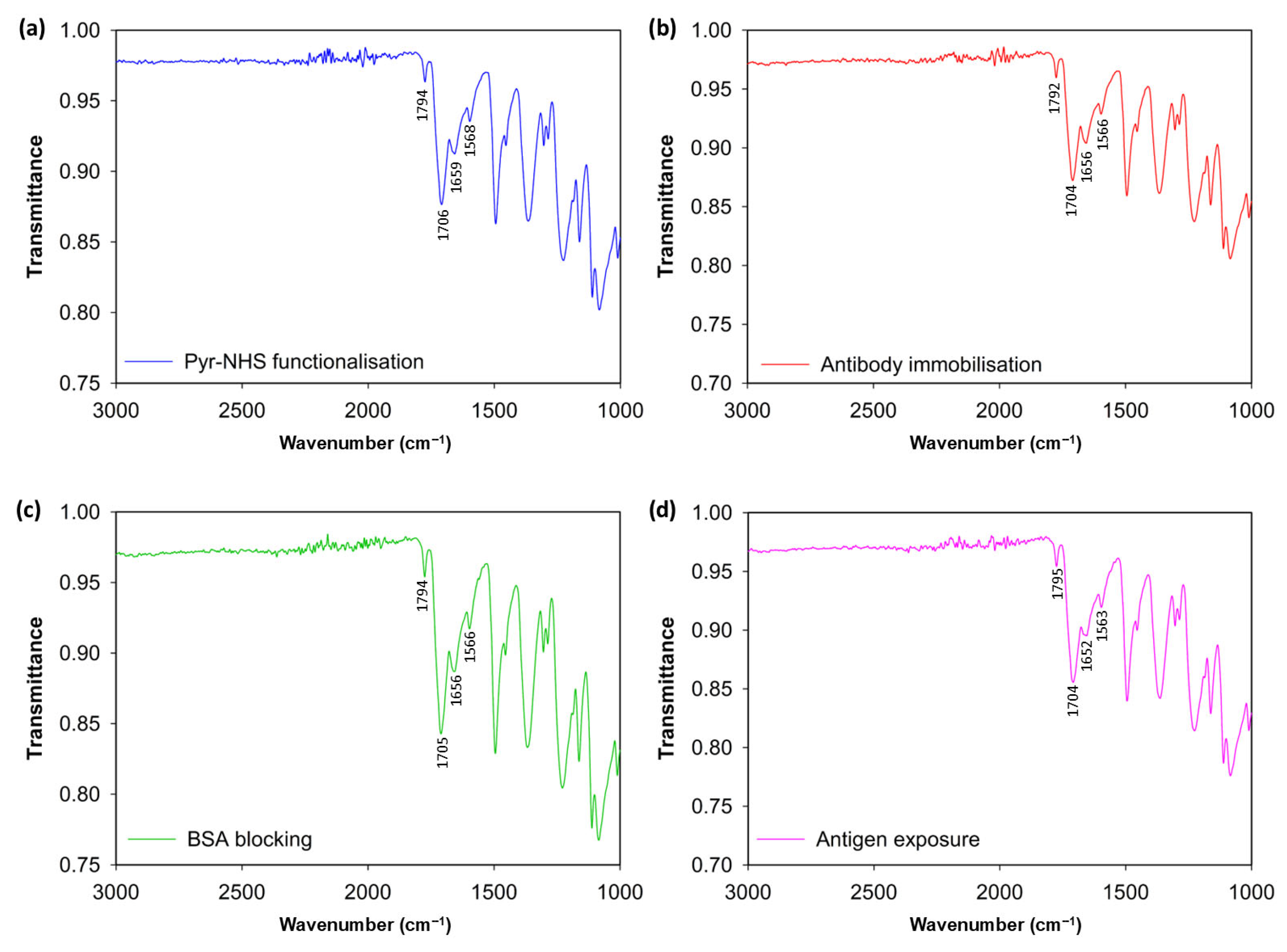
3.1.1. FTIR Analysis
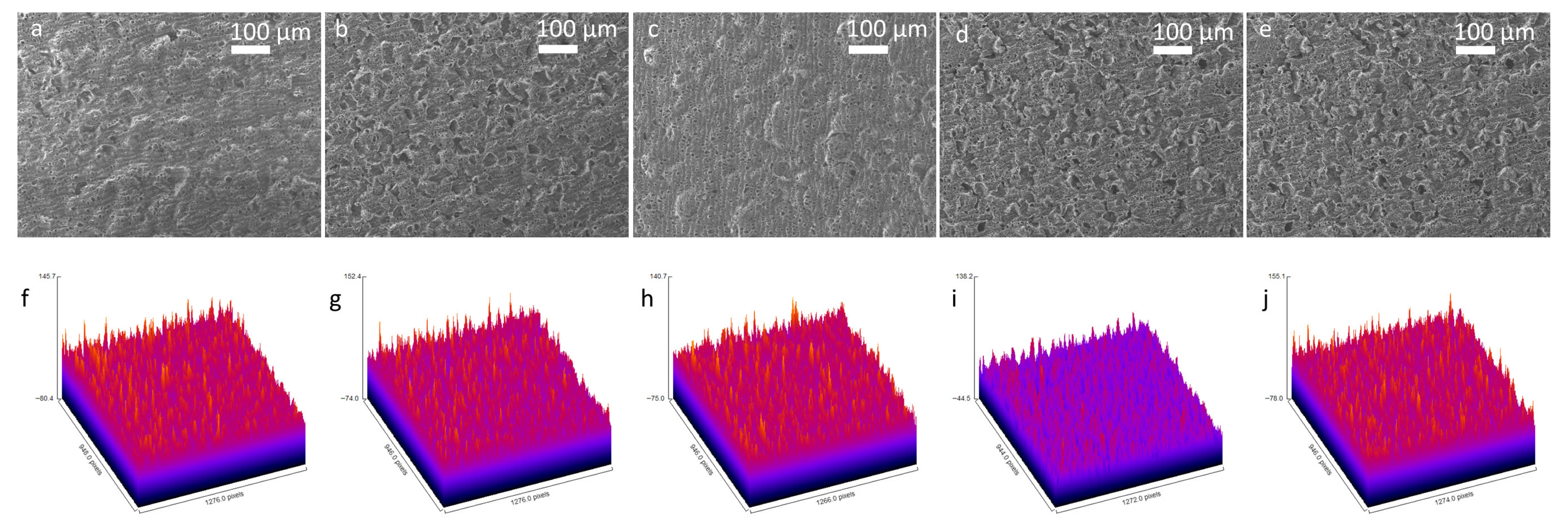
3.1.2. SEM Imaging
3.2. Electrochemical Analysis
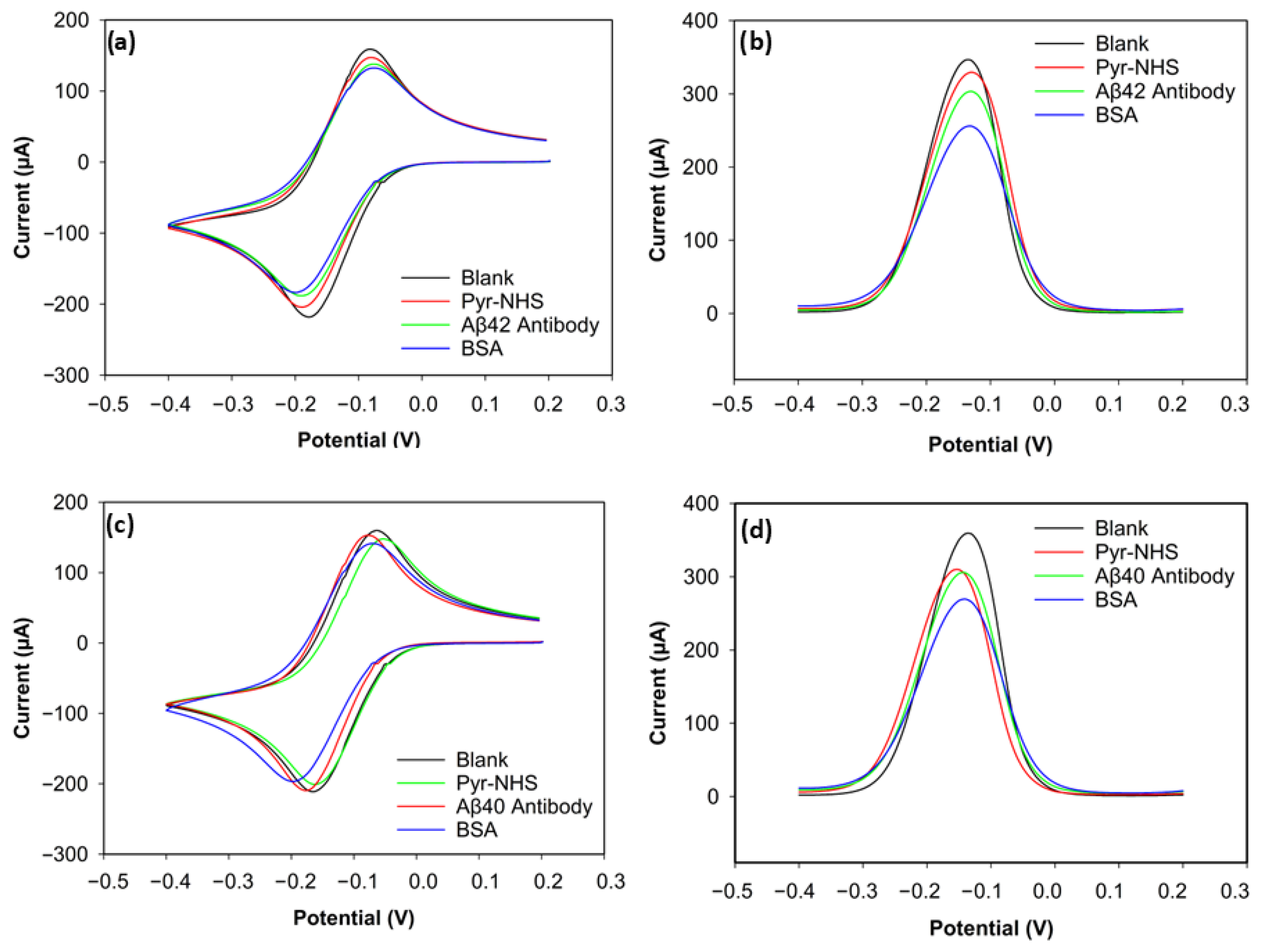
3.2.1. Electrochemical Characterisation of Aβ42 Biosensor
3.2.2. Electrochemical Characterisation of Aβ40 Biosensor
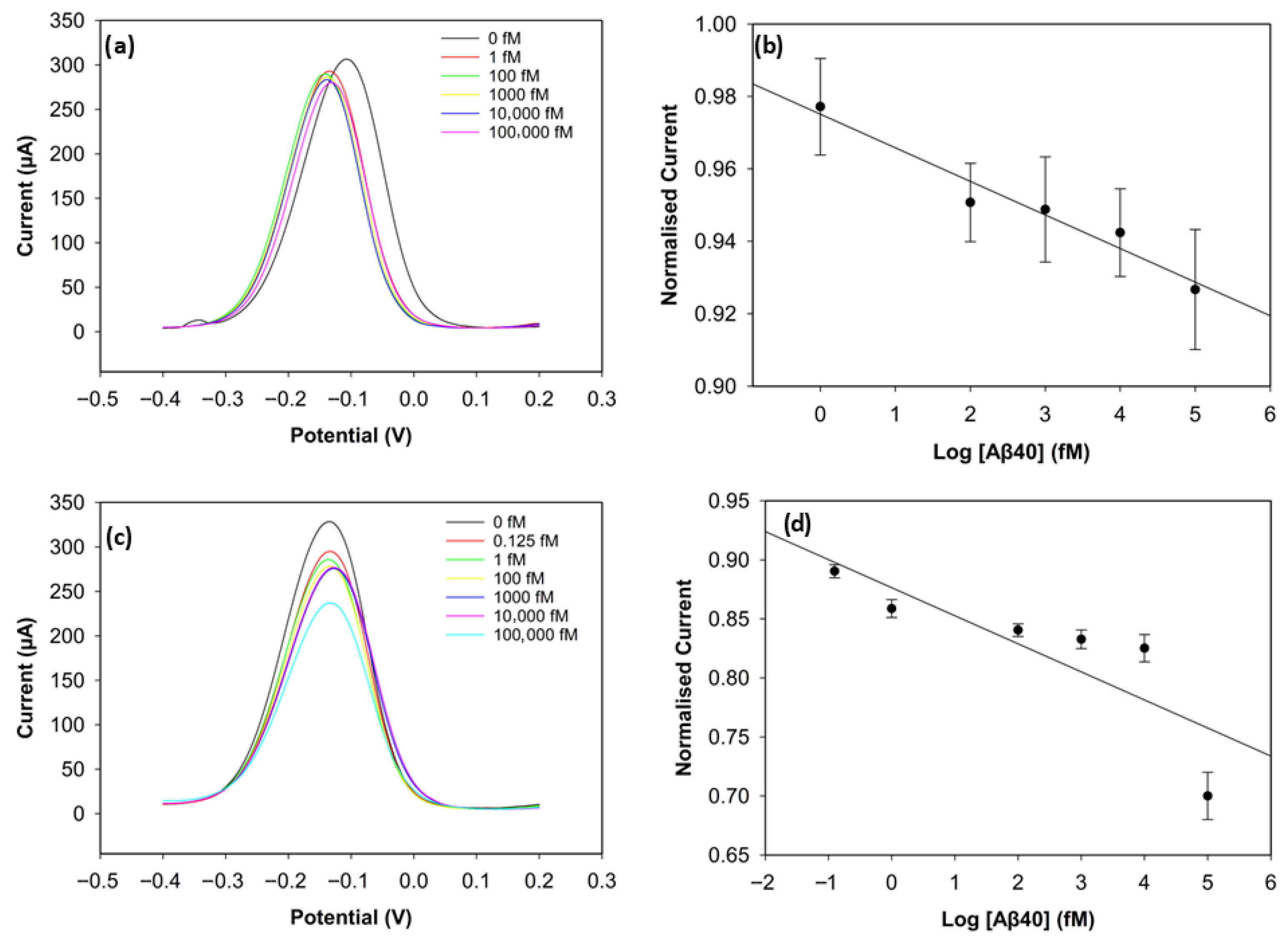
3.3. Analytical Performance of the Biosensor
3.3.1. Optimisation of Antibody Concentration
3.3.2. Additional Immunosensor Optimisation Experiments
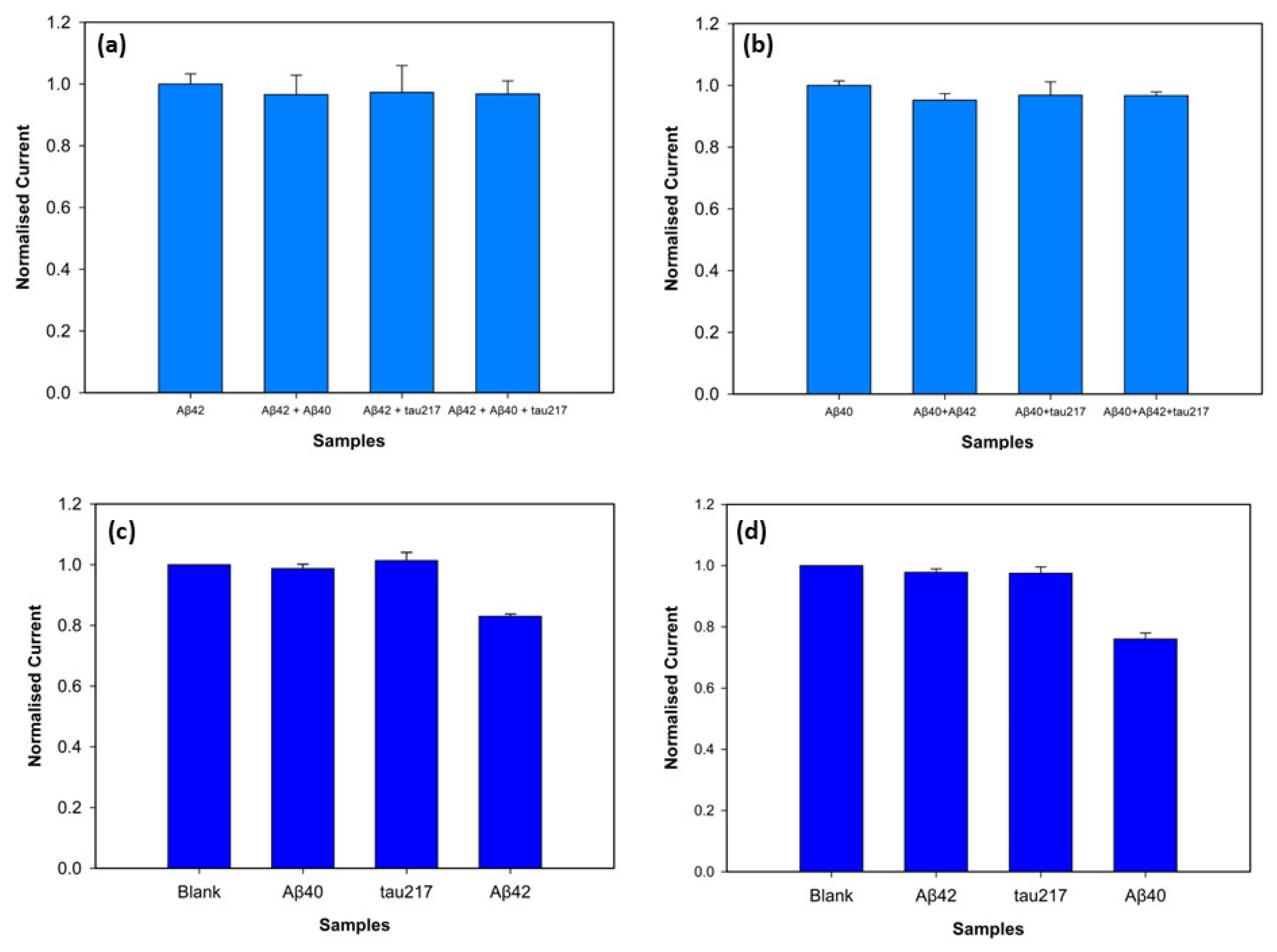
3.4. Specificity and Selectivity Experiments
3.5. Stability Experiments
3.6. Spiked-Diluted Plasma Experiments
4. Discussion
5. Conclusions
Supplementary Materials
Author Contributions
Funding
Data Availability Statement
Conflicts of Interest
References
- World Health Organization. Dementia Fact Sheet; WHO: Geneva, Switzerland, 2024; Available online: https://www.who.int/news-room/fact-sheets/detail/dementia (accessed on 23 April 2025).
- Zhou, X.; Ashford, J.W. Advances in screening instruments for Alzheimer’s disease. Aging Med. 2019, 2, 88–93. [Google Scholar] [CrossRef]
- Zhao, Z.J.; Zhu, L.; Bu, X.L.; Ma, H.L.; Yang, S.; Yang, Y.L.; Hu, Z.Y. Label-free detection of Alzheimer’s disease through the ADP3 peptoid recognizing the serum amyloid-beta42 peptide. Chem. Commun. 2015, 51, 718–721. [Google Scholar] [CrossRef] [PubMed]
- Scheltens, P.; Blennow, K.; Breteler, M.M.; de Strooper, B.; Frisoni, G.B.; Salloway, S.; Van der Flier, W.M. Alzheimer’s disease. Lancet 2016, 388, 505–517. [Google Scholar] [CrossRef] [PubMed]
- Sperling, R.A.; Aisen, P.S.; Beckett, L.A.; Bennett, D.A.; Craft, S.; Fagan, A.M.; Iwatsubo, T.; Jack, C.R., Jr.; Kaye, J.; Montine, T.J.; et al. Toward defining the preclinical stages of Alzheimer’s disease: Recommendations from the National Institute on Aging-Alzheimer’s Association workgroups on diagnostic guidelines for Alzheimer’s disease. Alzheimer’s Dement. 2011, 7, 280–292. [Google Scholar] [CrossRef]
- Jack, C.R., Jr.; Bennett, D.A.; Blennow, K.; Carrillo, M.C.; Dunn, B.; Haeberlein, S.B.; Holtzman, D.M.; Jagust, W.; Jessen, F.; Karlawish, J.; et al. NIA-AA Research Framework: Toward a biological definition of Alzheimer’s disease. Alzheimer’s Dement. 2018, 14, 535–562. [Google Scholar] [CrossRef]
- Humpel, C. Identifying and validating biomarkers for Alzheimer’s disease. Trends Biotechnol. 2011, 29, 26–32. [Google Scholar] [CrossRef]
- Blennow, K. Biomarkers in Alzheimer’s disease drug development. Nat. Med. 2010, 16, 1218–1222. [Google Scholar] [CrossRef]
- Wang, S.X.; Acha, D.; Shah, A.J.; Hills, F.; Roitt, I.; Demosthenous, A.; Bayford, R.H. Detection of the tau protein in human serum by a sensitive four-electrode electrochemical biosensor. Biosens. Bioelectron. 2017, 92, 482–488. [Google Scholar] [CrossRef] [PubMed]
- Lien, T.T.; Takamura, Y.; Tamiya, E.; Vestergaard, M.C. Modified screen printed electrode for development of a highly sensitive label-free impedimetric immunosensor to detect amyloid beta peptides. Anal. Chim. Acta 2015, 892, 69–76. [Google Scholar] [CrossRef]
- Sethi, J.; Suhail, A.; Safarzadeh, M.; Sattar, A.; Wei, Y.H.; Pan, G.H. NH2 linker for femtomolar label-free detection with reduced graphene oxide screen-printed electrodes. Carbon 2021, 179, 514–522. [Google Scholar] [CrossRef]
- Devi, R.; Gogoi, S.; Dutta, H.S.; Bordoloi, M.; Sanghi, S.K.; Khan, R. Au/NiFe2O4 nanoparticle-decorated graphene oxide nanosheets for electrochemical immunosensing of amyloid beta peptide. Nanoscale Adv. 2020, 2, 239–248. [Google Scholar] [CrossRef]
- Yang, Y.H.; Huang, L.C.; Hsieh, S.W.; Huang, L.J. Dynamic Blood Concentrations of Aβ(1-40) and Aβ(1-42) in Alzheimer’s Disease. Front. Cell Dev. Biol. 2020, 8, 768. [Google Scholar] [CrossRef] [PubMed]
- Lightheart, S. 5 Reasons Why You Should Be Using the New GII-Sens+® Electrodes-Integrated Graphene: 3D Carbon Structure, Integrated Graphene|3D Carbon Structure. iGii. 2024. Available online: https://www.integratedgraphene.com/blog/reasons-why-you-should-be-using-the-new-gii-sens-electrodes (accessed on 27 March 2024).
- Li, M.S.; Abeyrathne, C.; Langley, D.P.; Cossins, L.R.; Samudra, A.N.; Green, G.W.; Moulton, S.E.; Silva, S.M. Highly specific lubricin-lectin electrochemical sensor for glycoprotein cancer biomarker detection. Electrochim. Acta 2023, 457, 142508. [Google Scholar] [CrossRef]
- Sharma, A.; Wulff, A.; Thomas, A.; Sonkusale, S. Ultrasensitive electrochemical sensor for detection of salivary cortisol in stress conditions. Microchim. Acta 2024, 191, 103. [Google Scholar] [CrossRef]
- Nazir, S.; Dogan, M.; Wei, Y.H.; Pan, G.H. Electrochemical Immunosensor Using COOH-Functionalized 3D Graphene Electrodes for Sensitive Detection of Tau-441 Protein. Biosensors 2025, 15, 465. [Google Scholar] [CrossRef]
- Stevenson, H.S.; Shetty, S.S.; Thomas, N.J.; Dhamu, V.N.; Bhide, A.; Prasad, S. Ultrasensitive and Rapid-Response Sensor for the Electrochemical Detection of Antibiotic Residues within Meat Samples. ACS Omega 2019, 4, 6324–6330. [Google Scholar] [CrossRef]
- Vazquez-Gutierrez, I.G.; Reyes-López, M.A.; Ochoa, S.A.; Cruz-Córdova, A.; Hernández-Castro, R.; Orduña-Díaz, A.; Xicohtencatl-Cortes, J. Specific Detection of Uropathogenic via Fourier Transform Infrared Spectroscopy Using an Optical Biosensor. ACS Omega 2024, 9, 27528–27536. [Google Scholar] [CrossRef]
- Grieshaber, D.; MacKenzie, R.; Vörös, J.; Reimhult, E. Electrochemical Biosensors-Sensor Principles and Architectures. Sensors 2008, 8, 1400–1458. [Google Scholar] [CrossRef] [PubMed]
- Cao, M.M.; Fu, A.P.; Wang, Z.H.; Liu, J.Q.; Kong, N.; Zong, X.D.; Liu, H.H.; Gooding, J.J. Electrochemical and Theoretical Study of π-π Stacking Interactions between Graphitic Surfaces and Pyrene Derivatives. J. Phys. Chem. C 2014, 118, 2650–2659. [Google Scholar] [CrossRef]
- Patil, A.V.P.; Chuang, Y.S.; Li, C.Z.; Wu, C.C. Recent Advances in Electrochemical Immunosensors with Nanomaterial Assistance for Signal Amplification. Biosensors 2023, 13, 125. [Google Scholar] [CrossRef]
- Trzeciakiewicz, H.; Esteves-Villanueva, J.; Soudy, R.; Kaur, K.; Martic-Milne, S. Electrochemical Characterization of Protein Adsorption onto YNGRT-Au and VLGXE-Au Surfaces. Sensors 2015, 15, 19429–19442. [Google Scholar] [CrossRef]
- Shahzadi, M.; Nisar, S.; Kim, D.-K.; Sarwar, N.; Rasheed, A.; Ahmad, W.; Afzal, A.M.; Imran, M.; Assiri, M.A.; Shahzad, Z.M.; et al. Highly Efficient, Non-Covalent Functionalization of CVD-Graphene via Novel Pyrene-Based Supporter Construct. Chemosensors 2023, 11, 83. [Google Scholar] [CrossRef]
- Zorea, J.; Shukla, R.P.; Elkabets, M.; Ben-Yoav, H. Probing antibody surface density and analyte antigen incubation time as dominant parameters influencing the antibody-antigen recognition events of a non-faradaic and diffusion-restricted electrochemical immunosensor. Anal. Bioanal. Chem. 2020, 412, 1709–1717. [Google Scholar] [CrossRef] [PubMed]
- Huang, Z.; Li, M.; Zhang, L.; Liu, Y. Electrochemical immunosensor based on superwettable microdroplet array for detecting multiple Alzheimer’s disease biomarkers. Front. Bioeng. Biotechnol. 2022, 10, 1029428. [Google Scholar] [CrossRef]
- Lai, R.; Li, B.; Bishnoi, R. P-tau217 as a Reliable Blood-Based Marker of Alzheimer’s Disease. Biomedicines 2024, 12, 1836. [Google Scholar] [CrossRef]
- Zeng, X.; Chen, Y.; Sehrawat, A.; Lee, J.; Lafferty, T.K.; Kofler, J.; Berman, S.B.; Sweet, R.A.; Tudorascu, D.L.; Klunk, W.E.; et al. Alzheimer blood biomarkers: Practical guidelines for study design, sample collection, processing, biobanking, measurement and result reporting. Mol. Neurodegener. 2024, 19, 40. [Google Scholar] [CrossRef] [PubMed]
- Verberk, I.M.W.; Misdorp, E.O.; Koelewijn, J.; Ball, A.J.; Blennow, K.; Dage, J.L.; Fandos, N.; Hansson, O.; Hirtz, C.; Janelidze, S.; et al. Characterization of pre-analytical sample handling effects on a panel of Alzheimer’s disease-related blood-based biomarkers: Results from the Standardization of Alzheimer’s Blood Biomarkers (SABB) working group. Alzheimer’s Dement. 2022, 18, 1484–1497. [Google Scholar] [CrossRef]
- Abbasi, H.Y.; Tehrani, Z.; Devadoss, A.; Ali, M.M.; Moradi-Bachiller, S.; Albani, D.; Guy, O.J. Graphene based electrochemical immunosensor for the ultra-sensitive label free detection of Alzheimer’s beta amyloid peptides Aβ(1-42). Nanoscale Adv. 2021, 3, 2295–2304. [Google Scholar] [CrossRef]
- Shin, M.K.; Schuck, A.; Kang, M.; Kim, Y.S. Electrochemical Analysis of Amyloid Plaques and ApoE4 with Chitosan-Coated Gold Nanostars for Alzheimer’s Detection. Biosensors 2024, 14, 510. [Google Scholar] [CrossRef]
- Negahdary, M.; Heli, H. An electrochemical peptide-based biosensor for the Alzheimer biomarker amyloid-β using a microporous gold nanostructure. Microchim. Acta 2019, 186, 766. [Google Scholar] [CrossRef]
- Li, M.F.; Zeng, Y.; Huang, Z.; Zhang, L.Y.; Liu, Y.B. Vertical Graphene-Based Printed Electrochemical Biosensor for Simultaneous Detection of Four Alzheimer′s Disease Blood Biomarkers. Biosensors 2023, 13, 758. [Google Scholar] [CrossRef] [PubMed]
- Negandary, M.; Heli, H. An ultrasensitive electrochemical aptasensor for early diagnosis of Alzheimer’s disease, using a fern leaves-like gold nanostructure. Talanta 2019, 198, 510–517. [Google Scholar] [CrossRef] [PubMed]
- Kac, P.R.; Gonzalez-Ortiz, F.; Simrén, J.; Dewit, N.; Vanmechelen, E.; Zetterberg, H.; Blennow, K.; Ashton, N.J.; Karikari, T.K. Diagnostic value of serum versus plasma phospho-tau for Alzheimer’s disease. Alzheimer’s Res. Ther. 2022, 14, 65. [Google Scholar] [CrossRef] [PubMed]
- West, T.; Kirmess, K.M.; Meyer, M.R.; Holubasch, M.S.; Knapik, S.S.; Hu, Y.; Contois, J.H.; Jackson, E.N.; Harpstrite, S.E.; Bateman, R.J.; et al. A blood-based diagnostic test incorporating plasma Aβ42/40 ratio, ApoE proteotype, and age accurately identifies brain amyloid status: Findings from a multi cohort validity analysis. Mol. Neurodegener. 2021, 16, 30. [Google Scholar] [CrossRef]
- Doecke, J.D.; Pérez-Grijalba, V.; Fandos, N.; Fowler, C.; Villemagne, V.L.; Masters, C.L.; Pesini, P.; Sarasa, M. Total Aβ42/Aβ40 ratio in plasma predicts amyloid-PET status, independent of clinical AD diagnosis. Neurology 2020, 94, E1580–E1591. [Google Scholar] [CrossRef]
- Colmant, L.; Boyer, E.; Gerard, T.; Sleegers, K.; Lhommel, R.; Ivanoiu, A.; Lefèvre, P.; Kienlen-Campard, P.; Hanseeuw, B. Definition of a Threshold for the Plasma Aβ42/Aβ40 Ratio Measured by Single-Molecule Array to Predict the Amyloid Status of Individuals without Dementia. Int. J. Mol. Sci. 2024, 25, 1173. [Google Scholar] [CrossRef]



| Study (Electrode/Material) | Biomarkers (Detected) | Linear Range | Limit of Detection | Sample Matrix | Reference |
|---|---|---|---|---|---|
| 3D graphene foam electrode modified with Pyr-NHS | Aβ42/Aβ40 | 0.125 fM–1 nM for Aβ42/ 0.125 fM–100 pM for Aβ40 | 252 aM for Aβ42 in PBS, 1.37 fM in spiked-diluted plasma/ 395 aM for Aβ40 in PBS, 1.46 fM in spiked-diluted plasma | PBS and spiked-diluted plasma | This work |
| SPGE modified with p-DAN (polymerised 1,5-diaminonaphthalene) | Aβ42 | 1 pg/mL to 1000 pg/mL | ~0.31 pM | Spiked-diluted plasma | [30] |
| Screen-printed rGO modified with NH2 | Aβ42/Aβ40 | 5 fM–100 pM for Aβ42 5 fM–50 pM for Aβ40 | 8.65 fM for Aβ42 in PBS, 9.51 fM for Aβ40 in PBS | PBS and spiked-diluted plasma | [11] |
| CNT-Au nanostar PEG device | Aβ42/ApoE4 | 15.63 pg/mL–1000 pg/mL for Aβ42 | ~0.3 pM | Plasma | [31] |
| Microporous gold nanostructure with Aβ-binding peptide on Au | Aβ42 | 3 pg/mL to 7000 pg/mL | ~44 fM | Spiked serum | [32] |
| Vertical Graphene@nanoAu printed electrode array (VG@nanoAu) | Aβ42, Aβ40, T-tau, P-tau181 | 0.1 pg/mL–10 pg/mL | ~20 fM Aβ42, ~17 fM for Aβ40 | Serum | [33] |
| Fern leaves-like gold nanostructure immobilised with RNA | Aβ42 | 2 pg/mL–1280 pg/mL | ~89 fM | Artificial CSF and serum | [34] |
| Gold nanoparticle/nickel ferrite/graphene oxide–chitosan nanocomposite-modified glassy carbon electrode | Aβ42 | 1 pg/mL–1 ng/mL | 0.66 pM | PBS and CSF | [12] |
Disclaimer/Publisher’s Note: The statements, opinions and data contained in all publications are solely those of the individual author(s) and contributor(s) and not of MDPI and/or the editor(s). MDPI and/or the editor(s) disclaim responsibility for any injury to people or property resulting from any ideas, methods, instructions or products referred to in the content. |
© 2025 by the authors. Licensee MDPI, Basel, Switzerland. This article is an open access article distributed under the terms and conditions of the Creative Commons Attribution (CC BY) license (https://creativecommons.org/licenses/by/4.0/).
Share and Cite
Dogan, M.; Nazir, S.; Jenkins, D.; Wei, Y.; Pan, G. Electrochemical Detection of Aβ42 and Aβ40 at Attomolar Scale via Optimised Antibody Loading on Pyr-NHS-Functionalised 3D Graphene Foam Electrodes. Biosensors 2025, 15, 806. https://doi.org/10.3390/bios15120806
Dogan M, Nazir S, Jenkins D, Wei Y, Pan G. Electrochemical Detection of Aβ42 and Aβ40 at Attomolar Scale via Optimised Antibody Loading on Pyr-NHS-Functionalised 3D Graphene Foam Electrodes. Biosensors. 2025; 15(12):806. https://doi.org/10.3390/bios15120806
Chicago/Turabian StyleDogan, Muhsin, Sophia Nazir, David Jenkins, Yinghui Wei, and Genhua Pan. 2025. "Electrochemical Detection of Aβ42 and Aβ40 at Attomolar Scale via Optimised Antibody Loading on Pyr-NHS-Functionalised 3D Graphene Foam Electrodes" Biosensors 15, no. 12: 806. https://doi.org/10.3390/bios15120806
APA StyleDogan, M., Nazir, S., Jenkins, D., Wei, Y., & Pan, G. (2025). Electrochemical Detection of Aβ42 and Aβ40 at Attomolar Scale via Optimised Antibody Loading on Pyr-NHS-Functionalised 3D Graphene Foam Electrodes. Biosensors, 15(12), 806. https://doi.org/10.3390/bios15120806