Article

Machine Learning-Enabled Prediction of 3D-Printed Microneedle Features


by
Misagh Rezapour Sarabi
1,†,
M. Munzer Alseed
2,†,
Ahmet Agah Karagoz
1 and
Savas Tasoglu
1,2,3,4,5,*
1
Graduate School of Sciences & Engineering, Koç University, Istanbul 34450, Turkey
2
Boğaziçi Institute of Biomedical Engineering, Boğaziçi University, Istanbul 34684, Turkey
3
Koç University Translational Medicine Research Center, Koç University, Istanbul 34450, Turkey
4
Koç University Arçelik Research Center for Creative Industries, Koç University, Istanbul 34450, Turkey
5
Physical Intelligence Department, Max Planck Institute for Intelligent Systems, 70569 Stuttgart, Germany
*
Author to whom correspondence should be addressed.
These authors contributed equally to this work.
Biosensors 2022, 12(7), 491; https://doi.org/10.3390/bios12070491
Submission received: 20 May 2022 / Revised: 29 June 2022 / Accepted: 4 July 2022 / Published: 6 July 2022

Abstract

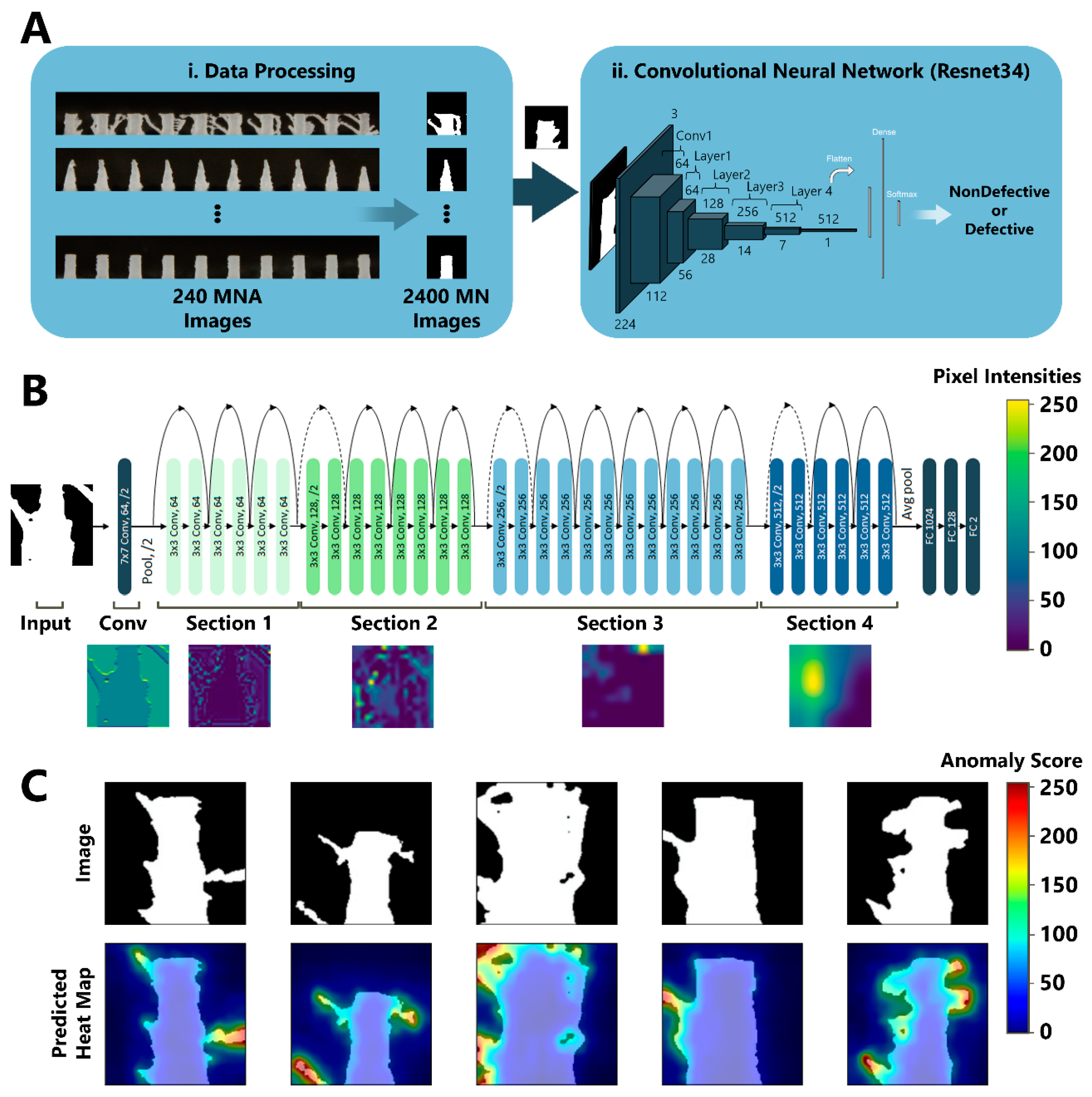
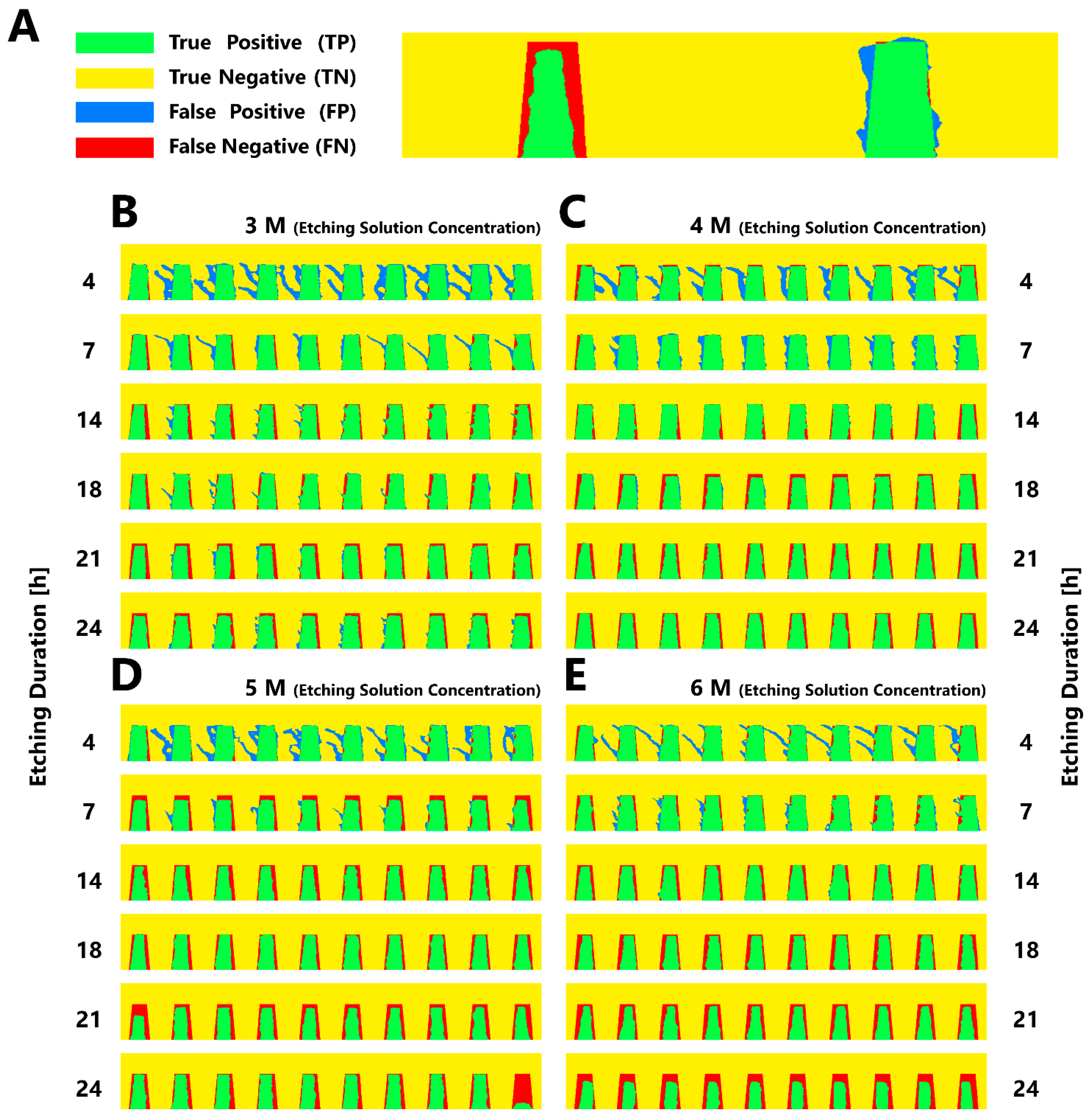
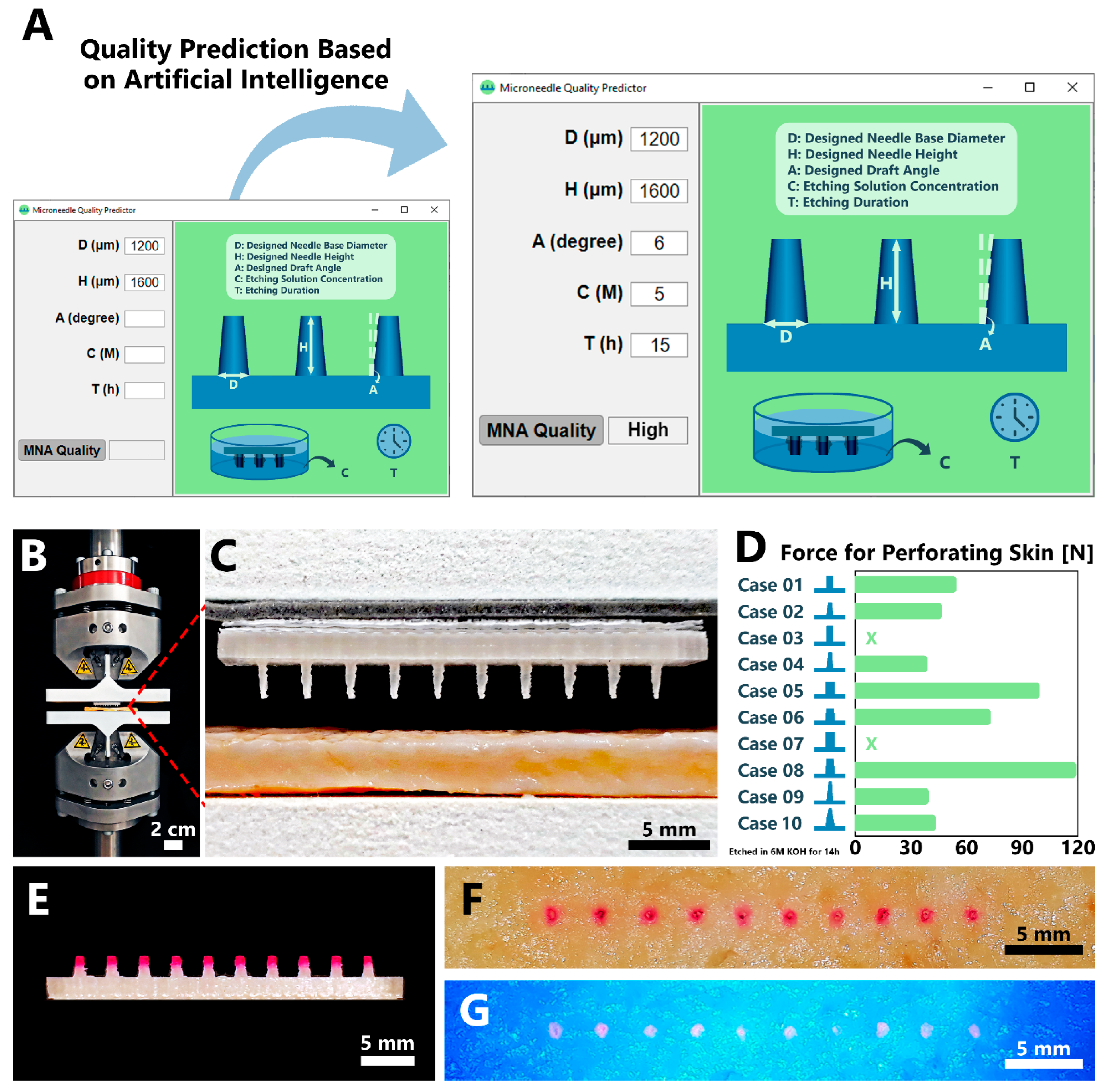
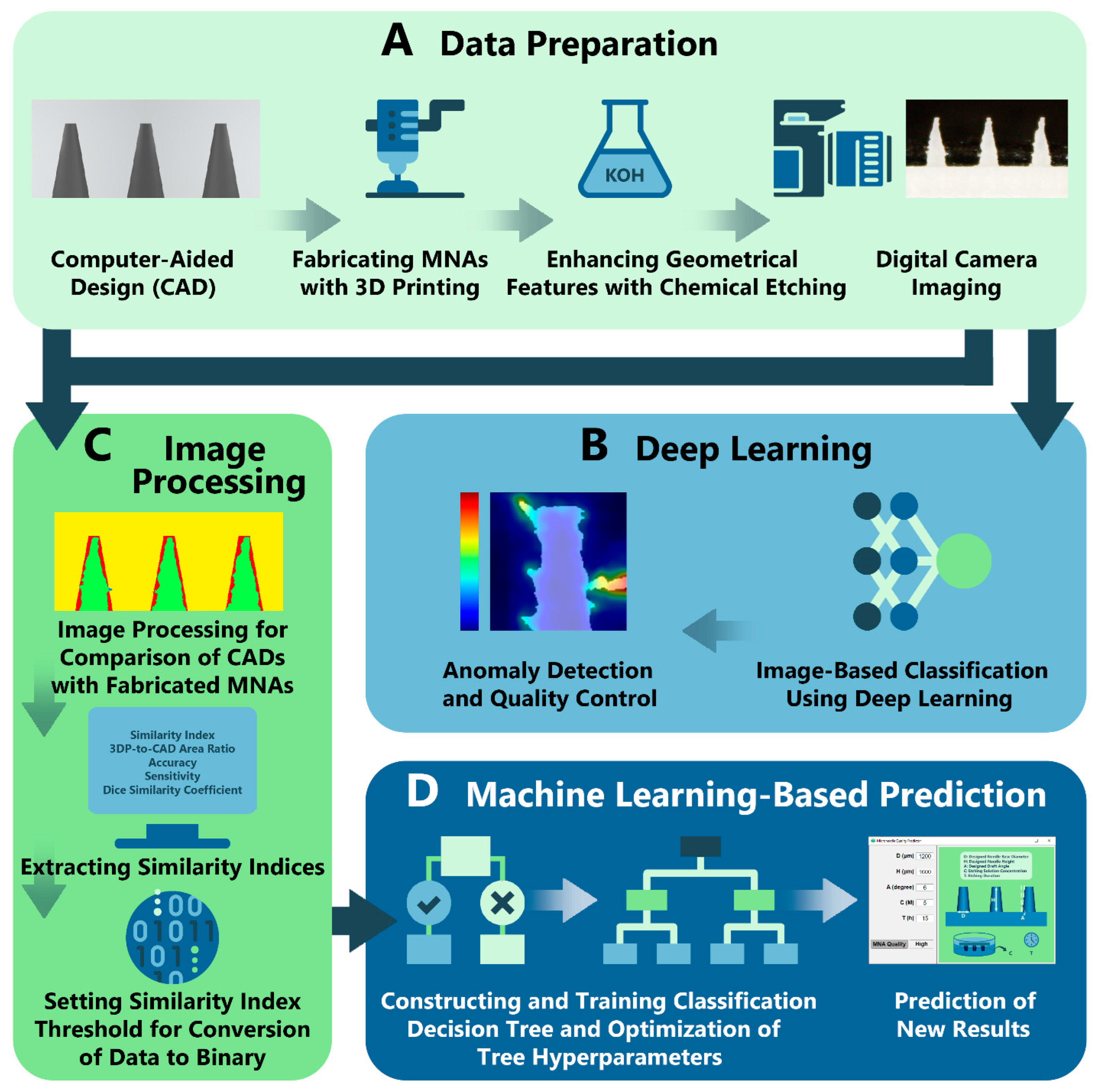
Microneedles (MNs) introduced a novel injection alternative to conventional needles, offering a decreased administration pain and phobia along with more efficient transdermal and intradermal drug delivery/sample collecting. 3D printing methods have emerged in the field of MNs for their time- and cost-efficient manufacturing. Tuning 3D printing parameters with artificial intelligence (AI), including machine learning (ML) and deep learning (DL), is an emerging multidisciplinary field for optimization of manufacturing biomedical devices. Herein, we presented an AI framework to assess and predict 3D-printed MN features. Biodegradable MNs were fabricated using fused deposition modeling (FDM) 3D printing technology followed by chemical etching to enhance their geometrical precision. DL was used for quality control and anomaly detection in the fabricated MNAs. Ten different MN designs and various etching exposure doses were used create a data library to train ML models for extraction of similarity metrics in order to predict new fabrication outcomes when the mentioned parameters were adjusted. The integration of AI-enabled prediction with 3D printed MNs will facilitate the development of new healthcare systems and advancement of MNs’ biomedical applications.
Keywords: microneedles; machine learning; deep learning; 3D printing; artificial intelligence; image processing microneedles; machine learning; deep learning; 3D printing; artificial intelligence; image processing