You are currently viewing a new version of our website. To view the old version click .
Information
  • Concept Paper
  • Open Access

22 June 2020

Precursors of Role-Based Access Control Design in KMS: A Conceptual Framework


and
School of Information and Software Engineering, University of Electronic Science and Technology of China, Chengdu 611731, China
*
Author to whom correspondence should be addressed.
This article belongs to the Section Information Systems

Abstract

Role-based access control (RBAC) continues to gain popularity in the management of authorization concerning access to knowledge assets in organizations. As a socio-technical concept, the notion of role in RBAC has been overemphasized, while very little attention is given to the precursors: role strain, role ambiguity, and role conflict. These constructs provide more significant insights into RBAC design in Knowledge Management Systems (KMS). KMS is the technology-based knowledge management tool used to acquire, store, share, and apply knowledge for improved collaboration and knowledge-value creation. In this paper, we propose eight propositions that require future research concerning the RBAC system for knowledge security. In addition, we propose a model that integrates these precursors and RBAC to deepen the understanding of these constructs. Further, we examine these precursory constructs in a socio-technical fashion relative to RBAC in the organizational context and the status–role relationship effects. We carried out conceptual analysis and synthesis of the relevant literature, and present a model that involves the three essential precursors that play crucial roles in role mining and engineering in RBAC design. Using an illustrative case study of two companies where 63 IT professionals participated in the study, the study established that the precursors positively and significantly increase the intractability of the RBAC system design. Our framework draws attention to both the management of organizations and RBAC system developers about the need to consider and analyze the precursors thoroughly before initiating the processes of policy engineering, role mining, and role engineering. The propositions stated in this study are important considerations for future work.

1. Introduction

Security on knowledge resources is of higher priority to most organizations. Organizations lose grip of their competitiveness when there is much disregard for knowledge security and protection. Typically, employees in organizations share knowledge through the use of KMS. KMS is defined as the technology-based knowledge management tool used to acquire, store, share, and apply knowledge for improved collaboration and knowledge-value creation. In the KMS environment, users can create, store, share, and utilize knowledge in ways that improve their job performance [1,2]. Access to knowledge resources for use or reuse requires user authentication and authorization [3]. Despite the rationale of KMS as a knowledge-sharing platform, the system has to provide security for the knowledge packages shared or transferred within the organization. Typically, organizations deploy security models in their KMS for controlling and managing knowledge resources more securely and protectively [4,5]. One such commonly deployable models are the role-based access control (RBAC) model. Though there is still a debate on the suitability of access control models in general, and RBAC in particular in KMS, the extent of restrictions on knowledge resources relates to specialized roles and the intent of a specific KMS [3]. Thus, the view of the authors suggests that security is a serious concern when considering unauthorized access to knowledge resources. As noted by [6], this level of recognition of security awareness on knowledge resources by organizations affirms the need to introduce access control policies that build trust and confidence between people and to facilitate knowledge sharing.
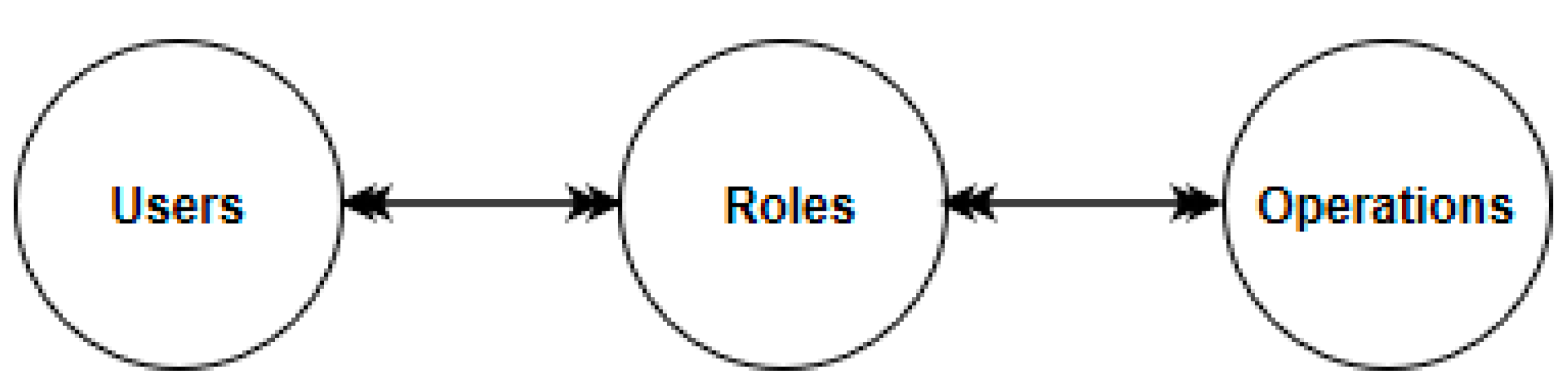
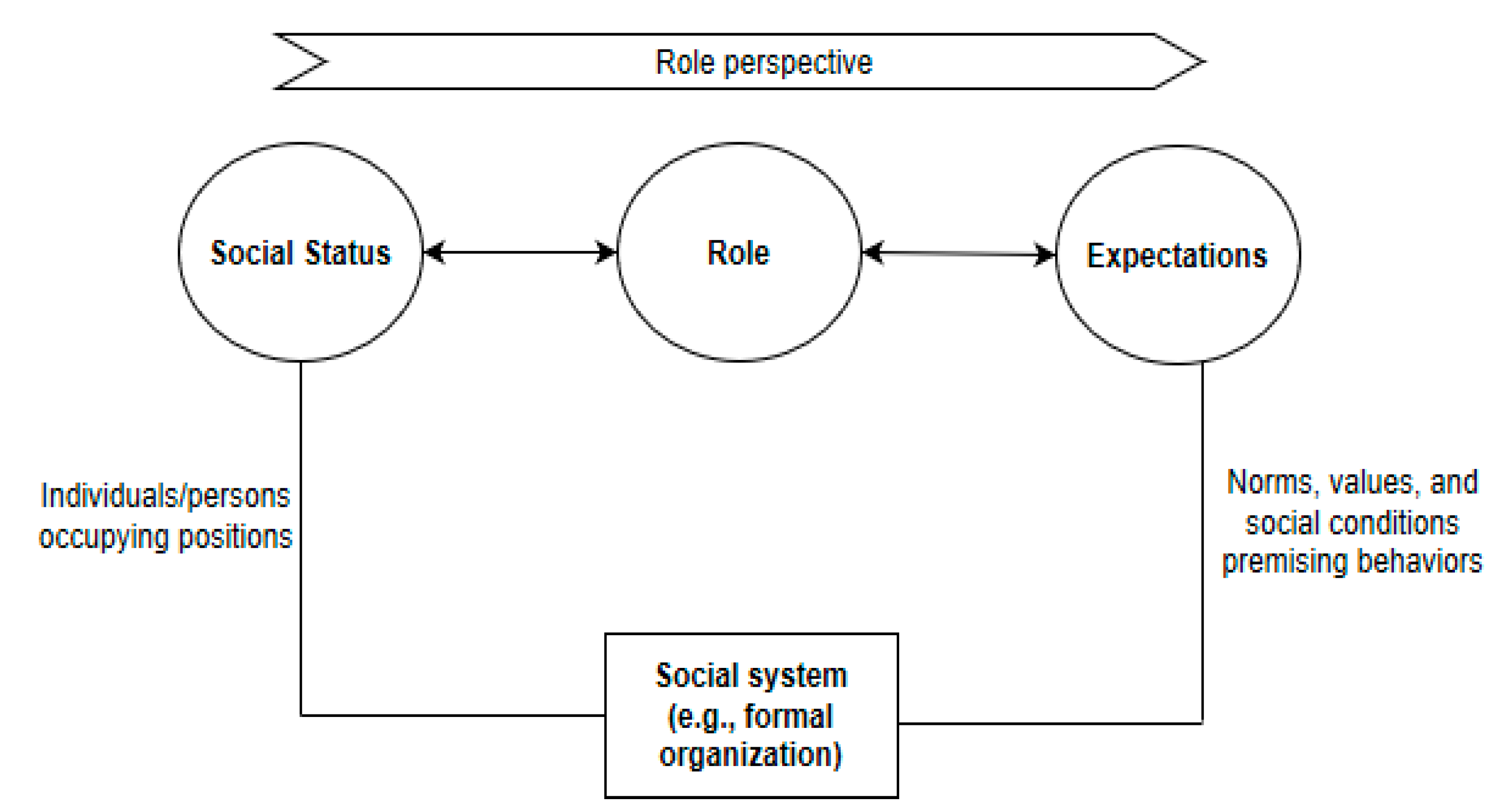
From an organizational perspective, roles are defined for actors to carry out specific expected behaviors that commensurate with their functions and obligations. In a social sense, roles involve interactions and set the premise for expectations that can lead to effective collaboration. Transitioning from a social context to a technical setting, [7,8] used the term “roles” to mean access privileges in the design of RBAC to curtail misuse of data stored in databases of a system. Users assigned to roles can interact with other people, devices, or software applications through clearly defined access permissions. Unlike roles used in a sociological sense, roles, as used in RBAC, are predefined but scalable and can assume different occupants. Because roles are not negotiated in a technical system, it is relatively easy to ensure that role-takers function only per that role expectations [9]. However, it is generally tedious to explicitly and sufficiently define the boundaries of role-taking or role-making because of the dynamic nature of roles as a social concept.
By the principle of RBAC, the use of roles relates to users engaging in some predefined activities given access permissions [10]. As much as roles in RBAC involve some interactions as either role owners, makers, or takers, RBAC is recognized in this paper as a socio-technical concept. The recognition of RBAC in computer-based security systems is wholly due to the dynamism in roles that make it possible to opt for separation of duty (SoD) such that role conflicts are sufficiently avoided. In a broader sense, many knowledge management (KM) initiatives address knowledge security-related problems by the direct deployment of RBAC for access restrictions on knowledge resources [11]. We emphasize that the use of this socio-technical RBAC in the KMS arena, in particular, has precursors (1) role strain, (2) role ambiguity, and (3) role conflict that influence the role mining and role engineering processes. Though these precursors are sociological or social psychological concepts [12,13], they are very critical for RBAC design and use in KMS. As a result, there is still a gap in the existing KMS literature between the deployment of RBAC as an access control measure and the potential role stressors (i.e., the precursors) that complicate RBAC design, particularly on role definitions for user assignments. Having reviewed past studies, it is necessary to discuss both the social and technical perspectives of RBAC and the transitional effects of the precursors on RBAC. Moreover, the issues about these precursors originate from the nature of the organizational structure in which traditional roles associated with statuses can complicate the technical design of RBAC. The idea of role in RBAC policy in knowledge management initiatives still lacks a comprehensible, socio-technical, theoretical foundation to provide a firm empirical application. Thus, this paper examines these precursors of the socio-technical RBAC and contributes to an enriched understanding of RBAC design guidelines. Considering information systems (IS) and KMS literature from past studies, we provide in this study a precursory socio-technical RBAC model. We further state that this article focuses on the effect that these precursory factors can have on the design of RBAC.
Our paper is organized as follows. Section two gives the method or approach to this study. Section three discusses related works, while section four explains the socio-technical perspective of RBAC. Section five gives an insight into the precursors of RBAC. Section six presents an illustrative case study. Section seven discusses the implications of the study, and section eight gives the conclusions of the study.

2. Methods

Several works have documented the deployment of RBAC as a network security tool for systems in organizations. From the core RBAC developed by [10] to the many extensions presented in the works such as [8,14,15], RBAC continues to gain much recognition in IS/KMS literature. Our conceptual framework draws on cross fields of research such as strategic management, sociology, social psychology, systems theory, role theory, policy analysis, and engineering, network privacy and security, and organizational capability. We searched scholarly literature through online databases and identified these fields of study for consideration in our article. Initially, we reviewed the literature on the precursors—role strain, role ambiguity, and role conflict peculiar to the fields of sociology and psychology.
With the understanding of how these concepts interplay in social settings vis-à-vis organizational behavior, we extended the review to include role theory as applied in role engineering in the context of system’s security. Individually, articles on RBAC were scrutinized, and the concept of roles as used in RBAC design was analyzed to determine its transitional use in the technical sense. Publications that dwell on RBAC as a security control mechanism in KMS were considered useful to this study. Besides the precursors, our review considered some crucial concepts such as role mining, role engineering, policy engineering, individual status/position, governing team, and role dimensionality.
Analysis and synthesis followed the initial review. At this stage, we correctly identified articles that matter to this study. Primarily, issues related to access control models and how RBAC fits into KMS adoption were identified to aid the understanding of the technical aspect being considered. Besides, discussions on the precursors, including their dimensions, were also examined. Beyond this point, our focus shifted to analyzing only those ideas that emphasize RBAC as a socio-technical tool in KMS and how the precursors can impact the intractability of RBAC design. This approach to reviewing the literature was an in-depth one and systematically based on themes. After the review and analysis, we synthesized the role-related factors or dimensions that emerged to develop our conceptual framework provided in this study. We focused on only the key ideas concerning the dimensions of roles in either the sociological sense or technical sense or both. The attempt to bring these perspectives of roles together was to facilitate the development of a balanced approach. This clarifies RBAC as a socio-technical phenomenon in a KMS environment.
Thus, this section highlights the underlining procedure or methodological approach that aided quality outcome of the discussion on related works in Section 3. From the reviewed literature, there are relationships between the precursors on the one hand—sociological context and relationships between roles, users, and permissions, on the other hand—technical context. In this article, our conceptual framework establishes a link between the sociological context and the technical context and explores the influences that the precursors have on RBAC design. We offer a detailed discussion later in this study.

4. The Precursors of RBAC

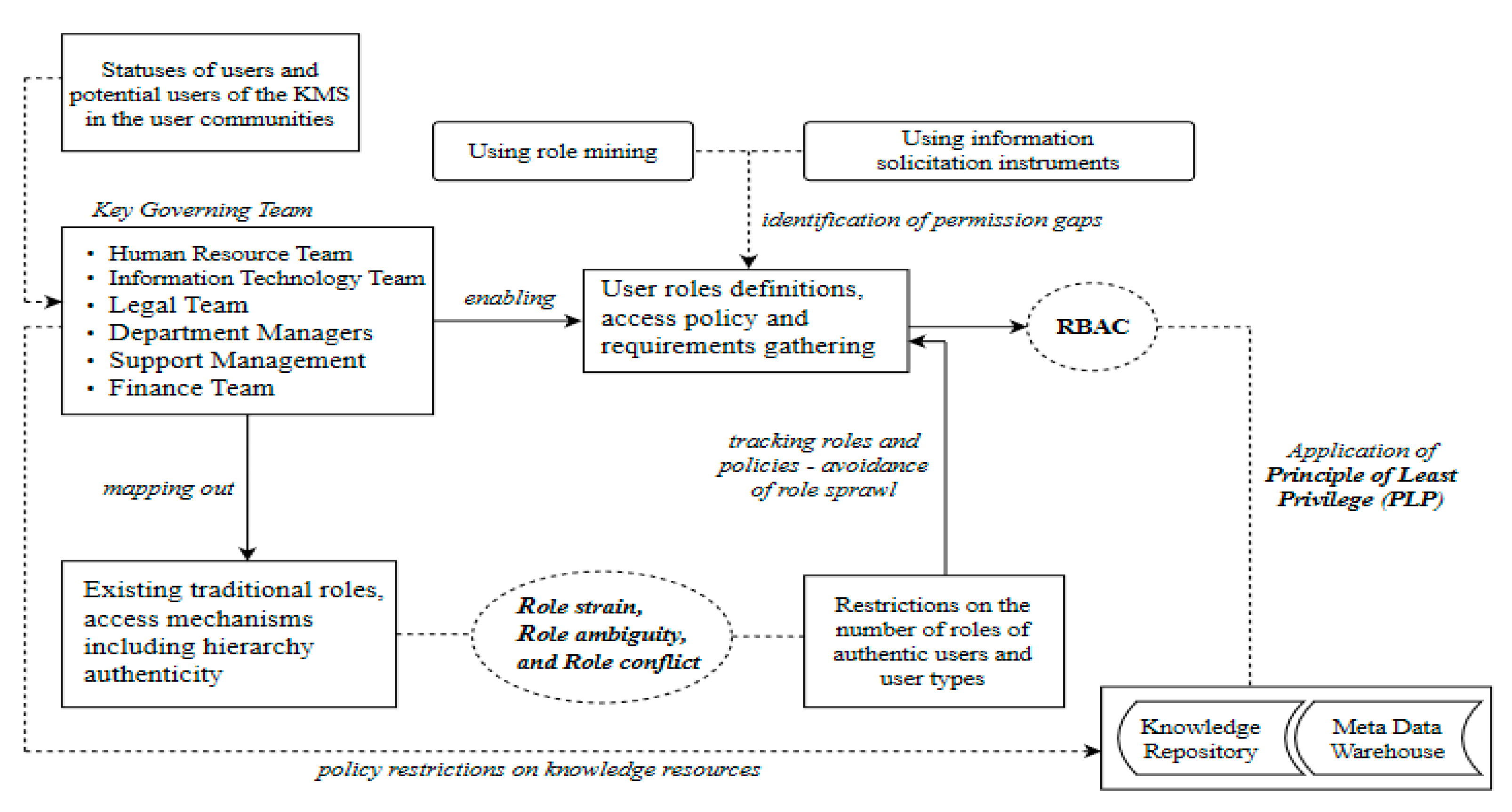
From the sociological viewpoint, role overload, role ambiguity, and role conflict precursors are the residual of status inconsistency in which more than one status implies more than one role [73]. Moreover, [74], in their study, attempted to explore instances where role conflict is similar to status inconsistency. Overlooking statuses from policy engineering perspective towards role engineering context lead to three fundamental concerns (i.e., role overload, role ambiguity, and role conflict) that complicate role engineering at the initial stages. Figure 3 shows the precursors and their relationship with the RBAC model. We thus emphasize that organizational mining processes explicate these precursors in ways that distinctively allow for appreciating the relationships among the precursors. Many works have discussed these precursors either in isolation or in combination across different disciplines, but no such works studied their antecedent role in RBAC for access control in KMS. We recognize the semantic meaning of the terms as applied in other disciplines, and extend its application in a technical sense in the RBAC system.
Figure 3. The precursors and their relationship with the RBAC model.

4.1. Role Strain

Formerly, [75] defined role strain as “difficulty in meeting given role demands” (p. 485). The author emphasized that the sum of role obligations of an individual is generally over-demanding to the extent that managing role system for anticipated normative commitment becomes more complicated [76] refers to role strain as the discrepancy between what an individual achieves and the perceived role expectations. The author assesses how a role incumbent enacts roles through negotiation mechanisms that achieve higher role price or performance. Considering role strain in terms of probability, [32] defined role strain as “when the demands of a particular role are such that the incumbent is hard-pressed to meet them all” (p. 125). In addition, [77] defined role strain as the inconsistent demands that compel a person to experience some levels of exhaustion, tension, and burden. From organization management context, we thus refer to role strain as the sum of complications that an individual occupying a status or a position experiences when enacting a given role or a set of roles. Within a status, an incumbent is exposed to a range of roles constrained by the norms, beliefs, and values of the organization. Moreover, role strain is a function of role overload, role conflict, and role ambiguity [78]. Thus, out of strain, a person can abuse access rights which can be costly to the organization because some other roles have to be compromised. Overlooking this intricate aspect of role strain is likely to affect RBAC design.
Normative commitment and conformity by individuals assigned to specific roles entangle them to make decisions which exert strain or stress in their efforts to perform all roles. In other words, an individual occupying an identified status is challenged with conflicting demands given limited resources (e.g., time), which often lead to compromise of some role expectations. Interestingly, the nature of the social structure existing in an organization can sometimes escalate either the role set, the status set, or both. In any of the situations, individuals try to engage in negotiations (i.e., role or status bargains) to perform less for more role or status price. Thus, the interconnectedness of institutional structures vis-à-vis role relationships (role networks) inherently sets forth stress resulting from role demands and obligations [59].
The definition of status can present tricky scenarios when roles associated with statuses seem to cause either role conflict or role strain. However, the flip-side argument for role enhancement encourages firms to overlook status accumulation. For positive outcomes, [79] posited that a person occupying more than one role within a status benefits from status security, social prestige, control over resources for status enrichment, and self-gratification. If there are two distinct statuses with each having its role set, then role conflict can arise—inter-role conflict. In addition, if two related statuses are classified as a single status such that each has a separate role set, then role strain occurs as there are opposing role demands. By this premise, a role engineering process that aims at providing an effective RBAC system has to initiate mining techniques from statuses rather than isolating them despite the significant emphasis placed on roles. We argue that the more complex the statuses set, the higher the degree of role demands that are likely to cripple role definitions and further complicate permission constraints during RBAC design. Organizations prefer systems that offer the best security functions for much comfort, trust, suitability, and, above all, increase performance. Status mining approaches are prerequisites to role mining or role-engineering techniques. Over concentration on role mining methods tend to relegate the status engineering process, which affects the social perspective of RBAC systems.
In the KMS context, a person may assume more than one status. To deploy and enforce any access control measure with the RBAC system, it is not sufficient to assign a status to only one person without considering the overall status set of the person. This attribution can sometimes be tricky as a person may be assumed to possess only one status and abuse privileges, for example, an investor, a financial analyst, and a stockbroker of a company. In this case, the status set has three elements, and each element has an associated set of roles. Suppose there are more defined roles for each element in the analyst–investor–broker status, roles might oppose other roles and create role tension within that status set. Thus, regardless of the role-engineering optimization method supported by cardinality and user-oriented exclusive constraints [80], role strain is likely to occur and complicate the RBAC system. Hence, it is appropriate to consider SoD from the status context through an optimized status engineering method that can reduce the knottiness of RBAC design.

4.2. Role Ambiguity

Role ambiguity is the situation where there is a lack of adequate information about the demands of a role, and the role occupant does not know how to fulfill those demands [81]. As regards an individual’s behavior towards a role enactment, [65] refers to role ambiguity as a situation in which the individual is faced with incomplete role expectations. According to [75], role ambiguity is the state in which the role incumbent lacks sufficient or complete expectations to guide actual behavior. In addition, [82,83] refer to role ambiguity as the unclear expectations which make the role incumbent uncertain about what ought to be done. Moreover, [37] defines role ambiguity in terms of predictable outcomes, given the inputs from the environment to guide one’s behavior. Primarily, role ambiguity emphasizes a lack of clarity about roles, which often distracts the role-taker as to what exactly to do regarding role performance. Thus, role ambiguity is a critical factor in the design of the RBAC system.
Users in an organization perform various functions and responsibilities. In executing the role engineering process for the RBAC system, role expectations of users must reflect as accurately as possible those functions or duties. If within a single status, there are multiple roles such that two or more roles may overlap to create ambiguous role expectations, then unclear and unstable role assignments to users can occur. Role ambiguity can manifest in the uncertainty of role selection. The effect is that the choice of roles for user-permission assignments become more problematic [84] illustrated that role selection for each user-permission assignment must reduce the level of ambiguity so that roles are managed effectively. The authors posited that it is best to reduce (or, if possible, eliminate) role-selection ambiguity involved in managing user-permission assignments. In addition, useful and efficient algorithms can help identify all candidate roles that exhibit features of ambiguity. We argue, therefore, that, first, role ambiguity must be tackled from policy and functional perspectives so that the use of optimized role-mining techniques can minimize the number of expected role–user assignments and, second, improve the administration effort of the RBAC system.

4.3. Role Conflict

Role conflict, in a sociological context, is a structural condition and can destabilize the formal structure of an organization. Conflicts among roles occur when there are competing expectations for resources such as time and energy of the role incumbent [65] defines role conflict as “the concurrent appearance of two or more incompatible expectations for the behavior of a person (p. 82). While [32] refers to role conflict as a clash between actual demands of roles, [83] rather defined role conflict as the extent of the inappropriateness of role expectations. Similarly, when roles contradict one another and occur simultaneously, [82] expresses such contradictory expectations as role conflict because they hinder completion of tasks of the role incumbent. Role conflicts may be inbound (i.e., within the same status) or outbound (i.e., across a combination of statuses). As identified by [85], inter-role conflict, person-role conflict, intra-sender conflict, and inter-sender conflict are some of the essential forms of conflict that characterize behavioral requirements of roles. It is thus important to examine these concepts thoroughly during the role engineering process.
Further, [37] saw role conflict as the dimensions of consistency-inconsistency found in the behavioral requirements of a role. The authors also explained that a violation of either the principle of unity of command or chain of command could cause role conflicts in an organization. Thus, there is a multiplicity of factors that can lead to conflicting roles within the organization, and these may include conflicting policies, standards, instructions, processes, and structures. In any instance that one of these exerts pressures of congruency-incongruency of role expectation, role conflict occurs.
Technically, one major priority of the RBAC system is to resolve conflicting roles faced by organizations both explicitly and implicitly for efficient security management of corporate knowledge assets. When defined roles are not harmonized well, there is role malintegration, or a user of a role faces many role expectations or responsibilities—role overload [37,75], the intricacies of role interactions require efficient, optimization role-mining techniques to achieve successful role–permission assignments. As more users become role members, the role network widens with an increasing number of permissions. To manage permissions effectively, users must be assigned to the right roles devoid of conflicts. Thus, there have to be mutually exclusive roles such that local administrators can do the delegation and decentralization of user-role assignments without any fear of security breach. Given this principle, permission constraints are used as checks on abuse of privileges. Therefore, if role conflicts are eliminated or reduced from organization management’s perspective, it becomes easier for the RBAC designer to tailor system requirements appropriately with specific role demands.
In effect, a critical examination of the precursors enables RBAC system developers to better understand the status–role relationship from the perspective of organization management. Contrarily, if the management of organizations ensure that statuses together with their role expectations are unambiguous and non-conflicting, there is the possibility of no greater complications in the separation of duty policy for the RBAC model. Moreover, role mining and role engineering are important elements of the RBAC model, and they can be very costly when there are multiple iterations in these processes for secured KMS. Thus, we argue that status set analysis is imperative to ensure clear role definitions and to necessitate uncomplicated RBAC design.

5. Description of the Proposed Integrative Model

Statuses assigned to users within an organization are a reflection of the functional structure of the organization. Senior management and other functional leaders (i.e., key governing team) occupy positions associated with critical responsibilities. The governing team maps out and defines authentic, traditional roles assigned to users to accomplish job performance. The team helps to address issues relating to policy restrictions concerning authorization management of the knowledge repository. From an organizational management viewpoint, the key governing team premises role definitions in terms of role expectations and establishes policies and procedures on access to knowledge resources. This effort facilitates the technical design and implementation of access control policies on knowledge assets. By this understanding, the processes of role mining and information solicitation can help to identify permission gaps for efficient permission-constraint assignments. In addition, norms, culture, and practices within a formal organization sometimes lead to status inconsistency, which further leads to ambiguous or conflicting roles. Thus, role strain, role ambiguity, and role conflict become important antecedents to RBAC design, and will require effective separation of duties during role engineering process. If roles are analyzed from this perspective, there is a greater chance of avoiding role sprawl unnecessarily. Hence, in KMS environment, the socio-technical perspective of RBAC design is an essential consideration for successful deployment of RBAC system. A detailed description of the model is provided below.
Statuses of users in user community: Statuses have varying perceptual weights, and the stronger the conviction and credibility for a particular status, the higher the degree of role expectations and role behaviors [43,44]. This explains why some statuses are accompanied by very demanding roles in the KMS environment. For example, top management and functional leaders of the governing team occupy statuses that have higher role demands, which include mapping out roles, determining policy restrictions on knowledge assets, and defining role expectations of users. In an organizational setting, users of KMS occupy statuses, and each role occupant has a defined set of role expectations.
Key Governing Team: The governing team comprises of the primary internal stakeholders responsible for ensuring effective and efficient implementation of the organization’s strategies aimed at sustaining the competitiveness of the business. Typically, in most formal organizations, the governing team maps out the existing traditional roles and determine the access control mechanisms on corporate intellectual assets. Such access mechanisms sometimes may or may not follow the principle of chain of command. In this regard, the governing team helps in formulating rules and policy guidelines for what ought to be done by whom and how it must be done. By policy, we mean both objective (e.g., password policy) and subjective (e.g., senior management’s policy on specialized access privilege) implementation protocols. Thus, statuses associated with roles stand to be the by-products of the policy engineering process operationalized by the governing team.
Traditional roles and access mechanisms: Traditional roles refer to the built-in roles aligned with statuses within the formal structures and processes of an organization [44]. They are the ascriptive roles based on typical traditional policies and culture of an organization [86]. These roles are mostly laden with inconsistencies emerging from statuses defined through organizational structure or hierarchy. For example, roles defined for a systems administrator’s position may be ambiguous or functionally related to those of the network administrator. If similar instances are enshrined in most positions, designers of RBAC are expected to be extra careful about the kind of access control mechanisms to deploy. This suggests that the right access control mechanisms have to be employed to ensure that only verified and authorized users can access the knowledge assets. However, if it is not recognized early or poorly done, user permissions can undergo several modifications which can result in system inefficiency likely to affect overall security quality.
User role definitions and access policies: Curtailing role definitions from policy engineering context enables RBAC designers to streamline all role definitions. To facilitate the role engineering process, requirements are gathered to meet job functions which are in tandem with organizational system policy. This suggests that the governing team is responsible for affirming the definition of roles prior to the process of RBAC design. This attempt helps to enhance role engineering process to achieve the expected quality design. Thus, the RBAC practitioner finds it relatively easier to execute SoD. At this point, management can be certain about what to expect from the system because RBAC design process considers what roles exist in the organization.
Restrictions on user roles: Restricting the number of roles to only verified and authorized users in a technical manner complements management’s effort to control access rights. However, the nature of the behavioral requirements of traditional roles is mostly identified to contain multiplicity of roles, unclear role definitions, and conflicting roles. As explained by [87], it is appropriate to optimize the roles sets so that only authentic users are assigned permissions to use the system. The effects of role ambiguity, role conflict, or role strain can influence the user of a role to abuse access rights. In the context of traditional roles and the restrictions on the number of roles influenced by these precursors in one way or the other, it is expedient to track roles and policies that may lead to any role sprawl that can further worsen future RBAC modifications. This suggests that role–permission assignments for the RBAC system can be implemented consensually and effectively if these elements are well examined in the design phase.
Role mining and information solicitation: In user-knowledge resource mapping, the right user-permission assignments are based on information concerning job characteristics, competency, responsibility, and authority. Role mining and the use of suitable information solicitation instruments become so essential to identify permission gaps for effective and efficient authorization management. Thus, providing solutions to identified gaps increases system security quality.
Knowledge repository: A knowledge repository is the location where knowledge-based information is stored, organized, and retrieved for use or reuse. For example, a cloud-based storage facility can be used to store all relevant knowledge across an organization in different geographical regions. With the deployment of KMS as an enhanced knowledge management strategy, organizations institutionalize policy restrictions on knowledge resources as a means to restrain the abuse of privileges. This effort is meant to secure and protect the knowledge repository. Thus, the RBAC system in KMS helps to achieve the required access control level for security management. The description of these important aspects of the model is also shown in Figure 3.
From the discussion, we argue that roles and statuses are social concepts, and separation of duty must take its root from examining the nature of roles and statuses prior to RBAC design and implementation. Knowing the status in general, and understanding the role expectations in particular, enable any incumbent of status to execute role behaviors appropriately. Thus, an organization mining process must consider identifying and minimizing overlapping role expectations associated with statuses to reduce the intractability of SoD during RBAC design. In the existing KMS literature, many of the studies focused on roles, their users, and permissions regarding RBAC, but very little is studied on statuses that contain the roles. Hence, this study draws attention to the status concept during organizational mining and policy engineering.

6. An Illustrative Case Study

In this section, we present a case study to illustrate the relevance of the proposed model by considering two companies in Ghana. SoftCity Technologies Limited and theSOFTtribe Limited are two well established information technology (IT) service provision firms that offer software and security-related solutions to most private and public knowledge-based enterprises in Ghana. Services provided include knowledge management systems, general software development, computer security, Web Application development, Networking, Multimedia, ICT training, and Virtual IT platforms. In recent years, these companies had partnered other giant foreign firms such as Microsoft in the delivery of standard quality software and security products and services to Ghana and beyond.
With vast experience in the design and implementation of software development including access control policies, both companies are operational in RBAC design for enterprises that needed to secure their knowledge assets in KMS environment. Given the constraints of the nature of traditional roles existing in most organizations, IT professionals find it quite challenging to speedily and flexibly design RBAC systems that suit the numerous system requirements of many of the enterprises, especially in the KMS environment. Despite this challenge, knowledge assets still need to be well protected and secured to sustain the competitiveness of enterprises that deploy RBAC as part of their knowledge management strategies. Thus, it is relevant to consider the status–role relationship and the kind of conflicts, ambiguities, and strains that are observed to affect RBAC system design.
A questionnaire was used to solicit the opinions of IT professionals engaged in the numerous activities of KMS and RBAC system design, development, and implementation about the effects of the precursors on RBAC design (see Appendix A). The items in the questionnaire focused on role conflict, role ambiguity, and role strain and their effect on RBAC design. Out of 100 questionnaires sent through email system, 63 were received representing a response rate of 63%. Ref. [88]’s measures for the constructs were adopted and modified in KMS context. All the items were on a five-point Likert scale anchored between 1—strongly disagree to 5—strongly agree. Collected data were analyzed using Statistical Package for the Social Sciences (SPSS) software version 23. For internal consistency reliability of the items, Cronbach’s α of 0.759 was obtained, which is good because α greater than or equal to 0.70 is acceptable as evidenced by [89]. As part of the analysis, we performed correlation and multiple regression analysis to examine the effects of the precursors on RBAC design.

Results and Discussion

Table 2 shows the demographic characteristics of the respondents considered for this empirical illustration. Out of the 63 respondents, 11 were females and 52 were males representing 17.46% and 82.54%, respectively. Obviously, males engage in more technology-based professions than females can be perhaps due to the technical and challenging nature of such professions. This partly supports the study by [4], which found among the IT professionals 35 (68.6%) males and 16 (31.4%) females that used KMS (i.e., Developer’s Corner) secured with RBAC. In terms of work experience, a total of 48 (76.19%) had acquired experience between 1 to 6 years, which indicates familiarity with enterprises they offer various IT-based solutions such as RBAC-KMS.
Table 2. Demographic characteristics.
Furthermore, correlation and multiple regression analyses were conducted to examine the relationship between RBAC design and the precursors. Table 3 shows the ANOVA results and the values obtained for the Mean Square, F-value, and Significant value are 9.239, 15.929, and 0.000, respectively. Table 4 depicts the means, medians, and standard deviations of the items used to measure the constructs. In addition, Table 5 shows the model summary where the R2 and the Adjusted R2 values are 0.448 and 0.419, respectively. Thus, Table 6 presents summary of results consisting of the means, standard deviations, correlations, and regression coefficients.
Table 3. ANOVA.
Table 4. Statistics of questionnaire items.
Table 5. Summary of model results.
Table 6. Means, standard deviations, correlations, and coefficients.
It is clear from Table 6 that each of the precursors: RConf, RAmbi, and RStrn positively and significantly correlated with RBAC design. This indicates that the complications in these precursors increase the difficulty in the RBAC design. Moreover, the multiple regression model with all three predictors produced R2 = 0.419, F (3, 59) = 15.929, and p < 0.001. This means that RConf, RAmbi, and RStrn had positive and significant regression weights, and hence indicate that the precursors are expected to increase the difficulty in RBAC design in KMS.
It is important to emphasize that complications in these precursors are themselves stressors which indirectly affect the RBAC designer for secured KMS. This finding is consistent with the work of [90] which found that role ambiguity and role strain can lead to technostress when there are inconsistencies in roles and statuses to a larger extent that it affects technology design and implementation. Thus, RBAC design for secured KMS cannot be examined ordinarily and directly from mere user roles and permission assignments but must evolve from status–role relationships where these precursors are more pronounced.
Role expectations are defined based on the status set of the role occupant in organizational management perspective. This prominent feature of roles may not be completely formalized in a technical RBAC system because of the inherent conflicts and ambiguities in roles. Impliedly, the positive and significant correlation between the precursors and RBAC design for secured KMS suggest that it is appropriate to examine the precursors prior to role mining and role engineering activities. This finding supports the study by [9], which identified the precursors as elements of systemic expectations (e.g., informal notions and discrepancies) affecting the design of secured computer-supported collaborative learning. In addition, as seen from Table 6, RConf has a greater relative effect on RBAC design than RAmbi and RStrn, and this perhaps explains why RBAC designers are more emphatic on resolving role conflicts through separation of duties. Such studies include [7,8,10,14,15,20,22]. Thus, the concept of role in both organizational management perspective and technical context remains a crucial element in designing RBAC for secured KMS.
We argue that the findings of this illustrative example suggest that further future studies are required to address problems relating to role conflict, role ambiguity, and role strain that significantly affect the design of RBAC systems for secured KMS. To a greater extent, organizations are to be mindful of their assignment of statuses and roles so that inconsistencies or discrepancies are reduced or eliminated. In addition, resolving the complications inherent in these precursors can reduce or eliminate the technostress of RBAC designers. Thus, it takes a balance effort of both organizations and RBAC-KMS professionals involved in KM initiatives to minimize or avoid the effects of these precursors. Given this premise, this study opens up avenues for future research by outlining eight propositions concerning these precursors for consideration by both researchers and practitioners.

7. Research Implications

With the increasing extension of the RBAC model and its re-alignment with changing organizational security needs, there are vast opportunities for both practitioners and scholars to advance further and deepen the understanding of the evolution of the role concept in RBAC in terms of the precursors. A thorough review of literature in sociology, social psychology, computer security, and knowledge management that facilitated the creation of the precursory socio-technical RBAC model presented in this paper offers opportunities for future research in the following areas:
  • Study related to the nature of knowledge security in organizations
  • Study related to the socio-technical perspective of RBAC in KMS environment
  • Study related to the precursory RBAC factors
According to [65], the term “role” remains an interesting concept among theorists, and its evolution and application by authors in newer innovative ways continue to span across various fields of research. The author posited that the role field would evolve in different contexts and domains as propositional theories in the near future. Like this paper, the idea of role in RBAC policy in knowledge management initiatives still lacks a comprehensible, socio-technical theoretical foundation to provide a firm empirical application. Today, organizational preferences, norms, beliefs, and values have effects on how RBAC policy initiatives and configurations should address corporate security management, especially in the KMS environment. Thus, the challenge to many researchers and practitioners is the ability to identify, understand, and define roles as used in RBAC correctly so that the effects of role conflict, ambiguity, or overload are significantly reduced or eliminated.
Based on the model that this paper presents and the three main study areas stated above, we thus suggest the following propositions:
Proposition 1.
The nature of knowledge security in the environment of KMS in organizations is complicated, especially across different organizations, and requires an effective policy engineering process to unearth all security-related issues for successful knowledge-sharing efforts.
Arguably, there is still a debate on the suitability of the RBAC model for secured KMS. The primary questions that continue to challenge both scholars and practitioners alike for future studies in this area are: How can the RBAC system secure and protect knowledge resources without compromising knowledge-sharing efforts within or across organizations? Will knowledge security still matter when thinking of promoting effective knowledge sharing among employees empirically?
The second area of research interest focuses on an oversimplification of RBAC as a mere technical concept, while, indeed, RBAC is a socio-technical concept. Hence, we suggest that:
Proposition 2.
The RBAC model transitions from a socially-oriented perspective to a technical context, and its adoption in KMS is subject to both perspectives regardless of the improvisation of the model.
Proposition 3.
A proper analysis of the status–role relationship provides a well-established basis for the successful role engineering process.
A balanced approach to understanding the social and technical dimensions of RBAC is inevitable to the successful integration of the RBAC system in organizational security infrastructure. The generalization of RBAC purely as a technical system makes it sometimes difficult to fit well in the KMS environment. Thus, an approach that harnesses the social dimensions of RBAC works better in the KMS domain.
The third area that offers study opportunities relates to the antecedent factors that make the RBAC system complex in both design and implementation. We thus suggest that:
Proposition 4.
Role overload, role conflict, and role ambiguity are worth examining during the role engineering process to reduce the difficulty in adopting the RBAC system.
Proposition 5.
Role strain provides a shred of evidence for a change of behavior of the role occupant towards violation of security protocol during role enactment—a situation that explains attempts by role incumbents to abuse privileges.
Proposition 6.
The precursors interplay between the traditional structural roles and RBAC’s components (i.e., role–role, role–permissions, and user-role relationships) and tracking of both roles and policies to avoid role sprawl is crucial.
It is further essential for future studies to contribute to clarifying other vital factors that affect the RBAC system, whether or not there is a technical or social predisposition in the area of KMS. We thus put forward that:
Proposition 7.
Policy restrictions on knowledge resources take a dual responsibility of both management and technical system developers.
Proposition 8.
The use of information solicitation instruments and role mining techniques is suitable for identifying permission gaps for more precise role definitions and authorization management.
For RBAC adoption, a gap remains between practice and research to the extent that the idea of role in RBAC continues to evolve as organizations significantly increase investment in technology-based KMS [69,91,92]. Extensive studies have been done on the RBAC model in terms of its application and suitability in different contexts in the IS/KMS literature. The existing studies suggest that the RBAC system is reliable in handling authorization management and the protection of knowledge assets while at the same time ensuring flexible knowledge sharing. Though we acknowledge higher security system models such as a Zero Trust security model for securing cloud-based resources and services, the use of KMS for knowledge-sharing purposes makes RBAC still viable. However, there are few instances that challenge the fittingness of the RBAC adoption in the KMS environment on the basis of inflexible knowledge sharing. By this contention, both practitioners and scholars are to cooperate, identify, and examine the effects of the precursors on RBAC adoption in KMS. Moreover, future studies could consider policy engineering approaches to facilitate role mining and role engineering techniques. In this direction, conflicting reactions, expectations, instructions, and policies could be avoided to enrich RBAC policies to promote flexible knowledge sharing [93,94].
In the RBAC framework, roles naturally represent responsibilities that reflect functional structures in organizations. As roles are associated with positions, exploratory studies in an empirical sense could reveal conflicting role demands during the role engineering process in specific contexts. Thus, as part of the limitations of this conceptual paper, the standardized items for measuring the constructs were modified to enable the assessment of the precursors in RBAC-KMS context. Future work on the outlined propositions would help identify more phenomenal issues relating to the precursors of RBAC, particularly in selected study settings. Further research could help verify whether or not the effects of the precursors cut across many organizations and the methods used could permit generalization of results. Mainly, additional studies in this area may help identify other evolving role dimensions that influence RBAC design and have not been added to the existing IS/KMS literature.

8. Conclusions

Securing knowledge assets of an organization using the RBAC system is quite sophisticated in the KMS environment. Extensions of RBAC may not reflect the intended restrictiveness of the model because of the inadequate assessment of the social contexts before the technical requirements. The dilemma at stake is whether or not to implement a highly restrictive access control policy without inevitably derailing the primary objective of KMS. Obviously, the sequence of role performance based on multiple role obligations causes role strain, which significantly affects RBAC design. Thus, the precursory factors of RBAC are critical to the overall role engineering process.
RBAC is a socio-technical concept and requires a balanced perspective to sufficiently examine the status–role relationship that potentially complicates role engineering and role-mining efforts. This conceptual paper presented a precursory RBAC model that describes the status–role relationship. It also identifies the precursors as influencers of RBAC design and illustrates the interconnectedness between the key governing team, the precursors, and RBAC. Thus, we contribute to IS/KMS literature by emphasizing that the social dimension of RBAC is a prerequisite to providing a much profound understanding of the role engineering process, and to ease the complexity involve in RBAC system design. Hence, our approach will be useful to both researchers and practitioners when considering RBAC adoption to mitigate security constraints in specific contexts.

Author Contributions

Conceptualization, G.N. and Z.Q.; methodology, Z.Q.; validation, G.N. and Z.Q.; writing—original draft preparation, G.N.; writing—review and editing, G.N. and Z.Q.; supervision, Z.Q.; investigation, G.N.; and funding acquisition, Z.Q. All authors have read and agreed to the published version of the manuscript.

Funding

This work was supported by the NSFC-Guangdong Joint Fund (Grant No. U1401257), National Natural Science Foundation of China (Grant Nos. 61300090, 61133016, and 61272527), science and technology plan projects in Sichuan Province (Grant No. 2014JY0172) and the opening project of Guangdong Provincial Key Laboratory of Electronic Information Products Reliability Technology (Grant No. 2013A061401003).

Conflicts of Interest

The authors declare no conflict of interest.

Abbreviations

The following abbreviations are used in this manuscript:
RBACRole-Based Access Control
KMSKnowledge Management System
KMKnowledge Management
SoDSeparation of Duty
ISInformation Systems
ITInformation Technology
RConfRole conflict
RAmbiRole ambiguity
SPSSPackage for the Social Sciences

Appendix A

Measurement Items
Role conflict
I find conflicting roles of most employees to complicate RBAC design.
I find conflicting tasks of most employees to complicate RBAC design.
I find competing role demands of most employees to complicate RBAC design.
Role ambiguity
Incompatible jobs of most employees affect the design of RBAC
Ambiguous roles of most employees make it difficult during RBAC design.
Unclear role expectations of most employees are a challenge to RBAC design.
Lack of adequate information about most employees’ roles affect RBAC design.
Role strain
Role strain leading to exhaustion, tension, and burden complicate RBAC design process.
Most employees abuse access rights out of strain which further complicate RBAC design.
Most employees are hard-pressed to meet all their role demands, which complicate RBAC design.
RBAC design
Role conflict, role ambiguity, and role strain complicate the overall design of RBAC.
Conflicting roles, unclear role expectations, and tension to meet all role demands further complicate RBAC design.
Note: A 5-point Likert type scale was used to measure all items and they were anchored 1 = strongly disagree to 5 = strongly agree.

References

  1. Alavi, M.; Leidner, D.E. Review: Knowledge management and knowledge management systems: Conceptual foundations and research issues. MIS Q. 2001, 27, 107–136. [Google Scholar] [CrossRef]
  2. Zhang, X. Knowledge Management System Use and Job Performance: A Multilevel Contingency Model. MIS Q. 2017, 41, 811–840. [Google Scholar] [CrossRef]
  3. Memon, N.; Daniels, T. Special issue on secure knowledge management. Inf. Syst. Front. 2007, 9, 449–450. [Google Scholar] [CrossRef]
  4. Ting, C.; Woon, I.M.Y.; Kankanhalli, A. Impact of Security Measures on the Usefulness of Knowledge Management Systems. In Pacific Asia Conference on Information Systems; NUS Publisher: Bangkok, Thailand, 7–10 July 2005; pp. 529–542. [Google Scholar]
  5. Safa, N.S.; Von Solms, R. An information security knowledge sharing model in organizations. Comput. Hum. Behav. 2016, 57, 442–451. [Google Scholar] [CrossRef]
  6. Rajabion, L.; Nazari, N.; Bandarchi, M.; Farashiani, A.; Haddad, S. Knowledge sharing mechanisms in virtual communities: A review of the current literature and recommendations for future research. Hum. Syst. Manag. 2019, 38, 347–355. [Google Scholar] [CrossRef]
  7. Ferraiolo, D.F.; Barkley, J.F.; Kuhn, D.R. A role-based access control model and reference implementation within a corporate intranet. ACM Trans. Inf. Syst. Secur. 1999, 2, 34–64. [Google Scholar] [CrossRef]
  8. Sandhu, R.S.; Coyne, E.J.; Feinstein, H.L.; Youman, C.E. Computer role-based access control models. Computer 1996, 29, 38–47. [Google Scholar] [CrossRef]
  9. Jahnke, I.; Ritterskamp, C.; Herrmann, T. Sociotechnical roles for sociotechnical systems—A perspective from social and computer sciences. In AAAI Fall Symposium—Technical Report; AAAI Press: Palo Alto, CA, USA, 2005. [Google Scholar]
  10. Ferraiolo, D.; Cugini, J.; Kuhn, D.R. Role-based access control (RBAC): Features and motivations. In Proceedings of the 11th Annual Computer Security Applications Conference, New Orleans, LA, USA, 11–15 December 1995. [Google Scholar]
  11. Abu Bakar, A.; Abdullah, R. A framework of secure KMS with RBAC implementation. ARPN J. Eng. Appl. Sci. 2015, 10, 1051–1059. [Google Scholar]
  12. Van Sell, M.; Brief, A.P.; Schuler, R.S. Role Conflict and Role Ambiguity: Integration of the Literature and Directions for Future Research. Hum. Relat. 1981, 34, 43–71. [Google Scholar] [CrossRef]
  13. Kabiri, S.; Hughes, W.; Schweber, L. Role conflict and role ambiguity in construction projects. In Proceedings of the 28th Annual Conference Association of Researchers in Construction Management (ARCOM 2012), Edinburgh, UK, 3–5 September 2012; pp. 727–736. [Google Scholar]
  14. Cai, W.; Huang, R.; Hou, X.; Wei, G.; Xiao, S.; Chen, Y. Atom-role-based access control model. IEICE Trans. Inf. Syst. 2012, 95, 908–1917. [Google Scholar] [CrossRef]
  15. Koch, M.; Mancini, L.V.; Parisi-Presicce, F. On the specification and evolution of access control policies. In Proceedings of the Sixth ACM Symposium on Access Control Models and Technologies (SACMAT 2001), Chantilly, VA, USA, 3–4 May 2001; pp. 121–130. [Google Scholar] [CrossRef]
  16. Nonaka, I.; Toyama, R.; Konno, N. SECI, Ba and Leadership: A Unified Model of Dynamic Knowledge Creation. Long Range Plan. 2000, 33, 342000. [Google Scholar] [CrossRef]
  17. Morente-Molinera, J.A.; Pérez, I.J.; Ureña, M.R.; Herrera-Viedma, E. Creating knowledge databases for storing and sharing people knowledge automatically using group decision making and fuzzy ontologies. Inf. Sci. 2016, 328, 418–434. [Google Scholar] [CrossRef]
  18. Halawi, L.A.; Aronson, J.E.; McCarthy, R.V. Resource-Based View of Knowledge Management for Competitive Advantage in an organization. Electron. J. Knowl. Manag. 2005, 3, 75–86. [Google Scholar]
  19. Wiig, K.M. Knowledge-based systems and issues of integration: A commercial perspective. AI Soc. 1988, 2, 209–233. [Google Scholar] [CrossRef]
  20. Ferraiolo, D.F.; Sandhu, R.; Gavrila, S.; Kuhn, D.R.; Chandramouli, R. Proposed NIST Standard for Role-Based Access Control. ACM Trans. Inf. Syst. Secur. 2001, 4, 224–274. [Google Scholar] [CrossRef]
  21. Ogunseye, O.S.; Folorunso, O.; Zhang, J. Preventing Social Engineering and Espionage in Collaborative Knowledge Management Systems (KMSs). Int. J. E Adopt. 2011, 3, 108–116. [Google Scholar] [CrossRef][Green Version]
  22. Gupta, A.; Kirkpatrick, M.S.; Bertino, E. A formal proximity model for RBAC systems. Comput. Secur. 2014, 41, 52–67. [Google Scholar] [CrossRef]
  23. Alavi, M.; Tiwana, A. Knowledge integration in virtual teams: The potential role of KMS. J. Am. Soc. Inf. Sci. Technol. 2002, 53, 1029–1037. [Google Scholar] [CrossRef]
  24. Nonaka, I.; Takeuchi, H. Knowledge-Creating Company, 1st ed.; Oxford University Press: Oxford, UK; New York, NY, USA, 1995. [Google Scholar]
  25. Khalifa, M.; Yu, A.Y.; Shen, K.N. Knowledge management systems success: A contingency perspective. J. Knowl. Manag. 2013, 12, 119–132. [Google Scholar] [CrossRef]
  26. Sandhu, R.S. Role-based Access Control. Adv. Comput. 1998, 46, 237–286. [Google Scholar] [CrossRef]
  27. Ferraiolo, D.F.; Kuhn, D.R. Role-Base Access Controls. In Proceedings of the 15th National Computer Security Conference, Baltimore, MD, USA, 13–16 October 1992. [Google Scholar]
  28. Xia, L.; Jing, J. Administrative model for role-based access control using hierarchical namespace. J. Comput. Res. Dev. 2007, 44, 181–188. [Google Scholar] [CrossRef][Green Version]
  29. Li, Q.; Xu, M.; Zhang, X. Towards a group-based RBAC model and decentralized user-role administration. In Proceedings of the International Conference on Distributed Computing Systems, Beijing, China, 17–20 June 2008; pp. 441–446. [Google Scholar]
  30. Li, D.; Liu, C.; Liu, B. H-RBAC: A Hierarchical Access Control Model for SaaS Systems. Int. J. Mod. Educ. Comput. Sci. 2011, 3, 47–53. [Google Scholar] [CrossRef]
  31. Moffett, J.D.; Sloman, M.S. The representation of policies as system objects. ACM SIGOIS Bull. 1991, 12, 171–184. [Google Scholar] [CrossRef]
  32. McIntyre, L.J. The Practical Skeptic: Core Concepts in Sociology, 5th ed.; Psychological Science; McGraw-Hill Companies: Columbus, OH, USA, 2014. [Google Scholar]
  33. Fang, R.; Duffy, M.K.; Shaw, J.D. The organizational socialization process: Review and development of a social capital model. J. Manag. 2011, 37, 127–152. [Google Scholar] [CrossRef]
  34. Sallee, M.W. The Ideal Worker or the Ideal Father: Organizational Structures and Culture in the Gendered University. Res. High. Educ. 2012, 53, 782–802. [Google Scholar] [CrossRef]
  35. Flockhart, T. Complex socialization: A framework for the study of state socialization. Eur. J. Int. Relat. 2006, 12, 89–118. [Google Scholar] [CrossRef]
  36. Abel, T.; Mead, G.H.; Morris, C.W. Mind, Self, and Society. Am. J. Psychol. 1936, 48, 541. [Google Scholar] [CrossRef]
  37. Rizzo, J.R.; House, R.J.; Lirtzman, S.I. Role Conflict and Ambiguity in Complex Organizations. Adm. Sci. Q. 1970, 15, 150–163. [Google Scholar] [CrossRef]
  38. Marsden, P.V.; Kalleberg, A.L.; Cook, C.R. Gender Differences in Organizational Commitment: Influences of Work Positions and Family Roles. Work Occup. 1993, 20, 368–390. [Google Scholar] [CrossRef]
  39. Rogers, D.L.; Molnar, J. Organizational Antecedents of Role Conflict and Ambiguity in Top-Level Administrators. Adm. Sci. Q. 1976, 21, 598–610. [Google Scholar] [CrossRef]
  40. Parsons, T. The Kinship System of the Contemporary United States. Am. Anthropol. 1943, 45, 22–38. [Google Scholar] [CrossRef]
  41. Akram, M.U.; Chauhan, C.; Ghosh, K.; Singh, A. Knowledge management, sustainable business performance and empowering leadership: A firm-level approach. Int. J. Knowl. Manag. 2019, 15, 20–35. [Google Scholar] [CrossRef]
  42. Merton, R.K. The Role-Set: Problems in Sociological Theory. Br. J. Sociol. 1957, 8, 106–120. [Google Scholar] [CrossRef]
  43. Sharabi, M. The meaning of work dimensions according to organizational status: Does gender matter? Empl. Relat. 2017, 39, 643–659. [Google Scholar] [CrossRef]
  44. Scott, J. Status and Role: Structural Aspects. In International Encyclopedia of the Social & Behavioral Sciences, 2nd ed.; Elsevier: New York, NY, USA, 2015; pp. 435–439. [Google Scholar]
  45. Robertson, R.; Biddle, B.J.; Thomas, E.J. Role Theory, Concepts and Research. Br. J. Sociol. 1966, 17, 442–443. [Google Scholar] [CrossRef]
  46. Rigopoulou, I.; Theodosiou, M.; Katsikea, E.; Perdikis, N. Information control, role perceptions, and work outcomes of boundary-spanning frontline managers. J. Bus. Res. 2012, 65, 626–633. [Google Scholar] [CrossRef]
  47. Chen, H.C. A negotiation-based cooperative RBAC scheme. Int. J. Web Grid Serv. 2017, 13, 94–111. [Google Scholar] [CrossRef]
  48. Michel, J.S.; Mitchelson, J.K.; Pichler, S.; Cullen, K.L. Clarifying relationships among work and family social support, stressors, and work-family conflict. J. Vocat. Behav. 2010, 76, 91–104. [Google Scholar] [CrossRef]
  49. Bloombaum, M.; Goffman, E. Encounters: Two Studies in the Sociology of Interaction. Am. J. Psychol. 1964, 77, 347. [Google Scholar] [CrossRef]
  50. St. Rose, V. An Empirical Study of the Characteristics of the Role Based Access Control (RBAC) Model in Securing Knowledge Management (KM) and Knowledge Management Systems (KMS). Ph.D. Thesis, Colorado Technical University, Colorado Springs, CO, USA, 2015. [Google Scholar]
  51. Muniraman, C.; Damodaran, M.; Ryan, A. Security and Privacy Issues in a Knowledge Management System. In Proceedings of the 6th Annual Security Conference, Las Vegas, NV, USA, 11–12 April 2007. [Google Scholar]
  52. Jennex, M.E.; Zyngier, S. Security as a contributor to knowledge management success. Inf. Syst. Front. 2007, 9, 493–504. [Google Scholar] [CrossRef]
  53. Li, Z.; Liu, X.; Wang, W.M.; Vatankhah Barenji, A.; Huang, G.Q. CKshare: Secured cloud-based knowledge-sharing blockchain for injection mold redesign. Enterp. Inf. Syst. 2019, 13, 1–33. [Google Scholar] [CrossRef]
  54. Lee, J.; Upadhyaya, S.J.; Rao, H.R.; Sharman, R. Secure knowledge management and the semantic web. Commun. ACM 2006, 48, 48–54. [Google Scholar] [CrossRef]
  55. Cruz, J.P.; Kaji, Y.; Yanai, N. RBAC-SC: Role-based access control using smart contract. IEEE Access 2018, 6, 12240–12251. [Google Scholar] [CrossRef]
  56. Nyame, G.; Qin, Z.; Agyekum, K.O.O.; Sifah, E.B. An ECDSA Approach to Access Control in Knowledge Management Systems Using Blockchain. Information 2020, 11, 111–126. [Google Scholar] [CrossRef]
  57. Linton, R. The Study of Man: An introduction, 1st ed.; The Century Social Science Series; D. Appleton and Co.: New York, NY, USA, 1936. [Google Scholar]
  58. Schrag, C.; Parsons, T.; Shils, E.A.; Tolman, E.C.; Allport, G.W.; Kluckhohn, C.; Murray, H.A.; Sears, R.R.; Sheldon, R.C.; Stouff, S.A. Toward a General Theory of Action. Am. Sociol. Rev. 1952, 49, 636–642. [Google Scholar] [CrossRef]
  59. Turner, R.H.; Biddle, B.J. Role Theory: Expectations, Identities, and Behaviors. Contemp. Sociol. 1981, 60, 1224–1226. [Google Scholar] [CrossRef]
  60. Leifer, E.M.; Burt, R.S. Toward a Structural Theory of Action: Network Models of Social Structure, Perception, and Action. Soc. Forces 1985, 63, 858–860. [Google Scholar] [CrossRef]
  61. Turner, R.H.; Bates, F.L.; Harvey, C.C. The Structure of Social Systems. Soc. Forces 1976, 55, 531–532. [Google Scholar] [CrossRef]
  62. Stryker, S.; Statham, A. Symbolic Interaction and Role Theory. In Symbolic Interactionism; Springer: Boston, MA, USA, 1977. [Google Scholar]
  63. Hilbert, R.A.; Zurcher, L.A. Social Roles: Conformity, Conflict, and Creativity. Contemp. Sociol. 1984, 13, 522–534. [Google Scholar] [CrossRef]
  64. Winship, C.; Mandel, M. Roles and Positions: A Critique and Extension of the Blockmodeling Approach. Sociol. Methodol. 1983, 14, 314–344. [Google Scholar] [CrossRef]
  65. Biddle, B. Recent Developments in Role Theory. Annu. Rev. Sociol. 1986, 12, 67–92. [Google Scholar] [CrossRef]
  66. Burt, R.S. Positions in networks. Soc. Forces 1976, 55, 93–122. [Google Scholar] [CrossRef]
  67. Mandel, M. Local roles and social networks. Am. Sociol. Rev. 1983, 48, 376–386. [Google Scholar] [CrossRef]
  68. Halpin, A.W.; Gross, N.; Mason, W.S.; McEachern, A.W. Explorations in Role Analysis: Studies of the School Superintendency Role. Adm. Sci. Q. 1959, 73, 635–637. [Google Scholar] [CrossRef]
  69. Levinson, H.; Kahn, R.L.; Wolfe, D.M.; Quinn, R.P.; Snoek, J.D.; Rosenthal, R.A. Organizational Stress: Studies in Role Conflict and Ambiguity. Am. Sociol. Rev. 1965, 30, 620–630. [Google Scholar] [CrossRef]
  70. Blake, R.R.; Moreno, J.L. Who Shall Survive? Sociometry 1954, 17, 77–91. [Google Scholar] [CrossRef]
  71. Turner, R.H. Strategy for Developing an Integrated Role Theory. Humboldt J. Soc. Relat. 1979, 7, 123–139. [Google Scholar]
  72. Nicholson, N.; Allen, V.L.; van de Vliert, E. Role Transitions: Explorations and Explanations. Adm. Sci. Q. 1985, 30, 448–460. [Google Scholar] [CrossRef]
  73. Eatough, E.M.; Chang, C.H.; Miloslavic, S.A.; Johnson, R.E. Relationships of role stressors with organizational citizenship behavior: A meta-analysis. J. Appl. Psychol. 2011, 96, 619–632. [Google Scholar] [CrossRef]
  74. Stryker, S.; Macke, A.S. Status Inconsistency and Role Conflict. Annu. Rev. Sociol. 1978, 4, 57–90. [Google Scholar] [CrossRef]
  75. Goode, W.J. A Theory of Role Strain. Am. Sociol. Rev. 2006, 25, 483–496. [Google Scholar] [CrossRef]
  76. Akgunduz, Y. The influence of self-esteem and role stress on job performance in hotel businesses. Int. J. Contemp. Hosp. Manag. 2015, 27, 1082–1099. [Google Scholar] [CrossRef]
  77. Gordon, J.R.; Pruchno, R.A.; Wilson-Genderson, M.; Murphy, W.M.; Rose, M. Balancing Caregiving and Work: Role Conflict and Role Strain Dynamics. J. Fam. Issues 2012, 33, 662–689. [Google Scholar] [CrossRef] [PubMed]
  78. Aziz, M. Organizational Stress: A Review and Critique of Theory, Research, and Applications. J. Decis. Mak. 2003, 28, 89–103. [Google Scholar]
  79. Sieber, S.D. Toward a Theory of Role Accumulation. Am. Sociol. Rev. 1974, 39, 567–578. [Google Scholar] [CrossRef]
  80. Sun, W.; Su, H.; Liu, H. Role-engineering optimization with cardinality constraints and user-oriented mutually exclusive constraints. Information 2019, 10, 342. [Google Scholar] [CrossRef]
  81. Barton, R.; Corban, A.; Herrli-Warner, L.; McClain, E.; Riehle, D.; Tinner, E. Role strain in occupational therapy fieldwork educators. Work 2013, 44, 317–328. [Google Scholar] [CrossRef]
  82. Hackman, J.R.; Katz, D.; Kahn, R.L. The Social Psychology of Organizations. Adm. Sci. Q. 1979, 24, 495–500. [Google Scholar] [CrossRef]
  83. Schuler, R.S.; Aldag, R.J.; Brief, A.P. Role conflict and ambiguity: A scale analysis. Organ. Behav. Hum. Perform. 1977, 20, 111–128. [Google Scholar] [CrossRef]
  84. Colantonio, A.; Di Pietro, R.; Ocello, A. Role Mining in Business: Taming Role-Based Access Control Administration; World Scientific Publishing Co. Plc. Ltd.: Singapore, 2012. [Google Scholar]
  85. Kahn, R.L.; Wolfe, D.M.; Quinn, R.P.; Snoek, J.D.; Rosenthal, R.A. Conflict and ambiguity: Studies in organizational roles and individual stress. Int. J. Stress Manag. 1964, 1, 309–322. [Google Scholar]
  86. Kozák, A.; Krajcsák, Z. Retaining the rookie—Role clarification through mentorship. Hum. Syst. Manag. 2018, 37, 95–103. [Google Scholar] [CrossRef]
  87. Pang, C.; Hansen, D.; Maeder, A. Managing RBAC states with transitive relations. In Proceedings of the 2nd ACM Symposium on Information, Computer and Communications Security, ASIACCS ’07, Singapore, 20–22 March 2007; pp. 139–148. [Google Scholar] [CrossRef]
  88. Bowling, N.A.; Khazon, S.; Alarcon, G.M.; Blackmore, C.E.; Bragg, C.B.; Hoepf, M.R.; Barelka, A.; Kennedy, K.; Wang, Q.; Li, H. Building better measures of role ambiguity and role conflict: The validation of new role stressor scales. Work Stress 2017, 31, 1–23. [Google Scholar] [CrossRef]
  89. Nunnally, J.; Bernstein, I. Psychometric Theory, 3rd ed.; McGraw-Hill: New York, NY, USA, 1994. [Google Scholar]
  90. Ayyagari, R.; Grover, V.; Purvis, R. Technostress: Technological antecedents and implications. MIS Q. Manag. Inf. Syst. 2011, 35, 831–858. [Google Scholar] [CrossRef]
  91. Ipe, M. Knowledge Sharing in Organizations: A Conceptual Framework. Hum. Resour. Dev. Rev. 2003, 2, 337–359. [Google Scholar] [CrossRef]
  92. Venkitachalam, K.; Bosua, R. Roles enabling the mobilization of organizational knowledge. J. Knowl. Manag. 2014, 18, 396–410. [Google Scholar] [CrossRef]
  93. Yan, D.; Huang, J.; Tian, Y.; Zhao, Y.; Yang, F. Policy conflict detection in composite Web services with RBAC. In Proceedings of the 2014 IEEE International Conference on Web Services (ICWS 2014), Anchorage, AK, USA, 27 June–2 July 2014; pp. 534–541. [Google Scholar]
  94. Frank, M.; Basin, D.; Buhmann, J.M. A class of probabilistic models for role engineering. In Proceedings of the ACM Conference on Computer and Communications Security, Alexandria, VA, USA, 27–31 October 2008; pp. 299–309. [Google Scholar]
Article Metrics

Citations

Article Access Statistics

Multiple requests from the same IP address are counted as one view.