


Abstract
Moving beyond the debate on cultural continuity, this article investigates the micro-mechanisms by which charismatic experiences are produced and authenticated in a True Jesus Church (TJC) community in Southern Fujian. Based on ethnographic fieldwork conducted between 2022 and 2024, the study proposes the concept of “making testimonies” to trace the social production of charisma. The analysis identifies three consecutive stages in this mechanism: (1) in everyday interaction, pastoral rhetorical prompting anchors believers’ scattered sensory experiences to church-recognized experiential types; (2) in ritual settings, complex life histories are disciplined into standardized narratives of “grace and conversion” to align with communal identity; and (3) through mediatization, oral accounts are verified, edited, and fixed into an authoritative archive of collective memory. The study argues that these practices are not expressions of “indigenization” but are strategically employed to construct an authenticity that validates the TJC’s theological claim as the “exclusive church of salvation.” By revealing how modern organizational power and media technologies configure the local “landscape of the Spirit,” this research offers a dynamic, practice-oriented framework for understanding Chinese Christianity.
1. Introduction: Rethinking the Paradigm of Charismatic Phenomena in Chinese Christianity
For a long time, faith patterns characterized by Pentecostalism features, or a “Spirit-centered orientation”, have been regarded as a distinctive hallmark of Chinese Christianity, particularly among the Protestant groups that have risen rapidly since the 1980s. In the religious lives of church members, this characteristic manifests as an emphasis on charismatic phenomena such as miraculous signs, divine healing, exorcism, and intense emotional expression (Lian 2010; Lambert 2006; Bays 1996; Hunter and Chan 1993). For a considerable period, cultural continuity constituted the dominant explanatory framework for these phenomena. Given the similarities between charismatic phenomena and indigenous Chinese religious experiences, scholars tended to view them as the product of a successful syncretism or indigenization of Christianity with local experience, using this to explain the mass spread of Protestantism following the Cultural Revolution (Madsen 2013; Lambert 2006, pp. 121–32, 203–6; Bays 2003, pp. 494–96; Hunter and Chan 1993, pp. 146, 152–55, 265–71). To a certain extent, the cultural continuity approach revealed the interactive relationship between Christianity and local cultural soil, helping us understand how the religion was accepted and interpreted within the local context.
However, recent researchers focusing on Chinese Christianity in Fujian province have increasingly recognized the limitations of this approach. Drawing on the rich scholarship in the anthropology of global Pentecostalism, scholars such as Inouye (2018, pp. 4–7) and White (2019, p. 117) point out that the cultural continuity thesis overemphasizes the uniqueness of Chinese charismatic phenomena. In fact, similar phenomena are not unique to Chinese Christianity; they are widespread in Pentecostal churches globally and constitute an integral part of the Christian tradition with diversity (Robbins 2014). Therefore, labeling these phenomena as indigenized based solely on phenomenological similarities no longer suffices for a deeper understanding.
Based on this critique, a convergent turn has emerged in the study of charismatic phenomena: from cultural essentialism to relationism, from static structures to dynamic processes, and from monocultural explanations to a perspective of global/transnational interaction. researchers no longer ask, “Is this indigenous or not?” but rather, “How are these elements (regardless of their origin) assembled, mobilized, and practiced within specific historical, material, and organizational contexts?” Following this approach, researchers examine the interaction between charismatic phenomena and other elements within specific historical and social contexts. For instance, introducing Weberian sociology, Inouye (2018) examines how charismatic phenomena—as an authorization mechanism of charisma—propelled the diffusion of Wei Enbo’s correction movement and the formation of the True Jesus Church (TJC) network, eventually constructing a durable church amidst tensions with organization. Huang (2013), who also focuses on the TJC, expands the horizon to organizational evolution in a globalized context. Using a “sect-to-church” typology, he traces the TJC’s movement “from sect to church” during 1990s and the first decade of the 21st century. In this process, church leaders on the Fujian coast played a key role as coastal intermediaries, strategically introducing resources from overseas churches (funding, orthodoxy, and organizational norms) to drive the institutionalization and rationalization of the local church, thereby securing survival space and completing an identity transformation in interaction with the state. Kao Chen-yang’s series of studies (Kao 2009, 2013, 2020, 2021) on underground Christianity during the Cultural Revolution examines how, following the disintegration of mediating authorities such as pastors, church organizations, and the Bible, rural Christians utilized elements originally heterogeneous to Christianity—such as ghosts and idols from local religion, herbal medicine, and female social networks—to generate charismatic experiences and construct informal, decentralized, and practice-oriented Pentecostalism communities. Focusing on the “the Haicang voice” event in the 1920s at a Church Missionary Society church in Xiamen, White (2019) analyzes the diverse actions taken by various groups inside and outside the church in the context of the mysterious manifestation of a deceased preacher’s voice, as well as the resulting community schism and lasting impact. Similarly, in a cross-denominational study of Christian groups in Northern Fujian, Chambon (2020) notes how charismatic phenomena generate differentiated social actions across denominations: in the non-Pentecostal Gospel Church, such phenomena were initially introduced by leaders but later restricted through the reconstruction of spatial order in response to congregational reactions; conversely, in the True Jesus Church, charismatic phenomena were incorporated into the church’s management regime, filtered through ritual order, preaching, and procedural management to align with overall church norms. Although not all these studies explicitly invoke Latour’s “Actor-Network Theory,” they exhibit a distinct “actor-oriented” perspective—viewing charismatic phenomena as one of many “actors” capable of guiding social actions and mediating social relations, examining their mechanisms of generation and the ways they construct social relationships.
Crucially, under this perspective, these studies have acutely captured the tension-filled interactions between charismatic phenomena, clergy, and the church institution. Charismatic phenomena are not merely individual religious experiences of church members but political processes involving multiple actors. In this process, clergy attempt to manage charisma to establish authority, the church institution seeks to absorb charisma to gain vitality, while charismatic phenomena themselves—by virtue of their unpredictability—constantly spill over boundaries. Together, these three forces weave the complex and shifting tapestry of Chinese Christianity within specific historical contexts.
However, while existing research has powerfully revealed this structural tension between charisma and institution, how this tension is routinely “settled” in contemporary concrete church life remains to be deeply described. In other words, if we are not satisfied with the explanation of cultural continuity, we must not only acknowledge that charisma is assembled but also ask: What specific micro-technologies and practical procedures transform complex and diverse personal experiences into testimonies that are institutionally acceptable, collectively empathetic, and theologically legitimate? This transformation process from individual speech to testimony is precisely the pivotal link connecting individual spirituality with public institutions, yet it has received little attention in previous macro-oriented studies.
This is precisely the academic void this study aims to fill. Unlike previous studies that focus on historical archives or macro-organizational sociological analysis, this article turns its gaze to the speech practices1 of the True Jesus Church in Lok-tia (鹿汀) County, Southern Fujian. This study proposes the concept of “making testimonies” to reveal charismatic phenomena as social facts produced through a series of technologies in the interaction between the church institution, pastoral personnel, and laity members. Specifically, this article traces three consecutive links in this production process: First, in everyday talk, clergy use rhetorical prompting to anchor church members’ scattered sensory experiences to church-recognized experiential types. Second, in ritual settings (such as Sabbath services and evangelistic rallies), through the control of time and affect and the reorganization of narrative structures, complex life histories are trimmed and disciplined into standardized narratives conforming to the logic of “grace and repentance,” adapting them for public dissemination. Finally, through a process of mediatization—including verification, editing, publication, and digital circulation—oral testimonies are fixed into citable texts and archives. These established texts not only become part of the collective memory but, in turn, constitute new templates regulating the reproduction of charismatic phenomena in the collective field.
By examining this chain of “making testimonies,” this study argues that the charismatic phenomena encountered by religious scholars may well be the product of a fine-grained negotiation between modern organizational power, media technologies, and individual spirituality in concrete practice. This product aims to construct an authenticity related to collective salvation, rather than indigeneity. This research not only responds to the calls by scholars like Inouye and White to move beyond monocultural perspectives but also provides a micro-level and dynamic explanatory framework for understanding how Chinese Christianity reconstructs the spiritual landscape within the context of modernity.
2. The Organizational Foundations of the Production of Charismatic Experience: The Local History and Institutional Form of the Lok-Tia True Jesus Church
The subject of this study is a True Jesus Church (TJC) community in Lok-tia County, southern Fujian Province, China. The TJC, along with the Jesus Family and the Christian Assembly (the Local Church), is commonly regarded by academia as one of the most representative indigenous churches in China. According to both church history and prevailing academic views, the TJC was initiated in Beijing in 1917 by Wei Enbo (魏恩波, usually referred as Paul Wei 魏保罗 in TJC context), a native of Rong County (容县), Hebei.2 Theologically, the church rejects the Trinitarian formulation and advocates Oneness Pentecostalism. Spirit-centered experiences and specific liturgical forms are key to distinguishing itself from other Christian groups and establishing its identity. Today, the Taiwan-based International Assembly of the True Jesus Church employs the “Five Basic Doctrines” (“五大教义”) and the “Ten Articles of Faith” (”十大信纲”) to outline its beliefs. The former constitutes the core of the faith, comprising Baptism, Receiving the Holy Spirit, Foot-washing, Holy Communion, and the Sabbath.3 As evidenced by church history and existing scholarship, the TJC has, since its inception, placed charismatic experiences such as “Spirit baptism,” “speaking in tongues,” and “signs and wonders” at the center of religious life. These experiences are narrated, recorded, and disseminated within the group via the verbal practice of “giving testimony” (作见证) and the resulting oral or written texts. The “efficacy” of charismatic experience is not the group’s sole concern; rather, they view these experiences as indispensable attestations to the truth of the church’s doctrine and the authenticity of their exclusive status of salvation. They assert that “the True Jesus Church is the only church of salvation” and that “the true church must be accompanied by the operation of the Holy Spirit and signs and wonders.” From Wei onward, the narration, writing, and printing of testimony texts concerning charismatic experiences have been central instruments of evangelism.
In the early 1970s, TJC members in rural areas across Fujian gradually resumed underground meetings in domestic spaces, beginning to conduct underground baptisms, Holy Communion, and even Spiritual Convocations (Inouye 2018, pp. 212–34). Furthermore, itinerant preachers traveled from place to place, reconnecting former church workers and church members, thereby rebuilding regional networks. Church members commonly refer to this historical period—from the late Cultural Revolution to the resumption of public church activities—as the “Church Revival period” (“教会复兴时期”).4 The Southern Fujian region, where Lok-tia is located, was one of the first areas in modern China to establish Protestant churches. During the “Revival” period, the TJC community in Lok-tia expanded rapidly, and by the time public activities resumed, Lok-tia had already become the hub of the TJC in southern Fujian. In the 1990s, referencing the model of the International Assembly, the Lok-tia church undertook standardization reforms regarding doctrinal formulation, organizational structure, qualifications for the coworker team, and the management of church affairs. This resulted in a hierarchical network centered on the county-seat church, linking township chapels and rural prayer houses. This network operates through a bureaucratic organization characterized by a clear division of labor, explicit procedures, and distinct tiers. Huang Ke-hsien’s research examines how, in the post-reform era, coastal urban churches in Fujian introduced the church polity of the International Assembly in Taiwan, driving the local TJC to “shift from a loosely knit healing cult to a fellowship-based group with solidarity” (Huang 2013, p. 160). The establishment of the current system in the Lok-tia church is the outcome of this historical process. Although this article holds reservations regarding Huang’s characterization of the pre-reform TJC group as a “healing cult,”5 it must be acknowledged that the introduction of the church polity from Taiwan has enabled the production of charismatic experience in Lok-tia to be incorporated into a more formal, standardized, and stable organizational framework.
Today, the Lok-tia church is centered in the county seat, exercising jurisdiction over dozens of chapels and prayer houses in townships and villages. My research focuses on the county-seat church. This church comprises one main sanctuary and two prayer houses. As of the end of my fieldwork in late 2023, the registered number of baptized members was approximately two thousand. However, following the acceleration of urbanization around 2010, many people from Lok-tia’s townships and villages have purchased property in the county seat. Consequently, a portion of church members whose names remain on the registers of rural churches reside in the county seat or commute frequently between urban and rural areas; they also attend services at the county church. Thus, there may be a discrepancy between the registered membership and the number of people actually active within the church space. The main sanctuary was built in 1991; at that time, the location was suburban, but today it is part of the core urban area of Lok-tia. The main church complex includes a four-story sanctuary building and a five-story annex. The main hall is located on the second floor, with a capacity of approximately eight hundred people. Meeting spaces are also provided on the third and fourth floors of the sanctuary building, and the second to fourth floors of the annex. Today, these spaces are equipped with screens broadcasting live feeds from the main hall, primarily serving to accommodate the overflow crowd. The church holds three Sabbath services: Friday evening, Saturday morning, and Saturday afternoon. In addition to Sabbath services, age-stratified fellowship meetings and choir practices are held on weekday evenings. The Saturday services see the highest attendance, with all meeting spaces filled to capacity. Beyond these routine liturgical activities, the church also conducts irregular Spiritual Convocations, evangelistic rallies, and prayer meetings. Furthermore, the church organizes periodic home visitations divided by residential zones.
Faced with such a large congregation and diverse activities, the Lok-tia church relies on a bureaucratic system with clear divisions of labor and procedures, operated by a team of non-professional pastoral personnel drawn from the laity. Approximately one in ten church members in Lok-tia holds such a part-time role. Before the reform, the selection of church workers focused primarily on “zeal” (“热心”); after the reform, the church established explicit entry regulations, requiring members not only to adhere to doctrine but also to meet standards of “holiness” in daily life. To this end, the church retrained existing personnel and dismissed non-compliant older workers—a move that, while sparking controversy, successfully established new norms. Moreover, the religious education classes and fellowships established by the reform enable the church to continuously screen and train pastoral personnel from among the laity. Religious education covers all age groups of youth; through daily gatherings and closed summer camps, active members are encouraged to serve as group leaders and organize activities. After long-term cultivation, those who demonstrate outstanding performance are encouraged to participate in preaching and visitation work. These young people often participate in service and accumulate experience in youth fellowships at local churches while studying away from home; upon returning, they often become ordained part-time pastoral personnel in the local church.
This system has formed a pastoral team that maintains close ties with the laity while possessing a clear consciousness of the church’s goals. Relying on this team, the church can not only control internal order but also monitor the faith status of church members outside the sanctuary, promptly correcting speech and actions that deviate from doctrine and exegetical traditions. In doing so, they shape the specific forms in which charismatic experience is perceived within the communal public sphere. The church not only extensively employs testimonies regarding charismatic experiences in routine preaching but also, to a certain extent, internalizes “giving testimony” as an obligation within the members’ consciousness. To testify is viewed as “glorifying God,” while receiving grace without testifying is regarded as being “indebted to God” (“亏欠了神”) and may invite “divine discipline” (“被神教训”).6 Consequently, in everyday interactions, Lok-tia church members display a group propensity to be “fond of giving testimonies” (“爱做见证”) These testimonies, recounted in informal settings, provide the foundation for the rhetorical intervention of pastoral personnel, ritual staging, and media production. In what follows, we enter the various stages of “making testimonies” to examine how private, loose narration is transformed—through communal intervention—into an authorized public version.
3. Marking the Wondrous: Rhetorical Techniques of Testimony-Telling in Everyday Scenes
Giving testimony is a routine speech practice in the everyday interactions of church members in the Lok-tia True Jesus Church. Members of other Christian communities in the county often describe the TJC members as “fond of giving testimonies”; during my fieldwork I repeatedly heard similar remarks from Catholics as well as from clergy and laity in other protestant churches. While Christians from other communities also report miraculous healings and may bear testimony in certain formal occasions, they seldom do so as frequently in daily life as TJC members. In this sense, testimony-giving functions both as a habitual mode of speech and as a group identifier.
In addition to the relatively relaxed occasions of small-group fellowship and home visitations, church members also give testimonies in spontaneous, casual conversations. A scene characterized with southern Fujian culture will be that people clustered around a tea table—brewing tea, chatting, and testifying. Such accounts are typically extemporaneous and keyed to whatever topic is at hand. Even in everyday talk, however, speakers preface them with the formulaic invocation, “In the holy name of the Lord Jesus, I give testimony,” (“奉主耶稣基督的圣名作见证”) marking what follows as testimony.
In both content and manner of delivery, extemporaneous testimony in everyday settings often features a jumble of details, a casual tone, and some semantic blur. Alongside canonical “grace-received” accounts, an extraordinary episode type is common—for instance, finding cash on the road just when one is short of pocket money, or praying because a pressure cooker is too loud and then no longer hearing it. Many members treat such episodes as miracles and recount them as testimonies. These accounts do not violate church morality, but neither do they clearly exemplify it; lacking a clear link to faith meaning, they circulate only in everyday talk rather than in formal occasions such as congregational sermons, evangelistic rallies, or Spiritual Convocations. With respect to the manner of delivery, not every speaker is able to present the sequence of events with clarity, or to supply language that communicates the experience to their hearers. In such informal settings, interruptions and side remarks are common, speakers tend to digress, and listeners do not insist on a polished story. As a result, the narration is often fragmentary.
In such settings, the presence of pastoral personnel functions as a built-in mechanism for screening and refining testimony-telling. The Lok-tia church has only three salaried, full-time pastoral workers; in practice, its operations are sustained by a large corps of part-time church workers which we have already mentioned above. Most workers hold secular jobs and work for church voluntarily. They are drawn from the laity who are actively involved in church affairs and ordained to serve as preachers, deacons, or elders. Church workers are trained to work according to a ministry handbook (圣工手册). This comparatively large pastoral team enables the church to shape members’ speech practices in everyday interactions.
Pastoral personnel steer the agenda of testimony-telling so that more typical and evangelistically meaningful accounts are foregrounded. When it comes to extraordinary episode stories whose faith significance is unclear, they generally neither endorse nor discourage them. Depending on the conversational context and the audience’s likely needs, they invite those they deem suitable to testify.
Technically, extemporaneous narration depends heavily on vivid rhetoric. A key measure of success is whether the speaker can render the sensory particulars of a miraculous experience in lifelike fashion—so as to evoke, in those present, a perception of the extraordinary and to elicit resonance. When a narrator stalls or becomes inarticulate, pastors step in with leading questions and brief insertions, coaching rhetorical technique, selectively foregrounding meaningful and vivid details, keeping the account moving, and at the same time echoing the community’s experiential types.
Pastors also maintain conversational order, curbing interjections or side comments that derail the account and maintaining coherence. Through these operations, narration that would otherwise be scattered, casual, and prone to digression is tightened up; listeners’ attention is directed toward faith-relevant information; and participants’ imagination of how charismatic experience unfolds—together with their grasp of its meaning—is shaped. The result is the intended edification (“造就人”).
The following vignette shows how pastoral personnel intervene in conversation to help a narrator tell a testimony well. On a summer night in 2023, I accompanied Deacon Rou-zhen and two female church members to a rural church for an evening service. On the way, she introduced them: the younger, about forty, Zhen; the elder, in her seventies, Tian. Both were described as “fervent in faith” and as having “very wondrous experiences,” especially Tian, who had joined the TJC during the Revival period and had many testimonies. As usual, the deacon took the initiative to identify me as a researcher and truth-seeker and encouraged the members to share testimonies with me.
Prompted by her, Zhen opened with the customary invocation—“In the holy name of the Lord Jesus, I give testimony”—and recounted a healing from a herniated disk following prayer. Within the church, this genre of miraculous healing is common and tends to follow a familiar arc: stubborn illness → prolonged failure of treatment → acute suffering → exhortation to abandon medicine and turn to prayer → sudden cure. Zhen spoke fluently, laying out the pain, the repeated recourse to Chinese and Western remedies, the turn to prayer and single-minded trust, and the abrupt recovery, all in clear sequence. Those present listened in silence; no one interrupted. It seemed she had given this testimony before and was already practiced. Finishing that account, she moved directly to a recently experienced deliverance from danger:
Zhen: “My son raises rabbits. Our balcony is made into a door by two panes of glass; one side is fixed and has never been opened—it’s always locked. My son was afraid the rabbits would run in. When he saw me go out, the two of us ended up locked on the balcony. We use gas—natural gas—you have to turn it off or it won’t go out, and we were locked on the balcony. I felt weak and asked my son, ‘What do we do?’ I picked up a mop to smash the glass. My son said, ‘Mom, you need to pray. Don’t scold me—scolding won’t solve it.’ I said, ‘Okay, right.’ The two of us immediately knelt to pray—in the holy name of the Lord Jesus—‘Lord, the gas is burning inside, and we two are locked outside; what should we do? We can’t get in.’ We prayed a short while, then I pressed my hand on the glass. Our new glass isn’t the type with rubber seals attached. I just pulled it up with one hand; the rubber snapped naturally—this side snapped, that side snapped—and I lifted the glass up, and my son crawled in from that side.”
At the crucial moment of deliverance, Zhen became excited; her tone quickened, followed by confused expression. I did not understand at the time what she did to the glass after prayer or what happened next. At this point Deacon Rou-zhen intervened:
Rou-zhen (deacon): “The glass—like turning a book—just flipped open.” (laughs)Zhen: “Right, right, just like turning a book. My son crawled in from that side.”Rou-zhen: “How would hard glass become soft? That’s what’s strange.”Zhen: “Just wondrous!” (speaks incoherently)Me (researcher): “Did the glass crack, like it broke?”Zhen: “It didn’t crack—(incoherent).”Rou-zhen: “She means they went in from under the glass—the glass curled up.”Zhen: “The glass—like it had elasticity—lifted up like this—(gestures)—just enough for my son to crawl in.”Rou-zhen: “So it rolled up from the bottom, not pulled open from the side, right?”Zhen: “Yes, from the bottom—from the corner, the right angle—lifted from there, my son went in…” (continues, excited, somewhat incoherent)Rou-zhen: “She means the glass flipped up by itself (demonstrates with hands), and he crawled through (the hole)…”Zhen: “I pulled from this spot (gestures), it snapped naturally, then I reached my hand in and pulled it out. After that my son crawled over, I let go, and the glass bent back down. We didn’t repair it afterwards.”Rou-zhen: “Like it became a roll-up shutter. You didn’t repair it—was there any gap left…?”Zhen: “No gap left; it was completely intact. We still haven’t replaced that door.”Rou-zhen: “Tell me—isn’t this wondrous.”
With Deacon Rou-zhen’s help, Zhen brought her two testimonies to a close. The deacon then invited Tian to share accounts of her son’s Spirit baptism and her husband’s evangelizing. Tian began with her son’s Spirit baptism during an underground home gathering: When the Cultural Revolution was still ongoing, church members still hold worship secretly at private homes. That day Tian took her five-year-old to a meeting where they prayed to receive the Holy Spirit together. A newcomer—a young woman named Jia-zai—was present. Unfamiliar with speaking in tongues, she hesitated to kneel down with the others. When praying, an older member reported a revelation that Jia-zai should kneel to seek the Spirit. She still hesitated and did not kneel at once. At that moment Tian’s little boy tugged at her sleeve: “Mom, I want to pray to receive the Holy Spirit too.” Tian let him kneel beside her. She emphasized that the floor tiles were broken and rough; kneeling hurt. The boy was wearing shorts, yet he knelt without hesitation—and as soon as he did, he received the Holy Spirit and spoke in tongues. Seeing this, Jia-zai also knelt, but she did not receive the Spirit. Tian added, “The chance comes only once—whoever kneels first, the Holy Spirit gives to that one. People say Jia-zai never received the Spirit, even by the time she died.”
Thinking Tian had finished that episode—and curious about the practicalities of underground activity during the Revival period—I asked, “Who shepherded the gatherings then?” She replied, “There wasn’t any shepherding; it was just church members together.” I followed up: “Were there church members from outside the Old Town? The crackdown was severe—how did you arrange to meet?” As Tian began to answer, Deacon Rou-zhen interjected: “We can come back to that—let her finish this first.” Tian then resumed the story from her son’s reception of the Spirit:
Tian: “He was filled with the Holy Spirit at once and journeyed to heaven. He kept kneeling for a long time—almost half an hour—and my husband felt sorry for him, pitying the child’s flesh: there was no cushion, only broken floor tiles. He said, ‘If he truly has the Holy Spirit—without the Spirit he couldn’t kneel that long.’ He laid hands on him again, but the boy still wouldn’t get up and kept praying. We said, ‘He’s just received the Spirit—we’re delighted; let him pray a while longer.’ After another half hour, my husband felt sorry again—it had been over an hour—so he said, ‘In the name of Jesus, I command you to be still,’ and held the boy’s head. (laughs) He wouldn’t quiet down—my husband held him until he did, and then he settled. My boy got up unhappy and said, ‘Dad, why did you do that? I wasn’t coming back—you made me come back.’ We asked, ‘From where? Where weren’t you coming back from?’ Others didn’t understand then; people were standing around. He started saying goodbye to someone—‘Bye-bye, bye-bye, you have to come again, come call me again.’ We all looked up toward the ceiling; what he saw must have been an angel—one in a long white garment. He couldn’t name it well and called it a white raincoat. He said it was there—he could still see it—and he kept saying goodbye. Later we realized—thanks be to the Lord—that he had journeyed to heaven. When he couldn’t see it anymore, we asked him, ‘What happened with that one?’ He said there was something white, this big; the two of us were standing on that white thing—from here to there—and the other one had already gone up. We couldn’t see him, but the boy could. We asked how he went. He said, ‘Mom, when I was seeking the Spirit, as soon as I knelt, there was one in white standing in front of me; he took my hand and led me to a place with water, and the water was red. He pointed, and there was a path, and we walked over. Then there were two in white raincoats. He pulled me and Dad together and said, sit like this (gestures), sit like this (gestures).’”
At the point where the boy’s ascent to heaven was described, Tian ran into difficulty; she seemed unable to find suitable words to depict the scene her son experienced and kept saying “like this” while using hand movements whose meanings were unclear. Seeing the confused expressions on me and the other church members present, Deacon Rou-zhen, who had heard this testimony before, interjected: “He sat on the angel’s shoulders and flew up.” And Tian answered: “Right, right—sat on the angel’s shoulders and flew up to heaven.” After overcoming this difficulty, Tian’s narration flowed smoothly again:
Tian: “The road was very beautiful, the flowers very beautiful; there was a gate, very beautiful; on the side stood one—very tall, with a very high long hat, maybe a crown. He went in and saw beautiful flowers; he asked if he could touch them; they said yes; he said touching them felt very comfortable, very beautiful—this is how he said it. He said: ‘I went in two gates; after going in the second gate, the one in white moved a chair for me, told me to sit; then they began chanting hymns; the chanting was good. There was another gate I wanted to go into; he held me back and said I couldn’t go in—later I could.’ Because he hadn’t received water baptism yet. He said: when your time comes you can go in; then he brought me back, sat me on the chair, and taught me to chant hymns. (We asked) ‘How do you chant—do you still know how?’ He said, ‘I do, I do—the third hymn, “Glory to Jesus.”’ In those days our hymnbook was hand-copied; we opened it and indeed the third hymn was that. We asked, ‘Can you sing it? Sing it then.’ He really could.”
Perhaps worried that those present might not understand the meaning of a child’s “singing hymns” here, Deacon Rou-zhen inserted a prompt in the form of a question:
Rou-zhen: “Do we normally know how to sing it?”
Tian: “We didn’t—back then we had just resumed gatherings; how could adults know how to sing it?”
Because the Revival had been mentioned, I tried to ask about the details of gatherings at the time, but Deacon Rou-zhen ignored me and urged Tian: “Tell about the gate he saw, and how the child drew pictures—he could draw them.” Thus, Tian narrated how the child described to them the scenes of the heavenly realm, with buildings all having arched gates. She said that they suspected the child might be imagining things, so they brought pen and paper and asked him to draw:
Tian: “My husband hurried to find him a pen and asked him to draw; he feared the child was imagining. He drew. ‘Draw it—let’s see what the gate looks like.’ He drew a gate rounded on top, with an angel on the left and an angel on the right.”
Rou-zhen: “In those days our rural places didn’t have arched gates. He really saw it. In Old Town villages, where would he see arches? Rural gates are straight.”
After finishing that testimony, Tian also told of her illiterate husband receiving revelation from the Holy Spirit and going on foot to a neighboring county’s non-TJC village to preach. I tried to insert questions about information that might reflect aspects of communal life at the time, but either got no response, or my questions were cut off by Deacon Rou-zhen’s guiding prompts to Tian.
In Zhen’s and Tian’s accounts, Deacon Rou-zhen both opened the topic of testimony and acted as the facilitator who kept it moving and properly framed. This is evident from several well-timed interventions. The first occurred during Zhen’s narrative of deliverance on the balcony. As excitement mounted, Zhen stalled and could not find words for the key step of getting out. The deacon recognized the snag and stepped in, supplying the vivid detail Zhen had not managed to render: “the glass flipped open like a book.” Zhen immediately adopted this phrasing, shifting the focus from the outcome (escape) to the counter-intuitive deformation of the glass. Sensing I might have missed what was “wondrous” here, the deacon underscored it with an exclamatory, self-posed question: “How does hard glass turn soft?” Her prompts helped establish a detail that ran against common sense—hard glass suddenly exhibiting elasticity. In the ensuing dialogue, the boiling kettle, the unattended gas stove, and even Zhen’s son receded; what recurred was the curling glass—from which angle it bent, what it resembled (pages of a book, a roll-up shutter). To reinforce the point, the deacon asked about the afterstate of the glass, and the narrator emphasized that it remained intact and still in use, further marking the episode as impossible absent a miracle. Through this back-and-forth of clarification and emphasis, the testimony found its shape.
The deacon’s second cue came during Tian’s narration of her son’s heavenly journey while praying in tongues. Tian met a difficulty similar to Zhen’s: she lacked words to depict the ascent, and the story stalled. The deacon supplied the missing image—“sat on the angel’s shoulders and went up.” A further insertion followed when Tian omitted a crucial fact. To establish authenticity, Tian recounted that the boy learned to chant a hymn “in heaven,” and even gave the title and number, which matched the hymnbook. But this would not rule out his having picked it up in a home meeting. The deacon therefore asked a leading question—“Do we normally know how to sing it?”—prompting Tian to add that gatherings had only just resumed and adults did not know the hymn. Brief as they were, these insertions were pivotal to the coherence of the narrative. Acting as a facilitator, the deacon provided rhetorical scaffolding at moments of hesitation so that the extraordinary point would stand out and be graspable to those present. If she maintained and corrected the order of speech in the scene, I played the role of the intrusive disruptor: my questions about underground activity threatened to derail the testimony. The deacon, as guardian of narrative order, intervened to suspend my line of questioning. The speakers took the cue, returned to the track of testimony-telling, and, following the deacon’s prompts, finished what they jointly cared to convey—the wondrous experience and why it was wondrous.
Through the collaboration of pastoral personnel and narrators, the attention and imagination of the audience are mobilized and directed toward specific details; the oral text of the extemporaneous narration itself thereby gains focus, highlighting the perceptible way the miracle manifests. The pastoral selection of details is not arbitrary; rather, it corresponds to the community’s established experiential types. In Zhen’s testimony, the soft, curling glass belongs to a common experiential type: counter-intuitive changes in material properties.7 This type reflects the community’s collective conception of the relationship between spirit and matter. Tian’s testimony aligns with the “heavenly journey” type common in visions and dreams, typically featuring detailed descriptions of angelic figures and heavenly scenery, often accompanied by “verification” episodes to assert the objective reality of what was seen rather than it being a hallucination.8 This type reflects collective ideas regarding the afterlife.
Consequently, the “wondrous” rhetoric in extemporaneous testimony is not a random act; through the processes of telling, corrective prompting, and listening, it shapes the memory and imagination of those present according to collective experiential patterns. Segments of personal testimony that fit communal experiential types are amplified and highlighted, while relatively “irrelevant” information is excluded from the oral text during narration. Thus, the intervention of rhetorical techniques brings the otherwise casual, scattered, and wandering oral text into a clear relationship with collective ideas, granting it internal focus and allowing the theological significance of the account to manifest.
Moreover, the community’s collective conception of counter-intuitive and supernatural phenomena is not merely an expression of cosmology; it is intimately linked to the True Jesus Church’s doctrine of being the exclusive church of salvation. It is precisely by highlighting the “wondrous” nature of these phenomena in everyday life that the field generating them—the True Jesus Church—is made to appear increasingly distinct from other Christian denominations, thereby validating the collective identity of “the true church accompanied by signs and wonders.” In this way, testimony-telling ceases to be merely a private report of “wondrous” experiences; instead, it becomes the manifestation of the community’s experiential tradition and collective ideas within an individual life.
4. Conversion and Grace: Structured Transcription in Ritual Settings
In ordinary interaction, pastoral guidance may affect topic, focus, and detail selection, yet the practice remains driven chiefly by situational contingencies rather than institutional regulation. Speakers therefore have considerable freedom to set the pace and emotional temperature.
By contrast, periodic rituals such as Sabbath services, Spiritual Convocations, and evangelistic rallies are scenes of intensive organizational intervention. These rituals are oriented above all toward articulating and consolidating communal identity. By worshiping in a church rather than a temple, observing the Sabbath rather than Sunday, and praying during worship for Spirit baptism and the infilling of the Holy Spirit, the Lok-tia community marks itself off from non-Christians (“Gentiles” 外邦人9) and non-TJC churches (“outsiders’ churches” 外教会10) at the level of social practice. These same practices also serve as soteriological proof, marking an inside/outside boundary of salvation.
Oriented toward outsiders, the evangelistic rally functions, in effect, as a passage into the community—from outside to inside, from unsaved to saved. Accordingly, conversion anchors the rite’s meaning, and testimonies in this setting are organized around identity and its transformation.
In rituals, the roles of speaking and listening are pre-allocated: the former occupies the center of the ritual space, while the latter is oriented toward it. Simultaneously, institutionalized procedures prescribe the duration and sequence of each segment, establishing the ritual’s rhythm. This renders testimony-telling highly ordered not only in content but also in spatial relations and temporal pacing. In the case of the evangelistic rally discussed below, we will see how, faced with the complex entanglement of charismatic experience and other life experiences, the church filters and reorganizes narratives around a conversion-centered “grace” logic. By controlling the pacing of narration and the intensity of affect, the church endows the testimony with a form recognizable and acceptable to the community within the ritual scene. In this process, details of experience give way to the narrative structure of conversion, and the improvisational character of the oral text is attenuated.
In the summer after the lifting of pandemic lockdowns, the Lok-tia church finally hosted its first evangelistic rally in over two years. The evangelistic rally is an activity aimed primarily at “truth-seekers” (慕道友) and those outside the church. The theme of this rally was “Embracing Love.” In the context of the Lok-tia church, God’s love typically refers to God’s grace experienced by humans amidst tribulation; in the individual, grace is manifested through charismatic experiences such as miracles. This constitutes the church’s most common evangelistic discourse and the trigger for member conversion. Consequently, the evangelistic rally is the ritual most densely saturated with “testimony-giving.” Unlike Sabbath sermons, where testimonies typically serve as supplements to biblical exposition, rally sermons weave in numerous testimonies. Furthermore, a dedicated segment is reserved for church members to give testimonies. The church typically selects church members whose life transformation before and after conversion is distinct and whose experiences are dramatic, thereby reinforcing the effect of the testimony segment.
According to subsequent statistics, over four hundred non-members attended on the day of the rally. Seekers were guided by coworkers at the stairwell to sit in the main sanctuary, while church members were either arranged in the back rows or dispersed to small meeting rooms in the annex to watch a live feed on screens. Church members who usually occupied the center of the sanctuary were displaced to the margins, while seekers and “Gentiles” (“外邦人”,) who usually resided on the periphery or outside the church, entered the core zone. This spatial inversion served the rally’s evangelistic goal, ceding the “site of truth” to potential new members. Under this spatial order, testimony-telling was presented in the most central position, making seekers the primary audience for charismatic experience, thereby amplifying the testimony’s evangelistic efficacy.
Around 8:00 p.m., the presider stepped onto the platform, signaled for silence via the microphone, and announced the start of the rally. After the welcome address, prayer with the understanding, fellowship hymn singing, and the sermon, the meeting moved into the testimony segment. The preceding segments had already repeatedly touched upon the theme of “receiving grace and salvation”; the testimony segment served as a living exemplification of this theme and marked the climax of the rally. Unexpectedly, the testimony was presented via a pre-recorded video rather than a live narration by the experiencer, as is customary. The lights in the sanctuary were temporarily dimmed. On the projection screen, the figure of a middle-aged woman appeared, carrying groceries into her home. After a brief montage of her performing household chores, the camera cut to a frontal shot: the sister sat composed before the lens and began her narration. I quickly recognized the speaker; just a few days prior, I had accompanied a church coworker to visit her home in the county seat. Her name was En-ying, born into a “Gentile” family. En-ying had been frail and sickly since childhood and suffered from a neurological condition that left her right hand atrophied and weak. Her story that day was a testimony of how this disease was healed11:
“Peace to all brothers and sisters. I thank the Lord for giving me this opportunity to give a testimony here. What I want to share today is something that happened to me. My health has been poor since I was young. My father was a doctor, so he treated my illnesses himself. But this hand—when I was six years old, it started to become like this.”
En-ying raised her right hand to the camera. The skin below the forearm was darker than her face and appeared withered and thin.
“This hand has been with me for thirty-eight years. It wasn’t originally like this. But since I was small, due to some unknown illness, it became withered, like a chicken claw. The fingers were crooked and couldn’t straighten; the flesh disappeared. The whole hand was much shorter than the left, dry and flat, with no strength. I lived my days with this hand. My mother was heartbroken seeing me like this and took me to doctors in the county seat. We went to big hospitals and Chinese medicine practitioners. I was sick of taking medicine, sick of getting injections, but there was no improvement. My family spent a lot of money and suffered a lot for this hand. I was also very inferior; when I went out, I didn’t dare let people see it. In summer, when others wore short sleeves, I insisted on wearing long sleeves to cover it. Because if people saw it, they would point and stare.”
“When I reached marriageable age, my father was in poor health. Fearing no one would take care of me after he passed, he asked relatives to introduce someone, and I married my current husband. Not long after marriage, my father passed away, and I felt I had no one to rely on. Because of my poor health, I didn’t work but stayed home to do housework and raise two children. At that time, I had no strength, my lower back was bad, and my right hand was still like that; I worked very slowly. I thought this was the bitterest it could get, but it wasn’t. Once, because of my physical condition, I didn’t watch my child properly, and something happened that still makes my heart ache when I think about it. My son was still very small. I was washing dishes in the kitchen until the pain flared up again. While I was gasping for breath and resting, my son, being naughty, reached for the kettle on the table. When I saw his hand reaching out, I wanted to rush over, but this body simply couldn’t. I just watched him pull the kettle down, and the hot water poured directly onto his head.”
At this point, En-ying’s voice choked with uncontrollable sobbing. The video skipped a frame, and En-ying’s narration became calm again.
“After being scalded, the child was left with scars, though fortunately the area wasn’t large. But it also left sequelae; one of his ears has had tinnitus ever since, and he can’t hear clearly. I thought to myself, if it weren’t for this body, my child wouldn’t have to suffer this. That sense of indebtedness was more painful than others’ ridicule.”
“Later, my sister-in-law, who belongs to our church, came to preach the gospel to me. She said: ‘Jesus has the power to heal you.’ To be honest, I didn’t really believe it then. Doctors couldn’t cure it, worshipping idols (bai-bai, “拜拜”) was useless—would believing in Jesus really work? My sister-in-law told me to just go and see; there was no harm in looking. So I went with her to the church. It was a Spiritual Convocation (“灵恩会”). I didn’t understand anything then and was scared when I saw the tongue-speaking first time. But the brothers and sisters were very loving (很有爱心); they comforted me, explained the power of the Holy Spirit, and encouraged me to pray for the Spirit with them. I was very moved, so I started coming to gatherings often. The brothers and sisters taught me to pray, telling me to believe boldly and ask Lord Jesus for mercy and care.”
“One day, after the service ended, I stayed in the sanctuary to pray. I prayed very urgently, weeping constantly, and suddenly I began speaking in tongues. In the Spirit, I felt very light and comfortable. I felt—why is my hand so hot? Not ordinary heat, but a current of heat flowing down from my shoulder. After praying for a long time, when I got up to leave, I realized the hand seemed to have strength. Before, I had no grip strength; I tried grasping something, and it really seemed stronger than before. Returning home—thank the Lord! I knew Lord Jesus had heard my prayer and was treating my hand. I went home and threw away all the medicine in the fridge. Later, I signed up for baptism. After baptism, I came to meetings and prayed every week. I don’t know how much time passed, but one day I suddenly felt that my lower back didn’t hurt anymore, and my whole body had strength. Thank the Lord, it is truly God’s mighty power!”
“Since believing in the Lord, He has always looked after us. My two children are safe and peaceful. The sequelae from my son’s scald disappeared at some point unknown to us. Now my husband also believes, and my two children come to church meetings. Life is full of joy and peace! I am not here today to boast of myself, but to tell everyone that no matter how deep your pain, no matter how desperate you are—like I used to be—as long as you come before this true God and ask Him with a sincere heart, He will surely care for you. Hallelujah, thank the Lord!”
The video lasted only about ten minutes. When it ended and the lights came up, the venue erupted in warm applause, and the seekers around me began whispering to one another. Even as the crowd slowly filed out after the rally, discussions about En-ying’s video testimony could be heard. It appeared that the testimony segment had left a deep impression on the participants.
Following the crowd slowly out of the sanctuary, I was still puzzled by the testimony segment. Why did Sister En-ying, who lived in the county seat, not come to give her testimony in person today? After all, a live narration is more moving and aligns with church custom. Suddenly, a familiar face flashed through my field of vision: it was Sister En-ying from the video—she was actually present tonight. I later learned from a coworker that En-ying had been there the entire evening, assisting with guiding the congregation. Moreover, she was the one operating the lights while her own video played. Since she could be there, why not speak in person? I harbored this question.
A few days later, I accompanied a preacher and church members to a neighboring county church for preaching and visitation. On the way, the conversation turned to the rally and mentioned Sister En-ying. The preacher and members, who had close daily interactions with her, revealed that En-ying’s experience was far more complex than what the image presented. During the rally, I had been confused by a detail in the video: why, when her illness was so unbearable, did she have to bear such heavy domestic labor and child-rearing responsibilities alone? I voiced this confusion to my companions. They explained that En-ying’s marriage was not working out. Due to her illness and her family’s financial situation, the conditions of the match she could find were far from ideal. After marriage, she bore a daughter and a son. By rights, with two children, the husband should have actively shouldered family responsibilities. However, at that time, her husband was addicted to alcohol and gambling and neglected his wife and children; the family finances were tight. This meant that what tormented Sister En-ying was not only rheumatoid illness but also an irresponsible husband, dire economic straits, and heavy domestic labor. A companion mentioned that she had heard En-ying give testimony in private before; on several occasions, she could not control herself and wept, recalling not only physical pain but also the suffering caused by her husband—elements that were omitted from the video.
After this trip, I interviewed the pastoral personnel responsible for the rally, asking why the video format was adopted for the testimony segment. They offered several explanations: First, they had considered asking her to testify in person, but in previous attempts, Sister En-ying struggled to control her emotions, spending a long time listing the various sufferings caused by illness and her husband, often losing the thread of the story. Such disjointed narration, while presenting a more complete picture of her life, did not fit the rally’s controlled time and tight ritual rhythm; dragging it out would fatigue the audience. Second, while her complaints might resonate with some women, the focus of testimony is to present the change brought by God and His wondrous works. If the “bitter” is recounted at length and the final transformation is barely touched upon, it is hard to “edify people” (造就人). Given the large crowd and the presence of many new seekers, they feared En-ying could not manage the balance between detail and brevity under pressure. Third, even after settling on the video format, the recording process was not smooth. They recorded four takes; several times, En-ying lapsed into incessant complaining and emotional expression or fell suddenly silent. What we ultimately saw was a composite edited from several clips. The recording process, in their view, vindicated the decision to use this format.
The rationale for adopting the video format reveals several requirements ritual imposes on speech acts: First, in terms of temporal rhythm, it must be embedded in the ritual whole, avoiding delays caused by emotional overflow or aphasia that would render the ritual time uncontrollable. Second, in terms of thematic rhythm, it must focus on the overall theme of the ceremony and maintain continuity with preceding segments. Third, regarding the affective rhythm of the scene, as the testimony segment functions as the climax, the group’s emotions are already primed; therefore, the momentum must be sustained through “grace-received” experiences rather than “complaint,” so that people may be “edified.” Here, the authenticity of testimony-telling as a ritual segment is presented within the overall rhythm of the sequence.
The ability of testimony-telling to form an order with other ritual segments depends on the reconstruction of individual life experience by the evangelistic narrative of “receiving grace and salvation.” Information from outside the rally reveals a tension between Sister En-ying’s individual life experience and the communal narrative. For En-ying, giving testimony requires her to revisit memories of past suffering, but her personal mode of remembering suffering does not fully align with the mode required by the narrative of grace. The grace narrative certainly requires the individual to recall and recount suffering; it is precisely through the setup of suffering that the transformation of faith identity and the significance of God’s intervention are fully displayed. In other words, the narration of suffering is instrumental: suffering is meaningful and worth telling only if it can be smoothly woven into the structure of the grace narrative. However, not all individual memories of suffering can be seamlessly integrated. In En-ying’s case, the visible effect of her conversion and God’s work was the healing of illness; thus, physical pain could be smoothly woven into the narrative as a setup for the subsequent grace. The problem lies in the fact that En-ying’s suffering was not merely physical pain. The physical pain occurred within the scene of family life, was exacerbated by heavy domestic labor, and brought a sense of powerlessness that peaked when she had to shoulder childcare alone and an accident occurred. The cause of all this, aside from her naturally weak body, was the irresponsible husband and the chaotic household he left behind. Thus, although En-ying’s pain and suffering were often manifested somatically, they were not purely physical; they were entangled with the misfortune and injustice of family ethics. It could even be said that it was precisely within the ethical situation of the post-marital family that En-ying’s suffering became salient, unbearable, and unforgettable.
This helps us understand why, in En-ying’s complaints, the pain of being bedridden under her father’s care since childhood was rarely mentioned and was glossed over in the testimony. After her conversion, En-ying accepted the church’s concept of “reliance on faith for healing,” abandoned medical technology, and turned to prayer. Following this action, her health indeed improved. This allowed her to establish a clear causal link between the healing of pain and the transformation of faith identity. However, the ethical suffering that was entangled with and amplified the physical pain lacked a clear connection to the action of resolving to trust God. These elements, which were hard to weave directly into the grace narrative but inseparable from bodily suffering, became unmanageable factors in testimony-telling. To tell the testimony of miraculous healing, Sister En-ying had to recall the physical pain, which inevitably brought out these inseparable elements—because they were precisely the context in which the illness was perceived and amplified as suffering. En-ying’s apparent digressions during narration were actually a constant recounting of this crucial background of suffering—the bitterness that permeated everyday life, born of injustice in family ethical life (Fang 2001). This diffuse, enduring bitterness could not be woven into the narrative sequence of “conversion → divine intervention → change” and could only be expressed through a series of blurred, disjointed scenes of family life. Although En-ying’s husband later changed and the family situation improved, this transformation was not as clearly attributed to God’s wondrous work in her mind as the healing was. Consequently, the sorrows pivotal to her past life became debris that seemed incompatible with the testimony narrative. En-ying’s memory mode of diffuse suffering was so tenacious that repeated public testimony-telling failed to make her consciously apply the technique of narrative weaving. This made her unable to present to listeners, on testimony-telling, a wondrous experience where all suffering is woven, sublimated, and endowed with meaning, as normatively required by the narrative mode of grace.
Consequently, the church intervened via modern recording and editing technologies, “clothing” her in grace and helping her complete the narration within the ritual segment of the rally. Here, the pastoral personnel “purified” the experience En-ying articulated: leaving the ethical suffering outside the narrative while placing the verifiable, perceptible, and structurable “grace of healing” inside, thereby ensuring the consistency of the testimony with the overall ritual order. The video testimony—or video text—we ultimately saw was neither a faithful report of Sister En-ying’s personal experience nor a pure construction by the community, but an authorized truth produced within a ritual order participated in by the narrator, the audience, and the church’s organizational power.
It must be pointed out that the editing operation performed by the pastoral team to align with the ritual’s evangelistic purpose was accomplished by suppressing parts of En-ying’s voice regarding her own life experience. As a ritual occasion facing both church members and the public, the rally’s selective presentation of testimony reflects the power of pastoral personnel in deciding “what experiences can be seen” and “what experiences should be hidden.” To mold a perfect recipient of grace, the oppression and suffering the narrator endured in the past and present were intentionally obscured suffering that belongs to the parts unresolved by the invisible power (Holy Spirit) proclaimed by the church, uninterpreted by the church’s meaning system, and un-intervened by the pastoral team. Considering that “airing grievances” (suku 诉苦) in the Chinese cultural context carries the potential meaning of calling for justice and seeking external intervention,12 the obscuring of “complaint” in the public view can be seen to some extent as the oppression of the individual by the collective consciousness. In fact, the grace testimony displayed through ritual, while conveying the message that “testimony should edify people,” also implies that “words that do not edify should not be spoken.” During fieldwork, some church members mentioned the feeling that “tiring to be in faith” (“信得累”). Limited by space, this article will not expand on the ethnographic description here, but simply point out that “tiring to be in faith” refers to church members bearing the external pressure of the grace narrative, daring not to reveal or recount sufferings such as illnesses unresolved by miracles in the church or fellowship—because “saying it does not edify”—and being forced to play the role of a continuous recipient of grace in the view of the congregation.13
The meanings of “edifying” and “not edifying” cannot be understood solely literally. “Edifying” means not only moving the listener but also allowing the listener to see the connection between miracles and collective identity. This is closely related to the True Jesus Church’s view of being the exclusive church of salvation and the identity consciousness based on this concept. Although in most parts of Fujian, the TJC operates under the “Two Committees” (TSPM/CCC) framework and does not deliberately emphasize its sectarian distinctiveness in the public eye (especially when participating in Two Committees activities), and its full-time personnel are required to study in cross-denominational Protestant seminaries recognized by the Two Committees, this cross-denominational exchange influenced by the external socio-political environment has not altered the church’s exclusive salvation view or the identity consciousness based upon it.
In fact, at least within Fujian Province, church members intending to become full-time pastoral personnel must undergo a lengthy internal training process before entering cross-denominational seminaries. First is a probationary internship of several months, where applicants are assigned by the church to work alongside experienced full-time staff. Upon passing this probation, they enter the church’s own seminary in Fuzhou for one to two years of study before proceeding to the cross-denominational seminary. A senior preacher explained to me that this system is key to ensuring that the church’s full-time staff are not influenced by “outside churches” in terms of “doctrine.” Through this organizational system of personnel training, the TJC in Fujian can maintain a strong sectarian identity while engaging in cross-denominational exchange and cooperation. Internally, this identity consciousness is manifested through the explicit proclamation of concepts such as “the True Jesus Church is the only church of salvation” and “the true church must be accompanied by the operation of the Holy Spirit and signs and wonders.” By contrasting “our church has miracles (or miracles continue to manifest)” with “outside churches have no miracles (or miracles are rare),” the existence of other Christian denominations is incorporated as a background, in a negative manner, into the Lok-tia church’s continuous construction of its exclusive identity of salvation.
Although a huge tension between individual experience and collective ideas does not exist in every institutional ritual, the specificity of En-ying’s case highlights the mechanism by which pastoral personnel transcribe individual charismatic experience in ritual settings: individual life experience provides the raw material for testimony; the pastoral team, driven by evangelistic goals and audience needs, selectively purifies the memory of life experiences, embedding them into a chronological chain centered on the event of faith identity/status transformation (from bad to good), thereby giving the abstract meaning of conversion a perceptible form. In other words, individual experience and impromptu emotion are accepted only when they can demonstrate the meaning of conversion. In everyday interactions, pastoral personnel merely use rhetorical techniques to help the narrator focus on specific experiential segments without interfering with the tempo or emotion of the narration. The ritual scene, however, incorporates the act of telling, its rhythm, the accompanying affect, and the content into the collective order. The testimony text resulting from this transcription further attenuates its private nature and amplifies its collective color.
5. Fixing and Recirculation: A Mediatized Archive of Collective Memory
Rhetorical prompting in everyday settings, together with ritual re-scripting, converts members’ charismatic experiences into oral accounts aligned with the community’s experiential types and identity. Compared with unguided extemporaneous testimonies, these two kinds of oral text have already been filtered and worked up by organizational power; their relation to communal faith is made explicit and thus they carry greater evangelistic value. Circulating through preaching, itinerant shepherding, and home visitations, they also gain greater visibility in the Lok-tia church. On that basis, the church selects and fixes testimonies with higher visibility in writing, turning them into public versions by mediatization. As such versions accumulate, they form an archive of collective memory that can be retrieved, checked, and cited.
The year 2017 marked the TJC centennial. Churches across regions began to collect, organize, and publish major events and testimonies from the “revival period” onward. Within its regional network, the Lok-tia church mobilized volunteers to compile a volume, Heavenly Dew: A Collection of Grace Testimonies. The resident preacher in charge stressed that “this collection writes history, not stories” and insisted on veracity. The task was not a simple record of speech but a re-making of narrative: fieldworkers conducted home interviews; they repeatedly cross-checked times, places, and persons; for healing entries, medical professionals in the church reviewed diagnoses and the severity of disease courses; a draft was then returned to the narrator for review and correction before finalization.
The collection of testimonies is categorized within the compilation into nine types: “Forsaking the False for the True,” “Healing of Sickness,” “Deliverance from Accidents,” “Resurrection from the Dead,” “Renewal of Life,” “Spiritual Warfare,” “Outpouring of the Holy Spirit,” “Visions and Dreams,” and “Others.” Upon examining the contents, it is evident that this classification is not rigor, as testimonies filed under one category often contain elements of others. For instance, cases classified as “Forsaking the False for the True,” which emphasize the transformation before and after conversion, often include episodes of healing; similarly, “Spiritual Warfare” and “Visions and Dreams” frequently overlap. A similar situation can be observed in the centennial testimony collections of TJC communities in other regions and the Centennial Grace Testimony Collection published by the TJC International Assembly. Furthermore, the frameworks used for archiving and classifying testimonies vary across different regional collections. This suggests that in the production of testimony texts, the significance of the classified table of contents lies less in the church’s differentiation of experiences based on theological concepts, and more in the pursuit of formal regularity. This regularity reinforces the archival character of the testimony texts.
Browsing through the testimony texts reveals that each testimony is edited into a uniform, archival format. Typically, a summary title allows readers to instantly grasp the core event, such as “Healing of Neuroblastoma,” “Disciplined for Breaking the Sabbath to Do Business with Gentiles,” or “Seeing an Angel Laying Hands in Blessing While Praying for the Spirit.” The blank space on the first page of the testimony includes a photograph of the narrator, with their name, age, and affiliated church listed below, along with the name of the recorder/editor and the date of recording. In testimonies involving significant bodily changes, such as healing or deliverance from accidents, the text may also include inserted photographs of the subject before and after the miracle, or medical test reports and diagnostic certificates from their hospital stay. These practices as illustrated in Figure 1. aim to endow the text with verifiable and invokable authenticity. Unlike impromptu oral narration, which relies on coherence and infectious delivery to mobilize attention, written texts must withstand repeated reading and comparison, avoiding the erosion of credibility caused by omitted details or inconsistencies. The scrutiny and fixing of verifiable information mean that, once standardized in written form, the testimony is elevated into an authoritative text that can be retrieved and cited.
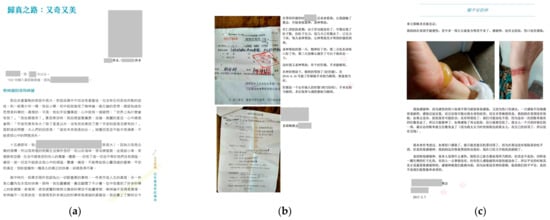
Figure 1.
Parts of the pamphlets. (a): The first page of a testimony; (b): Certificate of diagnosis in a testimony; (c): Picture before and after an injury. All original texts in the pamphlets and medical certificates are in Chinese.
Once published, the testimony collection is distributed to each church and prayer house in Lok-tia, and frequently shared externally as evangelistic material. The public nature of the fixed text, combined with the review and attribution during the compilation process, significantly enhances its authority and referential status within the community. During fieldwork, when I attempted to re-interview several witnesses featured in the collection, the common response was, “It is already written clearly in the book.” When witnesses retold their testimonies at my insistence, their impromptu oral accounts often included details absent from the written text or inserted other topics. In some cases, these details might not directly conflict with the pastoral team’s philosophy but were omitted from the written version for the sake of narrative continuity. However, as seen in the case of En-ying, digressions and emotional fluctuations in impromptu storytelling are not necessarily due to the narrator’s lack of logical thinking or linguistic expression; they may conceal ethical appeals that are inconvenient to state directly.
In other cases, the church, motivated by an understanding of doctrinal and practical orthodoxy, omits details in the written version that might be “problematic.” For example, in a testimony of a bipolar patient cured through exorcism (赶鬼, casting out demons), the written version glosses over the exorcism prayer process, with the narrator emphasizing only his uncontrollable thoughts and behaviors before the exorcism and the peace restored afterward. However, when this narrator retold the story to me, he spent considerable time describing the details of the exorcism ritual as he remembered it. Years ago, during a manic episode, he was chained by his family in a tin shed in the countryside. For several days, elders and deacons from various Lok-tia churches came to the shed to cast out demons for him. Similarly to the “beating Satan” (“打撒旦”) described in Zhang Jieke’s research (Zhang 2022, pp. 181–215), this was not a gentle prayer; on the contrary, it was filled with verbal and even physical violence—although, in the view of the ritual practitioners, these actions were directed at “Satan” and “evil spirits,” not the possessed person. Below is an excerpt from this narrator’s oral account14:
“There was prayer during the exorcism, but it was actually very different from usual. Usually, prayer in tongues is relatively quiet, but in that situation, they surrounded me, shouting and jumping. Some came over to slap me, kicked my legs to make me kneel, spat on me… everything. It felt like everyone was completely different from their usual selves... Anyway, every few days, people from some church would come over... At that time, with them casting out demons like that, my state became even more manic. They hit me, I shouted back, and cursed at them. Then they hit harder. The fiercer they were, the more I couldn’t stop talking. Actually, I felt that the feeling they gave me in the spirit at that time was very bad; their spirit made me even more agitated. But later, one day, two other deacons came. One was older than me—I usually call him ‘brother’—and the other was about my mother’s age, from [X] church, a very gentle person. That day when they came, I was shouting and screaming again. The one I call ‘brother’ didn’t shout at me like the previous people. He just said to me very calmly: ‘Can you just be quiet for a few minutes?’ The other deacon, seeing me chained up and my hands covered in injuries from trying to break free, couldn’t help but cry. When I saw them then, I felt extremely guilty and instantly calmed down. After that, I slowly returned to normal.”
In the church-approved public version, the details of the experience unfolded above are condensed into the noun “exorcism.” There are two factors, internal and external to the church, for this deliberate avoidance. First, following the standardization reforms in the 1990s modeled after the International Assembly, exorcism methods involving insults, spitting, and physical beating are considered unbiblical and unorthodox, and risk being confused with exorcism rituals in local folk religion. At the management level, the church has established regulations for “appropriate” methods of casting out demons. However, at the practical level, rural preachers are still accustomed to using these methods. To avoid falling into controversies of “heterodoxy,” the written version must omit such details. Second, the exorcism mode experienced by the narrator not only risks being suspected of unorthodoxy within the reformed church but also faces controversies of “superstition” and “fanaticism” when facing society outside the church. Particularly among non-Charismatic Christian groups, it may cause misunderstandings of “heresy,” and thus needs to be omitted. Furthermore, judging from the experience provided by the narrator, his rationality was indeed restored after a series of exorcisms, but it was arguably the latter two deacons who did not take the action of “casting out demons” who played a greater role. If the above details were presented in full, the causal relationship between the church’s exorcism and the stabilization of bipolar disorder would become unclear. In fact, coming from a family of full-time workers, he does not deny the role the church played in his recovery, but he is unsure how much of a role “casting out demons” actually played. The narrator frankly admitted to me that if he were in a public church setting or communicating with fellow church members with whom he was not close, he would not speak this way now. He was willing to reveal his personal memories in full partly because of my identity as an external researcher who would not judge his report from the church’s perspective, and partly because of our friendship. The above situation indicates that the compiled text not only sediments into collective memory but also, to a certain extent, overlays and revises individual memory: in interactions within the church, the narrator needs to take the public text as the standard, once again incorporating personal experience into the narrative track recognized by the community.
The mediatization of testimony is not confined to commemorative moments nor limited to print. Since the popularization of smartphones, the church’s everyday work in cyberspace has included the collection and dissemination of audio, video, images, and text: testimonies are edited into shareable short texts and clips which circulate in social messaging groups. Leveraging mobile phone use and screen-reading habits, standardized testimony paradigms further permeate members’ daily time, becoming ready-made models for them to learn charismatic experience. In the process of fixing and recirculation, vivid rhetorical techniques and the narrative mode of structured transcription are combined: written (and video) narratives retain the sense of order and rhythmic logic of ritualized speech, while incorporating the more perceptible and infectious expressions found in daily communication. Thereby, the process of mediatization reorganizes and integrates the first two practices, endowing testimony-telling with both structured regularity and sufficient affective tension and experiential thickness.
More importantly, this integration forms a loop: the compiled texts, circulating online and in print, in turn become templates and references for sermon materials, rally selections, and church members’ re-tellings; the presentation of subsequent impromptu testimonies is also shaped by existing exemplars. Therefore, the different links of “making testimonies” are not isolated from one another but mutually permeable, together constituting a dynamic system by which the local church produces charismatic phenomena. Furthermore, through the mutual permeation of these three elements, the archive of testimony-telling continually accumulates and updates. The internet further enables this archive to transcend regional limits, aggregating and circulating miracle testimonies from TJC communities everywhere, becoming a collective memory archive invokable by members of local churches. This trans-regional nature of the archive allows church members to continuously perceive an atmosphere where miracles occur frequently—during my fieldwork, testimony-telling regarding recently occurred charismatic experiences was not frequent, yet church members could still invoke the trans-regional testimony archive to prove that “the true church is often accompanied by signs and wonders.” This imagination that “miracles happen frequently” provides the background condition for the continued reproduction of charismatic phenomena and continually shapes the conception and identity that “the true church must be accompanied by signs and wonders” and “the True Jesus Church is the only church of salvation.”
6. Conclusions: Rethinking Essentialist Imaginaries in Studies of “Indigenization”
Through three settings, we have traced the stages of making testimony texts. First, rhetorical intervention in everyday interactions—where pastoral personnel and seasoned church members use prompting, analogy, patching, and interruption during impromptu conversations to highlight key “wondrous” segments, lending the experience perceptible vividness and persuasive power while echoing the community’s traditional experiential types. Second, in ritual settings, through procedural arrangement, control of temporal and emotional rhythms, and the screening and reorganization of individual experiences, complex life histories are transcribed into texts compatible with the narrative of “receiving grace and salvation,” making private experience a vehicle for reflecting communal concepts. Third, in media production, through recording, verification, editing, and recirculation, the first two stages are combined within media carriers and standardized into citable public versions; furthermore, leveraging the trans-regional reach of the internet, these mediatized public versions accumulate into an archive available for retrieval, verification, and citation at any time.
These three stages constitute a chain in which the private gradually fades and the communal presence is strengthened: rhetorical techniques in everyday interaction ameliorate the casual and scattered characteristics of impromptu storytelling, focusing the text internally on common imagery of the experiential tradition, yet still retaining the narrator’s freedom to master rhythm and emotional expression; ritual settings set the tempo for the act of telling and the narrative structure for the content, where private memories and emotions give way to a grace narrative centered on communal identity; in media production, the former two are fixed into written texts, forming final versions recognized by communal authority. These versions re-enter ritual and daily life through media circulation, becoming templates and yardsticks for the reproduction of subsequent experiences, and to a certain extent, reshaping individual memory. Through this chain, private charismatic experiences are ultimately crafted into miracle testimonies endorsed by the community.
Thus far, we have clarified the production mechanism of charismatic experience presented through testimony-telling in the Lok-tia field site. The production of testimony-telling and the charismatic phenomena it presents is highly controlled by the internal organizational mechanisms of the Lok-tia church community and the practices of pastoral personnel. By intervening in, screening, standardizing, and mediatizing members’ individual speech practices in real-time, they organize and simplify the originally scattered and complex narration of individual experience. This aligns it with the True Jesus Church’s imagination of “what constitutes authentic charismatic phenomena,” thereby serving the construction of the identity of the “exclusive church of salvation.”
In this sense, the shaping and production of charismatic phenomena in the Lok-tia church do not point toward indigeneity as viewed by cultural approach researchers but are dedicated to the construction of authenticity. This authenticity concerns not only the mode of presentation of charismatic phenomena but, more importantly, the collective destiny regarding salvation. However, across these three settings, one can observe not only the intervention and shaping of individual speech by collective ideas but also the tension between members’ individual life experiences and the efforts of the church collective and pastoral personnel. The latter never fully subsumes the former, and the complexity of the former allows it to constantly elude capture. Consequently, this process of constructing authenticity will remain ongoing. Indeed, as mentioned in the footnotes above, when the collective effort to construct authenticity suppresses individual spiritual life too excessively, the individual spirituality that was manipulated will rebound and stir up movements within the group—but that is another story.
Funding
This research received no external funding.
Institutional Review Board Statement
Ethical review and approval were waived for this study because according to the institutional guidelines of Peking University, this type of non-interventional qualitative research involving adult participants and minimal risk does not require formal review by a research ethics committee.
Informed Consent Statement
The ethnographic materials used in this article were collected and curated by the author during fieldwork conducted from spring 2022 to autumn 2024. The fieldwork combined participant observation with in-depth interviews: observing the full process of testimony-telling during Sabbath services, evangelistic meetings, and routine visitations; conducting multiple rounds of interviews with key narrators, presiders, and audio-visual and editorial volunteers; and gathering and organizing written testimony booklets, sermons, and short video clips. For research-ethics purposes, place names, personal names, and selected historical details have been anonymized; accounts involving medical and/or family matters were included with the individuals’ permission and have been appropriately redacted.
Data Availability Statement
Data is unavailable due to privacy of the human beings involved.
Acknowledgments
The author is a PhD candidate in the Departments of Philosophy and Religious Studies at Peking University and was an international visiting student in the Department for the Study of Religion at the University of Toronto from December 2024 to December 2025. The author gratefully acknowledges the guidance and support of Fei Wu (吴飞) at Peking University and Pamela Klassen at the University of Toronto throughout the course of this research. The author also thanks Sian-Chin Iap (葉先秦) at National Chengchi University, Taiwan, for her generous assistance during the development of this study. Special thanks are extended to Mianheng Liu (刘勉衡), Yanbin Wang (王燕彬), and Xingyu Luo (罗兴与) for their critical comments and constructive suggestions during the writing of this article.
Conflicts of Interest
The author declares no conflict of interest.
Notes
| 1 | In addressing the relationship between speech and experience, this article adopts the perspective of semiotic mediation. Contemporary scholarship in the anthropology of Christianity posits that religious experience is not a primordial psychological state existing prior to language but is constructed and learned through specific social practices and semiotic forms. As Luhrmann (2012) demonstrates in her study of Evangelical believers, believers need to undergo specific training to identify and label originally vague and undifferentiated somatic sensations as specific spiritual events. Meyer (2009) also points out that human contact with the divine cannot be separated from mediation; only through sensational forms recognized by the community—in this case, the speech practice of testimony—can individual experience be transformed into a perceived social reality. Therefore, the “charismatic experience” discussed in this study refers precisely to this social fact generated within speech practice and mediated by the church’s discursive system. |
| 2 | Although the prevailing narrative regards Wei Enbo’s 1917 inspiration to launch the “Universal Correction Church” (万国更正教) movement as the historical inception of the True Jesus Church, the foundation of the church was not laid by Wei alone; Zhang Dianju (张殿举, usually referred as Barnaba Zhang 张巴拿巴) and Zhang Lingsheng (张灵生) of Wei county (潍县), Shandong, were equally pivotal figures during the founding period. For a period following Wei’s death, Barnabas Zhang propelled the spread of the gospel southward, becoming the dominant figure in the church; he even once claimed that the True Jesus Church was initiated by him and had no connection to Wei’s Universal Correction Church. The current standard narrative identifying Wei as the founder was established only after representatives from the southern provinces investigated the church’s origins and achieved unification with the northern church. See Tang (2006) and Iap (2019). |
| 3 | Although the Ten Articles of Faith actually encompass the explanations for each of the Five Basic Doctrines, the International Assembly today still frequently presents the “Five Basic Doctrines” alongside the “Ten Articles of Faith” in missionary contexts. This is presumably because the former more concisely and explicitly embodies the distinctiveness of the church. The explanations of the Five Basic Doctrines as cited within the Ten Articles of Faith are listed below: (1) Baptism: Believing that water baptism is the sacrament for the remission of sins and for regeneration. The baptism must be administered in natural living water, such as the river, sea, or spring. The baptist, who must already have received both baptism of water and the Holy Spirit, conducts the baptism in the name of the Lord Jesus Christ. The person receiving the baptism must be completely immersed in water with head bowed. (2) Holy Spirit: Believing that receiving the Holy Spirit is the guarantee of the inheritance of the Kingdom of Heaven and is evidenced by speaking in tongues. (3) Footwashing: Believing that the sacrament of footwashing enables one to have a part with the Lord and teaches the lessons of mutual love, holiness, humility, service, and forgiveness. Every person who has received water baptism must have their feet washed once in the name of the Lord Jesus; mutual footwashing may also be practiced whenever necessary. (4) Holy Communion: Believing that the Holy Communion is the sacrament to commemorate the death of the Lord, enabling us to partake of the flesh and blood of our Lord and to be in communion with Him so that we can have eternal life and be raised on the last day. This sacrament should be held frequently, using only one unleavened bread and grape juice. (5) Sabbath Day: Believing that the Sabbath Day (Saturday) is a holy day blessed by God. It is to be observed under grace for the commemoration of His creation and redemption, and with the hope of eternal rest in the life to come. It should be noted that the doctrinal and creedal formulations of the True Jesus Church have evolved throughout history. The formulation adopted by the International Assembly of the True Jesus Church today was passed at the Second World Delegate Conference held in Taichung from 8–12 April 1975, rather than existing from the church’s inception. The distinctive beliefs and practices of the True Jesus Church basically originate from the revelations received by Wei Enbo during fasting and prayer to correct various mission societies, generally summarized as the “Six Codes and Five Ordinances” (“六約五例”see Wei 2023, pp. 129–33). Subsequently, with the development of the church, formulations such as the “Five Doctrines of Salvation and Ten Commandments” (“五义救恩、十大诫命”) and the “Twelve Standards” (“十二标准”) appeared, with varying contents. Since the divergence between Northern and Southern churches occurred shortly after the True Jesus Church’s inception, the doctrinal expressions, and practices of TJC groups in different regions during the same period were not identical. Today, many researchers of the True Jesus Church use the International Assembly’s version as the standard expression of the church’s faith. While this approach may be for the sake of convenience in discussion, it overlooks an important fact: the churches under the International Assembly system cannot fully represent the entire body of TJC members originating from the 1917 Universal Correction Church movement, continuing to this day, and distributed across domestic and overseas regions. In mainland China, there is a church system centered in southern Provinces that adopts the doctrinal formulations of the International Assembly and accepts its guidance (generally called the Southern system 南方系统 or Southern group 南派). There are also various local churches associated with Wenxiang Wei (魏文祥, Wei Enbo’s son), Yingxin Wei (魏迎新, Wei Enbo’s grandson), Gao Daling (高大齡), and others, which adopt the “Five Doctrines and Ten Commandments” or “Twelve Standards” as their expression of faith and reject the guidance of the International Assembly (generally called the Northern system 北方系统or Northern group 北派). Dianju Zhang’s “Chinese True Jesus Church” (“中华真耶稣教会”) also continues to exist in Singapore today. In addition, there are small groups that have separated from or maintain a distance from the International Assembly system for various reasons. These groups all possess the identity of “True Jesus Church,” but differences exist in their doctrinal expression, practice, and church institution. This article does not intend to analyze these details but simply hopes the reader understands the limitations of using the International Assembly’s standard version to outline TJC beliefs in this text. The reason for adopting this version is not only due to the International Assembly’s high visibility in academic research but also because the field church involved in this article has a relatively close relationship with the International Assembly system, following the International Assembly in its doctrine, practice, and institution. |
| 4 | During this period, the testimony of a female believer named Wang Dequan (王德全) from the Sanshan (三山) region of Fuqing (福清), regarding her dream of Heaven tour (游天国), held special significance. Today, when recounting the history of the “Revival,” the local True Jesus Church in Fujian often traces its origins to the actions driven by the revelation in Wang Dequan’s dream and the subsequent circulation of testimony pamphlets across various regions. Attributing the historical process of restoration activities to the event of Heaven tour should be regarded as an origin myth constructed by the True Jesus Church in the Fujian region to explain its contemporary history. Nonetheless, this phenomenon sufficiently demonstrates the critical significance of charismatic experiences and testimony texts in the restoration of contemporary True Jesus Church communities and the reconstruction of trans-regional networks (see Inouye 2018, pp. 212–34; Huang 2013, pp. 157–62). |
| 5 | Although Huang Ke-hsien does not explicitly define the category of “healing cult” in his research, several characteristics of such groups can be summarized from his description (Huang 2013, pp. 160–62): (1) loose community ties; (2) a community centered on a charismatic, paternalistic leader, forming a patron-client relationship; and (3) a membership composed mostly of the elderly, women, the sick, and the illiterate, who prioritize charismatic experience over doctrinal content. Huang’s research takes Fujian Province as its regional unit, and his assessment likely holds true for certain parts of Fujian; however, regarding Lok-tia specifically, the situation differs. During my fieldwork, I interviewed eyewitnesses regarding church life during the “Revival” period. According to their reports, the following conditions existed: (1) While healing was indeed a significant concern for the faith community at the time, it was not the sole or central concern. Against the backdrop of disillusionment with Maoist collectivist morality, the pursuit of values of truth and the hope for a transformation of personal moral life were also important motivations reported by church members. (2) Unlike the situation in the Fuqing region mentioned by Inouye and Huang, in Lok-tia, young and middle-aged adults played a crucial role in the resurgence and reconstruction of the True Jesus Church. Most of these individuals held high school or vocational college diplomas; some served as teachers in rural schools, some as doctors in the medicine system, and there were even government staff. They utilized the convenience of their legitimate status within the system to evangelize, negotiate with power, and even travel across regions for itinerant preaching. This group also assumed leadership roles in their respective rural churches. (3) Due to the higher educational level of the leadership group, the pre-reform faith community placed equal emphasis on doctrine and creeds. In the 1980s, the Lok-tia church regularly conducted training for preachers, although the content taught at that time was the “Five Doctrines of Salvation” rather than the “Five Basic Doctrines” later introduced from Taiwan. In fact, even before the reform guided by the International Assembly, the Lok-tia church relied on the memories of older workers with pre-1970s pastoral experience to partially restore operational conventions and regulations for church management—although this order may have lacked some degree of normativity and formality. While paternalism might have existed in individual prayer houses in rural Lok-tia, on the whole, the pre-reform Lok-tia church did not witness domination by specific individuals or families. Before the reform, the situation of True Jesus Churches across Fujian likely contained complex variations; one cannot simply classify them as a “healing cult” in opposition to a “moral community” merely due to the presence of an intense charismatic atmosphere. |
| 6 | Members of the Lok-tia church frequently employ the terms “be disciplined” (“受教训”、“受管教”) to account for a specific category of accidents or misfortunes. Typically, these incidents are not severe, causing only transient physical or mental suffering to the individual without threatening their life. Church members maintain that when God is displeased with certain behaviors or thoughts of an individual, He employs such accidents or misfortunes to admonish and discipline them. If an accident or misfortune is adjudicated as divine discipline, the individual must engage in self-examination to identify wherein they have “offended God” (“得罪神”) or become “indebted to God,” and subsequently “confess and repent” (“认罪悔改”) in prayer. |
| 7 | Within the True Jesus Church, there exist certain widely circulated and prominent accounts. For instance, during a foot washing sacrament at a church in Taiwan, as the recipient’s feet were immersed in the basin, they appeared to be “wearing” golden shoes, and the basin itself turned golden—an event preserved in photographic records. In another instance, the water turned red during a baptism. Furthermore, members of the Lok-tia church report accounts regarding distinct bodily transformations, such as the corpses of zealous church members remaining soft and warm upon death rather than becoming stiff and cold, or a hunched torso instantly straightening following baptism. |
| 8 | In Tian’s case, the young son’s ability upon waking to chant hymns unknown to the adults and to draw arched gates—architectural features uncommon in the countryside—constitutes a typical verification episode. In the experiences of heavenly journeys reported within the Lok-tia church, a common verification episode involves encountering a deceased individual in “Heaven”—one previously unknown to the visionary—who asks the visionary to convey a message to their relatives. |
| 9 | “Gentiles” translates the local Christian usage for religious outsiders; in evangelistic contexts it may also carry the sense of “idol-worshipers.” (“拜偶像的”) |
| 10 | “Other churches” refers to other (non-TJC) denominations. |
| 11 | It should be noted that this testimony was originally recounted in the Minnan dialect (Hokkien). The text presented here is an English translation derived from my transcription of the dialect content into Mandarin; consequently, vocabulary and expressions characteristic of the dialect are not discernible in the written text. |
| 12 | In studies of Chinese oral history, “telling bitterness” (诉苦) is frequently examined as a mobilization technique within socialist political movements. However, “telling bitterness” does not only have a top-down dimension. In the masses’ spontaneous narration of individual or collective suffering, “telling bitterness” is not merely a natural outpouring of emotion; rather, it often embodies accusations of injustice and appeals for justice. For instance, in Wu Fei’s research on Catholicism in Hebei (Wu 2013), the local Catholic community accused certain villagers of utilizing political movements to “avenge personal grudges” through narratives claiming that “it is specifically those who believe in Catholicism who suffer” (“就属信天主教的苦.”) In the case presented in this article, En-ying’s constant digressions into issues of family ethics during private testimony-telling imply her dissatisfaction with family life and her appeal for the listeners to “judge the rights and wrongs” (“评评理”). |
| 13 | Although this article cannot elaborate further due to limitations of scope, it is necessary to note that in 2021, a group of church members sharing these sentiments launched a movement to reform the lifestyle of fellowship, led by a young preacher. They leveled criticisms against the pastoral team, arguing that they overemphasized grace based on communal identity while neglecting care for the individual and disregarding “love”—the core of Christian ethics. As the criticism at one point was directed toward the prevailing church institution, it triggered a vehement backlash from the defenders of the institution. Ultimately, active participants in the movement were excommunicated, and a cohort of church members departed to gather independently; yet they continue to identify themselves as church members of the “True Jesus Church.” This movement illustrates that the suppression of individual voices by collective consciousness, as exhibited in the evangelistic rally, is not an isolated instance but rather a representative phenomenon. |
| 14 | A special note is necessary: given that mental illness remains stigmatized in contemporary Chinese society, I have anonymized details in the respondent’s narrative that could potentially disclose their identity or social relations. Furthermore, this article selectively presents only those portions of their oral account that are directly relevant to the issues under discussion. |
References
- Bays, Daniel H. 1996. Christianity in China: From the Eighteenth Century to the Present. Redwood City: Stanford University Press. [Google Scholar]
- Bays, Daniel H. 2003. Chinese Protestant Christianity Today. The China Quarterly 174: 488–504. [Google Scholar] [CrossRef]
- Chambon, Michel. 2020. Making Christ Present in China: Actor-Network Theory and the Anthropology of Christianity. Berlin/Heidelberg: Springer International Publishing. [Google Scholar]
- Fang, Huirong 方慧容. 2001. “‘Wu shijian jing’ yu shenghuo shijie zhong de ‘zhenshi’: Xicun nongmin tudi gaige shiqi shehui shenghuo de jiyi” “无事件境”与生活世界中的” 真实”:西村农民土地改革时期社会生活的记忆 [“Eventlessness” and the “Real” in the Lifeworld: Memories of Social Life during Land Reform among Xicun Peasants]. In Kongjian, Jiyi, Shehui Zhuanxing—‘Xin Shehuishi’ Yanjiu Lunwen Jingxuanji 空间、记忆、社会转型——新社会史”研究论文精选集 [Space, Memory, and Social Transformation: Selected Papers in the ‘New Social History’]. Edited by Nianqun Yang 杨念群. Shanghai: Shanghai Renmin Chubanshe 上海人民出版社, pp. 524–71. [Google Scholar]
- Huang, Ke-hsien. 2013. Cultural Intermediaries and Globalization: Transforming Pentecostalism in Post-Mao China. Ph.D. thesis, Northwestern University, Evanston, IL, USA. [Google Scholar]
- Hunter, Alan, and Kim-Kwong Chan. 1993. Protestantism in Contemporary China. Cambridge Studies in Ideology and Religion. Cambridge: Cambridge University Press. [Google Scholar]
- Iap, Sian-Chin 葉先秦. 2019. Wanyu Shengling: Zhen Yesu Jiaohui de zaidingwei yu quanqiu Wuxunjiepai yanjiu de xiangxiang he zaixian 晚雨聖靈:真耶穌教會的再定位與全球五旬節派研究的想像和再現 [Latter-Rain Spirit: The Repositioning of the True Jesus Church and the Imagination and Representation in Global Pentecostal Studies]. Taipei: Taiwan Christian Literature Council (Taiwan Jidujiao Wenyi Chubanshe 台灣基督教文藝出版社). Taoyuan City: Chung Yuan Christian University, Center for the Study of Christianity and Chinese Societies and Cultures (Taiwan Zhongyuan Daxue Jidujiao yu Huaren Wenhua Shehui Yanjiu Zhongxin 台灣中原大學基督教與華人文化社會研究中心). [Google Scholar]
- Inouye, Melissa Wei-Tsing. 2018. China and the True Jesus: Charisma and Organization in a Chinese Christian Church. Cary: Oxford University Press. [Google Scholar]
- Kao, Chen-Yang. 2009. The Cultural Revolution and the Emergence of Pentecostal-Style Protestantism in China. Journal of Contemporary Religion 24: 171–88. [Google Scholar] [CrossRef]
- Kao, Chen-Yang. 2013. Church as ‘Women’s Community’: The Feminization of Protestantism in Contemporary China. Kaogu Renlei Xuekan 考古人類學刊 [Journal of Archaeology and Anthropology] 78: 105–36. [Google Scholar]
- Kao, Chen-Yang. 2020. Materiality in the Absence of the Church: Practising Protestantism During China’s Cultural Revolution. History and Anthropology 31: 563–82. [Google Scholar] [CrossRef]
- Kao, Chen-Yang. 2021. Reassembling Christianity: Fuzhou Protestantism Under China’s Cultural Revolution from the Perspective of Life-History Research. Hanyu Jidujiao Xueshu Lunping 漢語基督教學術論評 [Sino-Christian Studies] 31: 7–44. [Google Scholar]
- Lambert, Tony. 2006. China’s Christian Millions. Overland Park: Monarch. [Google Scholar]
- Lian, Xi. 2010. Redeemed by Fire: The Rise of Popular Christianity in Modern China. New Haven: Yale University Press. [Google Scholar]
- Luhrmann, Tanya M. 2012. When God Talks Back: Understanding the American Evangelical Relationship with God, first vintage books ed. Vancouver: Vintage Books. [Google Scholar]
- Madsen, Richard. 2013. Signs and Wonders. In Christianity and Hybrid Modernity in China. New York: Routledge. [Google Scholar]
- Meyer, Birgit, ed. 2009. Aesthetic Formations: Media, Religion, and the Senses. Religion/Culture/Critique. New York: Palgrave Macmillan US. [Google Scholar]
- Robbins, Joel. 2014. The Anthropology of Christianity: Unity, Diversity, New Directions: An Introduction to Supplement 10. Current Anthropology 55: S157–S71. [Google Scholar] [CrossRef]
- Tang, Hongbiao 唐红飙. 2006. Zhenyesu Jiaohui Lishi Shijikao 真耶稣教会历史史迹考 [A Examination of the History and Historical traces of the True Jesus Church]. Beijing: Zhongguo Wunhua Chubanshe 中国文化出版社 (Chinese Culture Press). [Google Scholar]
- Wei, Enbo 魏保羅. 2023. “Shengling Zhen Jianzheng Ce” Jiaozhu: Zhen Yesu Jiaohui Wei Baoluo Zhanglao Chuanjiao Rizhi 《聖靈真見證冊》校注:真耶穌教會魏保羅長老傳教日誌 [Annotation of “The True Testimony of the Holy Spirit”: Missionary Diary of Elder Paul Wei of the True Jesus Church]. Taipei: Juliu Tushu Gufen Youxian Gongsi 巨流圖書股份有限公司 (Juliu Press). [Google Scholar]
- White, Chris. 2019. The Haicang Voice: Modernity, Cultural Continuity and the Spirit World in a 1920s Chinese Church. In Protestantism in Xiamen: Then and Now. Edited by Chris White. Berlin/Heidelberg: Springer International Publishing. [Google Scholar] [CrossRef]
- Wu, Fei 吴飞. 2013. Maimang shang de shengyan: Yige xiangcun Tianzhujiao qunti zhong de xinyang he shenghuo 麦芒上的圣言:一个乡村天主教群体中的信仰和生活 [The Sacred Word on the Wheat Awn: Faith and Life in a Rural Community]. Beijing: Zongjiao Wenhua Chubanshe 宗教文化出版社 (Religious Culture Press). [Google Scholar]
- Zhang, Jieke 张杰克. 2022. Zuishen chengyi: Wenzhou Jidutu de xinyang he shenghuo 罪身成義:溫州基督徒的信仰和生活 [Sinners to Be Sinless: The Faith and Life of Wenzhou Christians]. Taipei: Taiwan Christian Literature Council (Taiwan Jidujiao Wenyi Chubanshe 台灣基督教文藝出版社). [Google Scholar]
Disclaimer/Publisher’s Note: The statements, opinions and data contained in all publications are solely those of the individual author(s) and contributor(s) and not of MDPI and/or the editor(s). MDPI and/or the editor(s) disclaim responsibility for any injury to people or property resulting from any ideas, methods, instructions or products referred to in the content. |
© 2025 by the author. Licensee MDPI, Basel, Switzerland. This article is an open access article distributed under the terms and conditions of the Creative Commons Attribution (CC BY) license.