You are currently viewing a new version of our website. To view the old version click .
Journal of Marine Science and Engineering
  • Article
  • Open Access

3 October 2024

A Credibility Monitoring Approach and Software Monitoring System for VHF Data Exchange System Data Link Based on a Combined Detection Method


,
,
and
College of Information Science and Technology, Dalian Maritime University, Dalian 116026, China
*
Author to whom correspondence should be addressed.
This article belongs to the Section Ocean Engineering

Abstract

Due to VDES’s higher data transmission speed and complex communication protocols, vulnerabilities within its data link infrastructure are more pronounced. To ensure the reliability of VDES data transmission, this manuscript proposes a credibility monitoring approach based on the combined detection method of radio interference detection and spoofing source identification and localization, focusing on key data link vulnerabilities outlined in the IALA G1181 VDES VDL Integrity Guide. Automated monitoring is achieved through VDES data link monitoring software (VDES(AIS 2.0)), which is based on a three-tier architecture and a Client/Server (C/S) model. The software validates monitoring techniques and software against various interference scenarios. Visualization of monitoring results, alarm notifications, and relevant data through the front-end interface enhances understanding of VDES data link credibility. This framework supports effective surveillance and detection of vulnerabilities, such as radio interference and spoofing sources.

1. Introduction

To ensure maritime traffic safety and address the increasing demands of maritime communication, the International Organization for Marine Aids to Navigation (IALA), previously designated as The International Association of Marine Aids to Navigation and Lighthouse Authorities, as of 22 August 2024, officially transformed its status from a Non-governmental Organization (NGO) to an Intergovernmental Organization (IGO) based on a convention that has been ratified or acceded to by 34 states to date. The new organization is named The International Organization for Marine Aids to Navigation, and the International Telecommunication Union (ITU) introduced the Very-High-Frequency Data Exchange System (VDES) into maritime mobile communication in 2013 [1]. Building upon the foundational functionalities of the Automatic Identification System (AIS), VDES integrates Application Specific Messages (ASM) and Wideband Very-High-Frequency Data Exchange (VDE) capabilities. Consequently, VDES mitigates the data communication burden on AIS, enhancing the capacity and efficiency of data exchange processes. In October 2015, IALA led the formulation of international standards for VDES, culminating in the release of the initial standard, ITU-R M.2092-0. This standard has since undergone iterative enhancements and refinements [2]. Currently, with the maturation of VDES technical standards, the international procedural progression of VDES has transitioned into the acknowledgment phase within the International Maritime Organization (IMO). During the 11th session of the IMO Sub-Committee on Navigation, Communications, and Search and Rescue (NCSR11), held in June of this year, discussions focused on proposed amendments to the Safety of Life at Sea (SOLAS) Convention related to VDES and its performance standards. Subsequently, a correspondence group was established to advance these amendments to Chapter V of SOLAS, aiming to comprehensively introduce VDES as a replacement for AIS and as the inheritor of AIS’s international legal standing. This development positions VDES as the foundational maritime digital infrastructure for advancing global E-navigation [3]. As the transition from AIS to VDES within the SOLAS Convention progresses, nations worldwide are expected to seize this opportunity to enhance research efforts regarding the performance and systemic evolution of VDES [4].
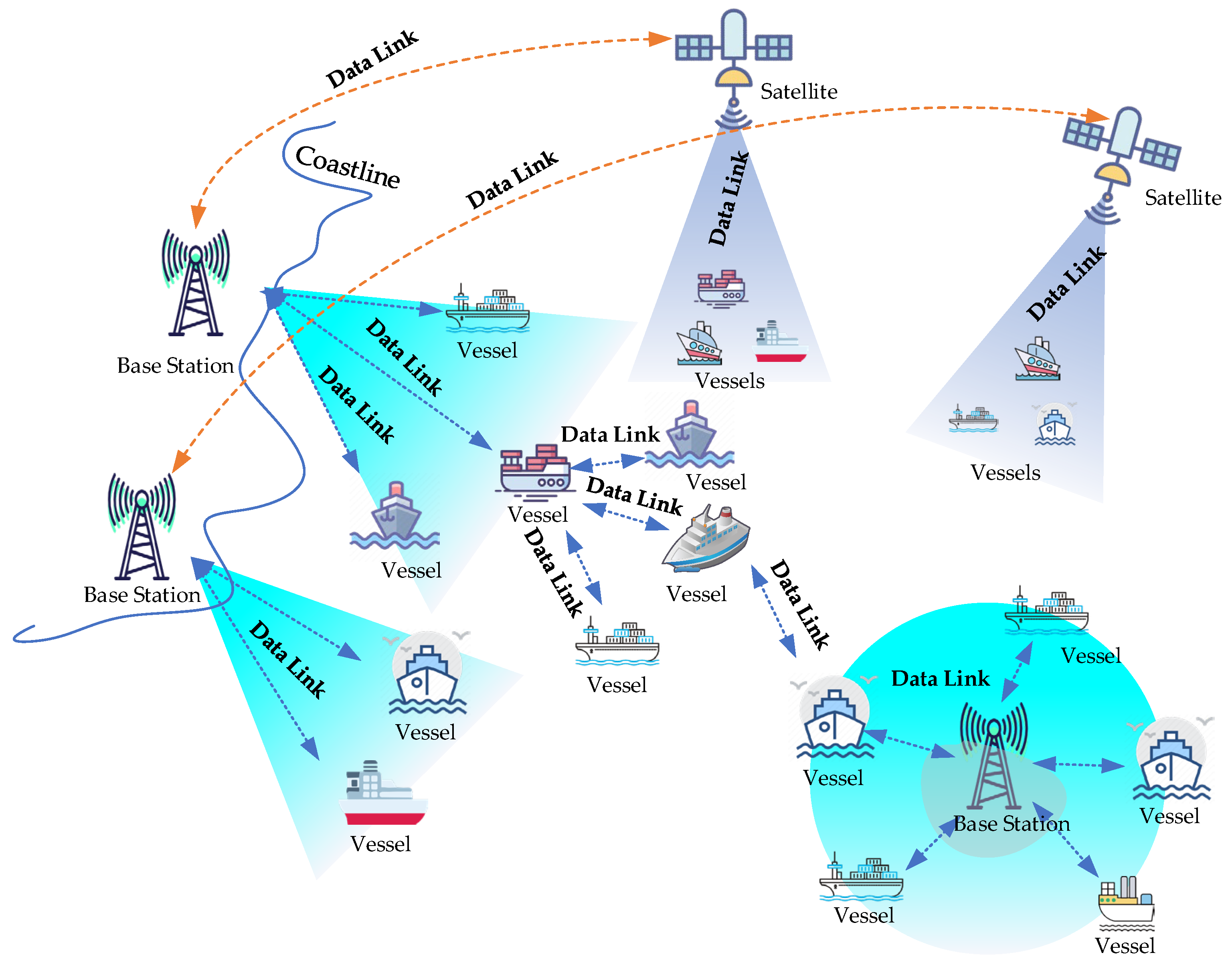
Nevertheless, notwithstanding the considerable potential of VDES to enhance the effectiveness of maritime communication, it also confronts certain drawbacks and challenges [5]. Currently, the maritime communication network mainly encompasses satellite-based maritime communication systems, land-based maritime communication systems, island-based maritime communication systems and other systems that respond to diverse service requirements. A schematic diagram of the maritime wireless communication system is presented in Figure 1 [6].
Figure 1. Schematic illustration of the maritime wireless communication system.
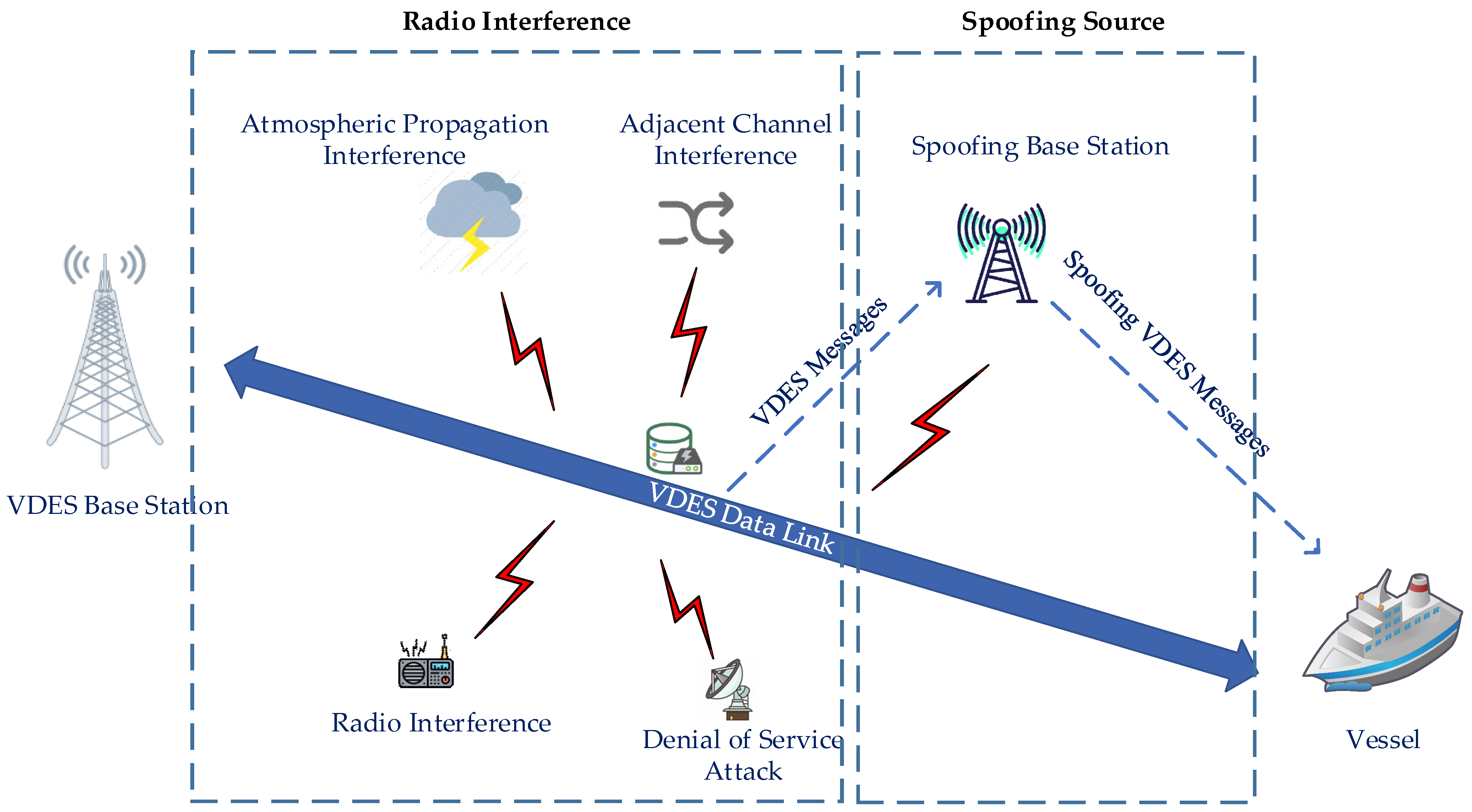
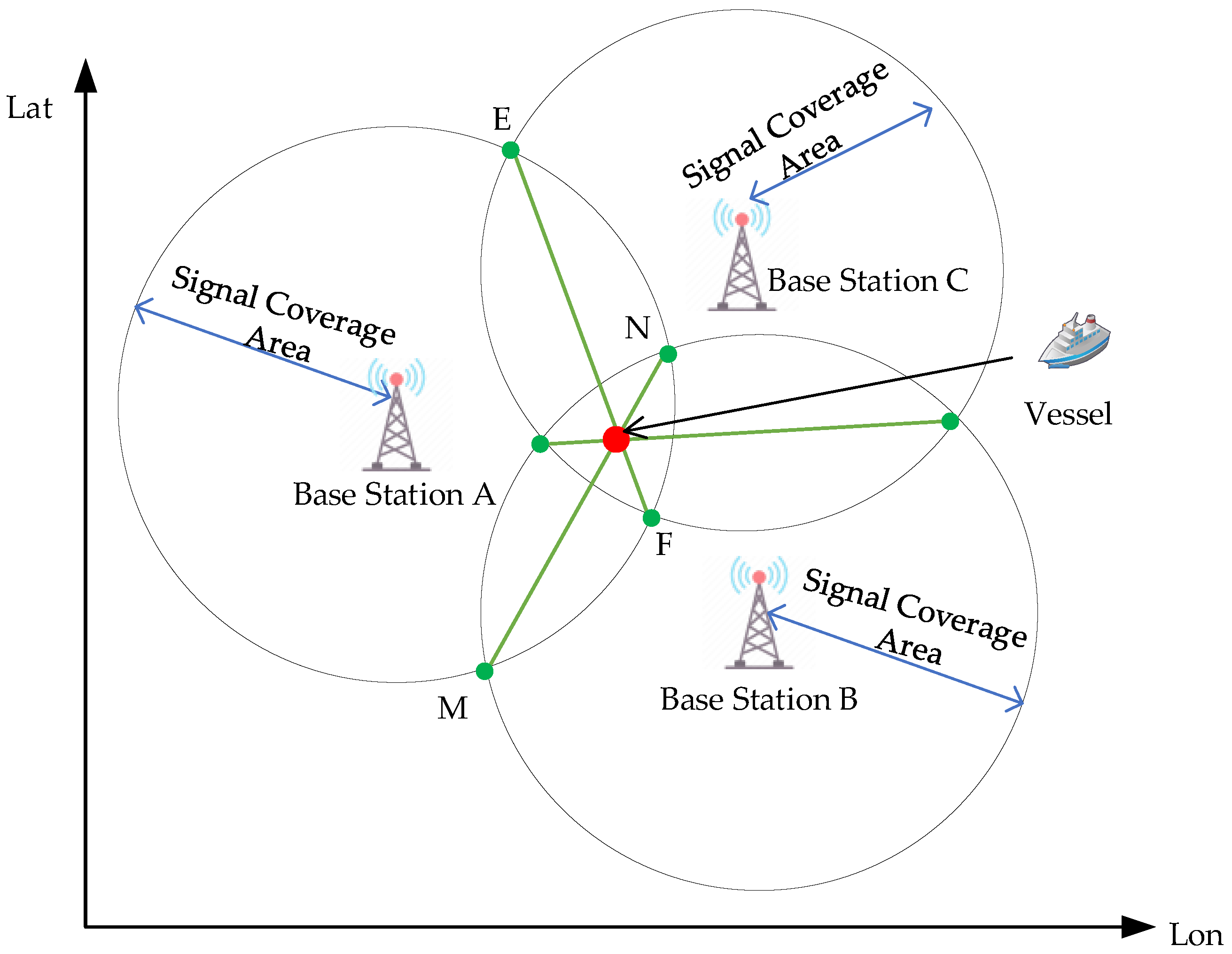
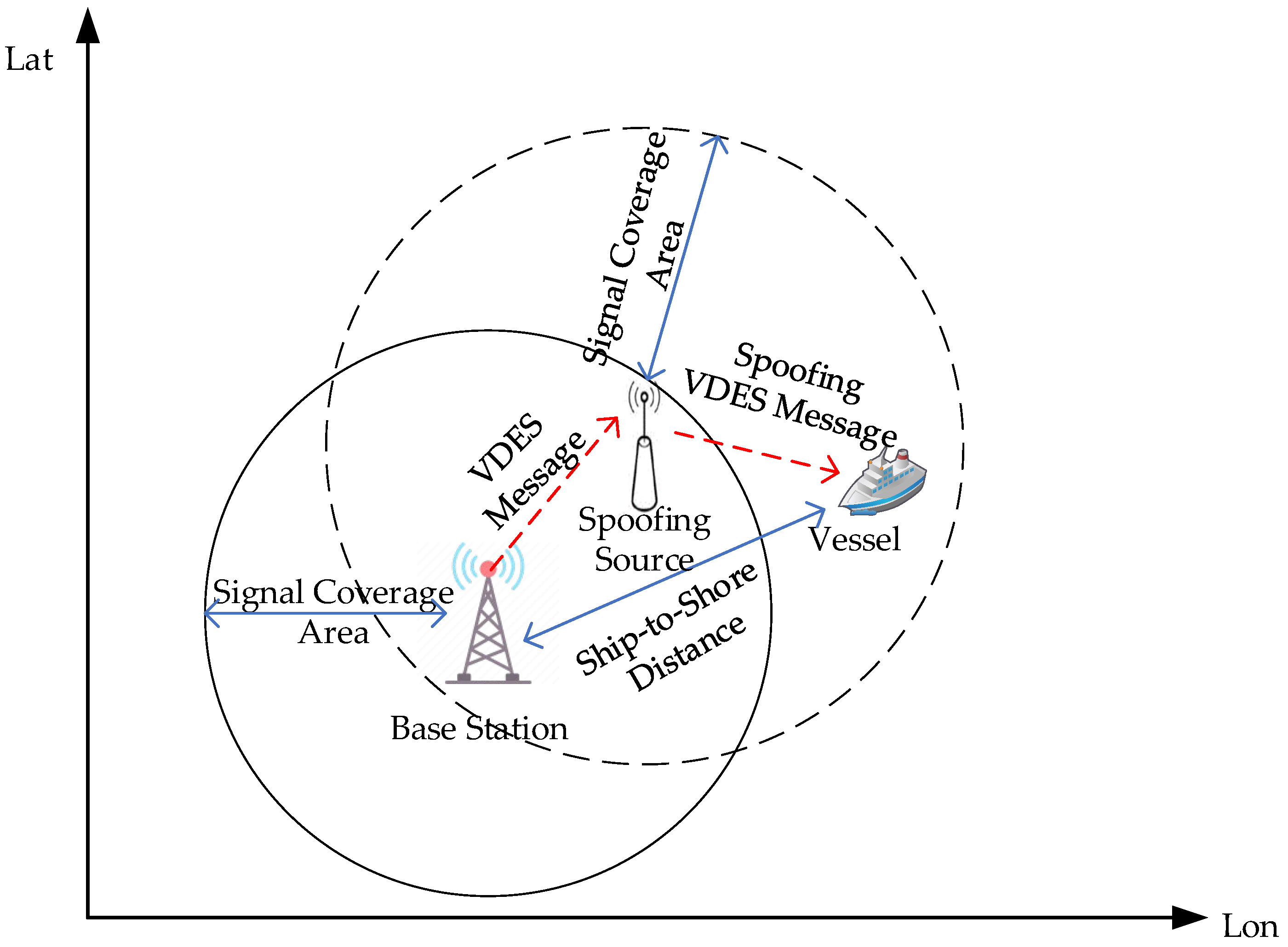
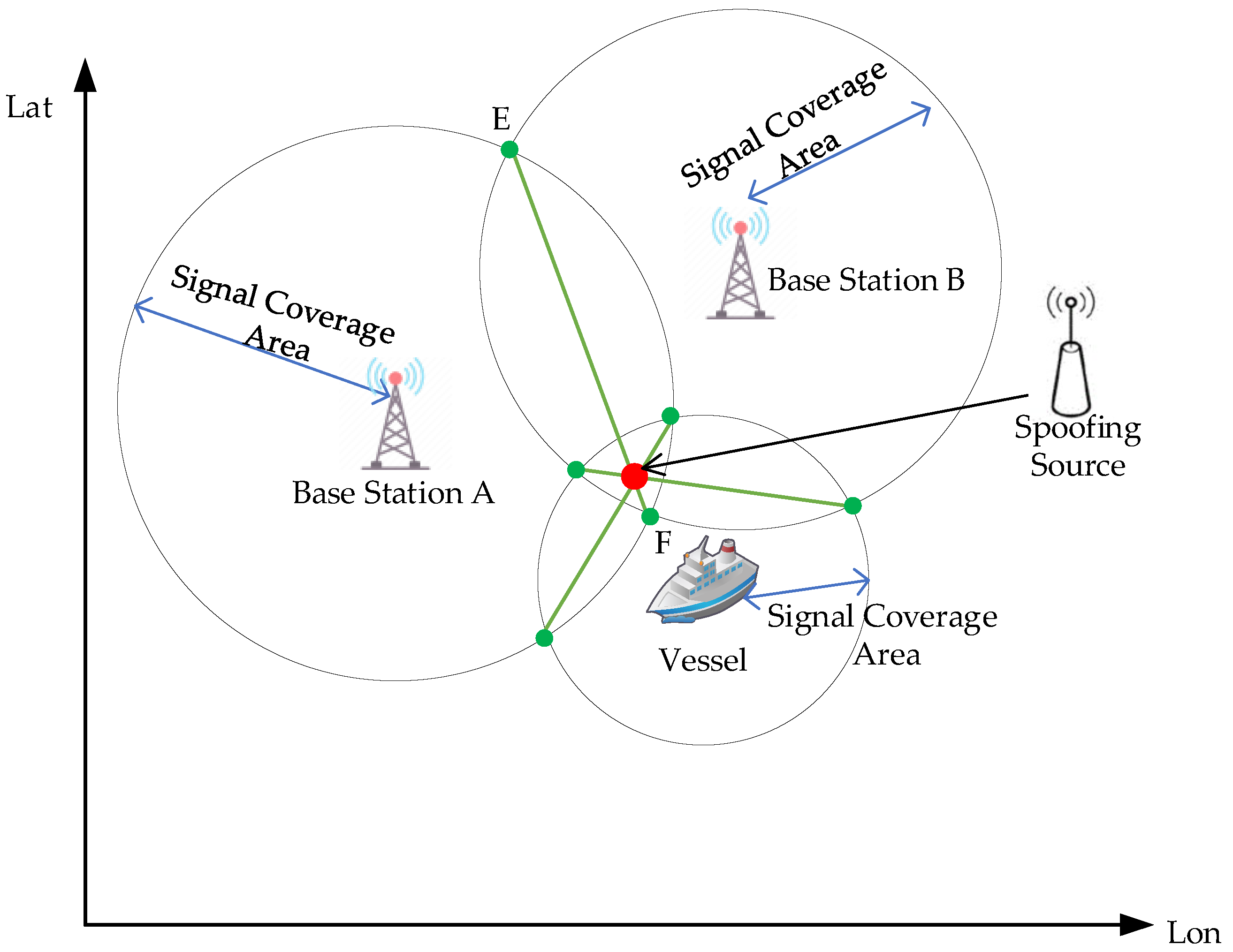
However, as each system is relatively independent and lacks unified resource management and operational coordination, the overall utilization efficiency is extremely low, which restricts the development of maritime communications. Realizing the effective system integration of the existing maritime communication system can facilitate the efficient operation of the maritime network system and provide an effective guarantee for the scope of network coverage, real-time information transmission and reliability. In recent years, as maritime data communication requirements have continuously evolved, AIS, originally designed for automatic ship identification and collision avoidance, has increasingly assumed the role of ship-to-shore data communication. Intelligent processing of AIS data is used to predict ship positions in real time and can assist in decision making, thus enhancing maritime transportation safety and efficiency [7,8]. The escalating communication demands placed on the AIS system within the VHF band have resulted in a highly congested frequency band. IALA has indicated that when AIS data link loads exceed 50%, it can give rise to severe problems such as information congestion, affecting navigation safety. The performance of the AIS system is directly influenced by factors such as link load. As the link load increases, the time slot multiplexing ratio rises, along with the time slot conflict rate. When the conflict rate reaches a certain level, the communication reliability of the system is compromised. The AIS system is of crucial importance for ensuring safe navigation, and its effectiveness is of paramount significance [9]. Moreover, the increasing demand for data exchange is a key driver that necessitates an upgrade of the AIS system. As the demand for maritime data communication keeps rising, designing and managing efficient wireless communication networks becomes indispensable [10,11]. To address AIS frequency band congestion, multi-band communication technologies can be utilized to optimize spectrum usage. Additionally, enhancing the network’s adaptive capabilities to monitor and adjust communication parameters in real time can help alleviate the risk of information blockages [12]. Furthermore, implementing a cloud-based management system that leverages big data analytics to optimize data flow and resource allocation can significantly enhance overall communication efficiency. Through these measures, the ultimate aim is to achieve a more secure and efficient maritime wireless communication network to meet the growing demand [13,14]. To alleviate the strain on AIS channels caused by this increased occupancy, VDES leverages the existing AIS infrastructure by introducing ASM and VDE to enhance data transmission capabilities comprehensively. The risk of AIS link overload necessitates the adoption of VDES, which offers improved data transmission rates and advanced protocols, as recommended in ITU-R M.2092-1. However, the increased complexity of VDES, particularly its Very-High-Frequency Data Link (VDL), makes it more susceptible to various issues. Consequently, diligent monitoring of the VDL is crucial to mitigate potential impacts and ensure the reliability and resilience of VDES operations [15]. Notably, on 14 December 2023, the “Guidelines for Integrity Monitoring of Very-High-Frequency Data Exchange System Data Links (G1181)”, led by China, were approved by the IALA Council and officially released [16]. These guidelines emphasize that the wireless nature of VDES introduces inherent vulnerabilities in its VDL, including factors such as radio interference and spoofing messages, as illustrated in Figure 2. Radio interference affecting the VDES data link includes co-channel interference from non-VDES services, adjacent channel interference from other maritime operations, and spurious emissions from high-power devices [17,18]. Additionally, interference in the VDES domain may stem from VDES base station slot collisions and atmospheric disturbances [19]. Such interference can compromise the capacity of VDES equipment to accurately demodulate signals, thus jeopardizing navigational safety by propagating errors in message transmission [20,21]. Furthermore, VDES base stations transmit various messages to facilitate navigation, including safety-related and hydro-meteorological messages. However, because the messages broadcast by VDES base stations lack encryption and the system does not incorporate an authentication mechanism [22], malicious actors can exploit genuine base station information for identity spoofing, spreading false information to vessels, misguiding navigational decisions, and endangering safety [23]. Consequently, if vulnerabilities compromise the VDES data link—leading to information loss, content errors, or the dissemination of false messages—the confidentiality, integrity, and availability of wireless communication are severely impacted. These vulnerabilities not only threaten the credibility and security of maritime communication but also create significant navigational safety risks. Therefore, to protect the authenticity and effectiveness of information disseminated by VDES base stations, proactive measures must be implemented to monitor vulnerabilities in the VDES data link, with a particular focus on ensuring the credibility of the data link [24].
Figure 2. Two types of VDES data link interference scenarios mentioned in the IALA G1181 guidelines.
Research on the credibility of the VDES data link remains nascent and exploratory. Zhu et al. significantly enhanced the data transmission credibility of the VDES ground subsystem in complex multipath interference scenarios by integrating OFDM technology. This advancement not only improved the credibility of long-range maritime transmissions within the VDES framework but also provided practical technical solutions and theoretical foundations for assessing the credibility of the VDES base station data link. However, this study failed to fully mirror the long-term stability and large-scale application effects of the VDES system integrated with OFDM technology in complex real marine circumstances [25]. In a related effort, Li et al. introduced the concept of virtual beacons based on VDE-SAT, developed a message framework for disseminating long-distance virtual beacon data, and validated the coherence of this framework through illustrative examples, thereby offering a new perspective on long-range navigational support. This initiative also strengthened the data transmission integrity and security of the VDES infrastructure. However, the acceptance and integration of any new technology within the industry typically entail time, rendering promotion and adoption potentially challenging [26]. Moreover, Wang et al. thoroughly examined the system architecture and spectrum allocation strategy of VDES, offering a detailed overview of key technologies and developmental milestones within the VDES domain. Their comprehensive investigation into the architectural framework and critical technologies of the space–air–ground–sea communication network based on VDES provided technical support and theoretical rationale for the secure and efficient operation of intelligent maritime communication systems, while also enriching discussions on the stability and credibility of the VDES base station data link. Additionally, the study fails to investigate the specific challenges that VDES might encounter during actual deployment [27]. Furthermore, Jiang et al. proposed an ultra-low-power RF fingerprint recognition system using pulse neural networks (SNN) combined with an attention mechanism for authenticating satellite components within the VDES framework. By integrating these features, they enhanced the precision and resilience of the system. Moreover, some technical challenges must be overcome before the SNN-based RFFI system can be applied practically [28]. Concurrently, Jamal et al. explored advanced very-high-frequency data link (A-VDL) technology relevant to aviation VHF communication. Their design of a filter significantly reduced out-of-band power emissions in A-VDL, mitigating adjacent channel interference and improving the system’s spectral efficiency, thus enhancing communication quality within the VDES spectrum. The study also lacks performance verification under non-ideal circumstances [29]. In parallel, Hu et al. proposed a Feedback based Time Division Multiple Access (FBTDMA) protocol to prevent transmission conflicts among vessels. Their findings showed a marked reduction in transmission conflict rates among vessels using VDES for communication, along with an increase in the system’s throughput, thereby paving the way for further exploration of channel utilization within the VDES data link. While augmenting the throughput of the VDES system, it concurrently increases communication complexity and potential latency [30]. Lastly, Zeng et al. designed and implemented a circularly polarized rotatable gate antenna specifically for satellite VDES, significantly expanding the coverage angle of satellite communication. This antenna design met EIRP requirements and link budget constraints, helping to mitigate interference from other communication systems and strengthening the integrity of the VDES data link. The applicability of this study might be restricted to specific types of satellites [31]. Zheng et al. also proposed a maritime autonomous surface vessel local communication area protocol based on VDES, analyzing ship domain models to identify critical avoidance zones and delineate routing request regions accordingly. Within these designated areas, data transmission is facilitated using the ad hoc on-demand distance vector (AODV) routing protocol. This methodology considers vessel positional data, fostering robust communication links with vessels in the routing request area. As a result, it significantly enhances VDES communication credibility while mitigating burdens on the VDES link. For different types of vessels with diverse speeds, this research method might call for further discussion [32]. Moreover, Ma et al. introduced a VDES signal frequency offset estimation algorithm based on cross-correlation techniques. This algorithm constructs localized sequences using character sequences and distinct Doppler frequency offsets, deriving preliminary estimates through cross-correlation analysis with the received signal. These estimates are then reintegrated into the received signal to rectify phase ambiguities, culminating in the application of the Fitz algorithm for precise estimation of the VDES signal frequency offset. This strategic approach effectively addresses various frequency offset challenges in the VDE-SAT downlink, markedly improving VDES data transmission quality and reducing communication discrepancies caused by frequency deviations. Although the algorithm performs well in estimating frequency offset within a broad range, its suitability for all types of VDES signals and other communication systems demands further investigation [33]. Furthermore, Shim et al. advanced maritime Automatic Rate Fallback (mARF) technology to optimize the adaptive capacity of the Modulation and Coding Scheme (MCS) within the VDES link. Experimental findings highlight the significant effectiveness of this approach in increasing VDES data link transmission rates and enhancing link control capabilities. Finally, the performance of the system in practical applications calls for additional verification [34]. Additionally, Zhang et al. introduced an enhanced Self-Organizing Time Division Multiple Access (SOTDMA) protocol to address the performance limitations of conventional SOTDMA protocols amid increasing VDL loads within the VDES framework. By reducing slot reservation conflict rates, this protocol significantly improves the efficiency and credibility of data transmission in VDES operations. While the paper defines the reporting frequency and corresponding probability parameters for ships under different motion states, these parameters might require adjustment based on the actual application environment to more accurately reflect real-world conditions [35].
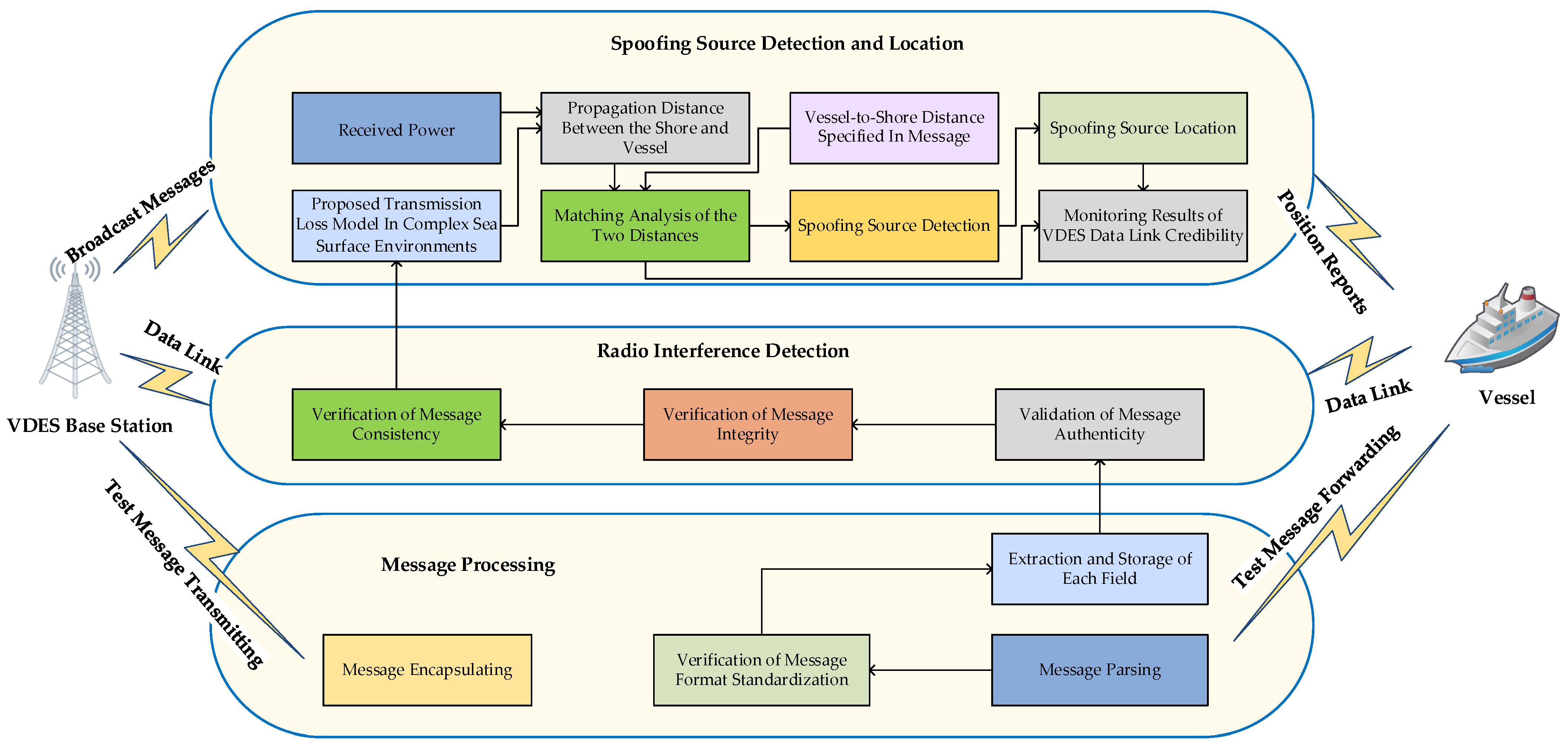
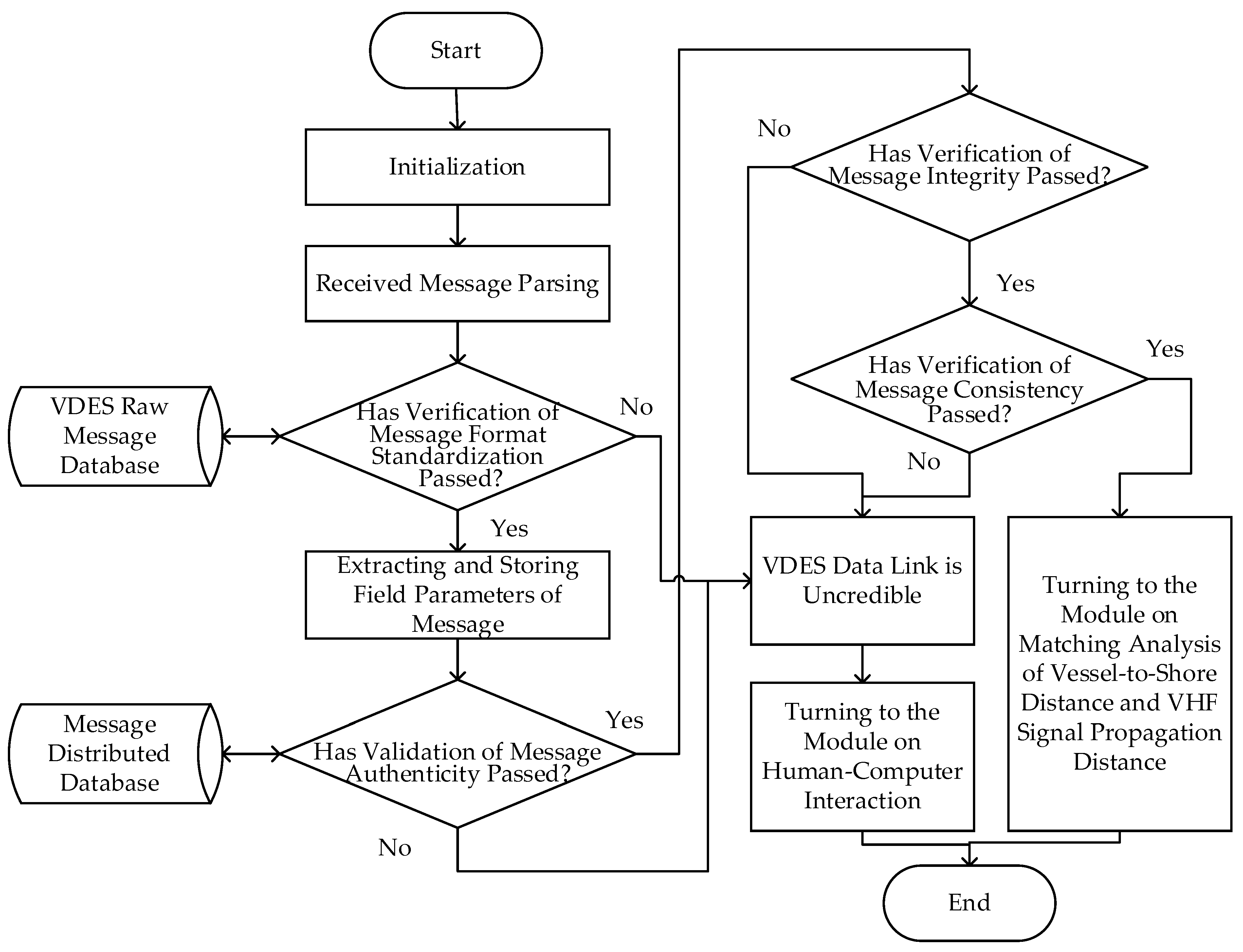
In conclusion, existing studies have enhanced the resilience of VDES data transmission through the examination of data structures and system architecture. However, a comprehensive assessment of the vulnerability landscape within VDES data links is still lacking. Vigilant monitoring of VDES data link reliability can expedite the prompt detection and precise localization of vulnerabilities, enabling alerts regarding these vulnerabilities to be sent to vessels or operational hubs. This proactive approach effectively mitigates security risks while ensuring the integrity of VDES communications received by maritime entities, thereby strengthening navigational safety. Consequently, this study addresses the vulnerability challenges facing VDES data links, particularly those arising from distinct interference scenarios outlined in the G1181 guidelines. It advocates for the combined detection method of radio interference detection and spoofing source identification and localization to maintain the credibility of VDES data links. To accomplish this overall goal, the following research objectives were established:
  • To detect radio interference in the VDES data link, a radio interference detection approach based on message characteristics is put forward. By examining adherence to message formats, parameter validity, content integrity, and transmission coherence, it is determined whether radio interference will impact the correct transmission of VDES messages.
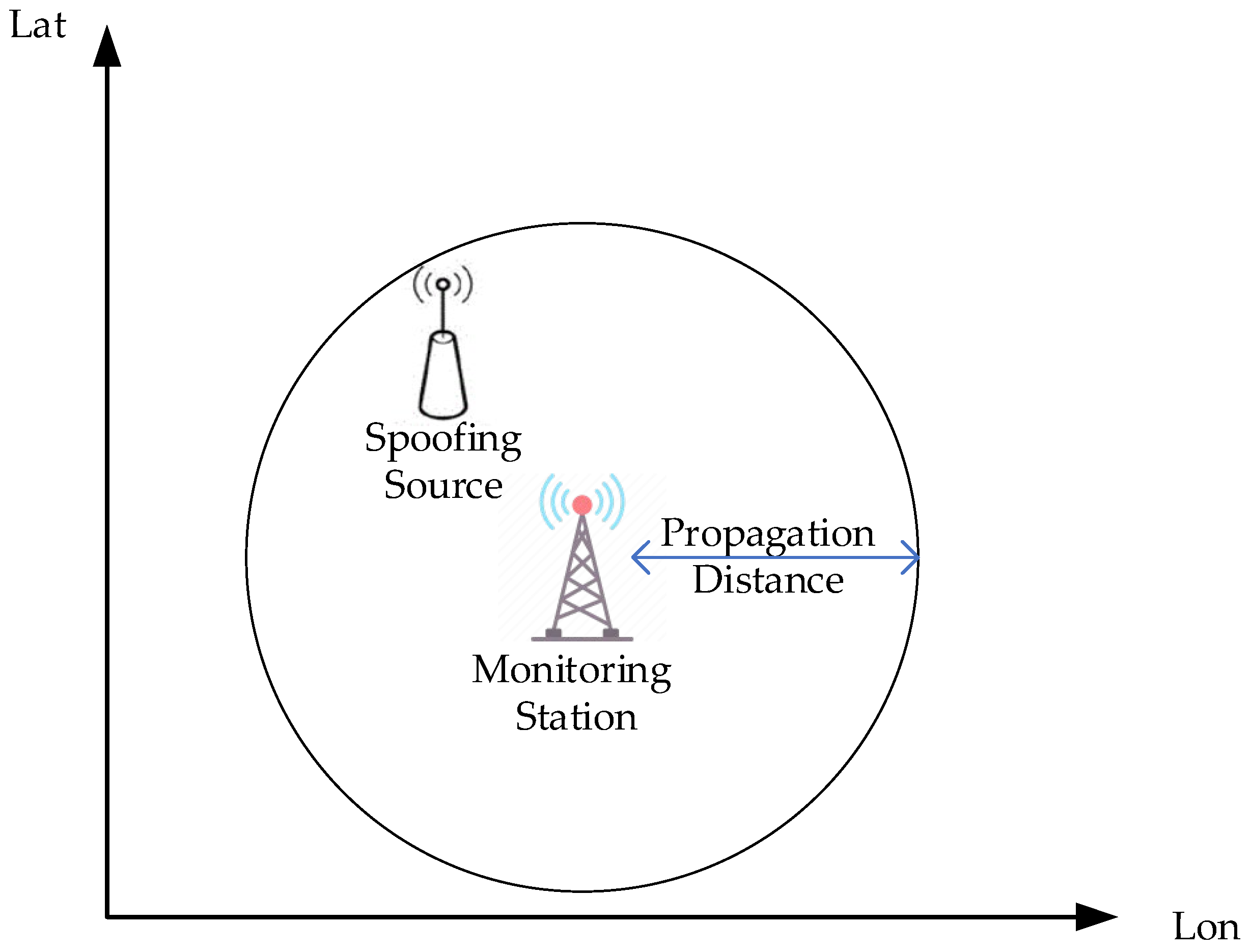
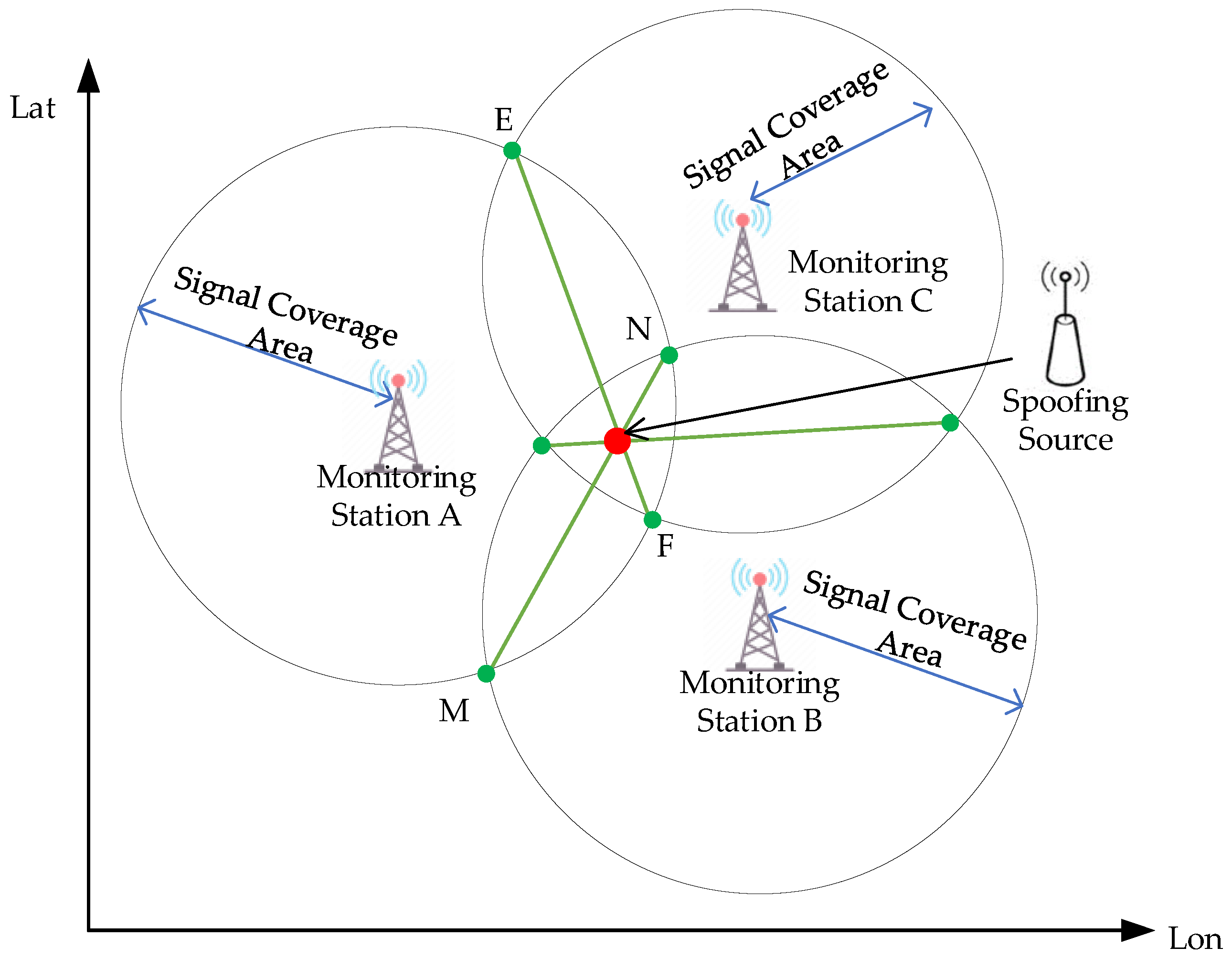
  • Due to the lack of encryption in the messages broadcast by VDES base stations and the absence of an identity verification mechanism within VDES itself, malicious entities could deceive vessels within the signal coverage area by illicitly sending false VDES messages using the MMSI code stolen from a legitimate base station. This deceptive practice can mislead vessel navigation decisions, posing a significant threat to maritime safety. This paper employs a method for spoofing source detection based on distance matching analysis. Specifically, the VHF signal propagation loss model in the complex sea environment is employed to calculate the propagation distance of the VDES signal, and the position information in the ship position report is utilized to calculate the ship-to-shore distance. The matching degree analysis of the two distances is adopted to effectively identify the spoofing source, and the spoofing source position and range are then located by using the spoofing source positioning algorithm.
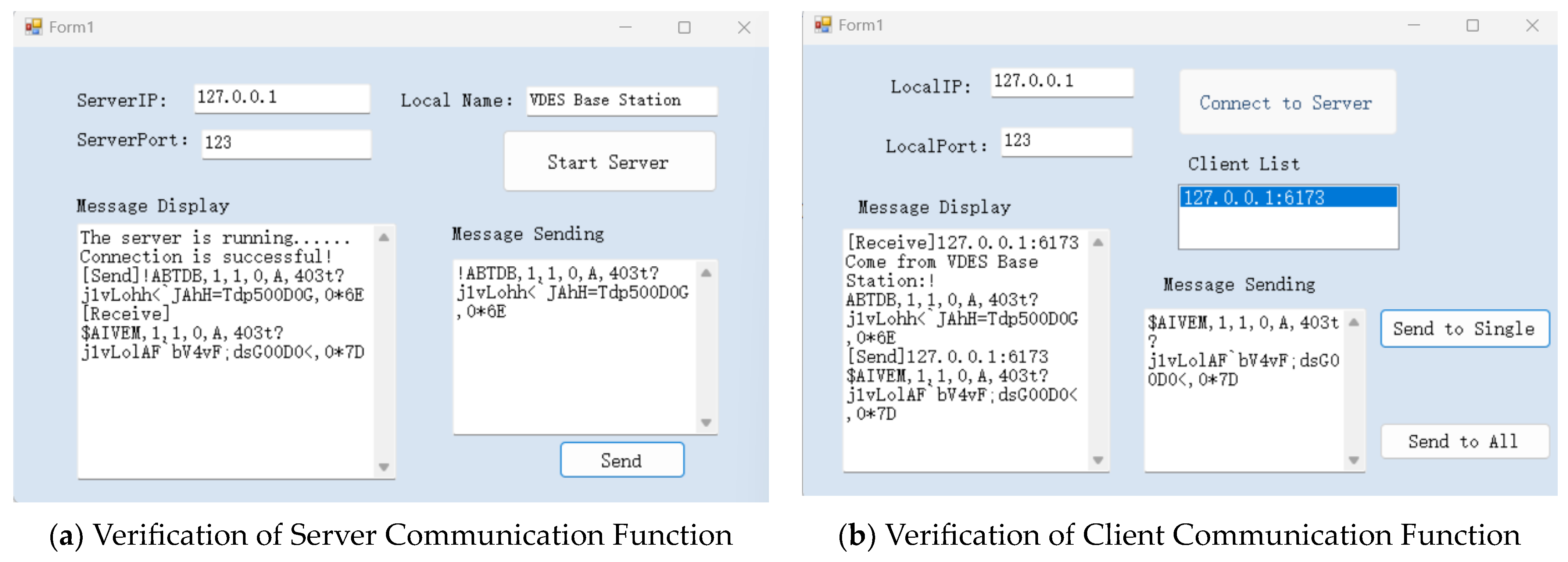
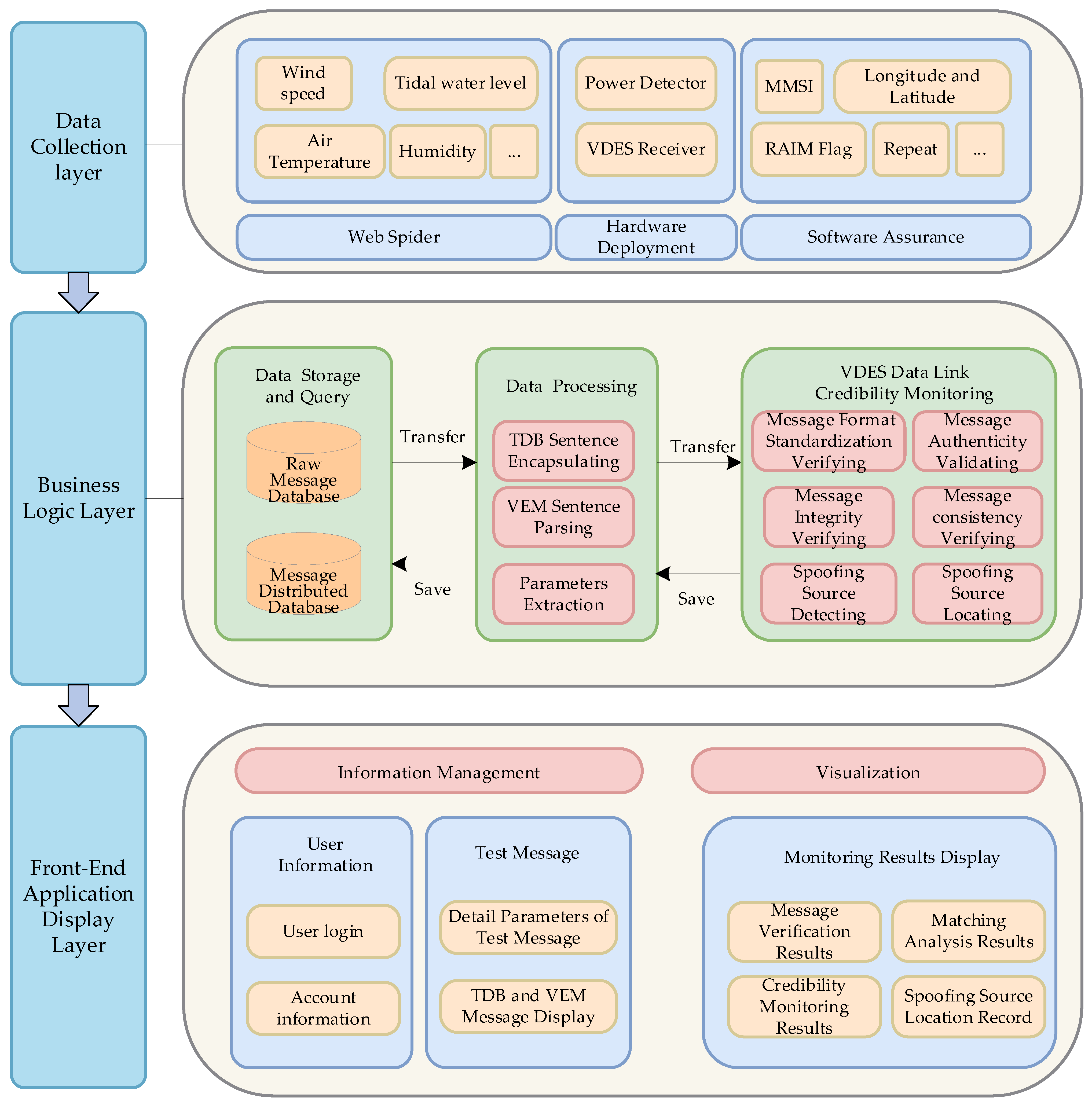
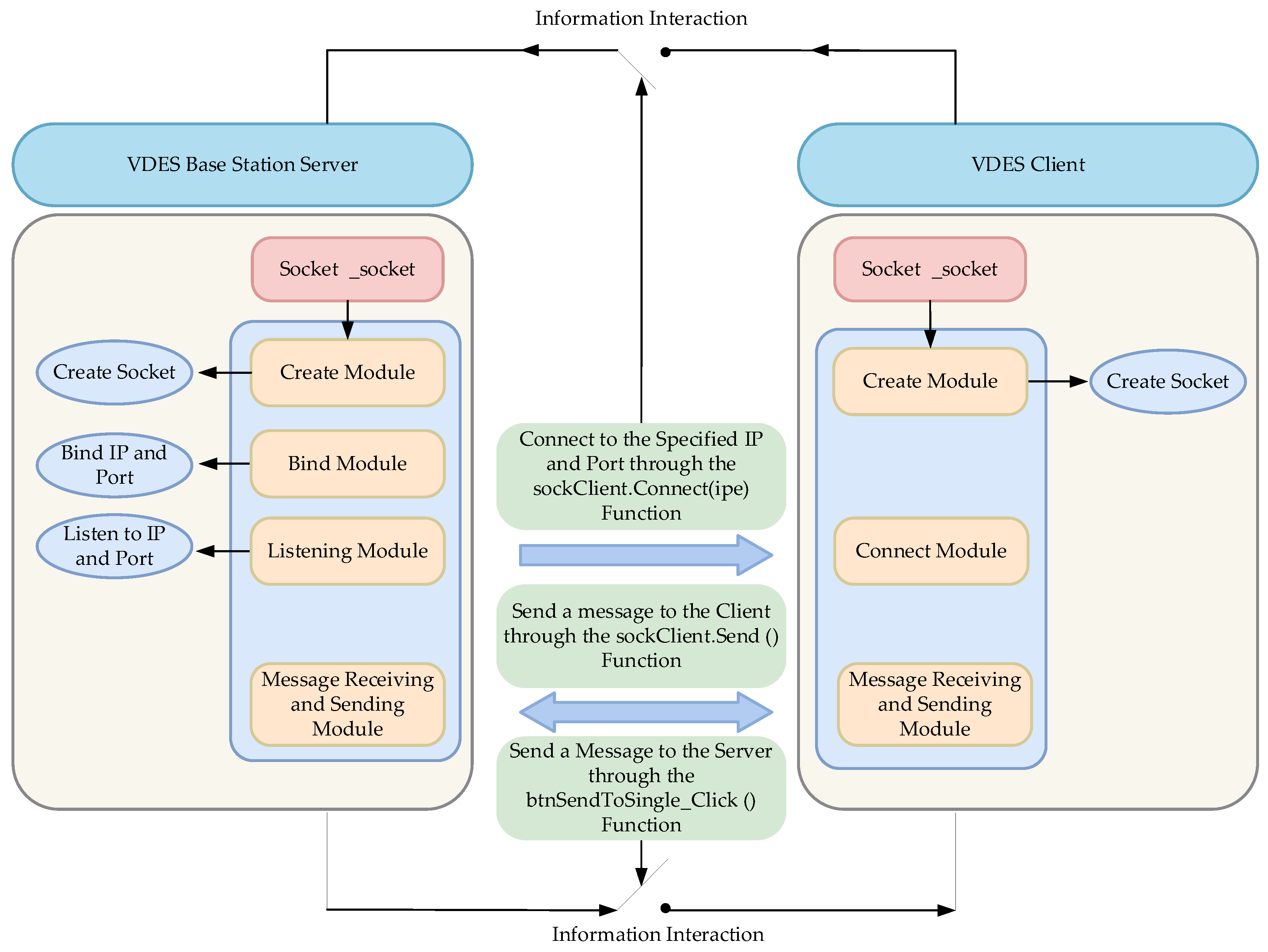
  • To automatically monitor the credibility of the VDES data link and issue timely warnings of vulnerabilities to vessels or management centers, this study develops monitoring software based on a tripartite data architecture supported by a client/server (C/S) model, using the front-end interface to display the monitoring results, warning information, and related data visually, facilitating a direct understanding of the credibility of the VDES data link.
  • The credibility monitoring approach and monitoring software for the VDES data link proposed in this paper are verified based on various interference scenarios, and the results indicate that the proposed approach and the developed software system can effectively monitor and identify the vulnerability threats such as radio interference and spoofing sources existing in the VDES data link.
The findings of this study provide a foundation for developing high-trust services for VHF data links within a comprehensive maritime navigation support system.

4. Verification and Analysis of Experimental Results

The VDES data link integrity monitoring software system is a human–computer interaction system based on the C/S model, designed to effectively monitor the presence of radio interference or spoofing sources within the VDES data link. In this section, various interference scenarios are simulated to test the functionality and monitoring effectiveness of the software system.

4.1. Testing of Radio Interference Vulnerability and Threats

In this section, the effectiveness of the radio interference detection method based on message characteristics is validated through tests that assess vulnerabilities to radio interference within the VDES data link. These tests include the verification of VDES message format compliance, legality of VDES message parameters, completeness of VDES message content, and consistency between transmitted and received messages. This validation demonstrates the method’s capability to effectively detect radio interference vulnerabilities in the VDES data link.
I.
Compliance Testing of VDES Message Formats
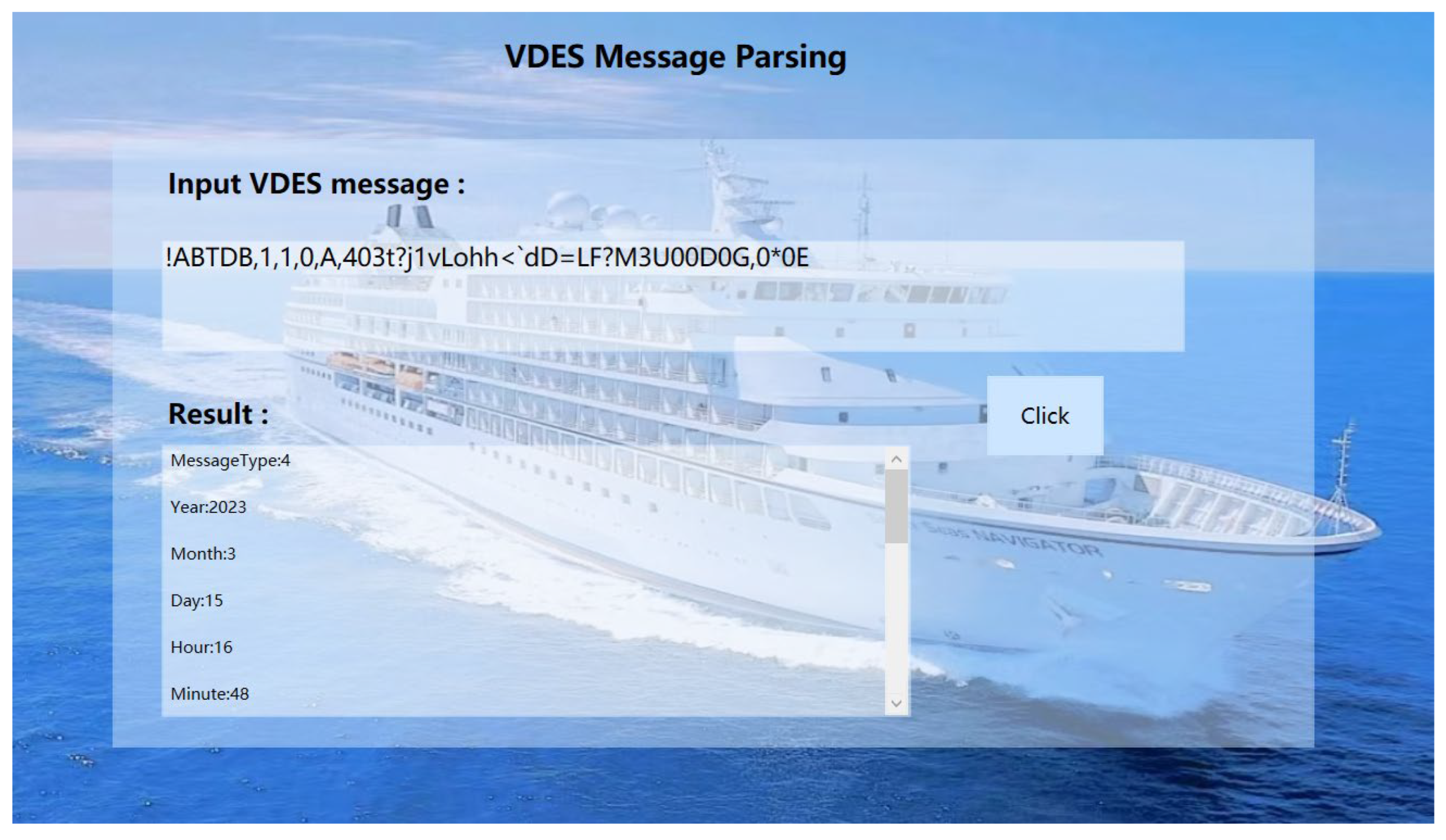
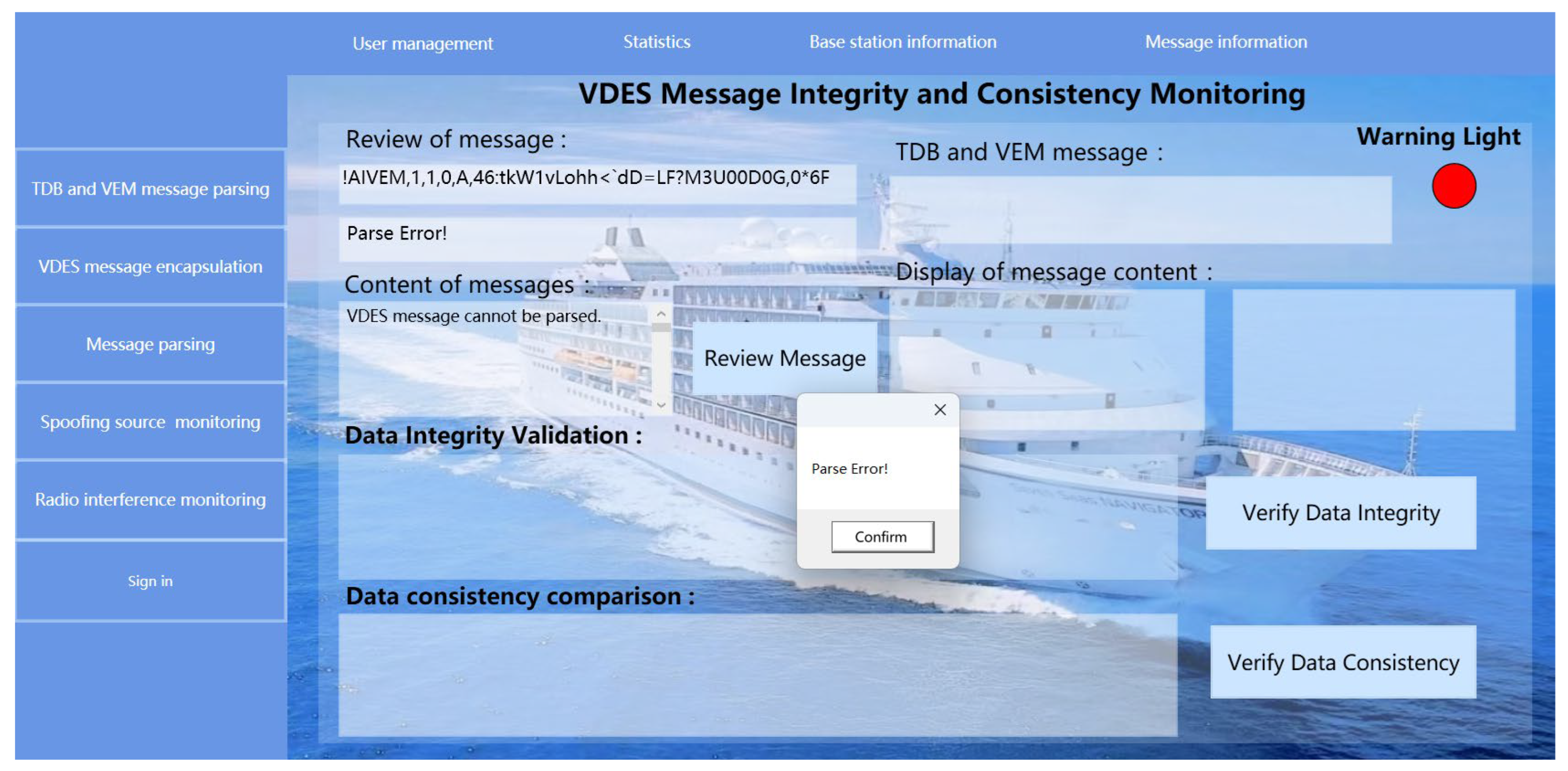
We assuming the message received by the VDES base station is “!AIVEM,1,1,0,A,46:tkW1vLohh<`dD=LF?M3U00D0G,0*6F”. Upon parsing this message using the VDES raw message database, the test results are illustrated in Figure 34.
Figure 34. Results and figures of VDES message format compliance testing.
As shown in Figure 34, querying the VDES raw message database confirmed that the format of the message is inconsistent with the format stored in the database, preventing the message from being parsed correctly. Consequently, the verification of VDES message format compliance failed, indicating the presence of radio interference within the VDES data link at that time.
II.
Verification Testing of VDES Message Parameter Legitimacy
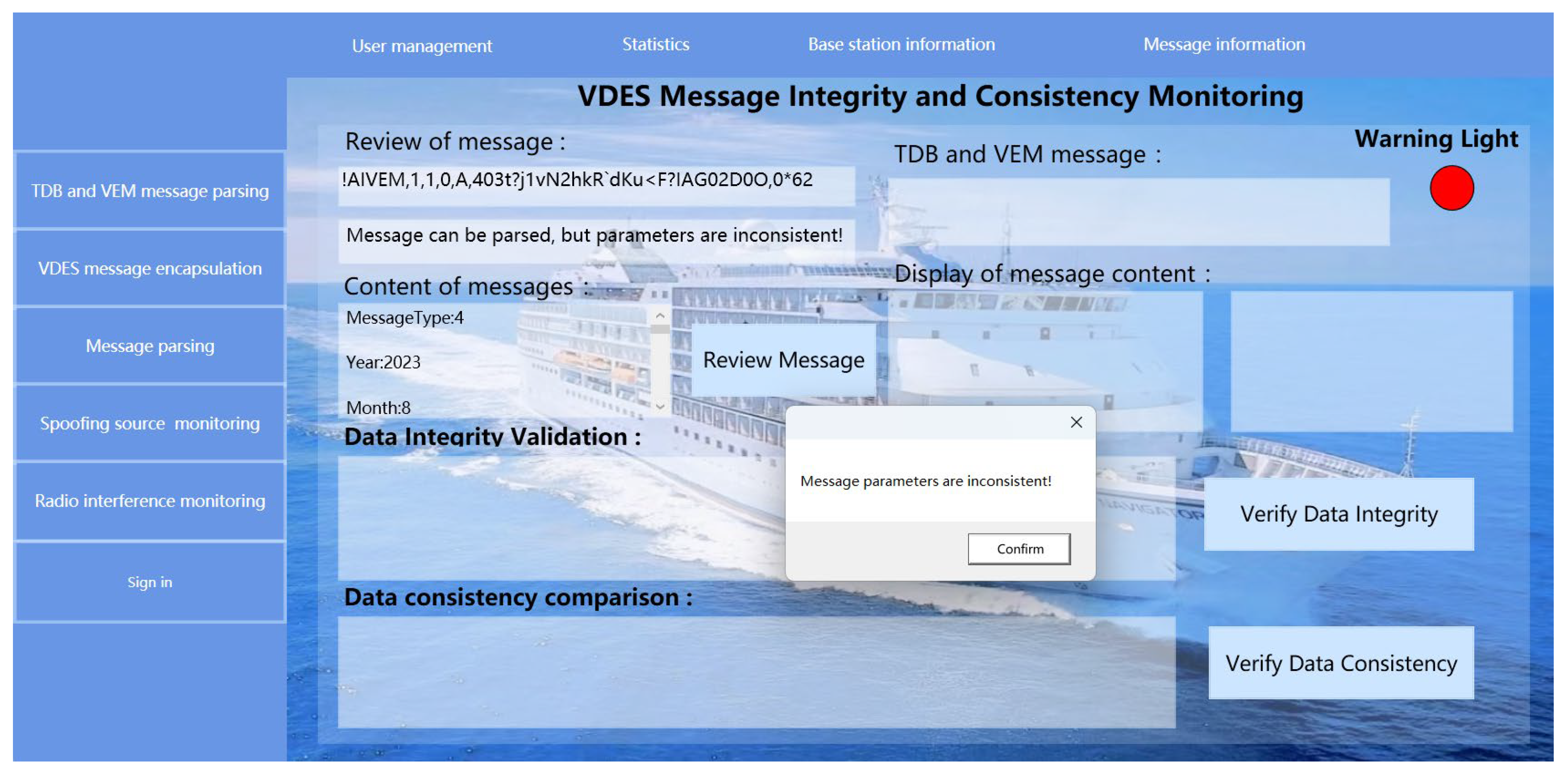
We assuming the message received by the VDES base station is “!AIVEM,1,1,0,A,403t?j1vN2hkR`dKu<F?IAG02D0O,0*62”. Following a query to the VDES raw message database for parsing this specific message and extracting parameter information from each field of the message, the parameters are detailed in Table 1. A comparison is then made between the parameters listed in Table 1 and the parameters of legitimate messages previously sent by this base station in the AIS/VDES message distributed database. The test outcomes are presented in Figure 35.
Table 1. Parameter table for VDES message parameter legitimacy verification testing.
Figure 35. Results and figures of VDES message parameter legitimacy verification testing.
As illustrated in Figure 35, querying the VDES raw message database confirmed that the format of the message aligns with the stored format, allowing for successful parsing. The verification of message format compliance passed. However, upon consulting the AIS/VDES message distributed database, it was revealed that previously sent legitimate messages from this base station identified the Electronic Positioning Device type as 5, with an RAIM flag of 0. In contrast, the Electronic Positioning Device type in the received VDES message, as listed in Table 1, was 7, with an RAIM flag of 1. This presents inconsistencies with the parameters of legitimate messages. Consequently, the validation of the legitimacy of VDES message parameters failed, indicating the presence of radio interference within the VDES data link at that time.
III.
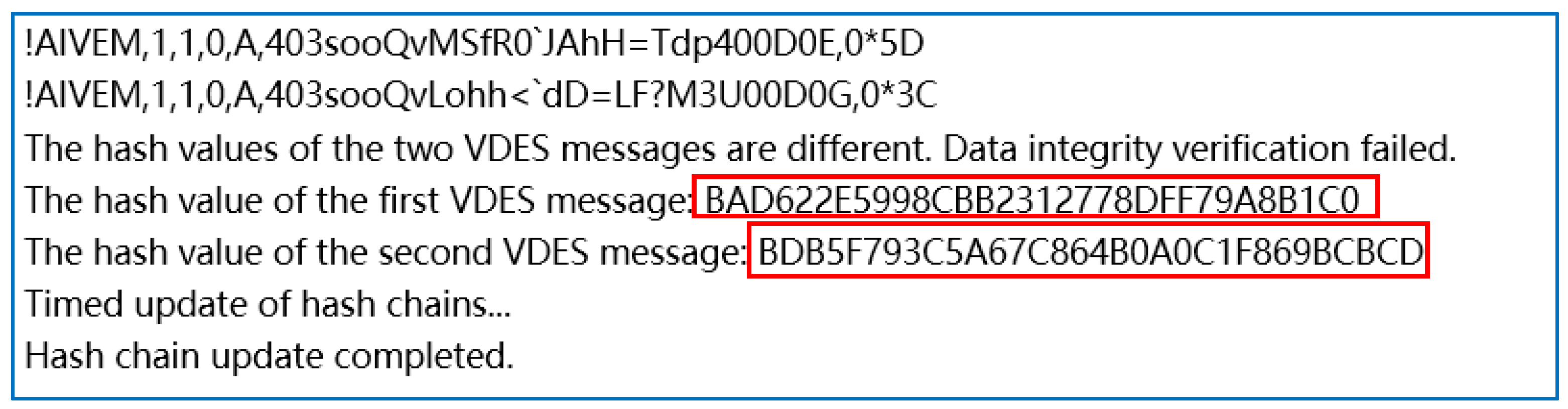
Verification of VDES Message Content Integrity
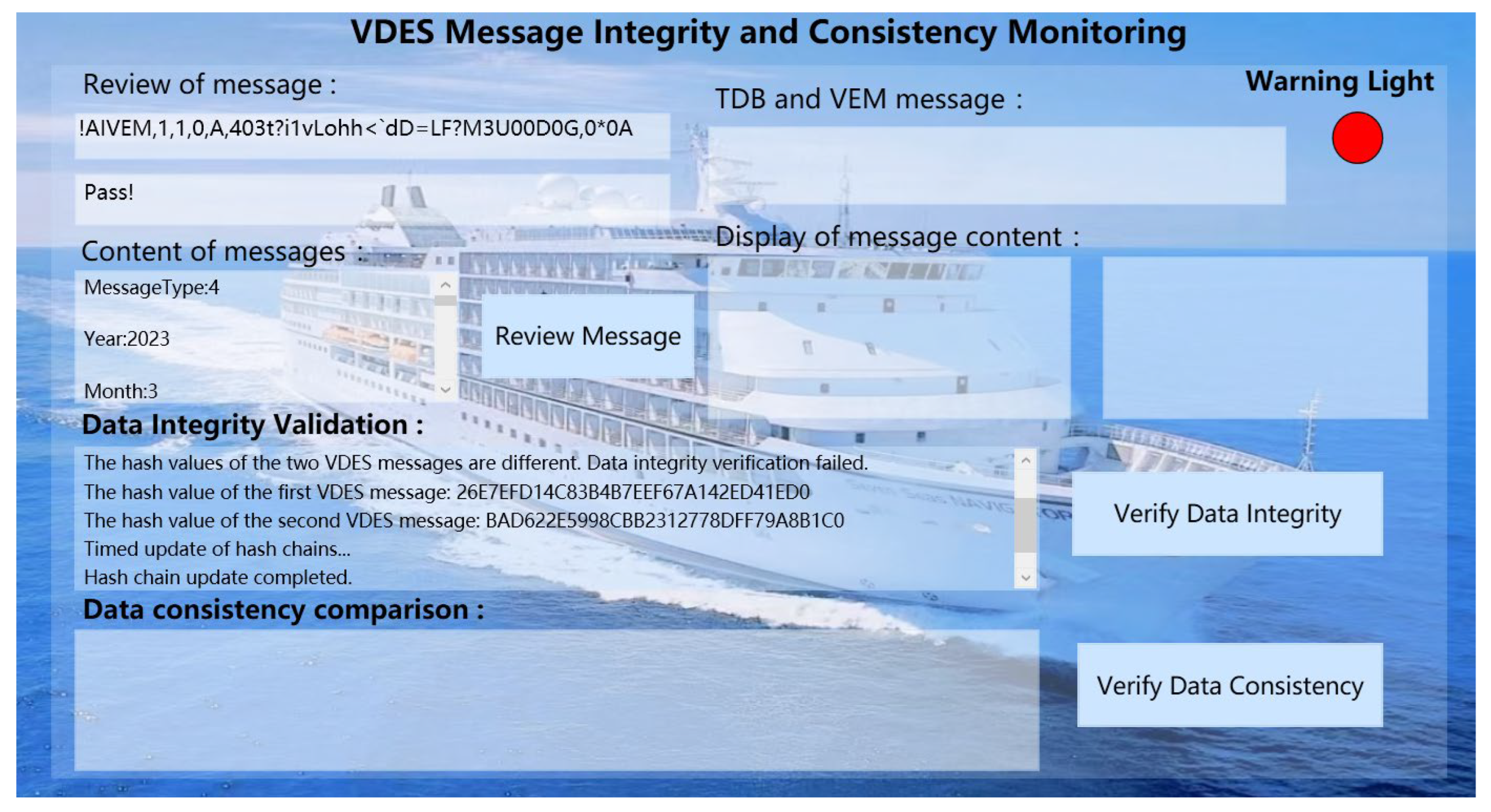
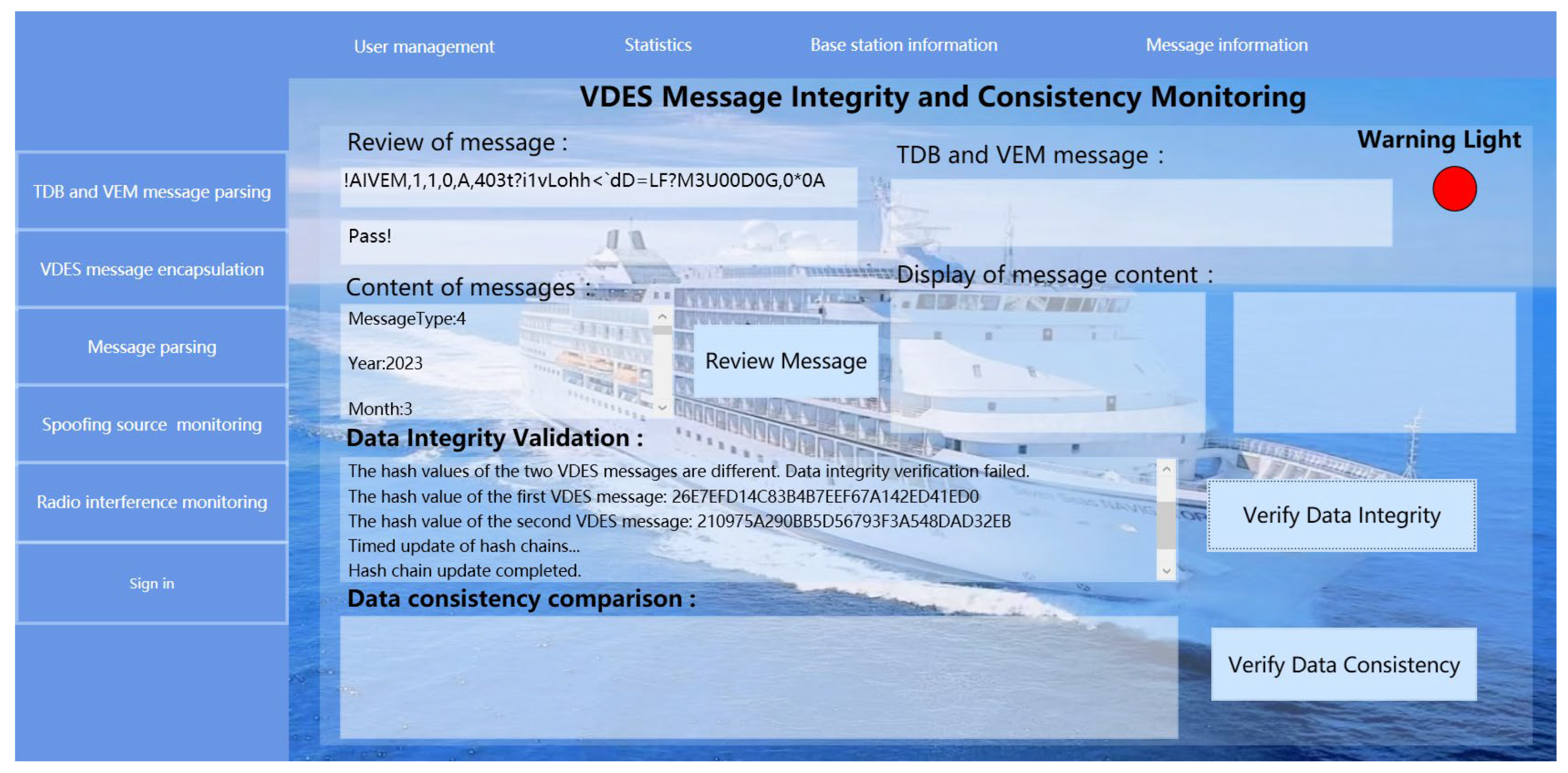
Assuming the message received by the VDES base station is “!AIVEM,1,1,0,A,403t?i1vLohh<`dD=LF?M3U00D0G,0*0A”, upon querying the VDES raw message database, it was found that a legitimate message previously sent by the ship station received by this base station was “!AIVEM,1,1,0,A,403t?i1vLohh<W`0B4@qWO500D0G,0*04”. The parameters of this message retrieved from the VDES raw message database are detailed in Table 2. Following the parsing and parameter comparison of the received message using the VDES raw message database, the test results are depicted in Figure 36.
Table 2. Parameter table for VDES message content integrity verification testing.
Figure 36. Results of VDES message content integrity verification testing.
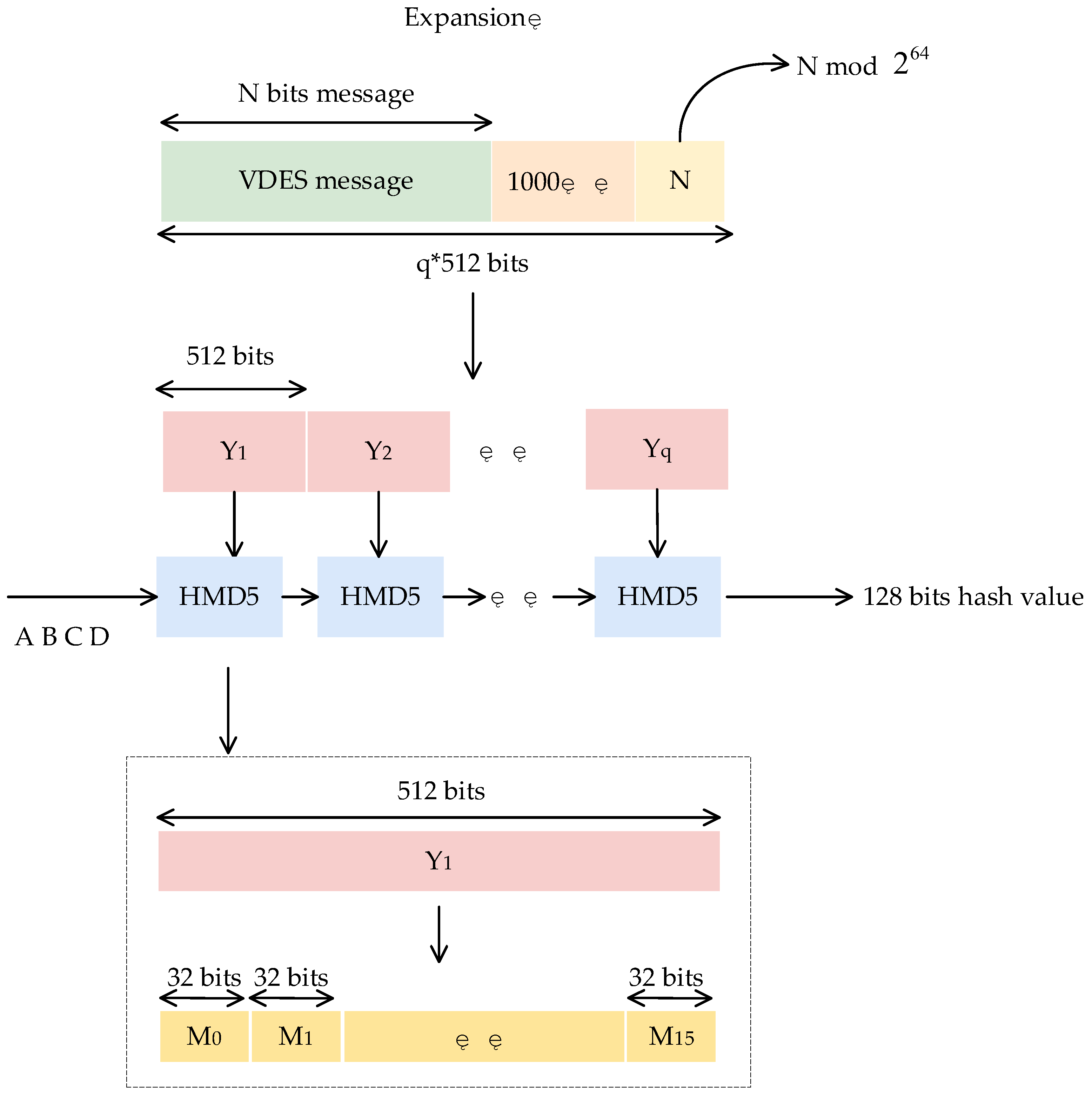
As shown in Figure 36, querying the VDES raw message database confirmed that the format of the message aligns with the stored format, enabling successful parsing. The verification of message format compliance passed. Following parsing, a query to the AIS/VDES message distributed database revealed that all parameters of this message matched those of previously sent legitimate messages, thereby passing the validation of message parameter legitimacy. However, upon computing the hash values of the received message and the hash value of a legitimate message previously received by this base station using the MD5 algorithm, the software interface indicated a discrepancy between the two hash values. This integrity check failure of the message content suggests the presence of radio interference within the VDES data link at that time.
IV.
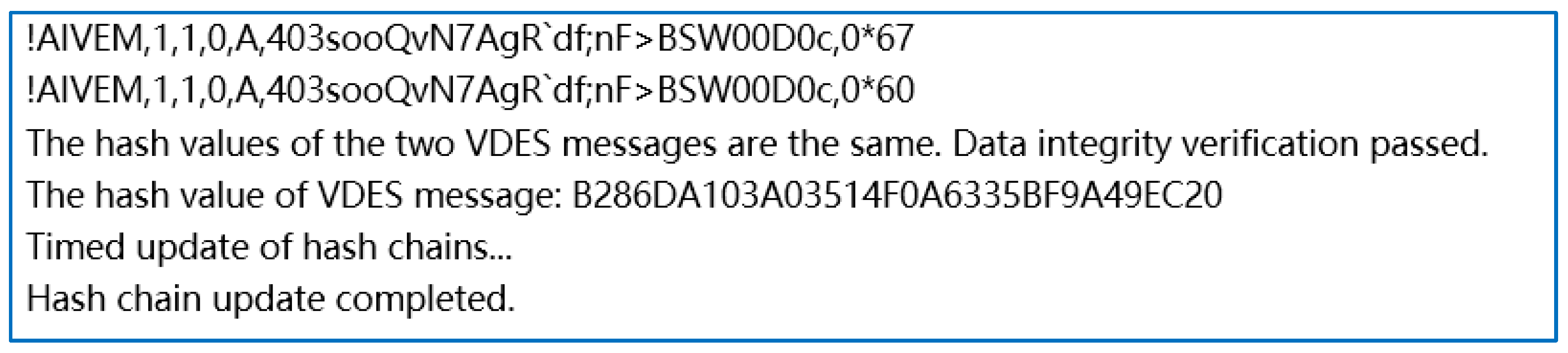
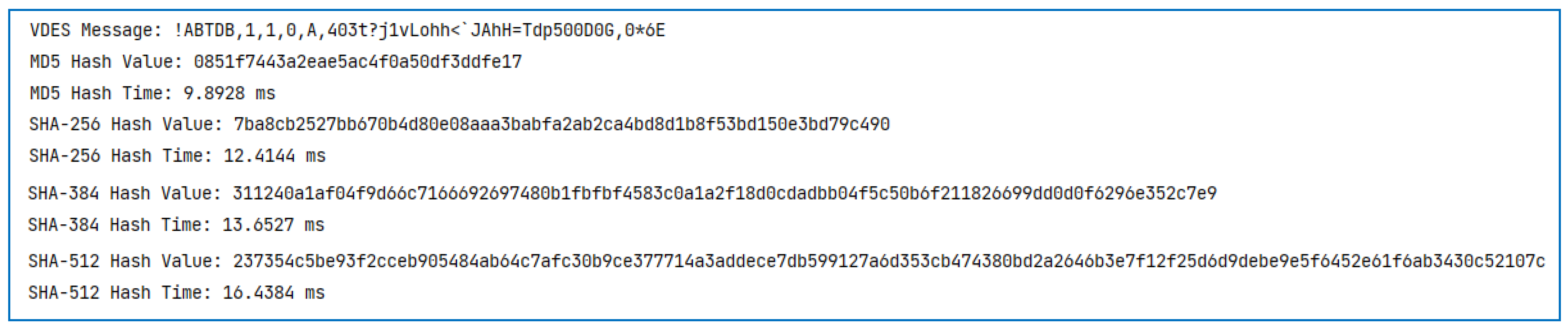
VDES Transmission and Reception Messages Consistency Check Test
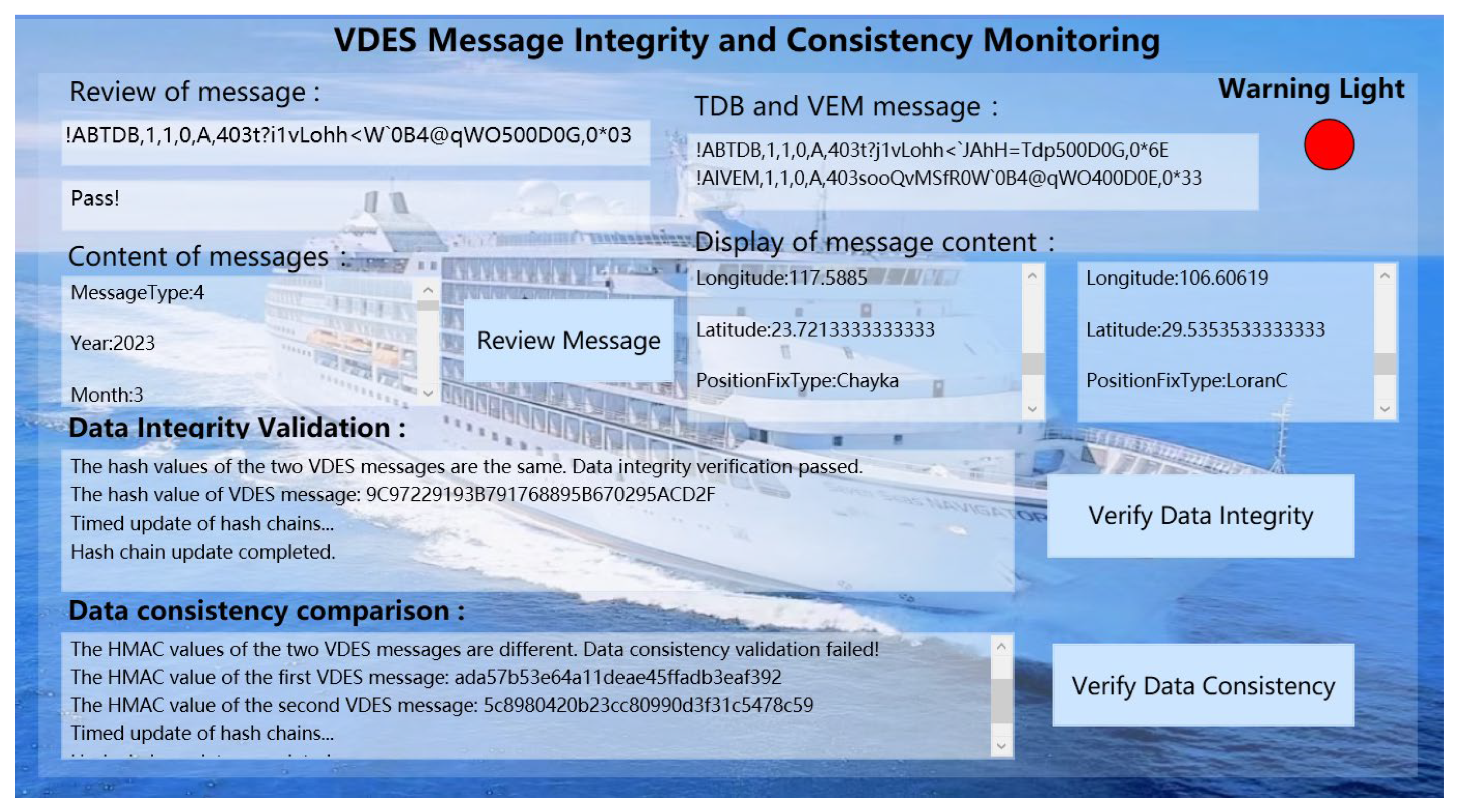
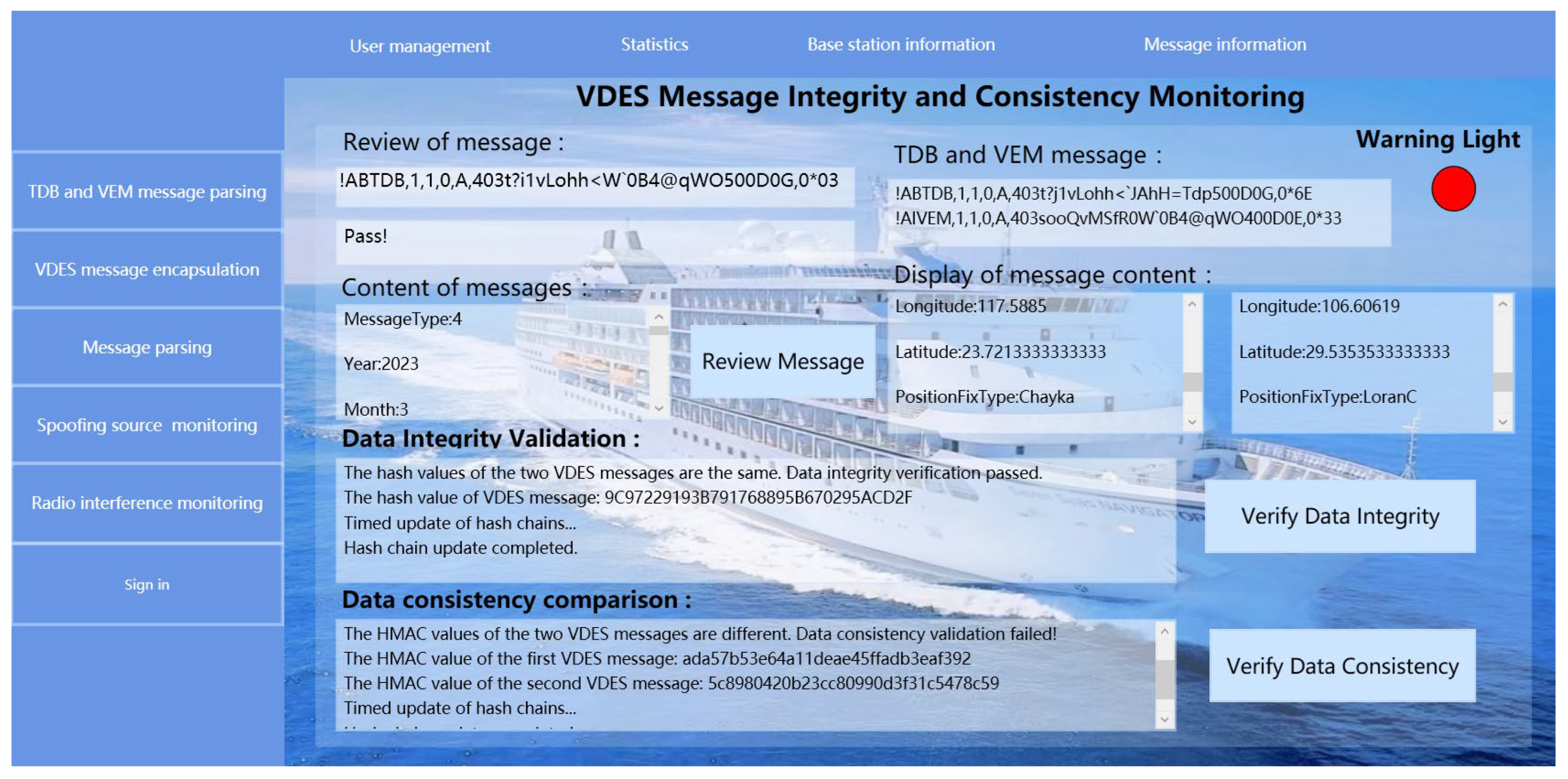
Assuming the link management message broadcast by the VDES base station in TDB format is “!ABTDB,1,1,0,A,403t?j1vLohh<`JAhH=Tdp500D0G,0*6E”, the message received by the VDES shipborne unit after automatic forwarding by VEM, and subsequently re-received by the VDES base station, is “!AIVEM,1,1,0,A,403sooQvMSfR0W`0B4@qWO400D0E,0*33”. Upon querying the VDES raw message database for parsing the received message and comparing parameters in the AIS/VDES message distributed database, the test results are depicted in Figure 37.
Figure 37. Results of VDES transmission and reception messages consistency check test.
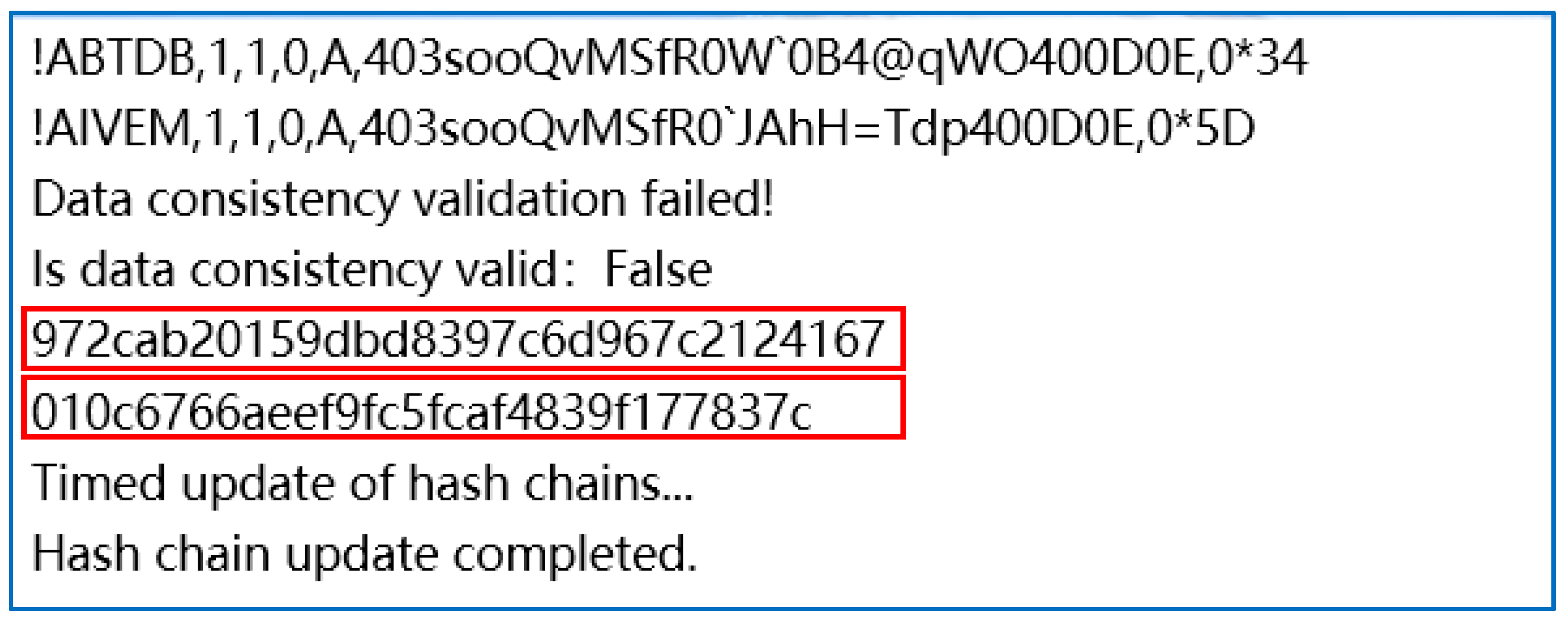
As depicted in Figure 37, querying the VDES raw message database confirmed that the message format aligns with that stored in the database, enabling successful parsing. The verification of message format compliance was successful. Following this, a query to the AIS/VDES message distributed database revealed that all parameters of the message matched those of previously sent legitimate messages, thus validating the legitimacy of the message parameters. By utilizing the MD5 algorithm to compute the hash value of the received message and comparing it to the hash value of the legitimate message previously received by this base station, the computed results were consistent; both hashes were 9C97229193B791768895B670295ACD2F, confirming the integrity of the message content. Additionally, by applying the HMAC algorithm to compute the HMAC values of the TDB statement message and the VEM statement message separately, the software interface indicated a discrepancy between the HMAC values of the two messages. Consequently, the consistency check of the VDES transmission and reception messages failed, suggesting the presence of radio interference within the VDES data link at that time.
V.
Testing of Radio Interference Vulnerability and Threats
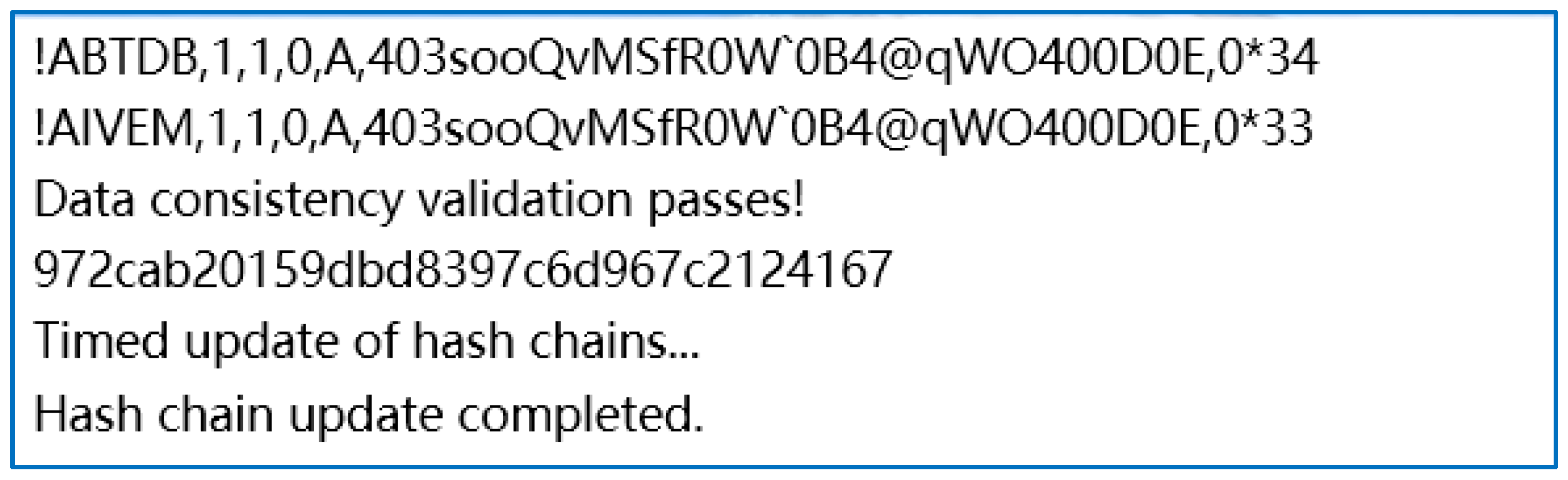
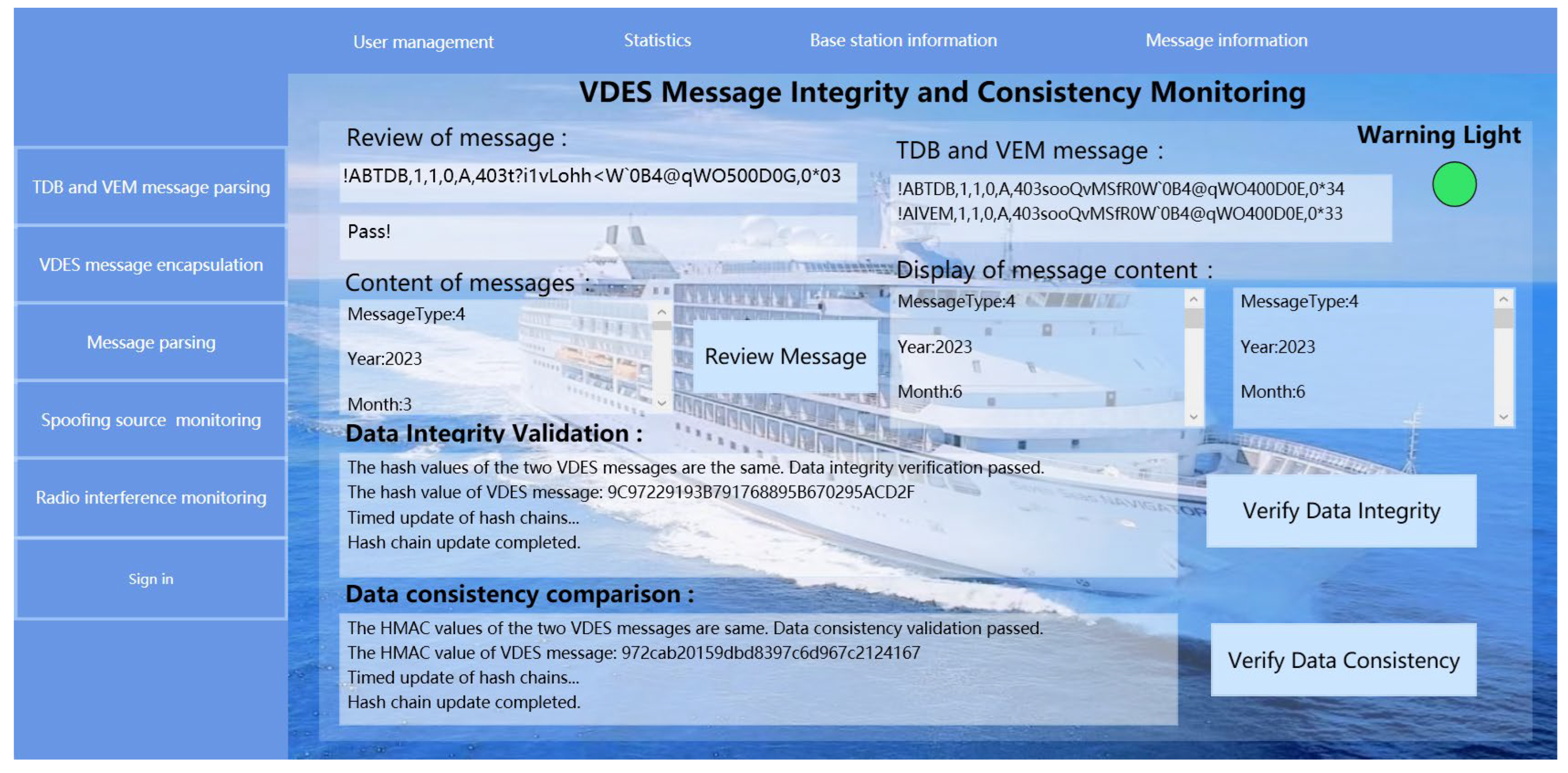
Assuming that the VDES base station broadcasts a link management message in TDB format as follows, “!ABTDB,1,1,0,A,403sooQvMSfR0W`0B4@qWO400D0E,0*34”, the message received by the VDES shipborne unit—after automatic forwarding by VEM and then re-received by the VDES base station—is “!AIVEM,1,1,0,A,403sooQvMSfR0W`0B4@qWO400D0E,0*33”. Upon querying the VDES raw message database to parse the received message and compare parameters in the AIS/VDES message distributed database, the test results are depicted in Figure 38.
Figure 38. Results of radio interference vulnerability and threat testing.
As shown in Figure 38, it was confirmed that the format of the message aligns with that stored in the VDES raw message database, enabling successful parsing. The verification of message format compliance was successful. Following this, a query to the AIS/VDES message distributed database revealed that all parameters of the message matched those of previously sent legitimate messages, validating the legitimacy of the message parameters. By utilizing the MD5 algorithm to compute the hash value of the received message and comparing it to the hash value of the legitimate message previously received by this base station, the computed results were consistent; both hashes were 9C97229193B791768895B670295ACD2F, confirming the integrity of the message content. Additionally, by applying the HMAC algorithm to compute the HMAC values of the TDB statement message and the VEM statement message separately, the results were also consistent, both being 972cab20159dbd8397c6d967c2124167, thereby passing the consistency check of the transmission and reception messages. In conclusion, at this point, the VDES messages were not vulnerable to threats of radio interference in the data link, allowing for subsequent spoofing source identification.

4.2. Testing of Spoofing Source Vulnerability and Threats

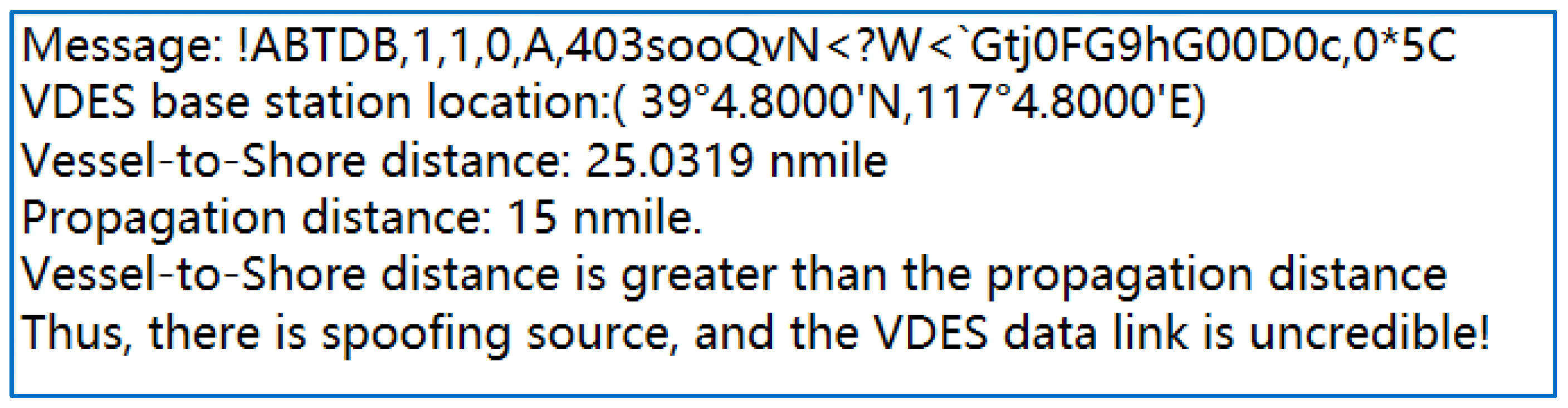
Building upon the completion of radio interference detection in the VDES data link, this section employs a method that matches ship-to-shore distance with propagation distance to validate the effectiveness of the VDES data link integrity monitoring system in detecting spoofing sources within the data link.
I.
Testing of Ship-to-Shore Distance and Propagation Distance Matching
To validate the effectiveness of the ship-to-shore distance matching analysis method in detecting spoofing sources within the VDES data link, this section simulates various interference scenarios to verify the functionality of the algorithm.
  • (a)
    Match Test Passes the Experiment
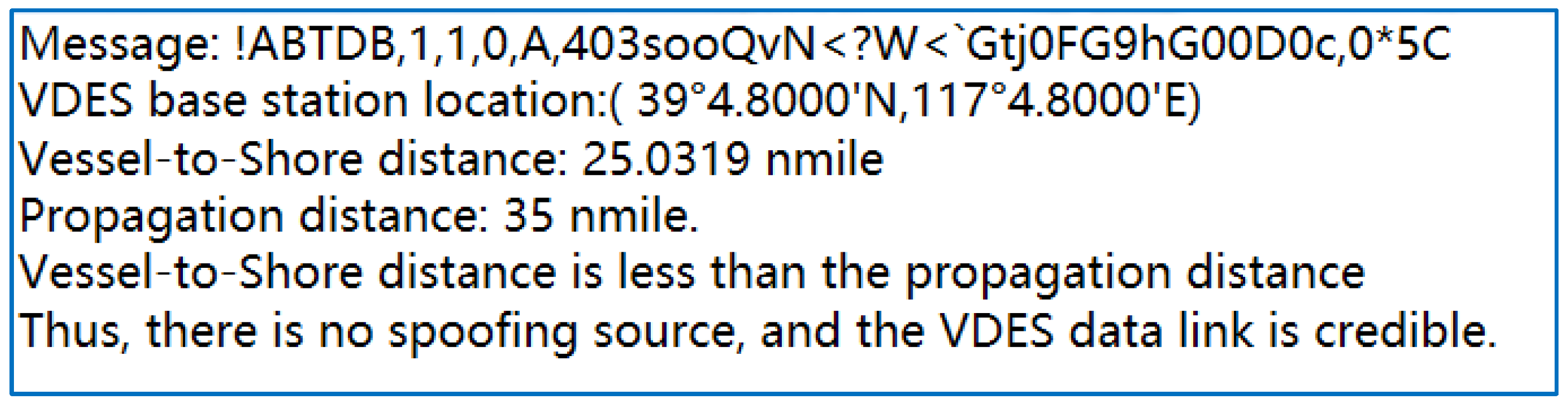
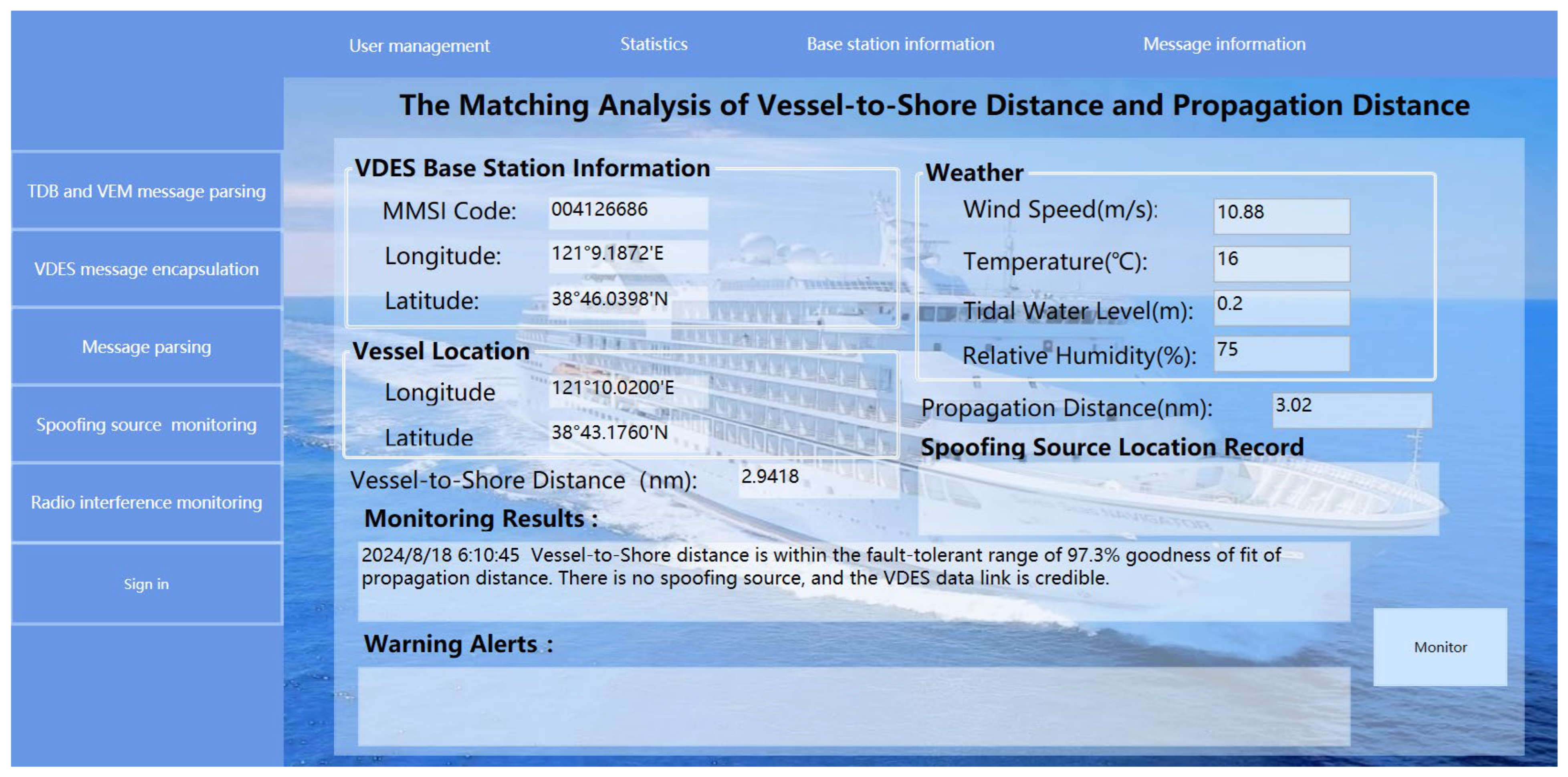
Assuming the coordinates of the VDES base station are (38°46.0398′ N, 121°9.1872′ E), with a sea surface wind speed of 10.88 m/s, a sea surface temperature of 16 °C, a tidal water level of 0.2 m, and a relative humidity of 75%. When the VDES ship station is located at (38°43.176′ N, 121°10.02′ E), the monitoring results are shown in Figure 39.
Figure 39. Results of testing for the absence of spoofing sources based on the Credibility Monitoring Software.
As shown in Figure 39, it was confirmed that the format of the message aligns with that stored in the VDES raw message database, enabling successful parsing. The verification of message format compliance was successful. Following this, a query to the AIS/VDES message distributed database revealed that all parameters of the message matched those of previously sent legitimate messages, validating the legitimacy of the message parameters. By utilizing the MD5 algorithm to compute the hash value of the received message and comparing it to the hash value of the legitimate message previously received by this base station, the computed results were consistent; both hashes were 9C97229193B791768895B670295ACD2F, confirming the integrity of the message content. Additionally, by applying the HMAC algorithm to compute the HMAC values of the TDB statement message and the VEM statement message separately, the results were also consistent, both being 972cab20159dbd8397c6d967c2124167, thereby passing the consistency check of the transmission and reception messages. In conclusion, at this point, the VDES messages were not vulnerable to threats of radio interference in the data link, allowing for subsequent spoofing source identification. The VDES signal coverage range calculated based on sea surface meteorological conditions is 27.1623 nautical miles. Concurrently, using the Haversine formula with the VDES base station coordinates, the ship-to-shore distance is determined to be 2.9418 nautical miles, which is less than the VDES signal coverage range. Considering a received signal power of −67 dBm at the VDES ship station and a calculated VDES signal propagation distance of 3.02 nautical miles—based on a complex sea surface environment VHF signal propagation loss model—this ship-to-shore distance falls within the tolerance range of 97.3%, fitting the propagation distance. This alignment indicates that the signal emitted from the base station matches the received signal power at the receiving end, suggesting the absence of spoofing source interference in the VDES data link.
  • (b)
    Experimental Analysis of Matching Testing Failures
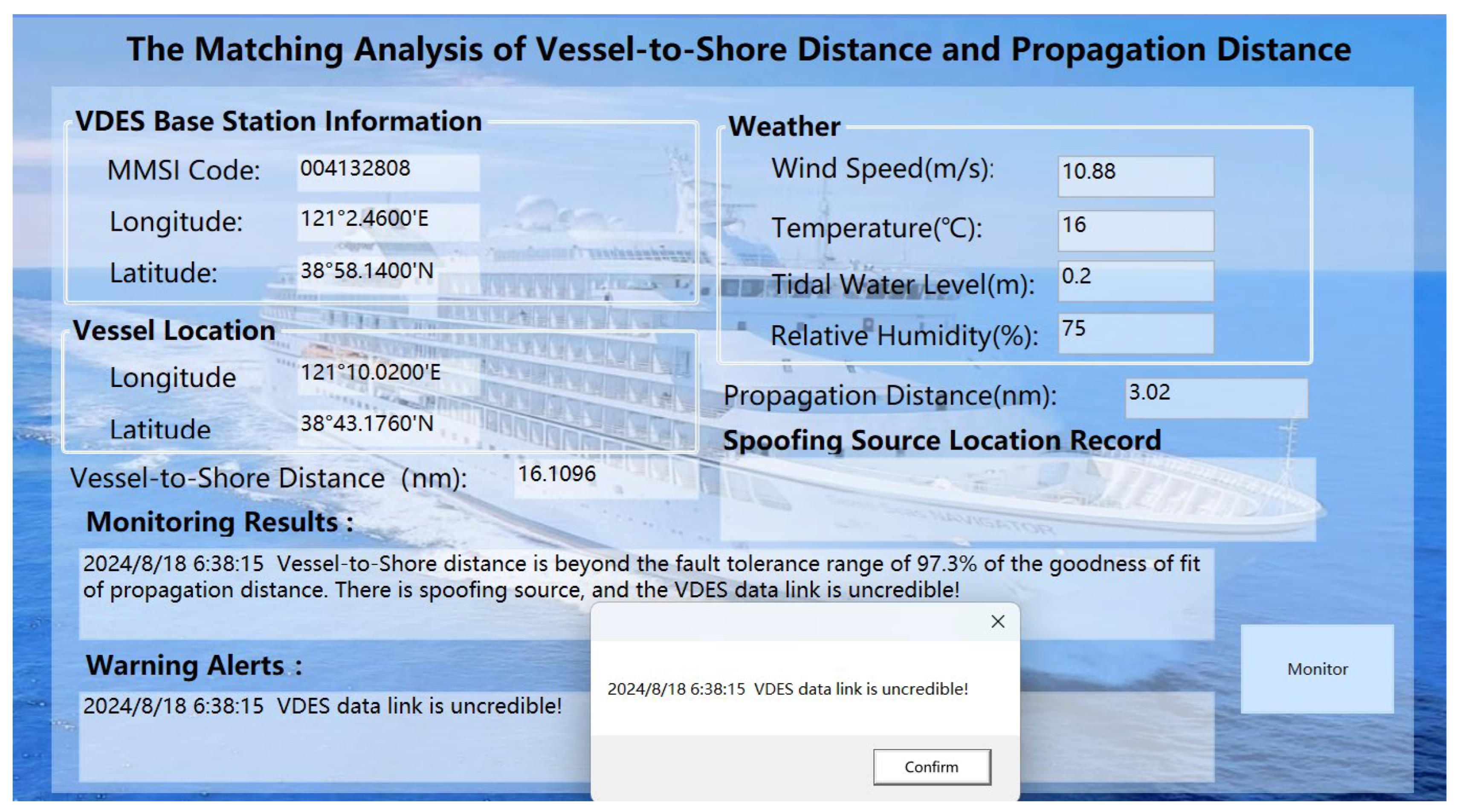
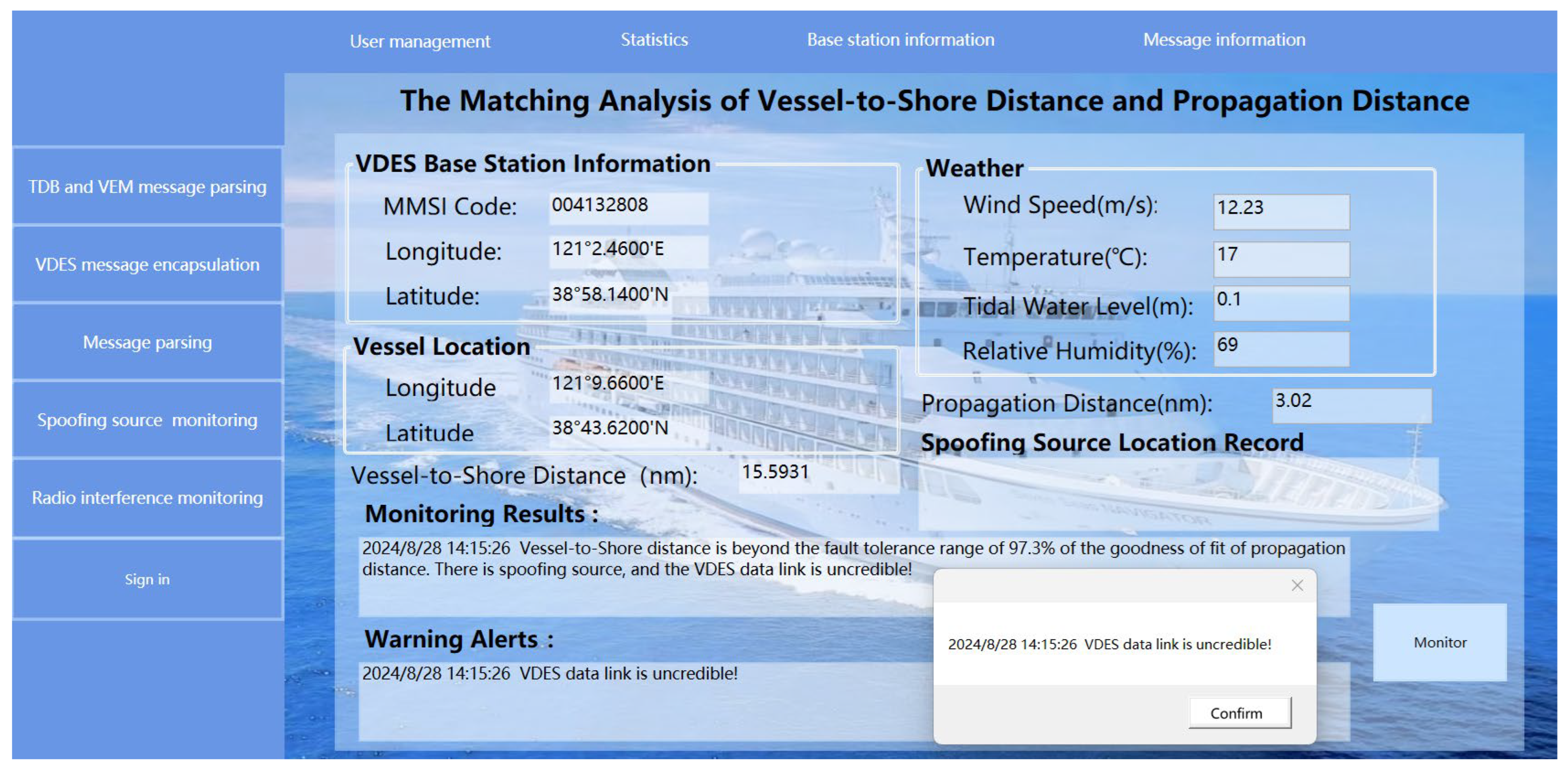
At a specific moment, the coordinates of the VDES base station are (38°58.14′ N, 121°2.46′ E), with a sea surface wind speed of 12.23 m/s, a sea surface temperature of 17 °C, a tidal water level of 0.1 m, and a relative humidity of 69%. The VDES ship station is positioned at (38°43.62′ N, 121°9.66′ E), with a received power of −67 dBm. The results of the ship-to-shore distance matching with the propagation distance test are depicted in Figure 40.
Figure 40. Results of spoofing source detection based on the Credibility Monitoring Software.
As shown in Figure 40, it was confirmed that the format of the message aligns with that stored in the VDES raw message database, enabling successful parsing. The verification of message format compliance was successful. Following this, a query to the AIS/VDES message distributed database revealed that all parameters of the message matched those of previously sent legitimate messages, validating the legitimacy of the message parameters. By utilizing the MD5 algorithm to compute the hash value of the received message and comparing it to the hash value of the legitimate message previously received by this base station, the computed results were consistent; both hashes were 9C97229193B791768895B670295ACD2F, confirming the integrity of the message content. Additionally, by applying the HMAC algorithm to compute the HMAC values of the TDB statement message and the VEM statement message separately, the results were also consistent, both being 972cab20159dbd8397c6d967c2124167, thereby passing the consistency check of the transmission and reception messages. In conclusion, at this point, the VDES messages were not vulnerable to threats of radio interference in the data link, allowing for subsequent spoofing source identification. The VDES signal coverage is calculated to be 27.1623 nautical miles based on sea surface meteorological conditions. Simultaneously, the ship-to-shore distance computed using Equation (9) from the VDES ship station position is 15.5931 nautical miles, which is less than the VDES signal coverage range, indicating that the information broadcast by the base station can be received by the ship station. Considering the received power, the VDES signal propagation distance calculated using Equation (8) is 3.02 nautical miles. At this point, the ship-to-shore distance exceeds the tolerance range of 97.3% fitting the propagation distance, suggesting that the received VDES message is not from the base station. It is inferred that spoofing source interference exists in the VDES data link at this instance, leading to subsequent engagement with the spoofing source localization module.
II.
Testing of Spoofing Source Localization
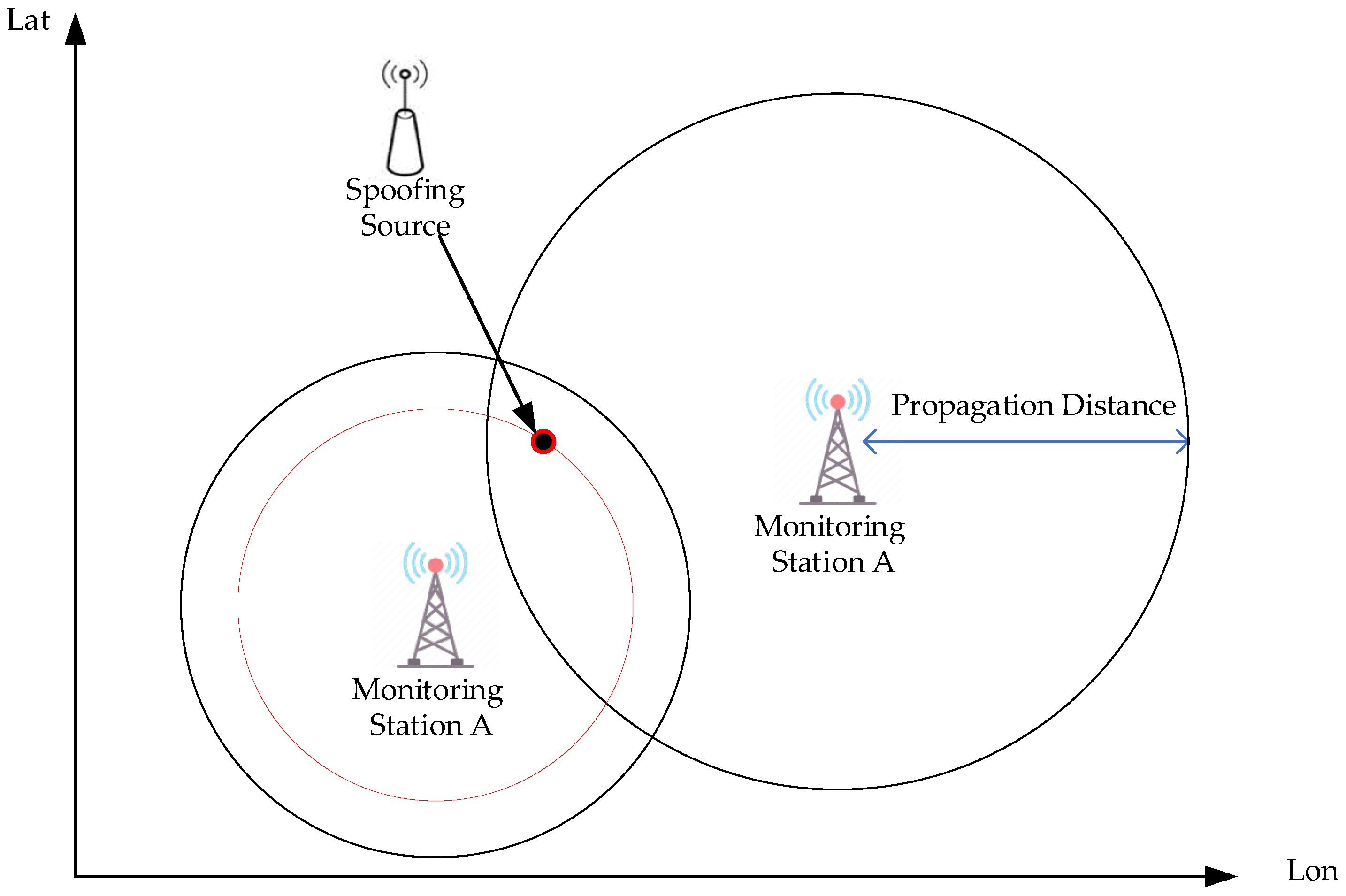
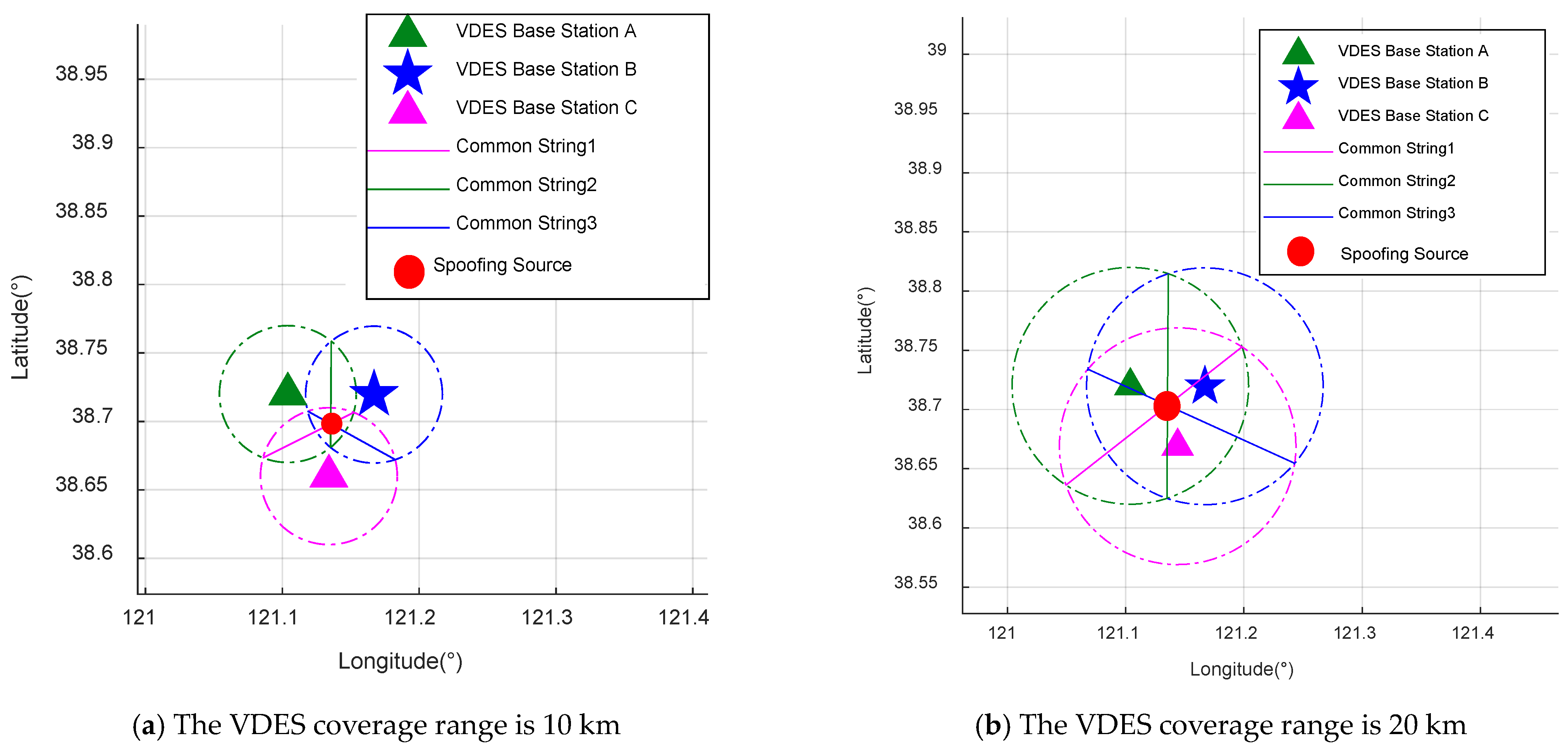
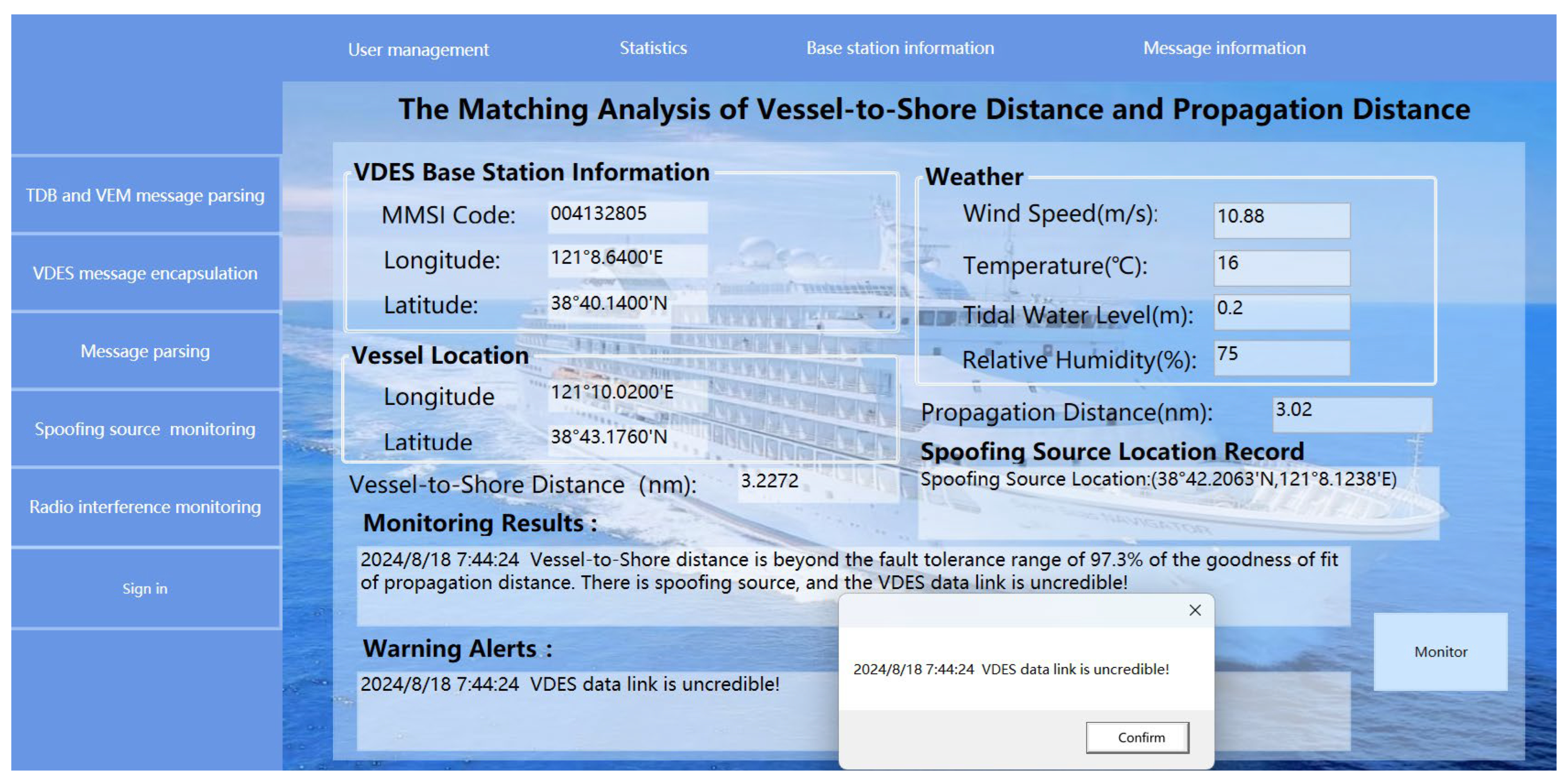
Assuming the coordinates of VDES monitoring station A are (38°43.2′ N, 121°6.24′ E) and those of VDES monitoring station B are (38°40.14′ N, 121°8.64′ E), with a sea surface wind speed of 10.88 m/s, a sea surface temperature of 16 °C, a tidal water level of 0.2 m, and a relative humidity of 75%, the VDES ship station is located at (38°43.176′ N, 121°10.02′ E) with a received power of −67 dBm. The results of the detection of spoofing sources in the VDES data link are presented in Figure 41.
Figure 41. Results of spoofing source localization testing.
As shown in Figure 41, it was confirmed that the format of the message aligns with that stored in the VDES raw message database, enabling successful parsing. The verification of message format compliance was successful. Following this, a query to the AIS/VDES message distributed database revealed that all parameters of the message matched those of previously sent legitimate messages, validating the legitimacy of the message parameters. By utilizing the MD5 algorithm to compute the hash value of the received message and comparing it to the hash value of the legitimate message previously received by this base station, the computed results were consistent; both hashes were 9C97229193B791768895B670295ACD2F, confirming the integrity of the message content. Additionally, by applying the HMAC algorithm to compute the HMAC values of the TDB statement message and the VEM statement message separately, the results were also consistent, both being 972cab20159dbd8397c6d967c2124167, thereby passing the consistency check of the transmission and reception messages. In conclusion, at this point, the VDES messages were not vulnerable to threats of radio interference in the data link, allowing for subsequent spoofing source identification. The VDES signal coverage is calculated to be 27.1623 nautical miles based on sea surface meteorological conditions. Additionally, the distances between VDES monitoring station A and the ship station, calculated using Equation (9), is 2.9513 nautical miles, while the distance between VDES monitoring station B and the ship station is 3.2272 nautical miles. Both ship-to-shore distances are less than the VDES signal coverage range, indicating that the information broadcast by both monitoring stations can be received by the VDES ship station at this time. However, when considering the received power and the VDES signal propagation distance calculated using a complex VHF signal propagation loss model in the intricate sea surface environment, the distance between monitoring station A and the ship station falls within the tolerance range of 97.3%, fitting the propagation distance. Conversely, the distance between monitoring station B and the ship station exceeds this tolerance range, suggesting that the received VDES message does not originate from monitoring station B. This inference indicates the presence of a spoofing source in the VDES data link. The spoofing source localization algorithm determines the coordinates of the spoofing source to be (38°42.2063′ N, 121°8.1238′ E), validating the capability of the VDES data link integrity monitoring software system to successfully detect and locate spoofing sources within the data link.

5. Conclusions

This paper proposes a credibility monitoring approach based on radio interference detection incorporating spoofing source identification and localization, in the context of the two major classes of data link vulnerabilities outlined in the IALA G1181 VDES VDL Integrity Guide. Initially, the system parses received messages using its VDES message database to verify their compliance with the VDES message format. Next, the parameters extracted from these parsed VDES messages are compared with the legitimate parameters previously sent by the VDES base station and stored in the AIS/VDES message distributed database to validate their authenticity. The integrity of the message content is then verified using the MD5 algorithm, which is more efficient for ensuring message integrity compared to SHA1 and SHA256 algorithms. Further, the consistency of the link management messages sent by the VDES base station in TDB statements and the VEM message statements received by VDES via shipborne automatic retransmission is checked using the HMAC algorithm to detect radio interference threats. Upon detecting radio interference, the VDES signal propagation distance is calculated using a VHF signal transmission loss model in complex sea surface environments. The ship-to-shore distance is then computed based on the location information in the messages, and a comparative analysis is conducted between this ship-to-shore distance and the propagation distance to identify potential spoofing sources. If spoofing sources are detected, a spoofing source identification algorithm is employed to accurately locate these sources, thereby ensuring the integrity of the VDES data link. To support automated monitoring of the VDES data link, we have developed VDES data link monitoring software based on the C/S model. This software includes a VDES communication module, a VDES message processing module, and a link integrity monitoring module. It facilitates the visualization of the VDES link monitoring status, alerts, and records of spoofing source locations. However, this paper has not taken into account other VHF data link vulnerability threats mentioned in the IALA G1181 guide, including unauthorized signaling, misbehaving devices, incorrect device configuration and installation, DOS attack and protocol attack. In the future, the VDES data link trustworthiness monitoring methodology will further enhance the monitoring of unauthorized signaling, misbehaving devices, incorrect device configuration and installation, DOS attack and protocol attack, and the VDES data link vulnerability monitoring methodology will further intensify the monitoring of VHF data link vulnerability threats. The research findings are significant for enhancing maritime traffic safety, improving shipping efficiency, and preventing maritime accidents.

Author Contributions

X.W. and Q.H. supervised the work, arranged the architecture, and contributed to the writing of the paper; L.F. and X.W. designed the measurement scheme, carried out the simulations, and wrote the paper; W.W. analyzed and compiled the data. All authors have read and agreed to the published version of the manuscript.

Funding

This research was funded by the National Natural Science Foundation of China (No. 62301106) and the National Key Research and Development Program of China (No. 2021YFB3901502).

Institutional Review Board Statement

Not applicable.

Data Availability Statement

All data have been provided in this paper. Further inquiries can be directed to the corresponding authors.

Conflicts of Interest

The authors declare no conflicts of interest.

Abbreviations

The following is a comprehensive list of all abbreviations utilized in the text:
AISAutomatic Identification System
AODVAd Hoc On-demand Distance Vector
ASMApplication Specific Messages
A-VDLAdvanced Very-High-Frequency Data Link
FBTDMAFeedback based Time Division Multiple Access
IALAThe International Organization for Marine Aids to Navigation
IGOIntergovernmental Organization
IMOInternational Maritime Organization
ITUThe International Telecommunication Union
mARFMaritime Automatic Rate Fallback
MCSModulation and Coding Scheme
MMSIMaritime Mobile Service Identity
NCSR1111th session of the IMO Sub-Committee on Navigation, Communications, and Search and Rescue
NGONon-governmental Organization
SOLASSafety of Life at Sea
SOTDMASelf-Organizing Time Division Multiple Access
VDEWideband Very-High-Frequency Data Exchange
VDESVery-High-Frequency Data Exchange System
VDLVery-High-Frequency Data Link

References

  1. Lázaro, F.; Raulefs, R.; Wang, W.; Clazzer, F.; Plass, S. VHF Data Exchange System (VDES): An enabling technology for maritime communications. CEAS Space J. 2019, 11, 55–63. [Google Scholar] [CrossRef]
  2. ITU-R M.2092-0; Technical Characteristics for a VHF Data Exchange System in the VHF Maritime Mobile Band. ITU: Geneva, Switzerland, 2015.
  3. International Maritime Organization. Sub-Committee on Navigation, Communications and Search and Rescue (NCSR), 11th Session [EB/OL]. Available online: https://www.imo.org/en/MediaCentre/MeetingSummaries/Pages/NCSR-11th-session.aspx (accessed on 5 August 2024).
  4. Raulefs, R. Overview of the VHF Data Exchange System. In Proceedings of the OCEANS 2022, Hampton Roads, VA, USA, 17–20 October 2022; pp. 1–4. [Google Scholar]
  5. Alagha, N.; Løge, L. IJSC&N Special Issue “Opportunities and challenges of maritime VHF data exchange systems”: Guest editorial message. Int. J. Satell. Commun. Netw. 2023, 41, 99–101. [Google Scholar]
  6. Dong, H.; Song, L.; Hua, C.Q.; Liu, L.Y.; Tang, J.H. Survey of The Research and Development on The Maritime Communication Technology. Telecommun. Sci. 2022, 38, 1–17. [Google Scholar]
  7. Kim, W.; Lee, M.S.; Shin, G.; Kim, H.; Lee, C.H.; Kim, Y.; Yoon, I.J. Ferrite-Loaded, Low-Profile Grounded Bowtie-Loop Antenna for VHF Communication. IEEE Antennas Wirel. Propag. Lett. 2023, 22, 3132–3136. [Google Scholar] [CrossRef]
  8. Chen, X.Q.; Ma, D.F.; Liu, R.W. Application of Artificial Intelligence in Maritime Transportation. J. Mar. Sci. Eng. 2024, 12, 439. [Google Scholar] [CrossRef]
  9. Gong, G. The Research and Validation on Influencing Factor of AlS Slot Collision. Master’s Thesis, Dalian Maritime University, Dalian, China, 2013. [Google Scholar]
  10. D’andreagiovanni, F.; Mett, F.; Nardin, A.; Pulaj, J. Integrating LP-guided variable fixing with MIP heuristics in the robust design of hybrid wired-wireless FTTx access networks. Appl. Soft Comput. 2017, 61, 1568–4946. [Google Scholar] [CrossRef]
  11. Kennington, J.; Olinick, E.; Rajan, D. Wireless Network Design: Optimization Models and Solution Procedures; Springer: Berlin/Heidelberg, Germany, 2010. [Google Scholar]
  12. Nace, D.; Pióro, M.; Poss, M.; D’Andreagiovanni, F.; Kalesnikau, I.; Shehaj, M.; Tomaszewski, A. An optimization model for robust FSO network dimensioning. Opt. Switch. Netw. 2019, 32, 25–40. [Google Scholar] [CrossRef]
  13. D’Andreagiovanni, F.; Mannino, C.; Sassano, A. Negative Cycle Separation in Wireless Network Design. In Network Optimization, Proceedings of the 5th International Conference, INOC 2011, Hamburg, Germany, 13–16 June 2011; Springer: Berlin/Heidelberg, Germany, 2011. [Google Scholar]
  14. D’Andreagiovanni, F.; Gleixner, A. Towards an accurate solution of wireless network design problems. Comput. Sci. 2016, 9849, 135–147. [Google Scholar]
  15. Lehto, A.; Sestorp, I.; Khan, S.; Gurtov, A. Controller Pilot Data Link Communication Security: A Practical Study. In Proceedings of the 2021 Integrated Communications Navigation and Surveillance Conference (ICNS), Dulles, VA, USA, 19–23 April 2021; pp. 1–11. [Google Scholar]
  16. International Association of Lighthouse Authorities. VDES VHF Data Link (VDL) Integrity Monitoring; Guideline G1181; IALA: Saint Germain en Laye, France, 2023. [Google Scholar]
  17. Li, M.M.; Shi, H.P.; Han, R.; Zhang, X.Y. Study on Co-Channel interference between VDE-Sat System and Land Mobile Communication System. China Radio 2021, 4, 38–42. [Google Scholar]
  18. Quintana-Diaz, G.; Birkeland, R.; Loge, L.; Andersen, E.; Bolstad, A.; Ekman, T. In-orbit Interference Measurements and Analysis in the VDES-band with the NorSat-2 Satellite. In Proceedings of the 2022 IEEE Aerospace Conference (AERO), Big Sky, MT, USA, 5–12 March 2022; pp. 1–8. [Google Scholar]
  19. Fei, C.; Zhao, B.; Yu, W.; Wu, C. A routing strategy for software defined satellite networks considering control traffic. J. Beijing Univ. Aeronaut. 2018, 44, 2575–2585. [Google Scholar]
  20. Yang, Y. Research on Civil Maritime VDES Equipment Authentication and Broadcast Encryption Scheme. Master’s Thesis, Sichuan University, Chengdu, China, 2021. [Google Scholar]
  21. d’Afflisio, E.; Braca, P.; Willett, P. Malicious AIS Spoofing and Abnormal Stealth Deviations: A Comprehensive Statistical Framework for Maritime Anomaly Detection. IEEE Trans. Aerosp. Electron. Syst. 2021, 57, 2093–2108. [Google Scholar] [CrossRef]
  22. Frasconi, M.; Mando, G. Authentication mechanisms for VHF Data Exchange System (VDES). In Proceedings of the 6th NMIOTC Conference on Cyber Security in Maritime, Chania, Greece, 27–28 September 2022; Available online: https://www.researchgate.net/publication/364410997_Authentication_mechanisms_for_VHF_Data_Exchange_System_VDES (accessed on 5 August 2024).
  23. Louart, M.; Szkolnik, J.J.; Boudraa, A.O.; Le Lann, J.C.; Le Roy, F. Detection of AIS messages falsifications and spoofing by checking messages compliance with TDMA protocol. Digit. Signal Process. 2023, 136, 1051–2004. [Google Scholar] [CrossRef]
  24. Wimpenny, G.; Šafář, J.; Grant, A.; Bransby, M. Securing the Automatic Identification System (AIS): Using public key cryptography to prevent spoofing whilst retaining backwards compatibility. J. Navig. 2021, 75, 333–345. [Google Scholar] [CrossRef]
  25. Zhang, F.; Wang, M.H.; Zhu, L.H. Design of an OFDM-based VDES Ground Subsystem. Telecommun. Eng. 2018, 58, 826–832. [Google Scholar]
  26. Li, W.Y.; Liu, C.; Ji, X.Y.; Li, J.H. Virtual navigation aids and its message design based on VDE-SAT. China Harb. Eng. 2021, 41, 8–11. [Google Scholar]
  27. Hu, X.; Lin, B.; Wang, Z. VDES-based Space, Air, Ground and Sea Integrated Communication Networks: Architecture and Key Technologies. Mob. Commun. 2019, 43, 2–8. [Google Scholar]
  28. Jing, Q.; Sha, J. The Use of SNN for Ultralow-Power RF Fingerprinting Identification with Attention Mechanisms in VDES-SAT. IEEE Internet Things J. 2023, 10, 15594–15603. [Google Scholar] [CrossRef]
  29. Jamal, H.; Matolak, D.W. Advanced Physical-Layer Technologies in VHF Data Link Communications. In Proceedings of the 2020 AIAA/IEEE 39th Digital Avionics Systems Conference (DASC), San Antonio, TX, USA, 11–15 October 2020; pp. 1–8. [Google Scholar]
  30. Hu, X.; Lin, B.; Wang, P.; Wang, Y. A Novel MAC Protocol for VDES in Space-Air Ground-Sea Integrated Networks. In Proceedings of the 2020 International Conference on Space-Air-Ground Computing (SAGC), Beijing, China, 4–6 December 2020; pp. 60–61. [Google Scholar]
  31. Zeng, Y.; Qing, X.; See, T.S.P.; Peng, X. Circularly Polarized Turnstile Antenna for VHF Data Exchange System (VDES) on Satellite. In Proceedings of the 2020 IEEE International Conference on Computational Electromagnetics (ICCEM), Singapore, 24–26 August 2020; pp. 252–253. [Google Scholar]
  32. Zheng, H.; Huang, Y.; Chen, L. The Regional Protocol for Local Communications Among Maritime Autonomous Surface Ships Based on VDES. In Proceedings of the 2023 7th International Conference on Transportation Information and Safety (ICTIS), Xi’an, China, 4–6 August 2023; pp. 2223–2229. [Google Scholar]
  33. Ma, S.; Shi, K.; Meng, X.; Li, X. Frequency Offset Estimation Algorithm of VDES Signals Based on Cross-Correlation. In Proceedings of the 2018 IEEE 4th International Conference on Computer and Communications (ICCC), Chengdu, China, 7–10 December 2018; pp. 1234–1238. [Google Scholar]
  34. Shim, W.; Kim, B.; Kim, E.-J.; Kim, D. A New Link Adaptation Technique for Very High Frequency Data Exchange System in Future Maritime Communication. Electronics 2024, 13, 323. [Google Scholar] [CrossRef]
  35. Zhang, L.; Lin, B.; Zhang, S.; Zhao, T.; Zhang, Y. An Improved MAC Protocol Design in VHF Data Exchange System (VDES) For Internet of Vessels. Procedia Comput. Sci. 2018, 129, 45–51. [Google Scholar] [CrossRef]
  36. Wang, X.; Wang, Y.; Fu, L.; Hu, Q. An AIS Base Station Credibility Monitoring Method Based on Service Radius Detection Patterns in Complex Sea Surface Environments. J. Mar. Sci. Eng. 2024, 12, 1352. [Google Scholar] [CrossRef]
  37. Zhong, L.; Wan, W.; Kong, D. Java Web Login Authentication Based on Improved MD5 Algorithm. In Proceedings of the IEEE International Conference on Audio Language and Image Processing (ICALIP), Shanghai, China, 11–12 July 2016; pp. 131–135. [Google Scholar]
  38. Stevens, M.; Sotirov, A.; Appelbaum, J.; Lenstra, A.; Molnar, D.; Osvik, D.A.; De Weger, B. Short Chosen-Prefix Collisions for MD5 and The Creation of A Rogue CA Certificate. In Proceedings of the CRYPTO 2009: Proceedings of the 29th Annual International Cryptology Conference, Santa Barbara, CA, USA, 16–20 August 2009; pp. 55–69.
  39. Cheng, K.; Han, W.B. Improvement on chosen-prefix collisions for MD5 and complexity analysis. J. Comput. Appl. 2014, 34, 2650–2655, 2682. [Google Scholar]
  40. Huai, S.H. Research on the Theory and Key Technology of Real-time Detection of AIS Autonomous Positioning Information. Ph.D. Thesis, Dalian Maritime University, Dalian, China, 2020. [Google Scholar]
  41. Gaitan, M.G.; D’Orey, P.M.; Santos, P.M.; Ribeiro, M.; Pinto, L.; Almeida, L.; De Sousa, J.B. Wireless Radio Link Design to Improve Near-Shore Communication with Surface Nodes on Tidal Waters. In Proceedings of the OCEANS 2021: San Diego–Porto, San Diego, CA, USA, 20–23 September 2021; pp. 1–8. [Google Scholar]
  42. Habib, A.; Moh, S. Wireless Channel Models for Over-the-Sea Communication: A Comparative Study. Appl. Sci. 2019, 3, 443. [Google Scholar] [CrossRef]
  43. Yang, Q. The Characteristics Analysis of Costal VHF Signal Propagation. Master’s Thesis, Dalian Maritime University, Dalian, China, 2017. [Google Scholar]
Disclaimer/Publisher’s Note: The statements, opinions and data contained in all publications are solely those of the individual author(s) and contributor(s) and not of MDPI and/or the editor(s). MDPI and/or the editor(s) disclaim responsibility for any injury to people or property resulting from any ideas, methods, instructions or products referred to in the content.

Article Metrics

Citations

Article Access Statistics

Multiple requests from the same IP address are counted as one view.