Abstract
This paper presents the results of a community survey that was designed to better understand the effects of permafrost degradation and coastal erosion on civil infrastructure. Observations were collected from residents in four Arctic coastal communities: Point Lay, Wainwright, Utqiaġvik, and Kaktovik. All four communities are underlain by continuous ice-rich permafrost with varying degrees of degradation and coastal erosion. The types, locations, and periods of observed permafrost thaw and coastal erosion were elicited. Survey participants also reported the types of civil infrastructure being affected by permafrost degradation and coastal erosion and any damage to residential buildings. Most survey participants reported that coastal erosion has been occurring for a longer period than permafrost thaw. Surface water ponding, ground surface collapse, and differential ground settlement are the three types of changes in ground surface manifested by permafrost degradation that are most frequently reported by the participants, while houses are reported as the most affected type of infrastructure in the Arctic coastal communities. Wall cracking and house tilting are the most commonly reported types of residential building damage. The effects of permafrost degradation and coastal erosion on civil infrastructure vary between communities. Locations of observed permafrost degradation and coastal erosion collected from all survey participants in each community were stacked using heatmap data visualization. The heatmaps constructed using the community survey data are reasonably consistent with modeled data synthesized from the scientific literature. This study shows a useful approach to coproduce knowledge with Arctic residents to identify locations of permafrost thaw and coastal erosion at higher spatial resolution as well as the types of infrastructure damage of most concern to Arctic residents.
1. Introduction
The Arctic system is moving into an unprecedented state as a result of climate change; key observational indicators of such changes include sea-ice decline and warming of permafrost [1]. Permafrost temperatures in Arctic Alaska have increased by 1–3 °C in recent decades [2] and are projected to continue to increase during the rest of this century [3]. The increase in ground temperatures and the extent of permafrost degradation will strongly depend on the future rate at which atmospheric greenhouse gas concentrations increase [3]. Even if these concentrations increase only moderately (such as the Representative Concentration Pathway (RCP) 4.5 greenhouse gas emissions scenario), up to 67% of the near-surface permafrost in Alaska is predicted to thaw by the end of this century [4]. Observations suggest that the rate of erosion along permafrost coastlines has been accelerating due to sea-ice decline and a longer period of open water [5,6,7,8], and an increase in sea water temperature [5,9]. Degradation and erosion of permafrost have caused irreversible damage to coastal infrastructure and facilities, resulting in high repair costs across Arctic Alaska. For example, in September 2017, Utqiaġvik was hit by an Arctic winter storm resulting in over $6 million damage to public infrastructure, and this event was declared a federal disaster [10]. Permafrost degradation is projected to raise maintenance costs for affected public infrastructure in Alaska by 3.6–6.1 billion U.S. dollars by 2030 and another 5.6–7.6 billion U.S. dollars by 2080 [11].
Potential impacts of permafrost degradation and coastal erosion on civil infrastructure have been long discussed in the literature [12,13,14,15,16,17]. Coastal erosion along permafrost coastlines and the subsequent land loss and flooding also result in widespread damage to civil infrastructure [18,19,20,21,22,23]. Uneven surfaces created by differential thaw settlement can affect the functionality and serviceability of underground or aboveground power lines and pipeline systems for water, sewage, and fuel. However, the extent and severity of these effects are not accurately known. Across the Arctic, infrastructure developers currently rely on data that are outdated, sparse, and do not include state-of-the-art knowledge. To date, pan-Arctic geohazard mapping has only been conducted at a relatively coarse spatial resolution (e.g., 1 km in [13]). Detailed information about the types of infrastructure damage, and the current state of repair, maintenance, and adaptions at the spatial resolution of meter scale are often not systematically archived. Such high-resolution state-of-practice information is important as it enables engineers and planners to establish and customize the infrastructure planning and designs for each individual village.
To understand the impacts of permafrost degradation and coastal erosion on civil infrastructure at the local community level, it is important to collaborate with residents in Arctic coastal communities to coproduce knowledge. Studies that incorporated knowledge co-production with Arctic communities have the potential to warrant a sustainable Arctic system, foster mutual understanding, and transform science and society [24,25]. Depending on study objectives, various degrees of community engagement and participation have been used for evaluating climate-sensitive processes in an Arctic environment [26]. Bronen et al. suggested that researchers can coproduce knowledge with indigenous residents to support community-based adaptations through integration of indigenous knowledge and physical sciences [27]. Such collaboration can facilitate more culturally relevant and inclusive planning processes and enhance decision-making in each community [27]. Arctic residents have the most detailed local knowledge of how permafrost degradation and coastal erosion have affected Arctic civil infrastructure. Hence, it is most effective to collaborate with local knowledge holders to identify types of civil infrastructure affected by permafrost degradation and coastal erosion and to assess the damage, repair, and maintenance of the infrastructure.
In this study, we collaborated with residents in four Arctic coastal villages in the North Slope Borough, Alaska, through a community survey. The original plan involved community meetings as well as a survey, but COVID-19 made that extremely unadvisable, and the project could not be delayed indefinitely. As a result, an online community survey was developed. Statistical analysis was conducted on the types of civil infrastructure that were reported as most affected by permafrost thaw and coastal erosion. Detailed information on the types of damage experienced by various types of civil infrastructure, current states of repair and maintenance, current states of erosion prevention and control measures, and the effectiveness of such activities was also collected and analyzed. In addition, locations experiencing permafrost degradation and coastal erosion reported by participants were collected and stacked to create high-resolution local heatmaps. A heatmap is a map created using the image visualization technique, which is a statistical and graphical method that counts the frequency of each pixel of an image being selected by the survey participants. These heatmaps were compared with modeled permafrost changes in the scientific literature. The survey outcomes allow researchers and local knowledge holders to identify locations and types of civil infrastructure severely impacted by permafrost degradation and coastal erosion and to coproduce knowledge to mitigate the effects of climate warming. The survey outcomes will be shared with the village residents and with regional corporations and tribal organizations.
2. Study Areas
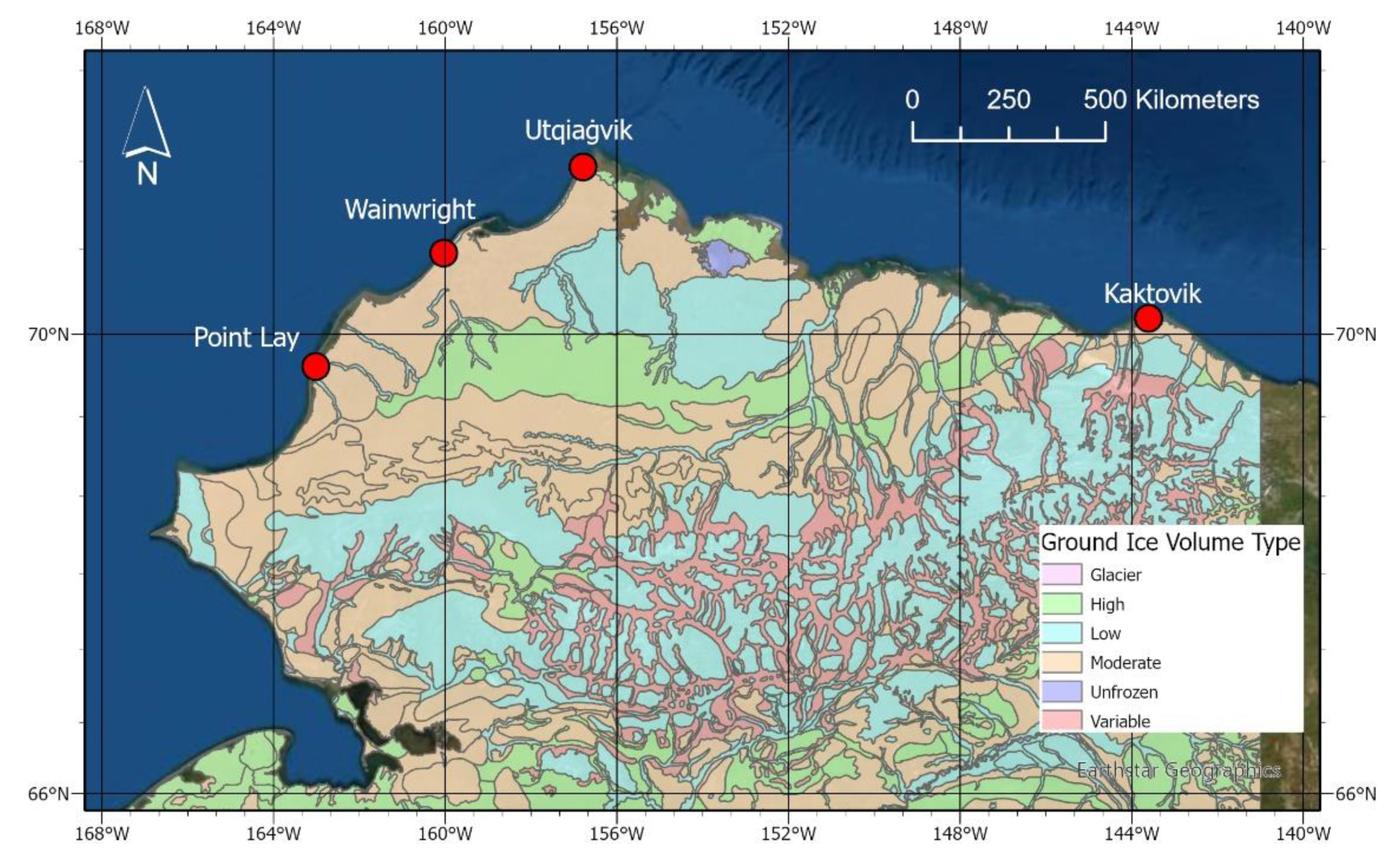
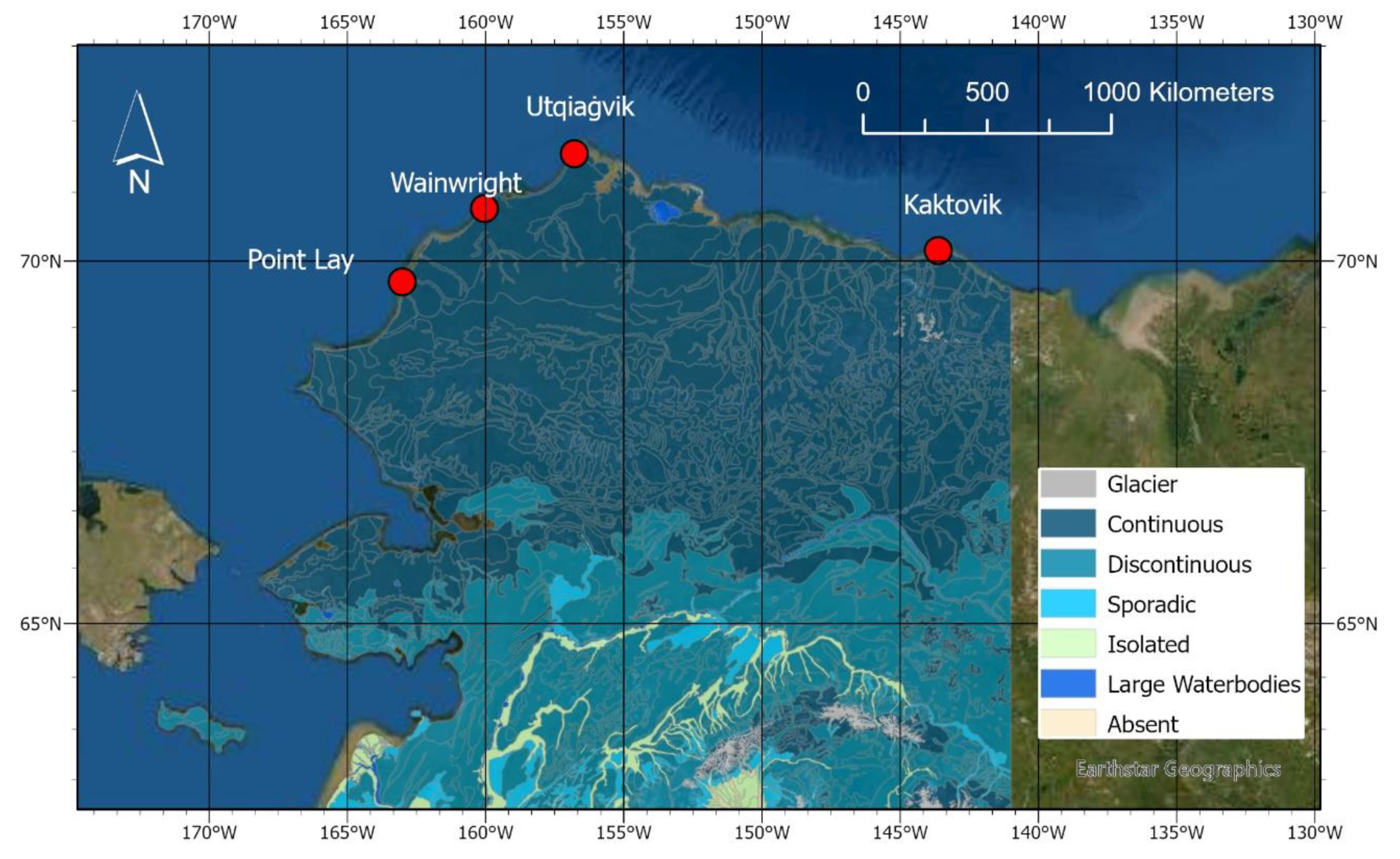
The survey was conducted in four villages in the North Slope Borough, Alaska: Point Lay, Wainwright, Utqiaġvik, and Kaktovik. Continuous permafrost underlies the North Slope Borough with thickness ranging from less than 200 m to more than 600 m [28]. Figure 1 shows the locations of the four villages with red circle markers. These Arctic villages are located in coastal regions. Point Lay, Wainwright, and Utqiaġvik are facing the Chukchi Sea, while Kaktovik is facing the Beaufort Sea. All communities are characterized by moderate (10–20%) to high (>20%) ground-ice content as shown in Figure 2 (multiple communications with longtime residents of the communities, 2019–2021). In parts of the coastal lowlands of Alaska’s North Slope, permafrost volumetric ice content is highly variable and can range up to approximately 80% [29]. As a result, the landscapes in these villages are vulnerable to widespread subsidence and thermokarst development.
Figure 1.
Permafrost distribution of Alaska. The map is adapted from the original developed by Jorgenson et al. [30]. The four collaborating communities are indicated with red markers.
Figure 2.
Ground-ice distribution in northern Alaska. The map is adapted from the original developed by Jorgenson et al. [30]. The four collaborating communities are indicated with red markers.
The four villages are experiencing coastal erosion according to USACE in 2009 [31]. Utqiaġvik is a community that requires priority action; Kaktovik needs monitoring; and Point Lay and Wainwright are communities with minimal erosion [31]. Hence, civil infrastructure in these coastal villages is vulnerable to land loss, storm surge, and flooding events. Although coastal erosion controls were implemented in some of these villages, these measures may become less effective upon further warming of the climate.
Civil infrastructure in Arctic coastal villages typically includes residential buildings, commercial buildings, hospitals, schools, utility poles and towers, power plants, ice cellars, water and sewer systems, roads, runways, buried pipelines, and utilidors. In this study, we focused on types of civil infrastructure that are most accessible to residents: residential buildings, roads, buried pipelines, and utilidors. There are approximately 2513 residential housing units in the North Slope Borough; 711 of them were constructed before the 1980s and have not been retrofitted through a state-funded energy efficiency program in the past 10 years [32]. 86% of the housing stock across the North Slope is over 20 years old, and only 7% is less than 10 years old [33]. It is very likely that this housing was constructed without consideration of climate change, and the buildings may experience more damage when permafrost continues to warm.
3. Survey Method
3.1. Questionnaire
The survey conducted in this study is summarized in this section. The questionnaires for the four villages are included as Supplementary Materials. The survey was completely web-based and was promoted on social media platforms. Paper copies of the poster with a link to the online survey were also distributed in Point Lay. The 3-month survey started on 29 October 2021 and ended on 1 February 2022. Based on the data collected, the median time participants took to complete the survey was about 8 min. In this survey, multiple-choice questions were given to encourage participant engagement, but open-ended questions were also included to provide more (and potentially more valuable) information. Participants were allowed to skip questions that they did not want to answer.
The questionnaire was designed by the researchers at the University of Alaska Fairbanks and Pennsylvania State University, with consultation with the Cold Climate Housing Research Center in Fairbanks, Alaska. As shown in Table 1, there are three categories of questions in this survey: permafrost degradation, coastal erosion, and infrastructure damage and repair. The participants identified changes in ground surface manifested by permafrost degradation in and around their communities. The options provided in the questionnaire included surface water ponding, sinkholes, ground surface collapse, differential ground settlement along roads and gravel pads, and others. The periods during which these changes have been happening were also recorded; the options include <6 months, 0.5–1 year, 1–3 years, 3–5 years, 5–10 years, and >10 years. Participants also indicated the infrastructure types affected by permafrost degradation. The options include houses, runways, schools, ice cellars, water and sewer lines, and others. Effects of permafrost degradation on residential buildings, buried pipelines, utilidors, and roads were reported in the survey. Detailed information such as damage type, damage location, repair method, and effectiveness of repair methods was also recorded. For the questions related to coastal erosion, participants identified events of coastal erosion, periods during which coastal erosion has been happening, types of civil infrastructure affected, and types of erosion control measures implemented and their effectiveness. Participants were able to provide their plans if permafrost degradation and coastal erosion continue to happen. They identified the locations of permafrost degradation and coastal erosion on provided maps with three different scales of approximately 600 km, 40 km, and 8 km.
Table 1.
Descriptions of survey questions.
3.2. Participants
In this study, the survey participants were at least 18 years old. They could choose to complete the questionnaire for both the communities where they reside and also those that they are familiar with. The survey was anonymous, and no digital footprint was collected. Personal contact information was collected only if the participants wished to be entered in prize drawings, and the survey was separated from the prize draw sign-up form. This study was approved by the Institutional Review Board of the Pennsylvania State University and the University of Alaska Fairbanks. All survey investigators had completed the Social and Behavioral Human Subjects Research training by the Collaborative Institutional Training Initiative (CITI) Program before the survey was launched. As shown in Table 2, a total of 153 survey responses were collected; 126 of them were complete. While the remaining 27 responses were partially complete, the responses were still included and analyzed for this study. Table 2 shows a breakdown of the total number of survey responses (including partially and fully completed surveys) and the number of completed responses for each community. The survey participation rate varies from 2.3 to 39.0% of the adult population (i.e., individuals who are at least 18 years old) in each community, based on the 2019 community populations estimated by the United States Census Bureau.
Table 2.
Number of participants.
3.3. Data Analysis
All responses collected in this study were analyzed by community. Then, all responses were collectively analyzed to investigate the overall trend across the four Arctic coastal villages. The survey data collected in this study are mostly categorical. A donut chart or a segmented bar chart is used to represent the breakdown of a category (e.g., various types of infrastructure affected by permafrost thaw) for each community. For the maps where participants indicated observations of permafrost thaw and coastal erosion, a heatmap visualization was created using these data. Heatmap visualization is a graphic method to represent the frequency of selection on each grid element of an image. In the survey, participants selected locations where permafrost degradation and coastal erosion were observed by clicking on the maps. Then, the marked locations or coordinates were recorded and overlaid across the map as colored areas. Map locations or coordinates with the highest frequency of participants’ selections are shown in red and those with the lowest frequency are shown in blue. Heatmap visualization of permafrost degradation and coastal erosion are compared to the thicknesses of active layer and talik predicted using numerical modeling as well the community coastal erosion prioritization list curated by [31]. The objective is to assess whether there are differences between modeled and perceived permafrost degradation and coastal erosion.
4. Results
4.1. Permafrost Thaw and the Affected Civil Infrastructure
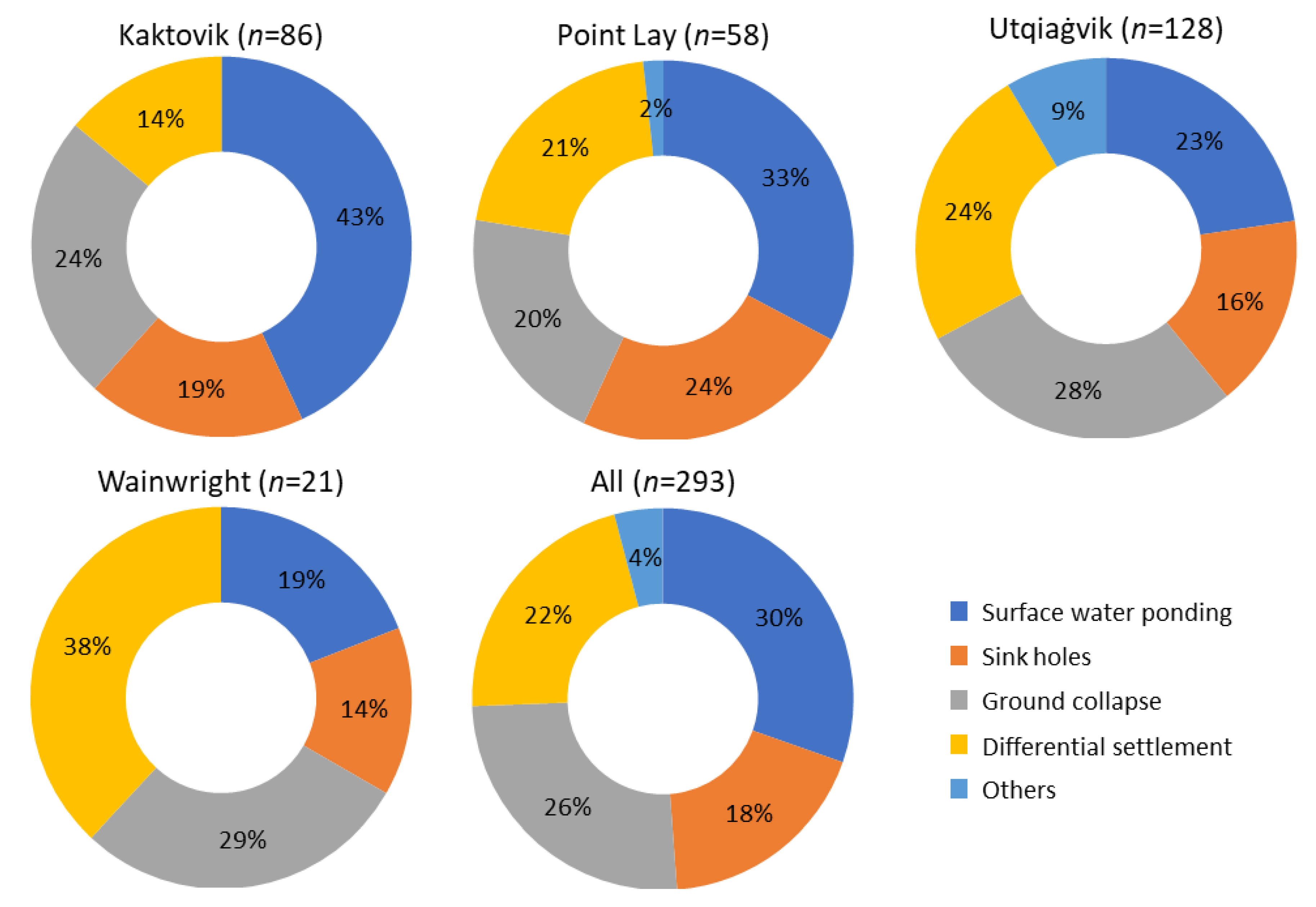
In the survey, 293 data points were collected to analyze changes in the state of permafrost through categorization of visual permafrost-thaw-induced changes on the ground surface. The number of data points here is different from the total number of participants. For a given question, survey participants could choose more than one option. For example, for changes of the ground surface related to permafrost degradation, a participant could choose three options: surface water ponding, sink holes, and ground collapse. So, the number of data points is defined as the sum of all options chosen by all participants. Figure 3 presents the percentages of reported observations of how ground surface conditions have changed in Kaktovik, Point Lay, Utqiaġvik, Wainwright, and All, which include data from all four communities. Survey participants chose from the following options in the questionnaire: surface water ponding, sinkholes, ground collapse, differential settlement, and others. Other types of changes in the state of permafrost that were observed by the participants included ice cellar thaw, failure of pile foundations, coastal land loss, and lake and pond drainage.
Figure 3.
Types of permafrost-thaw-induced ground surface changes. n is the sample size.
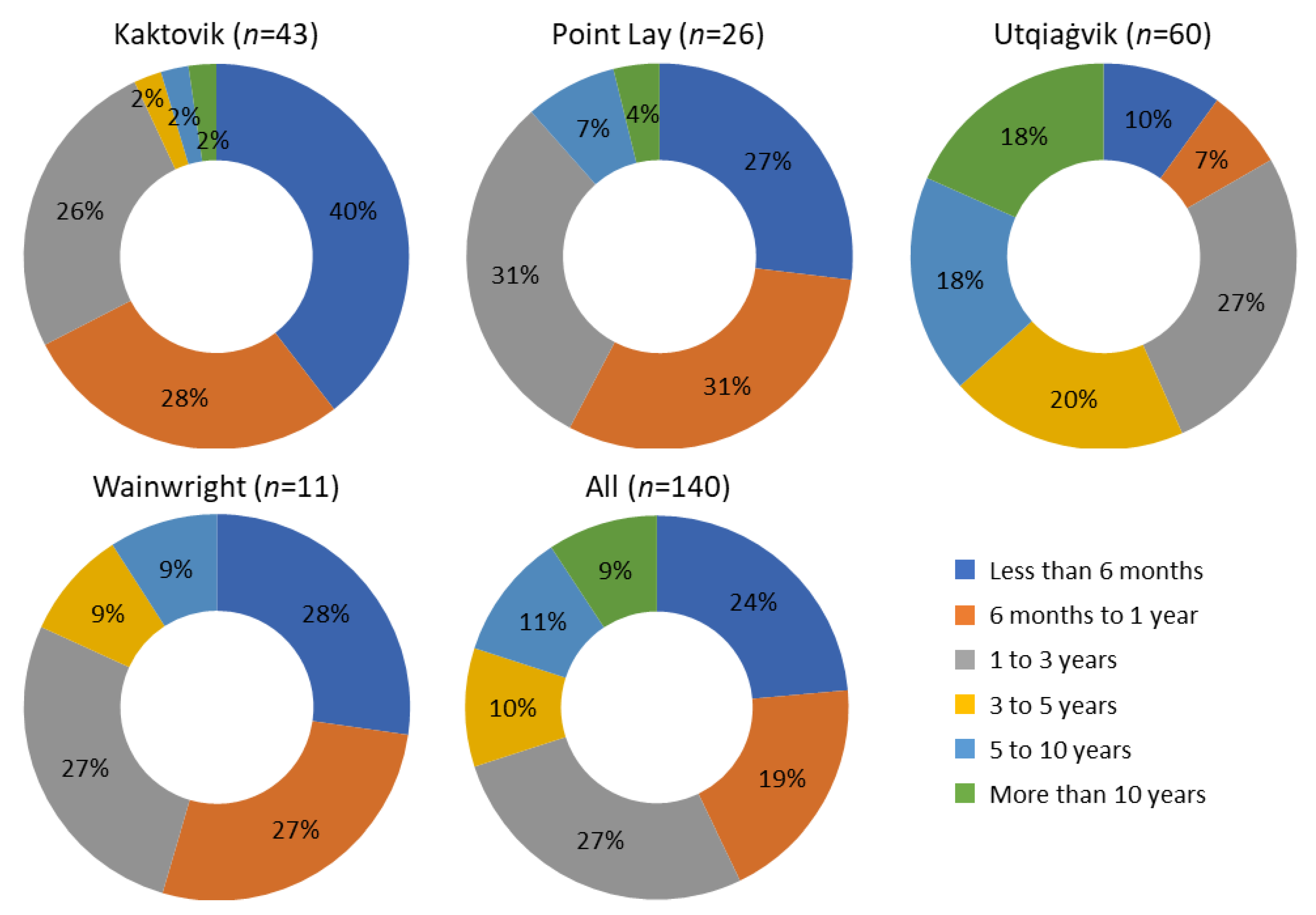
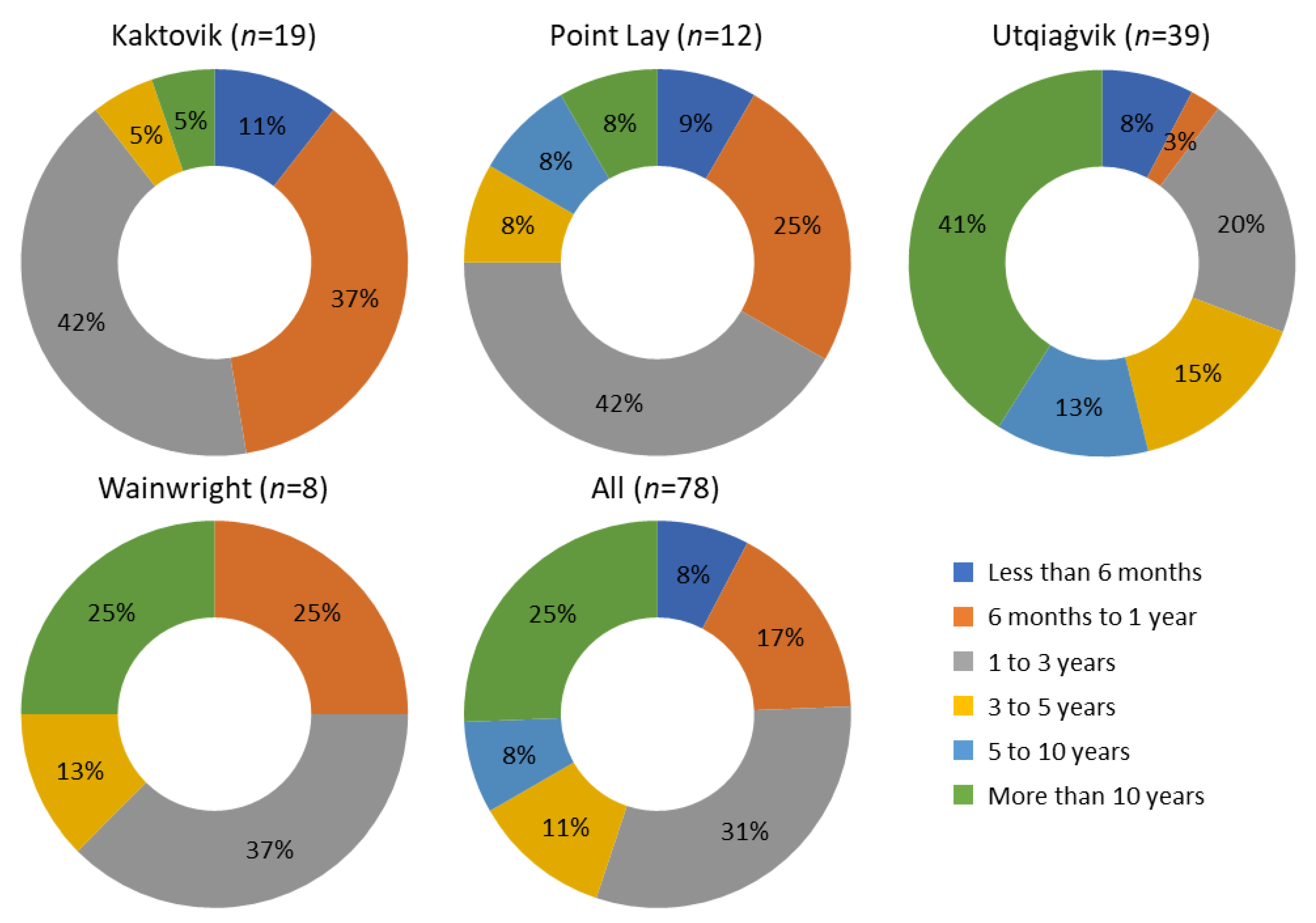
In Kaktovik and Point Lay, the most reported type of surface condition change related to permafrost thaw is the surface water ponding. Ground collapse is the most reported type of change in Utqiaġvik. In Wainwright, it is differential settlement. In general, surface water ponding, ground collapse, and differential settlement are the most reported types of ground surface change that are manifested by warming and thawing of permafrost in these communities. In all communities, the most observed period of permafrost-thaw-induced change is one to three years (27%), indicating increased perception of permafrost degradation in recent years. The observed time periods of the permafrost-thaw-induced change are presented in Figure 4. In Kaktovik, the most reported period is less than six months (40%). In Point Lay, the two most observed periods are six months to one year (31%) and one to three years (31%). In Utqiaġvik, it is one to three years (27%). In Wainwright, three periods are equally reported: less than six months (28%), six months to one year (27%), and one to three years (27%).
Figure 4.
Observed time periods of permafrost-thaw-induced ground surface changes. n is the sample size.
Based on the inventory of civil infrastructure catalogued on OpenStreetMap [34], there are approximately 220 buildings in Kaktovik, 112 in Point Lay, 1950 in Utqiaġvik, and 280 in Wainwright. There are two schools and one college in Utqiaġvik, and one school each for the other three villages [34]. The total length of roads is 26 km in Kaktovik, 14 km in Point Lay, 176 km in Utqiaġvik, and 21 km in Wainwright [34]. Currently, there is only one working ice cellar in Kaktovik [35], and none in Point Lay [36]. While, in Utqiaġvik, there is a total of 71 ice cellars that have been identified [37]. As of 2014, there are 34 ice cellars (15 in use and 19 abandoned) in Wainwright [38].
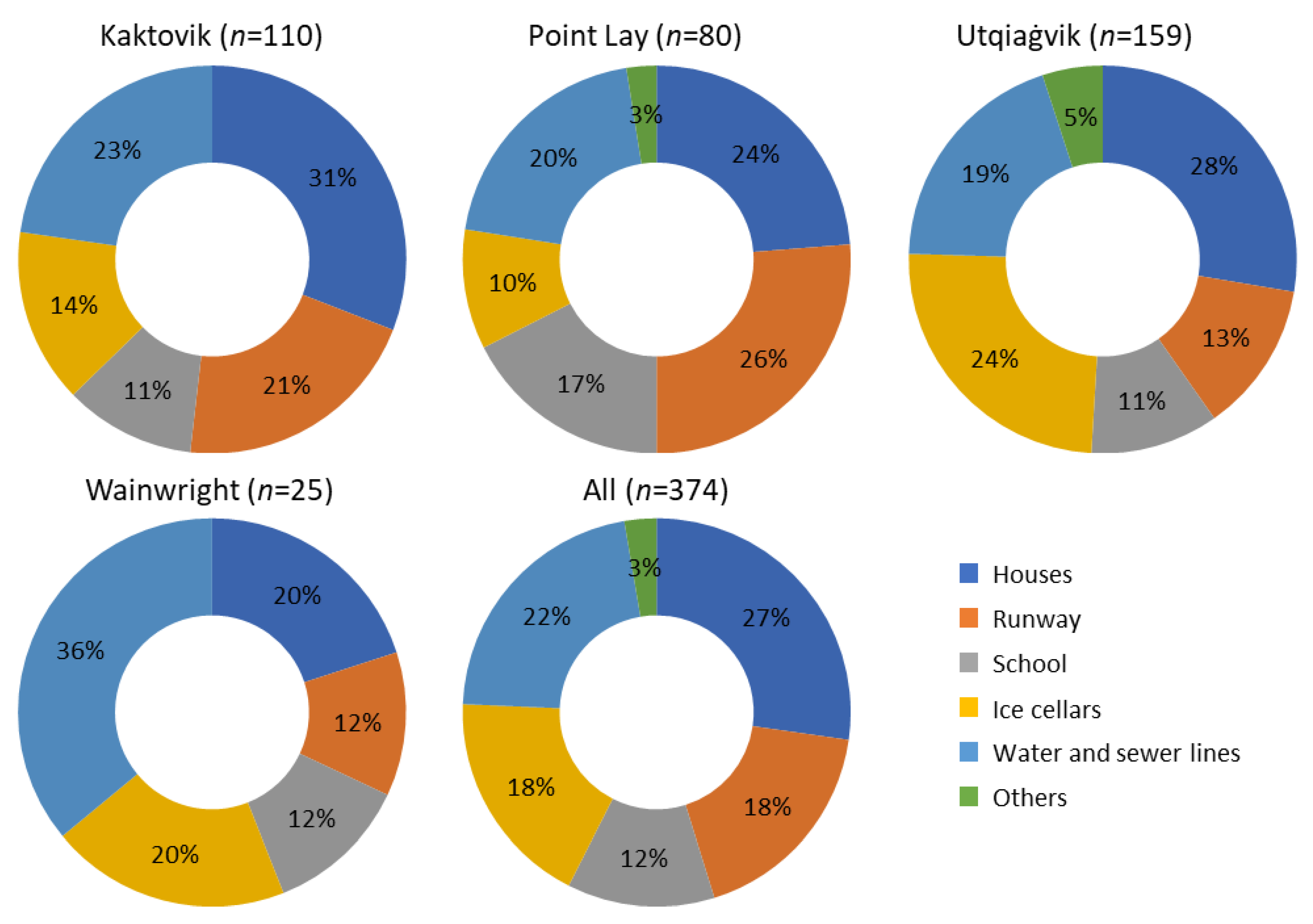
The participants provided the types of civil infrastructure that were affected by permafrost thaw; the results are shown in Figure 5. Survey participants selected from the following options in the questionnaire: house, runway, school, ice cellar, water and sewer lines, and others. As shown in Figure 5, the most reported infrastructure type is houses in Kaktovik (31%) and Utqiaġvik (28%), runway (26%) in Point Lay, and water and sewer lines (36%) in Wainwright. Houses (27%) are the category most reported in general. Survey participants advised other types of civil infrastructure impacted by permafrost thaw, including cemeteries, driveways, walking trails, and cabins.
Figure 5.
Types of civil infrastructure that are affected by permafrost thaw. n is the sample size.
Table 3 presents the increase in active layer and subaerial talik formation between 2020 and 2100 for the four communities. The results in Table 3 were predicted through simulations using physically based model considering the Representative Concentration Pathway 8.5 [3]. The modeled data show that Point Lay and Wainwright have the thickest active layer for both natural and gravelly land in 2020. By the end of this century, the active layer thickness is relatively higher for the other two communities, Kaktovik and Utqiaġvik. Looking at the current situation (i.e., model results in 2020), in communities that experience more severe permafrost thaw (i.e., Point Lay and Wainwright), runways and water and sewer lines are types of civil infrastructure most reported. On the other hand, houses are the type of civil infrastructure most frequently reported in communities that experience relatively less severe permafrost thaw.
Table 3.
Modeled increase in active layer thickness and subaerial talik formation between 2020 and 2100 (RCP 8.5) (adapted from [3]).
4.2. Permafrost Coastal Erosion and the Affected Civil Infrastructure
For the four Arctic coastal villages in general (see all in Figure 6 and Table 4), most survey participants (31%) reported that coastal erosion has been occurring for one to three years. For Kaktovik, Point Lay, and Wainwright, the outcomes are similar, and most participants (42%, 42%, and 37%, respectively) reported that they have observed one to three years of coastal erosion occurring in their communities. In Utqiaġvik, most participants (41%) reported that they have observed more than 10 years of coastal erosion. Some participants were also concerned about erosion along riverbanks and edges of lakes in addition to the coastlines.
Figure 6.
Time periods of observed coastal erosion. n is the sample size.
Table 4.
Comparison of the most reported types of civil infrastructure affected by permafrost thaw and coastal erosion and their reported time periods.
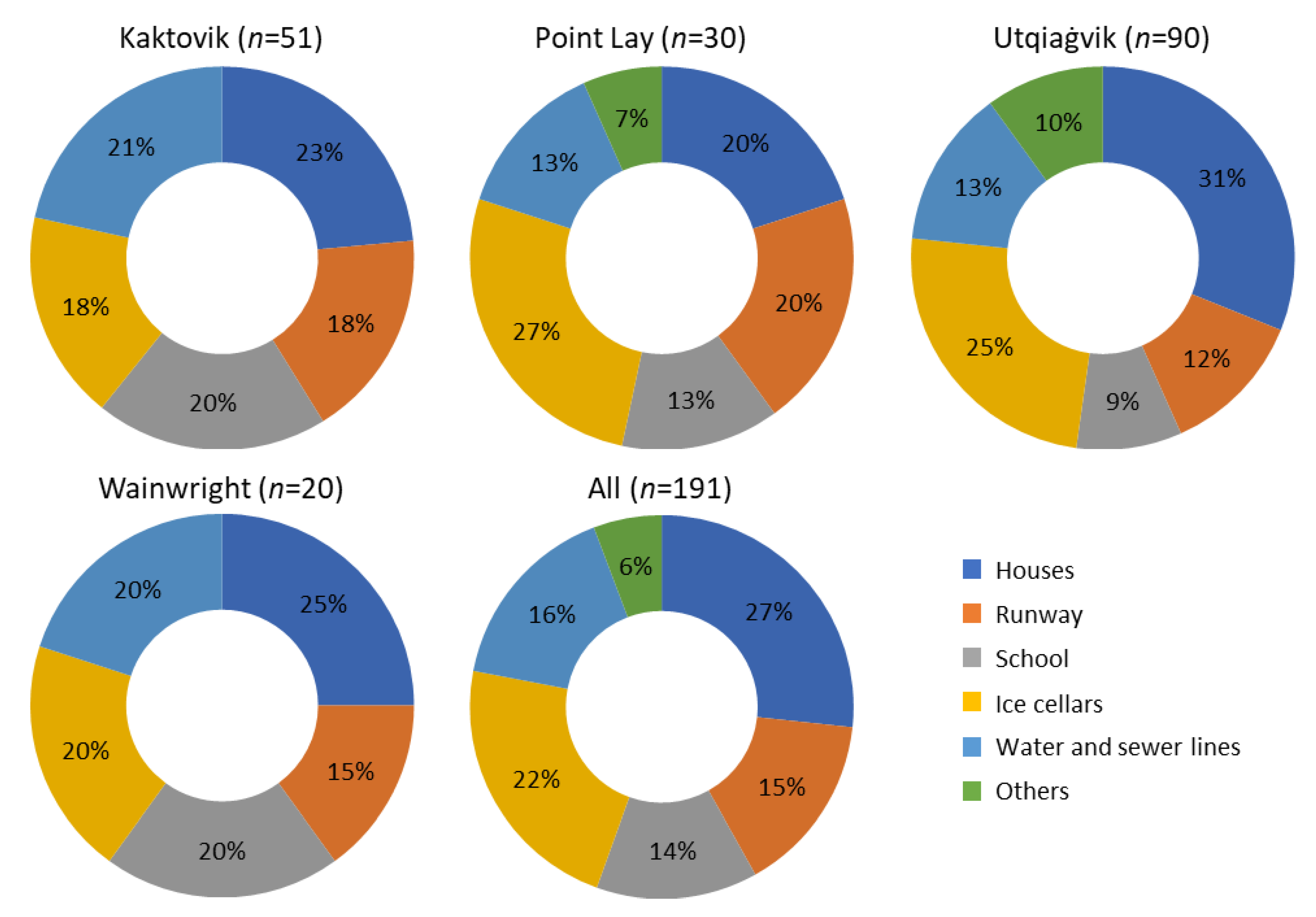
Coastal erosion in Arctic communities has impacted the serviceability of various types of civil infrastructure. In addition to houses, runways, schools, ice cellars, and water and sewer lines as shown in Figure 7, coastal erosion also affects cultural heritage sites, docks, and walking trails according to the survey participants; these three types of civil infrastructure are grouped as “Others” in Figure 7. Respondents also reported that coastal erosion resulted in flooding, shallow waterways due to erosion, land loss along coastal cliffs and riverbanks, and effects on hunting activities. For coastal erosion, the most reported type of affected civil infrastructure also varies across the communities. As shown in Figure 7, it is ice cellars (27%) in Point Lay. For Kaktovik, Utqiaġvik, Wainwright, and All, houses are the most reported type (23%, 31%, 25%, and 27%, respectively). Table 4 compares the most commonly reported types of infrastructure affected by permafrost thaw and coastal erosion. Among the four communities, Kaktovik and Utqiaġvik have a similar type of infrastructure (i.e., houses) that is reportedly affected the most by permafrost thaw and coastal erosion. In the four Arctic coastal villages in general (see All in Table 4), houses are the most commonly reported infrastructure type affected by both permafrost thaw and coastal erosion.
Figure 7.
Types of civil infrastructure that are affected by coastal erosion. n is the sample size.
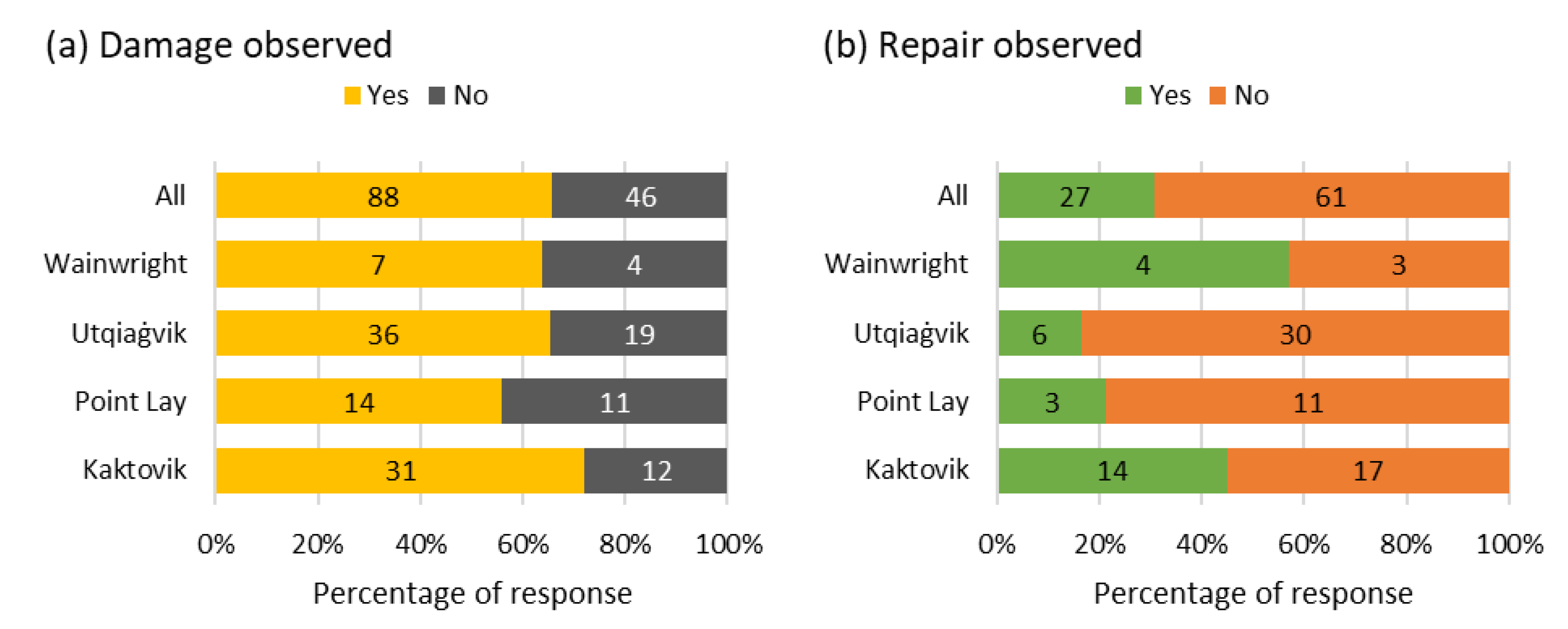
Overall, 66% of the respondents reported that they have seen damages to houses caused by permafrost thawing as shown in Figure 8a. More specifically, the percentages of those who reported damage are 72% in Kaktovik, 56% in Point Lay, 65% in Utqiaġvik, and 64% in Wainwright. Among the participants who reported that they have seen damages to residential houses caused by permafrost thaw, the majority reported that there is no repair to such damages, except for those in Wainwright. As shown in Figure 8b, overall, 69% of participants reported no repair to residential house damage in the four communities. Looking at results by community, 55% of those who have seen damages in Kaktovik reported no repair, 79% in Point lay, 83% in Utqiaġvik, and 43% in Wainwright.
Figure 8.
Observations of (a) damages and (b) repairs to residential houses caused by permafrost thawing.
Given that houses are the most commonly reported infrastructure type affected by both permafrost thaw and coastal erosion, details about the types of damage to residential buildings inquired in the survey are reported in Table 5. These detailed damages include cracking of walls, broken windows, doors that could not close, water accumulation around piles or posts, jacking up of piles, sinking of piles or post-on-pad, breaking of pipes, tilting of houses, failure of adjustable supports for elevated foundation, breaking of post-on-pad for elevated foundation, heaving or sinking of soil underneath slab-on-grade, ground subsidence at or near the houses, and others. To summarize, cracking of walls is the most common type of residential building damage experienced by residents in the Arctic coastal villages with it ranked first in Kaktovik, Utqiaġvik, and Wainwright. While tilting of houses is the second most common type of damage overall, it ranked first in Utqiaġvik, second in Kaktovik, and third in Point Lay and Wainwright. These two types of damage are due to ground thaw consolidation upon permafrost thawing.
Table 5.
Types of damage to residential buildings reported by survey respondents. n is the sample size.
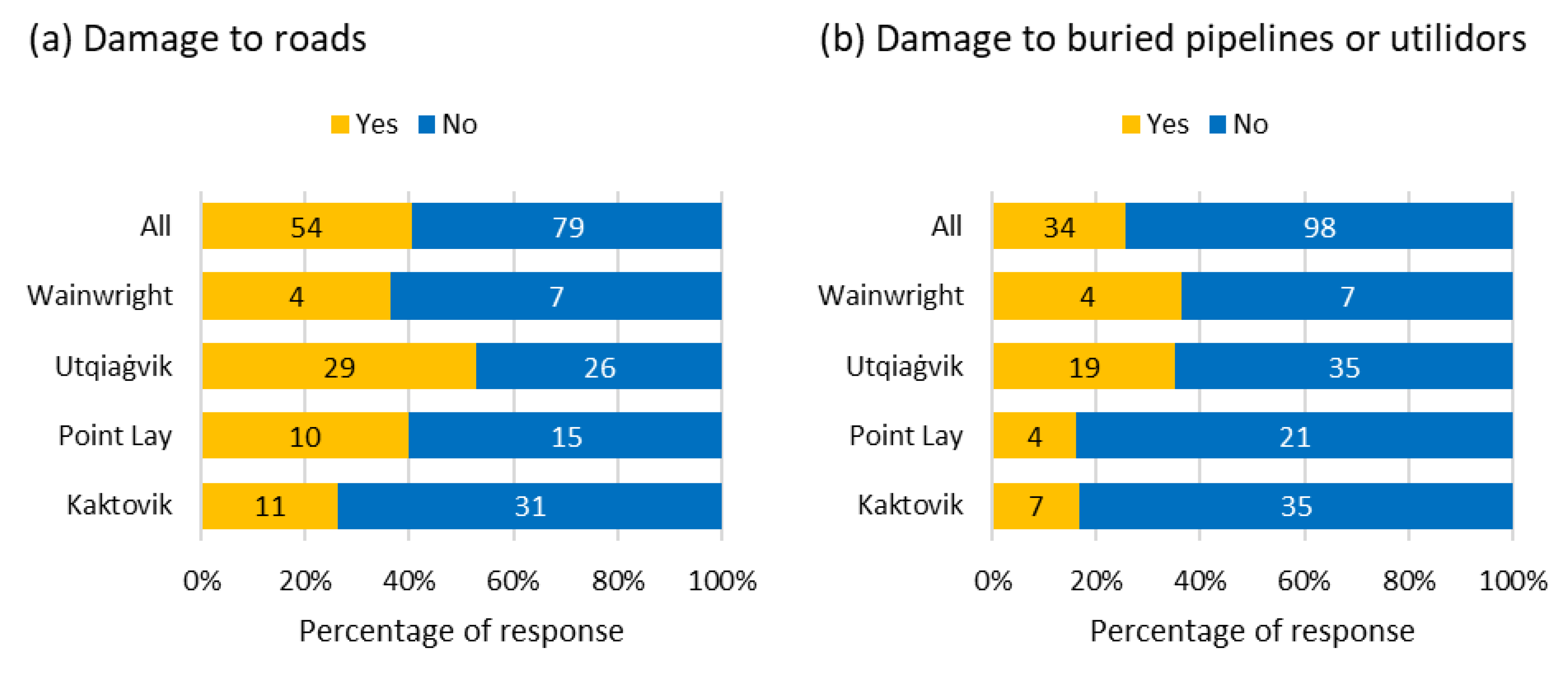
As soil temperature increases, melting of ice in permafrost often leads to ground thaw consolidation or ground surface subsidence. Given the permafrost heterogeneity across a region, the difference in settlement from one location to another (also known as differential settlement) can cause damage to roads and buried pipelines or utilidors. As shown in Figure 9a, 26% of the participants reported that they have seen or are aware of damages to roads in Kaktovik, 40% in Point Lay, 53% in Utqiaġvik, and 36% in Wainwright. For damages to buried pipelines or utilidors as presented in Figure 9b, 17% of the participants reported that they have seen such damage in Kaktovik. The percentages of participants who reported such observation are 16%, 35%, and 36% in Point Lay, Utqiaġvik, and Wainwright, respectively. Overall, 41% of the participants have seen damages to roads and 26% of them have seen damages to buried pipelines or utilidors in these four coastal communities. More participants have seen damages to roads than pipelines or utilidors.
Figure 9.
Observations of damage to (a) roads and (b) buried pipelines or utilidors caused by permafrost thawing.
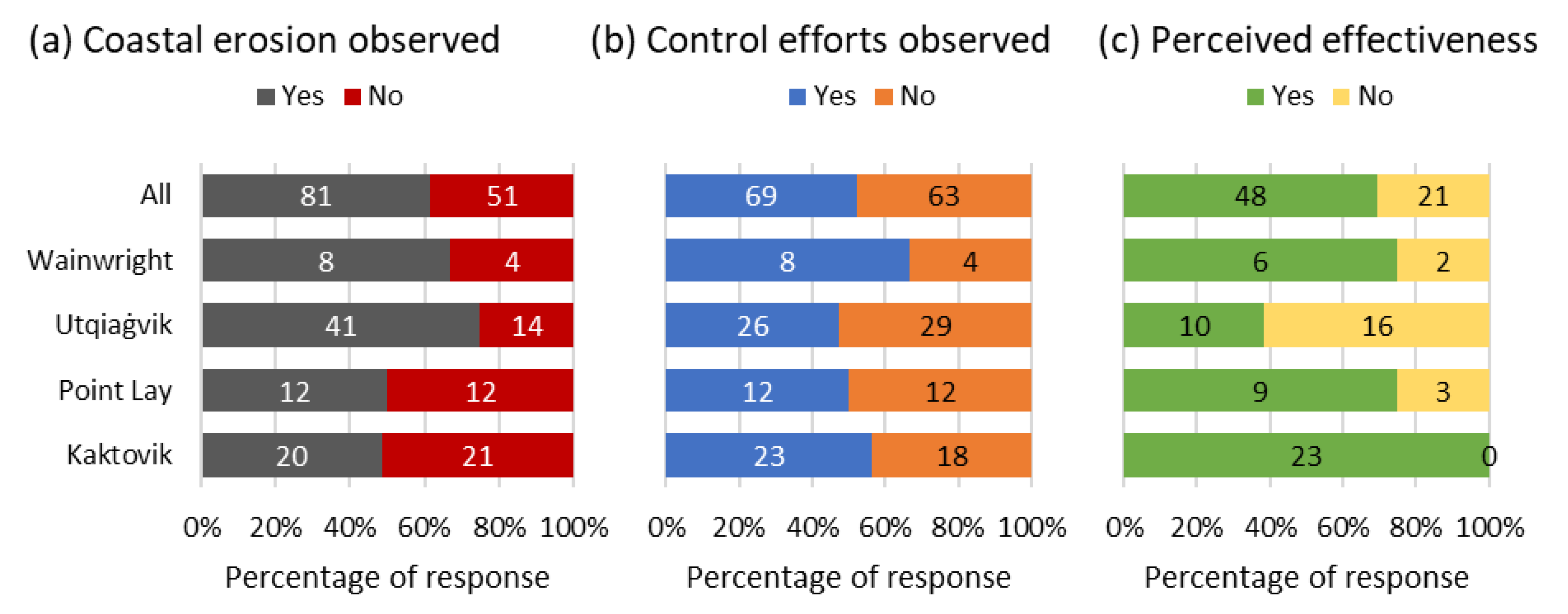
An increase in soil temperature also causes permafrost coasts to be more susceptible to erosion, resulting in coastal land loss. In this survey, participants reported if they have observed any coastal erosion events and whether there have been any measures implemented to prevent coastal erosion. Among all participants in the four Arctic coastal villages, 61% reported the observation of coastal erosion (in Figure 10a), 52% reported that erosion control measures have been implemented (in Figure 10b), but only 70% considered the implemented measures effective (in Figure 10c). These survey results are consistent with findings in [39] showing that some types of coastal erosion prevention measures, except for rock revetments, are ineffective. Revetments, although effective, require maintenance throughout their service life given that they can be easily displaced or destroyed by more extreme storm events [39].
Figure 10.
Observations of (a) coastal erosion, (b) its control efforts and (c) their perceived effectiveness.
Looking at results by community, 49% of the participants in Kaktovik reported that they have observed or are aware of coastal erosion in the area. The percentages are 50%, 75%, and 67% in Point Lay, Utqiaġvik, and Wainwright, respectively. Regarding coastal erosion prevention measures, 56% of the participants reported that there are such efforts in Kaktovik, 50% in Point Lay, 47% in Utqiaġvik, and 67% in Wainwright. In general, issues of coastal erosion are not mitigated in all areas. About 49–75% of participants have observed coastal erosion (in Figure 10a), but only 47–67% observed the implementation of erosion control prevention measures (in Figure 10b). In Kaktovik and Wainwright, the majority of the participants were aware of the implementation of erosion control measures. Among those who reported observation of erosion control efforts, 100% of them reported that the measures are effective in Kaktovik, 75% in Point Lay, and 75% in Wainwright. On the contrary, the erosion control measures are perceived to be relatively ineffective in Utqiaġvik; only 38% of the participants reported that such measures have been effective in Utqiaġvik.
In Table 6, the percentages of coastal erosion observation are compared to the community prioritization by USACE [31]. The comparison shows that Utqiaġvik, which is a community that requires priority action for its coastal erosion issues, has the most frequently reported observations of coastal erosion (75%). On the other hand, Point Lay (50%) and Wainwright (67%), which experience minimal erosion, have relatively less reported observations when compared to Utqiaġvik (75%). While these survey results are reasonably consistent with the community prioritization by USACE [31], the percentages (50–67%) are still considered high for communities that experience only minimal erosion. The only inconsistency noted in this study is the results for Kaktovik. It is a community that requires monitoring according to USACE [31], but the percentage of residents who reported observations of coastal erosion is the lowest when compared to those in the other three communities. This is likely due to the high effectiveness of coastal erosion measures implemented in Kaktovik; 100% of the residents who have observed the implementation of coastal erosion control measures reported that the measures are effective (in Figure 10c). This inconsistency indicates that, while Kaktovik was supposed to experience severe coastal erosion, the issues have been mitigated using effective control measures. As a result, less participants have observed or are aware of coastal erosion in Kaktovik.
Table 6.
Measured rates of erosion (community prioritization was adapted from [31]).
4.3. Heatmap Visualization of Reported Locations of Permafrost Thaw and Coastal Erosion
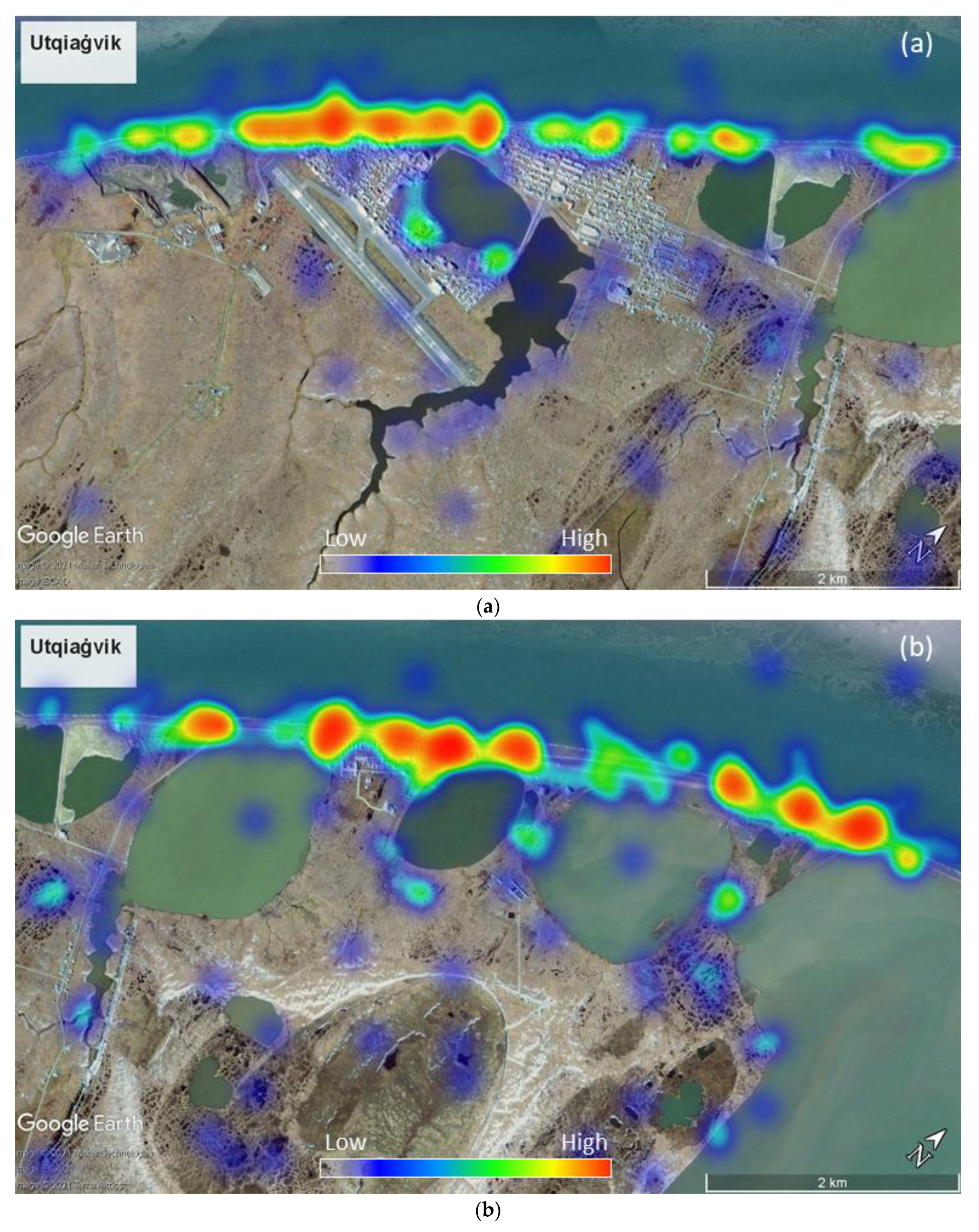
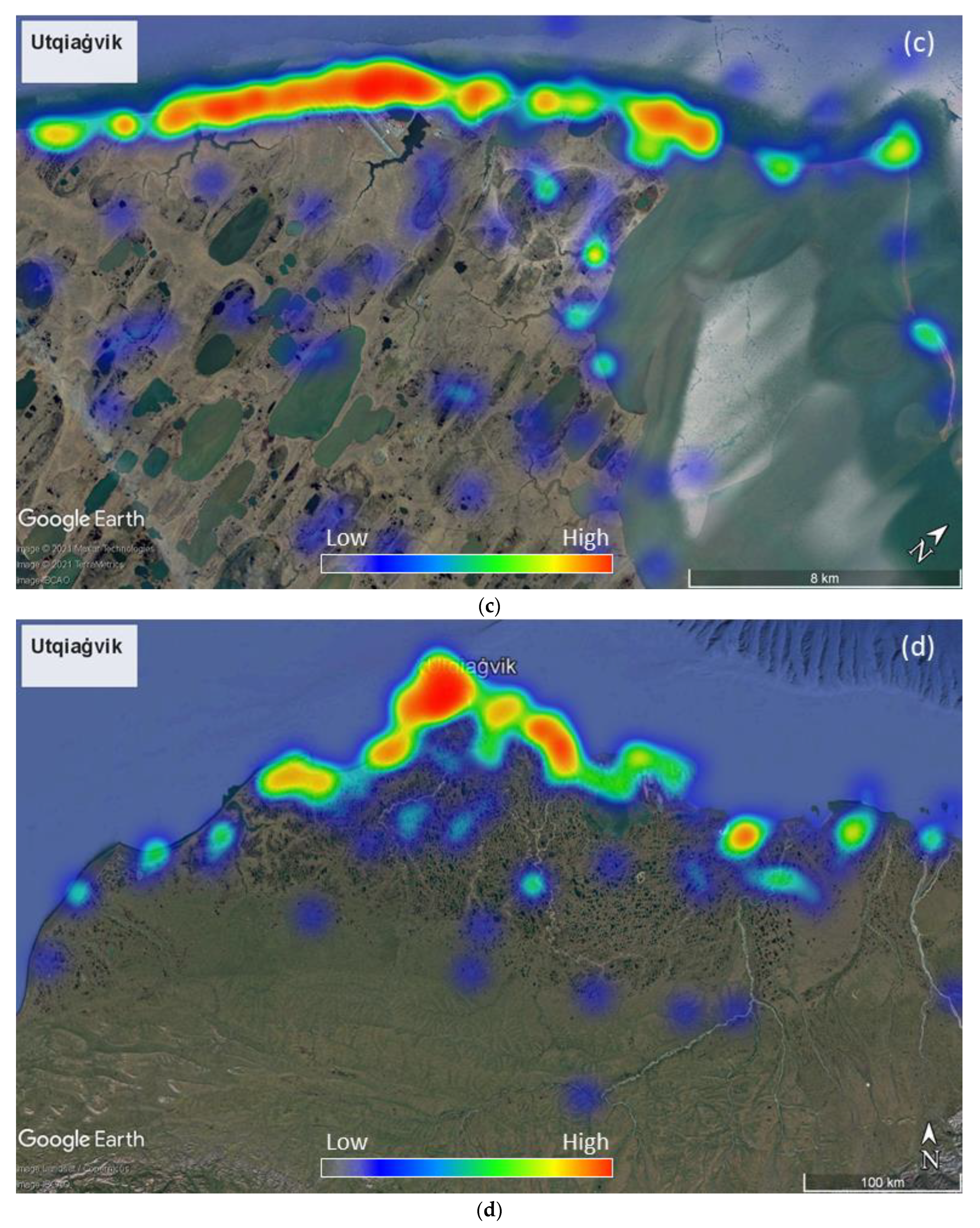
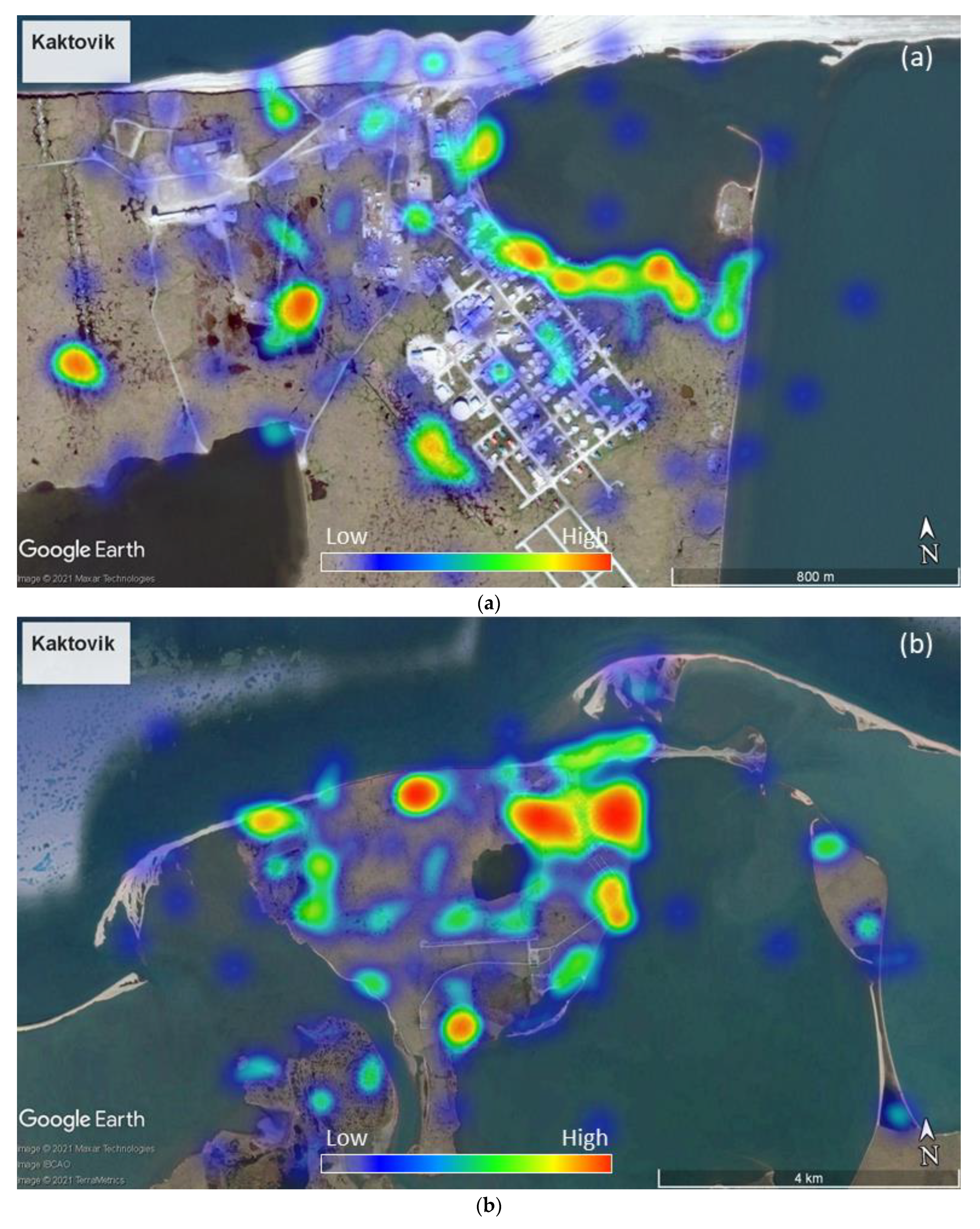
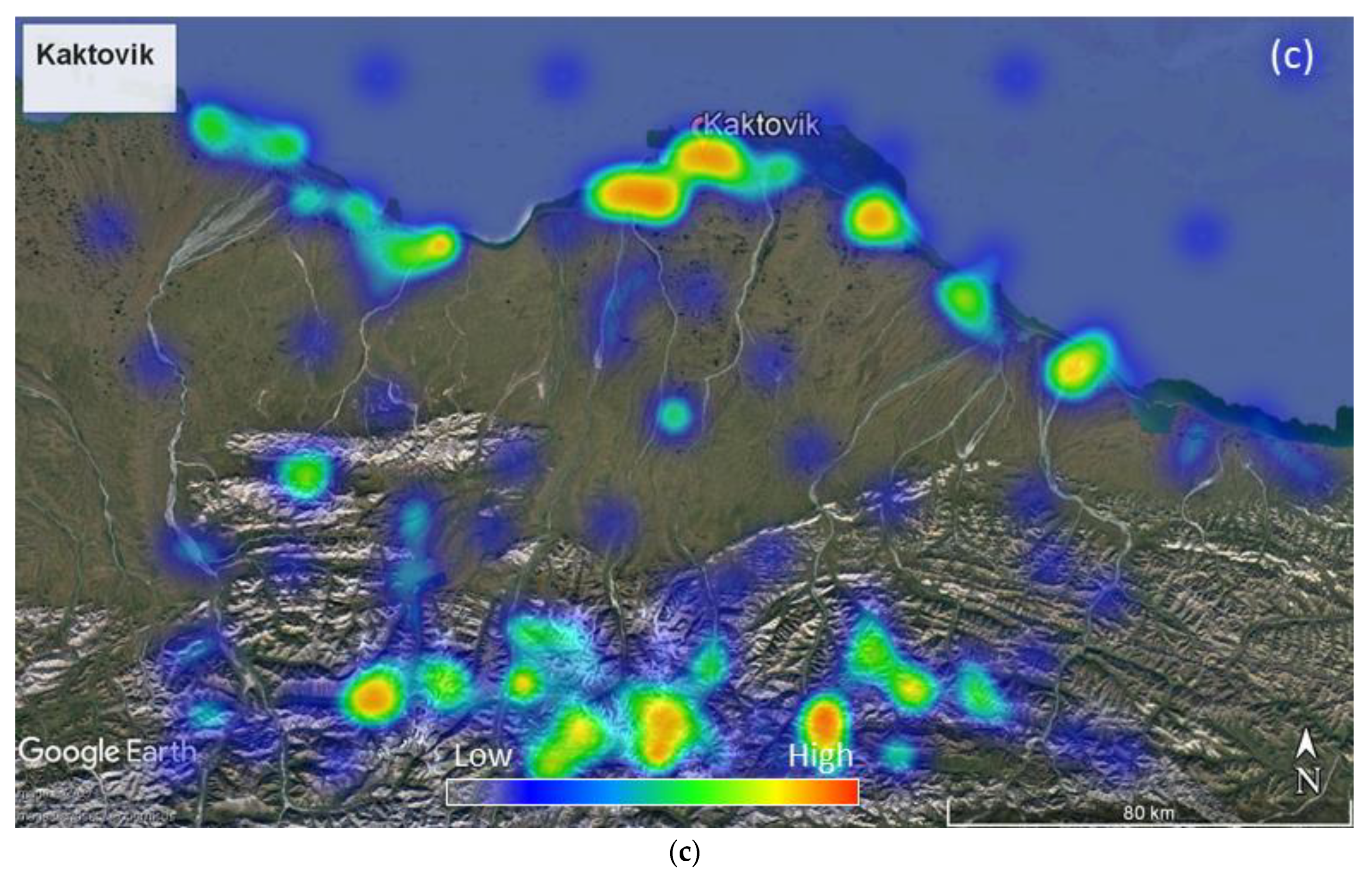
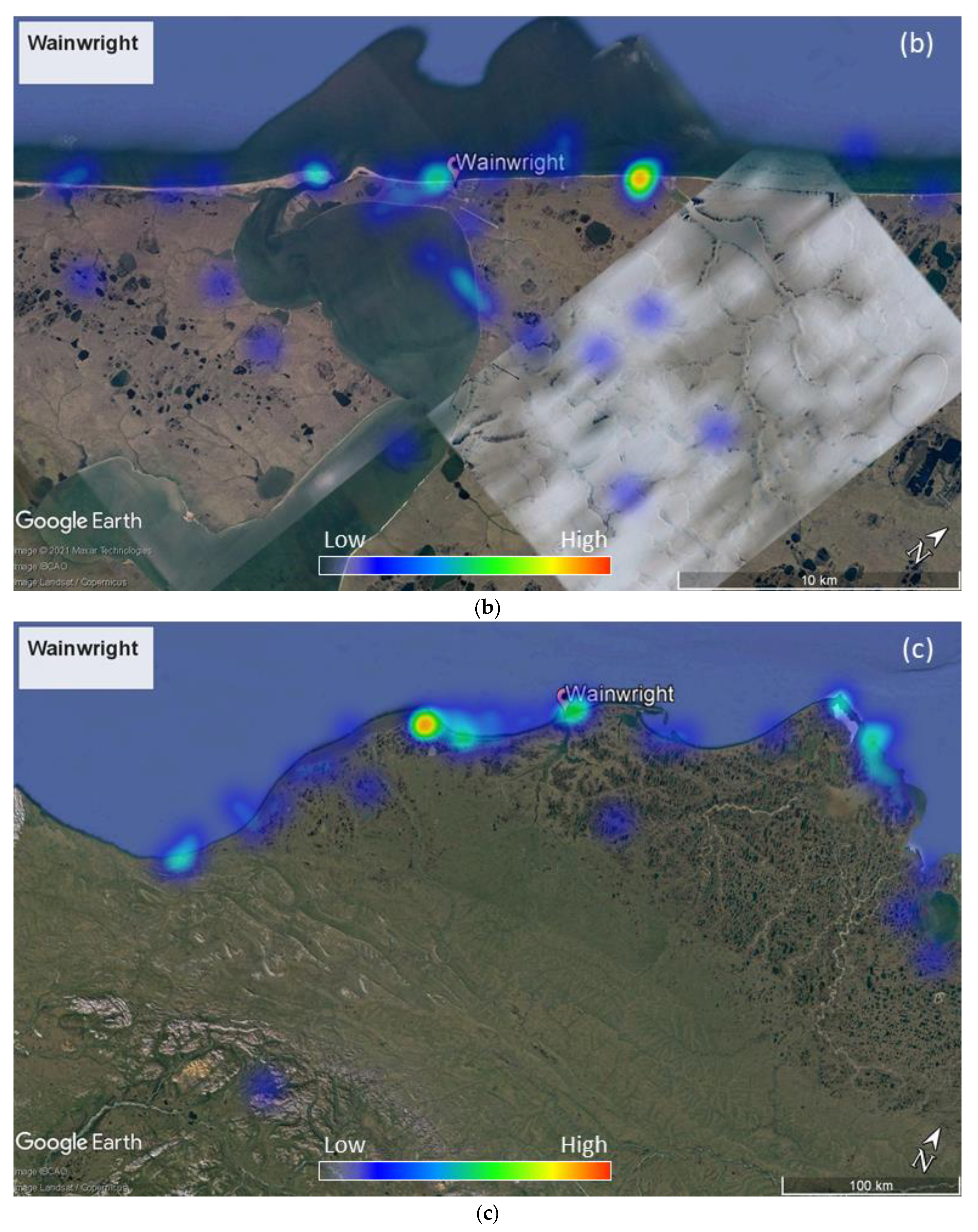
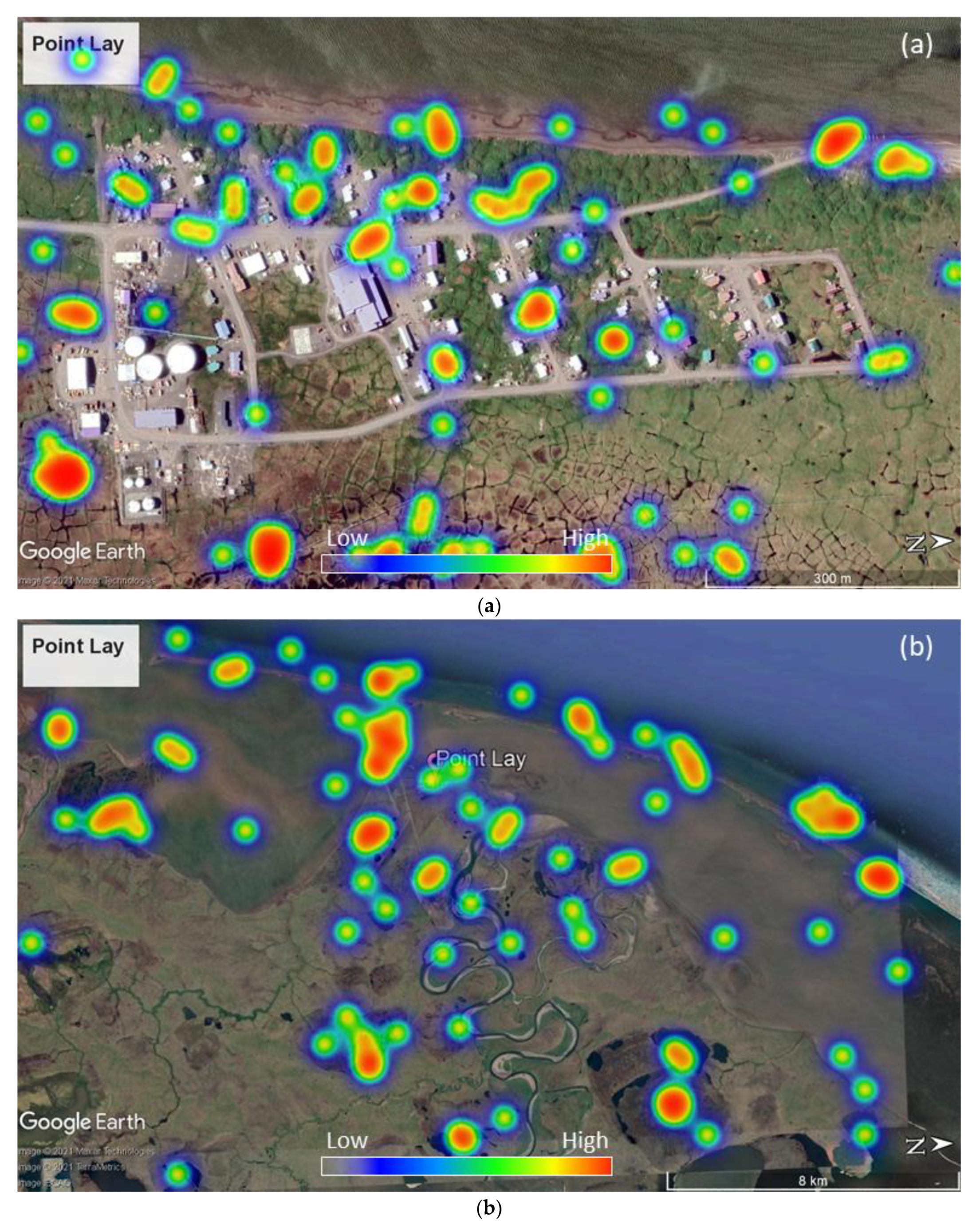
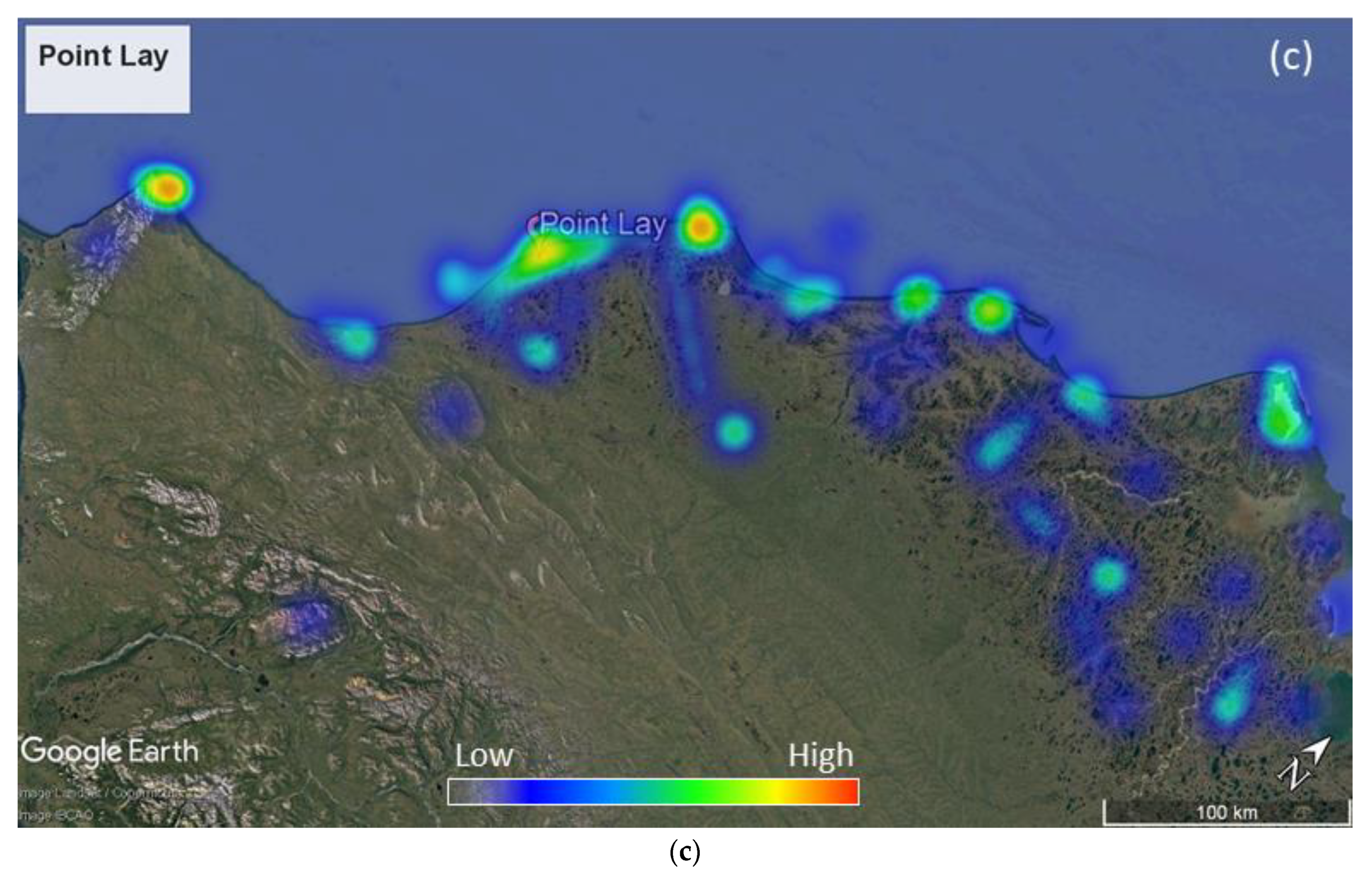
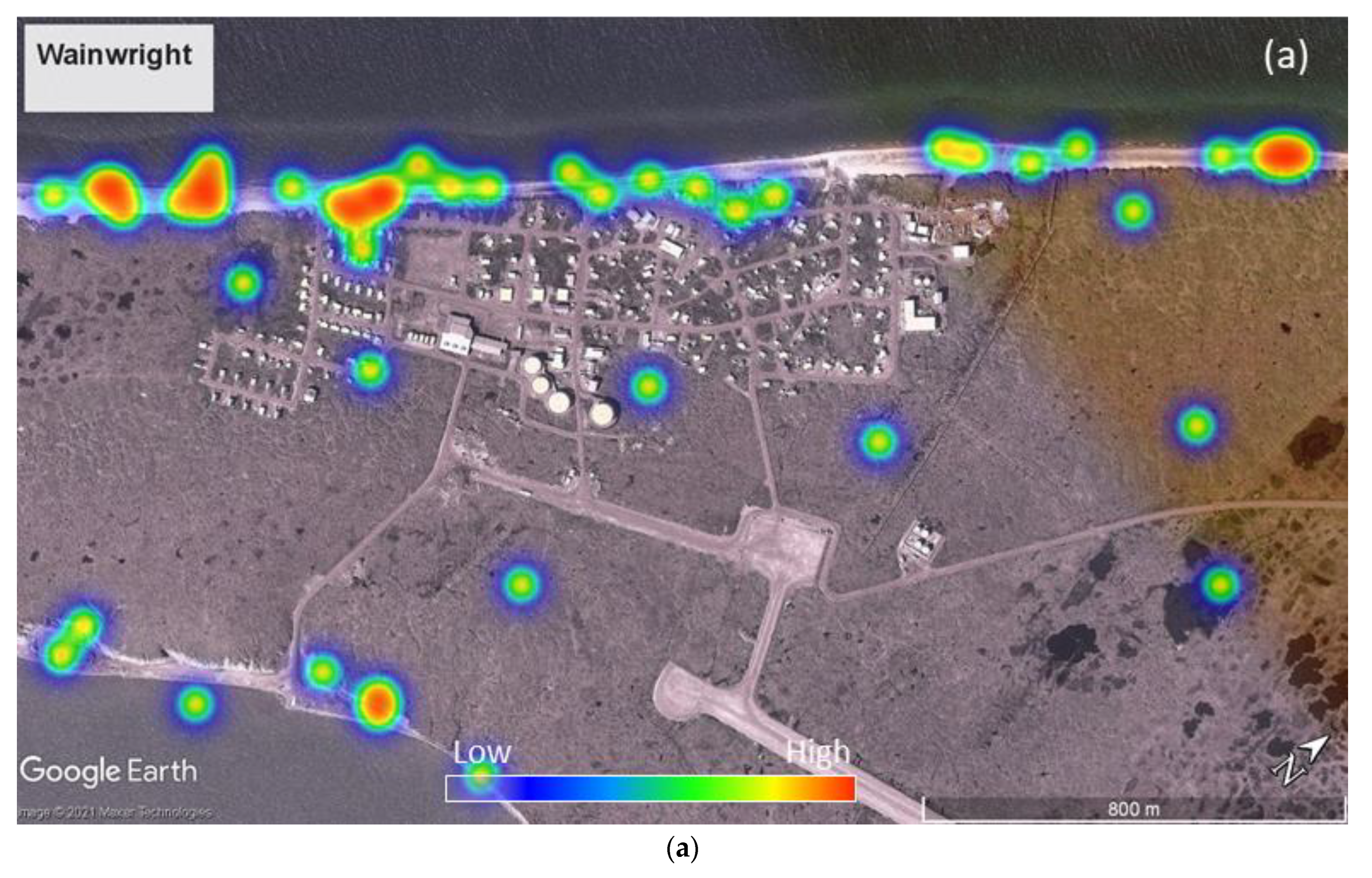
Permafrost thaw and coastal erosion are two land degradation processes driven by climate warming. Although each community is affected by both permafrost thaw and coastal erosion, the extents of the processes vary across the four communities. In this study, survey participants provided locations where coastal erosion and permafrost thaw were observed. Figure 11, Figure 12, Figure 13 and Figure 14 show the heatmaps of permafrost-thaw-induced ground surface disturbance and coastal erosion in Utqiaġvik, Kaktovik, Wainwright, and Point Lay, respectively. The heatmaps are created by stacking map locations or coordinates marked by the participants. Locations with the highest frequency of participants’ selections are shown in red, and those with the lowest frequency are shown in blue.

Figure 11.
Heatmaps of permafrost degradation and coastal erosion in Utqiaġvik: (a) 2 km (southern and central section), (b) 2 km (northern section), (c) 8 km, and (d) 100 km.

Figure 12.
Heatmaps of permafrost degradation and coastal erosion in Kaktovik: (a) 800 m, (b) 4 km, and (c) 80 km.

Figure 13.
Heatmaps of permafrost degradation and coastal erosion in Wainwright: (a) 800 m, (b) 10 km, and (c) 100 km.

Figure 14.
Heatmaps of permafrost degradation and coastal erosion in Point Lay: (a) 300 m, (b) 8 km, and (c) 100 km.
According to USACE [31], Utqiaġvik and Kaktovik are communities that experience more severe coastal erosion. They are labeled as communities that require priority action and monitoring, respectively. Regarding the permafrost thaw, both Utqiaġvik and Kaktovik have a relatively thin modeled active layer (in Table 3) when compared to the other two communities. This study shows that the conclusions derived from the survey results via heatmap data visualization are consistent with the USACE labels (in Table 6) and the modeled active layer thickness in 2020 (in Table 3). In Utqiaġvik, as shown in Figure 11, locations with a high frequency of selection (i.e., red spots) are mostly along the coastlines. Locations with a low frequency of selection (i.e., blue spots) are mostly inland and near the edges of lakes or lagoons. Similarly, in Kaktovik (in Figure 12), the coastlines are more frequently selected than inland and near the edges of lakes and lagoons. The heatmaps indicate that coastal erosion was more frequently observed in Utqiaġvik and Kaktovik than permafrost thaw. On the other hand, Point Lay and Wainwright are classified as communities where erosion is minimal according to USACE [31]. These two communities, however, have a thicker modeled active layer when compared to Utqiaġvik and Kaktovik as shown in Table 3. Consistently, Figure 13a and Figure 14a show that the locations of reported observation of permafrost thaw and coastal erosion are relatively scattered across the villages with more red spots away from the coastlines, indicating more reported observation of permafrost thaw than coastal erosion.
In Figure 11a,b, note that the same location at the west side of the Cake Eater Lake has different color intensity. This is because, when participants already indicated a location on the first map (i.e., Figure 11a), some indicated the same location again in the second map (i.e., Figure 11b) while some did not, resulting in different selection frequencies for both maps. Meanwhile, in Figure 12a–c, some locations in the ocean were selected; however, it is unknown why these locations were selected. Although the original intention of the survey was to inquire residents about the locations of permafrost thaw and coastal erosion, some residents indicated locations in the ocean. We speculate that Arctic residents intended to indicate issues related to sea-ice decline and its impacts on hunting activities.
4.4. Planning in the Events of Continued Permafrost Degradation and Coastal Erosions
Residents living in the Arctic coastal villages are concerned about the events of continued permafrost degradation and coastal erosion. Two main questions arise from the survey when the respondents were asked what information would be helpful for them to plan for the future: (1) what are the effects of climate change on the community, and (2) what should be done? As presented in Table 7, information that is deemed important, according to the survey participants, for planning for the future can be categorized into five aspects: (1) natural environment, (2) built environment, (3) cultural awareness, (4) education and communication, and (5) policy.
Table 7.
Important information or action for planning in the events of continued permafrost degradation and coastal erosion (according to the survey participants).
5. Discussions
This study represents an initial examination of the use of a community survey to coproduce knowledge with residents in Arctic coastal communities to support the integration of indigenous knowledge and the knowledge of physical sciences and engineering. Monitoring of natural environment and civil infrastructure is the focus of this study. The survey data collected can be further utilized by researchers and engineers to prioritize and solve the most important and urgent issues. As shown in Table 5, types of damages to residential buildings can be ranked according to their frequencies being reported. Note that the priorities may not be the same across communities. By identifying the issues most concerned by residents, fields of research interest can be narrowed during the investigation of fundamental mechanisms of engineering issues related to permafrost thaw and coastal erosion. For example, tilting of houses, cracking of walls, doors that could not close, broken windows resemble issues related to thaw consolidation, creep, and differential settlement in the spatial dimension. However, the data and results from this study are not meant to be the sole basis but rather one of the many facets for deciding the infrastructure planning in these communities.
This study also tested the effectiveness of heatmap data visualization tools in integrating local knowledge with measured physical data. With only 153 participants in this survey, the heatmaps still reveal valuable information that can aid engineers and researchers in their decision-making process for establishing monitoring stations and experimental sites. When comparing these survey heatmaps to computed results from physically based models, engineers or researchers will be able to either reassess the assumptions in their work or identify gaps between perceived and computed data and provide relevant outreach to the community to aid the decision-making or planning of the communities.
Nonetheless, the community survey has its limitations. For example, the changes in sea level and wave action due to climate warming could not be quantified in this study. The physical mechanisms responsible for the infrastructure failure also could not be explored using the community survey. It is important to complement a community survey using other scientific methods to advance the coproduction of knowledge. Recommendations for future studies were provided in Table 8.
Table 8.
Recommendations for future knowledge coproduction.
6. Conclusions
Due to climate warming, permafrost thaw and coastal erosion are two degradation processes that severely affect the stability and serviceability of civil infrastructure in most Arctic coastal villages. Permafrost degradation and coastal erosion are indeed slow-moving disasters, as described by one of the survey participants. Although results vary across the four Arctic coastal communities, the following generalized findings can be drawn from the study.
- Surface water ponding, ground collapse, and differential settlement are three types of permafrost-thaw-induced changes most reported by the participants.
- Most participants have observed shorter periods (i.e., <0.5 year; 0.5–1 year; 1–3 years) of permafrost thaw but longer periods (i.e., 1–3 years; >10 years) of coastal erosion in their communities, indicating coastal erosion has been happening for a longer period than permafrost thaw and there is increased awareness of permafrost degradation in recent years.
- Houses are the most reported type of infrastructure affected by both permafrost thaw and coastal erosion.
- Wall cracking and house tilting are two types of damages to residential buildings most reported by survey participants.
- 66% of the participants reported that they have seen damages to residential buildings, but only 31% of them have seen repair to the damages.
- 41% of the participants reported that they have seen damages to roads, while 26% of them have seen damages to buried pipelines and utilidors. There are more reported cases of damage to roads than to buried pipelines and utilidors.
- 61% of the survey participants reported observations of coastal erosion. 52% of the survey participants reported that measures have been implemented to control coastal erosion, but only 70% considered the implemented measures effective. The results indicate that not all areas affected by coastal erosion have the issues mitigated and some implemented measures are ineffective.
- Survey participants deemed the information in the following five aspects as crucial for their community planning for continued climate warming: natural environment, built environment, cultural awareness, education and communication, and policy.
This study shows that information provided by Arctic residents is critical and should be integrated with scientific and engineering research and policy making to prioritize the most urgent and important issues related to the performance of civil infrastructure under continued climate warming. The heatmap visualization tool is effective in the selections of permafrost, coastline, and civil infrastructure monitoring stations.
Supplementary Materials
The questionnaires for Point Lay, Wainwright, Utqiaġvik, and Kaktovik can be downloaded at: https://www.mdpi.com/article/10.3390/jmse10030422/s1.
Author Contributions
Conceptualization, M.X., L.F., D.N., A.J. and V.R.; data curation, M.L.; formal analysis, M.L.; funding acquisition, M.X., L.F., D.N., A.J., V.R., L.A., C.M., X.Z. and B.J.; project administration, M.X., L.F., D.N., A.J., V.R. and J.P.; visualization, M.L.; writing—original draft, M.L.; writing—review and editing, M.X., L.F., D.N., A.J., V.R., J.P., L.A., C.M., X.Z. and B.J. All authors have read and agreed to the published version of the manuscript.
Funding
This study was funded by the United States (US) National Science Foundation (NSF), grant numbers ICER-1927718, ICER-1927708, ICER-1928237, OPP-1832238, and OPP-1745369. D. Nicolsky acknowledges some support by the Tomsk State University Development Programme (Priority-2030). B.M. Jones was supported by a grant from the US NSF through award number OISE-1927553. Jana Peirce and the Cold Climate Housing Research Center were supported by US NSF OPP-1928237.
Institutional Review Board Statement
The study was conducted in accordance with the Declaration of Helsinki and approved by the Institutional Review Board of the Pennsylvania State University (protocol code: STUDY00018035; date of approval: 23 September 2021) and the University of Alaska Fairbanks (protocol code: 1395567-1; date of approval: 14 June 2019).
Informed Consent Statement
Informed consent was waived as this study did not involve participants who can be identified. The survey (i.e., main study) was anonymous and kept separated from the prize draw sign-up form.
Data Availability Statement
Data from this study are available from the corresponding author upon request.
Acknowledgments
The authors are grateful to Vanessa Stevens and the Cold Climate Housing Research Center for feedback on the survey. The authors also thank Xiaohang Ji and Ziyi Wang, doctoral students at the Pennsylvania State University, for disseminating the survey to social media platforms and organizing the prize drawing events.
Conflicts of Interest
The authors declare no conflict of interest.
References
- Box, J.E.; Colgan, W.T.; Christensen, T.R.; Schmidt, N.M.; Lund, M.; Parmentier, F.-J.W.; Brown, R.; Bhatt, U.S.; Euskirchen, E.S.; Romanovsky, V.E.; et al. Key indicators of Arctic climate change: 1971–2017. Environ. Res. Lett. 2019, 14, 045010. [Google Scholar] [CrossRef]
- Romanovsky, V.; Isaksen, K.; Drozdov, D.; Anisimov, O.; Instanes, A.; Leibman, M.; McGuire, A.D.; Shiklomanov, N.; Smith, S.; Walker, D. Changing permafrost and its impacts. In Snow, Water, Ice and Permafrost in the Arctic (SWIPA) 2017; Arctic, Monitoring and Assessment Programme (AMAP): Oslo, Norway; Narayana Press: Odder, Denmark, 2017; pp. 65–102. [Google Scholar]
- Nicolsky, D.J.; Romanovsky, V.E.; Panda, S.K.; Marchenko, S.; Muskett, R.R. Applicability of the ecosystem type approach to model permafrost dynamics across the Alaska North Slope. J. Geophys. Res. Earth Surf. 2017, 122, 50–75. [Google Scholar] [CrossRef]
- Slater, A.G.; Lawrence, D.M. Diagnosing Present and Future Permafrost from Climate Models. J. Clim. 2013, 26, 5608–5623. [Google Scholar] [CrossRef] [Green Version]
- Overeem, I.; Anderson, R.S.; Wobus, C.W.; Clow, G.D.; Urban, F.E.; Matell, N. Sea ice loss enhances wave action at the Arctic coast. Geophys. Res. Lett. 2011, 38, 17503. [Google Scholar] [CrossRef]
- Cai, L.; Alexeev, V.A.; Arp, C.D.; Jones, B.M.; Romanovsky, V.E. Modelling the impacts of projected sea ice decline on the low atmosphere and near-surface permafrost on the North Slope of Alaska. Int. J. Clim. 2018, 38, 5491–5504. [Google Scholar] [CrossRef]
- Farquharson, L.M.; Mann, D.H.; Swanson, D.K.; Jones, B.M.; Buzard, R.M.; Jordan, J.W. Temporal and spatial variability in coastline response to declining sea-ice in northwest Alaska. Mar. Geol. 2018, 404, 71–83. [Google Scholar] [CrossRef]
- Kwok, R. Arctic sea ice thickness, volume, and multiyear ice coverage: Losses and coupled variability (1958–2018). Environ. Res. Lett. 2018, 13, 105005. [Google Scholar] [CrossRef]
- Costard, F.; Gautier, E.; Brunstein, D.; Hammadi, J.; Fedorov, A.; Yang, D.; Dupeyrat, L. Impact of the global warming on the fluvial thermal erosion over the Lena River in Central Siberia. Geophys. Res. Lett. 2007, 34, 14501. [Google Scholar] [CrossRef]
- Koenig, R. Disaster Declared for North Slope Borough Damage from Fall Storm; KTOO Public Media: Juneau, AK, USA, 2017. [Google Scholar]
- U.S. Global Change Research Program. Global Climate Change Impacts in the United States; Cambridge University Press: Washington, DC, USA, 2009. [Google Scholar]
- Nelson, F.E.; Anisimov, O.A.; Shiklomanov, N.I. Subsidence risk from thawing permafrost. Nature 2001, 410, 889–890. [Google Scholar] [CrossRef]
- Hjort, J.; Karjalainen, O.; Aalto, J.; Westermann, S.; Romanovsky, V.E.; Nelson, F.E.; Etzelmüller, B.; Luoto, M. Degrading permafrost puts Arctic infrastructure at risk by mid-century. Nat. Commun. 2018, 9, 5147. [Google Scholar] [CrossRef]
- Hjort, J.; Streletskiy, D.; Doré, G.; Wu, Q.; Bjella, K.; Luoto, M. Impacts of permafrost degradation on infrastructure. Nat. Rev. Earth Environ. 2022, 3, 24–38. [Google Scholar] [CrossRef]
- Porfiriev, B.N.; Eliseev, D.O.; Streletskiy, D.A. Economic Assessment of Permafrost Degradation Effects on Road Infrastructure Sustainability under Climate Change in the Russian Arctic. Her. Russ. Acad. Sci. 2019, 89, 567–576. [Google Scholar] [CrossRef]
- Streletskiy, D.A.; Suter, L.J.; Shiklomanov, N.I.; Porfiriev, B.N.; Eliseev, D.O. Assessment of climate change impacts on buildings, structures and infrastructure in the Russian regions on permafrost. Environ. Res. Lett. 2019, 14, 025003. [Google Scholar] [CrossRef]
- Schneider von Deimling, T.; Lee, H.; Ingeman-Nielsen, T.; Westermann, S.; Romanovsky, V.; Lamoureux, S.; Walker, D.A.; Chadburn, S.; Trochim, E.; Cai, L.; et al. Consequences of permafrost degradation for Arctic infrastructure–bridging the model gap between regional and engineering scales. Cryosphere 2021, 15, 2451–2471. [Google Scholar] [CrossRef]
- Irrgang, A.M.; Lantuit, H.; Gordon, R.R.; Piskor, A.; Manson, G.K. Impacts of past and future coastal changes on the Yukon coast—threats for cultural sites, infrastructure, and travel routes. Arct. Sci. 2019, 5, 107–126. [Google Scholar] [CrossRef] [Green Version]
- Raynolds, M.K.; Walker, D.A.; Ambrosius, K.J.; Brown, J.; Everett, K.R.; Kanevskiy, M.; Kofinas, G.P.; Romanovsky, V.E.; Shur, Y.; Webber, P.J. Cumulative geoecological effects of 62 years of infrastructure and climate change in ice-rich permafrost landscapes, Prudhoe Bay Oilfield, Alaska. Glob. Chang. Biol. 2014, 20, 1211–1224. [Google Scholar] [CrossRef]
- Radosavljevic, B.; Lantuit, H.; Pollard, W.; Overduin, P.; Couture, N.; Sachs, T.; Helm, V.; Fritz, M. Erosion and flood-ing—threats to coastal infrastructure in the Arctic: A case study from Herschel Island, Yukon Territory, Canada. Estuaries Coasts 2016, 39, 900–915. [Google Scholar] [CrossRef] [Green Version]
- Nelson, F.E.; Anisimov, O.A.; Shiklomanov, N.I. Climate change and hazard zonation in the circum-Arctic permafrost regions. Nat. Hazards 2002, 26, 203–225. [Google Scholar] [CrossRef]
- Sinitsyn, A.O.; Guegan, E.; Shabanova, N.; Kokin, O.; Ogorodov, S. Fifty four years of coastal erosion and hydrometeorological parameters in the Varandey region, Barents Sea. Coast. Eng. 2020, 157, 103610. [Google Scholar] [CrossRef]
- Lantuit, H.; Overduin, P.; Couture, N.; Wetterich, S.; Aré, F.; Atkinson, D.; Brown, J.; Cherkashov, G.; Drozdov, D.; Forbes, D.L.; et al. The Arctic Coastal Dynamics Database: A New Classification Scheme and Statistics on Arctic Permafrost Coastlines. Estuaries Coasts 2011, 35, 383–400. [Google Scholar] [CrossRef] [Green Version]
- Zurba, M.; Petriello, M.A.; Madge, C.; McCarney, P.; Bishop, B.; McBeth, S.; Denniston, M.; Bodwitch, H.; Bailey, M. Learning from knowledge co-production research and practice in the twenty-first century: Global lessons and what they mean for col-laborative research in Nunatsiavut. Sustain. Sci. 2021, 1–19. [Google Scholar] [CrossRef]
- Degai, T.; Petrov, A.N.; Badhe, R.; Egede Dahl, P.P.; Döring, N.; Dudeck, S.; Herrmann, T.M.; Golovnev, A.; Mack, L.; Omma, E.M.; et al. Shaping Arctic’s Tomorrow through Indigenous Knowledge Engagement and Knowledge Co-Production. Sustainability 2022, 14, 1331. [Google Scholar] [CrossRef]
- Davis, K.; Ford, J.D.; Quinn, C.; IHACC Research Team; Harper, S.L. From participatory engagement to co-production: Modelling climate-sensitive processes in the Arctic. Arct. Sci. 2021, 7, 699–722. [Google Scholar] [CrossRef]
- Bronen, R.; Pollock, D.; Overbeck, J.; Stevens, D.; Natali, S.; Maio, C. Usteq: Integrating indigenous knowledge and social and physical sciences to coproduce knowledge and support community-based adaptation. Polar Geogr. 2019, 43, 188–205. [Google Scholar] [CrossRef]
- Osterkamp, T.E.; Payne, M.W. Estimates of permafrost thickness from well logs in northern Alaska. Cold Reg. Sci. Technol. 1981, 5, 13–27. [Google Scholar] [CrossRef]
- Kanevskiy, M.; Shur, Y.; Jorgenson, M.T.; Ping, C.-L.; Michaelson, G.J.; Fortier, D.; Stephani, E.; Dillon, M.; Tumskoy, V. Ground ice in the upper permafrost of the Beaufort Sea coast of Alaska. Cold Reg. Sci. Technol. 2013, 85, 56–70. [Google Scholar] [CrossRef]
- Jorgenson, M.T.; Yoshikawa, K.; Kanevskiy, M.; Shur, Y.; Romanovsky, V.; Marchenko, S.; Grosse, G.; Brown, J.; Jones, B. Permafrost characteristics of Alaska. In Proceedings of the Ninth International Conference on Permafrost, Fairbanks, AK, USA, 29 June–3 July 2008; Volume 3, pp. 121–122. [Google Scholar]
- USACE (U.S. Army Corps of Engineers). Alaska Baseline Erosion Assessment; Study findings and technical report; USACE: Elmendorf Air Force Base, AK, USA, 2009. [Google Scholar]
- Wiltse, N.; Madden, D. 2017 Alaska Housing Assessment: North Slope Borough; Alaska Housing Finance Corporation: Anchorage, AK, USA; Cold Climate Housing Research Center: Fairbanks, AK, USA, 2018. [Google Scholar]
- Gutierrez-Edwards, T.; Rowe, M.; Green, E.; McDonald, E.; Bergerson, J.; Callaway, D.; Utermohle, C. North Slope Borough: 2019 Economic Profile and Census Report; North Slope Borough of Alaska: Utqiagvik, AK, USA, 2020. [Google Scholar]
- OpenStreetMap. Available online: https://www.openstreetmap.org/ (accessed on 3 March 2022).
- Oliver, S.G. Kaktovik hopes a mix of technology and tradition can give the village an ice cellar that will last. Anchorage Daily News 2017. [Google Scholar]
- Naiden, A. Alaska scientists study accelerating land subsidence affecting coastal North Slope communities. Anchorage Daily News 2022. [Google Scholar]
- Nyland, K.E.; Klene, A.E.; Brown, J.; Shiklomanov, N.I.; Nelson, F.E.; Streletskiy, D.A.; Yoshikawa, K. Traditional Iñupiat ice cellars (SIĠḷUAQ) in Barrow, Alaska: Characteristics, temperature monitoring, and distribution. Geogr. Rev. 2017, 107, 143–158. [Google Scholar] [CrossRef]
- Brubaker, M.; Bell, J.; Dingman, H.; Morales, R.; Tagarook, C.; Drake, R.; Ramstad, K. Climate Change in Wainwright, Alaska, Strategies for Community Health; ANTHC Center for Climate and Health: Anchorage, AK, USA, 2014. [Google Scholar]
- Liew, M.; Xiao, M.; Jones, B.M.; Farquharson, L.M.; Romanovsky, V.E. Prevention and control measures for coastal erosion in northern high-latitude communities: A systematic review based on Alaskan case studies. Environ. Res. Lett. 2020, 15, 093002. [Google Scholar] [CrossRef]
Publisher’s Note: MDPI stays neutral with regard to jurisdictional claims in published maps and institutional affiliations. |
© 2022 by the authors. Licensee MDPI, Basel, Switzerland. This article is an open access article distributed under the terms and conditions of the Creative Commons Attribution (CC BY) license (https://creativecommons.org/licenses/by/4.0/).