


Abstract
To address the problems of high unharvested rates and header loss rates in existing plot-breeding wheat harvesters, this study presents the design of a comb-type header for plot wheat harvesters. Based on the loss suppression mechanism during wheat harvesting, the key components of the comb-type header were designed. To address the issue in which some wheat ears escape combing during the harvesting process, a multi-stage comb-tooth structure was developed. For the problem of seed retention on the bottom plate of the screw conveyor, the telescopic tooth at the feeding port of the screw conveyor was replaced with a scraper, and a rubber plate was added. To determine the optimal combing time, wheat plant posture changes under the action of the nose (hereinafter referred to as the nose) were analyzed through theoretical analysis, simulation, and bench testing. It was determined that the optimal combing moment occurs when the plants begin to rebound to the maximum reverse bending. On this basis, a numerical simulation model of the header combing system was constructed using the discrete element method, with the header loss rate as the evaluation index to explore the influence of the nose height, the machine forward speed, and the combing drum rotation speed on the header performance. A regression model of header loss was constructed using the Box–Behnken response surface method, and the optimal working parameters were determined as follows: a nose height of 554 mm, a machine forward speed of 0.65 m/s, a combing drum rotation speed of 667 r/min, and the predicted loss rate of 8.59%. To verify the operational performance of the comb-type header, a field test of the wheat-harvesting prototype was conducted. The results showed that, under the optimal working parameters, the header loss rate was 7.24%, no wheat ears escaped combing, and no seed retention occurred in the header, which meets the requirements for plot wheat-breeding harvesting. This study provides a theoretical basis for the design and development of small-sized combing harvesters.
1. Introduction
Seeds are the “chips” of agriculture, and efficient breeding is crucial for food security. Although China has made progress in developing machinery for crop breeding trials, the mechanization level of crop management remains in the development stage, with a significant gap compared to the world’s advanced level. Domestic plot breeding mostly adopts a segmented harvesting method involving manual cutting, threshing by a thresher, and cleaning by a cleaner, which is prone to seed mixing and leads to distorted test data. Plot harvesting is an important step in breeding experiments to obtain seeds with target traits [1]. Plot-breeding harvesters not only perform the basic functions of a harvester but also meet the special requirements of no seed retention, no seed mixing, and convenient machine cleaning [2]. Compared to traditional full-feed and semi-feed harvesting machinery, combing harvesting only removes the shorter stems and ears from the crop plants, throws them back to the screw conveyor, and then conveys the combed materials to the threshing and cleaning system through the inclined conveyor, finally obtaining clean grains. This greatly reduces the number of fed materials, improves harvesting efficiency, and effectively reduces the power consumption of the whole machine.
The concept of combing harvesting was first proposed by the Silsoe Research Institute in the United Kingdom and commercialized by Shelbourne Reynolds [3,4,5]. A foreign comb-type header is mainly applied to large-scale combine harvesters. Due to the lack of systematic design methods in China, the loss rate of combing harvesting is relatively high. To reduce the loss of comb-type headers, Wang designed a concave combing tooth imitating a cow’s tongue and applied it to the stripping-prior-to-cutting header of a pneumatic conveying rice harvester [6]. They conducted mechanism analysis and comparative research on flat combs and bionic combs; the results showed that the grain loss rate of the bionic comb was 4.3%, and the diffusion angle of the bionic comb was smaller than that of the flat comb. Meanwhile, studies were carried out on the flow characteristics, transport mechanism, and material throwing distribution law of the flow-increasing header with concave combing teeth [7,8]. Pan designed a flow-increasing alfalfa seed harvester, which adopts a transversely arranged ear-stripping type combing drum combined with an air throat to comb, thresh, and adsorb alfalfa seeds. Meanwhile, a negative-pressure fan was used to increase the flow and strengthen the adsorption effect on grass seeds, thereby reducing uncombed, grain-dropping, and splashing losses during harvesting [9]. Building on the design of harvesters for hilly and mountainous areas [10], Wang developed the 4LZ-1.0 full-feed plot harvester, with the header and conveying device assisted by pneumatic power. Field tests showed that all performance indicators met the relevant standards [11]. Dai designed a community wheat harvester whose core component is an axial-flow conical drum threshing device, and the optimal operating parameters were obtained through discrete element simulation tests [12]. Li designed an air-blowing header that uses positive airflow to bend the plants before cutting. Field test results showed that the header design meets the technical requirements for plot wheat harvesting [13]. In addition, scholars have also conducted research on non-pneumatic comb-type headers and related components [14]. However, no studies have been conducted on the postural changes of wheat plants under the action of the nose or the optimal combing timing. Meanwhile, the integration of discrete element simulation in simulating the combing harvesting process remains inadequate.
This paper aims to reduce the loss rate of the comb-type header for a plot-breeding wheat harvester. Based on the 4L-1.0 small crawler-type combine harvester, a comb-type header was designed. Wheat plant posture changes under the action of the nose were analyzed through a theoretical analysis, simulation, and bench tests. The discrete element method was employed to carry out simulation tests on the comb-type header. A regression model of header loss was constructed through the Box–Behnken method, and the optimal working parameters of the comb-type header were determined. Finally, field harvesting verification tests of the prototype were conducted to evaluate the working performance of the comb-type wheat harvester.
2. Materials and Methods
2.1. Structure and Working Principle of Comb-Type Wheat Harvester
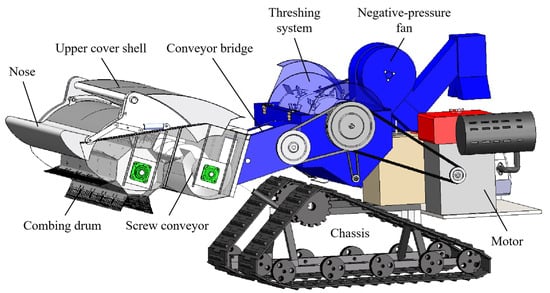
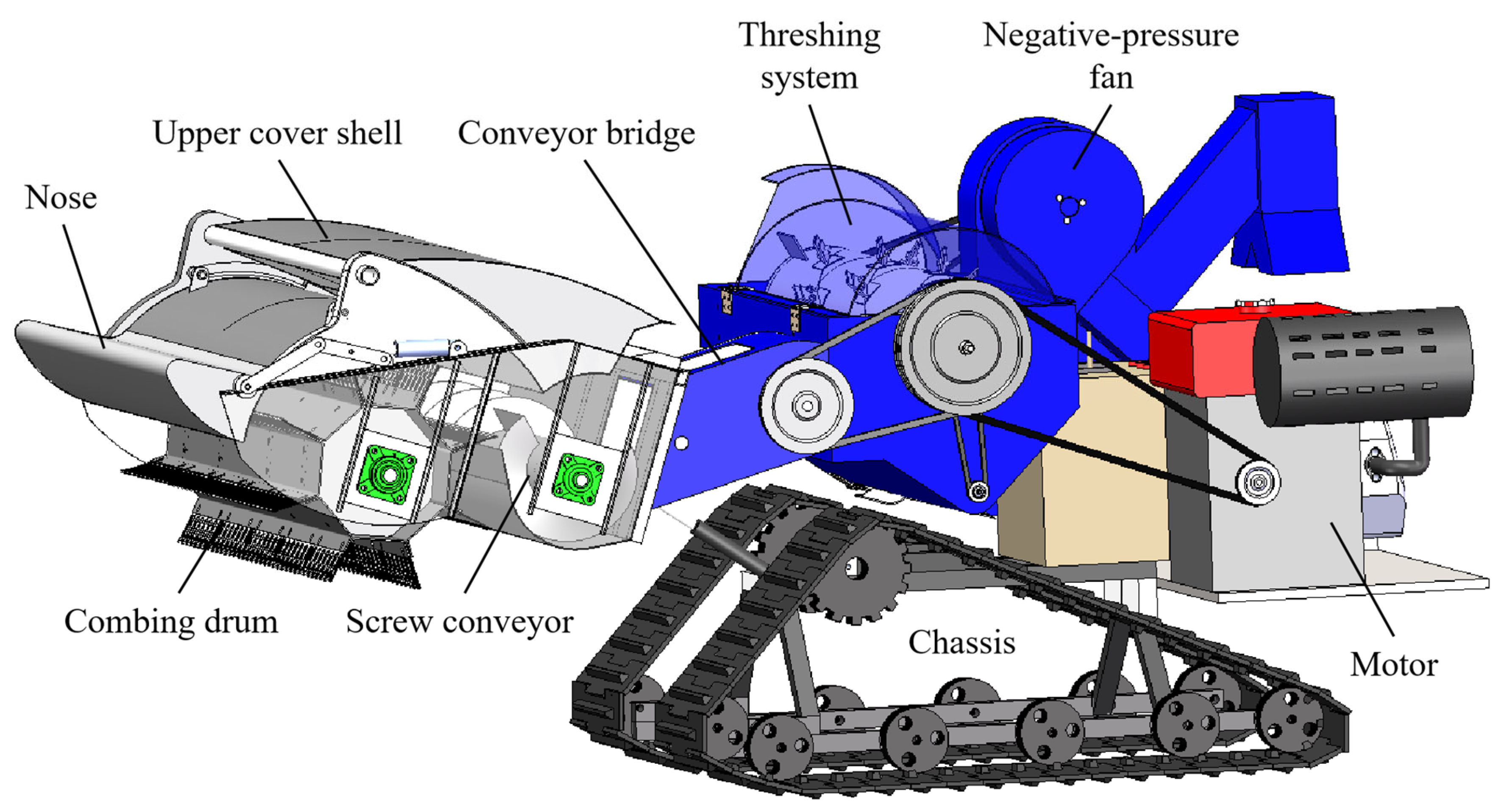
The comb-type wheat harvester is primarily composed of a comb-type header, an inclined conveyor, a threshing system, a negative-pressure cleaning system, and a grain collection box, as shown in Figure 1. Of these components, the comb-type header is the core component of the wheat harvester, which comprises a nose, a combing drum, a screw conveyor, and an upper cover shell. During the harvesting operation, the nose at the front end of the comb-type header first contacts with the wheat, and the plants bend under the action of the nose. When the nose completely passes through the wheat plants, the bent plants start to rebound under the action of elastic potential energy. During the rebound process, the wheat plants come into contact with the combing teeth on the combing drum, and the wheat ears are removed from the stems by the rapidly rotating combing teeth. The combed materials (including the ears and short stems) are propelled toward the screw conveyor along the inner wall of the upper cover by the combined effects of inertia and the airflow generated by the combing drum. The combed materials are conveyed to the threshing system via the screw conveyor and the inclined conveyor, cleaned by a negative-pressure fan, and finally transported to the grain collection box by an elevator.
Figure 1.
Overall structure of comb-type wheat harvester.
2.2. Key Component Design
2.2.1. Combing Drum Design
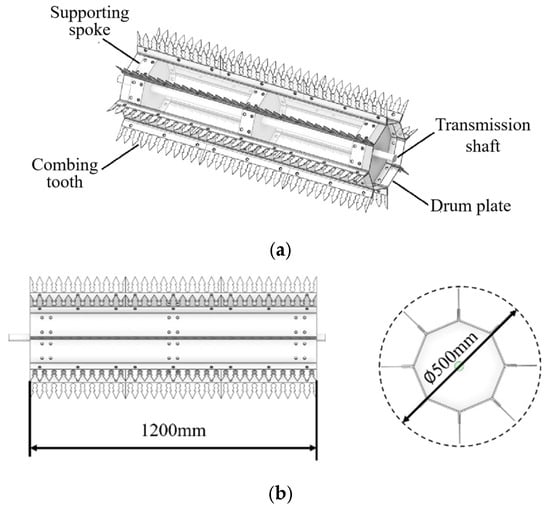
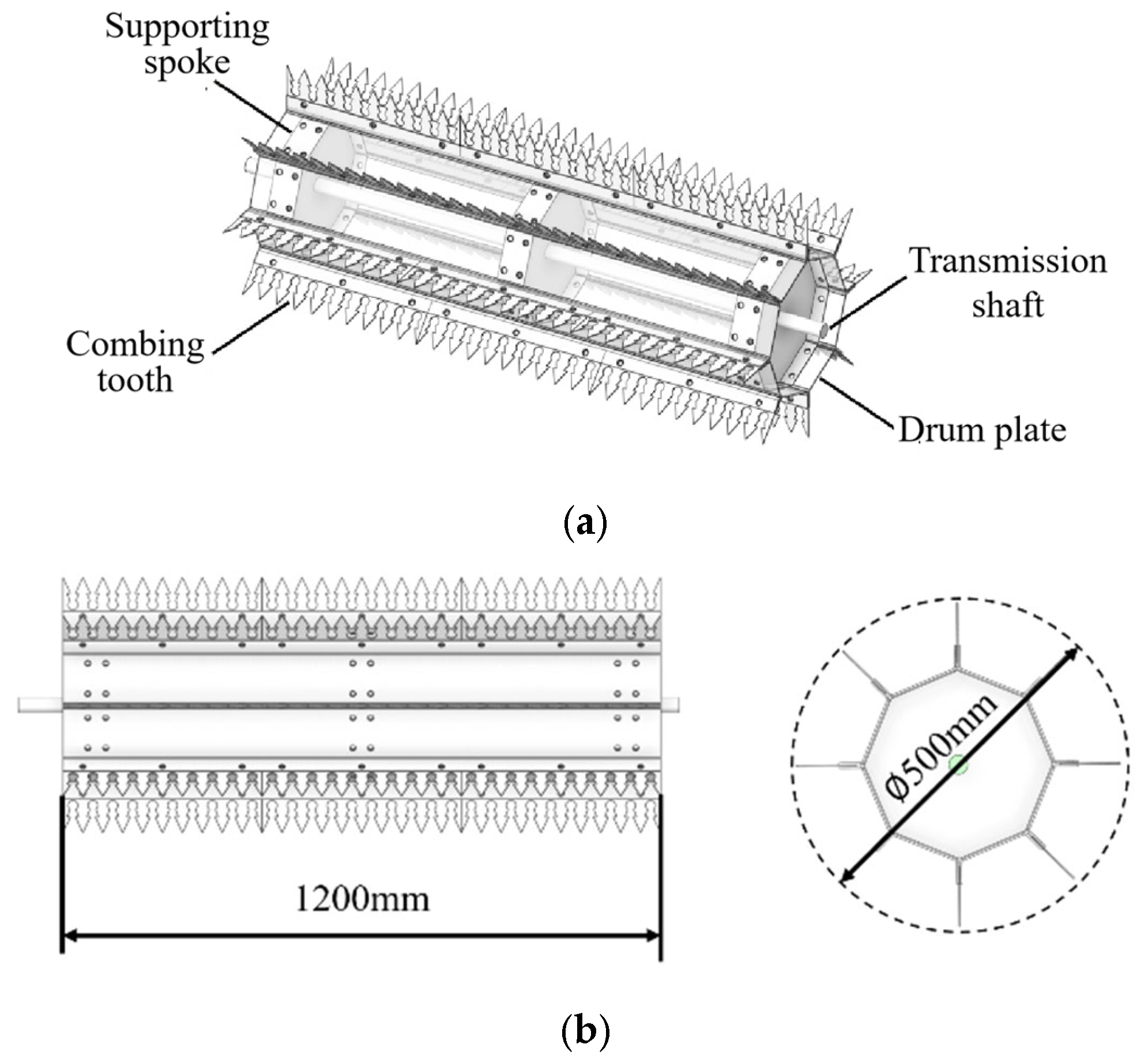
The comb-type header was designed based on the small crawler-type wheat harvester used in hilly and mountainous areas. Its function is to comb the wheat ears from the plants and throw them back. It primarily comprises combing teeth, drum plates, supporting spokes, and a transmission shaft, as shown in Figure 2a. The combing teeth are clamped and fixed by adjacent drum plates, and the drum plates are fixedly connected to the supporting spokes through bolts and mounted on the transmission shaft. According to the header width of the 4L-1.0 small-tracked wheat harvester, the length of the combing drum was set at 1200 mm, and the diameter is 500 mm, as shown in Figure 2b.
Figure 2.
The structure of the combing drum. (a) Combing drum and (b) drum dimensions.
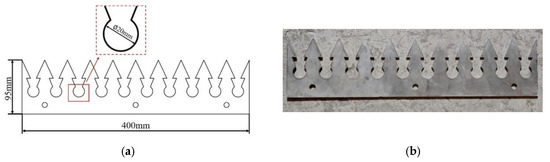
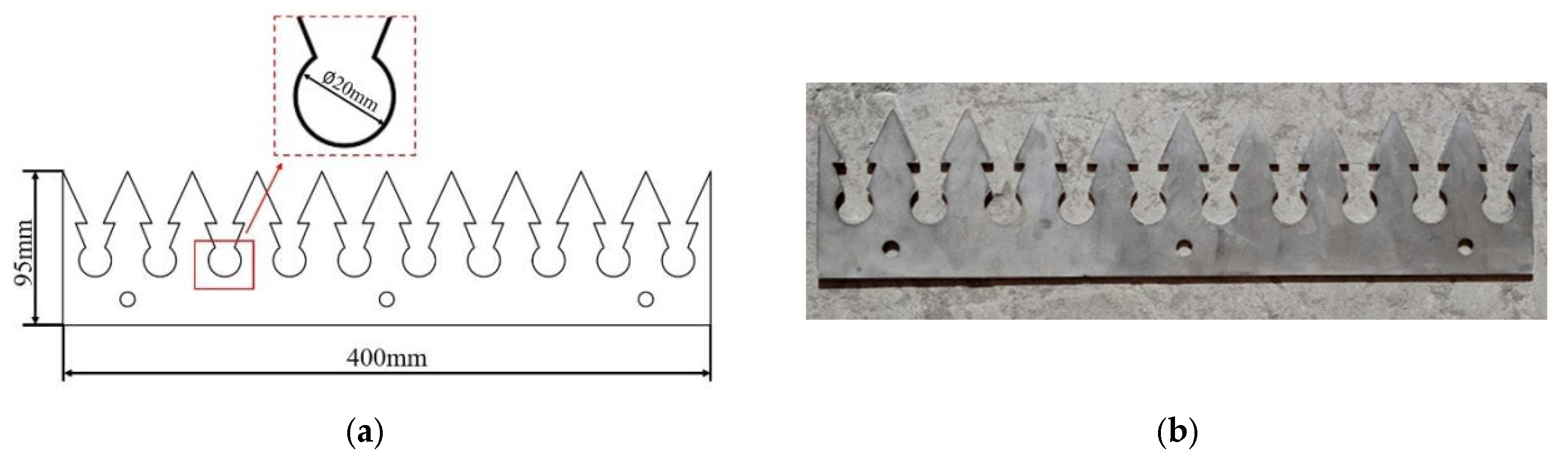
The combing teeth contact the crop directly and are prone to wear. Therefore, high-manganese steel was selected as the material. The combing teeth can be divided into three sections: front, middle, and rear, as shown in Figure 3. The front section is triangular, functioning like a crop divider to separate the wheat plants so that each tooth section engages with a specific number of plants. The middle section is an inverted triangle that performs preliminary combing. The rear section is a circular hole with a 20 mm diameter that re-combs wheat plants not fully combed in the initial pass.
Figure 3.
The structure of the combing tooth. (a) Structural diagram and (b) physical image.
2.2.2. Screw Conveyor Design
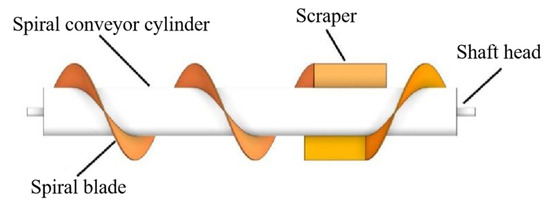
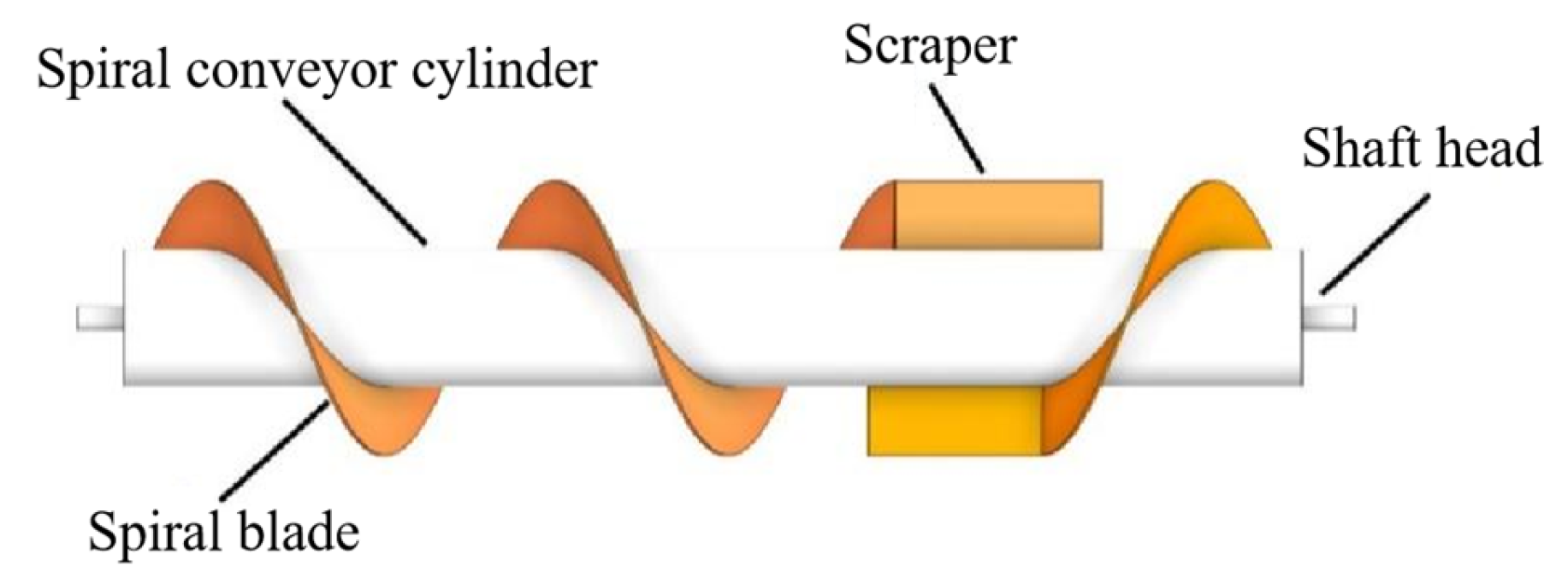
The screw conveyor of the comb-type header primarily consists of a spiral blade, a spiral conveyor cylinder, scrapers, and a shaft head, as shown in Figure 4. Since the comb-type header only separates the ears from the stems during harvesting, the combed materials consist of ears and short stems. The telescopic teeth of traditional screw conveyors cannot effectively convey the combed materials into the inclined conveyor. Therefore, in this study, scrapers were used to replace the telescopic teeth. Meanwhile, to solve the problem of seed retention on the bottom plate of the screw conveyor, rubber plates were installed on the spiral blades and scrapers.
Figure 4.
The structure of the screw conveyor.
According to the requirements of the Agricultural Machinery Design Manual, the circumference of the screw conveyor must be larger than the length of the cut crops. Therefore, the following formula applies:
where d is the inner diameter of the auger conveyor cylinder in mm; s is length of the cut crop in mm.
The inner diameter of the screw conveyor cylinder in traditional small wheat harvesters is 300 mm. Since the length of the materials harvested via the comb-type header is shorter than that of the traditional header, the inner diameter of the screw conveyor cylinder for the comb-type header was set to 180 mm. After the combed materials are propelled to the screw conveyor, they are transported to the threshing system by the inclined conveyor for subsequent processing. If the pitch of the spiral blades is too large, the elevation angle will be too small, resulting in reduced conveying capacity. If the pitch is too small, it will cause a blockage of the screw conveyor [15]. Based on the pitch of the screw conveyor on the header of the crawler-type harvester for hilly and mountainous areas, the pitch of the comb-type header was set to 350 mm.
2.2.3. Nose Design
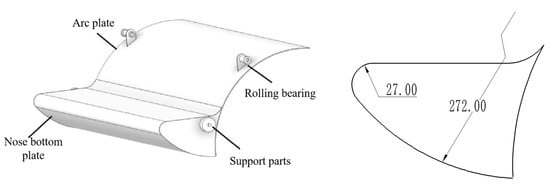
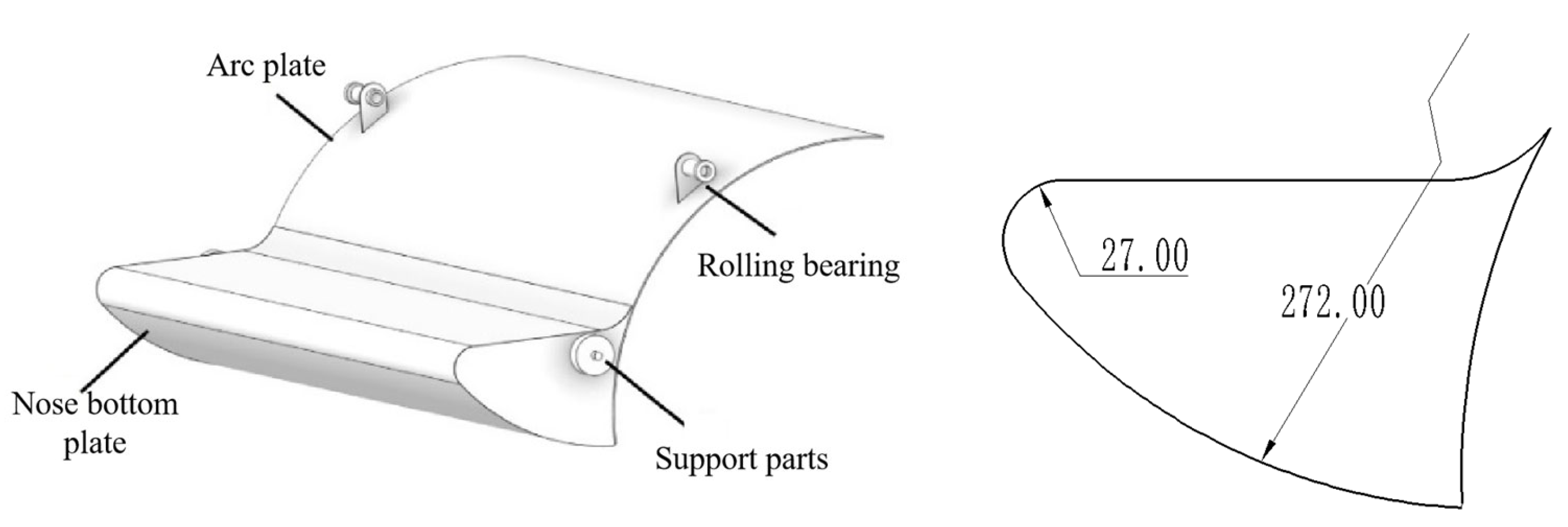
During harvesting, the nose is the first component to contact the wheat plants. It is mainly composed of a nose bottom plate, an arc plate, rolling bearings, and supporting parts, as shown in Figure 5. The nose bottom plate mainly bends the upright wheat plants, enabling the wheat plants to gain elastic potential energy and then rebound toward the combing drum. To prevent the wheat plants from breaking due to sudden increases in bending caused by the nose, the nose bottom plate was designed with an arc shape, having a radius of 272 mm. This design allows the bending of the wheat plants to increase gradually and effectively reduces the probability of plant breakage. The rolling bearings are hinged with the linkage mechanism and can move on the upper side plate, and the lifting and lowering of the nose are realized under the action of the flange connector. A sliding track is mounted on the inner side of the upper side plate, and the supporting parts engage with the sliding track to provide support.
Figure 5.
The structure and size of the nose.
2.3. Analysis of the Interaction Between Wheat Plants and the Comb-Type Header
2.3.1. Analysis of Wheat Plant Posture Under the Action of Nose
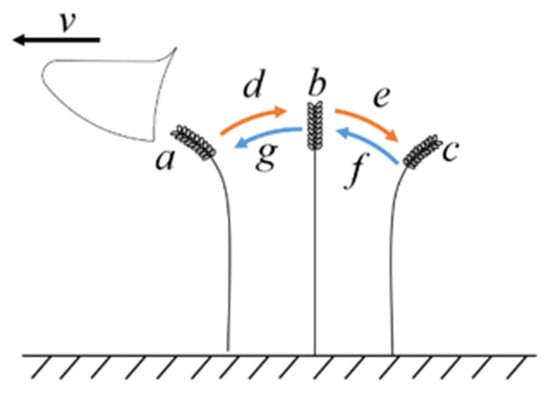
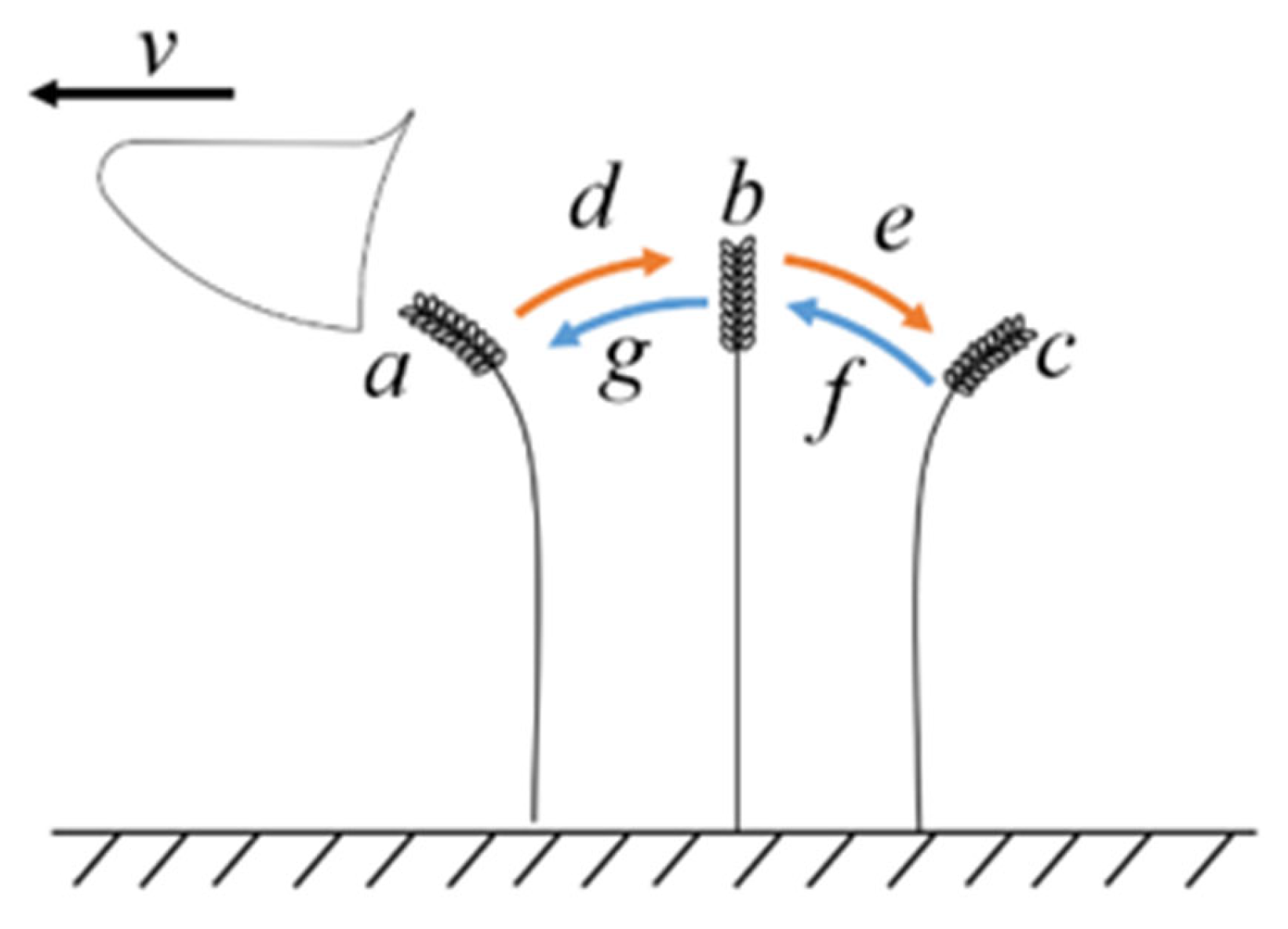
With the direction of the forward speed of the machine taken as positive, the posture of wheat plants under the action of the nose is analyzed. The nose moves forward at a constant speed. As the nose advances, the wheat plants will undergo bending deformation, which gradually increases to the positive bending limit position, a. As the nose continues to move forward, the plants separate from the nose. Due to the elastic potential energy stored in the bent wheat plants, they will rebound. During the rebound process, they first return to the upright state, b. Because the elastic potential energy is relatively high, the plants will continue to rebound to the reverse bending limit, c. The stated represents the process from positive bending to returning to the upright state, state e is the process from the upright state to reverse bending, state f is the process from reverse bending to returning to the upright state again, and state g is the process from the upright state to the second bending, as shown in Figure 6.
Figure 6.
The rebound process of wheat plant.
2.3.2. Analysis of the Interaction Speed Between Combing Teeth and Wheat Plants
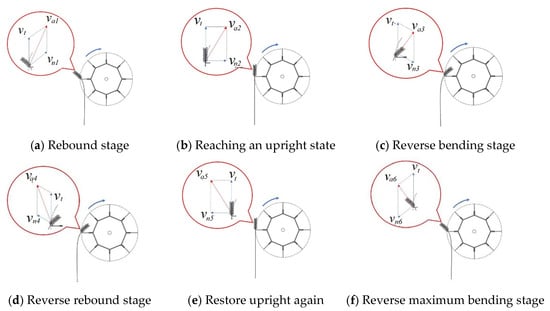
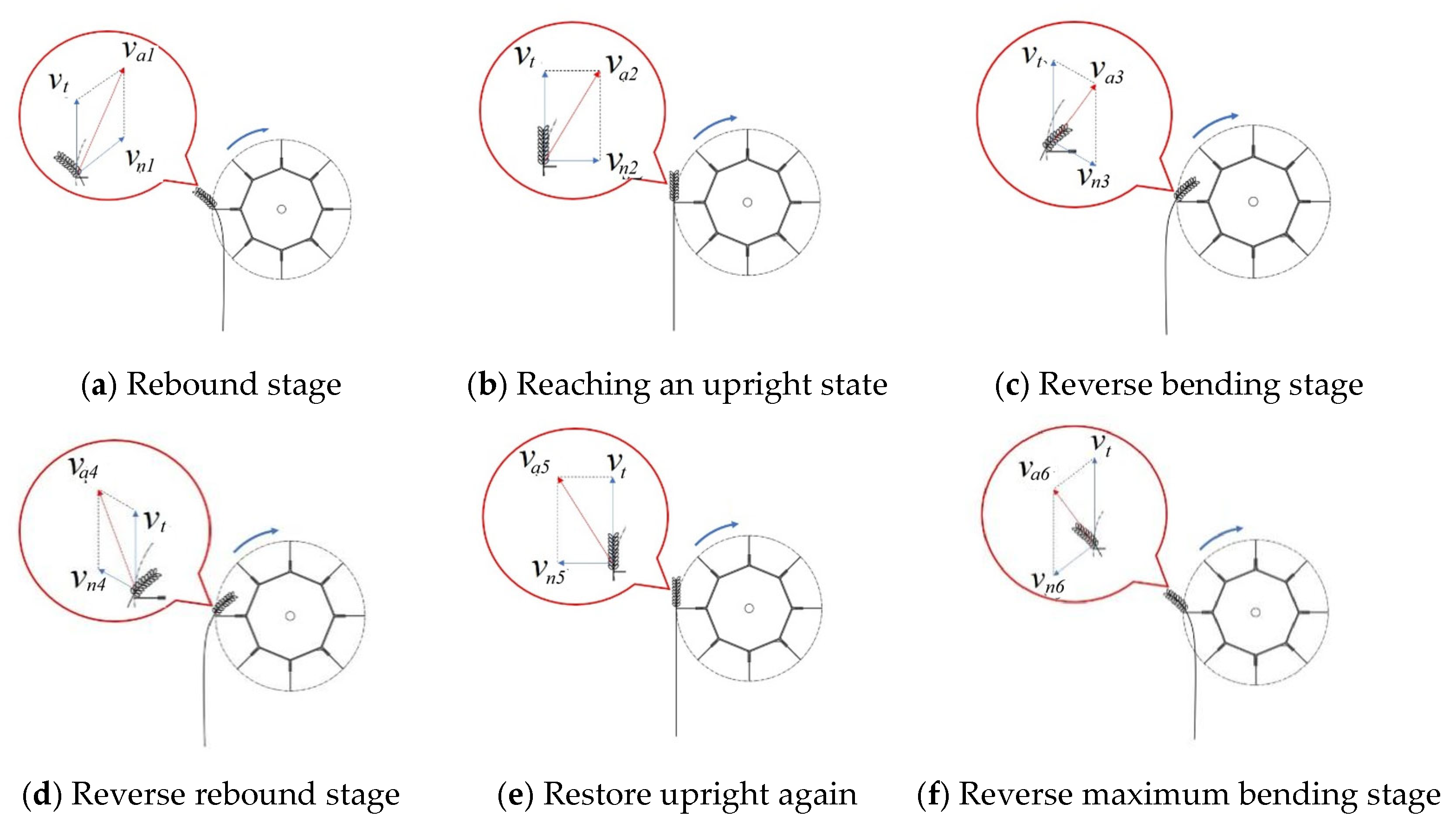
During harvesting, wheat plants leave the nose and contact the combing teeth in different postures. At the moment of contact, the absolute velocity of the ear, vai, is mainly composed of the tangential linear velocity vt of the combing teeth and the normal velocity vni of the ear during the plant rebound stage (where i represents different stages of wheat rebound); Figure 7a shows the velocity of wheat plant contact with the combing teeth when it starts to rebound but has not yet reached the upright state. The linear velocity of the combing tooth at this point is vertically upward, the rebound velocity is obliquely upward along the normal line, and the absolute velocity of the ear points obliquely backward toward the combing drum. Similarly, when the wheat plant returns to the upright position and during the reverse bending process, the absolute velocity of the wheat ear is directed toward the rear of the combing drum, which is beneficial for combing, as shown in Figure 7b,c. As shown in Figure 7d,e, when the wheat plant starts to rebound in the reverse direction after reaching the maximum reverse bending state and contacts with the combing teeth, the absolute velocity of the ear is directed obliquely forward, causing the combed materials to tend to be thrown forward and thus resulting in loss. Therefore, to ensure that the wheat ears can be smoothly thrown backward after being combed off, the interaction with the combing teeth should occur during the stage from the start of the plant’s rebound to the maximum reverse bending.
Figure 7.
Analysis of wheat ear velocity. vai is the absolute velocity of the ear, vt is the circumferential linear velocity of the combing teeth, and vni is the normal velocity of the ear during the plant rebound stage.
2.3.3. Simulation Test of Wheat Plants Under the Action of the Nose
- (1)
- Discrete element mechanical model
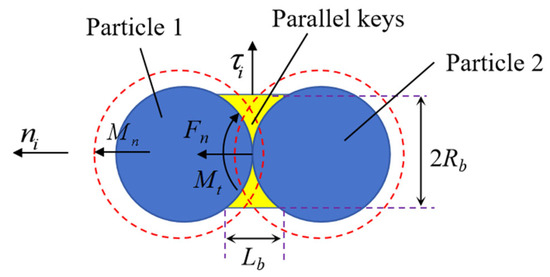
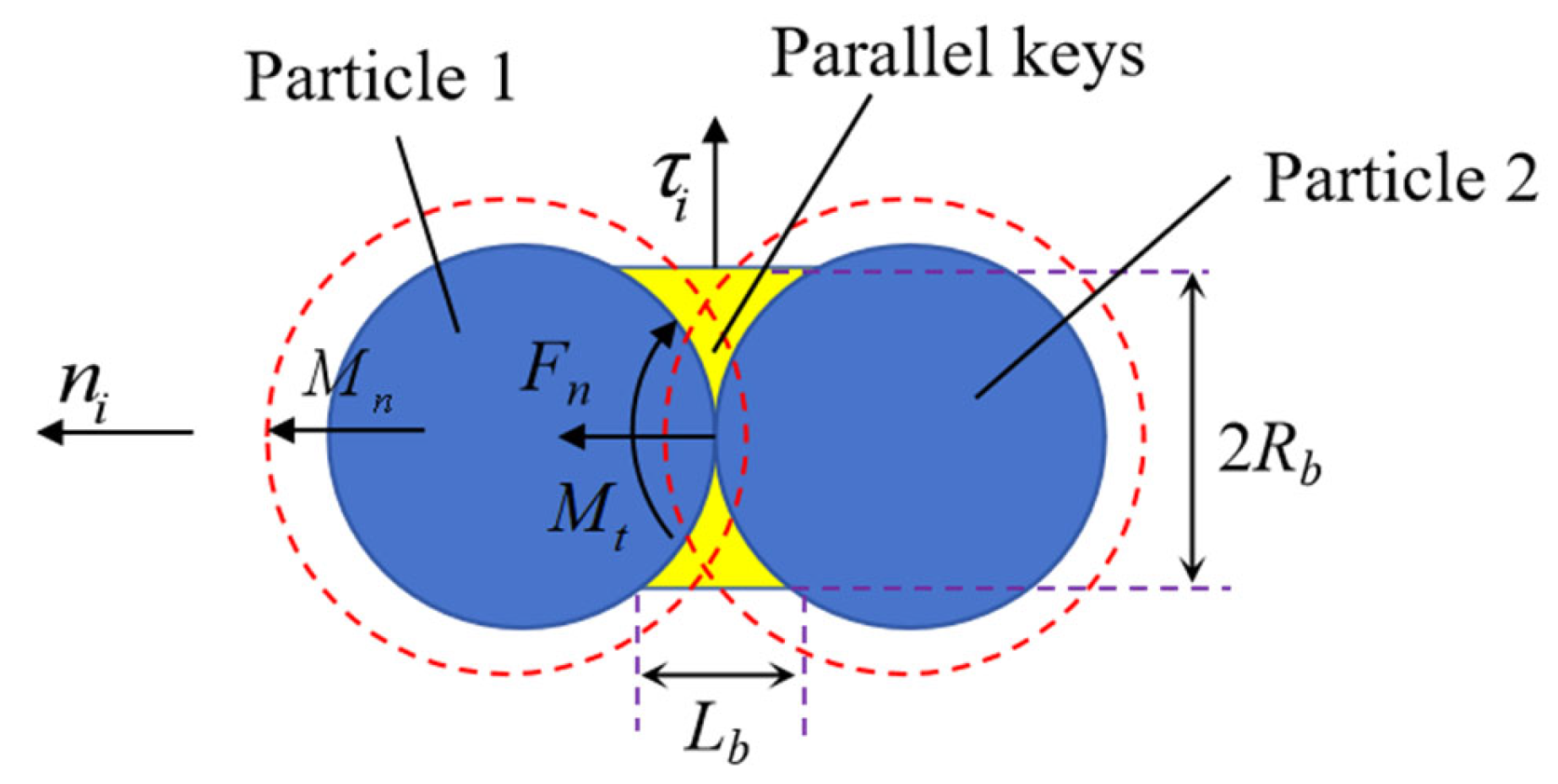
Wheat plants are flexible structures that undergo bending deformation. To ensure that the entire plant exhibits flexible characteristics in discrete element modeling, thereby better simulating the bending deformation process and force-bearing behavior of wheat plants, this study adopts the Hertz–Mindlin with Bonding model. Bonded contacts were established between rachis elements, between grains and the rachis, between stem elements, and between the ear and the stem, ultimately forming a complete, flexible wheat plant model. Through continuous development and refinement, this bonding approach has become one of the most widely used methods in discrete element modeling, and its mechanical model is illustrated in Figure 8.
Figure 8.
Hertz–Mindlin with bonding mechanical model. Mn is the normal moment, N/m; Fn is the normal force, N; Mt is the tangential moment, N/m; τi is the tangential force, N; Lb is the axial length of the bond, mm; and Rb is the radius of the bond, mm.
- (2)
- Discrete element modeling of wheat plant
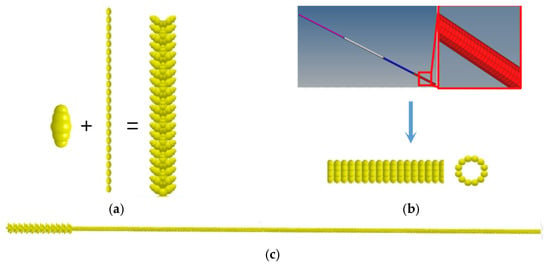
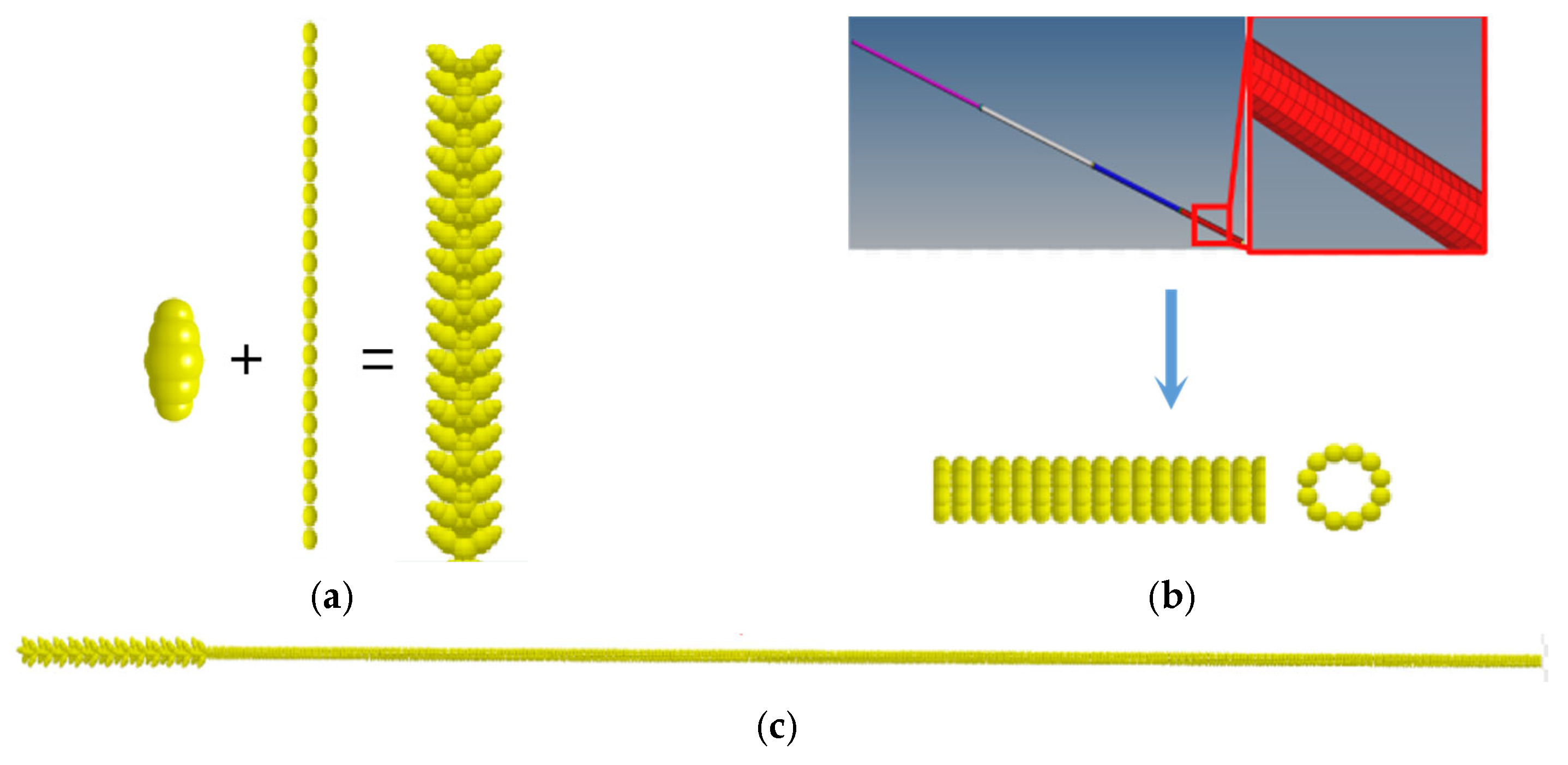
This study focuses on the effects of aboveground stems and panicles on the experiment, while leaves and root systems have a negligible impact on the research. Furthermore, the anchoring effect of root systems can be equivalently replaced with boundary conditions. This method can significantly reduce the modeling and computational costs without affecting the core simulation conclusions within the engineering tolerance range. Therefore, the effects of leaves, leaf sheaths and root systems are neglected, and a discrete element model of flexible wheat plants is established with panicles and stems that form the aboveground plants as the main components [16,17]. The ear part is mainly composed of the middle rachis and grains. Based on the measured three-axis dimensions of wheat grains, a grain model was created using five-sphere stacking, and the particles are bonded together using Bonding bonds to form the rachis [18,19]. Meanwhile, with grains as filling units, the discrete element model of the wheat ear is established in accordance with the arrangement law of grains on the rachis and the geometric dimensions of the ear, as shown in Figure 9a. A 3D model of the wheat stem was created in SolidWorks 2024 and imported into HyperMesh 2024 for meshing. Using the average stem wall thickness as the minimum element size, the mesh was generated, yielding 6364 hexahedral elements. The central coordinates of the hexahedrons are extracted and imported into EDEM 2025 software, and the wheat stem model is established using the meta-particle function Figure 9b. Among them, the central coordinates of the hexahedral elements are the coordinates of stem particles, the minimum size of the elements is the diameter of stem particles, and the stem particles are inscribed spheres of the hexahedrons. Building on the discrete element models of the ears and stems, the complete discrete element model of upright, flexible wheat plants was constructed by coupling the ear and stem models through the meta-particle function with appropriate bonding parameters [20], as shown in Figure 9c.
Figure 9.
Discrete element modeling process of wheat plant. (a) Ear model, (b) stem model and (c) wheat plant model.
- (3)
- Model parameter calibration
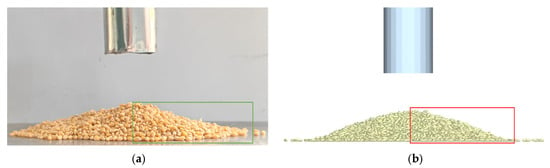
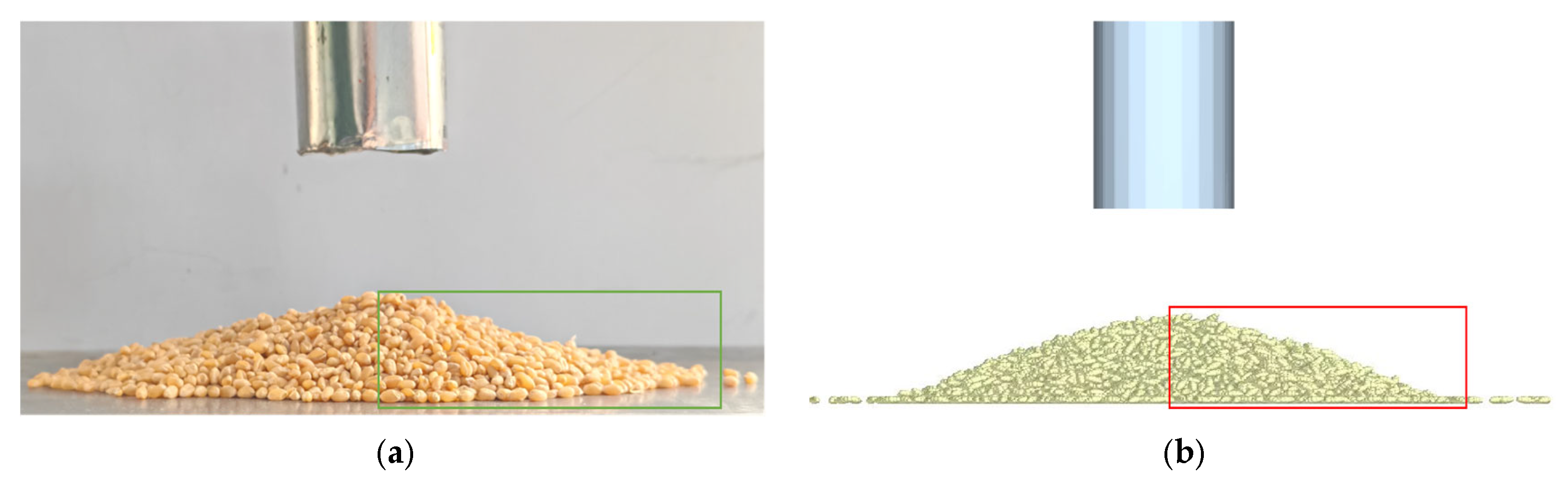
The calibration of the static angle of repose of wheat grains was conducted through bench tests and simulation measurements, as illustrated in Figure 10a,b. A bottomless cylinder lifting method was adopted for angle measurement; both the cylinder and test platform were fabricated from Q235 steel. The cylinder was designed with a diameter of 50 mm and a height of 160 mm. A microcomputerized automatic seed counter (Top Cloud-agri, Hangzhou, China) was used to accurately count 3000 wheat grains, which were then placed into the cylinder for testing. The cylinder was vertically lifted at a constant speed of 0.05 m/s [17], and a grain pile was formed once the grains had completely settled after dispersion. For the discrete element method (DEM) simulations, the Z-axis was set as the direction of gravitational acceleration (−9.8 m/s). Wheat grains identical to those used in the bench tests were generated, and the cylinder was lifted at the same constant speed. The simulation was terminated when the grain pile formed by the wheat grains reached full static equilibrium.
Figure 10.
Static angle of repose calibration of wheat grains. (a) Static resting angle test of wheat grain on stand; (b) simulation test of static resting angle of wheat grain.
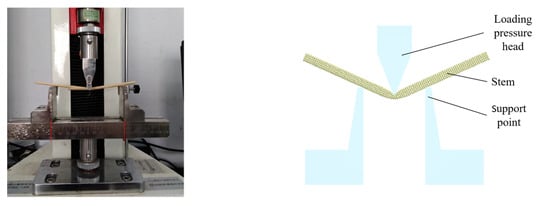
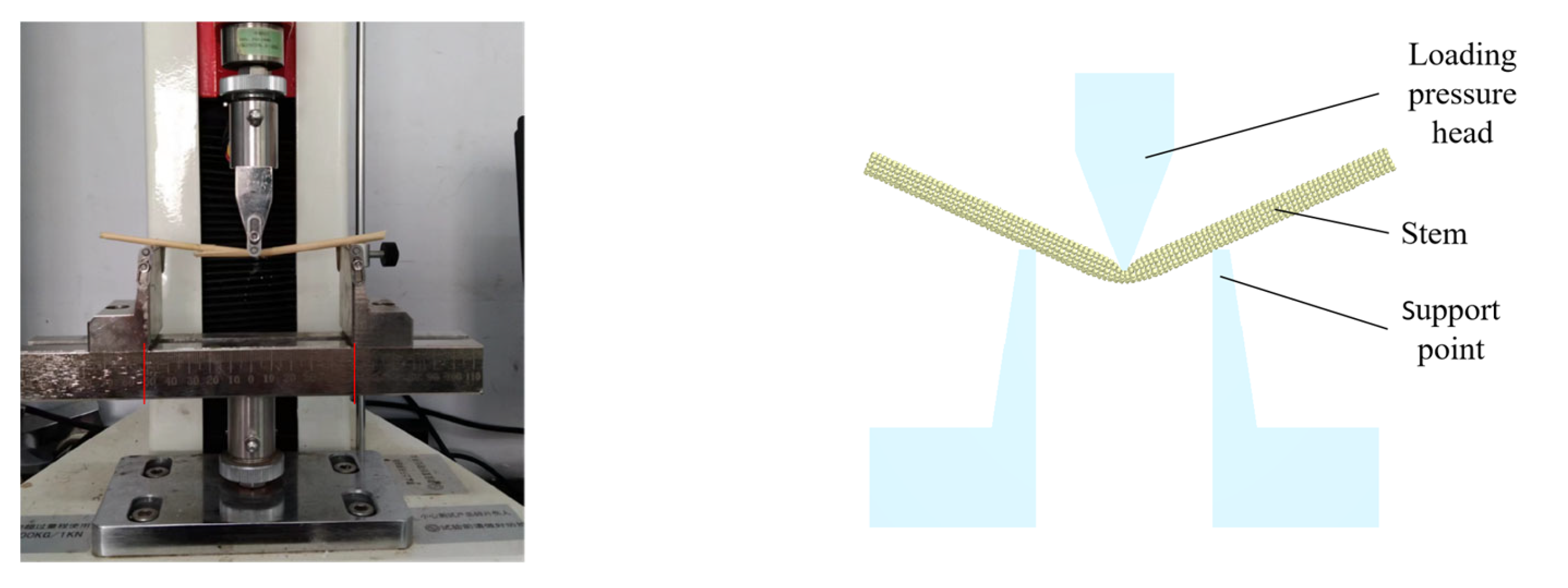
The calibration of the bonding parameters between wheat stem particles was performed via three-point bending simulation tests. A simulation model was established based on the actual dimensions of the fixtures in the universal testing machine. Discrete element models (DEMs) of the wheat stems were generated with the following bonding parameters: a normal stiffness coefficient of 1.02 × 10¹¹ N/m3, a tangential stiffness coefficient of 4.11 × 10¹⁰ N/m3, a critical normal stress of 8.8 × 10⁷ Pa, and a critical tangential stress of 3.78 × 10⁷ Pa. The distance between the two support points was set to 60 mm, and the generated stem models were placed on the supports. The loading indenter was positioned at the midpoint of the two supports and moved vertically downward at a constant speed of 5 mm/min until a significant deformation of the stems occurred, as illustrated in Figure 11. After the simulations, the load-displacement data during the stem deformation process were exported from the post-processing module.
Figure 11.
Three-point bending test.
- (4)
- Establishment of simulation model
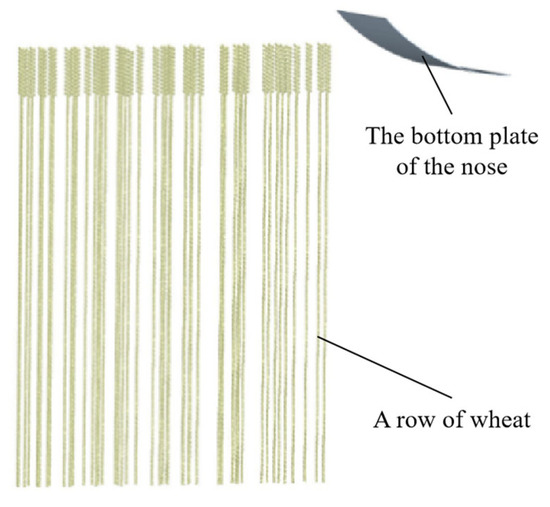
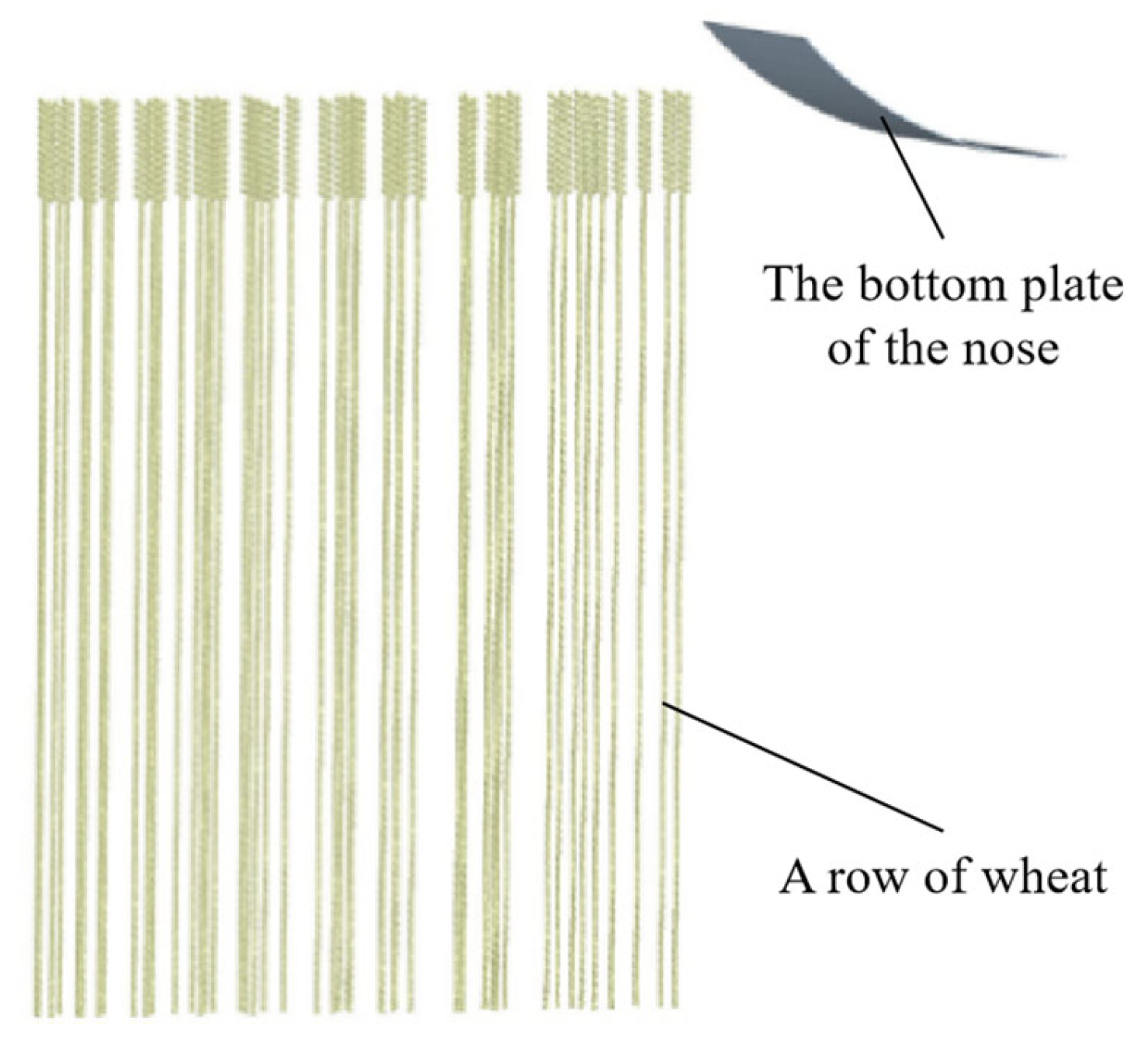
To investigate the effects of different heights of the nose and forward speeds on the posture changes of wheat plants during the interaction process, discrete element simulations were conducted to model the nose acting on the wheat plants, as shown in Figure 12. Due to the large structural size of the nose, to improve the simulation speed, it was simplified to an arc-shaped steel plate matching its bottom curved surface (i.e., the nose base plate). To reduce the simulation time, only one row of wheat plants was generated. Before the simulation test, a particle factory was used to generate flexible and upright wheat plants with a stem length of 500 mm, a plant height of 650 mm, and a total mass of 250 g. The plants were distributed to approximate field growth conditions as closely as possible.
Figure 12.
Simulation model of wheat plants under the action of the nose.
- (5)
- Simulation parameter settings
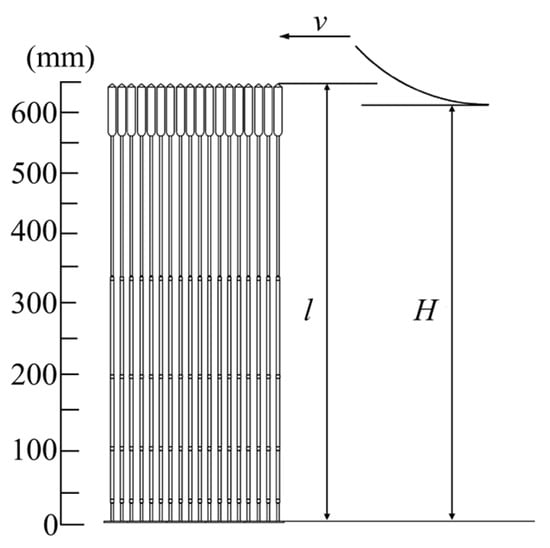
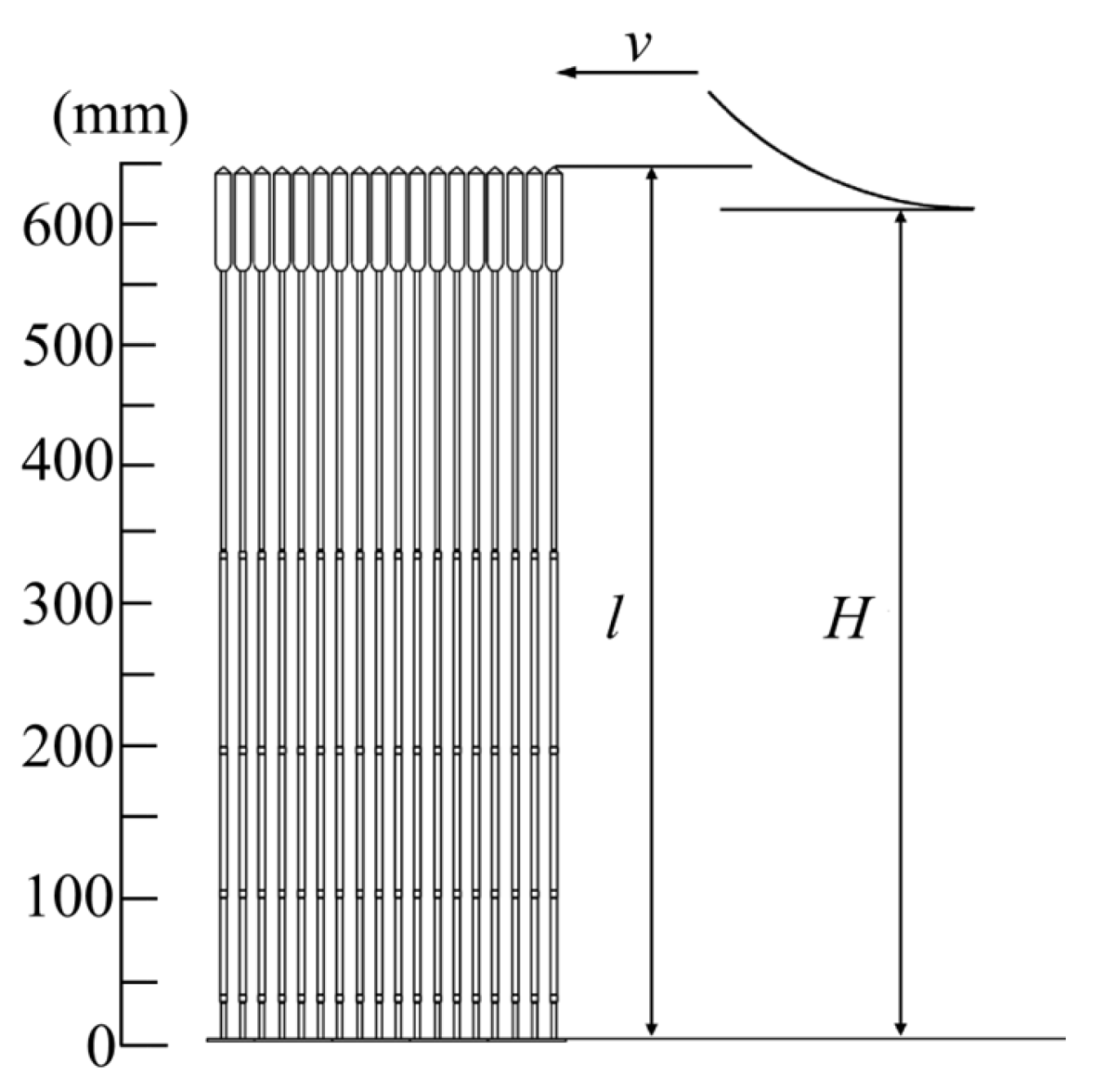
The relative position of the nose during interaction with the wheat plants is shown in Figure 13. According to the actual field operation conditions of small crawler-type harvesters and the average height of wheat plants, the forward speeds of the nose in the simulation tests were set to 0.59 m/s, 0.64 m/s, 0.69 m/s, 0.76 m/s, and 0.82 m/s, respectively, and the heights were set to 615 mm, 590 mm, 565 mm, 540 mm, and 515 mm, respectively. Simulation tests were conducted under different forward speeds and nose heights. To ensure that the nose could completely pass through the wheat plant population, the duration of each simulation was set to 1 s. During post-processing, the posture changes of the wheat plants caused by the nose base plate could be observed.
Figure 13.
Schematic diagram of relative positions. l is the average height of wheat plants, H is the nose height base plate from the ground, and v is the forward speed.
2.3.4. Verification Test of High-Speed Camera Bench
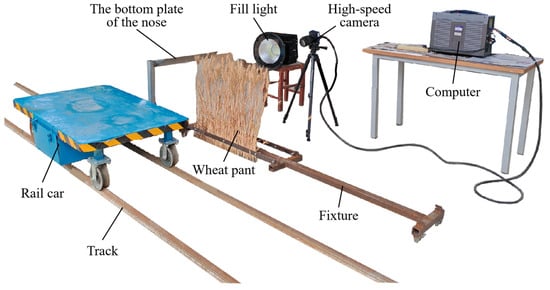
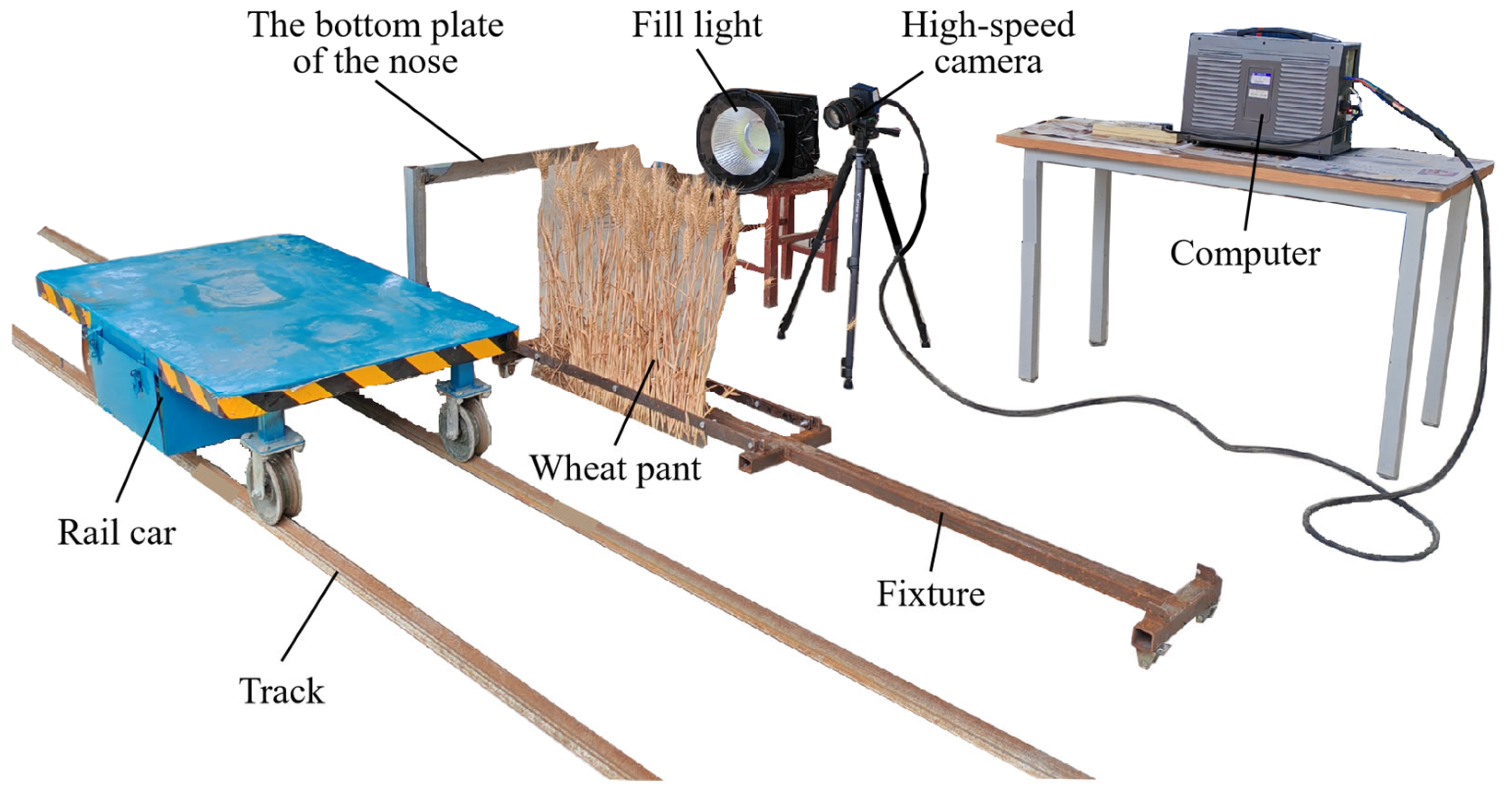
To verify the accuracy of the discrete element simulation test results, a bench test on the effect of the nose on wheat plants was conducted at the Intelligent Agricultural Machinery Equipment Training Center of Henan Agricultural University. The test bench mainly consists of a simplified bottom plate of the nose, an electric rail car, wheat plants, fixtures, a high-speed camera (Daheng Imaging, Beijing, China), a computer, and supplementary lighting, as shown in Figure 14. Before testing, intact wheat plants were fixed to the fixtures according to the plant density used in the simulation, and the fixtures were fixed parallel to the electric rail car. An arc-shaped steel plate matching the curved bottom surface of the nose was used to replace the actual nose, and the height of the arc-shaped steel plate was adjustable. At the same time, the high-speed camera was installed and debugged, with the resolution set to 1280 × 1244 and the frame rate set to 255 fps. The forward speed of the rail car and the height of the arc-shaped steel plate were consistent with the parameters of the simulation test, respectively, and the entire test process was recorded and saved by the high-speed camera. After the test, the collected videos were analyzed, and the attitude change process of wheat plants was extracted through key frames.
Figure 14.
High-speed camera test bench.
2.4. Combing Harvest Test
2.4.1. Simulated Test of Combing Harvest
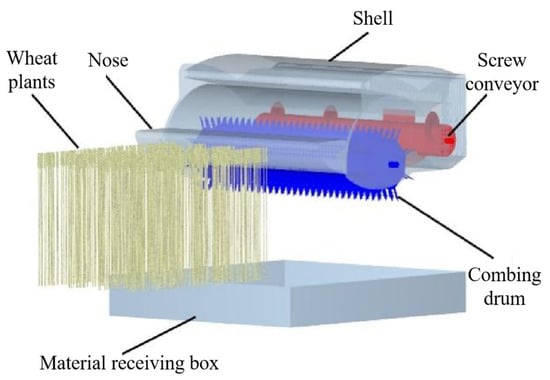
Based on the analysis of wheat plant posture changes under the action of the nose, a simulation test of a header-combing harvest was carried out. The test system mainly consists of a comb-type header, wheat plants, and a material receiving box, as shown in Figure 15. For the simulation test of the comb-type header, four rows of wheat plants were used, among which the wheat was distributed according to the field growth state, with each row being 1000 mm long, a row spacing of 200 mm, and 114 plants per row. To improve the simulation speed, the combing and threshing header was simplified, retaining only the combing drum, screw conveyor, and shell. A material collection box was placed beneath the header to collect grain lost during the combing process.
Figure 15.
Simulation model of combing harvest.
According to the actual field operation conditions of a small crawler-type harvester, three operating speed conditions of the machine forward speed were set: 0.59 m/s, 0.69 m/s, and 0.82 m/s. Using the optimal combing-to-forward speed ratio reported in the literature [9], the rotation speed range of the combing drum was determined to be 525~725 r/min. Based on the nose–plant interaction simulation results described above, nose heights of 615 mm, 565 mm, and 515 mm were selected. Simulation tests were conducted on the comb-type header under different horizontal moving speeds, different rotation speeds of the combing drum, and different heights of the nose. To ensure that the header could completely pass through the wheat plant population, the simulation time for each test was set to 1.8 s. After the simulation, the Grid Bin Group was established using the Setup Selections function in the EDEM post-processing interface, and the grain mass in the material receiving box and the grain mass at the screw conveyor were counted separately, i.e., the header loss mass and the harvested mass. The header loss rate, R, was calculated according to the following formula, and with each test repeated three times to obtain the average value.
where M1 is the mass loss from the header (g), and M is the harvest mass (g).
2.4.2. Field Test of Combing Harvest
- (1)
- Test conditions
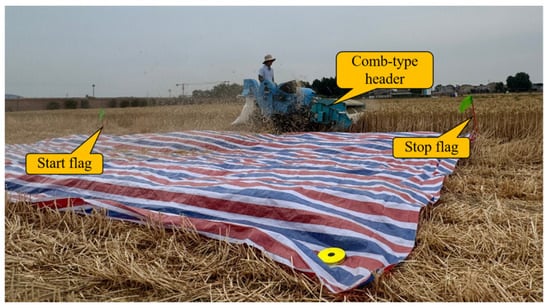
On 5 June 2024 at Henan Agricultural University, at the Yuanyang experimental base (longitude: 113.952957, latitude: 35.106876), a field harvest test was conducted, as shown in Figure 16. The wheat variety in the test field was Weilong 169, with a planting density of 456 plants per square meter. Harvesting was performed during the late maturity period of the wheat, with an average plant height of approximately 658 mm. The moisture content of the stems ranged from 16.47% to 24.61%, and the ears ranged from 12% to 17%.
Figure 16.
Field test.
- (2)
- Test methods
Before the harvesting test, six test plots, each with a length of 10 m, were measured and marked in the experimental field. The natural drop loss was detected using the five-point sampling method within the selected test plots. During the harvesting process of each test plot, it was ensured that the comb-type wheat harvester operated at a full cutting width, and the nose height, the machine forward speed, and the combing drum rotation speed were set to be consistent with those in the simulation test, while other working parameters remained unchanged. For each test, the wheat grains discharged from the grain outlet were collected starting from the start flag and stopped when reaching the stop flag. At the end of each group of harvesting operations, a random area approximately 4 m away from the starting point was selected to detect the grains dropped by the header. The header loss mass was obtained by subtracting the natural drop loss (grain detached due to physiological maturity, environmental stress, and field preprocessing) from the total grain loss in the test area. The header loss rate, R′, was calculated using Formula (3).
where As is the area of the sampling zone, m2; Wt is the mass of total loss, g; Wn is the mass of the natural drop loss, g; and Wy is the yield per square meter, g.
3. Results and Discussion
3.1. Analysis of Plant Model Calibration Results
- (1)
- Grain stacking angle
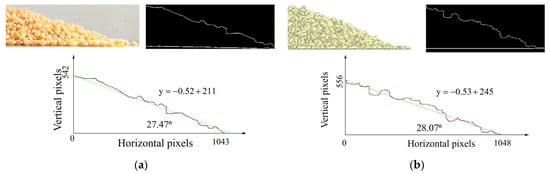
After both the bench tests and the simulations were completed, the captured images of the grain pile angle measurement processes were processed using MATLAB 2020a software for grayscale conversion, binarization, and noise reduction. This preprocessing step ensured clearer contour curves of the grain pile angles. Subsequently, Origin software 2021 was employed to perform linear fitting on these contour curves, as shown in Figure 17a,b. Each test group was repeated five times, and the average value was calculated. The results indicated that the average angle of repose measured in the bench tests was 27.47°, while the average value obtained from the simulations was 28.07°, corresponding to a relative error of 2.18% between the two methods. This agreement validates the consistency between the experimental and simulation results
Figure 17.
(a) Linearity fitting of the resting angle of wheat seed in the bench test and (b) linear fitting of the angle of repose in the wheat grain simulation test.
- (2)
- Three-point bending
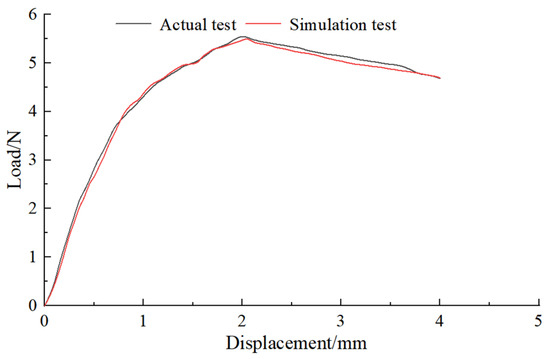
Origin was used to plot the load-displacement curves obtained from both the actual bench tests and simulation tests, as shown in Figure 18. The relative error between the two test methods was 1.18%.
Figure 18.
Load variation curve. For this curve, the displacement scale on the horizontal axis is 1 mm/grid, and the force scale on the vertical axis is 1 N/grid.
Based on previous research, experimental validation, and relevant references [21,22], the mechanical property parameters of each material component in the discrete element method (DEM) simulation are determined as presented in Table 1. The bonding parameters between particles of each component forming the wheat plant DEM model are listed in Table 2, while the simulation contact parameters of each material are shown in Table 3.
Table 1.
Discrete element simulation material mechanics’ characteristic parameters.
Table 2.
Discrete element model particle-to-particle bonding parameters.
Table 3.
Material simulation contact parameters.
3.2. Analysis of Wheat Plant Posture
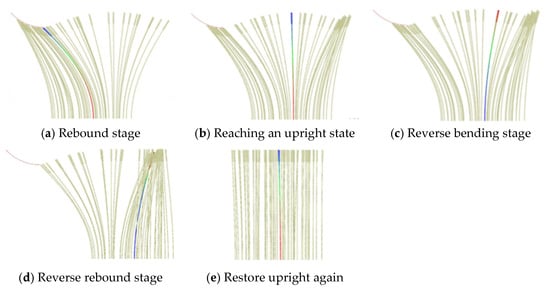
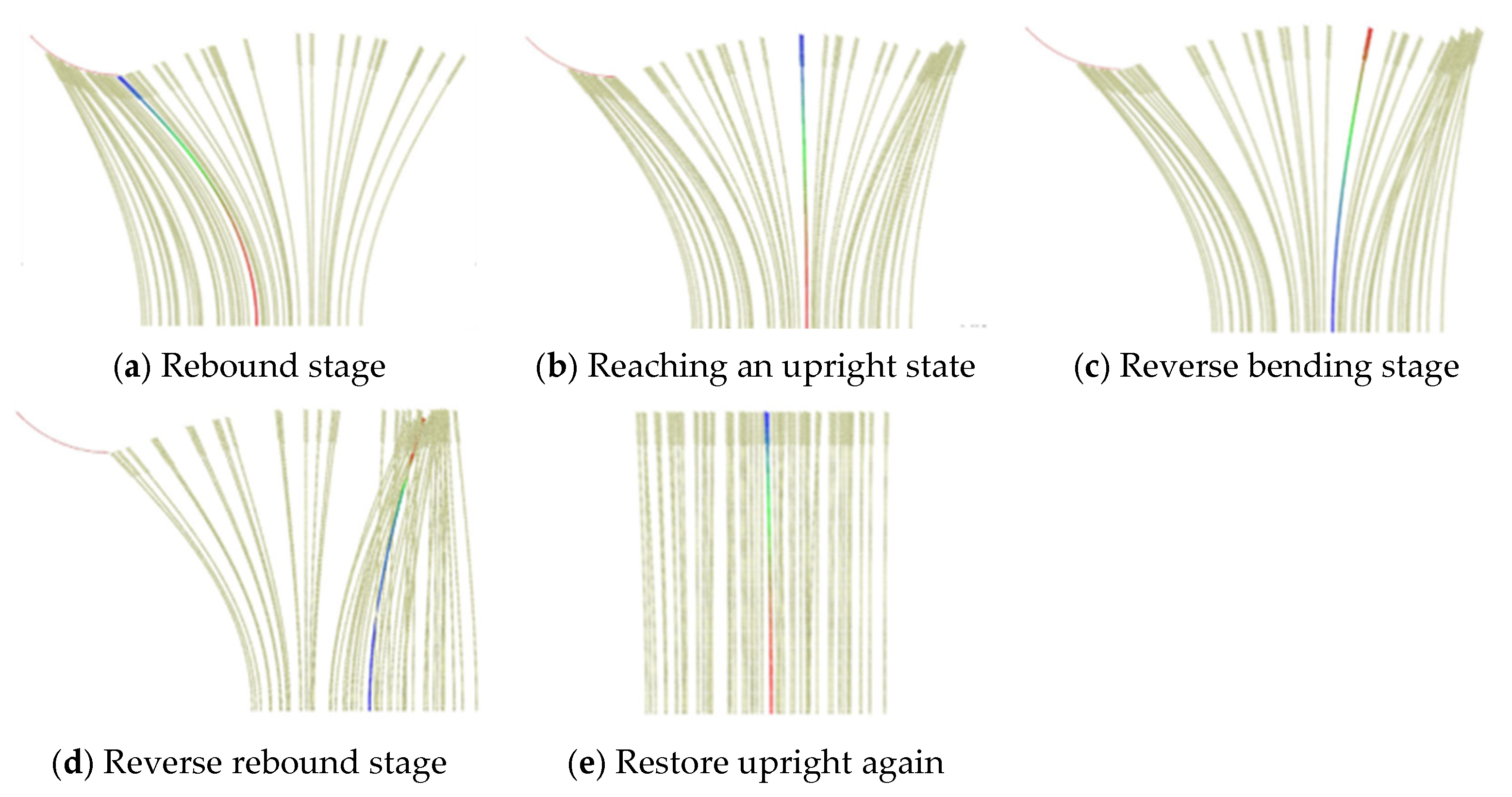
In the post-processing interface of the discrete element software (EDEM 2025), the trajectory diagram of particles can be viewed, which facilitates the analysis of the movement state of wheat plants after being subjected to external forces. The trajectory of the top of the wheat plant is arc-shaped, and the trajectory endpoint on the left side of the plant is lower than that on the right side. This is because the elastic potential energy inside the plant gradually decreases during the rebounding process. The left endpoint of the trajectory is the separation point between the wheat plant and the nose, after which the wheat plant starts to rebound, as shown in Figure 19a. During the rebounding process of the wheat plant, it continues to rebound after reaching the same upright state as when it is stationary, as shown in Figure 19b,c. When the rebounding of the latter plant reaches a certain degree, it will collide with the previous plant that is rebounding in the opposite direction and rebound together in the opposite direction, as shown in Figure 19d. After several rebounds, the wheat plant finally returns to an upright state, as shown in Figure 19e.
Figure 19.
Process of wheat plant posture change.
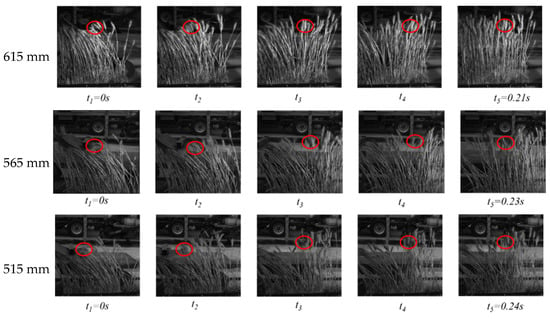
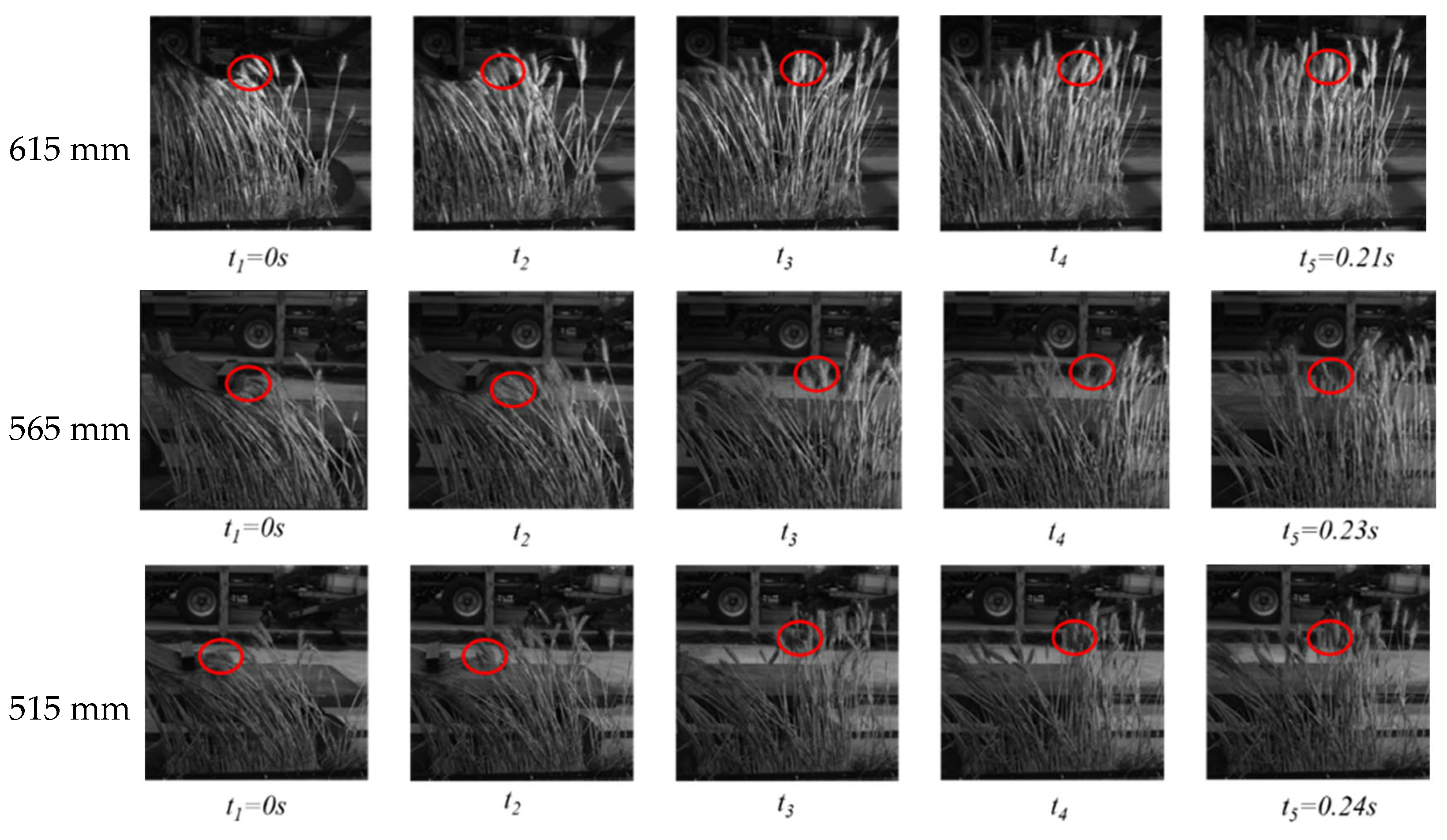
Images of wheat plant posture changes under different forward speeds and nose heights were obtained through high-speed camera bench test. The images with a forward speed of 0.64 m/s and nose heights of 615 mm, 565 mm, and 515 mm were selected for the analysis of plant posture changes. It can be seen from Figure 20 that, due to the influence of wheat leaves and ears, the wheat plants in the bench test bend in clusters, which is different from the independent bending of a single plant in the simulation test. However, the posture change of a cluster of wheat plants under the action of the nose is similar to the result of the discrete element simulation. The wheat plant posture changes exhibited a sequence of bending, rebounding, straightening, reverse bending, and reverse rebounding. It can be observed from the figure that, at the same forward speed as the nose height decreases from 615 mm to 515 mm, the bending degree of wheat plants gradually increases, which leads to an increase in the time interval from bending to the recovery of the upright state.
Figure 20.
Diagrams of wheat plant posture changes under different nose heights.
3.3. Analysis of Combing Harvest Test Results
3.3.1. Analysis of Comb-Type Header Working Process
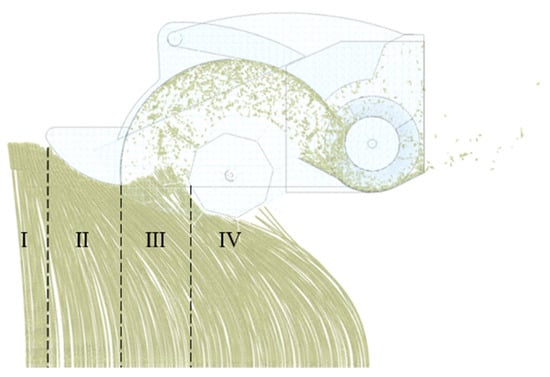
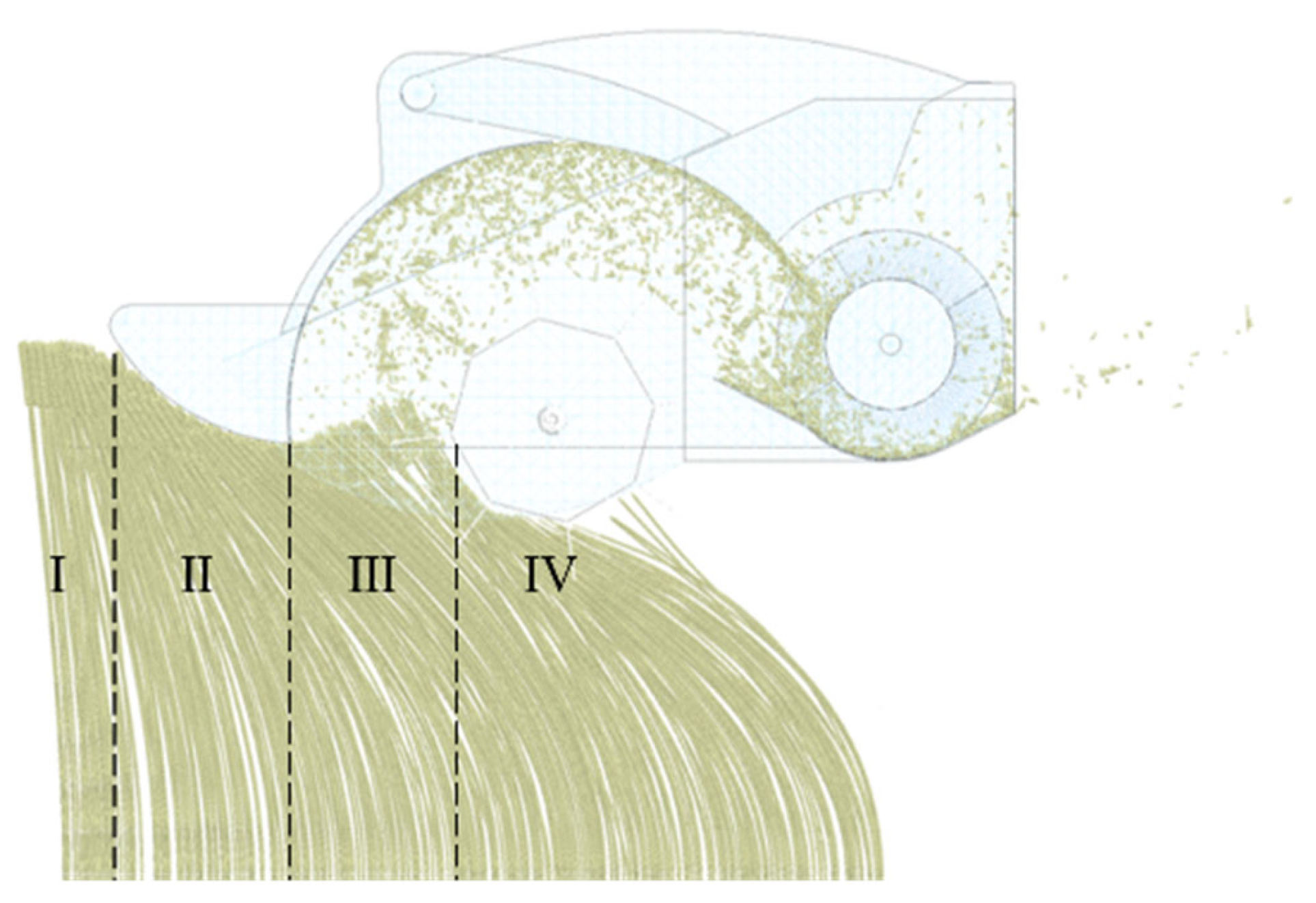
To study the movement states of wheat plants and grains during the combing process, the discrete element simulation results of the comb-type header were analyzed by taking the nose height, the machine forward speed, and the combing drum rotation speed of 565 mm, 0.69 m/s, and 625 r/min as examples. During the combing–harvesting process, the wheat plant area can be divided into unharvested area I, to-be-harvested area II, harvested area III, and straw area IV, as shown in Figure 21. In the unharvested area, the wheat plants have not been in contact with the comb-type header and remain in their original upright state. In the to-be-harvested area, the wheat plants make contact with the nose and bend. In the harvested area, the wheat plants have rebounded after leaving the nose, and the ears are separated from the stems under the action of the combing teeth. The straw area refers to the remaining wheat stems after combing harvesting.
Figure 21.
Regional division of wheat plants during the harvesting process.
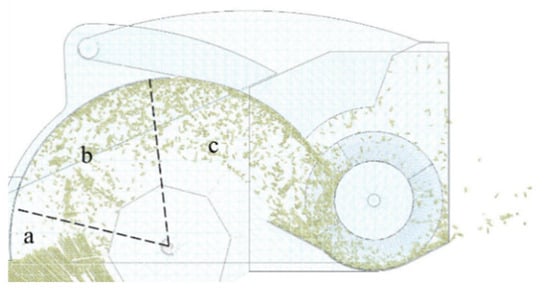
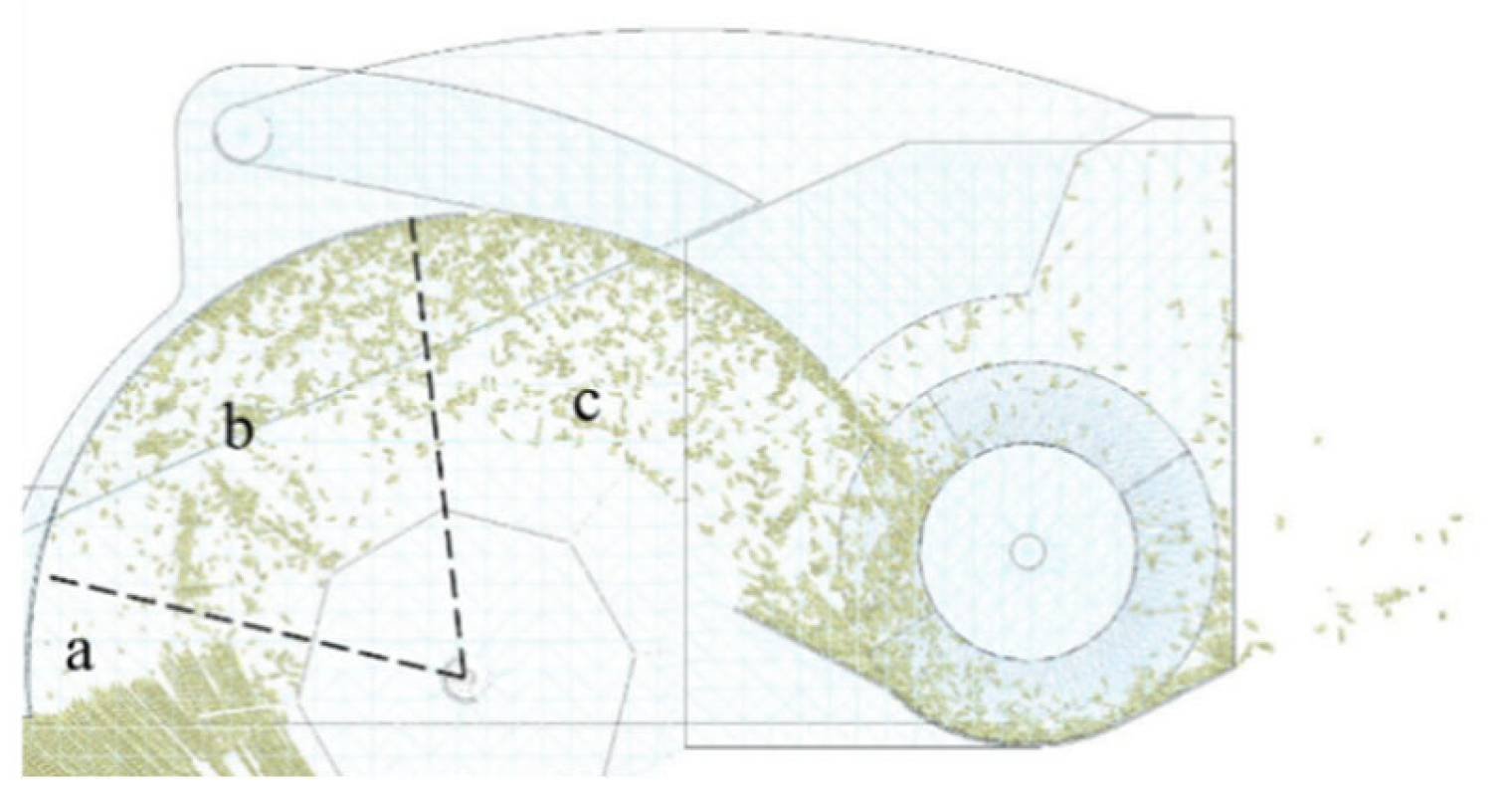
Figure 22 shows the material distribution during the combing process of the header. Based on material movement characteristics, three zones were identified, the combing zone (a), the throwing zone (b), and the falling zone (c). In the combing region, the wheat plants leave the nose and rebound into contact with the combing teeth, resulting in the combing effect. Where the wheat ears are separated from the stems by the combing action. In the throwing region, the materials are conveyed backward along the upper cover plate under the action of the combing teeth. In the falling region, the materials leave the combing teeth and fall onto the bottom plate of the screw conveyor.
Figure 22.
Movement states of materials during the combing process.
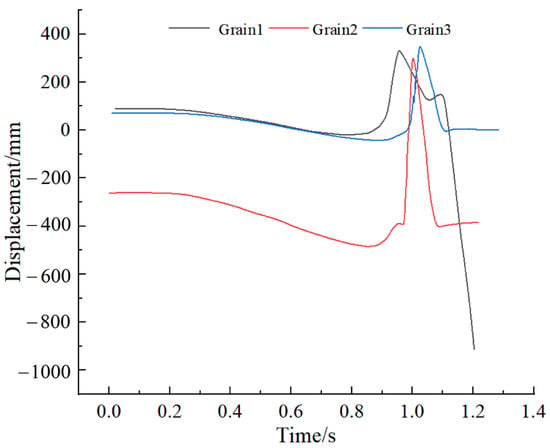
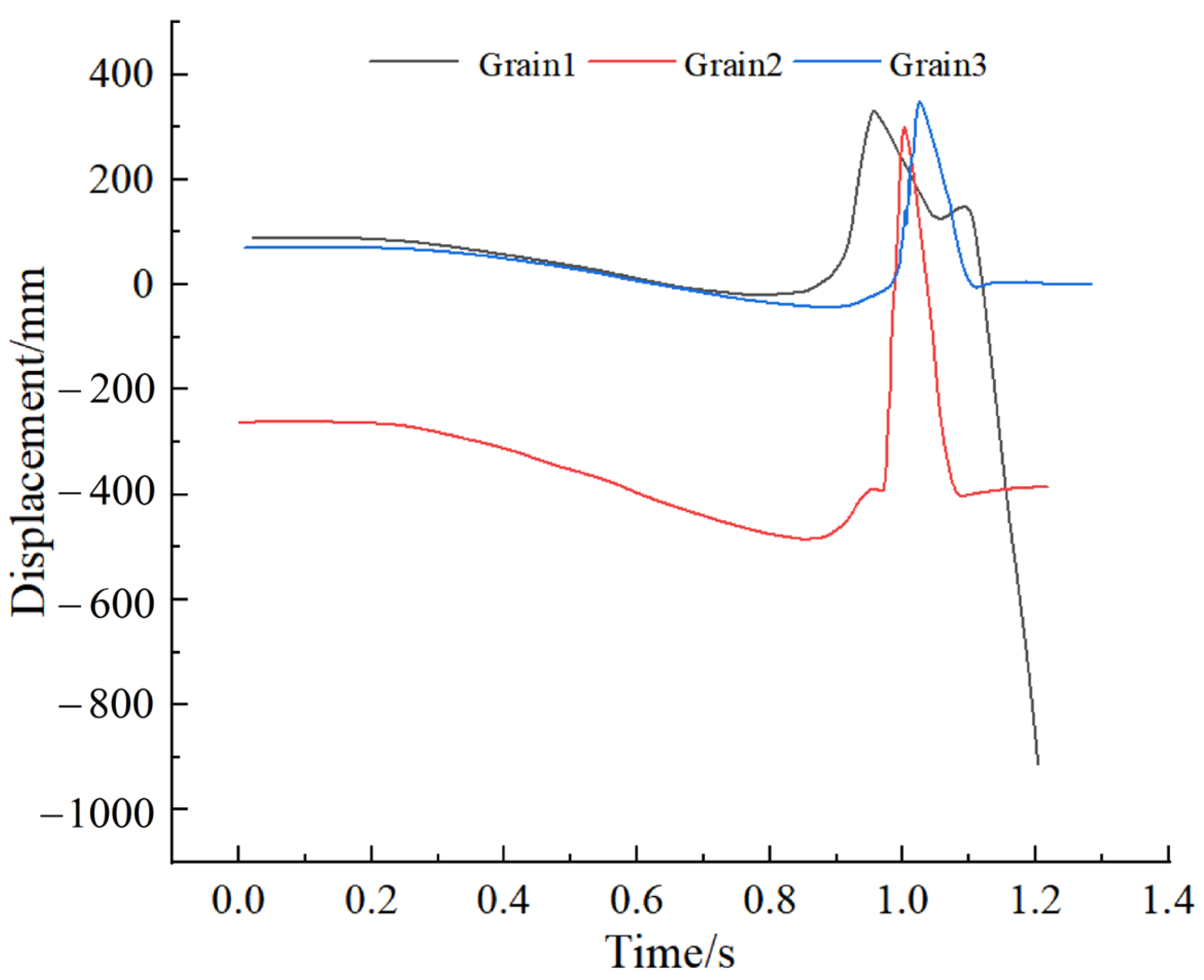
Three grains were randomly selected in EDEM, and their position change coordinates on the Z-axis were exported. Origin software was used to plot their position change curves, as shown in Figure 23. The position variation of grain 1 that was not thrown into the bottom plate of the screw conveyor: During 0~0.82 s, the upright wheat plants bent under the action of the nose, so the displacement of the grain on the Z-axis decreased. During 0.82~0.90 s, the bent wheat plants rebounded, and the displacement of the grain on the Z-axis increased. During 0.90~0.96 s, the grain was separated from the stem under the action of the combing teeth and thrown backward by the combing drum, so the displacement of the grain on the Z-axis increased sharply. After 0.96 s, the grain collided with the arc plate of the nose and the combing drum, and then it fell into the material receiving box, so the displacement of the grain on the Z-axis decreased suddenly.
Figure 23.
Grains’ position change curve.
The position variation of grain 2 thrown into the bottom plate of the screw conveyor: During 0~0.86 s, the upright wheat plants bent under the action of the nose, so the displacement of the grain on the Z-axis decreased. During 0.86~0.96 s, the wheat plants rebounded, and the displacement of the grain on the Z-axis increased. During 0.96~1.0 s, the combing action occurred, and the grain was thrown backward, so the displacement of the grain on the Z-axis increased sharply. During 1.0~1.08 s, the grain collided with the arc plate of the nose during throwing and fell back into the screw conveyor, so the displacement of the grain on the Z-axis decreased sharply. After 1.08 s, the grain was transported to the feeding inlet of the inclined conveyor under the action of the screw conveyor, so the displacement of the grain on the Z-axis tended to be stable. Grain 3 is also thrown into the screw conveyor, and its position variation trend is similar to that of grain 2.
3.3.2. Optimization of Working Parameters for Comb-Type Header
Based on the analysis above and preliminary experiments, the nose height, the combing drum rotation speed, and the machine forward speed were selected as test factors. Through experimental calculations and single-factor preliminary tests, the following ranges were determined: the nose height is 515~615 mm, the combing drum rotation speed is 525~725 r/min, and the machine forward speed is 0.6~0.8 m/s. This study mainly focused on the test of the header loss rate during the harvesting process, so the header loss rate was selected as the test index. Using the Box–Behnken design, a three-factor, three-level response surface methodology experiment was conducted to determine the optimal operating parameters of the comb-type header. The factor coding is shown in Table 4, and the experimental design and results are shown in Table 5.
Table 4.
Coding table of test factors.
Table 5.
Test schemes and results.
A regression analysis was performed on the test data using Design-Expert.V8.0.6.1 software to obtain the regression equation for the loss rate test index. Through an analysis of the test data and multiple regression fitting, the analysis of variance for the header loss rate, R, is shown in Table 6. From the analysis of variance, it can be seen that the nose height (A), the combing drum rotation speed (B), the machine forward speed (C), the quadratic term of nose height (A2), the quadratic term of the combing drum rotation speed (B2), and the quadratic term of the machine forward speed (C2) have extremely significant effects on the header loss rate (p < 0.01). The interaction term (AB) between the nose height and the combing drum rotation speed has a significant effect on the header loss rate. The remaining interaction terms have no significant effect on the loss rate. The p-value of the lack-of-fit item is 0.9806, which is greater than 0.05, indicating no significant effect on the loss rate and confirming the accuracy of the fitted regression equation. The regression equation of influence for each factor on the header loss rate, R, is as follows:
Table 6.
Analysis of variance.
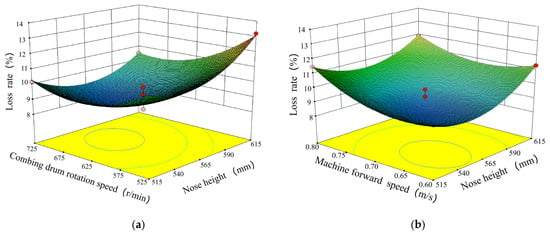
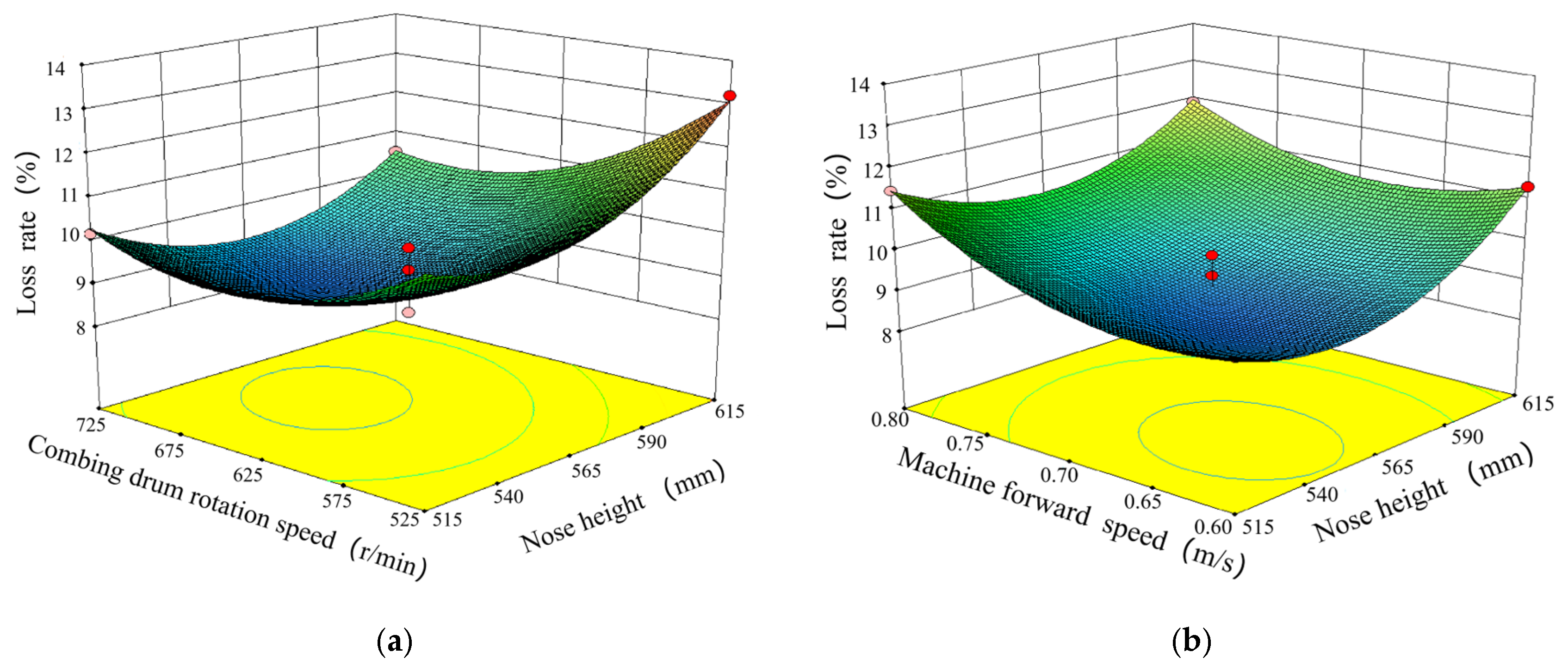
The effects of the nose height, the combing drum rotation speed, and the machine forward speed on the header loss rate are shown in Figure 24. When the machine forward speed is 0.7 m/s, and the combing drum rotation speed is constant, the loss rate first decreases and then increases with the increase in the nose height. The reason is that, when the nose height is too low, the rebound potential energy of the plants is high, and the wheat ears collide with the combing teeth, resulting in an increase in grain loss. When the nose height is too high, the plants hardly rebound, and the wheat ears are combed in an upright state, causing a certain amount of splash loss. When the nose height is constant, the loss rate also first decreases and then increases with the increase in the combing drum rotation speed. This is because, when the rotation speed is low, the wheat ears are not fully combed, and when the rotating speed is high, the wheat ears will be brought back, both of which will cause certain losses. When the combing drum rotation speed is 625 r/min, and the nose height is constant, the loss rate first decreases and then gradually increases as the machine forward speed increases. At relatively low forward speeds, the softer plants do not cluster easily and remain uncompressed. Some ears are not combed off under abnormal combing conditions, and the material trajectory becomes chaotic without a stable flow pattern, resulting in a relatively high combing splash loss. When the forward speed is too high, the number of materials in each combing area increases, and some ears may not be combed in time, causing an uncombed loss.
Figure 24.
Response surface plot of loss rate. (a) The effect of the nose height and the combing drum rotation speed on the loss rate and (b) the effect of the nose height and the machine forward speed on the loss rate.
To obtain the optimal combination of working parameters for the comb-type header under a low loss rate, the optimization module in Design-Expert software was used to solve the regression model on the basis of a response surface analysis. According to the actual working conditions of the comb-type header, the operational performance requirements, and the analysis results of the above-mentioned related models, the optimization constraints are selected as follows:
The optimal parameter combination is as follows: the nose height is 554 mm, the combing drum rotating speed is 667 r/min, the machine forward speed is 0.65 m/s, and the header loss rate is 8.59%.
3.3.3. Results of Field Verification Test for Combing Harvest
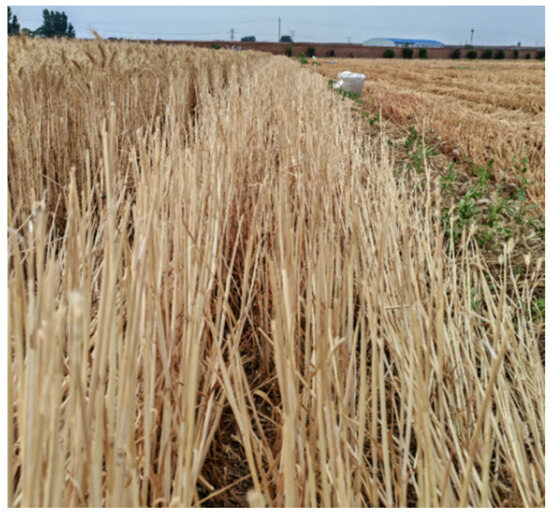
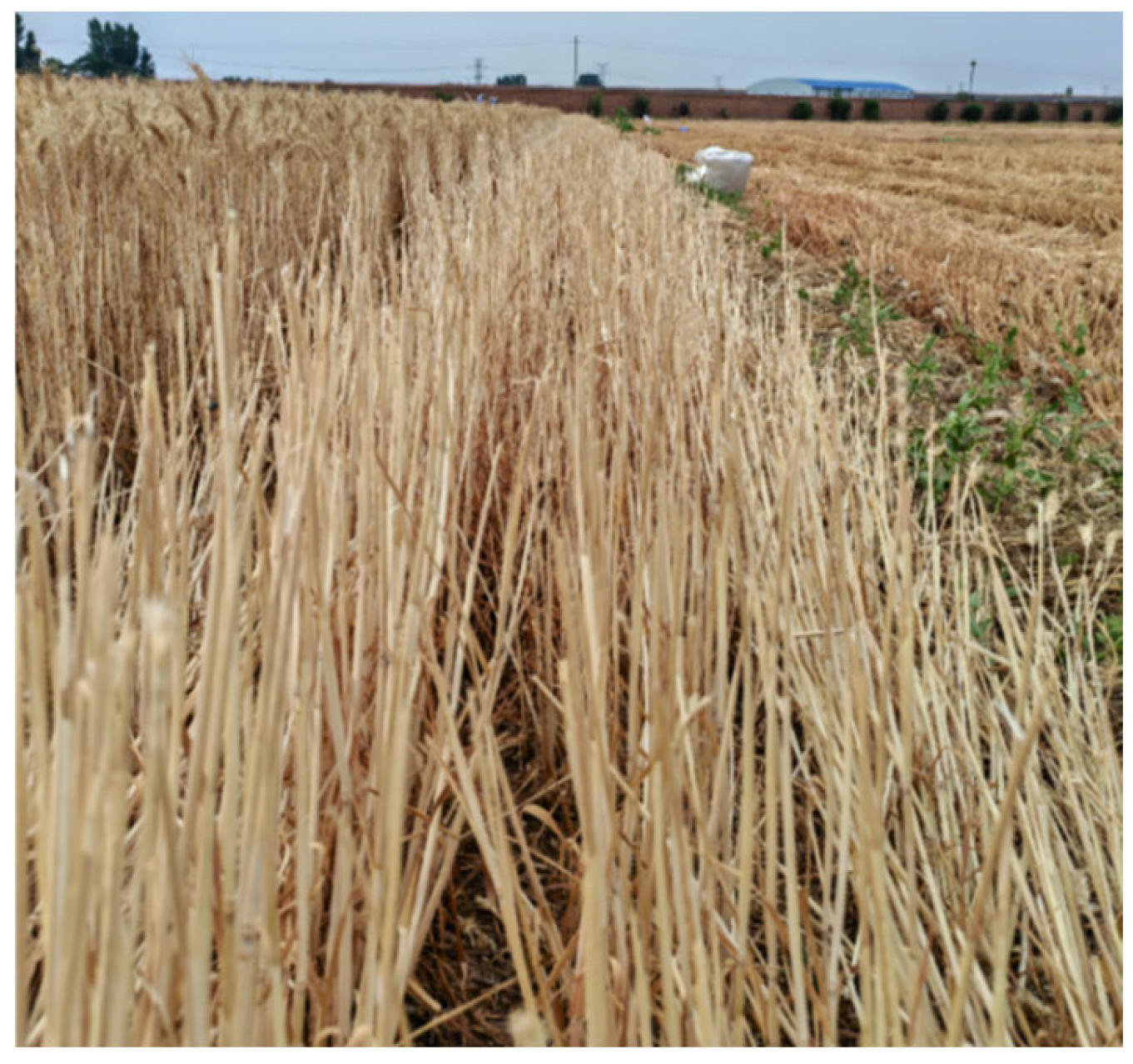
After multiple repeated field tests, the comb-type header showed no grain residue and a loss rate of 7.24% when the nose height was 554 mm, the combing drum rotation speed was 667 r/min, the machine forward speed was 0.65 m/s, and other working parameters remained unchanged. The field effect after combing harvesting is shown in Figure 25. Some of the loss was caused by ear-position differences in the wheat, specifically the loss caused by the failure to harvest plants with a height lower than 300 mm (accounting for 1.85% of the total number of plants). Such wheat plants had fewer than 15 grains per ear, and the grains were not fully developed and had an imperfect shape, making them defective grains with no seed value in breeding operations. Since the field test was conducted in the late summer harvest period, the moisture content of the wheat grains was relatively low. During harvesting, some grains detached when the nose interacted with the wheat ears, which also contributed to the loss.
Figure 25.
Effect after combing harvest.
The field test loss rate (7.24%) differed from the simulation prediction (8.59%) due to discrepancies between the idealized operating conditions in the simulation (e.g., uniform speed and flat terrain) and the actual field conditions. Slight parameter fluctuations in the latter weakened the interaction between the machinery and the wheat plants. Additionally, the grain detachment criterion in the simulation (based on a contact force threshold) does not fully account for the synergistic effects of multiple forces in the field (e.g., gravity and wind), leading to an overestimation of loss. Furthermore, the simulation simplified the physical characteristics of leaves and stems, whereas field conditions allow leaf entanglement and stem flexibility to buffer comb-tooth forces, thereby reducing ineffective grain detachment.
4. Conclusions
- (1)
- To address the harvesting demands for plot breeding, a comb-type header was designed based on the 4L-1.0 small crawler-type wheat harvester. The key components of the comb-type header were designed based on the loss suppression mechanism of the wheat-harvesting process, with the multi-stage combing tines and scraper conveyor being developed accordingly. The postural changes of wheat plants under the action of the nose were analyzed via a theoretical analysis, a discrete element simulation, and high-speed photography bench tests. The optimal combing timing was determined as the stage where plants start to rebound to their maximum reverse bending state.
- (2)
- Discrete element simulation tests were conducted to evaluate the performance of the comb-type header, and the distribution of combed materials was analyzed. The Box–Behnken response surface method was used to optimize and analyze the test data. The optimal working parameters of the comb-type header were determined as follows: a nose height of 554 mm, a combing drum rotation speed of 667 r/min, a machine forward speed of 0.65 m/s, and a predicted loss rate of 8.59%. To verify the operational performance of the comb-type header, field tests of the wheat-harvesting prototype were conducted. The results showed that, under the optimal working parameters, the header loss rate was 7.24%, no wheat ears escaped combing, and no seed retention occurred in the header, which met the requirements for plot wheat-breeding harvesting.
- (3)
- This study involved limitations, such as simplified simulation models, a single applicable object, and the lack of a real-time regulation mechanism. In the future, the simulation model can be refined to improve simulation accuracy, and research on an intelligent combing harvester adaptable to multi-crop harvesting and equipped with real-time regulation functions can be carried out.
Author Contributions
Conceptualization, X.Q. and P.B.; methodology, X.C. and C.Z.; validation, X.C. and X.Q.; investigation, W.W. and C.Z.; data curation, X.C. and S.W.; writing—original draft preparation, X.C. and S.W.; writing—review and editing, W.W. and X.Q.; visualization, P.B. and C.Z.; supervision, W.W.; project administration, W.W.; and funding acquisition, W.W. All authors have read and agreed to the published version of the manuscript.
Funding
This research was funded by the China Agriculture Research System, Wheat Mechanization Technology (CARS-03), and the State Key Laboratory of Intelligent Agricultural Power Equipment Open Project “Hydraulic Control System Design of Hydraulic Drive Track-Laying Vehicle” (SKLIAPE 2024011).
Institutional Review Board Statement
Not applicable.
Data Availability Statement
The raw data supporting the conclusions of this article will be made available by the authors upon request.
Acknowledgments
The authors would like to express gratitude to their affiliated college and the laboratory, as well as to Yonghua Wang from the College of Agronomy, Henan Agricultural University, for providing the experimental site and guidance. The authors also sincerely thank the reviewers for their valuable suggestions on this manuscript.
Conflicts of Interest
This research was conducted in the absence of any commercial or financial relationships that could be construed as potential conflicts of interest.
References
- Shang, S.; Yin, Y.; Guo, P.; Sun, Q. Current situation and development trend of mechanization of field experiments. Trans. Chin. Soc. Agric. Eng. 2010, 26, 5–8. [Google Scholar]
- Zhu, M.; Chen, H.; Li, Y. Investigation and development analysis of seed industry mechanization in China. Trans. Chin. Soc. Agric. Eng. 2015, 31, 1–7. [Google Scholar] [CrossRef]
- Klinner, W.E.; Neale, M.A.; Arnold, R.E.; Geikie, A.A.; Hobson, R.N. A new concept in combine harvester headers. J. Agric. Eng. Res. 1987, 38, 37–45. [Google Scholar] [CrossRef] [Scilit]
- Tado, C.J.M.; Wacker, P.; Kutzbach, H.D.; Suministrado, D.C. Development of stripper harvesters: A review. Biosyst. Eng. 1998, 71, 103–112. [Google Scholar] [CrossRef] [Scilit]
- Tian, Y.; Leis, K.; Zeng, Z. Retrofitting and Testing of a Pull-Type Small-Grain Combine Harvester. Agronomy 2023, 13, 1057. [Google Scholar] [CrossRef] [Scilit]
- Wang, J.; Xu, C.; Guo, F.; Wang, Q.; Tang, H. Stripping mechanism and Gaussian distribution model of a concave bionic comb for stripping prior to cutting. Sci. Total Environ. 2023, 872, 162216. [Google Scholar] [CrossRef] [Scilit] [PubMed]
- Tang, H.; Xu, C.; Zhao, J.; Wang, J. Stripping mechanism and loss characteristics of a stripping-prior-to-cutting header for rice harvesting based on CFD-DEM simulations and bench experiments. Biosyst. Eng. 2023, 229, 116–136. [Google Scholar] [CrossRef] [Scilit]
- Tang, H.; Xu, C.; Zhao, J.; Wang, J. Formation and steady state characteristics of flow field effect in the header of a stripping prior to cutting combine harvester with CFD. Comput. Electron. Agric. 2023, 211, 107959. [Google Scholar] [CrossRef] [Scilit]
- Pan, C.; Zhang, Q.; You, Y.; Sun, L.; Hu, J.; Wang, D. Design and experiment of flow-enhanced mechanical combining harvester for small-seeded alfalfa. Trans. Chin. Soc. Agric. Mach. 2025, 56, 342–356. [Google Scholar] [CrossRef]
- Lin, J.; Yang, M.; Zhang, X.; Liu, P.; Li, S.; Peng, J. Evaluation of wheat and corn harvester selection in hilly and mountainous area. Trans. Chin. Soc. Agric. Mach. 2022, 53, 150–157. [Google Scholar] [CrossRef]
- Wang, J.; Wang, D.; Shang, S.; Wang, Y.; Kuai, J. Development and experiment on 4 LZZ-1.0 type plot grain combine. Trans. Chin. Soc. Agric. Eng. 2016, 32, 19–25. [Google Scholar] [CrossRef]
- Dai, F.; Zhao, W.; Han, Z.; Li, X.; Gao, A.; Liu, X. Improvement and experiment on 4GX-100 type wheat harvester for breeding plots. Trans. Chin. Soc. Agric. Mach. 2016, 47, 196–202. [Google Scholar]
- Li, Y.; Yi, Y.; Du, S.; Ding, Q.; Ding, W. Design and experiment on air blowing header of plot combine harvester for grain. Trans. Chin. Soc. Agric. Mach. 2017, 48, 79–87. [Google Scholar] [CrossRef]
- Bhanage, G.B.; Shahare, P.U.; Aware, V.V.; Dhandeand, K.G.; Deshmukh, P.S. Development of stripper harvester for paddy. J. Appl. Nat. Sci. 2017, 9, 1943–1948. [Google Scholar] [CrossRef] [Scilit]
- Zhang, Q.; Zhang, X.; Wu, Z.; Wang, C.; Zhang, X.; Su, M. Study on spiral conveying performance of side shearer based on EDEM. Coal Sci. Technol. 2020, 48, 151–157. [Google Scholar] [CrossRef]
- Schramm, M.; Tekeste, M.Z.; Plouffe, C.; Harby, D. Estimating bond damping and bond young’s modulus for a flexible wheat straw discrete element method model. Biosyst. Eng. 2019, 186, 349–355. [Google Scholar] [CrossRef] [Scilit]
- Sun, K.; Yu, J.; Zhao, J.; Liang, L.; Wang, Y.; Yu, Y. A DEM-based general modeling method and experimental verification for wheat plants in the mature period. Comput. Electron. Agric. 2023, 214, 108283. [Google Scholar] [CrossRef] [Scilit]
- Chen, Z.; Wassgren, C.; Veikle, E.; Ambrose, K. Determination of material and interaction properties of maize and wheat kernels for DEM simulation. Biosyst. Eng. 2020, 195, 208–226. [Google Scholar] [CrossRef] [Scilit]
- Fan, J.; Wang, H.; Sun, K.; Zhang, L.; Wang, L.; Zhao, J.; Yu, J. Experimental verification and simulation analysis of a multi-sphere modelling approach for wheat seed particles based on the discrete element method. Biosyst. Eng. 2024, 245, 135–151. [Google Scholar] [CrossRef] [Scilit]
- Wang, W.; Liu, W.; Yuan, L.; Qu, Z.; He, X.; Lv, Y. Simulation and experiment of single longitudinal axial material movement and establishment of wheat plants model. Trans. Chin. Soc. Agric. Mach. 2020, 51, 170–180. [Google Scholar] [CrossRef]
- Liu, F.; Zhang, J.; Li, B.; Chen, J. Calibration of parameters of wheat required in discrete element method simulation based on repose angle of particle heap. Trans. Chin. Soc. Agric. Eng. 2016, 32, 247–253. [Google Scholar] [CrossRef]
- Liu, F.; Zhang, J.; Chen, J. Modeling of flexible wheat straw by discrete element method and its parameter calibration. Int. J. Agric. Biol. Eng. 2018, 11, 42–46. [Google Scholar] [CrossRef] [Scilit]

Disclaimer/Publisher’s Note: The statements, opinions and data contained in all publications are solely those of the individual author(s) and contributor(s) and not of MDPI and/or the editor(s). MDPI and/or the editor(s) disclaim responsibility for any injury to people or property resulting from any ideas, methods, instructions or products referred to in the content. |
© 2026 by the authors. Licensee MDPI, Basel, Switzerland. This article is an open access article distributed under the terms and conditions of the Creative Commons Attribution (CC BY) license.