1. Introduction
Soil interacting components of agricultural machinery, such as harrow discs, plough shares, tines, and other tillage elements, operate under conditions characterized by severe abrasion and high impact loading. Their continuous exposure to the soil, mineral particles, crop residues, and occasionally stones, leads to progressive material degradation, influencing cutting efficiency, and increasing fuel consumption in order to maintain a consistent tillage quality [
1]. Harrow discs often require replacement, increasing both operational downtime and maintenance costs, factors that are particularly critical in large scale farms [
2]. Enhancing the wear resistance and operational lifetime of the discs is important for economically and environmentally sustainable agricultural production.
Extensive research studied agricultural discs, focusing on the effects of material selection, heat treatment and surface engineering on wear performance under real field conditions. Rani et al. studied the abrasive wear behaviour of EN42 steel discs in field operation, reporting detailed measurements of mass loss, radius reduction, and thickness decrease across varying soil conditions [
3]. Their findings confirmed that increased base material hardness can delay wear, while emphasizing that soil texture, mineralogical composition and operating speed have an important influence on wear mechanisms and disc performance.
Arifa et al. evaluated multiple constructive and material solutions for disc harrow working bodies, comparing wear resistance, energy demands, and agrotechnical performance [
4]. Their results demonstrated that optimized geometry and targeted surface strengthening significantly reduce mass loss. The effectiveness of each improvement depended on soil type and working depth.
Other studies were concentrated on improving wear resistance through heat treatment. Shutkin et al. investigated hardened 65G steel discs on a BDT-7 harrow and demonstrated that induction and high-frequency hardening improve the edge durability in abrasive soil environments [
5]. Their work also highlighted that excessively high hardening temperatures may cause brittle carbide formation, which leads to micro-chipping when discs encounter stones.
Further investigations focused on surfacing and overlay technologies. Gryadunov and Sivakov tested various electrode and powder-wire surfacing materials on 65G steel discs using both laboratory abrasive rigs and field trials [
6]. They concluded that carbide distribution, matrix hardness, and overlay microstructure constitute the primary factors which influence wear resistance.
Another technological perspective was offered by Shovkoplyas, who reviewed manufacturing and repair technologies for spherical harrow discs and underscored the roles of disc thickness, taper angle, material grade, and welding procedures in ensuring long-term durability [
7].
Related research on seeding machinery has provided additional information into wear mechanisms for disc components. Roșu et al. analyzed geometric wear of disc openers used in no-till seeders, documenting diameter reduction, thickness loss, and asymmetry after extended field work [
8]. Although the loading conditions differ from those experienced by harrow discs, the dominant wear processes, reinforcing the relevance of surface engineering solutions.
Several review articles have studied general trends in the wear behaviour of soil engaging components. Wang et al. provided an overview of wear mechanisms, soil influences and engineering solutions for key agricultural tools, relating that abrasive wear in disc harrows is primarily controlled by soil mineralogy and operational parameters [
9]. Munteanu et al. conducted a more specialized review on atmospheric plasma spraying (APS) applied to agricultural harrow discs, summarizing the performance of various APS coatings under laboratory and limited field conditions [
10]. They concluded that carbide-reinforced and oxide-based APS coatings yield notable reductions in wear, while mentioning the need for systematic field data correlating coating composition, microstructure, soil profile and mass-loss rates.
Other studies have examined the wear of other soil-engaging implements, like ploughshares, moldboards, cultivator points, subsoiler shanks, rotary tiller blades, and seeding disc openers. All experience similar abrasive and impact forces. Kushwaha and Vaishnav conducted one of the earliest systematic studies on plough wear, demonstrating that quartz-rich soils substantially accelerate micro-cutting and edge rounding [
11]. Gürbüz et al. analyzed boron alloyed 30MnB5 ploughshares and found that appropriate quenching and tempering refined the martensitic structure, increased hardness, and reduced wear by up to 40% [
12]. Jain and Kumar applied tungsten–carbide PTA overlays to ploughshares and reported significant improvements in edge retention and resistance to deterioration [
13]. Roșu et al. showed that thickness reduction and diameter loss in disc openers for seeding drills are strongly influenced by soil moisture and the presence of hard mineral inclusions [
14].
Cultivator tools and subsoilers are also subjected to severe wear. Dizdar et al. evaluated different alloys on cultivator points, demonstrating the increase in wear resistance, with carbide fraction and morphology determining whether tools fail by micro-cutting, chipping, or delamination [
15]. Laser-based enhancement methods have also been studied by Kang et al. who applied Fe–Cr–C to cultivator shanks, reporting improved resistance to abrasion and stone impacts due to dense microstructures and strong metallurgical bonding [
16]. Rotary tiller blades have also been studied. Kang et al. evaluated HVOF-sprayed WC–Co–Cr and Cr
3C
2–NiCr coatings and observed substantial improvements in blade longevity, particularly for the WC–Co–Cr system, which resisted crack initiation and maintained hardness under severe loading [
17]. A comparative study by Wang et al. confirmed that abrasive wear across ploughs, harrows, cultivators, and subsoilers is predominantly governed by soil mineralogy. They identified surface engineering techniques such as boriding, hard facing, HVOF and APS as the most effective approaches for extended lifetime [
18].
The literature studies say that laboratory testing alone cannot replicate the complexity of real agricultural soils, which vary widely in texture, mineralogy, compaction, and moisture content. There still remains a need for systematic field evaluations linking soil characteristics, coating microstructure, and mass-loss rates under actual operating conditions [
18].
Modern agricultural production depends heavily on mechanized soil-engaging tools such as ploughshares, discs, subsoilers, cultivator points, rotary tiller blades, and seeder disc openers. These tools perform cutting, fracturing, and mixing the soil. It is required for seedbed preparation and crop establishment. Their continuous interaction with abrasive soil, rocks, and crop residues inevitably results in wear, with direct implications for operational efficiency and cost. Studies indicate that wear failures appear for more than 50% of machinery breakdowns in agriculture and certain tools may perform optimally for only several tens of operating hours before requiring replacement. A typical rotary tiller blade often lasts approximately 80 operating hours before becoming unusable. Frequent replacement not only increases parts costs but also contributes to downtime, maintenance labour, and risks of reduced field quality work, when the tools are used beyond their service limits [
19].
Insufficient wear resistance reduces the reliability and productivity of mechanized farming, potentially compromising the field operations and even crop yields. Excessive wear of ploughs or cultivators alters their geometry, rounding the cutting edge or reducing functional dimensions, which affects soil-cutting efficiency, increases draft force, and raises fuel consumption. Improving wear life is directly associated with agricultural efficiency, energy savings, and economic sustainability. It looks like ploughing 100 hectares may require approximately
$70 in replacement parts and four labour hours for ploughshare changes [
20]. The wear resistance in soil engaging tools is a priority for modern agriculture.
These geometric alterations can reduce tillage quality, like insufficient soil spreading by a worn plough or inadequate penetration by a worn subsoiler and may require operators to reduce speed or increase working depth with more energy requirement. In seeding equipment, worn disc openers may fail to cut residues or open clean furrows affecting seed placement accuracy. In conservation agriculture systems like no till, where disc openers must cut through dense residue and compact soil, high wear resistance is essential to maintain the sharpness over extended operational periods. Efforts to improve wear resistance are motivated by the goals of extending the lifetime, ensuring consistent field performance and decreasing operational costs.
Soil engaging tools can be categorized into more types like mouldboard ploughshares and chisel plough points, responsible for cutting and inverting soil, discs used in disc harrows or disc ploughs and drill machines disc openers, subsoiler shanks, or ripper teeth, which fracture compacted layers, cultivator sweeps, shovels, and tines used for shallow tillage and rotary tiller blades, typically L- or C-shaped, used for soil chopping and mixing. Despite differences in geometry and motion, all these tools experience severe abrasive wear on contacting surfaces [
21]. Abrasion is widely recognized as the predominant wear mechanism for tillage implements.
Abrasive wear in this context generally occurs as two-body abrasion, where fixed soil particles cut directly into the tool surface, and three-body abrasion, where loose particles roll between the tool and the soil. Tillage tools typically work under low stress three-body abrasion conditions, in which soil masses erode tool surfaces. This makes a uniform polishing and thinning on sliding surfaces along with scratching on the edges subjected to higher pressures. Over time, ploughshares and similar tools lose sharpness and dimensions.
Other wear mechanisms also exist. Impact wear occurs when tools encounter rocks or hard objects in the soil. Subsoiler teeth and rippers are exposed to impact. They require a balance between hardness (for abrasion resistance) and toughness (to resist fracture) [
22]. Adhesive wear is less common due to minimal metal-to-metal contact but can occur at sliding joints without lubrication. Soil adhesion can also contribute to material loss in clay or moist soils, producing smooth surfaces through abrasion. Corrosive wear can appear in chemically active soils, where corrosion combined with tribo-corrosion accelerates deterioration. The wear of soil implements is a complex tribological process. It is related to fatigue, adhesion, and corrosion depending on environmental and operational conditions [
23].
These wear mechanisms often act concurrently. The type of ploughshare experiences simultaneously abrasion stress, mechanical impacts and possible corrosive effects. Field observations show that the most severe wear occurs on the edges and tool undersides regions where there is a high level of stress and friction. Ploughshares exhibit the fastest wear because they endure the greatest load [
24]. This wear pattern often defines the service life of a tool. When the cutting edge is worn beyond a critical threshold, the entire component must be replaced despite remaining material in other regions. Improved designs and materials aim to achieve more uniform wear or reinforce high wear zones to extend the tool lifetime.
Effective solutions must therefore increase surface hardness and structural strength to resist abrasion while maintaining sufficient toughness to withstand impacts.
Although numerous studies have investigated the wear behaviour of agricultural discs and soil-engaging tools, most published works focus on laboratory tests, short-duration field trials, or the evaluation of a single coating system. Comparative studies performed under identical long-term field conditions, including both coated and uncoated reference discs, remain limited. Furthermore, quantitative data linking coating microstructure to mass-loss reduction, diameter retention, and service-life extension in real agricultural soils are still scarce.
The novelty of the present study lies in the simultaneous long-term field comparison of three APS coating systems and an uncoated reference disc, operated under the same mechanical loading, soil profile, working depth, and travel speed. Unlike previous works, the discs were evaluated over 50 ha per disc in quartz-rich Argic Luvisol soil, allowing the identification of nonlinear wear behaviour and late-stage degradation mechanisms. The results show that the ceramic APS coating reduces total mass loss by approximately 44% and significantly delays diameter reduction compared to the uncoated disc, while the Co-based alloy and carbide coatings provide moderate and limited improvements, respectively.
These findings provide field-validated evidence that coating microstructural stability, rather than coating density or nominal hardness alone, governs long-term wear resistance of harrow discs. The study therefore contributes practical guidelines for selecting APS coatings suitable for abrasive agricultural environments.
In agricultural practice, the most widely used wear-protection solution for soil-engaging tools remains hard facing with Fe–Cr–C alloys, commonly referred to as sormite or white high-chromium cast iron overlays. Numerous studies have reported that such coatings, typically applied by arc welding or PTA processes, can extend the service life of ploughshares, cultivator points and disc blades by approximately 2–4 times compared with uncoated steel components, due to the presence of hard M7C3 chromium carbides embedded in a martensitic or austenitic matrix.
However, these hard faced layers are generally thick (millimetre-scale) and exhibit high dilution with the substrate, which may lead to residual stresses, cracking, and partial loss of edge geometry. In addition, the manual or semi-automatic nature of sormite deposition often results in limited thickness control and reduced reproducibility. As a consequence, although Fe–Cr–C hard facing represents an effective and economical solution, it may also increase draft force and alter soil flow due to changes in disc profile.
Compared with sormite overlays, atmospheric plasma spraying (APS) enables the deposition of thinner, more uniform, and compositionally controlled coatings, with limited thermal impact on the substrate. While direct field comparisons between APS and sormite coatings are scarce, the present study allows indirect benchmarking by relating the measured wear reductions to the performance ranges reported for Fe–Cr–C hard faced agricultural tools.
In this context, the present study investigates the field performance and wear behaviour of APS-coated harrow discs using three commercial powders: Metco 71NS, Metco 136F, and Metco 45C-NS. These powders were deposited with a Sulzer Metco 9MCE atmospheric plasma spraying system (Oerlikon Metco, Wohlen, Switzerland). Coated discs were installed on a 4 m OTMA harrow disc and tested during soil operations. Microstructural characterization, SEM analysis and soil-profile evaluation were combined with mass loss and dimensional measurements normalized to the worked area.
The objective of this work is to provide field validated data on the performance of APS coatings in real agricultural conditions and to investigate the relationship between coating composition, microstructure, soil characteristics and wear behaviour.
2. Materials and Methods
The elemental composition of a new uncoated harrow disc was determined using a spark optical emission spectrometer (Spark-OES, Oerlikon Metco, Wohlen, Switzerland) equipped with the SparkTiffe analytical software package (version 3.2). Spark-OES is a commonly used technique for rapid, high precision quantification of alloying elements in ferrous and non-ferrous metallic materials. The method is based on generating an electrical spark between an electrode and the metallic sample, which excites atoms in the material surface. As the excited atoms return to lower energy states, they emit characteristic wavelengths of light that are detected and converted into quantitative concentration values.
Prior to analysis, the three 610 mm disc samples were mechanically ground to produce a clean, flat, oxide-free surface suitable for stable sparking conditions. The specimen was then positioned in the instrument’s sealed spark chamber, where the excitation was carried out under an inert gas atmosphere to ensure stable plasma formation and to minimize spectral interference.
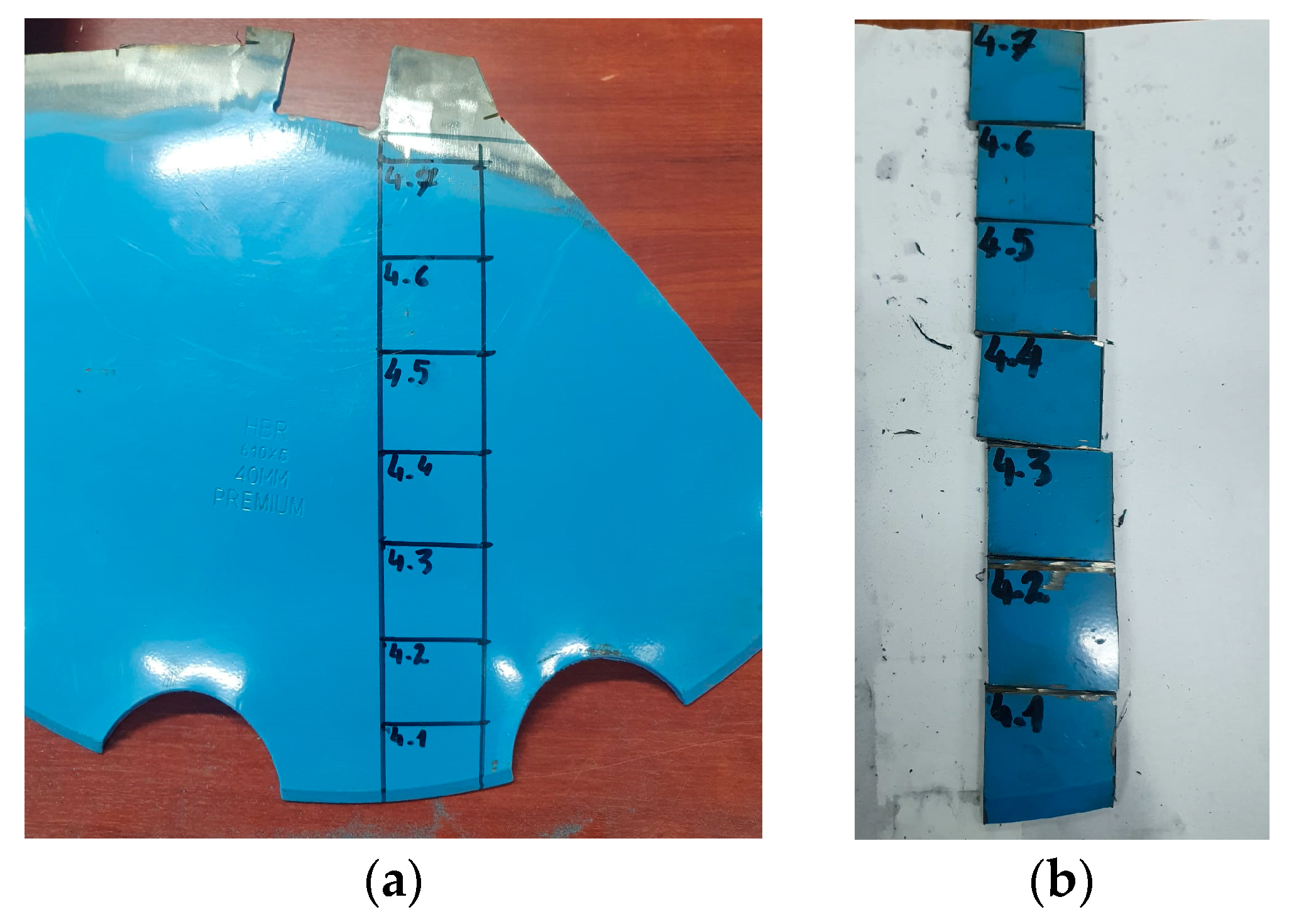
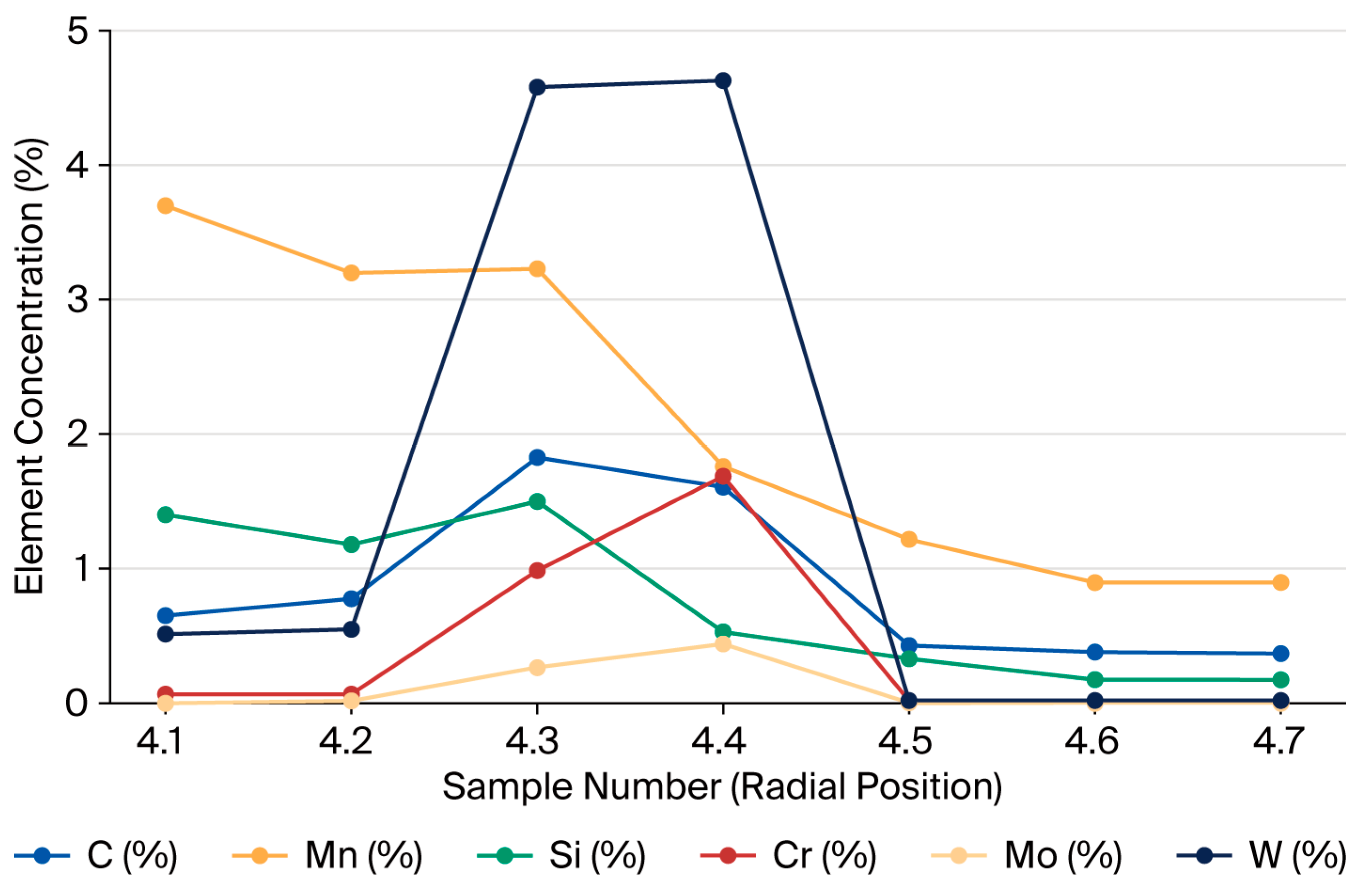
The SparkTiffe software was used to control measurement parameters, acquire spectral data, perform background correction, and process the emission lines associated with each alloying element. The software’s internal calibration curves enabled quantitative determination of both major and minor alloy constituents. This technique allowed accurate identification of the steel grade and verification of its homogeneity before coating deposition. Seven radial samples (4.1 to 4.7) were cut from the cutting edge toward the central area of a new disc, as shown in
Figure 1.
The resulting chemical composition values were used as baseline data for correlating the substrate material with coating adherence, microstructural behaviour, and field wear performance.
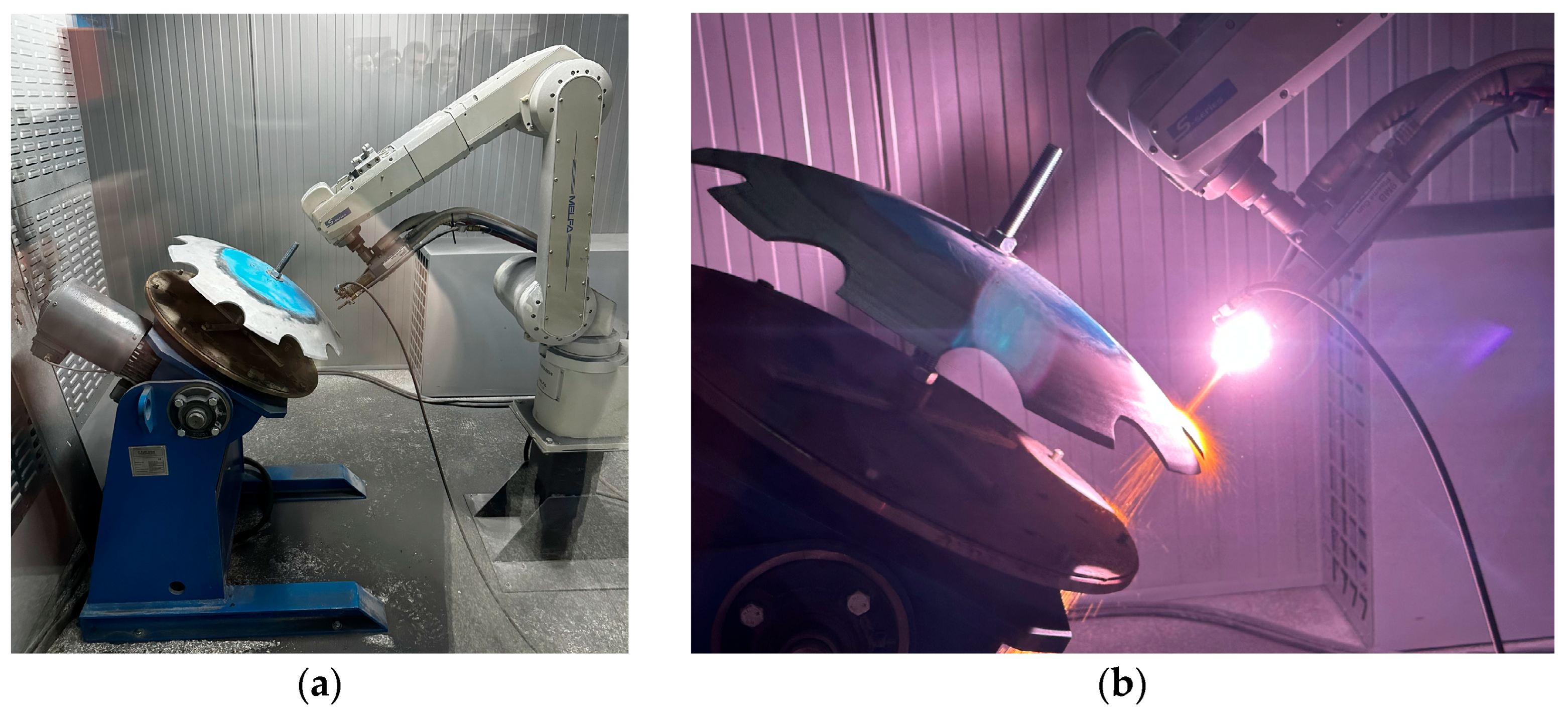
The experimental coatings were applied on three discs using a Sulzer Metco 9MCE thermal spray system, operating with Ar (5.3 bar, 45 NLPM) and H2 (3.5 bar, 7.0 NLPM) as process gases. Prior to deposition, the disc harrow samples were mechanically subjected to intensive sandblasting to ensure adequate surface preparation. The experimental setup consists of a rotatable support, an automated spraying arm integrated with the Sulzer 9MB gun (Oerlikon Metco, Wohlen, Switzerland), and a dedicated sample holder.
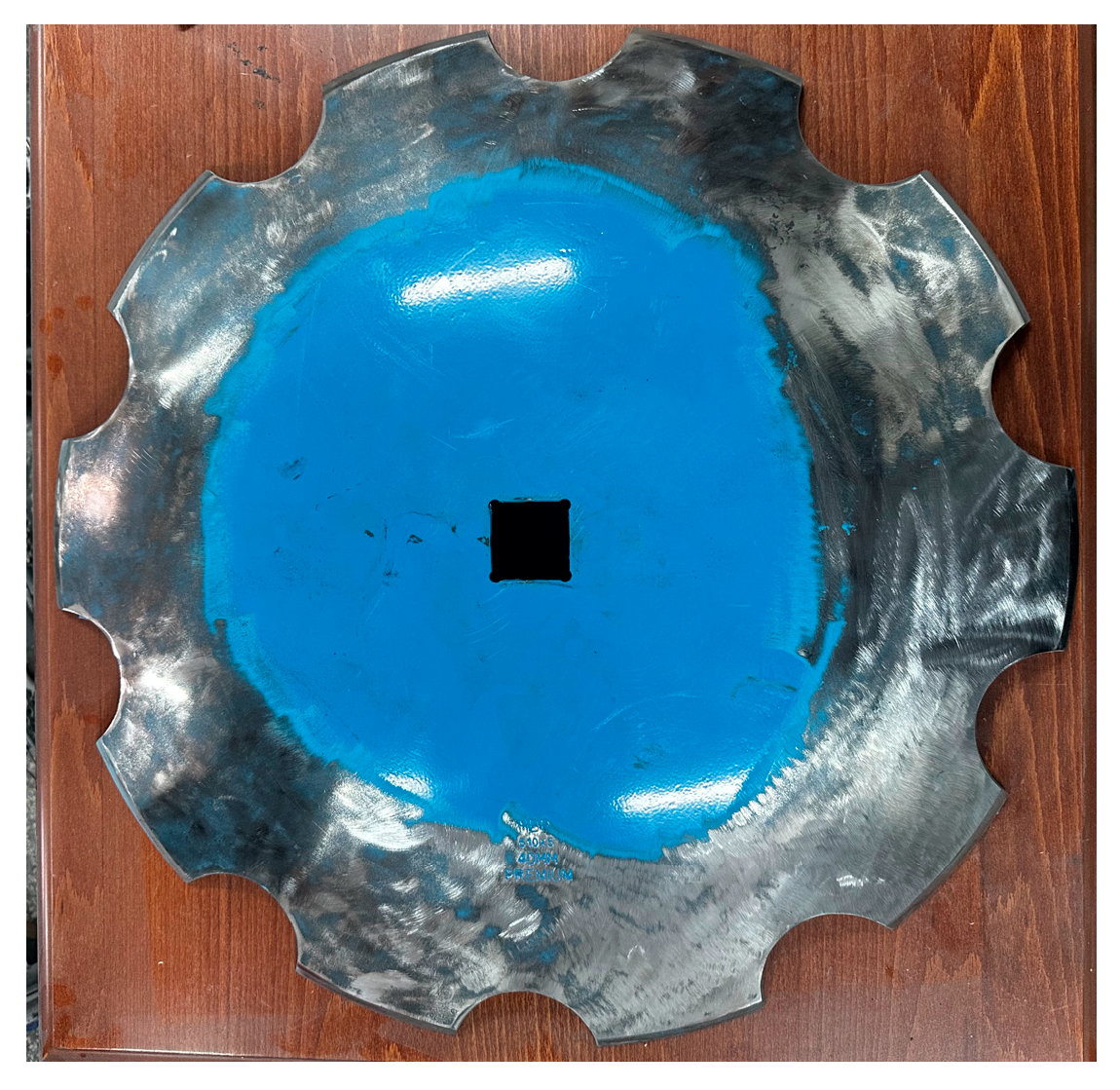
Figure 2 shows the agricultural disc blade after the removal of paint and surface contaminants through mechanical sanding.
The 9MCE unit operates as a turnkey plasma spray facility, integrating electronic control, process gas regulation, safety interlocks, and automated spray parameter management. It is fully compatible with the Sulzer Metco 9MB plasma gun, one of the most established APS guns for producing dense, adherent coatings in both research and industrial environments.
The system was operated with argon (Ar) as the primary plasma gas (5.3 bar, 45 NLPM) and hydrogen (H
2) as a secondary gas (3.5 bar, 7 NLPM). Argon ensures stable plasma generation, while hydrogen increases enthalpy and particle acceleration, improving melting efficiency and coating density. Gas flows and pressures were controlled through the system’s flow controllers, enabling reproducible plasma conditions. The robotic APS deposition setup used in this study is shown in
Figure 3.
The system includes a programmable process controller, capable of maintaining constant spray parameters such as plasma current, voltage, gas flow rates, powder feed rate, and spray distance. This ensures high repeatability of coating characteristics across multiple samples. The powder feedstock is delivered using a precision Sulzer Metco volumetric powder feeder, which injects the powder axially into the plasma jet.
To ensure uniform coating deposition, the experimental setup incorporates a rotatable sample support, enabling continuous rotation of the disc to maintain a constant distance and uniform exposure to the plasma jet, an automated linear spraying arm, which controls the traverse speed, spraying angle, and raster pattern. This minimizes operator variability and ensures consistent layer thickness. It also has a dedicated sample holder designed to position the disc harrow specimens securely, preventing vibration or displacement during spraying.
During operation, the 9MCE unit continuously monitors plasma stability, powder feed rate, and cooling flow, ensuring consistent thermal input to the substrate. To prevent overheating of the agricultural steel substrates, a controlled intermittent spraying sequence was used, combined with forced air cooling between successive passes.
The 9MB plasma gun used in the experiments is equipped with an internal cathode–anode configuration optimized for high thermal efficiency. The gun generates a high-temperature plasma plume (over 10,000 K), sufficient to fully or partially melt carbide and oxide powders before impact on the substrate. The resulting particles solidify and form a lamellar microstructure characteristic of APS coatings.
The 9MCE system is widely recognized in the surface engineering literature for its ability to produce coatings with high adhesion strength to steel substrates, controlled porosity, good hardness, wear resistance, and adjustable microstructure based on the chosen spray regime.
These capabilities make it particularly suitable for applying protective coatings to agricultural tillage tools, where abrasive interactions, between the soil and the tools, demand high-performance surfaces.
Atmospheric plasma spraying was performed using a Sulzer Metco 9MCE system equipped with a 9MB plasma gun. The main process parameters were maintained constant for all coatings to ensure comparability. The plasma current was set to 600 A, with an operating voltage in the range of 65–70 V. Argon was used as the primary plasma gas (45 NLPM, 5.3 bar), while hydrogen was employed as a secondary gas (7 NLPM, 3.5 bar) to increase plasma enthalpy and particle melting efficiency.
The spray distance was maintained at 90–100 mm, while the plasma gun traverse speed was approximately 400 mm·s−1. During deposition, the discs were mounted on a rotating fixture and rotated at 30–35 rpm to ensure uniform circumferential coverage. Each coating was applied using 6–8 successive passes, resulting in continuous ring-shaped deposits along the working perimeter.
Prior to deposition, the discs were grit-blasted with alumina particles to achieve a roughened surface suitable for mechanical interlocking. Substrate preheating occurred naturally during the first spray passes, reaching an estimated surface temperature of 120–150 °C. To avoid overheating and metallurgical alteration of the steel substrate, deposition was performed using an intermittent spray sequence combined with forced air cooling between passes.
Cross-sectional SEM observations revealed an average coating thickness of approximately 220–260 µm for the ceramic coating, 280–320 µm for the carbide coating, and 250–290 µm for the Co-based alloy coating. The coatings exhibited the characteristic lamellar microstructure of APS deposits. Image-based analysis of SEM micrographs indicated a porosity level below 5% for the ceramic and Co-based alloy coatings, while the carbide coating showed slightly higher local porosity and microcrack density, particularly at carbide–binder interfaces.
Microstructural and compositional analyses were performed using scanning electron microscopy (FEG Thermo Fisher Quattro C, Oerlikon Metco, Wohlen, Switzerland), energy-dispersive X-ray spectroscopy (EDX, Bruker X-Flash detector) and X-ray diffraction (XRD Panalytical system). These techniques were employed to characterize the surfaces of Sample 1—Cr2O3–SiO2–TiO2 ceramic coating (Metco 136F), Sample 2—WC/W2C–Co carbide coating (Metco 71NS), and Sample 3—Co–25.5Cr–10.5Ni–7.5W–0.5C alloy coating (Metco 45C-NS).
The W2C/WC–12Co powder (Metco 71NS) is a tungsten–carbide composite feedstock, typically employed for severe abrasive and erosive environments due to its high hardness and wear resistance.
The powder consists predominantly of tungsten–carbide phases with a cobalt metallic binder. The chemical analysis indicates 83.34 wt% W, 12.24 wt% Co, 4.11 wt% C, and some Fe content (0.11 wt%). Particle size measurements confirm that the powder fraction lies entirely below 176 µm, with no measurable material below 62 µm or 22 µm, ensuring a relatively coarse APS-sprayable distribution. The carbide composition provides high microhardness and excellent resistance to stress abrasion, making this powder suitable for harsh soil–metal tribological environments such as those encountered by tillage discs.
Metco 136F is a chromia–silica–titania composite ceramic designed for dense, hard, and wear resistant thermal spray coatings. The datasheet identifies the powder as irregular ceramic, with chemistry dominated by Cr2O3, supplemented by 3.0–4.5 wt% SiO2 and <4.0 wt% TiO2. The powder exhibits a fine particle size distribution (−63 + 5 µm), making it suitable for atmospheric plasma spraying (APS) and Thermospray applications.
Cr2O3–SiO2–TiO2 coatings are known for their high hardness, excellent sliding wear resistance, and atypical impact resistance for a ceramic coating. These characteristics make Metco 136F appropriate for agricultural wear surfaces requiring both abrasion resistance and moderate impact tolerance.
Metco 45C-NS belongs to the family of cobalt-based superalloy powders similar to Stellite and Ultimet systems. The corresponding material data sheet (DSM-0218) describes this class as inert gas atomized, chemically homogeneous, spheroidal powders designed for wear and corrosion resistance at elevated temperatures. Its typical chemistry includes a cobalt matrix alloyed with Cr, W, Ni, Mo, C, and Si, forming hard carbides dispersed in a tough cobalt matrix. This combination offers resistance to abrasive wear, galling, cavitation erosion, and high temperature oxidation and corrosion (up to ~1000 °C).
The 25.5Cr–10.5Ni–7.5W–0.5C formulation aligns with the Metco 1223A/MM509 alloys, characterized by strong solid solution strengthening and minor carbide precipitation, offering excellent work hardening behaviour and resistance to high stress abrasion.
The powder morphology ensures stable feeding into the plasma jet and uniform melting behaviour, producing dense deposits with good bonding.
Metco 71NS (W2C/WC–12Co) provided a hard carbide surface suitable for severe abrasive soil conditions. Metco 136F (Cr2O3–SiO2–TiO2) supplied a ceramic coating with high hardness, good impact damping due to silica, and strong corrosion stability. Metco 45C-NS (Co–Cr–Ni–W–C) offered a Stellite metallic coating with balanced toughness and wear resistance, appropriate for surfaces experiencing combined abrasion and impact loads. These powders cover a wide functional spectrum ceramic and carbide and cobalt metallic systems, allowing comparative evaluation of different wear protection strategies for harrow discs in real agricultural field conditions.
Although Co-based Stellite-type alloys are traditionally associated with high-temperature and corrosive environments, they are also widely recognized for their excellent resistance to high-stress abrasion, surface fatigue, galling and microcrack propagation, due to their tough cobalt matrix and work-hardening behaviour.
In the present study, the Co–Cr–Ni–W–C alloy coating (Metco 45C-NS) was intentionally selected not as a cost-optimized agricultural solution, but as a ductile metallic benchmark for comparison with brittle ceramic and carbide-based APS coatings. Its inclusion allowed the evaluation of how coating toughness, microstructural cohesion and damage tolerance influence wear behaviour under real soil contact conditions involving cyclic loading and heterogeneous mineral particles.
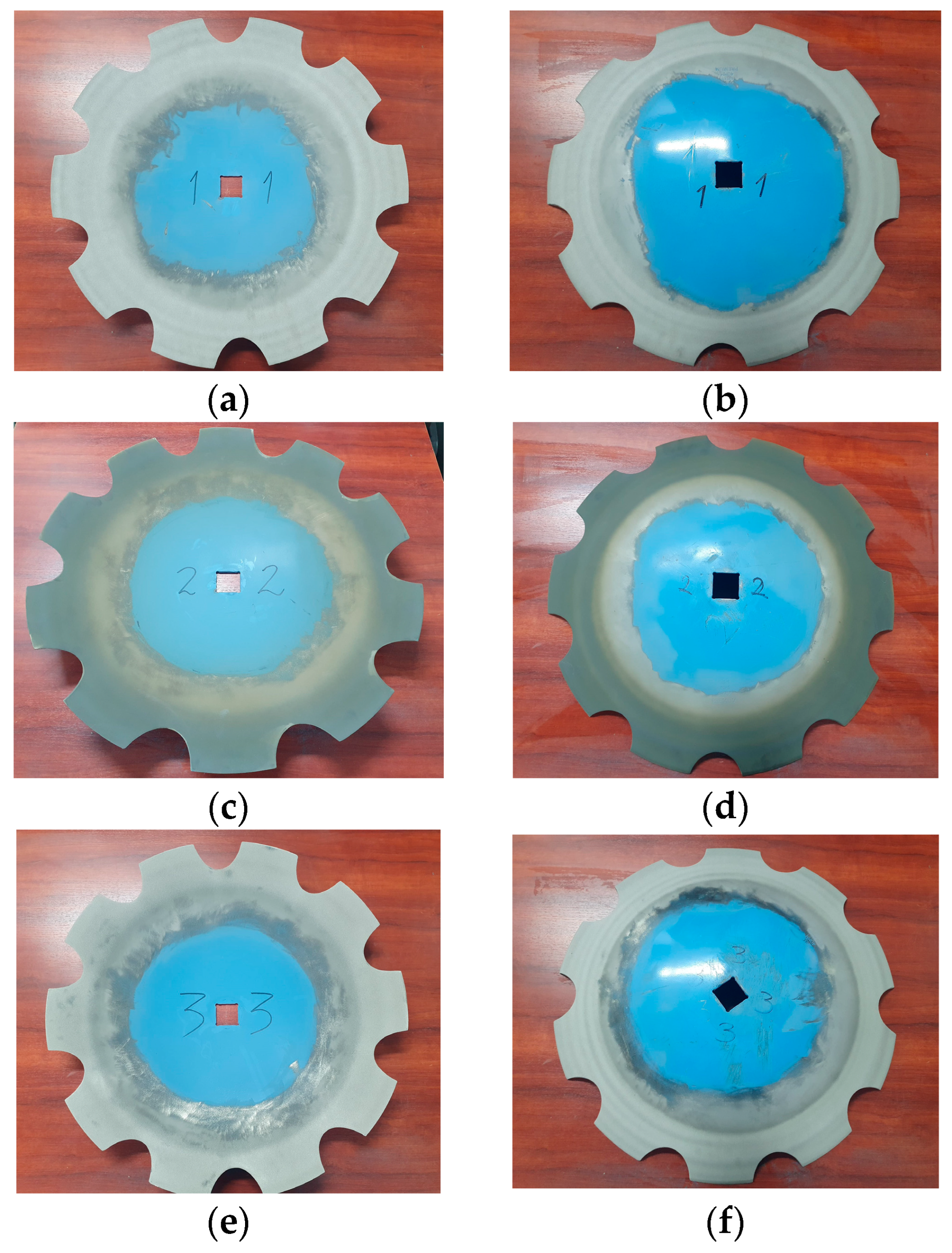
The visual condition of the coated discs is presented in
Figure 4.
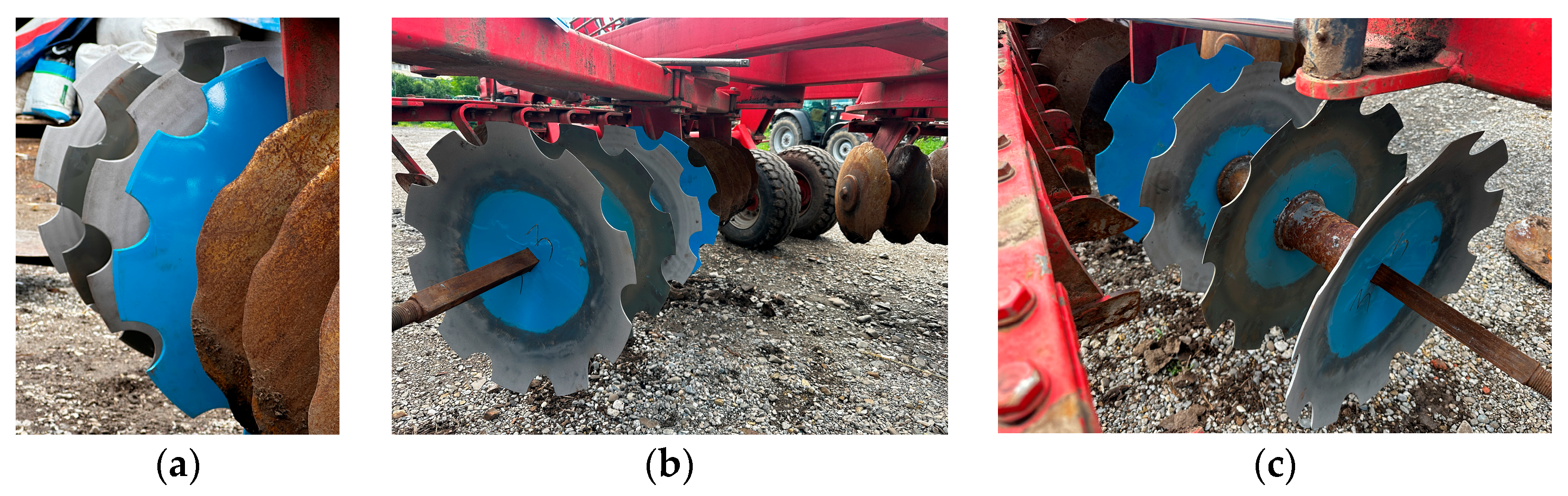
Coatings were deposited on both sides of each disc, producing a continuous ring-shaped coverage along the working perimeter. Visual inspection of all discs confirms that the coated regions appear as matte, light-grey surface layers, consistent with typical APS coatings. The coated zone is clearly distinguishable from the inner uncoated region by a defined boundary line encircling the disc, confirming that the spray pattern maintained a stable distance and an even speed during deposition.
The microstructural characterization of the coated and uncoated disc samples was performed using Scanning Electron Microscopy. SEM is a high-resolution imaging technique that provides detailed information about surface morphology, coating microstructure, wear features, and particle distribution.
In SEM analysis, a finely focused electron beam is scanned across the sample surface. When the primary electrons interact with the atoms of the specimen, they generate various signals like secondary electrons (SE), backscattered electrons (BSE) and characteristic X-rays. Each carries information about different surface characteristics. Secondary electrons are primarily used to obtain detailed topographical images with nanometre scale resolution, while backscattered electrons provide contrast based on atomic number, allowing differentiation between phases of varying composition.
All samples were cleaned ultrasonically to remove surface contaminants before the imaging process. For non-conductive regions or ceramic coatings, the samples were coated with a thin conductive layer to prevent charging and ensure stable image acquisition. The SEM instrument operated under high vacuum conditions, and imaging parameters such as accelerating voltage, working distance, and detector mode were optimized for each sample to obtain high contrast micrographs.
Energy-dispersive X-ray spectroscopy (EDS) was used exclusively for qualitative phase identification and local elemental mapping within the coatings and substrate. Due to its limited interaction volume and sensitivity to local compositional heterogeneities, EDS results were not used for bulk quantitative chemical analysis. Quantitative determination of the steel composition was performed solely by Spark-OES (Oerlikon Metco, Wohlen, Switzerland).
For the field trials, the coated and uncoated discs were mounted adjacently on the front axle of an OTMA harrow disc with a working width of 4.0 m. The implement is a heavy-duty agricultural harrow disc equipped with four groups (two in the front, two in the rear) of 10 concave discs arranged on rigid steel axles supported by sealed bearing units. The disc axles are mounted at an attack angle of 15° relative to the direction of travel, a configuration that enhances soil penetration, residue cutting, and lateral soil displacement. This constructive arrangement ensures effective stubble incorporation and uniform soil disturbance across the working width.
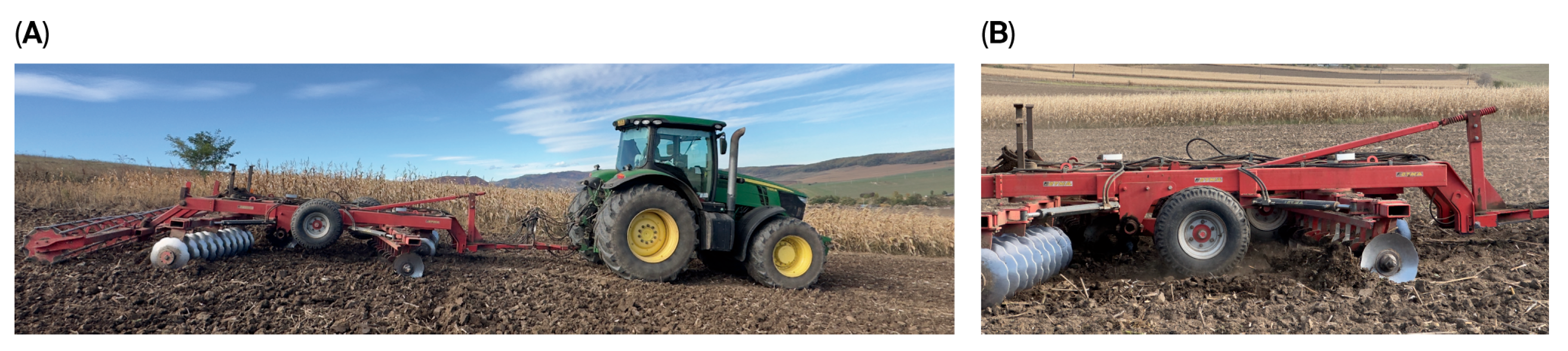
The harrow disc was operated in combination with a John Deere 7230 tractor (John Deere, Mannheim, Germany), a medium 230 HP tractor designed for primary and secondary tillage tasks. Its 6-cylinder diesel engine, powershift transmission, and high hydraulic capacity provide stable traction and allow precise control of travel speed and working depth. The category III hitch and robust drawbar ensure steady implement coupling, minimizing vibration and maintaining consistent soil engagement during operation. The coated discs were installed on the harrow, as illustrated in
Figure 5.
The field task performed during testing was post-harvest stubble cultivation following cereal crops. A total surface of 1000 ha was processed using the harrow disc, which means that each disc from the two front axles worked 50 ha. The implement operated at a working depth of 15 cm, typical for shallow to medium stubble management and soil loosening. The forward operational speed was maintained between 7 and 8 km/h, aligning with agronomic recommendations to optimize soil pulverization while avoiding excessive impact loads that accelerate disc wear. As illustrated in
Figure 6, the coated discs were evaluated under real post-harvest soil conditions.
The field experiment was designed as a controlled comparative study, in which one disc per coating type and one uncoated reference disc were mounted adjacently on the same front gang of the OTMA disc harrow. This configuration ensured that all discs operated simultaneously under identical soil conditions, working depth, travel speed, residue load, and gang angle, thereby minimizing environmental and operational variability.
The coated and uncoated discs were installed in neighbouring positions along the gang to reduce positional bias. The disc positions were kept constant throughout the field trial in order to preserve a consistent mechanical loading history for each sample. Because all discs were exposed to the same soil profile and operating parameters during each pass, differences in wear behaviour can be attributed primarily to coating characteristics rather than positional effects.
Disc mass measurements were performed at regular intervals of 20 ha total worked area (corresponding to 1 ha per disc). Each disc was cleaned of soil residues and dried before weighing. Mass was measured using a calibrated digital scale with an accuracy of ±1 g. For each weighing event, three consecutive measurements were performed, and the average value was recorded. The resulting mass measurement uncertainty was below ±2 g, which is negligible compared with the observed mass losses (hundreds of grams).
Diameter measurements were carried out using a digital calliper with an accuracy of ±0.02 mm. For each disc, diameter was measured at four evenly distributed angular positions, and the average value was used to represent disc diameter at each inspection interval. This procedure allowed detection of non-uniform edge wear and reduced measurement scatter.
Wear assessment was conducted by weighing the four discs (one uncoated for control and the other three coated) at every 20 ha total worked surface (meaning 1 ha/disc), allowing for precise quantification of mass loss and wear progression under real field conditions. All discs were exposed to identical operational parameters (soil profile, working depth, travel speed, residue load, and gang angle) ensuring that any differences in wear behaviour were attributable exclusively to the material and coating characteristics of the samples under evaluation. The characterization of the soil profile from the experimental field was performed using standard pedological and laboratory analytical techniques. The analysis followed conventional procedures used in soil science for describing morphology, texture, structure and physico-chemical properties.
A soil pit (1 m depth) was excavated at the test site to expose the vertical profile. The used tools were a hand auger for preliminary depth assessment and sampling before pit excavation, a soil knife and sampling spatula for extracting undisturbed samples from each horizon, measuring tape and folding ruler for establishing horizon depths and boundary characteristics, a hand penetrometer to assess soil compaction and consistency.
Coating deposition on the disc blades was performed in January 2025. Subsequent laboratory characterization, including SEM, EDX, and optical emission spectrometry (OES), was carried out between February and March 2025 to document coating morphology, microstructure, and chemical composition. The field trial, during which the disc harrow processed a total of 1000 ha, took place from June to September 2025, ensuring operation under representative post-harvest soil conditions. Mass-loss and diameter wear measurements were performed throughout the same interval (June–September 2025) at regular working intervals, corresponding to 20 ha per disc. In parallel, a soil profile sampling and analysis was conducted in July 2025, providing the pedological and mineralogical context required to interpret the wear mechanisms observed during field operation.
3. Results
3.1. Spectrometric Analysis
The analysis was performed on the seven radial samples (4.1 to 4.7) cut from the cutting edge toward the central area of a new disc blade. It reveals a clear compositional gradient along the radius of the disc. These variations are consistent with industrial manufacturing processes such as hot forming, edge hardening, and thermal gradients developed during production.
The chemical composition of the harrow disc was evaluated using Spark optical emission spectroscopy (Spark-OES) on polished transverse surfaces of radial samples extracted from the disc, rather than on the free working surface. This approach was chosen to characterize the bulk material along the disc radius and to avoid surface effects related to oxidation, decarburization, or previous wear.
The results, reveal a gradual radial compositional gradient, with elevated Mn and Si contents near the cutting edge (samples 4.1–4.2) and lower alloying levels toward the disc core (samples 4.5–4.7). Such variations are consistent with industrial manufacturing practices for agricultural discs, where the outer rim is selectively hardened or chemically enriched to enhance abrasion resistance, while the core remains tougher and more ductile to withstand mechanical loading.
The observed differences in Mn (≈3.7% to ≈0.9%) and Si (≈1.4% to ≈0.17%) indicate a deliberate radial compositional gradient, characteristic of industrially manufactured agricultural discs with a reinforced cutting periphery. Such gradients are commonly achieved by using steels with locally enriched alloying content at the outer rim, combined with controlled thermal processing, in order to enhance hardenability and abrasive wear resistance at the working edge while preserving toughness in the core.
SEM cross-sectional observations did not reveal any discrete metallurgical interfaces, coating layers, or cladded regions that would indicate a laminated or composite metallic structure. Instead, the microstructure evolves continuously from the hardened peripheral zone toward the ductile core, supporting the interpretation of a monolithic steel disc with compositionally differentiated regions introduced during manufacturing, rather than diffusion artefacts or measurement-related effects. Similar compositional strategies have been reported for agricultural wear parts such as ploughshares and disc blades, where Mn- and Si-enriched edge zones are intentionally used to improve hardenability and resistance to microcutting abrasion.
The chemical analyses reveal a clear radial gradient in the disc blade material. The outermost samples (4.1 to 4.2) show higher carbon, manganese, and silicon elements associated with increased hardness and abrasion resistance. That means that the cutting edge is intentionally strengthened. In contrast, the inner samples (4.5 to 4.7) display compositions characteristic of tough structural steel, optimized for absorbing impacts and preventing fracture. The transition zone (4.3 to 4.4) exhibits mixed characteristics, reflecting the metallurgical boundary between the hardened periphery and the ductile core.
All three discs exhibit a continuous and uniform coating layer around the circumference. The light grey coating on the working perimeter indicates consistent spray deposition and adequate material melting during the APS process. The smooth curvature of the coating suggests uniform particle flow and proper process parameters (gas flow, feed rate, nozzle traverse). No visible defects such as unmelted particles, large pores, delamination, or incomplete coverage can be observed.
The radial variation in alloying elements is shown in
Figure 7.
The sharp tungsten (W) signals observed at selected radial positions should be interpreted with caution. Spark-OES measurements did not indicate tungsten as a significant bulk alloying element of the disc steel. Instead, the apparent W enrichment originates from localized W-rich features detected by EDS during SEM analysis, such as isolated carbide particles or inclusions.
Due to the localized nature of EDS analysis and the high atomic number of tungsten, such features can produce pronounced peaks that do not represent the average bulk composition. SEM cross-sectional imaging did not reveal any continuous tungsten-enriched layers or metallurgical interfaces, confirming that the disc material is monolithic steel with isolated W-bearing inclusions, rather than a tungsten-alloyed or composite structure.
All discs display regular radial symmetry of coating appearance, indicating correct fixturing and rotation during spraying. The disc was rotated continuously while the gun traversed across the working edge, ensuring an even coating thickness.
3.2. SEM Examination
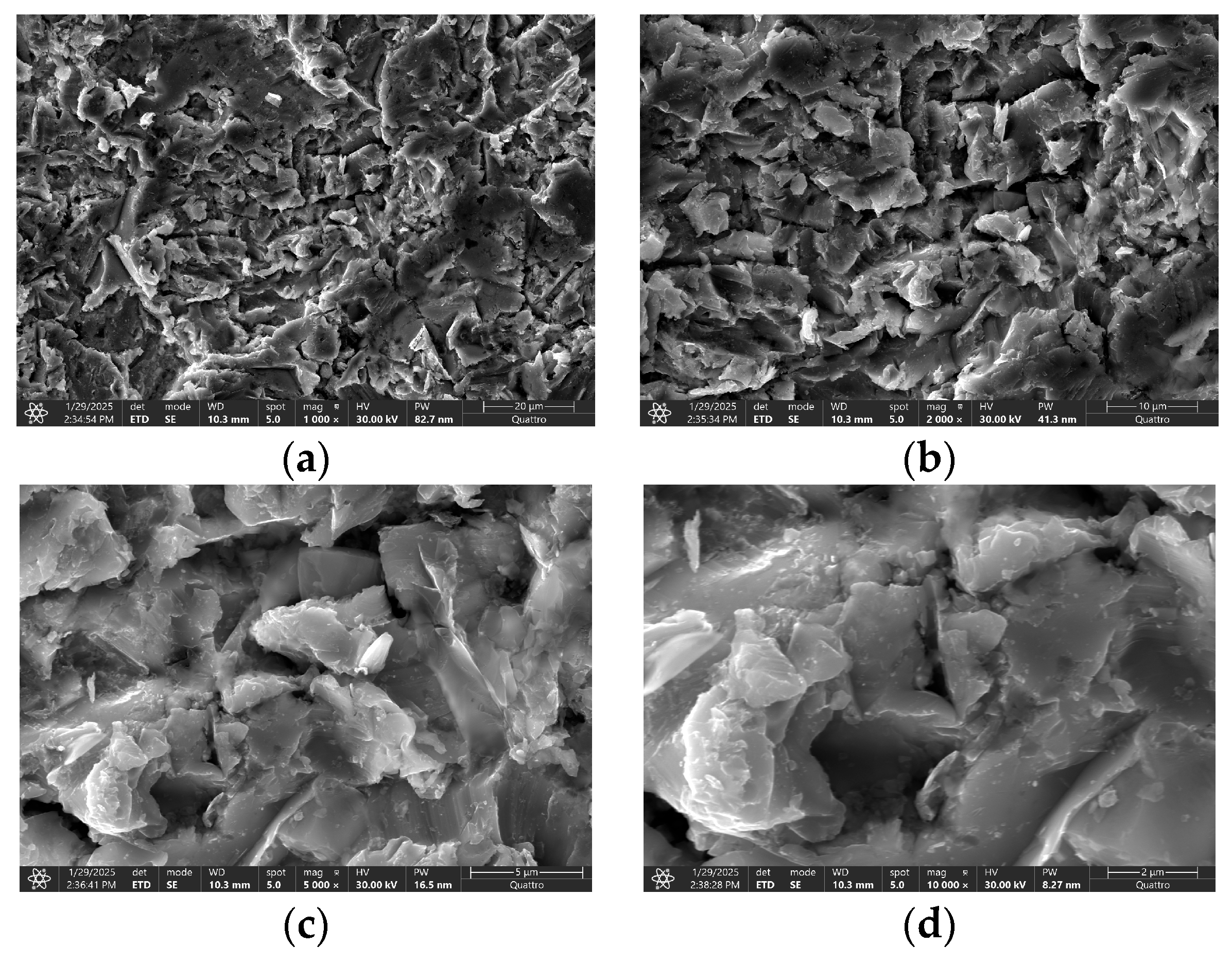
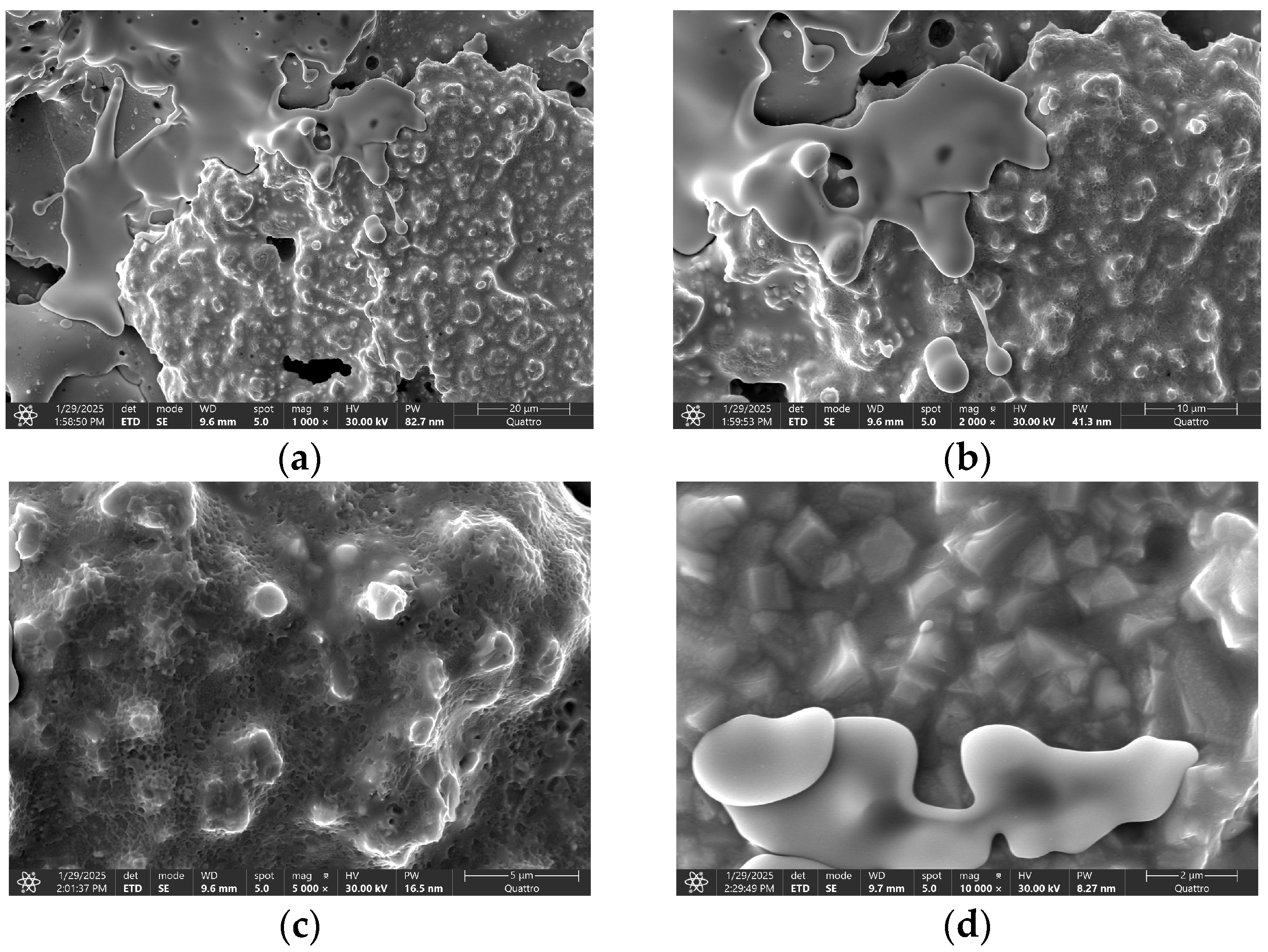
The sanded base disc reveals the characteristic morphology of a mechanically abraded medium carbon steel substrate. The progressive increase in magnification from 1000× to 10,000× provides insight into the microstructural features left by sanding, the condition of the surface prior to coating deposition, and the underlying steel matrix.
The surface morphology of the sanded base steel is presented in
Figure 8.
Across all magnifications, the base steel disc shows the expected characteristics of a mechanically abraded medium carbon steel substrate like fractured pearlite, plastically deformed ferrite, micro-cracks, fragmented lamellae, and nano-scale asperities. These features confirm that the sanding process successfully removed the oxide layer and created a mechanically roughened surface essential for promoting coating adhesion. The surface morphology is consistent with conditions that enhance bonding in APS coatings, as the irregular topography facilitates mechanical interlocking and improves coating durability under abrasive soil contact conditions.
The SEM observations of Sample 1 across all four magnifications (
Figure 9), demonstrate that the coating exhibits the characteristic features of a dense and well deposited APS oxide ceramic layer. At lower magnifications (1000× and 2000×), the coating presents a continuous lamellar structure with uniformly flattened splats and only limited interlamellar porosity, indicating effective particle melting and good cohesion between layers. These images also show discontinuous microcracks that are typical of thermally sprayed ceramics and arise from rapid cooling, but they do not form extended crack networks that would compromise coating integrity.
At higher magnifications (5000× and 10,000×), the microstructure reveals finer details, such as nanoscale pores and microcrack segments concentrated along splat boundaries, which reflect the thermal and kinetic conditions of the APS process. The contrast between different ceramic phases becomes more evident at these scales, suggesting the presence of chromia regions alongside silica or titania phases. The rapid solidification textures visible at these magnifications confirm that the coating solidified quickly, producing a refined and mechanically stable ceramic layer.
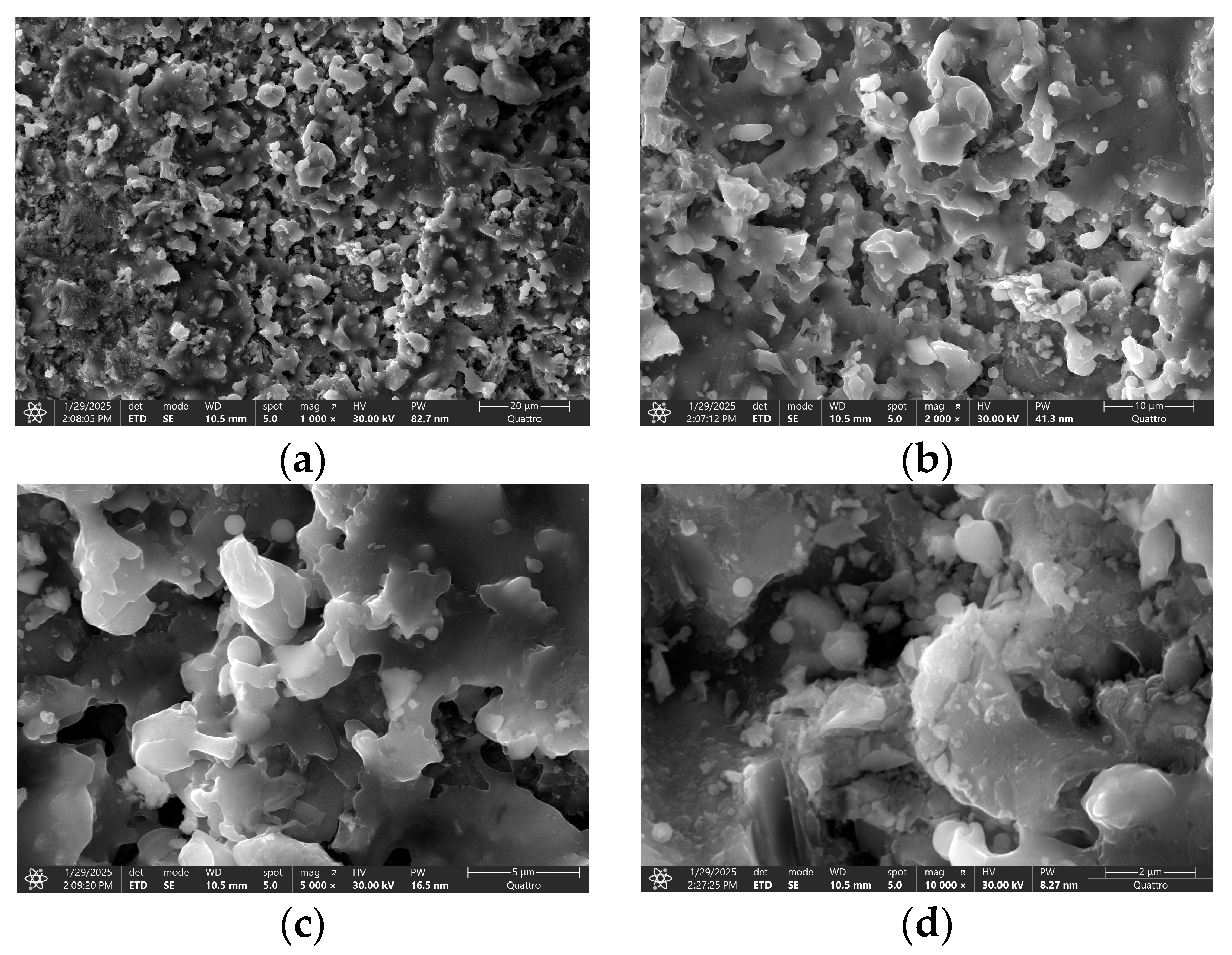
The obtained SEM micrographs reveal that Sample 2 exhibits the typical microstructure of a carbide-based thermal spray coating, consistent with a WC/W
2C–Co system (
Figure 10). At the lower magnifications (1000× and 2000×), the coating shows a dense and heterogeneous surface composed of bright carbide particles embedded within a darker cobalt binder.
Although lamellar splat features from the APS process remain visible, the microstructure is clearly dominated by the hard carbide phases, which retain much of their faceted morphology during deposition.
At higher magnifications (5000× and 10,000×), the fine details of the coating become more pronounced. The carbide grains exhibit sharp edges and cleavage features that reflect their inherent brittleness, while the binder phase forms a continuous matrix around them. Nanoscale porosity and minor microcracks can be observed at carbide binder interfaces, originating from rapid solidification and thermal mismatch effects typical of APS carbide coatings. These features remain small and isolated, indicating that they do not compromise the overall integrity of the coating.
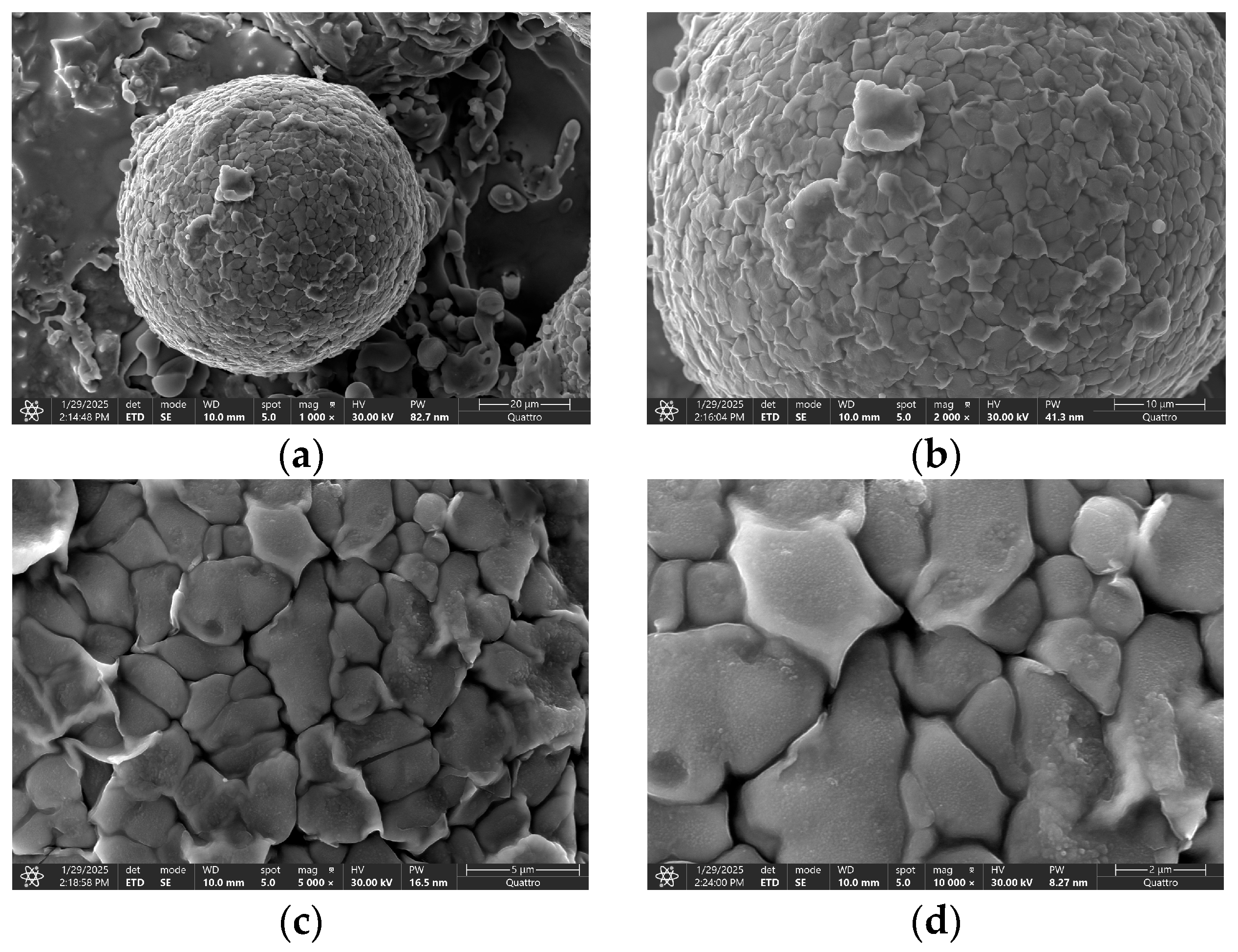
The SEM micrographs of Sample 3 reveal the characteristic features of a cobalt based alloy coating, consistent with Co–Cr–Ni–W–C systems (
Figure 11).
At lower magnifications (1000× and 2000×), the coating displays a dense, relatively homogeneous metallic matrix with a fine dispersion of bright, angular carbide precipitates.
The overall morphology is smoother compared to ceramic or carbide dominated systems, reflecting the metallic nature of the cobalt binder, which tends to flatten more uniformly during APS deposition.
The splat boundaries remain visible, but they appear less pronounced than in the oxide or carbide samples, suggesting better inter splat cohesion and enhanced ductility within the coating.
At intermediate and higher magnifications (5000× and 10,000×), the internal microstructure becomes more clearly.
The cobalt matrix exhibits a refined solidification morphology with rounded and partially dissolved carbide particles.
The carbides like tungsten or chromium phases appear brighter in contrast and remain well bonded to the surrounding metallic matrix.
The nanoscale features observed at the highest magnification include fine microcracks and limited porosity, typically aligned along splat interfaces.
These features are consistent with APS deposition but are less severe than in ceramic coatings, due to the higher ductility and thermal conductivity of cobalt alloys.
The fine dispersion of carbides embedded in a continuous metallic network is a defining attribute of Co-based wear resistant materials.
The carbides act as hard load bearing phases, while the cobalt matrix contributes toughness and resistance to crack propagation.
The limited porosity, refined splat boundaries, and strong carbide matrix adhesion visible across all magnification levels suggest that the coating was deposited under stable thermal conditions and achieved good melting and consolidation.
In the SEM micrographs of Sample 3, isolated spherical features can be observed within the coating. These features correspond to partially melted Co-based powder particles, originating from the inert gas atomized Metco 45C-NS feedstock. Due to the relatively high melting temperature and thermal conductivity of cobalt-based alloys, some particles may retain a near-spherical morphology upon impact when subjected to marginal thermal input during APS deposition.
Such partially flattened or unmelted particles are a known characteristic of APS-deposited metallic coatings and do not indicate contamination or coating defects. Their limited occurrence and good metallurgical bonding with the surrounding matrix suggest minimal influence on the overall wear behaviour.
3.3. Field Wear Results
The mass measurements recorded before and after coating reveal clear differences in the amount of material deposited onto each disc. The uncoated control disc, which serves as a reference for baseline wear, has an initial mass of 10.486 kg and shows no change since no coating was applied.
Among the coated discs, Sample 1 exhibits the smallest added mass, with a deposition of 0.105 kg, resulting in a final mass of 10.588 kg. This relatively low coating mass is consistent with the applied thin ceramic layer (Cr2O3–SiO2–TiO2), which forms a dense but lightweight surface film. The low mass increase also reflects the inherently lower density of ceramic materials compared to metallic or carbide systems.
Sample 2 shows a noticeably higher deposition mass of 0.127 kg, bringing the final disc mass to 10.619 kg. This higher deposition mass reflects the higher density of tungsten carbide-based powders, rather than a greater coating thickness. Cross-sectional SEM observations indicate that, despite its higher mass, the carbide coating exhibits a smaller average thickness compared to the ceramic and Co-based alloy coatings. Conversely, the ceramic and Co-based alloy coatings, although associated with lower deposition masses, exhibit greater average coating thicknesses due to their lower intrinsic material densities. The substantial increase in mass reflects both the dense nature of carbide coatings and their typically thicker application in wear-protection contexts. As shown in
Table 1, Sample 1 received the lightest coating, whereas Sample 2 had the highest deposition mass.
Sample 3 shows an intermediate coating mass of 0.116 kg, resulting in a final mass of 10.597 kg. This value situates Sample 3 between Samples 1 and 2 consistent with the medium density of cobalt-based superalloys, which are heavier than ceramics but lighter than tungsten carbide systems.
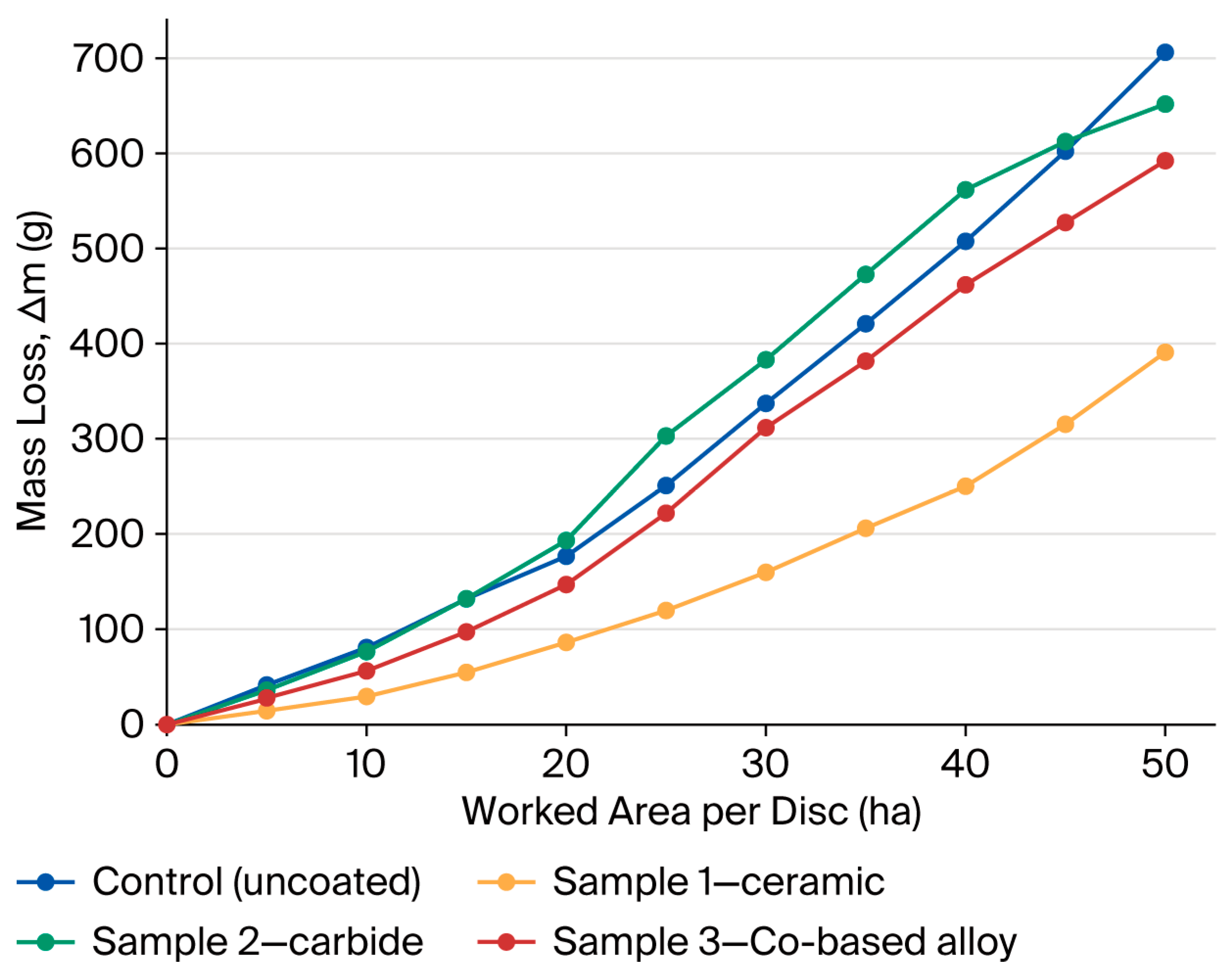
The evolution of disc wear expressed as mass loss over the 0–50 ha interval per disc (1000 ha in total) reveals distinct differences between the uncoated control disc and the three coated variants. All four curves show nonlinear behaviour, with low wear rates during the early stages of operation, followed by a progressive acceleration of mass loss as the total worked area increases. This trend reflects the typical behaviour of soil engaging tools, which initially operate with sharp edges and smoother surfaces, but experience increasingly aggressive abrasion as the edges round off and the soil–metal contact area grows.
The uncoated control disc shows the steepest wear curve. During the first 5–10 ha, the mass decreases only slightly, indicating limited initial abrasion. Beyond this interval, the curve becomes progressively steeper, reflecting a rapid increase in wear rate. By 50 ha, the total mass loss reaches approximately 0.70 kg, confirming that the control disc is the most susceptible to sustained abrasive wear in field conditions.
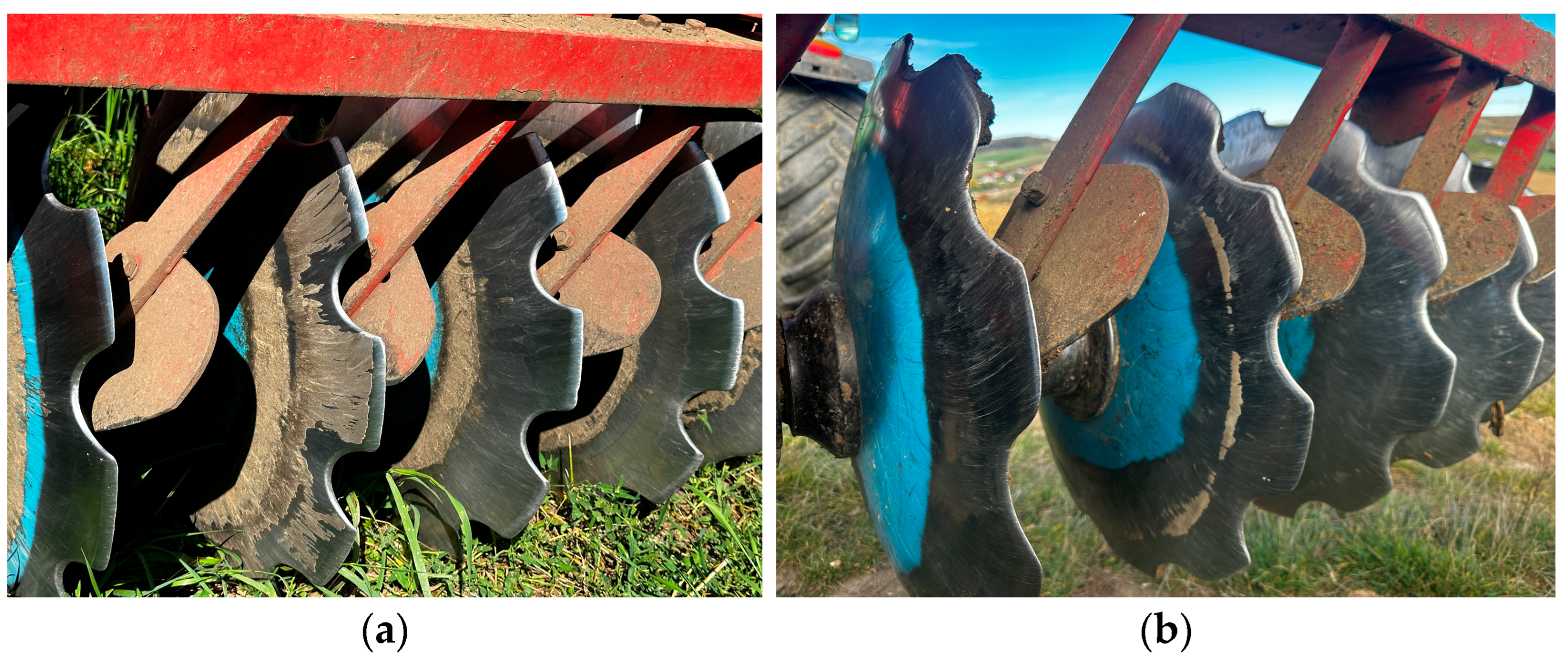
After 25 ha per disc, the field images show early-stage wear that is still relatively limited for Sample 1. The uncoated control disc already presents noticeable edge rounding, while the coated discs maintain sharper profiles.
After 50 ha per disc, the control disc displays pronounced edge rounding and surface abrasion, confirming its lower resistance to soil contact. Sample 1 continues to show the best preservation of edge geometry, with only moderate wear visible. The field appearance of the discs (
Figure 12) confirms these trends.
Sample 1 demonstrates the best performance among all tested variants. The wear curve remains nearly flat over the first several hectares and even at 25 ha the mass reduction is limited to roughly 0.15 kg. Although wear accelerates slightly after this point, the total mass loss at 50 ha remains the lowest at approximately 0.39 kg. This behaviour indicates excellent long-term stability of the ceramic coating, particularly in abrasive quartz-rich soil.
Sample 2 shows significantly poorer performance than expected for a carbide coating. Because of the early wear rate, the curve steepens considerably after about 15 ha. At 25 ha, the disc has already lost around 0.30 kg and by 50 ha the total mass loss reaches 0.65 kg, making Sample 2 the weakest among the coated samples and only marginally better than the uncoated disc.
Sample 3 has intermediate behaviour. The curve shows limited wear during the initial working period and moderate acceleration after. The disc loses about 0.22 kg at 25 ha and reaches approximately 0.59 kg mass loss at 50 ha. These values position Sample 3 between the best ceramic coating (Sample 1) and the carbide coating (Sample 2).
Wear behaviour is evaluated in terms of mass loss relative to the initial disc mass, rather than absolute disc mass. When represented in this form, the differences between the coated and uncoated discs become evident. The WC/W
2C–Co coating exhibits only a marginal reduction in mass loss compared to the uncoated disc, while the ceramic and Co-based alloy coatings show significantly lower wear rates. The mass loss per disc vs. worked area is presented in
Figure 13.
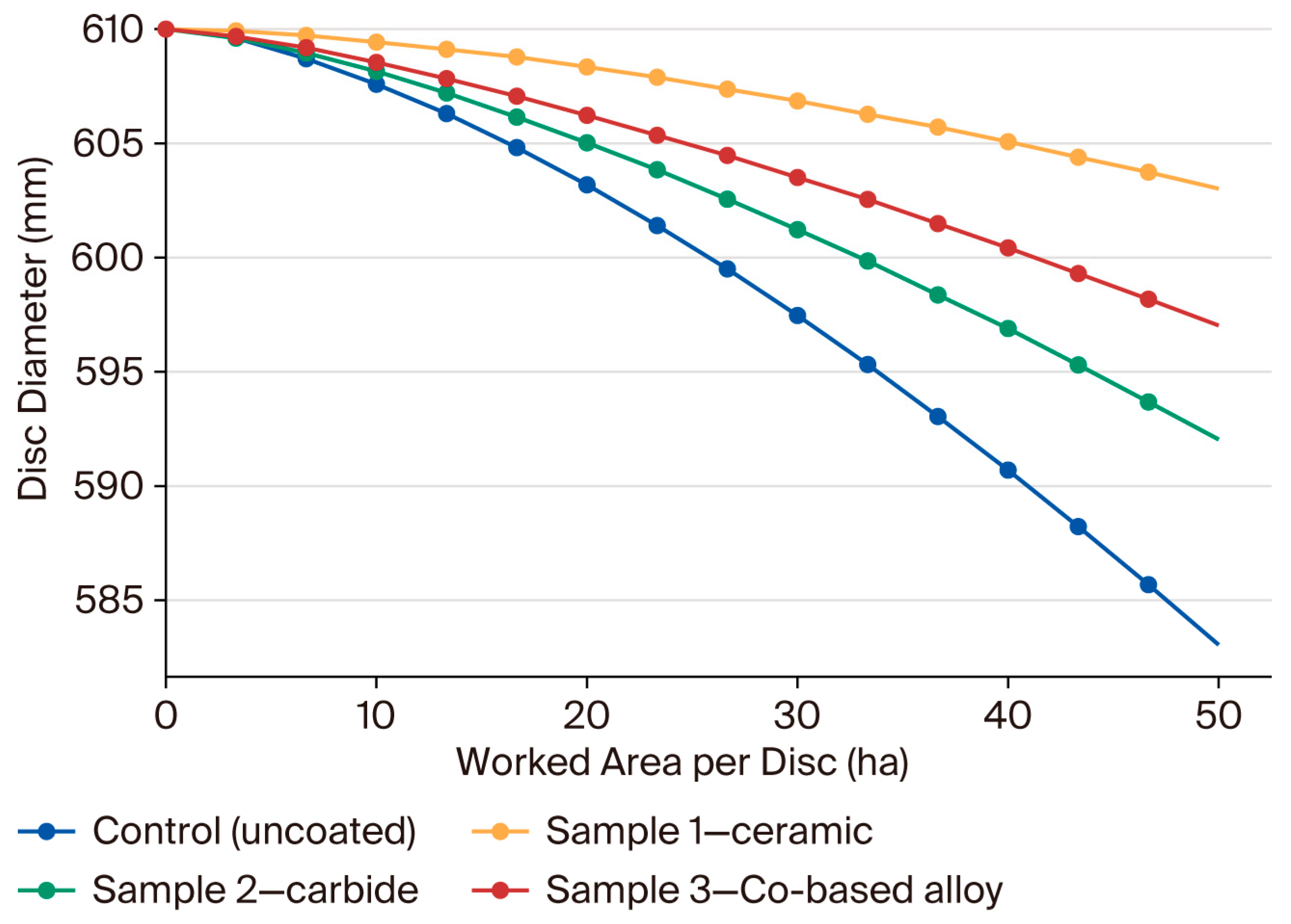
The diameter wear curves plotted over the effective working interval of 0–50 ha per disc provide a representation of the degradation experienced by individual discs during field operation. As expected for soil engaging components, all four discs show a nonlinear decrease in diameter, with relatively low wear during the initial stage of operation, followed by progressively faster degradation toward the end of the working interval. This behaviour corresponds to the typical progression of abrasive wear, where disc edges initially retain their sharp geometry and as rounding occurs, soil contact intensifies and accelerates material removal.
The uncoated control disc shows the steepest wear trajectory, ending with a total reduction of approximately 26 mm in diameter after 50 ha (
Figure 14). Its curve displays the most pronounced acceleration, confirming the susceptibility of untreated carbon steel to abrasive forces in quartz–rich soils. This rapid late wear is consistent with previous studies reporting that unprotected discs lose geometry faster once the cutting edge becomes blunt.
Sample 1 shows the smallest diameter loss after 50 ha and maintains the highest diameter throughout the entire operating range. Its curve shows the gentlest slope, demonstrating that the ceramic coating effectively delays edge rounding and preserves disc geometry for significantly longer than the other treatments.
Sample 3 displays intermediate performance with a final diameter loss of 14 mm. The curve lies consistently between the ceramic and carbide coatings, reflecting the balance between toughness and moderate hardness typical of cobalt alloys.
Sample 2 performed better than the uncoated disc but worse than both the ceramic and alloy coatings. Its final reduction suggests that although the carbide phases offer some protection, microcracking, and binder phase weaknesses contribute to its accelerated wear.
The diameter wear curves clearly differentiate the coatings’ effectiveness, confirming that Sample 1 (ceramic) provides superior resistance to edge rounding, followed by Sample 3 (Co-based alloy) and Sample 2 (carbide), while the uncoated disc remains the least durable. These trends align with the mass-loss results and microstructural observations, demonstrating a coherent relationship between coating microstructure, wear mechanisms and field performance.
For each inspection interval, the reported mass-loss and diameter values represent the average of repeated measurements, as described in
Section 2. The standard deviation associated with mass measurements remained below ±2 g, while diameter measurements showed deviations below ±0.05 mm. These uncertainties are substantially smaller than the differences observed between the coated and uncoated discs and do not affect the ranking or interpretation of coating performance.
When compared to the uncoated reference disc, the coated variants exhibited markedly different wear reductions. The ceramic-coated disc (Sample 1) reduced total mass loss from approximately 700 g to 390 g after 50 ha, corresponding to a mass-loss reduction of about 44%. The Co-based alloy coating (Sample 3) achieved a more moderate reduction of approximately 16%, while the carbide coating (Sample 2) showed only a marginal improvement of about 7%.
Similar trends were observed for diameter wear. The uncoated disc lost approximately 26 mm in diameter, whereas the ceramic coating limited diameter reduction to about 10 mm (~62% reduction). The Co-based alloy and carbide coatings reduced diameter loss by approximately 46% and 31%, respectively.
Based on these trends, the ceramic coating provides an estimated service-life extension of approximately 1.8 times relative to the uncoated disc under the tested field conditions, while the Co-based alloy and carbide coatings extend service life by approximately 1.2 times and 1.1 times, respectively.
3.4. Soil Profile Analysis
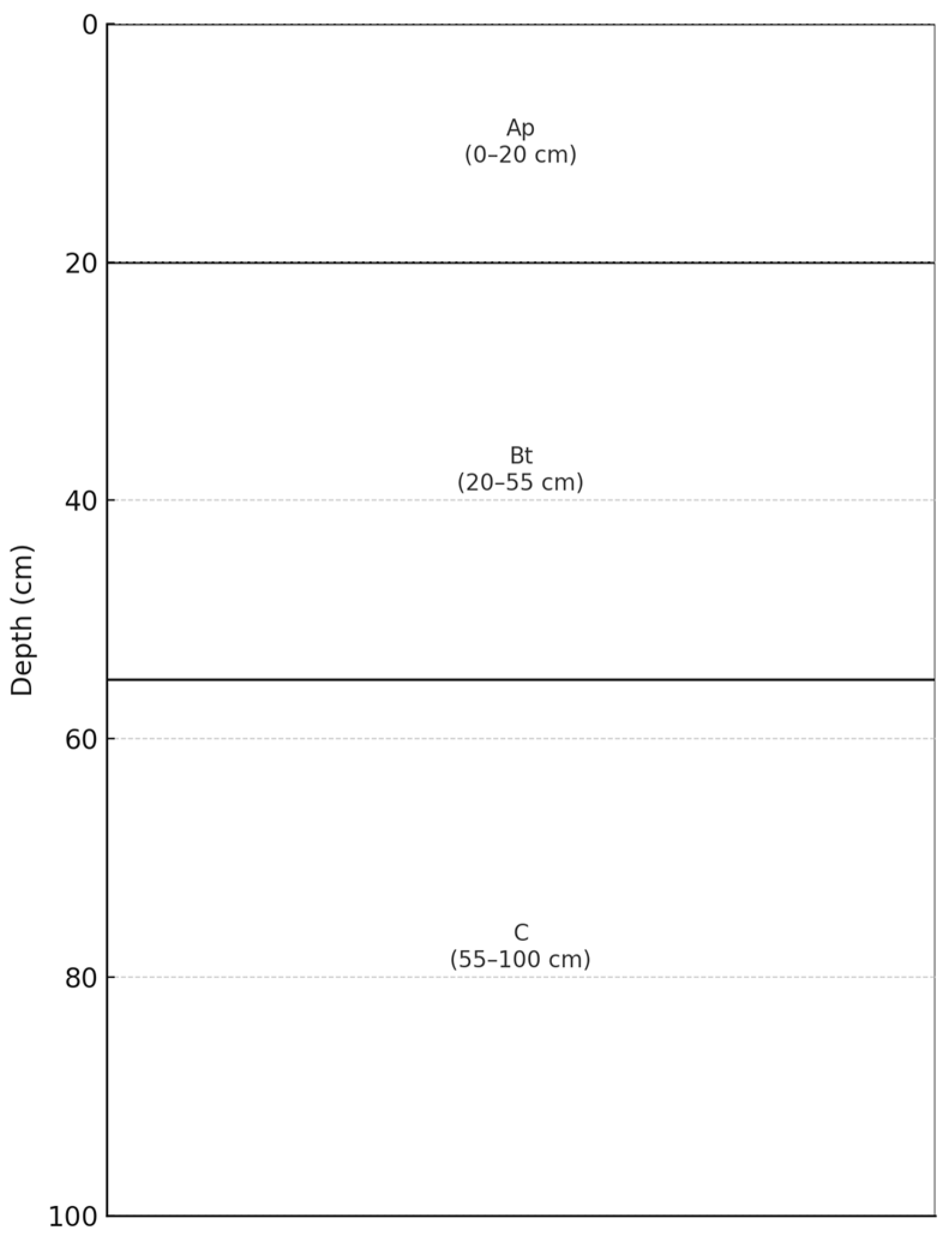
The field trials were conducted on an Argic Luvisol soil, with the disc harrow operating exclusively within the Ap horizon (0–20 cm). This surface layer represents the effective working zone of the discs and therefore governs the dominant wear mechanisms observed during field operation.
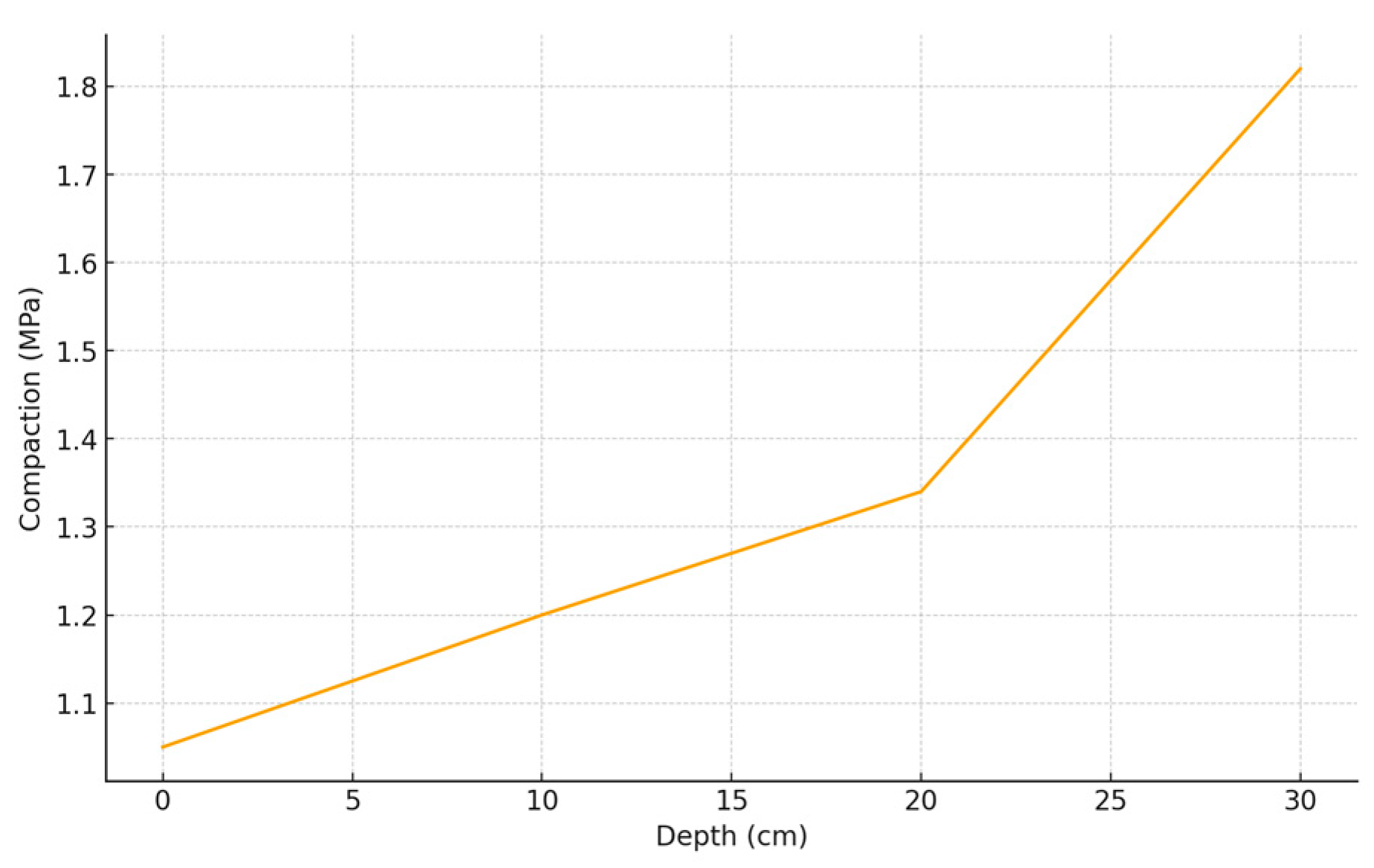
Penetrometer measurements indicated a soil penetration resistance of approximately 1.0–1.3 MPa within the 0–20 cm depth interval (
Figure 15), corresponding to moderately compacted conditions. This level of compaction ensures sustained normal contact forces between soil particles and disc surfaces, intensifying abrasive interactions while limiting high-energy impact events.
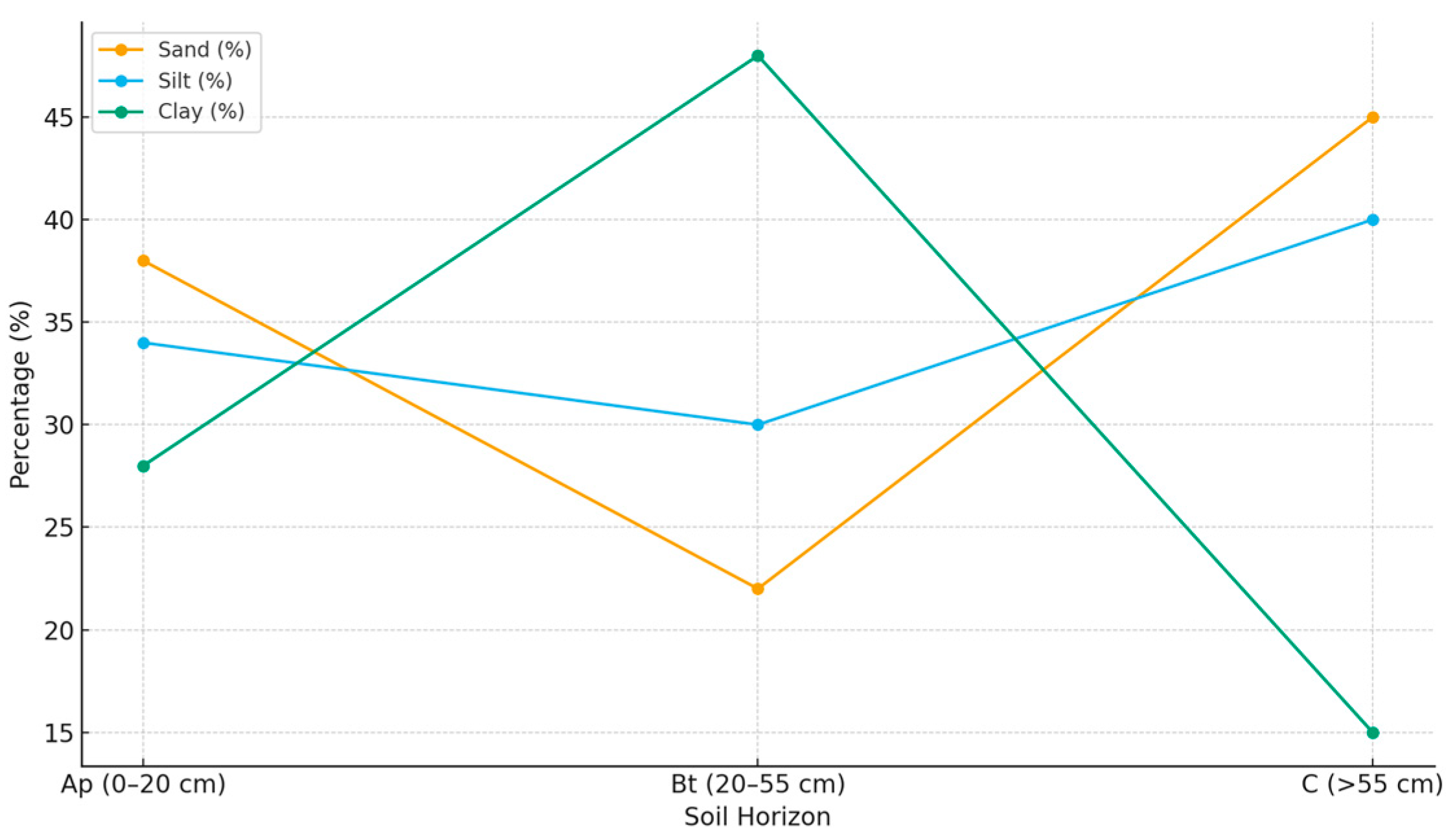
Granulometric analysis of the Ap horizon revealed a clay loam texture, with the combined sand and silt fractions exceeding 70% (
Figure 16). These fractions are dominated by quartz- and feldspar-rich mineral particles, which act as hard abrasives responsible for micro-cutting and polishing wear on steel and coated surfaces. The high quartz content confirms that the working environment represents a highly abrasive tribological regime for soil-engaging tools.
During the field trial period, soil moisture in the Ap horizon remained within a moderate range typical for post-harvest stubble cultivation. These conditions favour low-stress three-body abrasion, in which mobile mineral particles are entrained between the disc surface and the soil matrix, leading to progressive mass loss and edge rounding.
Deeper horizons (Bt and C) were not directly engaged by the discs at the selected working depth and are therefore not considered to have a direct influence on the wear behaviour reported in this study. Their role is limited to controlling moisture redistribution and mechanical support of the Ap horizon.
The field trials with the OTMA disc harrow were carried out on an agricultural field located in Neamț County (north-eastern Romania), in a gently undulating sub-Carpathian area.
The compaction profile (
Figure 15) obtained from penetrometer measurements indicates a gradual increase in soil resistance with depth, ranging from approximately 1.05 MPa at the surface to values exceeding 1.8 MPa below 30 cm. Because the disc harrow operated within the upper 15 cm of soil, the effective resistance encountered by the working bodies corresponds to the lower portion of this gradient, where penetration resistance falls within a moderately compacted range. Such resistance provides sufficient normal force to maintain continuous contact between the soil matrix and the disc surfaces. This constant mechanical interaction enhances the intensity of abrasive processes, as mineral particles are pressed firmly against the metal surfaces. The compaction pattern also promotes uniformity of wear along the portions of the discs engaged in the soil, as the mechanical resistance experienced at operational depth remains relatively stable across the worked area.
The particle size distribution further supports the classification of the Ap horizon as a highly abrasive environment (
Figure 16). The clay loam texture revealed by the granulometric analysis, with sand and silt fractions jointly exceeding 70%, indicates a substantial presence of quartz-rich mineral grains capable of producing significant abrasive wear. Sand and silt, dominated by quartz and feldspars, act as hard abrasives that contribute to micro-cutting, scratching and polishing of the disc surfaces during field operation.
The clay fraction is not abrasive but plays an important role by forming a cohesive matrix that suspends the coarse mineral particles. As the discs move through this mixture, soil particles are entrained between the metal surface and the surrounding matrix, generating a low-stress three-body abrasion regime. This mechanism, which is well documented in the tribological literature for tillage tools, explains the consistent mass loss and edge rounding observed on the discs following field use. The granulometric composition of the Ap horizon, therefore, directly governs the mechanical loading and wear conditions experienced by the disc blades.
The schematic soil profile illustrating the Ap–Bt–C horizon sequence (
Figure 17) confirms the morphological characteristics typical of a brown argillic soil (Argic Luvisol). The Ap horizon, with its granular to weak subangular blocky structure, provides a relatively homogeneous working medium that promotes stable and predictable soil to metal interactions. The Bt horizon lies below the operational depth of the implement and thus does not contribute directly to wear processes. Its presence influences soil moisture distribution and the mechanical behaviour of the upper horizon, maintaining moderate firmness in the Ap layer. Because the discs engage exclusively the quartz Ap horizon, where mineral abrasives are most abundant, the predominant wear mechanism is abrasion rather than impact or brittle fracture.
The absence of stones or strong structural impediments in the Ap horizon further supports this conclusion, as mechanical shocks were unlikely to occur under the conditions encountered during this field study.
The profile shows a well differentiated horizonation with a cultivated topsoil (Ap horizon) overlying a clay subsurface horizon (Bt).
The Ap horizon (0–20 cm) is dark brown, moist, presents clay loam in texture, with a moderate fine granular to subangular blocky structure. The horizon contains numerous fine roots and crop residues from preceding cereal crops and a low content of coarse fragments. The sand and silt fractions are dominated by quartz and feldspar particles, which act as the main abrasive agents on the working surfaces of the disc blades. Organic matter content is moderate, contributing to aggregate stability but not significantly reducing the abrasive effect of the mineral fraction.
The soil from the AB horizon (20–35 cm) becomes more compact and slightly denser than in the Ap horizon. Clay content increases gradually, and fine pores are more prevalent than macropores. This transitional layer marks the beginning of clay accumulation and higher mechanical resistance.
In the context of the present study, the harrow disc operated at a working depth of 15 cm, meaning that the working bodies were confined almost entirely to the Ap horizon. Consequently, the wear behaviour of the discs is primarily governed by the clay-loam topsoil layer rich in quartz sand and silt particles, in combination with cereal stubble and surface residues. Under these conditions, the dominant wear mechanism is low stress three-body abrasion, where mobile soil particles slide and roll between the disc surface and the soil matrix. The moderate compaction and the presence of hard mineral grains in the fine sand and silt fractions provide an abrasive environment that is particularly suitable for evaluating the performance of hard faced and coated disc blades.
This soil profile description provides the necessary pedological context to interpret differences in mass loss and edge degradation among the various coating systems tested on the harrow discs.
The compaction data, particle size distribution, and morphological characterization of the soil profile demonstrate that the working environment of the discs was defined by a combination of moderate mechanical resistance, high quartz content and consistent horizon structure. These factors collectively created an ideal tribological setting for evaluating the performance of coated and uncoated discs under realistic abrasive loading, resulting in the wear patterns recorded during the experiment.
4. Discussion
Although direct microhardness and bond-strength measurements were not performed, the observed microstructures are consistent with values reported in the literature for similar APS coatings. Cr2O3-based ceramic coatings typically exhibit microhardness values in the range of 900–1100 HV, WC/W2C–Co coatings between 1100 and 1400 HV, and Co-based alloy coatings between 450 and 650 HV, depending on spray parameters and porosity.
The superior wear performance of the ceramic coating can therefore be attributed not only to high hardness, but also to its dense lamellar structure and low porosity, which limited microcutting and polishing abrasion. In contrast, the carbide coating, despite its higher nominal hardness, showed microcracking and weaker carbide–binder cohesion, which likely accelerated material removal under repeated soil abrasion. These observations highlight that microstructural integrity and interlamellar cohesion are more critical than nominal hardness alone for long-term field performance. The intermediate performance of the Co-based alloy coating demonstrates that, despite its high toughness and resistance to cracking, nominally superior metallic coatings do not necessarily outperform optimized ceramic systems under low-stress three-body abrasion dominant in agricultural soils. This finding is particularly relevant from a practical standpoint, as it indicates that more expensive high-performance alloys do not provide proportional benefits for disc harrow applications.
The obtained results in this paper provide clear evidence that the wear behaviour of harrow discs is strongly influenced by the type of surface coating applied and by the intrinsic microstructural characteristics of the substrate steel. The fact that advanced thermal spray coatings can significantly reduce abrasive wear under real field conditions was supported by both mass loss and diameter measurements and microstructural observations. The results varied substantially between the three evaluated coating systems.
The observed differences in field wear behaviour can be directly linked to the microstructural characteristics revealed by SEM analysis. The ceramic coating exhibited a dense lamellar structure with low porosity and limited microcrack connectivity. This microstructure effectively resisted micro-cutting and polishing abrasion, which are dominant in quartz-rich soils, resulting in gradual and stable wear progression.
In contrast, the WC/W2C–Co coating showed frequent microcracks and weak carbide–binder interfaces. Under repeated soil contact, these features promoted localized carbide pull-out and micro-spalling, leading to accelerated material removal despite the high nominal hardness of the carbide phases. This explains why the carbide coating underperformed relative to expectations based solely on hardness.
The Co-based alloy coating exhibited an intermediate response. The SEM images revealed a tough metallic matrix with a fine dispersion of hard carbides. This structure limited catastrophic cracking and improved resistance to impact, but allowed progressive abrasive removal of the matrix, resulting in moderate wear reduction under field conditions.
The observed trends in this study align well with the established understanding of wear mechanisms in soil-engaging tools. Numerous studies report that abrasive wear in agricultural environments is dominated by quartz content, particle angularity and soil compaction, which were characteristic of the Argic Luvisol soil encountered during the field trials. The uncoated control disc in this study showed a nonlinear wear evolution, with mild wear during the first phase of operation followed by accelerated mass loss as the cutting edge rounded off and the effective soil to metal contact area increased. The total mass loss of approximately 700 g after 50 ha confirms the vulnerability of unprotected medium carbon steels in abrasive field environments.
The marginal improvement of the WC/W2C–Co coating (Sample 2) in terms of both mass loss and diameter reduction indicates that, under the present field conditions dominated by low-stress three-body abrasion in quartz-rich soil, the coating performance was governed by microstructural integrity rather than nominal hardness. SEM observations revealed microcracking and weakened carbide–binder interfaces, which likely promoted localized carbide pull-out and micro-spalling during repeated soil contact.
In addition, the spray distance selected to ensure uniform circumferential coverage and to avoid substrate overheating may have reduced particle thermal input and impact consolidation for the carbide system, resulting in lower interlamellar cohesion. These results highlight that WC-based APS coatings require narrower process windows and dedicated parameter optimization to fully exploit their abrasion resistance in soil-engaging applications.
Fe–Cr–C (sormite) hard facing overlays frequently indicate service-life extensions on the order of 2–4× compared with uncoated tools, largely due to millimetre-scale deposits containing high fractions of M7C3 carbides. However, these values are strongly dependent on overlay thickness, dilution, cracking behaviour and soil conditions, and sormite-coated discs were not tested in the present field campaign.
In the current study, the ceramic APS coating provided an estimated life extension of ~1.8× based on mass-loss ratio and ~2.6× based on diameter-retention ratio, indicating that, depending on the functional failure criterion, thin APS ceramic coatings can approach the lower-to-mid performance range reported for conventional hard facing while offering improved thickness control and reduced geometric modification.
Laboratory tests such as dry sand–rubber wheel or pin-on-disc experiments typically show superior performance of carbide-based coatings due to their high hardness. However, such tests often do not account for repeated low-energy impacts, heterogeneous soil particle geometry, or cyclic loading.
Under real field conditions, the combination of low-stress three-body abrasion and repeated mechanical interactions favours coatings with high microstructural cohesion and damage tolerance rather than maximum hardness alone.
The limited improvement provided by the WC/W2C–Co coating may also be influenced by process-related factors. The relatively large spray distance (90–100 mm), selected to ensure uniform circumferential coverage and to avoid overheating of the disc substrate, may have reduced particle temperature and velocity upon impact.
For carbide-based powders, insufficient thermal input can result in partial melting and reduced interlamellar bonding, which in turn decreases adhesion strength and promotes microcracking and carbide pull-out under abrasive loading. This effect is less critical for oxide ceramic coatings, which tolerate wider processing windows, and for ductile Co-based alloys, which accommodate deformation more effectively.
The wear assessment in the present study was primarily based on quantitative mass-loss and diameter measurements, complemented by microstructural SEM analysis of the as-deposited coatings. Although surface wear morphology was visually inspected during field evaluation, systematic post-wear surface imaging was not included. Future work will extend the analysis to include detailed SEM and optical characterization of worn surfaces to further correlate microcutting, polishing and micro-spalling mechanisms with the observed wear rates.





 ,
,