1. Introduction
Potatoes (
Solanum tuberosum L.) are vital for feeding the world’s growing population. They are classified as the third most crucial non-cereal crop, after rice and wheat, owing to their substantial impact on world food security [
1]. As the yields of other cereal crops near their maximum, potatoes are increasingly recognized as a valuable crop within the global food security framework, with global production reaching 359.07 million tons [
2]. Recent trends in potato production show a gradual shift from western to eastern regions, with yields of 50.4% and 31.4% in Asia and Europe, respectively [
3].
In Myanmar, potatoes are an important cash crop that significantly impacts the livelihoods of smallholder farmers across the country. In the 2019–2020 agricultural year, potatoes were cultivated on 31,362 hectares, resulting in a total production of 485,823 tons, of which Shan State accounted for 21,281 hectares and produced 352,977 tons [
4]. During the 2019–2020 budget year, the export value of Myanmar’s potatoes reached approximately USD 259,000 with an export volume of 576.00 tons [
5]. Potatoes are grown year-round across different agroecological zones in various seasons: summer, pre-monsoon, late-monsoon, and winter. With 89% of production during the monsoon season and 45% during the winter, Southern Shan State is the top producer of potatoes [
6]. In Southern Shan State, the summer crop is grown from January to April in irrigated areas [
7]. The monsoon crop is planted from April to September, while the post-monsoon crop is cultivated from August to January [
7]. The national average potato yield is estimated to be around 15 tons per hectare (t ha
−1) of fresh tuber weight [
5]. In Southern Shan State, average yields range from 18 to 19 t ha
−1, which is nearly 25% higher than the national average [
8].
One of the significant challenges facing the world in the 21st century is the impact of climate change on food security. Climate change causes unexpected weather patterns, such as changes in rainfall intensity, duration, and frequency, as well as a rise in extreme weather events and higher temperatures. Climate change and global warming significantly impact the development and productivity of potato crops, with expectations that these impacts will intensify in the coming decades. Rising temperatures can expose potato plants to heat stress [
9,
10,
11,
12]. Potatoes are typically suited for cooler conditions, and their growth can be constrained by various environmental factors. Elevated temperatures significantly hinder tuber formation [
13,
14,
15] by reducing the rate of photosynthesis [
16,
17,
18]. Potato yields are also adversely affected by unstable precipitation patterns, especially in rainfed situations that experience lower rainfall [
19,
20,
21]. Increased temperatures can shorten the growing season for potato crops, limiting the time available to capture solar radiation [
18]. However, the impacts of climate change will vary according to regional conditions; for instance, growing seasons may be shorter in the spring and summer, while rising temperatures may lead to decreased yields in warmer climates [
16,
18].
Myanmar was ranked second in vulnerability to climate change impacts between 2000 and 2019 [
22]. From 1981 to 2010, Myanmar experienced an increase of about 0.25 °C in its average daily temperature per decade, with maximum daily temperatures climbing by 0.4 °C every ten years [
23]. Notably, the increase in daily maximum temperatures was more pronounced than that of daily average temperatures, particularly in inland areas, which warmed at a faster pace than coastal regions [
24,
25]. During the same period, annual total precipitation exhibited a slight increase, most notably in coastal areas, which experienced a more significant rate of increase compared to inland regions [
25]. Recent observations indicate that the southwest monsoon season in Myanmar has become approximately one week shorter on average, with projections predicting an 11% increase in precipitation by 2040 and a 23% increase by 2070, contributing to intensified rainfall and more severe weather conditions along with a delayed onset and earlier cessation of the monsoon [
24,
25]. This scenario may lead to unforeseen and substantial precipitation events, potentially resulting in flash floods, riverine flooding, and pluvial flooding [
25]. Myanmar’s agriculture sector faces increased agricultural losses and decreased crop yields due to the increasing temperature, changes in monsoon patterns, and unpredictable rainfall [
26,
27]. The significant impacts of climate change on Myanmar’s agricultural sector present considerable challenges to future agricultural productivity [
28,
29]. Therefore, understanding the implications of these environmental changes on agriculture is critical for developing sustainable practices and policies in the region.
Crop models are effective tools that provide insight into how crop management, environmental changes, soil characteristics, and the use of simulation methods to support field research is growing [
16,
17,
19,
30]. The Simulation of Underground Bulking Storage Organs, SUBSTOR-Potato model is one of the crop modules in the DSSAT-CSM (Decision Support Systems for Agro-technology Transfer—Crop Simulation Model) software version 4.8 [
31,
32], which was developed to simulate potato growth and yield [
33] and has also been widely used for potato and climate change assessments [
17,
19,
34,
35]. Crop management information, soil profile parameters, cultivar parameters, and daily weather information are the inputs of the crop model, which simulates the weather, genotype, characteristics of soil, and management effect on the daily change in phenology, biomass, water, nitrogen, and yield accumulation [
30,
33,
36]. Crop models are essential for assessing climate change impacts and developing adaptation strategies, such as optimizing planting windows, implementing crop rotations, using climate-resilient cultivars, and enhancing fertilizer and water management. The strategies for adapting to the changing climate are context-specific and site-specific and evolve in dependent communities [
37]. Understanding the impact of farming practices, genetics, and thermal trends on potato farming is critical for adaptation strategy development [
19]. Adaptation strategies such as changing planting dates, optimizing fertilizer applications, employing resistant varieties, and improving irrigation management were widely applied in climate impact studies and have significant impacts [
35,
38,
39]. Shifting planting dates based on temperature could effectively manage yield and tuber growth [
40]. Many research efforts have been undertaken to determine how planting dates influence the balance of temperature impact thresholds related to climate change [
41], evaluate the degree of adaptation of new cultivars in the changing climate [
42], and create nitrogen management and irrigation strategies to maximize yield under future climate conditions [
43]. In Southern Shan State, Myanmar, reports indicated that adopting the agro-ecological approach for crops such as upland rice, wheat, maize, and others helps build climate resilience. This strategy has led to reduced soil erosion, improved soil fertility, lower reliance on chemical fertilizers, better access to affordable local seeds, and increased yields [
44]. Many households benefited from climate-smart agriculture (CSA), particularly in upland rice and corn yields, while the climate-smart village (CSV) initiative also fostered economic empowerment, food security, and gender inclusiveness [
45]. Additionally, the potato mission led by the Netherlands found that low yields in Myanmar were linked to poor decision-making on chemical use, seed stock degeneration, and limited seed variety availability [
46]. Despite the efforts in addressing climate challenges that are mainly centered on cereal crops, oil seeds, pulses, spices, vegetables, and fruit trees, there is a notable lack of information and research concerning the effects of climate change on potatoes, whether on the production or the related farming practices. Thus, this research aims to evaluate the potential influences of future climatic changes and adaptation strategies on potato cultivation in Southern Shan State, thereby contributing to the enhancement of livelihoods and sustainable development in Myanmar. To achieve this, the study was conducted with the following objectives:
- (1)
To calibrate and validate the DSSAT SUBSTOR-Potato model for enhanced performance.
- (2)
To evaluate the impact of climate change on the production of potatoes using long-term future projected climate data.
- (3)
To assess the strategies for adaptation designed to reduce the negative impacts on potato yield.
- (4)
Building upon these research objectives, the subsequent section presents the study area, datasets, modeling framework, and analytical procedures employed. This methodological approach enables a rigorous assessment of climate change impacts and the effectiveness of adaptation strategies on potato production in Southern Shan State.
3. Results
3.1. Climate Projections for Southern Shan State
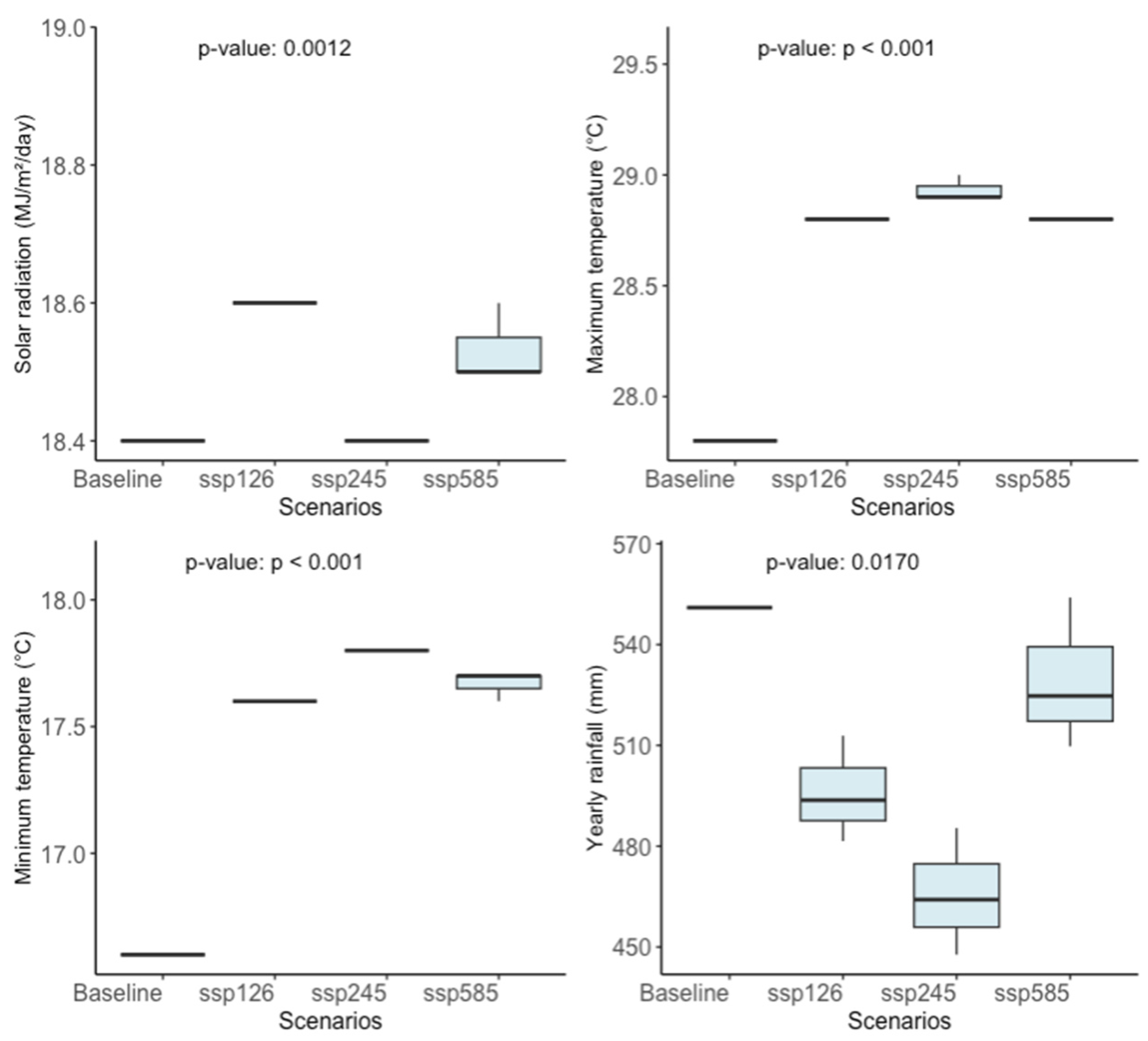
The projected climate variables revealed that solar radiation and maximum temperature exhibited no significant differences across the specified scenarios. In contrast, both minimum temperature and rainfall indicated statistically significant variations among the scenarios, indicating that future projections for these variables will depend on the emission pathway. Notably, the ssp585 is associated with higher rainfall levels when compared to both ssp126 and ssp245.
Figure 2 shows a comparison of historical and future climate variables under different emissions scenarios indicated no statistically significant difference in solar radiation between the historical and future scenarios. However, a statistically significant increase in maximum temperature was observed across all future scenarios, with maximum temperature reaching 28.8 °C for both ssp126 and ssp585, and 29 °C for ssp245. In comparison to the historical climate average of 27.8 °C, this highlights a clear trend of future warming under all emission pathways. Additionally, when looking at minimum temperatures, a significant increase has also been noted. Future projections show minimum temperatures rising to 17.6 °C for ssp126, 17.8 °C for ssp245, and 17.7 °C for ssp585, compared to a baseline of 16.6 °C. Moreover, the analysis of yearly rainfall under different climate scenarios reveals distinct trends compared to the baseline. Rainfall is projected to decline under both ssp126 and ssp245, with ssp245 showing the strongest drying effect. In contrast, ssp585 projects a rebound in rainfall, with a median value of nearly 525 mm, approaching the baseline level. However, this scenario also exhibits a wider spread, indicating greater variability and uncertainty. Overall, solar radiation remained stable over time, showing no significant differences, while temperatures were projected to increase markedly across all future scenarios. The rainfall patterns showed variability, with a decrease in lower-emission scenarios (ssp126 and ssp245), contrasted by an increase in the high-emission scenario (ssp585). The statistical test result confirms that these differences across scenarios are significant.
3.2. Model Calibration and Validation Results
In this study, the genetic coefficient parameters relevant to the Kufri Jyoti cultivar, specifically for the 2015 growing season, were calibrated using the SUBSTOR-Potato module. The optimized genotypic coefficient parameters for the Kufri Jyoti cultivar were G2 = 1622 cm
2 m
−2 day
−1, G3 = 22.62 gm
−2 day
−1, PD = 0.833, P2 = 0.701, and TC = 14 °C. These calibrated parameters were later validated using independent data of yearly yield from 2021 to 2024 in different cropping seasons. The model performance was evaluated by comparing the simulated and observed values, with tuber fresh weight serving as the primary evaluation parameter, and showed adequate accuracy (
Table 3). This assessment was conducted during both the calibration and validation periods, employing statistical indices including RMSE and nRMSE for analysis. The K application trial had the best nRMSE value (1.6%), whereas the ridging trial had the highest nRMSE (29.2%) during the calibration period. The nRMSE values for the validation phase ranged from 4.8% to 67.2%. The RMSE and nRMSE values indicate the alignment between simulated and observed values, with values closer to zero representing better alignment [
54]; specifically, a simulation is classified as excellent with an nRMSE below 10%, good within the 10% to 20% range, acceptable from 20% to 30%, and poor when it exceeds 30% [
54].
3.3. Effect of Climate Change on Potato Production
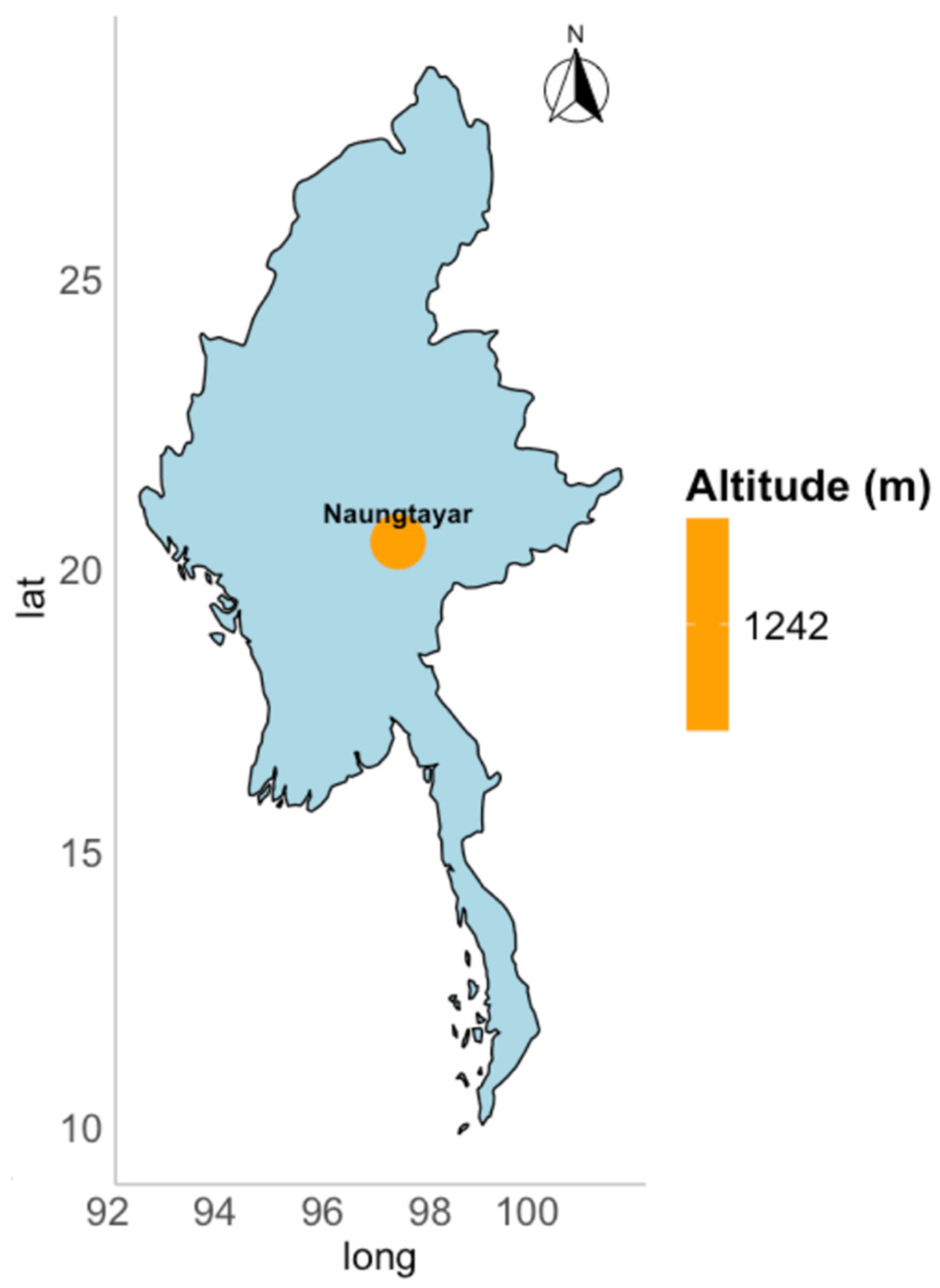
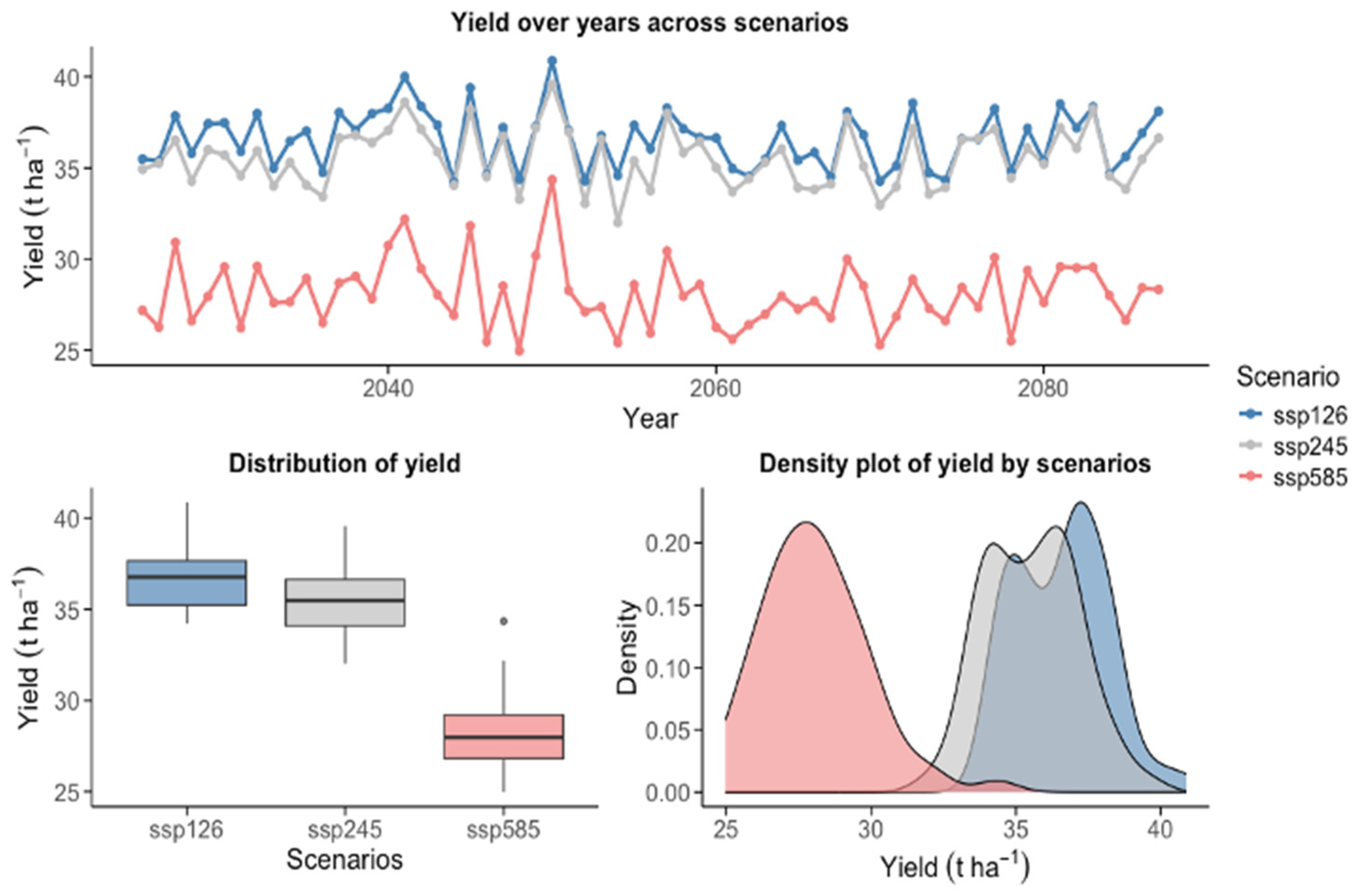
The validated SUBSTOR-Potato model was utilized to simulate potential potato yields in Naungtayar from 2025 to 2087, using climate data derived from the LARS-WG across various emission scenarios. Under ssp126, yields were projected to vary between 34.2 and 39.4 t ha
−1, with occasional peaks reaching up to 40.9 t ha
−1, as illustrated in
Figure 3. The average yield appeared to be approximately 37 t ha
−1. Notably, yield fluctuations were significant from year to year, with fewer occurrences of yields at both the lower (around 34 t ha
−1) and higher (around 40 t ha
−1) extremes of the projected range.
Under ssp245, the overall yields varied between 32 and 38.9 t ha
−1, with an average yield slightly lower at 35.5 t ha
−1, as shown in
Figure 3. The yield distribution was slightly skewed towards the lower end, with the majority falling between 33 and 37 t ha
−1. Similarly to the ssp126, the yields showed year-to-year variation, indicating a potential negative impact on yield stability and overall productivity as a consequence of increased emissions relative to the lower scenario.
The yields were considerably lower under ssp585 compared to the lower emission scenarios, with estimates ranging from 25 to 35 t ha
−1, illustrated in
Figure 3, and an average yield of 28.1 t ha
−1. The highest peak only reached approximately 34 t ha
−1, indicating a dramatic reduction relative to lower emission scenarios. The yield distribution is relatively normal, centered around 27 to 28 t ha
−1, with a noticeable downward trend in yields, particularly towards the later part of the century.
Across different emission scenarios, the highest yield was recorded in 2050, with peaks reaching 40.9 t ha
−1, 39.58 t ha
−1, and 34.35 t ha
−1 for ssp126, ssp245, and ssp585, respectively. The lowest yields were 34.22 t ha
−1, 32.01 t ha
−1, and 24.97 t ha
−1, corresponding with years 2044, 2054, and 2048 as shown in
Figure 3, highlighting the adverse impacts of increased emissions on productivity. Notably, the yield disparity between ssp126 and ssp585 was approximately 8 to 9 t ha
−1, indicating a reduction of about 25%. This finding strongly suggests the adverse impacts associated with heightened emissions on potato productivity, emphasizing the risks to potato production stability. A comparative analysis of climate conditions in 2050 across different scenarios demonstrates negligible differences in climate variables. The daily averages for 2050 were as follows: solar radiation at 18.26 MJ/m
2/day, maximum temperature at 28.73 °C, minimum temperature at 17.56 °C, and annual rainfall at 616.95 mm. In comparison, the daily averages for 2044 (ssp126), 2054 (ssp245), and 2048 (ssp585) were as follows: solar radiation at 18.9, 18.6, and 18.6 MJ/m
2/day; maximum temperatures at 28.9 °C for both 2044 and 2054 and 28.8 °C for 2048; minimum temperatures at 17.7 °C for both 2044 and 2048 and 17.8 °C for 2054; and annual rainfall at 399.4 mm, 525.1 mm, and 500.3 mm, respectively. Overall, temperatures are higher, and rainfall is lower in the years 2044, 2054, and 2048 compared to those in 2050.
3.4. Growth and Development of Potatoes Under Future Climate Scenarios
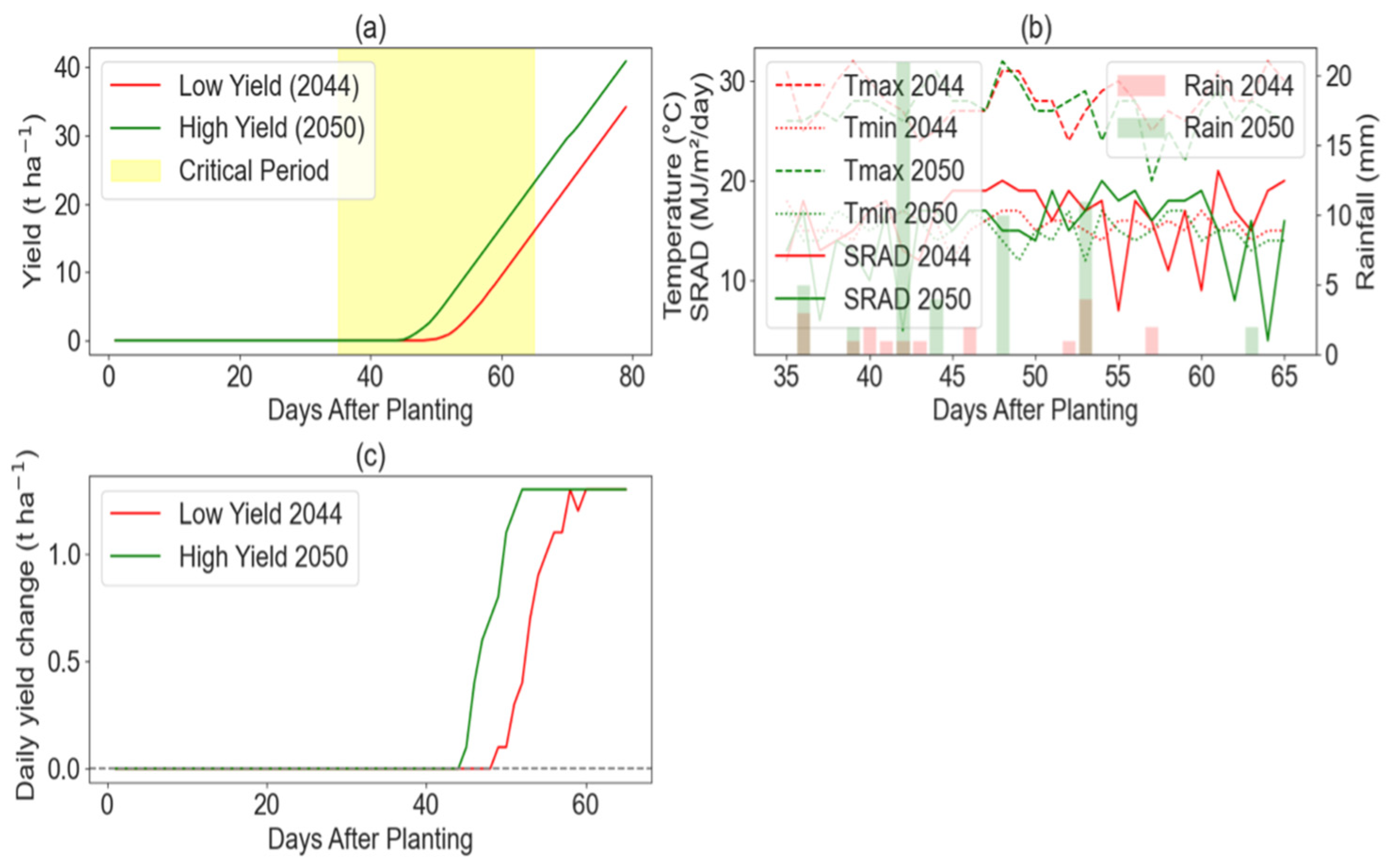
To evaluate the variation in potato yields from year to year across various climate scenarios, we conducted a comprehensive analysis of the yield development under projected climate conditions. Our findings revealed that tuber yield curves for different years begin to diverge around 45 to 55 days after planting (DAP) under different ssps. This period marks the transition from vegetative to tuber initiation, highlighting an initial lag phase where the potato plant prioritizes roots, stems, and leaves development before allocating resources to tuber development. The divergence of the yield curves during 50 to 55 DAP reflected a critical period, which was influenced by environmental factors.
As mentioned above, among all the years analyzed under different emission scenarios, the highest yield was recorded in 2050, whereas the lowest yields occurred in 2044, 2054, and 2048. Consequently, we examined the tuber yield curve, along with climate variables during these periods, and the fluctuations in daily yield, particularly during the critical periods of 35 to 65 DAP, as illustrated in
Figure 4.
Under the ssp126, yield curves indicated that tuber initiation began approximately 45 DAP for the year 2050, while for 2044, it showed around 52 DAP, as illustrated in
Figure 4a. In 2050, the mean values of climate variables were recorded as solar radiation at 16.10 (MJ/m
2/day), maximum temperature at 27.19 °C, minimum temperature at 15.19 °C, and the cumulative rainfall was 46 mm over 4 rainy days. In contrast, in 2044, solar radiation was measured at 16.19 (MJ/m
2/day), with a maximum temperature of 27.48 °C, a minimum temperature of 15.71 °C, and rainfall amounting to 14 mm over 8 rainy days (
Figure 4b). The daily yield change analysis results demonstrated that following the tuber initiation, a steep rise in the yield curve was observed around 44 DAP for 2050 and 48 DAP for 2044. The stabilization of growth, occurring around 52 DAP for 2050 and 60 DAP for 2044, suggests a decline in growth rates as maturity approaches (
Figure 4c).
Under ssp245, tuber initiation also occurred at approximately 45 DAP for 2050 and around 52 DAP for 2054. In 2050, with corresponding climate variables indicating solar radiation 17.05 (MJ/m2/day), maximum temperature 28.14 °C, minimum temperature 15.52 °C, and the cumulative rain was 23 mm with a total of 6 rainy days. In 2054, solar radiation was 16.90 (MJ/m2/day), the maximum temperature was 28.24 °C, the minimum temperature was 15.62 °C, and the rainfall was 7 mm over 5 rainy days. The analysis of daily yield changes revealed that, following the start of tuber initiation, there was a significant increase in daily tuber formation change around 44 DAP and 48 DAP for 2050 and 2044, respectively. The stabilization of growth observed around 51 DAP for 2050 and 58 DAP for 2044 suggests a decline in growth rates as the crop approaches maturity.
Under ssp585, yield curves showed that tuber initiation started around 50 DAP for 2050 and around 58 DAP for 2048. In 2050, the mean values of climate variables were solar radiation 16.75 (MJ/m2/day), maximum temperature 27.88 °C, minimum temperature 15.87 °C, and the rainfall was 49.3 mm with a total of 13 rainy days. In 2048, solar radiation was 16.85 (MJ/m2/day), the maximum temperature was 28.34 °C, the minimum temperature was 16.38 °C, and the rainfall was 37.1 mm, with 15 days in total as rainy days. The daily yield change analysis results demonstrated that the daily tuber formation increased sharply at 48 DAP (2050) and 53 DAP (2048), marking the intensive tuber bulking phase. Post-60 DAP fluctuations suggest declining growth rates as crops approach maturity.
Comparative analysis of the lowest-yield years under varying emission scenarios indicates that temperatures were generally higher and rainfall lower than in 2050. Notably, solar radiation was elevated under ssp126 and ssp585, while lower under ssp245. Overall, 2050 exhibited relatively lower temperatures and higher rainfall compared to years with diminished yields across all scenarios.
During the critical period in 2050, emissions scenario analysis indicates tuber initiation typically occurs between 40 and 50 DAP, with notable delays observed in higher-emission scenarios. The weather variables influencing tuber formation during this period were consistent across scenarios, though fluctuations in daily yield changes post-tuber formation occurred later in ssp585 compared to lower emission scenarios.
3.5. Impacts of Adaptation Strategies on Potato Production
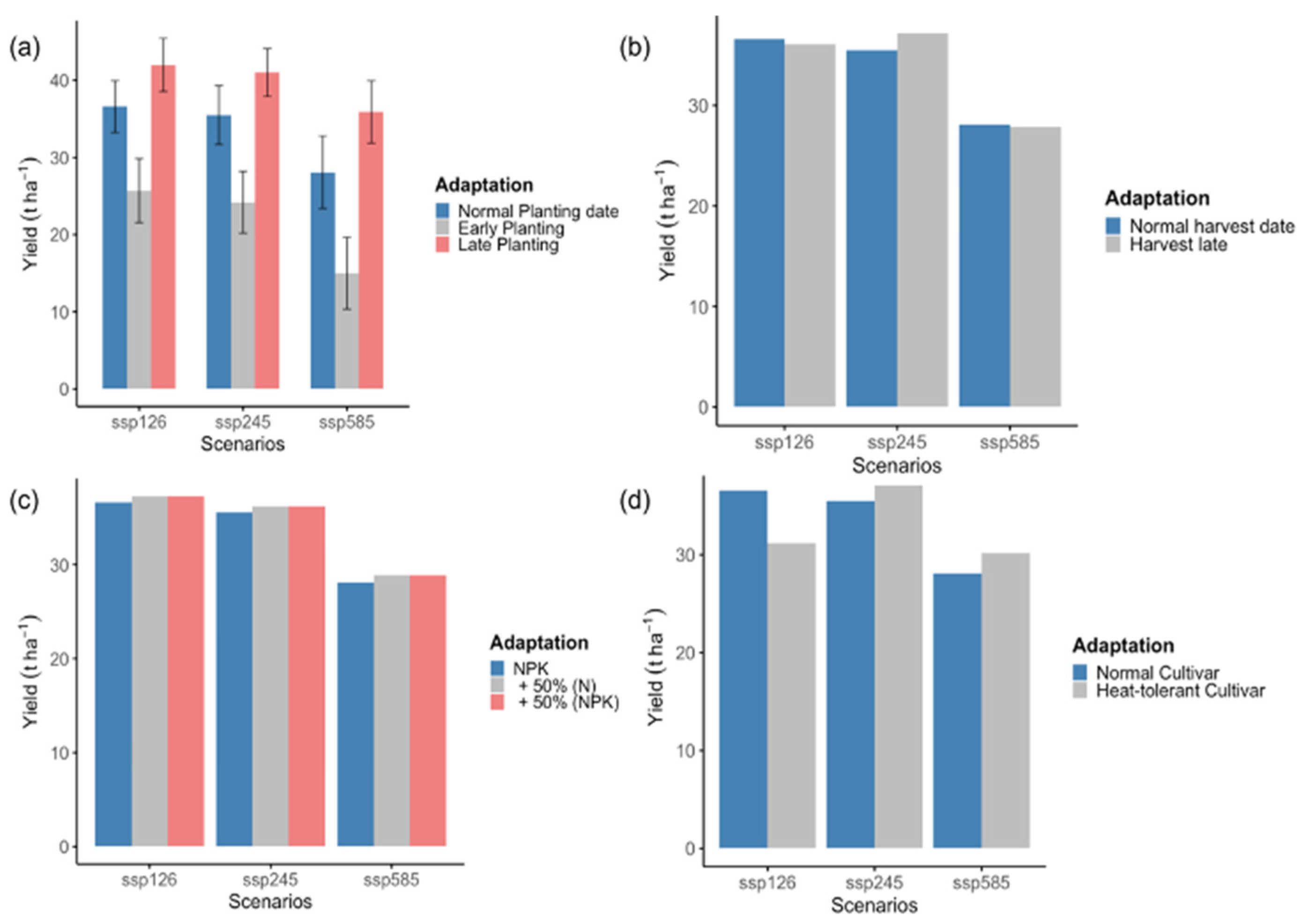
The simulated results of the impact of adaptation strategies on potato production are shown in
Figure 5.
3.5.1. Shifting Planting Dates
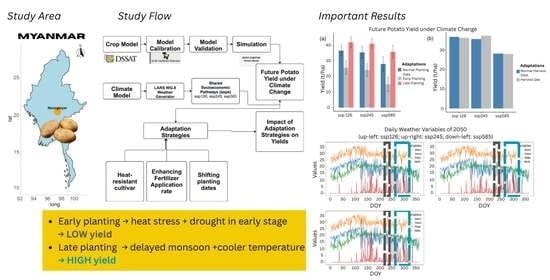
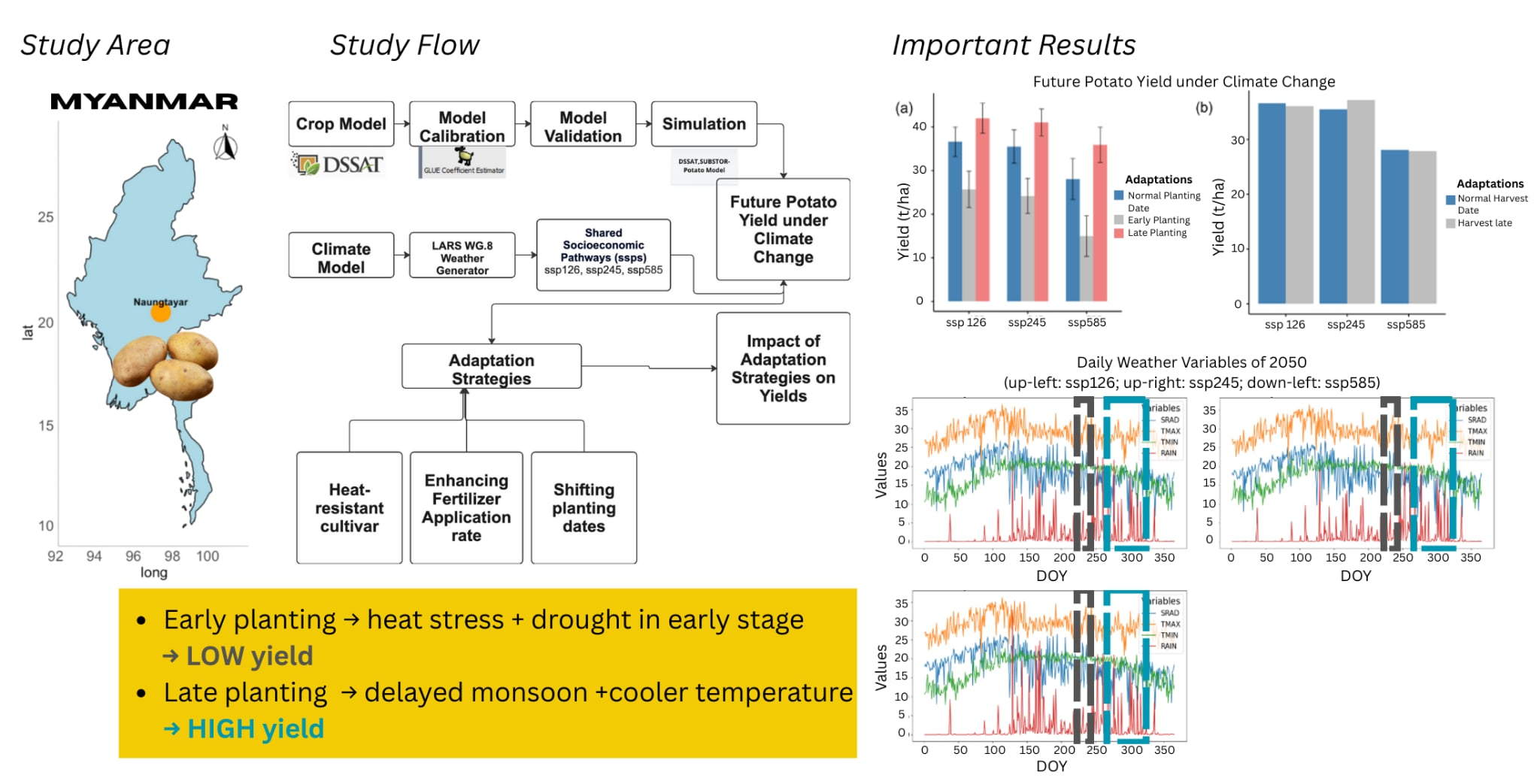
The adoption of early planting days resulted in a decrease in potato tuber yield under all different emission scenarios, while it was increased by late planting days, as illustrated in
Figure 5a. The average projected yields for early planting adaptation were 25.7 t ha
−1, 24.2 t ha
−1, and 15.0 t ha
−1 in ssp126, ssp245, and ssp585, respectively. In contrast, the yield for the late planting date in different emission scenarios was projected to be 42.0 t ha
−1, 41.0 t ha
−1, and 35.9 t ha
−1. In a comparison of tuber yield with a normal planting date, the yield appeared to be decreased by 10.88%, 11.34%, and 13.09% in ssp126, ssp245, and ssp585, respectively, when it was planted early. However, the results showed that a delay in planting date would enhance yield by 5.42%, 5.46%, and 7.81% in ssp126, ssp245, and ssp585, respectively.
The results of the statistical analysis indicated a marginally significant effect (
p = 0.0512) of extending the crop cycle, particularly during the harvesting periods, on yield, as shown in
Figure 5b. Under ssp126, potatoes resulted in a yield of 36.1 t ha
−1, 37.2 t ha
−1 and 27.0 t ha
−1 in the ssp245 and ssp585 scenarios, respectively, as shown in
Figure 5b. Overall, potato yields of the early planting date reached those of the normal planting date by prolonging the crop life cycle through adjusted harvesting times.
3.5.2. Enhancing Fertilizer Application
The simulated results indicated that increasing the fertilizer rate had minimal impacts on potato yield, as shown in
Figure 5c. An increase of 50% in nitrogen fertilizer produced yields of 37.5 t ha
−1, 36.22 t ha
−1, and 28.89 t ha
−1, respectively, for ssp126, ssp245, and ssp585. Likewise, a 50% increase in nitrogen, phosphorus, and potassium provided the same results as the increase in nitrogen fertilizer alone, as illustrated in
Figure 5c.
3.5.3. Cost–Benefit Analysis of Adaptation Strategies
This subsection examined the economic trade-offs and environmental implications of a fertilizer-intensive adaptation strategy in potato cultivation. A comparative cost–benefit analysis was conducted between two production systems within a single growing season using baseline production data from Aung et al. [
8]. The analysis compared a baseline system (without adaptation, fertilizer cost: USD 676 ha
−1) against an adaptation strategy involving a 50% increased fertilizer input (USD 1014 ha
−1). Both scenarios assumed identical yields of 18.16 t ha
−1 [
8] and market conditions. No discount rate was applied, as both costs and benefits occur within the same production year. The findings indicated that while total production costs increased by 15.5% (from USD 2187 to USD 2525 ha
−1), net profit declined by 17.5% (from USD 1929 to USD 1591 ha
−1), with the increased fertilizer expenditure yielding no corresponding gains in yield.
3.5.4. Development of Heat-Resistant Cultivar
Tuber yields were affected by cultivar types, resulting in yields of 31.2 t ha
−1, 37.1 t ha
−1, and 30.2 t ha
−1 in ssp126, ssp245, and ssp585, respectively, as shown in
Figure 5d. Notably, under the lowest emission scenario, there was a recorded decrease in tuber yield of 5.4%. In contrast, the higher emission scenarios demonstrated an increase in yields, specifically by 1.6% and 2.1%.
3.5.5. Impacts of CO2 Fertilization
The projected climate results for the study site indicate that the temperature will rise in the future. Therefore, this subsection examined the impact of CO
2 fertilization on yield loss in the context of increasing temperature across various scenarios. Simulations were conducted using different atmospheric CO
2 concentrations aligned with ssp scenarios: 460 ppm for ssp126, 550 ppm for ssp245, and 790 ppm for ssp585, as detailed by Kim et al., 2024 [
17]. The simulation results integrating these CO
2 concentrations are presented in
Figure S1. CO
2 fertilization is expected to enhance the productivity of potatoes, as shown in
Figure S2. The average yields are projected to be 45.8 t/ha, 45.2 t/ha, and 35.9 t/ha for ssp126, ssp245, and ssp585, respectively.
4. Discussion
4.1. Model Calibration and Validation
The performance of the SUBSTOR-Potato model was evaluated through calibration and validation, with acceptable RMSE and nRMSE values for post-monsoon crops. The model projected lower tuber yields than observed during the validation phase, likely due to increases in temperatures. In 2021 and 2022, the maximum temperatures were 21.6 °C to 34.1 °C, occasionally exceeding this range, while the minimum temperature ranged from 10.5 °C to 22.4 °C. By contrast, in 2015 the maximum temperature ranged from 18.1 °C to 33.2 °C, with minimum temperatures of 10.8 °C to 23.2 °C. For 2023 and 2024, lower simulated yields can be attributed to the timing of the tuber initiation (49–63 DAP), which coincided with the summer peak, when maximum temperatures exceeded 33 °C for more than 30 consecutive days. During the summer season, tuber yield growth progressed more slowly, lasting 43 to 50 days, compared to the monsoon season, where the growth phase lasted only about 15 days. This explains the lower yields and severe reductions predicted by the model, which also seems to overestimate heat stress effects, yielding values far below the average irrigated summer crop yield of ~33.4 t ha
−1. This highlights potential model limitations in capturing the interaction between irrigation and prolonged heat stress. According to the previous study, the SUBSTOR Potato model tends to underestimate the simulated values under higher temperature conditions [
36]. High temperature during the tuber initiation phase led to a decreased percentage of larger tubers, a reduced harvest index, and lowered photosynthesis rates, contributing to significant yield losses; however, once the tubers fully matured, the effects of heat lessened, as the majority of these impacts were linked to the development of the tubers [
55,
56]. The statistical indices resulting from our study indicate strong alignment between simulated and actual values, confirming that the model is reliable. These results correlate favorably with those reported by others, who noted RMSE values ranging from 0.63 to 1.6 and 4.7 to 17.8 across their calibration and validation periods [
57,
58]. Moreover, studies by the other model reported nRMSE values of 28.1% and 21.04%, respectively [
36,
59]; the nRMSE values obtained in these studies also fall within the established range observed in other potato simulation research, further supporting the dependability and relevance of the SUBSTOR-Potato model in simulating potato growth dynamics. Although model validation incorporated both irrigated (summer) and rainfed (post-monsoon) crop seasons to improve parameter accuracy, climate change simulations in this study were limited to rainfed conditions. This reflects the reality that potato production in Southern Shan State is predominantly rainfed, with limited and inconsistent access to irrigation for most smallholders. As described in
Table 3, irrigated systems currently achieve higher yield (25 t ha
−1 in 2023) than rainfed systems, suggesting significant potential for yield improvement through better water management in future climate scenarios. However, the effectiveness of irrigation depends on future water availability. Future research should model irrigation management under projected climate scenarios, addressing crop water needs and resource constraints to better inform adaptation strategies in the region.
4.2. Analysis of Climate Impacts on Potato Yield
The potato yield for Southern Shan State was simulated under three emission scenarios, with the lowest yield projections in the highest emission scenario, followed by the intermediate and lowest emission scenarios. This is in agreement with the study conducted by Adekanmbi et al., 2023 [
19], which predicted a 60% decrease in potato yield in the 2070s and 80% in the 2090s under ssp585 in Prince Edward Island (PEI). Previously, the simple crop growth model LINTUL-DSS was utilized to determine the attainable yield [
7]. The modeling results indicated that the potato yield in Naungtayar could reach 42 t ha
−1, which is comparable to the current study’s findings of the highest yield with 40.9 t ha
−1 under ssp126 for rainfed potatoes, as illustrated in
Figure 3. The slight discrepancies between the two studies may be attributed to differences in planting and harvesting dates: the previous study was planted on 10 August 2015 and harvested on 7 November 2015, resulting in a cropping cycle of 89 days, while the current study harvested at 79 DAP. The extended growth period (10 days) in the earlier study likely allowed more time for tuber development and biomass accumulation, contributing to higher final yields compared to the present study. Additionally, a different model and a different source of future climate data were employed in the current research. Furthermore, across various emission scenarios, year-to-year variations were observed, showing that under ssp585, potato yields declined towards the latter part of the century. The significant increase in precipitation under ssp585 could be one of the reasons for a dramatic decrease in tuber yield due to waterlogging, reduced solar radiation due to cloudy weather, and favorable conditions for disease outbreaks, particularly potato late blight disease. However, this study did not account for the effects of diseases on simulated yields. The exclusion of disease dynamics may result in overestimated yield projections, especially under high-emission scenarios. Future research that integrates disease coupling points into DSSAT would provide a more comprehensive assessment of climate change impacts on potato production. It was also found that the number of days experiencing precipitation over the 95th percentile could exceed 50 mm for the ssp585 scenario, and this rise in extreme rainfall could lead to a higher risk of flood damage [
60]. Additionally, a combination of low minimum temperature with higher rainfall in ssp585, as shown in
Figure 2, may induce cold stress, reducing potato yield. Nevertheless, the overall warming trend, as discussed in
Section 4.2, remains the dominant temperature-related constraint on potato production. The ssp245 scenario experienced lower rainfall and higher temperatures than ssp126 and ssp585 (
Figure 2), contributing to the decrease in potato yields in ssp245. This decline can be attributed to reduced rainfall and increased temperatures, as the changes in potato yield are closely linked to shifts in precipitation and temperature. As reported by Maqsood et al., 2020 [
61] extended periods of elevated temperature negatively impact tuber yield due to drought-resembling conditions. Moreover, previous studies have noted that potato yields typically diminish when temperatures reach 20.7 °C or higher, as this leads to reduced rates of photosynthesis and increased respiration rates [
62]. Results reported by Adekanmbi et al., 2023 [
19] indicate that the significant yield changes can be attributed to precipitation variation because there was instability in precipitation patterns across periods, which is similar to the current results of the binomial distribution of the potato across years under ssp126 and could indicate that certain years experienced favorable climate conditions for potato growth. In contrast, the skewed lower-end distribution under the ssp245 scenario suggests a trend toward more frequent years with suboptimal growing conditions. Furthermore, the substantial yield fluctuations can be attributed to several interacting climate factors during critical phenological stages. Analysis of the lowest-yield years, 2044 (ssp126), 2054 (ssp245), and 2048 (ssp585), revealed that these years experienced substantially higher temperatures and lower rainfall during the critical tuber initiation period (45–55 DAP) compared to the high-yield year 2050. Specifically, average maximum temperatures during tuber initiation were 28.9 °C, 29.0 °C, and 28.8 °C for 2044, 2054, and 2048, respectively. In contrast, 2050 exhibited lower average maximum temperatures of 27.1 °C (ssp126), 27.3 °C (ssp245), and 27.5 °C (ssp585). Rainfall deficits were equally pronounced: during tuber initiation, the low-yield years received only 14 mm (2044, ssp126), 7 mm (2054, ssp245), and 37.1 mm (2048, ssp585), compared to 46 mm, 23 mm, and 49.3 mm, respectively, in 2050 under the same emission scenarios. These combined stresses, including elevated temperatures (>28.8 °C) and moisture deficits during tuber initiation, likely reduced photosynthetic efficiency while increasing respiratory demands, directly limiting tuber yield [
62]. In contrast, the high-yield year 2050 benefited from near-optimal conditions, with moderate temperatures and adequate moisture during this crucial phase (45–55 DAP), highlighting the importance of climate variable timing relative to crop phenological stages. Overall, the analysis demonstrates that even under the same emission scenario, inter-annual climate variability, particularly temperature extremes and rainfall deficits during tuber initiation, drives significant yield fluctuations, with these stress events becoming more frequent and severe under higher emission pathways.
4.3. Impact of Adaptation Strategies on Future Potato Yield
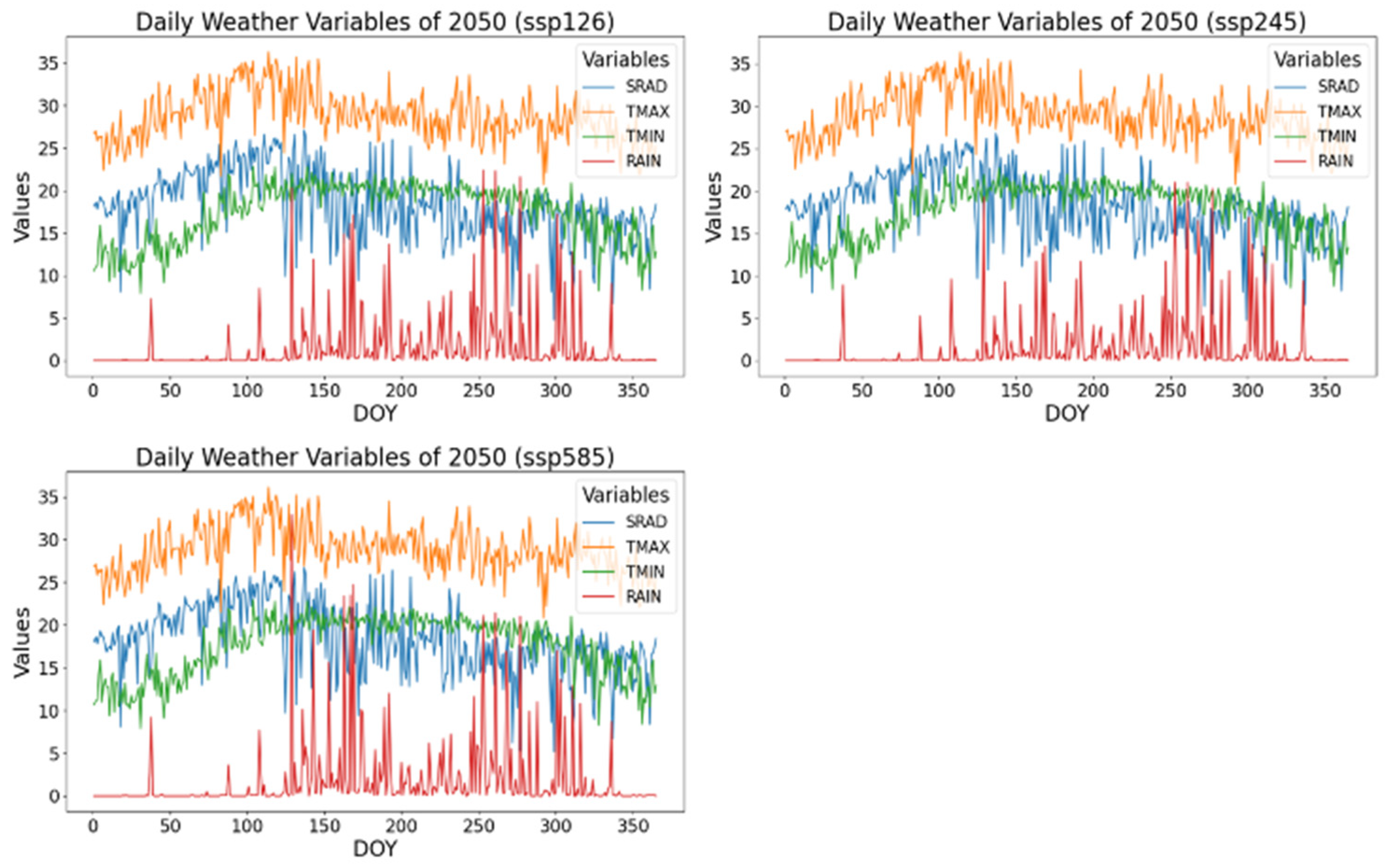
The potato yield was affected by adjustments in planting dates, while fertilizer application had minimal impact. Yield reduction in early planting was associated with lower rainfall and a higher maximum temperature during the initial growth stage, particularly between days of year (DOYs) 224 and 247, as illustrated in
Figure 6, which may have hindered vegetative growth and decreased final tuber yield. Conversely, delayed planting of potatoes led to higher yields, probably because of better weather conditions during the growing season, especially during DOYs 254 to 333, as shown in
Figure 6. This trend aligns with the overall climate patterns of Myanmar, particularly the delayed onset of the southwest monsoon [
25].
Potato yield is affected by various environmental conditions, including precipitation, radiation, and temperature. In the context of this study, it appeared that these factors are critical. Therefore, the introduction of additional fertilizers may be insufficient to mitigate the limitations imposed by these environmental constraints. Furthermore, findings raise critical concerns regarding the sustainability of adaptation strategies that prioritize input intensification. The increase in chemical fertilizer use not only undermines economic viability but also poses significant risks to environmental quality through nutrient leaching, greenhouse gas emissions, and soil degradation. These results suggest a need for integrated, resource-efficient adaptation approaches that align with both economic resilience and environmental sustainability objectives. The development of potato varieties that can withstand high temperatures is crucial for achieving optimal yields in a warming climate. Yield performance varied in this study, showing a decline under ssp126 but an increase under ssp245 and ssp585, as shown in
Figure 5d, suggesting that heat-resistant cultivars might respond differently under different scenarios. The heat-resistant cultivar might not have been necessary in a low-emission scenario with moderate warming and precipitation compared to ssp245 and ssp585. Another consideration is that while heat-tolerant cultivars exhibit reduced susceptibility to heat stress, they are not completely resistant to the negative impacts of elevated temperatures [
63]. These cultivars may still encounter limitations under conditions of suboptimal thermal stress. This phenomenon may be attributable to the redirection of photoassimilates toward the development of aerial biomass at the expense of tuber growth. The heat-resistant cultivar likely mitigated heat stress-induced yield loss, improving production compared to the normal cultivar in the higher warming scenarios (
Figure 5d). This may reflect optimized stress-triggered resilience mechanisms of heat-tolerant cultivars, such as sustained photosynthetic efficiency under high daytime temperatures for cultivars Desirée and Norchip [
64,
65]. Elevated nighttime temperatures during tuber initiation delay development reduce large tuber yields, while high daytime temperatures impair photosynthesis; however, once the tubers fully mature, these thermal effects diminish, as they are mainly linked to the development process [
55]. The cultivar’s ability to mitigate high night and daytime temperature effects likely explains its better performance in higher-emission scenarios, where combined high night and daytime temperatures may amplify sink-source imbalances [
55]. CO
2 fertilization is likely to mitigate the negative impacts of warming on potato yields, as shown in
Figure S2. This effect can be attributed to the increase in photosynthesis rates and light use efficiency associated with higher CO
2 levels as reported by Rana et al. [
43]. Our findings align with previous studies indicating that yield losses due to climate change can be offset by the combined effects of CO
2 and temperature, particularly when temperature alone would lead to reduced yields [
43]. Additionally, the benefits of CO
2 fertilization counteract the adverse effects of rising temperatures on spring and summer potato crops in South Korea [
17].
4.4. Practical and Policy Implications for Potato Production in Southern Shan State
This study examines the impact of varying emission scenarios on potato yields, highlighting increased vulnerability under severe climate conditions. Effective adaptation strategies, including the use of heat-resistant cultivars and the strategic timing of planting and harvesting, are essential. Under low warming conditions, the high temperatures and low precipitation during the early growth phase may necessitate delaying planting to optimize yield. Furthermore, the varieties should be carefully selected for the low-emission scenario, as heat-resistant cultivars are likely to underperform under this condition. Meanwhile, in the context of severe climate change, genetic improvement efforts must focus on developing heat-tolerant cultivars capable of withstanding increased thermal stress. Similar to the dynamics observed in low-emission scenarios, delayed planting should prioritize synchronization with the late arrival of the rainy season in Myanmar. Under low warming conditions, the effectiveness of these cultivars and early planting is constrained by high temperatures and low precipitation during the early growth phase, suggesting a delay in planting to optimize climatic conditions. Additionally, to extend the planting window for potato crops, there is a critical need to develop cultivars that not only enhance high-temperature tolerance but also extend longevity and promote delayed growth, thereby ensuring sufficient time for crop maturity. Overall, it is crucial to encourage farmers to adjust planting dates based on accurate climate projections. Furthermore, enhancing investment in research and development initiatives aimed at creating heat-tolerant potato varieties will be vital in promoting sustainable agricultural practices. However, our findings and recommendations are inherently variety- and location-specific due to data availability. This geographically focused approach was essential for capturing the unique environmental conditions, soil characteristics, and climate patterns of the region. It allowed us to develop tailored adaptation recommendations for potato farmers in Southern Shan State, where potato production is a major livelihood activity. While the methodological framework we developed may provide a valuable foundation for regions with similar agro-climatic conditions, specific recommendations, such as delayed planting dates, heat-tolerant cultivar selection, and fertilizer application, should be considered location-specific. Differences in local climate, soil characteristics, and genotype responses may result in varying yield outcomes and adaptation requirements in other regions. Therefore, the generalizability of these results should be interpreted with caution. Future research should include multiple agro-ecological zones and various genotypes to enhance the validity of climate adaptation recommendations. This study underscores the importance of formulating policies for effective nutrient management, which is necessary, given the minimal impact of fertilizer application on yield.
4.5. Limitations and Sources of Uncertainty
Despite the valuable insights gained from this study, some limitations and sources of uncertainty should be acknowledged, which also point toward important directions for future research. Firstly, our study is limited to actual soil data. This limitation may impact the precision of water balance and yield, as default parameters do not consider local variations in soil hydraulic properties and organic matter content. Future investigations incorporating measured soil profiles would enhance the reliability of the simulation outcomes. We utilized a single General Circulation Model (GCM) rather than multiple GCMs, whereas the study in [
18] performed an evaluation of multiple models applying five GCMs paired with five process-based crop models. Their results indicated that in the highest-yielding areas currently facing rising growing season temperatures, climate change is projected to cause a decline in yields, while southern regions of the USA are expected to see a slight increase in simulated yields. Furthermore, findings from Adekanmbi et al., 2023 [
19], revealed that simulated potato yields using SUBSTOR-Potato were inconsistent across different GCMs, varying by periods and ssps. Therefore, it is necessary to apply multiple GCMs for more robust simulations.
Our findings and recommendations are inherently variety- and location-specific due to data availability. This geographically focused approach was essential for capturing the unique environmental conditions, soil characteristics, and climate patterns of the region. It allowed us to develop tailored adaptation recommendations for potato farmers in Southern Shan State, where potato production is a major livelihood activity. While the methodological framework we developed may provide a valuable foundation for regions with similar agro-climatic conditions, specific recommendations, such as delayed planting dates, heat-tolerant cultivar selection, and fertilizer application, should be considered location-specific. Differences in local climate, soil characteristics, and genotype responses may result in varying yield outcomes and adaptation requirements in other regions. Therefore, the generalizability of these results should be interpreted with caution. Future research should include multiple agro-ecological zones and various genotypes to enhance the validity of climate adaptation recommendations.
The accuracy of the simulations is closely tied to the quality of input data. The projected weather data utilized, derived from the LARS WG.8 generator, indicated a tendency to forecast higher minimum temperatures. This aspect influences the simulation outcomes significantly. Additionally, socio-economic factors, such as shifts in policy, farmer adoption rates of adaptation strategies, and market fluctuations, are difficult to quantify and could alter the real-world applicability of the study’s recommendations. In particular, the lack of reliable post-coup market and fertilizer price data limits the ability to assess how recent political and economic instability may influence input use and production decisions. Recognizing these limitations highlights the need for further studies incorporating more extensive field validation, improved data integration, and scenario analysis to enhance the robustness of climate impact assessments on potato production in Southern Shan State, Myanmar.