Abstract
The highly variable weather under changing climate conditions affects the establishment and the cutoff of crop growing season and exposes crops to failure if producers choose non-adapted relative maturity that matches the characteristics of the crop growing season. This study aimed to determine the relationship between maize hybrid relative maturity and the grain yield and determine the relative maturity range that will sustain maize production in northwest New Mexico (NM). Different relative maturity maize hybrids were grown at the Agricultural Science Center at Farmington ((Latitude 36.69° North, Longitude 108.31° West, elevation 1720 m) from 2003 to 2019 under sprinkler irrigation. A total of 343 hybrids were grouped as early and full season hybrids according to their relative maturity that ranged from 93 to 119 and 64 hybrids with unknown relative maturity. The crops were grown under optimal management condition with no stress of any kind. The results showed non-significant increase in grain yield in early season hybrids and non-significant decrease in grain yield with relative maturity in full season hybrids. The relative maturity range of 100–110 obtained reasonable high grain yields and could be considered under the northwestern New Mexico climatic conditions. However, more research should target the evaluation of different planting date coupled with plant population density to determine the planting window for the early season and full season hybrids for the production optimization and sustainability.
1. Introduction
Maize (Zea mays L.) is the most widely grown cereal across the world and the United States is the largest producer of maize, with a total production of 302.64 million tons in 2019 [1]. Maize growth and development duration is an important factor that may impact crop yield and yield component [2,3]. Temperature exigence of maize usually delays the plant window which varies across the agroecological and climatic zones across the United States. Several studies were conducted to determine maize base temperature and it was found to be 9.8 °C [4]. The base temperature is the minimum threshold temperature bellow which no crop growth occurs. The growing season is variable across the climatic zones and maize breeders are making effort to develop maize hybrids to match the climatic environment while maintaining high grain yield. Wilkens et al. [5] defined maize maturity as maize grain filling stage end with the maximum kernel weight reached and the black layer is developed near the tip end of the kernel. Hybrids are classified as early, mid, and long season maturing according to their relative maturity. Duvick [6] found that the long relative maturity hybrids delay their senescence and Richards [7] stated that these types of hybrids have longer photosynthetic duration and produce more biomass. The early season or short duration hybrids tend to produce less biomass as compared to the full season hybrids [8,9]. Lauer [10] reported that maize hybrid with relative maturity of 80–95 days produced 3.61 Mg/ha of yield less than the 100–115 days’ relative maturity maize hybrids. Wilkens et al. [5] found that forage maize stover yield and ethanol yields increased linearly with hybrid relative maturity. Darby and Lauer [11] found no significant differences in stover yield between the short and long season forage maize hybrids while the full season hybrids showed higher yield than the short season hybrids. Evans et al. [12] reported that the growing conditions impacted the number of ears per plant and Abendroth et al. [13,14] indicated that the mid-season growing conditions influence the number of kernels per ear. Novacek et al. [15] found that the late season conditions affect the kernel weight at physiological maturity.
Weather conditions determine crop planting and producers can go out of their normal planting window due to unfavorable weather conditions. The relative maturity will play a fundamental role for successful crop production. Prevailing weather conditions, crop planting date and the relative maturity are therefore determinant for crop actual yield [16]. Staggenborg et al. [17] found that the early planting of the full season maize yielded greater than the late planting and the early planting of the early season maize obtained greater yield than late planting. Richards [18] reported that early planting of the full season crops has the high potential for higher yield while other factors such as nutrient deficiency, in-season drought spell, heat stress and other management practices can affect crop yield [19]. Zhou et al. [20] found that late planted maize showed yield decline because of the reduction in the growing season duration and the thermal unit accumulation [21]. Parker et al. [22] reported that very early planting is subject to poor emergence due to the cold and wet soil conditions. Baum et al. [23] found that 70% variability in maize grain yield was attributed to planting date and yield stability was observed with only 10% of relative maturity, showing early season and full season maize hybrids produced similar yields regardless of their planting date if they reached physiological maturity before harvesting. Due to the aforementioned factors, there is a gap in knowledge regarding the choice of the relative maturity hybrid maize (full season, mid-season and early season hybrids) to be planted across the different agroecological and climatic zones. Air temperature is an important factor for crop growth and development and its measurement helps in timely reference of crop growing season period, the accumulated thermal units, spring frost that impacts crop planting window and fall frost that affects crop maturity if late planted [24,25].
In northwestern New Mexico, the growing season duration varies with year and the freeze-free period averages 163 days, with the shortest freeze-free period of 115 days and the longest with 193 days [25]; the first fall frost can be as early as 18 September and the last spring frost can occur as late as in early June [25]. The highly variable and unpredictable weather in northwestern New Mexico exposes crop producers to crop failure when inappropriate relative maturity crops are grown. The objective of this study was to determine the long-term influence of maize hybrid relative maturity on grain yield and identify the relative maturity range that will sustain maize production and minimize crop failure in the northwest New Mexico high desert and high elevation conditions.
2. Materials and Methods
2.1. Study Area
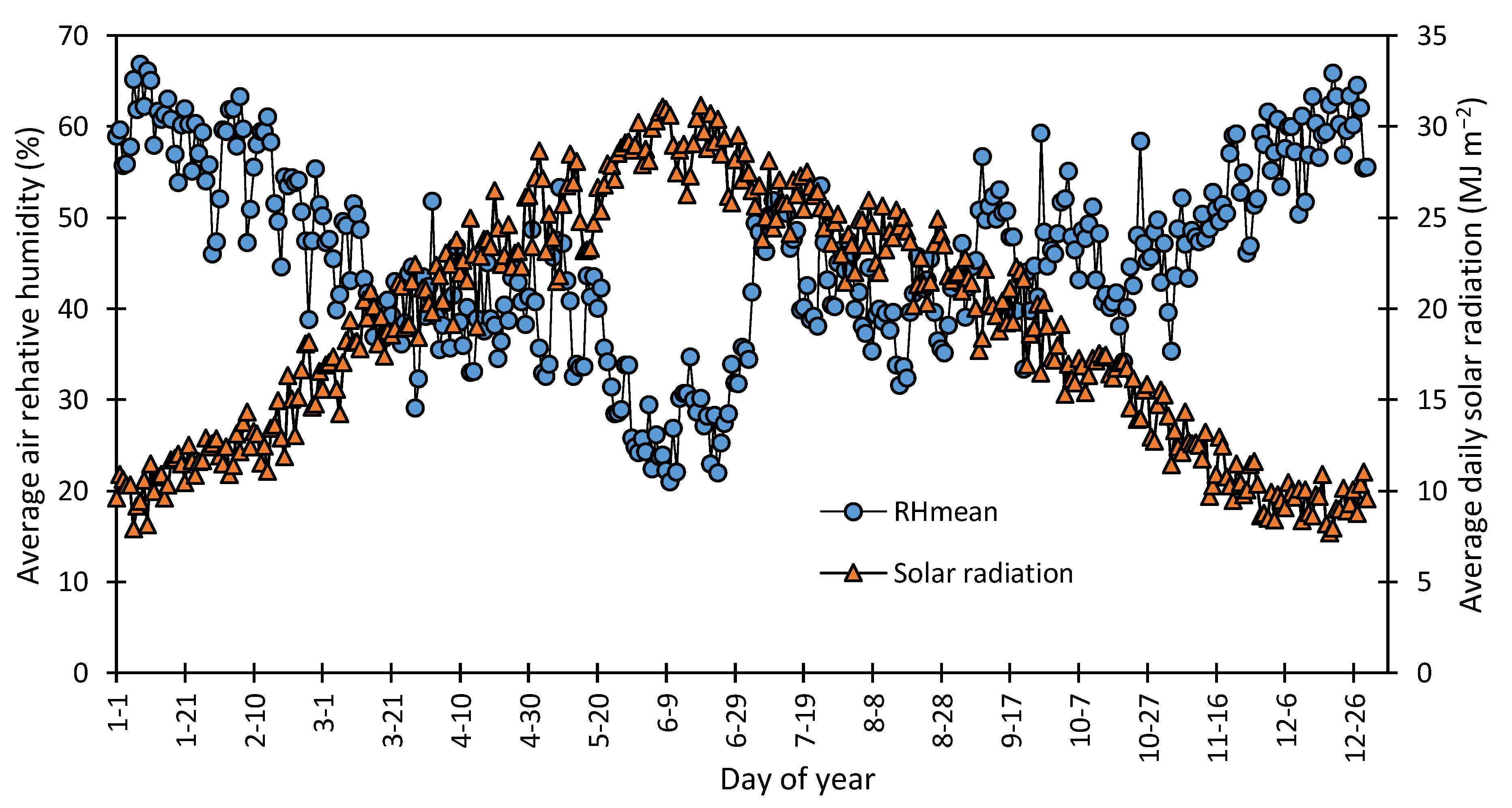
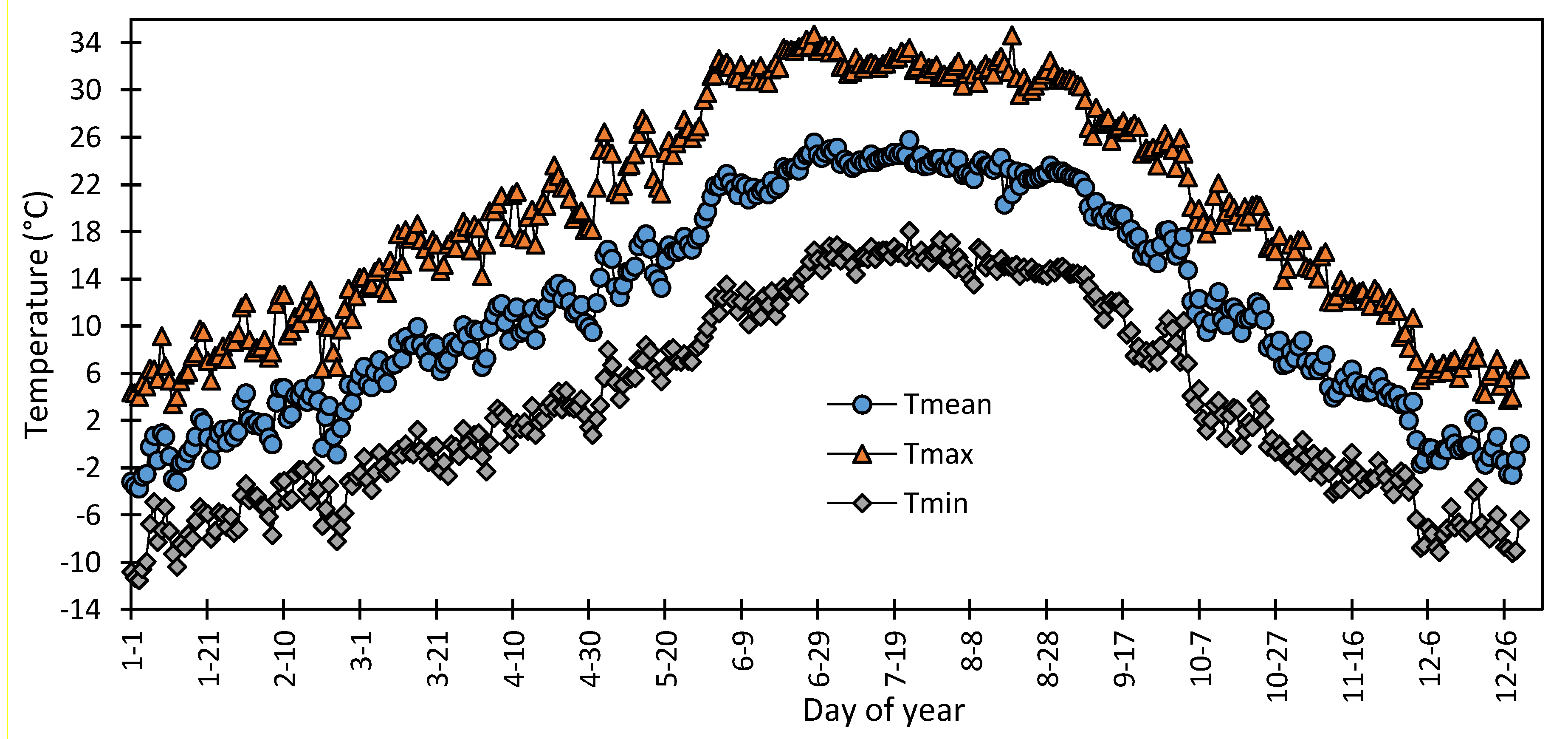
This study was conducted at the New Mexico State University (NMSU) Agricultural Science Center (ASC) at Farmington (Latitude 36.69° North, Longitude 108.31° West, elevation 1720 m) for the 2003–2019 period. Minimum temperature (Tmin), maximum temperature (Tmax), minimum relative humidity (RHmin), maximum relative humidity (RHmax), wind speed (U2), and solar radiation (Rs) were collected on a daily basis from an automated weather station installed at the site by the New Mexico Climate Center. The spring last frost, fall first freeze, the spring last killing frost, the fall first killing frost and the killing freeze free period of each year are summarized in Table 1. In addition, the average mean, maximum and minimum temperatures for the center are presented in Figure 1, and the average relative humidity and solar radiation are presented in Figure 2. The soil at the station is basically a fine sandy loam soil with some small patches of Avalon sandy loam and Doak loam. Soil moisture at field capacity varies from 29.7 to 32.5% and the soil moisture content at wilting point is about 16%. The organic matter content of the soil is less than 1% and the soil pH varies between 7.8 and 8.3.
Table 1.
Summary of freeze dates and number of consecutive freeze-free days at the NMSU ASC Farmington research station during the 2003–2019 period.
Figure 1.
Trend in the daily average mean, maximum and minimum temperatures for 2003–2019 period at the Agricultural Science Center at Farmington, New Mexico.
Figure 2.
Trend in the daily average relative humidity and solar radiation for 2003–2019 period at the Agricultural Science Center at Farmington, New Mexico.
2.2. Crop Management
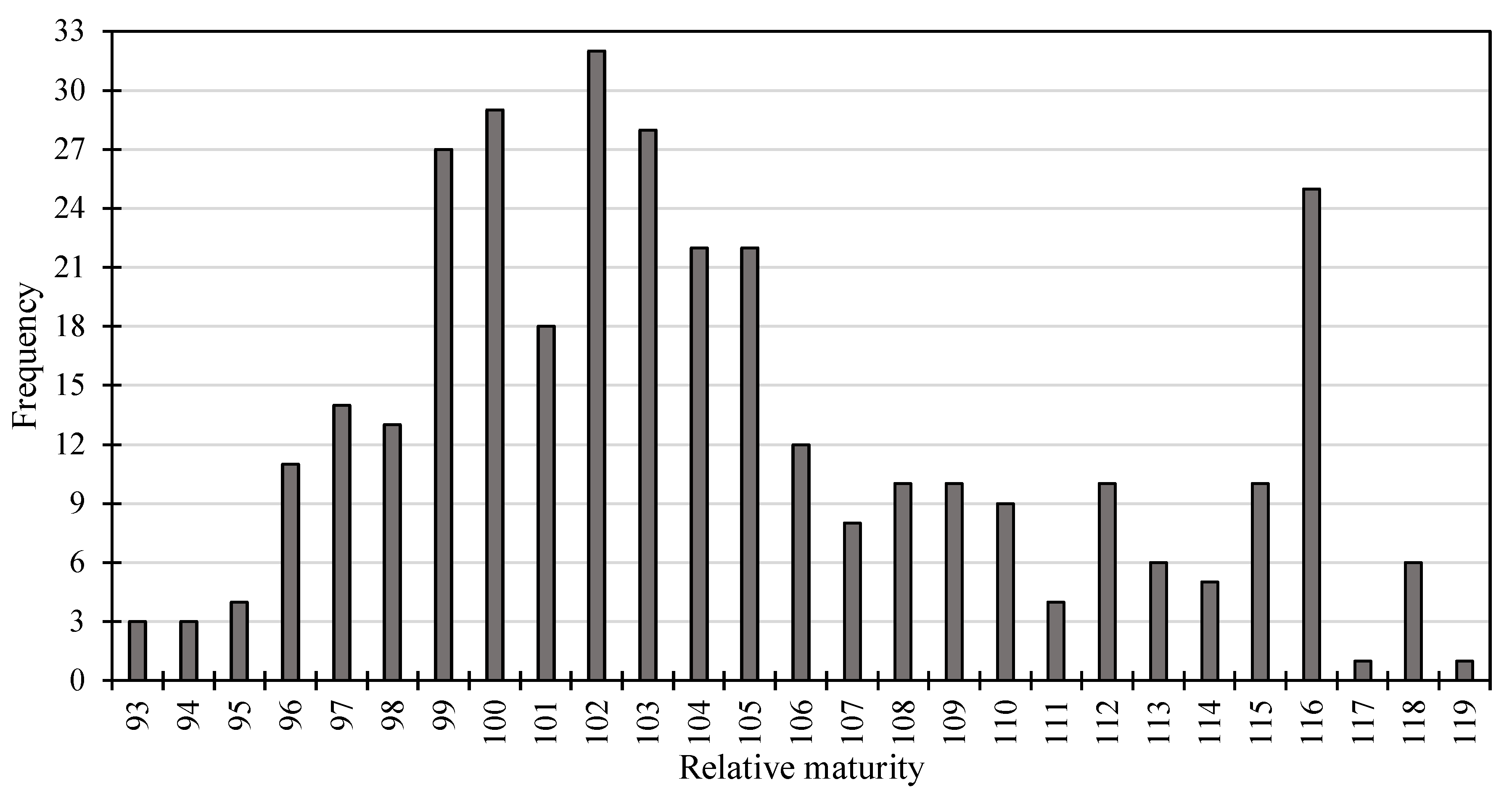
Selected numbers of hybrid maize grouped according to their relative maturity date as early season and full season were tested each year; however, only early season hybrids were evaluated during the 2012, 2013 and 2014 growing seasons. Out of a total 407 maize hybrids evaluated, 343 hybrids had relative maturity comprise between 93 and 119 days (Figure 3) and 64 hybrids had unknown relative maturity. For each study year, the selected hybrids were arranged in a split plot design with four replications. The main plots were attributed to the relative maturity class (early season or full season) and the subplots were randomly attributed to the hybrids.
Figure 3.
Maize maturity observations and their occurrence frequency for the 2003–2019 experiment period.
Maize planting dates, harvest dates, applied fertilizer and total water use (precipitation + irrigation) are summarized in Table 2. Experimental unit plot was 3 m wide and 6.1 m long and consisted of four rows of maize planted at a density of 89,000 plants per hectare. The plots were sprinkler irrigated through center pivot irrigation system based on actual maize evapotranspiration. Daily maize actual evapotranspiration was estimated as the product of the daily United Nations Food and Agriculture Organization (FAO) Penman–Monteith reference evapotranspiration (ETo) by maize crop coefficients, kc (ETc = kc × ETo). Daily FAO Penman-Monteith ETo values were estimated using the climate variables measured and monitored on site by an automated weather station. The experiment was rotated among different center pivots at the experiment station and the applied fertilizer rates were based on soil tests following the New Mexico State University fertilizer recommendations.
Table 2.
Planting date, harvest date, applied fertilizer and the total water use for each maize growing season for the study period.
About 30% of the total applied N, 100% of the total applied P2O5 and 100% of the total applied K were applied as dry fertilizer before planting, and Urea Ammonium Nitrate (UAN, 32%) liquid nitrogen was applied as top dressing through fertigation. The plots were followed and the tasseling and silking dates recorded. At physiological maturity, plant height and ear height were measured. At harvest, the two central rows were combine harvested and the plot weight and the grain moisture content were measured. The plot weight was extrapolated into yield (kg/ha) after adjusting the grain moisture content to a standard moisture content of 14%.
2.3. Statistical Analysis
The hybrids with unknown relative maturity were removed from the hybrid list; in addition, test plot was not harvested in 2016 due to an irrigation main line breakdown that put crops under severe drought stress, making them unproductive. The analysis of variance (ANOVA) was performed to analyze maize hybrid yield data using CoStat software (CoHort Software, Monterey, CA, USA) and the mean grain yields were cross-paired and compared using Fisher’s protected least significant difference (LSD) at 95% level of probability to identify significant differences between hybrid relative maturities and the production years. Regression analysis was also performed to develop the relationships between maize hybrid relative maturity and grain yield. Similar relationships were developed between maize plant height and ear height. The coefficient of determination R2 was used to quantify the fitness of the relationships.
3. Results and Discussion
3.1. Relationship between Maize Hybrid Yield and the Relative Maturity
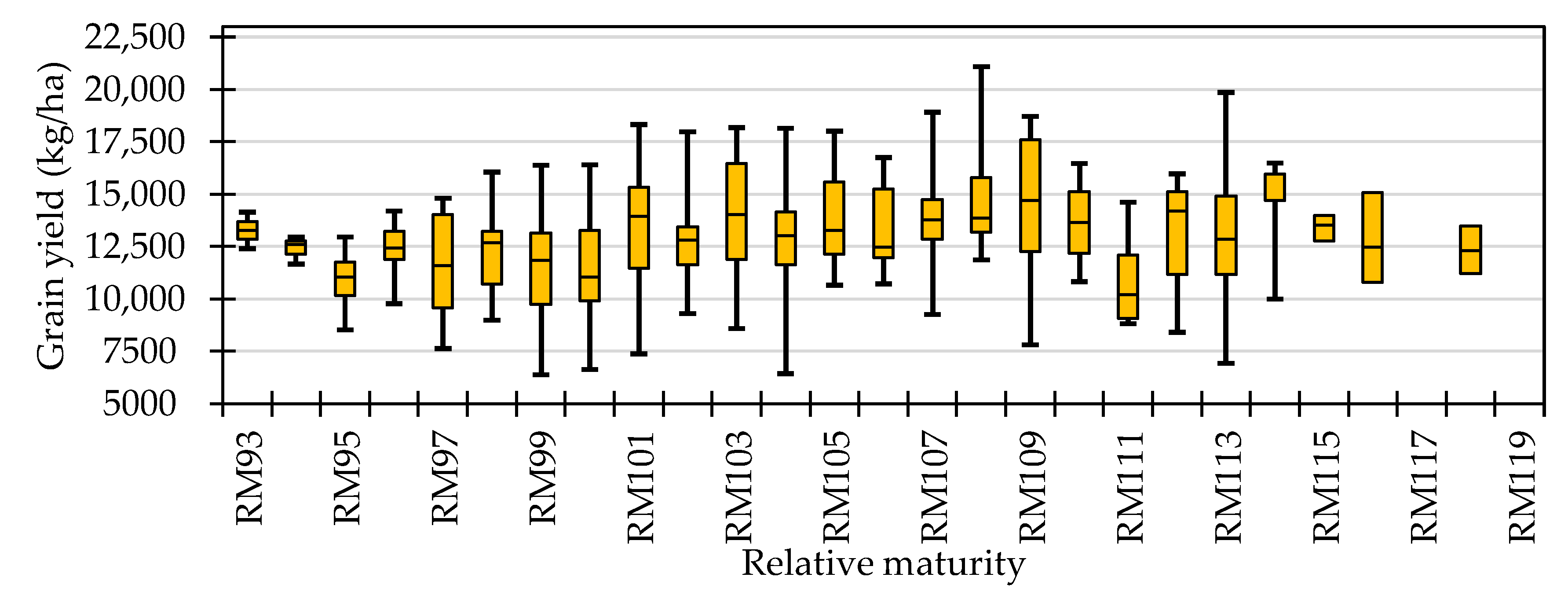
The analysis of the variance revealed highly significant effects of the year of production and the relative maturity on maize grain yield (Table 3). The coefficient of variation of the yield from 2003 to 2019 was 12.67% which is reasonable and showed that the experiment was conducted over the years with minimal variability. Average seasonal grain yield varied from 10,571 kg/ha obtained at the relative maturity of 119 days, to 15,340 kg/ha obtained at the relative maturity of 117 days, which showed statistically similar yield as relative maturities 108, 107, 114, 105, 109 and the non-listed maturity hybrids. However, these extreme yields were registered for only one hybrid in each case (LSD0.05 = 4603). The relative maturities 108 and 107 with the 10 and 8 hybrids, and ranked second and third, respectively, could be considered as first choice by maize producers in the study area. This maturity range could be expanded to 103, 104, 109, 110, 114, and 115 for high grain yield (Figure 4). However, the weather conditions during maize growing season may impact the decision of timely planting. Early planting of these maize hybrids may impact their photosynthetic active radiation efficiency, the accumulated heat units and their productivity. The very early season hybrids with relative maturity less than 100 might not be considered due to their low grain yields. Also, the full season hybrids with relative maturity of 118 and 119 or greater might not be considered for the study area because they might be subject to early fall frost which may occur when these hybrids are not at their physiological maturity, impacting grain yield and grain quality. Even if maize could be planted earlier than actually practiced, there are challenges such the late spring frost after the daily air temperature is greater than maize base temperature and the non-availability of irrigation water until mid-April versus the very low moisture occurring from the winter and spring precipitation in the northwestern desert region of New Mexico and the neighboring states where rainfed production is not feasible.
Table 3.
Summary of the analysis of variance (ANOVA) of the effect of relative maturity and year on grain yield.
Figure 4.
Box plots of maize grain yield as function of the relative maturity (RM) for the 2003–2019 period.
Maize grain yield varied with year (LSD0.05 = 1456) and the annual average yield ranged from 8942 kg/ha in 2008 to 17,122 kg/ha in 2010, which is statistically equal to the yield obtained in 2011 and 2019. The variation in grain yield with years might be due to the differences in the intrinsic yield potential of different lots of plant material that changed from year to year with similar relative maturities, climatic conditions even if the crops were under optimal irrigation conditions, and some management practices while the efforts were made with the best agricultural practices. However, considering ideal crop, fertilizer and water management throughout years, the main factor should yield potential of the hybrids which consistently changed throughout the years. The results of this study are in agreement with several studies conducted across the temperate zones. Baum et al. [23] reported that extending maize vegetative phase up to 23 July usually resulted in higher grain yields when the plants are under no stress of any kind such as nutrient deficiency, water stress, and killing frost in Iowa, and when silking occurred after that date, the grains are not well filled due the cooler temperatures and low quality and quantity solar radiation as reported by Cirilo and Andrade [26] (Figure 1 and Figure 2).
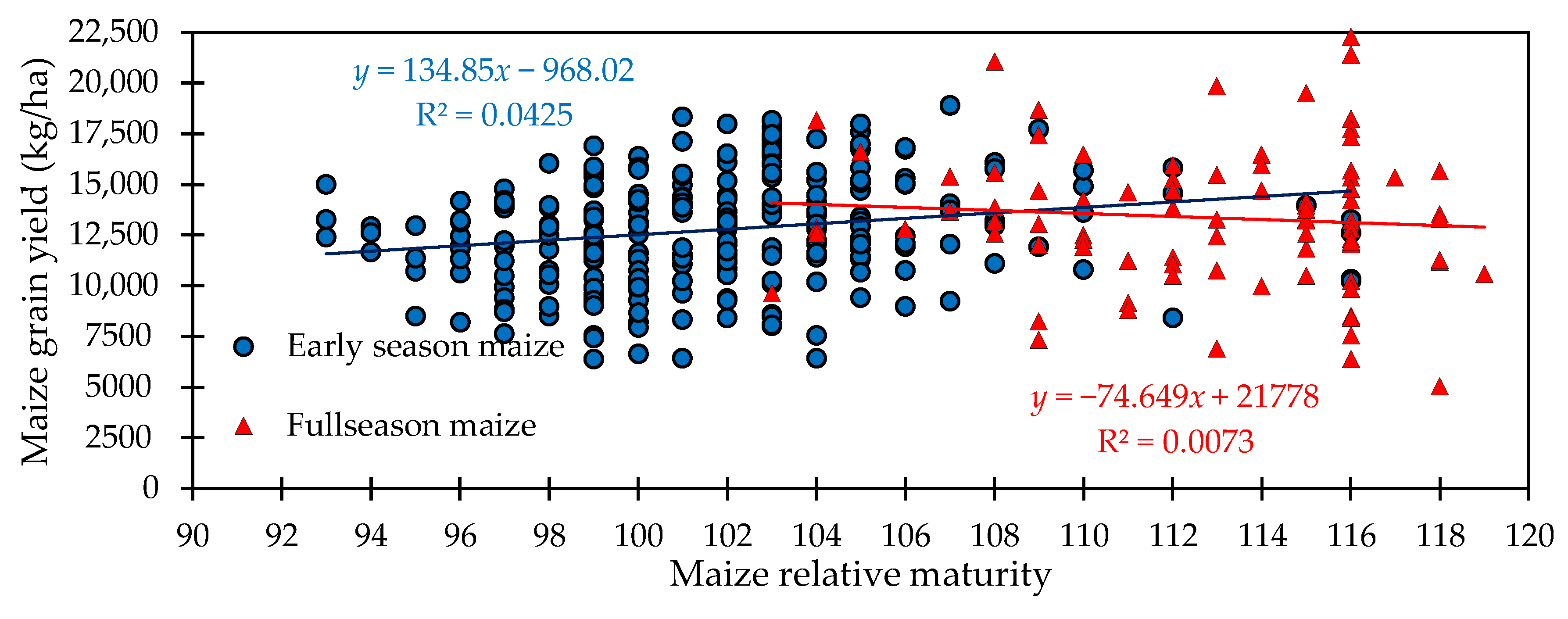
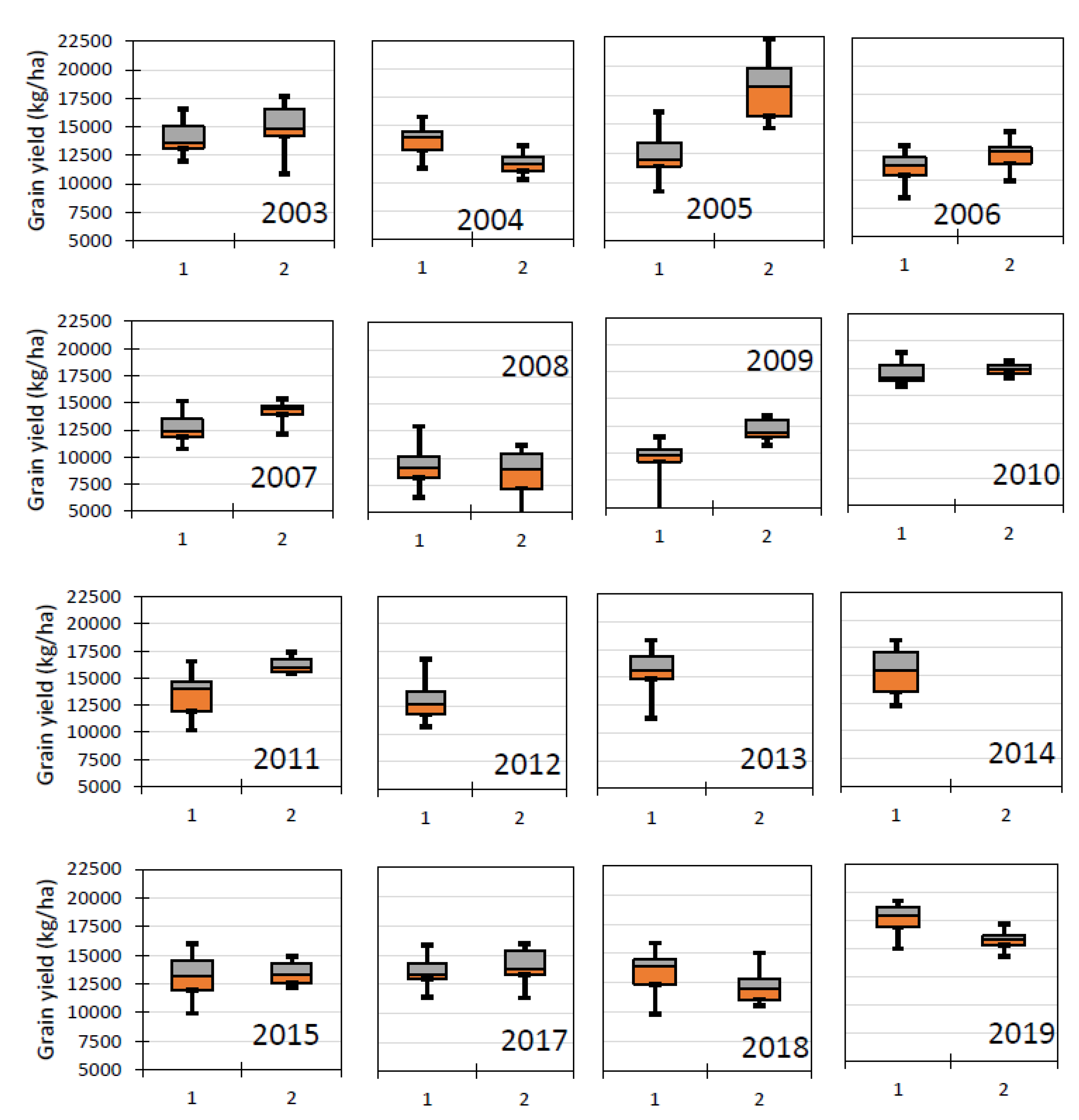
Overall grain yield increased with relative maturity for the early season maize hybrids while it slightly decreased with the relative maturity for the full season maize hybrids (Figure 5), however, there was non-consistent yield-relative maturity during the study period as shown in Figure 6.
Figure 5.
Relationship between maize relative maturity and maize grain yield for the full season and early season maize for the 2003–2019 period.
Figure 6.
Boxplots of the early season (1) and full season (2) hybrid maize grain yield for the 2003–2019 period.
This result is in agreement with Battel [27] who found that maize yield increased linearly with increasing relative maturity from 90 to 105. Norwood [28] reported that in western Kansas, maize relative maturities less than or equal to 104 are recommended to minimize yield reduction. Battel [27] found that there are some early season hybrids which yield significantly higher than the full season hybrids and mature earlier than the late season hybrids [29]. Relative maturity affects plant population relationship with grain yield. Yang et al. [30] indicated that early season hybrid maize showed higher increased yield with increasing plant population than the full season hybrids [31]. The results of the present study are in contrast to Wang et al. [32] who found that there is high probability for the full season hybrids generally to produce higher yields than early season hybrids, while full season hybrids showed 33% of chance to produce higher yield less than early ones.
3.2. Relationship between Maize Grain Yield and Ear Height and Plant Height
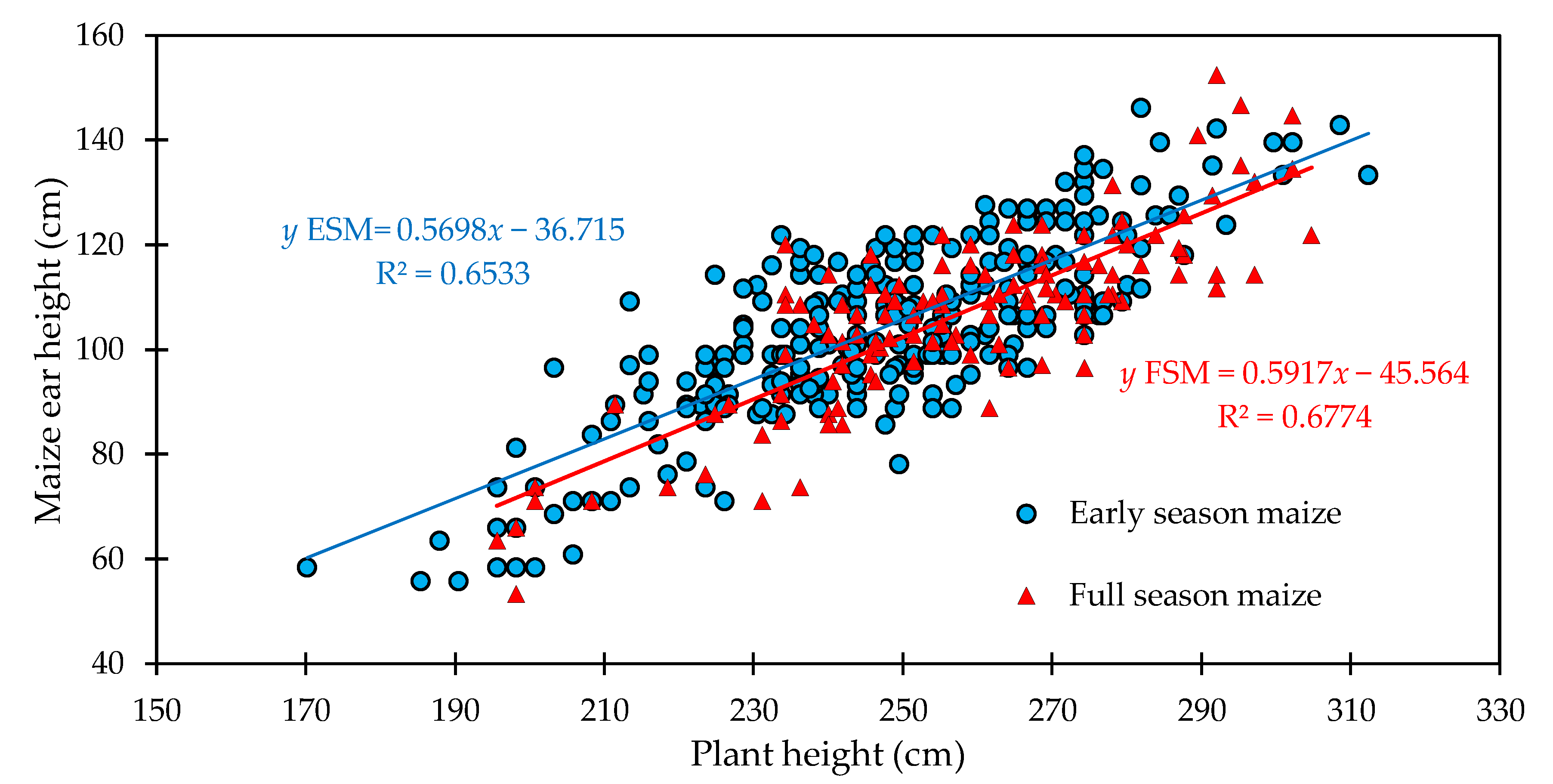
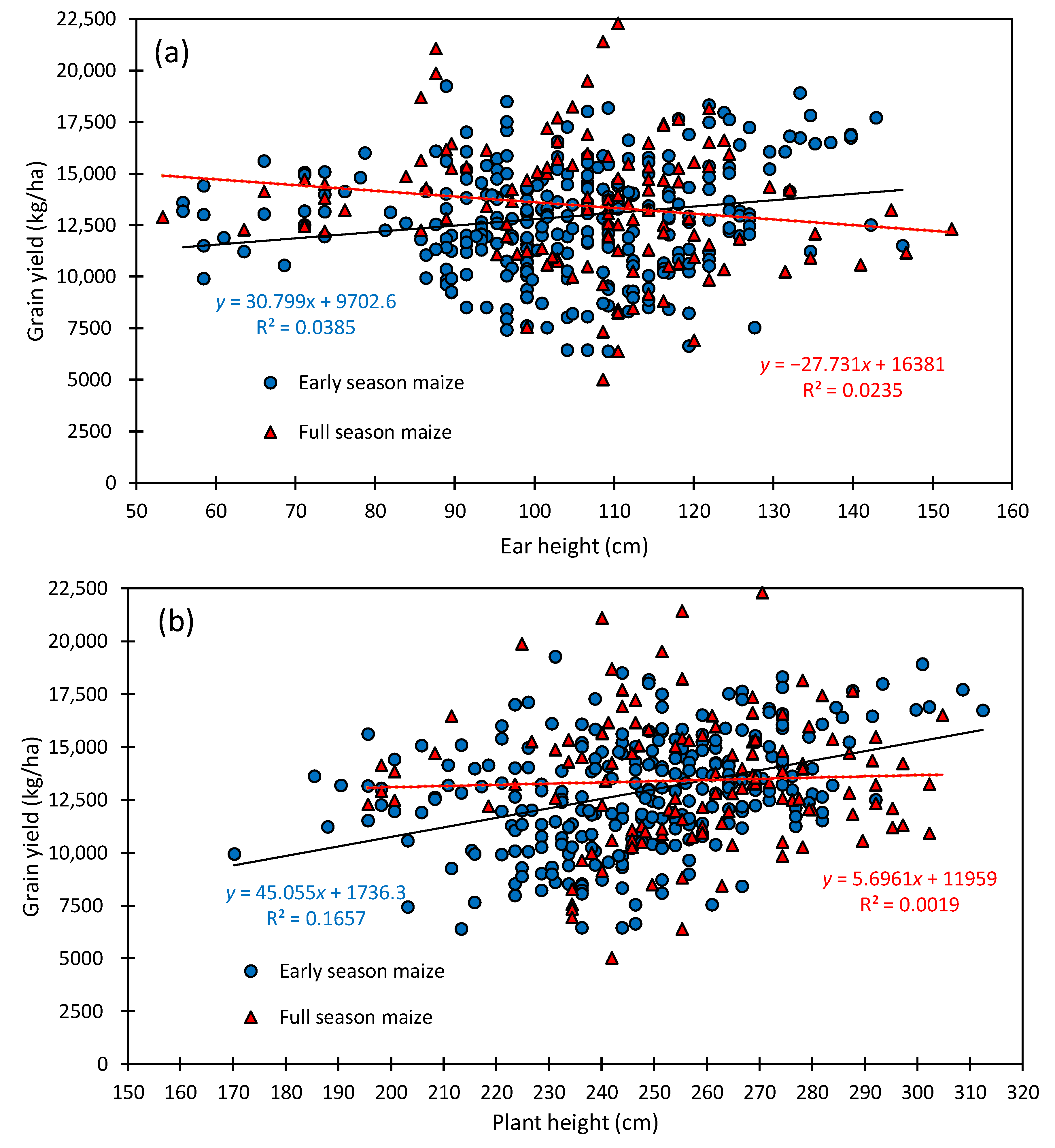
Plant height varied with the relative maturity and ranged from 170.2 to 312.4 cm for the early season hybrids and from 195.6 to 304.8 cm for the full season hybrids. The average plant height was 248.3 cm for the early season hybrids and 257.2 cm for the full season hybrids. Maize ear height varied from 55.9 to 146.2 cm and from 53.3 to 152.4 cm for the early and full season hybrids, respectively. The average ear height was 104.8 and 106.6 cm for the respective early and full relative maturity maize hybrids. Maize ear height was relatively strongly correlated to plant height with R2 values of 0.67 and 0.65 for the full season and early season hybrids respectively, as shown in Figure 7. There was non-significant positive correlation between grain yield and maize ear height (R2 = 0.039) and plant height (R2 = 0.166) for early season hybrids (Figure 8) while maize grain yield showed non-significant negative correlation with ear height (R2 = 0.024) and non-significant positive correlation with plant height (R2 = 0.002) for full season hybrids (Figure 8). These results are in agreement with Wu et al. [33] who found non-significant correlation between plant height and maize grain yield. However, Fernandez et al. [34] reported that plant height is an important factor that affects maize yield as it affects plant resistance to lodging, plant architecture and biomass production. Duvick [6] reported that maize breeding targeting moderately short maize hybrid allows increase in plant population density. Yang et al. [35] found that reducing ear height and increasing plant height and ear height ratio have the potential to increase total biomass accumulation. Xing et al. [36] indicated that plant height and other architecture components modification with no influence on grain yield is one of the key factors in developing cultivars for compact planting. The negative correlation between plant height and grain yield in full season hybrids is similar to the findings of Sreckov et al. [37] and Sumathi et al. [38].
Figure 7.
Relationship between maize plant height and maize ear height for the full season (FSM) and early season maize (ESM) for the 2003–2019 period.
Figure 8.
Relationships between maize grain yield and (a) ear height and (b) plant height.
4. Conclusions
This long-term experiment revealed that relative maturity showed a non-significant impact on hybrid maize grain yield, however, the very early season and the very late full season hybrids had low grain yield. Grain yield increased non-significantly with the relative maturity for the early season hybrids when it showed non-significant negative trend with the relative maturity for the full season hybrids. The medium duration hybrids with relative maturity range of 100–110 might be considered under the actual planting dates and management practices in the study area. Producers may switch from long relative maturity hybrids to early season hybrids to increase the probability to crop maturity before the fall killing frost and plant maize earlier than usual as the late spring frost might not kill the young maize seedling because their growing point should still be underground when the frost occurs. Under the changing climate with variability in the onset and offset of the growing season, additional research should be performed to determine the planting window and plant density for the early and full season maize hybrids for the production optimization and sustainability.
Author Contributions
Conceptualization, M.O., K.D. and C.O.; methodology, M.O. and C.O.; software, C.O., S.A.; formal analysis, K.D., C.W. and S.A.; investigation, C.O., M.M.W., K.K. and K.D.; writing—original draft preparation, K.D., M.D. and K.K.; writing—review and editing, K.D., S.A., M.D. and K.K.; supervision, M.O. and K.D. All authors have read and agreed to the published version of the manuscript.
Funding
This research was supported by the maize hybrid entry fees from multiple anonymous seed companies and the New Mexico State University.
Acknowledgments
We completed this work with the support of New Mexico State University (NMSU) and the Agricultural Science Center at Farmington and different anonymous seed companies.
Conflicts of Interest
The authors declare no conflict of interest.
References
- USDA; National Agricultural Statistics Service (NASS); Agricultural Statistics Board; United States Department of Agriculture (USDA). Crop Production; USDA; National Agricultural Statistics Service: Washington, DC, USA, 2019. Available online: https://www.nass.usda.gov/Publications/Todays_Reports/reports/crop0619.pdf (accessed on 10 December 2019).
- Agrama, H.A.S. Sequential path analysis of grain yield and its components in maize. Plant Breed. 1996, 115, 343–346. [Google Scholar] [CrossRef]
- Milander, J.J.; Jukic, Z.; Mason, S.C.; Galusha, T.D.; Kmail, Z. Plant population influence on maize yield components in Croatia and Nebraska. Crop Sci. 2016, 56, 1–9. [Google Scholar] [CrossRef]
- Angus, J.F.; MacKenzie, D.H.; Morton, R.; Schafer, C.A. Phasic development in field crops. II. Thermal and photoperiodic responses of spring wheat. Field Crop. Res. 1981, 4, 269–283. [Google Scholar] [CrossRef]
- Wilkens, S.; Weimer, P.J.; Lauer, J.G. Effects of hybrid relative maturity on corn stover for ethanol production and biomass composition. Agron. J. 2015, 107, 2303–2311. [Google Scholar] [CrossRef]
- Duvick, D.N. Genetic progress in yield of United States maize (Zea mays L.). Maydica 2005, 50, 193–202. [Google Scholar]
- Richards, R.A. Selectable traits to increase crop photosynthesis and yield of grain crops. J. Exp. Bot. 2000, 51, 447–458. [Google Scholar] [CrossRef] [PubMed]
- Hay, R.K.M.; Porter, J.R. The Physiology of Crop Yield; Wiley-Blackwell: Oxford, UK, 2006. [Google Scholar]
- Sarlangue, T.; Andrade, F.H.; Calvino, P.A.; Purcell, L.C. Why do maize hybrids respond differently to variations in plant density? Agron. J. 2007, 99, 984–991. [Google Scholar] [CrossRef]
- Lauer, J. Corn Yield Response to Relative Maturity and Banded Fertilizer. Field Crop. 2018, 28, 43–130. [Google Scholar]
- Darby, H.M.; Lauer, J.G. Harvest date and hybrid influence on corn forage yield, quality, and preservation. Agron. J. 2002, 94, 559–566. [Google Scholar] [CrossRef]
- Evans, S.; Knezevic, S.; Lindquist, J.; Shapiro, C.; Blankenship, E.E. Nitrogen application influences the critical period for weed control in corn. Weed Sci. 2003, 51, 408–417. [Google Scholar] [CrossRef]
- Abendroth, L.J.; Elmore, R.W.; Boyer, M.J.; Marlay, S.K. Corn Growth and Development; PMR 1009; Iowa State University: Ames, IA, USA, 2011; Available online: https://store.extension.iastate.edu/product/6065 (accessed on 15 October 2019).
- Abendroth, L.J.; Woli, K.P.; Myers, A.J.W.; Elmore, R.W. Yield-based corn planting date recommendation windows for Iowa. Crop Forage Turfgrass Manag. 2017, 3. [Google Scholar] [CrossRef]
- Novacek, M.J.; Mason, S.C.; Galusha, T.D.; Yaseen, M. Twin rows minimally impact irrigated maize yield, morphology, and lodging. Agron. J. 2013, 105, 268–276. [Google Scholar] [CrossRef]
- Lindquist, J.L.; Arkebauer, T.J.; Walters, D.T.; Cassman, K.G.; Dobermann, A. Maize radiation use efficiency under optimal growth conditions. Agron. J. 2005, 97, 72–78. [Google Scholar] [CrossRef]
- Staggenborg, S.; Fjell, D.; Devlin, D.; Gordon, W.; Maddux, L.; Marsh, B. Selecting optimum planting dates and plant populations for dryland corn in Kansas. J. Prod. Agric. 1999, 12, 85–90. [Google Scholar] [CrossRef]
- Richards, R.A. Increasing yield potential in wheat: Manipulating sources and sinks. In Increasing Yield Potential in Wheat: Breaking the Barriers; Reynolds, M.P., Rajaram, R., McNab, A., Eds.; CIMMYT: Mexico City, Mexico, 1996; pp. 134–149. [Google Scholar]
- Edmeades, G.O.; Bolaños, J.; Elings, A.; Ribaut, J.M.; Bänziger, M.; Westgate, M.E. The role and regulation of the anthesis silking interval in maize. In Physiology and Modeling Kernel Set in Maize; Westgate, M., Boote, K., Eds.; CSSA Spec. Publ. 29; CSSA and ASA: Madison, WI, USA, 2000; pp. 43–73. [Google Scholar] [CrossRef]
- Zhou, B.; Yue, Y.; Sun, X.; Wang, X.; Wang, Z.; Ma, W.; Zhao, M. Maize grain yield and dry matter production responses to variations in weather conditions. Agron. J. 2016, 108, 196–204. [Google Scholar] [CrossRef]
- Nielsen, R.L.; Thomison, P.R.; Brown, G.A.; Halter, A.L.; Wells, J.; Wuethrich, K.L. Delayed planting effects on flowering and grain maturation of dent corn. Agron. J. 2002, 94, 549–558. [Google Scholar] [CrossRef]
- Parker, P.S.; Shonkwiler, J.S.; Aurbacher, J. Cause and consequence in maize planting dates in Germany. J. Agron. Crop Sci. 2016, 203, 1–14. [Google Scholar] [CrossRef]
- Baum, M.; Archontoulis, S.; Licht, M. Planting date, hybrid maturity, and weather effects on maize yield and crop stage. Agron. J. 2018, 111, 1–11. [Google Scholar] [CrossRef]
- Mueller, N.D.; Butler, E.E.; McKinnon, K.A.; Rhines, A.; Tingley, M.; Holbrook, N.M.; Huybers, P. Cooling of US Midwest summer temperature extremes from cropland intensification. Nat. Clim. Chang. 2016, 6, 317–322. [Google Scholar] [CrossRef]
- O’Neill, M.K.; Smeal, D.; West, M.M.; Allen, S.C.; Djaman, K. Forty-Eight Years (1969–2016) of Climatological Data: NMSU Agricultural Science Center-Farmington, New Mexico; PES Bulletin 809; NMSU: Las cruces, NM, USA, 2018. [Google Scholar]
- Cirilo, A.G.; Andrade, F.H. Sowing date and maize productivity: I. Crop growth and dry matter partitioning. Crop Sci. 1994, 34, 1039–1043. [Google Scholar] [CrossRef]
- Battel, B. Relative Maturity and Its Relationship to Yield and Moisture–Results from the Thumb; Michigan State University Extension, US: East Lansing, MI, USA, 2017; Available online: https://www.canr.msu.edu/news/relative_maturity_and_its_relationship_to_yield_and_moisture (accessed on 10 December 2019).
- Norwood, C.A. Dryland corn in western Kansas: Effects of hybrid maturity, planting date, and plant population. Agron. J. 2001, 93, 540–547. [Google Scholar] [CrossRef]
- Wang, X.Y.; Wei, S.S.; Dong, S.T.; Liu, P.; Zhang, J.W.; Zhao, B. Effects of planting densities on canopy apparent photosynthesis characteristics of summer maize in different maturity periods. J. Maize Sci. 2015, 23, 134–138. [Google Scholar]
- Yang, J.; Li, Y.; Cao, H.; Yao, H.; Han, W.; Sun, S. Yield-Maturity Relationships of Summer Maize from 2003 to 2017 in the Huanghuaihai Plain of China. Sci. Rep. 2019, 9, 11417. [Google Scholar] [CrossRef] [PubMed]
- Larson, E.; Clegg, M. Using corn maturity to maintain grain yield in the presence of late-season drought. J. Prod. Agric. 1999, 12, 400. [Google Scholar] [CrossRef]
- Wang, X.; Zhang, R.; Song, W.; Han, L.; Liu, X.; Sun, X.; Luo, M.; Chen, K.; Zhang, Y.; Yang, H.; et al. Dynamic plant height QTL revealed in maize through remote sensing phenotyping using a high-throughput unmanned aerial vehicle (UAV). Sci. Rep. 2019, 9, 3458. [Google Scholar] [CrossRef]
- Wu, J.; Lawit, S.J.; Weers, B.; Sun, J.; Mongar, N.; Hemert, J.V.; Melo, R.; Meng, X.; Rupe, M.; Clapp, J.; et al. Overexpression of zmm28 increases maize grain yield in the field. Proc. Natl. Acad. Sci. USA 2019, 116, 23850–23858. [Google Scholar] [CrossRef] [PubMed]
- Fernandez Salas, M.G.; Becraft, P.W.; Yin, Y.; Lübberstedt, T. From dwarves to giants? Plant height manipulation for biomass yield. Trends Plant Sci. 2009, 14, 454–461. [Google Scholar] [CrossRef]
- Yang, X.; Yan, J.; Shah, T.; Warbuton, M.L.; Li, Q.; Li, L.; Gao, Y.; Chai, Y.; Fu, Z.; Zhou, Y. Genetic analysis and characterization of a new maize association mapping panel for quantitative trait loci dissection. Theor. Appl. Genet. 2010, 121, 417–431. [Google Scholar] [CrossRef]
- Xing, A.; Gao, Y.; Ye, L.; Zhang, W.; Cai, L.; Ching, A.; Llaca, V.; Johnson, B.; Liu, L.; Yang, X.; et al. A rare SNP mutation in Brachytic2 moderately reduces plant height and increases yield potential in maize. J. Exp. Bot. 2015, 66, 3791–3802. [Google Scholar] [CrossRef]
- Sreckov, Z.; Nastasic, A.; Bocanski, J.; Djalovic, I.; Vukosavljev, M.; Jockovic, B. Correlation and path analysis of grain yield and morphological traits in test-cross populations of maize. Pak. J. Bot. 2011, 43, 1729–1731. [Google Scholar]
- Sumathi, P.; Nirmalakumari, A.; Mohanraj, K. Genetic variability and traits interrelationship studies in industrially utilized oil rich CYMMIT lines of maize (Zea mays L.). Madras Agric. J. 2005, 92, 612–617. [Google Scholar]
© 2020 by the authors. Licensee MDPI, Basel, Switzerland. This article is an open access article distributed under the terms and conditions of the Creative Commons Attribution (CC BY) license (http://creativecommons.org/licenses/by/4.0/).