Pelvic Floor Muscle Training Following Surgery for Pelvic Organ Prolapse: Recommendation from Scientific Literature

Abstract
1. Introduction
2. Materials and Methods
2.1. Rationale for Choosing a Scoping Review Design
2.2. Eligibility Criteria
- (a)
- Involved women after POP surgery;
- (b)
- Evaluated at least one form of pelvic floor rehabilitation;
- (c)
- Reported outcomes related to urinary, bowel, sexual function, pain, or recurrence (quality of life outcomes were also considered when available);
- (d)
- Were published in peer-reviewed journals and written in English or French.
2.3. Information Sources and Search Strategy
2.4. Screening of Records and Critical Appraisal
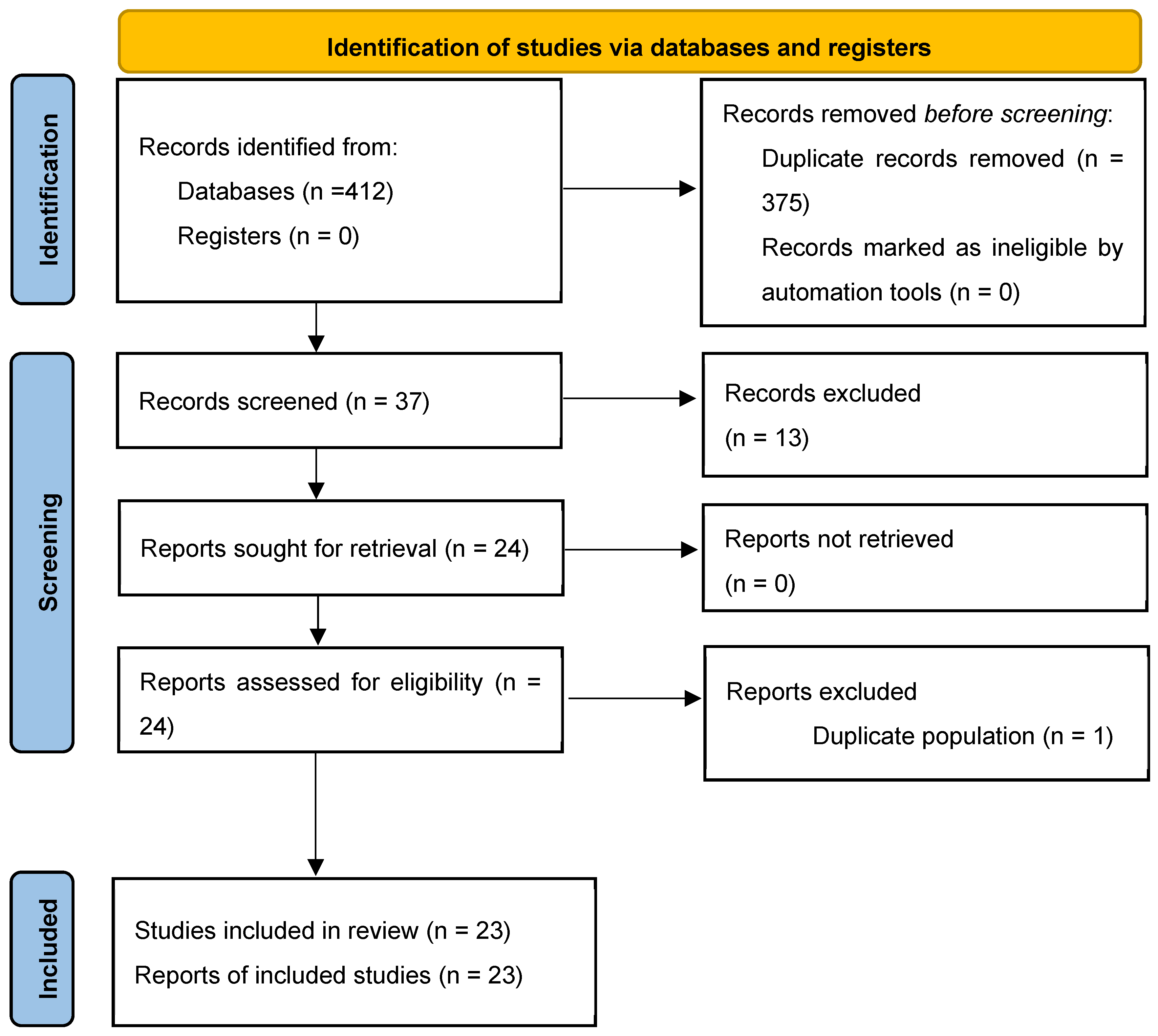
3. Results
4. Appraisal
4.1. Overall Commentary on Randomized Controlled Trials and Reviews Evaluating PFMT After POP Surgery
4.2. Interpretive Reflection: Implications of Preoperative Evidence for Postoperative PFMT
5. Discussion
Supplementary Materials
Author Contributions
Funding
Institutional Review Board Statement
Informed Consent Statement
Data Availability Statement
Conflicts of Interest
References
- Madhu, C.; Swift, S.; Moloney-Geany, S.; Drake, M.J. How to use the Pelvic Organ Prolapse Quantification (POP-Q) system? Neurourol. Urodyn. 2018, 37, S39–S43. [Google Scholar] [CrossRef]
- Lai, W.; Wen, L.; Li, Y.; Huang, X.; Qing, Z. Concordance of tomographic ultrasound and multiplanar ultrasound in detecting levator ani muscle injury in patients with pelvic organ prolapse. PLoS ONE 2018, 13, e0199864. [Google Scholar] [CrossRef]
- Pietrus, M.; Pityński, K.; Gawron, I.; Socha, M.W.; Nowosielski, K.; Biskupski-Brawura-Samaha, R.; Waligóra, M. Diagnostic utility of translabial ultrasound in pelvic organ prolapse: A prospective observational study. J. Obstet. Gynaecol. 2024, 44, 2386975. [Google Scholar] [CrossRef]
- Petros, P.; Liedl, B.; Palma, P.; Riccetto, C.; Ding, S. A practical ligament-based diagnostic system for cure of pelvic symptoms and prolapse. Ann. Transl. Med. 2024, 12, 27. [Google Scholar] [CrossRef] [PubMed]
- Braekken, I.H.; Majida, M.; Engh, M.E.; Bø, K. Can pelvic floor muscle training reverse pelvic organ prolapse and reduce prolapse symptoms? An assessor-blinded, randomized, controlled trial. Am. J. Obstet. Gynecol. 2010, 203, 170.e1–170.e7. [Google Scholar] [CrossRef] [PubMed]
- Wang, T.; Wen, Z.; Li, M. The effect of pelvic floor muscle training for women with pelvic organ prolapse: A meta-analysis. Int. Urogynecol. J. 2022, 33, 1789–1801. [Google Scholar] [CrossRef]
- Pizzoferrato, A.C.; Thuillier, C.; Vénara, A.; Bornsztein, N.; Bouquet, S.; Cayrac, M.; Cornillet-Bernard, M.; Cotelle, O.; Cour, F.; Cretinon, S.; et al. Management of female pelvic organ prolapse—Summary of the 2021 HAS guidelines. J. Gynecol. Obstet. Hum. Reprod. 2023, 52, 102535. [Google Scholar] [CrossRef]
- Olsen, A.L.; Smith, V.J.; Bergstrom, J.O.; Colling, J.C.; Clark, A.L. Epidemiology of surgically managed pelvic organ prolapse and urinary incontinence. Obstet. Gynecol. 1997, 89, 501–506. [Google Scholar] [CrossRef]
- Chen, Y.; Peng, L.; Zhang, J.; Shen, H.; Luo, D. Sacrospinous ligament fixation vs. uterosacral ligament suspension for pelvic organ prolapse: A systematic review and meta-analysis. Urology 2022, 166, 133–139. [Google Scholar] [CrossRef] [PubMed]
- Zhang, C.Y.; Sun, Z.J.; Yang, J.; Xu, T.; Zhu, L.; Lang, J.H. Sacrocolpopexy compared with transvaginal mesh surgery: A systematic review and meta-analysis. BJOG 2021, 128, 14–23. [Google Scholar] [CrossRef]
- Schulten, S.F.M.; Claas-Quax, M.J.; Weemhoff, M.; van Eijndhoven, H.W.; van Leijsen, S.A.; Vergeldt, T.F.; IntHout, J.; Kluivers, K.B. Risk factors for primary pelvic organ prolapse and prolapse recurrence: An updated systematic review and meta-analysis. Am. J. Obstet. Gynecol. 2022, 227, 192–208. [Google Scholar] [CrossRef]
- Maher, C.; Feiner, B.; Baessler, K.; Christmann-Schmid, C.; Haya, N.; Brown, J. Surgery for women with anterior compartment prolapse. Cochrane Database Syst. Rev. 2016, 11, CD004014. [Google Scholar] [CrossRef]
- Deffieux, X.; Perrouin-Verbe, M.A.; Campagne-Loiseau, S.; Donon, L.; Levesque, A.; Rigaud, J.; Stivalet, N.; Venara, A.; Thubert, T.; Vidart, A.; et al. Diagnosis and management of complications following pelvic organ prolapse surgery using a synthetic mesh: French national guidelines for clinical practice. Eur. J. Obstet. Gynecol. Reprod. Biol. 2024, 294, 170–179. [Google Scholar] [CrossRef]
- Yeung, E.; Baessler, K.; Christmann-Schmid, C.; Haya, N.; Chen, Z.; Wallace, S.A.; Mowat, A.; Maher, C. Transvaginal mesh or grafts or native tissue repair for vaginal prolapse. Cochrane Database Syst. Rev. 2024, 3, CD012079. [Google Scholar] [CrossRef]
- Johnson, J.R.; High, R.A.; Dziadek, O.; Ocon, A.; Muir, T.W.; Xu, J.; Antosh, D.D. Overactive Bladder Symptoms After Pelvic Organ Prolapse Repair. Female Pelvic Med. Reconstr. Surg. 2020, 26, 742–745. [Google Scholar] [CrossRef] [PubMed]
- Maher, C.; Yeung, E.; Haya, N.; Christmann-Schmid, C.; Mowat, A.; Chen, Z.; Baessler, K. Surgery for women with apical vaginal prolapse. Cochrane Database Syst. Rev. 2023, 7, CD012376. [Google Scholar] [CrossRef]
- Mortier, A.; Cardaillac, C.; Perrouin-Verbe, M.A.; Meurette, G.; Ploteau, S.; Lesveque, A.; Riant, T.; Dochez, V.; Thubert, T. Pelvic and perineal pain after genital prolapse: A literature review. Prog. Urol. 2020, 30, 571–587. [Google Scholar] [CrossRef]
- Sung, V.W.; Rardin, C.R.; Raker, C.A.; LaSala, C.A.; Myers, D.L. Changes in bowel symptoms 1 year after rectocele repair. Am. J. Obstet. Gynecol. 2012, 207, 423.e1–423.e5. [Google Scholar] [CrossRef] [PubMed]
- Ballard, A.; Parker-Autry, C.; Lin, C.P.; Markland, A.D.; Ellington, D.R.; Richter, H.E. Postoperative bowel function, symptoms, and habits in women after vaginal reconstructive surgery. Int. Urogynecol. J. 2015, 26, 817–821. [Google Scholar] [CrossRef] [PubMed]
- Singh, S.; Bolckmans, R.; Ratnatunga, K.; Gorissen, K.; Jones, O.; Lindsey, I.; Cunningham, C. Pelvic pain is a common prolapse symptom and improvement after ventral mesh rectopexy is more frequent than deterioration or de novo pain. Colorectal Dis. 2023, 25, 118–127. [Google Scholar] [CrossRef]
- Vancaillie, T.; Tan, Y.; Chow, J.; Kite, L.; Howard, L. Pain after vaginal prolapse repair surgery with mesh is a post-surgical neuropathy which needs to be treated—And can possibly be prevented in some cases. Aust. N. Z. J. Obstet. Gynaecol. 2018, 58, 696–700. [Google Scholar] [CrossRef] [PubMed]
- Tran, H.; Chung, D.E. Incidence and Management of De Novo Lower Urinary Tract Symptoms After Pelvic Organ Prolapse Repair. Curr. Urol. Rep. 2017, 12, 87. [Google Scholar] [CrossRef] [PubMed]
- Wihersaari, O.A.E.; Karjalainen, P.; Tolppanen, A.M.; Mattsson, N.; Nieminen, K.; Jalkanen, J. Quality of Sexual Life Before and After Pelvic Organ Prolapse Surgery. Urogynecology 2024, 30, 838–846. [Google Scholar] [CrossRef]
- Antosh, D.D.; Dieter, A.A.; Balk, E.M.; Kanter, G.; Kim-Fine, S.; Meriwether, K.V.; Mamik, M.M.; Good, M.M.; Singh, R.; Alas, A.; et al. Sexual function after pelvic organ prolapse surgery: A systematic review comparing different approaches to pelvic floor repair. Am. J. Obstet. Gynecol. 2021, 225, 475.e1–475.e19. [Google Scholar] [CrossRef]
- Joint Writing Group of the American Urogynecologic Society and the International Urogynecological Association. Joint position statement on the management of mesh-related complications for the FPMRS specialist. Int. Urogynecol. J. 2020, 31, 679–694. [Google Scholar] [CrossRef]
- Tresch, C.; Lallemant, M.; Ramanah, R. Enhanced recovery after pelvic organ prolapse surgery. J. Clin. Med. 2023, 12, 5911. [Google Scholar] [CrossRef]
- Peters, M.D.J.; Marnie, C.; Tricco, A.C.; Pollock, D.; Munn, Z.; Alexander, L.; McInerney, P.; Godfrey, C.M.; Khalil, H. Updated methodological guidance for the conduct of scoping reviews. JBI Evid. Synth. 2020, 18, 2119–2126. [Google Scholar] [CrossRef]
- Tricco, A.C.; Lillie, E.; Zarin, W.; O’Brien, K.K.; Colquhoun, H.; Levac, D.; Moher, D.; Peters, M.D.J.; Horsley, T.; Weeks, L.; et al. PRISMA Extension for Scoping Reviews (PRISMA-ScR): Checklist and Explanation. Ann. Intern. Med. 2018, 169, 467–473. [Google Scholar] [CrossRef]
- Sterne, J.A.C.; Savović, J.; Page, M.J.; Elbers, R.G.; Blencowe, N.S.; Boutron, I.; Cates, C.J.; Cheng, H.Y.; Corbett, M.S.; Eldridge, S.M.; et al. RoB 2: A revised tool for assessing risk of bias in randomised trials. BMJ 2019, 366, l4898. [Google Scholar] [CrossRef]
- Shea, B.J.; Reeves, B.C.; Wells, G.; Thuku, M.; Hamel, C.; Moran, J.; Moher, D.; Tugwell, P.; Welch, V.; Kristjansson, E.; et al. AMSTAR 2: A critical appraisal tool for systematic reviews that include randomised or non-randomised studies of healthcare interventions, or both. BMJ 2017, 358, j4008. [Google Scholar] [CrossRef] [PubMed]
- Baethge, C.; Goldbeck-Wood, S.; Mertens, S. SANRA—A scale for the quality assessment of narrative review articles. Res. Integr. Peer Rev. 2019, 4, 5. [Google Scholar] [CrossRef]
- McArthur, A.; Klugarova, J.; Yan, H.; Florescu, S. Innovations in the systematic review of text and opinion. Int. J. Evid. Based Healthc. 2015, 13, 188–195. [Google Scholar] [CrossRef] [PubMed]
- Barber, M.D.; Brubaker, L.; Burgio, K.L.; Richter, H.E.; Nygaard, I.; Weidner, A.C.; Menefee, S.A.; Lukacz, E.S.; Norton, P.; Schaffer, J.; et al. Comparison of 2 transvaginal surgical approaches and perioperative behavioral therapy for apical vaginal prolapse: The OPTIMAL randomized trial. JAMA 2014, 311, 1023–1034. [Google Scholar] [CrossRef]
- Borello-France, D.; Newman, D.K.; Markland, A.D.; Propst, K.; Jelovsek, J.E.; Cichowski, S.; Gantz, M.G.; Balgobin, S.; Jakus-Waldman, S.; Korbly, N.; et al. Adherence to perioperative behavioral therapy with pelvic floor muscle training in women receiving vaginal reconstructive surgery for pelvic organ prolapse. Phys. Ther. 2023, 103, pzad059. [Google Scholar] [CrossRef] [PubMed]
- Brandt, C.; van Vuuren, E.C.J. Postoperative physiotherapy in women undergoing pelvic floor reconstructive surgery: A randomized controlled clinical trial. Physiother. Can. 2021, 74, 126–138. [Google Scholar] [CrossRef]
- Dawson, M.L.; O’Hare, P.; Mann, J.; Widdoes, K.; Goldstein, H. A randomized controlled trial of postoperative pelvic floor physical therapy after vaginal reconstructive surgery. Neurourol. Urodyn. 2018, 37, S555–S556. [Google Scholar] [CrossRef]
- Duarte, T.B.; Bø, K.; Brito, L.G.O.; Bueno, S.M.; Barcelos, T.M.; Bonacin, M.A.; Ferreira, C.H. Perioperative pelvic floor muscle training did not improve outcomes in women undergoing pelvic organ prolapse surgery: A randomised trial. J. Physiother. 2020, 66, 27–32. [Google Scholar] [CrossRef]
- Frawley, H.C.; Phillips, B.A.; Bø, K.; Galea, M.P. Physiotherapy as an adjunct to prolapse surgery: An assessor-blinded randomized controlled trial. Neurourol. Urodyn. 2010, 29, 719–725. [Google Scholar] [CrossRef]
- Jarvis, S.K.; Hallam, T.K.; Lujic, S.; Abbott, J.A.; Vancaillie, T.G. Peri-operative physiotherapy improves outcomes for women undergoing incontinence and/or prolapse surgery: Results of a randomised controlled trial. Aust. N. Z. J. Obstet. Gynaecol. 2005, 45, 300–303. [Google Scholar] [CrossRef]
- Jelovsek, J.E.; Barber, M.D.; Brubaker, L.; Norton, P.; Gantz, M.; Richter, H.E.; Weidner, A.; Menefee, S.; Schaffer, J.; Pugh, N.; et al. Effect of uterosacral ligament suspension vs. sacrospinous ligament fixation with or without perioperative behavioral therapy for pelvic organ vaginal prolapse on surgical outcomes and prolapse symptoms at 5 years in the OPTIMAL randomized clinical trial. JAMA 2018, 319, 1554–1565. [Google Scholar] [CrossRef]
- Liang, Y.; Li, X.; Wang, J.; Liu, Y.; Yang, Y.; Dong, M. Effect of pelvic floor muscle training on improving prolapse-related symptoms after surgery. J. Nurse Pract. 2019, 15, 600–605. [Google Scholar] [CrossRef]
- Mathew, S.; Nyhus, M.Ø.; Salvesen, Ø.; Salvesen, K.Å.; Stafne, S.N.; Volløyhaug, I. The effect of preoperative pelvic floor muscle training on urinary and colorectal-anal distress in women undergoing pelvic organ prolapse surgery: A randomized controlled trial. Int. Urogynecol. J. 2021, 32, 2787–2794. [Google Scholar] [CrossRef]
- McClurg, D.; Hilton, P.; Dolan, L.; Monga, A.; Hagen, S.; Frawley, H.; Dickinson, L. Pelvic floor muscle training as an adjunct to prolapse surgery: A randomised feasibility study. Int. Urogynecol. J. 2014, 25, 883–891. [Google Scholar] [CrossRef]
- Nyhus, M.Ø.; Mathew, S.; Salvesen, Ø.; Salvesen, K.Å.; Stafne, S.; Volløyhaug, I. Effect of preoperative pelvic floor muscle training on pelvic floor muscle contraction and symptomatic and anatomical pelvic organ prolapse after surgery: Randomized controlled trial. Ultrasound Obstet. Gynecol. 2020, 56, 28–36. [Google Scholar] [CrossRef]
- Pauls, R.N.; Crisp, C.C.; Novicki, K.; Fellner, A.N.; Kleeman, S.D. Pelvic floor physical therapy: Impact on quality of life 6 months after vaginal reconstructive surgery. Female Pelvic Med. Reconstr. Surg. 2014, 20, 334–341. [Google Scholar] [CrossRef] [PubMed]
- Wang, R.; Tulikangas, P.K.; Sappenfield, E.C. The impact of preoperative pain on outcomes after vaginal reconstructive surgery and perioperative pelvic floor muscle training. Urogynecology 2023, 29, 930–937. [Google Scholar] [CrossRef] [PubMed]
- Weidner, A.C.; Barber, M.D.; Markland, A.; Rahn, D.D.; Hsu, Y.; Mueller, E.R.; Jakus-Waldman, S.; Dyer, K.Y.; Warren, L.K.; Gantz, M.G.; et al. Perioperative behavioral therapy and pelvic muscle strengthening do not enhance quality of life after pelvic surgery: Secondary report of a randomized controlled trial. Phys. Ther. 2017, 97, 1075–1083. [Google Scholar] [CrossRef] [PubMed]
- de Oliveira, N.F.F.; Santuzzi, C.H.; da Conceição, T.V.; Freitas, J.M.V.; Liberato, F.M.G.; Nascimento, L.R. Pelvic floor muscle training for urinary symptoms, vaginal prolapse, sexual function, pelvic floor muscle strength, and quality of life after hysterectomy: A systematic review with meta-analyses. Braz. J. Phys. Ther. 2024, 28, 101122. [Google Scholar] [CrossRef]
- Espiño-Albela, A.; Castaño-García, C.; Díaz-Mohedo, E.; Ibáñez-Vera, A.J. Effects of pelvic-floor muscle training in patients with pelvic organ prolapse approached with surgery vs. conservative treatment: A systematic review. J. Pers. Med. 2022, 12, 806. [Google Scholar] [CrossRef]
- Shahid, U.; Haya, N.; Baessler, K.; Christmann-Schmid, C.; Yeung, E.; Chen, Z.; Maher, C. Perioperative interventions in pelvic organ prolapse surgery. Cochrane Database Syst. Rev. 2025, 7, CD013105. [Google Scholar] [CrossRef]
- Zhang, F.W.; Wei, F.; Wang, H.L.; Pan, Y.Q.; Zhen, J.Y.; Zhang, J.X.; Yang, K.H. Does pelvic floor muscle training augment the effect of surgery in women with pelvic organ prolapse? A systematic review of randomized controlled trials. Neurourol. Urodyn. 2016, 35, 666–674. [Google Scholar] [CrossRef] [PubMed]
- Bø, K.; Anglès-Acedo, S.; Batra, A.; Brækken, I.H.; Chan, Y.L.; Jorge, C.H.; Kruger, J.; Yadav, M.; Dumoulin, C. Conservative treatment of patient with pelvic organ prolapse: Pelvic floor muscle training. Int. Urogynecol. J. 2022, 33, 2633–2667. [Google Scholar] [CrossRef]
- Basnet, R. Impact of pelvic floor muscle training in pelvic organ prolapse. Int. Urogynecol. J. 2021, 32, 1351–1360. [Google Scholar] [CrossRef]
- Lakeman, M.M.; Koops, S.E.; Berghmans, B.C.; Roovers, J.P. Peri-operative physiotherapy to prevent recurrent symptoms and treatment following prolapse surgery: Supported by evidence or not? Int. Urogynecol. J. 2013, 24, 371–375. [Google Scholar] [CrossRef]
- American College of Sports Medicine. ACSM’s Guidelines for Exercise Testing and Prescription, 12th ed.; Wolters Kluwer: Philadelphia, PA, USA, 2022. [Google Scholar]
- Resende, A.P.M.; Bernardes, B.T.; Stüpp, L.; Oliveira, E.; Castro, R.A.; Girão, M.J.B.C.; Sartori, M.G.F. Pelvic floor muscle training is better than hypopressive exercises in pelvic organ prolapse treatment: An assessor-blinded randomized controlled trial. Neurourol. Urodyn. 2019, 38, 171–179. [Google Scholar] [CrossRef]
- Mitchell, J.R.; Brancaccio, H.E.; Blusewicz, S.; Lo, D.F.; Goodwin, B.; Carey, D. The comparative effectiveness of pelvic floor muscle training and hypopressive breathing techniques for pelvic organ prolapse: A systematic review and pooled analysis of randomized controlled trials. Am. J. Surg. 2025, 242, 116111. [Google Scholar] [CrossRef]
- Hay-Smith, E.J.C.; Starzec-Proserpio, M.; Moller, B.; Aldabe, D.; Cacciari, L.; Pitangui, A.C.R.; Vesentini, G.; Woodley, S.J.; Dumoulin, C.; Frawley, H.C.; et al. Comparisons of approaches to pelvic floor muscle training for urinary incontinence in women. Cochrane Database Syst. Rev. 2024, 12, CD009508. [Google Scholar] [CrossRef]
- Bø, K. Pelvic floor muscle training in treatment of female stress urinary incontinence, pelvic organ prolapse and sexual dysfunction. World J. Urol. 2012, 30, 437–443. [Google Scholar] [CrossRef] [PubMed]
- Li, Y.T.; Tsai, Y.J.; Wang, L.Y.; Ou, Y.C.; Kao, Y.L.; Lin, K.Y. The feasibility of a multimodal exercise program for sedentary postmenopausal women with urinary incontinence: A pilot randomized controlled trial. Maturitas 2023, 167, 90–98. [Google Scholar] [CrossRef] [PubMed]
- Liebergall-Wischnitzer, M.; Paltiel, O.; Hochner Celnikier, D.; Lavy, Y.; Manor, O.; Woloski Wruble, A.C. Sexual function and quality of life of women with stress urinary incontinence: A randomized controlled trial comparing the Paula method (circular muscle exercises) to pelvic floor muscle training (PFMT) exercises. J. Sex. Med. 2012, 9, 1613–1623. [Google Scholar] [CrossRef]
- Dumoulin, C.; Alewijnse, D.; Bo, K.; Hagen, S.; Stark, D.; Van Kampen, M.; Herbert, J.; Hay-Smith, J.; Frawley, H.; McClurg, D.; et al. Pelvic-Floor-Muscle Training Adherence: Tools, Measurements and Strategies-2011 ICS State-of-the-Science Seminar Research Paper II of IV. Neurourol. Urodyn. 2015, 34, 615–621. [Google Scholar] [CrossRef] [PubMed]


| Outcome | Reported Rate Range | Main References | Follow-Up Duration |
|---|---|---|---|
| Persistence of prolapse awareness | 17–23% | – | – |
| Stress urinary incontinence (SUI) | 8–15% | – | – |
| De novo SUI | 4–50% | Tran 2017 [22]; Yeung 2024 [14] | – |
| Urgency/Overactive bladder symptoms | 5–30% | Tran 2017 [22]; Maher 2023 [16]; Deffieux 2024 [13]; Yeung 2024 [14] | – |
| Dyspareunia | 5–17% | Maher 2016 [12] | – |
| Obstructed defecation/Emptying disorders | 7–60% | Tran 2017 [22]; Deffieux 2024 [13] | – |
| De novo dyspareunia | ~7% | Mortier 2020 [21]; Maher 2023 [16]; Deffieux 2024 [13]; Yeung 2024 [14] | 24 months → 5 years |
| Sexual dysfunction | 6–14% | Wihersaari 2024 [23]; Antosh 2021 [24] | 1 year → 5 years |
| Obstructed defecation | 2–37% | Sung 2012 [18]; Deffieux 2024 [13] | 12 months |
| Fecal incontinence | 2–15% | Ballard 2015 [19]; Maher 2023 [16] | – |
| Prolapse recurrence requiring re-surgery | up to 20% | Chen 2023 [9]; Zhang 2020 [10] | – |
| Symptomatic prolapse recurrence | 1.4–17.4% | Zhang 2020 [10]; Schulten 2022 [11] | – |
| De novo pelvic pain | 2.5–17% | Singh 2022 [20]; Vancaillie 2018 [21]; Maher 2023 [16]; Deffieux 2024 [13] | 4 months → 8 years |
| Author (Year, Country) | Study Design | Population | POP Type/Surgical Technique | Intervention/Follow Up | Primary Outcome | Urinary/Bowel/Sexual/Pain Symptoms | Objective vs. Subjective Outcomes | Main Conclusions | Declared Limitations | Drop-Out/Adherence | PEDro Score (0–10); Risk of Bias Tool Score with Main Critical Points |
|---|---|---|---|---|---|---|---|---|---|---|---|
| Barber et al., 2014 (USA) [33] | Multicenter RCT | 374 women with stage II–IV apical vaginal prolapse and SUI | Vaginal prolapse surgery with concomitant mid-urethral sling; randomized to SSLF, n = 186) vs. ULS, n = 188 | EXP: BPMT-1 pre-op + 4 post-op sessions up to 12 weeks Cont: usual cares Follow up: 24 months | Surgical success at follow up; BPMT: UDI at 6 mo, POPDI + anatomic failure | UDI, POPDI, bowel symptoms, pelvic floor strength (Brink score), adverse events | Both objective (POP-Q, retreatment, adverse events) and subjective (PFDI/UDI/POPDI) | No significant differences between SSLF and ULS in surgical success. BPMT did not improve urinary or prolapse outcome at 6–24 mo. | Lower success compared to case series, not powered for interaction between surgery × BPMT. Findings not generalizable to mesh or abdominal repairs. | Drop-out: 14–18% across groups; BPMT adherence: 93% at 6 months, 81% at 24 months | 8/10; Some concerns Criticalities Deviations: some concerns (difficult to blind surgeons, perioperative care variations). Missing data: some concerns (multiple imputation; ~15% dropout at 24 months). |
| Borello-France et al., 2023 (USA) [34] | RCT | 186 women scheduled for POP surgery | Various vaginal prolapse repairs (anterior, posterior, apical) | Exp: Perioperative PFMT program (behavioral therapy + home exercises, supervised sessions) Cont: usual cares Follow up: 24 months | Adherence to PFMT | Not evaluated | Objective: adherence logs; Subjective: self-report adherence | Adherence was moderate; home exercise adherence declined over time. Study established that adherence of perioperative training did not influence 24-month outcome | Small sample, focus limited to feasibility/adherence, not generalizable to all surgical approaches. | Drop-out ~15%; adherence moderate (<70% by end of follow-up) | 06/10; Some concerns Criticalities: Deviations: some concerns (unblinded participants/therapists). |
| Brandt & Janse van Vuuren, 2022 (South Africa) [35] | Double-blind 3-arm RCT | 81 women undergoing pelvic floor reconstructive surgery (stage II–III predominant); single surgeon across two hospitals | Mixed reconstructive procedures (e.g., sacrospinous fixation, rectocele plication with perineal body repair, sacrocolpopexy; anterior/posterior repairs) | Group 1: PFMT (individualized progression, biofeedback/US/EMG-assisted); Group 2: Abdominal training + PFMT; Group 3: standard care only Follow up: 6 months | P-QOL and pelvic floor/abdominal function (PERFECT scheme, EMG, perineal US, PBU, Sahrmann) | Urinary frequency ↑ at 3 months group 2 vs. 3; bulging/discomfort ↑ at 6 months groups 2 vs. 3; pain | Objective: POP-Q, perineal ultrasound, EMG, PBU; Subjective: P-QOL, symptom scales, pain | No between-group benefit on QoL or POP symptoms at 6 months. PFMT improved PFM function (power, fast contractions, endurance. Abdominal + PFMT improved abdominal measures but increased discomfort. | Short follow-up, missing data due to transport barriers; resource-limited setting; heterogeneity of procedures. | Attrition at 6 mo: 2 (PFMT), 2 (Abdominal + PFMT), 3 (Control). Exercise compliance > 60% at 3 months; >55% at 6 months. | 06/10; Some concerns Criticalities Deviations: some concerns (therapist/participant blinding imperfect). Missing data: some concerns (attrition at 6 mo). |
| Dawson et. al., 2018 (USA) [36] | RCT (Conference Abstract) | n = 46 women after vaginal reconstructive surgery for POP | Vaginal reconstructive surgery | Exp: 6-week postoperative PFPT protocol Cont: standard post-operative care Follow up: 6 w + 12 w | WHOQOL-BREF, PFDI-20, PFIQ-7, FSFI, VAS (pain/sexual pain), POP-Q | FSFI, VAS | All subjective measures | Significant improvement in pain and QOL in both groups, no difference between PFPT and standard care | Abstract only; small sample; short follow-up; no detailed randomization/blinding; high attrition | Not reported | N/A |
| Duarte et al., 2020 (Brazil) [37] | Parallel-group RCT | 96 women with POP stage II–IV and bulge symptoms (age 35–80) | Vaginal repairs: anterior, apical and/or posterior compartment surgery Follow up: 3 (Day 40 and Day 90) | PFDI-20 total (0–300); subscales POPDI-6, CRADI-8, UDI-6 | PFDI subscales; sexual function (PISQ-12) | Objective: vaginal manometry (Peritron) peak/mean/endurance; Subjective: PFDI-20, PFIQ-7, PISQ-12, PGI-I | Perioperative PFMT added to POP surgery produced no clinically relevant improvement in POP symptoms, PFM strength, QoL, or sexual function at 40–90 days. | Short intervention and follow-up may have limited detection of PFMT effects; despite high adherence, PFMT did not improve PFM strength. | Not reported | Moderate quality RCT Criticalities Deviations: some concerns (participants/therapists unblinded). Missing data: low to some concerns (minimal attrition). | |
| Frawley et al., 2010 (Australia) [38] | Assessor-blinded RCT | 51 women undergoing vaginal or laparoscopic-assisted vaginal POP repair and/or hysterectomy | Mixed POP repairs and/or hysterectomy across six private hospitals; no objective POP-Q assessment Follow up: 12 (pre-op, 3, 6, 12 months) | UDI-19 and IIQ-7 | UDI Irritative, Stress), POP obstructive; Wexner; Constipation. | Objective: 3-day bladder diary; 48 h pad test; vaginal manometry. Subjective: UDI, IIQ, AQoL; digital muscle test | Small sample size; heterogeneity of surgical procedures; low and uneven recruitment; potential contamination because “usual care” often included advice and PFMT; physiotherapists and participants were not blinded; adjunctive therapies used only in some TG participants; lack of POP-specific assessment | Very low dropout (≈4% in both groups). TG adherence high during supervised phase (89% session attendance; 71% diary return; 89% adherence to exercise dosage), but declined during unsupervised phase. | Moderate quality RCT Criticalities Randomization: some concerns (baseline imbalance; unclear concealment). Deviations: some concerns (unblinded; contamination). | ||
| Jarvis et al., 2005 (Australia) [39] | RCT | 60 women scheduled for POP and/or incontinence surgery; 30 intervention, 30 control | Mixed POP and/or incontinence procedures across tertiary hospital; heterogeneous surgical techniques | Exp: Individualized PFMT (4 sets/day), ‘Knack’, bladder/bowel training; reinforced immediately post-op and at 6 weeks Cont: standard perioperative care Follow up:3 months | Urinary symptoms (QoL questionnaire), paper towel test, PFM manometry, frequency-volume diary | Significant improvements in urinary symptoms, QoL, diurnal frequency, and maximum PFM squeeze in intervention group; bowel/sexual/pain not assessed | Objective: paper towel test, manometry, Oxford scale; Subjective: urinary symptoms and QoL questionnaires, voiding diary | Perioperative physiotherapy improved urinary symptoms, pelvic floor strength, and QoL compared with surgery alone | Small sample size, short follow-up, surgical heterogeneity, limited generalizability | ≈7% attrition (3 intervention, 1 control cancelled surgery); adherence reinforced peri- and postoperatively | 06/10; Some concerns Criticalities Deviations: some concerns (no blinding of participants/therapist); Missing data: some concerns (attrition, cancellations); |
| Jelovsek et al., 2018 (USA) [40] | Multicenter RCT | 374 women with stage II–IV apical POP and SUI; 285 enrolled in extended trial | Vaginal apical repairs: Uterosacral ligament suspension (ULS) vs. Sacrospinous ligament fixation (SSLF), with concomitant midurethral sling in all | Exp: Perioperative behavioral therapy + PFMT (BPMT): 1 pre-op + 5 post-op sessions, individualized exercises up to 45–60/day Cont: usual perioperative care Follow up: 60 months | Time to surgical failure (POP-Q failure, bulge symptoms/retreatment); time to anatomic failure; POPDI | UDI, CRADI, POPDI; sexual and pain outcomes assessed secondarily | Objective: POP-Q, retreatment, adverse events; Subjective: PFDI subscales (POPDI, UDI, CRADI), PGI-I | No significant differences between ULS vs. SSLF or BPMT vs. usual care at 5 years. Failure rates high (ULS 61.5%, SSLF 70.3%), but QoL and symptom improvements sustained | High surgical and anatomic failure rates at 5 years; selective dropout may bias results; stringent composite definitions may overestimate ‘failure’; behavioral intervention may have been too short-dose | 374 randomized, 285 entered extended trial, 244 (86%) completed 5-year follow-up; adherence to BPMT moderate | 08/10; Some concerns Criticalities Deviations: some concerns (unblinded participants/therapists). Missing data: some concerns (selective follow-up, attrition). |
| Liang et al., 2019 (China) [41] | RCT | 97 randomized (49 LA + PFMT, 48 LA); 90 completed (47 and 43 analysed) | POP stage III–IV; surgical approach not specified beyond standard vaginal repairs | Exp: PFMT + lifestyle advice: 4 sessions; daily PFMT (100–150 contractions/day); nurse-supervised during hospitalization Cont: LA Follow up: 2 months | PFDI-20 and subscales (UDI-6, CRADI-8, POPDI-6) | Significant improvement in UDI-6 in PFMT + LA group at 42 and 60 days; no between-group differences for POPDI-6 and CRADI-8; both groups improved over time | Subjective only: PFDI-20 (Chinese version) | PFMT after POP surgery improved urinary symptoms beyond LA alone; overall POP and bowel symptoms improved similarly in both groups | Short follow-up (2 months), no exercise logs to verify adherence, single-center, surgical details limited; only one subjective questionnaire used | Low attrition (4 dropouts total); adherence uncertain (self-reported, no exercise logs) | 06/10; Some concern Criticalities Deviations: some concerns (participants/therapists not blinded); Measurement: some concerns (only subjective outcomes, no POP-Q) |
| Mathew et al., 2021 (Norway) [42] | RCT | 159 randomized (81 intervention, 78 control); 151 completed (75 vs. 76) | Mixed POP stage ≥ II; surgical procedures included anterior/posterior colporrhaphy, vaginal hysterectomy, sacrospinous fixation, laparoscopic sacrocolpopexy, sacrohysteropexy | Exp: Preoperative PFMT: daily intensive program (8–12 maximal contractions, 6–8 s hold, 3×/day) for ~22 weeks; supervised by physiotherapists at baseline, 2 and 6 weeks; adherence diaries Cont: waiting list Follow up:6 months | UDI-6, CRADI-8, UIQ, CRAIQ | No significant differences between groups in UDI-6, CRADI-8, UIQ, CRAIQ at surgery or 6 months; all groups improved significantly after surgery; adherence 80% ≥ 70% training | Subjective only: validated Norwegian PFDI-20 and PFIQ-7 subscales | Preoperative PFMT did not add benefit beyond surgery; surgery alone improved urinary and colorectal-anal distress and QoL | No assessor blinding for clinical exam; possible PFMT contamination in controls not excluded; short follow-up; no objective POP-Q effect reported here | 151/159 completed (95%); adherence to PFMT high (80% ≥ 70%) | 07/10 Some concerns Criticalities Deviations: some concerns (not blinded participants/therapists); Measurement: some concerns (no blinding, subjective outcomes only). |
| McClurg et al., 2014 (UK) [43] | Multicenter RCT (feasibility study) | 57 women undergoing POP surgery; randomized 28 intervention, 29 control; mean age ≈ 60 | Stage II–III POP, mostly anterior; vaginal prolapse repairs | Exp: Perioperative PFMT: 1 pre-op + 6 structured post-op sessions; LA; adjuncts allowed (biofeedback, e-stim); supervised by physiotherapists Cont: usual cares Follow up: 12 months | POP-SS; secondary: POP-Q, PFM assessment, ICIQ-UI SF, ICIQ-BS, PISQ-12, SF-12 | Improvements in POP-SS, UI, bowel, and QoL in both groups; greater symptom reduction at 12 months in PFMT group; bowel and sexual function changes limited | Objective: POP-Q, PFM manometry, Oxford, PERFECT; Subjective: POP-SS, ICIQ, PISQ-12, SF-12 | PFMT adjunct may reduce prolapse symptoms after surgery, but pilot nature and limited 12-month data mean results are not definitive; feasibility for larger RCT confirmed | Recruitment slow at some centers; 12-month data mainly from 1 site; high attrition at 12 months; pilot underpowered | Retention: 82–86% at 6 mo, ~50% at 12 mo; adherence high at site that recruited to target; home diary completion poor | 06/10; Some concerns Criticalities Deviations: some concerns (unblinded participants/therapists); missing data: high (attrition at 12 months) |
| Nyhus et al., 2020 (Norway) [44] | RCT | 159 randomized women with symptomatic POP stage ≥ II scheduled for surgery (81 intervention, 78 control); | Mixed surgical approaches (anterior/posterior colporrhaphy, vaginal hysterectomy, sacrospinous fixation, sacrohysteropexy, sacrocolpopexy; native tissue ± mesh) | Exp: Preoperative PFMT: daily training (8–12 contractions, 6–8 s, 3×/day) for ~3 months; supervised by physiotherapist at 2 and 6 weeks; Cont: no intervention Follow up: 6 months | PF muscle contraction (MOS, manometry, EMG, ultrasound hiatal APD), POP symptoms (vaginal bulge VAS), anatomical prolapse (POP-Q, US) | No differences between groups for PFM contraction, POP symptoms, or anatomic prolapse at 6 months. All patients improved after surgery (PFM contraction, POP symptoms, anatomic descent) | Objective: MOS, manometry, EMG, transperineal US, POP-Q; Subjective: bulge VAS | Preoperative PFMT did not improve surgical outcomes; improvements due to surgery alone | No assessor blinding post-op for palpation; heterogeneous surgical procedures; possible contamination (controls instructed in correct contraction at baseline); short follow-up | 151/159 completed (95%); adherence to PFMT high (80% ≥ 70% adherence) | 07/10 Some concerns Criticalities Deviations: some concerns (not blinded); Measurement: some concerns (no blinding of palpation, partial missing data). |
| Pauls et al., 2014 (USA) [45] | Single-center RCT | 49 women undergoing native tissue vaginal reconstructive surgery for POP (24 PFPT, 25 control) | Vaginal hysterectomy, anterior/posterior repair, enterocele repair, vault suspension; some with concomitant sling | Exp: PFPT: 1 pre-op + biweekly sessions until 12 weeks post-op (6 total); supervised exercises, EMG-based training, bladder/bowel advice Cont: usual cares Follow up: 6 months | WHOQOL-BREF (primary); PFDI-20, PFIQ-7, SF-12, PISQ-12, FSFI; Oxford scale; voiding diary; POP-Q; intravaginal EMG | Improvements in all domains of QoL and function at 12 and 24 weeks in both groups; EMG gains at 12 weeks in PFPT group disappeared by 24 weeks; sexual function (FSFI, PISQ-12) improved in both groups by 24 weeks; bladder symptoms improved (UDI-6, IIQ-7) | Objective: EMG, Oxford, POP-Q; Subjective: WHOQOL-BREF, PFDI-20, PFIQ-7, SF-12, PISQ-12, FSFI, diaries | Vaginal reconstructive surgery improved QoL, bladder and sexual function regardless of PFPT; no added benefit of PFPT at 6 months | Small sample, single-center, short follow-up, limited power to detect differences; EMG benefit transient | 49/57 completed (86%); adherence to PFPT good during first 12 weeks | 06/10 Some concerns Criticalities Randomization: low risk; Deviations: some concerns (not blinded); Missing data: low risk; Measurement: some concerns (EMG reproducibility, no blinded assessors); Reporting: low risk |
| Wang et al., 2023 (USA) [46] | Secondary analysis of multicenter RCT | 368 women (109 with preoperative pelvic pain, 259 without); mean age ~57 | Vaginal apical repair: USLS vs. SSLF, both with concomitant midurethral sling | Exp: Perioperative PFMT vs. usual care, as in OPTIMAL study Cont: Usual care Follow up: 24 months | Change in pain scores across 24 months; PFDI, PFIQ, PGI-I; surgical success at 24 months | Women with preoperative pain had greater improvements in pain, UDI, POPDI, CRADI, and QoL vs. those without pain; in SSLF subgroup, PMT further reduced pain persistent pain at 24 mo in 16% with pre-op pain | Objective: surgical success (POP-Q, retreatment, bulge symptoms); Subjective: pain scale, PFDI, PFIQ, PGI-I | Vaginal reconstructive surgery improved pain and pelvic floor symptoms regardless of pre-op pain; PMT may benefit women with pain undergoing SSLF | Secondary analysis; pain not prespecified as primary endpoint; pain diagnoses not classified; no validated chronic pain scale; residual confounding | Derived from OPTIMAL: 368/374 with pain data included; adherence to PMT moderate | N/A; Some concerns Criticalities Deviations: some concerns (non-blinded PMT); Measurement: some concerns (pain scale validity, no stratified chronic pain dx) |
| Weidner et al., 2017 (USA) [47] | Secondary analysis of RCT (OPTIMAL trial) | 374 women with POP stage II–IV and SUI; mean age 57; randomized to BPMT (n = 186) vs. usual care (n = 188) | Vaginal apical suspension: ULS vs. SSLF, both with concomitant midurethral sling | Exp: Perioperative BPMT: 5 visits (1 pre-op, 4 post-op), supervised by certified nurses/PTs, included PFMT and bladder/bowel strategies Cont: usual care Follow up: 24 months | Change in QoL: PFIQ short form (POP-IQ, UIQ, CRAIQ), SF-36, PISQ-12, body image, PGI-I, Brink score | No significant differences between BPMT and usual care at 24 mo in QoL, body image, sexual function, PGI-I, or Brink scores. Surgery alone improved all outcomes significantly | Objective: Brink score POP-Q; Subjective: PFIQ, SF-36, PISQ-12, PGI-I, body image | Perioperative BPMT did not add benefit to surgery for POP + SUI; surgery alone improved QoL and sexual function | Clinicians varied in expertise; findings may not generalize beyond transvaginal POP + SUI repairs with sling; not powered for subgroup analysis | Retention: 74% BPMT, 78% UC at 24 mo; adherence self-reported high (81% at 24 mo) | Not applicable (secondary analysis) |
| Author (Year, Country) | Objective | Databases and Search | Studies and Participants | Main Findings | AMSTAR 2 Appraisal | Overall Confidence Rating | Critical Appraisal Notes | Funding/Conflicts Reported |
|---|---|---|---|---|---|---|---|---|
| de Oliveira et al., 2024 (Brazil) [48] | Evaluate the effects of PFMT on urinary symptoms, vaginal prolapse, sexual function, PFM strength, and QoL in women after hysterectomy | CINAHL, Cochrane, Embase, MEDLINE Ovid, PEDro, PubMed; Feb–Mar 2022, updated Oct 2023; PROSPERO CRD42020198000 | 6 RCTs (8 reports), 776 women | Sexual function improved (+5 FSFI points, clinically relevant); possible benefit for PFM strength, urinary symptoms, QoL; no effect on prolapse; long-term sustainability uncertain | Protocol preregistered; comprehensive search; duplicate selection; no full excluded list; RoB via PEDro only; no funding info; no publication bias assessment | Low (critical flaws in RoB, funding, excluded studies, publication bias) | Well-conducted with PRISMA & GRADE; but reliance on PEDro, incomplete exclusions list, and no publication bias assessment lower confidence | Funding of included trials not reported; conflicts of interest declared by review authors |
| Espiño-Albela et al., 2022 (Spain) [49] | Evaluate the effectiveness of PFMT in women with POP treated conservatively vs. surgically (RCTs) | PubMed, Scopus, CINAHL, Cochrane, PEDro; Apr–Oct 2021; PRISMA compliant; not PROSPERO registered | 18 RCTs, >2300 women (1034 related to PFMT + BFB + Lifestyle advice) | PFMT improves pelvic, urinary, and bowel symptoms, QoL, and PFM strength; no consistent benefit for POP stage or sexual function; no added effect when combined with surgery | No preregistration; comprehensive search; duplicate selection; no excluded study list; RoB via PEDro only; no funding info; narrative synthesis only; no publication bias assessment | Critically low (multiple critical flaws: no protocol, no funding report, no excluded studies, no meta-analysis, limited RoB) | Comprehensive overview, clinically useful, but low methodological rigor; findings consistent with higher-quality reviews, but confidence downgraded | Funding of included trials not reported; conflicts not detailed |
| Shahid et al., 2025 (Cochrane Collaboration; multinational) [50] | Evaluate the safety and effectiveness of perioperative interventions in women undergoing POP surgery | Cochrane Incontinence Group Specialized Register (CENTRAL, MEDLINE, CINAHL), ClinicalTrials.gov, WHO ICTRP, handsearching; last search Apr 2024; protocol registered | 49 RCTs, 5657 women, 19 intervention categories (1032 related to PFMT) | PFMT perioperatively (7 RCTs, 1032 women): little/no effect on prolapse awareness, repeat surgery, objective failure, PFDI/UDI/CRADI; prolonged catheterization > 24 h ↑ UTI risk (OR 9.25); other interventions (bowel prep, antiseptics, estrogen, cranberry, vaginal packing, activity restriction) showed no clear benefit | Protocol preregistered; exhaustive search; duplicate selection; excluded study list provided; RoB by Cochrane tool; funding partially reported; meta-analysis robust; publication bias assessment limited | High (Cochrane rigor; only minor limitations, most evidence low-certainty due to small trials/heterogeneity) | Methodologically robust with GRADE; broad scope; certainty mostly low–moderate; strongest signal: prolonged catheterization ↑ UTI risk; PFMT adds little to POP surgery outcomes | Funding of included trials partially reported; review authors declared conflicts |
| Zhang et al., 2016 (China) [51] | Determine whether perioperative PFMT improves outcomes of POP surgery | PubMed, Embase, Cochrane Library, Web of Science; inception–Jun 2014; Google Scholar; no protocol registration | 5 RCTs, 591 women (TG 292 vs. CG 299) | No significant added benefit of PFMT for prolapse symptoms, QoL, or POP stage; some transient gains in PFM function and urinary outcomes in small RCTs; adherence good; no adverse events | No protocol; broad search; duplicate screening; no excluded studies list; RoB assessed with Cochrane tool but reporting limited; no funding info; no meta-analysis | Low (critical flaws: no preregistration, no funding, no excluded studies, qualitative only) | Early systematic attempt; concluded insufficient evidence for perioperative PFMT; strengths: broad search and RoB; weaknesses: heterogeneity, small underpowered RCTs, no quantitative synthesis | Funding of included trials not reported; conflicts not declared |
| Journal/Type of Review | Objective/Focus | Sources/Search Description | Main Findings/Key Concepts | Declared Limitations | Critical Appraisal (SANRA Domains) | Overall Quality | |
|---|---|---|---|---|---|---|---|
| Basnet P., Yong L., Sujanshe J., et al. (2020) [52] | Int Urogynecol J—Narrative review | To summarize current evidence and clinical perspectives on the role of physiotherapy and PFMT in women undergoing POP surgery, including timing and rationale. | Non-systematic review of published literature; databases not specified; reference-based discussion. | PFMT before and after surgery may optimize outcomes, reduce recurrence, and improve urinary, bowel, and sexual symptoms; early postoperative rehabilitation is advocated. | Non-systematic design; lack of detailed search and quality assessment; conclusions partly opinion-based. | Justification 2; Aims 2; Literature search 1; Referencing 2; Scientific reasoning 2; Presentation 2; Total = 11/12. | High-quality narrative review—well-structured, coherent reasoning despite absence of systematic search. |
| Bø K., Nyhus B.E., Hilde G. (2022) [53] | Int J Urogynecol-Narrative review | To review current knowledge on PFMT before and after POP surgery, summarizing evidence, mechanisms, and clinical recommendations. | Narrative synthesis of contemporary evidence from RCTs, systematic reviews, and clinical studies; databases not specified. | Strong rationale for PFMT before and after POP surgery. Preoperative training may improve awareness and strength; postoperative PFMT enhances recovery and continence. Evidence supports integration of physiotherapy into surgical care pathways. | Narrative methodology without systematic search strategy; limited quantitative synthesis; expert interpretation-based. | Justification 2; Aims 2; Literature search 1; Referencing 2; Scientific reasoning 2; Presentation 2; Total = 11/12. | High-quality narrative review—authoritative synthesis integrating clinical and research perspectives. |
| Document Type | Objective/Focus | Evidence Base/Key Arguments | Critical Appraisal (JBI Domains) | Overall Appraisal | |
|---|---|---|---|---|---|
| Lakeman M., et al. (2013) [54] | Clinical opinion/Expert commentary—Int Urogynecol J | To present the physiotherapist’s perspective on pre- and postoperative pelvic floor rehabilitation for women undergoing POP surgery, emphasizing clinical rationale and practical implementation. | The article provides expert interpretation of available literature, highlighting the need for early physiotherapy and PFMT before and after POP surgery to optimize outcomes and prevent recurrence. The reasoning is consistent and supported by reference to clinical studies and practice guidelines. | 1. Source identified: Yes (authors with expertise in urogynecology and physiotherapy). 2. Standing in field: Yes. 3. Population focus: Yes (women undergoing POP surgery). 4. Evidence support: Partial (literature-based, not systematic). 5. Logical consistency: Yes. 6. Incongruities discussed: Yes (acknowledges limited data). 7. Based on relevant literature: Yes. 8. Overall appraisal: Include. | Credible and well-grounded clinical opinion; aligns with current evidence and physiotherapy standards. Moderate–high confidence. |
Disclaimer/Publisher’s Note: The statements, opinions and data contained in all publications are solely those of the individual author(s) and contributor(s) and not of MDPI and/or the editor(s). MDPI and/or the editor(s) disclaim responsibility for any injury to people or property resulting from any ideas, methods, instructions or products referred to in the content. |
© 2026 by the authors. Licensee MDPI, Basel, Switzerland. This article is an open access article distributed under the terms and conditions of the Creative Commons Attribution (CC BY) license.
Share and Cite
Lamberti, G.; Giraudo, D.; Ciardi, G.; Levis, J.K. Pelvic Floor Muscle Training Following Surgery for Pelvic Organ Prolapse: Recommendation from Scientific Literature. J. Clin. Med. 2026, 15, 1116. https://doi.org/10.3390/jcm15031116
Lamberti G, Giraudo D, Ciardi G, Levis JK. Pelvic Floor Muscle Training Following Surgery for Pelvic Organ Prolapse: Recommendation from Scientific Literature. Journal of Clinical Medicine. 2026; 15(3):1116. https://doi.org/10.3390/jcm15031116
Chicago/Turabian StyleLamberti, Gianfranco, Donatella Giraudo, Gianluca Ciardi, and John Kenneth Levis. 2026. "Pelvic Floor Muscle Training Following Surgery for Pelvic Organ Prolapse: Recommendation from Scientific Literature" Journal of Clinical Medicine 15, no. 3: 1116. https://doi.org/10.3390/jcm15031116
APA StyleLamberti, G., Giraudo, D., Ciardi, G., & Levis, J. K. (2026). Pelvic Floor Muscle Training Following Surgery for Pelvic Organ Prolapse: Recommendation from Scientific Literature. Journal of Clinical Medicine, 15(3), 1116. https://doi.org/10.3390/jcm15031116