The Effects of Repetitive Transcranial Magnetic Stimulation on Gait, Motor Function, and Balance in Parkinson’s Disease: A Systematic Review and Meta-Analysis of Randomized Controlled Trials


Abstract
1. Introduction
2. Method
2.1. Study Design
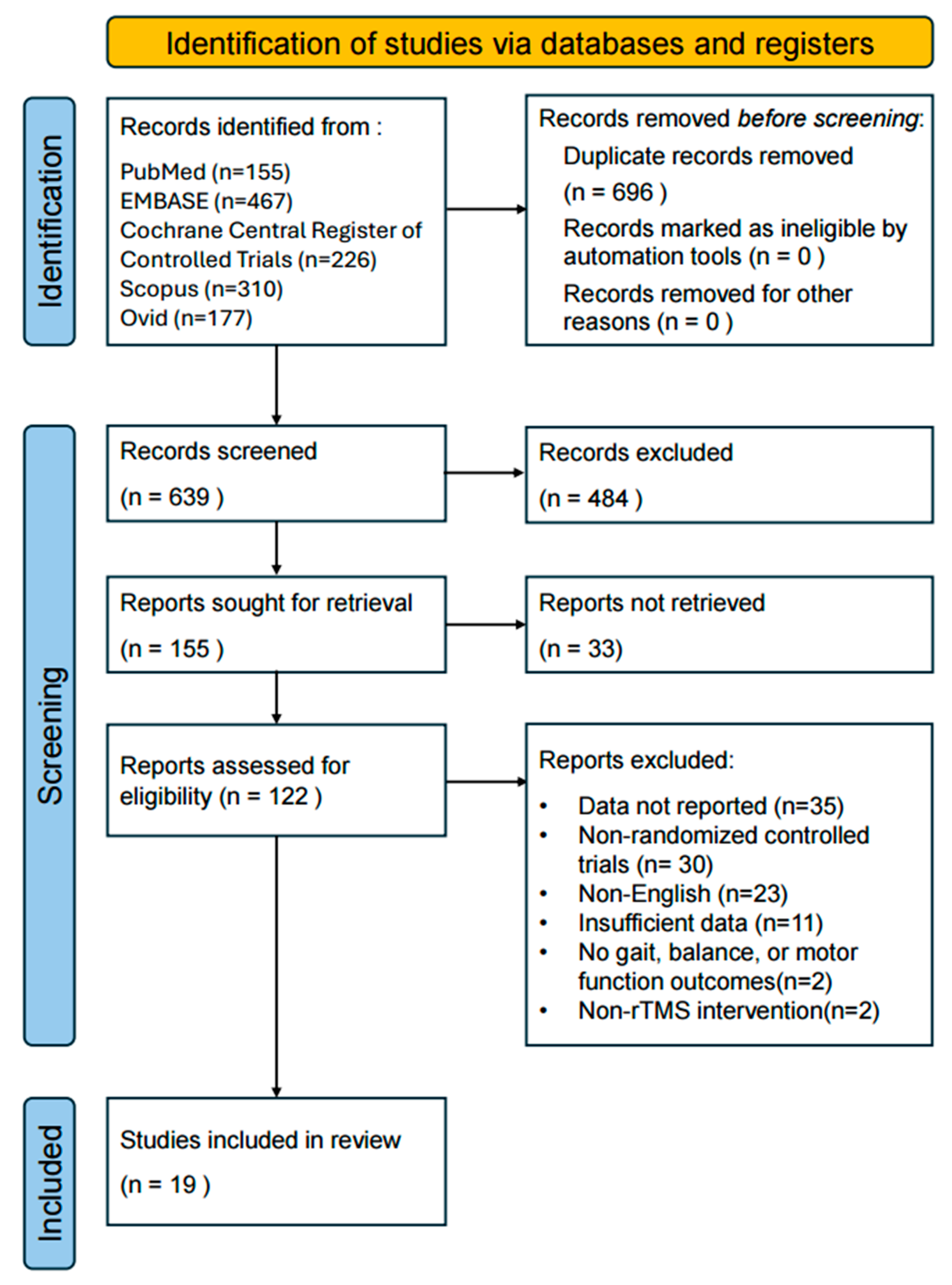
2.2. Literature Search and Study Selection
2.3. Eligibility Criteria
2.4. Data Extraction and Quality Assessment
2.5. Data Analysis and Synthesis
3. Results
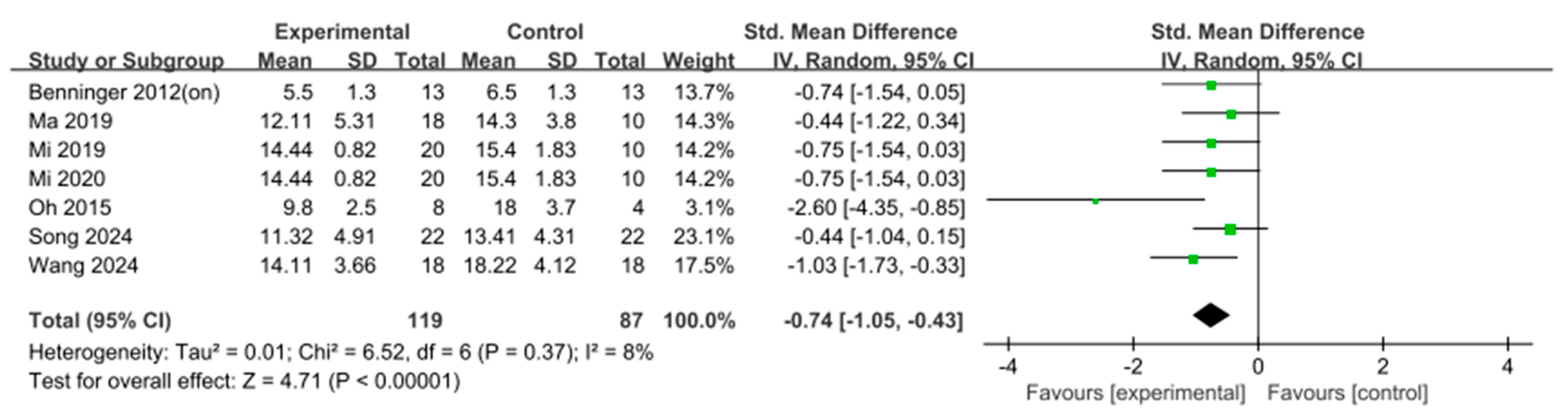
3.1. Freezing of Gait Questionnaire (FOG-Q)
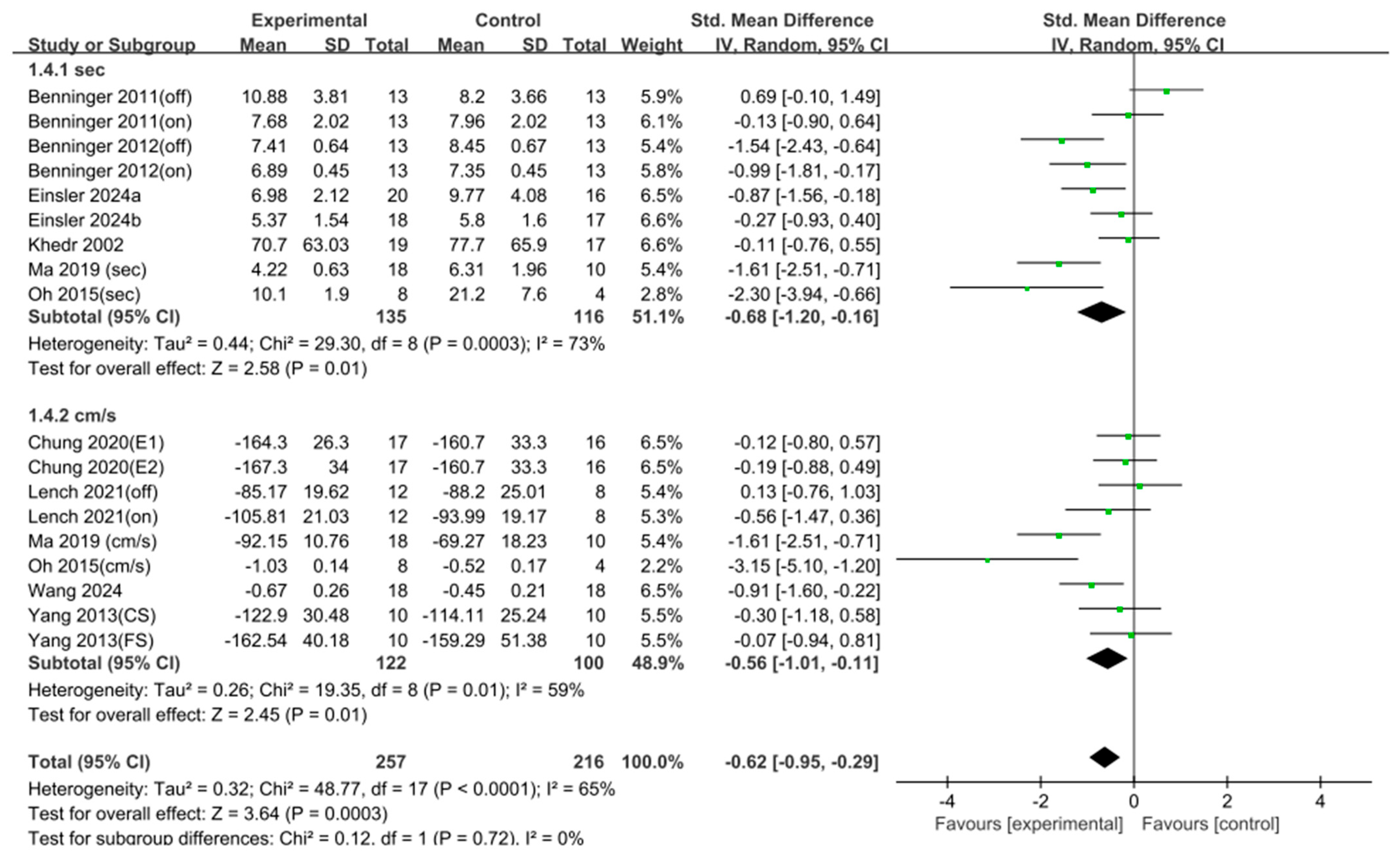
3.2. Gait Speed
3.3. Unified Parkinson’s Disease Rating Scale III (UPDRS-III)
3.4. Unified Parkinson’s Disease Rating Scale Total
3.5. Timed Up and Go (TUG)
4. Discussion
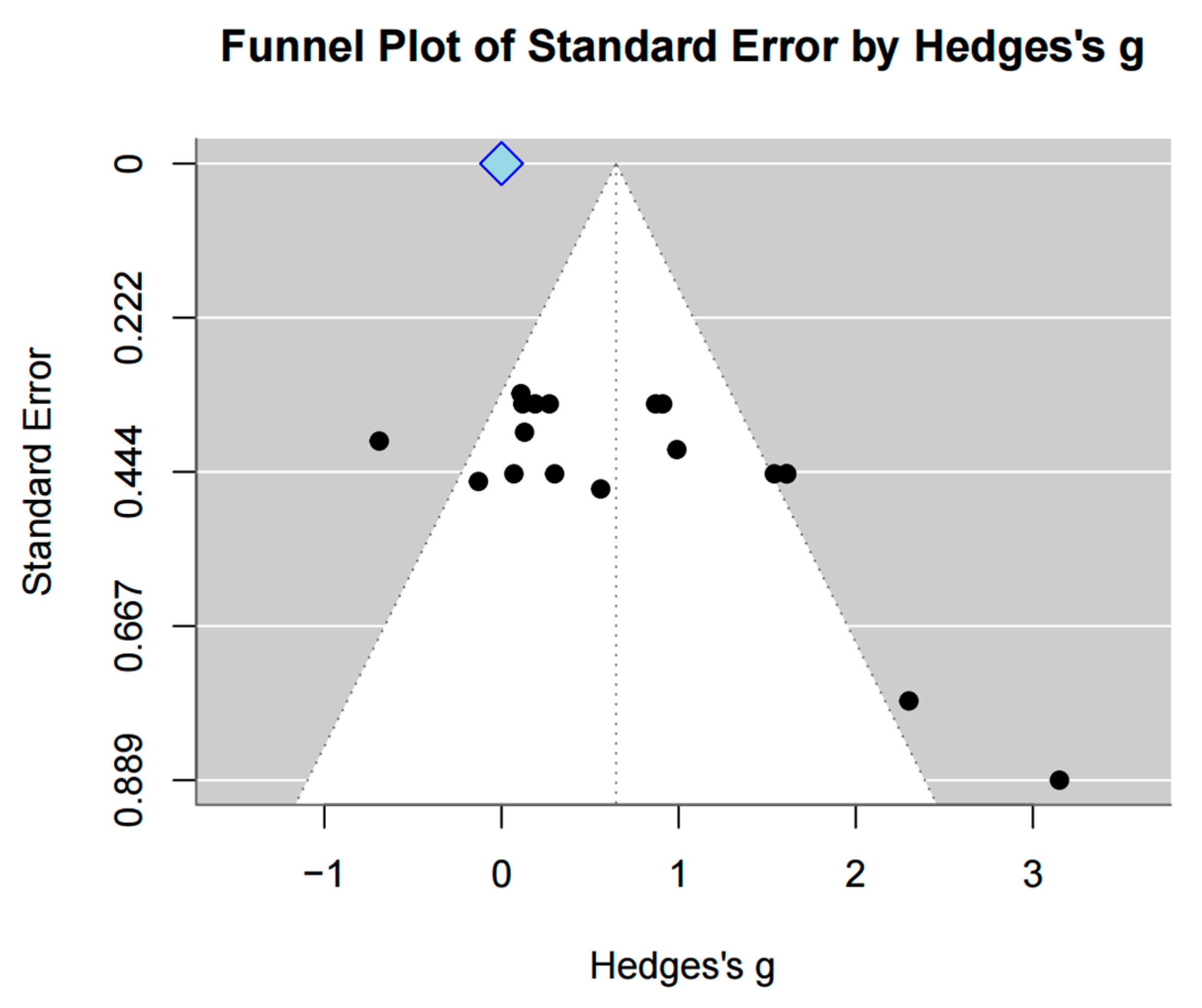
4.1. Interpretation of the PEDro Score and Publication Bias
4.2. Study Limitations
5. Conclusions
Supplementary Materials
Author Contributions
Funding
Institutional Review Board Statement
Informed Consent Statement
Data Availability Statement
Conflicts of Interest
References
- Ascherio, A.; Schwarzschild, M.A. The epidemiology of Parkinson’s disease: Risk factors and prevention. Lancet Neurol. 2016, 15, 1257–1272. [Google Scholar] [CrossRef]
- Tolosa, E.; Wenning, G.; Poewe, W. The diagnosis of Parkinson’s disease. Lancet Neurol. 2006, 5, 75–86. [Google Scholar] [CrossRef]
- Balestrino, R.; Schapira, A.H. Parkinson disease. Eur. J. Neurol. 2020, 27, 27–42. [Google Scholar] [CrossRef] [PubMed]
- Rubenstein, L.M.; DeLeo, A.; Chrischilles, E.A. Economic and health-related quality of life considerations of new therapies in Parkinson’s disease. Pharmacoeconomics 2001, 19, 729–752. [Google Scholar] [CrossRef]
- Dowding, C.H.; Shenton, C.L.; Salek, S.S. A review of the health-related quality of life and economic impact of Parkinson’s disease. Drugs Aging 2006, 23, 693–721. [Google Scholar] [CrossRef]
- Giladi, N.; Shabtai, H.; Simon, E.; Biran, S.; Tal, J.; Korczyn, A. Construction of freezing of gait questionnaire for patients with Parkinsonism. Park. Relat. Disord. 2000, 6, 165–170. [Google Scholar] [CrossRef]
- Giladi, N.; Nieuwboer, A. Understanding and treating freezing of gait in parkinsonism, proposed working definition, and setting the stage. Mov. Disord. 2008, 23, S423–S425. [Google Scholar] [CrossRef]
- Mancini, M.; Shah, V.V.; Stuart, S.; Curtze, C.; Horak, F.B.; Safarpour, D.; Nutt, J.G. Measuring freezing of gait during daily-life: An open-source, wearable sensors approach. J. Neuroeng. Rehabil. 2021, 18, 1. [Google Scholar] [CrossRef] [PubMed]
- Bloem, B.R.; Hausdorff, J.M.; Visser, J.E.; Giladi, N. Falls and freezing of gait in Parkinson’s disease: A review of two interconnected, episodic phenomena. Mov. Disord. 2004, 19, 871–884. [Google Scholar] [CrossRef] [PubMed]
- Canning, C.G.; Sherrington, C.; Lord, S.R.; Fung, V.S.; Close, J.C.; Latt, M.D.; Howard, K.; Allen, N.E.; O’Rourke, S.D.; Murray, S.M. Exercise therapy for prevention of falls in people with Parkinson’s disease: A protocol for a randomised controlled trial and economic evaluation. BMC Neurol. 2009, 9, 4. [Google Scholar] [CrossRef]
- Rinalduzzi, S.; Trompetto, C.; Marinelli, L.; Alibardi, A.; Missori, P.; Fattapposta, F.; Pierelli, F.; Currà, A. Balance dysfunction in Parkinson’s disease. BioMed Res. Int. 2015, 2015, 434683. [Google Scholar] [CrossRef]
- Peterka, R.J. Sensorimotor integration in human postural control. J. Neurophysiol. 2002, 88, 1097–1118. [Google Scholar] [CrossRef]
- Beckley, D.; Bloem, B.; Van Dijk, J.; Roos, R.; Remler, M. Electrophysiological correlates of postural instability in Parkinson’s disease. Electroencephalogr. Clin. Neurophysiol. Evoked Potentials Sect. 1991, 81, 263–268. [Google Scholar] [CrossRef]
- Kalilani, L.; Friesen, D.; Boudiaf, N.; Asgharnejad, M. The characteristics and treatment patterns of patients with Parkinson’s disease in the United States and United Kingdom: A retrospective cohort study. PLoS ONE 2019, 14, e0225723. [Google Scholar] [CrossRef]
- Deuschl, G.; Schade-Brittinger, C.; Krack, P.; Volkmann, J.; Schäfer, H.; Bötzel, K.; Daniels, C.; Deutschländer, A.; Dillmann, U.; Eisner, W. A randomized trial of deep-brain stimulation for Parkinson’s disease. N. Engl. J. Med. 2006, 355, 896–908. [Google Scholar] [CrossRef] [PubMed]
- Forte, R.; Tocci, N.; De Vito, G. The impact of exercise intervention with rhythmic auditory stimulation to improve gait and mobility in Parkinson disease: An umbrella review. Brain Sci. 2021, 11, 685. [Google Scholar] [CrossRef] [PubMed]
- Schrag, A.; Jahanshahi, M.; Quinn, N. How does Parkinson’s disease affect quality of life? A comparison with quality of life in the general population. Mov. Disord. Off. J. Mov. Disord. Soc. 2000, 15, 1112–1118. [Google Scholar] [CrossRef]
- Shulman, L.M.; Katzel, L.I.; Ivey, F.M.; Sorkin, J.D.; Favors, K.; Anderson, K.E.; Smith, B.A.; Reich, S.G.; Weiner, W.J.; Macko, R.F. Randomized clinical trial of 3 types of physical exercise for patients with Parkinson disease. JAMA Neurol. 2013, 70, 183–190. [Google Scholar] [CrossRef] [PubMed]
- Pascual-Leone, A.; Valls-Solé, J.; Wassermann, E.M.; Hallett, M. Responses to rapid-rate transcranial magnetic stimulation of the human motor cortex. Brain 1994, 117, 847–858. [Google Scholar] [CrossRef]
- Huang, Y.-Z.; Edwards, M.J.; Rounis, E.; Bhatia, K.P.; Rothwell, J.C. Theta burst stimulation of the human motor cortex. Neuron 2005, 45, 201–206. [Google Scholar] [CrossRef]
- Liu, C.; Li, L.; Li, B.; Liu, Z.; Xing, W.; Zhu, K.; Jin, W.; Lin, S.; Tan, W.; Ren, L. Efficacy and safety of theta burst versus repetitive transcranial magnetic stimulation for the treatment of depression: A meta-analysis of randomized controlled trials. Neuromodul. Technol. Neural Interface 2024, 27, 701–710. [Google Scholar] [CrossRef]
- Allen, E.A.; Pasley, B.N.; Duong, T.; Freeman, R.D. Transcranial magnetic stimulation elicits coupled neural and hemodynamic consequences. Science 2007, 317, 1918–1921. [Google Scholar] [CrossRef]
- Bloem, B.R.; Okun, M.S.; Klein, C. Parkinson’s disease. Lancet 2021, 397, 2284–2303. [Google Scholar] [CrossRef]
- Khedr, E.M.; Rothwell, J.C.; Shawky, O.A.; Ahmed, M.A.; Hamdy, A. Effect of daily repetitive transcranial magnetic stimulation on motor performance in Parkinson’s disease. Mov. Disord. Off. J. Mov. Disord. Soc. 2006, 21, 2201–2205. [Google Scholar] [CrossRef] [PubMed]
- Liao, J.; Wu, B.; Yang, Z.; Tang, C. Effect of repetitive transcranial magnetic stimulation combined with balance training on improving balance function in patients with Parkinson’s disease: A randomized controlled trial. Physiother. Pract. Res. 2024, 45, 67–75. [Google Scholar] [CrossRef]
- Mi, T.-M.; Garg, S.; Ba, F.; Liu, A.-P.; Wu, T.; Gao, L.-L.; Dan, X.-J.; Chan, P.; McKeown, M.J. High-frequency rTMS over the supplementary motor area improves freezing of gait in Parkinson’s disease: A randomized controlled trial. Park. Relat. Disord. 2019, 68, 85–90. [Google Scholar] [CrossRef] [PubMed]
- Moher, D. Preferred reporting items for systematic review and meta-analysis protocols (PRISMA-P) 2015 statement. Rev. Esp. Nutr. Humana Y Diet. 2016, 20, 148. [Google Scholar] [CrossRef]
- Cashin, A.G.; McAuley, J.H. Clinimetrics: Physiotherapy evidence database (PEDro) scale. J. Physiother. 2020, 66, 59. [Google Scholar] [CrossRef]
- Wan, X.; Wang, W.; Liu, J.; Tong, T. Estimating the sample mean and standard deviation from the sample size, median, range and/or interquartile range. BMC Med. Res. Methodol. 2014, 14, 135. [Google Scholar] [CrossRef]
- Deeks, J.J.; Higgins, J.P.T.; Altman, D.G. Analysing data and undertaking meta-analyses. In Cochrane Handbook for Systematic Reviews of Interventions; John Wiley & Sons Ltd: London, UK, 2008; pp. 243–296. [Google Scholar]
- Bernard, R.M.; Abrami, P.C.; Borokhovski, E.; Wade, C.A.; Tamim, R.M.; Surkes, M.A.; Bethel, E.C. A meta-analysis of three types of interaction treatments in distance education. Rev. Educ. Res. 2009, 79, 1243–1289. [Google Scholar] [CrossRef]
- Egger, M.; Smith, G.D.; Schneider, M.; Minder, C. Bias in meta-analysis detected by a simple, graphical test. BMJ 1997, 315, 629–634. [Google Scholar] [CrossRef]
- Harrer, M.; Cuijpers, P.; Furukawa, T.; Ebert, D. Doing Meta-Analysis with R: A Hands-on Guide; Chapman and Hall/CRC: New York, NY, USA, 2021. [Google Scholar]
- Page, M.J.; McKenzie, J.E.; Bossuyt, P.M.; Boutron, I.; Hoffmann, T.C.; Mulrow, C.D.; Shamseer, L.; Tetzlaff, J.M.; Akl, E.A.; Brennan, S.E. The PRISMA 2020 statement: An updated guideline for reporting systematic reviews. BMJ 2021, 372, n71. [Google Scholar] [CrossRef]
- Benninger, D.H.; Berman, B.; Houdayer, E.; Pal, N.; Luckenbaugh, D.; Schneider, L.; Miranda, S.; Hallett, M. Intermittent theta-burst transcranial magnetic stimulation for treatment of Parkinson disease. Neurology 2011, 76, 601–609. [Google Scholar] [CrossRef] [PubMed]
- Benninger, D.H.; Iseki, K.; Kranick, S.; Luckenbaugh, D.A.; Houdayer, E.; Hallett, M. Controlled study of 50-Hz repetitive transcranial magnetic stimulation for the treatment of Parkinson disease. Neurorehabilit. Neural Repair 2012, 26, 1096–1105. [Google Scholar] [CrossRef] [PubMed]
- Chung, C.L.H.; Mak, M.K.Y.; Hallett, M. Transcranial magnetic stimulation promotes gait training in Parkinson disease. Ann. Neurol. 2020, 88, 933–945. [Google Scholar] [CrossRef]
- Grobe-Einsler, M.; Lupa, A.; Weller, J.; Kaut, O. RTMS of the Cerebellum Using an Accelerated Stimulation Protocol Improved Gait in Parkinson’s Disease. Neurorehabilit. Neural Repair 2024, 38, 539–550. [Google Scholar] [CrossRef]
- Grobe-Einsler, M.; Baljasnikowa, V.; Faikus, A.; Schaprian, T.; Kaut, O. Cerebellar transcranial magnetic stimulation improves motor function in Parkinson’s disease. Ann. Clin. Transl. Neurol. 2024, 11, 2673–2684. [Google Scholar] [CrossRef]
- Khedr, E.M.; Farweez, H.; Islam, H. Therapeutic effect of repetitive transcranial magnetic stimulation on motor function in Parkinson’s disease patients. Eur. J. Neurol. 2003, 10, 567–572. [Google Scholar] [CrossRef]
- Lench, D.H.; DeVries, W.; Kearney-Ramos, T.E.; Chesnutt, A.; Monsch, E.D.; Embry, A.E.; Doolittle, J.D.; Kautz, S.A.; Hanlon, C.A.; Revuelta, G.J. Paired inhibitory stimulation and gait training modulates supplemental motor area connectivity in freezing of gait. Park. Relat. Disord. 2021, 88, 28–33. [Google Scholar] [CrossRef] [PubMed]
- Li, J.; Mi, T.-M.; Zhu, B.-f.; Ma, J.-H.; Han, C.; Li, Y.; Yang, W.-M.; Chan, P. High-frequency repetitive transcranial magnetic stimulation over the primary motor cortex relieves musculoskeletal pain in patients with Parkinson’s disease: A randomized controlled trial. Park. Relat. Disord. 2020, 80, 113–119. [Google Scholar] [CrossRef]
- Lomarev, M.P.; Kanchana, S.; Bara-Jimenez, W.; Iyer, M.; Wassermann, E.M.; Hallett, M. Placebo-controlled study of rTMS for the treatment of Parkinson’s disease. Mov. Disord. 2006, 21, 325–331. [Google Scholar] [CrossRef]
- Ma, J.; Gao, L.; Mi, T.; Sun, J.; Chan, P.; Wu, T. Repetitive transcranial magnetic stimulation does not improve the sequence effect in freezing of gait. Park. Dis. 2019, 2019, 2196195. [Google Scholar] [CrossRef] [PubMed]
- Mi, T.-M.; Garg, S.; Ba, F.; Liu, A.-P.; Liang, P.-P.; Gao, L.-L.; Jia, Q.; Xu, E.-H.; Li, K.-C.; Chan, P. Repetitive transcranial magnetic stimulation improves Parkinson’s freezing of gait via normalizing brain connectivity. npj Park. Dis. 2020, 6, 16. [Google Scholar] [CrossRef] [PubMed]
- Oh, E.; Park, S.; Lim, J.; Lee, A.Y.; Bok, S.-K.; Song, H.-J. High frequency repetitive transcranial magnetic stimulation for freezing of gait and nonmotor symptoms in Parkinson’s disease. J. Korean Neurol. Assoc. 2015, 33, 297–305. [Google Scholar] [CrossRef]
- Romero, J.P.; Moreno-Verdú, M.; Arroyo-Ferrer, A.; Serrano, J.I.; Herreros-Rodríguez, J.; García-Caldentey, J.; Rocon de Lima, E.; Del Castillo, M.D. Clinical and neurophysiological effects of bilateral repetitive transcranial magnetic stimulation and EEG-guided neurofeedback in Parkinson’s disease: A randomized, four-arm controlled trial. J. Neuroeng. Rehabil. 2024, 21, 135. [Google Scholar] [CrossRef]
- Song, W.; Zhang, Z.; Lv, B.; Li, J.; Chen, H.; Zhang, S.; Zu, J.; Dong, L.; Xu, C.; Zhou, M. High-frequency rTMS over bilateral primary motor cortex improves freezing of gait and emotion regulation in patients with Parkinson’s disease: A randomized controlled trial. Front. Aging Neurosci. 2024, 16, 1354455. [Google Scholar] [CrossRef]
- Wang, L.; Sun, H.; Zhang, H.; Ji, M.; Gan, C.; Shan, A.; Cao, X.; Yuan, Y.; Zhang, K. Effect of cerebrospinal dual-site magnetic stimulation on freezing of gait in Parkinson’s disease. npj Park. Dis. 2024, 10, 183. [Google Scholar] [CrossRef]
- Yang, Y.-R.; Tseng, C.-Y.; Chiou, S.-Y.; Liao, K.-K.; Cheng, S.-J.; Lai, K.-L.; Wang, R.-Y. Combination of rTMS and treadmill training modulates corticomotor inhibition and improves walking in Parkinson disease: A randomized trial. Neurorehabilit. Neural Repair 2013, 27, 79–86. [Google Scholar] [CrossRef] [PubMed]
- Zhuang, S.; Wang, F.-Y.; Gu, X.; Wu, J.-J.; Mao, C.-J.; Gui, H.; Chen, J.; Liu, C.-F. Low-Frequency Repetitive Transcranial Magnetic Stimulation over Right Dorsolateral Prefrontal Cortex in Parkinson’s Disease. Park. Dis. 2020, 2020, 7295414. [Google Scholar] [CrossRef]
- Morris, M.E.; Iansek, R.; Matyas, T.A.; Summers, J.J. The pathogenesis of gait hypokinesia in Parkinson’s disease. Brain 1994, 117, 1169–1181. [Google Scholar] [CrossRef]
- Mak, M.K. Reduced step length, not step length variability is central to gait hypokinesia in people with Parkinson’s disease. Clin. Neurol. Neurosurg. 2013, 115, 587–590. [Google Scholar] [CrossRef] [PubMed]
- Nieuwboer, A.; Kwakkel, G.; Rochester, L.; Jones, D.; van Wegen, E.; Willems, A.M.; Chavret, F.; Hetherington, V.; Baker, K.; Lim, I. Cueing training in the home improves gait-related mobility in Parkinson’s disease: The RESCUE trial. J. Neurol. Neurosurg. Psychiatry 2007, 78, 134–140. [Google Scholar] [CrossRef] [PubMed]
- Xie, Y.-J.; Gao, Q.; He, C.-Q.; Bian, R. Effect of repetitive transcranial magnetic stimulation on gait and freezing of gait in Parkinson disease: A systematic review and meta-analysis. Arch. Phys. Med. Rehabil. 2020, 101, 130–140. [Google Scholar] [CrossRef]
- Hoogendam, J.M.; Ramakers, G.M.; Di Lazzaro, V. Physiology of repetitive transcranial magnetic stimulation of the human brain. Brain Stimul. 2010, 3, 95–118. [Google Scholar] [CrossRef]
- Klomjai, W.; Katz, R.; Lackmy-Vallée, A. Basic principles of transcranial magnetic stimulation (TMS) and repetitive TMS (rTMS). Ann. Phys. Rehabil. Med. 2015, 58, 208–213. [Google Scholar] [CrossRef]
- Little, S.; Brown, P. The functional role of beta oscillations in Parkinson’s disease. Park. Relat. Disord. 2014, 20, S44–S48. [Google Scholar] [CrossRef]
- Oswal, A.; Beudel, M.; Zrinzo, L.; Limousin, P.; Hariz, M.; Foltynie, T.; Litvak, V.; Brown, P. Deep brain stimulation modulates synchrony within spatially and spectrally distinct resting state networks in Parkinson’s disease. Brain 2016, 139, 1482–1496. [Google Scholar] [CrossRef]
- Mirelman, A.; Bonato, P.; Camicioli, R.; Ellis, T.D.; Giladi, N.; Hamilton, J.L.; Hass, C.J.; Hausdorff, J.M.; Pelosin, E.; Almeida, Q.J. Gait impairments in Parkinson’s disease. Lancet Neurol. 2019, 18, 697–708. [Google Scholar] [CrossRef]
- Wu, T.; Hallett, M. The cerebellum in Parkinson’s disease. Brain 2013, 136, 696–709. [Google Scholar] [CrossRef] [PubMed]
- Gilat, M.; Shine, J.M.; Walton, C.C.; O’Callaghan, C.; Hall, J.M.; Lewis, S.J. Brain activation underlying turning in Parkinson’s disease patients with and without freezing of gait: A virtual reality fMRI study. npj Park. Dis. 2015, 1, 15020. [Google Scholar] [CrossRef]
- Conte, D.; Roman, A.; Beorchia, Y.; Pinzini, C.; Castriotta, L.; Valente, M. The effects of transcranial magnetic stimulation in motor symptoms of Parkinson’s disease: An overview of systematic reviews with meta-analysis. Neurol. Sci. 2025, 46, 3405–3418. [Google Scholar] [CrossRef] [PubMed]
- Zhang, X.; Jing, F.; Liu, Y.A.; Tang, J.; Hua, X.; Zhu, J.; Tuo, H.; Lin, Q.; Gao, P.; Liu, W. Effects of non-invasive brain stimulation on walking and balance ability in Parkinson’s patients: A systematic review and meta-analysis. Front. Aging Neurosci. 2023, 14, 1065126. [Google Scholar] [CrossRef]
- González-García, N.; Armony, J.L.; Soto, J.; Trejo, D.; Alegría, M.A.; Drucker-Colín, R. Effects of rTMS on Parkinson’s disease: A longitudinal fMRI study. J. Neurol. 2011, 258, 1268–1280. [Google Scholar] [CrossRef]
- Nachev, P.; Kennard, C.; Husain, M. Functional role of the supplementary and pre-supplementary motor areas. Nat. Rev. Neurosci. 2008, 9, 856–869. [Google Scholar] [CrossRef]
- Kim, S.J.; Paeng, S.H.; Kang, S.Y. Stimulation in Supplementary Motor Area Versus Motor Cortex for Freezing of Gait in Parkinson’s Disease. J. Clin. Neurol. 2018, 14, 320–326. [Google Scholar] [CrossRef]
- del Olmo, M.F.; Bello, O.; Cudeiro, J. Transcranial magnetic stimulation over dorsolateral prefrontal cortex in Parkinson’s disease. Clin. Neurophysiol. 2007, 118, 131–139. [Google Scholar] [CrossRef]
- Movement Disorder Society Task Force on Rating Scales for Parkinson’s Disease. The unified Parkinson’s disease rating scale (UPDRS): Status and recommendations. Mov. Disord. 2003, 18, 738–750. [CrossRef]
- Schrag, A.; Jahanshahi, M.; Quinn, N. What contributes to quality of life in patients with Parkinson’s disease? J. Neurol. Neurosurg. Psychiatry 2000, 69, 308–312. [Google Scholar] [CrossRef] [PubMed]
- Strafella, A.P.; Paus, T.; Fraraccio, M.; Dagher, A. Striatal dopamine release induced by repetitive transcranial magnetic stimulation of the human motor cortex. Brain 2003, 126, 2609–2615. [Google Scholar] [CrossRef]
- Koch, G.; Brusa, L.; Caltagirone, C.; Peppe, A.; Oliveri, M.; Stanzione, P.; Centonze, D. rTMS of supplementary motor area modulates therapy-induced dyskinesias in Parkinson disease. Neurology 2005, 65, 623–625. [Google Scholar] [CrossRef] [PubMed]
- Brusa, L.; Versace, V.; Koch, G.; Iani, C.; Stanzione, P.; Bernardi, G.; Centonze, D. Low frequency rTMS of the SMA transiently ameliorates peak-dose LID in Parkinson’s disease. Clin. Neurophysiol. 2006, 117, 1917–1921. [Google Scholar] [CrossRef]
- Xie, C.-L.; Chen, J.; Wang, X.-D.; Pan, J.-L.; Zhou, Y.; Lin, S.-Y.; Xue, X.-D.; Wang, W.-W. Repetitive transcranial magnetic stimulation (rTMS) for the treatment of depression in Parkinson disease: A meta-analysis of randomized controlled clinical trials. Neurol. Sci. 2015, 36, 1751–1761. [Google Scholar] [CrossRef]
- Steffen, T.; Seney, M. Test-retest reliability and minimal detectable change on balance and ambulation tests, the 36-item short-form health survey, and the unified Parkinson disease rating scale in people with parkinsonism. Phys. Ther. 2008, 88, 733–746. [Google Scholar] [CrossRef]
- Smulders, K.; Dale, M.L.; Carlson-Kuhta, P.; Nutt, J.G.; Horak, F.B. Pharmacological treatment in Parkinson’s disease: Effects on gait. Park. Relat. Disord. 2016, 31, 3–13. [Google Scholar] [CrossRef] [PubMed]
- Dibilio, V.; Stummer, C.; Drenthen, L.; Bloem, B.R.; Nonnekes, J.; Weerdesteyn, V. Secondary task performance during challenging walking tasks and freezing episodes in Parkinson’s disease. J. Neural Transm. 2016, 123, 495–501. [Google Scholar] [CrossRef]
- Yamato, T.P.; Arora, M.; Stevens, M.L.; Elkins, M.R.; Moseley, A.M. Quality, language, subdiscipline and promotion were associated with article accesses on Physiotherapy Evidence Database (PEDro). Physiotherapy 2018, 104, 122–128. [Google Scholar] [CrossRef] [PubMed]
- Kim, S.; Park, J.; Seo, H.; Lee, Y.; Jang, B.; Son, H.; Suh, H.; Shin, C. NECA’s Guidance for Undertaking Systematic Reviews and Meta-Analyses for Intervention; National Evidence-Based Healthcare Collaborating Agency: Seoul, South Korea, 2011; Volume 25, pp. 65–78. [Google Scholar]
- Duval, S.; Tweedie, R. A nonparametric “trim and fill” method of accounting for publication bias in meta-analysis. J. Am. Stat. Assoc. 2000, 95, 89–98. [Google Scholar]
- Idris, N.R.N. A comparison of methods to detect publication bias for meta-analysis of continuous data. J. Appl. Sci. 2012, 12, 1413–1417. [Google Scholar] [CrossRef]
- Chung, S.J.; Lee, J.J.; Lee, P.H.; Sohn, Y.H. Emerging concepts of motor reserve in Parkinson’s disease. J. Mov. Disord. 2020, 13, 171. [Google Scholar] [CrossRef]
- Giustiniani, A.; Quartarone, A. Defining the concept of reserve in the motor domain: A systematic review. Front. Neurosci. 2024, 18, 1403065. [Google Scholar] [CrossRef]
- Vu, T.C.; Nutt, J.G.; Holford, N.H. Disease progress and response to treatment as predictors of survival, disability, cognitive impairment and depression in Parkinson’s disease. Br. J. Clin. Pharmacol. 2012, 74, 284–295. [Google Scholar] [CrossRef] [PubMed]



| Study (Year) | Age (Year, Mean SD) | Sex (M/F) | Disease Duration (Year, Mean ± SD) | Hoehn and Yahr (Score, Mean ± SD) | Outcomes | PEDro Score |
|---|---|---|---|---|---|---|
| Benninger (2011) [35] | 1 E: 62.1 ± 6.9, 2 C: 65.6 ± 9.0 | E: 7/6, C: 11/2 | E: 10.8 ± 7.1 C: 6.5 ± 3.4 | E(on): 2.6 ± 0.2 C: 2.5 ± 0.1 | gait speed, 6 UPDRSⅢ, 6 UPDRS_total | 8 |
| Benninger (2012) [36] | E(on): 64.5 ± 9.1, C(on): 63.7 ± 8.3 | E: 11/2, C: 9/4 | E: 8.6 ± 4.1 C: 9.3 ± 6.8 | E(on): 2.4 ± 0.2 (off): 2.7 ± 0.3 C(on): 2.5 ± 0.3 (off): 2.9 ± 0.6 | 5 FOG-Q, 4 10MWT, 6 UPDRSⅢ, 6 UPDRS_total | 8 |
| Chung (2020) [37] | E1: 62.7 ± 6.8, E2: 62.1 ± 5.7, C: 62.1 ± 5.7 | E1: 10/7 E2: 9/8 C: 7/9 | E1: 5.2 ± 3.4 E2: 7.5 ± 4.9 C: 6.9 ± 3.3 | E1: 2.2 ± 0.3 E2: 2.2 ± 0.4 C: 2.3 ± 0.3 | gait speed, 6 UPDRSⅢ, 7 TUG | 9 |
| Einsler (2024a) [38] | E: 68 (61–77) C: 71 (66–77) | E: 14/6 C: 10/6 | - | E: 2.0 (1–3) C: 1.5 (1–3) | 3 8MWT, 6 UPDRSⅢ, 7 TUG | 10 |
| Einsler (2024b) [39] | E: 66.06 ± 9.70 C: 70.41 ± 10.37 | E: 15/3 C: 13/4 | - | E: 2.11 ± 0.9 C: 1.94 ± 0.75 | 3 8MWT, 6 UPDRSⅢ, 7 TUG | 8 |
| Khedr (2002) [40] | E: 57.8 ± 9.2 C: 57.5 ± 8.4 | E: 14/5 C: 10/7 | E: 3.05 ± 2.1 C: 3.6 ± 2.4 | - | gait speed, 6 UPDRSⅢ | 6 |
| Lench (2021) [41] | E: 66.6 ± 7.5 C: 64.5 ± 8.9 | E: 7/5 C: 7/1 | E: 8.7 ± 7.12 C: 8 ± 5.63 | E: 2.32 ± 0.405 C: 2.29 ± 0.267 | gait speed, 6 UPDRSⅢ | 8 |
| Li (2020) [42] | E: 61.67 ± 6.92 C: 61.46 ± 8.4 | E: 8/16 C: 8/16 | E: 5.48 ± 3.69 C: 6.46 ± 5.17 | E: 1.85 ± 0.63 C: 1.83 ± 0.64 | 6 UPDRSⅢ | 8 |
| Liao (2024) [25] | E1: 64.89 ± 9.31 E2: 62.58 ± 10.34 C: 59.95 ± 10.66 | E1: 6/13 E2: 8/12 C: 10/10 | E1: 7.21 ± 3.51 E2: 6.95 ± 2.54 C: 6.45 ± 2.61 | E1: 2.74 ± 0.87 E2: 2.55 ± 1.05 C: 2.75 ± 1.02 | 6 UPDRSⅢ, 7 TUG | 8 |
| Lomarev (2006) [43] | E: 63 ± 10 C: 66 ± 10 | E: 7/2 C: 8/1 | E: 13.8 ± 6.8 C: 10.8 ± 3.1 | - | 6 UPDRSⅢ, 6 UPDRS_total | 4 |
| Ma (2019) [44] | E: 59.94 ± 9.16 C: 66 ± 8.55 | E: 8/10 C: 5/5 | E: 8.94 ± 5.48 C: 7.5 ± 4.72 | E: 2.42 ± 0.6 C: 2.4 ± 0.94 | 5 FOG-Q, 6 UPDRSⅢ, gait time, gait velocity | 10 |
| Mi (2019) [26] | E: 62.65 ± 10.56 C: 65.60 ± 8.68 | E: 9/11 C: 5/5 | E: 9.15 ± 5.82 C: 7.40 ± 4.83 | E: 2.60 ± 0.85 C: 2.35 ± 0.91 | 5 FOG-Q, 6 UPDRSⅢ, 7 TUG | 9 |
| Mi (2020) [45] | E: 62.65 ± 10.56 C: 65.60 ± 8.68 | E: 9/11 C: 5/5 | E: 9.15 ± 5.82 C: 7.40 ± 4.83 | E: 2.6 ± 0.85 C: 2.35 ± 0.91 | 5 FOG-Q, 6 UPDRSⅢ | 7 |
| Oh (2015) [46] | E: 69.8 ± 8.2 C: 73.3 ± 1.9 | E: 7/1 C: 1/3 | E: 76.1 ± 37.1 (month) C: 64.3 ± 19 (month) | E: 3 ± 0 C: 3.25 ± 0.5 | 5 FOG-Q, 6 UPDRSⅢ, gait time, gait velocity | 6 |
| Romero (2024) [47] | E: 64.40 ± 6.38 C: 66.89 ± 9.07 | E: 7/3 C: 6/3 | E: 6.00 ± 3.06 C: 6.22 ± 4.12 | E: 2.0 ± 0.52 C: 1.83 ± 0.5 | 6 UPDRSⅢ, 7 TUG | 7 |
| Song (2024) [48] | E: 67.36 ± 6.99 C: 70.50 ± 6.76 | E: 15/7 C: 13/7 | E: 6.18 ± 1.62 C: 6.77 ± 2.02 | E: (2–2.5): 15, (3): 7 C: (2–2.5): 14, (3): 8 | 5 FOG-Q, 6 UPDRSⅢ, 7 TUG | 8 |
| Wang (2024) [49] | E: 70.33 ± 9.36 C: 73.39 ± 6.15 | E: 8/10 C: 10/8 | E: 7(5–10) C: 5.5(3–8.25) | E: 3 (2.38–3) C: 3 (2.5–3) | 5 FOG-Q, 6 UPDRSⅢ, gait speed | 8 |
| Yang (2013) [50] | E: 65.20 ± 11.08 C: 67.00 ± 13.21 | E: 5/5 C: 7/3 | E: 6.40 ± 2.76 C: 6.35 ± 3.58 | E: 2.30 ± 0.42 C: 2.35 ± 0.41 | 4 10MWT, 7 TUG | 7 |
| Zhuang (2020) [51] | E: 60.58 ± 9.21 C: 61.57 ± 13.25 | E: 11/8 C: 7/7 | E: 70.37 ± 52.26 (month) C: 68.57 ± 45.29 (month) | E: 2 (1.5–2.5) C: 2.25 (1.75–3.0) | 6 UPDRSⅢ, 6 UPDRS_total | 8 |
| Study (Year) | Mode (Frequency) | Target Area | Pulses | Number of Session | Total Duration | Status | Sample Size |
|---|---|---|---|---|---|---|---|
| Benninger (2011) [35] | 1 iTBS (50 Hz) | M1, 5 DLPFC | 600 | 8 | 2 weeks | on & off | 26 |
| Benninger (2012) [36] | 3 HF (50 Hz) | M1 | - | 8 | 2 weeks | on & off | 26 |
| Chung (2020) [37] | 7 E1:3 HF (25 Hz) 8 E2:4 LF (1 Hz) | M1 | 1200 | 12 | 3 weeks | on | 50 |
| Einsler (2024a) [38] | 1 iTBS (48 Hz) | cerebellum | - | 15 | 5 days | on | 36 |
| Einsler (2024b) [39] | 2 TBS (48 Hz) | cerebellum | - | 10 | 5 days | on | 35 |
| Khedr (2002) [40] | 3 HF (5 Hz) | M1 | 2000 | 10 | 10 days | on | 36 |
| Lench (2021) [41] | 4 LF (1 Hz) | 6 SMA | 1200 | 10 | 10 days | on & off | 20 |
| Li (2020) [42] | 3 HF (20 Hz) | M1 | 2000 | 5 | 5 days | on | 48 |
| Liao (2024) [25] | 4 LF (0.5 Hz) | 6 SMA | 1800 | - | - | - | 59 |
| Lomarev (2006) [43] | 3 HF (25 Hz) | M1, 5 DLPFC | 300 | 8 | 4 weeks | on & off | 16 |
| Ma (2019) [44] | 3 HF (10 Hz) | 6 SMA | 1000 | 10 | 2 weeks | on | 28 |
| Mi (2020) [45] | 3 HF (10 Hz) | 6 SMA | 1000 | 10 | 2 weeks | on | 30 |
| Oh (2015) [46] | 3 HF (5 Hz) | M1, 5 DLPFC | 1200 | 10 | 10 days | on & off | 12 |
| Romero (2024) [47] | 3 HF (10 Hz) | M1 | 1000 | 8 | 2 weeks | on | 19 |
| Song (2024) [48] | 3 HF (10 Hz) | M1 | 1000 | 10 | 10 days | on | 44 |
| Wang (2024) [49] | 4 LF (1 Hz) | M1 | 800 | 10 | 2 weeks | on | 36 |
| Yang (2013) [50] | 3 HF (5 Hz) | M1 | 1200 | 12 | 4 weeks | on | 20 |
| Zhuang (2020) [51] | 4 LF (1 Hz) | 5 DLPFC | 1200 | 10 | 10 days | off | 33 |
| Category | Subgroups | No. of Trials (Reference) | Sample Size | 3 SMD(d) | 95% CI | Heterogeneity p Value of Chi-Square Test (I2) | Overall Effect Z Value (p Value) |
|---|---|---|---|---|---|---|---|
| Frequency | 1 HF | 8 | 329 | 0.76 | 0.30, 1.22 | 43.61 (72%) | 3.23 (0.001 *) |
| 2 LF | 3 | 109 | 0.41 | −0.03, 0.86 | 3.91 (23%) | 1.81 (0.07) | |
| Target area | M1 | 6 | 282 | 0.35 | −0.01, 0.71 | 20.16 (55%) | 1.9 (0.06) |
| 4 DLPFC | 2 | 76 | 0.99 | −0.47, 2.45 | 19.91 (85%) | 1.32 (0.19) | |
| 5 SMA | 2 | 96 | 0.91 | 0.07, 1.75 | 10.44 (71%) | 2.13 (0.03 *) | |
| Cerebellum | 2 | 71 | 0.56 | −0.03, 1.15 | 1.51 (34%) | 1.87 (0.06) | |
| Total pulses | ≤1000 pulses | 4 | 179 | 0.62 | −0.06, 1.3 | 22.97 (78%) | 1.78 (0.08) |
| >1000 pulses | 5 | 206 | 0.4 | −0.03, 0.82 | 16.05 (50%) | 1.83 (0.07) | |
| Session duration | ≥20 min | 2 | 96 | 0.91 | 0.07, 1.75 | 10.44 (71%) | 2.13 (0.03 *) |
| <20 min | 3 | 111 | 0.43 | 0.05, 0.81 | 2.83 (0%) | 2.22 (0.03 *) | |
| Not report | 5 | 230 | 0.61 | 0.05, 1.18 | 30.48 (74%) | 2.13 (0.03 *) | |
| Number of sessions | 10 times | 6 | 227 | 0.93 | 0.38, 1.47 | 26.08 (69%) | 3.33 (0.000 **) |
| < or >10 times | 5 | 246 | 0.38 | −0.03, 0.78 | 19.26 (58%) | 1.84 (0.07) | |
| Total treatment duration | <2 weeks | 6 | 171 | 0.68 | 0.10, 1.25 | 16.57 (64%) | 2.32 (0.02 *) |
| ≥2 weeks | 5 | 302 | 0.59 | 0.16, 1.03 | 32.14 (69%) | 2.69 (0.007 *) |
| Category | Subgroups | No. of Trials (Reference) | Sample Size | 3 SMD(d) | 95% CI | Heterogeneity p Value of Chi-Square Test (I2) | Overall Effect Z Value (p Value) |
|---|---|---|---|---|---|---|---|
| Frequency | 1 HF | 13 | 461 | −0.38 | −0.79, 0.03 | 63.00 (76%) | 1.82 (0.07) |
| 2 LF | 5 | 221 | −0.54 | −0.82, −0.27 | 4.93 (0%) | 3.91 (0.000 **) | |
| Target area | M1 | 8 | 360 | −0.39 | −0.75, −0.04 | 27.12 (63%) | 2.17 (0.03 *) |
| 4 DLPFC | 4 | 129 | 0.27 | −0.62, 1.15 | 25.35 (80%) | 0.59 (0.55) | |
| 5 SMA | 5 | 207 | −0.79 | −1.16, −0.43 | 9.15 (34%) | 4.23 (0.000 **) | |
| Cerebellum | 2 | 64 | −0.22 | −0.72, 0.29 | 0.01 (0%) | 0.85 (0.4) | |
| Total pulses | ≤1000 pulses | 8 | 278 | −0.11 | −0.68, 0.45 | 42.66 (79%) | 0.40 (0.69) |
| >1000 pulses | 7 | 314 | −0.81 | −1.08, −0.55 | 10.92 (18%) | 6.10 (0.000 **) | |
| Session duration | ≥20 min | 8 | 332 | −0.82 | −1.08, −0.56 | 11.24 (20%) | 6.2 (0.000 **) |
| <20 min | 2 | 64 | −0.23 | −0.73, 0.27 | 0.02 (0%) | 0.89 (0.37) | |
| Not report | 9 | 340 | −0.1 | −0.52, 0.33 | 41.53 (71%) | 0.45 (0.65) | |
| Number of sessions | 10 times | 10 | 317 | −0.75 | −1.04, −0.46 | 14.53 (31%) | 5.03 (0.000 **) |
| < or >10 times | 7 | 312 | 0.00 | −0.47, 0.47 | 40.07 (75%) | 0.01 (1.00) | |
| Total treatment duration | <2 weeks | 8 | 277 | −0.7 | −1.02, −0.38 | 12.49 (36%) | 4.27 (0.000 **) |
| ≥2 weeks | 8 | 320 | −0.39 | −0.76, −0.02 | 41.91 (55%) | 2.05 (0.04 *) |
| Outcome | No. of Participants (Studies) | Effect (95% CI) (1 SMD) | Certainty of the Evidence (6 GRADE) | Plain Language Summary |
|---|---|---|---|---|
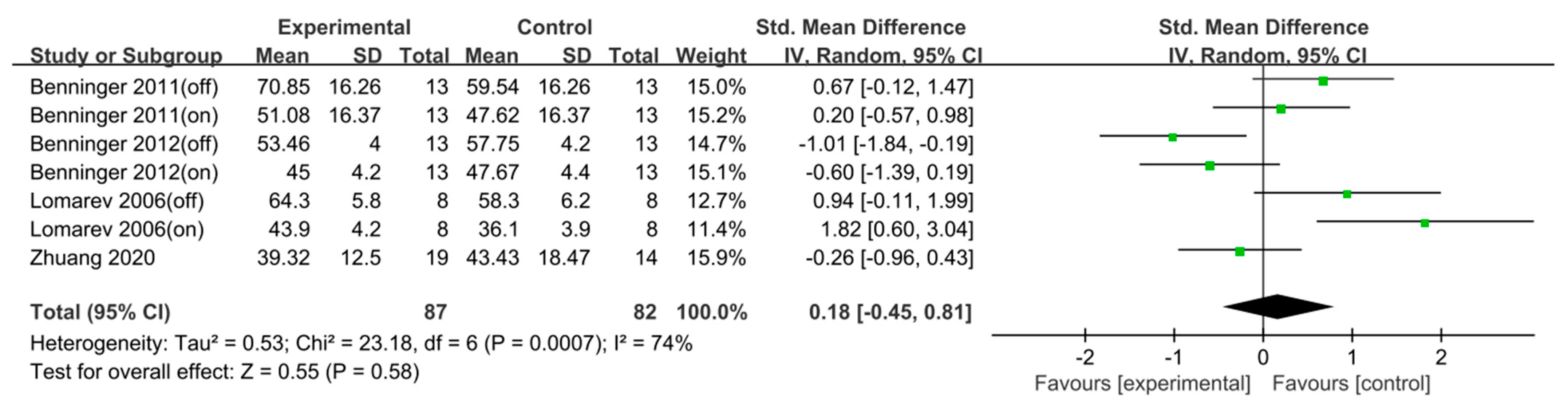
| Freezing of Gait (2 FOG-Q) | 206 (7 studies) | 1 SMD −0.74 [−1.05 to −0.43] | ⊕⊕⊕⊝ Moderate (Due to Imprecision a) | 5 rTMS likely reduces freezing of gait significantly. |
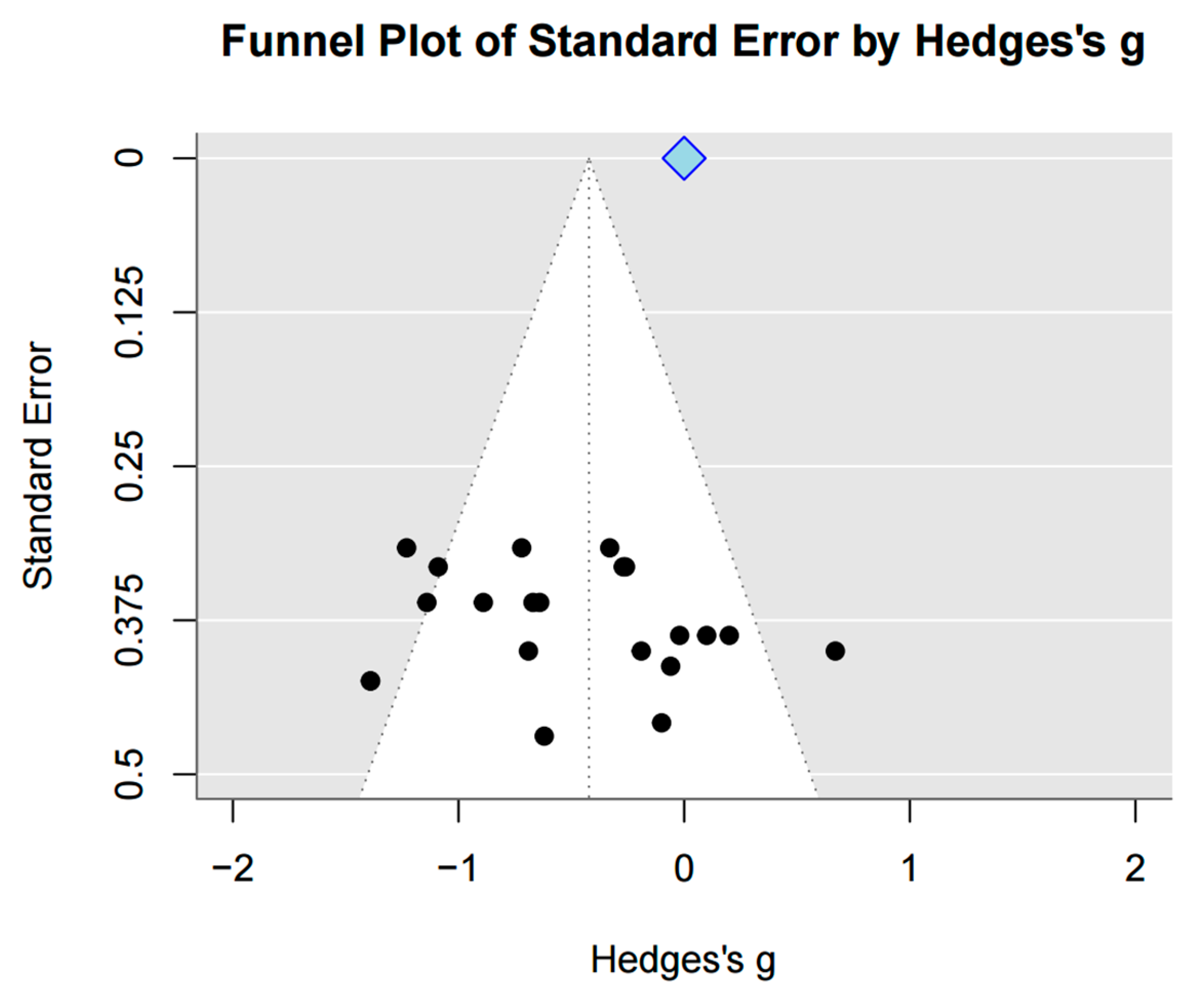
| Gait Speed | 473 (13 studies) | 1 SMD 0.62 [0.29 to 0.95] | ⊕⊕⊝⊝ Low (Due to Inconsistency b and Publication bias c) | 5 rTMS may improve gait speed, but heterogeneity and publication bias exist. |
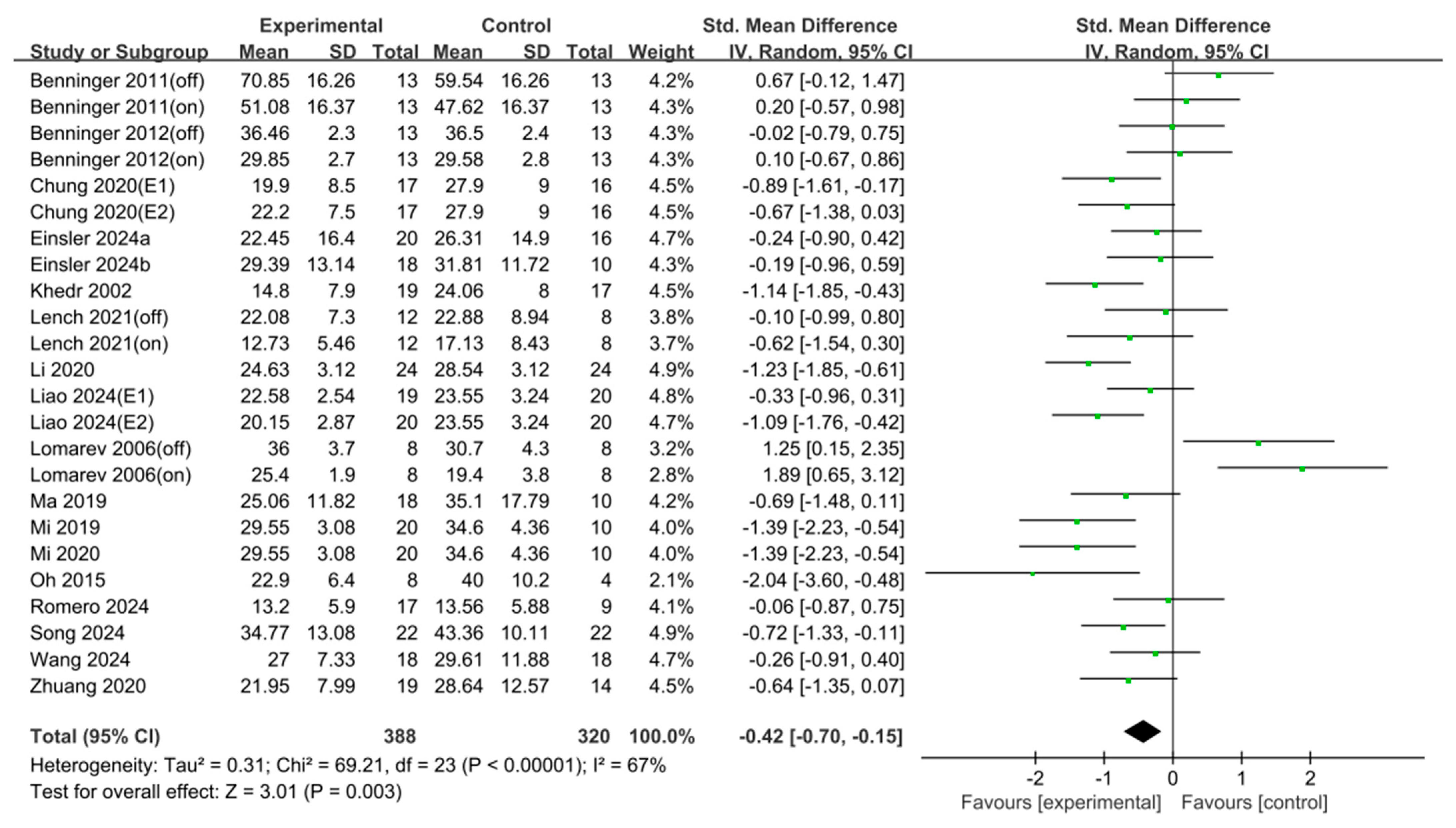
| Motor Symptoms (3 UPDRS-III) | 708 (18 studies) | 1 SMD −0.42 [−0.70 to −0.15] | ⊕⊕⊕⊝ Moderate (Due to Inconsistency b) | 5 rTMS likely improves motor symptoms significantly. |
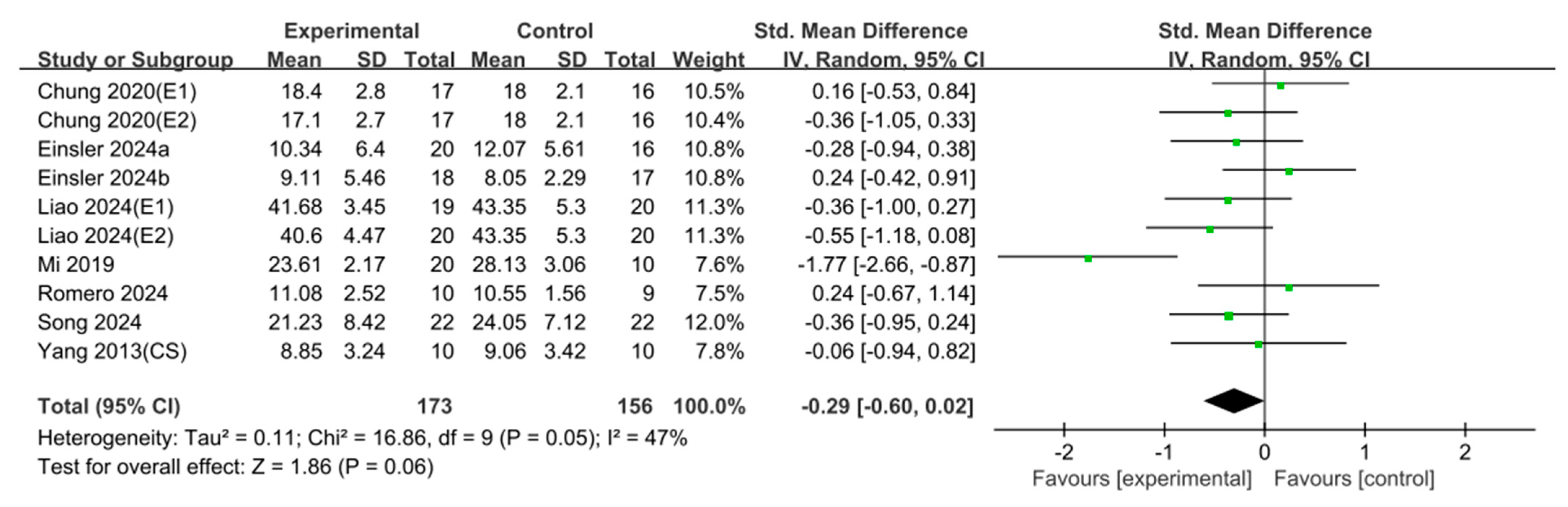
| Balance (4 TUG) | 329 (8 studies) | 1 SMD −0.29 [−0.60 to 0.02] | ⊕⊕⊝⊝ Low (Due to Imprecision a and Inconsistency b) | The effect of 5 rTMS on balance is uncertain (result not significant). |
Disclaimer/Publisher’s Note: The statements, opinions and data contained in all publications are solely those of the individual author(s) and contributor(s) and not of MDPI and/or the editor(s). MDPI and/or the editor(s) disclaim responsibility for any injury to people or property resulting from any ideas, methods, instructions or products referred to in the content. |
© 2025 by the authors. Licensee MDPI, Basel, Switzerland. This article is an open access article distributed under the terms and conditions of the Creative Commons Attribution (CC BY) license.
Share and Cite
Lee, M.-H.; Kim, J.-H.; Han, J.-S.; Kim, M.-K. The Effects of Repetitive Transcranial Magnetic Stimulation on Gait, Motor Function, and Balance in Parkinson’s Disease: A Systematic Review and Meta-Analysis of Randomized Controlled Trials. J. Clin. Med. 2026, 15, 166. https://doi.org/10.3390/jcm15010166
Lee M-H, Kim J-H, Han J-S, Kim M-K. The Effects of Repetitive Transcranial Magnetic Stimulation on Gait, Motor Function, and Balance in Parkinson’s Disease: A Systematic Review and Meta-Analysis of Randomized Controlled Trials. Journal of Clinical Medicine. 2026; 15(1):166. https://doi.org/10.3390/jcm15010166
Chicago/Turabian StyleLee, Myoung-Ho, Ju-Hak Kim, Je-Seung Han, and Myoung-Kwon Kim. 2026. "The Effects of Repetitive Transcranial Magnetic Stimulation on Gait, Motor Function, and Balance in Parkinson’s Disease: A Systematic Review and Meta-Analysis of Randomized Controlled Trials" Journal of Clinical Medicine 15, no. 1: 166. https://doi.org/10.3390/jcm15010166
APA StyleLee, M.-H., Kim, J.-H., Han, J.-S., & Kim, M.-K. (2026). The Effects of Repetitive Transcranial Magnetic Stimulation on Gait, Motor Function, and Balance in Parkinson’s Disease: A Systematic Review and Meta-Analysis of Randomized Controlled Trials. Journal of Clinical Medicine, 15(1), 166. https://doi.org/10.3390/jcm15010166