Long-Term Outcomes of Drug-Refractory Atrial Fibrillation After Atrioventricular Node Ablation Combined with Implantation of a Cardiac Resynchronization Therapy Defibrillator (CRT-D)

 , , ,
, , ,
Abstract
1. Introduction
2. Materials and Methods
- 1.
- Choose the patient who died during therapy.
- 2.
- Find the k = 5 neighbors of the same class using the Euclidean distance metric.
- 3.
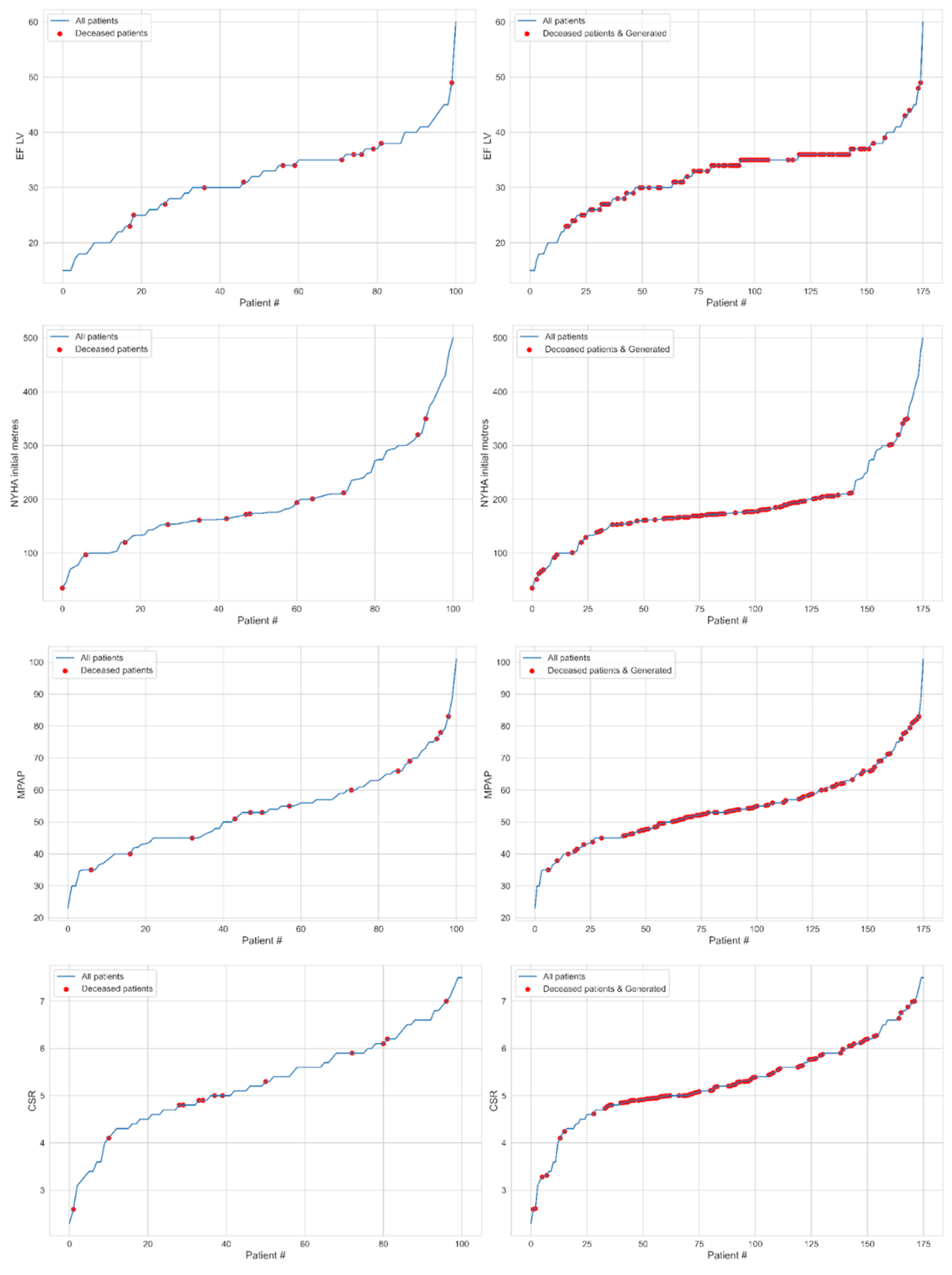
- Generate synthetic data. Firstly, randomly select from k neighbors and create the new one as between selected and initial . Here, is a random number from a uniform distribution.
- 4.
- Repeat steps 1–3 for the 75 generated “dead” patients.
- 1.
- We randomly divided all 176 data (real and synthetic) into trained (80%) and tested (20%) datasets.
- 2.
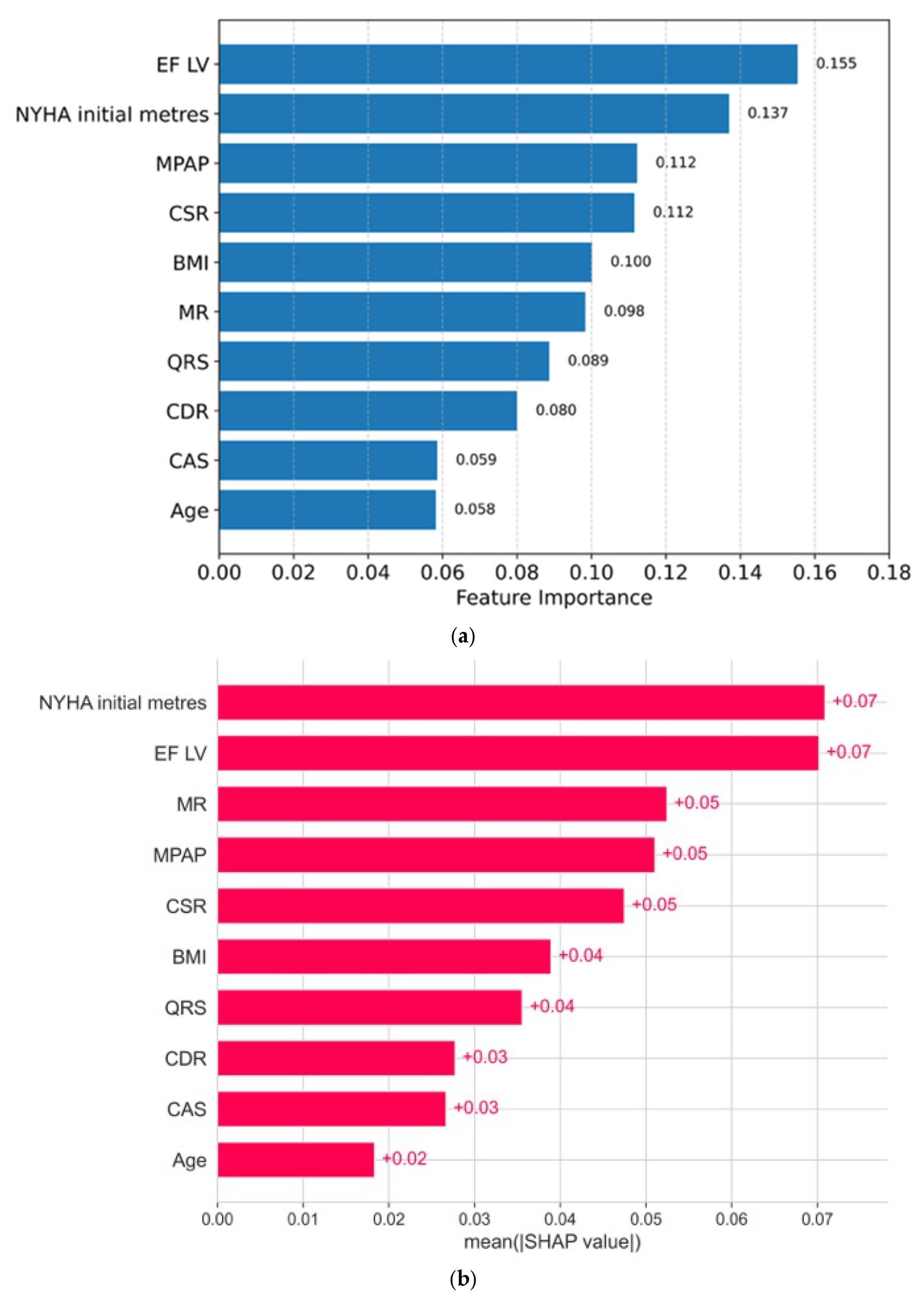
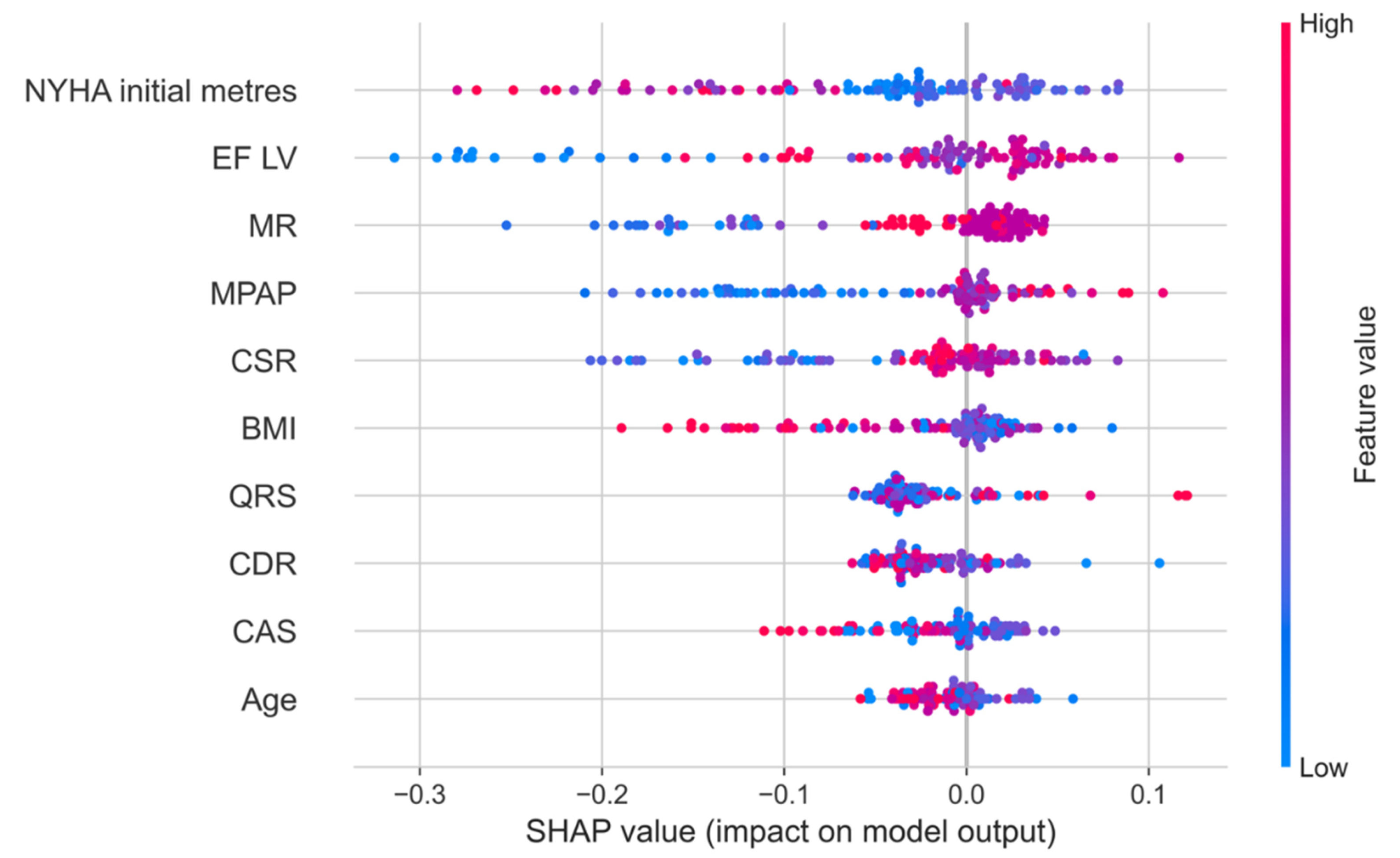
- The most optimal model hyperparameters were assessed for the available data using Gridsearch methods (direct overkill of combinations of parameters on the grid) and cross-validation of the trained data.
- 3.
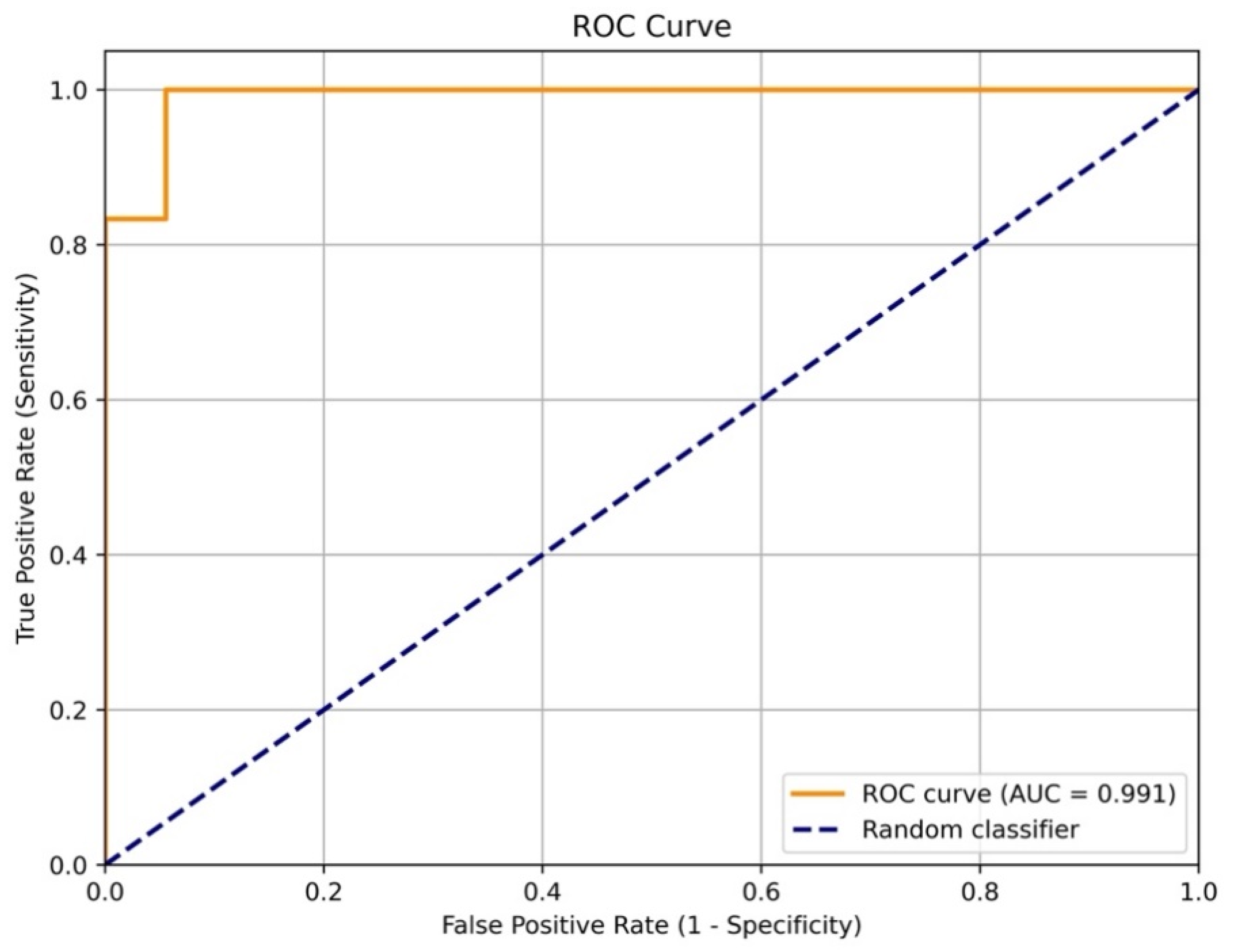
- After performing a control check of the trained model with the obtained hyperparameters (training on 80% of a random sample of patients) and testing on 20%, the above accuracy was obtained. The sensitivity of the model was tested as follows:
- (1)
- From full data (101 real patients and 75 generated patients), 20% of a random subset was obtained (36 patients) and the probability of death was predicted.
- (2)
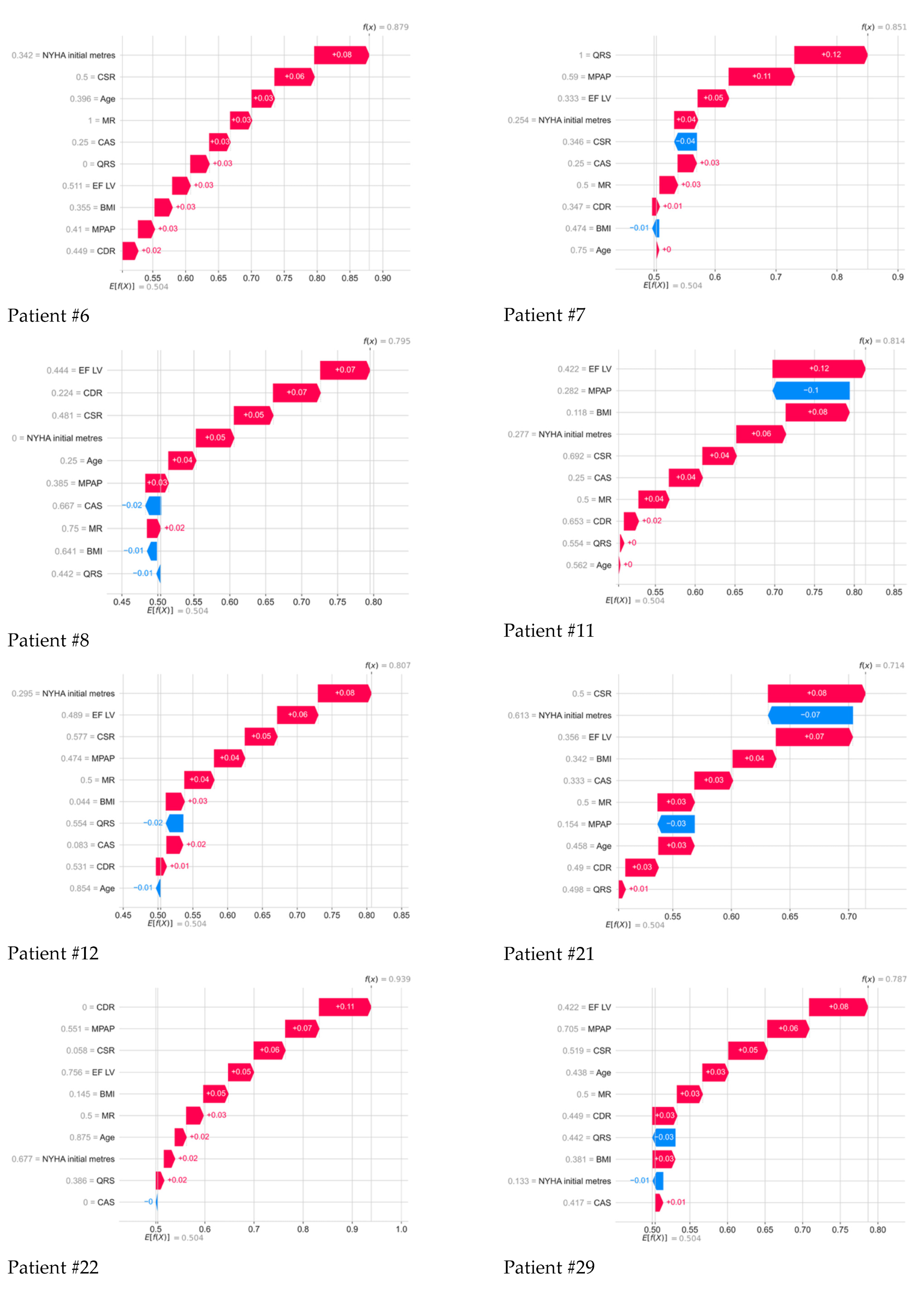
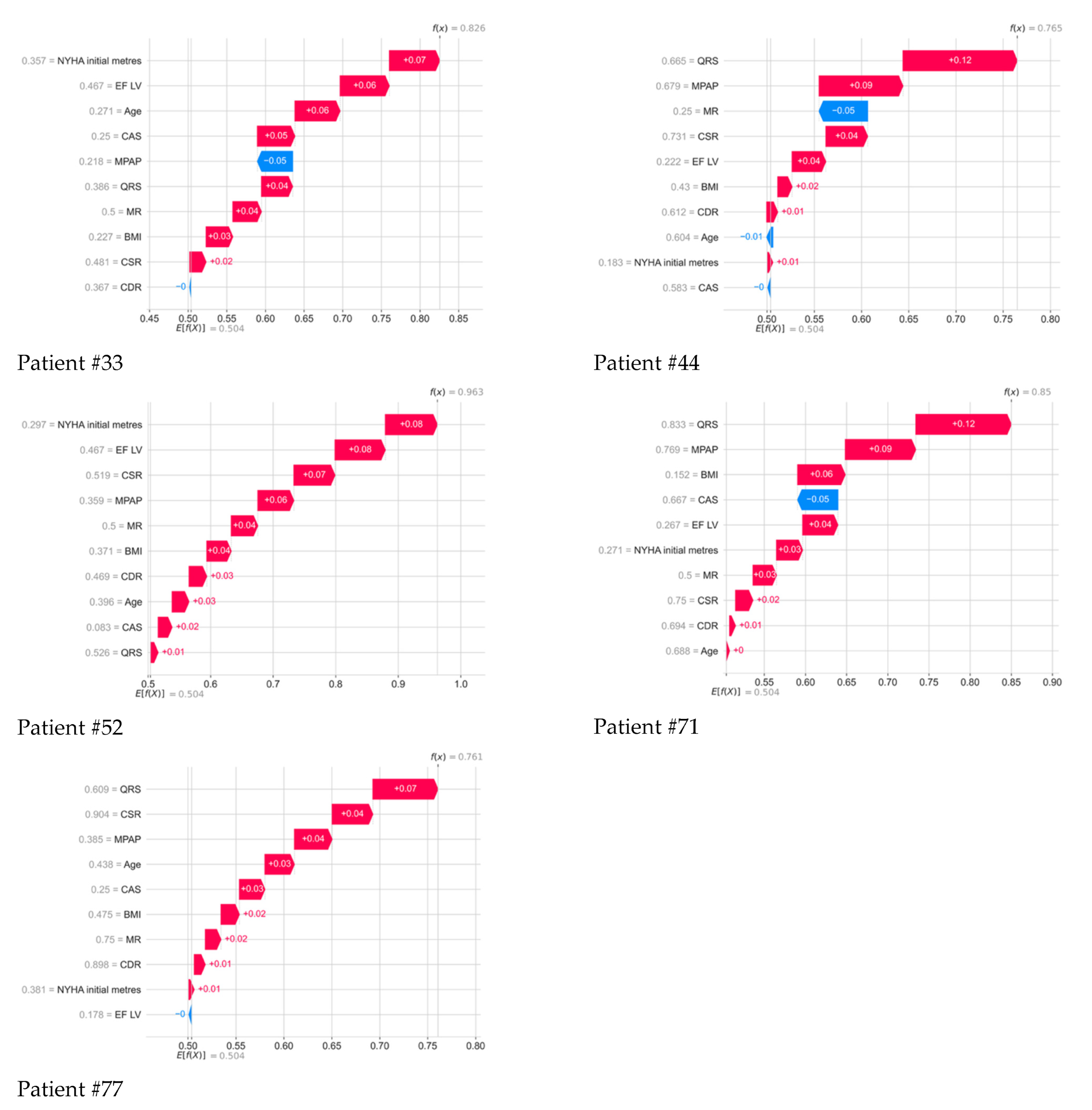
- Based on the predicted outcomes, a confusion matrix was constructed. The model successfully identified all deceased patients, while among the 18 predicted survivors, 15 were correctly classified as alive.
3. Results
- All 18 dead patients were correctly identified;
- Out of 18 patients that were predicted to be living, this was true for 15 patients;
- The model “is playing it safe”, i.e., mistakenly predicting death for three surviving patients.
4. Discussion
5. Conclusions
Author Contributions
Funding
Institutional Review Board Statement
Informed Consent Statement
Data Availability Statement
Conflicts of Interest
Abbreviations
| ACE-i | angiotensin-converting enzyme inhibitors |
| AF | atrial fibrillation |
| ARA | angiotensin receptor antagonists |
| ARNI | angiotensin receptor–neprilysin inhibitors |
| AVJ | atrioventricular |
| CHF | chronic heart failure |
| CDR LV | left ventricular end-diastolic volume |
| CRT-D | cardiac resynchronization therapy with defibrillator |
| CSR | coefficient of systolic relaxation |
| CSR LV | left ventricular end-systolic volume |
| CVD | cardiovascular disease |
| EF | ejection fraction |
| EF LV | left ventricular ejection fraction |
| FC CHF NYHA | functional class of chronic heart failure according to New York Heart Association |
| MPAP | mean pulmonary artery pressure |
| NYHA | New York Heart Association |
| SGLT2 | sodium–glucose cotransporter 2 inhibitors |
| SHAPs | Shapley additive explanations |
References
- Linz, D.; Gawalko, M.; Betz, K.; Hendriks, J.M.; Lip, G.Y.; Vinter, N.; Guo, Y.; Johnsen, S. Atrial fibrillation: Epidemiology, screening and digital health. Lancet Reg. Health Eur. 2024, 37, 100786. [Google Scholar] [CrossRef] [PubMed]
- Galyavich, A.S.; Tereshchenko, S.N.; Uskach, T.M.; Ageev, F.T.; Aronov, D.M.; Arutyunov, G.P.; Begrambekova, Y.L.; Belenkov, Y.N.; Boytsov, S.A.; Bubnova, M.G.; et al. 2024 Clinical practice guidelines for chronic heart failure. Russ. J. Cardiol. 2024, 29, 6162. (In Russian) [Google Scholar] [CrossRef]
- Maddox, T.M.; Januzzi, J.L.; Allen, L.A.; Breathett, K.; Brouse, S.; Butler, J.; Davis, L.L.; Fonarow, G.C.; Ibrahim, N.E.; Lindenfeld, J.; et al. 2024 ACC Expert Consensus Decision Pathway for treatment of heart failure with reduced ejection fraction: A report of the American College of Cardiology Solution Set Oversight Committee. J. Am. Coll. Cardiol. 2024, 83, 1444–1488. [Google Scholar] [CrossRef] [PubMed]
- McDonagh, T.A.; Metra, M.; Adamo, M.; Gardner, R.S.; Baumbach, A.; Böhm, M.; Burri, H.; Butler, J.; Čelutkienė, J.; Chioncel, O.; et al. 2023 Focused Update of the 2021 ESC Guidelines for the diagnosis and treatment of acute and chronic heart failure. Eur. Heart J. 2023, 44, 3627–3639. [Google Scholar] [CrossRef]
- Glikson, M.; Nielsen, J.C.; Kronborg, M.B.; Michowitz, Y.; Auricchio, A.; Barbash, I.M.; Barrabés, J.A.; Boriani, G.; Braunschweig, F.; Brignole, M.; et al. 2021 ESC Guidelines on cardiac pacing and cardiac resynchronization therapy: ESC Scientific Document Group. Eur. Heart J. 2021, 42, 3427–3520. [Google Scholar] [CrossRef]
- Centurión, O.A.; Scavenius, K.E.; García, L.B.; Miño, L.; Torales, J.; Sequeira, O. Atrioventricular nodal catheter ablation in atrial fibrillation complicating congestive heart failure. J. Atr. Fibrillation 2018, 11, 1813. [Google Scholar] [CrossRef]
- Gallagher, J.J.; Svenson, R.H.; Kasell, J.H.; German, L.D.; Bardy, G.H.; Broughton, A.; Critelli, G. Catheter technique for closed-chest ablation of the atrioventricular conduction system. N. Engl. J. Med. 1982, 306, 194–200. [Google Scholar] [CrossRef]
- Frost, L.; Vestergaard, P.; Mosekilde, L. Hyperthyroidism and risk of atrial fibrillation or flutter: A population-based study. Arch. Intern. Med. 2004, 164, 1675–1678, Erratum in Arch. Intern. Med. 2005, 165, 307. [Google Scholar] [CrossRef]
- Mont, L.; Elosua, R.; Brugada, J. Endurance sport practice as a risk factor for atrial fibrillation and atrial flutter. Europace 2009, 11, 11–17. [Google Scholar] [CrossRef]
- Chamberlain, A.M.; Agarwal, S.K.; Folsom, A.R.; Duval, S.; Soliman, E.Z.; Ambrose, M.; Eberly, L.E.; Alonso, A. Smoking and incidence of atrial fibrillation: Results from the Atherosclerosis Risk in Communities (ARIC) study. Heart Rhythm 2011, 8, 1160–1166. [Google Scholar] [CrossRef]
- Giustetto, C.; Cerrato, N.; Ruffino, E.; Gribaudo, E.; Scrocco, C.; Barbonaglia, L.; Bianchi, F.; Bortnik, M.; Rossetti, G.; Carvalho, P.; et al. Etiological diagnosis, prognostic significance and role of electrophysiological study in patients with Brugada ECG and syncope. Int. J. Cardiol. 2017, 241, 188–193. [Google Scholar] [CrossRef]
- Buckley, B.J.R.; Harrison, S.L.; Gupta, D.; Fazio-Eynullayeva, E.; Underhill, P.; Lip, G.Y.H. Atrial fibrillation in patients with cardiomyopathy: Prevalence and clinical outcomes from real-world data. J. Am. Heart Assoc. 2021, 10, e021970. [Google Scholar] [CrossRef] [PubMed]
- Brignole, M.; Gianfranchi, L.; Menozzi, C.; Alboni, P.; Musso, G.; Bongiorni, M.G.; Gasparini, M.; Raviele, A.; Lolli, G.; Paparella, N.; et al. Prospective, randomized study of atrioventricular ablation and mode-switching dual-chamber pacemaker implantation versus medical therapy in drug-resistant paroxysmal atrial fibrillation: The PAF study. Europace 1999, 1, 15–19. [Google Scholar] [CrossRef] [PubMed]
- Vanderheyden, M.; Coethals, M.; Ancuera, I.; Nellens, P.; Andries, E.; Brugada, J.; Brugada, P. Hemodynamic deterioration following radiofrequency ablation of the atrioventricular conduction system. Pacing Clin. Electrophysiol. 1997, 20, 2422–2428. [Google Scholar] [CrossRef] [PubMed]
- Brignole, M.; Gianfranchi, L.; Menozzi, C.; Alboni, P.; Musso, G.; Bongiorni, M.G.; Gasparini, M.; Raviele, A.; Lolli, G.; Paparella, N.; et al. Assessment of atrioventricular junction ablation and DDDR mode-switching pacemaker versus pharmacological treatment in patients with severely symptomatic paroxysmal atrial fibrillation: A randomized controlled study. Circulation 1997, 96, 2617–2624. [Google Scholar] [CrossRef]
- Qi, P.; Yang, Y.-Z.; Shi, L.; Wang, Y.-J.; Tian, Y.; Yuan, K.-X.; Chen, X.-F.; Li, S.-R.; Dang, Y.; Liu, X.-P. His-Purkinje conduction system pacing combined with atrioventricular node ablation improves quality of life in older patients with persistent atrial fibrillation refractory to multiple ablation procedures. J. Geriatr. Cardiol. 2023, 20, 130–138. [Google Scholar] [CrossRef]
- Wang, L.; Tan, C.; Lei, J.; Lee, C. Review of atrioventricular node ablation combined with permanent His-Purkinje conduction system pacing in patients with atrial fibrillation with heart failure. Rev. Cardiovasc. Med. 2024, 25, 312. [Google Scholar] [CrossRef]
- Wood, M.A.; Brown-Mahoney, C.; Kay, G.N.; Ellenbogen, K.A. Clinical outcomes after ablation and pacing therapy for atrial fibrillation: A meta-analysis. Circulation 2000, 101, 1138–1144. [Google Scholar] [CrossRef]
- Zezyk, C.; Boehmer, A.A.; Rothe, M.; Bork, F.; Kaess, B.M.; Ehrlich, J.R. Safety of His-bundle ablation after pacemaker implantation in patients with persistent or permanent atrial fibrillation. Herzschrittmacherther. Elektrophysiol. 2025, 36, 132–137. [Google Scholar] [CrossRef]
- Geelen, P.; Brugada, J.; Andries, E.; Brugada, P. Ventricular fibrillation and sudden death after radiofrequency catheter ablation of the atrioventricular junction. Pacing Clin. Electrophysiol. 1997, 20, 343–348. [Google Scholar] [CrossRef]
- Joza, J.; Burri, H.; Andrade, J.G.; Linz, D.; Ellenbogen, K.A.; Vernooy, K. Atrioventricular node ablation for atrial fibrillation in the era of conduction system pacing. Eur. Heart J. 2024, 45, 4887–4901. [Google Scholar] [CrossRef] [PubMed]
- Tzeis, S.; Gerstenfeld, E.P.; Kalman, J.; Saad, E.B.; Shamloo, A.S.; Andrade, J.G.; Barbhaiya, C.R.; Baykaner, T.; Boveda, S.; Calkins, H.; et al. 2024 EHRA/HRS/APHRS/LAHRS expert consensus statement on catheter and surgical ablation of atrial fibrillation. Europace 2024, 26, euae043. [Google Scholar] [CrossRef] [PubMed]
- Zhang, C.; Wang, X.-Y.; Lou, L.; Zhang, X.; Chen, L.-L.; Chen, Y.-X.; Yang, J. Pacemaker and atrioventricular junction ablation in patients with atrial fibrillation: A systematic review of systematic reviews and meta-analyses. Front. Cardiovasc. Med. 2022, 8, 587297. [Google Scholar] [CrossRef]
- Matteucci, A.; Pandozi, C.; Bonanni, M.; Mariani, M.V.; Sgarra, L.; Nesti, L.; Pierucci, N.; La Fazia, V.M.; Lavalle, C.; Nardi, F.; et al. Impact of empagliflozin and dapagliflozin on sudden cardiac death: A systematic review and meta-analysis of adjudicated randomized evidence. Heart Rhythm 2025, in press. [Google Scholar] [CrossRef] [PubMed]


| Total Number of Patients, n | n (101) |
|---|---|
| Mean age, years | 62 ± 15.5 |
| Men/women, n (%) | 71 (70.3)/30(29.7) |
| Non-ischemic CHF, n (%) | 36 (36.6) |
| CVD of ischemic genesis, n (%) | 65 (64.4) |
| Diabetes mellitus, n (%) | 13 (12.9) |
| Myocardial infarction, n (%) | 20 (19.8) |
| Atrial fibrillation, n (%) | 101 (100) |
| Atrioventricular node ablation, n (%) | 101 (100) |
| Arterial hypertension, n (%) | 85 (84.2) |
| Stroke history, n (%) | 28 (27.7) |
| QRS complex duration, ms | 91.1 ± 15.5 |
| Left atrium, sm | 4.95 ± 0.8 |
| EF LV, % | 31.53 ± 7.7 |
| CSR LV, mL | 528.8 ± 60.5 |
| CDR LV, mL | 647.2 ± 40.5 |
| FC CHF NYHA II, n (%) | 9 (8.9) |
| FC CHF NYHA III, n (%) | 70 (69.3) |
| FC CHF NYHA IV, n (%) | 22 (21.8) |
| ACE-i/ARA/ARNI, n (%) | 101 (100) |
| Beta-adrenoblockers, n (%) | 93 (92) |
| Ing CGLT 2, n (%) | 84 (83.2) |
| Statins, n (%) | 65 (64.4) |
| Antiplatelet agents, n (%) | 65 (64.4) |
| Anticoagulants, n (%) | 39 (38.6) |
| Antiarrhythmic drugs, n (%) | 12 (11.9) |
| Loop diuretics, n (%) | 32 (31.6) |
| Forecasting 0 (Alive) | Forecasting 1 (Death) | |
|---|---|---|
| Reality 0 (alive) | 15 patients | 3 patients |
| Reality 1 (death) | 0 patients | 18 patients |
Disclaimer/Publisher’s Note: The statements, opinions and data contained in all publications are solely those of the individual author(s) and contributor(s) and not of MDPI and/or the editor(s). MDPI and/or the editor(s) disclaim responsibility for any injury to people or property resulting from any ideas, methods, instructions or products referred to in the content. |
© 2025 by the authors. Licensee MDPI, Basel, Switzerland. This article is an open access article distributed under the terms and conditions of the Creative Commons Attribution (CC BY) license (https://creativecommons.org/licenses/by/4.0/).
Share and Cite
Akhyt, B.A.; Berkinbaev, S.F.; Lozhkina, N.G.; Artemenko, S.N.; Zyatkov, N.Y.; Krivorotko, O.I.; Koshumbayeva, K.M.; Pashimov, M.O.; Tuleutayev, R.M.; Kultanova, E.B. Long-Term Outcomes of Drug-Refractory Atrial Fibrillation After Atrioventricular Node Ablation Combined with Implantation of a Cardiac Resynchronization Therapy Defibrillator (CRT-D). J. Clin. Med. 2025, 14, 8938. https://doi.org/10.3390/jcm14248938
Akhyt BA, Berkinbaev SF, Lozhkina NG, Artemenko SN, Zyatkov NY, Krivorotko OI, Koshumbayeva KM, Pashimov MO, Tuleutayev RM, Kultanova EB. Long-Term Outcomes of Drug-Refractory Atrial Fibrillation After Atrioventricular Node Ablation Combined with Implantation of a Cardiac Resynchronization Therapy Defibrillator (CRT-D). Journal of Clinical Medicine. 2025; 14(24):8938. https://doi.org/10.3390/jcm14248938
Chicago/Turabian StyleAkhyt, Bagdat A., Salim F. Berkinbaev, Natalya G. Lozhkina, Sergey N. Artemenko, Nikolay Yu. Zyatkov, Olga I. Krivorotko, Kulzida M. Koshumbayeva, Marat O. Pashimov, Rustem M. Tuleutayev, and Elmira B. Kultanova. 2025. "Long-Term Outcomes of Drug-Refractory Atrial Fibrillation After Atrioventricular Node Ablation Combined with Implantation of a Cardiac Resynchronization Therapy Defibrillator (CRT-D)" Journal of Clinical Medicine 14, no. 24: 8938. https://doi.org/10.3390/jcm14248938
APA StyleAkhyt, B. A., Berkinbaev, S. F., Lozhkina, N. G., Artemenko, S. N., Zyatkov, N. Y., Krivorotko, O. I., Koshumbayeva, K. M., Pashimov, M. O., Tuleutayev, R. M., & Kultanova, E. B. (2025). Long-Term Outcomes of Drug-Refractory Atrial Fibrillation After Atrioventricular Node Ablation Combined with Implantation of a Cardiac Resynchronization Therapy Defibrillator (CRT-D). Journal of Clinical Medicine, 14(24), 8938. https://doi.org/10.3390/jcm14248938