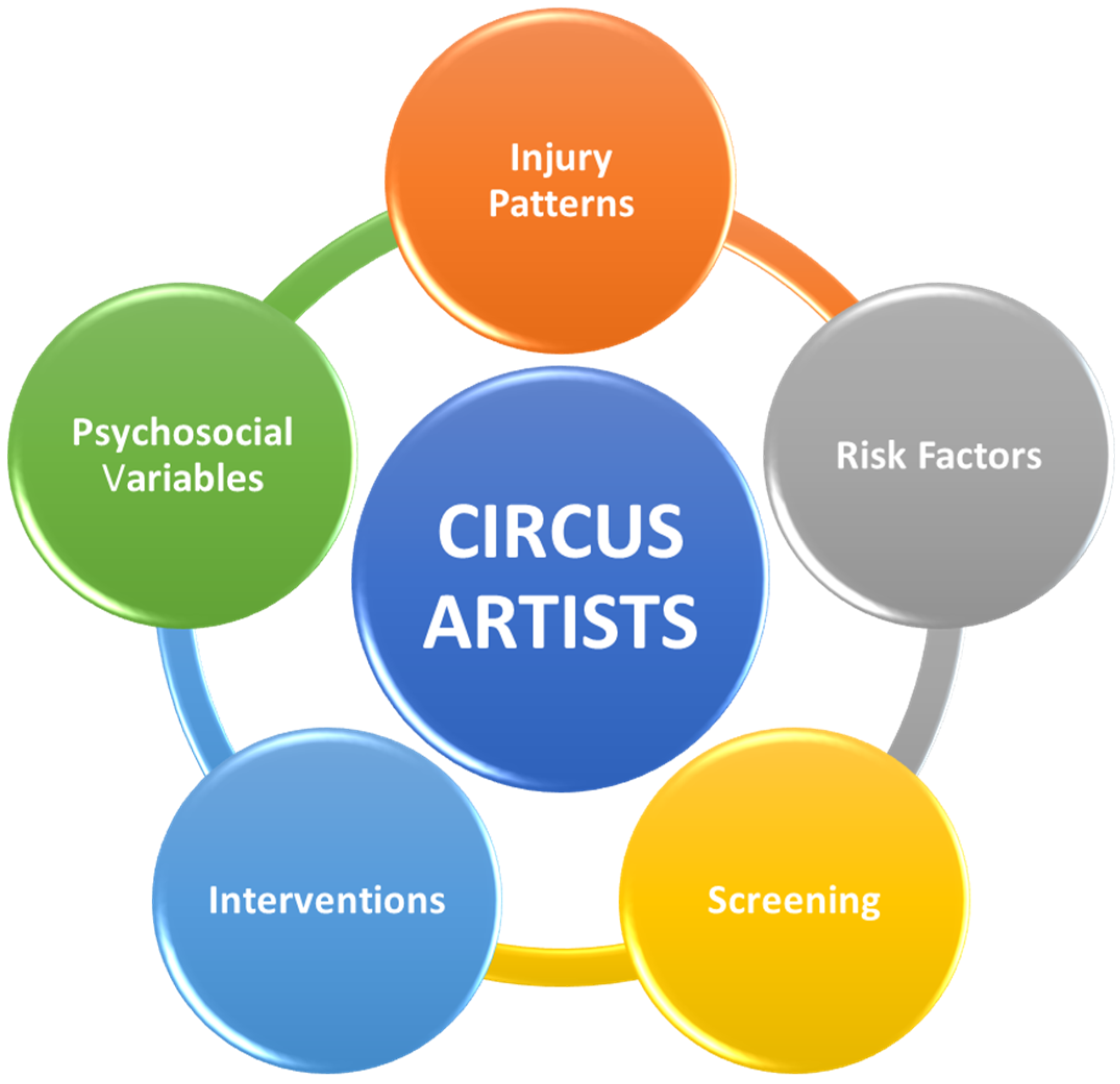
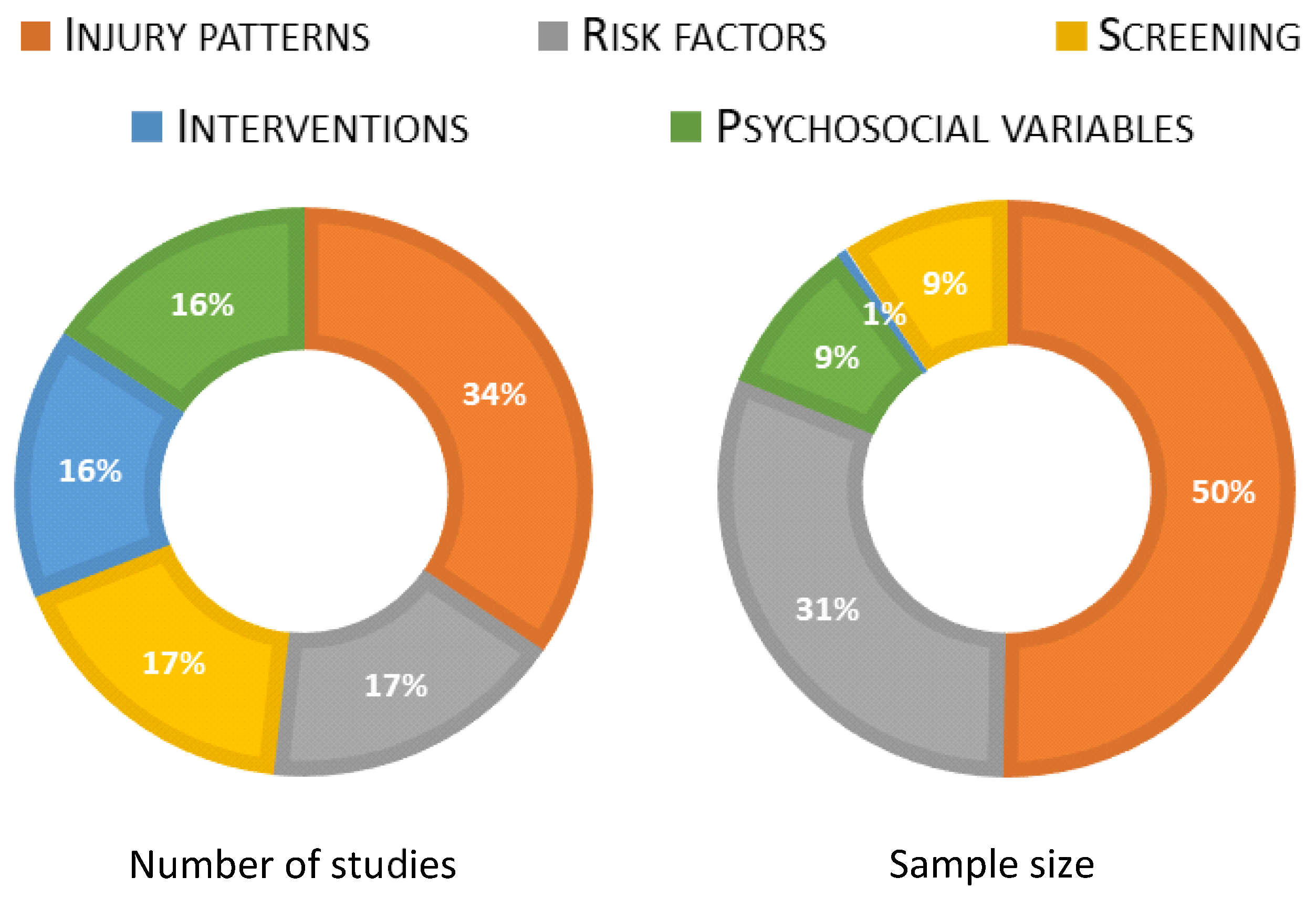
Injury Characteristics and Physical Therapy Management Strategies for Circus Artists: A Scoping Review


Abstract
1. Introduction
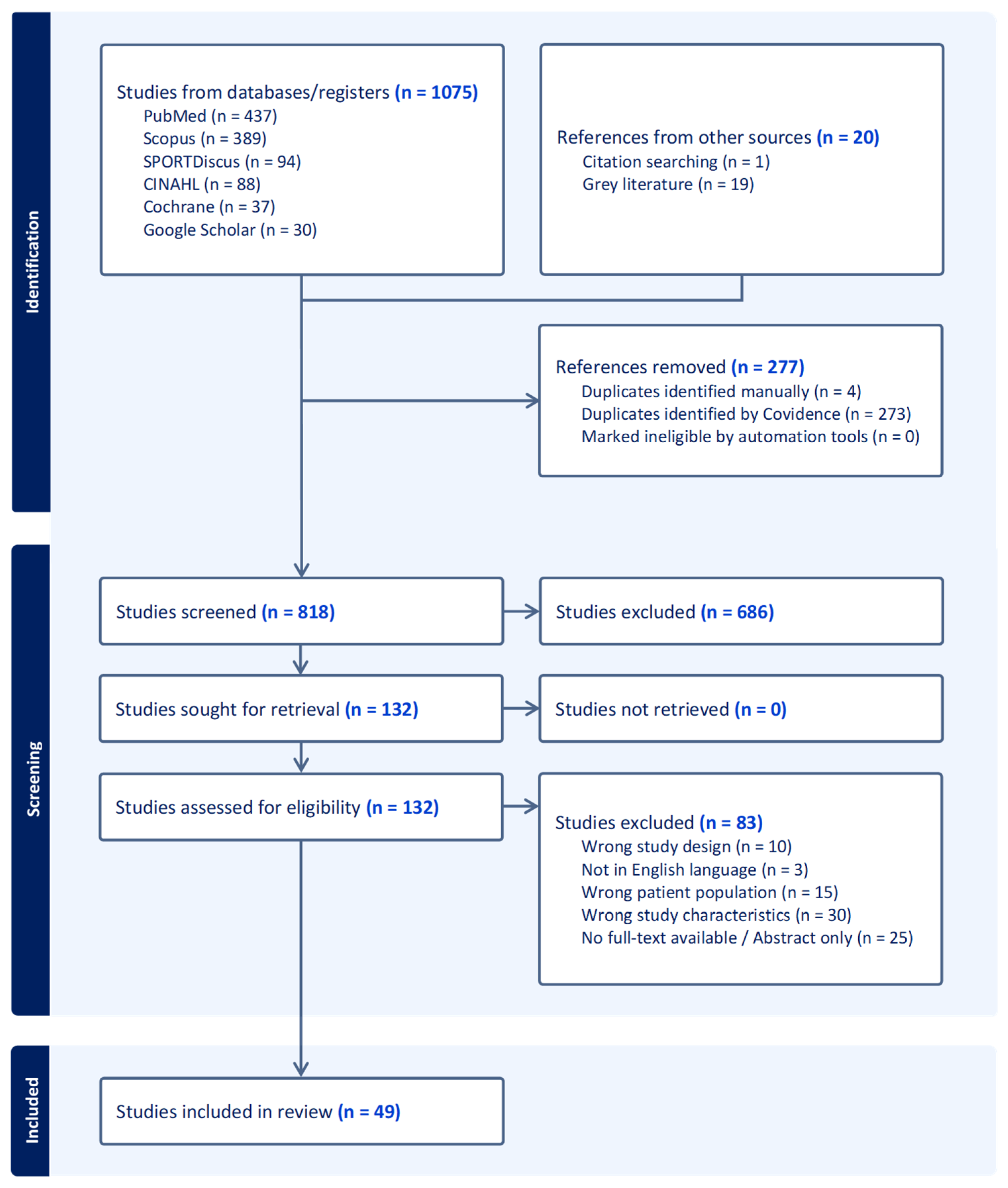
2. Materials and Methods
2.1. Data Sources and Searches
2.2. Eligibility Criteria
2.3. Study Selection
2.4. Data Extraction and Reporting
2.5. Quality Assessment
3. Results
3.1. Injury Patterns
3.2. Risk Factors
3.3. Screening
3.4. Interventions
3.5. Psychosocial Variables
4. Discussion
5. Conclusions
Supplementary Materials
Author Contributions
Funding
Institutional Review Board Statement
Informed Consent Statement
Data Availability Statement
Conflicts of Interest
References
- American Circus Educators, C.C.T. Circus Consensus 2022. Available online: https://www.americancircuseducators.org/wp-content/uploads/2022/10/ACE-AYCO-Survey-Final-Report.pdf (accessed on 1 July 2025).
- Greenspan, S. Injury Patterns in Subgroups of Circus Artists by Circus Discipline: A Pilot Study. Orthop. Phys. Ther. Pract. 2022, 34, 162–170. [Google Scholar]
- Campbell, R.A.; Bradshaw, E.J.; Ball, N.B.; Pease, D.L.; Spratford, W. Injury epidemiology and risk factors in competitive artistic gymnasts: A systematic review. Br. J. Sports Med. 2019, 53, 1056–1069. [Google Scholar] [CrossRef]
- Stubbe, J.H.; Richardson, A.; van Rijn, R.M. Prospective cohort study on injuries and health problems among circus arts students. BMJ Open Sport Exerc. Med. 2018, 4, e000327. [Google Scholar] [CrossRef]
- Cayrol, T.; Godfrey, E.; Draper-Rodi, J.; Bearne, L. Exploring Professional Circus Artists’ Experience of Performance-Related Injury and Management: A Qualitative Study. Med. Probl. Perform. Art. 2019, 34, 14–24. [Google Scholar] [CrossRef]
- Greenspan, S.; Munro, D.; Nicholas, J.; Stubbe, J.; Stuckey, M.I.; Van Rijn, R.M. Circus-specific extension of the International Olympic Committee 2020 consensus statement: Methods for recording and reporting of epidemiological data on injury and illness in sport. BMJ Open Sport Exerc. Med. 2022, 8, e001394. [Google Scholar] [CrossRef] [PubMed]
- Wolfenden, H.E.; Angioi, M. Musculoskeletal Injury Profile of Circus Artists: A Systematic Review of the Literature. Med. Probl. Perform. Art. 2017, 32, 51–59. [Google Scholar] [CrossRef] [PubMed]
- van Rens, F.E.C.A.; Heritage, B. Mental health of circus artists: Psychological resilience, circus factors, and demographics predict depression, anxiety, stress, and flourishing. Psychol. Sport Exerc. 2021, 53, 101850. [Google Scholar] [CrossRef]
- Shrier, I.; Hallé, M. Psychological predictors of injuries in circus artists: An exploratory study. Br. J. Sports Med. 2011, 45, 433–436. [Google Scholar] [CrossRef]
- Greenspan, S.; Stuckey, M.I. Untangling risk factors including discipline-specific exposure for injuries in preprofessional and professional circus artists in the USA. BMJ Open Sport Exerc. Med. 2023, 9, e001551. [Google Scholar] [CrossRef]
- van Rens, F.E.C.A.; Filho, E. Realizing, Adapting, and Thriving in Career Transitions From Gymnastics to Contemporary Circus Arts. J. Clin. Sport Psychol. 2020, 14, 127–148. [Google Scholar] [CrossRef]
- Desai, N.; Vance, D.D.; Rosenwasser, M.P.; Ahmad, C.S. Artistic Gymnastics Injuries; Epidemiology, Evaluation, and Treatment. J. Am. Acad. Orthop. Surg. 2019, 27, 459–467. [Google Scholar] [CrossRef]
- Sweeney, E.A.; Howell, D.R.; James, D.A.; Potter, M.N.; Provance, A.J. Returning to Sport After Gymnastics Injuries. Curr. Sports Med. Rep. 2018, 17, 376–390. [Google Scholar] [CrossRef]
- Hart, E.; Meehan, W.P., 3rd; Bae, D.S.; d’Hemecourt, P.; Stracciolini, A. The Young Injured Gymnast: A Literature Review and Discussion. Curr. Sports Med. Rep. 2018, 17, 366–375. [Google Scholar] [CrossRef] [PubMed]
- Thomas, R.E.; Thomas, B.C. A systematic review of injuries in gymnastics. Physician Sportsmed. 2019, 47, 96–121. [Google Scholar] [CrossRef] [PubMed]
- Kraan, R.B.; Beers, L.; van de Pol, D.; Daams, J.G.; Maas, M.; Kuijer, P.P. A systematic review on posterior circumflex humeral artery pathology: Sports and professions at risk and associated risk factors. J. Sports Med. Phys. Fit. 2019, 59, 1058–1067. [Google Scholar] [CrossRef] [PubMed]
- Greenspan, S. Injury Frequency and Characteristics in Adolescent and Adult Circus Artists: A Pilot Prospective Cohort Study. Med. Probl. Perform. Art. 2021, 36, 103–107. [Google Scholar] [CrossRef]
- Hakim, H.; Puel, F.; Bertucci, W. Injury assessment in circus student-artists population; preliminary study. Sci. Sports 2020, 35, 154–160. [Google Scholar] [CrossRef]
- Munro, D. Injury patterns and rates amongst students at the national institute of circus arts: An observational study. Med. Probl. Perform. Art. 2014, 29, 235–240. [Google Scholar] [CrossRef]
- Orlando, C.; Levitan, E.B.; Mittleman, M.A.; Steele, R.J.; Shrier, I. The effect of rest days on injury rates. Scand. J. Med. Sci. Sports 2011, 21, 64. [Google Scholar] [CrossRef]
- Stuckey, M.I.; Bruinooge, B.; Aubertin, P.; Kriellaars, D. Clinical Burden of Injuries in Students at a Professional Circus College: A 7.5-Year Longitudinal Study. Med. Probl. Perform. Art. 2022, 37, 98–105. [Google Scholar] [CrossRef]
- Long, A.S.; Ambegaonkar, J.P.; Fahringer, P.M. Injury reporting rates and injury concealment patterns differ between high-school cirque performers and basketball players. Med. Probl. Perform. Art. 2011, 26, 200–205. [Google Scholar] [CrossRef] [PubMed]
- Rossini, B.; Anstruther, M.; Fortin, M. Comparing assessment methods of low back pain related disability in student circus artists: A cross-sectional study. J. Back Musculoskelet. Rehabil. 2024, 37, 1141–1150. [Google Scholar] [CrossRef] [PubMed]
- Shrier, I.; Meeuwisse, W.H.; Matheson, G.O.; Wingfield, K.; Steele, R.J.; Prince, F.; Hanley, J.; Montanaro, M. Injury patterns and injury rates in the circus arts: An analysis of 5 years of data from Cirque du Soleil. Am. J. Sports Med. 2009, 37, 1143–1149. [Google Scholar] [CrossRef]
- Shrier, I.; Mattiello, R.; Caron, M.; Verhagen, E.; Steele, R.J. Observed Injury Rates Did Not Follow Theoretically Predicted Injury Risk Patterns in Professional Human Circus Artists. Clin. J. Sport Med. 2022, 32, e627–e634. [Google Scholar] [CrossRef]
- Wanke, E.M.; McCormack, M.; Koch, F.; Wanke, A.; Groneberg, D.A. Acute injuries in student circus artists with regard to gender specific differences. Asian J. Sports Med. 2012, 3, 153–160. [Google Scholar] [CrossRef]
- Asselin, N.; Proano, L.; Williams, K.; Partridge, R. Circus disaster: Case report, response, and review of injuries. Am. J. Disaster Med. 2016, 11, 137–141. [Google Scholar] [CrossRef]
- Russell, J.A.; McIntyre, L.; Stewart, L.; Wang, T. Concussions in Dancers and Other Performing Artists. Phys. Med. Rehabil. Clin. N. Am. 2021, 32, 155–168. [Google Scholar] [CrossRef]
- Al-Kashmiri, A.; Delaney, J.S. Case report: Fatigue fracture of the proximal fibula with secondary common peroneal nerve injury. Clin. Orthop. Relat. Res. 2007, 463, 225–228. [Google Scholar] [CrossRef]
- Wojciuk, J.; Bury, R.W.; Brack, M.J. Acrobatic vascular disease. Heart Vessel. 2006, 21, 199–200. [Google Scholar] [CrossRef]
- Hamilton, G.M.; Meeuwisse, W.H.; Emery, C.A.; Steele, R.J.; Shrier, I. Past injury as a risk factor: An illustrative example where appearances are deceiving. Am. J. Epidemiol. 2011, 173, 941–948. [Google Scholar] [CrossRef]
- Bolling, C.; Mellette, J.; Pasman, H.R.; van Mechelen, W.; Verhagen, E. From the safety net to the injury prevention web: Applying systems thinking to unravel injury prevention challenges and opportunities in Cirque du Soleil. BMJ Open Sport Exerc. Med. 2019, 5, e000492. [Google Scholar] [CrossRef]
- Faltus, J.; Richard, V. Considerations for the Medical Management of the Circus Performance Artist and Acrobat. Int. J. Sports Phys. Ther. 2022, 17, 307–316. [Google Scholar] [CrossRef]
- Hamilton, G.M.; Meeuwisse, W.H.; Emery, C.A.; Shrier, I. Examining the effect of the injury definition on risk factor analysis in circus artists. Scand. J. Med. Sci. Sports 2012, 22, 330–334. [Google Scholar] [CrossRef] [PubMed]
- Burnstein, B.D.; Steele, R.J.; Shrier, I. Reliability of fitness tests using methods and time periods common in sport and occupational management. J. Athl. Train. 2011, 46, 505–513. [Google Scholar] [CrossRef] [PubMed]
- Callahan, A.; Squires, A.; Greenspan, S. Management of Hypermobility in Aesthetic Performing Artists: A Review. Orthop. Phys. Ther. Pract. 2022, 34, 134–145. [Google Scholar]
- Decker, A.; Aubertin, P.; Kriellaars, D. Sleep and Fatigue of Elite Circus Student-Artists During One Year of Training. Med. Probl. Perform. Art. 2019, 34, 125–131. [Google Scholar] [CrossRef]
- Donohue, B.; Gavrilova, Y.; Galante, M.; Burnstein, B.; Aubertin, P.; Gavrilova, E.; Funk, A.; Light, A.; Benning, S.D. Empirical development of a screening method for mental, social, and physical wellness in amateur and professional circus artists. Psychol. Aesthet. Creat. Arts 2020, 14, 313–324. [Google Scholar] [CrossRef]
- Greenspan, S.J.; Stuckey, M.I. Preparation For Flight: The Physical Profile of Pre-Professional and Professional Circus Artists in the United States. Int. J. Sports Phys. Ther. 2024, 19, 591–608. [Google Scholar] [CrossRef]
- Huberman, C.; Scales, M.; Vallabhajosula, S. Shoulder Range of Motion and Strength Characteristics in Circus Acrobats. Med. Probl. Perform. Art. 2020, 35, 145–152. [Google Scholar] [CrossRef]
- Scherb, E. Low Back Pain in Circus Artists: Using a Movement System Impairment Framework as a Component of Care. Orthop. Phys. Ther. Pract. 2022, 34, 148–151. [Google Scholar]
- Shrier, I.; Raglin, J.S.; Levitan, E.B.; Mittleman, M.A.; Steele, R.J.; Powell, J. Procedures for assessing psychological predictors of injuries in circus artists: A pilot prospective study. BMC Med. Res. Methodol. 2014, 14, 77. [Google Scholar] [CrossRef]
- Smith, D.; Noorbhai, H. Prevalence of muscle imbalance and its potential influence on injury among female acrobatic dancers. BMJ Open Sport Exerc. Med. 2022, 8, e001322. [Google Scholar] [CrossRef] [PubMed]
- Chimenti, R.L.; Van Dillen, L.R.; Khoo-Summers, L. Use of a Patient-Specific Outcome Measure and a Movement Classification System to Guide Nonsurgical Management of a Circus Performer with Low Back Pain: A Case Report. J. Danc. Med. Sci. 2017, 21, 185–192. [Google Scholar] [CrossRef] [PubMed]
- Fecteau, L.; Freitas, N. Management of Transitional Vertebra in An Amateur Level Teenage Circus Acrobat: A Case Report. Orthop. Phys. Ther. Pract. 2022, 34, 152–156. [Google Scholar]
- Ganderton, C.; Henry, M.; Walker, A.; McGinley, P.; Verhagen, E. Implementation of Calf Endurance Training in a Touring Group of Professional Circus Performers: A Feasibility Study. Med. Probl. Perform. Art. 2021, 36, 54–60. [Google Scholar] [CrossRef]
- Ganderton, C.L.; Tirosh, O.; Munro, D.; Meyer, D.; Lenssen, R.; Balster, S.; Watson, L.; Warby, S. Rehabilitation for atraumatic shoulder instability in circus arts performers: Delivery via telehealth. J. Shoulder Elb. Surg. 2022, 31, e246–e257. [Google Scholar] [CrossRef]
- Roubea, I.; Korakakis, V. Rehabilitation following ulnar collateral ligament injury of the elbow in a female acrobatic athlete: A case report. J. Bodyw. Mov. Ther. 2024, 38, 329–338. [Google Scholar] [CrossRef]
- Teo, W.Z.W.; Kaur, R.; Sebastin, S. Traumatic Rupture of the Flexor Carpi Ulnaris Muscle Belly in a Circus Rigger. J. Hand Surg. Asian Pac. Vol. 2021, 26, 274–279. [Google Scholar] [CrossRef]
- Decker, A.; Richard, V.; Cairney, J.; Jefferies, P.; Houser, N.; Aubertin, P.; Kriellaars, D. Assessment of Professional Circus Students’ Psychological Characteristics at Four Strategic Timepoints over the Scholastic Year: A Longitudinal Study Using the Stress Process Model. Med. Probl. Perform. Art. 2022, 37, 249–258. [Google Scholar] [CrossRef]
- Stubbe, J.H.; Tiemens, A.; Keizer-Hulsebosch, S.C.; Steemers, S.; van Winden, D.; Buiten, M.; Richardson, A.; van Rijn, R.M. Prevalence of Mental Health Complaints Among Performing Arts Students Is Associated With COVID-19 Preventive Measures. Front. Psychol. 2021, 12, 676587. [Google Scholar] [CrossRef]
- van Rens, F.E.C.A.; Filho, E. Not just clowning around: Investigating psychological mechanisms underlying accidents in a heterogeneous group of contemporary circus artists. Psychol. Aesthet. Creat. Arts 2021, 15, 377–385. [Google Scholar] [CrossRef]
- van Rens, F.E.C.A.; Metse, A.P.; Heritage, B. Exploring the mental health of circus artists: Circus factors, psychological resilience, and demographics predict disordered eating and exercise addictions. Psychol. Sport Exerc. 2022, 59, 102107. [Google Scholar] [CrossRef]
- Walby, K.; Stuart, S. “You Have to Accept the Pain”: Body Callusing and Body Capital in Circus Aerialism. Qual. Sociol. Rev. 2021, 17, 6–23. [Google Scholar] [CrossRef]
- Kyung, M.; Lee, S.; Dancu, C.; Hong, O. Underreporting of workers’ injuries or illnesses and contributing factors: A systematic review. BMC Public Health 2023, 23, 558. [Google Scholar] [CrossRef] [PubMed]
- Tisano, B.; Zynda, A.J.; Ellis, H.B.; Wilson, P.L. Epidemiology of Pediatric Gymnastics Injuries Reported in US Emergency Departments: Sex- and Age-Based Injury Patterns. Orthop. J. Sports Med. 2022, 10, 23259671221102478. [Google Scholar] [CrossRef] [PubMed]
- Rauh, M.J.; Nichols, J.F.; Barrack, M.T. Relationships among injury and disordered eating, menstrual dysfunction, and low bone mineral density in high school athletes: A prospective study. J. Athl. Train. 2010, 45, 243–252. [Google Scholar] [CrossRef]
- Liaghat, B.; Juul-Kristensen, B.; Faber, D.A.; Christensen, E.O.; Søgaard, K.; Skou, S.T.; Søndergaard, J.; Juhl, C.B. One-year effectiveness of high-load compared with low-load strengthening exercise on self-reported function in patients with hypermobile shoulders: A secondary analysis from a randomised controlled trial. Br. J. Sports Med. 2024, 58, 373–381. [Google Scholar] [CrossRef]
- Lamers, S.M.A.; Bolier, L.; Westerhof, G.J.; Smit, F.; Bohlmeijer, E.T. The impact of emotional well-being on long-term recovery and survival in physical illness: A meta-analysis. J. Behav. Med. 2012, 35, 538–547. [Google Scholar] [CrossRef]
- Grier, T.; Dinkeloo, E.; Reynolds, M.; Jones, B.H. Sleep duration and musculoskeletal injury incidence in physically active men and women: A study of U.S. Army Special Operation Forces soldiers. Sleep Health 2020, 6, 344–349. [Google Scholar] [CrossRef]
- Vitale, J.A.; Mathieu, N.; Sabrina, S.; Michele, L. Editorial: The Reciprocal Relationship Between Sleep and Stress in Elite Athletes. Front. Psychol. 2021, 12, 797847. [Google Scholar] [CrossRef]
- Chennaoui, M.; Vanneau, T.; Trignol, A.; Arnal, P.; Gomez-Merino, D.; Baudot, C.; Perez, J.; Pochettino, S.; Eirale, C.; Chalabi, H. How does sleep help recovery from exercise-induced muscle injuries? J. Sci. Med. Sport 2021, 24, 982–987. [Google Scholar] [CrossRef]
- Copenhaver, E.A.; Diamond, A.B. The Value of Sleep on Athletic Performance, Injury, and Recovery in the Young Athlete. Pediatr. Ann. 2017, 46, e106–e111. [Google Scholar] [CrossRef]

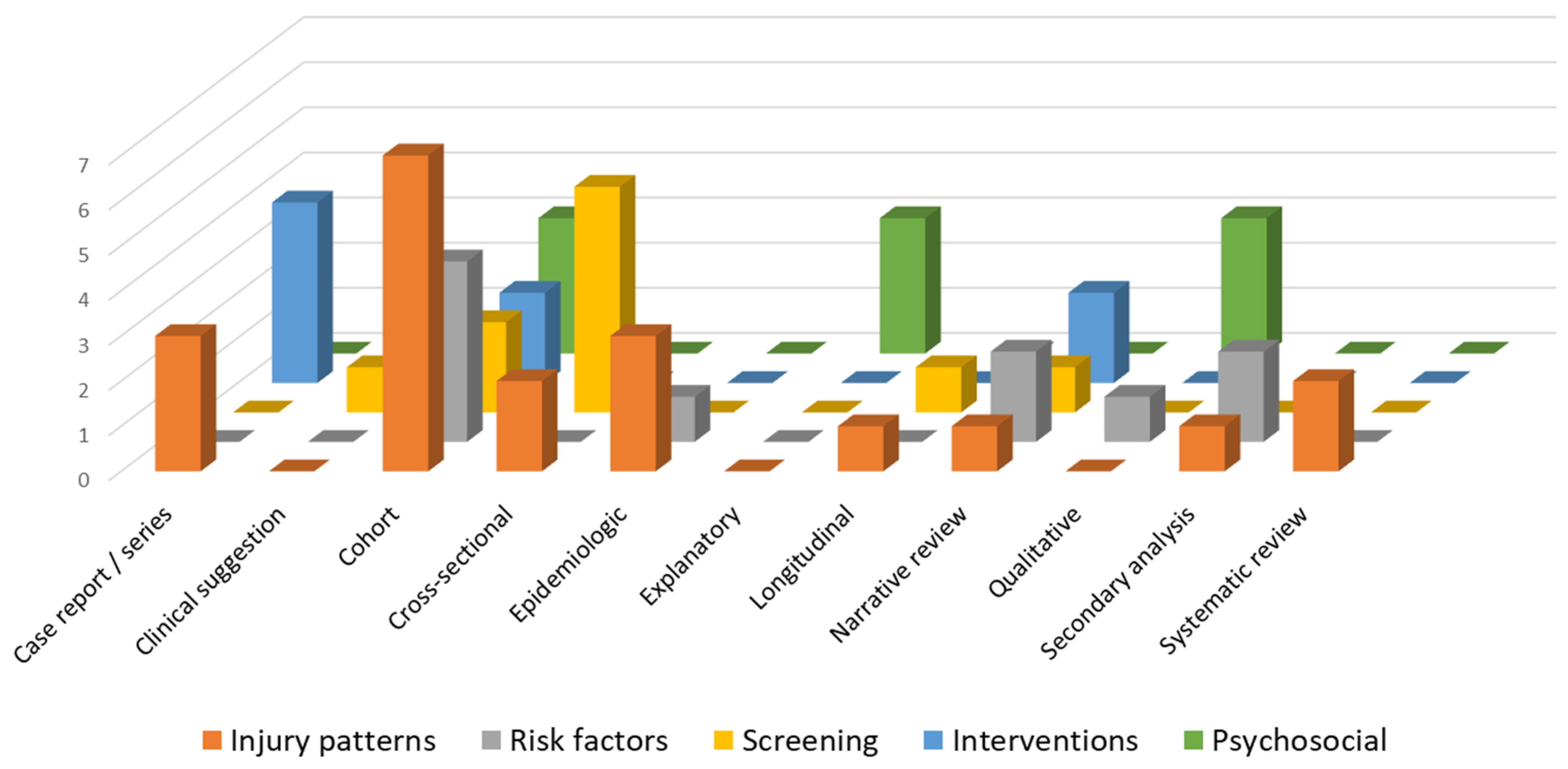


| Study | Study Design | Sample Size | Participant Characteristics | Mechanism of Injury | Injury Characteristics |
|---|---|---|---|---|---|
| Al-Kashmiri [29] | Case report | n = 1 | 26 y/o male | Overuse | Fibular stress fracture |
| Asselin [27] | Case series | n = 9 | 8 performers, 1 staff member Age range: 19–34 years 8 females, 1 male | Traumatic; fall while performing hair hanging during a ‘human chandelier’ maneuver | Fractures of the face, cervical, thoracic and lumbar spine, humerus, radius, wrist and hand, ribs, sacrum, femur, tibia, fibula, and ankle; concussions; lacerations of the knee, liver and scalp; pulmonary contusion; pneumothorax |
| Greenspan [17] | Prospective cohort | n = 21 | Adolescents: Mean age: 14.7 (1.3) years 12 females Mean circus experience: 5.1 years Primary discipline: 35.9% aerial, 21.4% ground, 42.9% mixed Adults: Mean age: 30.7 (3.1) years 5 females, 4 males Mean circus experience: 10.5 years Primary discipline: 30% aerial, 40% ground, 20% mixed, 10% Chinese pole | Overuse (44% of adolescent injuries, 55% of adult injuries); Traumatic (56% of adolescent injuries, 45% of adult injuries) | Tissues involved (most to least frequent): joint, muscle/tendon, nerve, bone, central nervous system, integument. Body region involved (reported as lower extremity, upper extremity, spine): adolescents—44%, 33%, 22%; adults—32%, 45%, 24% Injury rate per 1000 session exposures was 3 for adolescents and 13 for adults Time-loss injury rates were 1.3 and 7.2, respectively Time-loss injury frequency: 44% adolescents, 55% adults |
| Greenspan [10] | Prospective cohort | n = 201 | Mean age: 31.4 (8.9) years 16 adolescents, 185 adults 172 females, 29 males Mean circus experience: 7.0 (4.2) years 130 pre-professionals, 71 professionals | Acute–sudden (32%), repetitive–sudden (12%), repetitive–gradual (54%), unknown (1%) | Most common tissue involved: muscle/tendon injuries (52%) Most common body region involved: shoulder 22%, lumbosacral region 13%, elbow 10%, all others < 10% Injury rates per 1000 sessions: 3.8 overall, 2.42 adolescents, 4.0 adults, 3.5 female, 5.7 male, 5.9 aerialists with ground elements, 4.3 aerial, 3.7 ground (balance and control) |
| Greenspan [2] | Cohort | n = 24 | Mean age: 21.4 (8.3) years 20 females, 4 males Mean circus experience: 7.3 (4.4) years | Overuse: 55.3% Traumatic: 44.7% | Most common tissue involved: joint (46.8%), muscle/tendon (25.5%), nerve (14.9%) all others < 10% Most common body region involved: shoulder 21.3%, wrist/hand 17.0%, hip/thigh and ankle/foot 12.8% each, upper trunk 10.6%, all others < 10% Injury rate per 1000 session exposures was 5 overall, 2.3 for aerialists, 7.0 for the ground group, 3.8 for the mixed group Time-loss injury frequency: 53.2% |
| Hakim [18] | Cohort | n = 31 | Mean age: 22.5 (2) years 14 females, 17 males | Not specified | Most common body region involved: lower limb (44%; ankle 68%, knee 27%, tibia 5%), upper limb (32%; 50% shoulder, 25% wrist, elbow 19%, forearm 6%), trunk (16%), neck (8%) |
| Hamilton [31] | Secondary analysis of prospective injury data | n = 1281 | Circus artists | Not specified | 64% incurred at least 2 medical attention injuries 23.1% incurred at least 2 time-loss injuries |
| Kraan [16] | Systematic review | n = 67, 1 trapeze artist | Mean age of total sample: 27.1 years Male trapeze artist age not specified | Overuse | Posterior circumflex humeral artery pathology |
| Long [22] | Cross- sectional | n = 30 | Mean age: 16.6 years | Not specified | 13.3% reported losing at least one day of participation to injury. Fear of losing playing/practice time cited as most common reason to not report injury (42.9%) |
| Munro [19] | Prospective cohort | n = 63 | Mean age: 22 years 33 females, 30 males | Not specified | Most common body region involved: spine 35%, ankle 26%, shoulder 12%, all others < 10% Injury activity frequency: acrobatics/tumbling (23%), handstands (12%), adagio (11%), Chinese pole (10%), others < 10% |
| Orlando [20] | Cohort | n = 584 | 208 females, 378 males Mean age: females, 25.3 (9.4) years; males: 30.3 (9.4) Type of performer: females—sudden load (71.4%), non-sudden load (16.5%), musician (12.1%); males—sudden load (66.7%), non-sudden load (18.0%), musician (15.3%) | Not specified | Rate ratio estimates for medical attention injuries = 1.5, TL-1 = 1.3, TL-15 = 1.1 |
| Rossini [23] | Cross-sectional | n = 31 | Mean age: 21.1 (2.6) years 18 females, 13 males Mean circus experience: 8.0 (4.3) years | Not specified | Lumbar multifidi asymmetry in prone was greater in artists reporting LBP in the past 4 weeks or 3 months |
| Russell [28] | Narrative review | Not applicable | Dancers, circus performs, theatre performers, and film/television performers | Traumatic | Notes concussions may be classified under ‘head and neck’ category of injury reporting |
| Shrier [25] | Descriptive epidemiological | n = 962 | Professional artists Mean age: not reported 303 females, 659 males | Not specified | 89.4% incurred an injury requiring medical attention, 74.2% incurred at least 1 TL-1 injury, 50.8% incurred at least 1 TL-15 injury Injury risk per 1000 performances: 5.1 medical attention, 2.5 TL-1, 0.86 TL-15 |
| Shrier [24] | Descriptive epidemiological | n = 1376 | Professional artists Mean age: not reported 534 females, 842 males Primary discipline: 80.5% acrobats, 11.8% non-acrobats, 7.8% musicians | Not specified | Types of injury (most to least frequent): muscle/tendon, other, joint and ligament, contusions/lacerations, fractures and bone, nerve Body region involved (most to least frequent): lower extremity, upper extremity, spine, head and neck, trunk, other Injury rates per 1000 performances: overall 9.7, acrobats 11.2, non-acrobats 6.8, musicians: 4.3 4.4% injuries classified as TL-15 |
| Stubbe [4] | Prospective cohort | n = 44 | Mean age: 22.0 (2.8) years 21 females, 23 males | Not specified | Most common body region involved: shoulder 27.7%, lower back 15.8%, wrist 14.1%, all others < 10% Mean duration of injury: 6.9 days Injury incidence rate of 3.3 injuries/1000 h |
| Stuckey [21] | Longitudinal | n = 334 | Mean age: 19.2 (2.1) years 134 females, 200 males | Not specified | Overall injury rate per 1000 training hours = 1.89; rate of injuries lasting more than 4 weeks per 1000 training hours = 0.94 Clinical incidence of injury/student/year = 1.78, which decreased over time with experience |
| Wanke [26] | Retrospective descriptive epidemiologic | n = 169 | Age range: 11–22 years 99 females, 70 males | Traumatic | Most common tissue involved: joint (48.8%), bone (23.8%), ligament (14.9%) all others < 10% Most common body region involved: lower extremity (37%), cervical spine (28.3%), upper extremities (19.6%), thoracic spine (17.2%), lumbar spine (10.9%) Injury risk per 1000 h = 0.3 |
| Wojciuk [30] | Case report | n = 1 | 64 y/o female 8-year history of an acrobat | Overuse | Bilateral upper limb arterial stenosis |
| Wolfenden [7] | Systematic review | n = 4795, 8 studies included | High school through professional circus artists | Floor acrobatics/tumbling most common mechanism (23–50.3%) followed by handstands (12%), adagio (11%) and Chinese pole (10%) | Most common type of injury: soft tissue Most common body region involved: spine and ankle Injury rate per 1000 exposures ranged from 7.4 to 9.3 |
| Study | Study Design | Sample Size | Participant Characteristics | Reported Risk Characteristics |
|---|---|---|---|---|
| Bolling [32] | Qualitative | n = 82 | Professional coaches, physiotherapists, athletic trainers and performance medicine therapists, and artists Participant demographics not reported | Injury risk reported to increase with higher workload. Busy daily schedule, more cues, fewer rotations and backups, less rest/recovery time, higher mental load, fatigue, improper technique, and external factors (weather, area, and touring conditions) increased risk |
| Faltus [33] | Narrative review | Not applicable | Circus artists | Risk increases with higher volume and frequency of circus performances, lack of a true “off season”, certain cultural considerations (e.g., language barriers and pain ideologies), certain psychological considerations (e.g., emotional, social and cognitive loads) |
| Greenspan [17] | Prospective cohort | n = 21 | Adolescents: Mean age: 14.7 (1.3) years 12 females Mean circus experience: 5.1 years Primary discipline: 35.9% aerial, 21.4% ground, 42.9% mixed Adults: Mean age: 30.7 (3.1) years 5 females, 4 males Mean circus experience: 10.5 years Primary discipline: 30% aerial, 40% ground, 20% mixed, 10% Chinese pole | Higher age predictive of injury risk |
| Greenspan [10] | Prospective cohort | n = 201 | Mean age: 31.4 (8.9) years 16 adolescents, 185 adults 172 females, 29 males Mean circus experience: 7.0 (4.2) years 130 pre-professionals, 71 professionals | Extrinsic risk factors: Discipline (aerial with ground elements), pre-professional (less experience) Intrinsic risk factors: Age (adults more than adolescents), female sex, disordered eating history |
| Hamilton [34] | Secondary analysis | n = 1281 | Circus artists | Injury risk dependent on injury definition Sudden-load artists and age > 20 years had increased risk across injury classifications. Female sex and age > 30 years had increased risk for medical attention injuries. European artists more likely to sustain time-loss injuries than North American artists. |
| Hamilton [31] | Secondary analysis | n = 1281 | Circus artists | Previous injury not identified to be a casual risk factor. |
| Orlando [20] | Cohort | n = 584 | 208 females, 378 males Mean age: females, 25.3 (9.4) years; males: 30.3 (9.4) Type of performer: females—sudden load (71.4%), non-sudden load (16.5%), musician (12.1%); males—sudden load (66.7%), non-sudden load (18.0%), musician (15.3%) | Injury risk is higher among sudden load and non-sudden load artists for medical attention and time loss injuries after breaks (2 days post activity) |
| Russell [28] | Narrative review | Not applicable | Dancers, circus artists, theatre, film and television performers | Suggests while circus artists sustain concussions, determining risk is limited by barriers in reporting and injury pattern definition. |
| Shrier [9] | Retrospective cohort | n = 47 | Professional circus artists 17 females, 30 males | Prior injury, emotional exhaustion, self-efficacy, and fatigue were associated with an increased in injury risk. Conflicts or pressure not associated with increased injury risk. Low self-efficacy had the strongest relationship. |
| Shrier [25] | Descriptive epidemiological | n = 962 | Professional artists Mean age: not reported 303 females, 659 males | Observed injury risk was not consistent with theoretical injury risk in circus performers. |
| Study | Study Design | Sample Size | Participant Characteristics | Instrument/ Process Description | Outcome(s) |
|---|---|---|---|---|---|
| Burnstein [35] | Cohort | n = 238 | Professional circus performers 76 females, 162 males Mean age: 28.7 (6.4) years | Physical capacity assessment which included dynamic balance, modified Harvard step test, grip strength, vertical jump test, pull-up test, and 60 s jump test; data collected at baseline, 6, 12, and 18 months | Acceptable test–retest reliability over long periods of time for handgrip, vertical jump, and pull-up assessments; Harvard step test and 60 s jump test had poor reliability with comparison of baseline but acceptable reliability otherwise; Dynamic balance test never reached a level of acceptability at any time point; unclear if same tester was used |
| Callahan [36] | Narrative review | Not applicable | Dancers and circus artists | Suggested subjective screening: artist identity and participation level, injury management, habitual postures, fatigue, sleep, nutrition, menstrual history, support systems, other activities and participation; Suggested physical screening: The Beighton Score, Brighton criteria, 5-point screening questionnaire, The Lower Limb Assessment Score, The Upper Limb Hypermobility Assessment Tool, assessment of strength, functional movements, closed and open chain activities | Not applicable |
| Decker [37] | Longitudinal | n = 92 | Circus students 32 females, 60 males Mean age: 20.9 (2.4) years | Modified Consensus Sleep Diary, ratings of fatigue, wakefulness and perceived exertion; measures taken for 7 consecutive days at 4 different time points | Significant fluctuations in fatigue, wakefulness, and perceived exertion over time points with increased challenge to achieve adequate sleep noted at end of year. Significant correlation between wakefulness and other sleep parameters (duration, latency, and quality). Sleep quality and perceived exertion related to fatigue. No significant differences between disciplines, sex, or year in program. |
| Donohue [38] | Cross-sectional | n = 109 | Professional circus artists (n = 88) and circus students (n = 21) 42 females, 67 males Mean age: 28.5 (7.3) years | Sport Interference Checklist Student Athlete Relationship Instrument; Patient-Reported Outcomes Measurement Information System (anxiety, depression, satisfaction with social roles and activities, social isolation, emotional support, informational support, fatigue, sleep disturbance); Social Skill in Work Environment; satisfaction with overall circus performance | Mental health: Students scored higher for anxiety and professionals demonstrated lower levels of depression. Social health: Professionals scored higher on informational and emotional support and social skills, and lower on social isolation than students. Physical health: Students reported higher fatigue. Performance: Professionals reported less interferences than students. Professionals reported higher overall satisfaction with performance, social roles and responsibilities than students. |
| Greenspan [39] | Cross-sectional | n = 201 | Professional (n = 71) and pre-professional (n = 130) 172 females, 29 males Age range: 13–69 years | Physical examination battery of upper and lower extremity flexibility, strength, and balance and cardiorespiratory measures to determine normative data | Mobility: Females had more lumbar mobility, shoulder and hip (except for external rotation) passive range of motion, hamstring and straddle flexibility, males had more pectoralis minor flexibility; Younger participants generally had more mobility than older counterparts; Strength: Males demonstrated more upper body strength, females had greater hip abduction strength; Professionals demonstrated more lower abdominal and upper body strength; Professionals had lower recovery heart rates than pre-professionals; Findings were not discipline-specific. |
| Huberman [40] | Cross-sectional | n = 189 | Professional and amateur acrobats 157 females, 30 males Mean age = 31.9 years Acrobatic subgroup: aerial (n = 40), ground (n = 21), both (n = 128) | Shoulder range of motion and strength, grip strength | Males and females demonstrated significantly more shoulder range of motion, except for flexion, than established norms Acrobats had greater shoulder strength than the general population, while males had significantly less grip strength than the general population. No significant strength or range of motion differences across age groups. |
| Rossini [23] | Cross-sectional | n = 33 | Circus artist students 19 females, 14 males Mean age: 21.2 (2.5) years Discipline: floor acrobatics (n = 11), aerial acrobatics (n = 15), balancing (n = 6), juggling (n = 1) | Self-reported training, injury and low back pain history; Oswestry Disability Index, Athlete Disability Index, Pain Catastrophizing Scale | Positive correlation between athlete and Oswestry disability indices. Athlete disability index positively correlated with pain intensity and pain catastrophizing. No significant correlations between pain duration and assessment tools. |
| Scherb [41] | Clinical suggestion | Not applicable | Circus artists with low back pain | Movement system impairment classification | Suggestion based on expert opinion to match the movement needs of circus artists |
| Shrier [42] | Prospective longitudinal | n = 36 | Professional circus artists 16 females, 21 males Median age = 32.4 | State-Trait Anxiety Inventory, Ways of Coping, Profile of Mood States, Likert scales to assess anxiety, sleep, confidence, fatigue, well-being; assessed at baseline, daily, weekly for 4 weeks | Monitoring psychological states were generally successful regarding time to complete, distribution, acceptability, and comprehension of questionnaires. Respondents believed questionnaires could be burdensome to complete at expected rate. |
| Smith [43] | Cross-sectional | n = 15 | Pre-professional circus artists 15 females Mean age: 13.6 (2.3) years | Isokinetic testing of knee and ankle, trunk strength, lumbar range of motion, lower extremity flexibility; Modified SafeDance IV survey report | Acrobats generally demonstrated more than normal range of motion. Significant peak torque correlations noted between the ankle and hip/knee. Although the ankle was most commonly injured, and often hypermobile, most injuries were not related to acrobatic participation. |
| Study | Study Design | Sample Size | Participant Characteristics | Intervention | Frequency/Duration | Comparison | Outcome(s) |
|---|---|---|---|---|---|---|---|
| Callahan [36] | Narrative review | Not applicable | Hypermobility in aesthetic performing artists | Suggested patient-specific utilization of interventions such as bracing, education (self-management, pain science, fatigue), posture and movement retraining, strength and proprioceptive training | Not applicable | Not applicable | Not applicable |
| Chimenti [44] | Case report | n = 1 | 16 y/o female Clinical diagnosis: lumbar extension-rotation syndrome | 1. Education regarding movement impairments 2. Home exercises and taping to minimize lumbar extension–rotation/improve abdominal and gluteal recruitment and hip flexor flexibility | 16 visits over 16 weeks | Not applicable | Assessed at baseline, at each phase of intervention, and discharge; Clinically significant improvement in pain and function |
| Faltus [33] | Narrative review | Not applicable | Circus performance artist and acrobat | Suggested use of trans-disciplinary approach for management of the population | Not applicable | Not applicable | Not applicable |
| Fecteau [45] | Case report | n = 1 | 15 y/o female Clinical diagnosis: transitional vertebrae and lumbar retrolisthesis | 1. Manual therapy for lumbar hypomobility 2. Therapeutic exercise for hip strengthening 3. Neuromuscular re-education for lumbopelvic stability 4. Sport-specific training | 16 visits over 8 weeks | Not applicable | Assessed at baseline, 5th and 10th visit; Clinically significant improvement in pain; No functional measure or self-reported questionnaire reported |
| Ganderton [46] | Cohort | n = 29 | 13 females, 16 males Active touring professional circus performers | Feasibility study for calf muscle training Maximal set of calf raises with proper form, each limb, once daily each workday | 47 exercise sessions over 9 weeks | Not applicable | Feasibility and endurance assessed at study completion; injury questionnaire administered weekly; High adherence and substantial improvement noted in calf endurance |
| Ganderton [47] | Cohort | n = 24 | Mean age: 23.82 (2.88) 16 females, 8 males, student circus performers Clinical diagnosis: atraumatic shoulder instability | Telehealth delivery mode Phasic exercise progression emphasizing scapular control and strengthening in increasing ranges of motion towards circus specific training | 12 visits over 12 weeks | Not applicable | Assessed at baseline, 6 and 12 weeks, 6 and 9 months; Statistically and clinically significant improvement in function, strength and kinesiophobia |
| Roubea [48] | Case report | n = 1 | 16 y/o female acrobat Clinical diagnosis: partial tear right UCL | Phasic progression consisting primarily of 1. Manual therapy for pain relief 2. Progressive wrist, elbow and scapular strengthening, core stability progressing to closed chain activities, plyometric and sport-specific exercise | 10 visits over 8 weeks | Not applicable Not applicable | Assessed at baseline, weeks 3, 6, 10 and 3 months; Clinically significant improvements in pain and function |
| Scherb [41] | Clinical suggestion | Not applicable | Not applicable | Suggestion to use movement system impairment classification in management of circus athletes | Not applicable | Not applicable | Not applicable |
| Teo [49] | Case report | n = 1 | 42 y/o male rigger Clinical diagnosis: flexor carpi ulnaris tear | 1. Wrist splinting × 6 weeks 2. Intermittent mobilization at 4 weeks 3. Progressive forearm strengthening and loading activities at 6 weeks | Not reported | Not applicable | Return to normal activity at 3 months, pain and grip assessed at 6 months; Clinically significant improvement in pain and grip strength |
| Study | Study Design | Sample Size | Participant Characteristics | Instrument(s) Used | Outcomes |
|---|---|---|---|---|---|
| Cayrol [5] | Qualitative | n = 10 | Professional circus artists 5 females, 5 males Mean age: 33 (range 27–42) years Mean performance experience: 12 years At least one injury reported | Semi-structured, individual interviews (virtual or in-person) | 4 themes of perceptions and beliefs of injury identified: 1. The injured artists—circus training and performance viewed as their whole life, not a job; injury has negative effect on mood and emotion. 2. Professionalism—work and the performance should take precedence over personal issues or injuries. 3. Circus life—work perceived as challenging, lack of a fixed address limited injury management, injuries often self-managed or treated by other artists. 4. Artists’ experience of healthcare—personalized and specialized healthcare is required but not typically available. |
| Decker [37] | Prospective cohort | n = 92 | Professional circus students 32 females, 60 males Mean age: 20.4 (2.4) years | Circus Daily Challenges Questionnaire; Scales perceiving coping, state anxiety, sleep and distress | Highest scores of challenge level, state anxiety, and fatigue at end of year Schedule demands overall highest challenge item. Technical development, artistic expression, physical prep, and sleep 2nd highest challenge item. Sleep, artistic expression, and fear of injury were most frequently reported over the year. Increase in challenge level was associated with an increase in anxiety state and fatigue. |
| Shrier [9] | Retrospective cohort | n = 47 | Professional circus artists 17 females, 30 males | The Recovery-Stress Questionnaire | High measures of fatigue, emotional exhaustion, injury, and low self-efficacy were associated with a 2–3× increase in risk for injury. High levels of social stress or a low level of either success or personal accomplishment may be a predictor of injury. |
| Stubbe [51] | Prospective cohort | n = 98 total; circus artists n = 25 | Performing arts students 74 females, 24 males Mean age: 19.9 (2) years | Oslo Sports Trauma Research Centre Questionnaire; Stress (0–100, 100 = more stressed); Sleep quality (1–10, 10 = good sleep); Subjective mental health (higher score = worse), loneliness and mental health Inventory | Higher prevalence of mental health problems during 3-month COVID-19 lockdown. Average stress 40.38 pre-COVID-19 and 37.66 during lockdown. Average sleep quality 6.44 sleep quality pre-COVID, 6.87 during lockdown. Subjective mental health: 27.6% in March, 32.7% in April, 35.7% in May. Loneliness: 75.5% of people dealt with severe loneliness during lockdown. |
| van Rens [52] | Explanatory research | n = 248 | Expertise included amateurs, students, professionals, retired professionals 188 females, 54 males, 6 other/prefer not to say Mean age: 30.7 (8.4) years Mean circus experience: 7.3 (6.7) years | Sensation seeking, Emotional regulation, and Agency Scale; Ten Item Personality Inventory; Accidents and Close Calls in Sport Inventory; Perceived risk of Activities | No significant difference between circus categories for sensation. Aerial acrobats experienced more emotional regulation, agency, conscientiousness and agreeableness than object manipulators. Floor acrobats reported more near misses and accidents than both aerialists and object manipulators. Object manipulators had significantly lower perceived risk than aerial and floor acrobatics. |
| van Rens [11] | Qualitative | n = 8 | Professional circus artists who were formerly gymnasts 4 female, 4 male Mean age: 30.9 (4.4) years Mean circus experience: 5.8 years | Semi-structured individual interview | 3 phases were identified in transitioning from gymnastics to professional circus: (1) realizing, (2) adaptation, (3) thriving. Realizing phase included hard work, motivation to accomplish the transition, social support, optimism. Adaptation phase included general stress, loss of competence, social adjustment, taking calculated risks, physical recovery. Thriving phase included freedom, personal development, social connectedness. Career transition process included an emergence of a circus artist identity. |
| van Rens [8] | Explanatory research | n = 500 | Expertise included amateurs, students, professionals, retired professionals 415 females, 62 males, 23 transgender/gender-diverse Mean age: 31.1 (8.2) years Mean circus experience: 7.6 (5.9) years | Depression Anxiety Stress Scale-21; The Flourishing Scale; State Trait Assessment of Resilience | Circus artists experience lower levels of mental health than other populations despite higher levels of psychological resilience. Circus artists had higher levels of depression, anxiety, and stress, and lower flourishing than other populations, with object manipulators reporting worse scores than other disciplines. Higher state/trait resilience associated with higher psychological well-being. Transgender and gender-diverse individuals had higher depression scores. |
| van Rens [53] | Explanatory research | n = 500 | Expertise included amateurs, students, professionals, retired professionals 415 females, 62 males, 23 transgender/gender-diverse Mean age: 31.1 (8.2) years Mean circus experience: 7.6 (5.9) years | Circus Addiction Inventory; Eating Attitudes Test short form; State Trait Assessment of Resilience | Exercise addiction positively related to being at risk of eating disorders and negatively related to experience. Males scored lower on the circus addiction inventory than female or transgender/gender-diverse peers. Aerial acrobatics were more likely to be at risk for eating disorders than floor artists and had higher addiction scores compared to equilibrium and floor acrobatics. |
| Walby [54] | Qualitative | n = 31 | Circus aerialists 19 females, 12 males Age range: 22–37 years | Semi-structured individual interview | Primary emergent themes included training with pain, body image, performance, aerialism and risk, injury and the erosion of body capital, and aging out. Recognizing the circus performance span is brief, artists often push their bodies through pain and risk boundaries. |
Disclaimer/Publisher’s Note: The statements, opinions and data contained in all publications are solely those of the individual author(s) and contributor(s) and not of MDPI and/or the editor(s). MDPI and/or the editor(s) disclaim responsibility for any injury to people or property resulting from any ideas, methods, instructions or products referred to in the content. |
© 2025 by the authors. Licensee MDPI, Basel, Switzerland. This article is an open access article distributed under the terms and conditions of the Creative Commons Attribution (CC BY) license (https://creativecommons.org/licenses/by/4.0/).
Share and Cite
Straub, J.; Jayaseelan, D.J.; Honigberg, C.; Scalzitti, D.A. Injury Characteristics and Physical Therapy Management Strategies for Circus Artists: A Scoping Review. J. Clin. Med. 2025, 14, 5948. https://doi.org/10.3390/jcm14175948
Straub J, Jayaseelan DJ, Honigberg C, Scalzitti DA. Injury Characteristics and Physical Therapy Management Strategies for Circus Artists: A Scoping Review. Journal of Clinical Medicine. 2025; 14(17):5948. https://doi.org/10.3390/jcm14175948
Chicago/Turabian StyleStraub, Jessica, Dhinu J. Jayaseelan, Clara Honigberg, and David A. Scalzitti. 2025. "Injury Characteristics and Physical Therapy Management Strategies for Circus Artists: A Scoping Review" Journal of Clinical Medicine 14, no. 17: 5948. https://doi.org/10.3390/jcm14175948
APA StyleStraub, J., Jayaseelan, D. J., Honigberg, C., & Scalzitti, D. A. (2025). Injury Characteristics and Physical Therapy Management Strategies for Circus Artists: A Scoping Review. Journal of Clinical Medicine, 14(17), 5948. https://doi.org/10.3390/jcm14175948