Asthma Control Among Adults in Saudi Arabia: A Systematic Review and Meta-Analysis

 , ,
, ,
Abstract
1. Background
2. Methods
2.1. Study Design
2.2. Data Source
2.3. Study Selection
2.4. Inclusion Criteria
2.5. Exclusion Criteria
2.6. Data Extraction and Quality Assessment
3. Results
3.1. Quality Assessment and Risk of Bias
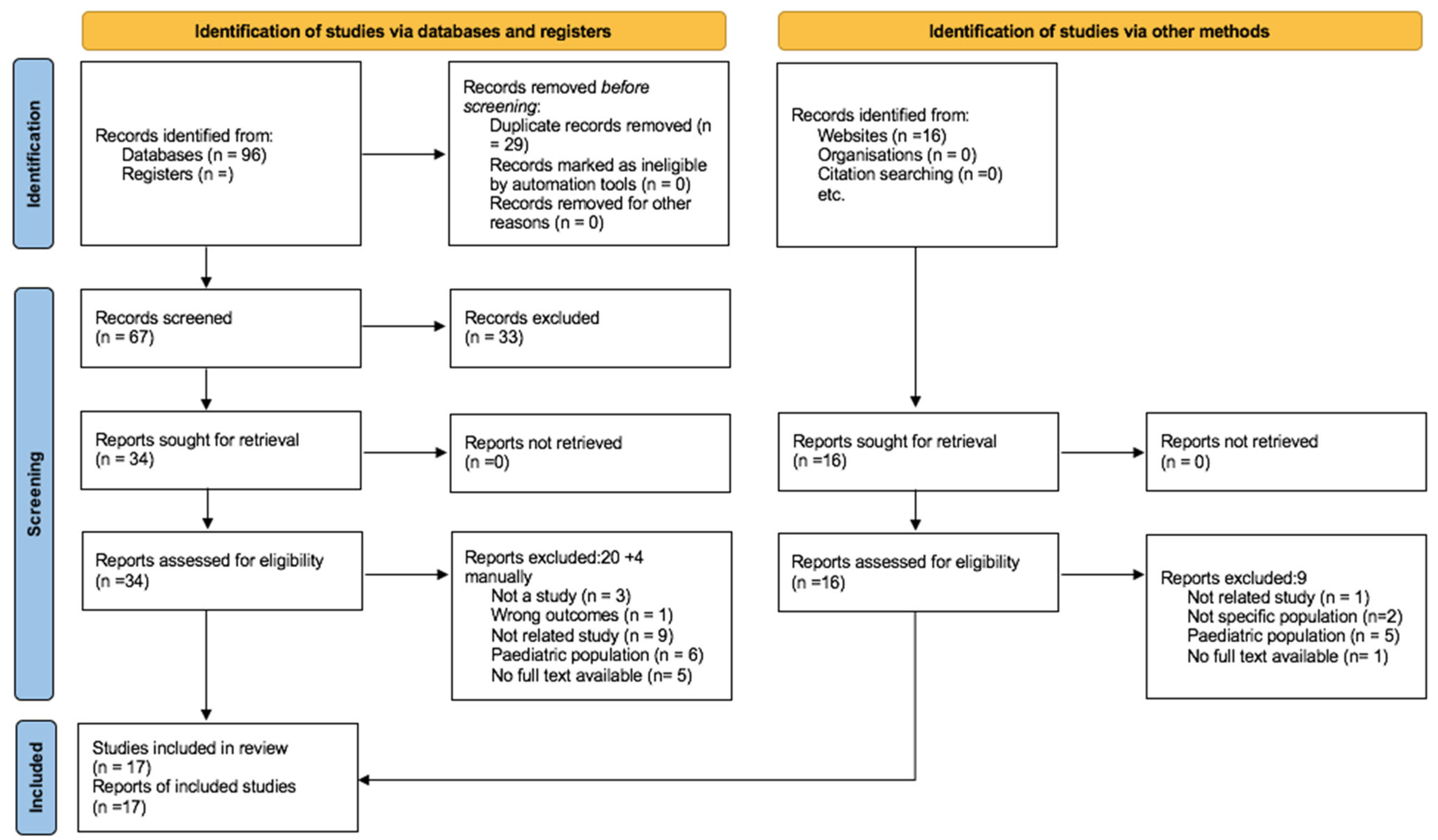
3.2. Study Selection and Characteristics
3.3. Prevalence of Asthma Control
3.4. Impact of Uncontrolled Asthma on Daily Life and Health-Related Outcomes
- Education
- Employment status
- Income level
- Gender differences
- Age and regional variation
- Environmental factors
- Tobacco Use
- Emergency Department Visits and Hospitalizations
- Quality of Life
- Adherence to Medication
- Asthma symptoms
- Meta-analysis
4. Discussion
5. Limitations
6. Conclusions
Supplementary Materials
Author Contributions
Funding
Data Availability Statement
Conflicts of Interest
References
- Mims, J.W. Asthma: Definitions and pathophysiology. Int. Forum Allergy Rhinol. 2015, 5, S2–S6. [Google Scholar] [CrossRef] [PubMed]
- Gans, M.D.; Gavrilova, T. Understanding the immunology of asthma: Pathophysiology, biomarkers, and treatments for asthma endotypes. Paediatr. Respir. Rev. 2020, 36, 118–127. [Google Scholar] [CrossRef]
- Maslan, J.; Mims, J.W. What is asthma? Pathophysiology, demographics, and health care costs. Otolaryngol. Clin. N. Am. 2014, 47, 13–22. [Google Scholar] [CrossRef]
- Al Ghobain, M.O.; Algazlan, S.S.; Oreibi, T.M. Asthma prevalence among adults in Saudi Arabia. Saudi Med. J. 2018, 39, 179–184. [Google Scholar] [CrossRef]
- Moradi-Lakeh, M.; El Bcheraoui, C.; Daoud, F.; Tuffaha, M.; Kravitz, H.; Al Saeedi, M.; Basulaiman, M.; Memish, Z.A.; Al Mazroa, M.A.; Al Rabeeah, A.A.; et al. Prevalence of asthma in Saudi adults: Findings from a National Household Survey, 2013. BMC Pulm. Med. 2015, 15, 77. [Google Scholar] [CrossRef]
- BinSaeed, A.A. Asthma control among adults in Saudi Arabia: Study of determinants. Saudi Med. J. 2015, 36, 599–604. [Google Scholar] [CrossRef]
- Al-Zalabani, A.H.; Almotairy, M.M. Asthma control and its association with knowledge of caregivers among children with asthma: A cross-sectional study. Saudi Med. J. 2020, 41, 733–739. [Google Scholar] [CrossRef]
- AL-Jahdali, H.; Wali, S.; Salem, G.; Al-Hameed, F.; Almotair, A.; Zeitouni, M.; Aref, H.; Nadama, R.; Algethami, M.M.; Al Ghamdy, A.; et al. Asthma control and predictive factors among adults in Saudi Arabia: Results from the Epidemiological Study on the Management of Asthma in Asthmatic Middle East Adult Population study. Ann. Thorac. Med. 2019, 14, 148–154. [Google Scholar] [CrossRef] [PubMed]
- Emotional Effects of Asthma. Available online: https://www.uillinois.edu/ (accessed on 20 January 2025).
- Meal Planning and Eating. Available online: https://www.mylungsmylife.org/ (accessed on 20 December 2024).
- Kharaba, Z.; Feghali, E.; El Husseini, F.; Sacre, H.; Abou Selwan, C.; Saadeh, S.; Hallit, S.; Jirjees, F.; AlObaidi, H.; Salameh, P.; et al. An assessment of quality of life in patients with asthma through physical, emotional, social, and occupational aspects. A cross-sectional study. Front. Public Health 2022, 10, 883784. [Google Scholar] [CrossRef] [PubMed]
- Ahmed, A.E.; Al-Jahdali, H.; Al-Harbi, A.; Khan, M.; Ali, Y.; Al Shimemeri, A.; Al-Muhsen, S.; Halwani, R. Factors associated with poor asthma control among asthmatic patient visiting emergency department. Clin. Respir. J. 2014, 8, 431–436. [Google Scholar] [CrossRef]
- Al-Ghamdi, B.R.; Koshak, E.A.; Omer, F.M.; Awadalla, N.J.; Mahfouz, A.A.; Ageely, H.M. Immunological factors associated with adult asthma in the Aseer Region, Southwestern Saudi Arabia. Int. J. Environ. Res. Public Health 2019, 16, 2495. [Google Scholar] [CrossRef]
- Al-Jahdali, H.H.; Al-Hajjaj, M.S.; Alanezi, M.O.; O Zeitoni, M.; Al-Tasan, T.H. Asthma control assessment using asthma control test among patients attending 5 tertiary care hospitals in Saudi Arabia. Saudi Med. J. 2008, 29, 714. [Google Scholar] [PubMed]
- Al-Jahdali, H.; Anwar, A.; Al-Harbi, A.; Baharoon, S.; Halwani, R.; Al Shimemeri, A.; Al-Muhsen, S. Factors associated with patient visits to the emergency department for asthma therapy. BMC Pulm. Med. 2012, 12, 80. [Google Scholar] [CrossRef] [PubMed]
- Al-Jahdali, H.; Ahmed, A.; Al-Harbi, A.; Khan, M.; Baharoon, S.; Bin Salih, S.; Halwani, R.; Al-Muhsen, S. Improper inhaler technique is associated with poor asthma control and frequent emergency department visits. Allergy Asthma Clin. Immunol. 2013, 9, 8. [Google Scholar] [CrossRef]
- Alomary, S.A.; Al Madani, A.J.; Althagafi, W.A.; Adam, I.F.; Elsherif, O.E.; Al-Abdullaah, A.A.; Al-Jahdali, H.; Jokhdar, H.A.; Alqahtani, S.H.; Nahhas, M.A.; et al. Prevalence of asthma symptoms and associated risk factors among adults in Saudi Arabia: A national survey from Global Asthma Network Phase I. World Allergy Organ. J. 2022, 15, 100623. [Google Scholar] [CrossRef]
- Alqahtani, J.M. Atopy and allergic diseases among Saudi young adults: A cross-sectional study. J. Int. Med. Res. 2020, 48, 300060519899760. [Google Scholar] [CrossRef]
- Al-Zahrani, J.M.; Ahmad, A.; Abdullah, A.-H.; Khan, A.M.; Al-Bader, B.; Baharoon, S.; Shememeri, A.; Al-Jahdali, H. Factors associated with poor asthma control in the outpatient clinic setting. Ann. Thorac. Med. 2015, 10, 100–104. [Google Scholar]
- Alzahrani, S.J.M.; Alzahrani, H.A.K.; Alghamdi, S.M.M.; A Alzahrani, A.N. Health-Related Quality of Life of Asthmatic Patients in Al-Baha City, Saudi Arabia. Cureus 2024, 16, e53601. [Google Scholar] [CrossRef] [PubMed]
- Alzayer, R.; Almansour, H.A.; Basheti, I.; Chaar, B.; Al Aloola, N.; Saini, B. Asthma patients in Saudi Arabia–preferences, health beliefs and experiences that shape asthma management. Ethn. Health 2022, 27, 877–893. [Google Scholar] [CrossRef]
- Ghaleb Dailah, H. Investigating the outcomes of an asthma educational program and useful influence in public policy. Front. Public Health 2021, 9, 736203. [Google Scholar] [CrossRef]
- Habib, S.S.; Alzoghaibi, M.A.; Abba, A.A.; Hasan, M. Relationship of the Arabic version of the asthma control test with ventilatory function tests and levels of exhaled nitric oxide in adult asthmatics. Saudi. Med. J. 2014, 35, 397–402. [Google Scholar]
- Tarraf, H.; Al-Jahdali, H.; Al Qaseer, A.H.; Gjurovic, A.; Haouichat, H.; Khassawneh, B.; Mahboub, B.; Naghshin, R.; Montestruc, F.; Behbehani, N. Asthma control in adults in the Middle East and North Africa: Results from the ESMAA study. Respir. Med. 2018, 138, 64–73. [Google Scholar] [CrossRef]
- Tayeb, M.M.S.; Aldini, M.A.M.; Laskar, A.K.A.; Alnashri, I.A.M. Prevalence of asthma-triggering drug use in adults and its impact on asthma control: A cross-sectional study–Saudi (Jeddah). Australas. Med. J. 2017, 10, 1003–1007. [Google Scholar]
- Torchyan, A.A.; BinSaeed, A.A.; Khashogji, S.d.A.; Alawad, S.H.; Al-Ka’ABor, A.S.; Alshehri, M.A.; Alrajhi, A.A.; Alshammari, M.M.; Papikyan, S.L.; Gosadi, I.M.; et al. Asthma quality of life in Saudi Arabia: Gender differences. J. Asthma 2017, 54, 202–209. [Google Scholar] [CrossRef]
- Alanazi, T.M.; Alghamdi, H.S.; Alberreet, M.S.; Alkewaibeen, A.M.; Alkhalefah, A.M.; Omair, A.; Al-Jahdali, H.; Al-Harbi, A. The prevalence of sleep disturbance among asthmatic patients in a tertiary care center. Sci. Rep. 2021, 11, 2457. [Google Scholar] [CrossRef]
- Domingo, C.; Sicras-Mainar, A.; Sicras-Navarro, A.; Sogo, A.; Mirapeix, R.; Engroba, C. Prevalence, T2 Biomarkers, and Cost of Severe Asthma in the Era of Biologics: The BRAVO-1 Study. J. Investig. Allergol. Clin. Immunol. 2024, 34, 97–105. [Google Scholar] [CrossRef]
- Lin, J.; Gao, J.; Lai, K.; Zhou, X.; He, B.; Zhou, J.; Wang, C.; Fehrenbach, H. The characteristic of asthma control among nasal diseases population: Results from a cross-sectional study. PLoS ONE 2018, 13, e0191543. [Google Scholar] [CrossRef] [PubMed]
- Mishra, R.; Kashif, M.; Venkatram, S.; George, T.; Luo, K.; Diaz-Fuentes, G. Role of Adult Asthma Education in Improving Asthma Control and Reducing Emergency Room Utilization and Hospital Admissions in an Inner City Hospital. Can. Respir. J. 2017, 2017, 5681962. [Google Scholar] [CrossRef] [PubMed]
- Backman, H.; Jansson, S.A.; Stridsman, C.; Eriksson, B.; Hedman, L.; Eklund, B.M.; Sandström, T.; Lindberg, A.; Lundbäck, B.; Rönmark, E. Severe asthma—A population study perspective. Clin. Exp. Allergy 2019, 49, 819–828. [Google Scholar] [CrossRef]
- Nguyen, V.N.; Huynh, T.T.H.; Chavannes, N.H. Knowledge on self-management and levels of asthma control among adult patients in Ho Chi Minh City, Vietnam. IJGM 2018, 11, 81–89. [Google Scholar] [CrossRef]
- Zhang, X.; Lai, Z.; Qiu, R.; Guo, E.; Li, J.; Zhang, Q.; Li, N. Positive change in asthma control using therapeutic patient education in severe uncontrolled asthma: A one-year prospective study. Asthma Res. Pract. 2021, 7, 10. [Google Scholar] [CrossRef] [PubMed]
- Heinrichs, K.; Hummel, S.; Gholami, J.; Schultz, K.; Li, J.; Sheikh, A.; Loerbroks, A. Psychosocial working conditions, asthma self-management at work and asthma morbidity: A cross-sectional study. Clin. Transl. Allergy 2019, 9, 25. [Google Scholar] [CrossRef]
- Shahid, S.; Jaan, G.; Nadeem, A.; Nadeem, J.; Fatima, K.; Sajjad, A.; Javed, F.; Mazhar, M.; Iqbal, M.Z. Effect of educational intervention on quality of life of asthma patients: A systematic review. Med. Sci. 2024, 28, 1–17. [Google Scholar] [CrossRef]
- Tiotiu, A.; Ioan, I.; Wirth, N.; Romero-Fernandez, R.; González-Barcala, F.J. The Impact of Tobacco Smoking on Adult Asthma Outcomes. Int. J. Environ. Res. Public Health 2021, 18, 992. [Google Scholar] [CrossRef]
- Mroczek, B.; Kurpas, D.; Urban, M.; Sitko, Z.; Grodzki, T. The Influence of Asthma Exacerbations on Health-Related Quality of Life. In Ventilatory Disorders; Pokorski, M., Ed.; Advances in Experimental Medicine and Biology; Springer International Publishing: Cham, Switzerland, 2015; Volume 873, pp. 65–77. Available online: http://link.springer.com/10.1007/5584_2015_157 (accessed on 1 January 2025).
- Almqvist, C.; Worm, M.; Leynaert, B. WP 2.5 ‘Gender’for the working group of G. Impact of gender on asthma in childhood and adolescence: A GA2LEN review. Allergy 2008, 63, 47–57. [Google Scholar] [CrossRef]
- Khan, J.R.; Lingam, R.; Owens, L.; Chen, K.; Shanthikumar, S.; Oo, S.; Schultz, A.; Widger, J.; Bakar, K.S.; Jaffe, A.; et al. Social deprivation and spatial clustering of childhood asthma in Australia. Glob. Health Res. Policy 2024, 9, 22. [Google Scholar] [CrossRef]
- Mohamed Hussain, S.; Ayesha Farhana, S.; Mohammed Alnasser, S. Time Trends and Regional Variation in Prevalence of Asthma and Associated Factors in Saudi Arabia: A Systematic Review and Meta-Analysis. BioMed Res. Int. 2018, 2018, 8102527. [Google Scholar] [CrossRef] [PubMed]
- Murray, C.S.; Foden, P.; Sumner, H.; Shepley, E.; Custovic, A.; Simpson, A. Preventing Severe Asthma Exacerbations in Children. A Randomized Trial of Mite-Impermeable Bedcovers. Am. J. Respir. Crit. Care Med. 2017, 196, 150–158. [Google Scholar] [CrossRef]
- Yalçınkaya, G.; Kılıç, M. Asthma Control Level and Relating Socio-Demographic Factors in Hospital Admissions. Int. J. Stat. Med. Res. 2022, 11, 19–26. [Google Scholar] [CrossRef]
- Aleid, A.; Alolayani, R.A.; Alkharouby, R.; Gawez, A.R.A.; Alshehri, F.D.; Alrasan, R.A.; Alsubhi, R.S.; Al Mutair, A. Environmental Exposure and Pediatric Asthma Prevalence in Saudi Arabia: A Cross-Sectional Study. Cureus 2023, 15, e46707. [Google Scholar] [CrossRef] [PubMed]
- Cilluffo, G.; Ferrante, G.; Fasola, S.; Malizia, V.; Montalbano, L.; Ranzi, A.; Badaloni, C.; Viegi, G.; La Grutta, S. Association between Asthma Control and Exposure to Greenness and Other Outdoor and Indoor Environmental Factors: A Longitudinal Study on a Cohort of Asthmatic Children. Int. J. Environ. Res. Public Health 2022, 19, 512. [Google Scholar] [CrossRef]
- Chen, M.; Wu, Y.; Yuan, S.; Chen, J.; Li, L.; Wu, J.; Zhang, J.; Yin, Y. Research on the improvement of allergic rhinitis in asthmatic children after reducing dust mite exposure: A randomized, double-blind, cross-placebo study protocol. Res. Sq. 2020, 21, 686. [Google Scholar]
- Jaakkola, M.S.; Hyrkäs-Palmu, H.; Jaakkola, J.J.K. Residential Exposure to Dampness Is Related to Reduced Level of Asthma Control among Adults. Int. J. Environ. Res. Public Health 2022, 19, 11338. [Google Scholar] [CrossRef] [PubMed]
- Engelkes, M.; Janssens, H.M.; Jongste, J.C.; de Sturkenboom, M.C.J.M.; Verhamme, K.M.C. Medication adherence and the risk of severe asthma exacerbations: A systematic review. Eur. Respir. J. 2015, 45, 396–407. [Google Scholar] [CrossRef]
- Kosse, R.C.; Bouvy, M.L.; Vries, T.W.; de Koster, E.S. Effect of a mHealth intervention on adherence in adolescents with asthma: A randomized controlled trial. Respir. Med. 2019, 149, 45–51. [Google Scholar] [CrossRef]
- Onubogu, U.C.; Owate, E. Pattern of Acute Asthma Seen in Children Emergency Department of the River State University Teaching Hospital Portharcourt Nigeria. Open J. Respir. Dis. 2019, 9, 101–111. [Google Scholar] [CrossRef]
- Tiwari, R.; Timilsina, M.; Banstola, S. Impact of Pharmacist-led Interventions on Medication Adherence and Inhalation Technique in Adult Patients with COPD and Asthma. J. Health Allied Sci. 2023, 13, 14–22. [Google Scholar] [CrossRef]
- Williams, L.K.; Peterson, E.L.; Wells, K.; Ahmedani, B.K.; Kumar, R.; Burchard, E.G.; Chowdhry, V.K.; Favro, D.; Lanfear, D.E.; Pladevall, M. Quantifying the proportion of severe asthma exacerbations attributable to inhaled corticosteroid nonadherence. J. Allergy Clin. Immunol. 2011, 128, 1185–1191.e2. [Google Scholar] [CrossRef]
- Page, M.J.; McKenzie, J.E.; Bossuyt, P.M.; Boutron, I.; Hoffmann, T.C.; Mulrow, C.D.; Shamseer, L.; Tetzlaff, J.M.; Akl, E.A.; Brennan, S.E.; et al. The PRISMA 2020 statement: An updated guideline for reporting systematic reviews. BMJ 2021, 372, n71. [Google Scholar] [CrossRef]


| Author (Year) | Design | Location | Sample Size | Key Findings | Asthma Diagnosis |
|---|---|---|---|---|---|
| (Ahmed A.E., 2014) [12] | Cross-sectional study | Riyadh, Saudi Arabia | 450 participants |
| Clinically diagnosed |
| (Al-Ghamdi et al., 2019) [13] | Cross-sectional study | Aseer Region, Southwestern Saudi Arabia | 960 participants |
| Clinically diagnosed |
| (AL-Jahdali et al., 2008) [14] | Cross-sectional study | Riyadh, Saudi Arabia | 1060 participants |
| Clinically diagnosed |
| (AL-Jahdali et al., 2012) [15] | Cross-sectional study | Riyadh, Saudi Arabia | 450 participants |
| Physician diagnosis |
| (Al-Jahdali et al., 2013) [16] | Cross-sectional study | Riyadh, Saudi Arabia | 450 participants |
| Physician diagnosis |
| (Al-Jahdali et al., 2019) [8] | Cross-sectional study | Saudi Arabia | 1009 participants |
| Physician diagnosis |
| (Alomary et al., 2022) [17] | Cross-sectional study | Saudi Arabia | 7955 participates |
| Diagnosed by doctors (83.3%) |
| (Alqahtani, J.M., 2020) [18] | Cross-sectional study | Najran, southwestern Saudi Arabia | 222 participants |
| Physician diagnosis |
| (Al-Zahrani J.M. et al., 2015) [19] | Cross-sectional study | Riyadh, Saudi Arabia | 400 participants |
| Physician-diagnosed asthma |
| (Alzahrani et al., 2024) [20] | Cross-sectional study | Al-Baha, Saudi Arabia | 151 participants |
| Symptoms report |
| (Alzayer et al., 2022) [21] | A qualitative research method | Riyadh, Saudi Arabia | 20 participant |
| Interviews |
| (BinSaeed, 2015) [6] | Cross-sectional survey | Riyadh, Saudi Arabia | 260 participants |
| Patients had been diagnosed by a physician at least 3 months before joining the stud |
| (GhalebDailah, 2021) [22] | Cross-sectional study | Saudi Arabia, Jeddah and Jazan | 263 participants |
| Clinically diagnosed |
| (Habib et al., 2014) [23] | Cross-sectional study | Riyadh, Saudi Arabia | 53 participants |
| Clinically diagnosed |
| (Tarrafa H et al., 2018) [24] | Cross-sectional study | 11 Middle Eastern and North African Countries including (Saudi Arabia) | 7236 participants |
| Clinically diagnosed and patient assessment |
| (Tayeb et al., 2017) [25] | Cross-sectional study | Jeddah, Saudi Arabia | 173 participants |
| Clinically diagnosed |
| (Torchyan et al., 2017) [26] | Cross-sectional study | Riyadh, Saudi Arabia | 257 participants |
| Clinically diagnosed based on medical history |
| Author (Year) | Age (Years) | (Sex M/F) | Symptoms Control | ICS Used? | Asthma Symptoms | Medication Regimen | Impact of Asthma on Quality of Life | Impact of Tobacco Use on Asthma Control | Impact of Educational Level on Asthma Control | Other Factors That May Impact Asthma Control |
|---|---|---|---|---|---|---|---|---|---|---|
| (Ahmed AE, 2014) [12] | 42.3 ± 16.7 years | 176 (39.1%) male and 274 (60.9%) female | Significant difference in the asthma control scores for severe persistent asthma: - (M = 8.5, SD = 2.0) - mild persistent (M = 18.0, SD =2.3) - intermittent asthma (M = 19.3, SD = 3.1) | 50.4% of the participants used ICS | 14 (3.1%) participants were considered to have severe persistent asthma, 75 (16.7%) participants were moderate persistent, 181 (40.2%) participants were mild persistent, and 180 (40%) participants were mild intermittent |
| There is an association between frequent ED visits and poor asthma control from pervious studies. Participants with poor asthma control have poor health-related quality of life, more doctor and hospital visits | NA | Study did not find that demographic factors such as gender, marital status, and level of education or job status were responsible for poor asthma control as defined by ACT | One possible explanation is probably that our patients have free access to hospitals and free dispensing of asthma therapy, which probably limits the influence of job status and income as a factor for poor asthma control |
| (AlGhamdi et al., 2019) [13] | Adult (≥20 years of age) | NA |
Persons with an increase in total IgE (>100 IU/mL) had significantly higher probability (OR = 1.84, 95%
CI: 1.10–3.06) to develop adult asthma. Similarly, those with an increase in total peripheral Eosinophil count (>150 cells/mm3 ) had more than two times the risk to have adult asthma (OR = 2.85, 95% CI: 1.14–7.15) | NA | NA | NA | NA | NA | NA | Rye wheat is an important outdoor sensitization factor for bronchial asthma in adults |
| (AL-Jahdali et al., 2008) [14] | Median age was 38.56 years (range 15–75) | Total number of patients studied was 1060. Males comprised 442 (42%) and females comprised 618 (58%) | ACT score revealed uncontrolled asthma in 667 (64%), well-controlled asthma in 383 (31%), and completely controlled in 55(5%) | NA | NA | NA | Of the major reasons for poor asthma control is poor compliance | NA | Significant correlation between level of education and asthma control, 71% of patients who did not have formal education had uncontrolled asthma (p = 0.001) | Younger age group (less than 20 years old) had better asthma control compared to the older age group (p = 0.0001) |
| (AL-Jahdali et al., 2012) [15] | 42.3 ±16.7 years | M = 176 (39.1%), F = 274 (60.9%) | NA | Partially/Fully controlled (n = 343) Level (ACT) - Regular ICS use: Yes (80.6) No (72.4) Not controlled (n = 105) Level (p-Value) - Regular ICS use: Yes (19.4) No (27.6) | NA | NA | Frequent emergency department visits | NA | Partially/Fully controlled (n = 343) Level (ACT) - Education level: high school or less (77.2), university (72.1) Not controlled (n = 105) Level (p-Value) - Education level: high school or less (22.8), university (27.9) | -Lack of education about asthma -Treatment needs (patients visited ED primarily to receive a bronchodilator by nebulizer and oxygen) - Inadequate use of ICS |
| (Al-Jahdali et al., 2013) [16] | 42.3 ±16.7 years | M = 176 (39.1%) F = 274 (60.9) | NA | The study mentions that roper use of ICS therapy is essential for effective asthma control and reducing the likelihood of uncontrolled asthma and frequent ED visits | NA | - MDI: 361 (80.2) - Turbuhaler: 43 (9.6) - Diskus: 38 (8.4) - MDI with spacer: 3 (0.7) | NA | NA | NA | NA |
| (Al-Jahdali et al., 2019) [8] | - 48.7 years (±15.9) - 18 to 35 = 222 (22) - 35 to 55 = 425 (42.1) - 55 to 70 = 260 (25.8) - 70 and above = 102 (10.1) | M = 350 (34.7) F = 659 (65.3) | NA | - Inhaled corticosteroids: 197 (19.6) - Patients using fixed combination (inhaled corticosteroids + long-acting beta-agonist) and those using antileukotrienes were more likely to have controlled asthma compared to patients not taking such medications (OR: 1.77 [95% CI: 1.29–2.44] and OR: 2.39 [95% CI: 1.82–3.14], respectively) | NA | Inhaled corticosteroids: 197 (19.6) Long-acting bronchodilator: 90 (9.0) Oral corticosteroids: 76 (7.6) Fixed combination (inhaled corticosteroids + long-acting beta-agonist): 833 (82.9) Antileukotrienes: 367 (36.5) Theophylline: 55 (5.5) Anticholinergic bronchodilator: 96 (9.6) Short-acting beta-agonist: 546 (54.3) Nasal corticosteroids: 41 (4.1) Antihistamine: 12 (1.2) | Patients with controlled asthma had better QoL according to SF-8 questionnaire (p < 0.001), but they did not show better medication adherence (according to MMAS-4© score) | Nonsmokers did not show any significant difference in asthma control levels when compared to active smokers and past smokers (p = 0.824) | Patients with higher educational level were almost four times more likely to have controlled asthma (OR: 3.72 [95% CI: 1.74–7.92]) | Patients without medical insurance coverage were more likely to have controlled asthma (OR: 1.44 [95% CI: 1.09–1.90]) |
| (Alomary et al., 2022) [17] | The mean participant age was 38.6 years | 56.9% were men | NA | NA | Wheeze: 882 (14.2%) | NA | NA | Using tobacco daily was associated with wheezing (aOR 2.7; 95% CI: 2.0–3.5) | NA | - Significant factors associated with wheeze were: - jobs (aOR 11.8; 95% CI: 7.3–18.9) - exposure to moisture or damp spots (aOR 2.2; 95% CI: 1.5– 3.4) - heating the house when it is cold (aOR 1.7; 95% CI: 1.3–2.1) |
| (Alqahtani, J.M., 2020) [18] | 19 to 23 (21.5 ± 1.5) years | M = 116 students, F = 106 students were included | NA | NA | “Asthma” Participants without atopy (N= 122) - Wheeze “ever”: 25 (20.4) - Current wheeze: 13 (10.7) - Physician-diagnosed BA: 26 (21.3) - Exercise-induced asthma: 28 (25) - Nocturnal cough: 42 (38.2) Participants with atopy (N= 90) - Wheeze “ever”: 40 (44.4) - Current wheeze: 32 (35.6) - Physician-diagnosed BA: 34 (37.8) - Exercise-induced asthma: 22 (24.4) - Nocturnal cough: 28 (31.1) | NA | NA | NA | NA | NA |
| (Al-Zahrani J.M. et al., 2015) [19] | Adults (≥18 years of age) | The sample included 120 males (30%) and 280 females (70%) | Uncontrolled asthma was defined as an ACT score ≤ 16. Findings show that 39.8% of patients had uncontrolled asthma | NK | NK | A majority of patients used bronchodilators as their main inhaler, and 72.2% used it only for asthma therapy. Findings revealed that 55.2% were using the meter-dosed inhaler as their main device | NK | Active smoking (p-value = 0.007), passive smoking (p-value = 0.019 | Approximately half of the patients had received a high school education or less, 38.9% had no education, and only 12% had university education. Unemployment was significantly associated with uncontrolled asthma (p-value = 0.019) | Improper device use by the patient was more frequently associated with uncontrolled asthma (46.9% partially/fully controlled vs. 64.2% uncontrolled asthma, p-value = 0.001) |
| (Alzahrani et al., 2024) [20] | Adults (≥18 years of age) | The sample included 36 males (23.8%) and 115 females (76.2%) | NK | NK | - Environment-related symptoms - Emotion-related symptoms | NK | The present findings indicate the considerable influence of asthma on quality of life | Most of the participants did not smoke (91.4% | NK | Among the participants, 78 individuals (51.7%) had chronic diseases in addition to asthma |
| (Alzayer et al., 2022) [21] | Adults (≥18 years of age) | The sample included 4 males (17%) and 19 females (82%) | Participants’ asthma control scores indicated that 52% (n = 12) of participants or those with asthma they cared for had only partially controlled asthma (ACTTM score < 19), while 13% (n = 4) had poorly controlled asthma (ACTTM score < 15) | NK | NK | NK | NK | NK | Patients with less than a graduate degree had a 3.1-fold higher likelihood of experiencing uncontrolled asthma (OR = 3.1; 95% CI: 1.0–9.5). Similarly, those who were unemployed, disabled, or too ill to work exhibited significantly greater odds of having uncontrolled asthma (OR = 3.1; 95% CI: 1.4–6.9). These findings are consistent with existing literature indicating that education level and occupational status are important determinants of asthma control | Findings clearly highlighted lack of knowledge about the role of different types of asthma medications. Most participants were rather unclear, for example, about the differences between reliever and preventer medications |
| (BinSaeed, 2015) [6] | Adults (≥18 years of age) | The sample included 130 males (50.0%) and 126 females (48.8%) | The proportion of patients with uncontrolled asthma in our study population was 68.1% | NK | Experiencing heartburn symptoms within the past four weeks was linked to a 2.5-fold increase in the odds of having uncontrolled asthma (OR = 2.5; 95% CI: 1.3–4.9) | NK | NK | It shows that tobacco smoker who smoke daily have uncontrolled asthma 17/20 (85%). On the other hand, tobacco smoker who smoke less than daily or not at all have uncontrolled asthma 156/232 (67.2%) | Individuals with less than a graduate degree had 3.1 times higher odds of experiencing uncontrolled asthma (OR = 3.1; 95% CI: 1.0–9.5). Similarly, those who were unemployed, disabled, or too ill to work also showed a 3.1-fold increased risk of uncontrolled asthma (OR = 3.1; 95% CI: 1.4–6.9). These findings support existing evidence that education level and employment status are key factors associated with asthma control | Bivariate analysis indicated that several factors—including age, gender, marital status, education level, occupation, monthly household income, obesity, chronic sinusitis or allergic rhinitis, and recent heartburn symptoms (within the past four weeks)—were significantly associated with uncontrolled asthma |
| (GhalebDailah, 2021) [22] | Adults (≥18 years of age) | The sample included males (46%) and females (54%) | Majority of control group have somewhat controlled asthma 24 (38.1%) | NK | Often control groups have asthma symptoms (wheezing, coughing, shortness of breath, and chest tightness or pain) once or twice a week 17 (27%) | Often control groups have rescue inhaler or nebulizer (such as albuterol) 2 or 3 times per week 20 (31.7%) | NK | NK | NK | NK |
| (Habib et al., 2014) [23] | 36.1 ± 14.3 years | Male: 42 Female: 11 | ACT score of <20 is correlated with uncontrolled asthma. In this study, 24 cases had an ACT score >20 And 29 cases had an ACT <20 | 28.3% used steroids 11.3% used a mix of medications | N/A | 15.1% did not take any medications 39.6% used bronchodilators 28.3% used steroids 5.7% used leukotriene inhibitors 11.3% used a mix of medications | The impact of asthma on quality of life was not explored in this paper | Smokers were excluded from the study as smoking is known to reduce FENO values | There was no significant correlation of FENO with age, height, weight, asthma duration, and ventilatory function tests. Educational level was not mentioned | The conventional measures of asthma severity do not assess airway inflammation and may not provide optimal assessment for guiding therapy that helps in asthma control |
| (Tarrafa H. et al., 2018) [24] | 18 years or more | Female: 57% Male: 43% | Controlled or partly controlled: 4202 Uncontrolled: 2977 | 5.8% of the total population used only ICS as main asthma treatment | - Frequent nighttime symptoms 10% of the population - Exacerbation affecting activities and sleep 22.6% | - 38% used fixed ICS+ LABA with other treatment - 27% used fixed ICS + LABA alone - 8.1% used free ICS + LABA - 5.8% used only ICS - 4.5% used SABA alone - 16.6% used other treatments | - Frequent night symptoms were reported in 10.3% of patients - 66.3% of the population had a history of mild exacerbations - 22.3% of patients reported an impact on daily activities and sleep | - 80.1% of the total population were non-smokers - 9.1% were past smokers - 10.8% were active smokers | Patients with a higher level of education were more likely to have controlled asthma (OR, 2.31 (95% CI 1.72, 3.09) | Poor asthma control can be addressed by improving access to appropriate treatments, encouraging better medication adherence and smoking avoidance, along with more proactive follow-up and better education among both healthcare providers and patients |
| (Tayeb et al., 2017) [25] | Mean age: 44 ± 16 years | Female: 70 Male: 103 | 63% had uncontrolled asthma 34% were partially controlled 3% had controlled asthma | N/A | The cardinal asthma symptoms are shortness of breath, wheeze, cough, chest tightness | Asthma medications were not mentioned | - Continuous morbidity - Poor productivity - Frequent absence from work - Frequent visits to outpatient clinics and emergency rooms - Financial burden on asthmatics and health systems | N/A | The study reflects the unacceptably low awareness of health professionals about the harmful effects of asthma-triggering drugs on asthma control levels. Regular asthma educational courses for health professionals are important | Asthma-triggering drug use is a substantial cause of poor asthma control. This reflects the low awareness of health professionals about the negative effects of these drugs on asthma control |
| (Torchyan et al., 2017) [26] | Adults aged 18 years and above | Male: 129 Female: 128 | - 67.8% of the total population had uncontrolled asthma - 32.2% had controlled asthma | The use of ICS was not discussed in this paper | Symptoms in the studied population were not discussed clearly in this paper | Asthma medications were not mentioned | - 4.1 mean (1.4 SD) suffered from symptoms - 4.4 (1.5) had activity limitations - 4.3 (1.6) emotional function - 3.9 (1.5) environmental stimuli | Tobacco smoking was associated with 0.72-point decrease (95% CI = A −1.30–−0.14) in the AQL among males. The decreased quality of life might be attributed to increased inflammation in the airways and reduced sensitivity to corticosteroids caused by cigarette smoking | Effect of level of education on asthma control was not explored in this paper | This paper reveals gender-specific differences in the correlates of AQL in Saudi Arabia |
Disclaimer/Publisher’s Note: The statements, opinions and data contained in all publications are solely those of the individual author(s) and contributor(s) and not of MDPI and/or the editor(s). MDPI and/or the editor(s) disclaim responsibility for any injury to people or property resulting from any ideas, methods, instructions or products referred to in the content. |
© 2025 by the authors. Licensee MDPI, Basel, Switzerland. This article is an open access article distributed under the terms and conditions of the Creative Commons Attribution (CC BY) license (https://creativecommons.org/licenses/by/4.0/).
Share and Cite
Alqahtani, M.M.; Alotaibi, M.M.; Alghamdi, S.M.; Alammari, A.; Hakeem, J.; Alenazi, F.; Aldhaefi, N.; Almutairi, D.F.; Alghamdi, A.A.; Al-Jahdali, H. Asthma Control Among Adults in Saudi Arabia: A Systematic Review and Meta-Analysis. J. Clin. Med. 2025, 14, 5753. https://doi.org/10.3390/jcm14165753
Alqahtani MM, Alotaibi MM, Alghamdi SM, Alammari A, Hakeem J, Alenazi F, Aldhaefi N, Almutairi DF, Alghamdi AA, Al-Jahdali H. Asthma Control Among Adults in Saudi Arabia: A Systematic Review and Meta-Analysis. Journal of Clinical Medicine. 2025; 14(16):5753. https://doi.org/10.3390/jcm14165753
Chicago/Turabian StyleAlqahtani, Mohammed M., Mansour M. Alotaibi, Saeed Mardy Alghamdi, Ali Alammari, Jameel Hakeem, Fawzeah Alenazi, Nour Aldhaefi, Deema Faleh Almutairi, Ahad Adel Alghamdi, and Hamdan Al-Jahdali. 2025. "Asthma Control Among Adults in Saudi Arabia: A Systematic Review and Meta-Analysis" Journal of Clinical Medicine 14, no. 16: 5753. https://doi.org/10.3390/jcm14165753
APA StyleAlqahtani, M. M., Alotaibi, M. M., Alghamdi, S. M., Alammari, A., Hakeem, J., Alenazi, F., Aldhaefi, N., Almutairi, D. F., Alghamdi, A. A., & Al-Jahdali, H. (2025). Asthma Control Among Adults in Saudi Arabia: A Systematic Review and Meta-Analysis. Journal of Clinical Medicine, 14(16), 5753. https://doi.org/10.3390/jcm14165753