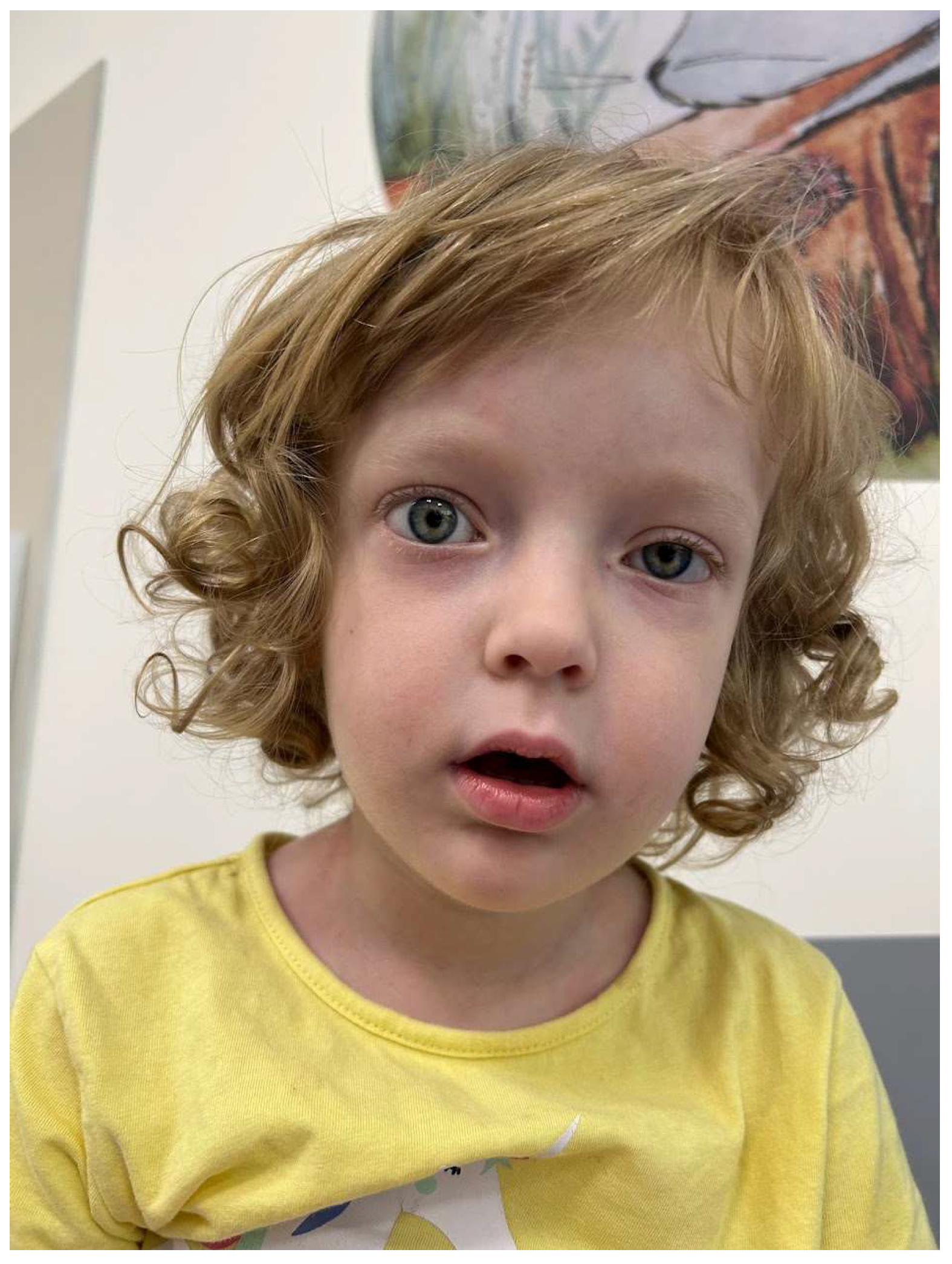
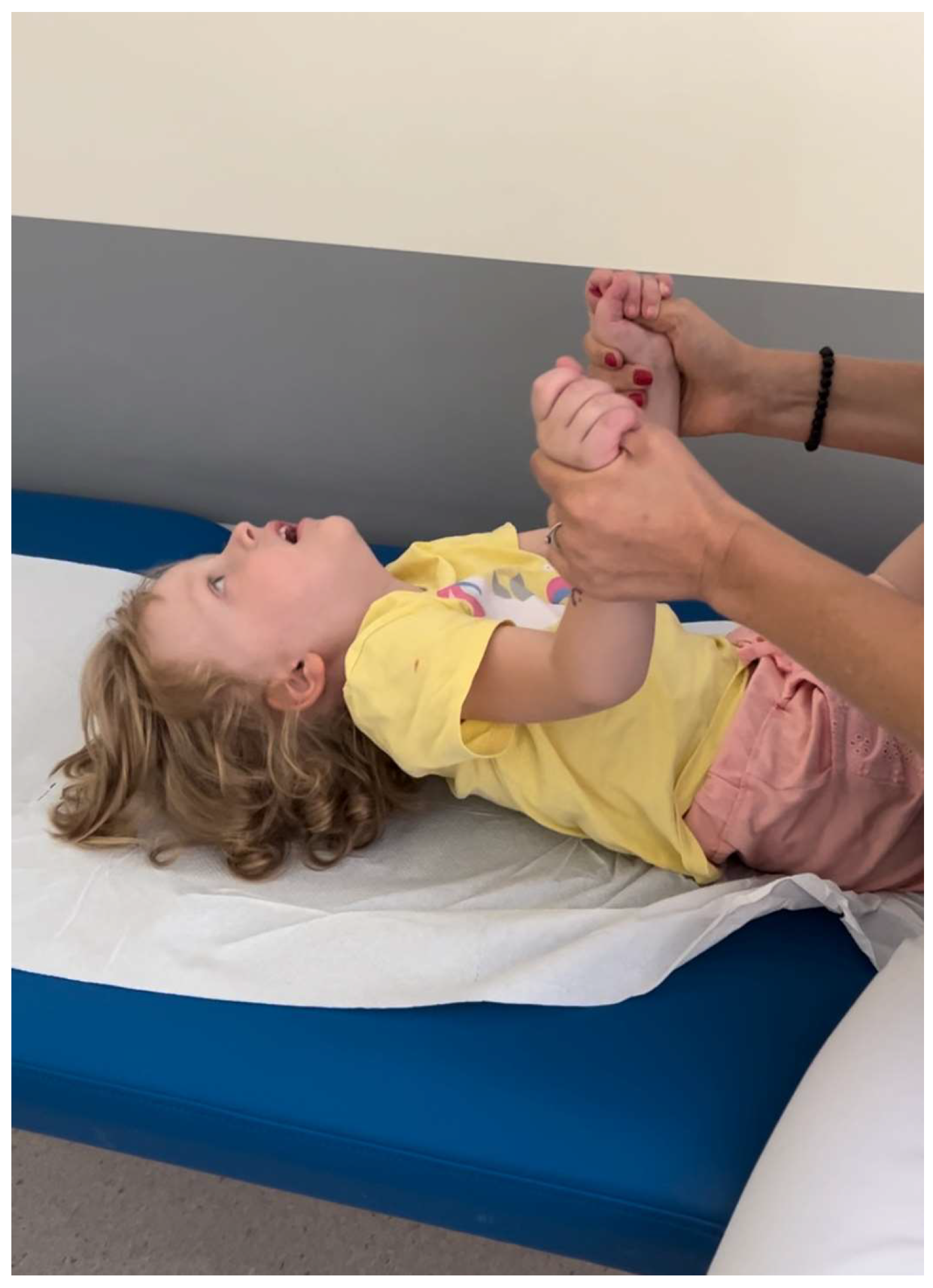
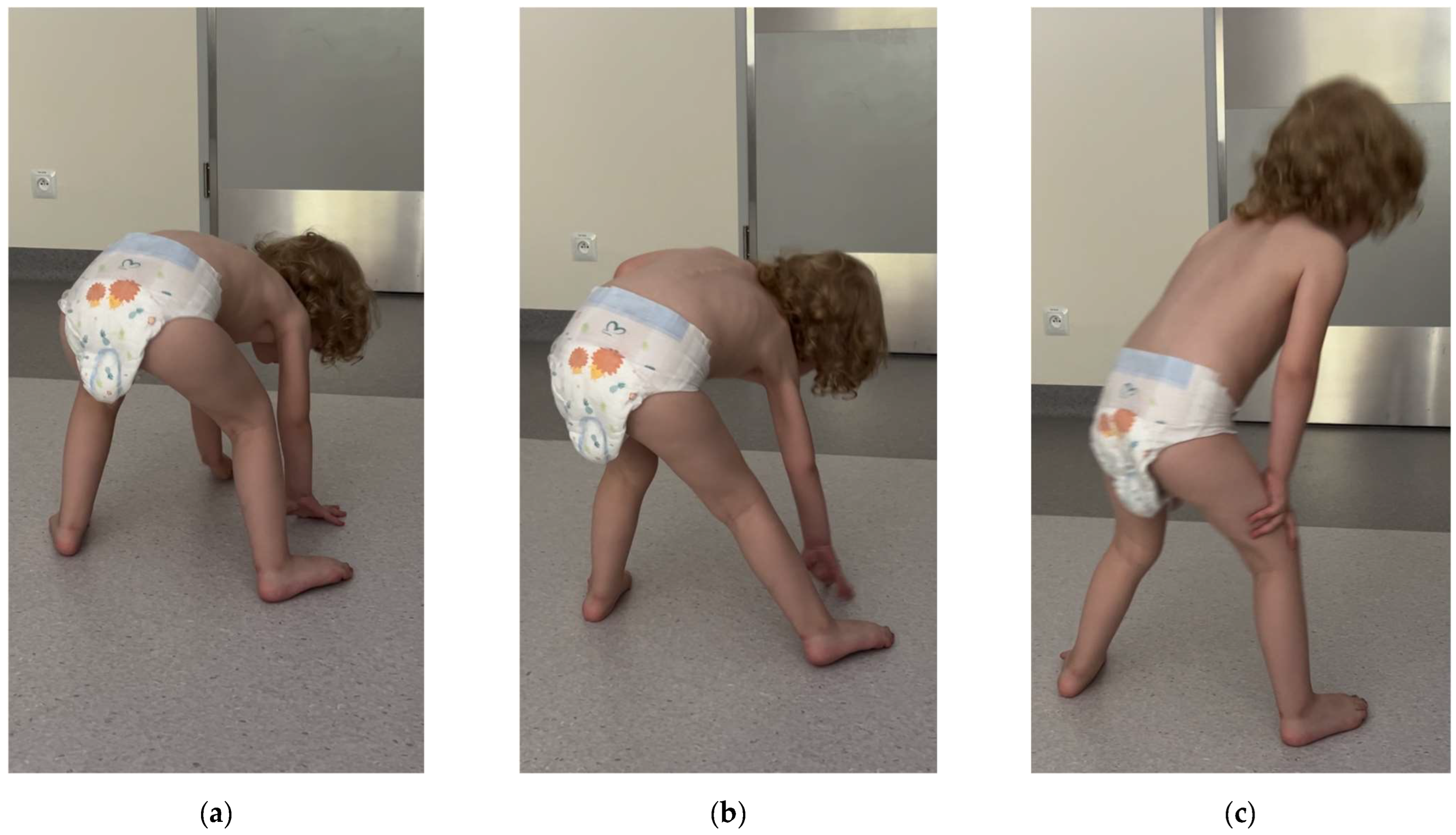
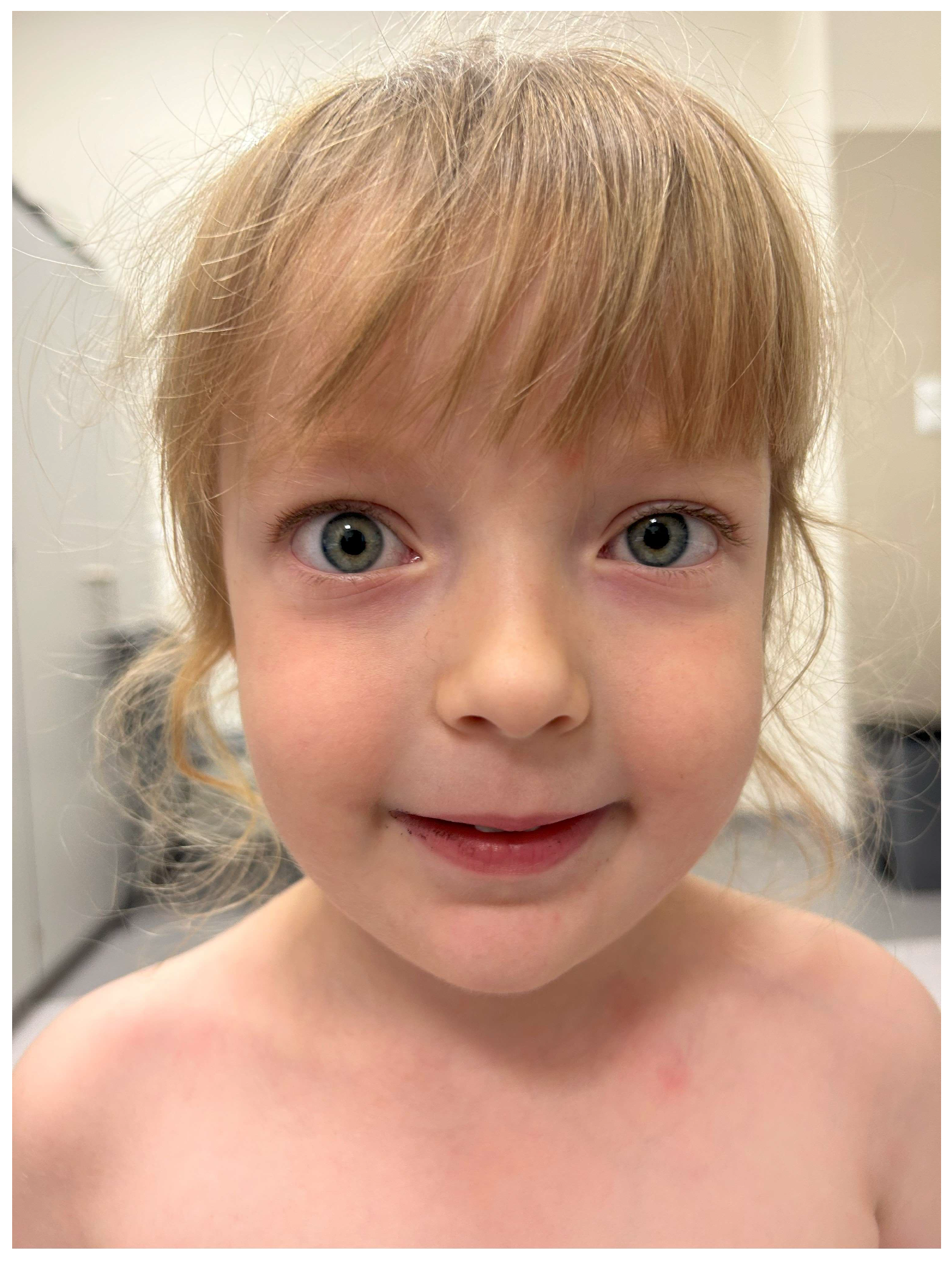
Thyrotoxic Myopathy with Nonspecific Ophthalmopathy in a Two-Year-Old Child: Case Report and Literature Review

Abstract
1. Introduction
2. Case Presentation
3. Discussion
4. Conclusions
Supplementary Materials
Author Contributions
Funding
Institutional Review Board Statement
Informed Consent Statement
Data Availability Statement
Acknowledgments
Conflicts of Interest
References
- Carly, B.; Nguyen, M.; Jialal, I. Thyrotoxicosis. In StatPearls [Internet]; StatPearls Publishing: Treasure Island, FL, USA, 2023. [Google Scholar]
- Nandi-Munshi, D.; Taplin, C.E. Thyroid-related neurological disorders and complications in children. Pediatr. Neurol. 2015, 52, 373–382. [Google Scholar] [CrossRef] [Scilit]
- Grüters, A. Ocular manifestations in children and adolescents with thyrotoxicosis. Exp. Clin. Endocrinol. Diabetes 1999, 107, S172–S174. [Google Scholar] [CrossRef] [Scilit]
- Pavone, P.; Cho, S.Y.; Praticò, A.D.; Falsaperla, R.; Ruggieri, M.; Jin, D.K. Ptosis in childhood: A clinical sign of several disorders: Case series reports and literature review. Medicine 2018, 97, e12124. [Google Scholar] [CrossRef] [Scilit]
- Gadient, P.; Bolton, J.; Puri, V. Juvenile myasthenia gravis: Three case reports and a literature review. J. Child Neurol. 2009, 24, 584–590. [Google Scholar] [CrossRef] [Scilit]
- Koves, I.H.; Cameron, F.J.; Kornberg, A.J. Ocular myasthenia gravis and Graves disease in a 10-year-old child. J. Child Neurol. 2009, 24, 615–617. [Google Scholar] [CrossRef] [Scilit]
- Duyff, R.F.; van den Bosch, J.; Laman, D.M.; van Loon, B.J.; Wim, H.J.P.; Linssen, W.H. Neuromuscular findings in thyroid dysfunction: A prospective clinical and electrodiagnostic study. J. Neurol. Neurosurg. Psychiatry 2000, 68, 750–755. [Google Scholar] [CrossRef] [Scilit]
- Available online: https://www.who.int/tools/child-growth-standards/standards (accessed on 5 September 2024).
- Hanley, P.; Lord, K.; Bauer, A.J. Thyroid Disorders in Children and Adolescents: A Review. JAMA Pediatr. 2016, 170, 1008–1019. [Google Scholar] [CrossRef] [Scilit]
- Foley, T.P., Jr. Thyrotoxicosis in childhood. Pediatr. Ann. 1992, 21, 43–46, 48–49. [Google Scholar] [CrossRef] [Scilit]
- Williamson, S.; Greene, S.A. Incidence of thyrotoxicosis in childhood: A national population-based study in the UK and Ireland. Clin. Endocrinol. 2010, 72, 358–363. [Google Scholar] [CrossRef] [Scilit]
- Lavard, L.; Ranløv, I.; Perrild, H.; Andersen, O.; Jacobsen, B.B. Incidence of juvenile thyrotoxicosis in Denmark, 1982–1988. A nationwide study. Eur. J. Endocrinol. 1994, 130, 565–568. [Google Scholar] [CrossRef] [Scilit]
- Hemminki, K.; Li, X.; Sundquist, J.; Sundquist, K. The epidemiology of Graves’ disease: Evidence of a genetic and an environmental contribution. J. Autoimmun. 2010, 34, J307–J313. [Google Scholar] [CrossRef] [Scilit]
- Glick, J.E.; Wright, P.E. Three-year-old boy presenting with thyrotoxicosis. J. Am. Osteopath. Assoc. 1998, 98, 112–114. [Google Scholar]
- Goldstein, S.M.; Katowitz, W.R.; Moshang, T.; Katowitz, J.A. Pediatric thyroid-associated orbitopathy: The Children’s Hospital of Philadelphia experience and literature review. Thyroid 2008, 18, 997–999. [Google Scholar] [CrossRef] [Scilit]
- Johnston, D.M. Thyrotoxic myopathy. Arch. Dis. Child. 1974, 49, 968–969. [Google Scholar] [CrossRef] [Scilit]
- Chen, C.C.; Chiu, P.C.; Shih, C.H.; Hsieh, K.S. Proximal weakness of lower limbs as the sole presentation of hyperthyroidism: Report of one case. Acta Paediatr. 2005, 46, 91–93. [Google Scholar]
- Radetti, G.; Paganini, C.; Dordi, B.; Gentili, L.; Tomelleri, G. A case of persistent thyrotoxic myopathy. Eur. J. Pediatr. 1996, 155, 623–624. [Google Scholar] [CrossRef]
- Prado, M.B., Jr.; Adiao, K.J.B. Chronic Myopathy as the Initial Manifestation of Thyrotoxicosis: A Report of 2 Cases. J. Clin. Neuromuscul. Dis. 2022, 24, 95–97. [Google Scholar] [CrossRef] [Scilit]
- Greco, F.; Caruso, M.; Falsaperla, R.; Fiumara, A.; Parano, E. Ipertiroidismo ad insorgenza precoce con interessamento muscolare: Descrizione di un paziente [Early-onset hyperthyroidism with muscle involvement: A report on a patient]. Pediatr. Med. Chir. 1996, 18, 611–613. [Google Scholar]
- Cui, H.; Zhang, X. Thyrotoxic myopathy: Research status, diagnosis, and treatment. Endokrynol. Pol. 2022, 73, 157–162. [Google Scholar] [CrossRef] [Scilit]
- Drash, P.W.; Money, J. Motor Impairment and Hyperthyroidism in Children: Report of Two Cases. Dev. Med. Child Neurol. 2008, 8, 741–745. [Google Scholar] [CrossRef] [Scilit]
- Satam, N.; More, V.; Shanbag, P.; Kalgutkar, A. Fatal thyrotoxic periodic paralysis with normokalemia. Indian J Pediatr. 2007, 74, 1041–1043. [Google Scholar] [CrossRef] [Scilit]
- Perlman, S.J.; Zaidman, C.M. Childhood Graves’ disease masquerading as myasthenia gravis. J. Child Neurol. 2013, 28, 1309–1311. [Google Scholar] [CrossRef] [Scilit]
- Kuiper, G.G.; Kester, M.H.; Peeters, R.P.; Visser, T.J. Biochemical mechanisms of thyroid hormone deiodination. Thyroid 2005, 15, 787–798. [Google Scholar] [CrossRef] [Scilit]
- Rooyackers, O.E.; Sreekumaran, N. Hormonal regulation of human muscle protein metabolism. Annu. Rev. Nutr. 1997, 17, 57–85. [Google Scholar] [CrossRef] [Scilit]
- Riggs, J.E. Acute exertional rhabdomyolysis in hypothyroidism: The result of a reversible defect in glycogenolysis. Mil. Med. 1990, 155, 171–172. [Google Scholar] [CrossRef] [Scilit]
- Harper, M.E.; Seifert, E.L. Thyroid hormone effects on mitochondrial energetics. Thyroid 2008, 18, 145–156. [Google Scholar] [CrossRef] [Scilit]
- Rosman, N.P. Neurological and Muscular Aspects of Thyroid Dysfunction in Childhood. Pediatr. Clin. N. Am. 1976, 23, 575–594. [Google Scholar] [CrossRef] [Scilit]
- Ruff, R.L.; Weissmann, J. Endocrine myopathies. Neurol. Clin. 1988, 6, 575–592. [Google Scholar] [CrossRef] [Scilit]
- Chakrabarty, T.; Tirupathi, S.; Thompson, A. How to use: Creatine kinase. Arch. Dis. Child.-Educ. Pract. 2020, 105, 157–163. [Google Scholar] [CrossRef] [Scilit]
- Prakash, A.; Lal, A.; Negi, K. Serum Creatine Kinase Activity in Thyroid Disorders. JK Sci. 2007, 9, 25–27. [Google Scholar]
- Emeryk-Szajewska, B.; Strugalska-Cynowska, M. Obraz kliniczny miastenii: Trudności diagnostyczne. Pol. Przegl. Neurol. 2006, 2, 145–149. [Google Scholar]
- Lindner, A.; Schalke, B.; Toyka, K.V. Outcome in juvenile-onset myasthenia gravis: A retrospective study with long-term follow-up of 79 patients. J. Neurol. 1997, 244, 515–520. [Google Scholar] [CrossRef] [Scilit]
- An, R.; Li, Y.; Yang, B.; Wang, H.; Xu, Y. Rare Co-occurrence of Ocular Myasthenia Gravis and Thyroid-Associated Orbitopathy (Ophthalmopathy) in an Individual With Hypothyroidism. Front. Endocrinol. 2019, 9, 801. [Google Scholar] [CrossRef] [Scilit]
- Claytor, B.; Li, Y. Challenges in diagnosing coexisting ocular myasthenia gravis and thyroid eye disease. Muscle Nerve 2021, 63, 631–639. [Google Scholar] [CrossRef] [Scilit]
- Nakashima, M.; Nakano, M.; Hirano, A.; Kishino, T.; Kondoh, S.; Miwa, N.; Niikawa, N.; Yoshiura, K.I. Genome-wide linkage analysis and mutation analysis of hereditary congenital blepharoptosis in a Japanese family. J. Hum. Genet. 2008, 53, 34–41. [Google Scholar] [CrossRef] [Scilit]
- Fontana, P.; Ginevrino, M.; Bejo, K.; Cantalupo, G.; Ciavarella, M.; Lombardi, C.; Maioli, M.; Scarano, F.; Costabile, C.; Novelli, A.; et al. A ZFHX4 mutation associated with a recognizable neuropsychological and facial phenotype. Eur. J. Med. Genet. 2021, 64, 104321. [Google Scholar] [CrossRef] [Scilit]
- Kruszka, P.; Rolle, M.; Kahle, K.T.; Muenke, M. Muenke Syndrome. In GeneReviews Internet; Adam, M.P., Feldman, J., Mirzaa, G.M., Pagon, R.A., Wallace, S.E., Bean, L.J.H., Gripp, K.W., Amemiya, A., Eds.; University of Washington: Seattle, DC, USA, 2024. [Google Scholar]
- Gallagher, E.R.; Ratisoontorn, C.; Cunningham, M.L. Saethre-Chotzen Syndrome. In GeneReviews Internet; Adam, M.P., Feldman, J., Mirzaa, G.M., Pagon, R.A., Wallace, S.E., Bean, L.J.H., Gripp, K.W., Amemiya, A., Eds.; University of Washington: Seattle, DC, USA, 2024. [Google Scholar]
- Alexandrakis, G.; Saunders, R.A. Duane retraction syndrome. Ophthalmol. Clin. N. Am. 2001, 14, 407–417. [Google Scholar] [CrossRef] [Scilit]
- Gutowski, N.J. Duane’s syndrome. Eur. J. Neurol. 2000, 2, 145–149. [Google Scholar] [CrossRef] [Scilit]
- Méjécase, C.; Nigam, C.; Moosajee, M.; Bladen, J.C. The Genetic and Clinical Features of FOXL2-Related Blepharophimosis, Ptosis and Epicanthus Inversus Syndrome. Genes 2021, 12, 364. [Google Scholar] [CrossRef] [Scilit]
- Nabih, O.; Arab, L.; El Maaloum, L.; Allali, B.; El Kettani, A. Bilateral cataract in a child with blepharophimosis-ptosis-epicanthus inversus syndrome: A surgical challenge. Int. J. Surg. Case Rep. 2022, 92, 106845. [Google Scholar] [CrossRef] [Scilit]
- Xia, W.; Wei, Y.; Wu, L.; Zhao, C. Congenital Fibrosis of the Extraocular Muscles: An Overview from Genetics to Management. Children 2022, 9, 1605. [Google Scholar] [CrossRef] [Scilit]
- Dżaman, K.; Zborowska-Piskadło, K.; Pietniczka-Załęska, M.; Kantor, I. Marcus Gunn (jaw-winking) phenomenon in pediatric otorhinolaryngology practice. Int. J. Pediatr. Otorhinolaryngol. 2019, 117, 153–156. [Google Scholar] [CrossRef] [Scilit]
- Sthapit, P.R.; Saiju, R. Surgical Outcomes in Cases of Marcus-Gunn Jaw-Winking Phenomenon. Kathmandu Univ. Med. J. 2015, 13, 34–37. [Google Scholar] [CrossRef] [Scilit]
- Zhu, Y.H.; Han, W.J. Congenital facial palsy. Chin. J. Otorhinolaryngol. Head Neck 2019, 54, 787–791. [Google Scholar]
- Ohno, K.; Ohkawara, B.; Shen, X.M.; Selcen, D.; Engel, A.G. Clinical and Pathologic Features of Congenital Myasthenic Syndromes Caused by 35 Genes—A Comprehensive Review. Int. J. Mol. Sci. 2023, 24, 3730. [Google Scholar] [CrossRef] [Scilit]
- Steiner, M.; Saenger, P. Turner Syndrome: An Update. Adv. Pediatr. 2022, 69, 177–202. [Google Scholar] [CrossRef] [Scilit]
- Romano, A.A.; Allanson, J.E.; Dahlgren, J.; Gelb, B.D.; Hall, B.; Pierpont, M.E.; Roberts, A.E.; Robinson, W.; Takemoto, C.M.; Noonan, J.A. Noonan syndrome: Clinical features, diagnosis, and management guidelines. Pediatrics 2010, 126, 746–759. [Google Scholar] [CrossRef] [Scilit]
- Zenker, M. Clinical overview on RASopathies. Am. J. Med. Genet. Part C Semin. Med. Genet. 2022, 190, 414–424. [Google Scholar] [CrossRef] [Scilit]
- Haghiri, N.; Menget, A.; Laitier, V.; Fromentin, C.; Nocton, F.; Kalach, N. Le syndrome de Smith-Lemli-Opitz [Smith-Lemli-Opitz syndrome]. Arch. Pediatr. 1999, 6, 536–539. [Google Scholar] [CrossRef] [Scilit]
- Waterham, H.R.; Hennekam, R.C. Mutational spectrum of Smith-Lemli-Opitz syndrome. Am. J. Med. Genet. Part C Semin. Med. Genet. 2012, 4, 263–284. [Google Scholar] [CrossRef] [Scilit]
- Rubinstein, J.H. Broad thumb-hallux (Rubinstein-Taybi) syndrome 1957–1988. Am. J. Med. Genet. Suppl. 1990, 6, 3–16. [Google Scholar] [CrossRef] [Scilit]
- Lacombe, D.; Bloch-Zupan, A.; Bredrup, C.; Cooper, E.B.; Houge, S.D.; García-Miñaúr, S.; Kayserili, H.; Larizza, L.; Lopez Gonzalez, V.; Menke, L.A.; et al. Diagnosis and management in Rubinstein-Taybi syndrome: First international consensus statement. J. Med. Genet. 2024, 61, 503–519. [Google Scholar] [CrossRef] [Scilit]
- Giacobbe, A.; Ajmone, P.F.; Milani, D.; Avignone, S.; Triulzi, F.; Gervasini, C.; Menni, F.; Monti, F.; Biffi, D.; Canavesi, K.; et al. Electroclinical phenotype in Rubinstein-Taybi syndrome. Brain Dev. 2016, 38, 563–570. [Google Scholar] [CrossRef] [Scilit]
- Tvedten, E.; Richardson, J.; Husien, T.; Zghouzi, M. Horner Syndrome Secondary to Osteochondroma of the First Rib: A Case Report. Cureus 2021, 13, e14531. [Google Scholar] [CrossRef] [Scilit]
- Robertson, W.C.; Pettigrew, L.C. “Congenital” Horner’s syndrome and carotid dissection. J. Neuroimaging 2003, 13, 367–370. [Google Scholar] [CrossRef] [Scilit]
- Ben Shabat, A.; Ash, S.; Luckman, J.; Toledano, H.; Goldenberg-Cohen, N. Likelihood of Diagnosing Neuroblastoma in Isolated Horner Syndrome. J. Neuroophthalmol. 2019, 39, 308–312. [Google Scholar] [CrossRef] [Scilit]
- Mahoney, N.R.; Liu, G.T.; Menacker, S.J.; Wilson, M.C.; Hogarty, M.D.; Maris, J.M. Pediatric horner syndrome: Etiologies and roles of imaging and urine studies to detect neuroblastoma and other responsible mass lesions. Am. J. Ophthalmol. 2006, 142, 651–659. [Google Scholar] [CrossRef] [Scilit]
- Hirano, M.; Pitceathly, R.D.S. Progressive external ophthalmoplegia. Handb. Clin. Neurol. 2023, 194, 9–21. [Google Scholar]
- Tsang, S.H.; Aycinena, A.R.P.; Sharma, T. Mitochondrial Disorder: Kearns-Sayre Syndrome. Adv. Exp. Med. Biol. 2018, 1085, 161–162. [Google Scholar]
- Yamashita, S. Recent Progress in Oculopharyngeal Muscular Dystrophy. J. Clin. Med. 2021, 10, 1375. [Google Scholar] [CrossRef] [Scilit]
- Hamel, J.I. Myotonic Dystrophy. Continuum 2022, 28, 1715–1734. [Google Scholar] [CrossRef] [Scilit]
- Ørstavik, K.; Solbakken, G.; Rasmussen, M.; Sanaker, P.S.; Fossmo, H.L.; Bryne, E.; Knutsen-Øy, T.; Elgsås, T.; Heiberg, A. Myotonic dystrophy type 1—A multiorgan disorder. Tidsskr. Nor. Laegeforen. 2024, 144, 5. [Google Scholar]
- Kleefeld, F.; Schoser, B. The current clinical perception of myotonic dystrophy type 2. Curr. Opin. Neurol. 2023, 36, 474–478. [Google Scholar] [CrossRef] [Scilit]
- Meola, G. Myotonic dystrophy type 2: The 2020 update. Acta Myol. 2020, 39, 222–234. [Google Scholar]
- Peragallo, J.H. Pediatric Myasthenia Gravis. Semin. Pediatr. Neurol. 2017, 24, 116–121. [Google Scholar] [CrossRef] [Scilit]
- Cunha, F.M.; Scola, R.H.; Werneck, L.C. Miastenia grave. Avaliação clínica de 153 pacientes [Myasthenia gravis. Clinical evaluation of 153 patients]. Arq. Neuropsiquiatr. 1999, 57, 457–464. [Google Scholar] [CrossRef] [Scilit]
- Al-Zubeidi, H.; Demeterco, C.; Jones, K.L. Thyrotoxic, hypokalemic periodic paralysis (THPP) in adolescents. J. Pediatr. Endocrinol. Metab. 2015, 28, 157–161. [Google Scholar] [CrossRef] [Scilit]
- Morgan-Followell, B.; de Los Reyes, E. Child neurology: Diagnosis of Lambert-Eaton myasthenic syndrome in children. Neurology 2013, 80, 220–222. [Google Scholar] [CrossRef] [Scilit]
- Danielides, V.; Skevas, A.; Kastanioudakis, I.; Assimakopoulos, D. Comparative study of evoked electromyography and facial nerve latency test in the prognosis of idiopathic facial nerve palsy in childhood. Childs Nerv. Syst. 1994, 10, 122–125. [Google Scholar] [CrossRef] [Scilit]
- Patel, R.; Harper-Shankie, M.; Patel, E.; Sivaswamy, L. Unilateral Ptosis. J. Pediatr. 2015, 167, 1160. [Google Scholar] [CrossRef] [Scilit]
- Elenga, N.; Martin, E.; Gerard, M.; Osei, L.; Rasouly, N. Unilateral diplopia and ptosis in a child with COVID-19 revealing third cranial nerve palsy. J. Infect. Public Health 2021, 14, 1198–1200. [Google Scholar] [CrossRef] [Scilit]
- Cultrera, F.; D’Andrea, M.; Battaglia, R.; Chieregato, A. Unilateral oculomotor nerve palsy: Unusual sign of hydrocephalus. J. Neurosurg. Sci. 2009, 53, 67–70. [Google Scholar]
- Bremond-Gignac, D. Ptosis unilatéral de l’enfant [Unilateral ptosis in children]. Rev. Prat. 2020, 70, 993–996. [Google Scholar]
- Momtchilova, M.; Rakotoarisoa, R.; Roger, G.; Garabedian, E.N.; Laroche, L.; Pelosse, B. Paralysie partielle du III isolée d’origine sinusienne chez un enfant: À propos d’un cas [Unilateral isolated partial third nerve palsy and sphenoiditis in a child: A case report]. J. Fr. Ophtalmol. 2012, 35, 348–352. [Google Scholar] [CrossRef] [Scilit]
- Sasindran, V.; Ravikumar, A.; Senthil. Orbital apex syndrome in a child. Indian J. Otolaryngol. Head Neck Surg. 2008, 60, 62–65. [Google Scholar] [CrossRef] [Scilit]
- Cirpaciu, D.; Goanta, C.M.; Cirpaciu, M.D. Recurrences of Bell’s palsy. J. Med. Life 2014, 7, 68–77. [Google Scholar]
- Guez-Barber, D.; Swami, S.K.; Harrison, J.B.; McGuire, J.L. Differentiating Bell’s Palsy From Lyme-Related Facial Palsy. Pediatrics 2022, 149, e2021053992. [Google Scholar] [CrossRef] [Scilit]
- Matsushima, K.; Kohno, M.; Ichimasu, N.; Nakajima, N.; Yoshino, M. Pediatric vestibular schwannoma without evidence of neurofibromatosis: Consecutive 18 microsurgical experiences. Childs Nerv. Syst. 2022, 38, 1505–1512. [Google Scholar] [CrossRef] [Scilit]
- Karalok, Z.S.; Taskin, B.D.; Ozturk, Z.; Gurkas, E.; Koc, T.B.; Guven, A. Childhood peripheral facial palsy. Childs Nerv. Syst. 2018, 34, 911–917. [Google Scholar] [CrossRef] [Scilit]
- Van Horn, N.L.; Street, M. Infantile Botulism. 2023. In StatPearls Internet; StatPearls Publishing: Treasure Island, FL, USA, 2024. [Google Scholar]
- Morris, V.; Wians, R.; Wilson, J.; Stevens, G. Infant Botulism. J. Educ. Teach. Emerg. Med. 2022, 7, 48–77. [Google Scholar] [CrossRef] [Scilit]
- Kim, J.K.; Oh, S.Y.; Sohn, E.H.; Hong, Y.H.; Jun, S.M.; Bae, J.S. When is facial diplegia regarded as a variant of Guillain-Barré syndrome? J. Peripher. Nerv. Syst. 2015, 20, 32–36. [Google Scholar] [CrossRef] [Scilit]
- Teener, J.W. Miller Fisher’s syndrome. Semin. Neurol. 2012, 32, 512–516. [Google Scholar] [CrossRef] [Scilit]
- Crevits, L.; Verschelde, H.; Casselman, J. Ophthalmoplegic migraine: An unresolved problem. Cephalalgia 2006, 26, 1255–1259. [Google Scholar] [CrossRef] [Scilit]
- Ronquillo, Y.; Zeppieri, M.; Patel, B.C. Nonspecific Orbital Inflammation. In StatPearls Internet; StatPearls Publishing: Treasure Island, FL, USA, 2024. [Google Scholar]
- Kinori, M.; Ben Simon, G.J.; Zehavi-Dorin, T.; Robbins, S.L.; Siatkowski, R.M. Ptosis Shmosis. Surv. Ophthalmol. 2017, 62, 237–240. [Google Scholar] [CrossRef] [Scilit]



| Department of Child Neurology and Pediatrics | Pediatric Endocrinology Department | Pediatric Endocrinology Outpatient Clinic | Department of Child Neurology and Pediatrics | |||||||||||||
|---|---|---|---|---|---|---|---|---|---|---|---|---|---|---|---|---|
| Units & Reference Range/Date | 13.07.2023 | 18.07.2023 | 21.07.2023 | 25.07.2023 | 16.08.2023 | 30.08.2023 | 27.09.2023 | 25.10.2023 | 22.11.2023 | 13.12.2023 | 21.02.2024 | 27.03.2024 | 24.04.2024 | 22.05.2024 | 14.06.2024 | |
| Laboratory Tests Results | TSH µIU/mL <0.670–4.16> | <0.008 ↓ | <0.008 ↓ | <0.008 ↓ | <0.008 ↓ | <0.008 ↓ | <0.008 ↓ | <0.008 ↓ | <0.008 ↓ | <0.008 ↓ | 0.079 ↓ | <0.008 ↓ | 0.956 N | 2.064 N | 0.499 ↓ | 0.013 ↓ |
| FT3 pg/mL <3.3–4.8> | >20.0 ↑ | 11.34 ↑ | 8.94 ↑ | 6.66 ↑ | 4.54 N | 5.52 ↑ | 9.57 ↑ | 8.12 ↑ | 4.08 N | 3.91 N | 6.71 ↑ | 3.44 N | 3.87 N | 6.15 ↑ | – | |
| FT4 ng/dL <0.74–1.28> | >6.0 ↑ | 2.74 ↑ | 2.03 ↑ | 1.65 ↑ | 0.97 N | 1.07 N | 1.83 ↑ | 1.51 ↑ | 0.77 ↓ | 0.62 ↓ | 1.47 ↑ | 0.51 ↓ | 0.65 ↓ | 1.0 N | 1.83 ↑ | |
| Hb gr/dL <11.5–14.5> | 10.7 ↓ | 11.3 ↓ | 11.1 ↓ | 11.1 ↓ | 12.0 N | 11.6 N | 12.1 N | 11.4 ↓ | 12.6 N | 13.0 N | 11.7 N | 13.0 N | 12.1 N | 12.5 N | 12.8 N | |
| MCV fl <76–90> | 68.9 ↓ | 69.2 ↓ | 69.6 ↓ | 70.3 ↓ | 70.5 ↓ | 69.9 ↓ | 71.4 ↓ | 70.6 ↓ | 72.1 ↓ | 74.0 ↓ | 75.4 ↓ | 75.9 ↓ | 76.0 N | 75.2↓ | 74.4 ↓ | |
| p/c anti TPO IU/mL <60> | 177.9 ↑ | – | – | – | – | – | – | – | – | – | – | – | – | 209.9 ↑ | ||
| TRAb IU/L <1.5> | >30.0 ↑ | – | >30.0 ↑ | – | >30.0 ↑ | – | >30.0 ↑ | – | – | – | – | 27.8 ↑ | – | – | 21.0 ↑ | |
| CK U/L <68–293> | 40.8 ↓ | – | – | – | – | – | – | – | – | – | – | – | – | – | 90.0 N | |
| IgA g/L <0.6–2.1> | 0.48 ↓ | – | – | – | – | – | – | – | – | – | – | – | – | – | 0.83 N | |
| Pharmacotherapy | Thyrozol (tiamazol) <mg> | – | – | – | – | 1.25–0–1.25 | 1.25–0–1.25 | 2.5–0–2.5 | 2.5–0–2.5 | 2.5–0–2.5 | 1.25–0–1.25 | 2.5–0–2.5 | 1.25–0–1.25 | 1.25–0–0 | 1.25–0–0 | 2.5–0–2.5 |
| Propranolol <mg> | – | – | – | 5–2.5–2.5 | 2.5–0–2.5 | 2.5–0–0 | 2.5–0–0 | 2.5 mg as needed in case of tachycardia | ||||||||
| Research | Age | Sex | Symptoms | Laboratory Test Results | Treatment | Muscle Strength Recovery |
|---|---|---|---|---|---|---|
| Johnston, D.M. (1) [16] | 6 | M | Weakened muscle strength, double proptosis, family history of thyrotoxicosis | T3 uptake 76%, T4: 17.7 ug/100 mL (reference range 4.5–13.6), TSH: no data, PBI: 13.6 ug/100 mL (reference range 3.8–8.0), CK: 16 mIU/mL (reference range > 140) | Carbimazole 5 mg 3×/day | Full recovery after 3 months |
| Johnston, D.M. (2) [16] | 10 | M | Weakened muscle strength, weight loss, slight proptosis | T3 uptake 77%, T4: no data, TSH: no data, PBI: 12.8 g/100 mL, CK: 43 mIU/mL | Carbimazole 10 mg 2×/day | Full recovery after 4 months |
| Radetti, G. [18] | 8 | M | Seizure with coma, weakened muscle strength | T3/T4: no data, TSH: no data, CK: 69 IU/L (reference range < 170) | Methimazole 7.5 mg/day | Full recovery after 6 years |
| Greco, F. [20] | 2.5 | F | Weakeness of proximal muscle, gait abnormality, weight loss, anxiety, exophthalmos, confirmed Graves’ disease | T3—30 pg/ml (reference range: 3.05–5.35 pg/mL), T4—10.85 ng/dL (reference range: 0.71–1.85 pg/mL), TSH—0.01 mcU/mL (v.n. 0.5–3), CK—normal (no more data) | Methimazole 7 mg/day for 15 days, then reduced to 1.5 mg/day | Improvement of gait and muscules strenght after 4 weeks therapy (no further follow up) |
| Drash, P. [22] | 2.5 | M | Weakened muscle strength, proptosis, joint pain | T3/T4: no data, TSH: no data, PBI: 16.7 mg/100 mL, CK: no data | Propylthiouracil 100 mg 3×/day | Full recovery after approximately 5 years |
| Satam, N. [23] | 10 | F | Respiratory failure, weakeness of proximal muscle, fever, exopthalmos, lid lag | T3—6.39 pg/mL (reference range: 2.3–4.2 pg/mL), T4—3.00 ng/mL (reference range: 0.98–1.76 ng/dL), TSH < 0.002 μIU/mL (reference range 0.35–5.50 μIU/mL), CK: no data | Propranolol (no more data). | Fatal case. A post-mortem biopsy striated muscle showed findings suggestive of acute thyrotoxic myopathy. |
| Perlman, S.J. [24] | 5 | M | bilateral ptosis, more pronounced in one eye, dysconjugate eye movements, intermittent diplopia, fatigue, no muscle weakness | T4—2.64 ng/mL (reference range: 0.8–1.8 ng/dL), TSH 0.01 μIU/mL (reference range 0.35–5.50 μIU/mL), thyroid peroxidase antibodies 1281 IU/mL (reference range 0–9) thyroid-stimulating immu- noglobulin 217% (reference range 0–129), CK: no data | Methimazole (no more data). | Normalization of extraocular movements, resolved ptosis, and normal acial strength after 3 months and at 11 months follow up. |
| Name | Unilateral/Bilateral | Other Symptoms | Etiology | |
|---|---|---|---|---|
| Congenital ptosis | ||||
| Hereditary congenital ptosis [37] | Unilateral/Bilateral | lack | mutation in PTOS1, PTOS2 gene | |
| Congenital ptosis and other congenital defects [38] | Bilateral | facial dysmorphism, strabismus, camptodactyly, syndactyly, broadening of the first rays, intellectual disability, autism spectrum disorder | loss of ZFHX4 gene in submicroscopic deletion of 8q21.11 | |
| Muenke syndrome [39] | Unilateral/Bilateral | syndromic craniosynostosis, significant phenotypic variability, midfacial retrusion, strabismus, hearing loss, developmental delay | mutation in FGFR3 gene | |
| Saethre-Chotzen syndrome [40] | Unilateral/Bilateral | syndromic craniosynostosis, low frontal hairline, strabismus, tear duct stenosis, brachydactyly, partial cutaneous syndactyly of digits 2 and 3 of the hand, duplicated distal phalanx of the hallux, intelligence is normal, developmental delay | mutation in TWIST1 gene | |
| Duane retraction syndrome [41,42] | Unilateral | primary gaze position esotropia with limitation of abduction (abducens nucleus and nerve are absent or hypoplastic, and a branch of the oculomotor nerve innervates the lateral rectus muscle, Type 1), adduction paresis (Type 2), abduction and adduction paresis (Type 3) | mutation in CHN1, MAFB, SALL4 genes | |
| Blepharophimosis ptosis epicanthus inversus syndrome [43,44] | Bilateral | telecanthus (Types 1–2), and premature ovarian failure (Type I), others: blepharophimosis, epicanthus inversus, congenital cataract | mutation in FOXL2 gene | |
| Congenital fibrosis of the extraocular muscles [45] | Bilateral | Marcus Gunn jaw winking, bilateral exotropic ophthalmoplegia with pupillary abnormalities, mental abnormalities hand oligodactyly, globe retraction with synergistic divergence (Type 1–5) | mutation in KIF21A, PHOX2A, TUBB3, TUBB2B, TUBA1A, ECEL1, COL25A1 genes | |
| Marcus Gunn phenomenon [46,47] | Unilateral/Bilateral | congenital facial synkinesis known as jaw-winking or pterygoid-levator synkinesis, raising of the affected eyelid is synchronous and proportionate to the opening of the mouth., rare: cleft lip and cleft palate | not identified. A branch of the trigeminal nerve congenitally misdirected | |
| Congenital facial palsy [48] | Unilateral Charles Bell’s sign, rarely bilateral | unilateral facial weakness/paralysis of the facial muscles, ipsilateral abducens nerve palsy (Moebius syndrome), rarely bilateral | brain stem ischemia, infectious agent, perinatal injury teratogenic factors (hyperthermia, thalidomide, ergotamine, chorionic villus sampling), hereditary | |
| Congenital myasthenic syndromes [49] | Bilateral | abnormal muscle fatigue may be weakly expressed, in newborn respiratory failure with episodes of apnea, cyanosis, generalized weakness or early onset in childhood, delayed motor milestones, weakness of facial, ocular bulbar, and axial muscle, scoliosis in older patients | defects in molecules expressed at the neuromuscular junction, mutations in 35 genes have been reported., most common in CHAT, CHRNE, COLQ, DOK7, GFPT1, and RAPSN genes | |
| Turner syndrome [50] | Bilateral | webbed neck, shield chest, epicanthal folds, short stature, gonadal dysgenesis, infertility, congenital and acquired cardiovascular anomalies, specific cognitive, psychosocial phenotype | karyotype 45, X | |
| Noonan syndrome [51,52] | Bilateral | facial dysmorphism, webbed neck, chest deformity, congenital heart defects, cardiomyopathy, multiple lentigines, increased risk of developing tumors in childhood, intellectual disability, behavioral problems | mutations in PTPN11, SOS1, RAF1, RIT1, LZTR1 genes | |
| Smith-Lemli-Opitz syndrome [53,54] | Bilateral | microcephaly, cleft palate, cardiac defects, underdeveloped external genitalia, post-axial polydactyly, 2 to 3 toe syndactyly intellectual deficit, behavioral problems, elevated 7-dehydrocholesterol | mutation in DHCR7 gene | |
| Rubinstein-Taybi syndrome [55,56,57] | Bilateral | microcephaly, down slanting palpebral fissures, strabismus, beaked nose, broad and short thumbs and first toes, short stature, seizures, intellectual disability and behavioral characteristics | microdeletion of 16p13.3 or microdeletion of 22q13.2 | |
| Congenital & acquired ptosis | ||||
| Horner syndrome [58,59,60,61] | Unilateral | ipsilateral miosis, enophthalmos and anhidrosis, may present in association with a lighter color of the iris of the affected eye or contralateral hemifacial flushing and ipsilateral hypohidrosis (Harlequin syndrome) | results from an interruption of the oculosympathetic pathway, perinatal brachial plexus injury, internal carotid artery agenesis, dissection, neuromyelitis optica, postviral damage, cervical disc herniation, osteochondroma of the first rib, neuroblastomas, other tumors | |
| Acquired ptosis | ||||
| Chronically progressive with possible exacerbations | Progressive external ophthalmoplegia (PEO) [62] | bilateral (initially may be unilateral) | isolated PEO or PEO plus syndromes: mitochondrial neuro gastrointestinal encephalomyopathy (MNGIE), sensory ataxic neuropathy dysarthria ophthalmoplegia (SANDO) | deletions of mitochondrial DNA |
| Kearns-Sayre syndrome [63] | bilateral (initially may be unilateral) | pigmentary retinopathy, cardiac conduction abnormalities, cerebellar ataxia, deafness, endocrinopathies | deletions of mitochondrial DNA | |
| Oculopharyngeal muscular dystrophy [64] | Bilateral | late-onset intractable myopathy, ophthalmoplegia without diplopia, dysphagia, dysarthria and proximal limb weakness | dynamic mutation in PABPN1 gene | |
| Myotonic dystrophy [65,66,67,68] | Bilateral | in newborn: hypotonic and difficulties with breathing and feeding, clubfeet, later onset: motor symptoms, myotonia, muscle weakness, social and learning difficulties, hypersomnia, cardiac symptoms or cataracts (Type 1), muscle weakness, myalgia, myotonia, tremor, early and severe cardiac involvement, diabetes, cataracts (Type II) | dynamic mutation in DMPK gene (Type I), dynamic mutation in CNBP gene (Type II) | |
| Myasthenia gravis [69,70] | bilateral (initially may be unilateral) | abnormal muscle fatigue, diplopia, dysphagia, dysphonia or dysarthria, mastigatory impairment, dyspnea, asthenia, weakness of the cervical muscles and of the extremities | autoimmune | |
| Graves-Basedow’s disease [13,34,71] | Unilateral/Bilateral | exophthalmos, myopathy, tachycardia, difficulty in breathing, diarrhea, anemia, convulsions, coma, thyrotoxic-hypokalemic periodic paralysis | autoimmune | |
| Lambert-Eaton myasthenic syndrome [72] | Bilateral (initially may be unilateral) | classic clinical triad of proximal weakness, autonomic dysfunction, and areflexia | autoimmune | |
| Acute / Chronic | Bell’s palsy (Idiopathic peripferal facial nerve palsy) [73] | Unilateral Charles Bell’s sign, rarely bilateral | unilateral facial weakness/paralysis of the facial muscles | idiopathic |
| Oculomotor nerve palsy [74,75,76,77,78,79] | Unilateral | diplopia, strabismus divergens, dilated pupil with abolished reaction to light, impaired upward, adducted and partially downward eye movement, retrobulbar and frontal pain may occur | infection, demyelination, vasculopathy, compressive processes (posterior communicating artery aneurysms, proliferative diseases, hydrocephalus, cavernous sinus thrombosis), sphenoiditis | |
| Acute | Peripheral facial nerve palsy [80,81,82,83] | Unilateral Charles Bell’s sign, rarely bilateral | unilateral facial weakness/paralysis of the facial muscles, rarely bilateral | infection (Lyme disease), demyelination, vasculitis (Melkersson-Rosenthal syndrome), compressive processes (cerebellopontine angle tumor, neurofibromatosis) |
| Acute botulism [84,85] | Bilateral | diplopia, blurred vision, dry mouth, dysphagia, dysphonia, dysarthria | Clostridium botulinum | |
| Miller-Fisher syndrome [86,87] | Bilateral | external ophthalmoplegia, ataxia, and areflexia | autoimmune | |
| Ophthalmoplegic migraine [88] | Unilateral | external ophthalmoplegia, elimination of pupil reaction to light | inflammatory vasculopathy | |
| Nonspecific orbital inflammation [89] | Unilateral | periorbital edema, palpable mass, dacryoadenitis, oculomotor myositis, systemic signs: headache, emesis, anorexia, lethargy, fever, additionally, there are likely associations with iritis, uveitis, optic disc edema, peripheral eosinophilia | complex interaction of immunological dysregulation, viral triggers, and genetic predisposition | |
| Infiltration of blasts and formation of disease foci in the body (palpebre) outside the bone marrow in the course of leukemia (myeloid sarcoma) [90] | Unilateral | blood smear typical of leukemia | specific to a specific type of leukemia | |
Disclaimer/Publisher’s Note: The statements, opinions and data contained in all publications are solely those of the individual author(s) and contributor(s) and not of MDPI and/or the editor(s). MDPI and/or the editor(s) disclaim responsibility for any injury to people or property resulting from any ideas, methods, instructions or products referred to in the content. |
© 2024 by the authors. Licensee MDPI, Basel, Switzerland. This article is an open access article distributed under the terms and conditions of the Creative Commons Attribution (CC BY) license (https://creativecommons.org/licenses/by/4.0/).
Share and Cite
Smółka, K.; Perenc, L.; Pelc, J.; Smółka, L.; Szajnik, K. Thyrotoxic Myopathy with Nonspecific Ophthalmopathy in a Two-Year-Old Child: Case Report and Literature Review. J. Clin. Med. 2024, 13, 6180. https://doi.org/10.3390/jcm13206180
Smółka K, Perenc L, Pelc J, Smółka L, Szajnik K. Thyrotoxic Myopathy with Nonspecific Ophthalmopathy in a Two-Year-Old Child: Case Report and Literature Review. Journal of Clinical Medicine. 2024; 13(20):6180. https://doi.org/10.3390/jcm13206180
Chicago/Turabian StyleSmółka, Katarzyna, Lidia Perenc, Joanna Pelc, Leon Smółka, and Konrad Szajnik. 2024. "Thyrotoxic Myopathy with Nonspecific Ophthalmopathy in a Two-Year-Old Child: Case Report and Literature Review" Journal of Clinical Medicine 13, no. 20: 6180. https://doi.org/10.3390/jcm13206180
APA StyleSmółka, K., Perenc, L., Pelc, J., Smółka, L., & Szajnik, K. (2024). Thyrotoxic Myopathy with Nonspecific Ophthalmopathy in a Two-Year-Old Child: Case Report and Literature Review. Journal of Clinical Medicine, 13(20), 6180. https://doi.org/10.3390/jcm13206180