


Modification of High-Density Lipoprotein Functions by Diet and Other Lifestyle Changes: A Systematic Review of Randomized Controlled Trials
 , , ,
, , , 
Abstract
1. Introduction
2. Materials and Methods
2.1. Search Strategy
2.2. Study Selection, Inclusion, and Exclusion Criteria
2.3. Data Extraction
2.4. Risk of Bias Assessment
3. Results
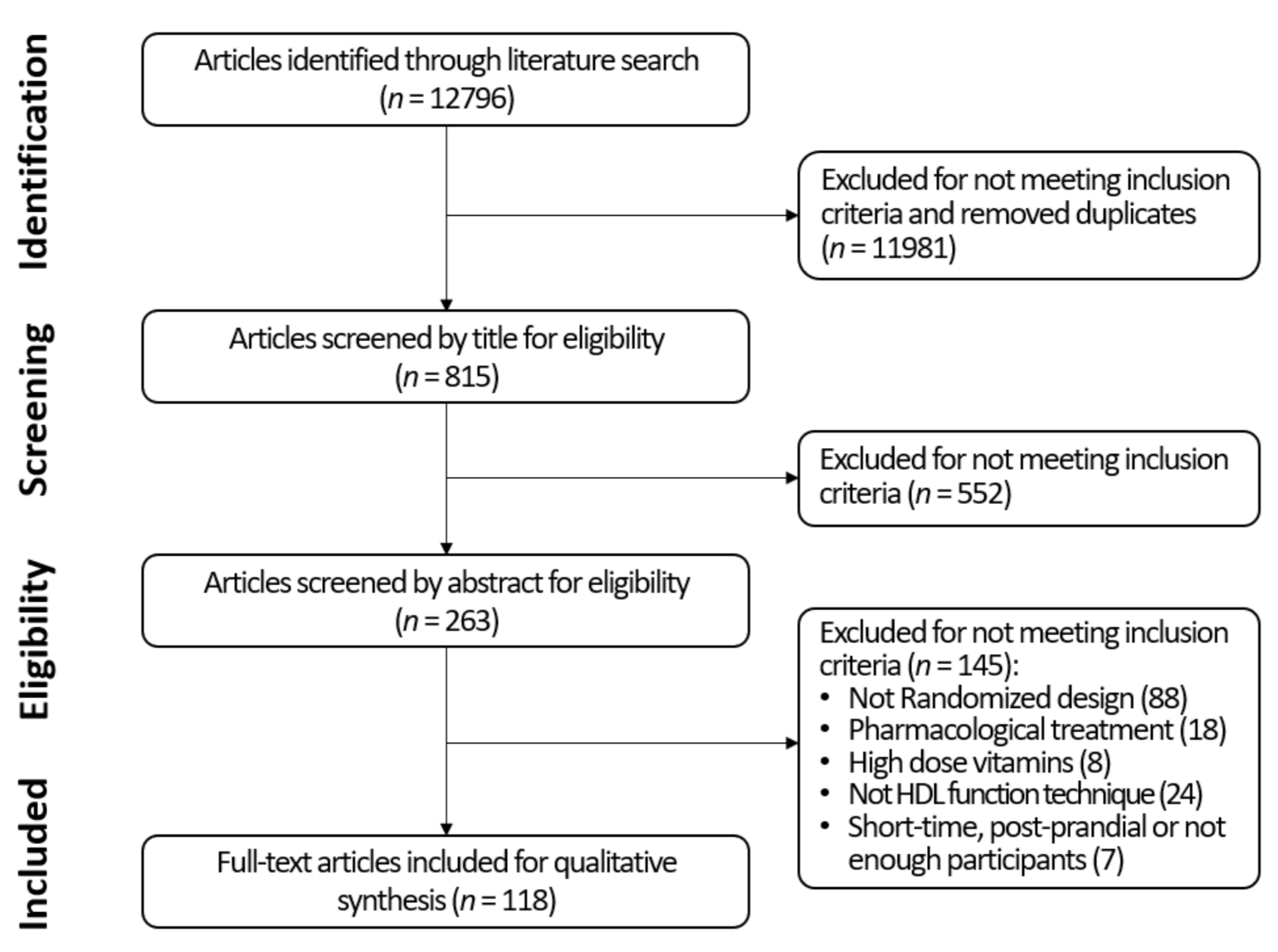
3.1. Study Selection and Description
3.2. Characteristics of Studies Included
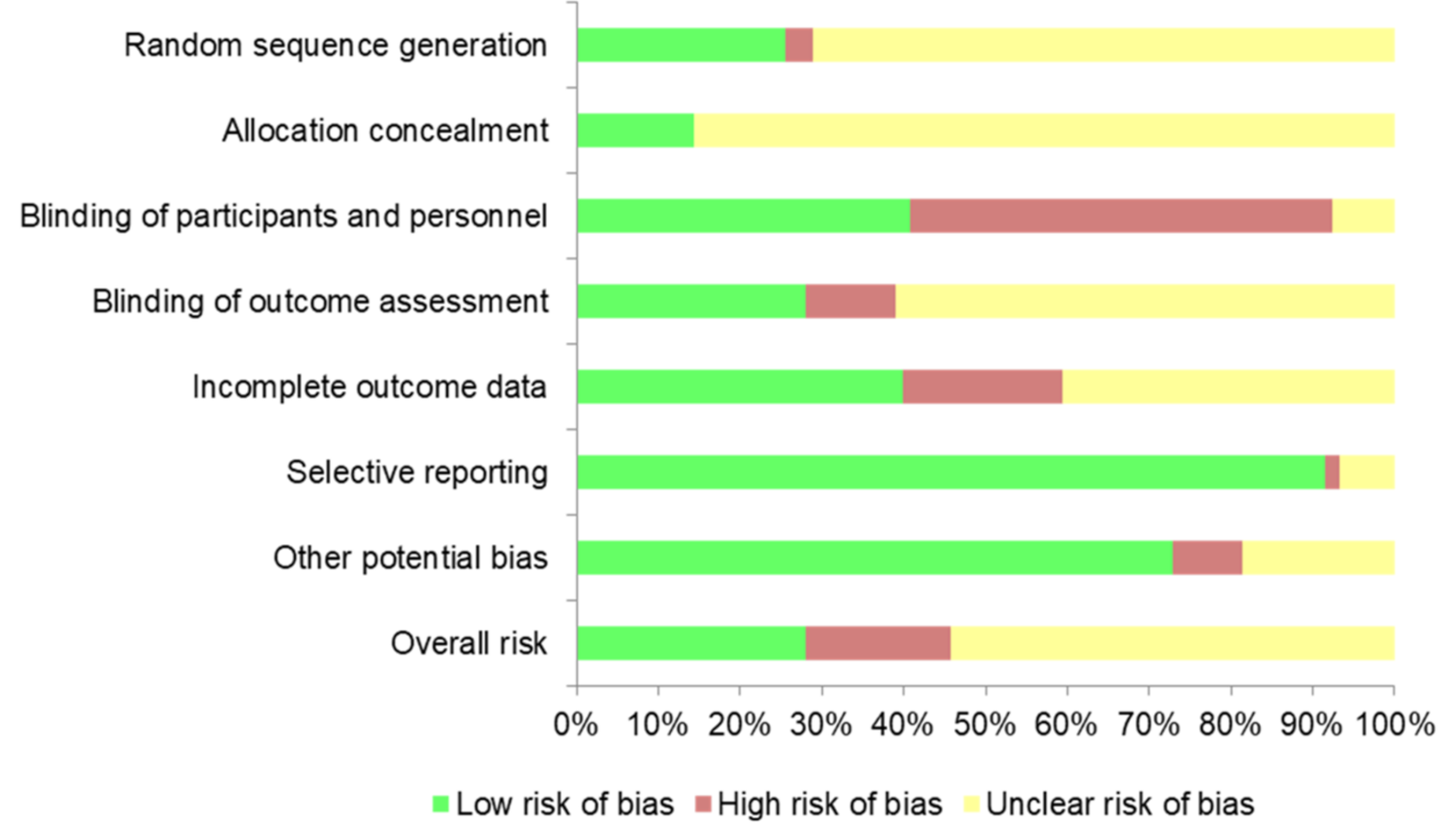
3.3. Quality Assessment
3.4. Dietary Lipids and HDL Function
3.4.1. Monounsaturated Fatty Acids (MUFA): Oleic-Acid-Rich Oils
3.4.2. Polyunsaturated Fatty Acids: Vegetable Oils and Nuts
3.4.3. Polyunsaturated Fatty Acids: Fish, Eicosapentaenoic and Docosahexaenoic Acids (EPA, DHA)
3.4.4. Saturated (SFA) and Trans Fatty Acids (TFA)
3.4.5. Dietary Cholesterol
3.5. Antioxidants and HDL Function
3.5.1. Antioxidant Nutrients and Antioxidant-Rich Foods
3.5.2. Antioxidant-Rich Dietary Patterns
3.6. Ethanol and HDL Function
3.7. Physical Activity, Calorie Restriction, and HDL Function
3.8. Other Lifestyle Interventions
4. Discussion
5. Conclusions
Supplementary Materials
Author Contributions
Funding
Conflicts of Interest
References
- Boekholdt, S.M.; Arsenault, B.J.; Hovingh, G.K.; Mora, S.; Pedersen, T.R.; LaRosa, J.C.; Welch, K.M.A.; Amarenco, P.; DeMicco, D.A.; Tonkin, A.M.; et al. Levels and changes of HDL cholesterol and apolipoprotein A-I in relation to risk of cardiovascular events among statin-treated patients. Circulation 2013, 128, 1504–1512. [Google Scholar] [CrossRef] [PubMed]
- Di Angelantonio, E.; Sarwar, N.; Perry, P.; Kaptoge, S.; Ray, K.K.; Thompson, A.; Wood, A.M.; Lewington, S.; Sattar, N.; Packard, C.J.; et al. Major lipids, apolipoproteins, and risk of vascular disease. J. Am. Med. Assoc. 2009, 302, 1993–2000. [Google Scholar]
- Keene, D.; Price, C.; Shun-Shin, M.J.; Francis, D.P. Effect on cardiovascular risk of high density lipoprotein targeted drug treatments niacin, fibrates, and CETP inhibitors: Meta-analysis of randomised controlled trials including 117,411 patients. BMJ 2014, 349, g4379. [Google Scholar] [CrossRef]
- Holmes, M.V.; Asselbergs, F.W.; Palmer, T.M.; Drenos, F.; Lanktree, M.B.; Nelson, C.P.; Dale, C.E.; Padmanabhan, S.; Finan, C.; Swerdlow, D.I.; et al. Mendelian randomization of blood lipids for coronary heart disease. Eur. Heart J. 2015, 36, 539–550. [Google Scholar] [CrossRef] [PubMed]
- Voight, B.F.; Peloso, G.M.; Orho-Melander, M.; Frikke-Schmidt, R.; Barbalic, M.; Jensen, M.K.; Hindy, G.; Hólm, H.; Ding, E.L.; Johnson, T.; et al. Plasma HDL cholesterol and risk of myocardial infarction: A mendelian randomisation study. Lancet 2012, 380, 572–580. [Google Scholar] [CrossRef]
- Prats-Uribe, A.; Sayols-Baixeras, S.; Fernández-Sanlés, A.; Subirana, I.; Carreras-Torres, R.; Vilahur, G.; Civeira, F.; Marrugat, J.; Fitó, M.; Hernáez, Á.; et al. High-density lipoprotein characteristics and coronary artery disease: A Mendelian randomization study. Metabolism 2020, 112, 154351. [Google Scholar] [CrossRef]
- Soria-Florido, M.T.; Schröder, H.; Grau, M.; Fitó, M.; Lassale, C. High density lipoprotein functionality and cardiovascular events and mortality: A systematic review and meta-analysis. Atherosclerosis 2020, 302, 36–42. [Google Scholar] [CrossRef]
- Talbot, C.P.J.; Plat, J.; Ritsch, A.; Mensink, R.P. Determinants of cholesterol efflux capacity in humans. Prog. Lipid Res. 2018, 69, 21–32. [Google Scholar] [CrossRef]
- Brites, F.; Martin, M.; Guillas, I.; Kontush, A. Antioxidative activity of high-density lipoprotein (HDL): Mechanistic insights into potential clinical benefit. BBA Clin. 2017, 8, 66–77. [Google Scholar] [CrossRef] [PubMed]
- Navab, M.; Hama, S.Y.; Hough, G.P.; Subbanagounder, G.; Reddy, S.T.; Fogelman, A.M. A Cell-Free Assay for Detecting HDL That is Dysfunctional in Preventing the Formation of or Inactivating Oxidized Phospholipids. J. Lipid Res. 2001, 42, 1308–1317. [Google Scholar] [CrossRef]
- Rosenson, R.S.; Brewer, H.B.; Ansell, B.J.; Barter, P.; Chapman, M.J.; Heinecke, J.W.; Kontush, A.; Tall, A.R.; Webb, N.R. Dysfunctional HDL and atherosclerotic cardiovascular disease. Nat. Rev. Cardiol. 2016, 13, 48–60. [Google Scholar] [CrossRef]
- Besler, C.; Lüscher, T.F.; Landmesser, U. Molecular mechanisms of vascular effects of High-density lipoprotein: Alterations in cardiovascular disease. EMBO Mol. Med. 2012, 4, 251–268. [Google Scholar] [CrossRef]
- Birner-Gruenberger, R.; Schittmayer, M.; Holzer, M.; Marsche, G. Understanding high-density lipoprotein function in disease: Recent advances in proteomics unravel the complexity of its composition and biology. Prog. Lipid Res. 2014, 56, 36–46. [Google Scholar] [CrossRef] [PubMed]
- Soria-Florido, M.T.; Castañer, O.; Lassale, C.; Estruch, R.; Salas-Salvadó, J.; Martínez-González, M.Á.; Corella, D.; Ros, E.; Arós, F.; Elosua, R.; et al. Dysfunctional high-density lipoproteins are associated with a greater incidence of acute coronary syndrome in a population at high cardiovascular risk: A nested case-control study. Circulation 2020, 141, 444–453. [Google Scholar] [CrossRef]
- Khera, A.V.; Demler, O.V.; Adelman, S.J.; Collins, H.L.; Glynn, R.J.; Ridker, P.M.; Rader, D.J.; Mora, S. Cholesterol efflux capacity, high-density lipoprotein particle number, and incident cardiovascular events. Circulation 2017, 135, 2494–2504. [Google Scholar] [CrossRef] [PubMed]
- Sanllorente, A.; Castañer, O.; Lassale, C.; Almanza-Aguilera, E.; Elosua, R.; Vila, J.; Soldado, M.; Blanchart, G.; Muñoz-Aguayo, D.; Subirana, I.; et al. High-density lipoprotein functional traits and coronary artery disease in a general population: A case–cohort study. Eur. J. Prev. Cardiol. 2021. [Google Scholar] [CrossRef] [PubMed]
- Higgins, J.P.T.; Altman, D.G.; Gøtzsche, P.C.; Jüni, P.; Moher, D.; Oxman, A.D.; Savović, J.; Schulz, K.F.; Weeks, L.; Sterne, J.A.C. The cochrane collaboration’s tool for assessing risk of bias in randomised trials. BMJ 2011, 343. [Google Scholar] [CrossRef]
- Albaghdadi, M.S.; Wang, Z.; Gao, Y.; Mutharasan, R.K.; Wilkins, J. High-density lipoprotein subfractions and cholesterol efflux capacity are not affected by supervised exercise but are associated with baseline interleukin-6 in patients with peripheral artery disease. Front. Cardiovasc. Med. 2017, 4, 9. [Google Scholar] [CrossRef] [PubMed]
- Hernaez, A.; Castañer, O.; Elosua, R.; Pinto, X.; Estruch, R.R.; Salas-Salvado, J.; Corella, D.; Aros, F.; Serra-Majem, L.; Fiol, M.; et al. Mediterranean diet improves high-density lipoprotein function in high-cardiovascular-risk individuals: A randomized controlled trial. Circulation 2017, 135, 633–643. [Google Scholar] [CrossRef]
- Sarzynski, M.A.; Ruiz-Ramie, J.J.; Barber, J.L.; Slentz, C.A.; Apolzan, J.W.; McGarrah, R.W.; Harris, M.N.; Church, T.S.; Borja, M.S.; He, Y.; et al. Effects of increasing exercise intensity and dose on multiple measures of HDL (high-density lipoprotein) function. Arterioscler. Thromb. Vasc. Biol. 2018, 38, 943–952. [Google Scholar] [CrossRef]
- Hernáez, Á.; Castañer, O.; Tresserra-Rimbau, A.; Pintó, X.; Fitó, M.; Casas, R.; Martínez-González, M.Á.; Corella, D.; Salas-Salvadó, J.; Lapetra, J.; et al. Mediterranean diet and atherothrombosis biomarkers: A randomized controlled trial. Mol. Nutr. Food Res. 2020, 64, 2000350. [Google Scholar] [CrossRef] [PubMed]
- Tiainen, S.; Luoto, R.; Ahotupa, M.; Raitanen, J.; Vasankari, T. 6-mo aerobic exercise intervention enhances the lipid peroxide transport function of HDL. Free Radic. Res. 2016, 50, 1279–1285. [Google Scholar] [CrossRef]
- Wesnigk, J.; Bruyndonckx, L.; Hoymans, V.Y.; De Guchtenaere, A.; Fischer, T.; Schuler, G.; Vrints, C.J.; Adams, V. Impact of lifestyle intervention on HDL-induced eNOS activation and cholesterol efflux capacity in obese adolescent. Cardiol. Res. Pract. 2016, 2016, 2820432. [Google Scholar] [CrossRef] [PubMed]
- Wu, P.-T.; Fitschen, P.J.; Kistler, B.M.; Jeong, J.H.; Chung, H.R.; Aviram, M.; Phillips, S.A.; Fernhall, B.; Wilund, K.R. Effects of pomegranate extract supplementation on cardiovascular risk factors and physical function in hemodialysis patients. J. Med. Food 2015, 18, 941–949. [Google Scholar] [CrossRef]
- Zhu, Y.; Huang, X.; Zhang, Y.; Wang, Y.; Liu, Y.; Sun, R.; Xia, M. Anthocyanin supplementation improves HDL-associated paraoxonase 1 activity and enhances cholesterol efflux capacity in subjects with hypercholesterolemia. J. Clin. Endocrinol. Metab. 2014, 99, 561–569. [Google Scholar] [CrossRef] [PubMed]
- Arnett, D.K.; Blumenthal, R.S.; Albert, M.A.; Buroker, A.B.; Goldberger, Z.D.; Hahn, E.J.; Himmelfarb, C.D.; Khera, A.; Lloyd-Jones, D.; McEvoy, J.W.; et al. 2019 ACC/AHA guideline on the primary prevention of cardiovascular disease: A report of the american college of cardiology/American Heart Association Task Force on clinical practice guidelines. Circulation 2019, 140, e596–e646. [Google Scholar] [CrossRef] [PubMed]
- Williams, P.T.; Albers, J.J.; Krauss, R.M.; Wood, P.D.S. Associations of lecithin: Cholesterol acyltransferase (LCAT) mass concentrations with exercise, weight loss, and plasma lipoprotein subfraction concentrations in men. Atherosclerosis 1990, 82, 53–58. [Google Scholar] [CrossRef]
- Damasceno, N.R.T.; Sala-Vila, A.; Cofán, M.; Pérez-Heras, A.M.; Fitó, M.; Ruiz-Gutiérrez, V.; Martínez-González, M.Á.; Corella, D.; Arós, F.; Estruch, R.; et al. Mediterranean diet supplemented with nuts reduces waist circumference and shifts lipoprotein subfractions to a less atherogenic pattern in subjects at high cardiovascular risk. Atherosclerosis 2013, 230, 347–353. [Google Scholar] [CrossRef]
- Liu, X.; Garban, J.; Jones, P.J.; Heuvel, J.V.; Lamarche, B.; Jenkins, D.J.; Connelly, P.W.; Couture, P.; Pu, S.; Fleming, J.A.; et al. Diets low in saturated fat with different unsaturated fatty acid profiles similarly increase serum-mediated cholesterol efflux from THP-1 macrophages in a population with or at risk for metabolic syndrome: The canola oil multicenter intervention trial. J. Nutr. 2018, 148, 721–728. [Google Scholar] [CrossRef] [PubMed]
- Homma, Y.; Ikeda, I.; Ishikawa, T.; Tateno, M.; Sugano, M.; Nakamura, H. Decrease in plasma low-density lipoprotein cholesterol, apolipoprotein B, cholesteryl ester transfer protein, and oxidized low-density lipoprotein by plant stanol ester-containing spread: A randomized, placebo-controlled trial. Nutrition 2003, 19, 369–374. [Google Scholar] [CrossRef]
- Qin, Y.; Xia, M.; Ma, J.; Hao, Y.; Liu, J.; Mou, H.; Cao, L.; Ling, W. Anthocyanin supplementation improves serum LDL-and HDL-cholesterol concentrations associated with the inhibition of cholesteryl ester transfer protein in dyslipidemic subjects. Am. J. Clin. Nutr. 2009, 90, 485–492. [Google Scholar] [CrossRef]
- Balsan, G.; Pellanda, L.C.; Sausen, G.; Galarraga, T.; Zaffari, D.; Pontin, B.; Portal, V.L. Effect of yerba mate and green tea on paraoxonase and leptin levels in patients affected by overweight or obesity and dyslipidemia: A randomized clinical trial. Nutr. J. 2019, 18, 5. [Google Scholar] [CrossRef]
- Brassard, D.; Arsenault, B.J.; Boyer, M.; Bernic, D.; Tessier-Grenier, M.; Talbot, D.; Tremblay, A.; Levy, E.; Asztalos, B.; Jones, P.J.H.; et al. Saturated fats from butter but not from cheese increase HDL-Mediated cholesterol efflux capacity from J774 macrophages in men and women with abdominal obesity. J. Nutr. 2018, 148, 573–580. [Google Scholar] [CrossRef] [PubMed]
- Solà, R.; La Ville, A.E.; Richard, J.L.; Motta, C.; Bargalló, M.T.; Girona, J.; Masana, L.; Jacotot, B. Oleic acid rich diet protects against the oxidative modification of high density lipoprotein. Free Radic. Biol. Med. 1997, 22, 1037–1045. [Google Scholar] [CrossRef]
- Lagrost, L.; Mensink, R.P.; Guyard-Dangremont, V.; Temme, E.H.M.; Desrumaux, C.; Athias, A.; Hornstra, G.; Gambert, P. Variations in serum cholesteryl ester transfer and phospholipid transfer activities in healthy women and men consuming diets enriched in lauric, palmitic or oleic acids. Atherosclerosis 1999, 142, 395–402. [Google Scholar] [CrossRef]
- Vega-López, S.; Ausman, L.M.; Jalbert, S.M.; Erkkilä, A.T.; Lichtenstein, A.H. Palm and partially hydrogenated soybean oils adversely alter lipoprotein profiles compared with soybean and canola oils in moderately hyperlipidemic subjects. Am. J. Clin. Nutr. 2006, 84, 54–62. [Google Scholar] [CrossRef] [PubMed]
- Baudet, M.F.; Jacotot, B. Dietary fats and lecithin-cholesterol acyltransferase activity in healthy humans. Ann. Nutr. Metab. 1988, 32, 352–359. [Google Scholar] [CrossRef] [PubMed]
- Singer, P.; Jaeger, W.; Berger, I.; Barleben, H.; Wirth, M.; Richter-Heinrich, E.; Voigt, S.; Gödicke, W. Effects of dietary oleic, linoleic and alpha-linolenic acids on blood pressure, serum lipids, lipoproteins and the formation of eicosanoid precursors in patients with mild essential hypertension. J. Hum. Hypertens. 1990, 4, 227–233. [Google Scholar]
- Andraski, A.B.; Singh, S.A.; Lee, L.H.; Higashi, H.; Smith, N.; Zhang, B.; Aikawa, M.; Sacks, F.M. Effects of replacing dietary monounsaturated fat with carbohydrate on HDL (high-density lipoprotein) protein metabolism and proteome composition in humans. Arterioscler. Thromb. Vasc. Biol. 2019, 39, 2411–2430. [Google Scholar] [CrossRef] [PubMed]
- Stirban, A.; Nandrean, S.; Götting, C.; Stratmann, B.; Tschoepe, D. Effects of n-3 polyunsaturated fatty acids (PUFAs) on circulating adiponectin and leptin in subjects with type 2 diabetes mellitus. Horm. Metab. Res. 2014, 46, 490–492. [Google Scholar] [CrossRef] [PubMed]
- Berryman, C.E.; Fleming, J.A.; Kris-Etherton, P.M. Inclusion of almonds in a cholesterol-lowering diet improves plasma HDL subspecies and cholesterol efflux to serum in normal-weight individuals with elevated LDL cholesterol. J. Nutr. 2017, 147, 1517–1523. [Google Scholar] [CrossRef] [PubMed]
- Holligan, S.D.; West, S.G.; Gebauer, S.K.; Kay, C.D.; Kris-Etherton, P.M. A moderate-fat diet containing pistachios improves emerging markers of cardiometabolic syndrome in healthy adults with elevated LDL levels. Br. J. Nutr. 2014, 112, 744–752. [Google Scholar] [CrossRef] [PubMed]
- Tindall, A.M.; Kris-Etherton, P.M.; Petersen, K.S. Replacing saturated fats with unsaturated fats from walnuts or vegetable oils lowers atherogenic lipoprotein classes without increasing lipoprotein(a). J. Nutr. 2020, 150, 818–825. [Google Scholar] [CrossRef] [PubMed]
- Buonacorso, V.; Nakandakare, E.R.; Nunes, V.S.; Passarelli, M.; Quintão, E.C.R.; Lottenberg, A.M.P. Macrophage cholesterol efflux elicited by human total plasma and by HDL subfractions is not affected by different types of dietary fatty acids. Am. J. Clin. Nutr. 2007, 86, 1270–1277. [Google Scholar] [CrossRef] [PubMed]
- Kralova Lesna, I.; Suchanek, P.; Kovar, J.; Stavek, P.; Poledne, R. Replacement of dietary saturated FAs by PUFAs in diet and reverse cholesterol transport. J. Lipid Res. 2008, 49, 2414–2418. [Google Scholar] [CrossRef] [PubMed]
- Kawakami, Y.; Yamanaka-Okumura, H.; Naniwa-Kuroki, Y.; Sakuma, M.; Taketani, Y.; Takeda, E. Flaxseed oil intake reduces serum small dense low-density lipoprotein concentrations in Japanese men: A randomized, double blind, crossover study. Nutr. J. 2015, 14, 39. [Google Scholar] [CrossRef] [PubMed]
- Cox, C.; Mann, J.; Sutherland, W.; Chisholm, A.; Skeaff, M. Effects of coconut oil, butter, and safflower oil on lipids and lipoproteins in persons with moderately elevated cholesterol levels. J. Lipid Res. 1995, 36, 1787–1795. [Google Scholar] [CrossRef]
- Van Tol, A.; Zock, P.L.; van Gent, T.; Scheek, L.M.; Katan, M.B. Dietary trans fatty acids increase serum cholesterylester transfer protein activity in man. Atherosclerosis 1995, 115, 129–134. [Google Scholar] [CrossRef]
- De Souza, R.G.M.; Gomes, A.C.; de Castro, I.A.; Mota, J.F. A baru almond–enriched diet reduces abdominal adiposity and improves high-density lipoprotein concentrations: A randomized, placebo-controlled trial. Nutrition 2018, 55, 154–160. [Google Scholar] [CrossRef]
- Gebauer, S.K.; West, S.G.; Kay, C.D.; Alaupovic, P.; Bagshaw, D.; Kris-Etherton, P.M. Effects of pistachios on cardiovascular disease risk factors and potential mechanisms of action: A dose-response study. Am. J. Clin. Nutr. 2008, 88, 651–659. [Google Scholar] [CrossRef]
- Chung, B.H.; Cho, B.H.S.; Liang, P.; Doran, S.; Osterlund, L.; Oster, R.A.; Darnell, B.; Franklin, F. Contribution of postprandial lipemia to the dietary fat-mediated changes in endogenous lipoprotein-cholesterol concentrations in humans. Am. J. Clin. Nutr. 2004, 80, 1145–1158. [Google Scholar] [CrossRef][Green Version]
- Lottenberg, A.M.P.; Nunes, V.S.; Lottenberg, S.A.; Shimabukuro, A.F.M.; Carrilho, A.J.F.; Malagutti, S.; Nakandakare, E.R.; McPherson, R.; Quintão, E.C.R. Plasma cholesteryl ester synthesis, cholesteryl ester transfer protein concentration and activity in hypercholesterolemic women: Effects of the degree of saturation of dietary fatty acids in the fasting and postprandial states. Atherosclerosis 1996, 126, 265–275. [Google Scholar] [CrossRef]
- Abbey, M.; Clifton, P.; Kestin, M.; Belling, B.; Nestel, P. Effect of fish oil on lipoproteins, lecithin: Cholesterol Acyltransferase, and lipid Transfer Protein Activity in Humans. Arteriosclerosis 1989, 10, 85–94. [Google Scholar] [CrossRef] [PubMed]
- Sánchez-Muniz, F.J.; Canales, A.; Nus, M.; Bastida, S.; Guillén, M.; Corella, D.; Olmedilla-Alonso, B.; Granado-Lorencio, F.; Benedí, J. The antioxidant status response to low-fat and walnut paste-enriched meat differs in volunteers at high cardiovascular Risk carrying different PON-1 polymorphisms. J. Am. Coll. Nutr. 2012, 31, 194–205. [Google Scholar] [CrossRef] [PubMed]
- Canales, A.; Sánchez-Muniz, F.J.; Bastida, S.; Librelotto, J.; Nus, M.; Corella, D.; Guillen, M.; Benedi, J. Effect of walnut-enriched meat on the relationship between VCAM, ICAM, and LTB4 levels and PON-1 activity in ApoA4 360 and PON-1 allele carriers at increased cardiovascular risk. Eur. J. Clin. Nutr. 2011, 65, 703–710. [Google Scholar] [CrossRef] [PubMed]
- Canales, A.; Benedí, J.; Nus, M.; Librelotto, J.; Sánchez-Montero, J.M.; Sánchez-Muniz, F.J. Effect of walnut-enriched restructured meat in the antioxidant status of overweight/obese senior subjects with at least one extra chd-risk factor. J. Am. Coll. Nutr. 2007, 26, 225–232. [Google Scholar] [CrossRef] [PubMed]
- Pfeuffer, M.; Fielitz, K.; Laue, C.; Winkler, P.; Rubin, D.; Helwig, U.; Giller, K.; Kammann, J.; Schwedhelm, E.; Böger, R.H.; et al. CLA does not impair endothelial function and decreases body weight as compared with safflower oil in overweight and obese male subjects. J. Am. Coll. Nutr. 2011, 30, 19–28. [Google Scholar] [CrossRef] [PubMed]
- Manninen, S.; Lankinen, M.; Erkkilä, A.; Nguyen, S.D.; Ruuth, M.; de Mello, V.; Öörni, K.; Schwab, U. The effect of intakes of fish and Camelina sativa oil on atherogenic and anti-atherogenic functions of LDL and HDL particles: A randomized controlled trial. Atherosclerosis 2019, 281, 56–61. [Google Scholar] [CrossRef] [PubMed]
- Calabresi, L.; Villa, B.; Canavesi, M.; Sirtori, C.R.; James, R.W.; Bernini, F.; Franceschini, G. An omega-3 polyunsaturated fatty acid concentrate increases plasma high-density lipoprotein 2 cholesterol and paraoxonase levels in patients with familial combined hyperlipidemia. Metab. Clin. Exp. 2004, 53, 153–158. [Google Scholar] [CrossRef]
- Pownall, H.J.; Brauchi, D.; Kilinç, C.; Osmundsen, K.; Pao, Q.; Payton-Ross, C.; Gotto, A.M.; Ballantyne, C.M. Correlation of serum triglyceride and its reduction by ω-3 fatty acids with lipid transfer activity and the neutral lipid compositions of high- density and low-density lipoproteins. Atherosclerosis 1999, 143, 285–297. [Google Scholar] [CrossRef]
- Lambert, C.; Cubedo, J.; Padró, T.; Sánchez-Hernández, J.; Antonijoan, R.M.; Perez, A.; Badimon, L. Phytosterols and omega 3 supplementation exert novel regulatory effects on metabolic and inflammatory pathways: A proteomic study. Nutrients 2017, 9, 599. [Google Scholar] [CrossRef] [PubMed]
- Ghorbanihaghjo, A.; Kolahi, S.; Seifirad, S.; Rashtchizadeh, N.; Argani, H.; Hajialilo, M.; Khabazi, A.; Alizadeh, S.; Bahreini, E. Effect of fish oil supplements on serum paraoxonase activity in female patients with rheumatoid arthritis: A double-blind randomized controlled trial. Arch. Iran. Med. 2012, 15, 549–552. [Google Scholar] [PubMed]
- Golzari, M.H.; Hosseini, S.; Koohdani, F.; Yaraghi, A.A.S.; Javanbakht, M.H.; Mohammadzadeh-Honarvar, N.; Djalali, M. The effect of eicosapentaenoic acid on the serum levels and enzymatic activity of paraoxonase 1 in the patients with type 2 diabetes mellitus. Acta Med. Iran. 2017, 55, 486–495. [Google Scholar]
- Shidfar, F.; Amani, S.; Vafa, M.; Shekarriz, R.; Hosseini, S.; Shidfar, S.; Eshraghian, M.; Mousavi, S.N. Effects of iron supplementation with and without docosahexaenoic acid on the cardiovascular disease risk based on paraoxonase-1, hs-CRP, and ApoB/ApoA-I ratio in women with iron deficiency anemia. Biol. Trace Elem. Res. 2016, 169, 34–40. [Google Scholar] [CrossRef] [PubMed]
- Wurm, R.; Schrutka, L.; Hammer, A.; Moertl, D.; Berger, R.; Pavo, N.; Lang, I.M.; Goliasch, G.; Huelsmann, M.; Distelmaier, K. Polyunsaturated fatty acids supplementation impairs anti-oxidant high-density lipoprotein function in heart failure. Eur. J. Clin. Investig. 2018, 48, e12998. [Google Scholar] [CrossRef]
- Schwab, U.S.; Niskanen, L.K.; Maliranta, H.M.; Savolainen, M.J.; Kesaniemi, Y.A.; Uusitupa, M.I.J. Lauric and palmitic acid-enriched diets have minimal impact on serum lipid and lipoprotein concentrations and glucose metabolism in healthy young women. J. Nutr. 1995, 125, 466–473. [Google Scholar] [PubMed]
- Tholstrup, T.; Ehnholm, C.; Jauhiainen, M.; Petersen, M.; Høy, C.-E.; Lund, P.; Sandström, B. Effects of medium-chain fatty acids and oleic acid on blood lipids, lipoproteins, glucose, insulin, and lipid transfer protein activities. Am. J. Clin. Nutr. 2004, 79, 564–569. [Google Scholar] [CrossRef]
- Lichtenstein, A.H.; Jauhiainen, M.; McGladdery, S.; Ausman, L.M.; Jalbert, S.M.; Vilella-Bach, M.; Ehnholm, C.; Frohlich, J.; Schaefer, E.J. Impact of hydrogenated fat on high density lipoprotein subfractions and metabolism. J. Lipid Res. 2001, 42, 597–604. [Google Scholar] [CrossRef]
- Matthan, N.R.; Cianflone, K.; Lichtenstein, A.H.; Ausman, L.M.; Jauhiainen, M.; Jones, P.J. Hydrogenated fat consumption affects acylation-stimulating protein levels and cholesterol esterification rates in moderately hypercholesterolemic women. J. Lipid Res. 2001, 42, 1841–1848. [Google Scholar] [CrossRef]
- Vega-López, S.; Matthan, N.R.; Ausman, L.M.; Ai, M.; Otokozawa, S.; Schaefer, E.J.; Lichtenstein, A.H. Substitution of vegetable oil for a partially-hydrogenated fat favorably alters cardiovascular disease risk factors in moderately hypercholesterolemic postmenopausal women. Atherosclerosis 2009, 207, 208–212. [Google Scholar] [CrossRef][Green Version]
- Chardigny, J.M.; Destaillats, F.; Malpuech-Brugère, C.; Moulin, J.; Bauman, D.E.; Lock, A.L.; Barbano, D.M.; Mensink, R.P.; Bezelgues, J.B.; Chaumont, P.; et al. Do trans fatty acids from industrially produced sources and from natural sources have the same effect on cardiovascular disease risk factors in healthy subjects? Results of the trans fatty acids collaboration (TRANSFACT) study. Am. J. Clin. Nutr. 2008, 87, 558–566. [Google Scholar] [CrossRef] [PubMed]
- De Roos, N.M.; Schouten, E.G.; Scheek, L.M.; Van Tol, A.; Katan, M.B. Replacement of dietary saturated fat with trans fat reduces serum paraoxonase activity in healthy men and women. Metabolism 2002, 51, 1534–1537. [Google Scholar] [CrossRef] [PubMed]
- Blanco-Molina, A.; Castro, G.; Martín-Escalante, D.; Bravo, D.; López-Miranda, J.; Castro, P.; López-Segura, F.; Fruchart, J.C.; Ordovás, J.M.; Pérez-Jiménez, F. Effects of different dietary cholesterol concentrations on lipoprotein plasma concentrations and on cholesterol efflux from Fu5AH cells. Am. J. Clin. Nutr. 1998, 68, 1028–1033. [Google Scholar] [CrossRef] [PubMed]
- Sawrey-Kubicek, L.; Zhu, C.; Bardagjy, A.S.; Rhodes, C.H.; Sacchi, R.; Randolph, J.M.; Steinberg, F.M.; Zivkovic, A.M. Whole egg consumption compared with yolk-free egg increases the cholesterol efflux capacity of high-density lipoproteins in overweight, postmenopausal women. Am. J. Clin. Nutr. 2019, 110, 617–627. [Google Scholar] [CrossRef] [PubMed]
- Andersen, C.J.; Blesso, C.N.; Lee, J.; Barona, J.; Shah, D.; Thomas, M.J.; Fernandez, M.L. Egg consumption modulates HDL lipid composition and increases the cholesterol-accepting capacity of serum in metabolic syndrome. Lipids 2013, 48, 557–567. [Google Scholar] [CrossRef]
- Herron, K.L.; Vega-Lopez, S.; Conde, K.; Ramjiganesh, T.; Roy, S.; Shachter, N.S.; Fernandez, M.L. Pre-menopausal women, classified as hypo-or hyper-responders, do not alter their LDL/HDL ratio following a high dietary Cholesterol challenge. J. Am. Coll. Nutr. 2002, 21, 250–258. [Google Scholar] [CrossRef]
- Herron, K.L.; Vega-Lopez, S.; Conde, K.; Ramjiganesh, T.; Shachter, N.S.; Fernandez, M.L. Men classified as hypo-or hyperresponders to dietary cholesterol feeding exhibit differences in lipoprotein metabolism. J. Nutr. 2003, 133, 1036–1042. [Google Scholar] [CrossRef]
- Herron, K.L.; Lofgren, I.E.; Sharman, M.; Volek, J.S.; Fernandez, M.L. High intake of cholesterol results in less atherogenic low-density lipoprotein particles in men and women independent of response classification. Metabolism 2004, 53, 823–830. [Google Scholar] [CrossRef]
- Martin, L.J.; Connelly, P.W.; Nancoo, D.; Wood, N.; Zhang, Z.J.; Maguire, G.; Quinet, E.; Tall, A.R.; Marcel, Y.L.; McPherson, R. Cholesteryl ester transfer protein and high density lipoprotein responses to cholesterol feeding in men: Relationship to apolipoprotein E genotype. J. Lipid Res. 1993, 34, 437–446. [Google Scholar] [CrossRef]
- Ginsberg, H.N.; Karmally, W.; Siddiqui, M.; Holleran, S.; Tall, A.R.; Rumsey, S.C.; Deckelbaum, R.J.; Blaner, W.S.; Ramakrishnan, R. A dose-response study of the effects of dietary cholesterol on fasting and postprandial lipid and lipoprotein metabolism in healthy young men. Arterioscler. Thromb. Vasc. Biol. 1994, 14, 576–586. [Google Scholar] [CrossRef]
- Ginsberg, H.N.; Karmally, W.; Siddiqui, M.; Holleran, S.; Tall, A.R.; Blaner, W.S.; Ramakrishnan, R. Increases in dietary cholesterol are associated with modest increases in both LDL and HDL cholesterol in healthy young women. Arterioscler. Thromb. Vasc. Biol. 1995, 15, 169–178. [Google Scholar] [CrossRef]
- Blesso, C.N.; Andersen, C.J.; Barona, J.; Volek, J.S.; Fernandez, M.L. Whole egg consumption improves lipoprotein profiles and insulin sensitivity to a greater extent than yolk-free egg substitute in individuals with metabolic syndrome. Metabolism 2013, 62, 400–410. [Google Scholar] [CrossRef] [PubMed]
- Missimer, A.; Fernandez, M.L.; DiMarco, D.M.; Norris, G.H.; Blesso, C.N.; Murillo, A.G.; Vergara-Jimenez, M.; Lemos, B.S.; Medina-Vera, I.; Malysheva, O.V.; et al. Compared to an oatmeal breakfast, two eggs/day increased plasma carotenoids and choline without increasing trimethyl amine n-oxide concentrations. J. Am. Coll. Nutr. 2018, 37, 140–148. [Google Scholar] [CrossRef] [PubMed]
- Waters, D.; Clark, R.M.; Greene, C.M.; Contois, J.H.; Fernandez, M.L. Change in plasma lutein after egg consumption is positively associated with plasma cholesterol and lipoprotein size but negatively correlated with body size in postmenopausal women. J. Nutr. 2007, 137, 959–963. [Google Scholar] [CrossRef] [PubMed]
- Vorster, H.H.; Benadé, A.J.; Barnard, H.C.; Locke, M.M.; Silvis, N.; Venter, C.S.; Smuts, C.M.; Engelbrecht, G.P.; Marais, M.P. Egg intake does not change plasma lipoprotein and coagulation profiles. Am. J. Clin. Nutr. 1992, 55, 400–410. [Google Scholar] [CrossRef]
- Mutungi, G.; Waters, D.; Ratliff, J.; Puglisi, M.; Clark, R.M.; Volek, J.S.; Fernandez, M.L. Eggs distinctly modulate plasma carotenoid and lipoprotein subclasses in adult men following a carbohydrate-restricted diet. J. Nutr. Biochem. 2010, 21, 261–267. [Google Scholar] [CrossRef]
- Morgantini, C.; Trifirò, S.; Tricò, D.; Meriwether, D.; Baldi, S.; Mengozzi, A.; Reddy, S.T.; Natali, A. A short-term increase in dietary cholesterol and fat intake affects high-density lipoprotein composition in healthy subjects. Nutr. Metab. Cardiovasc. Dis. 2018, 28, 575–581. [Google Scholar] [CrossRef]
- Hernáez, A.; Fernández-Castillejo, S.; Farràs, M.; Catalán, U.; Subirana, I.; Montes, R.; Solà, R.; Muñoz-Aguayo, D.; Gelabert-Gorgues, A.; Díaz-Gil, O.; et al. Olive oil polyphenols enhance high-density lipoprotein function in humans: A randomized controlled trial. Arterioscler. Thromb. Vasc. Biol. 2014, 34, 2115–2119. [Google Scholar] [CrossRef]
- Farràs, M.; Fernández-Castillejo, S.; Rubió, L.; Arranz, S.; Catalán, Ú.; Subirana, I.; Romero, M.P.; Castañer, O.; Pedret, A.; Blanchart, G.; et al. Phenol-enriched olive oils improve HDL antioxidant content in hypercholesterolemic subjects. A randomized, double-blind, cross-over, controlled trial. J. Nutr. Biochem. 2018, 51, 99–104. [Google Scholar] [CrossRef]
- Millar, C.L.; Duclos, Q.; Garcia, C.; Norris, G.H.; Lemos, B.S.; Dimarco, D.M.; Fernandez, M.L.; Blesso, C.N. Effects of freeze-dried grape powder on high-density lipoprotein function in adults with metabolic syndrome: A randomized controlled pilot study. Metab. Syndr. Relat. Disord. 2018, 16, 464–469. [Google Scholar] [CrossRef]
- McEneny, J.; Wade, L.; Young, I.S.; Masson, L.; Duthie, G.; McGinty, A.; McMaster, C.; Thies, F. Lycopene intervention reduces inflammation and improves HDL functionality in moderately overweight middle-aged individuals. J. Nutr. Biochem. 2013, 24, 163–168. [Google Scholar] [CrossRef]
- Zern, T.L.; Wood, R.J.; Greene, C.; West, K.L.; Liu, Y.; Aggarwal, D.; Shachter, N.S.; Fernandez, M.L. Grape polyphenols exert a cardioprotective effect in pre- and postmenopausal women by lowering plasma lipids and reducing oxidative stress. J. Nutr. 2005, 135, 1911–1917. [Google Scholar] [CrossRef]
- Puglisi, M.J.; Mutungi, G.; Brun, P.J.; McGrane, M.M.; Labonte, C.; Volek, J.S.; Fernandez, M.L. Raisins and walking alter appetite hormones and plasma lipids by modifications in lipoprotein metabolism and up-regulation of the low-density lipoprotein receptor. Metabolism 2009, 58, 120–128. [Google Scholar] [CrossRef]
- De Roos, B.; Van Tol, A.; Urgert, R.; Scheek, L.M.; Van Gent, T.; Buytenhek, R.; Princen, H.M.G.; Katan, M.B. Consumption of French-press coffee raises cholesteryl ester transfer protein activity levels before LDL cholesterol in normolipidaemic subjects. J. Intern. Med. 2000, 248, 211–216. [Google Scholar] [CrossRef] [PubMed]
- Farràs, M.; Castañer, O.; Martín-Peláez, S.; Hernáez, A.; Schröder, H.; Subirana, I.; Muñoz-Aguayo, D.; Gaixas, S.; Torre, R.D.L.; Farré, M.; et al. Complementary phenol-enriched olive oil improves HDL characteristics in hypercholesterolemic subjects. A randomized, double-blind, crossover, controlled trial. The VOHF study. Mol. Nutr. Food Res. 2015, 59, 1758–1770. [Google Scholar] [CrossRef] [PubMed]
- Freese, R.; Alfthan, G.; Jauhiainen, M.; Basu, S.; Erlund, I.; Salminen, I.; Aro, A.; Mutanen, M. High intakes of vegetables, berries, and apples combined with a high intake of linoleic or oleic acid only slightly affect markers of lipid peroxidation and lipoprotein metabolism in healthy subjects. Am. J. Clin. Nutr. 2002, 76, 950–960. [Google Scholar] [CrossRef] [PubMed]
- Van Tol, A.; Urgert, R.; de Jong-Caesar, R.; van Gent, T.; Scheek, L.M.; de Roos, B.; Katan, M.B. The cholesterol-raising diterpenes from coffee beans increase serum lipid transfer protein activity levels in humans. Atherosclerosis 1997, 132, 251–254. [Google Scholar] [CrossRef]
- Baralic, I.; Djordjevic, B.; Dikic, N.; Kotur-Stevuljevic, J.; Spasic, S.; Jelic-Ivanovic, Z.; Radivojevic, N.; Andjelkovic, M.; Pejic, S. Effect of astaxanthin supplementation on paraoxonase 1 activities and oxidative stress status in young soccer players. Phyther. Res. 2013, 27, 1536–1542. [Google Scholar] [CrossRef] [PubMed]
- Bub, A.; Barth, S.; Watzl, B.; Briviba, K.; Herbert, B.M.; Lührmann, P.M.; Neuhäuser-Berthold, M.; Rechkemmer, G. Paraoxonase 1 Q192R (PON1-192) polymorphism is associated with reduced lipid peroxidation in R-allele-carrier but not in QQ homozygous elderly subjects on a tomato-rich diet. Eur. J. Nutr. 2002, 41, 237–243. [Google Scholar] [CrossRef]
- Bub, A.; Barth, S.W.; Watzl, B.; Briviba, K.; Rechkemmer, G. Paraoxonase 1 Q192R (PON1-192) polymorphism is associated with reduced lipid peroxidation in healthy young men on a low-carotenoid diet supplemented with tomato juice. Br. J. Nutr. 2005, 93, 291. [Google Scholar] [CrossRef]
- Lazavi, F.; Mirmiran, P.; Sohrab, G.; Nikpayam, O.; Angoorani, P.; Hedayati, M. The barberry juice effects on metabolic factors and oxidative stress in patients with type 2 diabetes: A randomized clinical trial. Complement. Ther. Clin. Pract. 2018, 31, 170–174. [Google Scholar] [CrossRef]
- Cherki, M.; Derouiche, A.; Drissi, A.; El Messal, M.; Bamou, Y.; Idrissi-Ouadghiri, A.; Khalil, A.; Adlouni, A. Consumption of argan oil may have an antiatherogenic effect by improving paraoxonase activities and antioxidant status: Intervention study in healthy men. Nutr. Metab. Cardiovasc. Dis. 2005, 15, 352–360. [Google Scholar] [CrossRef] [PubMed]
- Fernández-Castillejo, S.; García-Heredia, A.-I.; Solà, R.; Camps, J.; López de la Hazas, M.-C.; Farràs, M.; Pedret, A.; Catalán, Ú.; Rubió, L.; Motilva, M.-J.; et al. Phenol-enriched olive oils modify paraoxonase-related variables: A randomized, crossover, controlled trial. Mol. Nutr. Food Res. 2017, 61, 1600932. [Google Scholar] [CrossRef]
- Shidfar, F.; Rajab, A.; Rahideh, T.; Khandouzi, N.; Hosseini, S.; Shidfar, S. The effect of ginger (Zingiber officinale) on glycemic markers in patients with type 2 diabetes. J. Complement. Integr. Med. 2015, 12, 165–170. [Google Scholar] [CrossRef] [PubMed]
- Ozdemir, B.; Ekbul, A.; Topal, N.; Sarandol, E.; Sag, S.; Baser, K.; Cordan, J.; Gullulu, S.; Tuncel, E.; Baran, I.; et al. Effects of origanum onites on endothelial function and serum biochemical markers in hyperlipidaemic patients. J. Int. Med. Res. 2008, 36, 1326–1334. [Google Scholar] [CrossRef]
- Qian, Q.; Qian, S.; Fan, P.; Huo, D.; Wang, S. Effect of salvia miltiorrhiza hydrophilic extract on antioxidant enzymes in diabetic patients with chronic heart disease: A randomized controlled trial. Phytother. Res. 2012, 26, 60–66. [Google Scholar] [CrossRef] [PubMed]
- Boaventura, B.C.B.; Di Pietro, P.F.; Stefanuto, A.; Klein, G.A.; de Morais, E.C.; de Andrade, F.; Wazlawik, E.; da Silva, E.L. Association of mate tea (Ilex paraguariensis) intake and dietary intervention and effects on oxidative stress biomarkers of dyslipidemic subjects. Nutrition 2012, 28, 657–664. [Google Scholar] [CrossRef]
- Michaličková, D.; Belović, M.; Ilić, N.; Kotur-Stevuljević, J.; Slanař, O.; Šobajić, S. Comparison of polyphenol-enriched tomato juice and standard tomato juice for cardiovascular benefits in subjects with stage 1 hypertension: A randomized controlled study. Plant Foods Hum. Nutr. 2019, 74, 122–127. [Google Scholar] [CrossRef] [PubMed]
- Suomela, J.P.; Ahotupa, M.; Yang, B.; Vasankari, T.; Kallio, H. Absorption of flavonols derived from sea buckthorn (Hippophaë rhamnoides L.) and their effect on emerging risk factors for cardiovascular disease in humans. J. Agric. Food Chem. 2006, 54, 7364–7369. [Google Scholar] [CrossRef] [PubMed]
- Dalgård, C.; Christiansen, L.; Jonung, T.; Mackness, M.I.; De Maat, M.P.M.; Hørder, M. No influence of increased intake of orange and blackcurrant juices and dietary amounts of vitamin E on paraoxonase-1 activity in patients with peripheral arterial disease. Eur. J. Nutr. 2007, 46, 354–363. [Google Scholar] [CrossRef] [PubMed]
- Daniels, J.-A.; Mulligan, C.; McCance, D.; Woodside, J.V.; Patterson, C.; Young, I.S.; McEneny, J. A randomised controlled trial of increasing fruit and vegetable intake and how this influences the carotenoid concentration and activities of PON-1 and LCAT in HDL from subjects with type 2 diabetes. Cardiovasc. Diabetol. 2014, 13, 16. [Google Scholar] [CrossRef] [PubMed]
- Rantala, M.; Silaste, M.; Tuominen, A.; Kaikkonen, J.; Salonen, J.T.; Alfthan, G.; Aro, A.; Kesa, Y.A. Nutrient-gene interactions dietary modifications and gene polymorphisms alter serum paraoxonase activity in healthy women 1. Public Health 2002, 132, 3012–3017. [Google Scholar]
- Senault, C.; Betoulle, D.; Luc, G.; Hauw, P.; Rigaud, D.; Fumeron, F. Beneficial effects of a moderate consumption of red wine on cellular cholesterol efflux in young men. Nutr. Metab. Cardiovasc. Dis. 2000, 10, 63–69. [Google Scholar]
- Van der Gaag, M.S.; van Tol, A.; Vermunt, S.H.; Scheek, L.M.; Schaafsma, G.; Hendriks, H.F. Alcohol consumption stimulates early steps in reverse cholesterol transport. J. Lipid Res. 2001, 42, 2077–2083. [Google Scholar] [CrossRef]
- Sierksma, A.; Vermunt, S.H.F.; Lankhuizen, I.M.; van der Gaag, M.S.; Scheek, L.M.; Grobbee, D.E.; van Tol, A.; Hendriks, H.F.J. Effect of moderate alcohol consumption on parameters of reverse cholesterol transport in postmenopausal women. Alcohol. Clin. Exp. Res. 2004, 28, 662–666. [Google Scholar] [CrossRef]
- Beulens, J.W.J.; Sierksma, A.; van Tol, A.; Fournier, N.; van Gent, T.; Paul, J.-L.; Hendriks, H.F.J. Moderate alcohol consumption increases cholesterol efflux mediated by ABCA1. J. Lipid Res. 2004, 45, 1716–1723. [Google Scholar] [CrossRef]
- Padro, T.; Muñoz-García, N.; Vilahur, G.; Chagas, P.; Deyà, A.; Antonijoan, R.M.; Badimon, L. Moderate beer intake and cardiovascular health in overweight individuals. Nutrients 2018, 10, 1237. [Google Scholar] [CrossRef]
- Králová Lesná, I.; Suchánek, P.; Stávek, P.; Poledne, R. May alcohol-induced increase of HDL be considered as atheroprotective? Physiol. Res. 2010, 59, 407–413. [Google Scholar] [CrossRef] [PubMed]
- Van der Gaag, M.S.; van Tol, A.; Scheek, L.M.; James, R.W.; Urgert, R.; Schaafsma, G.; Hendriks, H.F.J. Daily moderate alcohol consumption increases serum paraoxonase activity; a diet-controlled, randomised intervention study in middle-aged men. Atherosclerosis 1999, 147, 405–410. [Google Scholar] [CrossRef]
- Sierksma, A.; Van Der Gaag, M.S.; Van Tol, A.; James, R.W.; Hendriks, H.F.J. Kinetics of HDL cholesterol and paraoxonase activity in moderate alcohol consumers. Alcohol. Clin. Exp. Res. 2002, 26, 1430–1435. [Google Scholar] [CrossRef] [PubMed]
- Woudberg, N.J.; Mendham, A.E.; Katz, A.A.; Goedecke, J.H.; Lecour, S. Exercise intervention alters HDL subclass distribution and function in obese women. Lipids Health Dis. 2018, 17, 232. [Google Scholar] [CrossRef] [PubMed]
- Talbot, C.P.J.; Plat, J.; Joris, P.J.; Konings, M.; Kusters, Y.H.A.M.; Schalkwijk, C.G.; Ritsch, A.; Mensink, R.P. HDL cholesterol efflux capacity and cholesteryl ester transfer are associated with body mass, but are not changed by diet-induced weight loss: A randomized trial in abdominally obese men. Atherosclerosis 2018, 274, 23–28. [Google Scholar] [CrossRef] [PubMed]
- Khan, A.A.; Mundra, P.A.; Straznicky, N.E.; Nestel, P.J.; Wong, G.; Tan, R.; Huynh, K.; Ng, T.W.; Mellett, N.A.; Weir, J.M.; et al. Weight loss and exercise alter the high-density lipoprotein lipidome and improve high-density lipoprotein functionality in metabolic syndrome. Arterioscler. Thromb. Vasc. Biol. 2018, 38, 438–447. [Google Scholar] [CrossRef] [PubMed]
- Dokras, A.; Playford, M.; Kris-Etherton, P.M.; Kunselman, A.R.; Stetter, C.M.; Williams, N.I.; Gnatuk, C.L.; Estes, S.J.; Sarwer, D.B.; Allison, K.C.; et al. Impact of hormonal contraception and weight loss on high-density lipoprotein cholesterol efflux and lipoprotein particles in women with polycystic ovary syndrome. Clin. Endocrinol. 2017, 86, 739–746. [Google Scholar] [CrossRef]
- Vislocky, L.M.; Pikosky, M.A.; Rubin, K.H.; Vega-López, S.; Gaine, P.C.; Martin, W.F.; Zern, T.L.; Lofgren, I.E.; Fernandez, M.L.; Rodriguez, N.R. Habitual consumption of eggs does not alter the beneficial effects of endurance training on plasma lipids and lipoprotein metabolism in untrained men and women. J. Nutr. Biochem. 2009, 20, 26–34. [Google Scholar] [CrossRef] [PubMed]
- Miida, T.; Yamaguchi, T.; Tsuda, T.; Okada, M. High preβ1-HDL levels in hypercholesterolemia are maintained by probucol but reduced by a low-cholesterol diet. Atherosclerosis 1998, 138, 129–134. [Google Scholar] [CrossRef]
- Thomas, T.R.; Adeniran, S.B.; Iltis, P.W.; Aquiar, C.A.; Albers, J.J. Effects of interval and continuous running on HDL-cholesterol, apoproteins A-1 and B, and LCAT. Can. J. Appl. Sport Sci. 1985, 10, 52–59. [Google Scholar]
- Rönnemaa, T.; Marniemi, J.; Puukka, P.; Kuusi, T. Effects of long-term physical exercise on serum lipids, lipoproteins and lipid metabolizing enzymes in type 2 (non-insulin-dependent) diabetic patients. Diabetes Res. 1988, 7, 79–84. [Google Scholar] [PubMed]
- Favari, E.; Angelino, D.; Cipollari, E.; Adorni, M.P.; Zimetti, F.; Bernini, F.; Ronda, N.; Pellegrini, N. Functional pasta consumption in healthy volunteers modulates ABCG1-mediated cholesterol efflux capacity of HDL. Nutr. Metab. Cardiovasc. Dis. 2020, 30, 1768–1776. [Google Scholar] [CrossRef]
- Meng, H.; Matthan, N.R.; Fried, S.K.; Berciano, S.; Walker, M.E.; Galluccio, J.M.; Lichtenstein, A.H. Effect of dietary carbohydrate type on serum cardiometabolic risk indicators and adipose tissue inflammatory markers. J. Clin. Endocrinol. Metab. 2018, 103, 3430–3438. [Google Scholar] [CrossRef]
- Richter, C.K.; Skulas-Ray, A.C.; Fleming, J.A.; Link, C.J.; Mukherjea, R.; Krul, E.S.; Kris-Etherton, P.M. Effects of isoflavone-containing soya protein on ex vivo cholesterol efflux, vascular function and blood markers of CVD risk in adults with moderately elevated blood pressure: A dose-response randomised controlled trial. Br. J. Nutr. 2017, 117, 1403–1413. [Google Scholar] [CrossRef] [PubMed]
- Higashi, K.; Abata, S.; Iwamoto, N.; Ogura, M.; Yamashita, T.; Ishikawa, O.; Ohslzu, F.; Nakamura, H. Effects of soy protein on levels of remnant-like particles cholesterol and vitamin E in healthy men. J. Nutr. Sci. Vitaminol. 2001, 47, 283–288. [Google Scholar] [CrossRef] [PubMed]
- Shidfar, F.; Ehramphosh, E.; Heydari, I.; Haghighi, L.; Hosseini, S.; Shidfar, S. Effects of soy bean on serum paraoxonase 1 activity and lipoproteins in hyperlipidemic postmenopausal women. Int. J. Food Sci. Nutr. 2009, 60, 195–205. [Google Scholar] [CrossRef] [PubMed]
- Wood, R.J.; Volek, J.S.; Liu, Y.; Shachter, N.S.; Contois, J.H.; Fernandez, M.L. Carbohydrate restriction alters lipoprotein metabolism by modifying VLDL, LDL, and HDL subfraction distribution and size in overweight men. J. Nutr. 2006, 136, 384–389. [Google Scholar] [CrossRef] [PubMed]
- Lichtenstein, A.H.; Ausman, L.M.; Jalbert, S.M.; Vilella-Bach, M.; Jauhiainen, M.; McGladdery, S.; Erkkilä, A.T.; Ehnholm, C.; Frohlich, J.; Schaefer, E.J. Efficacy of a therapeutic lifestyle change/step 2 diet in moderately hypercholesterolemic middle-aged and elderly female and male subjects. J. Lipid Res. 2002, 43, 264–273. [Google Scholar] [CrossRef]
- Shrestha, S.; Freake, H.C.; McGrane, M.M.; Volek, J.S.; Fernandez, M.L. A combination of psyllium and plant sterols alters lipoprotein metabolism in hypercholesterolemic subjects by modifying the intravascular processing of lipoproteins and increasing LDL uptake. J. Nutr. 2007, 137, 1165–1170. [Google Scholar] [CrossRef]
- Vega-López, S.; Vidal-Quintanar, R.L.; Femandez, M.L. Sex and hormonal status influence plasma lipid responses to psyllium. Am. J. Clin. Nutr. 2001, 74, 435–441. [Google Scholar] [CrossRef]
- Lottenberg, A.M.; Nunes, V.S.; Nakandakare, E.R.; Neves, M.; Bernik, M.; Lagrost, L.; dos Santos, J.E.; Quintao, E. The human cholesteryl ester transfer protein I405V polymorphism is associated with plasma cholesterol concentration and its reduction by dietary phytosterol esters. J. Nutr. 2003, 133, 1800–1805. [Google Scholar] [CrossRef]
- Sola, R.; Motta, C.; Maille, M.; Bargallo, M.T.; Boisnier, C.; Richard, J.L.; Jacotot, B. Dietary monounsaturated fatty acids enhance cholesterol efflux from human fibroblasts. Relation to fluidity, phospholipid fatty acid composition, overall composition, and size of HDL3. Arterioscler. Thromb. J. Vasc. Biol. 1993, 13, 958–966. [Google Scholar] [CrossRef]
- Jansen, S.; Lôpez-Miranda, J.; Castro, P.; López-Segura, F.; Marín, C.; Ordovás, J.M.; Paz, E.; Jiménez-Perepérez, J.; Fuentes, F.; Pérez-Jiménez, F. Low-fat and high-monounsaturated fatty acid diets decrease plasma cholesterol ester transfer protein concentrations in young, healthy, normolipemic men. Am. J. Clin. Nutr. 2000, 72, 36–41. [Google Scholar] [CrossRef][Green Version]
- Abbey, M.; Nestel, P.J. Plasma cholesteryl ester transfer protein activity is increased when trans-elaidic acid is substituted for cis-oleic acid in the diet. Atherosclerosis 1994, 106, 99–107. [Google Scholar] [CrossRef]
- Pieke, B.; von-Eckardstein, A.; Gulbahce, E.; Chirazi, A.; Schulte, H.; Assmann, G.; Wahrburg, U. Treatment of hypertriglyceridemia by two diets rich either in unsaturated fatty acids or in carbohydrates: Effects on lipoprotein subclasses, lipolytic enzymes, lipid transfer proteins, insulin and leptin. Int. J. Obes. 2000, 24, 1286–1296. [Google Scholar] [CrossRef] [PubMed]
- Tanaka, N.; Ishida, T.; Nagao, M.; Mori, T.; Monguchi, T.; Sasaki, M.; Mori, K.; Kondo, K.; Nakajima, H.; Honjo, T.; et al. Administration of high dose eicosapentaenoic acid enhances anti-inflammatory properties of high-density lipoprotein in Japanese patients with dyslipidemia. Atherosclerosis 2014, 237, 577–583. [Google Scholar] [CrossRef] [PubMed]
- Burillo, E.; Mateo-Gallego, R.; Cenarro, A.; Fiddyment, S.; Bea, A.M.; Jorge, I.; Vázquez, J.; Civeira, F. Beneficial effects of omega-3 fatty acids in the proteome of high-density lipoprotein proteome. Lipids Health Dis. 2012, 11, 116. [Google Scholar] [CrossRef] [PubMed]
- Gillotte, K.L.; Lund-Katz, S.; De La Llera-Moya, M.; Parks, J.S.; Rudel, L.L.; Rothblat, G.H.; Phillips, M.C. Dietary modification of high density lipoprotein phospholipid and influence on cellular cholesterol efflux. J. Lipid Res. 1998, 39, 2065–2075. [Google Scholar] [CrossRef]
- Harayama, T.; Shimizu, T. Roles of polyunsaturated fatty acids, from mediators to membranes. J. Lipid Res. 2020, 61, 1150–1160. [Google Scholar] [CrossRef] [PubMed]
- Bragt, M.C.E.; Popeijus, H.E. Peroxisome proliferator-activated receptors and the metabolic syndrome. Physiol. Behav. 2008, 94, 187–197. [Google Scholar] [CrossRef]
- Duval, C.; Müller, M.; Kersten, S. PPARalpha and dyslipidemia. Biochim. Biophys. Acta 2007, 1771, 961–971. [Google Scholar] [CrossRef]
- Pizzini, A.; Lunger, L.; Demetz, E.; Hilbe, R.; Weiss, G.; Ebenbichler, C.; Tancevski, I. The role of omega-3 fatty acids in reverse cholesterol transport: A review. Nutrients 2017, 9, 1099. [Google Scholar] [CrossRef]
- Ferretti, G.; Bacchetti, T. Effect of dietary lipids on paraoxonase-1 activity and gene expression. Nutr. Metab. Cardiovasc. Dis. 2012, 22, 88–94. [Google Scholar] [CrossRef]
- Ichimura, A.; Hara, T.; Hirasawa, A. Regulation of energy homeostasis via GPR120. Front. Endocrinol. 2014, 5, 111. [Google Scholar] [CrossRef] [PubMed]
- Hernáez, A.; Farràs, M.; Fitó, M. Olive oil phenolic compounds and high-density lipoprotein function. Curr. Opin. Lipidol. 2016, 27, 47–53. [Google Scholar] [CrossRef][Green Version]
- Zuliani, G.; Galvani, M.; Leitersdorf, E.; Volpato, S.; Cavalieri, M.; Fellin, R. The role of polyunsaturated fatty acids (PUFA) in the treatment of dyslipidemias. Curr. Pharm. Des. 2009, 15, 4087–4093. [Google Scholar] [CrossRef]
- Lamarche, B.; Rashid, S.; Lewis, G.F. HDL metabolism in hypertriglyceridemic states: An overview. Clin. Chim. Acta 1999, 286, 145–161. [Google Scholar] [CrossRef]
- Sun, Y.; Neelakantan, N.; Wu, Y.; Lote-Oke, R.; Pan, A.; van Dam, R.M. Palm oil consumption increases LDL cholesterol compared with vegetable oils low in saturated fat in a meta-analysis of clinical trials. J. Nutr. 2015, 145, 1549–1558. [Google Scholar] [CrossRef] [PubMed]
- Karupaiah, T.; Tan, C.H.; Chinna, K.; Sundram, K. The chain length of dietary saturated fatty acids affects human postprandial lipemia. J. Am. Coll. Nutr. 2011, 30, 511–521. [Google Scholar] [CrossRef] [PubMed]
- Senanayake, C.M.; Hapugaswatta, H.; Samarawickrama, G.R.; Jayathilaka, N.; Seneviratne, K.N. Effect of chain length and saturation of the fatty acids in dietary triglycerides on lipid metabolism in Wistar rats. J. Food Biochem. 2020, 45, e13664. [Google Scholar] [CrossRef] [PubMed]
- Dhaka, V.; Gulia, N.; Ahlawat, K.S.; Khatkar, B.S. Trans fats-sources, health risks and alternative approach—A review. J. Food Sci. Technol. 2011, 48, 534–541. [Google Scholar] [CrossRef] [PubMed]
- Shao, B. Site-specific oxidation of apolipoprotein A-I impairs cholesterol export by ABCA1, a key cardioprotective function of HDL. Biochim. Biophys. Acta 2012, 1821, 490–501. [Google Scholar] [CrossRef] [PubMed]
- Wang, K.; Subbaiah, P.V. Importance of the free sulfhydryl groups of lecithin-cholesterol acyltransferase for its sensitivity to oxidative inactivation. Biochim. Biophys. Acta 2000, 1488, 268–277. [Google Scholar] [CrossRef]
- Aviram, M.; Rosenblat, M.; Billecke, S.; Erogul, J.; Sorenson, R.; Bisgaier, C.L.; Newton, R.S.; La Du, B. Human serum paraoxonase (PON 1) is inactivated by oxidized low density lipoprotein and preserved by antioxidants. Free Radic. Biol. Med. 1999, 26, 892–904. [Google Scholar] [CrossRef]
- Bonnefont-Rousselot, D.; Motta, C.; Khalil, A.O.; Sola, R.; La Ville, A.E.; Delattre, J.; Gardès-Albert, M. Physicochemical changes in human high-density lipoproteins (HDL) oxidized by gamma radiolysis-generated oxyradicals. Effect on their cholesterol effluxing capacity. Biochim. Biophys. Acta 1995, 1255, 23–30. [Google Scholar] [CrossRef]
- Herzig, S.; Shaw, R.J. AMPK: Guardian of metabolism and mitochondrial homeostasis. Nat. Rev. Mol. Cell Biol. 2018, 19, 121–135. [Google Scholar] [CrossRef]
- Zhang, J.; Wang, X.; Vikash, V.; Ye, Q.; Wu, D.; Liu, Y.; Dong, W. ROS and ROS-mediated cellular signaling. Oxid. Med. Cell. Longev. 2016, 2016, 4350965. [Google Scholar] [CrossRef]
- Mansuri, M.L.; Parihar, P.; Solanki, I.; Parihar, M.S. Flavonoids in modulation of cell survival signalling pathways. Genes Nutr. 2014, 9, 400. [Google Scholar] [CrossRef] [PubMed]
- Madeo, F.; Carmona-Gutierrez, D.; Hofer, S.J.; Kroemer, G. Caloric restriction mimetics against age-associated disease: Targets, mechanisms, and therapeutic potential. Cell Metab. 2019, 29, 592–610. [Google Scholar] [CrossRef] [PubMed]
- Salt, I.P.; Hardie, D.G. AMP-activated protein kinase. Circ. Res. 2017, 120, 1825–1841. [Google Scholar] [CrossRef] [PubMed]
- Brien, S.E.; Ronksley, P.E.; Turner, B.J.; Mukamal, K.J.; Ghali, W.A. Effect of alcohol consumption on biological markers associated with risk of coronary heart disease: Systematic review and meta-analysis of interventional studies. BMJ 2011, 342, 480. [Google Scholar] [CrossRef] [PubMed]
- Hagiage, M.; Marti, C.; Rigaud, D.; Senault, C.; Fumeron, F.; Apfelbaum, M.; Girard-Globa, A. Effect of a moderate alcohol intake on the lipoproteins of normotriglyceridemic obese subjects compared with normoponderal controls. Metabolism 1992, 41, 856–861. [Google Scholar] [CrossRef]
- Serdyuk, A.P.; Metelskaya, V.A.; Ozerova, I.N.; Kovaltchouk, N.V.; Olferiev, A.M.; Bubnova, M.G.; Perova, N.V.; Jauhiainen, M.; Lasselin, C.; Castro, G. Effects of alcohol on the major steps of reverse cholesterol transport. Biochemistry 2000, 65, 1310–1315. [Google Scholar] [PubMed]
- Savolainen, M.J.; Hannuksela, M.; Seppänen, S.; Kervinen, K.; Kesäniemi, Y.A. Increased high-density lipoprotein cholesterol concentration in alcoholics is related to low cholesteryl ester transfer protein activity. Eur. J. Clin. Investig. 1990, 20, 593–599. [Google Scholar] [CrossRef]
- Välimäki, M.; Kahri, J.; Laitinen, K.; Lahdenperä, S.; Kuusi, T.; Ehnholm, C.; Jauhiainen, M.; Bard, J.M.; Fruchart, J.C.; Taskinen, M.R.; et al. High density lipoprotein subfractions, apolipoprotein A-I containing lipoproteins, lipoprotein (a), and cholesterol ester transfer protein activity in alcoholic women before and after ethanol withdrawal. Eur. J. Clin. Investig. 1993, 23, 406–417. [Google Scholar] [CrossRef]
- Rosales, C.; Gillard, B.K.; Gotto, A.M.; Pownall, H.J. The alcohol–high-density lipoprotein athero-protective axis. Biomolecules 2020, 10, 987. [Google Scholar] [CrossRef]
- Ge, H.; Li, X.; Weiszmann, J.; Wang, P.; Baribault, H.; Chen, J.L.; Tian, H.; Li, Y. Activation of G protein-coupled receptor 43 in adipocytes leads to inhibition of lipolysis and suppression of plasma free fatty acids. Endocrinology 2008, 149, 4519–4526. [Google Scholar] [CrossRef]
- Dai, W.S.; Laporte, R.E.; Hom, D.L.; Kuller, L.H.; D’antonio, J.A.; Gutai, J.P.; Wozniczak, M.; Wohlfahrt, B. Alcohol consumption and high density lipoprotein cholesterol concentration among alcoholics. Am. J. Epidemiol. 1985, 122, 620–627. [Google Scholar] [CrossRef] [PubMed]
- Gutiérrez-Escobar, R.; Aliaño-González, M.J.; Cantos-Villar, E. Wine polyphenol content and its influence on wine quality and properties: A review. Molecules 2021, 26, 718. [Google Scholar] [CrossRef] [PubMed]
- Martinez-Gomez, A.; Caballero, I.; Blanco, C.A. Phenols and melanoidins as natural antioxidants in beer. Structure, reactivity and antioxidant activity. Biomolecules 2020, 10, 400. [Google Scholar] [CrossRef] [PubMed]
- Sang, H.; Yao, S.; Zhang, L.; Li, X.; Yang, N.; Zhao, J.; Zhao, L.; Si, Y.; Zhang, Y.; Lv, X.; et al. Walk-run training improves the anti-inflammation properties of high-density lipoprotein in patients with metabolic syndrome. J. Clin. Endocrinol. Metab. 2015, 100, 870–879. [Google Scholar] [CrossRef] [PubMed]
- Vasudevan, M.; Tchoua, U.; Gillard, B.K.; Jones, P.H.; Ballantyne, C.M.; Pownall, H.J. Modest diet-induced weight loss reduces macrophage cholesterol efflux to plasma of patients with metabolic syndrome. J. Clin. Lipidol. 2011, 7, 661–670. [Google Scholar] [CrossRef] [PubMed][Green Version]
- Aicher, B.O.; Haser, E.K.; Freeman, L.A.; Carnie, A.V.; Stonik, J.A.; Wang, X.; Remaley, A.T.; Kato, G.J.; Cannon, R.O. Diet-induced weight loss in overweight or obese women and changes in high-density lipoprotein levels and function. Obesity 2012, 20, 2057–2062. [Google Scholar] [CrossRef] [PubMed]
- Mathew, A.V.; Li, L.; Byun, J.; Guo, Y.; Michailidis, G.; Jaiswal, M.; Chen, Y.E.; Pop-Busui, R.; Pennathur, S. Therapeutic lifestyle changes improve HDL function by inhibiting myeloperoxidase-mediated oxidation in patients with metabolic syndrome. Diabetes Care 2018, 41, 2431–2437. [Google Scholar] [CrossRef]
- Boyer, M.; Mitchell, P.L.; Poirier, P.; Alméras, N.; Tremblay, A.; Bergeron, J.; Després, J.P.; Arsenault, B.J. Impact of a one-year lifestyle modification program on cholesterol efflux capacities in men with abdominal obesity and dyslipidemia. Am. J. Physiol. Endocrinol. Metab. 2018, 315, E460–E468. [Google Scholar] [CrossRef]
- Richter, E.A.; Ruderman, N.B. AMPK and the biochemistry of exercise: Implications for human health and disease. Biochem. J. 2009, 418, 261–275. [Google Scholar] [CrossRef] [PubMed]
- Hernáez, Á.; Soria-Florido, M.T.; Castañer, O.; Pintó, X.; Estruch, R.; Salas-Salvadó, J.; Corella, D.; Alonso-Gómez, Á.; Martínez-González, M.Á.; Schröder, H.; et al. Leisure time physical activity is associated with improved HDL functionality in high cardiovascular risk individuals: A cohort study. Eur. J. Prev. Cardiol. 2021, 28, 1392–1401. [Google Scholar] [CrossRef] [PubMed]
- Barter, P.; Rye, K.A. Cholesteryl ester transfer protein: Its role in plasma lipid transport. Clin. Exp. Pharmacol. Physiol. 1994, 21, 663–672. [Google Scholar] [CrossRef]
- Greer, E.L.; Banko, M.R.; Brunet, A. AMP-activated protein kinase and FoxO transcription factors in dietary restriction-induced longevity. Ann. N. Y. Acad. Sci. 2009, 1170, 688–692. [Google Scholar] [CrossRef] [PubMed]
- Klotz, L.O.; Sánchez-Ramos, C.; Prieto-Arroyo, I.; Urbánek, P.; Steinbrenner, H.; Monsalve, M. Redox regulation of FoxO transcription factors. Redox Biol. 2015, 6, 51–72. [Google Scholar] [CrossRef] [PubMed]
- Mo, C.; Wang, L.; Zhang, J.; Numazawa, S.; Tang, H.; Tang, X.; Han, X.; Li, J.; Yang, M.; Wang, Z.; et al. The crosstalk between Nrf2 and AMPK signal pathways is important for the anti-inflammatory effect of Berberine in LPS-stimulated macrophages and endotoxin-shocked mice. Antioxid. Redox Signal. 2014, 20, 574–588. [Google Scholar] [CrossRef]

| First Author, Location (Year) | Study Participants | Intervention | HDL Function Analyzed | Results |
|---|---|---|---|---|
| Andraski, USA (2019) [39] | 12 overweight participants (5 men and 9 women) Mean age: 42.16 years | 32-day crossover diets with: (1) High-MUFA diet (23% of total calorie content). (2) High-carbohydrate diet (65% of total calorie content). | Plasma LCAT activity | No effect. |
| Baudet MF, France (1988) [37] | 20 healthy women Mean age ± SD: 39 ± 9 years | 6-week crossover intervention diets with 15.6% of total calories from: (1) Low-erucic-acid rapeseed oil. (2) Sunflower oil. (3) Peanut oil. (4) Milk fats (butter or cream). | Serum LCAT activity | Increase in LCAT activity in peanut group relative to milk-fat diets or low-erucic-acid rapeseed oil. |
| Brassard D Canada, (2018) [33] | 77 abdominal obesity patients (21 men and 25 women) Mean age: 41.4 ± 14.2 years | 5-week crossover intervention with: (1) Cheese-rich diet. (2) Butter-rich diet. (3) Olive-oil-rich diet. (4) Corn-oil-rich diet. (5) Carbohydrate-rich diet. | 3H CEC in J774 cells in ABDP samples | Increase in olive oil intervention relative to cheese and carbohydrate diet. |
| Lagrost L, France (1999) [35] | 32 healthy participants (14 men and 18 women) Age range: 20–60 years | 6-week crossover diets enriched with: (1) Palmitic acid (45% total fats). (2) Lauric acid (44% total fats). (3) Oleic acid (62% total fats). | Serum CETP activity and mass | Decreased CETP activity and mass in oleic-acid diet relative to palmitic-acid and lauric-acid diets. |
| Liu X, Canada/USA (2018) [29] | 101 metabolic syndrome participants (50 men and 51 women) Mean age: 49.5 years | 4-week crossover design with 5 isocaloric diets supplemented with 60 g of: (1) Canola oil. (2) Canola oil high-oleic-acid content. (3) Canola oil high in DHA and oleic acid. (4) Corn oil combined with safflower oil. (5) Safflower oil combined with flax oil. | 3-NBD CEC in THP-1 in serum samples | Increase by 39.1% in the canola-oil group, 33.6% in canola oil rich in oleic acid, and 55.3% in canola oil rich in DHA and oleic acid, relative to baseline levels. |
| Singer P, Germany (1990) [38] | 40 men with mild essential hypertension | 2-week parallel diets with 60 mL/day of: (1) Olive oil. (2) Sunflower oil. (3) Linseed oil. | LCAT activity | No effect. |
| Stirban A, Germany (2014) [40] | 34 participants with type 2 diabetes Mean age: 56.8 years | 6-week parallel intervention with: (1) 2 g of EPA and DHA. (2) Olive-oil placebo. | Serum Paraoxonase-1 activity | No effect. |
| Solà R, Spain (1997) [34] | 22 healthy men Mean age ± SD: 49.7± 0.6 years | 8-week crossover intervention with isocaloric diets with 15.6% of: (1) Sunflower oil rich in oleic acid. (2) Sunflower oil rich in linoleic acid. | 3H CEC in primary macrophage cells in isolated HDL3 | No effect. |
| HDL3 oxidation status by TBARS assay | Decrease in malondialdehyde production in oleic-rich diet compared to linoleic-rich diet. | |||
| Vega-López S, USA (2006) [36] | 15 participants with high levels of LDL cholesterol (5 men and 15 women) Mean age ± SD: 63.9 ± 5.7 years | 5-week crossover intervention with four diets with 20% fat content provided by: (1) Partially hydrogenated soybean oil (13% TFAs). (2) Soybean oil (44% PUFAs). (3) Palm oil (50% SFAs). (4) Canola oil (49% MUFAs). | Plasma CETP activity | No effect. |
| First Author, Location (Year) | Study Participants | Intervention | HDL Function Analyzed | Results |
|---|---|---|---|---|
| Abbey M, Australia (1990) [53] | 33 hypercholesterolemic men Mean age ± SD: 47.4 ± 2.5 years | 6-week parallel intervention with supplements of: (1) 14 g/day linoleic acid (safflower oil). (2) 9 g α-linolenic acid (linseed oil). (3) 3.8 g of n-3 FA (fish oil). | Plasma LCAT activity | No effect. |
| Baudet MF, France (1988) [37] | 20 healthy women Mean age ± SD: 39 ± 9 years | 6-week crossover intervention diets with 15.6% total calories from: (1) Low-erucic-acid rapeseed oil. (2) Sunflower oil. (3) Peanut oil. (4) Milk fats (butter or cream). | Serum LCAT activity | Increase in LCAT activity in sunflower oil group relative to milk fats diets or low erucic rapeseed oil. |
| Berryman CE, USA (2017) [41] | 48 participants with high LDL cholesterol (22 men and 26 women) Mean age ± SD: 50 ± 9 years | 6-week crossover intervention with: (1) 43 g almonds/day. (2) Control diet (isocaloric cholesterol-lowering diet (without almonds)). | 3H CEC in J774 cells in ABDS samples | Increase in non-ABCA1 CEC relative to control diet. |
| Buonacorso V, Brazil (2007) [44] | 30 healthy participants (9 men and 21 women) Mean age ± SD: 35.3 ± 10 years | 4-week parallel intervention with diets enriched with: (1) TFAs (8.3% total energy). (2) PUFAs (14.6% total energy). (3) SFAs (13.2% total fats). | 3H CEC in primary macrophages cells in isolated HDL3 and HDL2 | No effect. |
| Canales A, Spain (2011) [55] | 22 participants at high cardiovascular risk (12 men and 10 women) Mean age: 54.8 years | 5-week crossover intervention with: (1) 300 g/week of walnut-enriched meat (20% walnut paste). (2) Control low-fat diet. | Serum Paraoxonase 1 activity | Increased PON1 activity inn walnut meat group relative to control diet. |
| Canales A, Spain (2007) [56] | 22 participants at high cardiovascular risk (12 men and 10 women) Mean age: 54.8 ± 8.3 years | 5-week crossover intervention with: (1) 600 g/week of walnut-enriched meat (20% walnut paste). (2) Control low-fat diet. | Serum Paraoxonase 1 activity | Increased PON1 activity inn walnut meat group relative to baseline. |
| Chung BH, USA (2004) [51] | 16 healthy participants (8 men and 8 women) Mean age men ± SD: 35.3 ± 4.5 years Mean age women ± SD: 51.9 ± 6.6 years | 16-day crossover diet: (1) PUFA-rich diet. (2) SFA-rich diet. | Plasma CETP mass | No effect. |
| Cox C, New Zeland (1995) [47] | 28 hypercholesterlemic participants (13 men and 15 women) Age range: 26–64 years | 6-week crossover isocaloric diets: (1) Safflower-oil diet. (10% energy from PUFAs) (2) Coconut-oil diet (20% energy from SFAs). (3) Butter diet (20% energy from SFAs). | Cholesteryl ester transfer activity (CETA) | Decreased CETA activity in Safflower oil group relative to butter intervention. |
| De Souza, Brazil (2018) [49] | 46 overweight or obese women Age range: 20–59 years | 8-week parallel isocaloric diets: (1) 20 g/day of baru almonds. (2) Control diet with 800 mg maltodextrin supplement. | Plasma CETP mass | Decrease in baru-almond diet relative to control diet. |
| Gebauer SK, USA (2008) [50] | 28 hypercholesterolemic patients (10 men and 18 women) Mean age ± SD: 48 ± 1.5 years | 4-week crossover intervention with: (1) 10% energy from pistachios. (2) 20% from pistachios. (3) Control low-fat diet. | Serum CETP mass | No effect. |
| Holligan SD, USA (2014) [42] | 28 participants with high LDL cholesterol (10 men and 18 women) Mean age ± SD: 48.0 ± 1.5 years | 4-week crossover intervention with: (1) 10% energy from pistachios. (2) 20% from pistachios. (3) Control low-fat diet. | 3H CEC in J774 cells in ABDS samples | Increase ABCA1 CEC in 20% pistachio diet, relative to 10% pistachio diet, in participants with low CRP levels. |
| Kawakami Y, Japan (2015) [46] | 26 healthy men Mean age ± SD: 44.5 ± 3.1 years | 12-week crossover diet interventions: (1) 10 g of flaxseed oil (5.49 g of α-linolenic acid). (2) 10 g of corn oil (0.09 g of α-linolenic acid). | CETP mass | Flaxseed oil decreased CETP mass compared to corn oil. |
| Kralova-Lesna I, Czech Republic (2008) [45] | 14 healthy men Age range: 18–55 years | 4-week crossover intervention with two diets with diets containing 40% from fats: (1) High-SFA diet (52% SFA). (2) High-PUFA diet (41% PUFA). | 14C CEC in THP-1 cells in serum | No effect. |
| Liu X, Canada/USA (2018) [29] | 101 metabolic syndrome participants (50 males and 51 females) Mean age: 49.5 years | 4-week crossover design with 5 isocaloric diets with 60 g of: (1) Canola oil. (2) Canola oil with high oleic-acid content. (3) Canola oil high in DHA and oleic acid. (4) Corn oil combined with safflower oil. (5) Safflower oil combined with flax oil. | 3-NBD CEC in THP-1 in serum samples | Increase of 49.2% in corn oil + safflower oil and 50.7% in safflower oil combined with flax oil, relative to baseline levels. |
| Lottenberg AM, Canada (1996) [52] | 19 hypercholesterolemic women Mean age ± SD: 51.3 ± 12.7 years | 3-week crossover diet: (1) High-SFA diet (45% total fat from SFA oil). (2) High-PUFA diet (50% total fat from PUFA oil). | Plasma CETP activity and mass | No effect. |
| Pfeuffer M, Germany (2011) [57] | 85 obese men Age range: 45–68 years | 4-week intervention with supplements of: (1) 4.5 g/day conjugated linoleic acid. (2) Safflower oil. (3) Heated safflower oil. (4) Control olive oil. | Paraoxonase 1 and arylesterase activity | Increase in arylesterase activity in both safflower oil interventions compared to a conjugated linoleic acid group. |
| Sánchez-Muniz FJ, Spain (2012) [54] | 22 participants at high cardiovascular risk (12 men and 10 women) Mean age: 54.8 years | 4 to 6 week crossover intervention with: (1) 750 g/week of walnut-enriched meat (20% walnut paste). (2) Control low-fat diet. | Paraoxonase 1 activity | Increased PON1 activity in walnut-enriched meat group relative to control diet. |
| Singer P, Germany (1990) [38] | 40 males with mild essential hypertension | Parallel diets with 60 mL/day of: (1) Olive oil. (2) Sunflower oil. (3) Linseed oils. | LCAT activity | Decrease in LCAT activity relative to baseline intervention. |
| Solà R, Spain (1997) [34] | 22 healthy men Mean age ± SD: 49.7 ± 0.6 years | 8-week crossover intervention with isocaloric diets with 15.6% of: (1) Sunflower oil rich in oleic acid. (2) Sunflower oil rich in linoleic acid. | 3H CEC in primary macrophage cells in isolated HDL3 | No effect. |
| Oxidation status of HDL3 by TBARS assay | Increase in malondialdehyde production in linoleic-rich diet compared to oleic-rich diet. | |||
| Tindall AM, USA (2020) [43] | 34 participants at high cardiovascular risk (21 men and 13 women) Mean age ± SD: 44 ± 10 years | 6-week crossover diet interventions: (1) Walnut diet (57–99 g/day walnut, 16% PUFAs). (2) Walnut fatty-acid–matched diet (linolenic acid matched (16% PUFAs)). (3) High oleic diet (12% MUFAs). | CEC in J774 cells in ABDS | No effect. |
| Van Tol A, The Netherlands (1995) [48] | 55 healthy participants (25 men and 30 women) Age range:19–49 years | 17-day parallel isocaloric diets with 8% of energy from: (1) Linoleic acid. (2) Stearic acid. (3) Trans fatty acid. | ABDP CETP activity | Decrease in linoleic-rich diet relative to trans-fatty-acid diet. |
| First Author, Location (Year) | Study Participants | Intervention | HDL Function Analyzed | Results |
|---|---|---|---|---|
| Abbey M, Australia (1990) [53] | 33 hypercholesterolemic men Mean age (SD): 47.4 ± 2.5 years | 6-week supplement with: (1) 14 g/day linoleic acid (safflower oil). (2) 9 g α-linolenic acid (linseed oil). (3) 3.8 g fish oil (EPA + DHA). | Plasma LCAT activity | Decrease of 21% in fish oil relative to baseline. |
| Calabresi, Italy (2004) [54] | 14 participants with familial hypercholesterolemia | 4-week crossover design with capsules of: (1) 4 g (EPA + DHA) and 4 mg α-tocopherol. (2) Placebo. | 3H CEC in Fu5AH cells in plasma | No effect. |
| Plasma CETP mass | No effect. | |||
| Plasma paraoxonase-1 mass | Higher PON1 mass in omega 3 relative to placebo. | |||
| Ghorbanihaghjo A, Iran (2012) [57] | 83 women with rheumatoid arthritis Mean age (SD): 50 (18–74) years | 12-week parallel intervention with capsules of: (1) Fish oil (1 g/day). (2) Placebo. | Paraoxonase-1 mass in HDL | Higher PON1 content in omega 3 group compared to phytosterol-supplemented group. |
| Golzari MH, Iran (2017) [63] | 36 patients with type 2 diabetes Age range: 35–50 years | 8-weeks parallel intervention with capsules of: (1) Fish oil (EPA 2 g/day). (2) Placebo. | Serum paraoxonase-1 activity | Increase in EPA group compared to placebo. |
| Lambert C, Spain (2017) [61] | 32 overweight or obese participants 13 men and 19 women Mean age (SD): 50.5 ± 1.6 years | 4-week crossover design with: (1) Omega 3-supplemented milk (131.25 mg EPA + 243.75 mg DHA/250 mL). (2) Phytosterol-supplemented milk (1.6 g of plant sterols/250 mL). | Serum LCAT mass | No effect. |
| Liu X, Canada/USA (2018) [29] | 101 metabolic syndrome participants 50 males and 51 females Mean age: 49.5 | 4-week crossover design with five isocaloric diets with 60 g of: (1) Canola oil. (2) Canola oil with high oleic-acid content. (3) Canola oil high in DHA and oleic acid. (4) Corn oil combined with safflower oil. (5) Safflower oil combined with flax oil. | 3-NBD CEC in THP-1 in serum samples | Increase of 55.3% in canola oil rich in DHA and oleic acid relative to baseline levels. |
| Manninen, Finland (2019) [58] | 79 participants with impaired glucose metabolism Mean age (SD): 58.9 ± 6.5 years | 12-week intervention with four parallel isocaloric diets with: (1) 27 g/day camelina oil (10 g ALA). (2) Fatty fish (1 g/day DHA + EPA). (3) Lean fish. (4) Control-diet group. | 3H CEC in primary macrophage cells in isolated HDL | No effect. |
| Pownall HJ, USA (1999) [60] | 56 participants (40 with hypertriglyceridemia and 16 healthy) 24 men and 17 women Mean age (SD): 51.4 ± 1.9 years | Two 6-week parallel interventions with capsules of: (1) 4 g fish oil (EPA + DHA) with 4 mg α-tocopherol. (2) Placebo. | Serum cholesteryl ester transfer activity (CETA) | Decrease of 20% in fish-oil group relative to baseline levels. |
| Shidfar F, Iran (2016) [64] | 76 women with iron deficiency Mean age (SD): 33.03 ± 8.73 years | 12-week parallel intervention with capsules of: (1) 500 mg of DHA+ iron supplement (2) Placebo + iron supplement | Serum paraoxonase-1 mass | No effects. |
| Stirban A, Germany (2014) [40] | 34 patients with type 2 diabetes | 6-week parallel intervention with capsules of: (1) 2 g EPA + DHA supplement (2) Placebo supplement of olive oil. | Serum paraoxonase-1 activity | No effects. |
| Wurm R, Austria (2018) [65] | 40 advanced heart failure participants (34 men and 6 women) | 12-week parallel intervention with capsules of: (1) 1 g EPA + DHA. (2) 4 g EPA + DHA. (3) Placebo. | HDL oxidative/inflammatory index (HOII) in ABDP | Increase in HOII after 4 g fish oil per day, relative to 1 g and placebo group. |
| First Author, Location (Year) | Study Participants | Intervention | HDL Function Analyzed | Results |
|---|---|---|---|---|
| Baudet MF, France (1988) [37] | 20 healthy women Mean age ± SD: 39 ± 9 years | 6-week crossover intervention diets with 15.6% of total calories from: (1) Low-erucic-acid rapeseed oil. (2) Sunflower oil. (3) Peanut oil. (4) Milk fats (butter or cream). | Serum LCAT activity | Decrease in LCAT activity of milk fats relative to peanut oil group. |
| Brassard D, Canada (2018) [33] | 77 abdominal obesity patients (21 men and 25 women) Mean age ± SD: 41.4 ± 14.2 years | 5-week crossover intervention with: (1) Cheese-rich diet. (2) Butter-rich diet. (3) Olive-oil-rich diet. (4) Corn oil. (5) Carbohydrate-rich diet. | 3H CEC in J774 cells in ABDP samples | Increase in butter intervention compared to cheese or carbohydrate diets. |
| Buonacorso V, Brazil (2007) [44] | 30 healthy participants (9 men and 21 women) Mean age ± SD: 35.3 ± 10 years | 4-week parallel intervention with diets enriched with: (1) TFAs (8.3% total energy). (2) PUFAs (14.6% total energy). (3) SFAs (13.2% total fats). | 3H CEC in primary macrophages cells in isolated HDL3 and HDL2 | No effect. |
| Chardigny JM, France (2008) | 40 healthy participants (19 men and 21 women) Mean age ± SD: 27.6 ± 7.1 years | 3-week crossover intervention with food items containing: (1) TFAs from natural sources. (2) TFAs from industrial sources. | Plasma CETP activity | No effect. |
| Chung BH, USA (2004) | 16 healthy participants (8 men and 8 women) Mean age men ± SD: 35.3 ± 4.5 years Mean age women ± SD: 51.9 ± 6.6 years | 16-day crossover diets: (1) PUFA-rich diet. (2) SFA-rich diet. | Plasma CETP mass | No effect. |
| Cox C, New Zeland (1995) [47] | 28 hypercholesteremic participants (13 men and 15 women) Age range: 26–64 years | 6-week crossover isocaloric diets: (1) Safflower-oil diet. (10% energy from PUFAs) (2) Coconut-oil diet (20% energy from SFA). (3) Butter diet (20% energy from SFA). | Cholesteryl ester transfer activity (CETA) | Increase in CETA activity in butter intervention group relative to safflower intervention. |
| de Roos NM, Netherlands (2002) [72] | 32 healthy participants (11 men and 21 women) Age range: 18–69 years | 4-week crossover intervention diets with: (1) SFA-rich margarine (0.3% TFAs). (2) Trans FA-rich margarine (9.3% TFAs). | Paraoxonase-1 activity | TFA group decreased by 6% PON1 activity compared to SFA group. |
| Lagrost L, France (1999) [35] | 32 healthy participants (14 men and 18 women) Age range:20–60 years | 6-week crossover diets enriched with: (1) Palmitic acid (45% total FA). (2) Lauric acid (44% total FA). (3) Oleic acid (62% total FA). | Serum CETP activity and mass | Higher CETP activity and mass in palmitic and lauric acid groups relative to oleic acid group. |
| Lichtenstein AH, USA (2001) [68] | 36 participants with high LDL cholesterol (18 men and 18 women) Mean age ± SD: 63 ± 6 years | 5-week crossover interventions with 20% calories from: (1) Semiliquid margarine. (2) Stick margarine. (3) Butter. | Plasma CETP activity | Increase in CETP activity in stick margarine group relative to butter or semiliquid margarine. |
| Lottenberg AM, Canada (1996) [52] | 19 hypercholesterolemic women Mean age ± SD: 51.3 ± 12.7 years | 3-week crossover diets: (1) High-SFA diet (45% total fat from SFA oil) (2) High-PUFA diet (50% total fat from PUFA oil). | Plasma CETP activity and mass | No effect. |
| Matthan NR, USA (2001) [69] | 14 women with high LDL cholesterol Age range: 65–71 years | 5-week crossover interventions with 20% calories from: (1) Soybean oil (0.6% TFAs). (2) Low-trans squeeze margerines (0.9% TFA). (3) Medium-trans tub margerines (3.3% TFAs). (4) High-trans stick (6.7% TFAs) margarines. | Plasma CETP activity | No effect. |
| Schwab US, Finland (1995) [66] | 15 healthy women Age range: 19–34 years | 5-week parallel diets with 36% fats from: (1) Palmitic-enriched diet (22–33 g palm oil). (2) Lauric-acid-enriched diet (16–26 g coconut oil). | Plasma CETP activity | Increase in CETP activity in lauric acid group relative to baseline. |
| Tholstrup T, Denmark (2004) [67] | 17 healthy men Mean age ± SD: 23.4 ± 2.2 years | 3-week crossover interventions with 70 g fats containing: (1) Medium-chain fatty acids (65% caprylic acid and 33% capric acid). (2) High-oleic-acid sunflower oil. | Plasma CETP activity | No effect |
| Van Tol A, the Netherlands (1995) [48] | 55 healthy participants (25 men and 30 women) Age range:19–49 years | 17-day isocaloric parallel diets with 8% energy from: (1) Linoleic acid. (2) Stearic acid. (3) Trans fatty acid. | ABDP CETP activity | Increase in trans fatty acids diet relative to linoleic rich diet. |
| Vega-López S, USA (2006) [36] | 15 participants with high levels of LDL cholesterol (5 men and 15 women) Mean age ± SD: 63.9 ± 5.7 years | 5-week crossover interventions with four diets with 20% fat content provided by: (1) Partially hydrogenated soybean oil (13% trans fats). (2) Soybean oil (44% PUFAs). (3) Palm oil (50% saturated fats). (4) Canola oil (49% MUFAs). | Plasma CETP activity | No effect |
| Paraoxonase activity | No effect. | |||
| Vega-López S, USA (2009) [70] | 30 postmenopausal women with moderate hypercholesterolemia Mean age ± SD: 64.2 ± 7.5 years | 5-week crossover interventions with 20% calories from: (1) Corn oil. (2) Partially hydrogenated soybean oil. | Plasma LCAT activity | No effect. |
| First Author, Location (Year) | Study Participants | Intervention | HDL Function Analyzed | Results |
|---|---|---|---|---|
| Andersen CJ, USA (2013) [75] | 37 metabolic syndrome patients (12 men and 25 women) Age range: 30–70 years | 12-week parallel diet interventions with: (1) 3 whole eggs (534 mg cholesterol). (2) Equivalent egg substitute (without cholesterol). | 3H CEC in RAW 264.7 cells in isolated HDLs | Increase of 2.4% in egg group relative to baseline. |
| Blanco-Molina A, Spain (1998) [73] | 15 healthy men Mean age ± SD: 23.4 ± 5.6 years | 24-day crossover diets with: (1) Low-fat NCEP Step I diet supplemented with two eggs. (2) Low-fat NCEP-Step I diet without eggs. (3) MUFA-rich diet supplemented with two eggs (4) MUFA-rich diet without eggs. | 3H CEC in Fu5AH cells in serum | Increase in low-fat diet enriched with eggs compared to the low-fat diet without eggs. |
| Blesso CN, USA (2013) [82] | 37 etabolic syndrome patients (12 men and 25 women) Mean age ± SD: 51.9 ± 7.7 years | 12-week parallel carbohydrate-restricted diet interventions with: (1) Three whole eggs/day (534 mg cholesterol). (2) Yolk-free eggs. | Plasma CETP activity | No effect. |
| Plasma LCAT activity | Increase in LCAT in whole egg group relative to baseline. | |||
| Ginsberg HN, USA (1995) [81] | 13 healthy women Mean age ± SD: 23.5 ± 1.9 years | 8-week crossover diets with: (1) One egg. (2) Two eggs. (3) Three eggs. | Plasma CETP mass | No effect. |
| Ginsberg HN, USA (1994) [80] | 20 healthy men Mean age ± SD: 24.4 ± 2.7 years | 8-week crossover low-fat diets with: (1) No eggs. (2) One egg. (3) Two eggs. (4) Four eggs. | Plasma CETP mass | 4 eggs/day increased CETP levels by 6% compared to other diet interventions. |
| Herron KL, USA (2004) [78] | 52 healthy participants (25 men and 27 women) Age range: 18–50 years | 1-month crossover diets with: (1) Eggs (640 mg/day cholesterol). (2) Placebo egg substitute. | Plasma CETP activity | Increased CETP activity in egg group compared to control in a subgroup of hyper-responders to dietary cholesterol. |
| Plasma LCAT activity | Increased LCAT activity in egg group compared to baseline in a subgroup of hyper-responders to dietary cholesterol. | |||
| Herron KL, USA (2003) [77] | 40 normolipidemic men Age range: 20–50 years | 1-month crossover diets with: (1) Eggs (640 mg/day cholesterol). (2) Placebo egg substitute. | Plasma CETP activity | Increased CETP activity in egg group compared to control in a subgroup of hyper-responders to dietary cholesterol. |
| Plasma LCAT activity | Increased LCAT activity in egg group compared to control in a subgroup of hyper-responders to dietary cholesterol. | |||
| Herron KL, USA (2002) [76] | 51 premenopausal women Age range: 19–49 years | 1-month crossover diets with: (1) Eggs (640 mg/day cholesterol). (2) Placebo egg substitute. | Plasma CETP activity | Increased CETP activity in egg group compared to control in a subgroup of hyper-responders to dietary cholesterol. |
| Martin LJ, USA (1993) [79] | 30 healthy men Mean age ± SD: 23.0 ± 2.6 years | 35-day crossover intervention with: (1) Low-cholesterol diet (80 mg/1000 Kcal). (2) High-cholesterol diet (320 mg/1000 Kcal). | Plasma CETP mass | Increased levels in high-cholesterol diet compared to low cholesterol diet. |
| Missimer, USA (2018) [83] | 50 healthy young participants (24 men and 26 women) Mean age ± SD: 23.3 ± 3.1 years | 4-week crossover diets with: (1) Two large eggs/day (370 mg cholesterol). (2) Oatmeal (384 g/day). | Plasma CETP activity | No effect. |
| Morgantini, Italy (2018) [87] | 14 healthy participants Mean age ± SD: 25.0 ± 2.3 years | 2-week crossover intervention with: (1) Low-fat and low-cholesterol diet (100–150 mg/day; 5–10% SFA). (2) High-fat and high-cholesterol diet (250–300 mg/day; 15–20% SFA). | Paraoxonase activity | No effect. |
| HDL hydroperoxides content | Increase in hydroperoxide content compared to low-fat and low-cholesterol diet. | |||
| HDL associated SAA | Increase in SAA content in HDL compared to low-fat and low-cholesterol diet. | |||
| Mutungi G, USA, (2010) [86] | 31 overweight or obese men Age range: 40–70 year | 12-week parallel carbohydrate-restricted diets with: (1) Three liquid eggs. (2) Substitute egg placebo. | LCAT activity | Increase in egg group relative to control. |
| Sawrey-Kubicek, USA, (2019) [74] | 20 overweight women Mean age ± SD: 57.7 ± 5.3 years | 4-week crossover diet with: (1) Two whole eggs per day (100 g/egg). (2) Two yolk-free eggs per day (100 g/egg). | BODIPY-cholesterol-marked CEC in J774 cells in ABDP samples | Increase of 5.69% in whole egg group compared to control. |
| Plasma CETP activity | No effect. | |||
| Plasma LCAT activity | No effect. | |||
| Plasma paraoxonase-1 activity | No effect. | |||
| Vorster HH, South Africa (1992) [85] | 70 young healthy men Age range: 18–19 years | Parallel diet interventions with measurements at 1, 5, 7 months with: (1) 3 eggs/week. (2) 7 eggs/week. (3) 14 eggs/week. | Plasma LCAT activity | Increased LCAT activity in 14 eggs/week group relative to 3 eggs/week group after 1 month (but not after 5 or 7 months). |
| Waters D, USA (2007) [84] | 22 postmenopausal women Age range: 50–77 years | 4-week crossover diets with: (1) Eggs (640 mg/day cholesterol and 600 μg of lutein+zeaxanthin). (2) Placebo egg substitute. | Plasma CETP activity | No effect. |
| First Author, Location (Year) | Study Participants | Intervention | HDL Function Analyzed | Results |
|---|---|---|---|---|
| Balsan, Brazil (2019) [32] | 142 overweight or obese participants (55 men and 87 women) Mean age ± SD: 50.2 ± 6.4 years | 8-week parallel interventions with 1 L: (1) Mate tea. (2) Green tea. (3) Apple tea (control). | Serum PON1 mass | Higher levels of PON1 in Mate group compared to green tea and apple tea. |
| Baralic I, Serbia (2012) [98] | 40 male soccer players Mean age ± SD: 17.91 ± 0.16 years | 3-month parallel interventions with supplements of: (1) 4 mg of Astaxanthin. (2) Placebo. | Plasma PON1 paraoxonase and diazonase activity | Increase in diazonase activity relative to baseline levels. |
| Boaventura, Brazil (2012) [107] | 74 dyslipidemic participants (17 men and 57 women) Mean age ± SD: 48.5 ± 11.6 years | 3-month parallel interventions with 1 L: (1) Mate tea (1 L/day) (2) Low fat and vegetable rich diet. (3) Diet and mate tea. | Serum Arylesterase activity | No effect. |
| Bub A, Germany (2005) [100] | 22 healthy young participants Mean age ± SD: 29 ± 6 years | 2-week crossover interventions with 330 mL/day: (1) Tomato juice. (2) Carrot juice. | Serum Arylesterase activity | No effect. |
| Bub A, Germany (2002) [99] | 50 elderly participants (18 men and 32 women) Mean age ± SD: 70 ± 6 years | 8-week crossover interventions with 330 mL/day: (1) Tomato juice. (2) Water. | Serum Arylesterase activity | Both interventions increased relative to baseline levels. |
| Cherki M, Morocco (2005) [102] | 60 healthy men Mean age ± SD: 23.4 ± 3.85 years | 3-week parallel interventions with two oils rich in phenolic compounds: (1) Virgin argan oil. (2) Virgin olive oil. | Paraoxonase and arylesterase activity | Both interventions increased relative to baseline levels. |
| Dalgård C, Denmark (2007) [110] | 48 participants with peripheral artery disease (35 men and 13 women) Mean age ± SD:61 ± 6 years | 4-week parallel interventions with: (1) Vitamin E (15 mg/day) combined with orange and blackcurrant juice. (2) Placebo and combined with orange and blackcurrant juice. (3) Vitamin E combined with control juice (4) Placebo and control juice | Paraoxonase1 activity and mass | No effect. |
| De Roos B, The Netherlands (2000) [94] | 46 healthy participants (23 men and 23 women) Mean age ± SD: 29.5 ± 2 years | 24-week parallel interventions with 0.9 L/day: (1) French-press coffee. (2) Filtered coffee. | Serum CETP activity | French-press coffee increased CETP activity relative to filtered coffee. |
| Farràs M, Spain (2018) [89] | 33 hypercholesterolemic participants (19 men and 14 women) Mean age ± SD: 55.2 ± 10.6 years | 3-week crossover interventions with 25 mL of virgin olive oil per day: (1) Enriched with olive oil phenolic components (500 ppm) (FVOOT). (2) Enriched with olive oil phenolic components and other phenolic components from thyme (500 ppm in the aggregate) (FVOO). (3) Not enriched (VOO). | 3H CEC in J774 cells in isolated HDL samples | Increase in CEC in FVOOT relative to FVOO. |
| HDL antioxidant compounds | Increase in β-criptoxanthin and lutein in both enriched olive oils relative to baseline. | |||
| Farràs M, Spain (2015) [95] | 33 hypercholesterolemic participants (19 men and 14 women) Mean age ± SD: 55.2 ± 10.6 years | 3-week crossover interventions with 25 mL of virgin olive oil per day: (1) Enriched with olive oil phenolic components (500 ppm) (FVOOT). (2) Enriched with olive oil phenolic components and other phenolic components from thyme (500 ppm in the aggregate) (FVOO). (3) Not enriched (VOO). | Plasma CETP activity | No effect. |
| Plasma LCAT mass | Increase in mass in FVOOT relative to VOO. | |||
| Plasma PON1 arylesterase activity | Increase in FVOOT relative to VOO. | |||
| Fernández-Castillejo S, Spain (2017) [103] | 33 hypercholesterolemic participants (19 men and 14 women) Mean age ± SD: 55.2 ± 10.6 years | 3-week crossover interventions with 25 mL of virgin olive oil per day: (1) Enriched with olive oil phenolic components (500 ppm) (FVOOT). (2) Enriched with olive oil phenolic components and other phenolic components from thyme (500 ppm in the aggregate) (FVOO). (3) Not enriched (VOO). | Serum PON1 and PON3 mass and paraoxonase-1 and lactonase specific activity | FVOOT increase PON1 levels relative to baseline. FVOO increase paraoxonase-1 and lactonase activity relative to baseline levels. VOO increase PON3 mass relative to FVOO and FVOOT. |
| Freese R, Finland (2002) [96] | 77 healthy participants Mean age (range age): 25.1 (19–52) years | 6-week parallel dietary interventions with: (1) Low vegetable diet with high linoleic acid content. (2) High vegetable and apple diet with high linoleic content. (3) Low vegetable diet with high oleic acid content. (4) High vegetable and apple diet with high oleic acid content. | Plasma CETP activity | Increased CETP activity in high vegetables and linoleic group relative to baseline. |
| Plasma LCAT activity | No effect. | |||
| Hernáez A, Spain (2014) [88] | 47 healthy men Mean age ± SD: 33.5 ± 10.9 years | 3-week crossover interventions with 25 mL raw olive oil per day containing: (1) Polyphenol-rich oil (366 mg/kg polyphenols). (2) Polyphenol-poor oil (2.7 mg/kg). | 3H CEC in THP-1 cells in ABDS samples | Increase of 3.04 ± 9.98% relative to polyphenol-poor group. |
| Polyphenol metabolites in HDL | Increased content of polyphenol metabolites in intervention group. compared to baseline. | |||
| Lazavi F, Iran (2018) [101] | 42 diabetes type 2 participants (15 men and 27 women) Mean age ± SD: 56.86 ± 8.47 years | 8-week parallel interventions with 200 mL/day: (1) Barberry Juice (2) Control. | Plasma PON1 concentration | Increase relative to control group. |
| McEneny J, UK (2013) [91] | 54 moderate overweight participants Mean age ± SD: 50.4 ± 3.0 years | 12-week parallel interventions with: (1) Lycopene-rich diet (224–350 mg/day). (2) Lycopene supplements (70 mg/day). (3) Control (placebo). | Serum CETP activity | Decrease in Lycopene supplement relative to lycopene diet and control. |
| Serum LCAT activity | Increase in both lycopene interventions relative to baseline. | |||
| PON1 arylesterase activity | Increase in both lycopene interventions relative to control. Increase in Lycopene supplement relative to lycopene diet. | |||
| SAA mass in isolated HDL 2 and HDL3 | Decrease in both lycopene interventions relative to control. | |||
| Michaličková, Czech Republic (2019) [108] | 26 hypertensive participants (7 men and 19 women) Mean age: 47 years | 4-week parallel interventions with 200 g tomato juice: (1) Lycopene and polyphenol rich. (2) Control juice. | Serum paraoxonase-1 activity | No effect. |
| Millar, USA (2018) [90] | 20 Metabolic syndrome participants (12 men and 8 women) Mean age ± SD: 53.5 ± 10.1 years | 3-week crossover interventions with: (1) 60 g/day freeze-dried grape powder. (2) Placebo. | PON1 arylesterase activity | No effect. |
| Ozdemir B, Turkey (2008) [105] | 48 participants with hyperlipidemia (15 men and 33 women) Age range: 25–60 years | 3-month parallel interventions: (1) Origanum onites aqueous distillate (75 mL/day). (2) Low-fat diet. | Paraoxonase and arylesterase activity | Increase relative to control. |
| Puglisi MJ, USA (2009) [93] | 34 healthy participants (17 men and 17 women) Age range: 50–70 years | 6-week parallel interventions: (1) Origanum onites aqueous distillate (75 mL/day) (2) Low-fat diet. | Plasma CETP activity | No effect. |
| Qian Q, China (2012) [106] | 54 participants with type 2 diabetes and chronic heart disease Mean age ± SD: 59.8 ± 8.7 years | 2-month parallel interventions: (1) Salvia hydrophilic extract (10 g/day) with diet and hypoglycemic drugs. (2) Diet and hypoglycemic drugs (control). | Paraoxonase activity | 9% increase compared to baseline levels. |
| Qin Y, China (2009) [31] | 120 participants with dyslipidemia (42 men and 78 women) Age range: 40–65 years | 12-week parallel interventions with supplements: (1) Anthocyanins (320 mg/day). (2) Placebo. | 3H CEC in J774 cells in serum | Anthocyanin group increased 20% relative to placebo. |
| Plasma CETP activity and mass | Decreased mass and activity relative to placebo. | |||
| Plasma LCAT activity and mass | No effect. | |||
| Shidfar F, Iran (2015) [104] | 50 participants with type 2 diabetes Mean age ± SD: 45.2 ± 7.64 years | 3-month parallel interventions with supplements: (1) 3 g of powdered ginger capsules daily. (2) Placebo. | Paraoxonase-1 activity | Increase relative to control. |
| Suomela JP, Finland (2006) [109] | 14 healthy men Mean age ± SD: 47.2 ± 9.7 years | 4-week crossover interventions with supplements: (1) 185 g sea-buckthorn-flavonol-enriched oatmeal porridge (78 mg flavonol). (2) Control porridge. | Paraoxonase-1 activity | No effect. |
| Van Tol A, The Netherlands (1997) [97] | 10 healthy males Mean age ± SD: 24 ± 4 years | 4-week crossover interventions with coffe-extract supplements: (1) 64 mg cafestol + 1 mg kahweol per day. (2) 60 mg cafestol + 54 mg kahweol per day. | Serum LCAT activity | Decrease of 11 ± 12% in cafestol + kahweol relative to baseline. |
| Zern TL, USA (2005) [92] | 44 premenopausal or postmenopausal women Mean age ± SD: 39.7 ± 8.5 (premenopausal); 58.5 ± 7.5 (postmenopausal) | 4-week crossover interventions with supplements: (1) 6 g/day grape powder. (2) Placebo. | Plasma CETP activity | Decrease relative to baseline levels (9% in premenopausal women and 29% in postmenopausal). |
| Zhu Y, China (2013) [25] | 122 hypercholesterolemic participants (50 men and 72 women) Age range: 40–65 years | 24-week parallel interventions with supplements: (1) Anthocyanins (320 mg/day). (2) Placebo. | 3H CEC in J774 cells in isolated HDL | Anthocyanin group increased 17.7% relative to placebo. |
| Paraoxonase-1 activity | Anthocyanin group increased 17.4% relative to placebo. |
| First Author, Location (Year) | Study Participants | Intervention | HDL Function Analyzed | Results |
|---|---|---|---|---|
| Damasceno NR, Spain (2013) [28] | 169 participants at high cardiovascular risk (74 men and 95 women) Mean age: 67 years | 1-year parallel whole-diet interventions: (1) Traditional Mediterranean diet enriched with extra virgin olive oil (1 L/week). (2) Traditional Mediterranean diet enriched with nuts (30 g/day of mixed nuts). (3) Low-fat diets. | Serum CETP activity | A traditional Mediterranean diet enriched with olive oil and a low-fat diet decreased CETP levels compared to baseline. |
| Daniels JA, UK (2014) [111] | 74 obese participants with type 2 diabetes (52 men and 22 women) Age range: 40–70 years | 8-week parallel whole-diet interventions: (1) Low fruit and vegetable intake (80 g/day). (2) High fruit and vegetable intake (400 g/day). | Serum LCAT activity | Increase in fruit-rich and vegetable-rich diets relative to baseline |
| PON1 arylesterase activity in Serum and in HDL2 and HDL3 | Increase in serum activity in vegetable-rich and fruit-rich diets relative to baseline. Increase in HDL3 in vegetable-rich group relative to low-vegetable group. | |||
| SAA content in HDL2 and HDL3 | No effect | |||
| HDL2 and HDL3 content in carotenoids | Vegetable-rich group increased HDL3 α-carotene, β-cryptoxanthin, lutein, and lycopene compared to low vegetable intake. HDL2 intervention increased β-cryptoxanthin compared to control, and lutein relative to baseline. | |||
| Hernáez Á, Spain (2020) [21] | 358 participants at high cardiovascular risk (131 men and 227 women) Mean age: 67 years | 1-year parallel whole-diet interventions: (1) Traditional Mediterranean diet enriched with extra virgin olive oil (1 L/week). (2) Traditional Mediterranean diet enriched with nuts (30 g/day of mixed nuts). (3) Low-fat diets. | ABDP HDL-alpha-1-antitrypsin | Decrease in Mediterranean diet with olive oil compared to baseline. |
| Nitric oxide production in HUVEC cells after ABDP. | Increase in Mediterranean diet with virgin olive oil compared to low-fat diet. | |||
| Hernáez Á, Spain (2017) [19] | 296 participants at high cardiovascular risk (151 men and 145 women) Mean age ± SD: 65.9 ± 6.43 years | 1-year parallel whole-diet interventions: (1) Traditional Mediterranean diet enriched with extra virgin olive oil (1 L/week). (2) Traditional Mediterranean diet enriched with nuts (30 g/day of mixed nuts). (3) Low-fat diet. | 3H CEC in THP-1 cells in ABDP | Both Mediterranean diets increased CEC relative to baseline levels. |
| Plasma CETP activity | Mediterranean diet with virgin olive oil decreased CETP activity relative to baseline | |||
| Direct HDL antioxidant capacity on LDL | Increased antioxidant capacity after a Mediterranean diet with olive oil relative to baseline. | |||
| HDL oxidation status by TBARS assay | Decreased oxidation status relative to baseline levels in Mediterranean diet with olive oil and in low-fat diet. | |||
| HDL oxidative/inflammatory index (HOII) | The control low-fat diet increased HOII relative to baseline levels. | |||
| Serum PON1 arylesterase activity | Mediterranean diet with virgin olive oil increased PON1 activity relative to low-fat diet | |||
| Nitric oxide production in HUVEC cells after ABDP. | Increase in Mediterranean diet with virgin olive oil compared to low-fat diet. | |||
| Rantala M, Finland (2002) [112] | 37 healthy women Mean age ± SD: 42.6 ± 10.1 years | 5-week parallel whole-diet interventions: (1) Low-vegetable diet (1 serving/day) (2) Vegetable-rich diet (430 mg of vitamin C, 18 mg of carotenoids, 17 mg of vitamin E and 600 g of folate.) | Paraoxonase-1 activity | Vegetable-rich diet decreased PON activity compared to low-vegetable diet. |
| First Author, Location (Year) | Study Participants | Intervention | HDL Function Analyzed | Results |
|---|---|---|---|---|
| Beulens JW, The Netherlands (2004) [116] | 24 healthy men Mean age ± SD: 52 ± 5 years | 17-day crossover interventions with: (1) 40 g/day ethanol (whisky). (2) Water (control). | 3H CEC in J774 and Fu5AH cells in serum | CEC increased in both cellular models relative to control water group. |
| Králová Lesná I, Cezch Rep. (2010) [118] | 13 healthy men Mean age ± SD: 32.31 ± 5.9 years | 4-week crossover interventions with: (1) 36 g alcohol/day (1L beer). (2) Control abstinence period. | 14C CEC in THP-1 cells in plasma | No effect. |
| Padro T, Spain (2018) [117] | 36 overweight or obese I, regular moderate alcohol consumers (21 men and 15 women) Mean age ± SD: 48.3 ± 5.4 years | 4-week crossover interventions with: (1) Beer (men, 2 cans; women, 1 can; 15 g/can ethanol and 604 mg/can polyphenols). (2) Non-alcoholic beer (414 mg polyphenols/can). | 3H CEC in J774 cells in ABDS | Increase in alcoholic beer group relative to baseline levels. |
| HDL Antioxidant Potential assessed by TRAP test | Both groups increased antioxidant capacity of HDLs relative to baseline. | |||
| Senault C, France (2000) [113] | 56 healthy young men | 2-week parallel interventions with: (1) Red wine (30 g alcohol/day). (2) A solution with the same degree of alcohol as red wine (30 g alcohol/day). (3) Control alcohol-free red wine. | 3H CEC in Fu5AH cells in serum | Increase of 7% relative to baseline. |
| Plasma CETP activity | No effect. | |||
| Sierksma A, The Netherlands (2004) [115] | 18 healthy women Mean age ± SD: 57 ± 5 years | 3-week crossover interventions with: (1) 24 g/day ethanol (white wine). (2) Grape juice control. | 3H CEC in Fu5AH cells in plasma | Increase of 3.4% relative to control. |
| Plasma Cholesteryl ester transferactivity | No effect. | |||
| Sierksma A, The Netherlands (2002) [120] | 19 healthy participants (10 men and 9 women). Age range:45–64 years | 3-week crossover interventions with: (1) 30–40 g/day ethanol (beer). (2) No alcohol control. | Serum PON paraoxonase-1 activity and PON mass | Increase in PON-1 activity and mass in beer group relative to control. |
| Van der Gaag MS, The Netherlands (2001) [114] | 11 healthy men Age range: 45–60 years | 3-week crossover interventions with 40 g/day ethanol: (1) Red wine. (2) Beer. (3) Spirits (Dutch gin). (4) Water control. | 3H CEC in Fu5AH cells in plasma | Red wine increased CEC by 5%, beer by 6.9% and gin by 6%, all relative to control. |
| Van der Gaag MS, The Netherlands (1999) [119] | 11 healthy men Age range: 45–60 years | 3-week crossover interventions with 40 g/day ethanol: (1) Red wine. (2) Beer. (3) Spirits (Dutch gin). (4) Water control. | Paraoxonase-1 activity | Red wine increased PON-1 activity by 6.9%, beer by 7.4% and gin by 9.3%, all relative to control. |
| First Author, Location (Year) | Study Participants | Intervention | HDL Function Analyzed | Results |
|---|---|---|---|---|
| Albaghdadi MS, USA (2017) [18] | 88 participants with peripheral artery disease (41 men and 47 women) Mean age ± SD: 70.85 ± 1.72 years | 24-week parallel interventions with: (1) Endurance (treadmill) (3 times/w). (2) Strength (lower-extremity resistance-training group) (3 times/w). (3) Control-diet group. | 3H CEC in J774 cells in ABDS | No effect. |
| Dokras A, USA (2018) [124] | 87 overweight or obese women with polycystic ovary syndrome Age range: 18–40 years | 16-week parallel interventions with: (1) Oral contraceptive pills. (2) Recommendations for calorie restriction of 500-calorie deficit + brisk walking 5 times/week). (3) Combined treatment. | 3H CEC in J774 cells in ABDS | No effect. |
| Khan AA, Australia (2018) [123] | 53 metabolic syndrome patients (30 men and 23 women) Mean age ± SD: 55 ± 6 years | 12-week parallel interventions with: (1) Aerobic-training excercise 4 times per week for 30–40 min combined with diet (DASH) (to reduce by 600 kcal/day). (2) DASH dietary intervention. (3) Control group without intervention. | 3H CEC in THP-1 cells in ABDS | DASH diet combined with exercise increased CEC by 25% relative to baseline. |
| Plasma CETP activity | DASH diet combined with exercise decreased CETP relative to baseline. | |||
| Miida T, Japan (1998) [126] | 24 hypercholesterolemic and 12 normolipidemic participants (9 men and 27 women) Mean age ± SD: 57.93 ± 8.37 years | 4-week parallel interventions with: (1) Low-calorie diet NCEP Step I. (2) Probucol 500 mg/day. (3) Probucol 1000 mg/day. (4) Control with normolipidemic patients. | ABDP CETP mass | No effect. |
| Rönnemaa T, Finland (1988) [128] | 25 diabetic participants Mean age: 52.7 years | 4-month parallel interventions with: (1) Aerobic exercise 5–7 days/week, 45 min/session, 70% of VO2 Max.). (2) No-training group. | Serum LCAT activity | No effect |
| Sarzynski, USA (2018) [20] | Participants from STRRIDE-PD trial: 106 overweight sedentary (23 men and 67 women) Age range:18–65 years | 6-month parallel interventions with endurance training: (1) Low levels of moderate-intensity exercise. (2) High levels of moderate-intensity exercise. (3) High levels of vigorous exercise. (4) Low-fat diet combined with moderate-intensity exercise. | 3H and BODIPY CEC in J774 cells in ABDP | Increase in 3H CEC in high levels of exercise compared to the other three interventions. No effect with BODIPY-marked CEC. |
| Participants from E-MECHANIC trial: 90 overweight sedentary (39 men and 67 women) Age range: 45–75 years | 6-month parallel weight-loss interventions with: (1) Low levels of moderate-intensity exercise (to reduce 8 kcal/kg weeks). (2) High levels of exercise (to reduce 20 kcal/kg weeks). (3) No-exercise group (control). | 3H and BODIPY CEC in J774 cells in ABDP | Increase in 3H non-ABCA1 CEC in high levels exercise compared to control group. No effect with BODIPY-marked CEC. | |
| Talbot, The Netherlands (2018) [122] | 77 overweight/obese participants Age range: 18–65 years | 6-week parallel interventions with: (1) Very-low-calorie diet (500 kcal). (2) Control group without weight loss. | BODIPY CEC in J774 cells in ABDP | No effect. |
| Cholesterol ester transfer from radio-labeled HDL to ApoB lipoproteins. | No effect. | |||
| Thomas TR, USA (1985) [127] | 36 young healthy men Age range:18–25 years | 11-week parallel interventions with: (1) 3 times/week 5 miles continuous exercise with 4-minutes interval (1:1, work:rest). (2) 3 times/week 5 miles continuous exercise with 2-minute intervals (1:1-1/2, work:rest). (3) No-training group. | LCAT levels | No effect. |
| Tiainen S, Finland (2016) [22] | 161 sedentary women Age range: 43–63 year | 6-month parallel interventions with: (1) Aerobic training four times/week. (2) Control without exercise. | CETP activity | No effect. |
| Vislocky LM, USA (2007) [125] | 12 healthy unfit participants (7 men and 5 women) Age range:18–30 years | 8-week parallel interventions with: (1) 12 eggs/week. (2) No eggs. (3) Endurance training 30–45 min. 3–5 days/week. (4) No-training group (control). | Plasma CETP activity | 32% decrease in trained participants relative to untrained participants. |
| Wesnigk J, Belgium (2016) [23] | 16 obese adolescents Mean age ± SD: 15.1 ± 2.5 years | 10-month parallel interventions with: (1) Dietary restriction of 1500–1800 kcal/day combined with intensive supervised exercise (2 h/day of lifestyle activities + 3 times/week 40’ aerobic and resistance training) and psychological support from experts. (2) Usual-care group (control). | 3H CEC in J774 cells in ABDS | Increase relative to usual-care group. |
| eNOS phosphorilation mediated by HDL in HAECs cells | Increase relative to usual-care group. | |||
| Williams PT, USA (1990) [27] | 77 healthy sedentary men Age range:30–55 years | 1-year parallel interventions with: (1) Running group (12.7 km/week on treadmill). (2) No-training group. | Plasma LCAT mass | No effect. |
| Woudberg NJ, South Afica (2018) [121] | 35 obese black women Mean age ± SD: 24.5 ± 0.9 years | 12-week parallel interventions with: (1) Exercise (combination of aerobic and resistance exercise 40–60 min., 4 days per week). (2) No-exercise group (control). | 3H CEC in RAW264.7 cells in isolated HDL | No effect. |
| serum PON1 activity | Decrease relative to control group. | |||
| HDL-bound phospholipase A2 expression in HDLs | No effect. | |||
| VCAM expression in isolated HDL | No effect. |
| First Author, Location (Year) | Study Participants | Intervention | HDL Function Analyzed | Results |
|---|---|---|---|---|
| Favari E, Italy (2020) [129] | 41 overweight participants Age range: 30–65 years | 12-week parallel interventions with whole-wheat pasta enriched with phenolic acids (50.3 mg/100 g) + fiber (12.5 g/100 g): (1) Enriched with β-glucans (2.3 g/100 g) and Bacillus coagulans. (2) Non-enriched pasta. | 3H CEC in CHO cells in serum | Increase in enriched group relative to control. |
| Higashi K, Japan (2001) [132] | 14 healthy men Mean age ± SD: 31 ± 4 years | 4-week crossover interventions with supplements: (1) 20 g per day of soy protein. (2) Placebo. | CETP mass | No effect. |
| LCAT activity | No effect. | |||
| Homma Y, Japan (2003) [30] | 105 healthy participants (38 men and 67 women) Mean age ± SD: 47 ± 13 years | 4-week parallel interventions with: (1) 2 g/day plant stanol. (2) 3 g/day plant stanol. (3) Placebo. | Plasma CETP mass | Decrease of 6.1% after 2 g/day of stanol and 3.3% in 3 g/day relative to baseline. |
| Lichtenstein AH, USA (2002) [135] | 36 participants with high levels of LDL-C (18 men and 18 women) Age range: 55–74 years | 4.5-week crossover interventions with supplements: (1) TLC/Step 2 diet (low in saturated fats and rich in PUFA and fibre). (2) Western diet (high-fat diet). | ABDP CETP activity | No effect. |
| Lottenberg AM, Brazil (2003) [138] | 60 moderately hypercholesterolemic participants (10 men and 50 women) Age range: 20–60 years | 4-week crossover interventions with margarine (20 g/day): (1) Enriched with plant sterol ester (2.8 g/day equal to 1.68 g/day phytosterols). (2) Non-enriched (control). | Plasma CETP mass | Decrease relative to placebo. |
| Plasma LCAT activity | No effect. | |||
| Meng, USA (2018) [130] | 11 healthy participants (7 men and 4 women) Mean age ± SD: 65 ± 8 years | 4.5-week crossover interventions with foods containing: (1) Simple carbohydrates. (2) Refined carbohydrates. (3) Unrefined carbohydrates. | 3H CEC in PBMCs cells in isolated HDLs | No effect. |
| Richter CK, USA (2018) [135] | 20 moderate hypertension participants (9 men and 20 women) Mean age ± SD: 51.6 ± 6.6 years | 6-week crossover intervention with soya protein: (1) 50 g/day. (2) 25 g/day. (3) No-soya group (control). | 3H CEC in J774 cells in ABDP. | No effect. |
| Shidfar F, Iran (2009) [133] | 52 hypercholesterolemic postmenopausal women Age range: 49–61 years | 10-week parallel interventions with: (1) Soy protein (50 g/day (164 mg isoflavones)). (2) Placebo. | Plasma Paraoxonase-1 activity | Increase in fiber group relative to control. |
| Shresth S, USA (2007) [136] | 33 healthy participants (11 men and 22 women) Age range: 35–65 years | 1-month crossover interventions with supplements: (1) 10 g Psyllium yielding 7.68 g/day soluble fiber and 2.6 g/day plant sterols. (2) Placebo. | Plasma CETP activity | Supplemented group presented 11% lower CETP. activity relative to placebo. |
| Vega-López S, USA (2001) [137] | 68 healthy participants (24 men and 23 premenopausal and 21 postmenopausal women) Mean age ± SD: 43.7 ± 13.2 years | 1-month crossover interventions with supplements: (1) 15 g/day of psyllium fiber. (2) Placebo. | Plasma CETP activity | Decrease relative to placebo intervention. |
| Wood RJ, USA (2006) [134] | 30 overweight men Age range: 20–69 years | 12-week parallel interventions with carbohydrate-restriction diets: (1) Supplemented with fiber (3 g/day of konjac-mannan fiber). (2) Non-supplemented control. | Plasma CETP activity | No effect. |
| Plasma LCAT activity | Increase in fiber group relative to baseline. |
Publisher’s Note: MDPI stays neutral with regard to jurisdictional claims in published maps and institutional affiliations. |
© 2021 by the authors. Licensee MDPI, Basel, Switzerland. This article is an open access article distributed under the terms and conditions of the Creative Commons Attribution (CC BY) license (https://creativecommons.org/licenses/by/4.0/).
Share and Cite
Sanllorente, A.; Lassale, C.; Soria-Florido, M.T.; Castañer, O.; Fitó, M.; Hernáez, Á. Modification of High-Density Lipoprotein Functions by Diet and Other Lifestyle Changes: A Systematic Review of Randomized Controlled Trials. J. Clin. Med. 2021, 10, 5897. https://doi.org/10.3390/jcm10245897
Sanllorente A, Lassale C, Soria-Florido MT, Castañer O, Fitó M, Hernáez Á. Modification of High-Density Lipoprotein Functions by Diet and Other Lifestyle Changes: A Systematic Review of Randomized Controlled Trials. Journal of Clinical Medicine. 2021; 10(24):5897. https://doi.org/10.3390/jcm10245897
Chicago/Turabian StyleSanllorente, Albert, Camille Lassale, Maria Trinidad Soria-Florido, Olga Castañer, Montserrat Fitó, and Álvaro Hernáez. 2021. "Modification of High-Density Lipoprotein Functions by Diet and Other Lifestyle Changes: A Systematic Review of Randomized Controlled Trials" Journal of Clinical Medicine 10, no. 24: 5897. https://doi.org/10.3390/jcm10245897
APA StyleSanllorente, A., Lassale, C., Soria-Florido, M. T., Castañer, O., Fitó, M., & Hernáez, Á. (2021). Modification of High-Density Lipoprotein Functions by Diet and Other Lifestyle Changes: A Systematic Review of Randomized Controlled Trials. Journal of Clinical Medicine, 10(24), 5897. https://doi.org/10.3390/jcm10245897

