Abstract
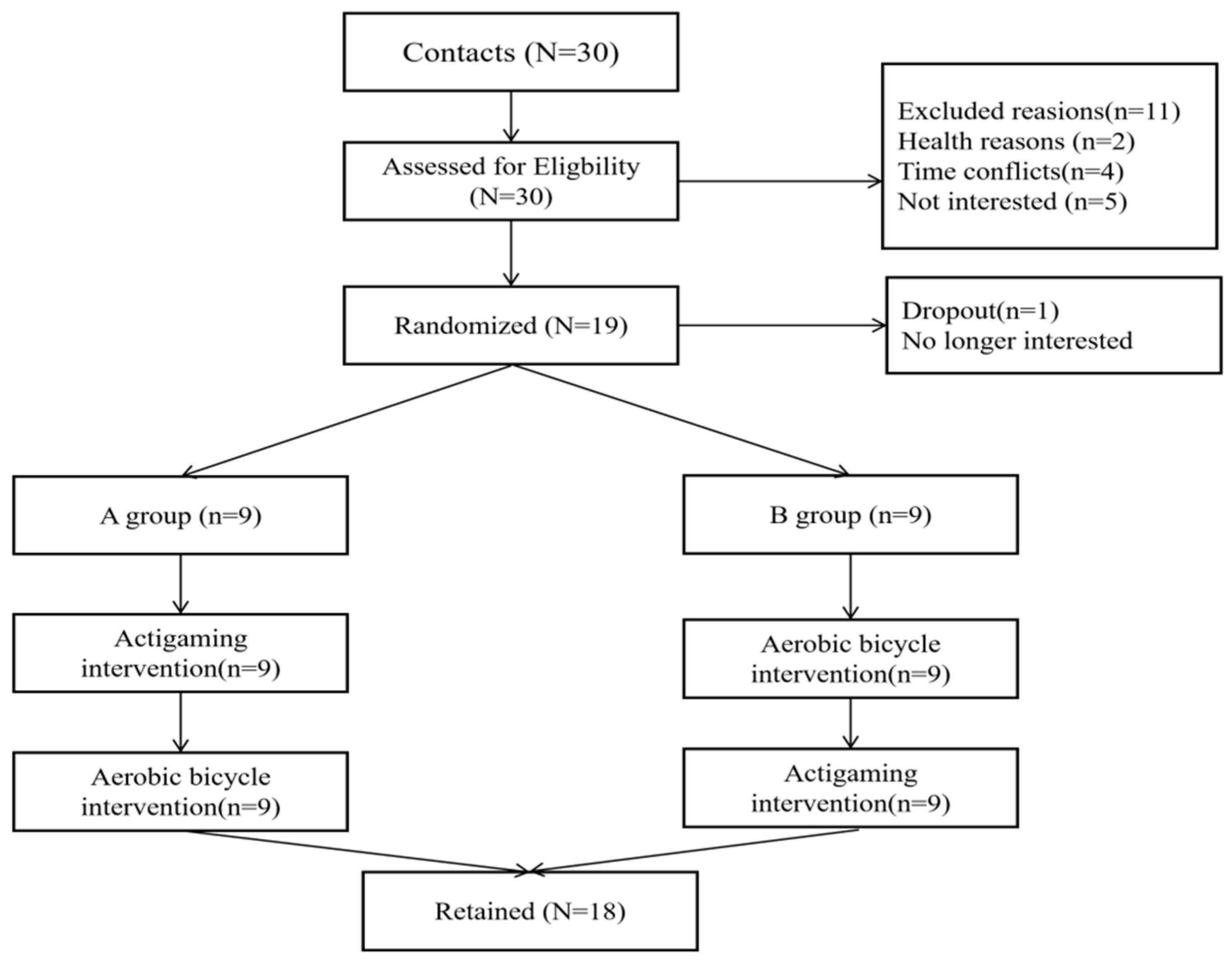
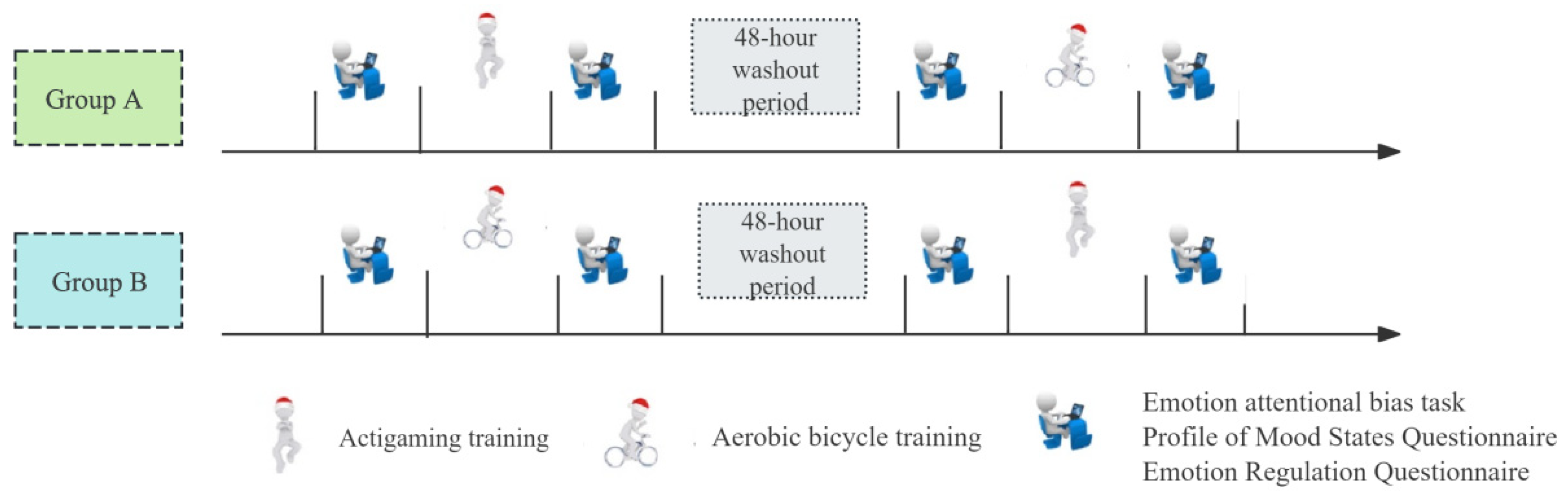
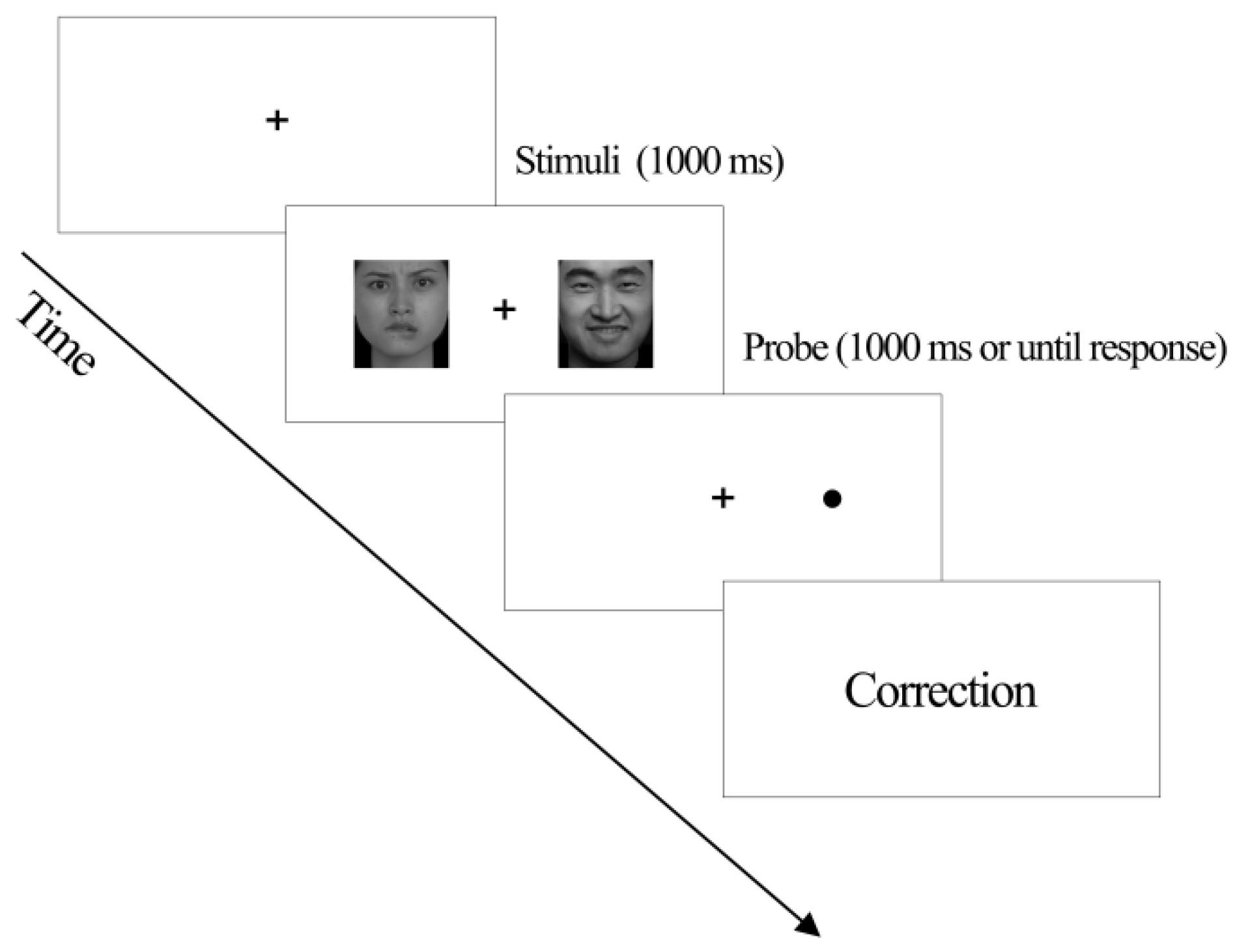
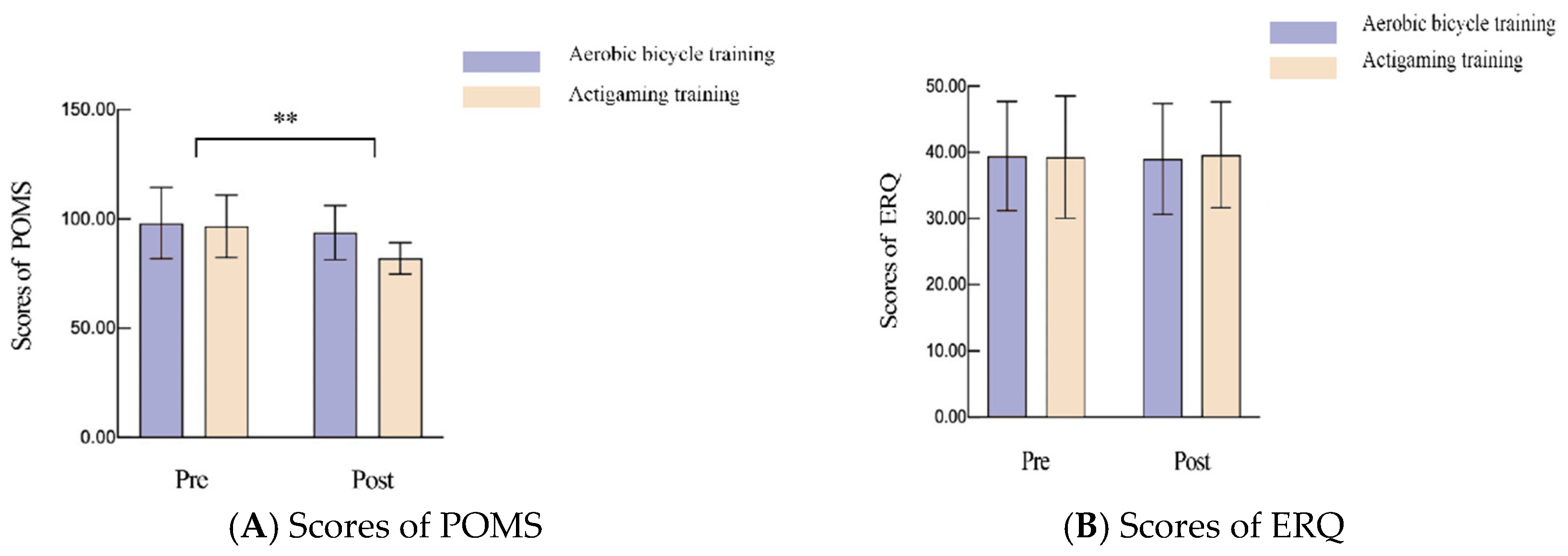
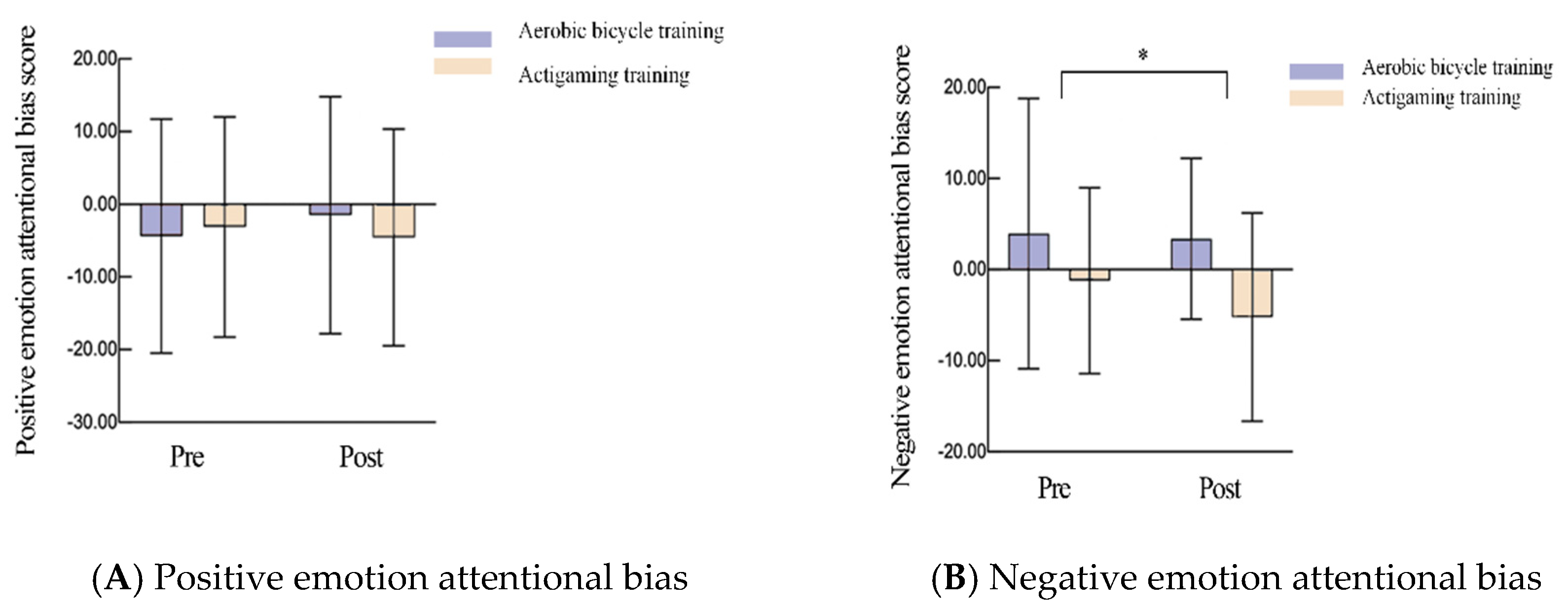
Background: Prior research has provided evidence supporting the claim that actigaming may offer benefits for individuals’ emotions. However, the impact of actigaming on emotional attentional biases remains uncertain. Objective: To address this gap in the literature, this study aims to examine whether actigaming affects emotional attentional biases. Methods: We conducted a randomized crossover experiment in this study. A total of 18 college students completed a single session of actigaming and aerobic bicycle exercise for 40 min. Before and after the exercises, each participant completed the Profile of Mood States Questionnaire (POMS), Emotion Regulation Questionnaire (ERQ), and emotional attentional biases task. The heart rates of study participants were measured during the intervention to determine their maximum and average rates. Results: The following two findings were identified in this study: (1) There are no significant differences in maximum heart rate and average heart rate between participants of the aerobic bicycle intervention and the actigaming intervention (p = 0.352; p = 0.643, respectively). (2) Cores of POMS under the baseline condition present no significant difference between the two interventions (p = 0.872). However, the POMS post-test scores of participants in the actigaming intervention are significantly lower than those of participants in the aerobic bicycle intervention (p = 0.002). The main finding of the study is that, under baseline conditions, there are no significant differences in emotional attentional bias scores between the two interventions (p = 0.352). However, post-test scores show that participants in the actigaming intervention exhibit significantly lower attentional bias toward negative emotions compared to those in the aerobic bicycle intervention (p = 0.001). Conclusions: Actigaming more favorably post-exercise mood and significantly attenuates attentional bias toward negative stimuli compared with aerobic cycling. Therefore, the results of this study need to be confirmed by higher-quality studies in the future.