Systematic Review

Green Tea (Camellia sinensis) Consumption and Human Immune Function: A Systematic Review of Immunomodulatory and Anti-Inflammatory Effects


1
Faculty of Health Sciences, Kanazawa University, Kodatsuno, 5-11-80, Kanazawa 920-0941, Ishikawa, Japan
2
Department of Pharmacy, Thai Nguyen University of Medicine and Pharmacy, 284 Luong Ngoc Quyen, Thai Nguyen 250000, Vietnam
3
Center for the Planetary Health and Innovation Science (PHIS), The IDEC Institute, Hiroshima University, Higashihiroshima 739-8529, Hiroshima, Japan
*
Author to whom correspondence should be addressed.
Appl. Sci. 2026, 16(15), 7515; https://doi.org/10.3390/app16157515
Submission received: 25 June 2026 / Revised: 21 July 2026 / Accepted: 22 July 2026 / Published: 28 July 2026
(This article belongs to the Special Issue Biological Activities of Plant Extracts and Their Applications)

Abstract

Background: Green tea (Camellia sinensis) is widely consumed around the world, particularly in East Asia, and has traditionally been used to support cardiovascular and metabolic health. Rich in catechins—most notably epigallocatechin-3-gallate (EGCG)—green tea is recognized for its potential immunomodulatory and anti-inflammatory effects. However, evidence from human studies remains inconsistent, and the distinction between functional immune outcomes and systemic inflammatory markers has not been systematically evaluated. Methods: We conducted a systematic review in accordance with PRISMA guidelines, searching PubMed, Google Scholar, Cochrane Library, and EBSCO from inception to the most recent date. Eligible studies included human investigations evaluating green tea or catechin intake and reporting either immune response outcomes (e.g., natural killer cell activity, T cell responses) or systemic inflammatory markers (e.g., C-reactive protein, cytokines). Randomized controlled trials (RCTs), non-randomized interventional studies, and observational analyses were included. Data were synthesized narratively due to heterogeneity. Results: Nineteen studies (≈6800 participants) were included, comprising 12 RCTs, three non-randomized interventions, and five observational studies. Eight studies assessed immune responses and consistently demonstrated enhanced immune activity, including increased natural killer cell function and augmented γδ T cell responses. Eleven studies evaluated inflammatory markers and showed heterogeneous results: several trials reported reductions in C-reactive protein and related biomarkers, particularly in high-risk populations, whereas others found no significant changes in cytokines such as interleukin-6 or tumor necrosis factor-α. Observational studies generally reported inverse associations between tea consumption and inflammation. Green tea was well tolerated across studies. Conclusions: Green tea consumption appears to enhance functional immune responses while exerting modest, context-dependent anti-inflammatory effects. These findings support a dual immunomodulatory role and highlight the importance of distinguishing between immune function and systemic inflammation in nutritional research.

1. Introduction

Tea derived from Camellia sinensis, particularly green tea, is among the most widely consumed beverages worldwide and is rich in bioactive polyphenols, notably catechins such as epigallocatechin-3-gallate (EGCG) [1,2,3,4,5,6]. These compounds have been extensively studied for their antioxidant, anti-inflammatory, and immunomodulatory properties, with potential implications for the prevention of chronic diseases and infections [7,8,9,10,11,12,13,14,15]. Green tea is traditionally recognized for a range of medicinal indications, including cardiovascular protection, metabolic regulation, anticancer activity, and antimicrobial effects, and it is among the most widely consumed beverages for health-promoting purposes worldwide, with China, Japan, and India representing the largest consumer populations [3,16,17]. Beyond its antioxidant, anti-inflammatory, and immunomodulatory properties, green tea and its catechins have also demonstrated antimicrobial, anticancer, neuroprotective, and cardioprotective pharmacological activities, further supporting its broad biological relevance [10,18].
The immune system plays a central role in maintaining homeostasis and protecting against pathogens, while dysregulated inflammation contributes to the pathogenesis of a wide range of conditions, including cardiovascular disease, metabolic syndrome, and cancer [19,20,21,22,23,24]. Nutritional interventions that can modulate immune function and inflammatory pathways are, therefore, of considerable clinical and public health interest [25,26,27,28]. Experimental studies have suggested that green tea catechins can enhance innate and adaptive immune responses—such as natural killer (NK) cell activity and T cell function—while also attenuating pro-inflammatory signaling pathways, including nuclear factor-κB-mediated cytokine production [29].
Despite these mechanistic insights, evidence from human studies remains inconsistent. Some clinical trials have reported enhanced immune responses and reduced infection risk associated with green tea consumption, whereas others have shown limited or no effects on circulating inflammatory markers such as C-reactive protein (CRP), interleukin-6 (IL-6), and tumor necrosis factor-α (TNF-α) [30,31,32]. Furthermore, findings appear to vary according to population characteristics, including baseline inflammatory status, metabolic health, and age [30,33]. Observational studies have generally suggested inverse associations between habitual tea consumption and inflammatory biomarkers, but these designs are inherently susceptible to confounding.
To date, no synthesis has systematically distinguished between functional immune outcomes and systemic inflammatory biomarkers in evaluating the effects of green tea in humans. This distinction is critical, as immune enhancement and anti-inflammatory effects may represent complementary but biologically distinct processes.
Therefore, we conducted a systematic review of human studies to evaluate the effects of green tea consumption and its bioactive components on (1) immune responses and (2) systemic inflammatory markers. By integrating evidence across randomized trials, interventional studies, and observational analyses, we aimed to clarify the extent to which green tea acts as an immunomodulatory agent in humans. Accordingly, the objective of this review was to evaluate the effects of green tea consumption on human immune responses and systemic inflammatory markers.

2. Materials and Methods

2.1. Study Design and Reporting Standards

This systematic review was conducted in accordance with the Preferred Reporting Items for Systematic Reviews and Meta-Analyses (PRISMA) statement (Supplementary Table S1) and was registered in the International Prospective Register of Systematic Reviews (PROSPERO registration number CRD420261450564).

2.2. Search Strategy and Data Sources

A comprehensive literature search was performed in PubMed, Google Scholar, Cochrane Library, and EBSCO from database inception to the most recent search date. The database searches were completed in 21 May 2026.
Search terms included combinations of keywords and Medical Subject Headings (MeSH) related to: “green tea”, “Camellia sinensis”, “tea catechins”, “epigallocatechin gallate (EGCG).”
“immune response”, “natural killer cells”, “T cells”, “immunoglobulins”, “inflammation”, “C-reactive protein”, “cytokines”, “oxidative stress”, “clinical trial”. Boolean operators (“AND”, “OR”) were used to combine search terms. Reference lists of included articles were manually screened to identify additional relevant studies.

2.3. Eligibility Criteria

Studies were included if they met the following PICOS (population, intervention, comparisons, outcomes, and study design) criteria: eligible participants were human subjects, including either healthy individuals or clinical populations; the intervention or exposure of interest was green tea consumption or green tea-derived compounds (e.g., catechins, EGCG), administered as beverages or supplements, compared with placebo or no exposure. Eligible outcomes comprised functional immune outcomes (e.g., NK cell activity, T cell responses, infection outcomes) or systemic inflammatory markers (e.g., CRP, IL-6, TNF-α, oxidative stress markers), assessed in randomized controlled trials, non-randomized interventional studies, or observational studies published in English. Studies were excluded if they used in vitro or ex vivo models only, were animal studies, or were reviews, editorials, or conference abstracts without primary data. A detailed description of study search and eligibility is provided in Supplementary Table S2.

2.4. Study Selection

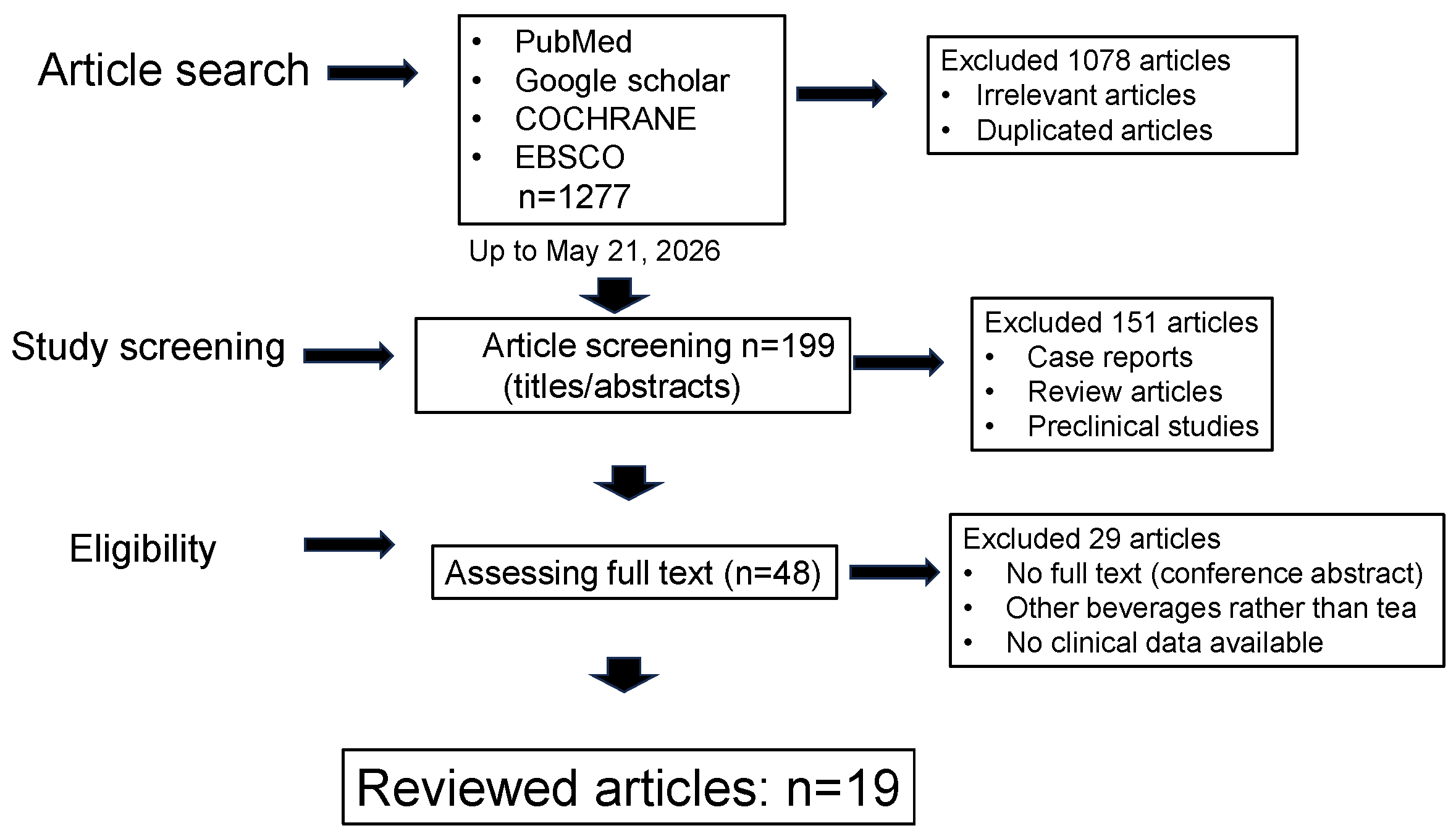
Two reviewers independently screened titles and abstracts for eligibility. Full-text articles were retrieved for potentially relevant studies and assessed against the inclusion criteria. Discrepancies were resolved by consensus. Our systematic search yielded a total of 1277 records, and 1078 records were rapidly excluded because they were duplicates or irrelevant. The abstracts of 199 records were then screened, and 151 of them were excluded as they were Case reports, Review articles, or Preclinical studies. The full text of 48 articles was rigorously evaluated according to the study’s inclusion and exclusion criteria, and ultimately, 19 studies were included in this systematic review. The outline of the literature search, screening, and study selection is detailed in the PRISMA flow diagram (Figure 1).

2.5. Data Extraction

Data were extracted independently using a standardized form. Extracted variables included: study identification (author, year, country), study design and population characteristics (sample size, age, health status), intervention details (form, dose, frequency, duration), comparator (placebo, control beverage, baseline), outcomes measured (immune or inflammatory), main findings (effect size, direction, statistical significance), adjustment for confounders (for observational studies), adverse events. Studies were categorized into two predefined domains: Immune response studies (functional immune outcomes) and Systemic inflammatory marker studies.

2.6. Risk of Bias and Quality Assessment

Risk of bias was assessed at the study level using tools appropriate to each study design. Randomized controlled trials (RCTs) were evaluated with the Cochrane Risk of Bias 2 (RoB 2) tool. Non-randomized intervention studies were assessed using the ROBINS-I tool. Observational (primarily cross-sectional) studies were evaluated with the Newcastle-Ottawa Scale, adapted for cross-sectional designs and informed by JBI critical appraisal principles. For RCTs, the five RoB 2 domains were assessed: (1) randomization process, (2) deviations from intended interventions, (3) missing outcome data, (4) measurement of the outcome, and (5) selection of reported results. For non-randomized intervention studies, the seven ROBINS-I domains were evaluated: (1) confounding, (2) selection of participants, (3) classification of interventions, (4) deviations from intended interventions, (5) missing data, (6) measurement of the outcome, and (7) selection of reported results. For observational studies, the Newcastle-Ottawa Scale assessed three main domains—selection (representativeness of the sample, sample size, non-respondents, and exposure ascertainment), comparability (adjustment for age/sex and other confounders), and outcome (adequacy of outcome assessment and statistical analysis).Signaling questions, domain-level judgments, and supporting justifications for all assessments are provided in the Supplementary Materials.
Although multiple studies examined the same nominal biomarkers (e.g., CRP, IL-6, and NK cell activity), quantitative pooling was deemed inappropriate due to substantial clinical and methodological heterogeneity. The studies varied simultaneously across several key factors known to influence effect size: intervention form (beverage versus extract or capsule), catechin dose (roughly 300 mg to >900 mg per day), comparator type (placebo, active control, or no-treatment), intervention duration (2 weeks to 6 months), and—most critically—the baseline inflammatory or metabolic status of the participants (healthy versus clinical populations). Given that green tea’s anti-inflammatory effects are context-dependent and appear strongest in individuals with elevated baseline inflammation, combining data from healthy and clinical populations would obscure this important effect modification. A single pooled estimate would therefore misrepresent the true effects in both subgroups rather than illuminate them. Compounding this issue, outcome reporting was inconsistent: studies presented results as absolute mean differences, percentage changes, fold-changes, or odds ratios, and many failed to report the variance estimates necessary for valid standardization or meta-analytic pooling. For these reasons, a narrative synthesis stratified by outcome domain and population type (healthy versus clinical) was judged more appropriate and informative than a quantitative meta-analysis.

2.7. Data Synthesis

A narrative synthesis was conducted, structured according to outcome domain (immune response vs inflammatory markers). Findings were summarized qualitatively, with emphasis on consistency of effects, magnitude, and direction of associations across study designs and populations.

3. Results

3.1. Study Selection and Characteristics

A total of nineteen studies met inclusion criteria, comprising approximately 6800 participants. Sample sizes ranged from small pilot trials (n ≈ 12–20) to large observational cohorts (n > 4000), with mean participant ages spanning 30–70 years. Among the 19 studies, 12 were RCTs: Steptoe 2007 [34]; Rowe 2007 [35]; Basu 2011 [36]; Ayuso 2014 [37]; Bazyar 2021 [38]; Hadi 2020 [39]; Bahorun 2010 [40]; Gostner 2015 [41]; Dower 2015 [42]; Wang 2011 [43]; Tanaka 2021 [44]; Zeng 2024 [45], four were non-randomized trials: Kamath 2003 [46]; Lowe 2015 [47]; Iketani 2019 [48]; D’Arena [49], whereas three were observational analyses: Hsieh 2021 [50]; De Bacquer 2006 [51]; Rebello 2011 [52]. Eleven studies (Steptoe 2007 [34]; Rowe 2007 [35]; Lowe 2015 [47]; Iketani 2019 [48]; Tanaka 2021 [44]; Gostner 2015 [41]; Dower 2015 [42]; Rebello 2011 [52]; Hsieh 2021 [50]; Zeng 2024 (healthy subgroup) [45]; Kamath 2003 [46]) enrolled healthy individuals, while eight studies Basu 2011 (metabolic syndrome) [36]; Ayuso 2014 (obesity) [37]; Bazyar 2021 and Hadi 2020 (type 2 diabetes mellitus) [38,39]; Bahorun 2010 (cardiovascular risk) [40]; D’Arena 2013 (chronic lymphocytic leukemia) [49]; Wang 2011 (acute inflammatory condition—pharyngitis) [43]; Zeng 2024 (metabolic syndrome subgroup) [45]; and De Bacquer 2006 (cardiovascular risk population) [51]) included clinical populations. Interventions consisted of green or black tea beverages (typically 3–6 cups/day) or catechin-rich extracts (~300–900 mg/day), administered over 2 weeks to 6 months.
Among the included studies, five used black tea interventions (Steptoe 2007 [34]; Rowe 2007 [35]; Bahorun 2010 [40]; Gostner 2015 [41]; Tanaka 2021 [44]), while the remaining 14 used green tea or green tea-derived extracts. Black tea, while fermented, shares key catechin-derived polyphenols with green tea and was included because the immunomodulatory outcomes of interest were directly comparable, and excluding these studies would omit important evidence on tea polyphenols more broadly.
The 19 included studies exhibited considerable diversity in design, scale, and population characteristics. Study designs encompassed 12 randomized controlled trials (RCTs), three non-randomized interventional studies, and four observational cross-sectional analyses. Sample sizes ranged from small pilot investigations (n ≈ 12–20 participants) to large population-based cohorts (n > 4000), with a total of approximately 6800 participants across all studies. The mean age of participants spanned from 30 to 70 years, reflecting inclusion of working-age adults, elderly populations, and middle-aged clinical cohorts.
Populations studied were heterogeneous across two broad categories: Eleven studies enrolled healthy individuals without significant comorbidities, including community-dwelling adults, elderly volunteers, and physically active participants. The remaining eight studies focused on clinical populations with elevated inflammatory or metabolic burden, including individuals with type 2 diabetes mellitus, metabolic syndrome, obesity, cardiovascular risk, chronic lymphocytic leukemia, and acute pharyngitis. This diversity enabled assessment of green tea effects across the spectrum of baseline immune and inflammatory status.
Interventions varied in formulation, dose, and duration: Tea was administered either as a beverage (typically 3–6 cups per day) or as a catechin-rich extract or supplement (approximately 300–900 mg/day of catechins or purified EGCG). Intervention periods ranged from 2 weeks to 6 months, with most studies employing a duration of 8–12 weeks. Comparator conditions included placebo capsules, control beverages (caffeine-matched or flavonoid-free), or baseline measurements in single-arm designs.
Outcomes were categorized into two predefined domains: Eight studies assessed functional immune outcomes, including natural killer (NK) cell activity, γδ T cell responses, cytokine production (e.g., interferon-γ), mucosal immunity (secretory immunoglobulin A), and infection-related clinical endpoints. Eleven studies evaluated systemic inflammatory markers, including C-reactive protein (CRP), high-sensitivity CRP, interleukin-6 (IL-6), interleukin-1β (IL-1β), tumor necrosis factor-α (TNF-α), serum amyloid A (SAA), and endotoxin levels. This dual-outcome framework allowed systematic distinction between immune enhancement and anti-inflammatory effects, a differentiation that has not been consistently applied in prior syntheses.
For data synthesis, studies were grouped by outcome into immune response studies and systemic inflammatory marker studies.

3.2. Effects on Immune Response

Eight studies assessed functional immune outcomes. Across these, green tea consumption was consistently associated with enhanced immune activity. In elderly participants, catechin-rich green tea increased natural killer (NK) cell activity by a mean of 17.1 percentage points (95% CI 9.7–24.5), with improvements observed in 85% of individuals [48]. Similarly, in an RCT, black tea consumption increased NK cell activity (p = 0.031) and salivary IgA, which was associated with a reduced incidence of upper respiratory tract infections (odds ratio 0.17, 95% CI 0.04–0.68) [44].
Adaptive immune responses were also enhanced. Tea consumption increased interferon-γ (IFN-γ) production by γδ T cells by 2–3-fold compared with controls [46], while a RCT reported increases in γδ T cell proliferation (+28%, p = 0.017) and IFN-γ secretion (+26%, p = 0.046), accompanied by a 32.1% reduction in cold and influenza symptoms [35].
Additional studies reported increased leukocyte functional activity, including enhanced myeloperoxidase and lactoferrin release following green tea extract supplementation. Clinical benefits were observed in disease-specific settings, including improved symptom resolution in pharyngitis and modulation of regulatory T cell populations in chronic lymphocytic leukemia. Overall, findings were consistent in showing enhanced innate and adaptive immune responses, with associated reductions in infection-related outcomes (Table 1).

3.3. Effects on Systemic Inflammatory Markers

Twelve studies evaluated systemic inflammatory markers, with heterogeneous effects. Several randomized trials demonstrated reductions in inflammatory biomarkers. Black tea consumption significantly reduced C-reactive protein (CRP), with reductions exceeding 50% in high-risk individuals. In patients with type 2 diabetes, EGCG supplementation reduced high-sensitivity CRP (p = 0.003), and other trials reported improvements in serum amyloid A and total antioxidant capacity. However, multiple trials reported no significant changes in CRP, IL-6, or TNF-α, particularly in metabolically stable or obese populations [36,37,38,45]. In a recent crossover RCT, green tea extract reduced circulating endotoxin (p = 0.023) and improved gut permeability, but did not alter systemic inflammatory cytokines [45]. Observational studies showed consistent inverse associations between tea consumption and inflammation [50,51,52]. Higher intake was associated with lower CRP concentrations (e.g., −12.2% for ≥1 cup/day vs. <1 cup/week, p = 0.042) after multivariable adjustment, with similar findings across large cohorts [52].
Interestingly, one RCT reported increased kynurenine-to-tryptophan ratios following tea consumption [41], suggesting activation of immune-related metabolic pathways rather than suppression. Overall, green tea showed modest and context-dependent anti-inflammatory effects, with greater benefit observed in populations with elevated baseline inflammation (Table 2).

3.4. Safety and Tolerability

Green tea and its extracts were well tolerated across studies. No serious adverse events were reported. Mild gastrointestinal symptoms and transient discomfort were occasionally noted but did not lead to discontinuation. Laboratory safety parameters remained within normal ranges.
The evidence indicates a dual immunomodulatory effect of green tea in humans. Functional studies consistently demonstrate enhanced immune responsiveness, particularly in innate and mucosal immunity, whereas biomarker-based studies show variable anti-inflammatory effects. These findings support a model in which green tea acts as a context-dependent immunomodulator, enhancing host defense while exerting selective anti-inflammatory effects in populations with elevated inflammatory burden.

3.5. Risk of Bias and Study Quality

A detailed summary of the risk-of-bias assessments for all 19 included studies is presented in Table 3 and the Supplementary Tables (Table S3–S5). The following narrative synthesizes the key findings.
Risk of bias varied substantially by study design. Among the 12 RCTs, the most methodologically robust were the double-blind, placebo-controlled studies by Steptoe 2007 [34], Rowe 2007 [35], Ayuso 2014 [37], Gostner 2015 [41], Dower 2015 [42], and Zeng 2024 [45], which reported random allocation, blinded intervention delivery, and prespecified control conditions; Steptoe additionally used a washout period and objective compliance assessment, whereas Zeng used a crossover design with circulating catechin measurements to support adherence. Trials by Bazyar 2021 [38], Hadi 2020 [39], Bahorun 2010 [40], Wang 2011 [43], and Tanaka 2021 [44] were judged as having some concerns, mainly because of limited reporting of allocation concealment, small sample size, single-blind design, or outcome analyses that relied on per-protocol or subgroup comparisons; Tanaka 2021 [44] was further limited by the lack of accessible full text. Basu 2011 [36] was judged at high risk of bias because participants could not be blinded, the comparator included a no-treatment arm, visit intensity differed across groups, and the final analysis was based on incomplete matched trios rather than the full randomized sample. Domain-level judgments and signaling questions for each RCT are detailed in Supplementary Table S3.
All non-randomized interventional studies were at serious risk of bias. Kamath 2003 used a small non-randomized tea-versus-coffee comparison [46]; Lowe 2015 was open-label and pre–post without a parallel control [47]; Iketani 2019 was explicitly a single-arm pilot [48]; and D’Arena 2013 was a small uncontrolled clinical intervention with attrition and no randomized disease-specific comparator [49]. The ROBINS-I domain-level judgments for these studies are presented in Supplementary Table S4.
The observational studies by De Bacquer 2006 [51], Rebello 2011 [52], and Hsieh 2021 [50] were of moderate quality: each used multivariable adjustment for major confounders, but all were cross-sectional and therefore remained vulnerable to residual confounding and reverse causation. The Newcastle-Ottawa Quality Assessment for these observational studies is provided in Supplementary Table S5.

4. Discussion

In this systematic review of 19 human studies involving approximately 6800 participants, we observed a consistent pattern of enhanced functional immune responses following green tea consumption, alongside heterogeneous effects on systemic inflammatory markers. This divergence represents a central finding with important implications: green tea appears to function as a context-dependent immunomodulator rather than a uniformly anti-inflammatory or immunostimulatory agent. The distinction between these two biological domains—immune competence versus inflammatory burden—has been inadequately addressed in previous syntheses, and our findings suggest that conflating them may obscure meaningful biological effects.

4.1. Functional Immune Enhancement: A Consistent Finding

The consistency of findings across immune function studies is noteworthy. Eight studies evaluating outcomes such as NK cell activity, γδ T cell responses, and mucosal immunity demonstrated significant enhancements following green tea consumption. The magnitude of effects was clinically meaningful: NK cell activity increased by a mean of 17.1 percentage points in elderly participants [48], while γδ T cell proliferation increased by 28% and IFN-γ secretion by 26% in healthy adults [35]. These improvements translated into tangible clinical benefits, including a 32.1% reduction in cold and influenza symptoms [35] and a substantially reduced odds of upper respiratory tract infections (odds ratio 0.17) [44].
The mechanistic basis for these effects is supported by experimental evidence. Green tea catechins, particularly EGCG, have been shown to directly enhance cytotoxic activity of NK cells and γδ T cells through modulation of signaling pathways including mitogen-activated protein kinase (MAPK) and phosphoinositide 3-kinase (PI3K) [29,53]. Additionally, catechins may promote the differentiation and proliferation of effector T cells while simultaneously modulating regulatory T cell populations, as observed in the chronic lymphocytic leukemia cohort [49,54]. The finding that these effects occurred across diverse populations—including healthy adults, elderly individuals, and clinical populations—suggests that the immunostimulatory properties of green tea are broadly conserved and not limited to specific demographic or health contexts.
The enhancement of mucosal immunity, evidenced by increased secretory immunoglobulin A (SIgA) levels [44] and improved leukocyte functional activity [47], is particularly relevant given that mucosal surfaces represent the primary interface between the host and environmental pathogens. This suggests that green tea consumption may strengthen first-line immune defenses, potentially reducing susceptibility to respiratory and gastrointestinal infections [55,56]. The rapid time course of these effects, with changes observed within 2–4 weeks of intervention, indicates that green tea catechins exert relatively acute immunomodulatory effects that are likely mediated through direct cellular actions rather than through long-term epigenetic or metabolic reprogramming.

4.2. Anti-Inflammatory Effects: Context Dependency and Heterogeneity

In contrast to the consistent immune-enhancing effects, the anti-inflammatory effects of green tea were markedly heterogeneous. Of the twelve studies evaluating systemic inflammatory markers, approximately half reported significant reductions in CRP or related biomarkers, while the remainder found no significant changes. This variability appears to be systematically related to population characteristics, with the most pronounced effects observed in individuals with elevated baseline inflammatory burden.
Several lines of evidence support this context-dependent interpretation. In patients with type 2 diabetes mellitus, EGCG supplementation significantly reduced high-sensitivity CRP (p = 0.003) [39], while in individuals at high cardiovascular risk, black tea consumption reduced CRP by up to 50% [40]. Similarly, in the crossover trial by [45], green tea extract reduced circulating endotoxin (p = 0.023) and improved gut barrier function, but did not alter systemic IL-6 or TNF-α levels in the overall cohort. The magnitude of anti-inflammatory effects appeared to correlate with baseline inflammatory status, suggesting that green tea may be most effective in populations with pre-existing low-grade inflammation—a pattern that could be conceptually interpreted, albeit speculatively, through the “reserve capacity” framework proposed in nutritional interventions [57].
The absence of consistent effects on Inflammatory cytokines such as IL-6 and TNF-α in metabolically stable or healthy populations further supports the threshold hypothesis: green tea catechins may exert anti-inflammatory effects primarily when inflammatory pathways are actively upregulated, with minimal impact under homeostatic conditions. This pattern is biologically plausible, as catechins inhibit NF-κB signaling and downstream pro-inflammatory cytokine production [58], but these pathways may already be quiescent in healthy individuals. The observation that oxidative stress markers improved in some studies [38,47] while cytokine levels remained unchanged suggests that the antioxidant and anti-inflammatory effects of green tea may operate through partially distinct mechanisms.
The heterogeneity in findings cannot be attributed solely to population differences. Intervention characteristics, including catechin dose, formulation (beverage versus extract), duration, and bioavailability, likely contributed to the observed variability. Studies using higher doses of catechins (≥800 mg/day) or longer intervention periods (≥12 weeks) tended to show more consistent anti-inflammatory effects, although this pattern was not universal. Bioavailability represents a particularly important consideration: EGCG undergoes extensive first-pass metabolism and exhibits relatively low systemic bioavailability (approximately 0.1–0.5% of ingested dose) [2], suggesting that local effects in the gastrointestinal tract—including modulation of gut microbiota and barrier function—may be equally or more important than systemic actions in mediating anti-inflammatory effects. The demonstration by [45] that green tea extract reduced circulating endotoxin without altering systemic cytokines provides direct support for this gut-centric mechanism.
The gut microbiota is increasingly recognized as a central mediator of green tea’s systemic effects. Because most ingested catechins are poorly absorbed in the small intestine, a substantial fraction reaches the colon, where they are metabolized by resident bacteria into smaller phenolic acids and valerolactones that are more bioavailable and biologically active than the parent compounds. This microbial biotransformation is bidirectional: catechins and their metabolites can also reshape microbial community composition, favoring taxa associated with short-chain fatty acid production and barrier maintenance, while suppressing potentially pro-inflammatory taxa. These microbial metabolites and short-chain fatty acids can, in turn, modulate intestinal immune signaling, including regulatory T cell induction and epithelial tight-junction integrity, thereby linking gut barrier function to systemic inflammatory tone. The finding that green tea extract reduced circulating endotoxin without altering systemic cytokines is consistent with this gut-centric pathway, in which effects on microbiota composition and intestinal permeability may precede, or substitute for, detectable changes in circulating inflammatory markers. Future studies incorporating gut microbiome sequencing and metabolite profiling alongside immune and inflammatory endpoints would help clarify the relative contribution of this pathway to the dual immunomodulatory effects described here.

4.3. Bridging the Two Domains: A Dual Immunomodulatory Model

The concurrent findings of enhanced immune function and variable anti-inflammatory effects suggest that green tea acts through a dual immunomodulatory mechanism rather than through a single unified pathway [59]. This conceptual model has important biological and clinical implications. Enhanced immune surveillance, manifested through increased NK cell activity and T cell responses, represents a state of heightened readiness that may improve host defense against pathogens [60]. Simultaneously, the attenuation of inflammatory responses—when present—may reduce the deleterious effects of chronic low-grade inflammation, including endothelial dysfunction, insulin resistance, and tissue damage [61,62,63].
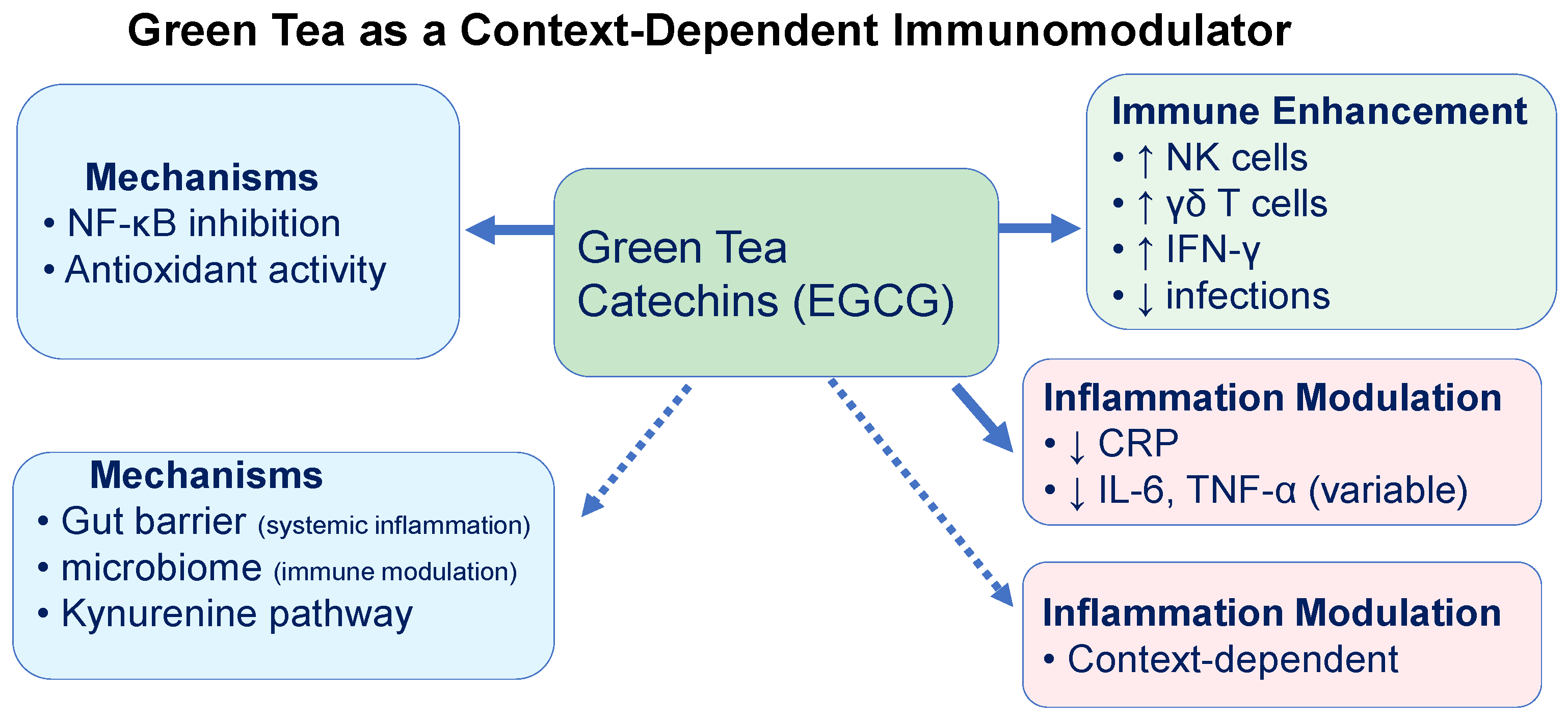
The kynurenine pathway findings from [41] are particularly instructive in this regard. The observed increase in circulating kynurenine concentrations following black tea consumption suggests activation of indoleamine 2,3-dioxygenase (IDO), a key enzyme in tryptophan catabolism that plays a central role in immune regulation. IDO activation is associated with both immune activation (through tryptophan depletion and metabolite production) and immune tolerance (through regulatory T cell induction), illustrating the complexity of green tea’s immunomodulatory effects. This dual capacity to enhance immune surveillance while limiting excessive inflammation could conceptually, though speculatively, be framed as an evolutionary adaptation; this interpretation is offered as a hypothesis-generating perspective rather than an established mechanism, given that the immune system must maintain vigilance against pathogens while avoiding autoimmunity and chronic inflammatory damage (Figure 2).
The clinical relevance of this dual modulation is supported by the infection-related outcomes observed in several studies. The reduction in upper respiratory tract infections [35,44] and improved symptom resolution in pharyngitis [43] indicate that the immune-enhancing effects translate into meaningful clinical benefits. Conversely, the anti-inflammatory effects in high-risk populations, while more modest, may contribute to long-term risk reduction for cardiovascular disease, metabolic syndrome, and other inflammation-related conditions [30,57].

4.4. Methodological Considerations Sources of Heterogeneity

Several methodological factors contributed to the heterogeneity observed across studies and warrant systematic consideration.
First, variation in study design introduced different sources of bias. The most methodologically robust RCTs (double-blind, placebo-controlled with objective compliance assessment) tended to show more modest anti-inflammatory effects than observational studies, which consistently reported inverse associations between tea consumption and inflammation. This discrepancy likely reflects both residual confounding in observational designs and the challenges of translating population-level associations to controlled intervention settings.
Second, heterogeneity in tea formulations represents a critical source of variability. Studies used different forms of tea (beverages versus extracts), different tea varieties (green versus black tea), and varying catechin content (from approximately 300 mg to >900 mg/day). Black tea, which undergoes fermentation and contains theaflavins and thearubigins in addition to catechins, may have distinct biological effects from green tea. The absence of standardized dosing and the poor reporting of catechin content in several studies limit the ability to draw dose–response conclusions. These sources of heterogeneity can be summarized along several explicit axes: beverage versus extract formulation, purified EGCG versus whole-tea catechin mixtures, green versus black (fermented) tea, catechin concentration, and caffeine content, which co-varies with tea intake and may independently influence inflammatory and immune parameters. Because these factors were not systematically stratified across the included studies, their individual contributions to the observed heterogeneity cannot be disentangled with the current evidence, and future trials should explicitly report and control for each of these dimensions.
Third, intervention duration varied widely, from 2 weeks to 6 months. The time course of different biological effects may differ: functional immune changes may occur relatively rapidly through direct cellular actions, whereas changes in systemic inflammatory biomarkers may require longer periods to manifest, particularly in populations without overt inflammation.
Fourth, population diversity contributed to heterogeneity. Populations ranged from healthy young adults to elderly individuals and clinical populations with diverse metabolic and inflammatory profiles. While this diversity enhances generalizability, it complicates interpretation of pooled findings. The apparent context-dependency of anti-inflammatory effects suggests that future studies should stratify populations by baseline inflammatory status and metabolic health.
Fifth, the distinction between green and black tea warrants explicit consideration. While we included black tea studies within the broader framework of tea polyphenols, the fermentation process alters the polyphenolic profile substantially. Subgroup analyses by tea type were not possible due to the limited number of studies, but this represents an important direction for future research.

4.5. Safety and Tolerability

Green tea and its extracts were well tolerated across all included studies. No serious adverse events were reported, and no study reported discontinuations due to treatment-related effects. Mild gastrointestinal symptoms (e.g., nausea, abdominal discomfort) and transient symptoms were occasionally noted but did not lead to study withdrawal. Laboratory safety parameters, including liver function tests, remained within normal ranges in all studies that monitored them.
However, the safety profile of green tea warrants careful consideration in the context of formulation and dose. The studies included in this review used tea beverages (3–6 cups/day) or moderate-dose extracts (300–900 mg/day of catechins), which are generally recognized as safe. By contrast, high-dose EGCG supplements (>800–1000 mg/day) have been associated with rare instances of hepatotoxicity in case reports and clinical trials, particularly when taken on an empty stomach. This dose-dependent safety concern underscores the importance of distinguishing between dietary beverage consumption and high-dose supplement use in public health recommendations. The caffeine content of tea beverages (approximately 30–50 mg per cup) was not associated with adverse cardiovascular or gastrointestinal effects in the included studies, though individuals sensitive to caffeine should exercise caution.
Based on the available evidence, public health messaging should emphasize consumption of green tea through dietary beverages rather than high-dose extracts, until further safety data are available to establish the upper limit of safe catechin intake. Healthcare providers should counsel patients using high-dose green tea supplements about the potential for hepatotoxicity and the importance of taking supplements with food to reduce gastrointestinal irritation.

4.6. Comparison with Previous Studies

Our findings align with and extend previous systematic reviews and meta-analyses. A meta-analysis by [57] reported modest but significant reductions in CRP and IL-6 following green tea supplementation, particularly in populations with metabolic disorders [57]. Similarly, [30] found that green tea supplementation reduced inflammatory markers in patients with metabolic syndrome, but with considerable heterogeneity [30]. However, these previous syntheses did not systematically distinguish between functional immune outcomes and systemic inflammatory markers, nor did they address the concept of context-dependency in a comprehensive manner.
Our review extends this literature by demonstrating that the enhancement of functional immune responses is more consistent than the anti-inflammatory effects, suggesting that these are distinct biological processes with different determinants. This distinction has important implications for the design of future studies and for the interpretation of existing evidence. It also highlights the need for nutritional immunology research to adopt more nuanced outcome frameworks that distinguish between different aspects of immune function rather than treating inflammation as a proxy for overall immune status.

4.7. Clinical and Public Health Implications

The findings of this systematic review have several implications for clinical practice and public health recommendations. First, the consistent enhancement of functional immune responses supports the use of green tea consumption as a dietary strategy to support immune function, particularly in populations at risk of infections, such as the elderly or those with compromised immunity. The reduction in upper respiratory tract infections observed in two RCTs [35,44] provides direct evidence of clinical benefit, although the effect size and generalizability remain to be established.
Second, the context-dependent anti-inflammatory effects suggest that green tea may be most beneficial in populations with elevated inflammatory burden, such as those with type 2 diabetes, metabolic syndrome, or established cardiovascular risk. In these populations, the anti-inflammatory effects may complement other lifestyle interventions and pharmacological therapies. Conversely, in healthy individuals without evidence of systemic inflammation, the anti-inflammatory effects appear to be limited, suggesting that public health messages should avoid overstating the anti-inflammatory benefits in low-risk populations.
Third, the safety and tolerability profile of green tea was excellent across all studies, with no serious adverse events reported. This favorable safety profile, combined with the low cost and widespread availability of green tea, supports its consideration as a safe dietary intervention. However, the potential for liver toxicity at very high doses (exceeding those used in these studies) should be noted, and public health recommendations should emphasize consumption through dietary beverages rather than high-dose supplements.

4.8. Limitations and Future Directions

Several limitations should be considered. First, substantial heterogeneity in study design, populations, interventions, and outcome measures precluded quantitative meta-analysis. This was not merely due to an insufficient number of studies; several outcomes were reported frequently enough for pooling (e.g., CRP in eleven studies and NK cell activity in a subset of immune-related trials). However, these apparently similar outcomes were not clinically or methodologically comparable. Studies differed simultaneously in intervention form and catechin dose, comparator type, treatment duration, and—most critically—participants’ baseline inflammatory or metabolic status. Our findings indicate that baseline status is a key effect modifier, with anti-inflammatory benefits appearing more pronounced in populations with elevated inflammation. Pooling data across such heterogeneous conditions would have produced a summary estimate that is difficult to interpret for any specific population and would have obscured the context-dependent effects that represent one of this review’s main findings. This limitation stems primarily from the current evidence base rather than from the review methodology itself. This limitation is inherent to the current evidence base rather than to the review methodology, and it underscores the need for future trials using harmonized dosing, comparator, and outcome-reporting standards to enable a meaningful quantitative synthesis. Second, many trials had modest sample sizes and short durations, limiting statistical power to detect changes in systemic biomarkers, particularly in healthy populations. Third, variation in tea formulation (beverage vs. extract), catechin content, and bioavailability likely influenced outcomes and complicates dose–response interpretation. Fourth, the risk of bias varied considerably, with non-randomized interventions showing serious methodological limitations and observational studies vulnerable to residual confounding. Fifth, most studies were conducted in Western or East Asian populations, limiting generalizability to other ethnic groups and dietary contexts.
Future research should prioritize well-designed, long-term randomized controlled trials with standardized catechin dosing, objective compliance measures (e.g., plasma catechin levels), and clearly defined primary outcomes that distinguish between immune function and inflammatory markers. Mechanistic studies integrating gut microbiome analysis, metabolic profiling, and immune cell phenotyping would help elucidate the pathways underlying the dual immunomodulatory effects observed here. Dose–response studies are needed to establish optimal intake levels, while population-based research should explore effect modification by baseline inflammatory status, age, and metabolic health. Finally, studies evaluating clinically meaningful endpoints—such as infection incidence, disease progression, and quality of life—would strengthen the translational relevance of findings.

5. Conclusions

This systematic review of 19 human studies demonstrates that green tea consumption consistently enhances functional immune responses, including increased NK cell activity, augmented γδ T cell function, and improved mucosal immunity, while exerting modest, context-dependent anti-inflammatory effects primarily in populations with elevated baseline inflammation. These findings support a dual immunomodulatory role for green tea, with immune-enhancing effects more consistent across populations and anti-inflammatory benefits more pronounced in high-risk groups. The distinction between these two biological domains is clinically meaningful and should inform both future research design and public health recommendations. Based on the available evidence, public health messaging should emphasize that green tea consumption may be most beneficial for infection prevention in healthy individuals (based on consistent immune-enhancing effects) and for inflammation reduction in populations with metabolic syndrome, diabetes, or cardiovascular risk (based on context-dependent anti-inflammatory effects). Green tea appears to be a safe, accessible dietary strategy to support immune function, particularly in populations vulnerable to infections, while its anti-inflammatory utility may be greatest in individuals with elevated baseline inflammatory burden. Consumption through dietary beverages is preferred over high-dose extracts until further safety data are available.

Supplementary Materials

The following supporting information can be downloaded at: https://www.mdpi.com/article/10.3390/app16157515/s1, Table S1: PRISMA 2020 Checklist [64]; Table S2: Full Boolean search strings for each database; Table S3: RoB 2 domain-level judgments for randomized controlled trials; Table S4: ROBINS-I domain-level judgments for non-randomized interventional studies; Table S5: Newcastle-Ottawa Quality Assessment for observational studies.

Author Contributions

Conceptualization, J.L.E.; methodology and formal analysis, D.T.D. and J.L.E.; investigation and data curation, D.T.D., N.V.Q. and T.D.X.; writing—original draft preparation, D.T.D.; writing—review and editing, J.L.E. All authors have read and agreed to the published version of the manuscript.

Funding

This research received no external funding.

Institutional Review Board Statement

This study does not include patients’ data or any primary data. It includes a review of the literature. Therefore, IRB approval and informed consent were not required for this study.

Informed Consent Statement

Not applicable.

Data Availability Statement

The data that support the findings of this study are available from the corresponding author upon reasonable request.

Conflicts of Interest

The authors declare no conflicts of interest.

References

  1. Zhao, T.; Li, C.; Wang, S.; Song, X. Green Tea (Camellia sinensis): A Review of Its Phytochemistry, Pharmacology, and Toxicology. Molecules 2022, 27, 3909. [Google Scholar] [CrossRef]
  2. Mokra, D.; Adamcakova, J.; Mokry, J. Green Tea Polyphenol (-)-Epigallocatechin-3-Gallate (EGCG): A Time for a New Player in the Treatment of Respiratory Diseases? Antioxidants 2022, 11, 1566. [Google Scholar] [CrossRef]
  3. Radeva-Ilieva, M.; Stoeva, S.; Hvarchanova, N.; Georgiev, K.D. Green Tea: Current Knowledge and Issues. Foods 2025, 14, 745. [Google Scholar] [CrossRef]
  4. Prasanth, M.I.; Sivamaruthi, B.S.; Chaiyasut, C.; Tencomnao, T. A Review of the Role of Green Tea (Camellia sinensis) in Antiphotoaging, Stress Resistance, Neuroprotection, and Autophagy. Nutrients 2019, 11, 474. [Google Scholar] [CrossRef]
  5. Pastore, R.L.; Fratellone, P. Potential Health Benefits of Green Tea (Camellia sinensis): A Narrative Review. Explore 2006, 2, 531–539. [Google Scholar] [CrossRef]
  6. Wang, C.; Han, J.; Pu, Y.; Wang, X. Tea (Camellia sinensis): A Review of Nutritional Composition, Potential Applications, and Omics Research. Appl. Sci. 2022, 12, 5874. [Google Scholar] [CrossRef]
  7. Andrade, E.D.S.; Santos, R.A.; Guillermo, L.V.C.; Miyoshi, N.; da Costa, D.C.F. Immunomodulatory Effects of Green Tea Catechins and Their Ring Fission Metabolites in a Tumor Microenvironment Perspective. Molecules 2024, 29, 4575. [Google Scholar] [CrossRef] [PubMed]
  8. Yan, Z.; Zhong, Y.; Duan, Y.; Chen, Q.; Li, F. Antioxidant mechanism of tea polyphenols and its impact on health benefits. Anim. Nutr. 2020, 6, 115–123. [Google Scholar] [CrossRef] [PubMed]
  9. Capasso, L.; De Masi, L.; Sirignano, C.; Maresca, V.; Basile, A.; Nebbioso, A.; Rigano, D.; Bontempo, P. Epigallocatechin Gallate (EGCG): Pharmacological Properties, Biological Activities and Therapeutic Potential. Molecules 2025, 30, 654. [Google Scholar] [CrossRef] [PubMed]
  10. Piyasena, K.G.N.P.; Napagoda, M.T.; Kalinga, J.; Jayasinghe, L. Health benefits of different types of tea: A review. Food Nutr. Health 2026, 3, 11. [Google Scholar] [CrossRef]
  11. Tallei, T.E.; Fatimawali; Niode, N.J.; Idroes, R.; Zidan, B.M.R.M.; Mitra, S.; Celik, I.; Nainu, F.; Ağagündüz, D.; Bin Emran, T.; et al. A Comprehensive Review of the Potential Use of Green Tea Polyphenols in the Management of COVID-19. Evid.-Based Complement. Altern. Med. 2021, 2021, 7170736. [Google Scholar] [CrossRef]
  12. Eshraghi, R.; Bahrami, A.; Iravanlou, F.T.; Karimi, M.; Soleimani, M.S.; Yaghoubi, M.; Beheshtirooy, A.; Talouki, F.Q.; Shaabanzadeh, J.; Hasani, F.; et al. Cardioprotective and Anti-Hypertensive Effects of Epigallocatechin Gallate: Novel Insights into Biological Evidence. J. Clin. Hypertens. 2025, 27, e70036. [Google Scholar] [CrossRef]
  13. Winiarska-Mieczan, A.; Tomaszewska, E.; Jachimowicz, K. Antioxidant, Anti-Inflammatory, and Immunomodulatory Properties of Tea—The Positive Impact of Tea Consumption on Patients with Autoimmune Diabetes. Nutrients 2021, 13, 3972. [Google Scholar] [CrossRef] [PubMed]
  14. Zamani, M.; Kelishadi, M.R.; Ashtary-Larky, D.; Amirani, N.; Goudarzi, K.; Torki, I.A.; Bagheri, R.; Ghanavati, M.; Asbaghi, O. The effects of green tea supplementation on cardiovascular risk factors: A systematic review and meta-analysis. Front. Nutr. 2023, 9, 1084455. [Google Scholar] [CrossRef] [PubMed]
  15. Rovaldi, E.; Di Donato, V.; Paolino, G.; Bruno, M.; Medei, A.; Nisticò, S.P.; Pellacani, G.; Kiss, N.; Azzella, G.; Banvolgyi, A.; et al. Epigallocatechin-Gallate (EGCG): An Essential Molecule for Human Health and Well-Being. Int. J. Mol. Sci. 2025, 26, 9253. [Google Scholar] [CrossRef] [PubMed]
  16. Singh, N.; Sahjlan, P.; Yadav, S.S. Phytochemistry and anticancer therapeutics of Camellia sinensis (Green tea). Pharmacol. Res. Mod. Chin. Med. 2024, 12, 100484. [Google Scholar] [CrossRef]
  17. Randisi, F.; Perletti, G.; Marras, E.; Gariboldi, M.B. Green Tea Components: In Vitro and In Vivo Evidence for Their Anticancer Potential in Colon Cancer. Cancers 2025, 17, 623. [Google Scholar] [CrossRef] [PubMed]
  18. Luo, Q.; Luo, L.; Zhao, J.; Wang, Y.; Luo, H. Biological potential and mechanisms of Tea’s bioactive compounds: An Updated review. J. Adv. Res. 2024, 65, 345–363. [Google Scholar] [CrossRef] [PubMed]
  19. Huang, X.; Hu, L.; Li, J.; Xie, X.; Tao, S.; Xue, T.; Zhang, W. The association of nutritional and inflammatory status with cardiovascular and all-cause mortality risk among US patients with metabolic syndrome. Sci. Rep. 2025, 15, 9589. [Google Scholar] [CrossRef] [PubMed]
  20. Vitale, E.; Rizzo, A.; Santa, K.; Jirillo, E. Associations between “Cancer Risk”, “Inflammation” and “Metabolic Syndrome”: A Scoping Review. Biology 2024, 13, 352. [Google Scholar] [CrossRef] [PubMed]
  21. Paul, J.; Shakeela, G. The Role of the Immune System in Maintaining Homeostasis. J. Biomed. Pharm. Res. 2025, 14, 54–65. [Google Scholar] [CrossRef]
  22. Hu, T.; Liu, C.-H.; Lei, M.; Zeng, Q.; Li, L.; Tang, H.; Zhang, N. Metabolic regulation of the immune system in health and diseases: Mechanisms and interventions. Signal Transduct. Target. Ther. 2024, 9, 268. [Google Scholar] [CrossRef] [PubMed]
  23. Rankin, L.C.; Artis, D. Beyond Host Defense: Emerging Functions of the Immune System in Regulating Complex Tissue Physiology. Cell 2018, 173, 554–567. [Google Scholar] [CrossRef] [PubMed]
  24. Chen, L.; Deng, H.; Cui, H.; Fang, J.; Zuo, Z.; Deng, J.; Li, Y.; Wang, X.; Zhao, L. Inflammatory responses and inflammation-associated diseases in organs. Oncotarget 2017, 9, 7204–7218. [Google Scholar] [CrossRef] [PubMed]
  25. Khan, N.; Mukhtar, H. Tea Polyphenols in Promotion of Human Health. Nutrients 2018, 11, 39. [Google Scholar] [CrossRef] [PubMed]
  26. Wu, D.; Lewis, E.D.; Pae, M.; Meydani, S.N. Nutritional Modulation of Immune Function: Analysis of Evidence, Mechanisms, and Clinical Relevance. Front. Immunol. 2019, 9, 3160. [Google Scholar] [CrossRef] [PubMed]
  27. Munteanu, C.; Schwartz, B. The relationship between nutrition and the immune system. Front. Nutr. 2022, 9, 1082500. [Google Scholar] [CrossRef] [PubMed]
  28. Dalimunthe, A.; Tan, M.W.; Lu, F.C.; Angiosaki, Y.; Usman, A.N.; Nugraha, S.E.; Mahani, M.; Halim, P.; Yuandani; Nurkolis, F.; et al. Immunonutrients as modulators of inflammation, barrier integrity, and immune regulation: Toward precision nutrition. J. Funct. Foods 2026, 136, 107119. [Google Scholar] [CrossRef]
  29. Kim, Y.H.; Won, Y.S.; Yang, X.; Kumazoe, M.; Yamashita, S.; Hara, A.; Takagaki, A.; Goto, K.; Nanjo, F.; Tachibana, H. Green Tea Catechin Metabolites Exert Immunoregulatory Effects on CD4(+) T Cell and Natural Killer Cell Activities. J. Agric. Food Chem. 2016, 64, 3591–3597. [Google Scholar] [CrossRef] [PubMed]
  30. Assis, F.S.d.O.; Vasconcellos, G.L.; Lopes, D.J.P.; de Macedo, L.R.; Silva, M. Effect of Green Tea Supplementation on Inflammatory Markers among Patients with Metabolic Syndrome and Related Disorders: A Systematic Review and Meta-Analysis. Prev. Nutr. Food Sci. 2024, 29, 106–117. [Google Scholar] [CrossRef]
  31. Asbaghi, O.; Fouladvand, F.; Gonzalez, M.J.; Aghamohammadi, V.; Choghakhori, R.; Abbasnezhad, A. The effect of green tea on C-reactive protein and biomarkers of oxidative stress in patients with type 2 diabetes mellitus: A systematic review and meta-analysis. Complement. Ther. Med. 2019, 46, 210–216. [Google Scholar] [CrossRef] [PubMed]
  32. Cunningham, A.; Gomes, A.; Meng, L.; Shapses, S.; Byham-Gray, L.; Samavat, H. Effects of Green Tea Extract Supplementation on Inflammatory Cytokines Among Postmenopausal Women with Overweight or Obesity—A Secondary Analysis of a Randomized Controlled Trial. Nutrients 2026, 18, 143. [Google Scholar] [CrossRef] [PubMed]
  33. Sun, J.; Dong, S.; Li, J.; Zhao, H. A comprehensive review on the effects of green tea and its components on the immune function. Food Sci. Hum. Wellness 2022, 11, 1143–1155. [Google Scholar] [CrossRef]
  34. Steptoe, A.; Gibson, E.L.; Vuononvirta, R.; Hamer, M.; Wardle, J.; Rycroft, J.A.; Martin, J.F.; Erusalimsky, J.D. The effects of chronic tea intake on platelet activation and inflammation: A double-blind placebo controlled trial. Atherosclerosis 2007, 193, 277–282. [Google Scholar] [CrossRef] [PubMed]
  35. Rowe, C.A.; Nantz, M.P.; Bukowski, J.F.; Percival, S.S. Specific Formulation of Camellia sinensis Prevents Cold and Flu Symptoms and Enhances γδ T Cell Function: A Randomized, Double-Blind, Placebo-Controlled Study. J. Am. Coll. Nutr. 2007, 26, 445–452. [Google Scholar] [CrossRef] [PubMed]
  36. Basu, A.; Du, M.; Sanchez, K.; Leyva, M.J.; Betts, N.M.; Blevins, S.; Wu, M.; Aston, C.E.; Lyons, T.J. Green tea minimally affects biomarkers of inflammation in obese subjects with metabolic syndrome. Nutrition 2011, 27, 206–213. [Google Scholar] [CrossRef] [PubMed]
  37. Mielgo-Ayuso, J.; Barrenechea, L.; Alcorta, P.; Larrarte, E.; Margareto, J.; Labayen, I. Effects of dietary supplementation with epigallocatechin-3-gallate on weight loss, energy homeostasis, cardiometabolic risk factors and liver function in obese women: Randomised, double-blind, placebo-controlled clinical trial. Br. J. Nutr. 2014, 111, 1263–1271. [Google Scholar] [CrossRef] [PubMed]
  38. Bazyar, H.; Hosseini, S.A.; Saradar, S.; Mombaini, D.; Allivand, M.; Labibzadeh, M.; Alipour, M. Effects of epigallocatechin-3-gallate of Camellia sinensis leaves on blood pressure, lipid profile, atherogenic index of plasma and some inflammatory and antioxidant markers in type 2 diabetes mellitus patients: A clinical trial. J. Complement. Integr. Med. 2021, 18, 405–411. [Google Scholar]
  39. Hadi, S.; Alipour, M.; Aghamohammadi, V.; Shahemi, S.; Ghafouri-Taleghani, F.; Pourjavidi, N.; Foroughi, M.; Chraqipoor, M. Improvement in fasting blood sugar, anthropometric measurement and hs-CRP after consumption of epigallocatechin-3-gallate (EGCG) in patients with type 2 diabetes mellitus. Nutr. Food Sci. 2020, 50, 348–359. [Google Scholar]
  40. Bahorun, T.; Luximon-Ramma, A.; Gunness, T.K.; Sookar, D.; Bhoyroo, S.; Jugessur, R.; Reebye, D.; Googoolye, K.; Crozier, A.; Aruoma, O.I. Black tea reduces uric acid and C-reactive protein levels in humans susceptible to cardiovascular diseases. Toxicology 2010, 278, 68–74. [Google Scholar] [CrossRef] [PubMed]
  41. Gostner, J.; Becker, K.; Croft, K.; Woodman, R.; Puddey, I.; Fuchs, D.; Hodgson, J. Regular consumption of black tea increases circulating kynurenine concentrations: A randomized controlled trial. BBA Clin. 2015, 3, 31–35. [Google Scholar] [CrossRef] [PubMed]
  42. Dower, J.I.; Geleijnse, J.M.; Gijsbers, L.; Schalkwijk, C.; Kromhout, D.; Hollman, P.C. Supplementation of the Pure Flavonoids Epicatechin and Quercetin Affects Some Biomarkers of Endothelial Dysfunction and Inflammation in (Pre)Hypertensive Adults: A Randomized Double-Blind, Placebo-Controlled, Crossover Trial. J. Nutr. 2015, 145, 1459–1463. [Google Scholar] [CrossRef] [PubMed]
  43. Wang, F.; Wang, Y.F.; Ying, L.; Xu, P.; Zhang, B.Y.; Yang, X.Q.; Qian, L.S. Clinical evaluation of green tea polyphenols in treatment of pharyngitis in human subjects. Afr. J. Pharm. Pharmacol. 2011, 5, 336–341. [Google Scholar] [CrossRef]
  44. Tanaka, Y.K.; Suzuki, M.; Ebihara, S. Inhibitory Effects on Acute Upper Respiratory Tract Inflammation with Black Tea Consumption―A Randomized Single—Blind Parallel—Group, Placebo—Controlled Study. Jpn. Pharmacol. Ther. 2021, 49, 273–288. [Google Scholar]
  45. Zeng, M.; Hodges, J.K.; Pokala, A.; Khalafi, M.; Sasaki, G.Y.; Pierson, J.; Cao, S.; Brock, G.; Yu, Z.; Zhu, J.; et al. A green tea extract confection decreases circulating endotoxin and fasting glucose by improving gut barrier function but without affecting systemic inflammation: A double-blind, placebo-controlled randomized trial in healthy adults and adults with metabolic syndrome. Nutr. Res. 2024, 124, 94–110. [Google Scholar] [CrossRef] [PubMed]
  46. Kamath, A.B.; Wang, L.; Das, H.; Li, L.; Reinhold, V.N.; Bukowski, J.F. Antigens in tea-beverage prime human Vγ2Vδ2 T cells in vitro and in vivo for memory and nonmemory antibacterial cytokine responses. Proc. Natl. Acad. Sci. USA 2003, 100, 6009–6014. [Google Scholar] [CrossRef] [PubMed]
  47. Lowe, G.M.; Gana, K.; Rahman, K. Dietary supplementation with green tea extract promotes enhanced human leukocyte activity. J. Complement. Integr. Med. 2015, 12, 277–282. [Google Scholar] [CrossRef] [PubMed]
  48. Iketani, R.; Furushima, D.; Nishimura, T.; Hirama, Y.; Onishi, S.; Kanbara, H.; Mori, T.; Ota, N.; Ohno, Y.; Yamada, H. The Effect of Tea Catechins on Natural Killer Cell Activity in the Elderly: A Pilot Study. Rinsho Yakuri/Jpn. J. Clin. Pharmacol. Ther. 2019, 50, 139–145. [Google Scholar] [CrossRef]
  49. D’ARena, G.; Simeon, V.; De Martino, L.; Statuto, T.; D’AUria, F.; Volpe, S.; Deaglio, S.; Maidecchi, A.; Mattoli, L.; Mercati, V.; et al. Regulatory T-Cell Modulation by Green Tea in Chronic Lymphocytic Leukemia. Int. J. Immunopathol. Pharmacol. 2013, 26, 117–125. [Google Scholar] [CrossRef] [PubMed]
  50. Hsieh, C.-T.; Wang, J.; Chien, K.-L. Association between dietary flavonoid intakes and C-reactive protein levels: A cross-sectional study in Taiwan. J. Nutr. Sci. 2021, 10, e15. [Google Scholar] [CrossRef] [PubMed]
  51. De Bacquer, D.; Clays, E.; Delanghe, J.; De Backer, G. Epidemiological evidence for an association between habitual tea consumption and markers of chronic inflammation. Atherosclerosis 2006, 189, 428–435. [Google Scholar] [CrossRef] [PubMed]
  52. Rebello, S.A.; Chen, C.H.; Naidoo, N.; Xu, W.; Lee, J.; Chia, K.S.; Tai, E.S.; van Dam, R.M. Coffee and tea consumption in relation to inflammation and basal glucose metabolism in a multi-ethnic Asian population: A cross-sectional study. Nutr. J. 2011, 10, 61. [Google Scholar] [CrossRef] [PubMed]
  53. Singh, B.N.; Shankar, S.; Srivastava, R.K. Green tea catechin, epigallocatechin-3-gallate (EGCG): Mechanisms, perspectives and clinical applications. Biochem. Pharmacol. 2011, 82, 1807–1821. [Google Scholar] [CrossRef] [PubMed]
  54. Kim, W.; Lee, H. Advances in Nutritional Research on Regulatory T-Cells. Nutrients 2013, 5, 4305–4315. [Google Scholar] [CrossRef] [PubMed]
  55. Umeda, M.; Tominaga, T.; Kozuma, K.; Kitazawa, H.; Furushima, D.; Hibi, M.; Yamada, H. Preventive effects of tea and tea catechins against influenza and acute upper respiratory tract infections: A systematic review and meta-analysis. Eur. J. Nutr. 2021, 60, 4189–4202. [Google Scholar] [CrossRef] [PubMed]
  56. Yang, J.; Chen, W.; Chen, J.; Xie, D.; Wang, Y.; Zhou, J. Tea Polyphenol Epigallocatechin Gallate and the Gut–Health Axis: Unraveling Structural Characteristics, Metabolic Pathways, and Systemic Benefits. Adv. Nutr. Int. Rev. J. 2025, 16, 100545. [Google Scholar] [CrossRef]
  57. Haghighatdoost, F.; Hariri, M. The effect of green tea on inflammatory mediators: A systematic review and meta-analysis of randomized clinical trials. Phytother. Res. 2019, 33, 2274–2287. [Google Scholar] [CrossRef]
  58. Sheng, Y.; Sun, Y.; Tang, Y.; Yu, Y.; Wang, J.; Zheng, F.; Li, Y.; Sun, Y. Catechins: Protective mechanism of antioxidant stress in atherosclerosis. Front. Pharmacol. 2023, 14, 1144878. [Google Scholar] [CrossRef] [PubMed]
  59. Wang, S.; Li, Z.; Ma, Y.; Liu, Y.; Lin, C.-C.; Li, S.; Zhan, J.; Ho, C.-T. Immunomodulatory Effects of Green Tea Polyphenols. Molecules 2021, 26, 3755. [Google Scholar] [CrossRef] [PubMed]
  60. Wu, D.; Wang, J.; Pae, M.; Meydani, S.N. Green tea EGCG, T cells, and T cell-mediated autoimmune diseases. Mol. Asp. Med. 2012, 33, 107–118. [Google Scholar] [CrossRef]
  61. Jang, H.-J.; Ridgeway, S.D.; Kim, J.-A. Effects of the green tea polyphenol epigallocatechin-3-gallate on high-fat diet-induced insulin resistance and endothelial dysfunction. Am. J. Physiol. Metab. 2013, 305, E1444–E1451. [Google Scholar] [CrossRef]
  62. Yan, J.; Zhao, Y.; Suo, S.; Liu, Y.; Zhao, B. Green tea catechins ameliorate adipose insulin resistance by improving oxidative stress. Free Radic. Biol. Med. 2012, 52, 1648–1657. [Google Scholar] [CrossRef] [PubMed]
  63. Sugita, M.; Kapoor, M.P.; Nishimura, A.; Okubo, T. Influence of green tea catechins on oxidative stress metabolites at rest and during exercise in healthy humans. Nutrition 2016, 32, 321–331. [Google Scholar] [CrossRef] [PubMed]
  64. Page, M.J.; McKenzie, J.E.; Bossuyt, P.M..; Boutron, I.; Hoffmann, T.C.; Mulrow, C.D.; Shamseer, L.; Tetzlaff, J.M.; Akl, E.A.; Brennan, S.E.; et al. The PRISMA 2020 statement: An updated guideline for reporting systematic reviews. BMJ 2021, 372, n71. [Google Scholar] [CrossRef]
Figure 1. The PRISMA diagram with the article search strategy and study selection process.
Applsci 16 07515 g001
Figure 2. Immunomodulatory effects of green tea. Green tea as a context-dependent immunomodulator in humans. Green tea-derived catechins, particularly epigallocatechin-3-gallate (EGCG), exert coordinated immunomodulatory effects through multiple interconnected biological pathways. At the mechanistic level, catechins inhibit nuclear factor-κB (NF-κB) signaling, reduce oxidative stress, and modulate gut barrier integrity and microbiome composition, thereby influencing systemic immune responses. Arrow legend: Solid arrows (—) indicate pathways with well-supported evidence from human or mechanistic studies (e.g., NF-κB inhibition, NK cell activation, CRP reduction). Dashed arrows (- - -) indicate hypothetical or emerging relationships that require further investigation (e.g., kynurenine pathway-mediated effects, microbiome–immune crosstalk, context-dependent modulation based on baseline inflammation). The variable anti-inflammatory effects (↓ IL-6, TNF-α) are marked with a dashed box to reflect the heterogeneity observed across populations and study designs. These upstream effects translate into enhanced immune function, including increased natural killer (NK) cell activity, augmented γδ T-cell responses, increased interferon-γ (IFN-γ) production, and improved mucosal immunity (e.g., secretory IgA), collectively contributing to reduced susceptibility to infections. Concurrently, green tea modulates inflammatory pathways, with reductions in circulating biomarkers such as C-reactive protein (CRP) and, in some populations, interleukin-6 (IL-6) and tumor necrosis factor-α (TNF-α), as well as decreased endotoxemia. However, these anti-inflammatory effects are variable and appear to depend on baseline inflammatory status, metabolic health, and duration of exposure. Together, these findings support a dual, context-dependent immunomodulatory role, in which green tea enhances host defense while selectively attenuating excessive inflammation.
Applsci 16 07515 g002
Table 1. Immune Response Studies (Functional Immunity).
Study Design, PopulationGreen Tea Exposure and ComparatorImmune Outcomes MeasuredMain Results, Adjustment/Confounders, Adverse EventsReferences
Controlled intervention; n = 21 healthy adultsBlack tea (5–6 cups/day) vs. coffee; 2–4 weeksγδ T-cell; IFN-γ2–3× ↑ IFN-γ; significant responder increase (p < 0.01); No adverse events reportedKamath et al., 2003 [46]
RCT; healthy adults (18–70)Green tea capsules vs. placebo; 3 monthsγδ T-cell; IFN-γ; infection outcomes↓ cold/flu incidence (−32.1%); ↑ γδ T-cell proliferation (+28%); ↑ IFN-γ (p < 0.05)
No adverse events reported
Rowe et al., 2007 [35]
Open-label; n ≈ 20 healthyGTE 300 mg/day; 14 daysLeukocyte function (MPO, lactoferrin)↑ leukocyte activity (p < 0.05); ↑ antioxidant status
No adverse events reported
Lowe et al., 2015 [47]
Single-arm pilot; n = 20 elderlyCatechin-rich beverage (~540 mg/day); 2 weeksNK cell activity; cytokines↑ NK activity (+17.1%, p < 0.001); no CRP/IL-6 change
No adverse events reported
Iketani et al., 2019 [48]
RCT; n ≈ 70 adultsBlack tea 3 cups/day vs. placebo; 12 weeksNK activity; SIgA; infection outcomes↓ respiratory infections (OR 0.17); ↑ NK activity (p = 0.031); ↑ SIgA
No adverse events reported
Tanaka et al., 2021 [44]
RCT; n = 60 pharyngitis patientsGreen tea polyphenols vs. controlClinical immune outcome (infection symptoms)Significant symptom improvement; 96.7% efficacy; No adverse events reportedWang et al., 2011 [43]
Open-label; n = 12 CLL patientsGreen tea extract; 6 monthsTregs; IL-10; TGF-β↓ Tregs; ↓ IL-10/TGF-β; clinical modulation of immune state
No adverse events reported
D’Arena et al., 2013 [49]
RCT; n ≈ 94 healthyBlack tea 3 cups/day; 6 monthsKYN/TRP; neopterin↑ kynurenine (p = 0.016); immune activation marker
No adverse events reported
Gostner et al., 2015 [41]
Footnote: Studies are categorized by primary outcome domain as defined in the manuscript. Some studies reported outcomes in both domains but are listed according to their primary focus. The table summarizes the seven studies assessing functional immune outcomes (e.g., NK cell activity, γδ T cell responses, mucosal immunity), including study design, population, green tea/black tea exposure and comparator, immune outcomes measured, and main results with adjustment for confounders and adverse events, ordered by study identifier as listed in the References column. Abbreviations: CLL, chronic lymphocytic leukemia; CRP, C-reactive protein; GTE, green tea extract; IFN-γ, interferon-γ; IL-6, interleukin-6; IL-10, interleukin-10; KYN/TRP, kynurenine-to-tryptophan ratio; MPO, myeloperoxidase; NK, natural killer; OR, odds ratio; RCT, randomized controlled trial; SIgA, secretory immunoglobulin A; TGF-β, transforming growth factor-β; Tregs, regulatory T cells. Note: (↑) indicates increase; (↓) indicates decrease.
Table 2. Systemic Inflammatory Marker Studies.
Study Design, PopulationGreen Tea Exposure and ComparatorInflammatory Outcomes MeasuredMain Results, Adjustment/Confounders, Adverse EventsReferences
RCT; n = 75 healthy menBlack tea vs. placebo; 6 weeksCRP; platelet activation↓ CRP (p = 0.05); ↓ platelet activationSteptoe et al., 2007 [34]
RCT; n = 35 metabolic syndromeGreen tea vs. extract vs. control; 8 weeksCRP, IL-6, IL-1β, SAANo CRP change; ↓ SAA (p < 0.005)Basu et al., 2011 [36]
RCT; n = 83 obese womenEGCG 300 mg/day; 12 weeksCRPNo significant effectAyuso et al., 2014 [37]
Cross-sectional; n = 2592Dietary flavonoids/teaCRP↓ CRP (OR 0.61, CI 0.44–0.86)Hsieh et al., 2021 [50]
Cross-sectional; n = 1031Tea consumption vs. noneCRP, SAA, haptoglobinLower inflammatory markers; adjustedDe Bacquer et al., 2006 [51]
RCT; n = 50 T2DMEGCG 300 mg/day; 2 monthsIL-6; TAC↑ TAC (p = 0.001); no IL-6 changeBazyar et al., 2021 [38]
RCT; n = 50 T2DMEGCG 300 mg/day; 8 weekshs-CRP↓ hs-CRP (p = 0.003)Hadi et al., 2020 [39]
RCT; high-risk adultsBlack tea (~3 cups/day); 12 weeksCRP; uric acid↓ CRP up to ~50% in high-risk groupsBahorun et al., 2010 [40]
RCT crossover; n = 37Flavonoids (epicatechin/quercetin)IL-1β; endothelial markers↓ IL-1β (p = 0.009); ↓ inflammation scoreDower et al., 2015 [42]
Cross-sectional; n = 4139Tea consumptionCRP↓ CRP (~−12.2%, p = 0.042)Rebello et al., 2011 [52]
RCT crossover; n = 40GTE (~890 mg catechins/day); 4 weeksIL-6; TNF-α; endotoxin↓ endotoxin (p = 0.023); no change in IL-6/TNF-αZeng et al., 2024 [45]
Footnote: Studies are categorized by primary outcome domain as defined in the manuscript. Some studies reported outcomes in both domains but are listed according to their primary focus. The table summarizes the twelve studies evaluating systemic inflammatory markers (e.g., CRP, IL-6, IL-1β, TNF-α, SAA, endotoxin), including study design, population, green tea/black tea exposure and comparator, inflammatory outcomes measured, and main results with adjustment for confounders and adverse events, ordered by study identifier as listed in the References column. Abbreviations: CI, confidence interval; CRP, C-reactive protein; EGCG, epigallocatechin-3-gallate; GTE, green tea extract; hs-CRP, high-sensitivity C-reactive protein; IL-1β, interleukin-1β; IL-6, interleukin-6; OR, odds ratio; RCT, randomized controlled trial; SAA, serum amyloid A; T2DM, type 2 diabetes mellitus; TAC, total antioxidant capacity; TNF-α, tumor necrosis factor-α. Note: (↑) indicates increase; (↓) indicates decrease.
Table 3. Risk of bias and quality assessment of included human studies.
DesignKey Methodological StrengthsMain Bias ConcernsOverall JudgmentReferences
Randomized, double-blind, placebo-controlled parallel trialWashout run-in; matched caffeine placebo; numbered randomization; investigators blinded; objective compliance assessmentAttrition before analysis; modest sample sizeLow risk/high qualitySteptoe 2007 [34]
Randomized, double-blind, placebo-controlled trialDouble-blind design; placebo control; good compliance; blinding check reportedSome uncertainty around monthly adherence and symptom self-reportingLow risk/high qualityRowe 2007 [35]
Randomized controlled trial, single-blindAge/sex-matched trios; defined interventionsParticipants not blinded; no-treatment comparator; unequal contact intensity; final analysis on incomplete triosHigh risk/low qualityBasu 2011 [36]
Randomized, double-blind, placebo-controlled trialPlacebo-controlled; double-blind; liver safety monitoredOutcome of interest secondary; relatively homogeneous obesity-only sampleLow risk/high qualityAyuso 2014 [37]
Randomized, double-blind, placebo-controlled trialPlacebo control; clinical population; pre/post assessmentSmall sample; incomplete reporting of allocation concealmentSome concerns/moderate qualityBazyar 2021 [38]
Randomized, double-blind, placebo-controlled trialBlinded placebo-controlled designSmall sample; hs-CRP mainly improved versus baseline rather than clearly between groups; limited reporting of concealmentSome concerns/moderate qualityHadi 2020 [39]
Prospective randomized controlled studyParallel control group; 12-week intervention plus washoutBlinding not clearly reported; subgroup-driven results; cardiovascular-risk sample may introduce co-intervention effectsSome concerns/moderate qualityBahorun 2010 [40]
Randomized controlled trialFlavonoid-free caffeine-matched control; repeated measures at 3 and 6 monthsLimited detail on concealment in extracted text; immune biomarkers indirectLow risk/high qualityGostner 2015 [41]
Randomized, double-blind, placebo-controlled crossover trialCrossover design; placebo control; mixed-model repeated-measures analysisShort intervention periods; biomarkers rather than clinical outcomesLow risk/high qualityDower 2015 [42]
Randomized, double-blind, parallel-group comparative trialActive comparator; blinded parallel-group design; safety reportingLimited reporting on allocation methods; symptom-score outcomes susceptible to measurement biasSome concerns/moderate qualityWang 2011 [43]
Randomized, single-blind, placebo-controlled trialPlacebo control; all participants completed intervention; immune outcomes included NK and SIgASingle-blind only; main signal emerged in stratified/per-protocol analyses; full text unavailable for complete appraisalSome concerns/moderate qualityTanaka 2021 [44]
Randomized, double-blind, placebo-controlled crossover trialRigorous crossover design; circulating catechins confirmed adherence; clearly defined primary endpointShort intervention duration; modest sample for subgroup analysesLow risk/high qualityZeng 2024 [45]
Non-randomized interventionHuman in vivo exposure with comparator beverageSmall sample; unclear randomisation; limited participant-characteristic reporting; functional lab outcomes onlySerious risk/low qualityKamath 2003 [46]
Open-label pre–post interventionObjective laboratory outcomes; washout reportedNo parallel control; no blinding; small sampleSerious risk/low qualityLowe 2015 [47]
Single-arm pilot studyDefined catechin dose; adherence and adverse events trackedNo control group; no blinding; small sample; authors explicitly acknowledge confounding and placebo effectsSerious risk/low qualityIketani 2019 [48]
Non-randomised clinical interventionDisease-specific clinical population; longitudinal immune readoutsVery small sample; attrition; no randomised untreated CLL comparator; sponsor-linked authorship notedSerious risk/low qualityD’Arena 2013 [49]
Cross-sectional observational studyLarge sample; multivariable adjustment for waist circumference, smoking, education, coffee, alcohol, and activityCross-sectional design; residual confounding; tea exposure self-reportedModerate qualityDe Bacquer 2006 [51]
Cross-sectional observational studyLarge multi-ethnic cohort; extensive adjustment for BMI, activity, smoking, alcohol, hypertension, dyslipidaemia, dietCross-sectional design; dietary recall and beverage self-report; reverse causation cannot be excludedModerate qualityRebello 2011 [52]
Cross-sectional observational studyNationally representative sample; multivariable adjustment including BMI, smoking, diet, and cardiometabolic factorsCross-sectional design; flavonoid intake estimated from food tables and 24 h recallModerate qualityHsieh 2021 [50]
Abbreviations: BMI, body mass index; CLL, chronic lymphocytic leukemia; hs-CRP, high-sensitivity C-reactive protein; NK, natural killer; SIgA, secretory immunoglobulin A.
Disclaimer/Publisher’s Note: The statements, opinions and data contained in all publications are solely those of the individual author(s) and contributor(s) and not of MDPI and/or the editor(s). MDPI and/or the editor(s) disclaim responsibility for any injury to people or property resulting from any ideas, methods, instructions or products referred to in the content.