Article

Mapping Food Industry Side-Streams in Italy: A Quantitative Estimation and Valorization Framework for Major Agri-Food By-Products


1
Department of Sustainable Food Process, Università Cattolica del Sacro Cuore, Via Emilia Parmense 84, 29122 Piacenza, Italy
2
BioDNA Research Center for Biodiversity and Ancient DNA, Università Cattolica del Sacro Cuore, Via Emilia Parmense 84, 29122 Piacenza, Italy
*
Authors to whom correspondence should be addressed.
Appl. Sci. 2026, 16(15), 7516; https://doi.org/10.3390/app16157516
Submission received: 25 June 2026 / Revised: 17 July 2026 / Accepted: 23 July 2026 / Published: 28 July 2026

Featured Application

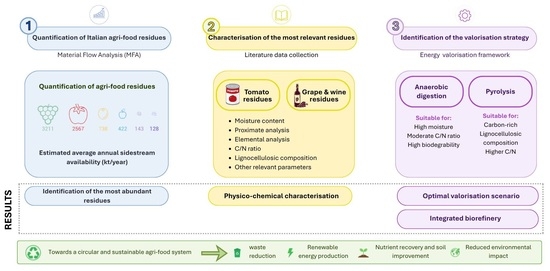
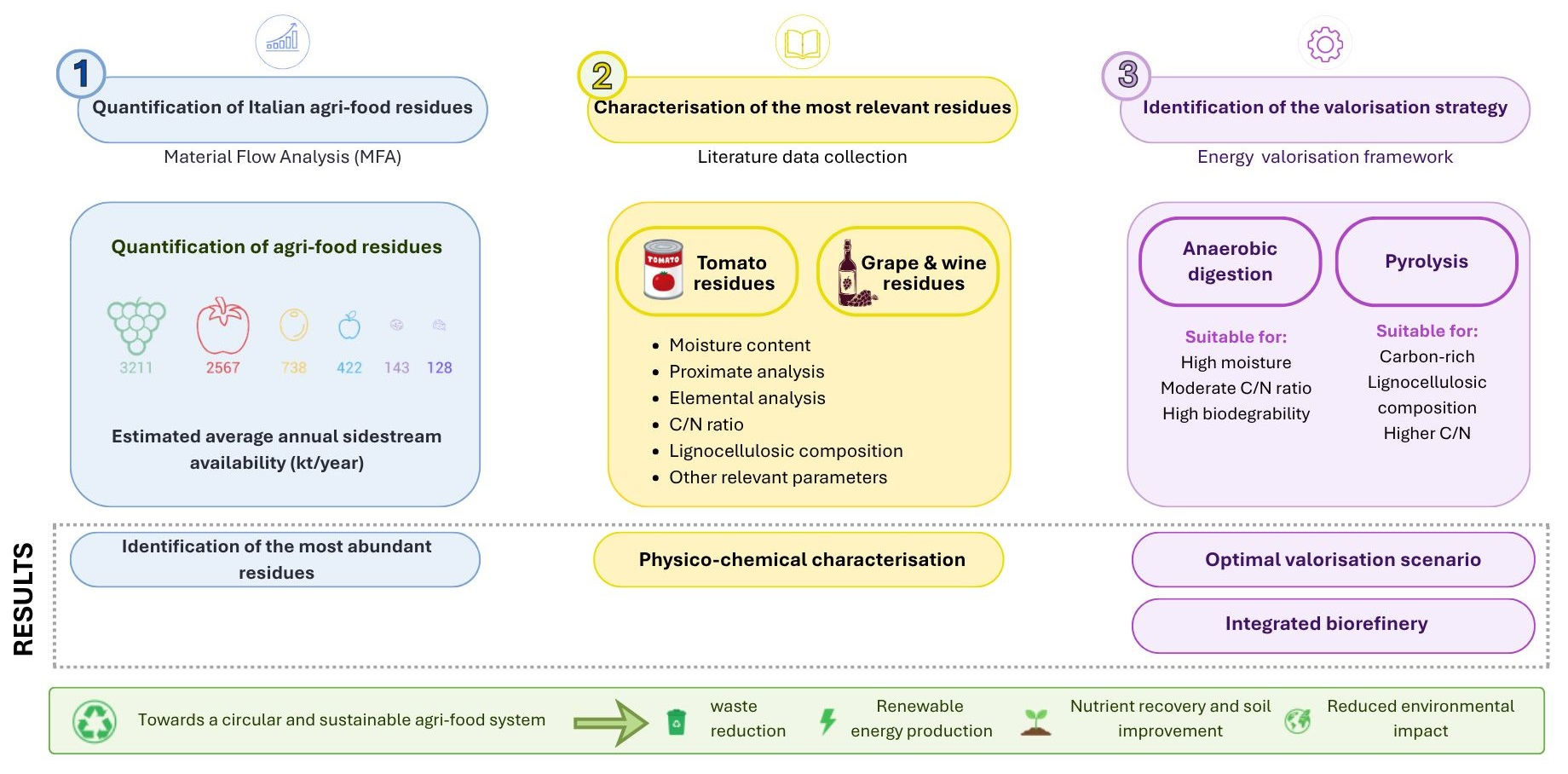
The proposed framework can support researchers, policymakers, and stakeholders in identifying the most relevant side-streams for valorization based on both their availability and physicochemical characteristics. By integrating Material Flow Analysis with biomass characterization, the approach provides a decision-support tool for selecting the most suitable conversion technology and identifying residues that may benefit from integrated biorefinery strategies. Furthermore, the framework establishes a basis for future experimental, techno-economic, and environmental assessments of the most abundant agro-industrial residues in Italy.

Abstract

The agri-food sector generates significant quantities of by-products and waste biomass, representing both an environmental challenge and an opportunity for resource recovery within a circular bioeconomy. This study developed a decision-support framework for the sustainable valorization of major residues from the Italian agri-food sector. Following a Material Flow Analysis (MFA) of multiple Italian agri-food supply chains, tomato and grape supply chains were selected as representative case studies because they generated the largest quantities of valorizable by-products among the agri-food sectors evaluated, namely tomato pomace and grape marc. MFA based on FAOSTAT and PRODCOM data (2019–2023) was combined with a literature review to assess biomass availability and physicochemical characteristics. The analysis identified tomato pomace and grape marc as the predominant residues. Tomato pomace showed high moisture content (63.34%), balanced organic composition, and a favorable C/N ratio, supporting its suitability for anaerobic digestion with an average biomethane potential (BMP) of 0.143 m3 CH4/kg TVS. Conversely, grape marc exhibited a carbon-rich lignocellulosic structure, with a carbon content of 47.67%, C/N ratio of 24.73, and BMP of 0.195 m3 CH4/kg TVS, favoring thermochemical conversion pathways, particularly pyrolysis. The framework also highlights the importance of cascading strategies, prioritizing the recovery of high-value compounds, and pretreatment approaches to improve biomass conversion efficiency. Overall, this approach supports optimized resource recovery and sustainable agri-food waste management.

1. Introduction

The valorization of waste has become a major challenge worldwide, especially in the agricultural and agri-food sectors, which generate large amounts of organic residues. Although these by-products are not inherently hazardous, their seasonal accumulation and high organic matter content can lead to significant environmental issues if they are not properly managed [1]. In a context marked by rapid population growth, increasing urbanization, and rising greenhouse gas emissions from fossil fuel use, the need for effective strategies to reduce emissions and promote sustainable development, including the use of sustainable and renewable energy sources, has become increasingly urgent [2,3]. In this regard, the transition from a linear economy to a circular economy is progressively gaining momentum, promoting waste reduction, reuse, and conversion into value-added resources [4,5]. This approach aligns with Sustainable Development Goals and supports the achievement of a “zero-waste” society [6]. Agri-food wastes, characterized by high lignocellulosic content (cellulose, hemicellulose, and lignin), have considerable potential for conversion into renewable energy, such as biogas and bioethanol, as well as into precursors of high-value functional compounds [7].
Italy, one of the leading countries in the global agri-food sector, generates millions of tons of by-products annually across its diverse food supply chains [8]. Despite their high valorization potential, a significant proportion of these residues remain underutilized or are managed through conventional practices such as animal feed application, land spreading, or open-air burning, which may contribute to environmental degradation and economic inefficiencies [9]. Among the numerous agri-food supply chains operating in Italy, several generate substantial quantities of biomass residues. Identifying the most relevant streams is a prerequisite for developing effective valorization strategies, as the environmental and economic benefits of biomass recovery strongly depend on both resource availability and biomass characteristics.
Recent research has increasingly focused on developing innovative technologies to convert agro-industrial residues into energy and high-value products. Biomass valorization can be achieved through biochemical processes such as anaerobic digestion (AD) and thermochemical technologies such as pyrolysis. AD is the most widely used technique in European Union [10], which involves the microbial degradation of organic matter in the absence of oxygen, leading to the production of biogas mainly composed of methane (CH4) and carbon dioxide (CO2) [11]. Biogas can be used efficiently as a renewable energy source, thereby supporting reductions in carbon emissions across the heating, transportation, and energy sectors [10]. In addition to generating renewable energy, AD produces a residue, commonly known as digestate, a nutrient-rich slurry containing significant amounts of nitrogen, phosphorus, and organic matter that can be reused as a biofertilizer in agricultural soils. This contributes to nutrient recycling and supports circular economy strategies [12,13].
Alternatively, pyrolysis converts biomass under oxygen-limited conditions into bio-oil, syngas, and biochar [14]. Bio-oil is a liquid fraction rich in oxygenated organic compounds that can be used as a renewable fuel or further upgraded into chemicals and transportation fuels [15]. Syngas, mainly composed of carbon monoxide, hydrogen, methane, and carbon dioxide [16], can be used directly for heat and electricity production or as an intermediate feedstock for the synthesis of fuels and chemical products [17]. Among the pyrolysis products, biochar has attracted considerable interest due to its high carbon content, stability, and multifunctional properties [18]. Biochar contributes to long-term carbon sequestration in soils, thereby helping mitigate greenhouse gas emissions and climate change. In agricultural systems, its porous structure and large surface area can improve water retention, stimulate microbial activity, and enhance nutrient availability in soils. These properties may improve soil fertility and crop productivity while reducing nutrient leaching and fertilizer requirements [19]. Additionally, its ability to absorb heavy metals and organic pollutants makes it valuable for environmental remediation, further supporting sustainable agricultural practices and circular economy initiatives [20].
The conceptual frontier is biorefinery integration, where standalone conversion technologies (SCTs) are combined into integrated conversion technologies (ICTs) to process intermediates and by-products in cascade, diversifying energy carriers and reducing fugitive emissions. A review in Biomass & Bioenergy [21] frames this as the critical engineering challenge: optimizing energy yield without generating secondary pollutants that scale with the process. The agro-waste biorefinery model, based on zero-waste principles, enables the simultaneous production of bioenergy, biochemicals, bioplastics, and soil amendments from the same biomass stream. This integrated approach is increasingly promoted as a key strategy for achieving the objectives of the European Circular Economy. Two cross-cutting challenges appear consistently across these reviews: feedstock heterogeneity (agri-food waste (AFW) composition varies seasonally and geographically, complicating process stability) and the economics of pretreatment, which often consumes a disproportionate share of energy inputs. Life Cycle Assessment (LCA) and techno-economic assessment are increasingly recommended as prerequisites before scale-up.
The selection of the most suitable conversion pathway strongly depends on the physicochemical characteristics of the biomass, including moisture content, carbon and nitrogen composition, ash content, and biodegradability. Therefore, proper characterization and classification of agri-food waste and by-product streams are essential for optimizing their valorization potential and identifying the most efficient energy recovery technologies [22,23].
In this context, the present study aims to develop a national-level screening and prioritization framework for agri-food side-streams in Italy by combining quantitative estimation of biomass availability with physicochemical characterization. Regional differences in biomass distribution, transportation distances, and processing infrastructure were beyond the scope of the present study. Specifically, the objectives of this study are:
(i)
to quantify the generation of major agri-food by-products in selected Italian supply chains;
(ii)
to characterize their physicochemical properties relevant to energy recovery;
(iii)
to assess their suitability for biochemical (anaerobic digestion) and thermochemical (pyrolysis) conversion pathways; and
(iv)
to develop a decision-support framework for matching biomass characteristics with the most appropriate valorization technology.

2. Materials and Methods

To generate a detailed assessment of the agri-food systems in Italy, data for the 2019–2023 period were collected from relevant statistical databases. Primary figures regarding agricultural output and global trade dynamics (imports/exports) were retrieved from FAOSTAT’s Production and Trade domains, respectively. FAOSTAT Food Balance Sheets were also used to estimate primary production (PP) and processing/manufacturing (P&M) streams (https://www.fao.org/faostat/en/#data, accessed on 24 April 2026). In addition, for industrial processing, Supplementary Information on the manufacturing stage has been extracted from Prodcom databases (https://ec.europa.eu/eurostat/comext/newxtweb/submitdimselect.do, accessed on 26 April 2026).
All data were expressed in consistent units (tons/year) to ensure comparability across the different stages of the food supply chain.
Secondary streams, including by-products and waste, were estimated through Material Flow Analysis (MFA) following the approach proposed by De Laurentiis et al. [24]. The model balances production and trade volumes using the conversion and waste coefficients reported in Annexes I and II of the reference paper. The combined PP and P&M waste and by-product streams represent the biomass available for subsequent valorization [24]. For supply-chain ranking, side-stream quantities estimated for interconnected primary production and processing activities were aggregated at the supply-chain level. For each investigated supply chain, the reported value represents the total estimated availability of waste, residues, and by-products generated across the primary production (PP) and processing and manufacturing (P&M) stages considered in the MFA. When the output of one processing pathway served as input to a subsequent production stage, material flows were allocated to the corresponding processing routes before aggregation, ensuring that each flow was counted only once and avoiding double counting. For transparency, all collected data are summarized in Table S1, along with annual mean values (2019–2023), standard deviation, and coefficient of variation (%).
The MFA results were subsequently used to identify the most relevant agri-food side-streams generated within the Italian food system. Residues were ranked by annual generation volume, and the most abundant biomass streams were selected for further investigation. A general schematic representation of the MFA is shown in Figure 1. PP01, PP02, PP03, PP04, and PP05 denote the primary production coefficients for side flows, food waste, animal feed, food losses, and by-products, respectively. C1, C2, C3, and C4 represent the generic P&M coefficients for vegetables and grapes, as summarized in Table S2.
For each investigated commodity group, Table S3 provides the numerical values, definitions, MFA stage, and original source of the coefficients used to estimate waste, residue, and by-product generation.
Following the identification of the priority agri-food supply chains and their main residue streams through the MFA, a targeted literature-based data collection was conducted to retrieve physicochemical and biochemical properties relevant to biomass characterization and valorization. Scientific publications were identified by searching Scopus and Google Scholar using combinations of keywords related to the selected residue streams (e.g., “tomato pomace”, “tomato peel”, “tomato seeds”, “grape marc”, “grape seeds”, “grape stalks”, and “wine lees”) and the properties of interest (e.g., “moisture content”, “protein”, “lipids”, “ash”, “carbon”, “nitrogen”, “C/N ratio”, “carbohydrates”, “cellulose”, “hemicellulose”, “lignin”, and “biochemical methane potential”). The search initially identified 63 studies related to tomato residues and 50 studies related to grape residues. After screening titles and abstracts for relevance, 26 tomato-related and 23 grape-related studies were retained for full-text assessment. Studies reporting quantitative data for at least one of the selected physicochemical or biochemical parameters were considered for data extraction. No restrictions were applied regarding publication year, and only peer-reviewed articles in English that reported original experimental data were considered. Following the full-text assessment, 15 studies on tomato residues and 17 studies on grape residues were included in the final dataset. Data were extracted from the selected studies and compiled into a structured dataset for the comparative characterization of the residue streams and the subsequent assessment of suitable valorization pathways.
Based on the estimated biomass availability and the collected physicochemical characteristics, a decision-support framework was developed to identify suitable valorization pathways for the selected residues. The framework considered key biomass properties and pretreatment requirements to match each residue stream with the most appropriate conversion technology.

3. Results and Discussion

3.1. Quantification of Tomato and Grape By-Products in Italy

The MFA revealed a significant generation of biomass waste and by-products during both PP and P&M stages, with the largest quantities associated with P&M activities. The complete quantification results for all assessed agri-food sectors are provided in the Supplementary Materials (Table S3).
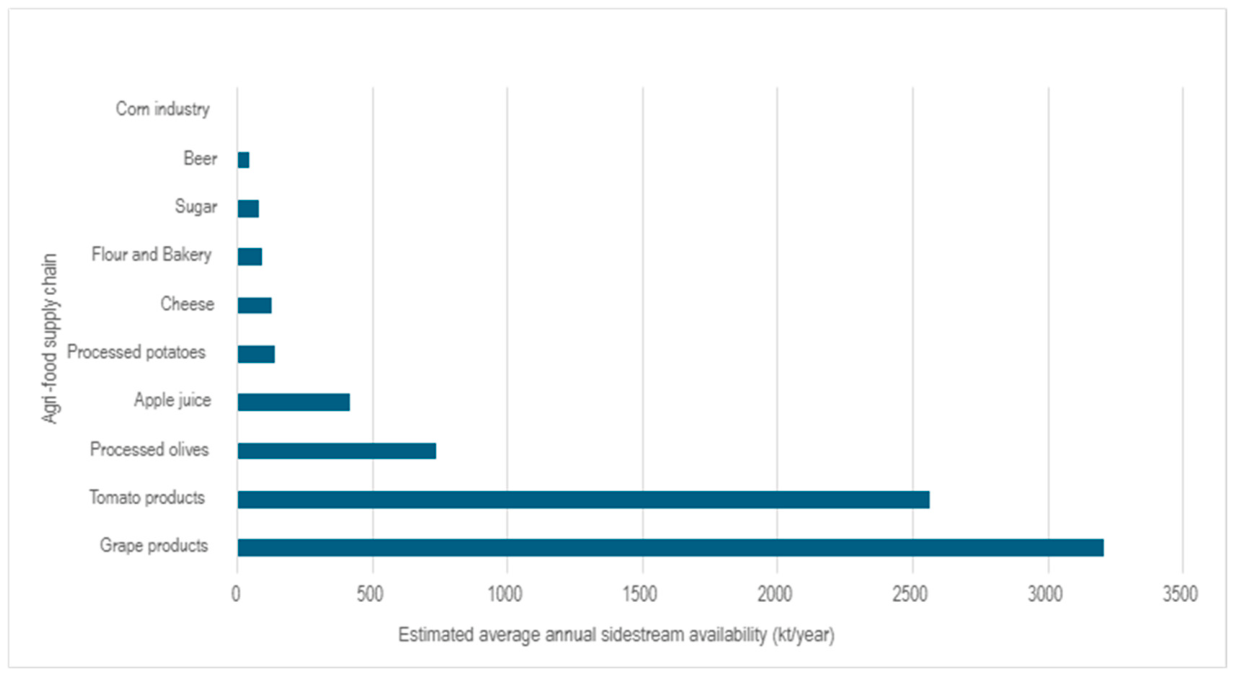
For each agri-food supply chain investigated, the quantities reported in Figure 2 represent the estimated average annual availability of waste, residues, and by-products generated at both the PP and P&M stages. The quantities of waste, residues, and by-products generated at these stages were estimated using the mass-balance approach and allocation coefficients adapted from De Laurentiis et al. [24]. The resulting values were aggregated to estimate the total annual availability of each supply-chain side-stream in Italy. For barley, olive, wheat, apple and sugar beet supply chains, the MFA included primary production and processing flows of beer, olive oil, flour, apple juice and refined sugar, respectively. For the potato and maize supply chains, the MFA included primary production and processing flows of processed potatoes and the corn industry. For milk supply chain was considered only the processing flow for cheese production starting from both skimmed and whole cattle milk. For the tomato products supply chain, the MFA included primary tomato production and processing flows for tomato juice, preserved tomatoes, tomato puree, concentrated tomato products, and ketchup. The grape products supply chain included primary grape production in the MFA, along with processing flows for grape juice, dried grapes, and spirits distilled from grape wine, as well as side streams generated from wine production. Based on estimated average annual availability calculated for the 2019–2023 period (Figure 2, and Table S3), tomato and grape products chains were identified as the most relevant sources of residual biomasses estimated at approximately 2,566,889 tons/year, and about 3,211,068 tons/year respectively.
These supply chains were therefore selected for further investigation. Within each priority supply chain, the specific residue streams were identified based on their relative occurrence and availability. Tomato pomace was identified as the dominant residue of tomato processing, whereas grape marc was the main solid residue in the grape products supply chain, alongside other relevant fractions such as grape stalks, seeds, and wine lees. These specific residue streams were subsequently characterized based on their physicochemical properties and composition to assess suitable valorization pathways.
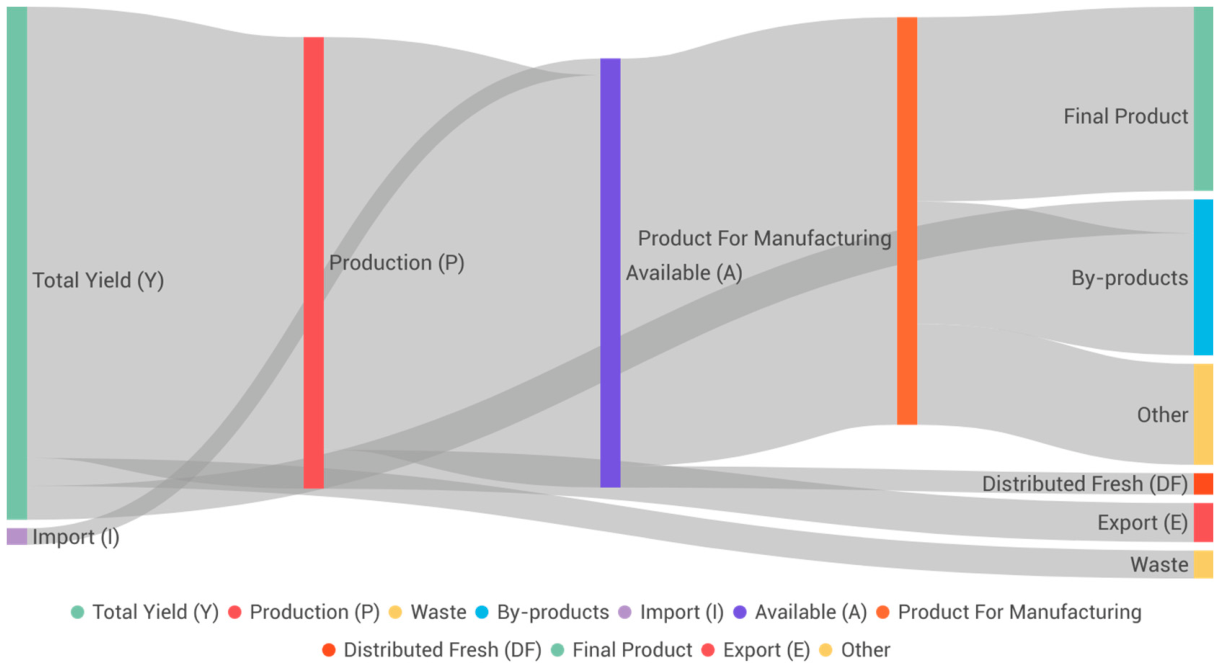
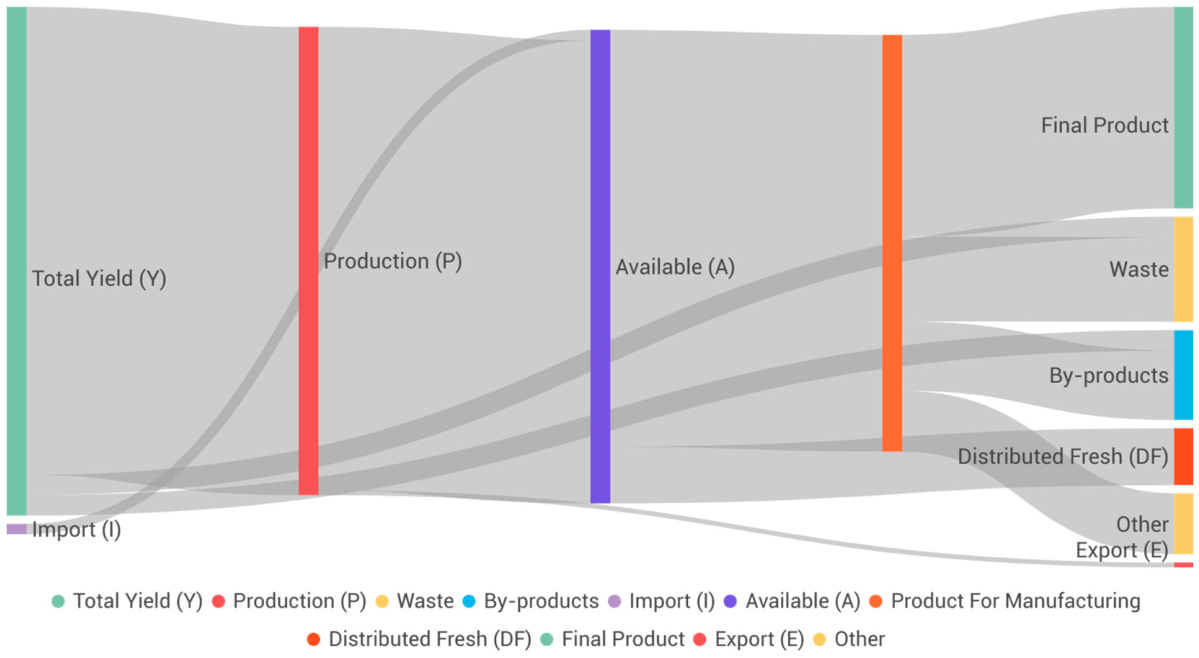
The Sankey diagrams further illustrate the distribution of biomass flows within the tomato and grape products supply chains, from total production and imports through processing activities and final products to exports and the generation of residues and by-products (Figure 3 and Figure 4). In both supply chains, the P&M stage was the primary source of biomass residues, underscoring the importance of processing operations as the primary avenue for biomass recovery. In the tomato products supply chain, a large proportion of the processed biomass was converted into tomato products, while approximately 2.03 million tons per year were generated as processing residues and by-products (Figure 3). Similarly, the grape supply chain generated substantial residues associated with grape processing and wine production, confirming the high availability of biomass streams from the P&M stage (Figure 4).
Overall, tomato and grape residues accounted for more than 70% of the total biomass residues identified across the investigated Italian agri-food supply chains. Owing to their quantitative relevance and high potential for resource recovery, these biomass streams were selected for further physicochemical characterization and subsequent assessment of suitable valorization pathways. Therefore, the following sections focus on tomato and grape residues as representative case studies to develop the proposed energy valorization framework.
Table S1a,b report the complete dataset collected over the five-year window (2019–2023), including the annual averages, standard deviations, and coefficients of variation (CV) for all primary and manufactured products considered in this study. Regarding production volumes, only 5 of 25 products exhibit a CV greater than 20%, indicating that the vast majority of the system maintains highly reproducible and robust performance across interannual variations. Conversely, trade data exhibit a different dynamic: import volumes and stock variations reveal more products with elevated CVs, reflecting highly volatile temporal trends. Given the single-data-point-per-year limitation, this localized high variance precludes the use of standard mean-comparison tests but strongly underscores significant, sector-specific interannual fluctuations.

3.2. Physicochemical Characteristics of Agri-Food Waste and By-Products

The selection of physicochemical properties was based on their importance for biomass valorization as an energy source. Moisture content affects the choice of biochemical or thermochemical processes [25]. Lipid, protein, and carbohydrate content affect the potential for biogas and bioethanol production [26]. Ashes indicate combustion or thermochemical transformation of biomass [27], while the C/N ratio can help assess the potential for AD [25]. Finally, biochemical methane potential (BMP) is useful for estimating the biogas production potential of biomass residue [28]. BMP values were expressed as m3 CH4/kg TVS, where TVS (Total Volatile Solids) corresponds to the organic fraction of biomass that can be biologically degraded and converted into methane.
To identify the optimal pathways for agri-food by-product valorization, the data collected on tomato and grape waste were compared (Table 1 and Table 2).
The physicochemical and biochemical characteristics reported in the literature showed substantial variability among studies. This variability may reflect intrinsic factors, including cultivar, maturity stage, growing conditions, and biomass composition, as well as extrinsic factors related to processing conditions, residue separation, drying, pretreatment, and analytical methods. Therefore, the average values reported in Table 3 should be interpreted as summary descriptors of the available literature data rather than as fixed properties of the investigated residue streams. To represent the observed variability, Table 3 reports the mean and range (minimum–maximum; number of studies) of the available comparable values for each parameter. The physicochemical characterization of tomato and grape processing residues highlights significant variability depending on the by-product type and its origin within the supply chain. In the summary table (Table 3), average moisture contents were calculated using only fresh tomato pomace and fresh grape marc samples reported in the selected studies. Dried and pretreated samples were excluded because their moisture content had been altered by processing operations.
In the grape industry, by-products such as grape marc, seeds, stalks, and wine lees exhibit substantial variability in their physicochemical properties (Table 1). Fresh grape marc showed a high moisture content, ranging from 53.40% to 62.90%, with an average value of 58.53% (Table 3), whereas dried grape-derived materials exhibited considerably lower moisture contents (1.4–10%). Protein and lipid contents in grape marc averaged 9.36% and 9.07%, respectively, while grape seeds contained lower lipid concentrations after processing (2.60%) and a higher carbon content (51.32%). Carbon concentrations in grape marc ranged from 42.20% to 53.10%, while nitrogen contents varied between 0.89% and 3%, resulting in C/N ratios ranging from 14.1 to 36.92 for grape marc with an average value of 24.73. The lignocellulosic composition of grape residues further highlights their potential for thermochemical valorization. Cellulose contents ranged from 9.15% to 28.64%, while hemicellulose varied between 4.00% and 26.50%, and lignin from 11.60% to 49.62%. Beyond energy recovery, grape residues contain valuable compounds such as polyphenols, anthocyanins, procyanidins, phenolic acids, and dietary fibers. Grape seeds are particularly rich in oil and phenolic compounds, whereas wine lees contain ethanol, tartaric acid, phenolic compounds, and yeast biomass. These bioactive compounds represent valuable resources to produce natural antioxidants, functional ingredients, and specialty chemicals [29]. Methane potential values ranged from 0.04 to 0.43 m3 CH4/kg TVS, with grape marc showing the highest value with an average BMP of 0.20 m3 CH4/kg TVS, reflecting their high biodegradability and organic matter content.
Comparatively, tomato residues, including pomace, peels, and seeds, exhibited distinct physicochemical characteristics across residue fractions (Table 2). Fresh tomato pomace exhibited consistently high moisture contents, ranging from 66.40% to 73.90%, with an average value of 63.34% (Table 3), whereas dried pomace and peel samples contained only 3–5% moisture. Tomato seeds showed the highest nutritional value, reaching average protein and lipid contents of 26.40% and 25.00%, respectively. Tomato pomace contained average protein and lipid contents of 16.75% and 6.53%, respectively, while peels were characterized by elevated carbohydrate contents (45.5%), reaching up to 78.56% in some studies. The structural composition of tomato residues revealed cellulose, hemicellulose, and lignin contents averaging 25.50%, 12.60%, and 6.90%, respectively, for tomato pomace. Compared with grape residues, tomato by-products generally exhibited lower lignin contents, indicating a less recalcitrant structure and a greater susceptibility to biological degradation. In addition to their bioenergy potential, tomato residues are rich in valuable bioactive compounds. Tomato pomace and peels contain significant amounts of lycopene, carotenoids, dietary fibers, pectin, and phenolic compounds, whereas tomato seeds are a valuable source of proteins, bioactive peptides, phytosterols, and unsaturated fatty acids, particularly oleic and linoleic acids [23,30]. These compounds have considerable potential for applications in the food, nutraceutical, cosmetic, and pharmaceutical sectors. Carbon and nitrogen contents in tomato processing waste averaged 44.48% and 2.54%, respectively, corresponding to a C/N ratio of 15.03. Methane potential values ranged from 0.07 to 0.22 m3 CH4/kg TVS. The combination of high moisture content, moderate C/N ratio, and balanced organic composition highlights the distinct physicochemical profile of tomato residues compared with grape-derived by-products.
Table 1. Physicochemical characteristics of grape residues and by-products according to scientific literature.
SampleMoisture (%)Protein (%)Lipids (%)Ash (%)Carbon (%)Nitrogen (%)C/N RatioCarbohydrate (%)Cellulose (%)Hemicellulose (%)Lignin (%)Compounds of InterestBMP (m3CH4/kg TVS)Ref.
WGM 62.98.78.95.532.88Polyphenol, fibers, and phenolic compounds (procyanidins, anthocyanins, and phenolic acids)[29]
RGM 53.412.510.75.337.88
GM 59.38.148.62.4819.60[31]
GM 7.1 *451.11.926.8924.149.62[32]
GM 10 *13.342.2314.07[22]
GM 7.5 *7.5432.0520.98[33]
GM 6.2 *4.746.61.629.1328.6441.98[34]
GM 3.51 *3.0553.062.5820.5715.526.541.5[35]
GM 1.4 *8.2348.71.6629.34[36]
GM 5.32.30.8934.1[37]
GM 6.29 *5.6651.442.0525.09[38]
GM 7.012.644.31.236.929.24.011.6[39]
GM 14.178.55.149.1522.4523.19[40]
GM 3.33 *8.498.164.6529.2[41]
GM 0.43[42]
GM 0.04[43]
GM 2.3015.521.00.116[44]
WL Ethanol, tartaric acid, phenolic compounds, yeast biomass0.37[42]
GST Polyphenols, lignocellulosic fibers0.13[42]
GST 1.9923.515.90.098[44]
GST 68.99.048.231.9324.99 [31]
GS 3.14.31.80.5340.2Oil seed[37]
DGS 7.1 *8.90.872.0551.21.4335.80[45]
*: Dry basis; GM: grape marc; WGM: white grape marc; RGM: red grape marc; GS: grape seeds; DGS: defatted grape seed; GST: grape stalks; WL: wine lees.
Table 2. Physicochemical characteristics of tomato residues and by-products according to scientific literature.
SampleMoisture (%)Protein (%)Lipids (%)Ash (%)Carbon (%)Nitrogen (%)C/N RatioCarbohydrates (%)Cellulose (%)Hemicellulose (%)Lignin (%)Compounds of Interest BMP (m3CH4/kg TVS)Ref.
TP66.440.833.1313.04Lycopene, dietary fibers, phenolic compounds[46]
TP6.5 *17.884,425.1330.611.27[47]
TP24.102.113.2347.1428.614.75[48]
TP24.41.97.513.18.82.3[49]
TP57.65.03.257.00.9261.967.75.413.5[50]
TP73.7162.560.067[51]
TP3.3434.08.70 0.218[44]
TP66.620.914.13.6[52]
TP73.96.9[53]
TP73.13.3563.217.5[54]
TP71162432[55]
TP5.3 *24.79.95.3 39.1[56]
Peel3.05 *6.512.1712.41Lycopene, carotenoids, pectin, phenolic compounds[57]
Peel10.54.045.978.56[58]
Seed26.3925.033.526.31Proteins, bioactive peptides, oleic acid, linoleic acid, phytosterols (cycloeucalenol)[23]
*: Dry basis; TP: Tomato pomace.
Table 3. Summary of the average physicochemical characteristics of tomato and grape residues by sample type.
Residue CategoryMoisture (% FM)Protein (% DM)Lipids (% DM)Ash (% DM)C (% DM)N (% DM)C/N RatioCarbohydrates (% DM)Cellulose (% DM)Hemicellulose (% DM)Lignin (% DM)Compounds of InterestBMP (m3 CH4/kg TVS)
Tomato pomace 63.34 (24.40–73.90; 8)16.75 (5.00–24.40; 6)6.53 (1.90–14.10; 6)4.11 (3.20–5.13; 5)44.48 (24.10–57.00; 4)2.54 (0.92–3.34; 6)15.27 (7.50–61.96; 4)26.23 (3.23–39.1; 4)25.50 (7.10–47.14; 4)12.6 0(5.4–28.61; 5)6.90 (2.30–14.75; 3)Lycopene, fibers, phenolics0.14 (0.07–0.22; 2)
Tomato peel8.51 (6.51–10,50; 2)4.00 (1)4.03 (2.17–5.90; 2)45.50 (12.41–78.56; 2)Lycopene, pectin, carotenoids
Tomato seeds26.40 (1)25.00 (1)3.50 (1)26.31 (1)Proteins, peptides, seed oil
Grape marc58.53 (53.4–62.9; 3)9.36 (5.30–14.17; 6)9.07 (8.16–10.70; 4)6.49 (2.30–13.30; 14)47.67 (42.20–53.06; 9)2.00 (0.89–3.00; 11)24.73 (14.07–36.92; 9)29.20 (1)17.02 (9.15–28.64; 6)18.50 (4.00–26.50; 4)34.1 (11.60–49.62; 8)Polyphenols, anthocyanins, fibers0.20 (0.04–0.12; 2)
Grape seeds6.00 (3.10–8.90; 2)2.60 (0.87–4.30; 2)1.92 (1.08–2.05; 2)51.32 (1)1.00 (0.53–1.43; 2)35.80 (1)40.20 (1)Oil seed
Grape stalks68.90 (1)9.00 (1)48.23 (1)2.00 (1.93–1.99; 2)24.99 (1)23.50 (1)15.90 (1) Polyphenols, lignocellulosic fibers0.11 (0.13–0.10; 2)
Wine leesEthanol, tartaric acid, phenolic compounds, yeast biomass0.37 (1)
Values are reported as mean (minimum–maximum; n), where n is the number of studies reporting the corresponding parameter.

3.3. Valorisation Framework for Tomato and Grape Waste and By-Products

The comparative analysis (Table 3) revealed marked differences between tomato and grape supply chain residues in terms of composition, structural characteristics, methane production potential, and the presence of valuable compounds. Grape residues generally exhibited higher C/N ratios, greater lignin contents, and a richer profile of phenolic compounds, whereas tomato residues, particularly seeds, were characterized by higher protein and lipid concentrations together with bioactive molecules such as lycopene and carotenoids. These differences highlight the importance of adopting residue-specific valorization strategies and provide the basis for selecting the most appropriate recovery pathways according to the characteristics of each biomass stream. In addition to physicochemical characteristics, the relative abundance of each residue fraction should also be considered when establishing valorization priorities. Large-volume residues, such as tomato pomace and grape marc, are expected to drive the main conversion strategy due to their significant availability in the processing chain (Table 4).
In contrast, less abundant fractions, including tomato peels, tomato seeds, grape seeds, and wine lees, although generated in smaller quantities, contain high concentrations of valuable compounds that justify prioritizing them within a cascading biorefinery approach before energy recovery.
Firstly, moisture content is among the most important criteria for selecting appropriate valorization technology. Fresh tomato pomace exhibits a high moisture content, averaging 63.34%, which is typical of residues generated directly from processing operations. Such high moisture levels increase the energy demand for drying and reduce the efficiency of thermochemical processes such as pyrolysis and gasification, as a significant fraction of the supplied energy is consumed for water evaporation rather than biomass conversion. Moreover, high moisture contents have been reported to decrease heating rates and reaction efficiencies in thermochemical reactors, thereby limiting overall process performance [61].
Although tomato pomace appears to be the most suitable tomato-derived residue for AD due to its high moisture content, balanced organic composition, and favorable biodegradability, different valorization strategies may be more appropriate for specific tomato processing fractions. However, specific fractions such as tomato seeds and peels may follow different valorization routes. Tomato seeds, for instance, are characterized by high protein (26.4%) and lipid (25.0%) contents, making them attractive feedstocks for the recovery of high-value compounds such as oils, proteins, and bioactive molecules [23,62]. In line with circular bioeconomy principles, the extraction of these compounds should be prioritized before any energy recovery process. The residual biomass could subsequently be directed to anaerobic digestion for biogas production. Similarly, tomato peels are characterized by high carbohydrate content and are an important source of valuable compounds, particularly lycopene, dietary fiber, and other antioxidants [23]. Therefore, the recovery of these functional ingredients may constitute a more sustainable valorization pathway than direct energy conversion. Following the extraction of high-value compounds, the remaining biomass could still be utilized for bioenergy production through anaerobic digestion or other suitable conversion technologies.
These observations suggest that a cascading valorization approach may be preferable for tomato processing residues, where the recovery of bioactive compounds and functional ingredients precedes energy generation. Such an approach maximizes resource efficiency while remaining consistent with circular economy principles.
Grape residues exhibit a heterogeneous composition across residue fractions. Fresh grape marc presents a moisture content of approximately 59%, which is lower than that of tomato pomace but still sufficiently high to require drying before thermochemical conversion. Considering that grape marc represents the dominant solid fraction of winery residues (Table 4), its valorization strategy largely determines the overall management of grape-processing by-products. Its carbon-rich and lignocellulosic composition supports thermochemical conversion pathways. The relatively high lignin content contributes to greater thermal stability and carbon retention, promoting the production of biochar, syngas, and bio-oil through processes such as pyrolysis and gasification [63]. In contrast, the recalcitrant nature of these structural polymers can reduce microbial accessibility and limit anaerobic biodegradability, contributing to the variability observed in methane yields among grape-derived residues. Additionally, the elevated carbon content may help reduce nitrogen oxide emissions during thermochemical conversion [22]. In addition to grape marc, other grape-derived fractions, including seeds, skins, stalks, and wine lees, also offer significant opportunities for valorization due to their distinct physicochemical composition and valuable bioactive compounds. Moreover, the methane potential of grape residues should not be overlooked. Grape marc exhibited an average methane potential of approximately 0.20 m3 CH4/kg TVS, while wine lees reached values as high as 0.37 m3 CH4/kg TVS, highlighting their potential for anaerobic digestion. These results indicate that several grape-derived fractions remain attractive for substrates for anaerobic digestion and may support efficient biogas production. Therefore, grape residues cannot be associated with a single optimal valorization route. Instead, the selection of the most appropriate pathway should be based on the specific residue fraction, its physicochemical characteristics, and the desired recovery objective. While thermochemical conversion may be preferable for lignocellulosic fractions rich in structural carbon. Beyond energy recovery, grape-derived residues represent a valuable source of bioactive compounds. The molecular landscape is dominated by polyphenols, but with clear anatomical specificity: seeds are the richest source of proanthocyanidins (condensed tannins, particularly catechin, epicatechin, and their oligomers/polymers) and account for the highest phenolic concentrations in pomace [64]. Skins are the principal source of anthocyanins (malvidin, delphinidin, and cyanidin glycosides in red varieties), stilbenes (trans-resveratrol and ε-viniferin), and flavonols such as quercetin and myricetin [65]. Stems, often undervalued, turn out to carry a wider diversity of polyphenols than either pomace or wine lees including proanthocyanidins, phenolic acids (gallic, caftaric), flavan-3-ol monomers and oligomers, and flavonols and their profile is further modified by fermentation-related microbial activity [64,65]. Wine lees complete the picture as a source of phenolics shaped by yeast and lactic acid bacterial metabolism [29]. Given the high content of bioactive compounds and the marked compositional differences among grape-derived fractions, an integrated biorefinery approach should be considered prior to energy valorization. In this framework, valuable compounds such as polyphenols, tannins, anthocyanins, stilbenes, flavonols, and other functional molecules could first be recovered from the most suitable fractions, while the remaining biomass could subsequently be directed towards anaerobic digestion, pyrolysis, or other energy recovery pathways. Such a cascading valorization strategy would maximize resource efficiency, increase the economic value of grape-processing residues, and further support circular bioeconomy principles.

3.4. Challenge and Pre-Treatment Requirement

Despite the promising potential of both valorization pathways, each technique presents specific limitations, particularly regarding pretreatment requirements and operational constraints.
AD of high-moisture substrates, such as tomato pomace, is generally advantageous due to their rich organic content and high biodegradability. However, excessive moisture can pose challenges for storage, transport, and reactor stability. In addition, the presence of inhibitory compounds and imbalanced C/N ratios may require co-digestion or process optimization to maintain efficient microbial activity [3]. AD is also characterized by relatively slow conversion rates, often requiring several days to weeks to complete, which can limit process throughput [66]. Despite the favorable characteristics of tomato pomace for anaerobic digestion, the presence of a lignocellulosic fraction, mainly composed of cellulose, hemicellulose, and lignin, may still limit complete biodegradation during anaerobic digestion [67], and pretreatment or co-digestion strategies may further improve methane yield [68]. The implementation of AD systems may also involve significant investment costs, particularly at large scales, and the process remains sensitive to variations in feedstock composition and operating conditions such as temperature [11,14].
Conversely, thermochemical processes applied to grape marc typically require energy-intensive pre-treatment operations. Drying is often necessary to reduce moisture content and improve thermal efficiency; while grinding or size reduction ensures homogeneous feeding and enhances heat transfer during conversion [69]. Although lower moisture content improves energy efficiency by reducing drying requirements [70], thermochemical systems generally entail greater technological complexity and higher operational costs. These processes require significant energy input to reach the high temperatures. In addition, the quality and composition of products such as bio-oil may vary depending on feedstock characteristics and process conditions [71]. The presence of ash and inorganic compounds can also negatively affect reactor performance and influence the quality of the final products [72]. While moisture content is a key determinant in selecting the appropriate conversion pathway, other factors such as feedstock composition, process efficiency, economic feasibility, and technological maturity must also be considered. The choice between biochemical and thermochemical valorization routes should therefore be based on a comprehensive evaluation of these parameters to ensure both economic and environmental sustainability. Advances in pre-treatment technologies and process optimization offer promising opportunities to overcome current limitations and enhance the overall efficiency of biomass conversion [73].
Pre-treatment strategies play a crucial role in enhancing biomass conversion efficiency and maximizing its valorization potential. These technologies enable more effective utilization of biomass to produce energy, fuels, and value-added products [74].
Mechanical pre-treatments, such as grinding and milling, are commonly applied to reduce particle size and increase surface area, thereby improving substrate accessibility [75]. Thermal drying is particularly important for thermochemical processes, as it reduces moisture content and enhances energy efficiency during conversion [74].
In addition, biological and chemical pre-treatments, including enzymatic, acid, and alkaline treatments, are used to disrupt lignocellulosic structures. These methods improve biodegradability and facilitate microbial access to organic matter, thereby enhancing the efficiency of AD [76,77]. Furthermore, co-digestion with complementary substrates is widely employed to optimize the C/N ratio and improve process stability and microbial activity [77].
The integration of multiple pre-treatment methods has shown promising results in maximizing biomass degradation while reducing overall energy consumption, highlighting the importance of combined strategies in optimizing biomass valorization processes [76].
From a practical standpoint, the decision-support framework developed in this study provides a strategic roadmap for agri-food waste management in Italy. Consistent with previous studies emphasizing the role of decision-support frameworks in supporting evidence-based circular bioeconomy policies [78,79]. By demonstrating that high-volume residues such as tomato pomace are prime candidates for immediate anaerobic digestion, whereas heterogeneous grape residues require a cascading approach (prioritizing high-value polyphenol extraction before thermochemical conversion), this work offers actionable pathways for biorefinery developers and environmental policymakers seeking to optimize resource recovery. However, in addition to the technical challenges associated with biomass conversion, the proposed framework is subject to methodological limitations arising from the use of aggregated national-level data. The MFA was developed using FAOSTAT and PRODCOM statistics, which provide standardized annual estimates at the national scale but do not capture regional differences in agricultural production, processing capacities, biomass availability, seasonal variability, or existing residue management practices. Consequently, the estimated biomass flows should be interpreted as strategic national-level estimates rather than site-specific assessments. Similar limitations have been reported in other national-scale biomass assessments, where aggregated inventories were effective for identifying major residue sources but did not fully represent local processing capacities, seasonal fluctuations, and spatial constraints affecting biomass flows [80]. Furthermore, the physicochemical and biochemical properties were compiled from published literature and may vary according to cultivar, geographical origin, cultivation practices, processing technologies, and analytical methodologies [81]. Future work should integrate regional datasets, industrial surveys, and primary experimental data to improve the spatial resolution and reliability of the proposed framework and to support the identification of location-specific valorization strategies. Additionally, combining this spatial mapping with comprehensive LCA and techno-economic analyses will be crucial to evaluate the industrial and environmental viability of the proposed cascading scenarios [82,83].

4. Conclusions

This study combined MFA with physicochemical characterization to develop a framework for the valorization of major agri-food side-streams generated in Italy.
The MFA revealed that tomato and grape processing generated approximately 2.57 million and 3.21 million tonnes of residues per year, respectively, together accounting for more than 70% of the biomass residues generated within the investigated agri-food supply chains, making them priority residual biomasses for implementing circular bioeconomy strategies and maximizing resource recovery.
The comparative characterization of the main residual biomasses obtained from grape and tomato processing, respectively marc and pomace, revealed substantial differences in their physicochemical properties, and valorization potential. Also a viable option, pomace was characterized by high moisture content (63.3%), favorable biodegradability, suitable C/N ratios (15.3), and a BMP of 0.14 m3 CH4 kg−1 TVS, indicating anaerobic digestion as a promising pathway for renewable energy production. In contrast, grape marc, characterized by a carbon content of 47.7%, a lignocellulosic structure, a C/N ratio of 24.7, and a BMP of 0.195 m3 CH4 kg−1 TVS, making thermochemical processes such as pyrolysis particularly attractive. Nevertheless, the relatively high methane potential observed for several grape-derived fractions, especially wine lees (0.37), suggests that anaerobic digestion also represents a viable option depending on the specific residue characteristics.
Both tomato and grape processing residues contain fractions rich in high-value compounds, including oils, proteins, polyphenols, anthocyanins, stilbenes, antioxidants, and dietary fibers. Therefore, integrated biorefinery approaches based on cascading valorization should be considered whenever feasible, prioritizing the recovery of bioactive compounds before energy conversion of the remaining biomass.
The results highlighted the heterogeneity of agro-industrial residues and the limitations of adopting a single valorization pathway for an entire biomass category. Overall, the proposed framework demonstrates how integrating biomass availability data with physicochemical characterization can inform the selection of the most appropriate valorization technologies. By linking residue generation, biomass composition, and conversion pathways, this approach provides a practical decision-support tool to improve resource efficiency, promote renewable energy production, and advance circular bioeconomy strategies in the Italian agri-food sector.
Nevertheless, the framework presents limitations associated with the use of aggregated national-level data and literature-derived biomass properties. Therefore, it should be regarded as a strategic decision-support tool at the national scale, while future studies should incorporate regional datasets, industrial information, and techno-economic and life cycle assessments to further refine the proposed valorization scenarios.
In conclusion, integrating circular economy principles across the agri-food supply chain, from primary production to industrial processing, presents a critical pathway for sustainable resource management. By transforming the waste streams generated at each stage into valuable resources, this closed-loop approach directly advances SDG 12 (Responsible Consumption and Production) by reducing post-harvest and processing losses, while simultaneously supporting SDG 13 (Climate Action) through environmental mitigation.

Supplementary Materials

The following supporting information can be downloaded at: https://www.mdpi.com/article/10.3390/app16157516/s1, Table S1a. Production and uses generated across the investigated Italian agri-food supply chains (average annual values for the period 2019–2023, with relative standard deviation); Table S1b. Import, export and stock variation across the investigated Italian agri-food supply chains (average annual values for the period 2019–2023, with relative standard deviation); Table S2. Waste generation coefficients used for estimating agri-food side-streams at the primary production and processing/manufacturing stages (adapted from Annex I of De Laurentiis et al. [24]). Values in bold represent the Italian values; Table S3 Quantification of biomass residues and by-products generated across the investigated Italian agri-food supply chains (average annual values (t/year) for the period 2019–2023). PP: Primary Production; P&M: Processed and Manufacturing. In red, other mass outputs.

Author Contributions

Conceptualization, L.L.; methodology, S.O., D.V. and L.L.; validation, S.O., D.V. and L.L.; formal analysis, S.O., D.V. and L.L.; investigation, S.O., D.V. and L.L.; resources, S.O. and D.V.; data curation, D.V. and L.L.; writing—original draft preparation, S.O.; writing—review and editing, S.O., D.V. and L.L.; visualization, S.O. and L.L.; supervision, L.L.; project administration, L.L. All authors have read and agreed to the published version of the manuscript.

Funding

This research was funded by “PR-FESR EMILIA ROMAGNA 2021–2027”, grant number PG/2023/308939. CUP J33C23002620003 and also by “ON Foods—Research and innovation network on food and nutrition Sustainability, Safety and Security—Working ON Foods”, grant number PE0000003. CUP B83C22005120006.

Data Availability Statement

The dataset is available on request to the corresponding authors.

Conflicts of Interest

The authors declare no conflicts of interest.

References

  1. Ibn Ferjani, A.; Jeguirim, M.; Jellali, S.; Limousy, L.; Courson, C.; Akrout, H.; Thevenin, N.; Ruidavets, L.; Muller, A.; Bennici, S. The Use of Exhausted Grape Marc to Produce Biofuels and Biofertilizers: Effect of Pyrolysis Temperatures on Biochars Properties. Renew. Sustain. Energy Rev. 2019, 107, 425–433. [Google Scholar] [CrossRef]
  2. Tian, B.; Wang, J.; Qiao, Y.; Huang, H.; Xu, L.; Tian, Y. Understanding the Pyrolysis Synergy of Biomass and Coal Blends Based on Volatile Release, Kinetics and Char Structure. Biomass Bioenergy 2023, 168, 106687. [Google Scholar] [CrossRef]
  3. Phillip, A.; Kumar, S.; Shah, S. Valorization of Fruit Processing Wastes for Sustainable Biofuel Production: Composition, Co-Digestion Approaches for Enhanced Biogas Production, and Associated Challenges. Eur. J. Sci. Res. Rev. 2025, 3, 191. [Google Scholar] [CrossRef]
  4. Chioatto, E.; Sospiro, P. Transition from Waste Management to Circular Economy: The European Union Roadmap. Environ. Dev. Sustain. 2023, 25, 249–276. [Google Scholar] [CrossRef]
  5. Zhang, Q.; Dhir, A.; Kaur, P. Circular Economy and the Food Sector: A Systematic Literature Review. Sustain. Prod. Consum. 2022, 32, 655–668. [Google Scholar] [CrossRef]
  6. Hamam, M.; Chinnici, G.; Di Vita, G.; Pappalardo, G.; Pecorino, B.; Maesano, G.; D’Amico, M. Circular Economy Models in Agro-Food Systems: A Review. Sustainability 2021, 13, 3453. [Google Scholar] [CrossRef]
  7. Flórez Montes, C.; Rojas González, A.F. Aprovechamiento Potencial de Residuos de La Agroindustria Caldense Según Su Composición Estructural. Rev. Fac. Cienc. Básicas 2019, 14, 143–151. [Google Scholar] [CrossRef]
  8. Demichelis, F.; Lenzuni, M.; Converti, A.; Del Borghi, A.; Freyria, F.S.; Gagliano, E.; Mancini, M.; Toscano, G.; Mazzoni, E.; Reguzzi, M.C.; et al. Agro-Food Waste Conversion into Valuable Products in the Italian Scenario: Current Practices and Innovative Approaches. J. Environ. Chem. Eng. 2025, 13, 115458. [Google Scholar] [CrossRef]
  9. Boccia, F.; Di Donato, P.; Covino, D.; Poli, A. Food Waste and Bio-Economy: A Scenario for the Italian Tomato Market. J. Clean. Prod. 2019, 227, 424–433. [Google Scholar] [CrossRef]
  10. Seruga, P.; Krzywonos, M.; den Boer, E.; Niedźwiecki, Ł.; Urbanowska, A.; Pawlak-Kruczek, H. Anaerobic Digestion as a Component of Circular Bioeconomy—Case Study Approach. Energies 2022, 16, 140. [Google Scholar] [CrossRef]
  11. Mekunye, F.; Makinde, P. Sustainable Biofuel Production from Agricultural Waste: Advances in Biochemical and Thermochemical Conversion Pathways. In Current Research Progress in Agricultural Sciences; BP International: Middlesex, UK, 2024; Volume 6, pp. 117–139. [Google Scholar]
  12. Dincă, M.-N.; Ferdeș, M.; Zăbavă, B.-Ș.; Ionescu, M.; Moiceanu, G.; Paraschiv, G. Effective Valorization of Anaerobic Digestate—A Sustainable Approach to Circular Economy. Appl. Sci. 2025, 15, 8939. [Google Scholar] [CrossRef]
  13. Nagarajan, A.; Goyette, B.; Raghavan, V.; Poulin-Laprade, D.; Rajagopal, R. Integrating Anaerobic Digestion With Struvite Production for Enhanced Nutrient Recovery, Pathogen Reduction, and Circularity in Manure Management. J. Sustain. Agric. Environ. 2024, 3, e70018. [Google Scholar] [CrossRef]
  14. Shahzad, H.M.A.; Khan, S.J.; Khan, M.; Schönberger, H.; Weber, F.-A. Performance and Cost-Benefit Analysis of Anaerobic Moving Bed Biofilm Reactor for Pretreatment of Textile Wastewater. Korean J. Chem. Eng. 2023, 40, 1389–1400. [Google Scholar] [CrossRef] [PubMed]
  15. Parvari, E.; Mahajan, D.; Hewitt, E.L. A Review of Biomass Pyrolysis for Production of Fuels: Chemistry, Processing, and Techno-Economic Analysis. Biomass 2025, 5, 54. [Google Scholar] [CrossRef]
  16. Fahmy, T.Y.A.; Fahmy, Y.; Mobarak, F.; El-Sakhawy, M.; Abou-Zeid, R.E. Biomass Pyrolysis: Past, Present, and Future. Environ. Dev. Sustain. 2020, 22, 17–32. [Google Scholar] [CrossRef]
  17. Centi, G.; Perathoner, S. Chemistry and Energy beyond Fossil Fuels. A Perspective View on the Role of Syngas from Waste Sources. Catal. Today 2020, 342, 4–12. [Google Scholar] [CrossRef]
  18. Santos, S.M.; Gonçalves, M.; Brito, P.; Nobre, C. Waste-Derived Chars: A Comprehensive Review. Waste 2024, 2, 218–239. [Google Scholar] [CrossRef]
  19. Kevin Johnal, J.; Rajendran, P.; Kumar, P.; Parthiban, K.T.; Sekar, I.; Baranidharan, K.; Ravi, R.; Hemalatha, P.; Ashick Rajah, R.; Navaneetha Krishnan, S.; et al. Biochar and Forests: A Green Solution to Sustainability. Plant Sci. Today 2025, 12, 1–10. [Google Scholar] [CrossRef]
  20. Ahmed, A.; Aidi, H. Biochar for Heavy Metal Remediation: Mechanisms, Modifications, and Environmental Applications. Environ. Sci. Pollut. Res. 2025, 32, 20288–20320. [Google Scholar] [CrossRef] [PubMed]
  21. Kassim, F.O.; Thomas, C.L.P.; Afolabi, O.O.D. Integrated Conversion Technologies for Sustainable Agri-Food Waste Valorization: A Critical Review. Biomass Bioenergy 2022, 156, 106314. [Google Scholar] [CrossRef]
  22. Khiari, B.; Jeguirim, M. Pyrolysis of Grape Marc from Tunisian Wine Industry: Feedstock Characterization, Thermal Degradation and Kinetic Analysis. Energies 2018, 11, 730. [Google Scholar] [CrossRef]
  23. Rajan, A.; Kumar, S.; Sunil, C.K.; Radhakrishnan, M.; Rawson, A. Recent Advances in the Utilization of Industrial Byproducts and Wastes Generated at Different Stages of Tomato Processing: Status Report. J. Food Process. Preserv. 2022, 46, e17063. [Google Scholar] [CrossRef]
  24. De Laurentiis, V.; Biganzoli, F.; Valenzano, A.; Caldeira, C.; Sala, S. Building a Balancing System for Food Waste Accounting at National Level: Model Updates Version 2.0; Publications Office of the European Union: Luxembourg, 2023; ISBN 9789268056820. [Google Scholar]
  25. De Freitas, G.P.; Athayde Júnior, G.B.; De Oliveira, M.M. Influência da relação C:N e da umidade do substrato no processo de biometanização de resíduos sólidos orgânicos. Rev. AIDIS Ing. Cienc. Ambient. Investig. Desarro. Práctica 2022, 15, 405. [Google Scholar] [CrossRef]
  26. Rabii, A. Anaerobic Co-Digestion of Multiple Feedstocks for Biomethane Recover—The Impact of Lipids:Proteins:Carbohydrates Ratio 2021. Ph.D. Thesis, Toronto Metropolitan University, Toronto, ON, Canada, 2020. [Google Scholar]
  27. Puri, L.; Hu, Y.; Naterer, G. Critical Review of the Role of Ash Content and Composition in Biomass Pyrolysis. Front. Fuels 2024, 2, 1378361. [Google Scholar] [CrossRef]
  28. Oliveira, J.V.; Costa, J.C.; Cavaleiro, A.J.; Pereira, M.A.; Alves, M.M. Effect of Endogenous Methane Production: A Step Forward in the Validation of Biochemical Methane Potential (BMP) Tests. Energies 2022, 15, 4696. [Google Scholar] [CrossRef]
  29. Jin, Q.; O’Hair, J.; Stewart, A.C.; O’Keefe, S.F.; Neilson, A.P.; Kim, Y.-T.; McGuire, M.; Lee, A.; Wilder, G.; Huang, H. Compositional Characterization of Different Industrial White and Red Grape Pomaces in Virginia and the Potential Valorization of the Major Components. Foods 2019, 8, 667. [Google Scholar] [CrossRef] [PubMed]
  30. Becze, A.; Senila, L.; Multescu, M.; Popa, A.; Serbancea, F.; Senila, M. Nutritional Value of Tomato Pomace as a By-Product from the Processing of Several Tomato (Solanum lycopersicum L.) Cultivars. Molecules 2025, 30, 4502. [Google Scholar] [CrossRef] [PubMed]
  31. Toscano, G.; Riva, G.; Duca, D.; Pedretti, E.F.; Corinaldesi, F.; Rossini, G. Analysis of the Characteristics of the Residues of the Wine Production Chain Finalized to Their Industrial and Energy Recovery. Biomass Bioenergy 2013, 55, 260–267. [Google Scholar] [CrossRef]
  32. Ferreira, A.F.; Ribau, J.P.; Costa, M. A Decision Support Method for Biochars Characterization from Carbonization of Grape Pomace. Biomass Bioenergy 2021, 145, 105946. [Google Scholar] [CrossRef]
  33. Miranda, M.T.; Arranz, J.I.; Román, S.; Rojas, S.; Montero, I.; López, M.; Cruz, J.A. Characterization of Grape Pomace and Pyrenean Oak Pellets. Fuel Process. Technol. 2011, 92, 278–283. [Google Scholar] [CrossRef]
  34. Demiral, İ.; Ayan, E.A. Pyrolysis of Grape Bagasse: Effect of Pyrolysis Conditions on the Product Yields and Characterization of the Liquid Product. Bioresour. Technol. 2011, 102, 3946–3951. [Google Scholar] [CrossRef] [PubMed]
  35. Madadian, E.; Rahimi, J.; Mohebbi, M.; Simakov, D.S.A. Grape Pomace as an Energy Source for the Food Industry: A Thermochemical and Kinetic Analysis. Food Bioprod. Process. 2022, 132, 177–187. [Google Scholar] [CrossRef]
  36. Mäkelä, M.; Kwong, C.W.; Broström, M.; Yoshikawa, K. Hydrothermal Treatment of Grape Marc for Solid Fuel Applications. Energy Convers. Manag. 2017, 145, 371–377. [Google Scholar] [CrossRef]
  37. Kovalcik, A.; Pernicova, I.; Obruca, S.; Szotkowski, M.; Enev, V.; Kalina, M.; Marova, I. Grape Winery Waste as a Promising Feedstock for the Production of Polyhydroxyalkanoates and Other Value-Added Products. Food Bioprod. Process. 2020, 124, 1–10. [Google Scholar] [CrossRef]
  38. Xu, R.; Ferrante, L.; Briens, C.; Berruti, F. Flash Pyrolysis of Grape Residues into Biofuel in a Bubbling Fluid Bed. J. Anal. Appl. Pyrolysis 2009, 86, 58–65. [Google Scholar] [CrossRef]
  39. Zheng, Y.; Lee, C.; Yu, C.; Cheng, Y.-S.; Simmons, C.W.; Zhang, R.; Jenkins, B.M.; VanderGheynst, J.S. Ensilage and Bioconversion of Grape Pomace into Fuel Ethanol. J. Agric. Food Chem. 2012, 60, 11128–11134. [Google Scholar] [CrossRef] [PubMed]
  40. Bender, A.B.B.; Speroni, C.S.; Moro, K.I.B.; Morisso, F.D.P.; dos Santos, D.R.; da Silva, L.P.; Penna, N.G. Effects of Micronization on Dietary Fiber Composition, Physicochemical Properties, Phenolic Compounds, and Antioxidant Capacity of Grape Pomace and Its Dietary Fiber Concentrate. LWT 2020, 117, 108652. [Google Scholar] [CrossRef]
  41. Sousa, E.C.; Uchôa-Thomaz, A.M.A.; Carioca, J.O.B.; Morais, S.M.d.; Lima, A.d.; Martins, C.G.; Alexandrino, C.D.; Ferreira, P.A.T.; Rodrigues, A.L.M.; Rodrigues, S.P.; et al. Chemical Composition and Bioactive Compounds of Grape Pomace (Vitis vinifera L.), Benitaka Variety, Grown in the Semiarid Region of Northeast Brazil. Food Sci. Technol. 2014, 34, 135–142. [Google Scholar] [CrossRef]
  42. Da Ros, C.; Cavinato, C.; Bolzonella, D.; Pavan, P. Renewable Energy from Thermophilic Anaerobic Digestion of Winery Residue: Preliminary Evidence from Batch and Continuous Lab-Scale Trials. Biomass Bioenergy 2016, 91, 150–159. [Google Scholar] [CrossRef]
  43. Rebecchi, S.; Bertin, L.; Vallini, V.; Bucchi, G.; Bartocci, F.; Fava, F. Biomethane Production from Grape Pomaces: A Technical Feasibility Study. Environ. Eng. Manag. J. 2013, 12, 105–108. [Google Scholar]
  44. Dinuccio, E.; Balsari, P.; Gioelli, F.; Menardo, S. Evaluation of the Biogas Productivity Potential of Some Italian Agro-Industrial Biomasses. Bioresour. Technol. 2010, 101, 3780–3783. [Google Scholar] [CrossRef] [PubMed]
  45. D’Eusanio, V.; Malferrari, D.; Marchetti, A.; Roncaglia, F.; Tassi, L. Waste By-Product of Grape Seed Oil Production: Chemical Characterization for Use as a Food and Feed Supplement. Life 2023, 13, 326. [Google Scholar] [CrossRef] [PubMed]
  46. Saghouri, M.; Mansoori, Y.; Rohani, A.; Khodaparast, M.H.H.; Sheikhdavoodi, M.J. Modelling and Evaluation of Anaerobic Digestion Process of Tomato Processing Wastes for Biogas Generation. J. Mater. Cycles Waste Manag. 2018, 20, 561–567. [Google Scholar] [CrossRef]
  47. Hijosa-Valsero, M.; Garita-Cambronero, J.; Paniagua-García, A.I.; Díez-Antolínez, R. Tomato Waste from Processing Industries as a Feedstock for Biofuel Production. Bioenergy Res. 2019, 12, 1000–1011. [Google Scholar] [CrossRef]
  48. Mahmoodi-Eshkaftaki, M.; Rafiee, M.R.; Mahmoudi, M. Efficiency of Ultrasonic Pretreatment on Improving Biodegradability of Tomato Wastes and Increasing Biohydrogen Production. Bioenergy Res. 2023, 16, 2590–2603. [Google Scholar] [CrossRef]
  49. Martínez, M.E.; Restovic, F.; Urrego, F.; Fuentes, D.; Ramos, C. Evaluation of Enzymatic Pretreatment Strategies to Enhance Anaerobic Digestion of Tomato Waste. Biofuels Bioprod. Biorefining 2025, 19, 1677–1689. [Google Scholar] [CrossRef]
  50. Almeida, P.V.; Gando-Ferreira, L.M.; Quina, M.J. Tomato Residue Management from a Biorefinery Perspective and towards a Circular Economy. Foods 2024, 13, 1873. [Google Scholar] [CrossRef] [PubMed]
  51. Marcos, C.N.; de Evan, T.; Molina-Alcaide, E.; Carro, M.D. Nutritive Value of Tomato Pomace for Ruminants and Its Influence on In Vitro Methane Production. Animals 2019, 9, 343. [Google Scholar] [CrossRef] [PubMed]
  52. Silva, Y.P.A.; Borba, B.C.; Pereira, V.A.; Reis, M.G.; Caliari, M.; Brooks, M.S.-L.; Ferreira, T.A.P.C. Characterization of Tomato Processing By-Product for Use as a Potential Functional Food Ingredient: Nutritional Composition, Antioxidant Activity and Bioactive Compounds. Int. J. Food Sci. Nutr. 2019, 70, 150–160. [Google Scholar] [CrossRef] [PubMed]
  53. Kalogeropoulos, N.; Chiou, A.; Pyriochou, V.; Peristeraki, A.; Karathanos, V.T. Bioactive Phytochemicals in Industrial Tomatoes and Their Processing Byproducts. LWT—Food Sci. Technol. 2012, 49, 213–216. [Google Scholar] [CrossRef]
  54. Rossini, G.; Toscano, G.; Duca, D.; Corinaldesi, F.; Foppa Pedretti, E.; Riva, G. Analysis of the Characteristics of the Tomato Manufacturing Residues Finalized to the Energy Recovery. Biomass Bioenergy 2013, 51, 177–182. [Google Scholar] [CrossRef]
  55. Fuentes, E.; Carle, R.; Astudillo, L.; Guzmán, L.; Gutiérrez, M.; Carrasco, G.; Palomo, I. Antioxidant and Antiplatelet Activities in Extracts from Green and Fully Ripe Tomato Fruits (Solanum lycopersicum) and Pomace from Industrial Tomato Processing. Evid.-Based Complement. Altern. Med. 2013, 2013, 867578. [Google Scholar] [CrossRef] [PubMed]
  56. Savadkoohi, S.; Farahnaky, A. Dynamic Rheological and Thermal Study of the Heat-Induced Gelation of Tomato-Seed Proteins. J. Food Eng. 2012, 113, 479–485. [Google Scholar] [CrossRef]
  57. García Herrera, P.; Sánchez-Mata, M.C.; Cámara, M. Nutritional Characterization of Tomato Fiber as a Useful Ingredient for Food Industry. Innov. Food Sci. Emerg. Technol. 2010, 11, 707–711. [Google Scholar] [CrossRef]
  58. Elbadrawy, E.; Sello, A. Evaluation of Nutritional Value and Antioxidant Activity of Tomato Peel Extracts. Arab. J. Chem. 2016, 9, S1010–S1018. [Google Scholar] [CrossRef]
  59. Roberts, J.S.; Kidd, D.R.; Padilla-Zakour, O. Drying Kinetics of Grape Seeds. J. Food Eng. 2008, 89, 460–465. [Google Scholar] [CrossRef]
  60. Troilo, M.; Difonzo, G.; Paradiso, V.M.; Summo, C.; Caponio, F. Bioactive Compounds from Vine Shoots, Grape Stalks, and Wine Lees: Their Potential Use in Agro-Food Chains. Foods 2021, 10, 342. [Google Scholar] [CrossRef] [PubMed]
  61. Sansaniwal, S.K.; Rosen, M.A.; Tyagi, S.K. Global Challenges in the Sustainable Development of Biomass Gasification: An Overview. Renew. Sustain. Energy Rev. 2017, 80, 23–43. [Google Scholar] [CrossRef]
  62. Kumar, M.; Chandran, D.; Tomar, M.; Bhuyan, D.J.; Grasso, S.; Sá, A.G.A.; Carciofi, B.A.M.; Radha; Dhumal, S.; Singh, S.; et al. Valorization Potential of Tomato (Solanum lycopersicum L.) Seed: Nutraceutical Quality, Food Properties, Safety Aspects, and Application as a Health-Promoting Ingredient in Foods. Horticulturae 2022, 8, 265. [Google Scholar] [CrossRef]
  63. Pardo, R.; Taboada-Ruiz, L.; Fuente, E.; Ruiz, B.; Díaz-Somoano, M.; Calvo, L.F.; Paniagua, S. Exploring the Potential of Conventional and Flash Pyrolysis Methods for the Valorisation of Grape Seed and Chestnut Shell Biomass from Agri-Food Industry Waste. Biomass Bioenergy 2023, 177, 106942. [Google Scholar] [CrossRef]
  64. Zdunić, G.; Gođevac, D.; Šavikin, K.; Krivokuća, D.; Mihailović, M.; Pržić, Z.; Marković, N. Grape Seed Polyphenols and Fatty Acids of Autochthonous Prokupac Vine Variety from Serbia. Chem. Biodivers. 2019, 16, e1900053. [Google Scholar] [CrossRef] [PubMed]
  65. Guaita, M.; Motta, S.; Messina, S.; Casini, F.; Bosso, A. Polyphenolic Profile and Antioxidant Activity of Green Extracts from Grape Pomace Skins and Seeds of Italian Cultivars. Foods 2023, 12, 3880. [Google Scholar] [CrossRef] [PubMed]
  66. Ebrahimian, F.; Karimi, K.; Angelidaki, I. Coproduction of Hydrogen, Butanol, Butanediol, Ethanol, and Biogas from the Organic Fraction of Municipal Solid Waste Using Bacterial Cocultivation Followed by Anaerobic Digestion. Renew. Energy 2022, 194, 552–560. [Google Scholar] [CrossRef]
  67. Valenzuela, M.E.M.; Restović, F. Valorization of Tomato Waste for Energy Production. In Tomato Chemistry, Industrial Processing and Product Development; The Royal Society of Chemistry: Cambridge, UK, 2019; pp. 245–258. [Google Scholar]
  68. Shahabi, M.N.; Haroun, B.; Naeimi, H.; El-Qelish, M.; Muller, C.; Oza, S.; Kakar, F.; Bell, K.Y.; Singh, A.; Beswick, M.; et al. Sustainable Valorization of Cattle Manure: Efficacy and Trade-Offs in Post-Digestion Strategies. Sustainability 2026, 18, 3580. [Google Scholar] [CrossRef]
  69. Tarafdar, A.; Sirohi, R.; Singh, U. Thermo-Chemical Processes for Food Waste Treatment. In Sustainable Technologies for Food Waste Management; CRC Press: Boca Raton, FL, USA, 2025; pp. 40–48. [Google Scholar]
  70. Yesid Varela Bernal, C. Moisture and Solid Mass as Indicators of the Ideal Transformation Technology. In From Biomass to Biobased Products; IntechOpen: London, UK, 2024. [Google Scholar]
  71. Pahnila, M.; Koskela, A.; Sulasalmi, P.; Fabritius, T. A Review of Pyrolysis Technologies and the Effect of Process Parameters on Biocarbon Properties. Energies 2023, 16, 6936. [Google Scholar] [CrossRef]
  72. Edmunds, C.W.; Hamilton, C.; Kim, K.; Chmely, S.C.; Labbé, N. Using a Chelating Agent to Generate Low Ash Bioenergy Feedstock. Biomass Bioenergy 2017, 96, 12–18. [Google Scholar] [CrossRef]
  73. Joshi, M.; Manjare, S. Chemical Approaches for the Biomass Valorisation: A Comprehensive Review of Pretreatment Strategies. Environ. Sci. Pollut. Res. 2024, 31, 48928–48954. [Google Scholar] [CrossRef] [PubMed]
  74. Shah, A.A.; Seehar, T.H.; Sharma, K.; Toor, S.S. Biomass Pretreatment Technologies. In Hydrocarbon Biorefinery; Elsevier: Amsterdam, The Netherlands, 2022; pp. 203–228. [Google Scholar]
  75. Maibam, P.D.; Goyal, A. Pretreatment Methods for Overcoming Biomass Recalcitrance. In Enzymes in the Valorization of Waste; CRC Press: Boca Raton, FL, USA, 2022; pp. 1–21. [Google Scholar]
  76. Chen, J.; Ma, X.; Liang, M.; Guo, Z.; Cai, Y.; Zhu, C.; Wang, Z.; Wang, S.; Xu, J.; Ying, H. Physical–Chemical–Biological Pretreatment for Biomass Degradation and Industrial Applications: A Review. Waste 2024, 2, 451–473. [Google Scholar] [CrossRef]
  77. Poddar, B.J.; Nakhate, S.P.; Gupta, R.K.; Chavan, A.R.; Singh, A.K.; Khardenavis, A.A.; Purohit, H.J. A Comprehensive Review on the Pretreatment of Lignocellulosic Wastes for Improved Biogas Production by Anaerobic Digestion. Int. J. Environ. Sci. Technol. 2022, 19, 3429–3456. [Google Scholar] [CrossRef]
  78. Christensen, T.; Philippidis, G.; van Leeuwen, M.; Singh, A.; Panoutsou, C. Bridging Modelling and Policymaking Efforts to Realize the European Bioeconomy. GCB Bioenergy 2022, 14, 1183–1204. [Google Scholar] [CrossRef]
  79. Ebadian, M.; Gonzales-Calienes, G.; Shadbahr, J.; Vazifehkoorabbasloo, Z.; Bensebaa, F. Towards an Integrated Decision-making Support Framework for the Sustainable Production and Use of Biomass. Biofuels Bioprod. Biorefining 2023, 17, 463–481. [Google Scholar] [CrossRef]
  80. Echavarria-Sarmiento, R.; Gómez-Luna, E.; Franco-Manrique, R.; Vasquez, J.C. A Methodological Framework for Technology Selection and Regional Implementation of Residual Bioenergy in Colombia. Sustainability 2025, 17, 8767. [Google Scholar] [CrossRef]
  81. Karan, S.K.; Hamelin, L. Crop Residues May Be a Key Feedstock to Bioeconomy but How Reliable Are Current Estimation Methods? Resour. Conserv. Recycl. 2021, 164, 105211. [Google Scholar] [CrossRef]
  82. Voccia, D.; Milvanni, G.; Leni, G.; Lamastra, L. Life Cycle Assessment and Circular Economy Evaluation of Extraction Techniques: Energy Analysis of Antioxidant Recovery from Wine Residues. Energies 2025, 18, 4851. [Google Scholar] [CrossRef]
  83. Rebolledo-Leiva, R.; Moreira, M.T.; González-García, S. Techno-Economic Analysis and Life Cycle Assessment of Value-Added Products from Agri-Food Waste. In Agri-Food Waste Valorisation; Royal Society of Chemistry: London, UK, 2023; pp. 284–311. [Google Scholar]
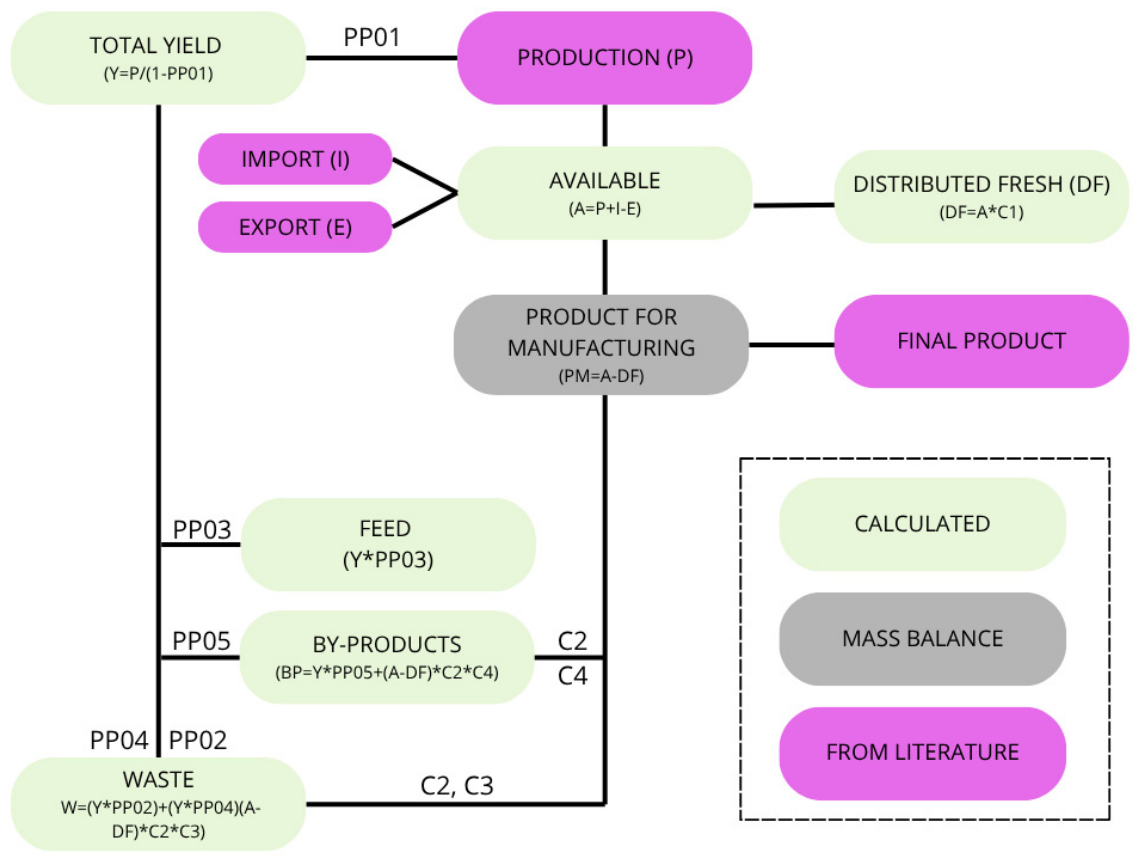
Figure 1. General schematic representation of the Material Flow Analysis (MFA) approach adapted from De Laurentiis et al. (2023) [24], for the estimation of biomass residues generated along agri-food supply chains for fruits and vegetables. For vegetables, coefficients C1, C2, C3. C4 are VE1, VE2, VE3, VE4, for fruits FN1, FN2, FN3, FN4.
Applsci 16 07516 g001
Figure 2. Estimated average annual biomass residues and by-products (2019–2023).
Applsci 16 07516 g002
Figure 3. Sankey diagram of tomato biomass flows along the Italian agri-food supply chain.
Applsci 16 07516 g003
Figure 4. Sankey diagram of grape biomass flows along the Italian agri-food supply chain.
Applsci 16 07516 g004
Table 4. Valorization framework for tomato and grape residues based on physicochemical parameters.
Residue CategoryRelative OccurrenceSourceValorization Strategy
Tomato pomace≈85% of tomato processing waste 1[49]Anaerobic digestion
Tomato peel≈25% of tomato processing waste[49]Recovery of lycopene, carotenoids, and pectin
Tomato seeds≈30% of tomato processing waste[49]Oil and protein extraction
Grape marc≈60% of winery solid waste[29]Thermochemical conversion after polyphenol recovery
Grape seeds≈15% of winery solid waste 2[29,59]Oil extraction
Grape stalks≈23% of winery solid waste 3[60]Thermochemical conversion
Wine lees≈17% of winery solid waste 3[60]Recovery of tartaric acid and ethanol followed by AD
1 Calculated by the authors as the sum of peel, seed, and pulp fractions reported by Martinez et al. [49]. 2 Calculated by the authors considering grape marc as 60% of winery solid waste [29] and grape seeds as 25% of grape marc [59]. 3 Calculated by the authors considering total winery by-products equivalent to 30% of grape weight.
Disclaimer/Publisher’s Note: The statements, opinions and data contained in all publications are solely those of the individual author(s) and contributor(s) and not of MDPI and/or the editor(s). MDPI and/or the editor(s) disclaim responsibility for any injury to people or property resulting from any ideas, methods, instructions or products referred to in the content.